Syrians

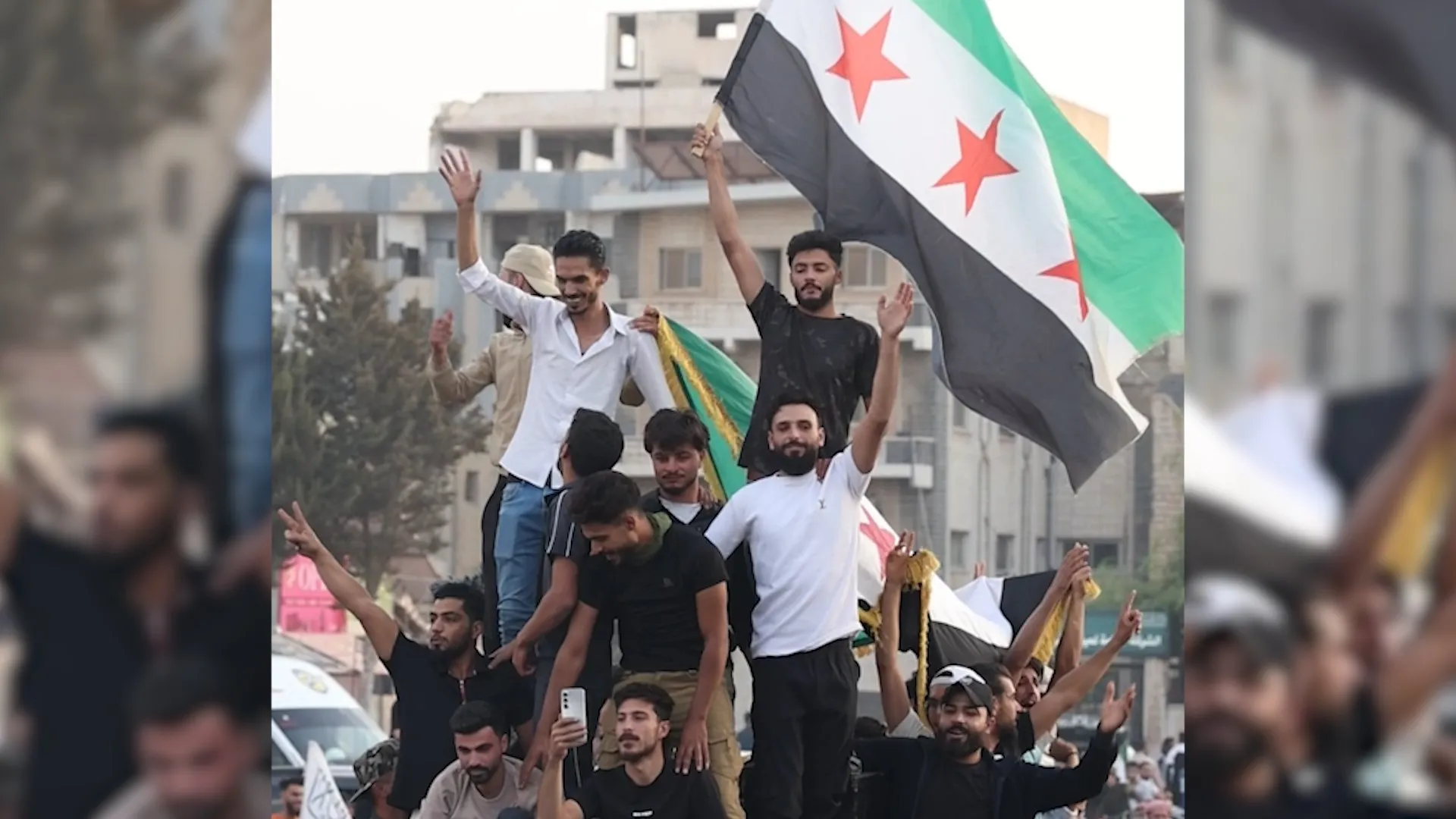
Syrians optimistic but cautious as sanctions removal revives economic hopes | Politics News

Damascus, Syria – For many Syrians, the decades of rule by the al-Assad family – Hafez al-Assad from 1971 to 2000, then his son Bashar from 2000 to 2024 – were filled with oppression from the state and eventually more than a decade of civil war.

But one of the most important legacies has been an economic one – the result of the sanctions imposed by a number of countries, led by the United States, that effectively froze Syria out of the international economic system.

Recommended Stories

list of 3 itemsend of list

Despite the fall of Bashar al-Assad after rebel groups defeated him in December 2024, many of the sanctions, including a “state sponsor of terrorism” designation, have remained.

The designation has impeded Syria’s rejoining of the international community, while sanctions have impacted Syrians. Sending money back home from abroad often requires routing transfers through neighbouring countries, such as Lebanon or Turkiye, while access to some websites and online services, including Netflix and Slack, may require a virtual private network.

But there has been a positive reaction to the announcement on Wednesday by US President Donald Trump that his administration will remove Syria from the state sponsor of terrorism list.

The lifting of previous US sanctions, such as those related to the Caesar Act, has not transformed the Syrian economy, but it is hoped that those linked to the “state sponsor of terrorism” listing will allow the country to finally flourish.

“God willing, it will improve things,” said Ihab, a pastry shop owner in central Damascus.

Reintegration

US sanctions are thought to have been a huge barrier to foreign investors since the rule of Bashar al-Assad.

The World Bank said that since 2011, sanctions have led to a major collapse in exports and an increase in the trade deficit.

After the fall of the al-Assad government, interim President Ahmed al-Sharaa’s administration has identified the removal of all international and US sanctions as the key to reinvigorating the economy.

Al-Sharaa, the former head of the al-Qaeda-aligned Nusra Front, was himself sanctioned by the United Nations and was wanted as a “terrorist” by the US. But he has made efforts to shed those associations and build trust internationally, including by pledging to play a role in the fight against ISIL (ISIS).

His efforts have largely been successful, with the European Union and the US removing many of the sanctions on Syria and on al-Sharaa himself. The sanctions linked to the US’s “state sponsor of terrorism” list are among the few to remain.

The first “state sponsor of terrorism” designation on Syria was during Hafez al-Assad’s rule in 1979, due to the government’s support for Palestinian armed groups.

Additional sanctions were imposed on the state and individuals associated with the al-Assad regime, due to their systematic use of torture and chemical weapons.

Some rebel groups were also sanctioned due to their links to al-Qaeda and other banned organisations.

Al-Sharaa ended al-Nusra Front’s affiliation with al-Qaeda in 2016 and effectively eschewed the group’s ideology.

He also moved to establish a broader, national armed coalition dedicated to fighting the Assad government, later becoming Hayat Tahrir al-Sham.

In May 2025, around the time Trump met al-Sharaa in Riyadh, the US president promised to remove many of the sanctions on the Syrian government. But the expected removal from the “state sponsor of terrorism” list will be particularly welcome as it gets rid of one of the main barriers for international banks and companies.

“This is extremely significant because it’s the last major impediment to international economic and political engagement with Syria and with the al-Sharaa administration, and in terms of reintegrating Syria back into the international order and indeed the international economic and political system,” Rob Geist Pinfold, a lecturer on security studies at King’s College London, told Al Jazeera.

Struggling economy

However, he is careful to add that the removal of the designation does not mean a flood of investment will instantly start pouring into Syria.

“This is a big hurdle that’s been overcome, but it doesn’t mean that there’s no more hurdles to investment or engagement with Syria.”

He added that international actors may be concerned about the government’s control and ability to confront remnants from the al-Assad regime, a potential ISIL (ISIS) comeback, bureaucratic impediments and corruption.

Some Syrians were also sceptical that the designation change would lead to instant results.

“This needs a long breath,” said a minimarket owner in Damascus, who refused to give his name. “You can’t sleep and wake up and expect change.”

He referred to ongoing economic problems and rising costs, as well as a recent fuel shortage.

“There’s no economy, and there’s no investment.”

Other Syrians were more hopeful that the economy, and other aspects of daily life, would improve. Still, there is a recognition that a little more patience is needed.

For some, that patience has worn out, such as the minimarket owner. Others, however, are biding their time.

At a juice stall in central Damascus, Zaher counted money received from a customer.

“I’m on the street with my cart and nobody is bothering me,” he said. “Electricity is getting better, but nothing gets better after just one day.”

“It took God Almighty six days to create Earth,” the 50-year-old said. “These things take time.”

Source link

US ends deportation protections (TPS) for Haitians and Syrians | Politics News

NewsFeed

The US Supreme Court has sided with the Trump administration in its bid to end Temporary Protected Status (TPS) for Haitians and Syrians. The ruling allows the policy to take effect before the courts have reached a final decision on its legality.

Source link

Supreme Court rules Trump may end legal protection for Haitians and Syrians

The Supreme Court ruled Thursday that the Trump administration may end the Temporary Protected Status granted to more than 350,000 Haitians and Syrians whose home countries remain unsafe.

In a 6-3 decision, the court’s conservative majority said Congress gave the administration, not judges, the power to cancel or renew this temporary protection for non-citizens who are living and working here.

In a second win Thursday for the Trump administration, the court also upheld the administration’s policy of blocking asylum seekers at the southern border.

By the same 6-3 vote, the court said migrants do not have a right to apply for asylum if they are not already in the United States.

The decision on Temporary Protected Status could affect up to 1.3 million non-citizens who are in the country.

In 1990, Congress authorized this emergency humanitarian relief for non-citizens whose home countries were wracked by armed conflict, natural disasters or other extraordinary disruptions.

Under the law, the Department of Homeland Security may grant this protection for 6, 12 or 18 months and either renew or extend it for a similar period.

But this legal authority has been under dispute since Trump returned to the White House last year and targeted the 1.3 million people with TPS from 17 countries who were living in the United States.

Trump’s lawyers said the law made clear there was “no judicial review” of the government’s decision to cancel the grant of temporary protection.

However, immigrant rights lawyers argued the government failed in its duty to consult the State Department and assess whether it was safe for migrants to return home.

Repeatedly, U.S. district judges agreed with the challengers and ruled the administration’s decisions were “arbitrary” and unreasonable. But in nearly every case, the Supreme Court granted emergency appeals from the administration and set aside those orders.

Since TPS was created, the government has ended the protected designation for citizens of 18 countries.

DHS under then-Secretary Kristi Noem ended TPS for Honduras, Nicaragua, Afghanistan and Venezuela. A spokesperson for the agency previously said the Haiti designation became “a de facto amnesty program” and that allowing Syrians to remain is contrary to national interest.

Advocates for the immigrants argue that the administration failed to conduct the required process to properly evaluate each country’s conditions and instead acted on political grounds driven by racial animus.

State Department travel advisories for both countries warn people against traveling to either because of the risk of terrorism, kidnapping and widespread violence. But Federal Register notices announcing the terminations said country conditions had improved enough.

Recently released internal documents show that DHS decided to terminate protections for Haitians without any input from the State Department.

Citing the documents, which were obtained by the National TPS Alliance in a separate lawsuit, lawyers for the Haitians asked the Supreme Court to dismiss the case and send it back to lower courts. They argued that the justices should first consider the communications before issuing a decision.

Internal emails show that homeland security officials sought a recommendation from the State Department in May 2025, ahead of Noem’s early June deadline on whether to extend protections for Haiti. But by the time Noem signed what appears to be a final decision memo, U.S. Citizenship and Immigration Services had not received input from the State Department, the emails show.

“State recommendation for Haiti TPS has not come in despite of many outreach,” a homeland security deputy assistant secretary wrote in a June 2, 2025, email. A recommendation “would be helpful to have,” the person added.

Eleven days later, a USCIS project manager wrote in an email that Noem “recently elected to terminate Haiti without country conditions from DOS.”

USCIS initially recommended automatically extending protections before Homeland Security decided to terminate them, earlier versions of the memo indicate.

The June decision was blocked by a federal judge. In November, DHS issued another notice terminating TPS protections for Haitians.

That time, according a previously publicized email, a homeland security senior counselor asked a State Department official for the agency’s views on the country conditions in Haiti. The official, Spencer Chretien, didn’t address the country conditions but responded that “there would be no foreign policy concerns.”

Lawyers for the Haitians argued that response didn’t meet the legal standard for a sufficient consultation, though the Trump administration disagreed.

Source link

Syrians reject Trump’s call for Syria to combat Hezbollah in Lebanon | Donald Trump

NewsFeed

Residents in Damascus rejected US President Donald Trump’s suggestion that Syria should confront Hezbollah in Lebanon. They say Syria should avoid being drawn into new regional conflicts. In a rare critique, Trump told Israel to let Syria take on Hezbollah.

Source link