Syrian

Syrian president thanks nation for getting off US state terror list | Business and Economy News

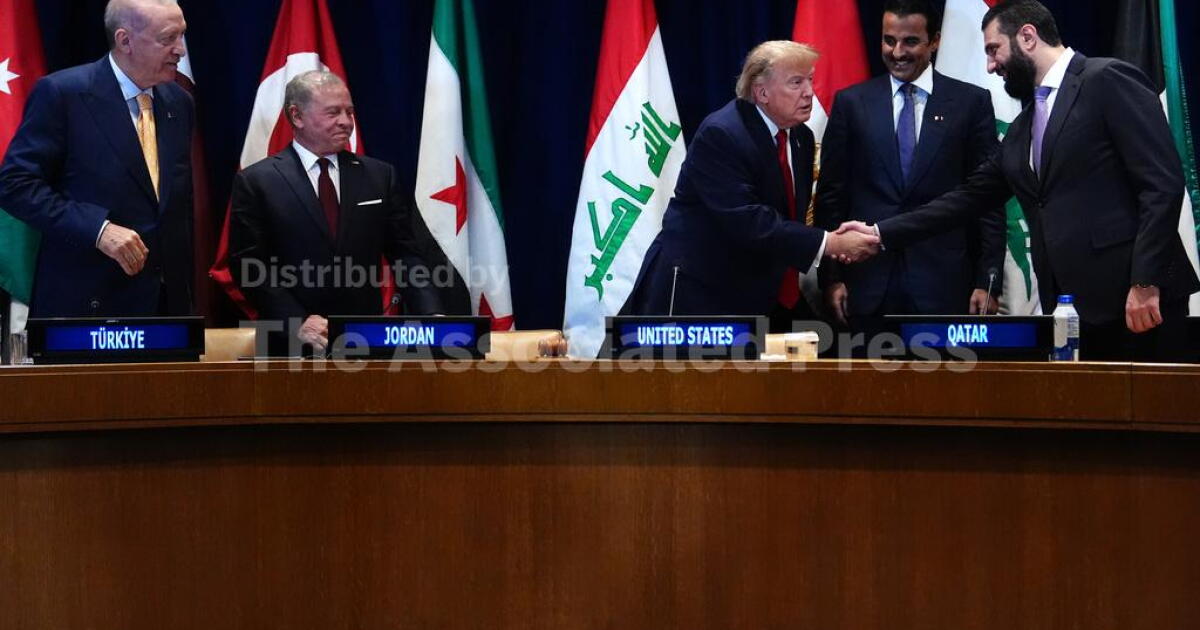
President Ahmed al-Sharaa said Syria is ‘shaking off a dark burden’ after the US removed it from the list of state sponsors of terrorism. Syria had been on the list since 1979, and its removal opens the country to outside investors.

Source link

Syrian official says ‘no plans’ to establish Turkish military presence | Military News

The foreign minister says in an interview that Turkish military officials had visited the airbase as part of training.

Syria has no plans to establish a Turkish military presence at the Abu al-Duhur airbase attacked by Israel earlier this week, Foreign Minister Asaad al-Shaibani has said.

Al-Shaibani said in an interview with the US news outlet Axios on Wednesday that while Turkish military officials had visited the site as part of training and broader military cooperation, he denied any Turkish military build-up, explaining that the facility was largely empty.

Recommended Stories

list of 3 itemsend of list

“There was no intention to establish a Turkish base there, nor to establish a permanent Turkish military presence or deploy Turkish forces at the site,” al-Shaibani said, adding that he had made this clear to Israel.

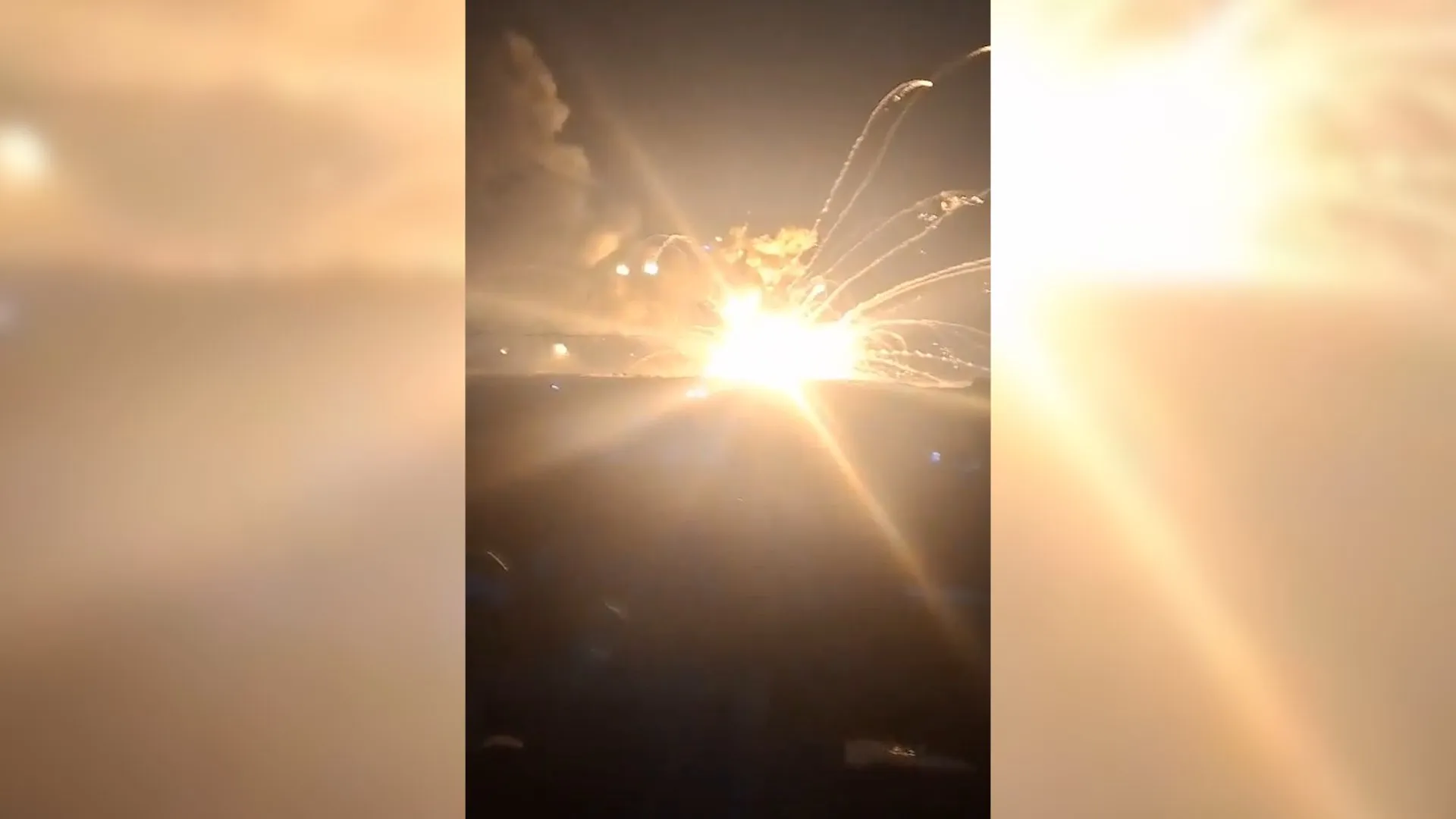
On Tuesday, Israel carried out eight air strikes on the runway and storage facilities at the Abu al-Duhur base near Aleppo, state media reported, in what appeared to be Israel’s first attack on Syrian government assets since March.

No casualties were reported from the attack, which drew international condemnation.

Al-Shaibani said Israel had no legitimate justification for attacking the facility.

He said that while Syria remained open to negotiations with Israel on de-escalation, any future deal must address the security concerns of both countries, reiterating that Israeli military operations would increase regional instability.

The strikes came amid worsening security tensions between Israel and Turkiye over Syria, where both countries’ militaries are active.

Israeli Prime Minister Benjamin Netanyahu said Israel warned Syria ahead of the strike not to allow a Turkish presence at the base.

“Our message was very clear. Don’t. I guess they didn’t quite understand the message,” Netanyahu said on Wednesday.

On Thursday morning, Israeli Defence Minister Israel Katz claimed that Turkish President Recep Tayyip Erdogan was “dragging Turkiye into dangerous adventures in Syria”.

“Israel will not allow any entity to threaten its security,” he said.

“It is preferable for Erdogan to continue delivering empty, delusional speeches against Israel in the Turkish parliament rather than testing Israel’s resolve to defend itself,” Katz added.

Turkiye has rejected what it called “untenable allegations” by Israel over its military position in Syria.

The Turkish defence ministry said on Thursday that Ankara would continue supporting Syria’s efforts to develop its own military capacity and infrastructure.

It said there was no military delegation at the air base hit by Israel before or during the attacks, calling for the international community to take more concrete and effective measures against Israel’s actions, which it said threatened regional peace and stability.

Turkiye, a NATO member, has emerged as one of Syrian President Ahmed al-Sharaa’s main allies and has accused Israel of trying to destabilise Syria and undermine its new administration.

It has also repeatedly called for international pressure and measures on Israel to respect Syria’s territorial integrity.

Last year, Turkiye and Israel established a line of communication to avoid any incidents in Syria.

Source link

Lebanon hands former Syrian army general to Damascus after arrest warrant | Courts News

The transfer is the first from Lebanon involving a Syrian military officer who fled after al-Assad’s government was toppled in 2024.

Lebanon has handed over a former senior Syrian army officer to Damascus to face charges related to murder and torture, the first such transfer since former Syrian President Bashar al-Assad was toppled in 2024.

The transfer involved Major-General Adel Issa, a former commander of the Syrian army’s 17th Division who later led ground forces in the eastern province of Deir ez-Zur.

Recommended Stories

list of 3 itemsend of list

Syria’s Ministry of Interior confirmed his delivery into Syrian custody in a statement on Wednesday.

“Today, Syrian authorities received from the Lebanese authorities the former officer in the defunct regime army, Major-General Adel Issa,” the ministry said.

It added that a Syrian arrest warrant had accused Issa of charges including intentional homicide, facilitating a felony, killing more than two people, torture leading to death, and crimes aimed at inciting civil war and sectarian strife.

A Damascus referral judge will hear his case, which could then be sent to a criminal court for trial, the ministry added.

Issa, 67, has denied the accusations, the Reuters news agency reported, citing two people familiar with his arrest and extradition.

He was detained on August 8 after going to the Syrian embassy in Beirut to complete paperwork.

Embassy officials alerted the prosecutor’s office in Lebanon that he was wanted in Syria, and Lebanese investigators took him into custody, Reuters reported.

His transfer follows months of pressure by Damascus for Lebanon to act against former government officers, as well as security and military officials, who sought refuge in Lebanon after the Assad regime collapsed in December 2024.

President Ahmed al-Sharaa, a former rebel leader, has led the country since.

In January, Syrian authorities gave Lebanese security officials a list of more than 200 former senior officers wanted by Damascus.

Earlier this month, a Damascus court sentenced al-Assad to death in absentia on charges including murder, arbitrary detention and torture. Al-Assad lives in exile in Moscow.

Source link

Lebanon no longer a safe haven for former Syrian regime officials | Syria’s War News

Beirut, Lebanon Not long after the fall of the Syrian President Bashar al-Assad in December 2024, the new government was keen to hunt down members of the former regime.

Al-Assad and his brother fled the country hours before the capital Damascus fell to the advancing armed opposition, leaving many top officials and military commanders to fend for themselves.

Recommended Stories

list of 3 itemsend of list

Many of them reportedly fled and crossed to neighbouring Lebanon where some top officials were spotted openly in capital, Beirut.

Now the Syrian government is trying to get them extradited for war crimes committed during the uprising, which began in 2011.

“We are seeking to boost the international judicial cooperation to pursue members of the former regime and extradited to Syria to complete judicial procedures and process,” judge Mustafa al-Qassem, an aide to the Syrian justice minister, said in an interview with state television.

Former officials felt they were safe in Lebanon due to their close connections with Hezbollah or their network with figures in Lebanon’s military. Some had built connections in Lebanon over the years, including during Syria’s occupation of Lebanon, which ended in 2005.

But that’s no longer the case.

Adel Issa, a former major general in al-Assad’s Syrian Army, was arrested recently in Lebanon after staff at the Syrian embassy reportedly tipped off authorities after he came in to do paperwork. A top Lebanese prosecutor announced on Tuesday that Issa would be extradited to Syria to face trial due to alleged crimes he committed during his military service.

But there are other former al-Assad regime officials who are in Lebanon and whom Syrian authorities also want returned to face justice.

Last week, al-Assad, his brother Maher and his cousin Atef Najib were all sentenced to death by a Damascus court. Bashar and Maher al-Assad were sentenced in absentia because they are in exile in Moscow, where they fled after the regime fell.

Their presence in Russia likely protects them from extradition. But the case brings to attention important issues about remaining regime figures in Lebanon and their potential extradition to Syria.

Regime officials in Lebanon

On December 8, 2024, the five-decade reign of the al-Assad regime ended when Bashar left Damascus for Moscow. As rebels entered Damascus, al-Assad fled without telling many of his top officials who then had to sort out their own escapes.

Sources with knowledge of the whereabouts of former regime members said the top figures – such as the al-Assads or the former head of the National Security Bureau Ali Mamlouk – are in Moscow or the United Arab Emirates.

However, Jamil al-Hassan, the former head of the Air Force Intelligence Directorate, is thought to be in Lebanon. Last year, media reports suggested that Syria and France have called on Lebanon to arrest and extradite al-Hassan.

Aside from him, Bassam al-Hassan, a former Republican Guard commander who was in al-Assad’s inner circle, was tracked down to a Beirut apartment by a US broadcaster last year. He had been responsible for procuring weapons and liaising with Syria’s chemical weapons programme, which the regime used against its own people.

Hezbollah’s role

Syrian and European sources intimately familiar with the details said most former regime officials still in Lebanon are now in Tripoli’s Jabal Mohsen neighbourhood or in parts of the northern region of Akkar, which borders Syria. Estimates on the number of former regime officials in Lebanon are imprecise, experts said, because many have either moved to third countries, sometimes with false passports, or have been smuggled back into Syria.

One source familiar with the issue, speaking on background because he wasn’t authorised to share information publicly, said that in the early days after the fall of the regime, former government figures set up training camps in Lebanon’s Bekaa Valley. However, the source said, the camps have since been shut down by Hezbollah and the Lebanese army.

On August 4, Hezbollah leader Naim Qassem said his party was open to a meeting with Syria’s leadership. The group fought side by side with the al-Assad regime in Syria’s war and is, therefore, viewed negatively by many Syrians. But Hezbollah has said it has no desire for bad relations with Syria’s new government.

“Russia shelters the family and its fortunes while so far declining to fund a restoration [of the al-Assad regime], and Hezbollah, under disarmament pressure, needs calm with Damascus more than it needs a [battle on the] Syrian front,” Nanar Hawach, the International Crisis Group’s senior analyst on Syria, told Al Jazeera.

Syria has been under pressure from the United States to intervene in Lebanon against Hezbollah although experts believe Syrian President Ahmed al-Sharaa and his government are aware that such a move could lead to widespread regional unrest and undermine the domestic authority they are working to establish, including from figures still in Lebanon.

For years, Syria had a paternal relationship and view towards neighbouring Lebanon. The Syrian military entered Lebanon in 1976 when Bashar’s father, Hafez al-Assad, was in power and occupied large swaths of the country until 2005 when a popular uprising pushed Bashar al-Assad to withdraw his troops.

The younger al-Assad and Syria still exerted their influence in Lebanon via local allies, including Hezbollah, until the regime’s demise in 2024. Since then, Syria’s new government under al-Sharaa has indicated a willingness to have a more balanced and egalitarian relationship with Beirut.

To date, no Syrian regime figures accused of committing atrocities have been returned from Lebanon. That’s why, with extradition approved, Issa’s case could be so groundbreaking. While they have not yet faced trial, many former regime officials are either under foreign sanctions and/or worked in key regime roles that contributed to severe crimes against the Syrian people.

Earlier this year, Syrian authorities asked Lebanese security forces to hand over more than 200 senior officers who fled to Lebanon after the fall of Bashar al-Assad, according to a Reuters agency investigation that showed how the neighbouring country was a hub for insurgent plotting.

Lebanon’s parliament has passed a law to abolish capital punishment, making it the first country in the Middle East to do so. That has contributed to the controversy over the extradition process with Syria, which does apply the death penalty.

Wadih al-Asmar, cofounder and president of the Lebanese Centre for Human Rights, said a number of the Syrian officials in Lebanon would have committed crimes during the occupation period and, therefore, the Lebanese judiciary “has a duty and obligation” to prosecute some of these figures.

Al-Asmar said his organisation has received asylum requests from Syrians afraid to return to their country but none had been military figures connected to the former regime.

But other ex-regime officials, particularly those in Europe, could have those connections. And the landmark trial in Damascus last week that sentenced the al-Assad brothers and their cousin to death could be a concern for European and other states when extraditing wanted figures to Syria.

Experts said Beirut’s desire to have a positive relationship with Damascus will likely supersede human rights concerns related to the death penalty for former regime figures. Still, al-Asmar said: “Lebanon cannot, without violating international law and its own law, send back any person to a country where he can face the death penalty.”

He added: “It’s a very complicated situation, and I believe the only way out for the Lebanese government and the Syrian government with respect to the state of law is for Syria to abolish the death penalty.”

Source link

Iraqi Kurdish regional leader meets Syrian president in Damascus | Kurds News

Barzani meets Syria’s al-Sharaa in Damascus to discuss Syrian Democratic Forces (SDF) integration and Kurdish rights in post-Assad Syria.

Nechirvan Barzani, president of Iraq’s semiautonomous Kurdish region, has held talks with Syrian President Ahmed al-Sharaa, in the first visit by a Kurdish leader to Syria since the fall of ousted Syrian President Bashar al-Assad.

On Monday, Barzani led a high-level delegation to Damascus, where he was received at the People’s Palace. According to Syria’s state news agency SANA, the two sides discussed bilateral relations between Erbil and Damascus, as well as several key regional issues of mutual concern to strengthen cooperation and coordination across various fields.

Recommended Stories

list of 3 itemsend of list

The visit to Syria’s capital comes after months of diplomatic engagement between the Kurdistan Regional Government in Iraq and Syria’s new administration. Barzani and al-Sharaa previously met twice on the sidelines of the Antalya Diplomacy Forum, first on April 11, 2025, and again on April 17, 2026. According to a statement from the Kurdistan Region Presidency, the second meeting covered the development of economic ties and the agreement between the Syrian government and the Syrian Democratic Forces (SDF).

The integration of the SDF into Syrian state institutions is a central focus of the talks. The SDF, a Kurdish-led force that controls much of northeastern Syria, has been in negotiations with Damascus over its future status. The Syrian government has sought to integrate the force into its military structures, while Kurdish representatives have pressed for guarantees of political and cultural rights.

According to news reports from Al Hadath, Barzani and al-Sharaa discussed mechanisms for entrenching the constitutional rights of Kurds in Syria, particularly language rights and administrative autonomy. Implementation of Decree No. 13, which pertains to Kurdish language rights, was also on the agenda. Syrian officials have expressed interest in benefitting from the Kurdistan Regional Government’s experience in Kurdish-language education, curriculum development and teacher training.

Barzani’s itinerary also includes meetings with Kurdish officials in Syria, including SDF commanders and Kurdish members of the Syrian parliament, according to Kurdish media reports.

The visit follows a series of diplomatic exchanges, including a trip by Syria’s education minister to Erbil and efforts to reopen the Syrian consulate in Iraq’s semiautonomous Kurdish region. Barzani has previously hosted SDF commander Mazloum Abdi and delegations from northeastern Syria in Erbil.

For the Kurdistan Regional Government in Erbil, which shares a 1,100km (684-mile) border with Syria and hosts tens of thousands of Syrian refugees, the engagement carries vital security imperatives. Ensuring a stable, inclusive Syria reduces the risk of the resurgence of ISIL (ISIS), limits future refugee flows, and enhances Erbil’s diplomatic leverage with both Baghdad and Ankara.

The talks come at a sensitive time, during ongoing clashes between Syrian forces and Kurdish fighters in the northeast.

Source link

France returns Syrian artefacts it’s held since civil war | Syria’s War

NewsFeed

France has returned 23 Syrian antique artefacts it’s held since the outbreak of the 2011 civil war. The collection, spanning from prehistory to the Abbasid era, has been restored to the National Museum in Damascus after French President Emmanuel Macron’s visit.

Source link

First Syrian parliament since al-Assad’s ousting begins legislative duties | Syria’s War News

The new 210-member parliament takes shape, marking a historic shift after decades of Assad family rule.

The first parliament in Syria’s post-Assad era has taken shape with the release of a list of 70 legislators picked by President Ahmed al-Sharaa.

The inauguration of the new parliament on Wednesday shows the country is moving ahead with drafting laws as the nation works on recovering from decades of iron-fist rule under longtime ruler Bashar al-Assad, who was ousted in December 2024 after more than 13 years of civil war, which killed about half a million people.

Recommended Stories

list of 4 itemsend of list

The head of Syria’s electoral committee, Mohammed Taha al-Ahmad, told reporters that the new 210-member legislature will hold its first meeting on Monday, when the new members will be sworn in, and the parliament’s presidential council will be elected.

Interim President al-Sharaa directly appoints one third of the 210 seats. His list of 70 legislators includes 15 women, raising the number of female members in the legislature to 22.

Portraits of former speakers of parliament, including former Egyptian president Anwar Sadat (4th R), who served as Chairman of the Council of Nation under the United Arab Republic (UAR) era, are displayed at the parliament in Damascus on July 1, 2026.
Portraits of the former speakers of Syrian parliament, including former Egyptian President Anwar Sadat (fourth from right), who served as chair of the Council of Nations under the United Arab Republic era, are displayed at the parliament in Damascus [AFP]

Syria held the first phase of its parliamentary elections in October last year while excluding the southern province of Suwayda, a predominantly Druze governorate and where no date has been set yet for a vote due to security concerns.

The October vote also excluded northeast Syria, which was under Kurdish control. A vote in that region was held in May after government forces took control of the area during deadly clashes earlier this year.

The new parliament also includes representatives of the Alawite community and two legislators from Suwayda.

“Initially, there was a very small portion of the elected members that were from some of the minority groups, such as the Kurdish community,” said Al Jazeera’s Obaida Hitto, reporting from the capital Damascus.

“The appointees by the president remedied that by adding several more Kurdish members from the Hasakah governorate,” Hitto added.

The new parliament will have a 30-month term and work on a new elections law while preparing the ground for a popular vote in the next elections, according to al-Ahmad, as a test for the country’s transition.

Source link

Syrian activist Hassan Akkad detained in Damascus | Police News

Syrian journalist Mousa al-Omar reportedly filed a complaint about Akkad’s social media comments prior to his arrest.

British Syrian activist Hassan Akkad has been detained by security forces in Damascus, in an alleged response to his online comments criticising a prominent journalist.

Akkad, founder of the Give Us the Money That You Owe! campaign, was taken into custody on Wednesday at about 9:45pm local time (18:45 GMT) while at a cafe in the capital’s al-Malki neighbourhood, the statement said.

Recommended Stories

list of 3 itemsend of list

His detention appears to be related to a legal complaint filed by Syrian journalist and presenter Mousa al-Omar in relation to “Hassan’s social media activities and public comments”, the campaign reported.

It added that he was summoned by the cybersecurity branch on June 4. Al Jazeera understands that Akkad is still detained.

“He later became aware that additional cases had also been filed against him, although he was not informed of the identities of the complainants,” the campaign said.

Al Jazeera reached out to the Syrian government regarding he case but has yet to receive a response regarding the activist’s arrest.
Public Prosecutor Judge Hossam Khattab confirmed that Akkad had been detained due to a search warrant being issued for him, but that the case against him had been dropped.

Al-Omar told Al Jazeera that he had instructed his lawyer to tell the police that he had dropped the case against Akkad and said he was “saddened” by what had happened.

“I am sorry for what happened to Hassan as a result of his mistakes; I followed the legal path under the cybercrime law… Everything I pledged, amounting to $700,000 in projects and cash, was paid in the donations,” he said.

Akkad’s campaign tracks financial commitments related to a public drive for donations to fund Syria’s reconstruction since the ouster of President Bashar al-Assad.

The activist reportedly criticised al-Omar on social media in recent weeks for allegedly failing to deliver on his financial pledges to the country’s rehabilitation efforts, pledges he claimed were worth thousands of dollars.

The campaign said after Akkad was summoned, he paused his online activities related to the case, to “allow the investigation and legal process to proceed”.

Akkad, a refugee and former English teacher in his late 30s, previously won BAFTA and International Emmy awards for documenting his journey from Turkiye to Europe after fleeing the Syrian civil war that began in 2011, during which he was arrested by the al-Assad’s authorities.

He eventually settled in the United Kingdom in 2015, returning to Syria after years in exile when al-Assad fled the country.

According to witness accounts cited in the statement, five plainclothes security officers entered the coffee shop where Akkad was meeting with several journalists.

Witnesses said the officers initially requested Akkad’s mobile phone before informing him that he was being arrested.

His lawyers said the arrest raises questions about whether authorities followed established legal procedures.

“No legal basis for the arrest … was presented at the time of his detention,” the statement said,

It added that since the allegations appear to be related to his online commentary, the arrest raises “broader concerns regarding the protection of freedom of expression”.

The statement further questioned the reported use of a cybersecurity law enacted during the rule of al-Assad, arguing that reliance on such legislation “appears inconsistent with the interim government’s commitments to expand protections for freedom of expression following the collapse of the previous regime”.

Source link

Greece reopens Syrian and Afghan asylum cases, hoping for returns | Migration News

Athens, Greece – Bashir is a Syrian Muslim who has lived in Greece since 2014. He married a fellow Syrian in the country, and three months ago, they had a son. After years of picking olives and oranges, learning Greek and a trade in metalwork, and finally buying his own equipment to start work as an independent trader, Bashir felt his life was finally coming together.

Two months ago, the authorities handed him a piece of paper asking him to restate his reasons for coming to Greece and why he should now return to Syria.

Recommended Stories

list of 4 itemsend of list

Bashir, who requested to withhold his surname, had been granted asylum in Greece in 2015 because of the civil war then raging in Syria. The war ended in December 2024, and Bashir became one of 1,200 Syrians whose asylum cases were reopened in February.

“It’s a catastrophe,” he told Al Jazeera. “I don’t understand how this can happen. If they decide I should leave the country, should my family stay here?”

Bashir’s lawyer said only men are currently receiving such notices – and not just from Syria but Afghanistan, another country whose civil war is deemed to have ended, with the Taliban’s sweeping victory in August 2021.

But neither Syria nor Afghanistan is necessarily safe to return to, said the lawyer, Angeliki Theodoropoulou.

“We believe this has to do with the European Union’s stance towards Syria and Afghanistan, and with the fact that there are quite a few voluntary returns, which encourages authorities to say, ‘Let’s see if these people can return’,” Theodoropoulou told Al Jazeera.

She said the entire regime of international protection was being tightened for these two nationalities. “We’re also seeing asylum being given in very few cases, and a lot of rejections,” she said.

“We don’t understand on what criteria they decided Syria is safe,” Bashir said.

Earlier this year, renewed clashes erupted between the Syrian government and the Kurdish-led Syrian Democratic Forces (SDF), while Israel has continued attacks on the country sporadically.

Bilal said he feels uncomfortable about the idea of living in Syria for cultural and political reasons, having spent 15 years away.

“Many of the refugees here are like me,” he said.

Jihad, who requested to withhold his surname, has similar concerns but for the opposite reason. He has lived in Greece legally since 2001 and runs a small clothes shop. When the regime of Bashar al-Assad fell, the rest of his family also fled, because he and his family were Assad supporters.

He fears that he would be mistreated in Syria over his views.

“If they just look at my Facebook page or look at things I wrote in the past, they will send me to jail for sure,” Jihad said. “I’m afraid even to go to the embassy. I have never held a gun, I have never killed anyone, I just have an opinion.”

Both men have clean criminal records, pay taxes and social security contributions, and have nurtured families in Greece. Both say they would flee to another country rather than return to Syria. So why is Greece considering their eviction?

Greece’s turn to exclusion

Greek Migration Minister Thanos Plevris announced in February that he had ordered a reopening of any asylum cases that could be revoked. As a temporary status, it can be.

Last year, Greece revoked the asylum of almost 200 people, compared with 400 in the previous decade. Dozens more cases are under review this year. And there appears to be a religious element to the policy.

Greece suspended asylum applications for mainly Muslim asylum seekers arriving from Libya for three months last year. Most of the people whose asylum is being revoked are from majority-Muslim countries.

At a recent parliamentary committee hearing, Plevris stated clearly that Greece prefers non-Muslim migrant workers.

“There are countries with which we don’t have common values, and that’s mainly because of religion, let’s be clear, it’s because of hardcore Islam,” Plevris said. “So, you have to pick countries that are religiously neutral or Christian. We’re talking to Georgia, the Philippines, Armenia, India.”

Greece has been tightening its migration policy in other ways as well.

In September 2025, it adopted what Plevris described as “the strictest returns policy in the whole EU”, empowering the government to imprison people who refuse to be deported. Rejected asylum applicants can be fitted with ankle monitors and given just two weeks to remove themselves voluntarily. If they don’t, they face a 5,000-euro fine ($5,870) and two to five years’ confinement in closed camps.

In February, the governing conservative New Democracy party passed a law stipulating that if any aid worker is charged with helping to smuggle asylum seekers into Greece, their entire aid organisation can be delisted from the ministry’s registry. That means they could lose their funding and access to refugee camps, and could shut down.

The broader context

Europe is undergoing a transition as it prepares to put into force an Asylum and Migration Pact next month. The pact demands a hard-border policy and a returns policy for rejected asylum seekers, both of which each member state must manage itself.

“We’re at a pivotal point in time. We’re about to see the implementation of the European pact. This will fundamentally change the way that migration works,” Kristin Fabbe, chair in Business and Comparative Politics at the European University Institute, recently told a Delphi Economic Forum event in Athens.

The largest bottleneck, she said, “is that Europe has not yet figured out how to do returns at scale … in order to reform asylum and reform migration, you have to execute returns at scale, and the data show that that has been impossible”.

Greece, an EU front-line state, already has 938,000 legally resident migrants in a population of 10.3 million, a relatively high number. Of these, more than 137,000 are recipients of asylum or international protection.

As the Middle East and North Africa region remains unstable, the government is worried about the potential scale of future refugee flows.

More than a million asylum seekers crossed the Greek borders in 2015. In the years that followed, certain EU members took on thousands of asylum cases from Greece and Italy in a show of solidarity, and tens of thousands more asylum recipients in Greece moved to other EU states. Those states have agreed to keep them, but that would not necessarily happen again under the pact.

Observers say this explains Greece’s hardline attitude.

Commenting on the political mood in Europe, Fabbe said, “The legality, the sanctity of the [returns] solutions is being challenged, but I think we’re going to see the proliferation of those solutions and new institutional mechanisms.”

Source link

Missing Syrian chess champion’s children likely dead, authorities say | Child Rights News

Syrian commission confirms the deaths of Rania al-Abbasi’s six children, missing since 2013 under Bashar al-Assad’s rule.

Syria’s National Commission for Missing Persons (NCMP) says the children of dentist and former chess champion Rania al‑Abbasi, who disappeared with their parents more than a decade ago under then-President Bashar al-Assad, are likely dead.

“We have reached reliable and corroborating results that allow us to conclude with a high degree of professional certainty that Dr Rania al-Abbasi’s children are deceased,” the NCMP said in a statement on Saturday.

Recommended Stories

list of 3 itemsend of list

The fate of the children, unknown for years, became a symbol of the plight of other missing children of detainees and those forcibly disappeared during al-Assad’s rule, which ended with his ouster in 2024.

Al-Abbasi went missing along with her husband, Abdul Rahman Yasin, and their six children, aged three to 15, in March 2013 after government forces raided their home in Damascus, according to rights groups.

The commission, set up by the country’s new rulers in May 2025 to investigate missing and forcibly disappeared people, said its findings were “based on multiple verification and analysis procedures” conducted in coordination with national authorities.

“Efforts to find the remains … are still ongoing,” it added.

Hassan al-Abbasi, Rania’s brother, confirmed the children’s deaths in a video posted on Facebook.

He said the family had been able to view video recordings linked to the main suspect in a 2013 massacre in a Damascus district, including one showing him accusing children in a dark room of being “major financiers of terrorism”.

“They turned out to be our children,” Hassan al-Abbasi said. “We finally saw them … but they were martyred.”

The fate of Rania and her husband remains officially unknown after all contact with them was lost following their arrest on accusations linked to opposition to the Assad government.

Rights groups and media reports suggest they may have died, though their bodies were never found.

The issue of missing people remains one of the most pressing in Syria. They include detainees who vanished in government prisons as well as people who went missing during fighting, at checkpoints or while fleeing their homes over the years of civil war.

Tens of thousands of people were detained or disappeared during the war, which erupted in 2011 after a brutal crackdown on antigovernment protests by al-Assad.

The NCMP said last year that the number of people who went missing over decades of al-Assad family rule may exceed 300,000.

Notorious al-Assad regime figure linked to killings

Separately on Saturday, the Syrian Ministry of Interior said its investigation into the disappearance of al-Abbasi’s children had uncovered evidence linking Amjad Youssef – a notorious figure during al-Assad’s rule and the perpetrator of the 2013 Tadamon massacre – to their killing.

In a statement, it said interrogations of detainees, together with videos and information shared by the NCMP, had helped strengthen the case.

Youssef was arrested in April, prompting many Syrians to demand “just punishment” for a man they say carried out the massacre in cold blood.

The Tadamon case drew international attention after footage surfaced documenting the killings.

In 2022, The Guardian newspaper in the United Kingdom published footage it said had been leaked by a conscript in a pro-government militia showing members of the Assad-era Military Intelligence Branch 227 killing at least 41 people and burning their bodies.

The video showed an intelligence officer, identified as Youssef, shooting blindfolded and bound detainees.

Source link