switch

BBC Wisdom of the Crowd viewers ‘switch off’ John Bishop’s new gameshow within minutes

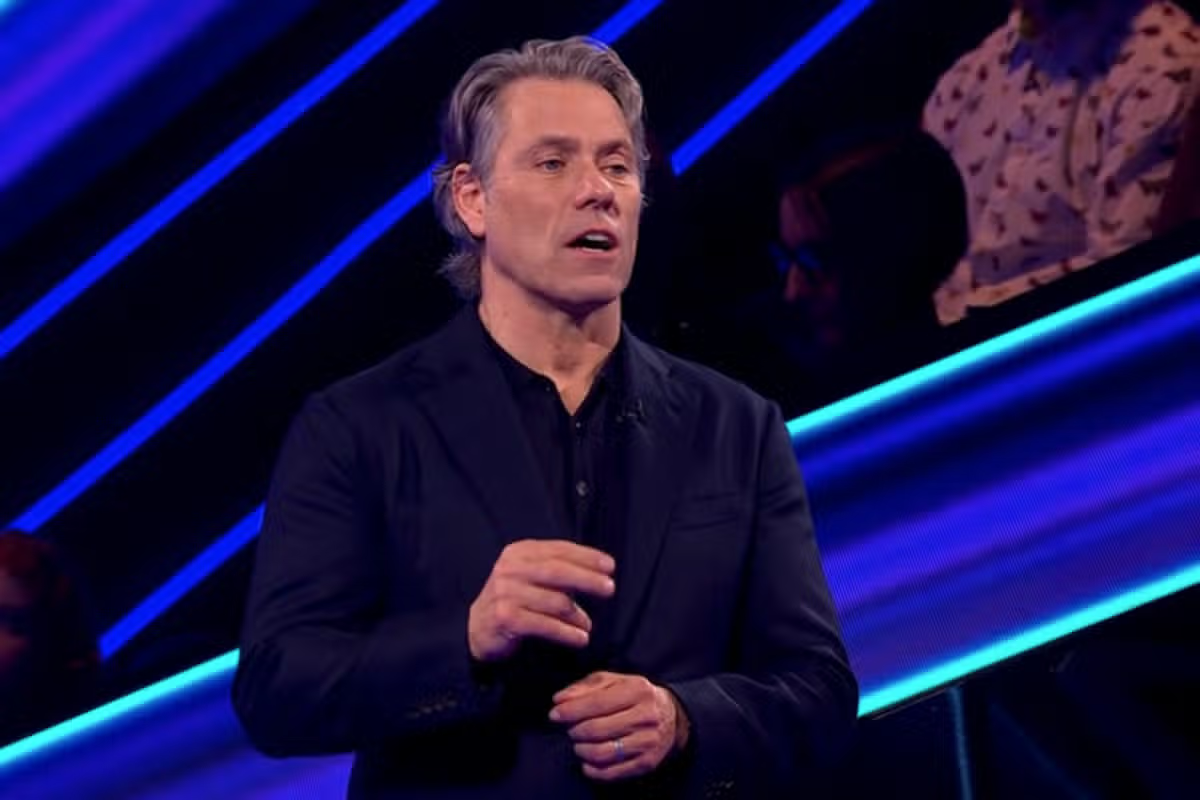
John Bishop Wisdom of the Crowd mades its debut over the weekend and some BBC viewers were left turning off the gameshow

BBC’s Wisdom of the Crowd has left fans divided after just one episode.

The new gameshow, hosted by comedian John Bishop, kicked off on Saturday (September 19) night and is inspired by a remarkable scientific discovery.

Over 100 years ago, a scientist called Francis Galton visited a farmers’ fair where a competition was being held to guess the weight of an ox. Over 800 people entered and the person with the best guess won the ox.

The scientist looked at all the guesses and what he saw blew his mind: The average guess of everyone put together was so accurate that it was even better than the best individual guess.

He called his discovery The Wisdom of the Crowd and the theory transformed the worlds of politics, economics and philosophy and now this science is about to be put to its use as a new big-money Saturday night game show.

In each show, individual contestants get three chances to beat the Wisdom of the Crowd. The whole studio is asked a question and if the contestant’s guess is better than the average guess of the Crowd then they win £10,000.

If the Crowd win, then the contestant gets another chance. If the contestant doesn’t manage to beat the Crowd on their third attempt, they’re out of the game and leave with nothing.

The £10,000 is then put in the CROWD FUND and, at the end of the show, everything left in that CROWD FUND will be shared equally by the Crowd which gives the contestants in a dilemma.

Before they’re knocked out, they can give in, forfeit the £10,000 and take a seat in the Crowd in the hope of taking a smaller share of the winnings at the end of the show.

The first episode left viewers watching at home divided with some switching off in minutes. Taking to X, formerly known as Twitter, one fan penned: “#WisdomOfTheCrowd I gave up after 20 minutes generally I thought it was boring @BBCOne.”

Another added: “This show’s all over the place, I completely lost the thread of what was happening #WisdomOfTheCrowd.” A third person said: “lasted 3 minutes and changed channels. Pish with a capital P #wisdomofthecrowd.”

However, some viewers enjoyed the programme with someone else writing: “Think #WisdomOfTheCrowd is great. Biggest compliment that it feels like an established show already. Fun & playable.” Another agreed: “I will say that #WisdomOfTheCrowd feels like its been on for years. Loving it.”

Speaking to the BBC about the new show, John previously said: “I like the idea of doing a Saturday night show that all the family can watch. Since I started in television, the landscape has changed quite a bit but one of the things that remains constant is that if you’re ever going to get the family together, it’s on a Saturday night and the format of Wisdom attracted me as an opportunity to do that.

“A lot of the questions took me by surprise because you’re always going to get random answers. If you say to people how many mobile phones does the average person have, you’re always going to get someone say something daft at either end.

“But what struck me was when you’ve got a group of people together how unified the answers were. I think that says that as a nation, we’ve got more in common with each other than we think. We all think in a certain parameter.”

Wisdom Of The Crowd continurs on Saturday, September 26 at 8.45pm on BBC iPlayer and BBC One
Source link

Newsom creates panel on AI safety regulation, suggests possible ‘kill switch’

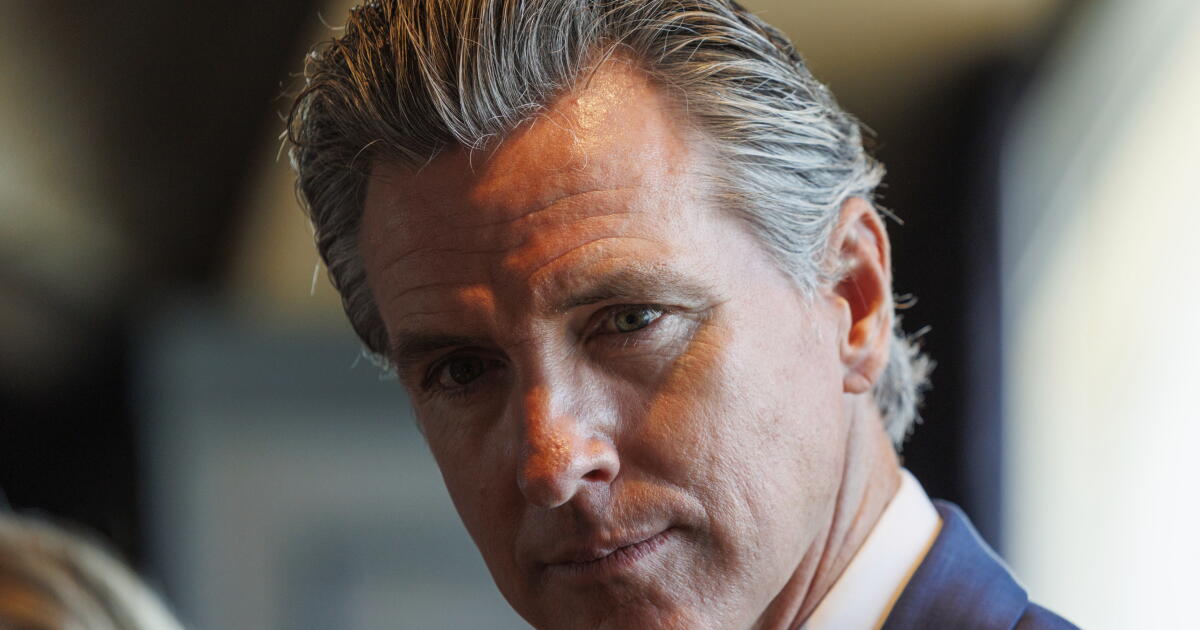
Gov. Gavin Newsom on Friday ordered the formation of a panel to come up with safety regulations for the state’s artificial intelligence companies, including the development of a possible “kill switch” for AI programs that go rogue.

Newsom issued an executive order to convene “a group of world-leading experts” to provide a “guide” for the state to bolster its laws around AI security, according to statement from the governor’s office.

The panel could put consider proposals for independent third parties to write safety plans or for companies to develop an emergency shutoff.

Newsom, who is considering a 2028 run for president, two years ago vetoed a state bill that would have mandated a kill switch.

Some Democratic and Republican leaders around the country are scrambling to come up with safety proposals after employees at AI companies recently warned that the technology could create catastrophe, including ending humanity.

A researcher for AI company Anthropic said he left the company over concerns that AI companies, including OpenAI, are “gambling with our lives” as they race ahead to improve AI that could surpass human intelligence.

The researcher, Jacob Coxon, said in a social media post: “People building AI earnestly believe that it could kill us all by the end of the decade.”

State Sen. Chris Cabaldon (D-West Sacramento), who chairs the state committee overseeing technology issues, told the Times he’ll hold hearings on artificial intelligence this fall. Those meetings were planned before the recent warnings about AI’s dangers, but will be informed by the events of the last few weeks, he said.

He said the state’s rules around AI don’t go far enough.

“We regulate your barber or your sandwich shop more than we regulate [a company] telling us that they may be ending humanity,” he said.

Any new laws could have a disproportionate effect on the global tech industry because many top AI companies are based in California.

A proposed law in 2024 by Sen. Scott Wiener (D-San Francisco) would have required tech firms to be able to turn off the AI models they directly control if things go awry.

Newsom, in his veto message at the time, cited concerns about stifling innovation. He also expressed concern that smaller AI models, which would have been exempt from the law, could also be dangerous.

Source link

AI ‘kill switch’ may need to be mandatory, Anthropic co-founder says

An artificial intelligence “kill switch” which can be checked by a third-party may need to be mandatory for companies, a co-founder of one of the world’s largest AI firms has said.

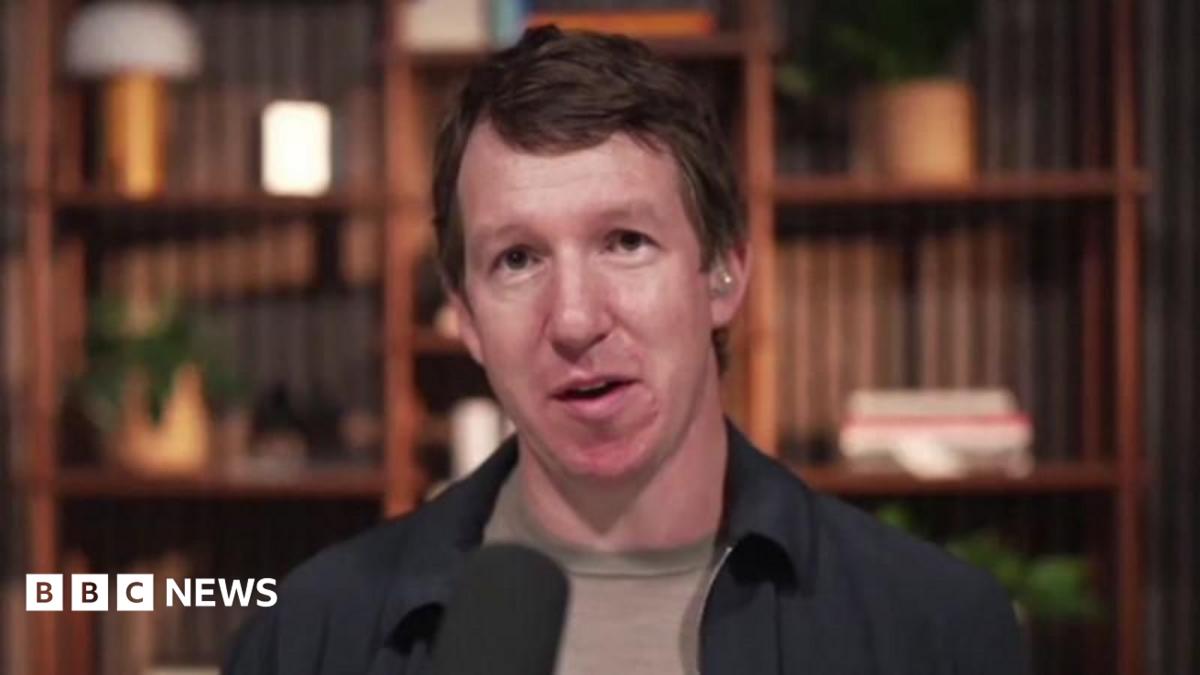
Jack Clark, one of seven founders of Anthropic, said a way of shutting off AI software completely if it gets too dangerous was the kind of thing society “might want to eventually pass rules around”.

Clark said “most labs have different ways of being able to pull the plug”, including Anthropic, but said policymakers may need to enforce having one.

The rapid development of AI and fears over the risks that the technology poses to humanity have been thrust into the spotlight by a series of warnings from executives and staff at AI firms.

Some have said publicly there is a chance that the technology could, if unchecked, kill all humans.

Anthropic head Dario Amodei over the weekend called for the pace of AI development to slow and be more closely monitored, as the company has done before, though some have questioned the motivations behind this.

Amodei did not say how exactly how AI development could be slowed down and said any action to reign in AI development should be done “without sacrificing commercial advantage”.

Clark told the BBC that specifics around “kill switch” requirements and verification should be part of “the larger policy conversation” taking place around AI.

“Should you mandate for companies to definitely have a kill switch? Is that kill switch verifiable by a third party?” he asked.

“I think that’s the kind of thing society is going to want to know and might want to eventually pass rules around.”

Anthropic, which was formed in 2021 by a group of former employees of its rival OpenAI, is currently at the centre of a debate around AI safety.

Last week, a post from an artificial intelligence researcher who quit Anthropic over concerns AI could wipe out humanity went viral.

In response, Anthropic scientist Evan Hubinger said he personally thought the possibility of human extinction from AI was “>10% within the next decade”.

Computer scientist and Nobel Prize winner Geoffrey Hinton, known as the “Godfather of AI”, told the BBC on Friday that a 10% chance of AI killing all humans was “not unreasonable”, external.

Asked what percentage he would put on all humans being killed by AI, Clark said: “I don’t think these statistics are that useful”, but added that allowing AI to continue as a “totally unregulated industry” was a bad idea.

“We are rolling dice with immense risks,” Clark said. “And the point is, we have to change the course of this industry.”

Source link