SIENNA Spiro fans were left confused over her ‘strange’ reaction to meeting Taylor Swift at the VMAs this weekend.
The Die On This Hill hitmaker won Best New Artist at the prestigious awards, while Taylor was awarded three gongs during the bash.
Sienna Spiro fans have been left confused over the singer’s ‘strange’ reaction to Taylor Swift at this weekend’s VMAsCredit: GettyTaylor won three gongs during the bash – making her the star to win the most VMAs everCredit: Getty
Now, a video of the pair crossing paths backstage is circulating online.
In the clip, Taylor walks past London-born Sienna and seemingly congratulates her with a smile.
Sign up for the Showbiz newsletter
Thank you!
Sienna appeared to thank Taylor before looking down and turning to her team and making a face.
In the comment section, some slammed the face Sienna made as disrespectful to the megastar.
Taylor was filmed congratulating Sienna backstageCredit: siennaspirodaily/TiktokBut moments later, Sienna pulled a face that left fans confusedCredit: siennaspirodaily/Tiktok
“Why did she look mad???” asked one fan.
Another said: “Wait is she mocking TS? I am confused.”
“Wait is she mocking TS? I am confused.” wrote a third.
However, some defended Sienna – who was holding her high heels in her hands after taking them off – and claimed she was simply overwhelmed following the win.
“I think she was still in shock from winning,” said a user.
Another speculated: “I could tell by her body language she was embarrassed because she was holding her heels in her hands. 😭 I felt that for her. And her facial expression after.
“I can’t tell if she’s having a “how can this be real” moment or an “ew” moment /gen,” said another.
The Sun has reached out to Sienna’s representive for comment.
The awards bash saw music’s top stars in attendance, with Madonna opening the show before being joined by Sabrina Carpenter and later followed by Charli XCX.
Taylor’s three prizes included Video of the Year for The Fate Of Ophelia and meant Taylor is now the most-decorated act in VMA history with 33 gongs, overtaking Beyoncé.
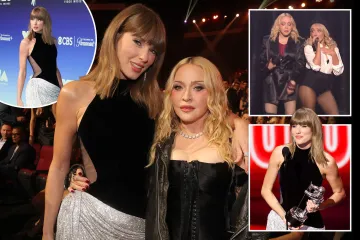
Taylor Swift showed off her newly-chopped hair in a stunning, slinky gown as she prepares to accept the first-ever Artist Director Honors awardCredit: GettyCharli xcx leaned into the vamp with a velvet two-piece setCredit: Shutterstock EditorialBebe Rexha wore an all-black lace look with lace up knee high bootsCredit: GettyActress Teyana Taylor wore a feathered Zuhair Murad gownCredit: Splash
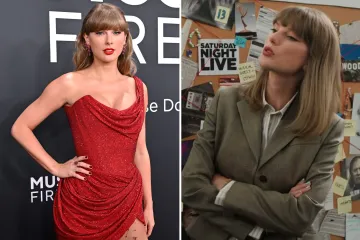
Taylor Swift, who is set to accept the inaugural Artist Director Honors award, wore a slinky Tamara Ralph gown.
The pop star paired a sparkly silver skirt with a form-fitting black bodice and mesh side cutouts.
Sign up for The Sun newsletter
Thank you!
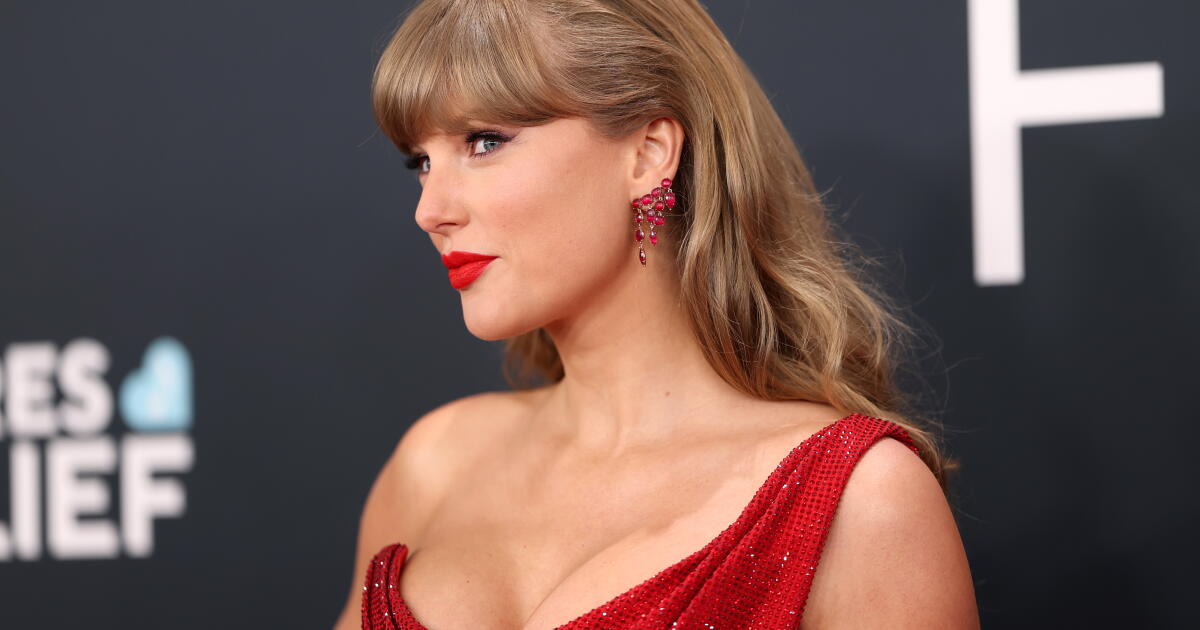
She also showed off her new collarbone length haircut with long, cascading earrings.
Presenter Charli xcx stepped out in an all-black velvet ensemble from Saint Laurent with dramatic, billowing sleeves.
The low-rise column skirt and tiny top showed off her toned stomach, an a mesh insert covered her chest.
Lisa from Blackpink brought the drama in a floor-length, furry red capeCredit: Shutterstock EditorialPop star Sombr rocked a bedazzled belt as he’s nominated for three awardsCredit: Shutterstock EditorialSinger PinkPanthress, nominated for five awards, wore a Nina Ricci gownCredit: GettyTyla brought her signature glam look in a two piece snakeskin set from MowalolaCredit: Shutterstock Editorial
Other stars kept up the black theme.
One Battle After Another actress Teyana Taylor wore a plunging feathered gown from Zuhair Murad, while Bebe Rexha wore an all-black lace look with over the knee boots.
Lisa from the K-pop group Blackpink turned heads in a form-fitting red gown and a dramatic furry red cape.
Most read in Entertainment
The star is up for four awards tonight and will perform her single SaWaDiKa during the ceremony.
Presenter Rachel Dratch donned a structured metallic dressCredit: GettySisters Paris and Nicky Hilton twinned in silverCredit: Getty
Sombr also kept up the fur theme with an oversized striped jacket over his bare chest.
The pop star accessorized with layered necklaces, black sunglasses, and a bedazzled belt that reads “sex”.
She paired the burgundy and polka dot dress with light, blushing makeup and a fishtail braid.
Singer Troye Sivan wore a high-necked Erdem suitCredit: Shutterstock EditorialSinger Normani opted for a full golden metallic gown with full flower embellishmentCredit: Getty
Presenter Tyla brought the heat in a blue snakeskin two-piece bra and skirt set from Mowalola.
SNL alum Rachel Dratch wore a structured metallic dress, while sister duo Paris and Nicky Hilton twinned in silver, with presenter Paris rocking tall bedazzled boots and a sparkly mini dress with cut-outs.
Troye Sivan brought the drama in a high-necked Erdem suit with a draped black sash with white feathers.
Singer Normani also went for a metallic look with a large flower embellishment.
Singer Chloe Bailey left little to the imagination in a mirrored gownCredit: Shutterstock EditorialActress Ella Bright wore a corseted black gown that matched her new dark hairCredit: ReutersReality star Lisa Rinna rocked a wild blonde pixie and gown with fake nipplesCredit: Shutterstock EditorialSinger JoJo also wore a black column skirt paired with a braCredit: Getty
Singer Chloe Bailey wore a body-hugging silver dress with intricate beadwork and mirrored embellishments.
The tight bodice on the dress left little to the imagination – including her nipple peeking out the top.
Off Campus star Ella Bright stepped out in a black corseted gown that matched her new dark hair.
Real Housewives star Lisa Rinna debuted a wild new hair look coupled with a white gown with fake nipples.
Singer JoJo paired a black column skirt and bra top for her VMAs appearance.
Fans have been deciphering the lyrics on the tracks of Taylor Swift’s new extended albumCredit: TAS Rights ManagementFans believe one song is about the former husband of her actress pal Sophie TurnerCredit: Splash
Taylor sings on the track, her new single: “If you wanna party with somebody who might know about the Devil on his shoulder under his halo . . . When the toxins take their hold, you’d rather die than let it go.
Sign up for the Showbiz newsletter
Thank you!
“But if you’re sick of him, I got you, I was Patient Zero. I’ve been there, felt the reeling, done the healing, said the curses and prayers when the fever turns a dreamer into a pathetic ghost.”
Taylor has revealed that the track resulted from a get- together with friends where one of them told how she had been contacted by an ex’s new girlfriend, asking if she had had the same experiences with the guy.
She added: “And everyone in our group just immediately started saying, ‘Oh, I’ve been through that too’.
“And I thought to myself, ‘If this has happened to all of us, it’s such an interesting angle on humanity and on relationships.
“And I wonder if I could write something from the perspective of getting this phone call, and really only from the perspective and the side of the phone call of the ex who’s been through it before.”
The extended album also includes an open apology to one of Taylor’s exes, who most fans are sure is Tom Hiddleston.
Taylor also previously dated Joe Jonas – and her track suggested she felt sympathy for SophieCredit: GettyAnother of the tracks appeared to offer an olive branch to ex Tom HiddlestonCredit: Getty
Their two-month romance played out very publicly in 2016, when the Night Manager actor became a laughing stock after wearing an “I heart TS” T-shirt.
On Pink Clouding, Taylor sings: “Years later, I still wonder how to tell you sorry.
“I didn’t wanna let you down. So I left you up there on a pink cloud.”
She adds: “I hope you realised my kind of trouble wasn’t worth it and the way I treated you, you never deserved it.
“And I swear to God, to this day, I wake up scared that I left scars on a good person.
“And I gave you zero reason to believe it. So be it. But it didn’t mean nothing. Just ’cause I could leave it.
“I hope you landed safely on the ground. And I hope you’re so happy now.”
Tom definitely is, but I’m not so sure Joe will feel the same, now he is trending all over social media again.
FLO LOOKS SHRED HOT
Florence Pugh wore a fabulous silver gown in a photoshoot for Vanity FairCredit: Nadine Ijewere/Vanity FairFlorence wore a futuristic headpiece for her cover image for the magazineCredit: Nadine Ijewere/Vanity Fair
FLORENCE PUGH looks like she’s ready to go to a disco in this fabulous silver gown on the cover of Vanity Fair.
The Dune actress wore the backless dress with a futuristic headpiece for the mag cover.
Florence said: “I don’t want to be a secret, but I also don’t want everything to be divulged.
“The important thing is that we’re happy, and I feel solid and safe and sturdy. And that’s worth its weight in gold in our lives.”
MANIFEST’S TURKISH DELIGHTS
VIRAL Turkish girlband Manifest are taking over the UK after landing in London to meet their fans.
The band hosted a VIP boat party on the Thames with Bizarre hanging out with them as they took in the sights of the capital, complete with Union Jack umbrellas.
During the boat ride, the girls treated us to an exclusive first performance of their as-yet-to-be-named debut English single.
They were also filming a Netflix documentary special, with Bizarre’s Jack set to make a cameo.
They will headline their first UK show next month, skipping smaller venues to headline at OVO Arena Wembley.
From what we have seen of Manifest so far, I’m sure it will be one to remember.
DUA’S SUCH A SWEETIE
Dua Lipa left little to the imagination with this creative top – that looked like it could have been made out of SmartiesCredit: Instagram/@dualipa
IF you like a tucking into the occasional tube of Smarties, this picture of Dua Lipa will hit the sweet spot.
The singer posed in a top that looked like it was made up of hundreds of the sugar-covered chocs. tied together with string.
Dua has been hard at work on a new record, the follow-up to her No1 album Radical Optimism which came out two years ago.
Fans should expect an announcement some time next year.
DOLLY’S LAST DUET WITH U2
Dolly Parton’s final vocal performance is being released as a duet with BonoCredit: Getty
DOLLY PARTON’s final vocal performance is being released as a duet with Bono on U2’s first album in nine years.
The Irish band have announced Carnaval de Luz will be out on November 12.
It includes Torn, which Dolly started before handing it over to U2 to work on, with the help of Snow Patrol’s Johnny McDaid.
Bono told Rolling Stone: “When she got ill, she got out of her bed to sing this song. And you can hear that. I can’t even listen to it now. She sang her heart out, and I cannot believe that’s an 80-year-old woman.”
Bono said it came about after Dolly, who died last month, turned down an Irish folk-themed side project he was working on.
Brian Eno, Ryan Tedder, Martin Garrix have also been involved in the album.
ELTON JOHN is opening the Apple Music Hall at Battersea Power Station in London on Monday.
Tickets go on sale at 9am the same day at applemusichall.com.
The opening series for the 600-capacity venue will also include Charli XCX, Chase & Status, Burna Boy, Arlo Parks and Troye Sivan.
Sets will later be available to watch on Apple Music.
ROBBIE: I ASKED TO JOIN OASIS
Robbie Williams has revealed he asked if he could join Oasis after Liam Gallagher left the bandCredit: Getty
On stage in Bogota, Colombia, where he is on tour, Robbie said: “I am a massive Oasis fan, so two years after they broke up I thought, ‘I’ll phone Noel Gallagher’.
“I phoned Noel and said, ‘Noel, you need a new lead singer. Let it be me’. He laughed and put the phone down. That was the last time I spoke to Noel and it makes me sad.”
Given the beef between Robbie, Noel and Liam over the years, I think it was probably a wise move.
Rob, above with Liam at Glasto in 1995, will be hoping he can get tickets for next year’s reunion tour.
I’ve still not had my code for ticket sales this weekend and the wait is killing me.
“You only need to find one person in this entire world who doesn’t find you completely insufferable.”
That’s the wisdom Taylor Swift dispenses near the end of “Cleveland!,” one of four new songs on a newly expanded edition of “The Life of a Showgirl,” and if that exclamation point doesn’t tell you she’s found that person then I don’t know what would.
Released Thursday night, almost exactly a year after the original album came out, “The Life of a Showgirl: The Encore” tacks four bonus songs onto the blockbuster 2025 LP that set a new record for the biggest opening week of all time even as it drew the harshest reviews of her career. It also follows Swift’s high-profile wedding in July — her husband, the NFL star Travis Kelce, grew up in Cleveland Heights — and comes just as Grammy voters are about to decide on nominations for February’s awards ceremony, where “The Life of a Showgirl” is eligible for Swift’s eighth album of the year nod. (In case you haven’t been keeping track, that would tie her with Frank Sinatra for the most in Recording Academy history.)
In a statement ahead of “The Encore’s” release, Swift said she’d taken a trip to Sweden to celebrate “Showgirl’s” success with Max Martin and Shellback, her two principal collaborators on the album. “Really we just wanted to reflect and take in how grateful we were for the moment we were in,” she wrote, “but there was a studio there and we did what we do when we feel anything at all: We wrote more songs.”
Here are the four “Encore” tracks, ranked from worst to best.
4. ‘Cleveland!’ The exclamation point really is hilarious. (No shots at Cleveland.) I kind of dig the airy jangle-pop production, which reminds me a bit of “Ruin the Friendship,” by far the best song on the original “Showgirl.” But writing about her and Kelce’s romance as a bulwark against all the hate she receives as a rich and powerful pop star feels pretty uninspired, at least as rendered here. “The taste of me is acquired, but it’s his favorite dish”? Alas, no.
3. ‘Patient Zero’ “Encore’s” lead single — with a splashy music video set to premiere during Sunday night’s MTV Video Music Awards — has Swift fielding a phone call from a woman who’s dating one of the singer’s exes and could use a little advice. (“I’ve gotta be honest — I’ve been expecting your call,” Swift tells her.) That’s a rich premise, and I like the way the unexpected fiddle lick scrapes against the glossy synths. Again, though, the lyrics lack the emotional sophistication with which she once would have told a story like this one. And the song’s central image — a guy with a “devil on his shoulder under his halo” — is downright awkward.
2. ‘Pink Clouding’ OK, now we’re getting somewhere. This shimmering electro-pop number takes its title, as I just learned, from a term used among people experiencing addiction to describe the temporary euphoria one might feel in the early stages of recovery. (Recall that Swift wrote “Lavender Haze” a few years ago after hearing the phrase on “Mad Men.”) Here she’s looking back with regret at a relationship that she can see now was clearly a rebound: “You met me at a cursed time / I told you I was fine / And you were so good / That’s why you haunt me like you should.”
1. ‘Babylon’ Look, I’m not crazy about “liberated libertine.” And “Love is ice upon the ladder that you need to climb”? It’s giving Airbnb wall art. But man, oh man, does Swift finally tap into something deep in “Encore’s” closer: a trembling acoustic-guitar ditty about someone who’s realized only too late what they let slip away. Listen for yourself to hear how she sings it — this is a beautifully tender vocal performance — but the verse about the all-but-abandoned young mom sneaking into the bathroom to call her mom is an absolute killer. Taylor Swift: good songwriter!
With SWIFT’s ISO 20022 compliance deadline looming in November, several banks are behind schedule.
This article appears in the September 2026 issue of Global Finance Magazine.
Cross-border payments are approaching a hard deadline in November, when SWIFT stops accepting unstructured address data under ISO 20022. The global messaging standard that replaced the old SWIFT MT format, ISO 20022 was designed to give every country’s banks a common baseline, and November’s structured-address requirement is the next phase of that migration.
SWIFT data from April showed that 61.2% of payments still carried unstructured debtor addresses, and 62.9% unstructured creditor data. This matters; once fully unstructured addresses are removed, noncompliant payments risk rejection or delay, with no fallback transition layer for missing address data.
A March survey of senior payments professionals across Europe and North America by RedCompass Labs found that 44% of banks were behind schedule on readiness for SWIFT’s removal of unstructured addresses. Pratiksha Pathak, RedCompass senior vice president and head of payments, attributed that figure to years of treating the wider ISO 20022 migration as a message-format exercise rather than the data quality overhaul it was always meant to be.
Scale and Legacy Hurdles
Anxiety about readiness was clear but uneven, with 20% of the very largest banks deeming the deadline “unrealistic,” compared with 5% of smaller banks, indicating that scale and legacy systems are part of the problem. This was not for lack of trying; most banks are spending around $20 million on the requirements, with larger institutions spending over $30 million.
Bank readiness has shifted since March, Pathak noted. Some trailblazers have rolled out “brilliant” programs, she said, while laggards still hope SWIFT will push back the clock. That won’t happen, Pathak said: “They’re not moving the deadline.”
Lloyds is among the banks that recognized the central issue early, building its solutions around structured data from the outset. API-based channels natively support the required fields, backed by validation controls and proactive client outreach, including a ramp-up in dedicated resources as November approaches.
“The biggest challenge isn’t usually the payment message itself,” said Surath Sengupta, head of transaction banking products at Lloyds. “It’s the readiness of the underlying data. Many organizations already hold most of the required information, but it’s often stored inconsistently across ERP and treasury systems.”
Early movers aren’t aiming just to meet the deadline, he said. They are positioning themselves to capture the broader gains from automation that follow, “from increasing automation and reducing friction to laying the foundations for the next generation of cross-border payments.”
Industry estimates suggest that 5% to 10% of payments currently generate sanctions screening alerts requiring manual review, a friction that richer structured data should directly ease.
‘Beyond’ ISO 20022 Compliance
Not every treasurer is equally confident in the guidance they receive, however. Some have faced practical challenges with the availability of detailed technical specifications and implementation guidance from banking partners, said Marianna Polykrati, group treasurer at aquaculture producer Avramar: “Many corporates are still waiting for this information.”
Ownership of payment process and master data varies across organizations. At Avramar, treasury and accounts payable share the responsibility, making close collaboration essential.
“Our preparation goes well beyond generating ISO 20022 XML files,” said Polykrati. “We see this as a data quality and process transformation project. As we prepare for an ERP migration by the end of the year, we are using this opportunity to clean up master data, standardize payment workflows, and strengthen governance. Rather than treating ISO 20022 and the ERP implementation as separate initiatives, we see them as complementary projects.”
While compliance may be the starting point, “operational improvement is where the real value is created,” she said, echoing Pathak and Sengupta’s views. With just two months to go, the real test may not be whether the deadline holds, but how many organizations have treated it as an opportunity for long-term gains rather than a burdensome medium-term obligation.
Deborah Ritchie is a contributing writer based in the U.K.