MANY parents usually spend years saving up for family holidays abroad.
But one savvy couple has managed to swap life in the UK for a full-time travel adventure – all while saving £36,000.
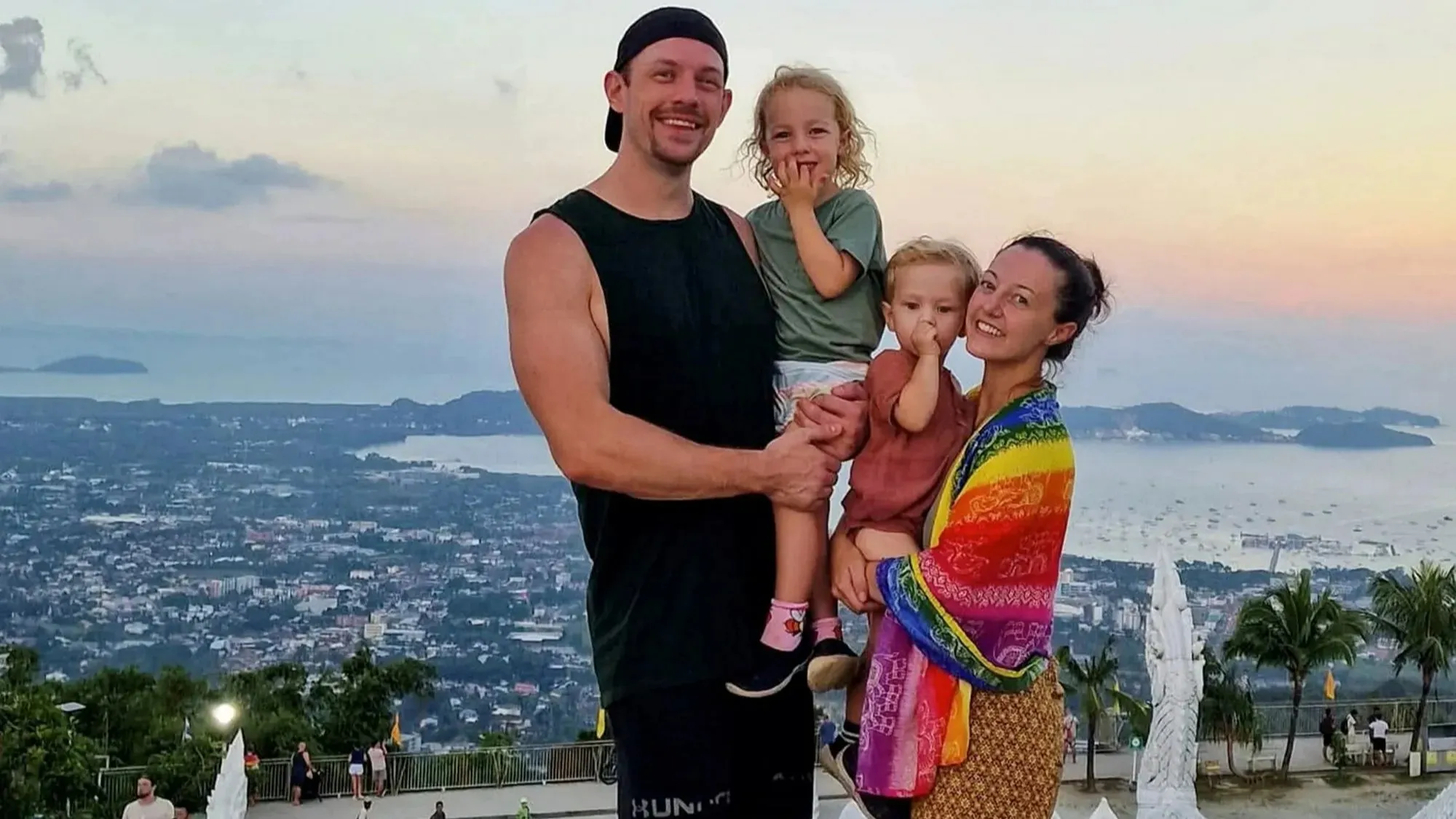
Steven, Aurora, Atlas and Ruth in Phuket, ThailandCredit: SWNSSteven and Ruth enjoying quality time with their kids in Sri LankaCredit: SWNS
Back in 2023, Ruth and Steven Rowe made a decision which shocked a lot of people after “selling everything they owned” and buying a one-way ticket to Sri Lanka.
They have been globe-trotting ever since on a budget of just £30 a day, and have turned the world into a classroom for their two children Aurora, five, and Atlas, four.
Ruth, 35, and Steven, 36, said they had always dreamed of travelling full-time and, as the moment approached to put the children into a nursery, they felt the time was right.
Ruth said: “We knew those early years were precious and we wanted more time together as a family before school routines took over.”
The family-of-four looking over a field Bali – one of the 17 countries they have visitedCredit: SWNSSteven, carrying Aurora, and Ruth with Atlas in her armsCredit: SWNS
They flogged all their belongings on Facebook Marketplace or via car boot sales and set off from the village of Eardisley, Herefordshire, with just two suitcases of clothes and a few toys.
The family has already been to 17 different countries, ticking off bucket-list destinations such as Costa Rica, Guatemala, Ecuador, and Indonesia.
They stay four weeks at a time in Airbnbs and have also visited the likes of Thailand, Malaysia, Cyprus, the USA, Colombia, and Peru – all while saving around £12,000 a year.
They currently have no plans to return and want to continue world-schooling in exotic locations – while spending around £2,000 a month, compared to £3,000 back in the UK, as a result of their rent and outgoings being less.
Ruth and Steven had been renting a barn conversion and had both children during the Covid-19 pandemic.
They had travelled extensively before having kids but couldn’t shake the feeling that there was still so much of the world they wanted the children to experience.
Ruth added: “We wanted more time with them as we know those early years are precious, so we thought, why not just do it? So we did.
“Selling everything was an exhilarating experience.
“Our car, furniture and most of our possessions all went through Facebook Marketplace and car boot sales.
“We kept only a handful of memory boxes filled with special items from the children’s early years and a few clothes.
“We set off at the start with two big suitcases, a medium and a small one – and a stroller.
“And since then we’ve downsized to just two suitcases – it is really surprising how little you really need.
“Possessions don’t make you happy, life experiences do.”
They arrived in Sri Lanka with no return ticket and no real plan beyond seeing where life took them.
Ruth added: “And we’re still travelling now. We’ve been travelling full-time ever since, slow-exploring the world as a family, while my husband runs his coaching business remotely and we embrace world-schooling on the road.
“It’s been beautiful, chaotic, challenging and incredibly freeing.”
Steven, Aurora, Ruth and Atlas pictured together in GuatemalaCredit: SWNSThe family pose in Antigua, GuatemalaCredit: SWNS
The couple also support themselves financially via Steven’s online coaching business – which he can still run wherever they are in the world.
However, Steven revealed the lifestyle isn’t always glamorous.
He added: “We use Airbnbs mainly but I’ve been working out of little cupboards in some places – it has been challenging at times but we’re in a fortunate position.
“We aim to live off around £30 a day and we stay in places for a month at a time so I can work Monday to Friday.
“But it can vary greatly; a two-bed apartment in one country can be £800 but a smaller one in another country £1,300.”
The couple say their children are now educated through “life experiences” – be it picking up Spanish in Latin America or learning about volcanoes while hiking in Peru.
And they say giving the kids no screen time whatsoever on their travels has helped them to become more patient and creative.
Ruth added: “They are also learning counting through things like paying a tuk-tuk driver in different currencies and the first time Aurora ever wrote her name it was in sand on a beach with a stick.
They also visited a waterfall in ColombiaCredit: SWNSChilling out at the Pacific coast of Costa RicaCredit: SWNS
“We give them no screen time at all – which I think has taught them patience on their travels and to be more creative when they are bored sitting on a bus.
“They thought the TV back home was a radio as we’d only use it for Spotify and we think that’s allowed their imagination to flourish.
“I have just seen their confidence grow so much, and of course there’s no way of really telling how they would have been at home, but they are just so open and talk to anyone – young and old.
“I will sit down and teach them some reading and phonics and writing – but we’re not rigid with it and it’s still very much about learning through playing.
“It wasn’t a case of we hated the UK – we just love the world. But I was never a fan of the cold and rain so that is something I don’t miss.
“Also, we’ve found children aren’t treated like nuisances like you find in some restaurants in the UK.
“They are welcomed in and looked after, lots of places have playgrounds too to keep them entertained; that was a big difference to the UK too.
“Sri Lanka is just the most welcoming place we’ve ever been – people would invite us to eat in their homes and absolutely loved the kids.
“Costa Rica is beautiful with all the wildlife and jungle, Guatemala is underrated – it is also an incredible place and one of our favourites.”
Ruth was also not a fan of the cold and wet British weather – but admits she misses British chocolate.
She added: “The only thing I miss is friends and family – and also British chocolate.”
Steven also believes the lifestyle has been transformational for the children.
He said: “These positive environments have brought such positive developments so far in our children. Atlas was swimming independently at two.
“This way they get one-to-one without being part of the larger school system, which we have no issue with, we just see the benefits from doing it this way.
“We make sure the children are at the centre of what we do, we always research kids’ clubs and activities wherever we stay.
“They are loving learning about all the wildlife too – we had iguanas and sloths outside our doors in Costa Rica.
“Aurora had surf lessons in Bali and will be sandboarding in the Peruvian desert; it’s magical for them.
“The children have most enjoyed all the swimming they’ve been able to do and all the wildlife has been a massive enjoyment for them too.”
Many of us own one of these common colours for a suitcase but it is worth following simple advice that will stop any problems from arising
09:56, 06 Oct 2026Updated 09:56, 06 Oct 2026
This article contains affiliate links, we will receive a commission on any sales we generate from it. Learn more
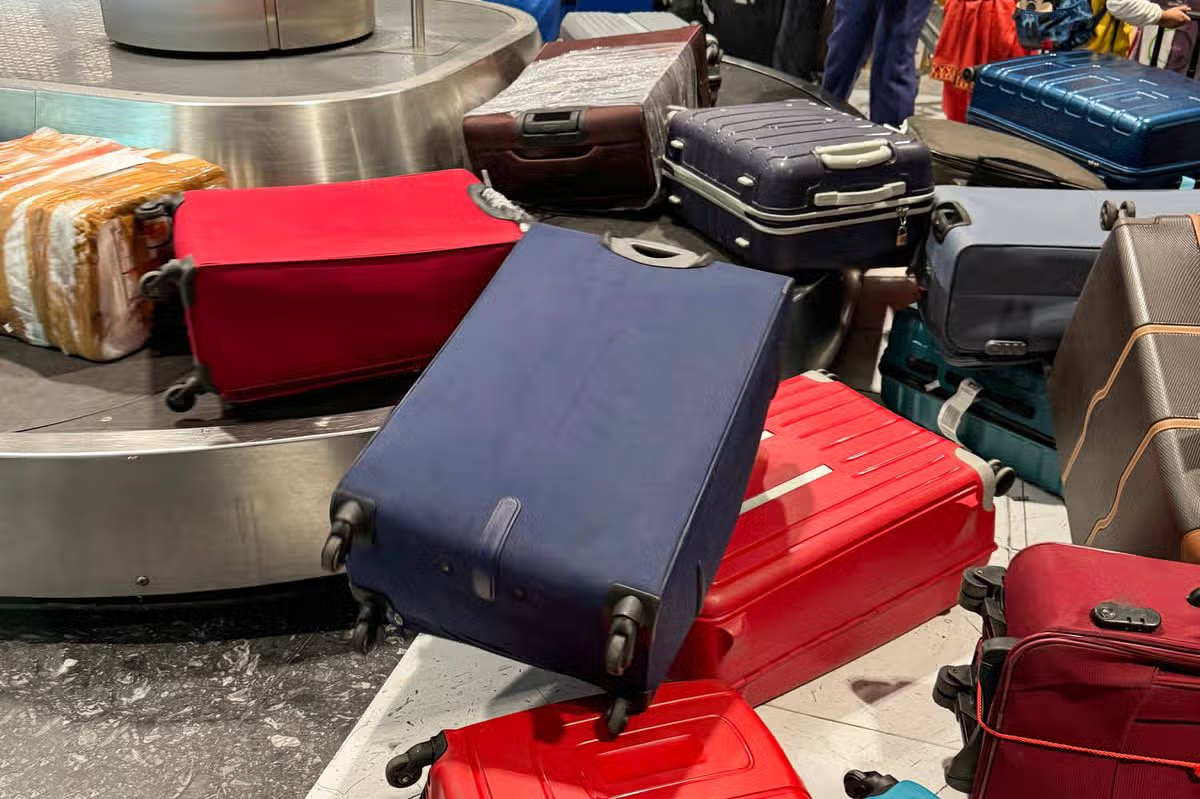
Many of us think they can spot their suitcase when it is on a baggage carousel(Image: mtreasure via Getty Images)
Ryanair continues to grow, with the airline carrying a record 208.4 million passengers in its latest full financial year – a four per cent increase on the previous year. However, the budget airline has also been cutting back at some European airports, with Ryanair withdrawing or reducing flights in certain locations.
The airline has pointed to factors including aviation taxes and airport charges. Despite this, the UK remains a key part of Ryanair’s expansion plans.
Its winter 2026 schedule includes 435 routes, with three new services from London Stansted and a new route between London Luton and Venice. A further 18 new routes have also been added from other UK airports.
As Brits gear up to the October half term holidays and winter, Ryanair has issued a warning to passengers who typically fly with black, navy or grey suitcases, urging them to ‘change’ their luggage to avoid any confusion when they land.
The budget carrier advised travellers to make their checked-in bags more distinctive on the carousel given the prevalence of these colours.
What Ryanair says
As reports the Express, Ryanair said: “Make it easier to spot your checked-in luggage on the carousel, especially if your luggage is black, navy or grey (like 99.9 percent of the population). Add a colourful luggage tag or ribbon to the handle so that there’s no confusion on arrival.”
Ryanair also recommends passengers create copies of their passport, driving licence, and/or ID card and email them to themselves.
It’s also suggested to photograph these documents and store them on your phone for offline access at your destination,
The well-known budget carrier transports an impressive 52 million passengers to and from the UK annually with its fleet of 107 UK-based aircraft.
In June, Ryanair experienced a spike in passenger numbers with 19.3 million people opting to fly with them across one of their 106,000 flights. This marked the first occasion the airline transported more than 19 million travellers and an 11 per cent rise compared to June 2023.
The airline also pulled out all the stops for England fans during the Three Lions’ Euro 2024 run, laying on over 1,500 extra seats to and from Berlin for the cup final.
On a separate note, if you’re on the hunt for stylish cabin bags and suitcases, Antler is well worth a look. Their Iconic Stripe Case, retailing at £175, is available in seven gorgeous colours, including mist blue.