Sudan war

Sudanese minister says war has ‘profoundly reshaped’ nation’s demographics | Sudan war News

Khartoum, Sudan – A senior Sudanese minister says more than three years of a devastating war in the country have “profoundly reshaped” its demographic makeup.

Minister of Human Resources and Social Development Mutasim Ahmed Saleh told Al Jazeera Arabic that his ministry was working with several partners to strengthen population policies and link them to social protection programmes.

Recommended Stories

list of 4 itemsend of list

Sudan has been embroiled in a brutal civil war between its army and the Rapid Support Forces (RSF) paramilitary since April 2023. The war is estimated to have killed about 200,000 people and displaced more than 11 million, creating what the United Nations calls the world’s largest humanitarian crisis.

The war has also affected Sudan’s demographics.

Before the war, the North African country’s population was expected to exceed 64 million by 2035, according to official data. In 2020, the population stood at about 44.4 million, with forecasts of a growth rate of about 2.39 percent – one of the highest rates globally.

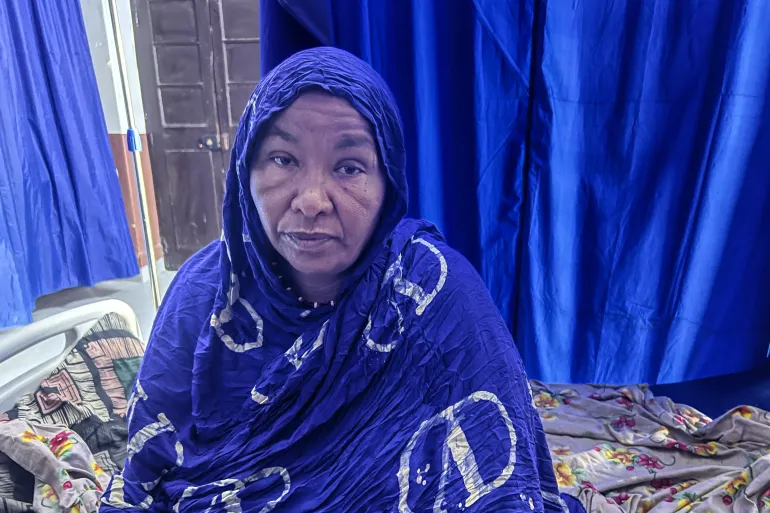
Sudanese Minister of Human Resources and Social Development Mutasim Ahmed Salih [Al Jazeera]
Sudanese Minister of Human Resources and Social Development Mutasim Ahmed Saleh [Al Jazeera]

The war has not only displaced millions of people internally in South Darfur, North Darfur and Central Darfur states, it has also forced tens of thousands of others to seek asylum in neighbouring countries, including Egypt, South Sudan and Chad.

Saleh said the most significant demographic changes caused by the war included a general increase in poverty levels, a large segment of citizens losing their income, the deterioration of basic services in a number of areas, and a decline in the labour market and human capital.

To mark World Population Day on July 11, the minister said his government would work for the people – “the focus and ultimate aim of the state’s attention” – and strengthen social protection programmes.

Saleh said his ministry, through the National Population Council and with other state partners, would strengthen Sudan’s population policies and link them to social protection, the voluntary return of refugees, the reintegration of displaced people, and human resource development to contribute to rebuilding the country’s human capital as the “cornerstone of national recovery and sustainable development”.

He said that investing in people was “the real investment in Sudan’s future”.

“The more we succeed in restoring population stability and empowering citizens economically and socially, the closer we come to building a more stable, just and prosperous homeland,” Saleh said.

Population imbalance

Experts say Sudan is distinct in its demographic structure – it has a large youth population, with about 70 percent of the population under the age of 30, according to data from the last census conducted in 2008.

They say that its large youth population gives Sudan a demographic dividend that could drive economic development. But Saleh’s ministry said young people have faced challenges such as limited access to education, scarce job opportunities and widespread poverty, even before the conflict turned them into one of the worst-affected groups.

Sudanese women gather for a hot meal at al-Rahmaniyah camp for displaced people, near the city of el-Obeid in the southern Kordofan region, on July 7, 2026 [AFP]

Khalid Saad, director of the Sudanese Center for Development Communication, told Al Jazeera that Sudan’s population crisis did not begin with the war.

Despite the country’s vast territory and abundant natural resources, it has suffered for decades from a clear imbalance in population distribution, he said.

“The war came to deepen this imbalance, redraw the demographic map through displacement and asylum, empty some areas of their populations, burden other cities with numbers beyond their capacity to absorb, while large numbers of people have returned to areas retaken by government forces,” he said.

Saad said the likely return of people does not mean the end of the demographic crisis, because returnees often go back to areas that have lost a large part of their economic infrastructure.

“The challenge therefore remains in rebuilding an environment that ensures their stability and prevents renewed displacement,” he said.

The war, Saad added, raises questions that still require precise answers: the actual scale of human losses; how the war has affected mortality rates; how it has changed patterns of marriage and childbearing; the impact of displacement and migration on birth rates and age structure; and how the emigration of skilled professionals will affect the size of the workforce in coming years.

Answers to these questions form the basis for any economic or social planning in the post-war phase, he said.

Data released by the National Population Council also points to a demographic imbalance.

Sudan’s urban population rose to about 17.9 million in 2020, with Khartoum alone accounting for about 42 percent of the country’s urban population, indicating a pattern of internal migration driven by uneven development.

The International Organization for Migration said that about 4.1 million people have returned to their areas of origin across Sudan. The vast majority — more than 80 percent — returned from within Sudan to nine states, led by Khartoum, Gezira and Sennar.

According to the organisation, the number of internally displaced people has fallen by 23 percent compared with the highest level recorded in January 2025, when the number of people displaced within Sudan stood at nearly 12 million.

Sudan has entered its fourth year of conflict amid a complex political and military landscape, with little hope of a resolution. Infrastructure has collapsed, and essential services remain disrupted.

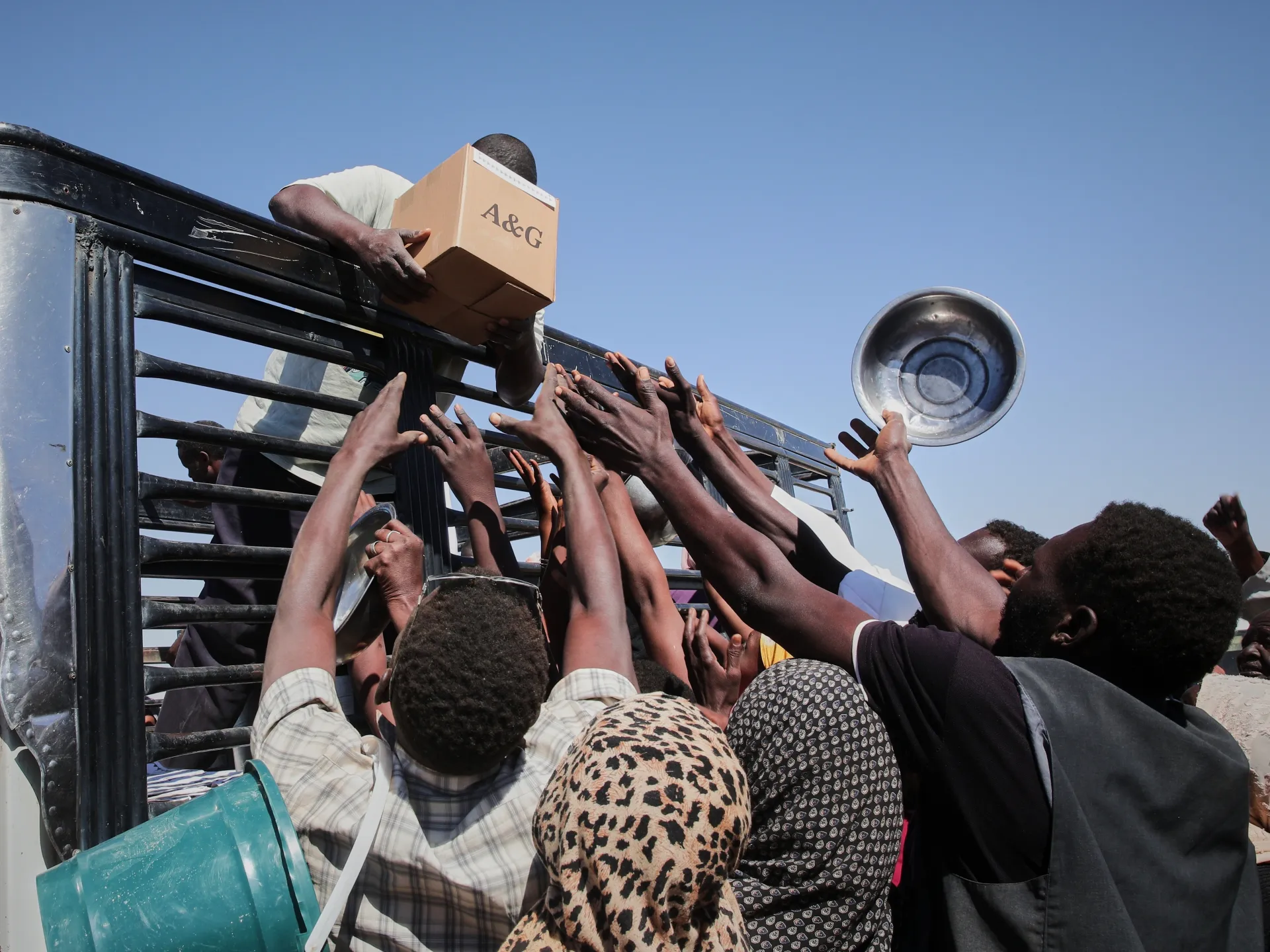
Meanwhile, local and international warnings are mounting over a worsening humanitarian crisis, driven by shortages of food and medicines, and the difficulty of delivering aid to affected or besieged areas.

Source link

Sudan faces escalating hunger crisis due to war and Hormuz disruption – WFP | Sudan war News

Renewed conflict and tensions in the Strait of Hormuz have slowed fertiliser shipments, worsening hunger in Sudan.

Sudan risks facing a deepening hunger crisis due to ongoing conflict, aid ⁠funding cuts, and rising agricultural costs driven by the global disruption caused by the Iran war, a senior World Food Programme (WFP) official has said.

“It’s a massive crisis, both in terms of numbers, but also due to the gravity,” Carl Skau, the WFP’s acting executive director, told Reuters on Tuesday.

Recommended Stories

list of 4 itemsend of list

Skau said that more than 100,000 people were still facing famine-like conditions, placing them in the highest level of the United Nations-backed Integrated Food Security Phase Classification (IPC). “With these kinds of numbers in IPC 5 starvation, it is extremely, extremely serious,” he said.

Sudan remains the world’s largest humanitarian crisis, with around five million people facing emergency or catastrophic levels of hunger, even after an intensive ‌aid response helped reduce the number of people in famine-like conditions, Skau said.

Nearly 19.5 million people across Sudan face high levels of acute food insecurity, according to the ⁠IPC. Skau said that recent fighting around el-Obeid in North Kordofan had raised fears the ⁠city could suffer a fate similar to el-Fasher in Darfur, where conflict and siege conditions trapped civilians and hindered aid deliveries, and where the paramilitary Rapid Support Forces (RSF) carried out mass killings and gang rapes after they took control of the city in the course of their three-year conflict with the Sudanese Armed Forces (SAF).

In recent days, however, violence has eased somewhat around el-Obeid, raising hopes that aid deliveries can be expanded from 100,000 to 250,000 in the area.

The WFP is ⁠also increasingly concerned about renewed fighting over the past week in Darfur, which has forced the closure of the Tine border crossing, a route from Chad ⁠into Darfur. This renewal of conflict threatens to reverse gains made after famine took hold in parts of the country, it said.

Throughout the country, the WFP has reduced the number of people ⁠it assists from five million a year ago to about 3.5 million, and reduced rations in many areas, including in Tawila in Darfur, as it faces a $646m funding gap after cuts from major donors, including the United States, European countries and Britain.

“We’re not heading in the ‌right direction here,” Skau said. “If anything, we are falling backwards.”

Skau also warned that soaring diesel prices and fertiliser shortages linked to conflict in the Gulf and the closure of the Strait of Hormuz could further undermine ‌Sudan’s food security during the current planting season.

Sudan relies heavily on fertiliser imports from Gulf countries, while much of its agriculture depends on irrigation pumps, which may be too expensive for farmers to run.

The ⁠war between SAF and the RSF, now entering its fourth year, has displaced millions and devastated much of the country. Aid agencies have repeatedly warned of worsening food insecurity and limited humanitarian access.

Source link

UN probe finds mass killings, gang rapes by Sudan’s RSF amount to genocide | Sudan war News

A UN Fact-Finding Mission found that the paramilitary’s systematic campaign of violence in Darfur amounted to genocide.

Sudan’s paramilitary Rapid Support Forces (RSF) committed genocide in the western city of el-Fasher, carrying out mass killings, gang rapes and deliberate starvation as part of an intentional policy, a United Nations investigation has found.

The UN Fact-Finding Mission for Sudan released its findings on Wednesday, concluding that the RSF’s systematic campaign of violence against civilians during and after its siege of the capital of North Darfur state amounted to genocide, building on a February report that had already identified hallmarks of the crime.

Recommended Stories

list of 4 itemsend of list

The mission’s chairman warned that the findings have urgent lessons for el-Obeid, another major city now ringed by RSF forces, where the UN human rights chief has warned a “catastrophe” is unfolding.

In Wednesday’s report, survivors in el-Fasher described being raped in rooms where bodies of recently killed ‌civilians, including their own family members, were still lying on the ground.

The report found that the RSF and its allies committed the war crime of starvation by imposing a prolonged siege on the city, impeding relief supplies and shelling food production systems.

The RSF has denied such abuses in more than three years of war with the Sudanese military, saying the accounts have been manufactured by its enemies and making counteraccusations against them.

UN High Commissioner for Human Rights Volker Turk warned last week that ⁠a “catastrophe” was unfolding around el-Obeid, the capital of North Kordofan state in south-central Sudan, and his office had documented patterns of summary executions, abductions, torture and sexual violence in the surrounding region.

For much of Sudan’s civil war, international attention has centred on Khartoum and the Darfur region.

In recent weeks, however, attention has increasingly shifted to el-Obeid as fighting has intensified across the Kordofan region in central Sudan.

Members of the UN Human Rights Council on Monday condemned the violence and set up an urgent inquiry ⁠into reported abuses there.

The United Kingdom and other states have warned of a risk of large-scale atrocities as the RSF have massed forces around el-Obeid, now home to ⁠about half a million people, including more than 83,000 internally ⁠displaced people.

The fact-finding mission had already concluded in its February report that mass killings of non-Arab communities when the RSF captured el-Fasher bore hallmarks of genocide.

Its new report said it found additional evidence that the widespread and systematic ‌pattern of conduct of the RSF, including large-scale killings, mass rapes and deliberate starvation, was part of an intended policy.

“The patterns we documented in el-Fasher – including encirclement, attacks on civilian infrastructure, restrictions on ‌humanitarian ‌access and widespread abuses against civilians – serve as a stark warning,” said Mohamed Chande Othman, the mission’s chairman.

“The international community must heed these lessons and act to prevent further catastrophe,” he added.

Source link

Why el-Obeid matters as Sudan’s war enters a new phase | Sudan war News

More than 11,000 people, including over 5,500 children, have fled escalating fighting around Sudan’s strategic city of el-Obeid over the past two weeks, according to Save the Children, as the United Nations warns that up to 500,000 civilians could be at risk if the violence intensifies. The city has become the latest focal point in a war that has already triggered the world’s largest displacement crisis.

For much of Sudan’s three-year civil war between the Sudanese Armed Forces (SAF) and the paramilitary Rapid Support Forces (RSF), international attention has centred on Khartoum and the Darfur region. In recent weeks, however, attention has increasingly shifted to el-Obeid as fighting has intensified across Kordofan, prompting warnings from UN officials and humanitarian organisations that another acute humanitarian emergency could be unfolding.

Francesco Lanino, deputy country director for Save the Children in Sudan, said the consequences of displacement extend far beyond the loss of housing.

“For children, displacement is far more than the loss of a home,” he said. “It often means losing access to school, healthcare, clean water and the support networks that help them feel safe and protected. Many have already been displaced multiple times, and without urgent action to protect civilians, ensure humanitarian assistance can reach those in need and prevent further violence, thousands of children could be forced to flee while facing increasing risks to their safety, health and wellbeing.”

Why is el-Obeid so important?

El-Obeid, the capital of North Kordofan state, lies about 360km (224 miles) southwest of Khartoum at the intersection of roads linking central Sudan with Darfur and the country’s southern states.

That location has made it one of Sudan’s most important commercial centres and a key logistical hub for both military operations and humanitarian aid.

The city has remained under the control of the SAF, making it one of the army’s most important positions in western Sudan. Military analysts say control of el-Obeid helps shape movement along key supply routes connecting central Sudan with Kordofan and Darfur, helping explain why both the SAF and the RSF consider it strategically important.

Why has the fighting intensified now?

The battle for el-Obeid reflects a broader shift in Sudan’s war.

After the SAF regained territory in and around Khartoum earlier this year, fighting increasingly concentrated in western Sudan, particularly across the Kordofan and Darfur regions.

The RSF has expanded military pressure around el-Obeid while the army has reinforced its positions inside the city. UN officials have warned that the growing military build-up raises the risk of a wider assault, although neither side has announced plans for a full-scale offensive.

The conflict has also evolved. Drone warfare has become an increasingly prominent feature of the conflict, targeting military positions as well as infrastructure civilians rely on, including fuel depots, electricity networks and water facilities.

What are civilians experiencing?

Civilians in el-Obeid are facing mounting hardship as the fighting intensifies and essential services come under increasing strain.

Aid agencies and the United Nations say repeated attacks have disrupted electricity and water supplies, contributed to fuel shortages and driven up the prices of food and other essential goods. Damage to water infrastructure, combined with restricted humanitarian access, has also heightened concerns about waterborne diseases, including cholera.

Many of those now fleeing el-Obeid had already been displaced by fighting elsewhere in Sudan, meaning they are being uprooted for a second or even third time. Save the Children says more than half of the people displaced in the latest wave are children, underscoring the disproportionate impact the conflict is having on young people and their families.

Why are the UN and aid agencies so concerned?

The immediate concern extends beyond the fighting itself to the possibility that el-Obeid could become the next city to experience prolonged urban warfare, with civilians trapped between rival forces.

According to the United Nations, up to 500,000 civilians in and around el-Obeid could be at risk if violence escalates. The figure includes longtime residents as well as people who had already sought refuge in the city after fleeing fighting elsewhere in Sudan.

People are transported in the back of a truck, some 30km east of the city of El-Obeid, in Sudan's North Kordofan region, on January 9, 2023. -[ASHRAF SHAZLY / AFP]
People are transported in the back of a truck, some 30km east of the city of el-Obeid, in Sudan’s North Kordofan region [ASHRAF SHAZLY / AFP]

Humanitarian organisations warn that continued hostilities could further restrict the delivery of humanitarian assistance into North Kordofan at a time when many communities already face shortages of food, medicine, fuel and clean water.

The UN has also raised alarm over the growing use of drone strikes, warning that repeated attacks on civilian infrastructure are deepening the humanitarian crisis and making it harder for people to access essential services.

Why are officials comparing el-Obeid and el-Fasher?

Officials increasingly fear el-Obeid could follow the trajectory of el-Fasher, the capital of North Darfur, where months of fighting left civilians trapped, humanitarian access severely restricted and basic services devastated.

The comparison does not mean el-Obeid has reached the same stage. Rather, UN officials say it highlights the risk that the city could follow a similar trajectory if fighting intensifies and civilians cannot safely leave or receive humanitarian assistance.

El-Fasher has become one of the starkest examples of the human cost of Sudan’s war. Since fighting escalated there in 2024, repeated clashes, shelling and attacks on displacement camps have forced hundreds of thousands of people to flee, while hospitals, markets and other civilian infrastructure have been damaged or destroyed. Aid agencies have repeatedly warned that restrictions on humanitarian access have deepened hunger and disease, leaving many residents with little access to food, clean water or healthcare.

UN officials fear a similar pattern could unfold in el-Obeid if military pressure continues to build. The city has become a refuge for people displaced from other parts of Sudan, meaning a major offensive could trap large numbers of civilians while further disrupting aid operations across Kordofan. Preventing another prolonged urban battle, they say, is critical to avoiding an even wider humanitarian crisis.

What could happen next?

The next phase of the conflict will depend on whether the current military pressure around el-Obeid develops into a sustained ground offensive or whether diplomatic efforts succeed in reducing hostilities and improving humanitarian access.

For the Sudanese Armed Forces, holding el-Obeid is important to maintaining its position in North Kordofan and preserving access to western Sudan. For the Rapid Support Forces, increasing pressure on the city could strengthen its military position in the region, although the outcome of any future offensive remains uncertain.

If fighting escalates, aid organisations warn that more families are likely to flee while shortages of food, clean water, fuel and medical supplies deepen. A wider battle could also further disrupt humanitarian operations across Kordofan, a region that serves as an important corridor for assistance to communities affected by the war.

More broadly, the battle for el-Obeid reflects the changing geography of Sudan’s war. As front lines shift away from Khartoum, Kordofan is emerging as one of the conflict’s most consequential theatres, carrying profound implications not only for the military balance but also for hundreds of thousands of civilians caught in the fighting.

As the latest wave of displacement illustrates, the humanitarian consequences are already unfolding. Whether el-Obeid becomes another prolonged urban battleground, or whether sustained international efforts help avert a wider assault, may determine not only the next phase of Sudan’s war but also the fate of hundreds of thousands of civilians caught in its path.

“The signs from el-Obeid are clear and unmistakable: another human rights catastrophe is unfolding in Sudan,” UN High Commissioner for Human Rights Volker Turk warned late last week. “This is not a drill. It is a red alert that needs to land on the desks of heads of state and government around the world.”

Source link

Sudan’s maternity wards reopen, bringing hope amid post-war struggles | Health

After years of closure due to war, hospitals in the Sudanese capital are welcoming mothers again, despite lingering economic and logistical hurdles.

In the Sudanese city of Omdurman, the maternity hospital, known locally as Al-Dayat or ‘Midwives” in English, has resumed operations after a long closure caused by the war. Mothers are once again arriving at maternity wards, navigating difficult economic and logistical conditions to give birth safely.

Al-Toma Jabara, a mother from East Nile, gave birth to her daughter, Doaa, at the hospital two days ago. She told Al Jazeera that she was unable to conceive during the war years. Fighting between the Sudanese armed forces and the Rapid Support Forces (RSF) separated Jabara from her husband for two years.

She has lived under constant bombardment and clashes in her home, making a normal family life seem impossible. She described Doaa’s arrival as a “new beginning” for her family after years of fear and deprivation.

At Bahri Hospital, Fatima Abdel Rahman, a mother from Al Jazirah state, recounted her exhausting and expensive journey to the capital Khartoum. Her family had to spend a large portion of their income on transportation and temporary accommodation near the facility to monitor her condition post-delivery.

Abdel Rahman noted that medication shortages forced her to buy basic drugs from outside pharmacies at inflated prices, adding to her financial burden. However, she stressed that the functioning maternity ward provided her with a vital sense of safety, sparing her the fear of dying due to lack of medical care – a constant dread she lived with during the war.

Rebuilding the shattered health sector

During the conflict, the closure of specialised maternity hospitals forced many women to undergo unsafe home births or travel long distances, drastically increasing risks for both mothers and infants. An anonymous official from the Khartoum State Ministry of Health confirmed that maternal and infant complications and mortality rates surged during the war due to closures.

The Neonatal Department at Omdurman Maternity Hospital is the largest of its kind in Sudan [Mohammed Mirghani/Al Jazeera]

The official told Al Jazeera that complication rates are now gradually decreasing as services resume. The health ministry has repaired and reopened 15 maternity wards across the capital, including Al-Dayat and the Saudi Hospital. The capital’s hospitals are now recording a significant increase in births, reaching about 7,000 new deliveries per month.

Emad Abdullah, director of the Omdurman Maternity Hospital, noted that it initially received only one or two cases a day upon reopening. Today, that number has climbed to approximately 60 births per day, as services expand to meet growing demand.

The hospital has several vital departments, including a caesarean section, an intensive care unit and a neonatal department equipped with about 140 incubators, making it the largest in Sudan.

Rising costs and logistical nightmares

Maternity costs vary significantly depending on the facility. At government hospitals, a natural birth typically costs about 130,000 Sudanese pounds ($216), while C-sections cost around 400,000 pounds ($666). In private hospitals, the cost of a natural birth shoots up to approximately 500,000 pounds ($813) and C-sections range between 600-800,000 pounds ($999-1,322), depending on the service level.

Despite the reopening of wards in Khartoum, Omdurman and Bahri, large challenges remain with patients from distant regions such as Al Jazirah and Kordofan facing exhausting journeys and exorbitant transport costs.

In the hospitals, there is a shortage of basic medicines and emergency rooms often operate beyond their capacity. In addition, the wartime exodus of doctors and nurses has left a critical gap in qualified staff, while essential medical equipment needs regular maintenance to keep up with demand.

Amira Othman Abdel Majeed, an infection control officer at Bahri Hospital, described the war as the most challenging period for the health sector, marred by severe shortages of supplies, electricity and water. That has imposed psychological pressure on medical staff who feared losing mothers and children during treatment.

However, she said the “liberation of Khartoum” and the resumption of maternity services have dramatically changed the landscape. Staff emerged stronger and more resilient, with the ongoing medical care serving as a prime symbol of the capital’s recovering health sector.

Source link

‘El Obeid crisis could be worse than El Fasher,’ warns ex-UN official | Al Jazeera News

NewsFeed

Dr. Mukesh Kapila, former UN Humanitarian Coordinator for Sudan, warns the current crisis in El Obeid, Sudan could be even worse than what unfolded in El Fasher in 2024-2025. However, he says sustained international attention and Al Jazeera’s continued coverage could help deter the RSF.

Source link

‘Digging with a needle’: Generals stall peace as Sudan’s el-Obeid burns | Drone Strikes News

Khartoum, Sudan – As drone attacks rain down on el-Obeid and the Rapid Support Forces (RSF) tighten their months-long siege, the capital of North Kordofan has emerged as the latest flashpoint in Sudan’s grinding war of attrition.

Despite mounting international alarm and renewed US diplomatic pressure aimed at securing a nationwide truce, Sudan’s warring generals remain deeply entrenched. Both the Sudanese Armed Forces (SAF) and the RSF appear locked in a pursuit of outright military victory, largely sustained by a continuous flow of foreign weapons.

Through the lens of the escalating crisis in el-Obeid, a grim reality is unfolding: Civilian suffering is increasingly weaponised amid polarised domestic narratives, while geopolitical manoeuvring repeatedly stalls any viable path to peace.

A strategic prize and international alarm

El-Obeid holds immense strategic value. Located 550km (340 miles) southwest of Khartoum, it acts as the primary gateway linking Khartoum to the vast Darfur region. The city is also a major military stronghold, hosting the SAF’s 5th Infantry Division, known as “Al-Hagana”, and has become a refuge for hundreds of thousands of displaced civilians fleeing violence elsewhere.

The looming threat of a full-scale ground invasion has triggered urgent global warnings. Recently, 38 international nongovernmental organisations (NGOs), alongside the UN and countries including Qatar, sounded the alarm over the escalating use of drones and the potential for mass atrocities, warning that el-Obeid could face the same devastation recently seen in el-Fasher.

Yet these warnings have failed to alter the calculus on the ground.

Polarised narratives of a stalled peace

Recent United States diplomatic efforts, led by Massad Boulos, an adviser to US President Donald Trump, have pushed for a comprehensive ceasefire. However, the push for peace has collided with absolute domestic polarisation.

SAF commander Abdel Fattah al-Burhan has firmly rejected unconditional truces, stating that the army will operate with the precision of “digging with a needle” until the RSF is entirely dismantled.

This deadlock reflects a deeply fractured political landscape. Fathi Abu Ammar, a Sudanese academic, told Al Jazeera that the SAF is primarily responsible for the prolonged suffering by obstructing peace initiatives and refusing to establish safe corridors for civilians to leave el-Obeid.

He accused the army of using the city’s residents as “human shields” to garner international sympathy, while arguing that the RSF is fighting to address legitimate historical grievances.

Conversely, Sudanese journalist and political analyst Yousef Abdel Mannan vehemently rejected these claims.

Speaking to Al Jazeera from Sudan, Abdel Mannan accused the RSF of widespread atrocities, including a recent drone attack on a girls’ school in el-Obeid and the systematic killing of thousands of civilians in el-Fasher, including patients inside the Saudi Hospital.

Abdel Mannan dismissed the US-backed truce proposals as inadequate measures that merely “treat the wounds of the conflict while leaving the root cause intact”, arguing that only a comprehensive political settlement, not a temporary ceasefire, can resolve the crisis.

He maintained that civilians in el-Obeid are not being held hostage by the army, but rather prefer to remain in their homes rather than face displacement at the hands of paramilitaries.

Foreign arms and the geopolitical deadlock

Beneath the domestic blame game lies a critical factor sustaining the conflict: Foreign interference.

David Shinn, a former US diplomat and assistant secretary of state for African affairs, noted that despite years of US engagement and sanctions targeting both SAF and RSF leaders, neither side has shown a genuine interest in halting the violence.

“There is a desire from both sides to continue fighting until one side wins,” Shinn told Al Jazeera.

The escalating use of uncrewed aerial vehicles (UAVs) over el-Obeid underscores this external lifeline. “Neither the RSF nor the Sudanese army manufactures drones,” Shinn pointed out, meaning these advanced weapons must be imported.

He highlighted that the warring parties are actively backed by regional powers, pointing to the United Arab Emirates as a backer of the RSF, and Egypt and Saudi Arabia as supporters of the SAF, arguing that the conflict has transformed into a proxy war.

For the siege of el-Obeid to end and a genuine peace process to begin, the geopolitical spigot must be turned off.

Until the international community forces external actors to halt their military support, analysts warn that Sudan will remain hostage to a war its generals believe they can still win.

Source link

Rights group says drone strike kills 11 in central Sudan market | Sudan war News

Emergency Lawyers said dozens were also wounded in the strike that came less than 24 hours after similar drone attacks.

A drone strike on a market in central Sudan has killed at least 11 people and injured dozens more, according to a local rights group, as escalating aerial attacks further increase the death toll of one of the world’s worst humanitarian crises.

The attack on Saturday targeted the main market in Abu Zaeima, a paramilitary-controlled town in North Kordofan state, according to Emergency Lawyers, which has documented abuses since fighting erupted in April 2023 between the army and the paramilitary Rapid Support Forces (RSF).

Recommended Stories

list of 3 itemsend of list

The group said the casualty figures could rise, but did not specify who carried out the attack. Neither side has claimed responsibility.

Emergency Lawyers said the strike came less than 24 hours after similar drone attacks struck nearby villages and a civilian vehicle.

Condemning the attack, it said the repeated targeting of civilians, villages and public transport reflected a blatant disregard for human life and the basic principles of international humanitarian law.

The group added that the continued loss of civilian life should not be treated as routine and called for an end to such attacks, as well as accountability for those responsible.

Two witnesses told the AFP news agency that another drone hit a fuel station later on Saturday in el-Obeid, the capital of North Kordofan, which the RSF has partially encircled for months.

A medical source at a hospital there said four wounded civilians had been brought to the facility.

Drone warfare

Nearly 70 people were killed in two separate drone strikes in the West and North Kordofan states over the past week, according to Emergency Lawyers and a local leader.

Drone warfare has become increasingly more common in Sudan’s conflict.

The United Nations said in May that at least 880 civilians were killed in drone strikes nationwide between January and April.

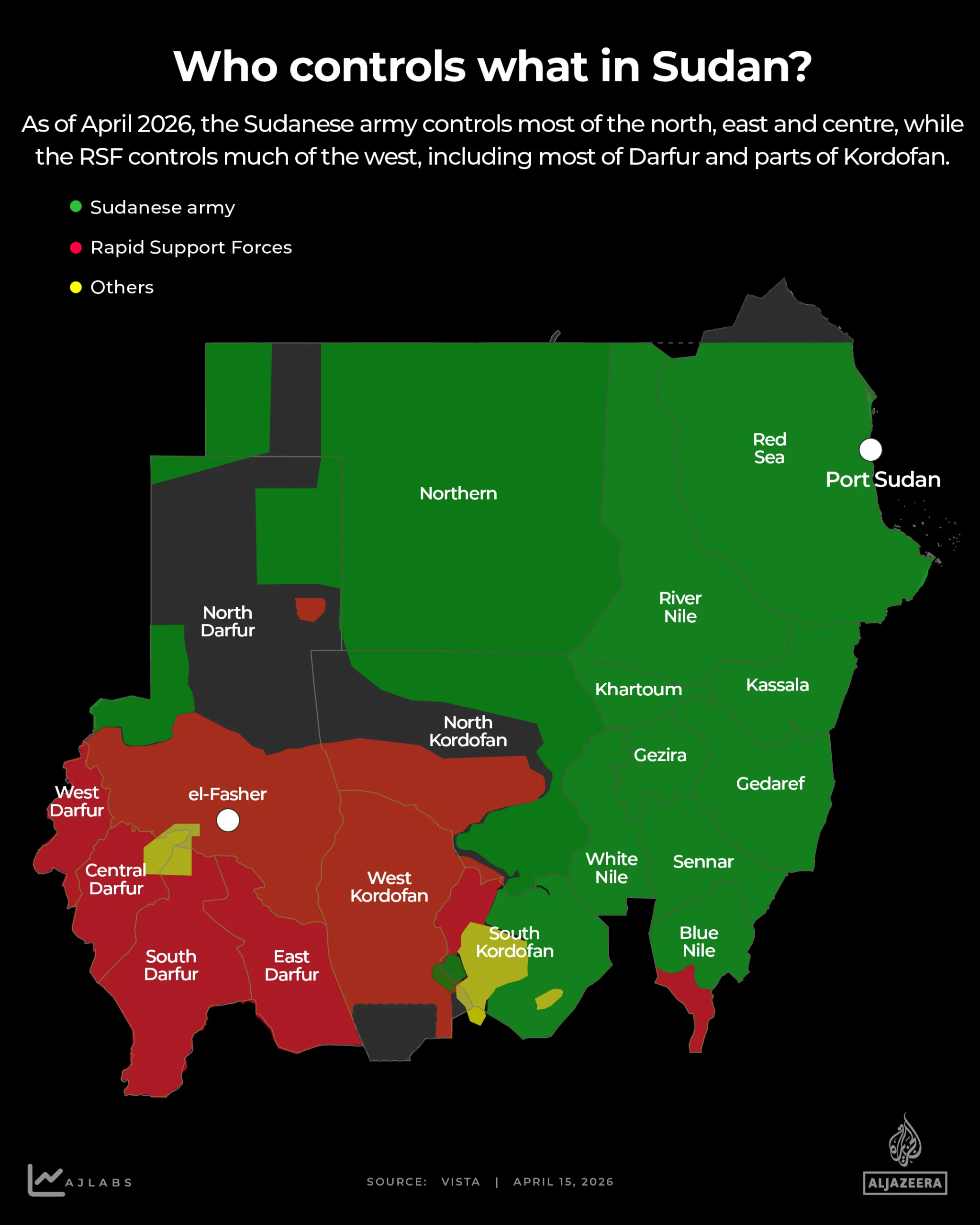
Fighting has intensified in Kordofan and Blue Nile State near the Ethiopian border since the RSF captured el-Fasher last October, the military’s last major stronghold in western Darfur.

Since then, more than 300,000 people have fled front-line areas, including el-Fasher and parts of Kordofan and Blue Nile, according to the UN.

Kordofan, rich in oil and arable land, is strategically significant, linking RSF strongholds in the neighbouring Darfur region to the country’s army-controlled east. The region remains largely contested between the army and the RSF.

Now entering its fourth year, the war has killed tens of thousands of people and displaced nearly 13 million others, creating what the UN describes as the world’s largest displacement and hunger crises.

Source link

The making of Sudan’s RSF | Sudan war

NewsFeed

Sudan’s Rapid Support Forces have had a long history of violations, going back to when they were known as the ‘Janjaweed’. Over the past few years, they have been trying to change their image and become influential political actors in Sudan, but will that work? Al Jazeera’s Hala Saadani looks back at the RSF’s history and where they may go from here.

Source link

‘Spoiled insulin’: Sudan war disrupts drug supplies, fuelling smuggling | Conflict News

On a modest bed inside his war-battered home in the Khartoum North neighbourhood of the Sudanese capital, Khartoum, Murtada Mohieddin, a diabetic patient in his early 50s, carefully counts his remaining doses of insulin. His search for medicine has transformed into a harrowing battle – not just to find the treatment he needs to survive his diabetes, but to ensure the medicine is not expired or ruined.

“Sometimes the insulin is spoiled,” Mohieddin tells Al Jazeera, inspecting his limited supply. “You wouldn’t know if it is ruined or expired. You can check the expiration date, but it could still be damaged from poor storage.”

More than three years of civil war have crippled Sudan’s healthcare infrastructure: hospitals, health centres and pharmaceutical factories have been shut and vital medical supply chains and storage across the country have been disrupted.

The war, which erupted as a power struggle between Sudanese Armed Forces (SAF) and the paramilitary Rapid Support Forces (RSF), has killed more than 50,000 people and displaced 14 million – nearly a quarter of the country’s population.

The devastating conflict has paralysed domestic pharmaceutical production and collapsed vital supply chains across the country.

According to a World Health Organization (WHO) news release dated April 14, 2026, Sudan represents the world’s largest humanitarian crisis, with 21 million people lacking basic healthcare services out of 34 million needing aid.

In the void left by the closure of pharmaceutical companies, smuggling networks have flourished, flooding the market with unregulated drugs locally known as “Boko” medicines.

These include critical intravenous malaria medications smuggled across borders. Because they completely bypass strict temperature controls and quality checks during transit, these drugs are frequently spoiled, rendering them either totally ineffective or lethally toxic to patients.

A double threat

Inside local pharmacies in Omdurman, located on the outskirts of Khartoum, the crisis is not just limited to scarcity. Patients now face the double threat of exorbitant costs and life-threatening quality issues, as these illicit medicines are often severely spoiled due to a lack of proper storage and refrigeration.

Mutawakil Hamza, a pharmacist based in Omdurman, said the reliance on unregulated channels is putting lives at immediate risk.

“Most malaria medicines are now brought in through smuggling,” Hamza said. “These are ultimately injections for intravenous use, and this is highly dangerous to a patient’s health.”

Because intravenous treatments bypass the body’s natural defences and require absolute sterility, administering improperly stored or degraded smuggled injections can rapidly cause severe bloodstream infections, systemic shock, or death.

The war has effectively dismantled local manufacturing, reversing years of medical self-reliance. Yasser Ahmed Youssef, a pharmaceutical industry expert whose factory is located in Khartoum, noted the stark contrast to the pre-war era, when local factories managed to produce “very large quantities of life-saving medicines, including drugs for blood pressure, diabetes, colds, and paediatric care”.

Now, the majority of those production lines are silent, leaving the population dependent on a shattered healthcare system. According to the October 2025 Health Resources and Services Availability Monitoring System (HeRAMS) report cited in a WHO Public Health Situation Analysis from January 6, 2026, 40 percent of health facilities nationwide are entirely nonoperational.

The situation is even more drastic regionally, with 87 percent of facilities shut down in Khartoum and 85 percent closed in North Kordofan, whose control is contested between the rival sides.

In active conflict zones such as Gezira, Khartoum, Darfur and the Kordofan regions, the shortages are particularly dire.

A United Nations Population Fund (UNFPA) emergency report from August 2025 highlighted that the only functioning maternity hospital in the besieged city of el-Fasher faces critical medicine shortages and risks imminent closure.

El-Fasher, the last SAF stronghold in the western region of Darfur, was taken over by the RSF in late October 2025, trapping approximately 700,000 civilians – mostly women and children. People have been cut off entirely from food and medicine and subjected to attacks.

Collapsed warehouses and supply lines

In the government-funded public sector, the National Medical Supplies Fund maintains that it is working to secure essential medicines despite the fighting, claiming to have achieved 75 percent availability for cancer medications and fully secured supplies for kidney patients.

However, officials admit the overarching infrastructure is in ruins, with the local health ecosystem almost destroyed.

“We have been massively affected by the ongoing war inside Sudan,” said Abubakar Salouha, a department director at the fund. “The medical supplies have been severely impacted; there has been a collapse at the level of the main warehouses at the headquarters.”

International aid deliveries from neighbouring countries also face enormous logistical hurdles.

The WHO’s January 6 situation analysis detailed that cross-border transit times for medical commodities can take up to 90 days to reach remote regions like Darfur from the Cameroonian city of Douala via Chad. Compounding these suffocating delays, armed groups have repeatedly targeted medical infrastructure, looting pharmacies and stripping remaining hospitals of their vital medical supplies.

Recent attacks highlight this systematic destruction by rival sides. On March 20, 2026, a drone attack on Al-Daein Teaching Hospital in East Darfur state killed at least 64 people, including medical personnel, and injured 89 others. Sudanese rights group the Emergency Lawyers reported that the army was behind the attack.

On April 2, another drone attack struck Al-Jabalain Hospital in White Nile state, killing 10 staff members, including the hospital’s director while he was performing surgery. That same day, the Family Hospital in el-Daein was looted, and patients and health workers were assaulted and expelled. Similarly, a hospital in Kurmuk, Blue Nile state, was looted on March 25, its equipment destroyed, and patients forced out. The RSF was blamed for these attacks.

“Sudan is confronting one of the gravest humanitarian and public health emergencies in the world today. The ongoing conflict has pushed the health system to the edge of complete collapse,” warned WHO Director-General Tedros Adhanom Ghebreyesus on April 4.

“These incidents are stark reminders of the urgent need for renewed international solidarity and decisive political and humanitarian action. Sudan cannot endure this crisis alone.”

Source link

Khartoum drone strike kills five in Sudan, NGO reports | Sudan war News

The attack, the second in a week, follows months of relative calm in the city after government forces regained control last year.

A drone strike carried out by the paramilitary Rapid Support Forces (RSF) has killed five civilians in Khartoum, according to an NGO.

The attack, which Emergency Lawyers, an independent legal group supporting victims of human rights violations in Sudan, reported on Saturday, is the second to take place in the capital within a week. It follows months of relative calm in the city after government forces regained control last year.

Recommended Stories

list of 3 itemsend of list

The NGO said it holds the RSF fully responsible for the strike, accusing the group of breaching international humanitarian law.

Emergency Lawyers said the incident forms part of an ongoing pattern of attacks on civilians. Nearly 700 civilians were killed in drone strikes in the first three months of this year, according to UN figures.

‘Completely free’

On Tuesday, a drone struck a hospital in the Jebel Awliya area, around 40 kilometres (25 miles) south of central Khartoum, a security source and eyewitnesses told the AFP news agency. It was the first such attack in the area in months.

The Sudanese army, which now enjoys a solid grip in the north and east, launched a rapid counteroffensive last year that pushed the paramilitary forces out of the capital.

Following intense fighting around the capital last year, Sudan’s military government declared the Khartoum region “completely free” of RSF.

Since then, the RSF has largely concentrated on expanding its control in its stronghold in the western Darfur region and pushing into neighbouring areas, capturing valuable oil-producing assets.

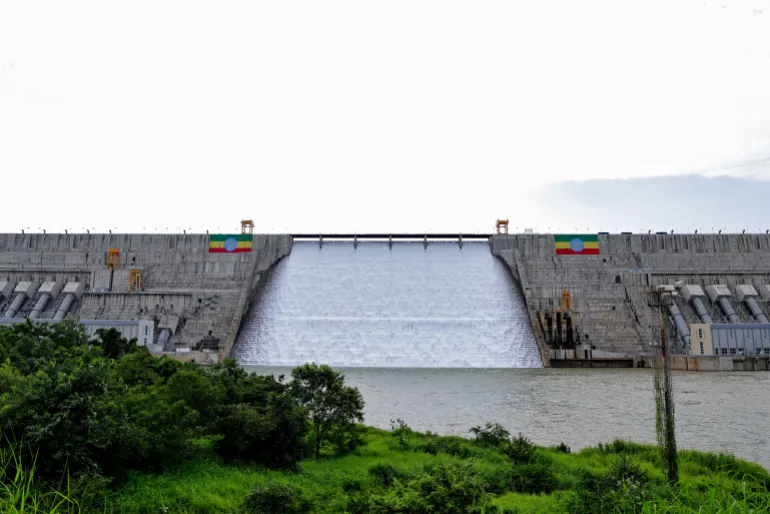
Violence has also spread to southeastern Blue Nile state near the border with Ethiopia, raising fears of a more prolonged and fragmented conflict.

The RSF carried out a series of drone strikes on Khartoum last year, largely targeting military sites, power stations and water infrastructure.

In recent months, however, the capital has seen relative calm. More than 1.8 million displaced residents have returned, and the airport has resumed domestic flights. That said, much of the city remains without electricity or basic services.

The conflict between the Sudanese government and the RSF – a former ally – began in April 2023. Since then, around 14 million people have been displaced and two-thirds of the population are in urgent need of humanitarian support, according to the United Nations.

Source link