Strait of Hormuz

Oil steadies at $100 and markets stay volatile as US-Iran talks stall

Brent crude edged 2.5% higher on Tuesday and seems to have steadied around $100 per barrel at the time of writing, as US-Iran negotiations stall.


ADVERTISEMENT


ADVERTISEMENT

On the other hand, WTI dropped over 4% and is trading around $92.6 per barrel.

Overall, oil prices were declining since last Wednesday as the framework for a peace deal, or at least a longer and more encompassing ceasefire, between the US and Iran was seemingly on the verge of being agreed.

However, Iran accused the US of breaching the current ceasefire after Washington carried out what it described as defensive strikes in the southern part of the country.

Iran’s foreign ministry stated that the US attacks in the Hormozgan province, where Iranian media reported hearing explosions early Tuesday, amounted to a “serious violation” of the fragile ceasefire that has been in effect for almost seven weeks.

Meanwhile, US Secretary of State Marco Rubio said negotiations aimed at ending the conflict could require “a few days” to reach an agreement.

On Monday, US President Donald Trump also reiterated nuclear demands in a social media post, as tensions continue to surround the fundamental aspects of a possible agreement.

Investors appear to have mixed reactions to the developments with some markets seeming to price in a decrease in the probability that a deal is imminent.

In Europe, the Euro Stoxx 50 has fallen more than 0.7% while the broader pan-European Stoxx 600 is trading around 1% lower as we approach the close of Tuesday’s session.

The UK’s FTSE 100, Germany’s DAX 30, France’s CAC 40, Italy’s FTSE MIB, the Netherlands’ AEX and Switzerland’s CH20 have all dropped between 0.1% and 0.7%.

Over in Asia, Japan’s Nikkei 225 and Taiwan’s TAIEX closed flat, but South Korea’s KOSPI jumped 2.5% primarily driven by a continuous demand for AI-related equities.

However, US markets appear completely decoupled from other indices and the broader situation. Not only have WTI prices continued to fall on Tuesday but the S&P 500 also opened 0.6% higher.

Latest on the Strait of Hormuz

Both the US and Iran had signalled headway toward a memorandum of understanding that could end the conflict and resume maritime traffic through the blocked Strait of Hormuz, while allowing negotiators a 60-day window to tackle more complicated matters such as Iran’s nuclear activities and supplies.

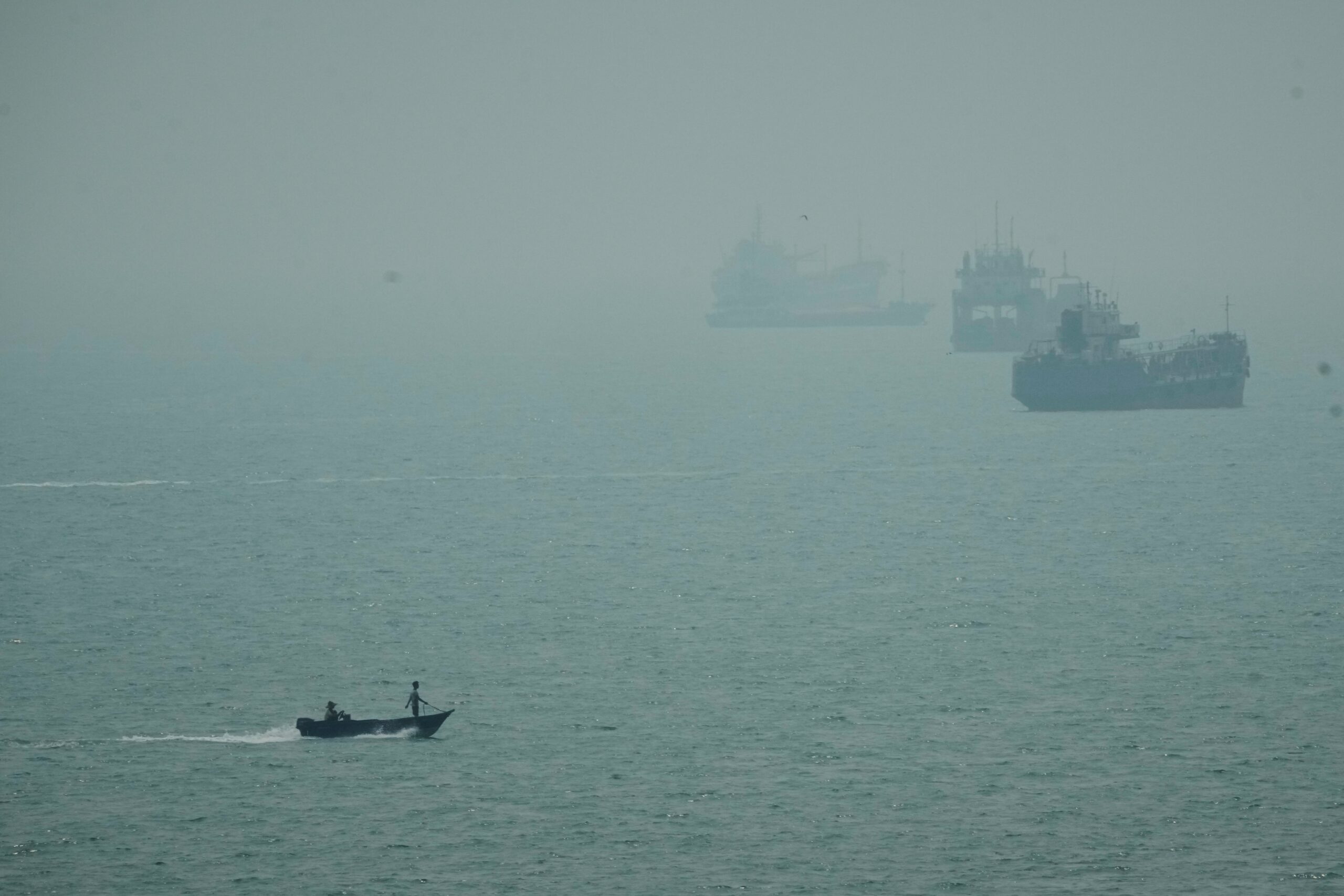
In his latest remarks, US Secretary of State Marco Rubio stated that the Strait of Hormuz must remain accessible “one way or the other” as traffic through the chokepoint has dropped sharply, with only a few dozen ships currently using the route each day, compared with the usual 125 to 140 vessels.

Iran has continued to permit limited shipping, prioritising vessels connected to allied or friendly nations and arranging passage through state-to-state agreements.

Continuous reports of attacks in the Strait of Hormuz underscore how far from the normalisation of energy flows and other supplies the global economy still is.

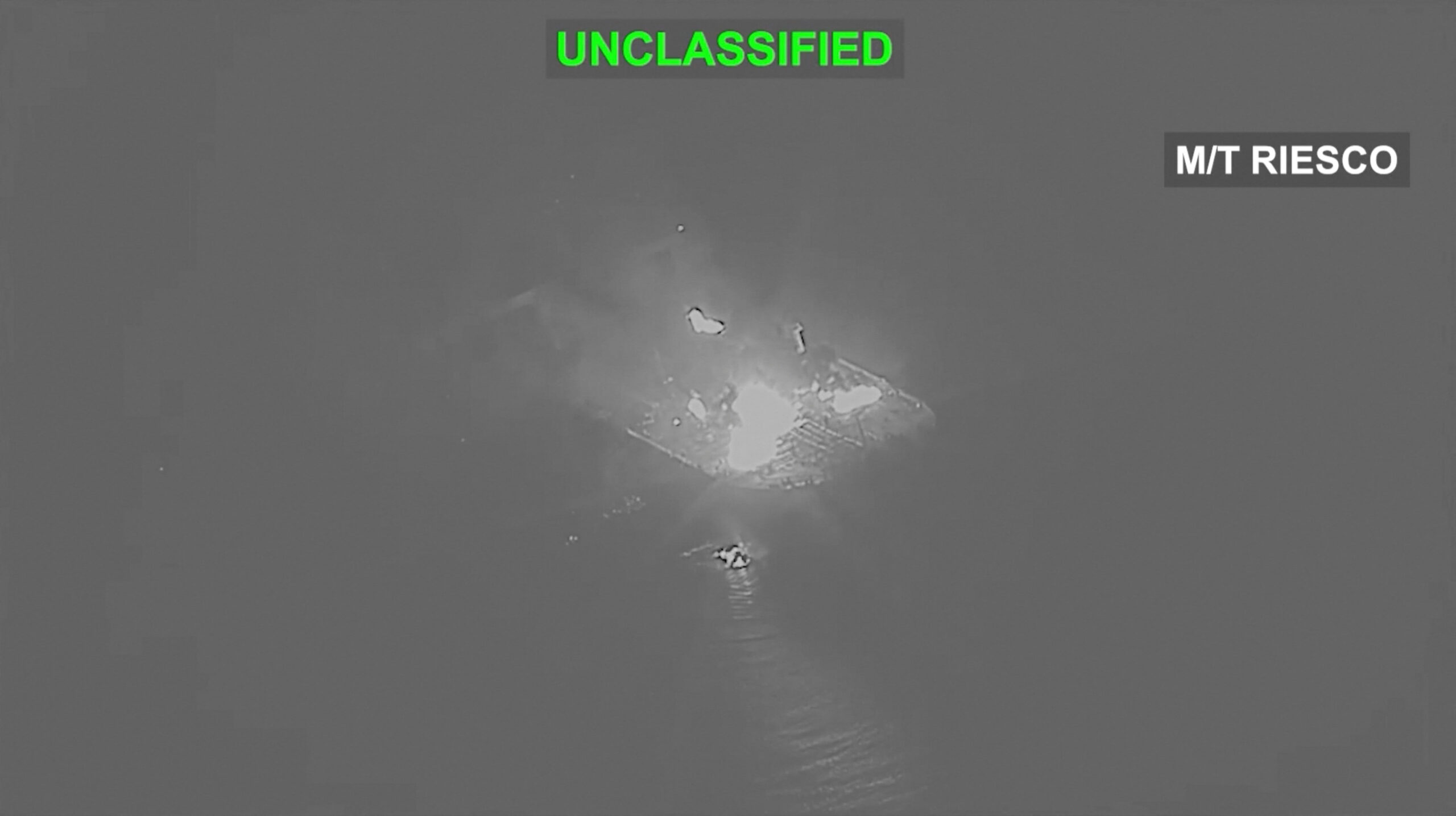
On Tuesday, the United Kingdom Maritime Trade Operations (UKMTO) reported that a tanker experienced an external blast near the waterline on its port side.

According to the agency, the vessel was located about 60 nautical miles from Muscat, the capital of Oman.

UKMTO said the tanker and all crew members were unharmed, although a quantity of bunker fuel spilled into the sea.

This is the most recent reported incident near the Strait of Hormuz at the time of writing.

Source link

Oil jumps 4% as Trump rejects Iran’s response to ceasefire proposal

Published on Updated

Oil prices surged in early trade as investors digested the latest developments in the Middle East, with both Brent and US crude climbing over 4%.


ADVERTISEMENT


ADVERTISEMENT

It comes after Trump’s rejection of Tehran’s response to the latest US proposition on bringing the conflict in Iran, and subsequent impact on trade passing through the Strait of Hormuz, to an end.

In other trading, US futures edged lower, while Tokyo’s Nikkei 225 fell 0.4% to 62,486.84 after briefly reaching another record high in intraday trading at above 63,300.

South Korea’s Kospi gained 4.1% to 7,804.71. It also hit an all-time intraday high, led by gains from tech-related stocks including Samsung Electronics and memory chip maker SK Hynix.

Technology-related stocks and growing artificial intelligence-related interest have supported markets in Japan and South Korea despite the Iran war, with the Nikkei 225 and Kospi rising more than 10% and 30%, respectively, over the past month.

Meanwhile, Donald Trump will head to China this week for talks with his counterpart, Xi Jinping. The two leaders are expected to discuss a wide range of topics, including trade concerns.

Source link

Shares slip as oil prices stay elevated near peaks on Iran war concerns

Published on

Oil prices fell back in early trade but remained elevated as investors kept an eye on escalating tensions between the US and Iran and progress on ships passing through the Strait of Hormuz.


ADVERTISEMENT


ADVERTISEMENT

At the time of writing, Brent crude was trading 1.38% lower at $112.86 while US crude, or WTI, was down 2.27% at $104 per barrel. US futures edged 0.1% higher.

Elsewhere, regional trading was thin overnight with markets in Japan, South Korea and mainland China closed for holidays.

Hong Kong’s Hang Seng fell 1.1% to 25,805.98. Australia’s S&P/ASX 200 lost 0.5% to 8,649.80, while Taiwan’s Taiex traded 0.2% lower at 40,626.22.

The fragile ceasefire between the US and Iran was tested on Monday after the US military said it had sank six Iranian small boats targeting civilian ships, while two US-flagged ships successfully passed through the Strait of Hormuz.

The key waterway for oil and gas transport remains largely closed despite repeated demands from the US for Iran to reopen the strait and as the United States imposed a sea blockade on Iranian ports. US President Donald Trump’s “Project Freedom” plan under which the United States would help guide stranded ships through the Strait of Hormuz began on Monday.

Brent crude, the international standard, surged above $114 a barrel on Monday, gaining nearly 6%. Before the war began in late February, it was trading near $70.

Source link

Oil markets lower as Trump vows to help ships leave Strait of Hormuz

Published on

Crude prices were slightly lower ahead of European markets opening as traders digested comments from US President Donald Trump that Washington would help ships leave the Strait of Hormuz from today. Iran, however, has rejected the plan.


ADVERTISEMENT


ADVERTISEMENT

At the time of writing, the price of a barrel of US benchmark crude (WTI) was down 0.28% to $101.65 a barrel, while Brent crude, the international standard, edged down 0.06% to $108.10 a barrel.

Much hinges now on progress towards ending the war with Iran and unlocking the bottleneck through the Strait of Hormuz.

The oil market “remains the fulcrum, with hundreds of tankers, bulk carriers, and cargo ships still stranded across the Gulf, idling as storage constraints force producers to shut … production simply because there is nowhere left to store it,” Stephen Innes of SPI Asset Management said in a commentary note.

Trump said what he called “Project Freedom” would begin Monday morning in the Middle East. The US Central Command said it would involve guided-missile destroyers, more than 100 aircraft and 15,000 service members, but the Pentagon did not immediately answer questions about how they would be deployed.

Asia-Pacific and US markets

In Asian share trading overnight, Hong Kong’s Hang Seng jumped 1.4% to 26,135.47. Markets in mainland China and Japan were closed for “Golden Week” holidays. In Australia, the S&P/ASX 200 slipped 0.3% to 8,704.70.

Strong buying of tech stocks pushed shares in South Korea sharply higher, as the Kospi gained 3.8%. Taiwan’s Taiex surged 4.2%.

On Friday, the S&P 500 climbed 0.3% to another all-time high of 7,230.12, closing out a fifth straight winning week. The Dow Jones Industrial Average dipped 0.3% to 49,499.27, and the Nasdaq composite added 0.9% to a record close of 25,114.44.

Apple led the way after delivering better profit than expected. Because it’s one of Wall Street’s biggest stocks in terms of overall size, its rally of 3.3% was by far the strongest force lifting the S&P 500.

Stock prices generally follow the path of corporate profits over the long term, and US companies have been exceeding expectations for earnings in the first three months of 2026. That’s even with the war with Iran and high oil prices souring confidence for many US households.

Strong earnings boost S&P 500

A little more than a quarter of the companies in the S&P 500 have reported already, and 84% of them have topped analysts’ estimates, according to FactSet. The index is on track to deliver roughly 15% growth in profit from a year earlier.

The main uncertainty for the global economy is where oil prices are heading because of the Iran war. Oil prices moved higher last week on worries that the war might keep the Strait of Hormuz closed for a long time, trapping oil tankers pent up in the Persian Gulf instead of delivering crude to customers worldwide.

Brent was selling for a little more than $70 per barrel before the war began, and soaring prices helped the two biggest U.S. oil companies report stronger profit for the latest quarter than analysts expected. But stock prices nevertheless fell for both Exxon Mobil, 1%, and Chevron, 1.4%, as oil prices regressed Friday and each reported drops in net income from a year earlier.

In other dealings early Monday, the dollar rose to 157.18 Japanese yen from 156.80 yen. The euro fell to $1.1724 from $1.1746.

Source link

Oil temporarily surges above $126 per barrel as Iran war seemingly intensifies

Published on Updated

Brent crude, the international standard for oil prices, jumped by over 7% during early trading on Thursday, touching $126 per barrel, the highest intraday level since 2022 when Russia initiated the full-scale invasion of Ukraine.


ADVERTISEMENT


ADVERTISEMENT

The US benchmark crude, WTI, also rose more than 3% and hit over $110 per barrel.

At the time of writing, prices have corrected slightly with the front month contract for Brent trading at around $122 per barrel and WTI at roughly $108.5.

Prices are now the highest they have been since the start of the Iran war.

The surge in oil prices is a direct consequence of stalled negotiations over the reopening of the Strait of Hormuz, the absence of a clear path toward ending the war and a seemingly increased chance of US-Israeli military action returning.

US President Donald Trump is set to meet with the head of the US Central Command, Admiral Brad Cooper, on Thursday and receive a briefing on new military options for action in Iran, according to Axios which cites two unnamed people.

The meeting signals the potential for fresh escalation in the Middle East as the resumption of combat operations is reportedly “seriously under consideration” and oil markets have reacted swiftly to the news.

A ceasefire has held since early April but recent negotiating efforts have fallen flat with the two sides refusing to meet. Meanwhile, the US and Iran both maintain their blockade of the vital Strait of Hormuz.

US Central Command has also reportedly asked for hypersonic missiles to be sent to the Middle East, which would mark the first time the US army has deployed that type of weapon.

The persistent blockade of ports and the threat of expanded combat have fundamentally reshaped market expectations.

A shifting landscape for OPEC and global supply

The spike in prices is occurring against a backdrop of significant structural change within the global oil hierarchy.

Earlier this week, the United Arab Emirates officially withdrew from the Organisation of the Petroleum Exporting Countries (OPEC) and its wider alliance (OPEC+), a move the nation claimed was necessary to prioritise its own national interests.

Under normal market conditions, the exit of a major producer from the cartel might be expected to signal a potential increase in supply or a decrease in price stability.

However, the sheer scale of the Iran war has rendered the UAE’s departure secondary in the minds of traders.

Despite the UAE’s exit, which was expected to potentially weaken OPEC’s grip on production quotas, prices have continued their upward trajectory.

This suggests that the “war premium” currently dominates all other market fundamentals.

Investors are currently less concerned with the internal politics of oil-producing nations and more focused on the immediate physical absence of Iranian crude, suspended shipping routes through the Strait of Hormuz and the threat to regional infrastructure.

However, the transition of the UAE to an independent actor still highlights a growing fragmentation in global energy governance at a time when the world’s energy security is at its most vulnerable.

Source link

UK inflation hits 3.3% as Iran war drives energy costs higher

Published on

The cost of living in the UK accelerated throughout March, propelled by a significant increase in petrol and diesel prices following the outbreak of the Iran war.


ADVERTISEMENT


ADVERTISEMENT

According to the Office for National Statistics, the annual consumer price inflation rate moved to 3.3% from 3% the previous month, a shift that matched the forecasts.

This inflationary pressure is largely attributed to an 8.7% monthly jump in motor fuel costs, which represents the sharpest rise seen since the summer of 2022, following Russia’s full-scale invasion of Ukraine.

Beyond the petrol stations, the fallout from higher energy prices has trickled down into airfares and food supplies, complicating the economic landscape for the government and the Bank of England.

UK Treasury chief Rachel Reeves noted that while the conflict is not a domestic one, it is directly pushing up bills for families and businesses across Britain.

Lindsay James, an investment strategist at Quilter, observed that “this morning’s inflation data showed CPI creeping back up to 3.3%, confirming that price pressures are re-accelerating rather than fading away since the outbreak of the war in Iran.”

While international markets have shown some signs of recovery in equity prices, the physical market for oil delivery into Europe remains under immense strain.

Experts suggest that a swift reopening of the Strait of Hormuz is the only viable path to unwinding the current inflationary trend, yet the situation remains volatile and unpredictable.

The Bank of England’s policy dilemma

The timing of this inflation surge is particularly problematic because it coincides with a period of cooling in the domestic economy.

Recent data from the labour market indicates that payrolled employment is falling and economic inactivity is on the rise, while wage growth has started to ease.

For the average British worker, the combination of rising essential costs and stagnating earnings growth creates a challenging environment for real purchasing power.

As for the Bank of England, this sudden spike in prices has disrupted the projected path of beginning to lower borrowing costs this spring.

Prior to the escalation of the Iran war, there was a growing consensus that the central bank would reduce its main interest rate from 3.75% as inflation appeared to be heading back toward the official 2% target.

However, with inflation now expected to potentially hit 4% in the coming months, the Monetary Policy Committee faces a much more difficult decision during its meeting next week.

There is a growing debate among economists regarding whether traditional interest rate hikes are the correct tool to address this specific crisis.

According to James “a rise in rates risks misdiagnosing the problem. This inflationary pulse is being driven by supply disruption, not excess demand. Higher interest rates will do nothing to increase the flow of oil or other goods from the Middle East.”

This sentiment suggests that the Bank of England may choose to maintain its current stance, keeping rates on hold while monitoring whether these price increases begin to manifest in higher wage demands across the broader economy.

Source link

S&P 500 and Nasdaq hit new all-time highs despite Iran war effects

The benchmark US equity indices surged to new territory entering price discovery, reflecting a market that appears to be looking past immediate geopolitical risks in favour of potential de-escalation and corporate strength.


ADVERTISEMENT


ADVERTISEMENT

On Wednesday the S&P 500 closed 0.8% higher at 7,022 points, up on the day and surpassing its previous peak from January of this year.

The S&P 500 is now 11% higher since it bottomed on 30 March and after it first dropped 9% during last month.

The Nasdaq Composite also posted a record, rising 1.6% to over 24,000 points while the Dow Jones Industrial Average edged 0.15% lower and continues significantly below its all-time high.

The advance comes despite persistent headwinds.

Shipping through the Strait of Hormuz, a critical chokepoint for roughly one-fifth of the global oil supply, has been severely disrupted since late February following Iranian actions and a subsequent US naval blockade.

Traffic has dropped sharply, with Iran declaring the strait closed to vessels linked to the US, Israel and their allies.

The US Central Command also confirmed its blockade of Iranian ports took full effect earlier this week, stating that “ten vessels have now been turned around and ZERO ships have broken through since the start of the US blockade on Monday”.

Oil prices, while easing in the last two weeks, remain elevated.

At the time of writing, Brent crude stands at around $96.5 per barrel and WTI at $92.5, still well above pre-war levels and contributing to inflationary concerns.

The International Monetary Fund has responded by lowering its global growth outlook. In its latest World Economic Outlook, released on Monday, the IMF cut the 2026 forecast to 3.1% from 3.3% previously projected, citing energy price spikes and supply disruptions.

Headline inflation is now seen at 4.4% for the year, under a reference scenario assuming a short-lived conflict, with risks of even weaker growth and higher prices if tensions escalate and prolong.

The modest decline in energy prices followed reports that the two-week ceasefire is holding and that fresh talks between the US and Iran could resume soon.

US President Donald Trump also indicated that negotiations for lasting peace might restart by the end of the week.

Investors appear to be pricing in an eventual reopening of the Strait of Hormuz and a contained negative impact of the war in general.

Speaking to Euronews, Alan McIntosh, chief investment officer of Quilter Cheviot Europe, explained that “although the first round of talks led to no agreement, a likely extension of the ceasefire gives optimism that an early resolution can be reached”.

“Assuming a fairly swift end to hostilities and a resumption of oil shipments, the economic damage to global inflation and growth should be fairly limited,” he added.

Why US indices defy the odds

Analysts point to several factors behind the market resilience.

Hopes of a swift end to hostilities have encouraged risk-taking, while corporate America is showing strength. Bank executives highlighted a strong US consumer and a healthy pipeline for deals and initial public offerings.

Earnings expectations for the first quarter have been revised higher, with S&P 500 companies now forecast to report combined profits of over $605 billion (€513bn), up from earlier estimates.

Tech shares, particularly those linked to AI, provided additional support. The Nasdaq’s outsized gain reflected renewed enthusiasm for growth-oriented stocks even as broader economic projections softened.

McIntosh told Euronews that “the capital spending boost relating to AI shows no sign of slowing down so this continues to support US economic growth. We have just started the US quarterly results season and so far there is limited evidence of a negative impact from the current Middle East conflict”.

The indices also include defence companies that have all performed well with the war in the backdrop pushing governments, in particular the US, to increase military budgets.

History also offers context for the current rebound. In past US-involved wars, equity markets have frequently experienced short-term volatility followed by recovery and gains.

During the 2003 Iraq War, for example, the S&P 500 rose over 25% in the first full year after the invasion began.

The Gulf War of 1990-1991 saw an initial 11% decline in the index, but a strong relief rally followed the swift coalition victory, delivering positive returns in the subsequent year.

Similar patterns emerged in the Korean War and Vietnam War eras, where stocks posted solid long-term advances despite prolonged uncertainty.

Data compiled by the Royal Bank of Canada and other sources indicate that, across multiple conflicts, equities rose in the first year of hostilities around 60% of the time.

Markets have tended to focus on eventual outcomes rather than immediate shocks, rewarding resolution and economic adaptability. The latest record for the S&P 500 and the Nasdaq underscore this enduring pattern.

While risks remain if the Iran conflict worsens, investors are currently betting that diplomacy and corporate fundamentals will prevail.

Source link

Oil prices fall as renewed hopes for peace talks feed a stock market rally

European stocks were mostly steady on Wednesday as investors weighed signals from Washington that a diplomatic breakthrough in the Iran war could be imminent.


ADVERTISEMENT


ADVERTISEMENT

The pan-European Stoxx 600 had ticked down 0.1%, Germany’s Dax edged 0.11% higher and the FTSE 100 climbed 0.11%. The CAC 40 in France fell by a slightly greater margin, at 0.65%.

US President Donald Trump said fresh talks between Washington and Tehran “could be happening over the next two days” in Islamabad, signalling a possible diplomatic breakthrough, and added that the war was “very close to over” — despite continued uncertainty over key sticking points in negotiations.

Asian markets were broadly higher.

Japan’s Nikkei 225 gained 0.5%, South Korea’s Kospi jumped 3.0% and Hong Kong’s Hang Seng edged up 0.7%.

The Shanghai Composite added 0.2%, while Australia’s S&P/ASX 200 was little changed, up less than 0.1%.

On Wall Street, the S&P 500 added 1.2% to its gains from the previous day, and the index at the heart of many 401(k) accounts is now just 0.2% below its record set in January.

The Dow Jones Industrial Average rose 317 points, or 0.7%, while the Nasdaq Composite climbed 2%.

On Wednesday, benchmark US crude inched up by 1 cent to $91.29 a barrel.

Brent crude added 48 cents to $95.27, or less than 1%, after falling 4.6% the previous day. While that is still above its roughly $70 level from before the war began in late February, it remains well below the peak of $119.

Lower oil prices help reduce costs for businesses across the economy. However, some analysts noted that the war is still ongoing, warning that the optimism may prove unfounded.

“The counterintuitive decline in crude appears driven by growing hopes that a second round of peace talks between Washington and Tehran could soon materialise, after the first attempt fizzled out,” said Tim Waterer, chief market analyst at KCM Trade.

“Traders are clearly choosing to price in the possibility of de-escalation rather than the immediate reality of restricted flows,” he added.

Asian nations depend on access to the Strait of Hormuz, a narrow waterway that is the main route for crude oil produced in the Persian Gulf to reach customers worldwide. Disruptions there have kept oil off the global market, driving up prices.

Global inflation this year is expected to accelerate to 4.4% from 4.1% in 2025, according to the International Monetary Fund, which had previously forecast a slowdown to 3.8%.

The IMF also downgraded its forecast for global economic growth to 3.1% this year, from 3.3% projected in January.

Overall, the S&P 500 rose 81.14 points to 6,967.38. The Dow Jones Industrial Average gained 317.74 points to 48,535.99, while the Nasdaq Composite climbed 455.35 points to 23,639.08.

In the bond market, Treasury yields eased as falling oil prices reduced inflationary pressure. The yield on the 10-year Treasury fell to 4.25% from 4.30% late Monday.

In currency trading, the US dollar edged up to 159.03 Japanese yen from 158.79 yen. The euro stood at $1.1780, down from $1.1797.

US stocks climbed to the brink of a record high on Tuesday, while oil prices eased as hopes grew that Washington and Tehran may resume talks to end their war.

The S&P 500 rose 1.2%, leaving it just 0.2% below its January peak. The Dow Jones Industrial Average gained 0.7%, while the Nasdaq Composite jumped 2%, tracking broader global market gains.

Investors are betting that renewed diplomacy could prevent a prolonged surge in oil prices and inflation, allowing focus to return to corporate earnings.

Brent crude for June delivery fell 4.6% to $94.79, down from recent highs, though still above pre-war levels.

However, volatility remains high, with markets sensitive to developments around the Strait of Hormuz, a key route for global oil supply.

Source link