US President Donald Trump has released a series of posts attacking NATO countries including France, Spain and the UK over their role in securing the Strait of Hormuz. Al Jazeera’s Alan Fisher explains what Trump’s latest criticism of US allies means.
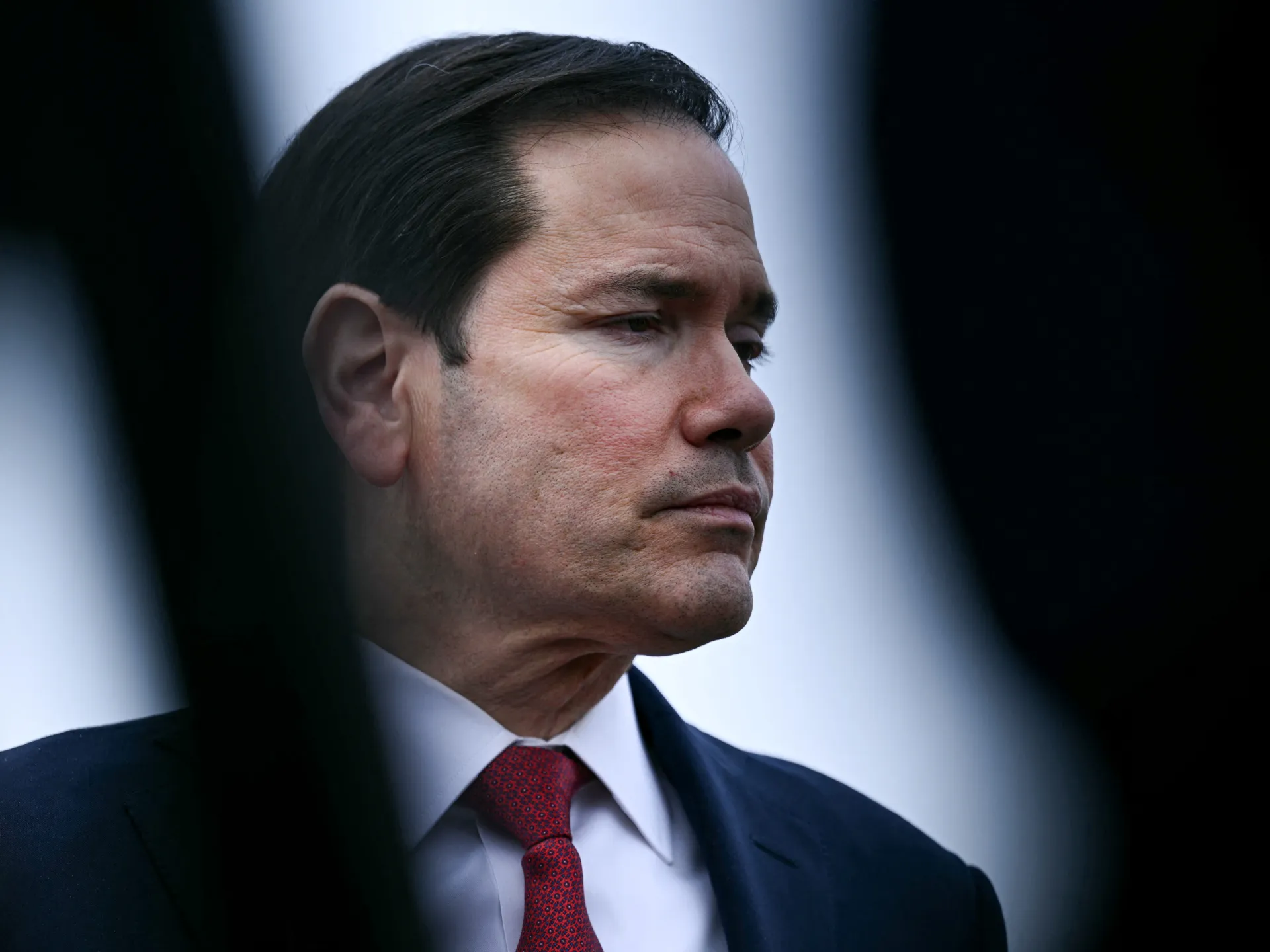
United States Secretary of State Marco Rubio has told Al Jazeera that the Strait of Hormuz will “reopen one way or another” in the wake of the eventual end of the US-Israeli war with Iran.
The exclusive interview on Monday came as speculation has grown over a possible US troop deployment in Iran and as the effective closure of strait continues to roil global oil markets.
US boots on the ground would represent a new phase in the grinding conflict, which began on February 28 with US-Israeli strikes, even as US President Donald Trump has repeatedly said that the US was pursuing diplomacy with Iran.
Rubio again maintained there were “ongoing direct talks between parties in Iran and the United States, primarily conducted through intermediaries”.
Iran has repeatedly denied that talks were ongoing. Pakistan on Sunday said it would host direct talks “in the coming days for a comprehensive and lasting settlement of the ongoing conflict”.
Rubio added that Trump “has always preferred diplomacy and seeks to reach a resolution – something that could have been achieved earlier”.
The Trump administration had previously pursued indirect talks with Iran to curtail its nuclear programme. One round of talks was derailed last year with Israel’s 12-day war against Iran, which ended with US strikes on Iran’s nuclear facility.
A second round of diplomacy was underway when the US and Israel began the latest war.
Rubio again indicated the administration’s preference for regime change in Iran, which the US and Israel have so far been unable to achieve despite several high-profile assassinations, including the killing of Supreme Leader Ayatollah Ali Khamenei.
“We would welcome a scenario in which Iran is led by individuals with a different vision for the future, and if such an opportunity arises, we will seize it,” he said.
Nuclear and ballistic weapons
Speaking to Al Jazeera, Rubio further called on Iran to take “concrete steps” to end its nuclear programme and stop “manufacturing drones and missiles”.
He accused Iran of seeking nuclear weapons to “threaten and blackmail the world”, a claim Tehran has for years denied, maintaining its nuclear programme was only for civilian purposes.
On Monday, the Wall Street Journal reported Trump was considering a special forces operation to seize enriched uranium stored in Iran. Military experts have warned throughout the war that US and Israeli airstrikes alone would not be able to destroy Iran’s capabilities.
In a statement to Al Jazeera, White House press secretary Karoline Leavitt did not deny the report, but said: “It’s the job of the Pentagon to make preparations in order to give the Commander-in-Chief maximum optionality. It does not mean the President has made a decision.”
Rubio said Iran “must also cease sponsoring terrorism and halt the production of weapons that threaten its neighbours,” he said. “The short-range missiles launched by Iran serve only one purpose: to attack Saudi Arabia, the UAE, Qatar, Kuwait, and Bahrain.”
Turning to the Strait of Hormuz, which Iran has effectively closed to open traffic, Rubio voiced optimism it would be reopened when the conflict ends.
“The Strait of Hormuz will reopen one way or another once our military operation in Iran is over,” Rubio said. “The strait will reopen either with Iran’s consent or through an international coalition including the US.”
He threatened “severe consequences” if Iran closes the strait after the fighting ends.
The US has previously sought to raise a coalition to protect ships in the Strait of Hormuz, but has faced wariness from many traditional allies concerned over tacit entry into the conflict.
‘Our objectives in Iran are clear’
Rubio’s statements on Monday broadly reflected a list of demands put forth by Washington to end the war.
Iran has rejected the proposal, with Iranian President Masoud Pezeshkian releasing its own list of demands, including “recognising Iran’s legitimate rights, payment of reparations, and firm int’l guarantees against future aggression”.
For his part, Trump told the Financial Times in an interview published on Sunday that he hopes to “take the oil in Iran” including by possibly seizing the key export hub of Kharg Island.
“Maybe we take Kharg Island, maybe we don’t. We have a lot of options,” he added. “It would also mean we had to be there [on Kharg Island] for a while.”
The Trump administration has presented a carousel of objectives in the war, including degrading Iran’s military capability, preventing it from ever developing a nuclear weapon, and helping to foment regime change.
However, its endgame has remained unclear, with its final goals possibly diverging from Israel, which has pushed for more comprehensive regime change.
To date, at least 1,937 people have been killed in Iran since the war began, with at least 20 killed in Israel, 26 killed across the Gulf states and 13 US soldiers killed.
Rubio told Al Jazeera that the administration did not expect the war to drag on indefinitely.
“Our objectives in Iran are clear, and we will achieve them within weeks, not months,” he said.
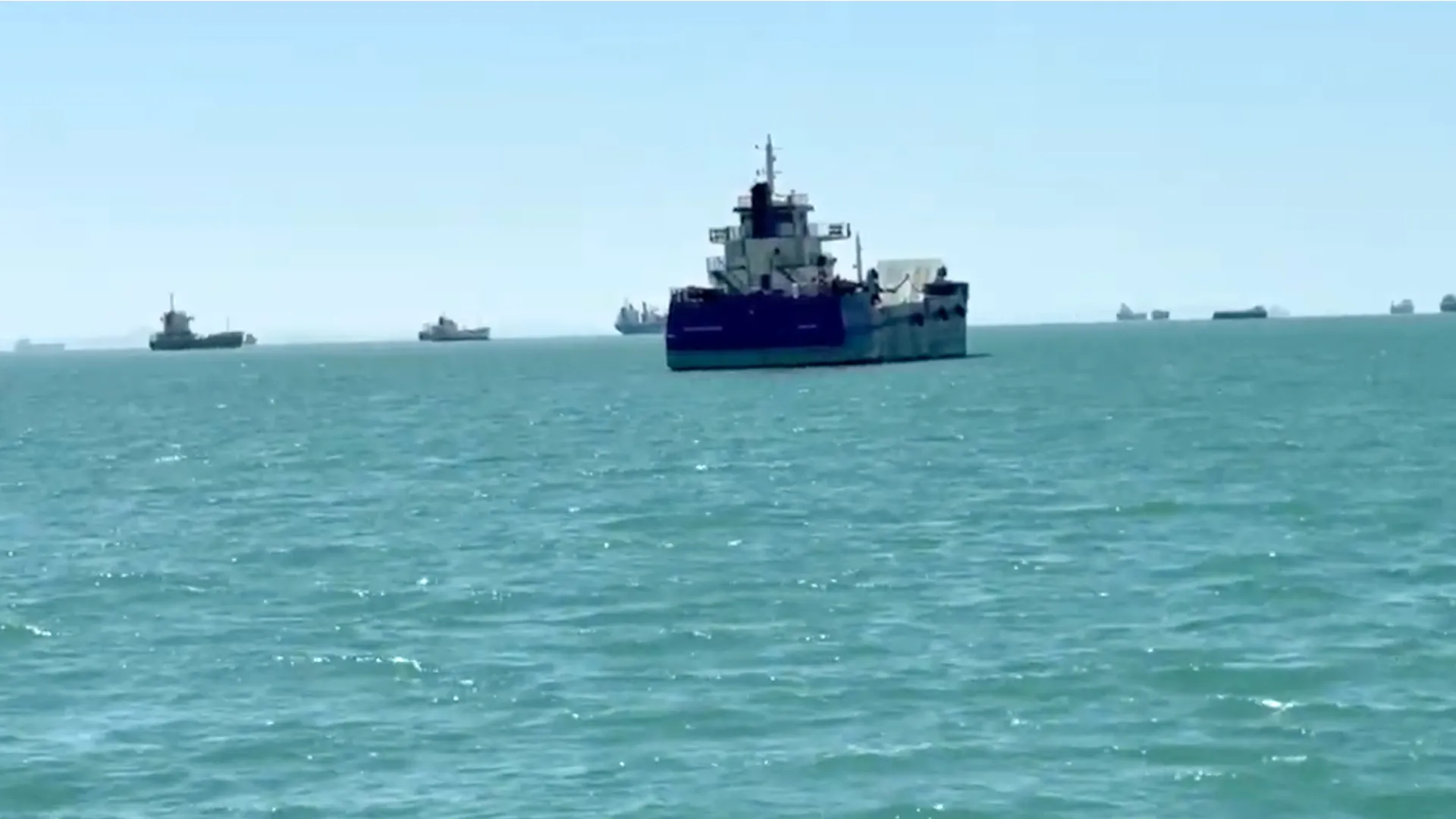
A Canadian activist and YouTuber filmed congestion in the Strait of Hormuz during a tour aboard a ship from the Iranian port city of Bandar Abbas. He captured dozens of oil tankers and cargo ships crowding the vital waterway.
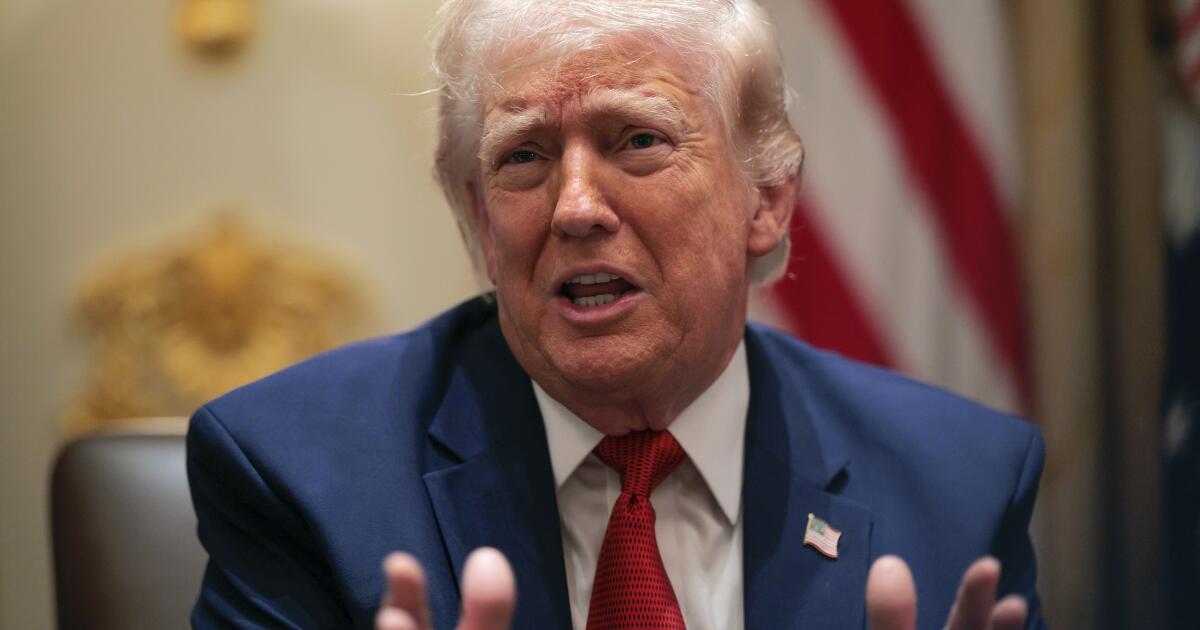
WASHINGTON — President Trump says the United States is winning the war with Iran, even as thousands of additional American troops deploy to the Middle East.
He has pilloried other countries for not helping the U.S., only to say later he does not need their assistance. He has twice delayed deadlines for Iran to reopen the Strait of Hormuz. He has threatened to “obliterate” Iran’s energy plants if the vital waterway remains largely shut down and said the U.S. was “not affected” by the closure.
At one point this month, Trump claimed that one of his predecessors — who, he strongly suggested, was a Democrat — privately told him he wished he had taken similar action against Iran. Representatives for every living former president denied that any such conversation happened.
As the war entered its second month over the weekend, Trump’s penchant for embellishments, exaggerations and falsehoods is being tested in an environment where the stakes are much higher than a domestic political fight.
A president who has long embraced bluster and salesmanship to shape narratives and focus attention is confronting the unpredictability of war.
Leon Panetta, who served Democratic presidents as Defense secretary, CIA director and White House chief of staff, said he has “seen enough wars where truth becomes the first casualty.”
“It’s not the first administration that has not told the truth about war,” he said. “But the president has made it kind of a very standard approach to almost any question to in one way or another kind of lie about what’s really happening and basically describe everything as fine and that we’re winning the war.”
Michael Rubin, a historian at the American Enterprise Institute who worked as a staff advisor on Iran and Iraq at the Pentagon from 2002 to 2004, said Trump is “the first president of any party in recent history that hasn’t self-constrained to live within rhetorical boundaries.”
“So of course it creates a great deal of confusion,” he said.
The zigs and zags are the point
To his critics, Trump’s style is a sign that doesn’t have a coherent long-term strategy. But for Trump, the zigs and zags seem like the point, a method that keeps his opponents — and pretty much everyone else — always on their heels.
The approach was clear last week in the hours before he announced the second delay of the deadline for Iran to reopen the strait. Asked what he would do about the deadline, Trump said that he did not know and that he had a day before he had to decide.
“In Trump time, a day, you know what it is, that’s an eternity,” Trump said to laughter from members of his Cabinet.
But investors are unimpressed, with U.S. stocks closing out their worst week since the war began. To some on Capitol Hill, the freewheeling is more frustrating than amusing.
Rep. Gregory Meeks of New York, the top Democrat on the House Foreign Affairs Committee, lamented that Trump is “going back and forth and constantly contradicting himself.”
“The administration is winging it,” he said. “So how can you trust what the president says?”
Republicans were not willing to go that far, but their concern was apparent heading into a two-week break from Washington. Sen. John Kennedy of Louisiana said his constituents “support what the president has done.”
“But most of my people are also equally or even more so concerned about cost of living,” he said.
Republican Rep. Chip Roy of Texas, who sits on the House Budget Committee and is a member of the hard-right House Freedom Caucus, said his constituents were on board with “blowing some crap up.” Nonetheless, he expressed reservations about the prospect of ground troops and said the administration has not provided enough details in briefings for lawmakers. Such sessions, he said, only reveal information you “read in the papers.”
“Taking out bad guys, taking out conventional [weapons], taking out or at least working to take out nuclear capability, pressing to keep the straits open, all those are good things and I’ve been supportive and will continue to be supportive,” Roy said. “But we’ve got to have a serious conversation about how long this is going to go, boots on the ground, all those things, press for further briefings and understanding of where it’s all headed.”
Political risks ahead
While Trump has maintained deep support among Republicans, a poll last week from the Associated Press-NORC Center for Public Affairs Research indicates that the president risks further frustrating his voters if the U.S. gets involved in the kind of prolonged war in the Middle East that he promised to avoid. He campaigned against starting new foreign wars altogether, and his reversal on that already has irked some of his longtime supporters.
Although 63% of Republicans back airstrikes against Iranian military targets, the survey found, only 20% back deploying American ground troops.
That reflects the political challenges ahead for Trump, who did not prepare the country for such an extensive overseas conflict. If the war drags on or escalates, pressure on Republicans could build before the November elections, when their majorities in Congress are at risk. Some in the party have said sending in ground troops would be a red line that Trump should not cross.
The administration also will probably need congressional support for an additional $200 billion he seeks to support the war. That amount of money, which Trump has said would be “nice to have,” even as he said the war was “winding down,” would be a tough vote at any time. But it poses particular risks for Republicans in an election year.
White House spokesperson Anna Kelly said in a statement that Trump is “right to highlight the vast success of Operation Epic Fury,” the military name for the war in Iran.
“Iran desperately wants to make a deal because of how badly they are being decimated, but the President reserves all options, military or not, at all times,” she said.
Some see ‘logic’ to Trump’s approach
Rubin, the former Iran and Iraq advisor at the Pentagon, said there could be some “logic” to the president’s ever-evolving rhetorical approach to the war. He said Trump’s initial comments about ongoing negotiations, which Iran denied, could “spread suspicion and fear within the regime circles.”
“Perhaps Donald Trump or those advising him simply want the Iranians to grow so paranoid they refuse to cooperate with each other or perhaps they even turn on each other,” he said. “But then again, there’s always a danger with Donald Trump of assuming that his rhetoric is anything more than shooting from the hip.”
Rep. Adam Smith of Washington state, the top Democrat on the House Armed Services Committee, said Trump is not going to be able to fully achieve his objectives, even those that have been clearly articulated — including the complete elimination of Iran’s nuclear program — “in the current trajectory.”
And if that is the case, Smith said, the president has the option to rely on his rhetorical skills to simply say the U.S. won — and end the war.
“As I’ve jokingly said, nobody I have ever met or heard of in human history is better at exaggerating his own accomplishments than Donald Trump,” Smith said. “So go knock yourself out and claim this was some great success.”
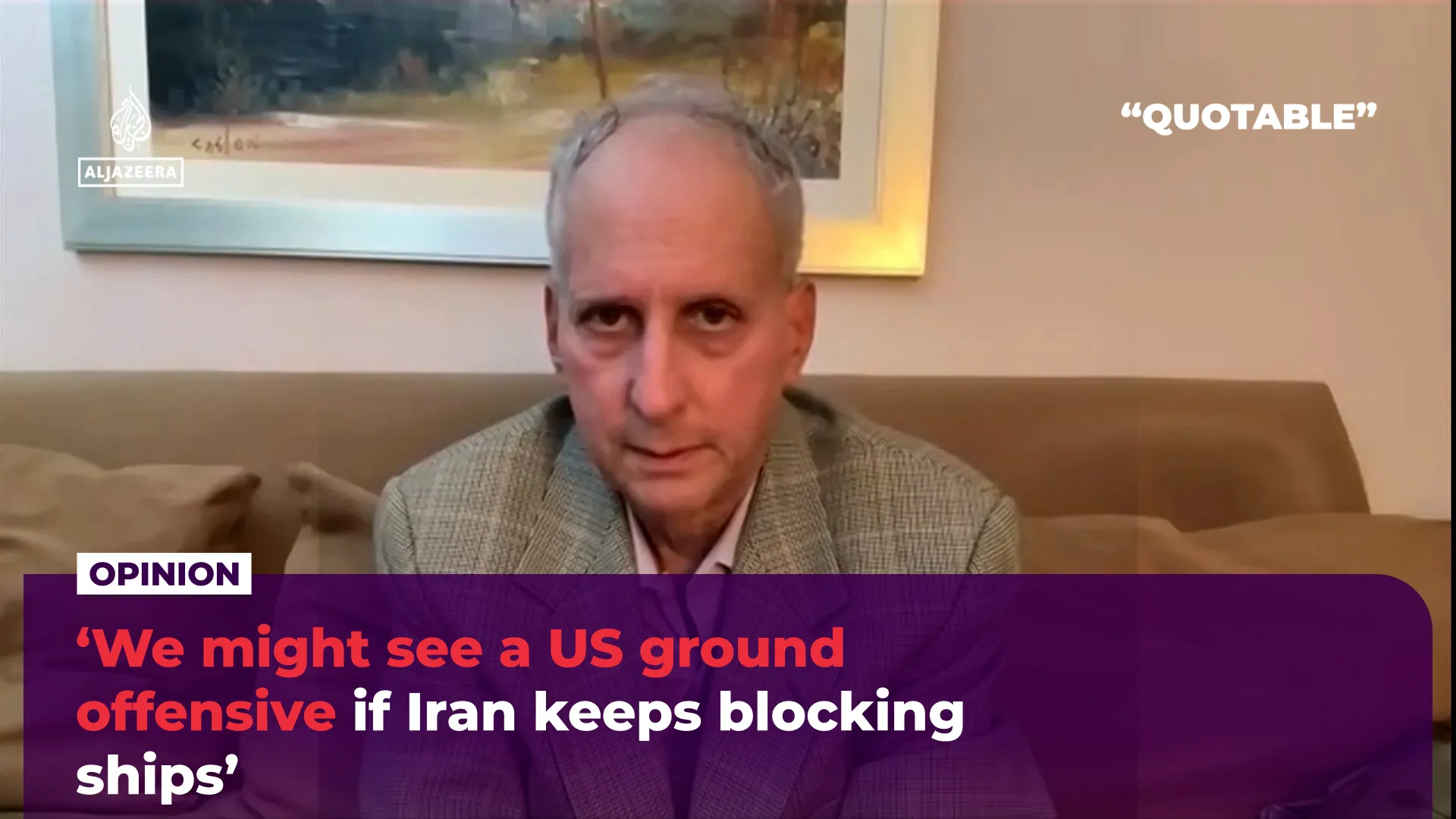
‘Once the US starts capturing territory in Iran, all bets are off.’
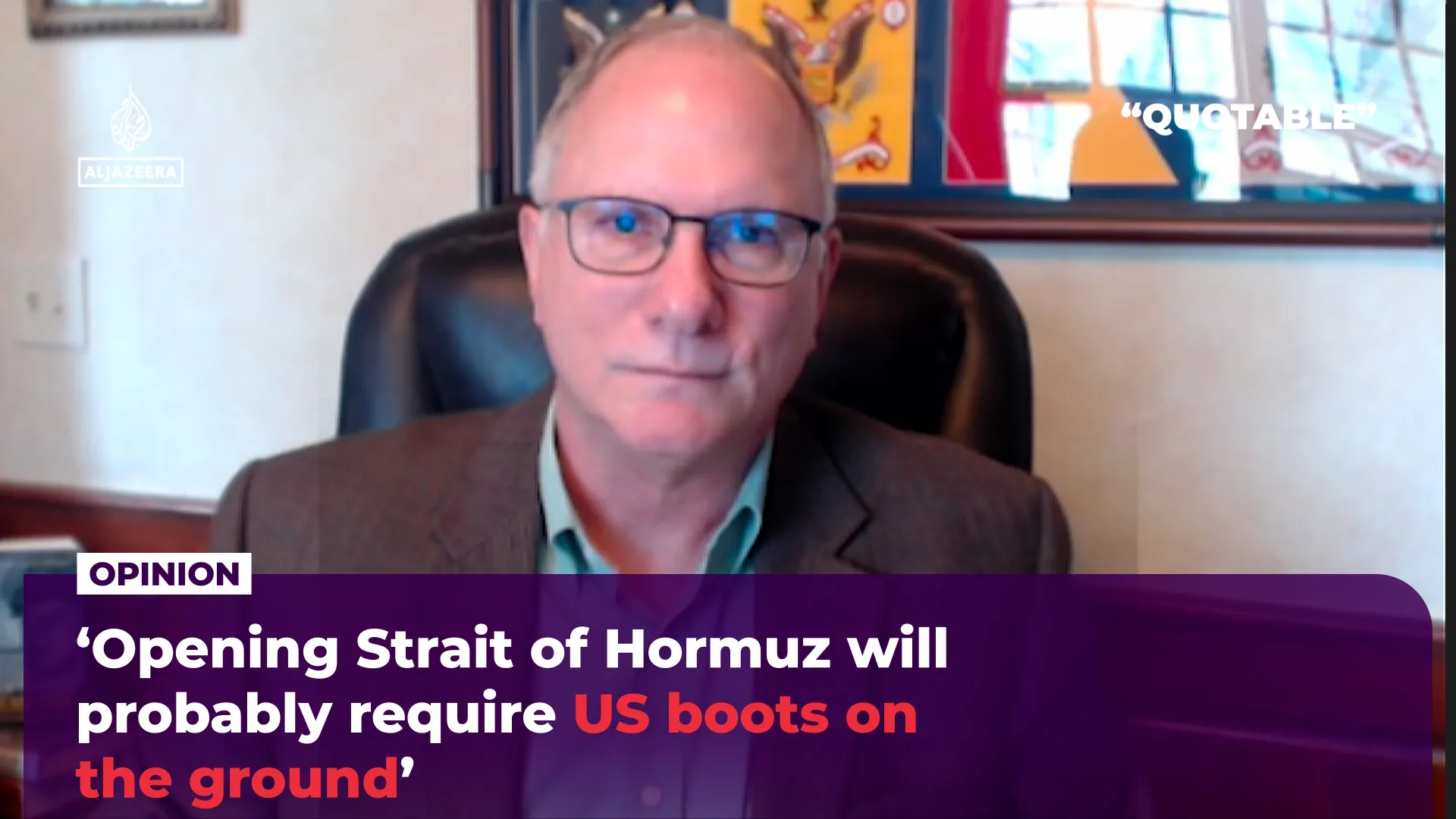
Kenneth Katzman, a senior fellow at the Soufan Center for Strategic Dialogue, says US war objectives in Iran that cannot be met with air power can be met with a limited ground invasion.
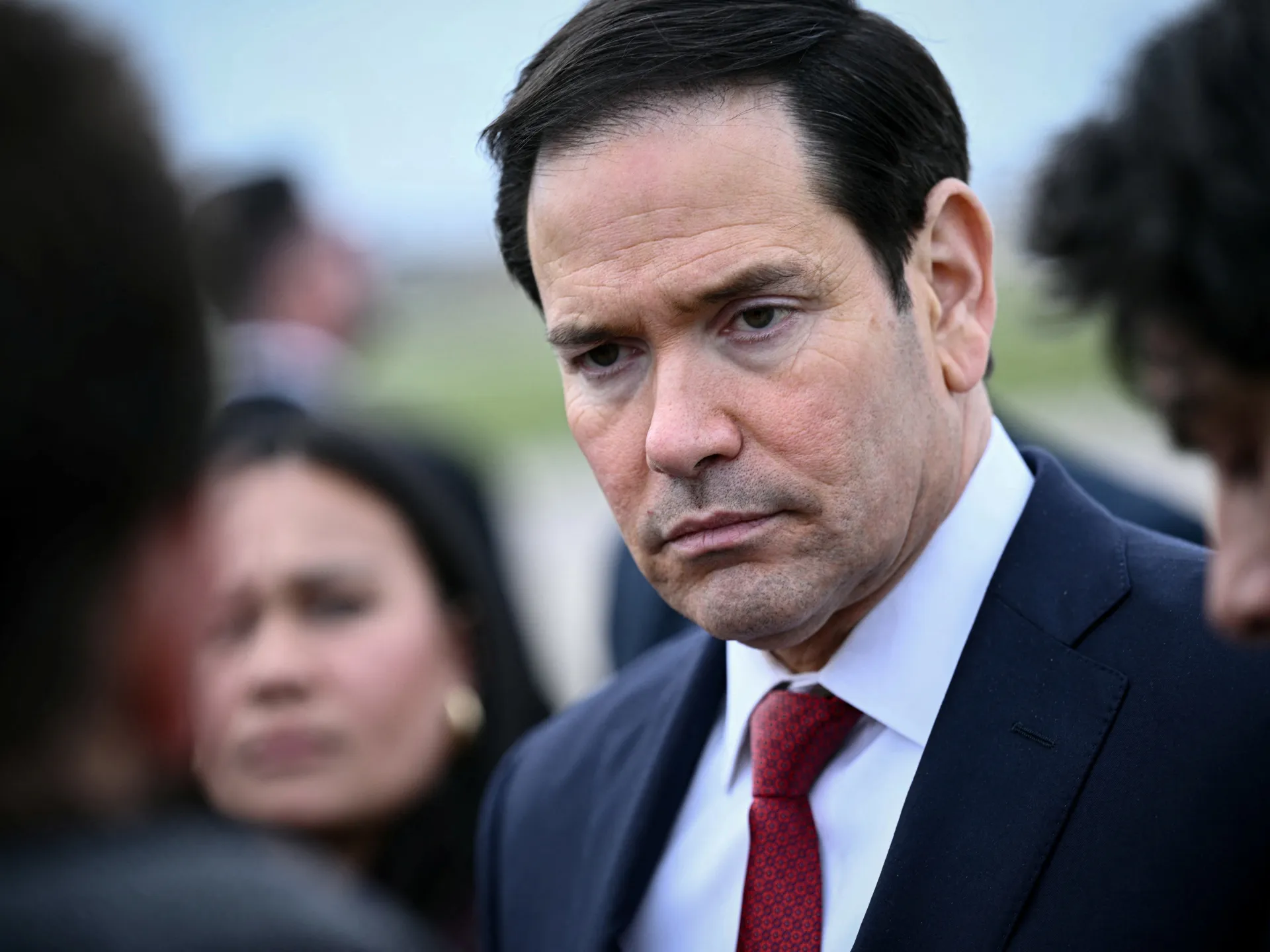
United States Secretary of State Marco Rubio has offered wide-ranging remarks upon his departure from the latest Group of Seven (G7) ministers’ meeting in France, denouncing Iran’s continued chokehold on the Strait of Hormuz as well as settler violence in the occupied West Bank.
Standing on an airport tarmac on Friday, Rubio fielded questions from journalists about reports that Iran plans to implement a tolling system in the strait, a vital waterway for the world’s oil supply.
Recommended Stories
list of 3 itemsend of list
Rubio used the topic to double down on pressure for countries to participate in securing the Strait of Hormuz, a demand US President Donald Trump has repeatedly made.
“One of the immediate challenges we’re going to face is in Iran, when they decide that they want to set up a tolling system in the Strait of Hormuz,” Rubio said.
“Not only is this illegal, it’s unacceptable. It’s dangerous for the world, and it’s important that the world have a plan to confront it. The United States is prepared to be a part of that plan. We don’t have to lead that plan, but we are happy to be a part of it.”
He called on the G7 members — among them, Japan, Canada, France, the United Kingdom, Italy, Germany and the European Union — as well as countries in Asia to “contribute greatly to that effort”.
Rubio calls toll plan ‘unacceptable’
The Strait of Hormuz is a key artery for the global transport of oil and natural gas, and prior to the start of the US and Israel’s war against Iran on February 28, an average of 20 million barrels of oil per day passed through the waterway.
That amounted to roughly 20 percent of the world’s liquid petroleum supply.
But since the outbreak of war, Iran has pledged to close the Strait of Hormuz, which borders its shores. The threat of attacks has ground most of the local tanker traffic to a standstill, though a few vessels, some linked to Iran or China, have been allowed to pass through.
Media reports suggest that Iran is setting up a “tollbooth system” that would require passing ships to put in a request through Iran’s armed forces, the Islamic Revolutionary Guard Corps (IRGC). There would also be a fee to secure passage.
“ They want to make it permanent. That’s unacceptable. The whole world should be outraged by it,” Rubio said on Friday.
He added that he conveyed a warning about the polling scheme to his colleagues at the G7.
“All we’ve said is, ‘You guys need to do something about it. We’ll help you, but you guys are going to need to be ready to do something about it,’” Rubio said.
“Because when this conflict and when this operation ends, if the Iranians decide, ‘Well, now we control the Strait of Hormuz and you can only go through here if you pay us and if we allow you to, that’s not only is it illegal under international law and maritime law. It’s unacceptable, and that can’t be allowed to exist.”
The Trump administration, however, has struggled to rally allies and world powers to join the US in its offensive against Iran.
Legal experts have criticised the initial strikes against Iran as an unprovoked act of aggression, though the Trump administration has cited a range of rationales for launching the attack, including the prospect that Iran may develop a nuclear weapon.
Many of the US allies in Europe have maintained that they would limit their involvement to defensive actions. Trump, meanwhile, has accused members of the NATO alliance of being “cowards”, adding in a social media post, “We will REMEMBER.”
In a statement following the G7 meeting, member countries reiterated their stance that there should be an “immediate cessation of attacks against civilians and civilian infrastructure”.
They also underscored the “absolute necessity to permanently restore safe and toll-free freedom of navigation in the Strait of Hormuz”. But the statement fell short of pledging any resources or aid to the US and Israeli war effort.
Achieving goals ‘without any ground troops’?
It is unclear when the war might end. On Saturday, it reaches its one-month anniversary, having stretched for four weeks.
Rubio on Friday echoed Trump’s assessment that the war was going as planned and that the US was achieving its objectives, including to destroy Iran’s navy, missile stockpiles and uranium enrichment programme.
“ We are ahead of schedule on most of them, and we can achieve them without any ground troops, without any,” he said, addressing an oft-raised concern about the prospect of US troops being deployed to Iran.
Rubio also briefly addressed the increasing levels of Israeli settler violence against Palestinians in the occupied West Bank.
On March 19, the United Nations estimated that more than 1,000 Palestinians have been killed in the West Bank since Israel began its genocidal war in Gaza in October 2023. The international body underscored that a quarter of the victims were youths.
“ Well, we’re concerned about that, and we’ve expressed it. And I think there’s concern in the Israeli government about it, as well,” Rubio responded, adding that it was a “topic we follow very closely”.
He suggested that the Israeli government may take action to stop the violence, though critics argue that Israel has largely turned a blind eye to settler violence.
“Maybe they’re settlers, maybe they’re just street thugs, but they’ve attacked security forces, Israelis, as well. So, I think you’ll see the government going to do something about it,” Rubio said.
Upon taking office for a second term in January 2025, President Trump also moved to cancel sanctions against Israeli settlers accused of grave abuses in the West Bank.
During his first Cabinet meeting since launching the U.S. war on Iran, President Trump spent 10 minutes talking about the price of ceremonial White House pens — which he claimed to have brought down, from $1,000 to $5, by switching to his favored Sharpie brand.
Trump was trying to make the point during the Thursday meeting that he’s a great money saver. He seemed chipper, joking with the other leaders of his administration at the table.
Late Thursday, when asked on “The Five” on Fox News about whether Iranian people have access to basic necessities such as drinking water and food, Trump complimented the looks of Dana Perino, the Fox host who’d asked the question, compared to when he’d met her years before.
“Now I’m not allowed to say this, it’s the end of my political career, but you may be even better looking, OK?” Trump said. “You’re not allowed to say a woman’s beautiful anymore.”
He then talked about Iranian authorities killing protesters, but said he’d been pleased with them more recently because they had given him a “present” by allowing oil ships through the Strait of Hormuz.
Through both discussions, Trump maintained a flippant, casual tone — the same he has maintained since the war began a month ago, and a vast departure from that of past wartime presidents.
For weeks, Trump has batted away criticisms of the war campaign and questions about why it was justified and how long it will last. He has derided reporters for asking questions about tactics and whether he’ll deploy boots on the ground as inappropriate and foolish, and repeatedly met concerns about the human toll of the war by shrugging them off or changing the subject.
Meanwhile, his war has cost the U.S. billions of dollars and depleted its global reserves of critical weapons systems such as Tomahawk missiles, which cost millions of dollars each and are needed to maintain U.S. security around the world, according to the Washington Post.
Entering its fifth week, the war has badly disrupted markets, with U.S. stocks falling Friday as Wall Street approached the end of its fifth straight losing week — the longest such streak in nearly four years — and oil prices rising again.
Markets have fluctuated based on Trump’s changing messages on an end to the war, planned and then postponed strikes on Iran’s power plants, strikes on oil and gas infrastructure across the Middle East and Iran’s stranglehold on the Strait of Hormuz, through which a quarter of global oil usually passes.
Trump has talked in recent days about an impending deal to end the war, but so far it has not materialized, with Iran downplaying the seriousness of the negotiations. Iran instead appeared to be formalizing its hold on the strait, including by creating what amounts to a toll on ships seeking passage through the channel from its Islamic Revolutionary Guard Corps.
The number of U.S. deaths in the conflict has held steady for days — at 13 — but the war continues to exact a daily, devastating toll in the Middle East. In Iran, thousands of targets continued being hit, with the death toll ticking toward 2,000.
Speaking by video during a Human Rights Council meeting in Geneva on Friday, Iranian Foreign Minister Abbas Araghchi accused the United States and Israel of harboring a “clear intent to commit genocide” in Iran, claiming that more than 600 schools had been damaged or demolished and more than 1,000 students and teachers “martyred or wounded.”
The discussion related in part to a Feb. 28 strike on an elementary school in Minab that killed more than 165 people, most of them children, which evidence reportedly suggests was the work of the U.S. and which the U.S. says is under investigation.
Casualties also continued in Gulf nations allied with the U.S., where Iran continues to strike U.S. military installations and other infrastructure, and in Lebanon, which Israel has invaded and bombed relentlessly in its own war with the Iranian-aligned Hezbollah force.
And yet, Trump has bounced between speaking engagements and more formal meetings with an apparent lightness — seeming unbothered by the weight of the conflict and acting as if U.S. victory were already at hand.
“We’ve already won the war. Militarily we’ve totally won the war,” he told “The Five” on Thursday.
After Trump’s exchange with Perino, fellow host Greg Gutfeld began to change the topic, saying, “I’m debating whether to be serious or not serious.”
“Do you think Biden would do this interview? Can you imagine? You think Biden — Sleepy Joe — he would do it?” Trump said.
He called the war a “little bit of a detour” from what he said were his otherwise winning economic policies, and asserted again — without providing evidence — that Iran was on the cusp of having a nuclear weapon and would have used it to cause devastation across the Middle East and to the U.S. if the U.S. hadn’t struck first, including when it bombed Iran’s nuclear sites last summer.
“You can’t let a madman or you can’t let a mad ideology have a nuclear weapon,” Trump said.
He repeated his long-pushed lie that he won the 2020 election, and suggested his support among his MAGA base remains at 100%.
An AP-NORC poll this week found that most Americans believe that the U.S. military campaign in Iran has gone too far — including about a quarter of Republicans — and that many are worried about gas prices.
During his Cabinet meeting Thursday, Trump seemed supremely confident, but also aware that the conflict was far from settled.
He said that the U.S. was “extremely — really a lot — ahead of schedule” in its war effort, and that “the Iranian regime is now admitting to itself that they have been decisively defeated.” But he also said that “even now, we don’t know if there are any mines” in the Strait of Hormuz, despite the U.S. having wiped out Iran’s “mine droppers,” and acknowledged that “if you think there may be a mine, that’s a bad thought and it stops things up.”
He said the U.S. has “decimated” about 99% of Iranian capabilities, but “the problem with the strait” is that the remaining 1% threat “is unacceptable, because 1% is a missile going into the hull of a ship that cost $1 billion.”
“If we do a 99% decimation, that’s no good,” he said.
During “The Five” interview, Trump was also asked if the CIA had told him that Supreme Leader Ayatollah Mojtaba Khamenei — who took on the Iranian leadership role after his father, Supreme Leader Ayatollah Ali Khamenei, was killed in initial strikes — is gay, which would be a crime under Iranian law.
“Well they did say that, but I don’t know if it was only them. I think a lot of people are saying that. Which puts him off to a bad start in that particular country, you know?” Trump said, in a stunning acknowledgment of a previously rumored intelligence briefing.
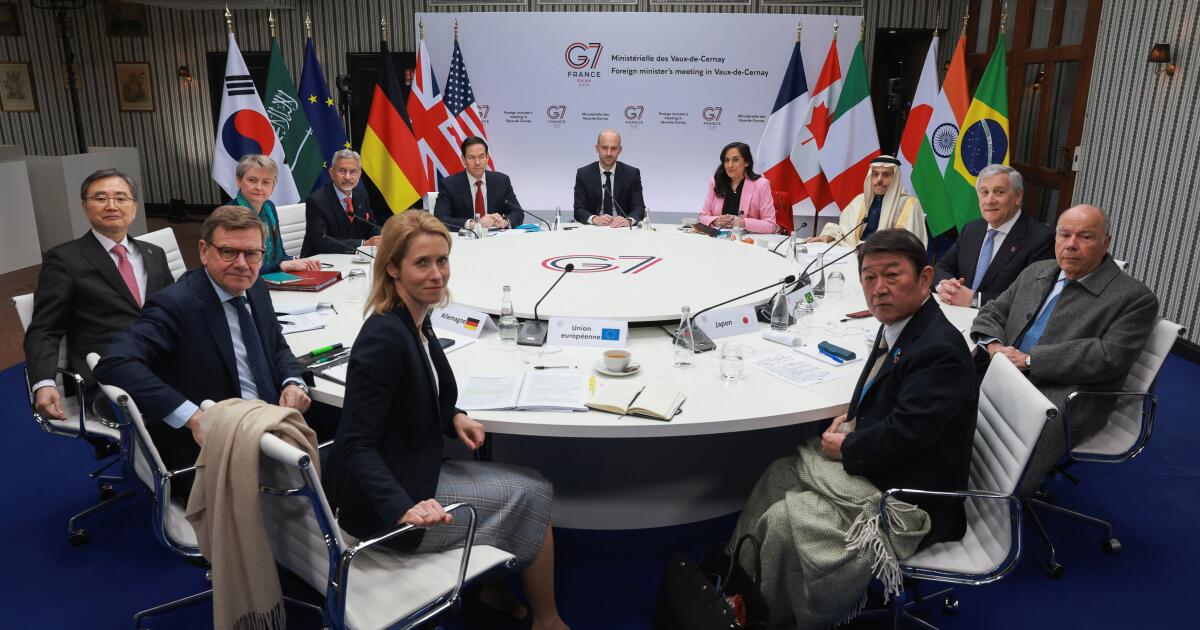
VAUX-DE-CERNAY, France — Group of Seven foreign ministers met on Friday in France to discuss the Russia-Ukraine conflict, with deep divisions apparent over the U.S.-Israeli war with Iran, following President Trump’s repeated complaints that America’s allies have ignored or rejected requests for help in the military operation and in confronting Iran’s retaliatory attacks, including the closure of the Strait of Hormuz to most international shipping.
U.S. Secretary of State Marco Rubio joined his counterparts from the G7 just 24 hours after Trump’s latest round of insults lobbed at NATO and as instability in oil markets persisted with the Iran war entering its fourth week along with uncertainty over the status of potential negotiations to end the crisis.
Most of America’s closest allies have greeted the Iran war with deep skepticism, sentiments that were on display as the G7 foreign ministers met at a historic 12th-century abbey in Vaux-de-Cernay, outside Paris, even as they urged a diplomatic solution to resolve the situation.
As the diplomats gathered, France’s Minister of the Armed Forces Catherine Vautrin said the war in the Middle East “is not ours,” adding that the French position is strictly defensive.
“The aim is truly this diplomatic approach, which is the only one that can guarantee a return to peace,” she said on Europe 1 and CNews. “Many countries are concerned, and it is absolutely essential that we find a solution.”
British Foreign Secretary Yvette Cooper, meanwhile, said Britain also favored a diplomatic path, acknowledging differences with the United States. “We have taken the approach of supporting defensive action, but also we’ve taken a different approach on the offensive action that has taken place as part of this conflict,” she said.
Rubio already faced difficulties in trying to sell the U.S. strategy for the Iran conflict, but Trump’s vitriolic comments about NATO countries not stepping up to help the U.S. and Israel during a Cabinet meeting on Thursday will likely make it an even tougher task.
Of the G7 nations — besides the U.S. — Britain, Canada, France, Germany and Italy are members of the trans-Atlantic military alliance. Japan is the only one that is not.
“We are very disappointed with NATO because NATO has done absolutely nothing,” Trump said in comments echoed later by his top diplomat.
“Frankly, I think countries around the world, even those that are out there complaining about this a little bit, should actually be grateful that the United States has a president that’s willing to confront a threat like this,” Rubio said Thursday.
Rubio, who chatted briefly with Ukrainian Foreign Minister Andrii Sybiha, also still has work to do to smooth things over with allies like those in Europe that have faced criticism or outright threats from Trump and others in his Republican administration. The Europeans are still smarting over Trump’s earlier demands to take over Greenland from NATO ally Denmark and are concerned about U.S. support for Ukraine in its war with Russia. The conflict in the Middle East has added another point of tension.
“Today at the G7 I reiterated that President Trump is committed to reaching a ceasefire and negotiated settlement to the Russia-Ukraine war as soon as possible,” Rubio said in a post on X containing a photo of him meeting with his counterparts.
Shortly before leaving Washington Rubio told reporters he was not concerned about G7 unhappiness with the Iran war.
“I’m not there to make them happy,” he said. “I get along with all of them on a personal level, and we work with those governments very carefully, but the people I’m interested in making happy are the people of the United States. That’s who I work for. I don’t work for France or Germany or Japan.”
Trump has complained about lack of support from allies
Trump has complained that he has not been able to rally support behind his war of choice in Iran and that NATO and most other allies have rejected his calls to help secure the Strait of Hormuz, where Iran’s chokehold has disrupted oil shipments and pushed up energy prices.
“We’re there to protect NATO, to protect them from Russia. But they’re not there to protect us,” Trump said Thursday.
Before the U.S. leader’s comments, NATO Secretary-General Mark Rutte reiterated the increase in defense spending by alliance members — which Trump has urged — saying Europe and Canada had been “overreliant on U.S. military might” but a “shift in mindset” has taken hold.
Iran has long insisted that its nuclear program is peaceful, and its ambassador to the International Atomic Energy Agency has said that the United States and Israel’s “justification that Iran wants to develop nuclear weapons is simply a big lie.” The ambassador, Reza Najafi, has accused the U.S. and Israel of attacking ”Iran’s peaceful safeguarded nuclear facilities.”
G7 host France has been skeptical of the Iran war
France is hosting the G7 meeting near Versailles and has been highly skeptical of the war. Besides Vautrin’s comments on Friday, the chief of the French defense staff, Gen. Fabien Mandon, complained this week that U.S. allies had not been informed about the start of hostilities.
“They have just decided to intervene in the Near and Middle East without notifying us,” Mandon said, lamenting that the U.S. “is less and less predictable and doesn’t even bother to inform us when it decides to engage in military operations.”
However, 35 countries joined military talks hosted by Mandon on how to reopen the Strait of Hormuz “once the intensity of hostilities has sufficiently decreased,” France’s Defense Ministry said.
Rubio said that with Iran threatening global shipping, countries that care about international law “should step up and deal with it.”
Similar sentiments to Mandon’s have been expressed by other allies that also worry about the U.S. commitment to Ukraine as the Iran war closes in on four weeks.
“We must avoid further destabilization, secure our economic freedom and develop perspectives for an end of and the time after the hostilities,” German Foreign Minister Johann Wadephul said Thursday. “Our joint support for Ukraine … must not crumble now. That would be a strategic mistake with a view to Euro-Atlantic security.”
Lee writes for the Associated Press. AP writers Lorne Cook in Brussels, John Leicester in Paris and Geir Moulson in Berlin contributed to this report.
As the United States-Israeli war on Iran enters its fourth week this weekend, pressure on oil and gas markets continues to mount due to severe disruption to shipping traffic through the Strait of Hormuz as well as attacks on and around key energy facilities in the Gulf.
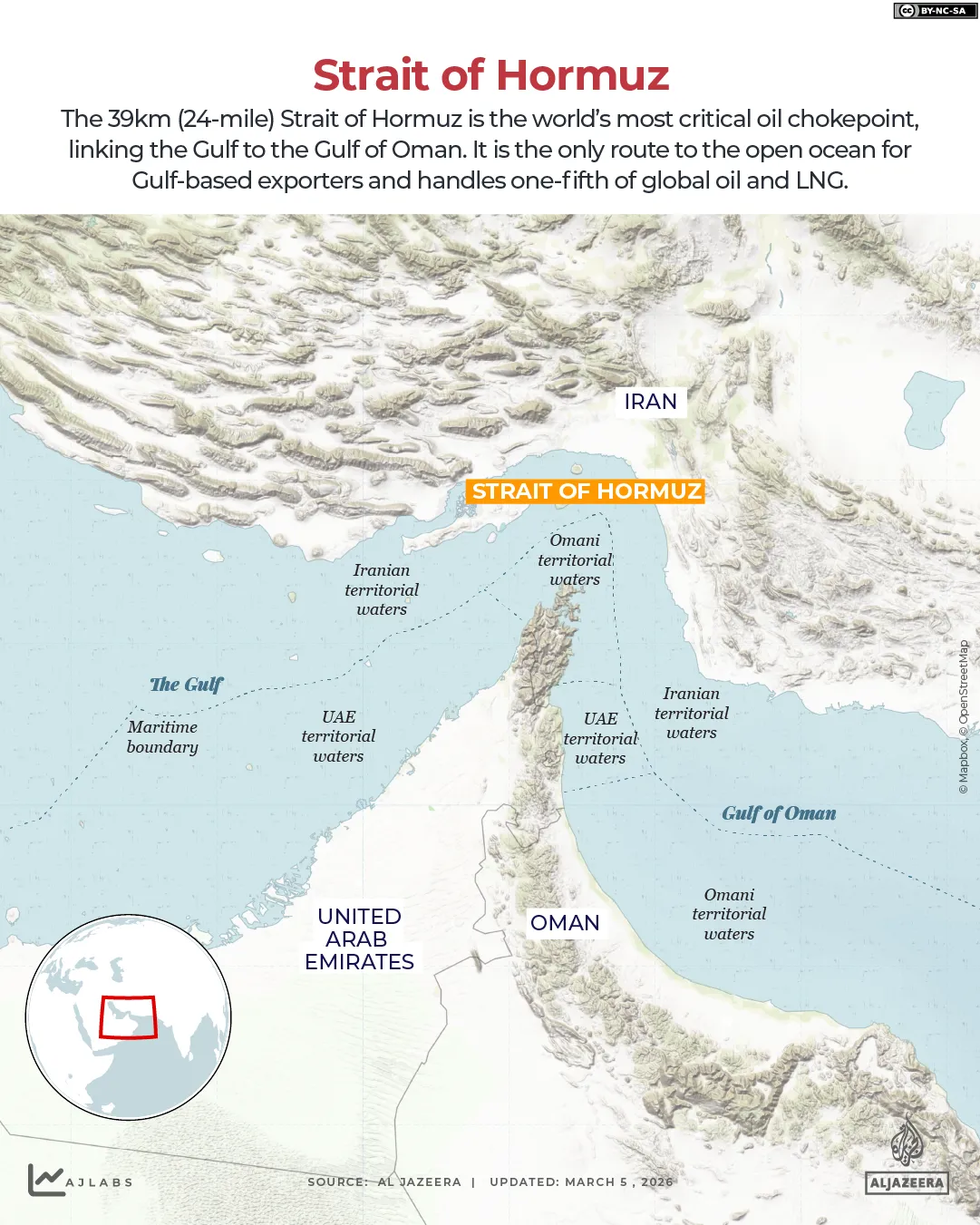
In peacetime, 20 percent of the world’s oil and gas is shipped from producers in the Gulf through the Strait of Hormuz – the only route to the open ocean – including 20 million barrels of oil per day.
To bridge the shortage its closure has caused, countries in the Middle East are exploring alternative routes to get energy exports out.
In this explainer, we look at three major pipelines in the Middle East that producers may be pinning their hopes on, and whether they can fill the gap.
What has happened in the Strait of Hormuz?
On March 2 – two days after the US and Israel began strikes on Iran – Ebrahim Jabari, a senior adviser to the commander-in-chief of Iran’s Islamic Revolutionary Guard Corps (IRGC), announced that the strait was “closed”. If any vessels tried to pass through, he said, the IRGC and the navy would “set those ships ablaze”. Since then, traffic through the strait has plunged by more than 95 percent.
Iranian officials have most recently stated that the strait is not completely closed – except to ships belonging to the US, Israel and those who collaborate with them – but have also laid down new ground rules. Any vessel must secure Tehran’s approval to transit through the narrow waterway.
As a result, over the past fortnight, countries have been scrambling to do deals with Iran to secure safe passage and a few, mostly Indian, Pakistani and Chinese-flagged tankers have been allowed to pass.
On Thursday, Malaysian Prime Minister Anwar Ibrahim thanked Tehran for granting Malaysian vessels “early clearance” through the strait.
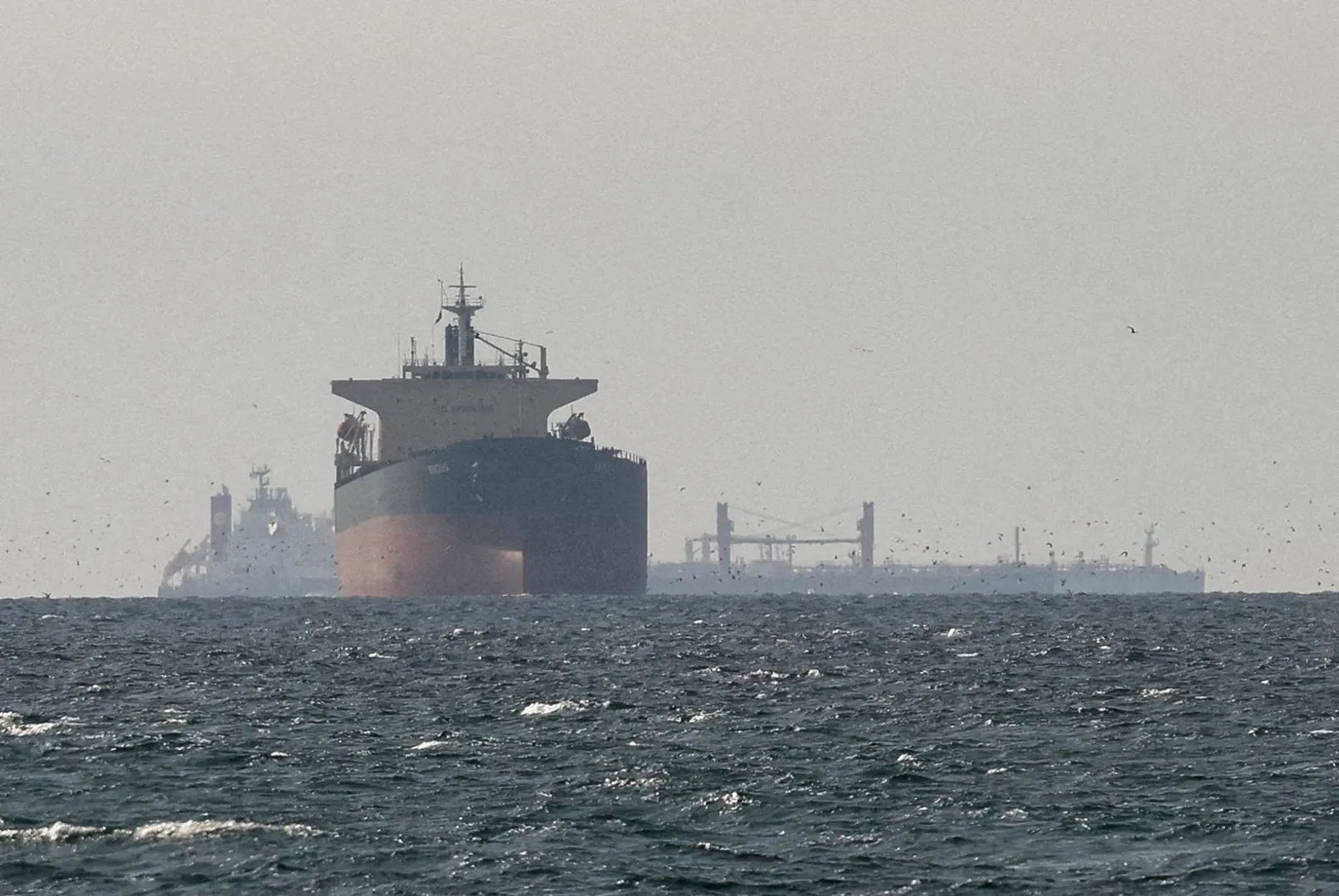
Meanwhile, about 2,000 ships flying the flags of other nations are stuck on either side of the strait.
(Al Jazeera)
Which oil pipelines could serve as alternate routes?
The only alternative to shipping oil is piping it across land or under the sea. Three oil pipelines could work as ways around the Strait of Hormuz, including:
Saudi Arabia’s East-West Pipeline
The East-West pipeline is also known as the Petroline and is operated by Saudi oil giant Aramco. Aramco is one of the world’s largest companies, with a market capitalisation exceeding $1.7 trillion and annual revenues of $480bn. The oil giant controls 12 percent of global oil production, with a capacity of more than 12 million bpd.
It is a 1,200km (745-mile) pipeline which runs from the Abqaiq oil processing centre close to the Gulf in Saudi Arabia to the Yanbu port on the Red Sea, on the other side of the country.
However, the pipeline does not have the capacity to fully make up for the Hormuz closure.
In 2024, about 20 million barrels per day (bpd) passed through the Strait of Hormuz, according to data from the United Nations. Crude oil and condensate made up 14 million bpd of this, while petroleum was the remaining 6 million bpd.
The East-West pipeline has the capacity of transporting up to 7 million bpd. On March 10, Aramco said about 5 million bpd could be made available for exports, while the rest could supply local refineries.
Since the US-Israeli war on Iran began at the end of February, Saudi Arabia has ramped up its oil flow through this pipeline. In January and February, an average of 770,000 bpd flowed through the pipeline, according to data from Kpler, a data and analytics company. By Tuesday this week, this had increased to an average of 2.9 million bpd.
However, using the Saudi pipeline still carries a risk.
The Houthis, an Iran-backed Yemeni armed group whose attacks on ships in the Red Sea caused global shipping chaos during Israel’s genocidal war in Gaza from 2023 to 2025, could target the Bab al-Mandeb Strait, which connects the Red Sea to the Gulf of Aden, and the Indian Ocean beyond.
An unnamed Houthi leader told the Reuters news agency that the Houthis remain ready to attack the Red Sea again in solidarity with Tehran, the agency reported on Thursday.
“We stand fully militarily ready with all options. As for other details having to do with determining zero hour they are left to leadership and we are monitoring and following up with the developments and will know when is the suitable time to move,” the Houthi leader said.
The Bab al-Mandeb is the southern outlet of the Red Sea, situated between Yemen on the Arabian Peninsula and Djibouti and Eritrea on the African coast.
It is one of the world’s most important routes for global seaborne commodity shipments, particularly crude oil and fuel from the Gulf bound for the Mediterranean via the Suez Canal or the SUMED pipeline on Egypt’s Red Sea coast, as well as commodities bound for Asia, including Russian oil.
The Bab al-Mandeb is 29km (18 miles) wide at its narrowest point, limiting traffic to two channels for inbound and outbound shipments.
Iran could open a new front in the Bab al-Mandeb Strait if attacks are carried out on Iranian territory or its islands, Iran’s semiofficial Tasnim cited an unnamed Iranian military source as saying on Wednesday.
(Al Jazeera)
UAE’s Abu Dhabi Crude Oil Pipeline
The Abu Dhabi Crude Oil Pipeline is also called the ADCOP or the Habshan-Fujairah pipeline.
The 380km pipeline runs from Habshan, an oil and gasfield in the southwestern area of Abu Dhabi, United Arab Emirates, to the port of Fujairah on the Gulf of Oman.
The pipeline, which became operational in 2012, has a capacity of about 1.5 million barrels per day (bpd). It is unclear how much is now being transported through the pipeline.
However, oil exports from Fujairah do appear to have risen in the past month despite the closure of the strait, averaging 1.62 million bpd in March compared with 1.17 million bpd in February, according to Kpler analyst Johannes Rauball, who spoke to Reuters.
Iraq-Turkiye Crude Oil Pipeline
The Iraq-Turkiye Crude Oil Pipeline, also called the Kirkuk-Ceyhan Pipeline, links Iraq to the Mediterranean coast of Turkiye.
The pipeline, which has the capacity of 1.6 million bpd, currently carries about 200,000bpd.
Iraq is among the top five global producers of oil and is the second largest within the Organization of the Petroleum Exporting Countries (OPEC), exceeding 4 million bpd.
Can these pipelines replace the Strait of Hormuz?
No. While these pipelines can take on some of the capacity of Hormuz, their combined capacity is only about 9 million bpd, compared with about 20 million bpd for the strait.
Additionally, these pipelines are land-based and within the range of Iranian missiles and drones, which makes them just as vulnerable to attacks and damage in the ongoing conflict as ships travelling through the strait. Throughout the war, energy infrastructure all over the Gulf has suffered strikes.
Are there other options?
Theoretically, oil can be transported on trucks, but this is costly, slow and inefficient.
A standard truck can carry anywhere between 100 to 700 barrels per day, depending on the number of trips. Hundreds of thousands of barrels would be needed to meet needs, requiring thousands of trucks, which could also be targeted in strikes.
Malaysian leader says oil tankers granted clearance by Iran as government introduces measures to conserve fuel.
Published On 27 Mar 202627 Mar 2026
Iran has allowed Malaysian ships to pass through the Strait of Hormuz, Malaysia’s leader said, amid the global energy crunch driven by the United States and Israel’s war with Tehran.
In a televised address on Thursday, Malaysian Prime Minister Anwar Ibrahim expressed thanks to Iran’s President Masoud Pezeshkian for granting Malaysian vessels “early clearance” through the waterway, which has been effectively closed by Tehran.
Recommended Stories
list of 4 itemsend of list
“We are in the process of securing the release of the Malaysian oil tankers and the workers involved so they can continue their journey home,” Anwar said.
Anwar did not elaborate on how many vessels had cleared the strait, which normally facilitates the transport of about one-fifth of global oil and liquefied natural gas (LNG) supplies, or under what conditions the vessels were cleared for safe passage.
The Malaysian government, which has traditionally pursued a policy of non-alignment in international affairs, did not immediately respond to requests for comment.
Anwar said that while Malaysia had been affected by the disruption to energy supplies, the Southeast Asian country was in a “much better position” than other nations due to the capacity of the state-run oil and gas company Petronas.
As one of the world’s top suppliers of LNG, Malaysia is a net energy exporter, but the country imports nearly 70 percent of its crude oil from the Gulf region.
Anwar said his government would take a series of measures to conserve fuel, including reducing the individual monthly quota for subsidised petrol and “gradually and selectively” moving civil servants onto work-from-home arrangements.
“Food supplies are affected; prices will certainly rise. Fertiliser as well, and of course, oil and gas,” Anwar said.
“So there are steps we need to take. There are countries whose impacts are far worse than ours, but that does not mean we are spared entirely,” he said.
While Iran has stated that the strait is open to ships that are not aligned with the US or Israel, Tehran has claimed the right to exercise control over the waterway and admitted responsibility for at least two of 20 documented attacks on commercial vessels in the region.
Iran’s parliament is also pushing legislation that would establish a toll system in the strait amid reports that Iranian authorities have been demanding vessels fork over as much as $2m to guarantee their safe passage.
Five ships were tracked transiting the strait via their automatic identification systems on Wednesday, up from four the previous day, according to maritime intelligence company Windward.
Before the war, an average of 120 vessels transited the waterway each day, according to Windward.
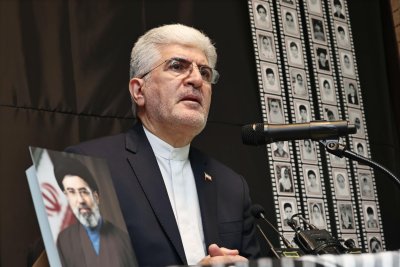
Iranian Ambassador to South Korea Saeed Koozechi speaks during a press conference at the Iranian Embassy in Seoul on Thursday. Photo by Yonhap
Iran’s top envoy to Seoul said Thursday South Korean ships can pass through the Strait of Hormuz, but only with prior coordination with Tehran, saying that his country has asked Seoul to provide details of the vessels stranded in the key waterway amid the ongoing conflict.
Iranian Ambassador to South Korea Saeed Koozechi made the remarks in a press conference, as 26 South Korean ships with about 180 crew members aboard remain stranded in the shipping lane effectively blocked by Iran following attacks by the United States and Israel.
Koozechi also said that Iran considers South Korea a non-adversarial country.
“There are no problems with the vessels,” he said through an interpreter. “But in order for them to pass through, you need coordination, prior consultations with the Iranian military and government.”
Koozechi went on to say that Tehran had asked Seoul to provide the details of the stranded ships during the phone talks between their foreign ministers on Monday, without specifying whether the request was meant to start negotiations on the ships’ passage.
“Iran is acting in good faith and is willing to allow South Korean ships to transit the Strait of Hormuz, but the process will depend on receiving the relevant information and the vessels list. Once they are provided, we will consider it,” he said.
When asked to confirm Iran’s request, Seoul’s foreign ministry said it was a request for cooperation on safety measures in the event of a humanitarian situation on the anchored vessels, and not related to their transit.
“We have not negotiated (with Iran) on (the passage) of vessels,” a ministry official said, adding that it has received no such request from Tehran, nor has it provided any details of the ships.
In the phone talks with his Iranian counterpart, Foreign Minister Cho Hyun called on Tehran to ease tensions and ensure safe navigation through the vital waterway for global energy supplies.
Cho also requested Iran’s cooperation regarding the safety of stranded South Korean vessels and their crew, but the issue of permitting their transit was reportedly not addressed.
While Iran sees South Korea as a non-hostile country, restricting activities of ships engaged in business with U.S. companies has been unavoidable as part of its self-defense measures, the ambassador said.
“Imposing restrictions on them is only natural,” Koozechi said. “Blocking their activities and enforcing economic restrictions is Iran’s right to self-defense.”
Thursday’s press event featured a photo exhibition and documentary screening at the Iranian Embassy in Seoul. The materials highlighted the impact of U.S.-Israeli attacks on Iran, including images of destroyed buildings and footage of children killed in an airstrike at an elementary school and their grieving families.
Copyright (c) Yonhap News Agency prohibits its content from being redistributed or reprinted without consent, and forbids the content from being learned and used by artificial intelligence systems.
WASHINGTON — President Trump will travel to Beijing for a rescheduled summit with Chinese President Xi Jinping on May 14 and 15, the White House announced on Wednesday.
Trump had been scheduled to travel to China later this month but previously announced he was delaying the trip so he could be in Washington to help steward the U.S. and Israeli war against Iran. The Republican president had announced a rescheduled trip even though the war in Iran continues and the U.S. is pressing Tehran to accept a ceasefire proposal.
The president and First Lady Melania Trump also plan to host Xi and his wife, Peng Liyuan, for a White House visit later this year, press secretary Karoline Leavitt said.
Leavitt, when asked if the new dates for Trump’s trip could suggest he believes the Iran war could end soon, offered an optimistic tone that the conflict could reach an endgame before he travels.
“We’ve always estimated four to six weeks,” Leavitt responded. “So you could do the math on that.”
The United States and Israel launched the attacks against Iran on Feb. 28.
The China trip had been planned for months but began to unravel as Trump pressured Beijing and other world powers to use their military might to protect the Strait of Hormuz, a critical waterway for the flow of oil. The strait has been effectively closed as Iran targets energy infrastructure and traffic through it.
Trump said last week while meeting with Irish Prime Minister Micheál Martin in the Oval Office that he would be going to China in five or six weeks’ time instead of at the end of the month. He said he would be “resetting” his visit with Xi.
“We’re working with China — they were fine with it,” Trump said then. “I look forward to seeing President Xi. He looks forward to seeing me, I think.”
Trump’s visit to China is seen as an opportunity to build on a fragile trade truce between the two superpowers, but it has become tangled in his effort to find an endgame to the war in Iran. Soon after pressing China and other nations to send warships to secure access to Middle Eastern oil, Trump indicated last week that his travel plans depended on Beijing’s response, though he added then that the U.S. didn’t need help from the allies that rebuffed his request.
US President Donald Trump has threatened to ‘obliterate’ Iran’s power plants if Tehran fails to open the Strait of Hormuz to all vessels within 48 hours. This major escalation comes as Trump faces pressure over skyrocketing domestic energy prices due to the now three-week-long war.
Tehran responds to Trump’s threat by saying all US energy infrastructure in the region will be targeted if Iran is attacked.
Published On 22 Mar 202622 Mar 2026
United States President Donald Trump has threatened to attack Iran’s power plants if freedom of navigation is not fully restored at the Strait of Hormuz within 48 hours, a dramatic escalation as the US-Israeli war on Iran continues for a fourth week.
The statement on Saturday came as Trump faces increasing pressure to secure the vital waterway that Iran has promised to keep closed to “enemy ships”, leading to soaring oil prices and plunging stock markets.
“If Iran doesn’t FULLY OPEN, WITHOUT THREAT, the Strait of Hormuz, within 48 HOURS from this exact point in time, the United States of America will hit and obliterate their various POWER PLANTS, STARTING WITH THE BIGGEST ONE FIRST,” Trump, who is in his Florida home for the weekend, wrote on Truth Social at 23:44 GMT.
He did not specify which plant he was referring to as the biggest.
Following Trump’s threat, the Iranian army said it would target all energy infrastructure belonging to the US in the region if Iran’s fuel and energy infrastructure were attacked.
Trump’s escalatory comments came barely a day after he talked about “winding down” the war that he launched alongside Israeli Prime Minister Benjamin Netanyahu on February 28, when the US and Iran were engaged in nuclear negotiations.
In a social media post on Friday, Trump said the US was “getting very close to meeting our objectives as we consider winding down our great Military efforts in the Middle East”.
Key waterway
Shipping traffic through the Strait of Hormuz, where a fifth of the world’s oil and gas passes through during peacetime, has virtually ground to a halt since the early days of the war.
Iran has said the Strait of Hormuz is open to all except the US and its allies, with Minister of Foreign Affairs Abbas Araghchi saying last week that he had been “approached by a number of countries” seeking safe passage for their vessels.
“This is up to our military to decide,” he told the US television network CBS, adding that a group of ships from “different countries” had been allowed to pass, without providing details.
The head of US Central Command, Admiral Brad Cooper, asserted on Saturday that Iran’s ability to attack vessels on the strait had been “degraded” after US fighter jets dropped 5,000-pound (about 2,300kg) bombs on an underground Iranian coastal facility storing antiship cruise missiles and mobile launchers earlier this week.
The strike also destroyed “intelligence support sites and missile radar relays” used to monitor ship movements, Cooper said.
Reporting from Washington, DC, Al Jazeera’s Manuel Rapalo said there seemed to be a “gap between what the White House appears to want in the Strait of Hormuz and what the US military says they have already accomplished”.
“It is interesting, to say at the very least, to hear Trump talking about a major escalation, given the fact that we’ve been hearing throughout the course of the day how much damage the US has done, supposedly, to Iran’s ability to target oil tankers and vessels navigating through the strait.”
The head of US Central Command says forces have struck Iranian coastal missile sites and infrastructure, degrading Tehran’s ability to threaten shipping in the Strait of Hormuz, as Washington vows to continue targeting its regional military capabilities.
President Trump frequently contradicts himself, sometimes in the same speech, social media post or even sentence. On Friday, he sent a torrent of mixed signals about the Iran war that raise more questions about the direction of the conflict and his administration’s strategy.
Within a few hours, Trump said he was considering winding down the war, his administration confirmed it was sending more troops to the Middle East and, in an effort to lessen the economic influence on global energy markets, the United States lifted sanctions on some Iranian oil for the first time in decades — relieving some of the pressure that Washington traditionally has used as leverage.
The confusing combination of actions deepens a sense among Trump’s critics that there is no clear, long-term strategy for the war the U.S. and Israel launched against Iran. Now in its fourth week, the war remains on an unpredictable path and a credible endgame is unclear as the global economy is being roiled.
‘Winding down’ the war
After another rough day in the financial markets, Trump said Friday afternoon on his social media network: “We are getting very close to meeting our objectives as we consider winding down our great Military efforts in the Middle East.”
Trump contended that the U.S. has adequately degraded Iranian naval, missile and industrial capacity and prevented Tehran from acquiring a nuclear weapon.
The president then suggested the U.S. could pull out of the conflict without stabilizing the Strait of Hormuz, the channel through which about one-fifth of the world’s oil supply travels. The strait has been ravaged by Iranian missile, drone and mine attacks during the war.
“The Hormuz Strait will have to be guarded and policed, as necessary, by other Nations who use it — The United States does not!” Trump wrote. But, in another contradiction, he said the U.S. would help if asked, “but it shouldn’t be necessary once Iran’s threat is eradicated.”
While oil that traverses the strait is usually bound for Asia and other places rather than North America, the chaos still affects the United States. Oil is bought and sold globally, so a shortage in oil for Asian countries leads to bidding up prices on oil sold to companies in America too.
That fact, coupled with an Israeli strike on Iran’s gas fields and an Iranian retaliation that crippled a major terminal to ship liquefied natural gas from Qatar, helped tank U.S. equity markets Friday, with the S&P dropping 1.5%. There also was a sharp increase in U.S. fuel prices.
More troops to the war zone
Even as Trump said the U.S. was close to winding down the war, his administration announced it was sending three more warships to the Middle East with about 2,500 additional Marines. It was the second time in a week that the administration said it was deploying more forces to the war zone. The military says some 50,000 are supporting the war effort.
Trump has often said he has ruled out sending in ground troops, but not always, and his administration has hinted at a possible deployment of special forces or similar units.
The Marines being sent to the region are an expeditionary unit designed for quick amphibious landings, but their deployment does not mean a ground invasion is certain. Analysts have suggested the presence of U.S. forces on the ground may be needed to ultimately secure the strait.
The surge in troops came just a day after news emerged that the Pentagon was seeking an additional $200 billion from Congress to fund the war. That extraordinarily high figure does not suggest that the war was winding down.
Lifting some sanctions on Iran
The administration said it would lift sanctions on the sale of Iranian oil, provided it was already at sea as of Friday. The move was an attempt to help lower skyrocketing energy prices by allowing freer sale of oil that Iran has let pass through the strait. It also extends a financial lifeline to the Iranian government that Trump is targeting.
His administration has tried other methods to lower oil prices. It has tapped the U.S. strategic petroleum reserve and lifted sanctions on some Russian oil. Yet Brent crude remained at $112 per barrel Friday, and analysts say oil prices are likely to remain high for months regardless of the next steps in the war.
The Iranian oil eventually would have reached another country, but now the United States and its allies can bid on it as well, Treasury Secretary Scott Bessent wrote on X.
“At present, sanctioned Iranian oil is being hoarded by China on the cheap,” Bessent wrote. “By temporarily unlocking this existing supply for the world, the United States will quickly bring approximately 140 million barrels of oil to global markets, expanding the amount of worldwide energy and helping to relieve the temporary pressures on supply caused by Iran.”
While 140 million barrels may seem like a lot, that is only a couple of days’ worth of oil on the global market.
Patrick De Haan, the head of petroleum analysis at GasBuddy, a U.S. fuel-tracking service, said he does not expect the temporary suspension to have a major influence on gas prices. The de facto closure of the strait has a much greater effect, he said. “Prices will likely still continue to rise so long as the Strait remains silent,” De Haan said.
And the contradictions in the position were obvious in Bessent’s post announcing the move, which labeled Iran “the head of the snake for global terrorism.” He said the administration would take steps to prevent Tehran from cashing in on the sales, but it was unclear how that would be done.
Even among some Republicans, the contradictions triggered rare public skepticism.
“Bombing Iran with one hand and buying Iran oil with the other,” South Carolina Rep. Nancy Mace posted on X on Saturday.
Riccardi writes for the Associated Press. AP business writer Dee-Ann Durbin in Ann Arbor, Mich., contributed to this report.
Japan sources more than 90 percent of its crude oil imports from the Middle East and is heavily dependent on exports transiting the key waterway.
Published On 21 Mar 202621 Mar 2026
Iran says Japanese ships will be allowed to transit the Strait of Hormuz, in the latest sign that Tehran has started pursuing a selective blockade of the strategic waterway.
“We have not closed the strait. In our opinion, the strait is open. It is closed only to ships belonging to our enemies, countries that attack us. For other countries, ships can pass through the strait ,” Iranian Foreign Minister Abbas Araghchi told Japan’s Kyodo News late on Friday.
Recommended Stories
list of 4 itemsend of list
“We are talking to them to find a way to pass safely. We are ready to provide them with safe passage. All they need to do is contact us to discuss how this route will be,” Araghchi said, according to an English transcript of the interview shared on his Telegram account.
Japan sources more than 90 percent of its crude oil imports from the Middle East and is heavily dependent on exports transiting the strait, but the waterway has been de facto closed since the United States and Israel attacked Iran on February 28.
Iran’s Islamic Revolutionary Guard Corps (IRGC) warned in the early days of the war that its forces would set “ablaze” any ships trying to transit the waterway, bringing marine traffic to a near standstill.
Over the past week, however, Iran has toned down the rhetoric to say the strait is only closed to Tehran’s enemies.
Japan may soon join the small cohort of countries – mainly China, India, and Pakistan – whose vessels have been allowed to transit the waterway in recent days, with approval from Iranian authorities.
Lloyd’s List, a shipping and maritime information service, separately reported that 10 ships have transited the strait by sailing close to Iran’s coastline – a route that is emerging as a “safe corridor” for shipping.
The latest ship, a Greek bulk carrier, transited on Friday by passing close to Iran’s Larak island , Lloyd’s said, while broadcasting the message “Cargo Food for Iran”.
While ships have been transiting on a case-by-case basis, Lloyd’s List reported that the IRGC is developing a more coordinated vetting and registration system.
As the war on Iran hits three weeks, a handful of countries – among them US allies – have already started lobbying Tehran to reopen the strait or allow their ships safe passage.
Japan, France, Germany, Italy, the Netherlands, and the United Kingdom earlier this week issued a joint statement expressing their “readiness to contribute to appropriate efforts to ensure safe passage through the Strait”.
Iraq, Malaysia, China, India and Pakistan have all reportedly held direct talks with Tehran to discuss the matter, according to Lloyd’s.
Araghchi’s remarks to Kyodo follow a call with Japanese Foreign Minister Toshimitsu Motegi on Tuesday, during which Tokyo expressed concern about the large number of Japanese vessels currently stranded in the Gulf, according to a Japanese readout of the call.
Weekly insights and analysis on the latest developments in military technology, strategy, and foreign policy.
Venerable A-10 Warthog attack jets are helping dismantle Iran’s Navy. Though the A-10 is most commonly associated with missions over land, the jets have a long-standing, if often obscure, maritime role. Moreover, Warthog pilots have been training for decades for the specific scenario of hunting Iran’s fleets of fast boats in and around the highly strategic Strait of Hormuz. All of this comes as the U.S. military works to find ways to reopen the critical waterway to normal maritime commerce, which has ground to a virtual halt in the face of Iranian attacks on shipping and its declaration that the strait is closed.
Chairman of the Joint Chiefs of Staff U.S. Air Force Gen. Dan “Razin” Caine discussed the A-10’s contribution to the current conflict with Iran at a Pentagon press conference this morning. The U.S. military has previously disclosed the basic fact that Warthogs have been supporting what is dubbed Operation Epic Fury. A-10s have previously been seen attacking Iranian-backed militias in Iraq. The A-10 is very much in the twilight of its career, with the Air Force hoping to have the type retired for good by the end of the decade, if not sooner.
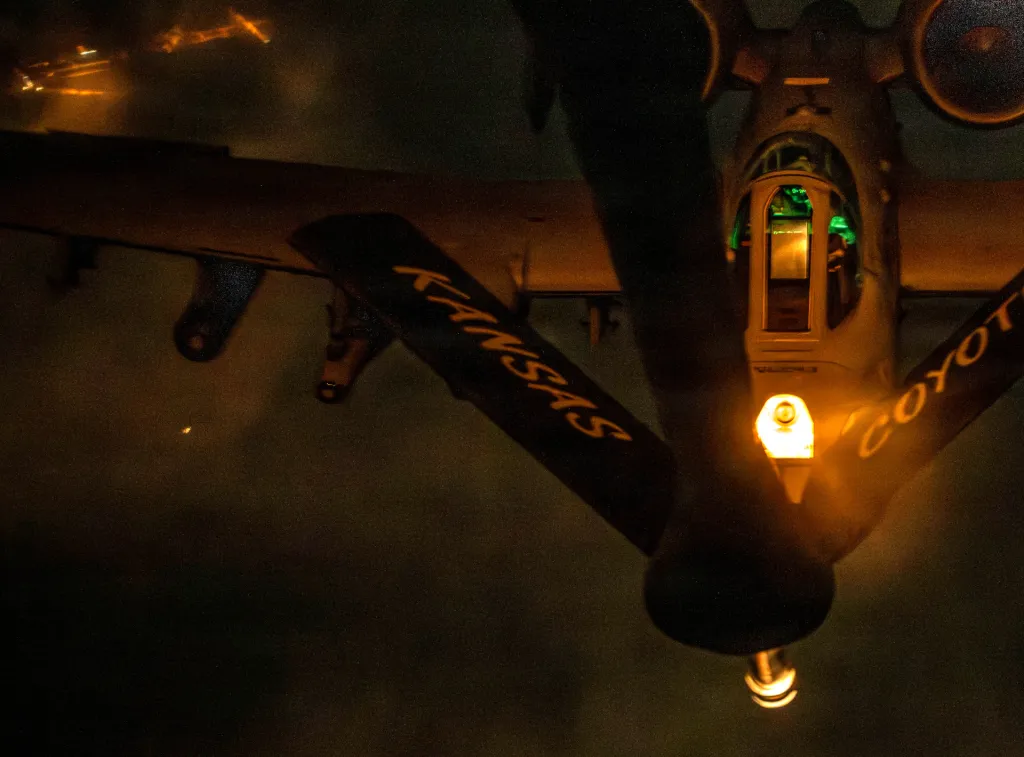
An A-10 seen linking up with a tanker while flying a mission in support of Operation Epic Fury. CENTCOM
“The A-10 Warthog is now in the fight across the southern flank [of Iran] and is hunting and killing fast attack watercraft in the Strait of Hormuz,” Caine said.
Caine also said that AH-64 Apache attack helicopters are now operating in a similar manner as the A-10, but did not say specifically that they were being used against maritime targets. He did note that U.S. allies in the region have been using their own AH-64s to help shoot down incoming Iranian drones, something that has been observed already in the course of the current conflict. Israel has long used Apaches in the counter-drone role, and TWZ has been closely tracking work to expand the helicopter’s capabilities in this regard, including by the U.S. Army.
“We continue to hunt and kill [Iranian] afloat assets, including more than 120 vessels and 44 mine layers,” the Chairman also said, speaking more broadly. The total destruction of Iran’s naval forces is one of the core stated goals of Operation Epic Fury.
When it comes to the A-10, as noted, despite years of the aircraft being referred to as a ‘single mission’ platform geared solely to close air support missions in support of ground forces, it has long had a maritime role. Just weeks before the current conflict erupted, the U.S. military underscored this reality by releasing pictures showing Warthogs training together with the USS Santa Barbara, a U.S. Navy Independence class Littoral Combat Ship (LCS) in the Persian Gulf.
“The irony here is that the A-10’s continued use in the Middle East goes against a prevailing narrative that the Warthog needs to go because its utility is limited on the modern battlefield. This argument is not without merit, but it assumes that every tactical air asset in the inventory needs to be able to fight on the front lines on day one of a conflict with a peer-adversary, and that there are not many other tasks needing to be done beyond firing the shots at the ‘tip of the spear’ during such a conflict. It’s also worth noting that the A-10 remains the least expensive tactical jet to operate in the USAF’s stable.”
“Regardless of the A-10’s impending fate, its ability to deliver rapid, highly precise attacks on small, fast-moving targets, and its ability to loiter for extended periods while soaking up small arms fire, means that its talents can be applied directly to the maritime domain. This is especially true when it comes to countering small boats that can pose a big danger to much larger ships. Such asymmetric dangers are only amplified for ships operating in tight, complex littoral environments, where threats can emerge quickly and attack in large packs, leaving even the most powerful warship’s defenses overwhelmed.”
An A-10 flies past the Independence class LCS USS Santa Barbara during an exercise in the Persian Gulf in early February 2026. USN
This particular exercise also underscored the danger posed by Iranian naval mines, and how A-10s could help protect ships tasked to clear them. The Santa Barbara is one of three Independence class LCSs configured for minesweeping duties that had been forward deployed in the Middle East last year to fill gaps left by the decommissioning of a quartet of Avenger class mine hunters. Those ships have become a separate topic of discussion after two of them, the USS Tulsa and USS Santa Barbara, emerged thousands of miles away to the east, first in Malaysia and now in Singapore. Why the Navy sent those ships not just out of harm’s way in the Middle East in the run-up to the current conflict, but then to an entirely different theater remains largely unexplained.
In general, threats posed by small boats, especially operating in swarms, are not new. This is also an area where Iran’s Islamic Revolutionary Guard Corps has invested heavily for decades, as TWZ has explored in the past. U.S. officials have previously declared the Iranian Navy to have been rendered combat ineffective, but many of the more than 120 ships it has targeted so far have been larger vessels. Iran has hundreds of fast boats, some of which are armed with short-range anti-ship missiles, as well as artillery rockets and other weapons. They can also be used to lay naval mines. These fleets are inherently harder to find and fix, and do not need large ports to operate from. The A-10’s attributes, including its long loiter time, make it a key tool for interdicting these threats.
All of this is now further magnified by the expanding use of explosive-laden drone boats. Though kamikaze uncrewed surface vessels are now firmly in the public consciousness as a result of their use in the conflict in Ukraine, Iran and its regional proxies pioneered their use in Middle Eastern waterways years beforehand. This is a capability that Iran has now brought to bear in its efforts to keep the Strait of Hormuz closed to regular maritime traffic.
In terms of air defense threats around the Strait of Hormuz, this likely comes mainly from shoulder-fired surface-to-air missiles, or man-portable air defense systems (MANPADS), at this point in the conflict. Despite concerns voiced about their survivability over the years, A-10s are capable of fighting in that kind of threat ecosystem.
U.S. Central Command has previously released pictures showing Warthogs flying in support of Epic Fury carrying loadouts that include 70mm APKWS II laser-guided rockets and AGM-65 Maverick air-to-surface missiles, as well as AIM-9M Sidewinder air-to-air missiles. The A-10s also have their iconic built-in 30mm GAU-8/A Avenger cannons. APKWS IIs, AGM-65s, and the GAU-8/A are all weapons that can be effectively employed against targets at sea, including small boats, along with various threats on land.
An A-10 carrying a mixture of APKWS II rockets, AGM-65 Maverick missiles, and AIM-9M Sidewinders seen during a sortie in support of Operation Epic Fury. CENTCOM
These are also just the A-10 loadouts that have been shared publicly. The Warthogs can carry a wide array of other precision-guided munitions that could be employed against Iranian boats sitting in port or on the move in and around the Strait of Hormuz, as well as other targets.
As an aside, when A-10s carry AIM-9Ms, it is typically for self-defense, but the Warthogs could also possibly use those missiles to engage Iranian one-way attack drones if the opportunity were to arise. A-10s are also capable of employing air-to-air optimized versions of the APKWS II rocket against drones, as you can read more about here.
Chairman Caine’s confirmation this morning that A-10s are flying missions over and around the Strait of Hormuz also comes amid a clear uptick in overall U.S. operations in this particular area.
“As reported by U.S. Central Command yesterday, the U.S. military dropped 5,000-pound penetrator weapons into underground storage facilities storing coastal defense cruise missiles and other support equipment,” Caine also said. “These [bunker-buster] weapons are bespokely designed to get through concrete and or rocks and function after penetrating those barriers.”
The Chairman did not name the bombs in question, which have previously been reported to have been new GBU-72/B types, as you can learn more about here.
“We continue to hunt and kill mine storage facilities and naval ammunition depots,” Caine added.
It is possible that the A-10’s role in the littorals along Iran’s southern coast could expand in the coming weeks. Reuters reported yesterday that the U.S. military is considering a range of new options for trying to reopen the Strait of Hormuz, including a possible ground incursion to temporarily occupy parts of the Iranian shoreline. A potential mission to seize control of Iran’s highly strategic Kharg Island in the Persian Gulf has also been raised. A group of Navy amphibious warfare ships laden with Marines is already reportedly on its way to the Middle East. U.S. Navy warships escorting convoys of commercial vessels through the strait is another possibility, but American officials have downplayed the prospect of that starting any time soon. Any of these courses of action entails significant risks.
U.S. President Donald Trump has notably gone back and forth in recent days about a desire for a broader international mission to help get commercial ships flowing again through the strait. After being publicly rebuffed by several allies and partners, Trump said the United States no longer required any help.
“I wonder what would happen if we ‘finished off’ what’s left of the Iranian Terror State, and let the Countries that use it, we don’t, be responsible for the so called ‘Straight?’ [sic],” Trump then wrote yesterday in a post on his Truth Social site. “That would get some of our non-responsive ‘Allies’ in gear, and fast!!!”
Trump: “I wonder what would happen if we ‘finished off’ what’s left of the Iranian Terror State, and let the Countries that use it, we don’t, be responsible for the so called ‘Straight?’ That would get some of our non-responsive ‘Allies’ in gear, and fast!!! President DJT” pic.twitter.com/pwbF1lYELS
In the meantime, we know that A-10s are now actively on the hunt for Iranian maritime threats around the Strait of Hormuz as part of what could be one of the Warthog’s last major combat deployments ever.
Weekly insights and analysis on the latest developments in military technology, strategy, and foreign policy.
Few people know the Middle East as well as Joseph Votel. From March 2016 to March 2019, the retired Army general served as the commander of U.S. Central Command, overseeing American military operations in the region. A big part of that job was planning for contingencies like what would become Operation Epic Fury, and especially how they would affect the massively strategic waterway that joins the Persian Gulf and the Gulf of Oman — the tumultuous Strait of Hormuz. This waterway, in which about 20% of the world’s oil passes, is currently shutdown by Iran.
In the first part of our wide-ranging exclusive interview with Votel, we focus on what is happening in the Strait. The author transited the Strait with Votel, now a Distinguished Military Fellow at the Middle East Institute, in 2016 and got a first-hand look as Iranian ships shadowed the USS New Orleans.
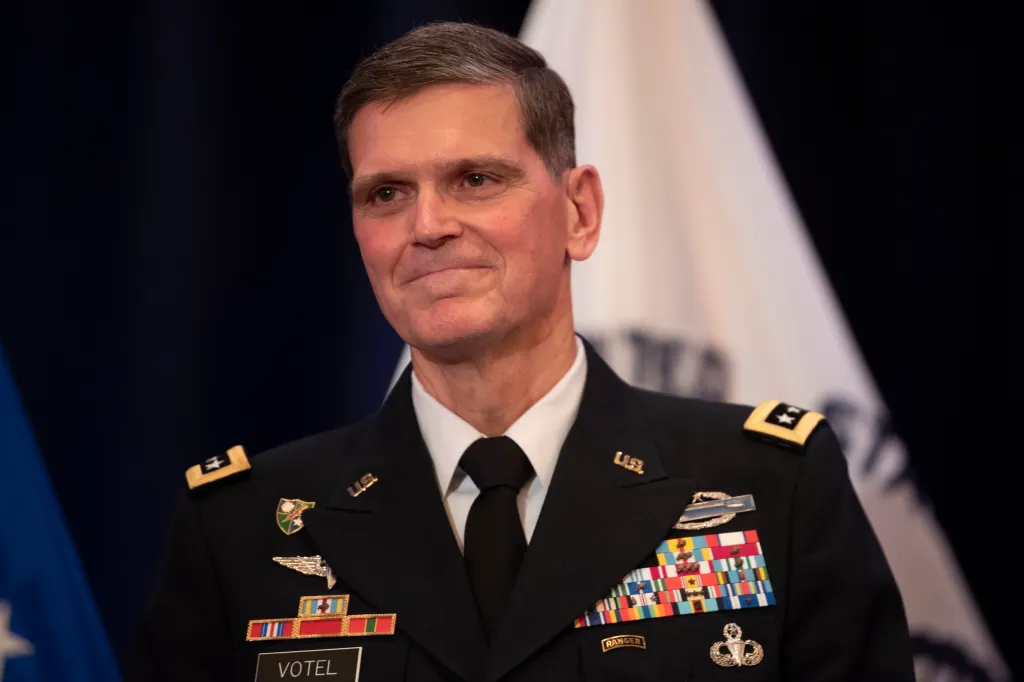
The outgoing commander of U.S. Central Command, U.S. Army Gen. Joseph L. Votel, is seen at his retirement ceremony, Tampa, Florida, March 28, 2019. (DoD photo by Lisa Ferdinando) Chief Petty Officer Lisa Ferdinando
Some of the questions and answers have been lightly edited for clarity.
Q: How surprised were you that the Iranians closed the Strait of Hormuz, attacked shipping and Arab nations?
A: I’m not particularly surprised. I expected that they would attack some of the Gulf partners, but I did not think they would go after civilian targets. I thought they would go after military installations, particularly our military installations in most countries, but going after things like hotels and civilian airports, things like that, I think was, was not expected. I was a little surprised that they would do that. I think we certainly expected them to respond to it and of course, trying to shut down the Strait of Hormuz, I think was very expected.
Q: Did you expect that?
A: Oh yeah.
Q: Why?
A: Because it’s their principal advantage. They control that terrain. They have the advantage over the Strait of Hormuz. They know it’s a critical choke point. They know it’s a pain point for many, and they knew it would cause the discussion that it’s causing right now.
Strait of Hormuz (Google Earth)
Q: How much pain do you think the Arab allies can sustain during this fight?
A: Well, I think they’re actually proving pretty resilient right now and they’re doing a good job defending themselves. Some of [the missiles and drones] are getting through, but it hasn’t been catastrophic in terms of that. Obviously, some damage… That’s not good. But they’re doing a pretty good job of defending themselves.
And I think as you have seen from some of the open source reporting today, some of the Arab countries are beginning to run out of patience here, Saudi Arabia, the Emirates, of course, and we may see them lash back out. But they are also watching very carefully what the United States is doing, along with the Israelis, and they see that we are striking back very, very hard at the Iranians. So I think that that helps them to be a little bit more patient. We haven’t stepped away from this. We’re still very, very engaged, and I think that allows them to be a little bit more patient as we work through this.
Smoke rises from the direction of an energy installation in the Gulf emirate of Fujairah on March 14, 2026. Smoke could be seen rising from the direction of a major UAE energy installation on March 14, in what appeared to be the latest strike targeting the Gulf’s petroleum facilities hours after the US struck Iran’s Kharg Island. (Photo by AFP) –
Q: How feasible or not is a mission to escort ships in the Strait and de-mine it? What are the challenges and dangers of that?
A: Well, first of all, it’s very feasible. The United States Navy has a history of doing this kind of stuff, and they have, for the most part, all the resources that are required for this.
I think the most important thing to appreciate before we really kind of get into the Strait of Hormuz here, is to appreciate what’s preparatory to doing all that. We really have to kind of finish this campaign that’s already been started. That is focused on reducing the Iranian capabilities to a very significant degree. And that’s what’s happening right now.
I think we need to appreciate that CENTCOM is executing a war plan here that’s going to take some weeks to destroy the military capability, and then they will be in a position – they’ll set the condition, so to speak – so they can actually go and reopen the Strait of Hormuz, and then direct and escort tankers through there.
Then Gen. Joseph Votel, commander of U.S. Central Command, addressing sailors aboard the San Antonio class amphibious transport dock ship USS New Orleans transiting the Strait of Hormuz in 2016. (Howard Altman photo)
For the most part, we have all the resources that we need for that. As I mentioned, it might be helpful to get some additional resources from our international partners. And I’m not sure that’s going to happen based on some of the politics around all that and how we engaged and not engaged them in the lead up to this. But the United States Navy and Marine Corps and other joint services are, I think, are fully prepared to do that.
Q: Have the engagements we’ve had with foreign nations been helpful or hurtful or the ability to draw in assistance for any escort effort?
A: Well, we’ve had a pretty adversarial discussion going on, particularly with our European allies for at least the last 12 to 14 months with them. We haven’t really sent a positive signal. And the whole thing about Greenland and getting everybody fired up over that, and pushing that kind of thing, I think really gave some pause to them.
And of course, you know, there’s continuous rhetoric coming from across the administration towards this, and in the lead up to this, we apparently didn’t do any kind of consultation with any of our partners that we expected would be impacted by this, or whose resources we thought we would need.
WATCH: German Defence Minister Boris Pistorius:
We did not start this war.
What does the world expect, what does Donald Trump expect from a handful or two handfuls of European frigates to achieve there in the Strait of Hormuz, which the powerful American Navy cannot manage… https://t.co/lO4WR2zly3pic.twitter.com/MWwu3U4xyS
Now, coming back after things have been joined and they haven’t been consulted, I think makes it really, really hard for us to get them involved. And I think it makes it hard for those international partners to sign on with this readily, very, very readily, without a lot of debate and understanding what they’re getting into. So we really didn’t set the conditions very well for if we thought we needed international support on this.
And we usually do. I mean, that’s a normal thing that we do. We generally always try to fight as a coalition, because it gives us credibility. It gives us additional resources. And it kind of helps share the burden a little bit, and it makes everybody feel like they’re part of the solution to this. But in this case – with the exception of Israel – we pretty much chose to go it alone.
Q: We talked about the importance of keeping the Strait open while we were transiting it when you commanded CENTCOM. What’s your worst case scenario for the Strait now, given the current situation?
A: I think the worst case now would be if we’ve found positive evidence of the Strait being mined… That would really extend out the time [for opening the Strait]. We probably have to assume that there are mines in there right now. But a serious mining effort by Iran could really complicate and slow things down.
Mine clearing is very deliberate. It’s very slow. It’s very frustrating. It’s that way if you’re doing it on land, and it’s that certainly if you’re doing it at sea. So to me, I think that kind of represents the most challenging thing that we would have to deal with. I mean, we can get [combat air patrols] Air CAPs up over this. We seem to be doing a good job going after missiles and drones and shore-based systems. We’ve destroyed a lot of the Iranian Navy and the IRGC Navy, and we can continue to ping on [Fast Attack Craft] FACs and [Fast Inshore Attack Craft ] FIACS – things like that that they might send in there.
U.S. Navy MH-53E Sea Dragon pilots with Helicopter Mine Countermeasures Squadron (HM) 15 conduct deck landing qualifications on the flight deck of the USS Lewis B. Puller (ESB 3) in the Arabian Gulf, May 11, 2019. The Lewis B. Puller is an afloat forward staging-base variant of the mobile landing platform and is designed to provide dedicated support for air-mine countermeasures and special warfare missions around the globe. (U.S. Marine Corps photo by Sgt. Desiree King/Released)
But the mines, I think, are a really, really hard issue. And when we think about one of these big tankers, so they are just really vulnerable, they’re thin-hulled, getting into this very narrow traffic scheme that’s there – two miles wide, right in the middle of the Strait and then hitting a mine and being disabled on the spot. Not only will we have a mine problem, we have a disabled ship problem and an ecological disaster, and a whole bunch of other things there. So in my view, I think the worst case situation kind of looks like a deliberate mining effort by the Iranians.
Q: Can the Gulf allies protect the Strait on their own? Some have expressed fear that the U.S. could end Epic Fury before the Strait is secured.
A: I don’t know. I don’t think so. They are a little dated in some of their capabilities. There hasn’t been a huge investment in the resources that would be necessary for keeping the Strait open in an armed conflict scenario. You need destroyers. You need a bunch of them. You need to be able to maintain several air CAPS up over it. You need to have extensive ISR. You need to have boarding parties. You need to have all the other stuff, like mine sweepers.
A stock picture of the Independence class LCS USS Tulsa, which is configured for minesweeping duties, sailing in the Strait of Malacca in 2021. USN
And I don’t know that they have that. They may have all the pieces and parts of it across some of the Gulf countries, although I doubt they have the number of frigates that would be needed. But then bringing that together, they don’t necessarily have a great history of coming together for these kinds of things and combining these capabilities under a unified command other than the United States. I think it would be a challenge for the Gulf partners to be able to do that.
In our next segment, Votel talks about the highly strategic Kharg Island and how recovering uranium in Iran would be a more massive effort than most people think, among other topics.
Several European nations and Japan have issued a joint statement saying they would take steps to stabilise energy markets, a day after several strikes on energy facilities in the Gulf region sent oil and gas prices soaring amid the United States-Israel war on Iran.
The leaders of Britain, France, Germany, Italy, the Netherlands and Japan issued a joint statement on Thursday expressing their “readiness to contribute to appropriate efforts to ensure safe passage through the [Hormuz] Strait.”
Recommended Stories
list of 3 itemsend of list
They did not specify what those efforts may entail but urged for “an immediate comprehensive moratorium on attacks on civilian infrastructure, including oil and gas installations”.
The International Energy Agency (IEA) last week authorised a coordinated release of its members’ strategic petroleum reserves, the largest in its history, in an attempt to counter rising global energy prices. “We will take other steps to stabilise energy markets, including working with certain producing nations to increase output,” the statement said.
Markets have been hammered since the start of the war on February 28, with Tehran hitting sites across the Gulf and effectively closing the Strait of Hormuz, through which a fifth of global oil and gas flows.
European leaders have rejected demands by United States President Donald Trump to help ensure freedom of navigation in the Gulf’s key oil chokepoint by deploying warships as part of a naval coalition.
Thursday’s joint statement came ahead of a long-scheduled White House meeting between Trump and Japan’s Prime Minister Sanae Takaichi, aimed at burnishing the decades-old security and economic partnership between Washington and its closest East Asian ally.
US Treasury Secretary Scott Bessent said before the meeting on Thursday that he would expect that Japan, which gets 95 percent of its crude oil supplies from the Gulf, would want to ensure its supplies are safe.
Takaichi has sought to move Japan away from a pacifist constitution imposed by Washington after World War II, but with the Iran war unpopular at home, she has so far not offered to assist in clearing the Strait of Hormuz.
The Japanese prime minister told parliament on Monday that Tokyo had received no official request from the US, but was checking the scope of possible action within the limits of its constitution.
Soaring energy prices
Major economies have been scrambling to cushion the impact of soaring energy prices after the de facto closure of the Strait of Hormuz by Iranian forces.
QatarEnergy reported “extensive damage” from Iranian missiles in Ras Laffan, which produces about 20 percent of the world’s LNG supply and plays a major role in balancing Asian and European markets’ demand for the fuel.
The company’s CEO, Saad al-Kaabi, said Iran’s attacks damaged facilities that produce 17 percent of QatarEnergy’s LNG exports and that it would take three to five years to repair.
Qatar’s Prime Minister Mohammed bin Abdulrahman bin Jassim Al Thani said Iran’s claims that it is targeting US bases are “unacceptable and unjustified”, as the attack on Ras Laffan shows that it is targeting energy infrastructure that is vital for Qatar and the entire world.
Energy prices have soared and stocks sunk amid the region’s protracted instability, reigniting fears over global supplies and inflation as well as the likely damage to economic growth.
European gas prices were up 25 percent and Brent crude oil futures nearly 6 percent at $113 at 13:00 GMT on Thursday after briefly surging about 10 percent. European gas prices have leapt by over 60 percent since the war began on February 28.
James Meadway, co-director of the Verdant economic policy think tank, said this would not be “a temporary blip” in the prices of oil and gas.
“In addition to the Strait of Hormuz being blocked, we now have a severe disruption to the basic production of oil and gas,” Meadway told Al Jazeera.
“At this point, this looks like it will be a significant rise in those prices stretching off into the distance.”