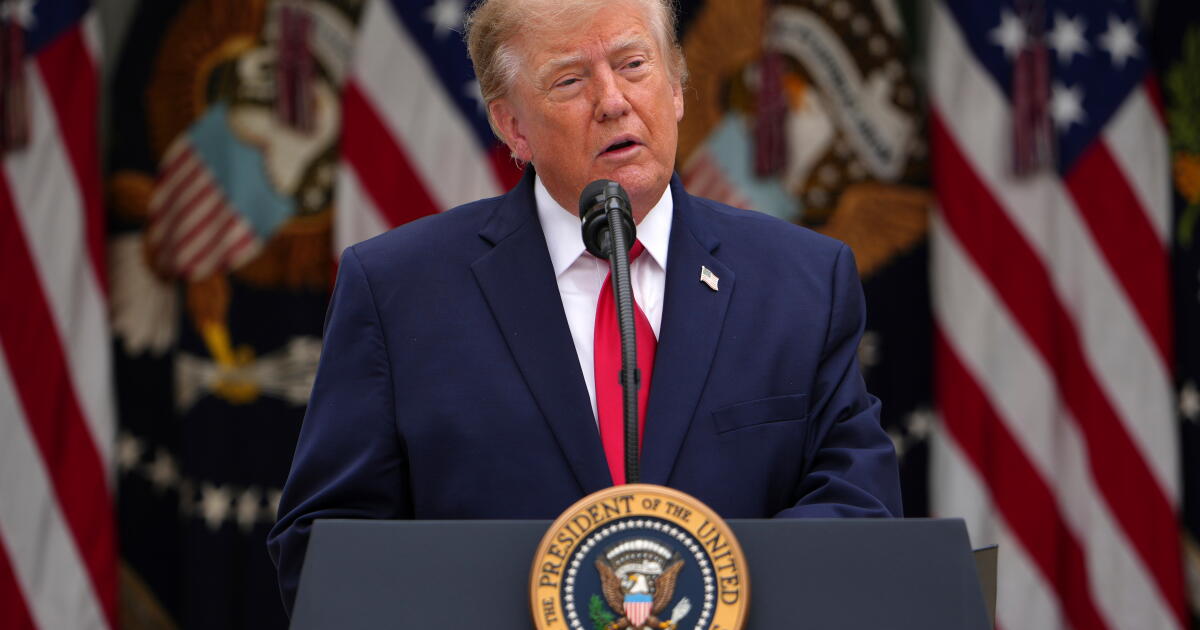
WASHINGTON — Investments in pharmaceutical companies made on behalf of President Trump increased significantly after he returned to the White House last year, with his portfolio adding millions of dollars in stock in firms that benefited from a Republican-backed law that shields certain medications from Medicare price negotiations, according to a report from congressional Democrats.
The report, released Friday by the Joint Economic Committee’s minority arm, found that Trump’s pharmaceutical stock holdings grew from a maximum reported value of $1.7 million in 2024 to as much as $56.2 million at the end of 2025. The report said that included up to $39.1 million worth of stock held in companies that benefited from exemptions to Medicare’s drug price negotiation program, which came through a provision in the Republicans’ 2025 tax and spending law.
Additional analysis of Trump’s financial disclosures provided by committee Democrats showed that his investment portfolio bought as much as $2.55 million in shares of pharmaceutical companies benefiting from the exemptions on three dates before he signed the legislation in July 2025. That included up to $950,000 in purchases on July 1, 2025, the day the Senate passed the bill. His portfolio also bought as much as $1 million in AbbVie stock in August 2025, after the bill became law.
The Republican president’s wealth has grown since he took office last year through a web of business interests, many of which have benefited from the policy moves of his administration. The White House has repeatedly denied any ethics issues and accused Democrats of “attempts to fabricate conflicts of interest.”
The report also noted that the exemptions policy could leave some Medicare beneficiaries paying thousands of dollars more for certain cancer treatments and other medications than they would have if Medicare had been allowed to negotiate lower prices.
The findings come as Trump has made lowering prescription drug costs a central part of his healthcare policy, striking deals with pharmaceutical companies that his administration says will make medications more affordable for Americans, although drug pricing is based on a complicated set of factors.
Recent polling from the Associated Press-NORC Center for Public Affairs Research shows that most Americans think Trump is profiting off the presidency in unethical or illegal ways and is focused more on his wealth than on helping people like them.
Democratic Sen. Maggie Hassan, who leads the Joint Economic Committee’s minority arm, called the report’s findings “outrageous and yet typical from this president, who makes the American people foot the bill again and again for his own gains.”
Davis Ingle, a White House spokesperson, said Trump’s stock and bond portfolio is independently managed by third-party financial institutions. He denied any conflict of interest.
“Neither President Trump nor any member of his family has any ability to direct, influence, or provide input regarding how the portfolio is invested or when investments are bought or sold,” Ingle said in a statement.
A law from President Biden’s Democratic administration allowed Medicare for the first time to negotiate prices for some of the costliest prescription drugs. Republicans’ 2025 tax and spending bill expanded an existing exemption for medications developed to treat rare diseases or conditions, delaying when certain costly drugs could become eligible for negotiations or excluding them entirely, according to healthcare research nonprofit KFF.
Also known as the orphan drug exclusion, the carve out allows drug companies to continue charging lucrative prices that might otherwise have been reduced through Medicare negotiations.
Supporters of the change argued that a broader exemption would encourage drug companies to develop treatments for rare diseases. Critics say it allows makers of blockbuster medications to avoid negotiations that could lower costs for Medicare and its recipients.
The report estimated that Medicare beneficiaries receiving the cancer drugs Keytruda, manufactured by Merck, and Opdivo, by Bristol Myers Squibb, could pay roughly $5,000 more annually than they would if Medicare negotiated prices for the medications. Trump’s portfolio includes stock in both firms.
The report also said that Trump’s portfolio continued to buy and sell pharma company stocks throughout the first eight months of 2026, adding as much as $3.5 million in stock wealth in the sector.
All recent U.S. presidents have dumped their stocks before assuming office, put their money in broadly diversified funds or set up a “blind” trust so they couldn’t even know what they owned.
Trump has put his broader business interests in a trust managed by his sons. But the arrangement rejects the conflict of interest protections that his recent predecessors in office had instituted.
Hussein writes for the Associated Press. AP writer Bernard Condon in New York contributed to this report.
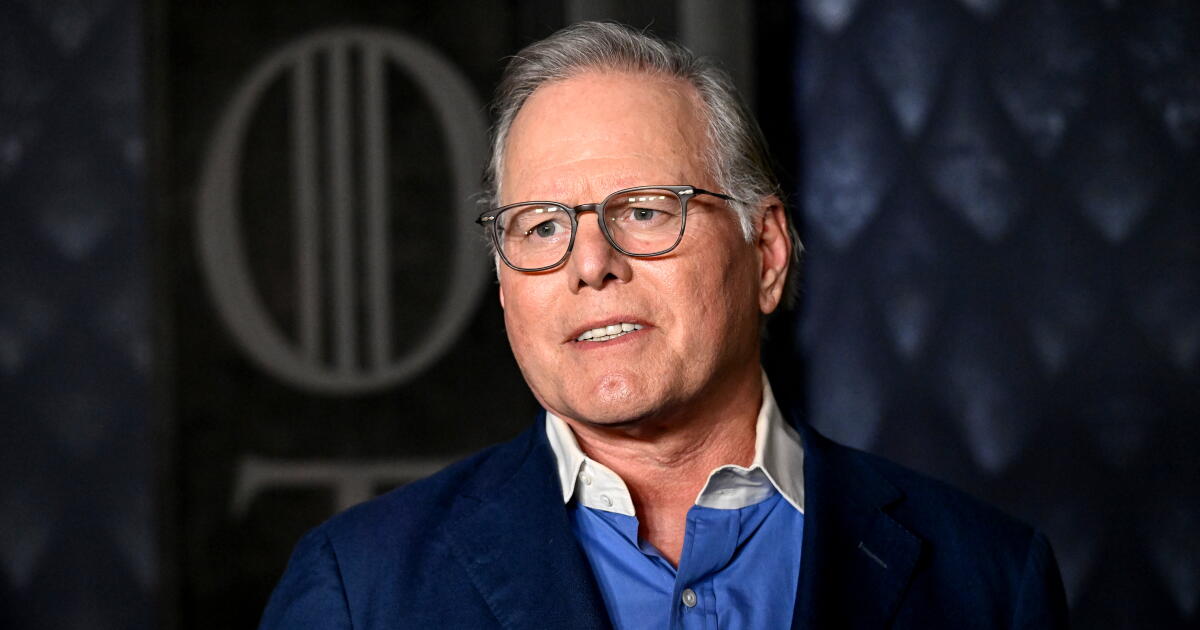
David Zaslav, the longtime TV executive who created Warner Bros. Discovery Inc. but ultimately failed to keep it going as an independent company, made about $600 million on the sale of the business to Paramount Skydance Corp. this week.
Much of Zaslav’s compensation came in the form of stock options. Warner Bros. stockholders received $31 a share in cash in the sale, a nearly 25% increase from when the stock first began trading in April of 2022. The Standard & Poor’s 500 rose 76% over that period.
Many other Warner executives received large paydays, including streaming boss JB Perrette and strategy chief Bruce Campbell. A spokesperson said Zaslav doubled the number of employees overall who received stock awards.
The new company, now called Skydance Corp. and led by technology scion David Ellison, is one of the largest media businesses in the world, comprising the century-old Paramount and Warner Bros. movie studios, dozens of TV networks, like CBS and CNN, as well as the Paramount+ and HBO Max streaming services.
Christopher Palmeri and Dylan Sloan report for Bloomberg.
J.P. Morgan has initiated coverage of gene therapy developer Neurogene (NGNE) with an Overweight recommendation, highlighting its lead program NGN-401 targeting a rare neurodevelopmental disorder known as Rett syndrome.
Analyst Priyanka Grover’s bullish view came at a time when shares
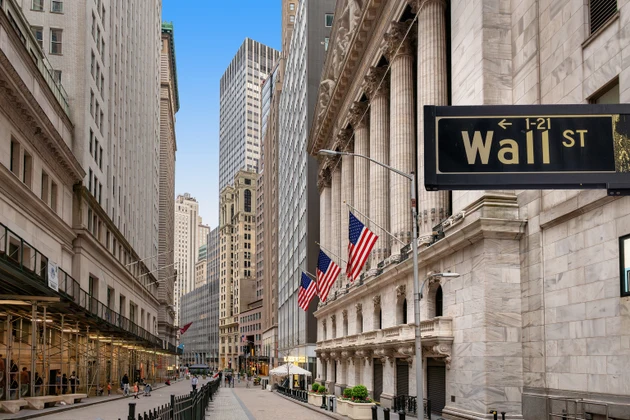
The United States stock market has hit an all-time high as excitement around artificial intelligence continues to fuel a buying frenzy on Wall Street.
The S&P 500, the benchmark stock index, closed 0.58 percent higher on Tuesday, topping the previous peak reached in mid-August.
Recommended Stories
list of 4 itemsend of list
The Nasdaq Composite, which is more heavily weighted towards tech stocks, also hit a record high, finishing up 0.45 percent.
Tech stocks were among the top performers, with each of the “Magnificent Seven” apart from Meta closing higher.
Amazon led the pack with a 1.95 percent gain, followed by Microsoft and Tesla, which rose 0.78 percent and 0.51 percent, respectively.
Apple and Alphabet both rose 0.22 percent, while Nvidia gained 0.14 percent.
Meta, which has risen more than 20 percent since the launch last month of its new AI assistant, Muse, fell 0.41 percent.
Other big movers in tech included Marvell Technology, which rose 5.81 percent, and Cisco, which gained 4.54 percent.
Technology, AI
Keith Lerner, chief investment officer and chief market strategist at Truist Advisory Services in Atlanta, Georgia, said the market rally should be seen as a “technology and AI surge”.
“Every bull market has a dominant theme, and technology and AI remain this market’s dominant theme,” Lerner told Al Jazeera.
“Technology and communication services were the only two S&P 500 sectors to rise last month, while the other nine declined.”
Wall Street has shrugged off a host of challenges facing the US economy amid hyperscalers’ multibillion-dollar investments in AI.
Despite the energy crunch caused by the US-Israeli war on Iran and a sell-off of US government bonds partly driven by ballooning government debt, the market is well on track to record its fourth consecutive year of double-digit returns.
The S&P 500 has risen 14 percent so far in 2026, while the Nasdaq Composite is up 18.78 percent.
Lerner at Truist Advisory said the market rally had the potential to continue through the end of 2026 given historical trends and expectations for strong corporate earnings.
“We do not expect a straight line higher for markets,” Lerner said.
“Still, the fourth quarter of midterm-election years has produced an average gain of 7 percent and has been positive 84 percent of the time since 1950.”
Lerner said that rising interest rates posed the biggest risk to the upward trend.
“Still, on balance, the weight of the evidence suggests this bull market still has more upside potential,” he said.
Asian stock markets fell on Wednesday, with key indexes in Japan, South Korea and Hong Kong slumping in morning trading.
The Nikkei 225 in Tokyo, Kospi in Seoul and Hang Seng Index in Hong Kong were down 0.79 percent, 1.36 percent and 0.71 percent, respectively, as of 02:30 GMT.
Oil prices, which have been elevated since the start of the war on Iran, rose on Wednesday as traders weighed the fallout of fighting between forces aligned with Yemen’s internationally recognised government and the Iran-aligned Houthis.
Brent crude futures for December delivery stood at $101.45 a barrel as of 02:30 GMT, up 0.87 percent.
Tehran, Iran – Iranians are stocking up on food and medicines as fears grow that the country will face dire shortages as the United States tightens an embargo on the country.
The Iranian government had managed to keep household staples flowing during the early months of the war. But a US naval blockade and pivot to draconian sanctions have led to fears that imports will be limited.
Addressing the United Nations General Assembly last week, Iranian President Masoud Pezeshkian condemned Washington for its blockade on his country, saying it will prevent food and medicine from reaching the Iranian people.
On Saturday, US President Donald Trump rejected Iran’s offer for a seven-day truce that would see it reopen the Strait of Hormuz in exchange for economic relief and other conditions.
As the war enters its eighth month and hopes for a diplomatic solution dim, Al Jazeera looks at how some Iranians are faring under a US embargo.
Consumers
Tehran’s stores remain stocked, but shoppers are keeping an eye on shop shelves. Their anxiety has deepened since a flurry of social media posts urging people to ensure they have several days of food before a possible new round of fighting with the US.
At one shopping centre, Ali, 51, was loading a trolley packed with rice, flour, pasta, pulses, cooking oil and canned food.
He is stocking up because he is convinced that Iran’s adversary is seeking to “starve” the people to push them to turn on their government.
“This is not a war in the traditional sense. It targets the people to put pressure on the authorities,” he said.
With flights to some nearby countries suspended, imports of certain medicines and mobile phone headsets are hard to find. The prices of those still available in shops have been pushed up.
Haj Pasandideh, a 71-year-old grocer, said he believed warehouses were well-stocked with basic goods at the moment. But the problem lies in the daily price increases due to Iran’s weakening rial, prompting him to bulk-buy goods before the expected hikes.
He sometimes caps cooking oil at one bottle per sale to ensure as many customers can purchase the goods as possible.
Exporters crushed
Farmers are also on edge due to the embargo, unable to ship out their produce and forced to sell to local markets.
The war has worsened the economic situation, even after years of sanctions that have pushed the country from being a regional exporter of agricultural and food products to being one of the region’s main importers.
Mehran, an apple grower, told Al Jazeera that due to the difficulties of exporting, he had sold only a third of this year’s harvest, all of it inside Iran.
Some neighbouring countries have halted trade with Iran in recent months, he said, while trucks now spend days at crossings they once cleared in a day, causing fruit to spoil before it reaches buyers.
“The blockade has not only closed the sea and air but also the land routes but in an undeclared manner,” he said.
Pharmaceutical shortages
The war has also deepened an already-dire shortage of medications. Some pharmacies Al Jazeera visited in southern Tehran had run out of infant formula and dozens of other types of medications.
Although officials have assured Iranians that substitute products were available, pharmacy staff expressed concern about the increasing number of customers searching for infant formula in vain.
“Imported medicines are disappearing fast, and lately people have been coming in to buy certain items before they need them for fear they will run out in future,” Mahsa, a 23-year-old pharmacy assistant, told Al Jazeera.
She said the health authorities had introduced “smart systems” to track the quantity and type of medication each person buys.
Women queue at a pharmacy in Tehran [Al Jazeera]
Breaking the blockade
The prospect of a prolonged siege and deteriorating economic conditions have driven some Iranians to call for a military solution.
On Tehran’s main thoroughfare, several people told Al Jazeera that another round of fighting with the US was unavoidable. Some urged the government to break the blockade by force before it is tightened further.
Mohsen, a 23-year-old economics student, believes Washington’s goal is to strangle the Iranian economy and the cost will ultimately be felt by Iranian citizens.
Iran possesses many strong cards that it must use to break the air and sea blockade before they develop into a land blockade that would completely choke Tehran, he said.
Alireza Taghavinia, an Iranian international relations expert, told Al Jazeera that the gap between Washington and Tehran was too wide to be bridged. “The siege imposed by force will only be lifted by force,” he said.
In a worst-case scenario, falling living standards could bring protesters onto the streets, he added.
“The enemy is counting on stirring up chaos inside Iran because it believes no military strike will achieve its objectives without internal unrest,” he said.
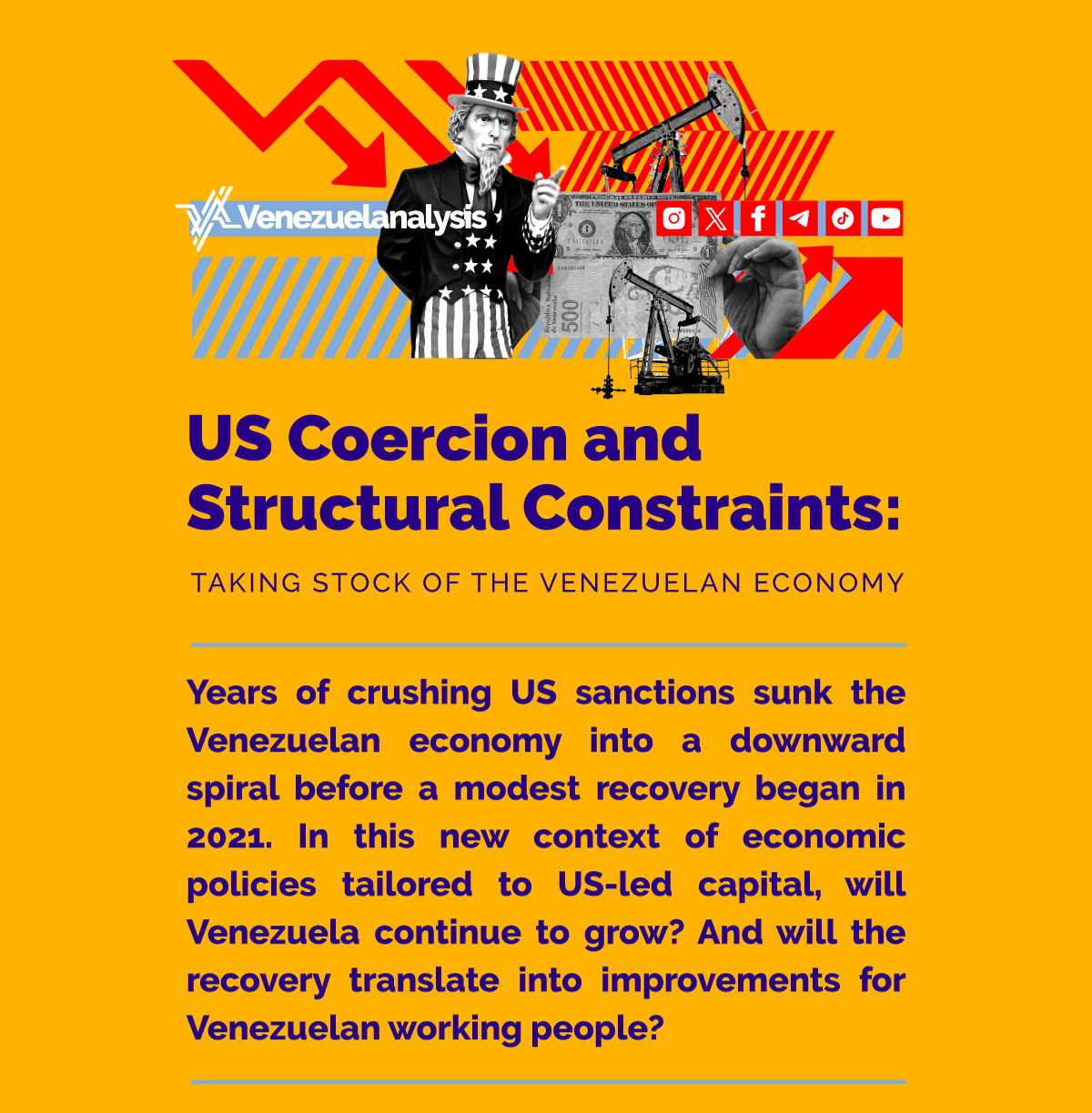
The Venezuelan economy has had a modest recovery after years of contraction under US sanctions. In this interactive infographic, we break down indicators, facts, and figures to examine the recent economic trends and, most importantly, their impact on the Venezuelan people.
(Click on the crosses for more information and scroll between plots.)
Prime Medicine (PRME) shares jumped 8% Friday after the FDA cleared its IND application for PM647, an experimental gene-editing therapy for Alpha-1 Antitrypsin Deficiency.
The clearance allows Prime Medicine (PRME) to begin a Phase 1/2 trial evaluating PM647 in


![Women queue at a pharmacy in Tehran [Al Jazeera]](https://i0.wp.com/www.aljazeera.com/wp-content/uploads/2026/09/1arann-1790588624-1790672728.jpeg?w=640&ssl=1)