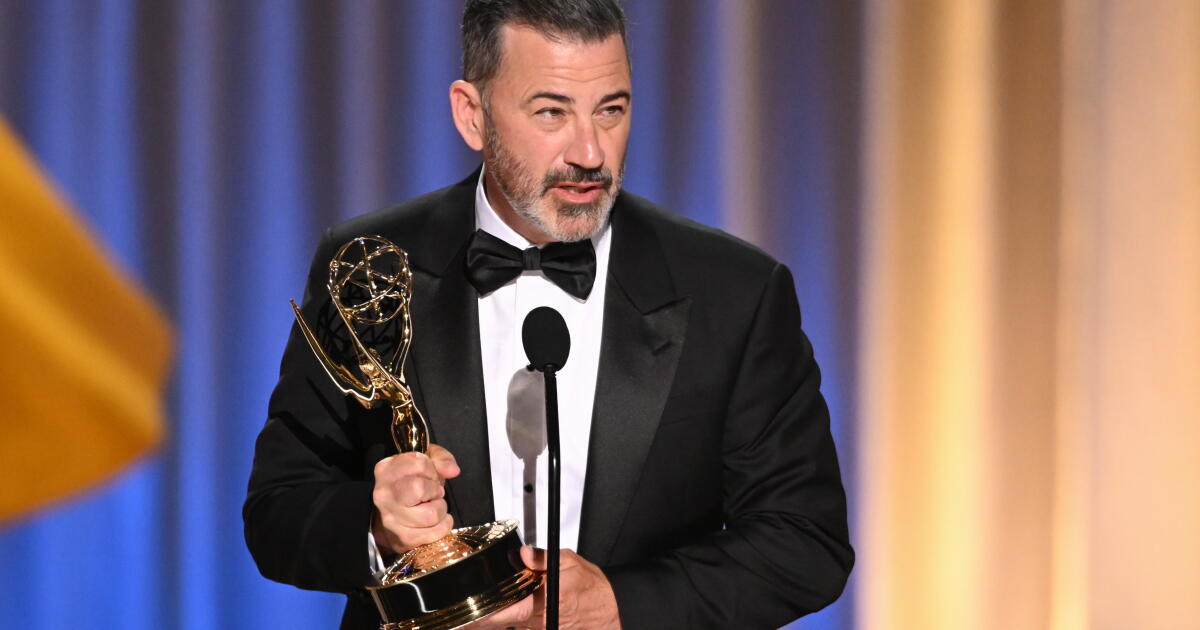
stephen colbert

How Byron Allen went from comic to media mogul

When CBS announced that it planned to outsource the hallowed “Late Show” slot occupied by Stephen Colbert and David Letterman before him to “Comics Unleashed,” the syndicated, low-budget talk show with stand-ups riffing on their routines, many saw politics at play.

But the show’s host and producer, comic-turned-mogul Byron Allen, saw the math. Once a cultural touchstone, late-night television has seen its prominence erode greatly over the years with viewers and advertising dollars shifting away from broadcast TV to streaming.

“I said, ‘Look guys, you’re spending a small fortune on late night,’” recalled Allen, who estimated that the programming was costing the network more than $200 million. He offered it a solution.

His company, the Los Angeles-based Allen Media Group, would pay $15 million for the airtime to run “Comics Unleashed,” which previously aired after “The Late Show,” while keeping most of the advertising time on the program to sell. It was the same time-buy model that propelled his fledgling media empire and made him wealthy many times over.

“Comics Unleashed” drew 1.1 million viewers in its debut in the new time slot last month, down substantially from the 2.7 million Colbert’s show averaged in its final season. Critics chimed in, with one outlet even calling it a “ratings disaster.”

But Allen, typically, was not fazed, saying his show bested the competition in key markets and was more comparable with the same time period last May before Colbert’s post-cancellation victory lap.

“CBS has won big-time because they have zero production costs and now they are saving $55 million a year,” he said in an interview.

Media mogul Byron Allen at his studio on the set of "Comics Unleashed" in Culver City.

Media mogul Byron Allen at his studio on the set of “Comics Unleashed” in Culver City.

(Jason Armond/Los Angeles Times)

A relentlessly driven, shrewd dealmaker and entrepreneur, Allen is used to defying skeptics and seeing opportunity in assets overlooked by others. He was one of the first entertainers to recognize that there was more money to be made in owning your content, rather than just performing it.

Over the last three decades, he has built a multibillion-dollar business, Allen Media Group, which now has 2,000 employees across various media properties.

In addition to creating a trove of accessible, family-friendly programs, he’s taken a number of big, bold swings, buying up distressed assets that now span broadcast, cable, streaming and film distribution.

At times, he appears like a minnow trying to swallow a whale. Although many deals have landed, others, such as his bids for ABC, BET, Paramount Global and Tegna, have not.

“He’s had misses, but that doesn’t stop him from going to bat,” said Lloyd Greif, president and chief executive of Greif & Co., a Los Angeles-based investment bank.

After a major restructuring that began two years ago during which the company laid off staffers and sold off properties, Allen is back with a slew of ambitious acquisitions. In addition to owning CBS’ late-night block, he also took over the 12:35 a.m. slot with his comic game show, “Funny You Should Ask.” He declined to reveal how much he paid for that airtime.

Allen recently snapped up controlling interest in the digital media company BuzzFeed (including HuffPost) for $120 million and bought a 10.7% stake in cable channel Starz for $25 million.

Although Allen’s programming has been dismissed as low-budget, apolitical comedy, and his finances have been questioned by some, he remains undaunted by doubters.

“I like to say I’m a 65-year-old overnight success.” And he remains focused on his mission, even proclaiming he is “building the world’s biggest media company.”

An entrepreneurial streak

Allen was born in Detroit, where his grandparents owned a roller rink where he worked as a floor guard. Being surrounded by a family of factory workers and the legacy of 20th century American industry set the stage for his entrepreneurship. “I didn’t play sports; I played office,” he said.

At age 7, after his parents’ divorce, Allen moved to Los Angeles with his mother, Carolyn Folks. It was the summer of 1968 and they planned a two-week vacation. But Detroit was in flames following the assassination of the Rev. Martin Luther King Jr., and they stayed.

Folks put herself through UCLA and eventually worked her way up at NBC from an intern to a publicist, a move Allen credits with changing the trajectory of their lives. His mother couldn’t afford child care, so Allen often accompanied her at the studio, where he soaked up tapings of “Sanford and Son” and “The Tonight Show.” After Johnny Carson finished filming and the studio was empty, Allen would sit at his desk, mimicking the legendary late-night host.

At 14, he convinced his mother to let him do stand-up at the Comedy Store on Sunset Boulevard.

“There were literally four people and 200 chairs. And I said, ‘I have to figure out how to make these chairs laugh.’”

A writer for Jimmie “J.J.” Walker, who was starring on the groundbreaking Norman Lear hit comedy “Good Times,” caught his act. He hired Allen to write jokes for Walker along with a pair of yet-to-be discovered comics: Jay Leno and David Letterman. Allen earned $25 a joke.

Howie Mandel met Byron Allen when they were both starting out at The Comedy Store.

Howie Mandel met Byron Allen when they were both starting out at The Comedy Store.

(Allen Media Group)

“Most people in my business wait for other people to give you an opportunity,” said Howie Mandel, the actor and comic who met Allen when they were starting out at the Comedy Store during this period. “Byron and his mom constantly made their own opportunities.”

In 1979, when Allen was 18, he became the youngest comic to appear on “The Tonight Show.” Like a shot out of a cannon, the performance catapulted his career.

While various offers poured in, Allen chose the NBC prime-time series “Real People” as a host and correspondent. It was an embryonic version of reality TV. Allen traveled around the country showcasing quirky, heartwarming stories. The hit show brought Allen to every pocket of America. It also made him a star, delivering him to the country’s living rooms each week.

He continued to tour, doing stand-up and serving as the opening act for such musicians as Lionel Richie and Dolly Parton, and starred in TV movies.

Allen became a hero to young, Black entertainers who were just starting out. Among them was Eddie Murphy, who has called Allen “one of my first inspirations.”

“He just loves comedians,” said Whitney Cummings, co-creator and executive producer of the hit CBS sitcom “2 Broke Girls.” She recalled crucial career and financial advice Allen gave her after she first appeared as a young comic on “Comics Unleashed.” “It gave me like a true north. It changed my life.”

Whitney Cummings says Allen helped her early in her career.

Whitney Cummings says Allen helped her early in her career.

(Troy Conrad)

As Allen’s success swelled, he said, he realized the industry was what he calls “business show, not show business.”

“You need to know the business side and learn the business side and then you can do as many shows as you want. And I knew that I didn’t want to work for anybody,” he said.

While on “Real People,” he sat in on sales meetings and went to the National Assn. of Television Programming Executives, where he introduced himself to Al Masini, the syndication trailblazer who produced “Entertainment Tonight” and “Star Search.”

“I understand you’re the best. I’m here to learn from you,” Allen said.

In 1989 he began hosting the syndicated “The Byron Allen Show.” Two years later, he created BYCA Television Distribution to take over his talk show’s distribution and syndicate other shows.

But Allen and his new company were soon facing legal and financial issues. A group of former employees and an investor sued, claiming they had not been paid. The dispute forced the company into Chapter 7 bankruptcy.

Allen pressed on. He had absorbed another key lesson.

Learning from Richard Pryor

When he was still hanging out at the Comedy Store, he watched Richard Pryor trying out new material.

Iconic comedian Richard Pryor.

Iconic comedian Richard Pryor.

(Bettmann / Bettmann Archive)

“He would bomb night after night for almost three months,” Allen said. “I’ll never forget, he told me, ‘Byron, you’re only as good as you dare to be bad.’ I learned, OK, take risks. It’s about growing and taking chances.”

In 1993, Allen launched CF Entertainment on his dining room table in Los Angeles. The production company, later Entertainment Studios, became the foundation of his media empire. He focused on producing low-cost, syndicated programming, including interview series and court shows. Allen produced and often served as host.

His first show, “Entertainers With Byron Allen,” packaged the five-minute celebrity interviews during hotel press junkets, a conveyor belt of actors promoting their latest projects set up by the studios into an hourlong talk show.

Allen bartered the show for free to TV stations in exchange for a split of the revenues from selling commercials to advertisers. Success was not immediate. He said he received countless rejections at first.

“My house went in and out of foreclosure probably 14 times,” he said. At one point, he said, his telephone service was turned off, forcing him use a pay phone for calls.

But the format established the template for what became Allen’s highly successful business. Forbes has estimated his net worth in the billions. Allen declined to discuss his personal or business finances.

The mogul now owns multiple homes, including a $91.3-million mansion in Aspen, Colo., that was recently featured in the Wall Street Journal.

“A lot of people didn’t take him seriously and saw him as a comedian,” said Joan Robbins, Allen’s first employee, who has stayed on for 32 years as president of talent relations. “I don’t think anybody realized the extraordinary business sense he had.”

Byron Allen gets final touches at his studio on the set of "Comics Unleashed."

Byron Allen gets final touches at his studio on the set of “Comics Unleashed.”

(Jason Armond/Los Angeles Times)

As Allen’s media ambitions have expanded beyond comedy and syndicated talk shows, so has his company. It produces, distributes and sells advertising for 74 television programs (“Mathis Court With Judge Mathis” and “Career Day” among them) as well as owns 13 broadcast stations affiliated with the major networks in 11 markets and several dot-TV cable and digital networks including Cars.TV, Automotive.TV and Comedy.TV.

In 2016, he acquired the Black entertainment platform TheGrio and later purchased the assets of the Black News Channel out of bankruptcy for a reported $11 million, merging its TV assets and carriage deals into TheGrio’s network.

A year earlier, Allen made waves by filing the first of several multibillion-dollar racial discrimination lawsuits to tackle what he called the “trade deficit between Black America and white corporate America.” His case against Comcast for not carrying Allen-owned stations and networks reached the Supreme Court before being settled.

“I feel good about starting that conversation … because we were going in circles and we were definitely suffering from economic genocide,” he said.

In 2018, Allen’s company bought the Weather Channel and the streaming service Local Now for $300 million. His firm also announced it had raised $500 million in credit facilities organized by Deutsche Bank Securities, Jefferies Financial Group, Brightwood Capital Advisors and Comerica Bank to finance production and other acquisitions.

What unites these disparate assets? “We’re directed at where the viewers are,” he said. “That’s where we’ll be.”

But in his tireless push to expand his sprawling company, Allen has made several failed bids for high-profile assets.

In 2023, he offered Disney a reported $10 billion for ABC and some of its cable networks, and the following year bid $30 billion for Paramount Global. He also made plays for Tegna and BET.

None of his offers succeeded, prompting skepticism about his ability to finance such deals. Allen Media Group is wholly owned by the entrepreneur.

Allen dismissed such concerns. “I raised the money to buy the Weather Channel in one day,” he said. “There’s trillions of dollars looking for really good executives and really good deals. I have no problem raising capital.”

The Times viewed multiple letters from private equity firms and banks. Several indicated that Allen had financial backing on the deal to buy BET, and another showed he had $4 billion in funds to back the purchase of Paramount assets.

Over the years, former employees have criticized some of Allen’s employment practices. In 2012 he faced a class-action suit from performers and staffers on “Comics Unleashed” who alleged they were not paid residuals or reimbursed for travel and other expenses. The suit was settled in 2023.

Allen called the suits “frivolous,” saying, “I couldn’t be in business if I actually conducted myself that way.”

Last year, Allen came under fire after announcing sweeping cuts at about two dozen local affiliates that included laying off meteorologists, part of a reorganization to centralize forecasts at the Weather Channel in Atlanta. The move sparked viewer outrage and the plans were reversed.

The controversy came as Allen’s company was retrenching. He sold off about a third of the TV station portfolio for $171 million.

Allen said this was a case of “rightsizing,” paying down debt and investing more in digital. “I sold 10 of my ABC, NBC, CBS and Fox affiliates to Gray [Media] at a great price for us and a great price for them.”

Allen confirmed he is negotiating with lenders over substantial debt payments coming due in the next year, but said he is “highly confident they will get refinanced or extended.”

Shortly after he bought a stake in Starz, Allen announced his intentions to own the cable channel. Starz responded by adopting a poison pill.

“Good luck,” he said. “I still plan to take over Starz, and I will eventually get control of Starz.”

Source link

Stephen Colbert’s public access spot sparks CBS copyright fray

Stephen Colbert’s viral public access spot had former bosses CBS and its parent company Paramount in a brief tizzy over the weekend, mere hours after his buzzy late-night sign-off.

The longtime TV personality, 62, returned to the air on Friday evening on “Only in Monroe,” a public access program in Monroe, Mich., with an hour-long late-night parody episode that featured several guests and took shots at Paramount’s monopolistic aspirations in media. Colbert, previously a one-time host of “Only in Monroe,” began his episode: “It’s been an excruciating 23 hours without being on TV, so I am grateful to be able to be here on Monroe Community before they also get acquired by Paramount.”

The “Only in Monroe” episode was broadcast in southeast Michigan, the Associated Press reported, and also published to Colbert’s official YouTube page. News of Colbert’s surprise late-night spot spread online, with social media users reposting the episode in its entirety or sharing clips. Journalist and the Desk founder Matthew Keys shared the episode to his X (formerly Twitter) page, tweeting on Sunday that he received a “frivolous” copyright notice from Paramount Global.

CBS said in a statement shared over the holiday weekend to multiple outlets that the “Only in Monroe” episode was “financed and produced by CBS Studios” and was posted on Colbert’s YouTube page through a collaboration with Monroe Community Media and Colbert’s “The Late Show” YouTube channels. The network, which was home to “The Late Show With Stephen Colbert” for more than a decade, said in its statement that it is “regular practice” to copyright-strike “unauthorized websites” that repost its “copyrighted content,” but later added that it’s walking back its actions.

“For this episode, we have decided to waive further enforcement of this standard industry practice until additional review,” the statement said.

A representative for CBS did not immediately respond to The Times’ request for comment on Tuesday. A representative for Colbert also did not immediately respond.

Colbert’s guests on Friday included regular “Only in Monroe” hosts Michelle Baumann and Kaye Lani Rae Rafko Wilson, Emmy winners Jeff Daniels and Steve Buscemi, rapper Eminem (via video call) and White Stripes rocker Jack White. Friday’s broadcast ended with a literal bang, with Colbert, Daniels and White taking hammers to the talk show set and setting it ablaze.

“Since they are no longer using this set, it would actually be helpful for me to destroy it,” Colbert said, “which is pretty great news because right now — for no particular reason — I would very much like to break something.”

“The Late Show With Stephen Colbert” ended its run at CBS after 11 seasons and more than 1,800 episodes. Colbert began his late-night talk series in 2015, succeeding David Letterman. CBS announced it was canceling “The Late Show” in July 2025, with chief executive George Cheeks claiming “this is purely a financial decision against a challenging backdrop in late night.”

“It is not related in any way to the show’s performance, content or other matters happening at Paramount,” Cheeks added at the time.

CBS announced it was parting ways with Colbert, a relentless critic of President Trump, after Paramount settled a lawsuit filed by Trump for $16 million. At the time, media mogul David Ellison’s Skydance Media was also awaiting federal approval to acquire Paramount for $8 billion. Ellison is the son of Oracle co-founder, tech billionaire and Trump ally Larry Ellison.

Colbert ended his CBS tenure at the Ed Sullivan Theater on Thursday evening, joined by an impressive roster of celebrity guests including Paul Rudd, Bryan Cranston, Tim Meadows, Ryan Reynolds and Paul McCartney. The “Late Show” time slot now hosts media mogul Byron Allen’s “Comics Unleashed” syndicated show.

After late night, Colbert revealed in March that his next project is co-writing a new “Lord of the Rings” movie with his screenwriter son Peter McGee. Even as Colbert begins a new chapter away from late night, work may bring him right back under the Paramount umbrella.

The new “Lord of the Rings” films, including Colbert’s project, will be produced by New Line and its parent company, Warner Bros. Discovery. David Ellison‘s Paramount Skydance is seeking a $111-billion takeover of Warner Bros. Discovery and its properties.

Times staff writers Greg Braxton and Meg James contributed to this report.

Source link

Stephen Colbert takes final bow on ‘The Late Show’ with Paul McCartney

The roar erupting from the capacity audience inside the Ed Sullivan Theater when Stephen Colbert stepped on the stage of his “Late Show” for the last time made it clear that they did not want him to say goodbye.

Colbert took his final bow as his beloved late-night show came to an end Thursday. The episode was so crammed with top celebrities who showed up to share a last moment with the comedian that it extended several minutes beyond its usual one-hour run time.

Before the official start, Colbert addressed the audience as he thanked the staff, calling the show “The Joy Machine”: “We call it the Joy Machine because to do this many shows, it has to be a machine. But the thing is, if you choose to do it with joy, it doesn’t hurt as much when your fingers get caught in the gears, and I cannot adequately explain to you what the people who work here have done for each other, and how much we mean to each other.”

In his opening monologue, Colbert downplayed the event‘s status, rolling a series of jokes about news stories in New York and New Jersey. But he was repeatedly interrupted by audience members Bryan Cranston, Paul Rudd and Tim Meadows who all became irritated when Colbert informed each of them that they would not be his last guest.

When the show’s supposed scheduled last guest, Pope Leo XIV, refused to leave his dressing room, Paul McCartney popped on stage to a rapturous ovation. The legendary musician presented Colbert with a framed photo of The Beatles when they appeared on Sullivan’s show in 1964.

The only subtle reference to President Trump came when McCartney relayed a story how the Beatles, before their Sullivan appearance, got their faces covered with bright orange makeup. “That’s pretty popular in certain circles these days,” Colbert quipped.

The episode marked the finale of Colbert’s 11-year run on CBS’ late-night show, which he has been counting down since July of last year, when CBS said it was canceling the show because of financial difficulties. “The Late Show” franchise, which Colbert inherited in 2015 from David Letterman, was the top-ranked late-night show, but it faced challenges due to dramatic declines in viewership and a drop in advertising revenue.

However, industry observers also contended the move was tied to Colbert’s relentless criticism of Trump. The decision was announced after Paramount, the parent company of CBS, had settled a lawsuit filed by Trump over a “60 Minutes” interview with then-Vice President Kamala Harris. The company agreed to pay $16 million to settle the suit, which came as Paramount was attempting to get regulatory approval for its merger with Skydance Media, which Colbert called “a big fat bribe.” Trump made no secret of his disdain for Colbert and other late-night hosts who have skewered him and his administration over the years.

Colbert, his guests and others continued to blast Trump in this final week. In his introduction Wednesday of his performance of “Streets of Minneapolis,” Bruce Springsteen said: “I’m here in support tonight for Stephen, because you’re the first guy in America who has lost his show because we got a president who can’t take a joke.”

And Jimmy Kimmel on his ABC late-night series said Wednesday, “I will be watching tomorrow night. I hope that those of you who watch will also tune in to CBS for the last time. Don’t ever watch it again.”

In a tribute to Colbert, Kimmel, another target of Trump, and NBC‘s “Tonight Show” host Jimmy Fallon said their respective shows would not air new episodes during Colbert’s finale.

But the overall vibe on “The Late Show” this week has centered on celebration and spotlighting the show’s comedic formula. Several celebrities who have a special connection with the show made appearances, including Jon Stewart from “The Daily Show” and filmmaker Steven Spielberg.

In one of the more arguably iconic sequences, David Byrne and his band — all attired in bright blue uniforms — appeared Tuesday to perform the Talking Heads anthem “Burning Down the House.” Colbert joined in at the end, dancing in his matching blue outfit.

The “Late Show” time slot will be occupied starting Friday by Byron Allen and his “Comics Unleashed” syndicated show. CBS executives have said they hope to develop a new original late-night series in the future.

Source link