Thankfully some are much lower, with ‘Siamese’ treehouses sleeping up to eight people.
Each one is totally off-grid, meaning no Wi-Fi, no electricity and no water.
But don’t worry about having to venture out for your early morning breakfast – as each is delivered by rope.
With fresh pastries inside, guests can hoist up the hamper by a pulley system connected to the treehouses.
Other treehouses are accessible either via a suspension bridge or even zipwire.
Each treehouse has dry toilet facilities, although additional toilets and showers are then available by the entrance to the site.
There are some that are more accessible than others, with trails to them – ideal for families or those with accessibility needs.
You’ll need to bring your own towels and sheets, though you can also rent some from reception.
One recent visitor said: “Brilliant place to stay, with incredibly made tree houses.
“We stayed in the family hut – Robin de Bois with four kids from zero to 10-years-old and had a great time.
The treehouses are about 20 minutes from the French city of RouenCredit: PitchupThe eco-friendly treehouses that sit anywhere between two and 12 metres from the groundCredit: PitchupSome of the treehouses are accessible either via a suspension bridge or even zipwireCredit: Pitchup
“The breakfast basket was delivered on a rope and pulled up, with the bread and croissants still warm!”
Stays start from £120.15 a night based one for two adults.
If you want to explore the surrounding area, the French city of Rouen is just 20 minutes away.
Dubbed the ‘City of a Hundred Spires’, Rouen is famous for its Gothic Cathedral (painted by Monet) and as being the site where Joan of Arc was executed in 1431.
Visitors can explore the cathedral to retrace Monet’s footsteps as well as head to numerous museums and art galleries, as well as explore the Old Town.
Another thing to do is to wander through the Old Town, which is full of cobbled streets.
The quickest way to get from the UK to Rouen is by catching the train or hopping on a flight to Paris, and then catching an hour-and-a-half train costing about £8 per person, per way, to Rouen.
For more places to stay with treehouses, here’s some of the best with free wine, cheese hampers and hot tubs.
Plus, the new cosy treehouses in the middle of the Cotswolds.
The treehouses cost from £120.15 a night for two adultsCredit: Pitchup
Spectators have been told to stay away from Durham’s Riverside ground at Chester-le-Street after it was hit by Storm Dave overnight.
The start of the third day’s play in the County Championship Division Two match between Durham and Kent has been delayed.
A club statement said “damage has been caused within the venue” and fans have been advised to stay away.
The statement continued: “The club have been in discussions with the match officials and venue staff this morning and following the impact on the pitch and structures within the ground it is confirmed that play will not commence on time, and a further update will be provided in due course.
“The safety of all in attendance is our number one priority in any decisions we make.”
The extent of the damage at the Riverside, an international cricket venue, has not yet been disclosed.
The Metropolitan police said the three men were charged with arson ‘being reckless as to whether life would be endangered’.
Published On 4 Apr 20264 Apr 2026
Two British nationals and one UK-Pakistani national have been remanded in custody after they appeared in a court charged with arson in relation to four ambulances owned by a Jewish charity in London that were torched.
The March 23 attack in Golders Green, an area of North London with a large Jewish community, destroyed four ambulances belonging to the volunteer organisation Hatzola.
Recommended Stories
list of 3 itemsend of list
Two of the suspects were identified by police on Saturday as British nationals, Hamza Iqbal, 20, and Rehan Khan, 19. The third suspect, a 17-year-old UK-Pakistani dual national, cannnot be named for legal reasons.
According to a statement by the Metropolitan Police, the three suspects, who had been arrested at different locations in East London on Wednesday, were charged with arson and “being reckless as to whether life would be endangered”.
The suspects did not enter a plea in a 45-minute appearance at the Westminster Magistrates Court.
The court heard that British police also arrested a fourth person in connection with the arson attack.
‘Deeply shocking’
The ambulances that were set on fire were run by Hatzola, a volunteer organisation which provides free medical transportation and emergency response primarily for the Orthodox Jewish community.
According to the London Fire Brigade, the explosions from cylinders on the vehicles had shattered nearby windows, but no one was injured.
Since the fire, the police have promised to increase security around Jewish community sites across the capital.
British Prime Minister Keir Starmer described the incident as a “deeply shocking antisemitic arson attack”.
The police have said they are treating the incident as an anti-Semitic hate crime. So far, the incident has not been declared a “terror offence”, but counterterrorism officers are leading the investigation.
The three defendants are set to appear at London’s Central Criminal Court, better known as the Old Bailey, on April 24.
The Iran-aligned Harakat Ashab al-Yamin al-Islamiya (HAYI) group claimed responsibility for the attack. It has also previously claimed responsibility for similar attacks in Belgium and the Netherlands.
Rodri won the Ballon d’Or in 2024 but missed almost the entirety of last season after sustaining a knee injury and City failed to win a major trophy for the first time in eight years.
He has missed large chunks of this campaign because of a hamstring issue but has played 28 games in all competitions, helping the side to win the Carabao Cup against Arsenal at Wembley.
During his time at City, Rodri has won four Premier League titles, the Champions League, FA Cup and three League Cups.
Rodri previously said to Spanish media: “There have been many players who’ve gone down that path [playing for Atletico and Real].
“Not immediately, but over time. For me, you can’t turn down the best clubs in the world.”
Guardiola said Rodri has shown over time “how attached, how close he is” to City and his “contribution has been massive”.
The manager confirmed he would “absolutely” not stand in the midfielder’s way if he wanted to leave, adding: “The organisation of the club is above all of us – if one player is not happy they have to leave and [we] continue the same always if they are happy – and I think he is happy.
“If he is not happy just knock on the door of the sporting director, accept an offer according to his incredible quality and after that he doesn’t belong to the club – only himself.
“I know what the club wants. They informed me what they want from Rodri – it is to stay, stay, stay. I always had the positive [feeling] with that but at the end I don’t know.”
From Marjam Swanson: Sure, it’s very early. Maybe that’s why all Dodgers’ batters seem to be hitting is the snooze button — snoozing and, on Wednesday, losing 4-1 to the Cleveland Guardians.
Only Andy Pages has looked alert in the Dodgers’ super-imposing lineup, which would have been shut out before a crowd of 45,556 at Dodger Stadium if not for Freddie Freeman’s two-out home run in the ninth inning.
Before Freeman’s 407-foot blast, Pages had the only two hits off Guardians starter Gavin Williams. Cleveland’s 6-foot-6 right-hander had Dodgers hitters scuffling for seven innings, striking out 10 as the Guardians won for the second time in the three-game series.
Go beyond the scoreboard
Get the latest on L.A.’s teams in the daily Sports Report newsletter.
By continuing, you agree to our Terms of Service, which include arbitration and a class action waiver. You agree that we and our third-party vendors may collect and use your information, including through cookies, pixels and similar technologies, for the purposes set forth in our Privacy Policy such as personalizing your experience and ads.
Otherwise, the Dodgers only seriously threatened when reliever Shawn Armstrong was on the mound in the eighth inning and they got runners on second and third, as Pages doubled over Teoscar Hernández, who had singled.
But then Shohei Ohtani struck out on three pitches to end the inning.
A day off and a road trip are now just what Doc ordered: manager Dave Roberts suggested a day to reset and some hostile crowds in Washington and then Toronto, where the Dodgers won last season’s epic, seven-game World Series against the Blue Jays, could help get his club’s juices flowing.
Last week, a woman filed a civil lawsuit against Nacua, alleging that on New Year’s Eve he made an antisemitic statement during a group dinner and later bit her shoulder. Attorney Levi McCathern told The Times before the lawsuit was filed that Nacua denied the allegations and that Nacua would “pursue all available legal remedies in response to these false and damaging statements.”
The California Post reported Wednesday that Nacua had checked into a Malibu rehab facility. A Rams official declined to comment.
In a statement to The Times on Wednesday, McCathern said Nacua “voluntarily entered a private facility to focus on his health, personal growth, and overall development — and I’m really proud of him for doing that ahead of his upcoming season.
Lakers star LeBron James reacts during a game against the Sacramento Kings in December.
(Eric Thayer / Los Angeles Times)
From Broderick Turner: The tests kept coming in the month of March for the Lakers and they responded with the same resounding answer: We’re ready.
Yet, even though the Lakers posted a 15-2 record last month, even though they beat some of the best teams in the NBA, they still have another big test on the horizon that will further show whether they’re ready.
The Lakers will meet the defending NBA champion Thunder in Oklahoma City on Thursday night, and it will be the test of all tests because OKC is just as hot as L.A. and owns the best record in the NBA.
Angels starter Yusei Kikuchi was tagged for five runs in the third inning and took the loss against the Chicago Cubs on Wednesday.
(Paul Beaty / Associated Press)
From the Associated Press: Matthew Boyd struck out 10 while pitching into the sixth inning, and the Chicago Cubs beat the Angels 6-2 on Wednesday.
Nico Hoerner had three hits for Chicago on a chilly and windy afternoon at Wrigley Field. Matt Shaw had two hits and two RBIs, and Alex Bregman reached three times in the rubber game of the three-game series.
Boyd (1-1) yielded two runs, one earned, and two hits over 5 2/3 innings in his second start of the season. The left-hander was tagged for six runs in 3 2/3 innings in a 10-4 loss to Washington on opening day.
Kings forward Trevor Moore, center, celebrates with teammates after scoring in overtime of a 2-1 win over the St. Louis Blues at Crypto.com Arena on Wednesday.
Adrian Kempe also scored for the Kings, who moved into the second wild-card spot in the Western Conference — one point ahead of San José and Nashville. Anton Forsberg made 23 saves, including one in overtime, for the Kings, who stopped a four-game losing streak at home.
Robert Thomas scored the only goal for the Blues on a deflection with 3:53 left in the third period to send it to overtime. Jordan Binnington stopped 24 shots in the loss, including two in the extra period. St. Louis is four points behind the Kings for the second wild-card spot.
Ducks forward Ryan Poehling skates toward the puck between Sharks forward Adam Gaudette, left, and defenseman Sam Dickinson during the second period of the Ducks’ 4-3 loss Wednesday.
(Jeff Chiu / Associated Press)
From the Associated Press: Macklin Celebrini tied the score with less than two minutes to play then assisted on Alexander Wennberg’s winning goal with 31 seconds left to complete a four-point game as the San José Sharks beat the Ducks 4-3 on Wednesday night.
With two goals and two assists, Celebrini has 40 goals and 105 points this season, moving him past Erik Karlsson (101 points in 2022-23) for the second highest single-season point total in franchise history behind Joe Thornton’s 114-point effort in 2006-07.
The 19-year-old Celebrini also has 17 games this season with three or more points, second among teenagers in NHL history only to Wayne Gretzky, who had 19 in 1979-80.
NFL referee Robin DeLorenzo prepares for a game between the Texans and Saints on Oct. 15, 2023, in Houston.
(Eric Christian Smith / Associated Press)
From Chuck Schilken: One of the first women to officiate an NFL game is suing the league for gender discrimination, harassment and retaliation more than a year after she was fired.
Robin DeLorenzo filed a lawsuit last week in the U.S. District Court for the Southern District of New York that claims she was “subjected to gender-based scrutiny, humiliation, disparate training, unequal gear, and open hostility” while employed as an NFL official from April 2022 to February 2025.
“She was denied the support and development routinely afforded to male officials, graded through a system built and controlled by men who had fixated on her gender from day one, and punished when she reported harassment or insisted on being treated with basic respect,” the lawsuit states.
Rick Scott practices at the Valley Ice Center on Wednesday.
(Kayla Bartkowski / Los Angeles Times)
From Cierra Morgan: For nearly three decades, the L.A. Kings Valley Ice Center has served as a second home for hundreds of young hockey players in the San Fernando Valley. Now, that future is on shaky ice.
The Panorama City facility is set to demolish its main ice rink, leaving athletes who use the center with a smaller, non-regulation rink. Taking the place of the main rink will be a medical facility for seniors, according to the Valley Ice Center’s owner.
Some local parents say the situation has been heart-wrenching for them and their children.
1939 — Ralph Guldahl beats Sam Snead by one stroke to capture the Masters golf tournament.
1969 — Toronto center Forbes Kennedy sets a Stanley Cup playoff record for most penalties in one game with 8.
1978 — Czech tennis star Martina Navratilova wins her first WTA Tour Championship.
1980 — Wayne Gretzky becomes the youngest player to reach 50 goals at 19 years and 2 months of age.
1983 — New York Islander Mike Bossy becomes the first player to score 60 or more goals in three consecutive seasons.
1984 — Georgetown, led by junior center Patrick Ewing and freshman forward Reggie Williams, beats Houston 84-75 to win the NCAA championship in Seattle. Houston becomes the second team to lose in two consecutive finals.
1985 — Edmonton C Wayne Gretzky sets an NHL record with his 34th career hat trick.
1986 — The 3-point field goal, at 19 feet, 9 inches, is adopted by the NCAA.
1990 — UNLV pounds Duke 103-73 to win its first NCAA championship and extend the Blue Devils’ streak to eight Final Four appearances without a title. The Runnin’ Rebels become the first team to score more than 100 points in a championship game and the 30-point margin is the largest ever.
1995 — Connecticut caps an unbeaten season by defeating Tennessee 70-64 for the NCAA women’s championship. The Huskies, 35-0, become the winningest basketball team for one season in Division I.
2000 — Connecticut wins its second women’s national championship with a 71-52 victory over Tennessee. The top-ranked Huskies beat No. 2 Tennessee for the second time in three meetings this season.
2001 — New York Yankees pitcher Roger Clemens becomes American League all-time strikeout leader.
2001 — Seattle outfielder Ichiro Suzuki has 2 hits and becomes first Japanese position player to play in a regular season MLB game.
2003 — At 27 years, 249 days Texas Rangers infielder Alex Rodriguez becomes the youngest MLB player to hit 300 home runs.
2005 — Bubba Stewart becomes first African-American to win a major motor sports event when he takes out the Monster Energy AMA Supercross C’ship event in Irving, Texas.
2007 — The Florida Gators keep their stranglehold on the college basketball world with an 84-75 victory over Ohio State for their second straight national championship. The Gators are the first team to repeat since Duke in 1991-92.
2010 — Basketball superstar Kobe Bryant signs a three-year contract extension with the NBA’s Los Angeles Lakers worth $87 million.
2011 — The Detroit Red Wings clinch their 20th straight playoff berth with a 4-3 victory over Nashville. The Red Wings extend the longest active playoff streak among North America’s four major professional sports and extend their NHL record with 11 straight seasons with 100 points.
2012 — Doron Lamb scores 22 points as Kentucky wins its eighth men’s national championship, holding off Kansas for a 67-59 victory.
2013 — Shoni Schimmel scores 24 points and giant-slaying Louisville claims another big upset, beating second-seeded Tennessee 86-78 and earning the school’s second trip to the Women’s Final Four.
2014 — The Sacramento Kings beat the Los Angeles Lakers 107-102 to give the Lakers their 50th loss of the season. The last time the Lakers had 50 or more losses was 1974-75 (30-52).
2016 — Villanova advances to the national championship game with the biggest margin of victory in Final Four history, overwhelming Oklahoma in a resounding 95-51 victory. The margin topped 34-point Final Four wins by Cincinnati over Oregon State in 1962 and Michigan State over Penn in 1979.
2018 — Pernilla Lindberg makes a 30-foot birdie putt on the eighth extra hole to win the ANA Inspiration for her first professional victory. Lindberg finishes off Inbee Park on the par-4 10th, the fourth playoff hole at Mission Hills.
2018 — Villanova wins its second men’s national championship in three years after a 79-62 victory over Michigan. Donte DiVincenzo comes off the bench to score 31 points for the Wildcats. Villanova wins all six games by double digits over this tournament run, joining Michigan State (2000), Duke (2001) and North Carolina (2009) in that company.
2019 — OKC guard Russell Westbrook becomes 2nd player in NBA history to have 20+ points, rebounds and assists in a game; records 20-20-21 in 119-103 win over LA Lakers.
2023 — Caitlin Clark scores 41 points in the Final Four for Iowa against South Carolina.
Compiled by the Associated Press
Until next time…
That concludes today’s newsletter. If you have any feedback, ideas for improvement or things you’d like to see, email me at houston.mitchell@latimes.com. To get this newsletter in your inbox, click here.
’14 years of war is enough for Syria’: Syrian President Ahmed al-Sharaa says Syria will remain outside the US-Israeli war on Iran unless it is directly targeted. His comments come as fighting continues across the region for a 31st day.
A MAJOR holiday park has reopened after a huge £5million revamp with loads of brand new attractions, and what’s even better – you can stay there with The Sun’s new Hols from £9.50 campaign.
You can access these offers early by signing up to Sun Clubfor just £1.99 a month, where members gain automatic access onto the website one day earlier than everyone else, at just past midnight.
Once you’re a member, go to the Sun Club Offers hub and find the Hols From £9.50 page. Follow the link from the offers page, and you can book your break from midnight on Tuesday, March 31.
That’s a whole 24 hours headstart, as the Sun newspaper readers who are collecting tokens get access to the holidays on April 1.
Vauxhall Holiday park’s two to three room caravans sleep up to eight people, while the park also offers apartments and luxury lodges.
Great Yarmouth on Norfolk‘s east coast has long been one of the UK’s top beach resorts for holidaymakers seeking sand and sun.
The town boasts a soft sand beach known as ‘the golden mile’, with plenty of shops, cafes andrestaurantswithin a short walking distance.
Smack-bang on the beachfront is Joyland, a historic amusement park with plenty of classic rides that are sure to fill you with nostalgia.
This colourful family theme park is perfect for little ones, home to mini rollercoasters and the award-winning Super Snails. The attraction is free to enter, with ride tokens costing £3 each.
For older kids, Great Yarmouth Pleasure Beach is sure to go down a treat with an exciting mix of white-knuckle thrills, child friendly rides and even a 4D cinema.
Undoubtedly the star of the show is a traditional wooden roller coaster, which first opened in 1932 and one of only two still standing in the UK.
All the ways to book a holiday from £9.50
There are five routes to book our Hols From £9.50
Book online: Simply collectcodewords printed in The Sun paper up until Wednesday, April 1. Then enter them at thesun.co.uk/holidays to unlock booking from April 1.
Book with Sun Club: Join Sun Club at thesun.co.uk/club for £1.99 per month or £12 for the year. Go to the Sun Club Offers hub and click through to the Hols from £9.50 page. You do not need to collect any codewords or Sun Savers codes. Booking opens for Sun Club members onTuesday, March 31.
Book with Sun Savers: Download the Sun Savers app or register at sunsavers.co.uk. Then go to the ‘Offers’ section of Sun Savers and click ‘Start Collecting’ on the ‘Hols From £9.50’ page. Collect TWO Sun Savers codes from those printed at the bottom of the Sun Savers page in the newspaper up until April 1. Then enter or scan the codes on Sun Savers to unlock booking.
Book by post: Collect TWO of the codewords printed in The Sun each day up until Wednesday, April 1. Cut the codeword out and send it back with the booking form – found in paper onApril 1 or online at thesun.co.uk/holidays.
Book with The Sun Digital Newspaper: Sign up to The Sun Digital Newspaper at thesun.co.uk/newspaper. Then download the Sun Savers app or sign up at sunsavers.co.uk, log in to Sun Savers with your Sun account details (the same email and password you use for your Digital Newspaper) and enjoy automatic access to Hols, without the need to collect Sun Savers codes daily. Booking opens onApril 1.
Great Yarmouth has been one of the UK’s most popular beach staycations for centuriesCredit: Alamy
An Airbnb stay in someone’s garage doesn’t exactly sound like the height of luxury, but one British lad put it to the test and couldn’t believe what he saw when the shutter went up
Karl Grafton and Julie Delahaye Travel Editor & Commercial Content Lead
16:31, 30 Mar 2026Updated 16:35, 30 Mar 2026
This article contains affiliate links, we will receive a commission on any sales we generate from it. Learn more
(Image: Jam Press/@zacjonesliverpool)
If you tell someone you’ve booked a stay on Airbnb, most people will picture a pretty cottage or cosy flat. However for one UK holidaymaker, he actually booked out someone’s garage for an overnight stay.
Reviewer Zac Jones shared a video of his experience on TikTok, which has since garnered around 2.8million views, after he checked in for a stay at a garage in Bradford.
In the short clip Zac arrives for an evening check-in, standing outside the garage shutters. He phones up the owner who appears to open the shutter remotely. Instead of a grimy garage – which you’d rightfully expect to see – the shutters reveal a brick wall and front door.
Once inside, it turns out that Zac may have lucked out with what could be one of Britain’s plushest garages. He summed up his reaction in two words: “Pleasantly surprised”.
Instead of a car, storage boxes or a general mess that you’d find in most people’s homes, this garage has been decked out with modern flooring, and comes complete with a bed, bathroom with shower and toilet, a sofa, TV and even a fridge and microwave as reported by creatorzine.com.
Zac added: “Someone has put a lot of effort in. It’s got snacks, and tea and coffee-making facilities. Shout out to the owner of this place. This has been one of my most interesting check-ins in a while.”
Content cannot be displayed without consent
As for keeping warm? The room appears to have all the modern comforts you’d need, including a radiator that Zac said was already on, with an extra plug-in radiator for those who might want extra warmth.
The garage in Bradford, West Yorkshire is available for £30 for a night. In the comments, overall people were fairly impressed with the offering. One person said: “For the price, it actually looks good.”
Another viewer added: “30 quid! “I’ve stayed in worse for 100.” A third agreed, describing the property as a “bargain”. However, a few pointed out that the garage doesn’t have windows which would leave them feeling a little closed in, with some questioning the planning permission that would have been obtained to build the room in the first place.
Of course if you are thinking of a stay in Bradford, there are plenty of other Airbnb stays you can book which are entire homes, and not a room in a garage. For a similar price to the £30-a-night garage stay, you can also find hotel rooms from £38 a night with Skyscanner.
Have you got a quirky stay or holiday story you want to share? Email us at webtravel@reachplc.com.
FROM the Highlands of Scotland down to the shores of Cornwall, Britain has plenty of historical sites and stunning nature to explore, featuring everything from fairytale castles to historic coastal houses.
Thanks to our Hols from £9.50, you can do it without breaking the bank too.
Sign up for the Travel newsletter
Thank you!
Find out where you can book a UK break from £9.50 to see some of Britain’s best natureCredit: Alamy
And what better time to book a scenic staycation, when thousands of new Sun holidays from £9.50 are set to be released this coming week?
Hols from £9.50 are set to be restocked this Tuesday, with thousands of new holidays AND new holiday parks – and you can get priority access with Sun Club.
If you fancy signing up to Sun Club to access the £9.50 Hols deals early, head tothesun.co.uk/club and join for £1.99 a monthor £12 for a year.
Once you’re a member, go to the Sun Club Offers huband find the Hols From £9.50 page.
Follow the link from the offers page, and you can book your break from midnight on Tuesday, March 31.
If you’re looking for some holiday inspiration, here’s our pick of some of the most beautiful sites across the UK that are oozing with history – plus where to stay nearby with Hols from £9.50.
Welsh countryside
With 17 holiday parks to pick from in Wales, Sun Hols from £9.50 has got you covered when it comes to finding a staycation in the Welsh countryside.
In North Wales, history buffs can take a trip to Conwy Castle (£11.80 per adult, £8.20 per child 5+) or Gwrych Castle (£11.50 per adult, £7 per child).
Meanwhile UNESCO-listed Conwy Castle is one of the best preserved medieval castles in the world.
The medieval Conwy Castle is a UNESCO World Heritage Site close to Parkdean Ty Mawr resortCredit: Alamy
The medieval fortress is over 700 years old, and you can climb its staircases to the top for fantastic views over the River Conwy.
Conwy Castle is only a 20-minute drive from Parkdean Resorts Ty Mawr, which boasts both seaside and mountain views.
Over in West Wales, you can explore magnificent landscapes listed as Outstanding Areas of Natural Beauty.
Sun reader Ian Peabody, 67, visited the Devil’s Bridge Waterfalls in the Cambrian Mountains – just half an hour’s drive from his stay at Parkdean Resorts Brynowen.
He said: “The waterfalls were spectacular. The path is very steep in places, so you do need some level of fitness and decent footwear.
“We did both sides, including the Punchbowl, which was easier to navigate and also provided better views of the Three Bridges.”
The Punchbowl and Three Bridges trail is a quick 15-minute route, which Ian recommends over the circular gorge trail. The Punchbowl is also the cheaper option – costing £2pp instead of £4.75 in peak seasons.
This quick but beautiful walk takes you to a breath-taking viewpoint where you can see three bridges built on top of one another, with waves crashing against rocks underneath.
Explore the rocky natural waterways of Cambria in WalesCredit: Alamy
In Porthcawl, South Wales, popular resort Trecco Bay is close to the stunning 850-acre estate Margam Country Park.
Chantelle Hawkins, Guest Experience Manager at Trecco Bay, has tips for holidaymakers who want to make a dent in exploring this sprawling estate.
She said: “At Margam Country Park, all you need to pay for is parking (around £7.70 all day), and then you have the whole thing for free.
“There are adventure playgrounds, wildlife, walking trails, you can take your dogs and they’ve even got a little cafe.
Plus if you’re got some spare change in your pocket for paid activities, there’s paddle boarding, kayaking and a Go Ape Treetop Challenge available too.
Stay with Hols from £9.50 at your pick of 17 holiday parks in Wales.
Scottish countryside
There’s a reason Scotland consistently ranks among the most beautiful countries in the world.
With waterfalls, lochs, mountains and caves to explore, there’s adventure waiting at every corner.
Plus you don’t need to be by the seaside to swim out in nature.
Daniel Start, author of Wild Swimming Britain, recommends the rivers river pools in Glen Etive in the Scottish Highlands for a true wilderness dip.
Author of Wild Swimming Britain Daniel Start recommends exploring Glen EtiveCredit: Michael Schofield
He said: “The river here winds through a dramatic glen, surrounded by soaring peaks and breathtaking Scottish scenery, offering a series of deep, clear pools with smooth rock ledges perfect for jumping.
“The water, crisp and tinged with peat, is invigorating and wonderfully clean, making for an unforgettable swim.”
Further south, on the edge of Loch Lomond and The Trossachs National Park, Rob Roy’s Bathtub is a massive plunge pool fed by the spectacular Falls of Falloch.
Daniel says: “Surrounded by woodland and steeped in Highland history, this inviting spot is named after the famed Scottish folk hero who is said to have hidden out here.
“Easy access just off the A82 and the beauty of the falls make it a great introduction to wild swimming in Scotland.”
You could try out wild swimming in the seas and rivers of ScotlandCredit: Alamy
Lossiemouth is known as “the Riviera of the North”, and its stunning waters are best explored by kayak, paddleboard, or even surfboard when the waves are large enough.
Silver Sands has a Blue Flag, golden beach to enjoy on hot days, as well as the scenic Fife Coastal Path which spans from Kincardine to Newburgh.
Stay with Hols from £9.50 at your pick of six resorts in Scotland.
Devon
Devon is packed full of natural and historic attractions, making it a top pick for your £9.50 holiday.
Devon is blessed with natural wonders such as its two national parks, Dartmoor and Exmoor, complete with its dark sky status.
You’ve also got five Areas of Outstanding Natural Beauty (AONB) to explore: Blackdown Hills, East Devon, North Devon Coast, South Devon and the Tamar Valley.
These are packed with natural and historical attractions, like the Tamar’s rich mining heritage landscape and the North Devon Biosphere, England’s largest sand dune system located around Braunton Burrows.
The Valley of the Rocks in North Devon is full of unique formations to explore by footCredit: Alamy
Among the top-rated historic attractions in Devon are Saltram, a Georgian house and gardens in Plympton, the 600-year-old Dartmouth Castle and Coleton Fishacre, a 1920s house with a grand garden in Kingswear.
Surrounded by Croyde’s crashing waves and spectacular cliffs, Baggy Point is an impressive headland in North Devon.
The 300-ft-high site has an interesting history.
During the Second World War, it was used by the American forces to train for the Normandy Landings (lookout for the telltale remnants of this past, including dummy pillboxes on the plateau).
Devon also has two national parks, Exmoor and Dartmoor.
Both free to visit, they are incredible places to explore whether on foot, by bike or even on horseback (guided rides available).
While landlocked Dartmoor is famous for its granite “tors” and ponies, in north-east Devon, Exmoor meets the coast, and is also the UK’s first dark skies conservation area.
Exmoor National Park is home to free-roaming herds of wild poniesCredit: Alamy
During the day, keep your eyes peeled for rare species, including butterflies, wild ponies and birds such as red grouse.
The Valley of Rocks and Lynton circular walk offers plenty of wildlife spotting and coastal views.
Stay with Hols from £9.50 at your pick of seven resorts in Devon.
All the ways to book a holiday from £9.50
There are five routes to book our Hols From £9.50
Book online: Simply collectcodewords printed in The Sun paper up until Wednesday, April 1. Then enter them at thesun.co.uk/holidays to unlock booking from April 1.
Book with Sun Club: Join Sun Club at thesun.co.uk/club for £1.99 per month or £12 for the year. Go to the Sun Club Offers hub and click through to the Hols from £9.50 page. You do not need to collect any codewords or Sun Savers codes. Booking opens for Sun Club members onTuesday, March 31.
Book with Sun Savers: Download the Sun Savers app or register at sunsavers.co.uk. Then go to the ‘Offers’ section of Sun Savers and click ‘Start Collecting’ on the ‘Hols From £9.50’ page. Collect TWO Sun Savers codes from those printed at the bottom of the Sun Savers page in the newspaper up until April 1. Then enter or scan the codes on Sun Savers to unlock booking.
Book by post: Collect TWO of the codewords printed in The Sun each day up until Wednesday, April 1. Cut the codeword out and send it back with the booking form – found in paper onApril 1 or online at thesun.co.uk/holidays.
Book with The Sun Digital Newspaper: Sign up to The Sun Digital Newspaper at thesun.co.uk/newspaper. Then download the Sun Savers app or sign up at sunsavers.co.uk, log in to Sun Savers with your Sun account details (the same email and password you use for your Digital Newspaper) and enjoy automatic access to Hols, without the need to collect Sun Savers codes daily. Booking opens onApril 1.
IT has felt like the longest-running showbiz break-up of all time.
Jacqueline Jossa and Dan Osborne have been on and off, and on ‘make or break’ holidays, countless times in their eight-year marriage. But last night we revealed they’ve split again, with friends insisting the EastEnders star has finally accepted there’s no future. Now insiders have revealed what is really going on behind closed doors.
I revealed Dan Osborne and Jacqueline Jossa have ended their relationshipCredit: InstagramJacqueline has endured heartache through her determination to make the marriage workCredit: RP/CLICK NEWS AND MEDIAThey remain dedicated parents to their two daughtersCredit: Instagram
Source insists: “They don’t want to give anyone the satisfaction of knowing it hasn’t worked.
“They’ve always tried their utmost to play happy families, no matter what’s going on behind closed doors.”
That’s because the role of Dan‘s wife will be a tough one to leave behind for the actress who has always protected the ex-Towie star – even if it meant she was cruelly labelled a “doormat” by trolls.
While the mum of two hasn’t put a foot wrong throughout their 13-year relationship, time and time again she’s been embarrassed by cheating scandals and crisis talks.
Now I can reveal why 33-year-old Jacqueline has stood by her man for far longer than many others would have been able to suffer.
On-screen as Albert Square’s bolshy Lauren Branning, she’s seen her womanising dad Max (played by Jake Wood) bed more than 20 women – often in lurid affairs, including his own son’s fiancée.
But away from the scripted soap, Jacqueline is the product of a long-lasting marriage, with her mum, Selina and dad John Jossa celebrating their 45th wedding anniversary last year.
But it’s been far from smooth sailing despite their enduring marriage.
Two years after joining EastEnders at 17, Jacqueline “wept” as her dad John, then 58, was jailed for four years at the Old Bailey for stealing nearly £500,000 of taxpayers’ money.
Just like her mum, who stood by her husband, Jacqueline also remained loyal to Dan when he was sacked from The Only Way Is Essex in 2015 after allegedly threatening his ex-girlfriend Megan, and claiming she was “his property”, when Jacqueline was pregnant with their first daughter, Ella.
Jacqueline only spoke out about the alleged incident once, in which she said she had reprimanded him and would “never fully forgive him”, while Dan admitted: “I mean I said stupid things, I take full responsibility of it and you learn from your mistakes.”
I’m told Jacqueline looks up to both her parents, especially her mum.
In 2014, she credited her mum as her idol, saying, “She’s not just the strongest woman but the strongest person I know. She does everything for our family. Everything”.
A driving energy for Jacqueline to protect the marriage came from her own parents’ livesCredit: InstagramJacqueline with her mum SelinaCredit: jacjossa/InstagramJohn and Selina Jossa have been married for 45 yearsCredit: TikTok/@selinajossa
Crucially, Selina has taught her that you have to fight to save a marriage – after suffering her fair share of ups and downs throughout her 45-year relationship.
So when Jacqueline said “until death do us part” in her vows to Dan, she meant it.
Like she’s been loyal to EastEnders – being cast as a teenager and returning five years later after taking a break to have a family – Jacqueline has stood by Dan throughout the darkest of times.
She has also kept their marriage problems as private as possible.
Her mum, however, has sometimes seemingly hinted at a strained relationship with her son-in-law.
When the marriage had hit the rocks in previous years, Selina had gone so far as to unfollow Dan on social media.
If she’s happy, we’re happy. We’ll always be there for Jac no matter what anyway.
Mum Selina
Commenting in 2019, when Jaqueline appeared on I’m A Celebrity, Jacqueline’s sister Katrina cautiously told OK!: “We don’t get involved in their relationship, but we’re happy if Jacqueline is happy. Everything seems great at the moment.”
While Selina added: “If she’s happy, we’re happy. We’ll always be there for Jac no matter what anyway.”
‘Quietly quitting’
I believe Jacqueline has recently found herself again after returning to EastEnders.
Five years away, bringing up her family meant she understandably became more reliant on Dan.
But she is living a much more independent, free and happy life, knowing her worth.
Living separate lives recently has given Jacqueline the space she needs while in a positive mindset to work out her future.
It’s claimed former Towie star Dan moved out permanently last month into the house he was said to have bought behind Jac’s back in 2024.
His “secret” Essex pad came to light after the on-off couple announced last March that they had split. The following month, they appeared to rekindle their marriage on a “make or break” family holiday to Mexico.
In a surprise plot twist, friends say Dan has experienced doubts about going through with thedivorce— but Jacqueline stood her ground.
Jacqueline stood her ground after making her decisionCredit: Louis Wood
A source close to Dan told The Sun last night: “Everyone knows they’ve had their troubles, but after spending some time apart this year, they’ve decided to make the split permanent.
“Their two daughters are their main priority.”
In recent weeks, the couple had unfollowed each other on social media.
However, when approached by The Sun about their marriage ending, the pair re-followed one another.
Jac’s pal said: “It feels too good to be true that she’s finally seen the light, but they’ve both been telling friends it’s over.
“It seemed impossible, but she’s starting to accept not being Dan’s wife and just Jacqueline.
“Her confidence has come flooding back and she’s happier than she’s been in a long time. Jacqueline’s also throwing herself in to work and enjoying every moment being the best mum she can be.
“Life is short — she’s determined not to waste it.”
Jacqueline might not be ready to share with the world that it’s over with Dan, but she’s been “quietly quitting” the marriage over the last few months – and friends hope this time, she’ll finally go through with it.
The actress with her two daughters Mia and EllaCredit: TRIPadvisorWriter Amanda, left with Jacqueline, right, says the sap star is living a much more independent life now.
FROM rooftop bars in South Africa to swimming pools in Marrakech and sundrenched terraces in Madrid – Sun Travel has found of the most affordable spots in the world’s best cities.
These 10 stays are the perfect places to rest your head while travelling around the world and they start from just £6 per night.
Sign up for the Travel newsletter
Thank you!
Never@Home Green Point in Cape Town has a rooftop poolCredit: UnknownThe Amsterdam hostel has a bar in a former lecture hallCredit: Unknown
Cape Town, South Africa
Cape Town is the sixth best city in the world according to Time Out.
It has beautiful beaches and buzzy neighbourhoods, all set against the backdrop of the enormous Table Mountain.
When it comes to affordable places to stay check out Never@Home Green Point near Cape Town Stadium.
Along with private rooms and shared ones (including female-only), the hostel has a rooftop swimming pool, bar and chill-out lounge.
A stay at Never@Home Green Point starts from £20 per night.
Amsterdam, The Netherlands
Amsterdam sits at number 34 in the list of the world’s best cities with pretty canals and gabled buildings.
There are plenty of attractions to explore as well as lots of busy bars and cafes to explore.
Anyone heading to the city should take a look at Generator Amsterdam which is inside a former university building overlooking Oosterpark.
One of its most impressive rooms is the bar inside a former lecture theatre.
A bed in one of the dorm rooms starts from £15 per night.
Edinburgh, United Kingdom
With its enormous hilltop castle, winding Royal Mile lined with plenty of shops and of course, pubs – Edinburgh has been announced as the third best city in the world.
It’s easy to walk about on foot and those brave enough should hike up to Arthur’s Seat.
When it comes to where to stay, consider the Castle Rock Hostel which is right next to Edinburgh Castle with easy access to the Old Town.
It has plenty of communal spaces and is a perfect budget stay for Edinburgh explorers – a night in one of the dorms at the Castle Rock Hostel starts from £15 per night.
Osaka, Japan
Travelling to Japan is on the rise, and while flights there are likely to be expensive, staying there doesn’t have to be.
Time Out, which named Osaka as the 39th best city in the world, also said it’s the “undisputed street food capital of Japan“.
When looking for a base to explore and fill your stomach with delicious takoyaki and yakitori, check out Hotel Toyo Hostel.
It’s basic but offers private rooms and is in the heart of the city with stays from £10 per night.
Kraków, Poland
Nicknamed the ‘jewel of the Baltics’, Kraków is said to be ‘fairytale-like’ with its colourful buildings and grand squares.
The pretty city is filled with pretty gardens, parks, and for beer fans, you can get a pint for as little as £1.50.
Any guest that checks into Greg & Tom Beer House Hostel gets free breakfast, dinner and there’s even free beer hour starting from 9pm.
The hostel is three-minutes from the Main Square and rooms start from £10 per night.
Generator Amsterdam has spacious rooms inside a former university buildingCredit: UnknownThis hostel in Marrakech has a pretty courtyard and a swimming poolCredit: Unknown
Marrakech, Morocco
The 24th world’s best city is Morocco’s vibrant Marrakech where you can haggle in busy souks, take in history at the medinas and stop in traditional tearooms.
To get into the spirit of Marrakech, all the while saving pennies, check into the Equity Point Marrakech.
It’s a unique spa hostel with a swimming pool and even offers hammam and massages to guests.
It also has a relaxing courtyard area and a rooftop bar with views across the city.
One visitor wrote in their review: “The Pool, rooftop terrace, and rooms are amazing. I wish we stayed longer and i would definitely recommend it to anyone who is visiting Marrakesh.”
A stay here starts from £8 per night.
Dublin, Ireland
Closer to home is vibrant Dublin a city known for its charm, old boozers, and friendly locals.
The hostel that has a mix of private rooms and shared dorms is near the Jameson Distillery and the famous Temple Bar.
Rooms start from £25 per night.
Lisbon, Portugal
Lisbon is hard to beat with the best of both worlds; coast and city.
Some of the most famous attractions include the Jerónimos Monastery, Belém Tower and with it being so hilly, taking the tram is a popular transport choice.
There are plenty of tascas too where you can dig into bacalhau (salted cod) and sip on sangria.
A stay here starts from £20 per night (a two-night minimum stay is required).
Buenos Aires, Argentina
There’s so much to do in the capital of Argentina from eating its world-class food to exploring the city’s vibrant culture.
Stewart Jackson, the Sun’s UK Digital Editor, who visited the city described it as a “brag-to-your-friendscity breakthat is achingly cool and, once you’re there, incredibly cheap.”
Cocktails can be picked up from £4 and a 30-minute taxi journey can be as little as £3.
Affordability doesn’t stop with places to stay either – First Stop Buenos Aires Hostel is a budget-friendly hostel in the heart of the city.
The hostel offers a variation of rooms – some are private with adjoining ensuites.
A one night stay starts from £20 per night.
Generator Madrid a huge rooftop terrace with a bar, sunloungers and hot tubsCredit: Unknown
Madrid, Spain
Food, nightlife, culture – and just over two hours from the UK, Madrid should be top of your list for a city break.
She said: “It feels more livable than other more tourist destinations, with an amazing food and drink scene.
“I mingled with the locals at Pez, where the only thing on the menu is huge sloppy pieces of tortilla chased with a cana (small beer) or tinto de verano for €2.50 (£2.16).”
Generator Madrid is just off of Gran Vía known as ‘Spanish Broadway’ and is a top pick thanks to its rooftop terrace with a bar, sunloungers and hot tubs.
The hostel holds social events too like yoga and DJ sessions and a night in one of the dorms starts from £6 per night.
CAMPING in the great outdoors is not everyone’s cup of tea – but what if you could have a glass of cider instead?
This campsite in Dorset is set within the grounds of an apple orchard used to make award-winning cider.
Sign up for the Travel newsletter
Thank you!
The Dorset Nectar Orchard campsite is set amongst its apple orchard used to make ciderCredit: Dorset Nectar Orchard CampsiteThe on-site taproom is where guests can try out 13 types of award-winning ciderCredit: Dorset Nectar Orchard Campsite
Called Dorset Nectar Orchard Campsite, the site has room for just 14 tent pitches, so each is spaced out and fairly private.
There won’t be any children running about either as guests staying here have to be over 20-years-old.
For cider fans, this campsite is the dream stay as it’s set within an orchard with over 3,000 apple trees that forms part of the cider farm.
The main building at the campsite is a taproom where campers are welcome to buy and try 13 types of award-winning cider on offer.
It also sells apple juice, craft beers and apple cider vinegar.
You can sip away on a tasty cider at one of the picnic benches while enjoying the spring sunshine.
There’s also the chance to barbecue or cook up a storm by your tent at one of the raised firepits.
Campers can join a tour of the cider farm on Thursdays, Fridays and Saturdays too.
Along with the taproom and tours, the campsite has a hot food spot called Oliver’s Kitchen which opens on Saturdays offering hot food like cider sausage baps.
On Saturdays, there’s also live music in the Cider Garden.
For nature lovers, head out on one of the footpaths through fields and down to the River Brit.
For those who want to take home a souvenir, there’s a cider shop which sells biscuits, chutneys, jams, sausages, craft ales, local wines and of course, apple-related products from the orchard.
When it comes to pitches, it has to be a tent which sleeps up to a maximum of six people.
Prices start from £34 for a one night stay for two adults – or £17 per night.
The campsite offers cider tastings and tours of the farmCredit: Dorset Nectar Orchard CampsiteIt’s a 15-minute drive away from West Bay Beach in DorsetCredit: Alamy
When it comes to reviews, lots have praised the campsite particularly for its cider experience.
One wrote: “We loved the quirkiness of camping between the orchard rows. The trees give your pitch separation and privacy and it’s so peaceful!
“Added bonus having a taproom just up from the pitches with a wonderful beer garden with lots of space in the sunshine.”
Another said they loved the “relaxing live music and fab homemade Burgers on the Saturday as well as sampling their delicious ciders.”
Dorset West Bay beach which sits on the Jurassic coast is just a 15-minute drive away.
Weekly insights and analysis on the latest developments in military technology, strategy, and foreign policy.
A perfect storm involving three U.S. Navy aircraft carriers highlights the strain on the fleet amid an ongoing war in the Middle East and tensions in Asia. One of the carriers was damaged by a fire, another just saw its service life extended for the second time, while a third had its delivery pushed back until 2027. Though a Navy official told The War Zone there is no connection between the fire and service life extension, taken in concert these events show how difficult it is to build, operate and maintain the huge and expensive nuclear warships, especially when their deployments or service lives are pushed past anticipated timelines.
On March 12, a fire broke out in the laundry area of the USS Gerald R. Ford while underway in the Middle East, injuring two sailors. Though officials initially said the damage was minor, the vessel is now heading to Souda Bay in Crete for repairs, according to USNI, taking it out of war against Iran. On Monday, The New York Times reported that the fire took more than 30 hours to extinguish and left more than 600 sailors “bunking down on floors and tables.”
The aircraft carrier USS Gerald R. Ford was damaged by a fire in its laundry area. (Seaman Apprentice Nathan Sears photo) (Seaman Apprentice Nathan Sears photo)
It is unclear how long the Ford’s repairs will take, but it leaves only one carrier, the USS Abraham Lincoln, on station as the war drags into its 18th day with no immediate end in sight.
The fire was the latest of the Ford’s woes during what has become a 10-month-long deployment that has twice been extended and would set a post-Vietnam War record by mid-April unless it is sent out of theater. The previous record, at 294 days, was set by the USS Abraham Lincoln in 2020. However, a military official told the Times that the Pentagon recognizes that the Ford is reaching the limits of its deployment length. He added that the USS George H.W. Bush is preparing to deploy to the Middle East and will probably relieve the Ford. CENTCOM declined to comment when we asked for additional details.
The Nimitz class aircraft carrier USS George H.W. Bush (CVN 77) transits the Atlantic Ocean, Feb. 15, 2026. (U.S. Navy photo by Mass Communication Specialist 2nd Class Mitchell Mason) Petty Officer 2nd Class Mitchell Mason
As we previously reported, the Ford experienced sewage issues prior to deploying to the Middle East from the Caribbean, the latter of which is where it played a big role in the capture of Venezuelan dictator Nicolas Maduro. Even before that, Adm. Daryl Caudle, the Chief of Naval Operations, was so concerned in January about the condition of the ship and its crew and the scheduled repairs it would miss that he said he would “push back” on any order to extend its deployment.
Typical carrier deployments last about six to eight months, a period designed to ensure the ships can maintain readiness and the crews do not get worn out. When that doesn’t happen, it creates a cascading series of problems that affect not just the ships and crews, but the facilities that have scheduled repairs and lined up workers to make them happen.
The USS Dwight D. Eisenhower, the last carrier to make an extended deployment, has seen its planned maintenance extended for a half year and counting as a result of the additional strain of being away from its home port for so long. The Navy’s Fiscal Year 2026 budget shows that work on the ship was supposed to have been completed last July, but it is still unfinished. The lack of availability reverberates across the rest of the fleet. That in turn limits the options commanders have when planning or preparing for contingencies and puts the overall carrier availability plan out of whack.
The Ford already was going to require an extended refurbishment before the fire, now that could be extended much longer. You can read much more about the problems created by deferred carrier maintenance via extended deployments in our deep dive into the issue here.
Meanwhile, the aircraft USS Nimitz, the Navy’s oldest operational carrier, has seen its service life extended for the second time.
“USS Nimitz‘ (CVN 68) service life has since been extended to March 2027,” the Navy said in a statement. “Accordingly, the U.S. Navy plans to inactivate the ship in 2027.”
On March 13, the Navy signed a $95.7 million contract with Huntington Ingalls Inc. “for advance planning and long-lead-time material procurement to prepare and make ready for the accomplishment of the inactivation and defueling of USS Nimitz (CVN 68). Work will be performed in Newport News, Virginia, and is expected to be completed by March 2027.”
The news of the extension broke after the carrier departed Naval Base Kitsap in Bremerton, Washington on March 7 to head to Naval Station Norfolk in Virginia as part of a scheduled homeport shift prior to decommissioning, according to Breaking Defense, the first to report the change in the Nimitz’s plans. The Nimitz was initially scheduled to be taken out of service in April of 2025, but that was extended to May of 2026.
The Nimitz class aircraft carrier USS Nimitz (CVN 68) transits Puget Sound during the ship’s final departure from Naval Base Kitsap-Bremerton, Washington, March 7, 2026. (U.S. Navy photo by Mass Communication Specialist Seaman Kimberli Ibarra Ruiz) Seaman Kimberli Ibarra Ruiz
It is unclear if the Nimitz will deploy before it will be finally inactivated, but it is no longer assigned an air wing.
However, the decision to keep the ship in service until 2027 coincides with the delivery of the future USS John F. Kennedy, the second Ford class carrier, being pushed back until then.
The Kennedy’s “delivery date shifted from July 2025 to March 2027 (preliminary acceptance TBD) to support completion of Advanced Arresting Gear (AAG) certification and continued Advanced Weapons,” a Navy official told us in December.
Federal law requires the Navy to keep at least 11 carriers in the fleet. We’ve asked the Navy if there is a connection between the Nimitz extension and the Kennedy’s delivery delay and will update this story wtih any pertinent information provided.
The Navy announced that the Kennedy completed Builder’s Sea Trials (BST) at Newport News Shipbuilding (NNS), a division of HII, in Newport News, Virginia, Feb. 4. BSTs provide an opportunity to test ship systems and components at sea for the first time, and make required adjustments prior to additional underway testing.
The future USS John F. Kennedy undergoing Builder’s Sea Trials. (Photo By: Ricky Thompson/HII) ASHLEY COWAN
The current status of the Ford, Nimitz and Kennedy shows the jenga-like nature of trying to meet the needs of commanders while maintaining the condition of ships and crews and adhering to federal law. All of this, of course, is in flux. Given that America is in a new war with an uncertain future, there could be further shockwaves to the Navy’s plans for its carrier fleet.
One in five adults living outside London haven’t visited the capital in over 10 years due to costs – but a new challenge proves you can experience the city on just £150
easyHotel challenges presenter to budget stay in London
A fifth of adults living outside of London haven’t set foot in the city for more than 10 years. A poll of 2,000 adults who live outside the capital found more than half (52%) admitted the cost of accommodation makes it too expensive to visit. Additional factors preventing people from visiting include transport costs (50%), the price of dining out (27%) and lacking the time to organise a major trip (21%).
Meanwhile, one in 10 have avoided it because the Tube leaves them baffled. However, 58% would welcome the opportunity to discover the city, with more affordable accommodation, reduced attraction prices, smaller crowds and a straightforward itinerary likely to entice them.
The study was commissioned by easyHotel, which tasked presenter Hattie Carter with experiencing London in 24 hours on a £150 budget, beginning from its Croydon location which has recently completed a full renovation.
Nathan White, UK operations director for the hotel chain, said: “There’s no denying that London is often seen as expensive and out-of-reach for those on a budget, particularly as the cost of living continues to rise. However, with a few simple hacks such as opting for affordable accommodation, the capital becomes much more accessible to all.
“Croydon has quick transport links reaching central London in under 15 minutes, so it’s a great option for those who want to spend their budget on the experiences that make a London trip worth it.”
The survey revealed that a quarter of adults typically organise their trips between two and six months ahead, although younger travellers are leaning towards more spontaneous plans, with 60% of 18- to 24-year-olds preferring to book within one month or less.
Kew Gardens (51%), Tate Modern (50%), and Camden Market (44%) were the top attractions people expressed a desire to visit. Additionally, 36% of participants indicated they would be most likely to visit London during the summer season.
Cheaper travel options are what 44% of adults claim would make them more inclined to visit London in the forthcoming 12 months – with the average adult prepared to spend £66.15 on a return train ticket.
Accommodation ranked second to travel as 37% of those surveyed via OnePoll.com would be persuaded if it was more affordable, expressing willingness to pay an average of £118.13 for an overnight stay.
However, despite 32% brimming with excitement at the prospect of planning a trip to the city, 24% feel anticipation – and 21% associate it with stress.
A spokesperson for easyHotel Croydon, where an average overnight stay costs just £58.27, commented: “It’s clear there is still a huge appetite to visit London and explore everything the city has to offer, but for many it’s about how to make it happen without breaking the bank.
“Our £150 budget challenge proves it can be done. By staying smart at an accessible and affordable hotel, London is doable.
“We want to help more people visit the capital for a memorable and positive experience, while keeping their budget firmly under control.”
BORED of regular hotels? Why not head off on a staycation… to spend the night in a train carriage instead.
Nestled in the West Sussex countryside, you will find a restored vintage train carriage that is stopped in its own ‘station’.
Sign up for the Travel newsletter
Thank you!
Lowe Comotion is set in the West Sussex countrysideCredit: HostUnusual
Named the Lowe Comotion, the carriage is in Batchmere, Chichester and sleeps up to four people, with one main bedroom.
Inside, guests will be greeted by vintage decor and quirky train signage that not only makes you feel as if you are stepping onto a long, luxury train journey but also back in time to the golden age of train travel.
There’s a log burner and comfy sofa that transforms into bunk beds as well, to make it truly feel like a first-class experience.
When it comes to having a bite to eat, there is a dining table and chairs by the window, so you can enjoy your food whilst looking out at the view.
The kitchen has everything you’d need including a kettle, grill, toaster and microwave.
In the middle of the carriage is where you will find the bathroom, complete with a vintage bathtub.
Outside there is a spacious patio with seating too and a barbeque for the summer.
The carriage has to be booked for a minimum stay of two nights and is pet-friendly, so your four-legged friend won’t be left out.
It also includes towels and linen, so you don’t need to worry about bringing your own.
One recent guest said: “A lovely railway carriage with loads of great touches and details.
“Definitely first class. We had a grand time staying here and loved the birdsong as well as the rain on the roof when the weather let us down a bit!
“Woodburner ensured a cosy night was had and would definitely recommend to friends. Lovely private area with space for kids and dog!”
Another guest added: “Wow – what a unique and wonderful place – superbly converted 1870’s railway carriage with so many thoughtful and stylish design details we hardly wanted to go out – but also couldn’t resist the huge private lawn that comes with it – a huge hit with our over excited sheep dog! We were overexcited to sleep in it.
“Never been happier to sit on a train carriage that’s not moving!”
There’s even a kitchen inside with a kettle, grill, toaster and microwaveCredit: HostUnusualGuests can also make use of an outdoor patio and barbequeCredit: HostUnusual
A third guest said: “This place is absolutely stunning! It’s so quirky and one-of-a-kind.
“Our stay here was incredibly peaceful and tranquil, exactly what we needed to unwind and recharge.”
Lowe Comotion costs from £150 per night to stay.
As for the area surrounding the carriage, you can head off on lovely countryside walks or bike rides.
Just nine minutes down the road is West Wittering Beach, which is known for its natural beauty.
The beach has a number of facilities including the Beach Cafe, where you can grab a bite to eat such as a Beach Breakfast with poached eggs, sausage, bacon, mushrooms, tomato, beans, potato rosti and toasted brown bloomer for £11.95.
And the beaches at Selsey, East Wittering, and Bracklesham Bay are all close by as well.
West Wittering Beach is also less than 10 minutes away in the carCredit: Google
If you want to see some of the local nature, then you can head to RSPB Medmerry.
The reserve boasts 6.25miles of trails and features a lot of birdlife including avocets.
If you’ve got kids, jump in the car for 12 minutes to Selsey, where you will find West Sands Fun Fair.
It costs just £15 for unlimited rides on the attractions, which include Waltzers, Dodgems, pedal boats and toddler’s rides.
Changes in Venezuela are slow and imperfect, but they are happening. The question is not whether chavismo will attempt to produce results that benefit Venezuelans, because it has no alternative. The real question is how it will do so and who is on the playing field trying to shape those outcomes.
The reform of the Hydrocarbons Law, the enactment of the Amnesty Law, and the proposed reform of the Mining Law seem to indicate that the vehicle for implementing the institutional measures demanded by the United States is the National Assembly. A National Assembly that lacks legitimacy and does not represent the majority of the country’s political sectors.
Two weeks ago, Tareck William Saab resigned from his position as chief prosecutor, and Alfredo Ruiz resigned as ombudsman. Both had held those posts since August 2017 and had used the justice system against those who think differently. Following their resignations, the National Assembly confirmed Larry Devoe as acting head of the Public Prosecutor’s Office (Ministerio Público) and appointed Saab himself as acting ombudsman. While Saab’s resignation represented a step forward, appointing Saab as acting ombudsman was a direct violation of the Constitution. These dissonant signals only confirm that the Rodríguez leadership has no political will to move toward a democratic transition.
The process to appoint the heads of the Citizen Power branch has begun with the convening of the Evaluation Committee, and once again the academic world and civil society organizations have decided to participate. The nomination of Dr. Magaly Vásquez for chief prosecutor is a clear example and reflects the same logic that led human rights organizations to participate in the discussions around the Amnesty Law: when civil society comes together, it can take advantage of even minimal conditions to make itself heard and push decision-making toward, at the very least, more “palatable” outcomes.
Will a future democratic government treat the Amnesty Law as illegitimate? Will the hydrocarbon contracts signed by the interim government of Delcy Rodríguez be recognized?
In this process, as in the legislative debates mentioned earlier, there is an absence: the representation of all the country’s political actors. This absence (which includes a large portion of the opposition) is not simply an act of selfishness. On the contrary, their position is rooted in values and principles that prevent them from recognizing any legitimacy in the National Assembly. That stance deserves respect and admiration. However, it is worth asking whether that inflexible position is preventing them from becoming involved in processes that are producing real consequences for real people, inside and outside the country.
We know that these steps are not gestures of democratization. They appear instead to be targeted concessions designed to manage external pressure and preserve power. But achieving the appointment of a credible chief prosecutor or ombudsman could, even if only gradually, begin to rebuild a degree of institutional independence.
This leads me to ask those in the opposition who still remain on the sidelines: if we do not recognize these processes from their origin, what happens to their results when an eventual political change arrives? Will a future democratic government treat the Amnesty Law as illegitimate? Will the hydrocarbon contracts signed by the interim government of Delcy Rodríguez be recognized? Will the institutional reforms that may emerge within the framework of the path outlined by the US be rejected? These questions arise when one notices the absence of the main political figures, or when their presence remains limited to criticism.
These are not rhetorical or ill-intentioned questions. Nor is this about abandoning principles. Rather, it is about recognizing that civil society organizations need backing, especially from political parties and movements. As was demonstrated on July 28, 2024, when society’s desire for change translates into participation and is channeled by political parties, it becomes an overwhelming movement with the potential to materialize that will for change.
At the same time, we must be realistic: the response of opposition leaders cannot be unconditional recognition of the National Assembly. Structurally, it remains an instrument of authoritarian control. What can materialize, however, is support for civil society in the processes in which it is already participating. These expressions of support do not seek to legitimize lawmakers elected under questionable circumstances. Rather, they seek to recognize the work and struggle of the intermediary organizations that are fighting to open spaces for institutional life.
Turning this transition into a Venezuelan process requires Venezuelan actors to claim leadership over the institutional processes now unfolding.
A clear example of support could be the one mentioned earlier. The process to appoint the heads of Poder Ciudadano should not be rejected from the outset. Instead, those who have chosen to submit their candidacies before the National Assembly’s Evaluation Committee—and who possess the necessary technical and civic credentials—should receive public support, while their names are circulated in the public arena. Put more plainly: make noise about it. Doing so would increase the cost for the regime, in the eyes of the Trump administration, of selecting individuals who are the complete opposite: people without technical qualifications or chosen solely for political loyalty.
Choosing to support participation from an external position carries implications that become clearer with every issue appearing on the legislative agenda. The reform of the Mining Law presented this week, for example, cannot follow the path taken by the Hydrocarbons Law, which was approved without consultation, transparency or the participation of those who will bear its costs.
Venezuelan scholars, environmental organizations, and Indigenous communities must be sitting at the table in the discussions on the mining law. And the opposition, if it truly aspires to represent Venezuelans and not simply oppose the regime, could present its own reform proposals to the organizations that decide to participate in the process. In this way, participation would be effectively “outsourced.” The direct actors are not recognized, but the work of leading institutions is acknowledged.
What is at stake is more than a specific law or appointment. January 3 set in motion a process of transition in Venezuela that we hope will reach a safe harbor and conclude with free elections. But we cannot forget that there is also a risk that these changes will become little more than a negotiation between the US and remnants of chavismo. Turning this transition into a Venezuelan process requires Venezuelan actors to claim leadership over the institutional processes now unfolding. On one side, civil society must act as the principal driver. On the other, the opposition must decide whether it will remain on the margins or become an active ally.
Transitions are never perfect, because in most cases the preexisting institutions are not trustworthy. Yet decisions made within those institutions tend to be more durable than the circumstances that gave rise to them. Participating in a flawed process does not mean surrendering one’s principles. Refusing to acknowledge the reality of the moment, by contrast, allows others to shape what will become the legal and institutional architecture of the transition. And possibly, the political landscape of the coming decades.
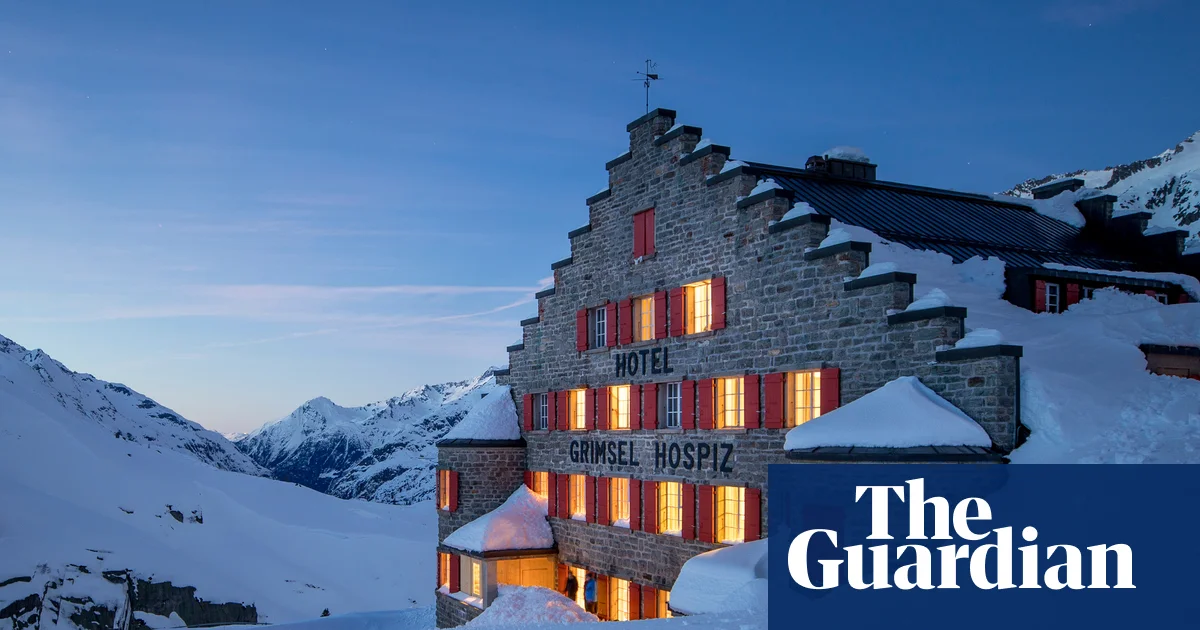
Near the top of the Grimsel Pass in Switzerland’s Bernese Oberland, a small crowd had gathered to take photographs. We were surrounded by bulky mountains and rippling glaciers, but all eyes were focused on a silvery granite chalet with apple-red shutters, its foundations deep in snow.
It was early February and, one after another, we posed in front of it as if standing beside a celebrity. Which in a way we were, because the proud building was the Grimsel Hospiz, the country’s oldest recorded mountain inn and a place that predates Westminster Abbey.
First documented in 1142 and originally built as a simple hostel – either by the Order of Saint Lazarus or the Augustinian monastery of Interlaken, no one is quite sure – today’s much-modernised Grimsel Hospiz is marooned on a spur of sheer rock and snow at 2,000 metres (6,562 ft). Over the centuries it has been inhabited by monks, used by shepherds, needy travellers and soldiers, ravaged by fire and buried by an avalanche. The mountains reach up, but it is surrounded on three sides by plunging ravines and the frozen Grimselsee, which thaws to turquoise ice floes in spring. The scenery is stupendous.
Grimselsee reservoir and Spitallamm Dam, with Grimsel Hospiz above, in autumn. Photograph: David Birri
My visit began on a PostBus, the yellow stagecoaches that reach the parts of Switzerland that the railways can’t. I was south-east of the village of Meiringen, having taken a train to Innertkirchen Kraftwerk, a station built 100 years ago to service the hydroelectric power plants hidden deep in the mountains. The towering stone pines, the tumbling cliffs, the dripping snow, the sky only peeking through – it might have been the landscape of JRR Tolkien’s Middle-earth.
As the bus worked its way higher up the Aare Gorge, we saw that the road ahead was closed for winter. Instead, we were dropped at a high-security shutter leading to an underground hydropower station operated by Kraftwerke Oberhasli AG. The renewable energy plant opens for public tours and, moments later, a minibus appeared from behind the steel door to take us deeper into the mountains. We hopped on board.
A road blasted into the granite, dark and narrow, then crept through a maze of tunnels, ending four miles (6.4km) later at a tiny cable car station that opened to daylight. We looked up at the Grimselsee reservoir and Spitallamm Dam, a 113 metre-tall arch of stone above which we were soon to soar. For a century, the high-altitude lake has stored glacier meltwater to generate green electricity. Now, for visitors like me, it forms part of Grimselwelt, a Swiss Alpine tourist region, serving as a backdrop to a great tract of lonely winter wilderness.
The Grimsel Hospiz in 1950: Photograph: Fox Photos/Getty Images
The picture of the Grimsel Hospiz developed as we rose on the cable car, like a photo going from faded to sharp. The uninhabited valleys beyond led to the Unteraargletscher, an eight-mile leviathan of ice and the Alps’ fifth-largest glacier. From the cable car, I made out a group of horned ibex as they clambered with ease over the col.
It was the Celts, then Romans, who first used the Grimsel Pass, but it has been an important locus in Alpine culture for centuries: a trade route between Berne and Upper Valais in the middle ages, a strategic camp for raids and war campaigns between Swiss, French, German and Austrian armies, a setting for pioneering glacier research. All these aspects combine in a single story at the Grimsel Hospiz.
What lends the mountain inn so much credibility today is its environmental outlook. Located within the Unesco World Heritage Swiss Alps Jungfrau-Aletsch region, the 28-room hotel is in the midst of a critical wildlife habitat, meaning all winter sports are banned. Ski gear is prohibited by the hotel’s management and it cannot be transported on the cable car. The Alps have always been the preserve of travellers keen on activities that take serious effort, but here is an antidote to every other winter destination, a rare meditative place where doing nothing is the only thing to do.
The only activity on offer is snowshoeing and even that is restricted to a 500-metre loop around the inn’s tower-like granite porches and wooden and copper-roofed chapel. It might be “the shortest winter trail in Switzerland”, as manager Markus Meier put it, but it still took me an hour as I kept stopping to take photos.
‘A fantasy of a mountain inn.’ A cosy lounge at the Grimsel Hospiz.
Inside is a fantasy mountain inn, the result of sensitive restorations: a huge wooden door creaks open and you step into corridors leading to cosy double rooms, intimate lounges, fireplaces and a restaurant where dinner is accompanied by one of 250 bottles from one of Europe’s highest-altitude wine cellars. Back in 1932, the guesthouse caused a sensation as the continent’s first electrically heated hotel. Now, the building is sustainably powered by clean energy and waste heat from the hydroelectric plant below.
As evening fell, it was time for the inn’s only other activity: staring at the flaring sunset and night sky from its outdoor wooden barrel sauna and hot tub. The air was bracingly cold, the constellations appeared and it was just me, the burbling water and the mountains stretching away into darkness. Forget any thoughts of Alpine heroes such as George Mallory or Edward Whymper. That night, down to my cossie in -10C (14F), tiptoeing across the snow in a pair of felt slippers and dwarfed by mountains, I was the bravest man in the Alps.
‘The bravest man in the Alps’ … Mike MacEacheran soaking in the outdoor hot tub
At nearly 2,000 metres, dinner is another event. The four-course menu produced by Slovakian chef Roman Crkon is hardly the stuff of traditional refuges. I’ve had my share of mountain meals, but I’ve never had veal sweetbreads, scallops, chicken with truffle cream and a cheese board at high altitude. In 1544, a local chronicler wrote that the Grimsel Hospiz was all about “good wine, brought by pack animals across the mountains”. Looking at the card games and excessive drinking around me, little had changed.
Later, just before bed, I slipped outside to gaze again at the stars. It was pine needle-drop quiet. Though I was separated from some of Switzerland’s most popular resort towns by only a few miles as the eagle flies, I felt engulfed by the Alps in their entirety. Tomorrow, another day with nothing to do beyond the confines of the inn awaited. But in a landscape like this, I was thrilled to have fallen off the map, out of time, into winter’s grasp.
The trip was provided by Jungfrau Regionand Historic Alpine Hotel Grimsel Hospiz (Wednesday to Sunday only; grimselwelt.ch). Rooms from £165pp a night, including breakfast, afternoon tea, hot tub and wooden barrel sauna. A four-course dinner costs £85. Return bus, tunnel and cable car transfers cost £70
Dino Snores for grown-ups opens up the iconic Natural History Museum overnight
Staying in the Natural History Museum was a dream come true
It’s one of the most iconic buildings and attractions in London and is known the world over.
The Natural History Museum is a marvel, containing tens of thousands of specimens from the natural world from across the globe and across time.
Not only that but the building is one of the most stunning in the capital, instantly recognisable and with some new wonder to be found on every visit.
And, in a real bucket list moment and a once in a lifetime experience, I was one of the people lucky enough to spend the night in this iconic building, sleeping under Hope the whale and wandering through the collections in the dead of night.
The Natural History Museum hosts Dino Snores for adults – and what an experience it is.
Not only do you get to spend the night sleeping beneath Hope the whale in the main Hintze Hall, there is so much going on there’s no way you’ll be getting your head down until the wee small hours.
Walking into the museum after the sun had gone down felt like living in my very own fairy tale. The exhibits in the incredible main hall were softly lit.
First up was a delicious three course meal in the T-Rex restaurant, followed by our first activity of the evening – stand-up comedy.
This is the Natural History Museum after all, so it did have a conservation theme in the form of comedian Simon Watt, founder of the Ugly Animal Preservation Society.
Who knew blob fish, frogs and the inexplicable inclusion of the kakapo flightless parrot could be so hilarious.
Next, there was a live animal workshop with ethical handling company, ZooLab, who encouraged us all to think how we would design our own dinosaur using traits from some of the amazing creatures who share the planet with us.
You were even allowed to touch some of these rare species – I very bravely overcame my terror to stroke a snake but have to admit to breathing a big sigh of relief when were were told the tarantula was a look only experience.
Then onto a lecture about sharks with a one of the museum’s palaeontologists – utterly fascinating.
A quick game of Dino Bingo, and then a stroll around the softly lit galleries with no crowds – the dinosaur section really is something else when the lights are out and it’s eerily quiet – and before we knew it it was 3am and we were ready to drop.
Tucking ourselves into our sleeping bags under the watchful gaze of Hope the whale, we were serenaded to sleep by a harpist – the theme from Jurassic Park as my personal favourite.
Throughout the night, there was a fully licenced bar as well as free tea, coffee and snacks to keep you going throughout the evening.
There was just so much to see and do, but for those who didn’t feel like roaming the halls of the Natural History Museum there was also a midnight film screening – what else but the original Jurassic Park.
Waking up in the iconic Hintze Hall was a real pinch me moment and off we went to our early morning yoga class – a stretch was just what we needed – before a full fry up and then some time to once again wander through the galleries, minus the crowds before the museum opened to the public at 10am.
This really was a magical experience and one I’ll cherish forever.