Tesla framed 2026 as an investment-heavy year, with CEO Elon Musk saying, “We’re going to be substantially increasing our investments in the future so you should expect to see significant — a very significant increase
Newsletters for Every Investor
Get daily, sector-specific newsletters packed with expert insights, fresh ideas, and new opportunities.
Subscribe to Newsletters
Seeking Alpha’s Disclaimer:This article was automatically generated by an AI tool based on content available on the Seeking Alpha website, and has not been curated or reviewed by humans. Due to inherent limitations in using AI-based tools, the accuracy, completeness, or timeliness of such articles cannot be guaranteed. This article is intended for informational purposes only. Seeking Alpha does not take account of your objectives or your financial situation and does not offer any personalized investment advice. Seeking Alpha is not a licensed securities dealer, broker or US investment adviser or investment bank.
The global fallout of the closure of the Strait of Hormuz may create the impression that the world cannot function without fossil fuels. Nothing could be further from the truth. Every single industry can and must decarbonise.
For global shipping, this process would be relatively easy because technological solutions exist and a single United Nations agency can set legally binding rules for all ships. The first steps have already been made.
In 2025, member states of the International Maritime Organization (IMO) agreed on a policy mechanism to cut shipping emissions: the Net-Zero Framework (NZF). But they opted to postpone a decision on formal adoption of this landmark agreement.
This delay is emblematic of obstructive tactics used by countries opposing climate action.
The IMO Framework – the world’s first global carbon price on any international polluter – took years of compromises and watering-down. As it stands, it is the lowest possible bar Pacific Island states like the one I represent can accept. We cannot give in another inch.
While I join the First Conference on Transitioning Away from Fossil Fuels in Santa Marta, Colombia, next week, delegates will gather again at the IMO in London to decide whether to uphold their unanimous commitment to phase out fossil fuels in a just and equitable way.
The delegates of Vanuatu who travel to London have a mandate to push for the adoption of the NZF this year.
Should anyone reopen the framework to water it down, our position is clear: We will revert to our original Pacific demand for a universal levy on emissions of $150 per tonne of carbon dioxide.
Last year my country abstained from the vote on the NZF agreement. We reached that decision because the mechanism is not nearly ambitious enough. Even so, it is a starting point we can work with.
But since then, the tide has shifted dramatically.
After the delay in adoption, a small group of countries is now suggesting further weakening the ambition in the framework to meet the demands of particularly influential states whose current policy positions are not aligned with climate ambition. This strategy is problematic as reducing our collective actions to align with those that want no climate action at all is incompatible with our people’s continued survival.
The world’s poorest countries, and the planet, simply cannot afford anything less than what is already on the table.
The framework, as it is, gives the world and the industry some chance of meeting the climate obligations that IMO countries committed to in 2023, namely reaching net-zero emissions by 2050 in a just and equitable way.
The NZF introduces penalty fees – eg emission pricing for noncompliance with the regulation. This provides the regulation with a “stick” to ensure ships comply or else they must pay.
The penalties also represent revenues, up to $10bn to $12bn a year, to both incentivise industry transition and enable a fair transition for all. This fund is a lifeline for developing – and especially least developed – states to be able to afford clean maritime energy upgrades and compensate for the rising trade costs because of this transition.
Some claim that revenues raised by the NZF will blow out transport costs. This is preposterous.
The penalties charged through this framework come down to less than $1.50 per year for every living human being – although the biggest polluters should pay this cost. If the richest 10 percent of the world’s population foots this bill, it adds up to less than $15 per person. That’s a few coffees a year, which the world’s richest can easily spare.
Losing both financial penalties for noncompliance and financial support for countries like mine in the name of a political compromise with rich oil-producing states is a bad deal. Not just for all climate-vulnerable states but also for the industry that demands and deserves clarity.
If anything, we need more action and more ambition in the framework.
For years, Pacific states have pushed for the IMO regulation to be in the form of a universal levy on emissions, by pricing all emissions. We managed to get the majority of IMO member states on board, including the European Union, South Korea and Japan, as well as important Global South states, such as Panama and Liberia. However, the US has been very effective in exerting its influence in this area, which is resulting in shifts to some positions to the detriment of us all.
Our position was always backed by the best available scientific evidence.
A levy on all shipping emissions is the best way to send an unambiguous signal to the industry: Invest in the future now! The revenues, up to 10 times more than those from the NZF, serve as both a bigger stick for polluters and a bigger carrot for first movers and cash-poor countries.
This is not a handout: Hitting net zero by 2050 is not possible if our countries cannot invest in clean ships.
The bridge we have built in the form of the NZF through years of compromise and evidence is still standing. Let us cross it together by adopting it as agreed without any further dilution.
Pacific states stand ready to fight for what science and justice demand, and we call on our partners to stand with us.
The views expressed in this article are the author’s own and do not necessarily reflect Al Jazeera’s editorial stance.
‘This will be a great and brilliant day for the world’ US President Donald Trump said at a Turning Point USA event as Iran fully opens the Strait of Hormuz. He also thanked Gulf states for their ‘tremendous’ support.
April 16 (UPI) — The House on Thursday passed a bill to extend temporary protected status for people from Haiti who are living in the United States through 2029.
Rep. Ayanna Pressley, D-Mass., who is co-chair of the House Haiti Caucus, introduced a discharge petition to advance a bill to extend protection for Haitian nationals.
The legislation was initially introduced by Rep. Laura Gillen, D-N.Y., whose Long Island district — as well as the rest of Long Island and New York City — have large Haitian populations, and is the first bill she introduced after her election to the House.
After the discharge petition succeeded, with bipartisan support, the bill passed the full House with 10 Republicans voting in support of it.
“This is a critical step forward in our fight for immigrant justice and delivering our Haitian neighbors the protections they deserve — and it’s a testament to the strength of our broad, diverse and bipartisan coalition,” Pressley said in a statement after the motion to discharge was agreed to.
“I am grateful to my colleagues on both sides of the aisle who supported our discharge petition,” she said.
After the vote, Gillen in a statement encouraged the Senate “to take up this measure and show the compassion and good sense to protect our Haitian community members.”
“Not only would this threaten the lives of our neighbors, it would also have a devastating effect on our economy,” Gillen said, noting that the extension protects “law-abiding and tax-paying Haitians who would face horrific condition if forced back to Haiti.”
The bill, however, faces a battle in the Republican-run Senate and, if it does get passed, the White House has indicated that it will veto the legislation, reports have said.
Although former Homeland Security Secretary Kristi Noem had attempted to end TPS for at least half a million Haitians last Fall, a judge in February blocked the Trump administration from carrying it out.
As a result of the ruling, TPS for people from Haiti expired on Feb. 3, its original expiration date, according to U.S. Citizenship and Immigration Services, which Pressley said made the discharge petition to force a vote on the bill so crucial.
The Supreme Court also is due to rule on the Trump administrations efforts to end TPS for Haitians, as well as for people from Syria, who have protected status because of the dangerous situation in that country.
First lady Melania Trump speaks during a House Ways and Means Committee roundtable discussion on protecting children in America’s foster care system in the Longworth House Office Building near the U.S. Capitol on Wednesday. The bipartisan group of lawmakers are looking to address challenges children in foster care face, including barriers to education and educational advocacy, housing, employment opportunities, financial independence, and technology. Photo by Bonnie Cash/UPI | License Photo
The experts call Israel’s bombardment of Lebanon on April 8 ‘a blatant violation of the UN Charter’.
Published On 15 Apr 202615 Apr 2026
A group of United Nations experts has denounced Israel’s attack on Lebanon a day after the United States and Iran agreed a ceasefire as illegal and urged UN member states to halt all arms transfers to Israel.
The 19 experts – including special rapporteurs and independent experts across a range of human rights mandates – issued the condemnation on Wednesday as Israel continued to pound areas of southern Lebanon, killing at least 16 people, including four paramedics, Lebanese state media reported.
Recommended Stories
list of 3 itemsend of list
Referring to a devastating wave of Israeli attacks across Lebanon on April 8, which Lebanese authorities said killed more than 350 people, including 30 children, the experts said: “This is not self-defence. It is a blatant violation of the UN Charter, a deliberate destruction of prospects for peace, and an affront to multilateralism and the UN-based international order.”
They called for Israel to “cease all military operations in Lebanon” and urged UN member states to halt arms transfers to Israel while “there is credible evidence of serious violations of international humanitarian and human rights law”, according to the UN Human Rights Council.
Israel escalated its attacks on Lebanon on March 2 after the Lebanese armed group Hezbollah fired rockets into Israel in response to the US-Israel killing of Iranian Supreme Leader Ali Khamenei two days earlier, the first day of their war on Iran.
Israel has carried out a devastating bombardment across Lebanon and a ground invasion in the south, killing more than 2,000 people and forcibly displacing more than 1.2 million.
The UN experts said such forced displacement “of a civilian population constitutes crimes against humanity”. They also condemned Israel’s targeted “destruction of homes”, particularly in predominantly Shia areas of the south, as “a form of collective punishment” that “points to ethnic cleansing”.
Israel’s continuing bombardment of Lebanon has been a point of tension in US-Iran negotiations. Tehran said Lebanon should be covered in the ongoing ceasefire. Israeli Prime Minister Benjamin Netanyahu said Lebanon is not part of the ceasefire with Iran and Israel will continue to target Hezbollah “wherever required”.
On Saturday, days before Israel and Lebanon held rare, high-level diplomatic talks in the US, Netanyahu said Israel wanted long-term peace with Lebanon but on the condition that Hezbollah is disarmed.
The Reuters news agency quoted a senior Israeli official as saying Israel’s security cabinet planned to convene on Wednesday evening to discuss a possible ceasefire in Lebanon. It also quoted several senior Lebanese officials as saying ceasefire efforts were under way.
The battlefield is narrowing and the timeline is tightening in a congressional redistricting contest among states seeking a partisan advantage ahead of the November midterm elections.
The end of Maryland’s legislative session this week marked the demise of Democratic efforts to reshape the state’s U.S. House districts. But Florida lawmakers are to begin a special session Monday for a Republican attempt at congressional redistricting. And Virginia voters are deciding Tuesday on a Democratic redistricting plan that could help the party win several additional House seats in this year’s election.
Voting districts typically are redrawn once a decade, after each census. But President Trump triggered an unusual round of mid-decade redistricting last year when he urged Texas Republicans to redraw House districts to give the GOP an edge in the midterm elections. California Democrats reciprocated, and redistricting efforts soon cascaded across states.
So far, Republicans believe they could win nine additional seats in states where they have redrawn congressional districts, while Democrats think they could gain six seats elsewhere because of redistricting. But that presumes past voting patterns hold in November. And that’s uncertain, especially since the party in power typically loses seats in the midterms and Trump faces negative approval ratings in polls.
Democrats need to gain just a few seats in November to wrest control of the House from Republicans, potentially allowing them to obstruct Trump’s agenda.
Where redistricting remains in play
Officials in more than a dozen states debated or floated redistricting proposals. The immediate focus is on two states — one led by Republicans, the other by Democrats.
Florida
Current map: eight Democrats, 20 Republicans
Proposed map: Republican Gov. Ron DeSantis has called a special legislative session to begin Monday on congressional redistricting. Republicans haven’t yet publicly released a specific plan.
Challenges: The state constitution says districts cannot be drawn with intent to favor or disfavor a political party or incumbent.
Virginia
Current map: six Democrats, five Republicans
Proposed map: A new U.S. House map passed by the Democratic-led General Assembly could help Democrats win up to four additional seats. For the map to take effect, voters would have to approve a constitutional amendment allowing mid-decade redistricting. That amendment is on Tuesday’s ballot.
Challenges: The state Supreme Court ruled the referendum can proceed, but it has yet to rule whether the effort is legal. The court is considering an appeal of a Tazewell County judge’s ruling that the amendment is invalid because lawmakers violated their own rules while passing it.
Where new House districts were approved
New U.S. House districts have been adopted in six states since last summer. Four took up redistricting voluntarily, one was required to by its state constitution and another did so under court order.
Texas
Current map: 13 Democrats, 25 Republicans
New map: Republican Gov. Greg Abbott signed a revised House map into law last August that could help Republicans win five additional seats.
Challenges: The U.S. Supreme Court in December cleared the way for the new districts to be used in this year’s elections. It put on hold a lower-court ruling that blocked the new map because it was “racially gerrymandered.”
California
Current map: 43 Democrats, nine Republicans
New map: Voters in November approved revised House districts drawn by the Democratic-led Legislature that could help Democrats win five additional seats.
Challenges: The U.S. Supreme Court in February allowed the new districts to be used in this year’s elections. It denied an appeal from Republicans and the Department of Justice, which claimed the districts impermissibly favor Hispanic voters.
Missouri
Current map: two Democrats, six Republicans
New map: Republican Gov. Mike Kehoe signed a revised House map into law last September that could help Republicans win an additional seat.
Challenges: A Cole County judge ruled the new map is in effect as election officials work to determine whether a referendum petition seeking a statewide vote complies with constitutional criteria and contains enough valid petition signatures. The Missouri Supreme Court rejected a lawsuit claiming mid-decade redistricting is illegal. It’s scheduled to hear arguments in May on claims the new districts violate compactness requirements and should be placed on hold pending the potential referendum.
North Carolina
Current map: four Democrats, 10 Republicans
New map: The Republican-led General Assembly gave final approval in October to revised districts that could help Republicans win an additional seat.
Challenges: A federal court panel in November denied a request to block the revised districts from being used in the midterm elections.
Ohio
Current map: five Democrats, 10 Republicans
New map: A bipartisan panel composed primarily of Republicans voted in October to approve revised House districts that improve Republicans’ chances of winning two additional seats.
Challenges: None. The state constitution required new districts before the 2026 election, because Republicans had approved the prior map without sufficient Democratic support after the last census.
Utah
Current map: no Democrats, four Republicans
New map: A judge in November imposed revised House districts that could help Democrats win a seat. The court ruled that lawmakers had circumvented anti-gerrymandering standards passed by voters when adopting the prior map.
Challenges: A federal court panel and the state Supreme Court, in February, each rejected Republican challenges to the judicial map selection.
Where redistricting efforts were denied
Governors, lawmakers or partisan officials pushed for congressional redistricting in numerous states. In at least five states, those efforts gained some initial traction but ultimately fell short in either the legislature or court.
Maryland
Current map: seven Democrats, one Republican
Proposed map: The Democratic-led House in February passed a redistricting plan backed by Democratic Gov. Wes Moore that could help Democrats win an additional seat.
Challenges: The legislative session ended in April without the Democratic-led Senate voting on the redistricting plan. The state Senate president said there were concerns it could backfire on Democrats.
New York
Current map: 19 Democrats, seven Republicans
Proposed map: A judge in January ordered a state commission to draw new boundaries for the only congressional district in New York City represented by a Republican, ruling it unconstitutionally dilutes the votes of Black and Hispanic residents.
Challenges: The U.S. Supreme Court in March granted Republicans’ request to halt the judge’s order, leaving the existing district lines in place for the 2026 election.
Indiana
Current map: two Democrats, seven Republicans
Proposed map: The Republican-led House passed a redistricting plan in December that would have improved Republicans’ chances of winning two additional seats.
Challenges: Despite pressure from Trump to adopt the new map, the Republican-led Senate rejected it in a bipartisan vote on Dec. 11.
Kansas
Current map: one Democrat, three Republicans
Proposed map: Some Republican lawmakers mounted an attempt to take up congressional redistricting.
Challenges: Lawmakers dropped a petition drive for a special session on congressional redistricting in November, after failing to gain enough support.
Illinois
Current map: 14 Democrats, three Republicans
Proposed map: The Democratic Congressional Campaign Committee in October proposed a new U.S. House map that would improve Democrats’ chances of winning an additional seat.
Challenges: The Democratic-led General Assembly declined to take up redistricting, citing concerns about the effect on representation for Black residents.
SACRAMENTO — Legislation to move the California presidential primary from early June to early March, in an effort to make the state a more important player in presidential politics, passed the Assembly on Wednesday.
The bill was sent to the Senate on a 43-22 vote. If approved there, it will go to Gov. Pete Wilson, who has said he favors moving up the primary date.
A March date would make California the first large-population state to hold a presidential primary or a caucus.
Assemblyman Jim Costa (D-Fresno), the measure’s author, said Californians have been “no more than onlookers” as presidential candidates have been selected in recent years. Costa said the California vote last affected the outcome of a Democratic primary in 1972, while the state has not played a major role in a Republican selection since the 1964 contest between Barry Goldwater and Nelson Rockefeller.
Assemblyman Richard Katz (D-Sylmar) said California “has been treated like a 24-hour ATM machine,” with candidates raising large amounts of money in this state but spending it on primaries and caucuses elsewhere.
Assemblyman Pat Nolan (R-Glendale) denounced the proposal as an “expensive boondoggle to allow people in this building to become kingmakers.” Nolan also said moving up the primary date would make it difficult for the Legislature or the courts to arrive at a reapportionment plan well in advance of the primary.
But Costa said a March primary would cost no more than an election in June and that “modern computers can draw reapportionment lines quickly.”
Forty Democrats were joined by three Republicans–Assemblymen Gerald N. Felando of San Pedro, David G. Kelley of Hemet and Charles W. Quackenbush of Saratoga–in supporting the bill. All 22 no votes were cast by Republicans.
An aerial photograph of cargo containers in the port of Santos in Sao Paulo, Brazil and the United States have reached an agreement to better track illegal shipments. File Photo by Isaac Fontana/EPA
April 10 (UPI) — The government of Brazil on Friday announced an agreement with the United States to combat transnational crime — a move that will integrate intelligence sharing and joint operations to target organized criminal networks.
The initiative was presented by Brazil’s finance ministry, where Minister Darío Durigan said the agreement between Brazil’s Federal Revenue Service and U.S. Customs and Border Protection will enable the exchange of cargo data, particularly on shipments leaving the United States for Brazil.
The focus will be on intercepting illegal goods, such as weapons and narcotics.
The announcement comes as Washington considers designating Brazil-based criminal groups Primeiro Comando da Capital and Comando Vermelho as terrorist organizations, according to outlet G1 O’Globo.
The effort gained traction after Eduardo Bolsonaro and Flávio Bolsonaro, sons of former President Jair Bolsonaro, urged members of the administration of Donald Trump to take action, The New York Times reported. U.S. officials have not publicly confirmed any such designation.
Brazilian authorities also highlighted the rollout of the DESARMA program, a system designed to allow real-time information sharing when customs officials identify shipments linked to firearms, ammunition, explosives and other sensitive materials.
Officials said the tool enables authorities to trace the origin of illicit goods and map criminal networks involved in the international arms trade.
Recent records show the system has expanded the ability to detect, connect and track illicit weapons flows, with early results already benefiting both countries.
U.S.-provided intelligence has helped uncover sophisticated smuggling methods, including rifle components hidden inside airsoft equipment and drugs concealed in packages labeled as common goods such as pet food sent through postal services.
Over the past 12 months, authorities identified 35 incidents involving the seizure of 1,168 items, weighing about 550 kilograms, primarily shipped from Florida using fraudulent declarations and concealment techniques.
Brazil’s tax revenue secretary, Robinson Barreirinhas, said more than 1,100 weapons were seized over the past 12 months arriving from the United States, and that in the first quarter alone, authorities have seized more than 1.5 tons of drugs.
Brazil’s finance ministry said consolidating this data into a structured database has improved identification of patterns, links between senders and recipients, and recurring trafficking routes. This, in turn, has strengthened information-sharing with U.S. authorities to support enforcement action at the source and dismantle criminal networks.
The ministry added that the cooperation is part of ongoing dialogue between President Luiz Inácio Lula da Silva and Trump, and forms part of a broader bilateral agenda focused on combating transnational organized crime.
For Ike Uche and many others looking to flee the turmoil of gang violence in Niger State, North Central Nigeria, the eastern bypass area of the Minna metropolis was supposed to be a sanctuary. After years of hard work, Ike finally finished building his house, which is located behind the M. I. Wushishi Housing Estate along the bypass.
For him, the move symbolised a fresh start, a promise of safety, and a chance to raise his family in a peaceful environment. The quiet streets, the open plots waiting for development, and the hum of a growing community gave him hope that life there would be different from New Market, an area notorious for gang violence in Minna. Within a year of moving there, that dream began to die when gold was said to have been discovered in the community.
Gen. M. I. Wushishi housing estate along the eastern bypass of Minna. Photo: Isah Ismaila/HumAngle.
For about five years now, the silence of his neighbourhood has been broken not by the laughter of children or the bustle of new shops, but by the metallic clang of shovels and the chaos of hundreds of illegal miners, mostly youths.
Illegal miners had occupied lands within the community. Armed with weapons, cutlasses, and knives, and emboldened by impunity, they dig through residential lands in search of gold, carving scars into the earth and into the lives of those who lived there.
At first, Ike thought it was a case of young people constituting a nuisance, but when he confronted the miners who closed onto his property, his worst fears materialised. The same day he confronted them in late 2024, his home was attacked. During the attack, miners rained insults, calling him an enemy of progress and telling him to mind his own business while they focused on theirs.
One of the illegal miners in the area washed small pieces of gold. This act continues through the day until they have gathered enough to sell. Photo: Isah Ismaila/HumAngle.
“They vandalised my house,” he said, his voice heavy with frustration. “People from the ministry came to my house and told me that the government will take action. It’s been over a year now; the situation has only worsened.”
His vehicle was damaged too; his windows were shattered, doors broken, and even his ceiling ripped apart.
“I had to shoulder all the responsibilities to fix everything myself,” he said, pointing to the patched walls and replaced fittings. For him, the cost was not just financial but also emotional: a constant reminder that the safety he sought had been stolen.
Illegal miners washing materials behind Mr Uche’s house in the Kafin Tela area of the bypass. Photo: Isah Ismaila/HumAngle.
Even after the attack, the miners threatened to attack again. What was meant to be a safe haven had gradually changed into a battleground, where the pursuit of illicit wealth outweighed the sanctity of family and home.
“If you come here during the rainy season, you will see more than one thousand people digging through people’s land,” he said. “It’s because we are in the dry season that their presence has reduced, but we still feel threatened by them.”
This climate of fear has silenced many residents. “That is why a lot of people are scared to speak about it publicly because they can be attacked by these boys,” he added.
For many people living in the area, safety has become a significant concern.
“How can one be safe in this kind of environment?” Ike wondered. “If I have another means to leave here, I would because we no longer feel safe here. This is not something somebody will start asking questions about; everybody knows that on the issue of gold mining, the government is not doing anything. The three-arm zone is not far from here; they are seeing it. It’s on the expressway, and they’re not taking any serious action. That is why they are doing it without any fear.”
An illegal miner is digging in a pit to gather sand, which will be washed to separate the gold from the dirt. Photo: Isah Ismaila/HumAngle.
The damage caused by illegal mining in Minna’s eastern bypass is not limited to land alone; it has seeped into the lives of residents, eroding their sense of safety and community. During field reporting, HumAngle observed how roads once passable have been torn apart by miners digging for gold, leaving behind networks of gullies and broken pathways.
As miners dug through the foundation of this fence in search of gold, it collapsed, leaving the owner to bear the loss. Photo: Isah Ismaila/HumAngle.
Fifteen illegal miners line up in sequence to bring out sand materials from the deep pit they dug, which looks like an excavated site. Photo: Isah Ismaila/HumAngle.
Illegal mining in Niger State’s metropolitan area remains unchecked, characterised by blatant impunity and the failure of security agencies to take decisive action.Massive pits were seen scattered across vast lands. One of the pits was so deep that it held over 15 people in sequence as they disposed of debris. This massive pit sat close to a carcass that was now covered in debris.
Locals, including Muhammad Ndagi, claim that most miners are not originally from Minna, with many arriving from Sokoto and Zamfara in northwestern Nigeria. Armed with machetes, some illegal miners in Minna are emboldened by weak enforcement, vandalising properties, including one belonging to an army general. Beyond the damages, illegal mining sites in Minna have become arenas of violence, where weapons are now part of daily survival.
Rugged hangs his machete, which he uses for protection and intimidating residents who dare interfere in their business. Photo: Isah Ismaila/HumAngle.
An illegal miner who simply identifies as Rugged explained that the practice began as a response to constant power struggles among young people in the state capital.
“Miners who are stronger or have the numbers tend to attack the weak ones to collect their gold or money. So, we decided to also come with our weapons in order to protect ourselves and avoid intimidation,” the illicit miner told HumAngle.
Over time, the weapons were not only used against rival miners but also against residents and security personnel. Confirming what residents told HumAngle, Rugged admitted that when community members tried to stop them, they were chased away with threats.
An armed vigilante was sighted within the illegal mining site. Miners say they sometimes show up to settle any scuffle between the miners. Photo: Isah Ismaila/HumAngle.
“With the weapons, they were scared, and we would chase them away. We also use them to protect ourselves from security personnel who come to disrupt our activities,” he added.
Get our in-depth, creative coverage of conflict and development delivered to you every weekend.
Subscribe now to our newsletter!
The presence of men, women, and children at these sites underscores how deeply entrenched their activity has become. Ndagi stated that attempts by Nigeria Civil Defence Corps (NCDC) officers to intervene are often met with hostility, as the miners retaliate as a gang.
“Whenever their vehicles approach, the miners start shouting ‘ƙarya ne!’ and throwing stones,” Ndagi said. “If anyone is arrested by the civil defence officers, the miners converge as a gang to fight them, and at the end they get released before returning to continue their operations.”
Several pits are scattered across one of the lands within the area. Miners have abandoned the place due to its lack of gold, leaving the owner devastated. Photo: Isah Ismaila/HumAngle.
“They have left mining activity in the hands of hoodlums who you can’t dare challenge even on your property, and as a taxpayer,” Ndagi lamented.
Residents expressed concerns over the possible consequences of these illegal activities, which include devastating effects on waterways as they expand towards homes, buildings at risk of collapse, and daily clashes involving machetes.
Girls in the pits of gold
Hannatu Audu escaped death three times at the mining site along the eastern bypass. She abandons school for mining, where she and other young girls are confronted with constant harassment. Photo: Isah Ismaila/HumAngle.
Mining activities in the metropolis have also attracted many girls, including school-aged children, who abandon classrooms for the lure of quick earnings. Hannatu Audu, a 16-year-old student of Hilltop Model School, is one of them. She told HumAngle that on some days she earns between ₦10,000 and ₦15,000, and once made as much as ₦300,000 from selling gold. But the money comes at a high cost. In her pursuit of survival, she has nearly lost her life multiple times inside collapsing pits.
On one occasion, after returning to retrieve her pan, the soil caved in and buried her completely.
“I went into the pit to gather materials, and when I came out to look for water to wash and separate the gold, I realised I had forgotten my pan inside. So, I went back in to get it. That was when the soil collapsed and buried me for the third time,” she recalled.
“My friend noticed I hadn’t come out. She saw fresh soil in the pit and shouted for help. People kept digging until they reached my waist; that was when I finally got to breathe. But as they continued, the pit collapsed again. I only woke up the next day to find myself lying on a hospital bed.”
Since the incident, Hannatu has been scared to go back. “I want to, because that’s where we feed from. But anytime I think of going there, I feel something bad will happen to me,” she said. Beyond the physical dangers, Hannatu told HumAngle that she and other girls face constant harassment.
Young girls at the mining site sand washing materials in search of gold. Photo: Isah Ismaila/HumAngle.
At the sites, men often demand sexual favours, threatening to deny access to pits or refuse assistance with heavy tasks if these are declined.
“There are instances where you need a stronger person to help you, especially in digging or pulling out the debris you intend to wash because it is heavy. So, if you decline their proposal, they will hate you and hinder you from even accessing the pits they have dug,” she noted.
Young boys inside one of the pits in search of gold. Photo: Isah Ismaila/HumAngle.
Women and girls in northern Nigeria’s mining sites face severe risks, including sexual harassment, exploitation, and life-threatening accidents, forcing many girls into vulnerable positions, where survival is negotiated not only through labour but also through resisting exploitation.
Hannatu revealed that sympathetic miners intervene to protect them, but the environment remains hostile. “To cope, we form girls-only groups, working together to reduce dependence on men so that we can protect ourselves from predators.
The dangers remain constant. Hannatu acknowledged that she has lost track of how many people have perished in the pits.
“For young girls like myself, mining is both a lifeline and a trap: because it is a place where we can earn enough to feed our families, yet where every day carries the possibility of violence, exploitation, or death,” she noted.
A broader crisis
Illegal mining in Nigeria is not only an economic drain but is also a direct driver of insecurity. According to a 2025 report by the National Assembly Library Trust Fund, unregulated mining sites in the north-central and northwestern states have become fertile ground for armed groups.
Terror groups impose “protection fees” on miners, smuggle minerals to finance weapons, and use mining fields as safe havens. In states like Zamfara, Kaduna, and Niger, the overlap between mining zones and terrorist camps is striking, with many illegal mining sites linked to violent networks, according to the report.
One of the mining pits at the edge of a partially covered carcass, with the foundation visible. Photo: Isah Ismaila/HumAngle.
The report also emphasised that mining areas often function as ungoverned spaces, where state authority is absent and criminal groups thrive. Competition over access to gold pits sparks violent clashes, while communities are displaced and stripped of livelihoods.
Illegal mining in Niger State has found its way spreading to parts of Minna metropolis, carving deep scars into several communities and fueling gang violence. A report by the Nigeria Extractive Industries Transparency Initiative (NEITI) ranks the state as having the highest number of illegal mining sites in Nigeria. Areas such as Shiroro, Munya, Rafi, and Paikoro Local Government Areas (LGAs) are the most severely affected. These areas, rich in gold and lithium deposits, have become magnets for unlicensed miners and armed groups.
In Shiroro and Munya, illegal mining fuels insecurity. Armed groups impose “taxes” on miners, using the proceeds to purchase weapons and sustain violent operations. Communities there face displacement, with residents abandoning farmland and homes due to constant attacks.
In areas like Rafi, illegal mining activities have led to environmental devastation, with road networks and farmlands destroyed by uncontrolled digging. In Paikoro and Minna’s outskirts, such as the Pmapi community, residents recount tragic accidents from collapsed pits and violent reprisals when they challenge miners.
In February this year, the Niger State Government ordered the immediate closure of illegal and non-compliant mining sites. The directive followed a joint inspection carried out by the State Ministry of Mineral Resources in collaboration with the Federal Ministry of Solid Minerals Development.
Leading the delegation, the state’s Commissioner for Mineral Resources, Qasim Danjuma, revealed that operators without valid federal licences and proper state documentation would not be allowed to continue operations.
While the move signals the government’s renewed effort to curb illegal mining and enforce compliance in the state’s mineral sector, residents in affected communities in the metropolis believe the government is not walking the talk, as the menace persists.
“Until the government has the political will to stop it, the situation can only get worse, especially as the rainy season is fast approaching,” Ike warned.
Abbas Idris, President of the Risk Managers Society of Nigeria (RIMSON), emphasised that unchecked illegal mining in Minna metropolis could lead to severe environmental damage and security challenges.
Idris warned that illegal mining leads to the destruction of land, ecological balance, and loss of arable land that could have long term consequences.
“Land degradation increases the risk of flooding during the rainy season, leaving communities exposed to disaster. Also, mining activities undermine infrastructure, weakening roads and buildings, which creates hazardous living conditions and communities in the affected areas are bound to face heightened risks due to poor access to safe housing.”
“Most concerning is that illegal mining operations, especially in a state like Niger where terrorists are turning it into a sanctuary, can fuel crime, violence, and conflicts over resources where armed groups exploit the situation, worsening insecurity and displacing populations,” he added.
While criticising weak governance and ineffective law enforcement, Idris warned that unchecked illegal mining devastates society and traps communities in cycles of insecurity and deprivation.
HumAngle has shared the findings of this report with the Niger State government through the Chief Press Secretary, Ibrahim Bologi, who has failed to respond to the questions aimed at providing clarity on illegal mining in Minna metropolis.
ALBUQUERQUE, N.M. — If you’ve ever planned to motor west and take the highway that’s the best, this might be the time: Route 66 turns 100 this year.
The Mother Road, as author John Steinbeck dubbed it, has evolved over the years from an escape for poor farmers fleeing the devastating dust storms of the 1930s to perhaps the quintessential American road trip that’s still delivering kicks.
Although there have been faster and more direct routes between the nation’s second- and third-largest cities for some time, Route 66’s neon still burns brightly and its vintage signs beckon travelers to restored motor lodges, classic diners and roadside attractions.
Each stop turns the wheels of the imagination, leaving travelers to contemplate what life was like for the people and communities that have made the road hum over the years.
Illinois
Chicago has long been one of the country’s economic engines, with access to international waters and railroads that linked all corners of the country. In the 1920s, Oklahoma businessman Cyrus Avery, known as the Father of Route 66, knew it wouldn’t be long before automobiles would dominate the transportation landscape, and the Windy City would be the perfect place to start the journey he envisioned.
A member of the federal highway board appointed to map the U.S. highway system, Avery opted to go with the number 66. He knew those double digits were ripe for marketing and could be seared into the minds of motorists.
For some travelers, the journey is fueled more by the food than the scenery, and there’s plenty to choose from — slices of homemade pie, thick shakes, cheeseburgers and an assortment of fried delights.
The Cozy Dog Drive In in Springfield, the Illinois capital, is one of the many diners that sprang up along Route 66, and its breaded hot dogs on a stick have stood the test of time. Third-generation owner Josh Waldmire says the recipe is a secret.
Waldmire’s grandfather, Ed, saw the concoction’s potential as fast and convenient road food and developed a system for frying the dogs vertically.
Missouri
Route 66 has its share of twists and turns, and it’s no surprise that a highway famous for its quirky roadside attractions would cross the nation’s most famous river on one of the more peculiar bridges known to modern engineering.
As the road nears St. Louis, the mile-long (1.6-kilometer-long) Chain of Rocks Bridge hovers more than 60 feet (18 meters) above the Mississippi River.
Engineers eventually built a straighter, higher-speed option, and a poor resale market spared the original bridge from the scrap heap. Today it’s reserved for pedestrians and cyclists.
A median in Missouri is home to St. Robert Route 66 Neon Park, which features orphaned neon signs that once beckoned travelers to stop at certain sites and businesses along the highway. Often handcrafted, they weren’t only markers for motels, cafes and gas stations, but were also folk art and symbols of local culture.
Kansas
The Sunflower State hosts only a short stretch of Route 66, but it packs a punch with the Kan-O-Tex Service Station in Galena. A classic example of roadside fare, the station served as inspiration for the animated 2006 Pixar film “Cars.”
Director John Lasseter and his crew took road trips along the route, digging into history and looking for elements that could bring the project to life. It was in Galena where they spotted the old boom truck that served as the basis for the character Tow Mater. The plot wasn’t far off, as so many once bustling towns — like the fictional Radiator Springs — nearly faded away after being bypassed by an interstate.
Kansas also is home to the Brush Creek Bridge, otherwise known as the Rainbow Bridge. It’s on the National Register of Historic Places and is one of few remaining examples of the concrete arched bridges designed by James Barney Marsh.
Oklahoma
There was a real danger for some who traveled the road, particularly Black motorists passing through inhospitable and segregated areas during the Jim Crow era. The Green Book — a guide first published in 1936 by Victor Hugo Green — listed hotels, restaurants and gas stations that would serve Black customers.
The Threatt Filling Station near Luther wasn’t listed in The Green Book, but it was a safe haven — not only for getting fuel, but for barbecue and baseball. Listed on the National Register of Historic Places, it was the only known Black-owned and operated gas station along Route 66.
Route 66 is littered with abandoned buildings and faded signs, but one example of the highway’s resilient spirit stands tall in Sapulpa, near Tulsa. The restored Tee Pee Drive-In Theater offers a step back into the 1950s, when the booming car culture helped spawn thousands of drive-in theaters nationwide.
Built in 1949, the drive-in officially opened in the spring of 1950 with a screening of John Wayne’s “Tycoon.” It was one of the few drive-ins at the time to have paved pathways. Over the years, it survived a tornado, a fire that destroyed the concession stand and break-ins before being shuttered for more than 20 years. It reopened in 2023.
Texas
Blink and you might miss it, but a stop at the Cadillac Ranch in Amarillo is a must for any Route 66 journey. For decades, visitors have been spray-painting the 10 vintage Cadillacs at the site and mulling the transitory nature of time as Bruce Springsteen did in his 1980 song of the same name.
It’s not a ranch, but rather a public art installation created in 1974 by the art and architecture collective Ant Farm. At first, the cars — which were half-buried front-down at a 60-degree angle — were used for target practice. Others would scratch their initials into the metal. The spray painting started later.
Arrive in Adrian and you’re halfway through your trip. Steps from a white line marking the midpoint of Route 66 is the Midway Cafe, where the “ugly pies” are anything but.
If you’re still hungry, head back to Amarillo for a 72-ounce (2 kilogram) steak and all the sides at The Big Texan. If you can finish the meal in an hour or less, it’s free.
New Mexico
More than half of Route 66 cuts through sovereign Native American lands, often tracing routes used by tribes long before settlers arrived. Much like the railroad in the 1800s, the highway opened the door to a new era of commerce, but it also fueled stereotypes about cultures along the way.
There are still faded and crumbling references to tipis and feathered headdresses at some stops along the historic highway. The symbols were easily appropriated for marketing by roadside vendors but weren’t indicative of the separate and distinct Native American cultures in the area.
Today, tribes are telling their own stories and showcasing their creations, whether it be pottery, fruit pies or poems.
Albuquerque boasts the longest intact urban stretch of Route 66. Those 18 miles (29 kilometers) pass through several neighborhoods and business districts, from historic Old Town to Nob Hill.
Some of the old motor lodges and neon signs along what is now Central Avenue have been restored. Other signs are being reimagined using hubcaps, elaborate lowrider-inspired paint jobs and New Mexico’s classic yellow and red license plates in a nod to the car culture that is very much still alive in the city.
Arizona
Musician Jackson Browne was taking his own road trip in the early 1970s when his car left him stranded in Winslow. The experience inspired the lyrics to the Eagles’ hit “Take it Easy.” But it’s certainly not the only song that is a must-have for a Route 66 playlist.
Bobby Troup created a classic American road anthem in the 1940s with “(Get Your Kicks on) Route 66.” Nat King Cole, Chuck Berry, The Rolling Stones and Depeche Mode carried it through the decades, each covering the song with their own flair.
While standing on a corner in Winslow, don’t be surprised if someone saunters up with a guitar and starts strumming favorites from their own road trip playlist.
Before leaving the state, the one-time gold mining town of Oatman features a Wild West atmosphere, daily staged shootouts and beloved burros. Oatman was a destination along one of the original alignments of Route 66 via a treacherous path through the Black Mountains, but it was later bypassed as part of improvements made in the 1950s.
California
Once a desert oasis, Roy’s Motel & Café in Amboy is a quintessential Route 66 landmark. The towering neon sign is one of the most photographed spots along the road. Inside, foreign currency left by international visitors lines one wall. Across the street, a clothing post decorated with shoes, shirts and other items juts up from the desert floor.
This stretch of the highway through the Mojave Desert offers a special kind of solitude. The pavement gets rough in spots and the landscape takes charge, showing off Joshua trees, wide-open spaces and the remnants of ancient volcanic activity.
Much of the area is undeveloped, meaning it looks a lot like it would have when Route 66 was commissioned in 1926.
After making it through oft-congested Los Angeles, the iconic Santa Monica Pier marks the end of the line, and it’s nothing short of a perpetual party with a steady stream of spectators and performers. Although many stretches of Route 66 have lapsed into decay, the breathtaking views of the Pacific Ocean are a reminder of the pursuits made possible by the road over the last century.
Bryan writes for the Associated Press. AP writers John O’Connor in Springfield, Ill., and Sean Murphy in Oklahoma City contributed to this report.
Bahrain and the UAE also reported attacks resulting in fires, which were put out quickly.
Kuwait has said Iranian drone attacks damaged two power and water desalination plants and sparked a fire at an oil complex, without causing injuries.
Gulf countries have borne the brunt of Tehran’s response to the US and Israeli strikes on Iran since February 28.
Recommended Stories
list of 4 itemsend of list
Fatima Abbas Johar Hayat, a spokesperson for Kuwait’s Ministry of Electricity, Water and Renewable Energy, said on Sunday the “criminal aggression” caused “serious material damage” overnight to the two plants and the outage of two electricity-generating units.
The attack is the latest to target civil infrastructure in Kuwait. Other drone attacks overnight caused a fire at the Shuwaikh Oil Sector Complex and “significant damage” to a government office complex.
Reporting from Kuwait City, Al Jazeera’s Malika Traina referred to the incident as “devastating news” because “water desalination here and across the Gulf is extremely important. In Kuwait, around 90 percent of the country’s drinking water comes from these plants”.
Alongside the United Arab Emirates, Kuwait has been at the “epicentre” of Iranian attacks over the past few days, said Al Jazeera’s Victoria Gatenby, reporting from Doha, Qatar.
“The concern here in the region is that if President [Donald] Trump and the Israeli prime minister, Benjamin Netanyahu, follow through on those threats to escalate attacks on Iran, the result may be that Tehran attacks similar facilities here in the Gulf,” said Gatenby.
Gulf patience is not ‘unlimited’
Bahrain also faced Iranian attacks on Sunday.
Bahrain’s Gulf Petrochemical Industries Co said that several of its operational units were subjected to an attack by Iranian drones, while earlier in the day, the country’s national oil company, Bapco Energies, said an oil tank at one of its storage facilities was hit.
Both attacks caused a fire but were later brought under control and extinguished, Bahraini media reported.
No casualties were reported in either attacks, and damage from both was being assessed.
Earlier, Bahrain’s Ministry of the Interior had reported on the Bapco Energies fire without specifying where the blaze had broken out.
The Interior Ministry has said civil defence crews “extinguished a fire in the facility” that broke out “as a result of the Iranian aggression”.
The announcement came an hour after Bahrain activated air raid sirens.
Authorities in neighbouring Abu Dhabi on Sunday also stated they responded to several fires that broke out at the Borouge petrochemical plant, caused by falling debris from an interception.
“Operations at the plant have been immediately suspended pending a damage assessment,” read a statement issued by Abu Dhabi Media Office.
No injuries have been reported so far, it added.
Saudi Arabia, meanwhile, intercepted missiles early on Sunday, the kingdom said.
“Iran has said that it is only really attacking US military bases and US assets in the region, but we know from what’s been happening over the past five weeks and from what Gulf leaders have been saying that they have very much been targeting civilian infrastructure and critical energy infrastructure in this region as well,” said Gatenby.
While Gulf countries have shown “incredible restraint” in the face of attacks over the past five weeks, it is not because they lack the ability to respond and, increasingly, countries are talking about the fact that their patience is not unlimited, said Gatenby.
Saudi Arabia, in particular, has been talking in the past week about its right to self-defence under Article 51 of the UN Charter, she said.
“The GCC countries continue to say their main priority is de-escalation and dialogue, but some others have been saying this defensive posture may have to change if they continue to be attacked,” said Gatenby.
Rights groups have raised concerns about Trump’s efforts to change election administration before November’s midterms.
About two dozen Democrat-led states have filed a lawsuit against the administration of United States President Donald Trump to block an executive order setting new limits on mail-in ballots.
Friday’s lawsuit comes as voting rights groups charge that Trump is seeking to make it more difficult to vote before the consequential midterm elections in November.
Recommended Stories
list of 3 itemsend of list
Trump, meanwhile, has argued that his efforts are meant to counter rampant voter fraud in US elections.
That opinion runs counter to the findings of independent election monitors, including the conservative Heritage Foundation, whose decades-spanning database has found an exceedingly low rate of election fraud.
New York Attorney General Letitia James was among the attorneys general in 23 states and the District of Columbia who filed Friday’s suit, alongside the governor of Pennsylvania.
In a statement, she argued that Trump’s executive order exceeded his presidential power.
“Free and fair elections are the cornerstone of our democracy, and no president has the power to rewrite the rules on his own,” James said.
Trump’s latest executive order, signed on Tuesday, calls on the Department of Homeland Security to “compile and transmit” a list of United States citizens who are eligible to vote in each state.
It then requires the United States Postal Service (USPS) to “transmit ballots only to individuals enrolled on a State-specific Mail-in and Absentee Participation List, ensuring that only eligible absentee or mail-in voters receive absentee or mail-in ballots”.
Voting rights groups have said the measures would likely rely on an incomplete federal list of US citizens and would heap too much responsibility on USPS.
Mail-in voting has increased across the US, in states that lean both Republican and Democratic, particularly after the COVID-19 pandemic. In the 2024 elections, a third of all ballots were cast by mail.
In Friday’s lawsuit, the states argue that Trump’s order violates the US Constitution, which says that state officials decide the “times, places and manner” of elections.
The states further maintain that only Congress can pass new restrictions related to how elections are conducted. Forcing a change to election administration so close to the November elections will also create chaos, according to the lawsuit.
The midterm elections will determine which party controls the US House of Representatives and Senate.
Trump has previously voiced concern that he may face impeachment proceedings, should the Republican Party see its majorities in both chambers disappear.
For years, Trump has maintained, without evidence, that his 2020 election loss was the result of widespread fraud, and he has pledged reforms to the voting system.
He previously signed executive orders seeking to overhaul US election administration, although they have been mostly blocked by the court system.
The Department of Justice has also sued several states in an attempt to gain access to voter information, and the FBI seized ballots from the 2020 election during a raid last January in Fulton County, Georgia, further stoking concerns.
Trump, meanwhile, has been pushing lawmakers to pass the “SAVE America Act”, which would require increased proof of US citizenship when registering to vote, including a birth certificate or a passport, as well as a photo ID to cast a ballot.
Rights groups have warned the measures could disenfranchise many voters, including women who changed their last name upon marrying.
WASHINGTON — The Supreme Court on Thursday upheld a life term in prison without parole for a defendant who was 15 when he fatally stabbed his grandfather in Mississippi, ruling that a sentencing judge need not decide that the young person was “permanently incorrigible.”
The 6-3 decision retreats somewhat from a pair of earlier rulings, which said that such life sentences for minors convicted of murder should be extremely rare and limited to cases in which there was no reason to hope the young person could be rehabilitated.
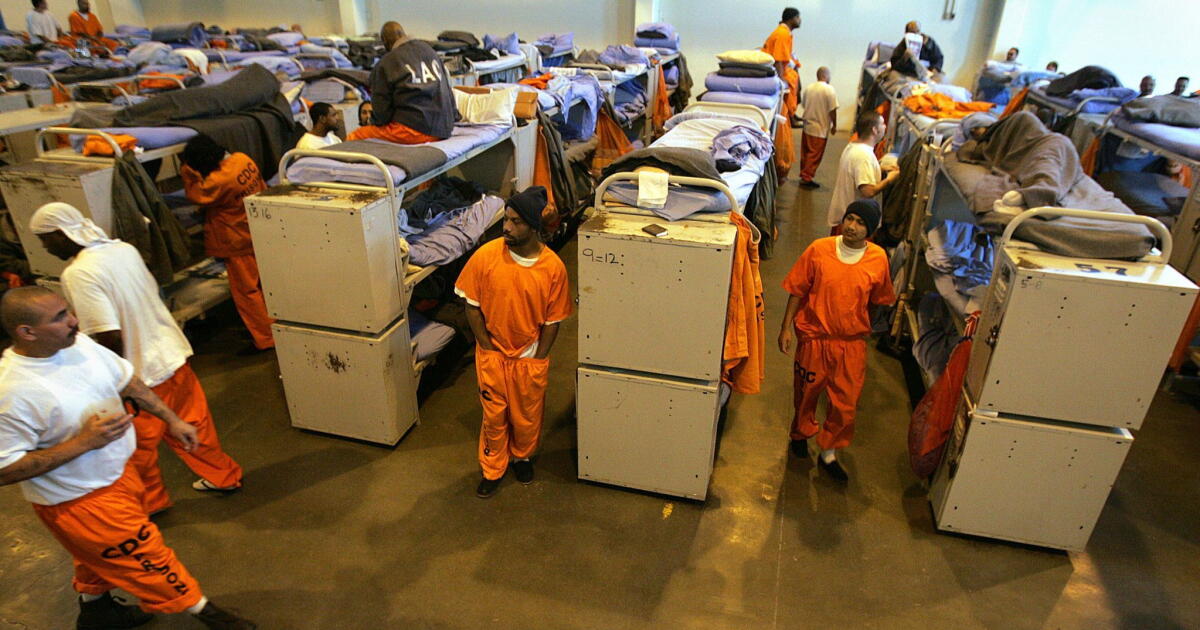
California and 24 other states have abolished life terms with no hope for parole for offenders under 18. But Justice Sonia Sotomayor said such prison terms remain shockingly common in parts of the Deep South, particularly for young people of color.
As of last year, “Louisiana had imposed LWOP [Life Without Parole] on an astonishing 57% of eligible juvenile offenders” since 2012, when the court called for restricting such sentences, she said. In 2016, the court gave these inmates a chance to seek a new sentence with possible parole, but the Mississippi courts have rejected one-fourth of such appeals, she said.
“The harm of from these sentences will not fall equally,” Sotomayor added. “The racial disparities in juvenile LWOP sentencing are stark: 70% of all youth sentenced to LWOP are children of color,” she said, citing a study from the Juvenile Law Center.
Five years ago, the court gave new hope to the more than 2,000 inmates who had been sentenced to life terms for crimes they committed as minors. The justices said they had a right to seek a new sentencing hearing and possible parole in the future. But the court’s opinion did not say precisely what judges must consider in deciding such cases.
At issue Thursday was whether the defendant’s life term with no parole should be set aside unless the judges concluded he was “incorrigible” and could not be rehabilitated.
The justices divided along ideological lines, with the six conservatives in the majority and the three liberals in dissent.
Justice Brett M. Kavanaugh, speaking for the court in Jones vs. Mississippi, said judges are required to weigh the defendant’s age as a mitigating factor before imposing a punishment for a homicide. “The court’s decision today carefully follows” the earlier rulings, which did not prohibit such life terms, he said. Kavanaugh added that the sentencing decision remains in the hands of the judge who heard the case, and the judge need not go further and decide the defendant was beyond redemption.
“Today the court guts” its earlier rulings restricting such life terms, Sotomayor said in a sharp dissent for three liberals. She noted that one of the decisions held that “a lifetime in prison is a disproportionate sentence for all but the rarest children, those whose crimes reflect ‘irreparable corruption.’”
The outcome reflects the retirement of Justice Anthony M. Kennedy and the death of Justice Ruth Bader Ginsburg. Kennedy had repeatedly spoken out against harsh punishments for juvenile offenders, and he wrote the court’s ruling that ended capital punishment for them, as well as those that limited the circumstances for imposing life prison terms on those under 18.
Sotomayor said Thursday’s ruling means that even if a “juvenile’s crime reflects ‘unfortunate yet transient immaturity’, he can be sentenced to die in prison,” quoting a passage from Kennedy’s earlier opinion. Justices Stephen G. Breyer and Elena Kagan joined the dissent.
The case before the court began in 2004 when Brett Jones, age 15, was living with his grandparents Bertis and Madge in a small town in northern Mississippi. He and his grandfather exchanged angry words when it was learned that Jones’ girlfriend was in a bedroom upstairs. The two later fought in the kitchen, and the teenager stabbed his grandfather and fled.
He was convicted of the murder and at the time, state law mandated a sentence of life in prison without parole.
The Supreme Court overturned such mandatory sentences in 2012 and ruled in 2016 inmates may seek a new and lesser sentence. But a judge decided the life term was the proper sentence for Jones, and that decision was upheld by the state courts.
In upholding the sentence, Kavanaugh said such sentencing decisions should remain in the hands of judges who can weigh all the facts. Moreover, “our holding today does not preclude the states from imposing additional sentencing limits in cases involving defendants under 18 convicted of murder,” he said. “States may categorically prohibit life without parole for all offenders under 18. Or states may require sentencers to make extra factual findings before sentencing an offender under 18 to life without parole.”
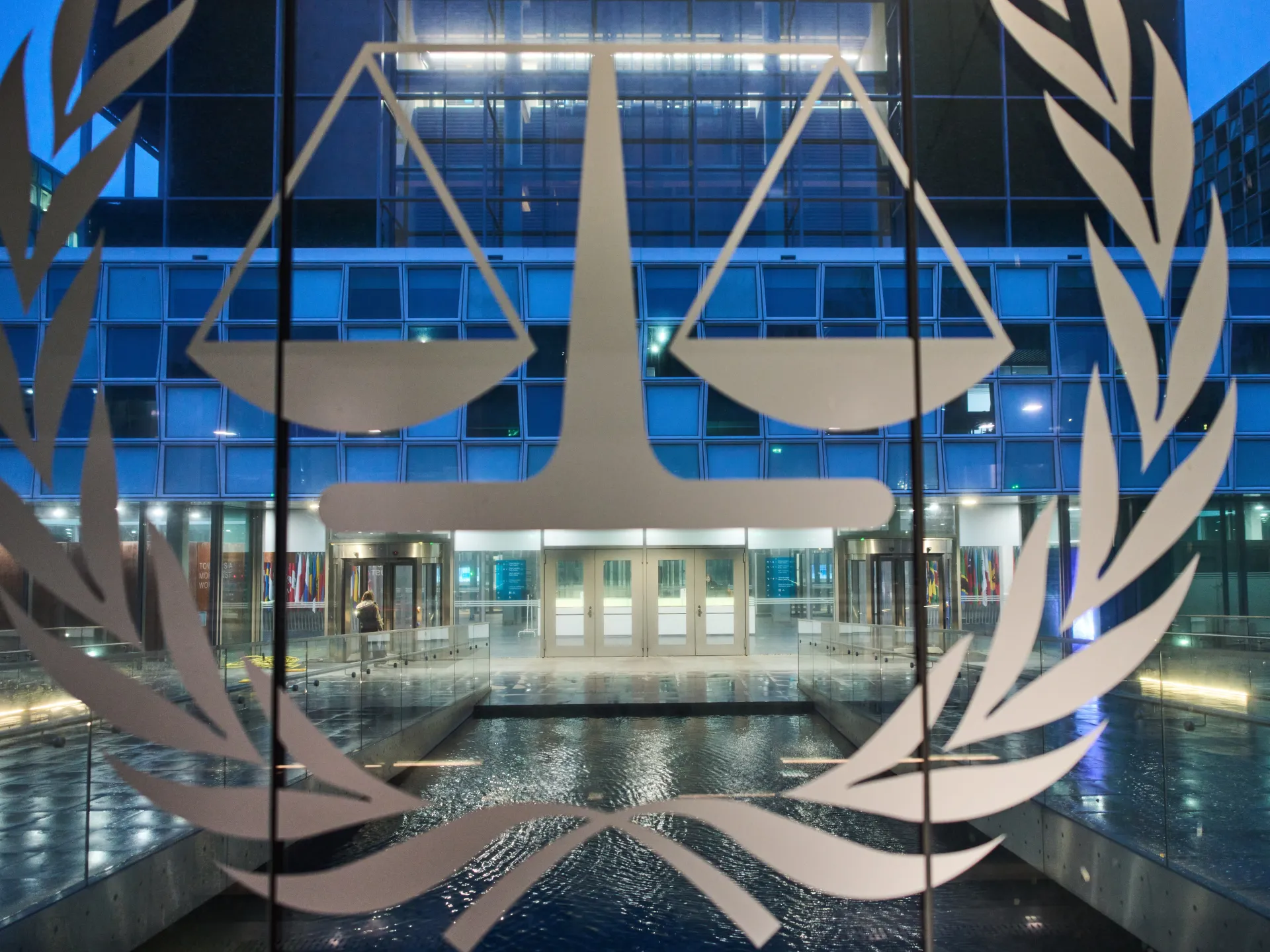
One week ago, several outlets reported on a consequential development in the disciplinary case regarding the alleged sexual misconduct by the International Criminal Court (ICC) prosecutor, Karim Khan. In a confidential report addressed to the Bureau of the Assembly of States Parties (ASP), the judicial experts tasked with assessing the United Nations probe’s factual findings unanimously concluded that no misconduct or breach of duty by Khan could be established under the legal framework.
It is now for the 21 ICC states represented on the bureau to decide whether to uphold or depart from the panel’s legal conclusion. If the bureau were to find misconduct of a less serious nature, it could impose sanctions on Khan. A finding of serious misconduct would lead to a plenary ASP vote on the possible removal.
A minority of bureau members have reportedly been pushing for the judicial experts’ report to be set aside and for the bureau to substitute its own conclusions for those of the panel. This would be a precarious step. We are concerned that it would undermine the quality of subsequent decisions in Khan’s case and seriously damage the integrity of the ICC’s governance framework. It would also raise serious questions about the state parties’ credibility and their commitment to the rule of law in governing the court.
This position is consistent with our unequivocal belief that there must be zero tolerance for sexual and other forms of workplace abuse in any organisation — public or private — especially those dedicated to international justice and the fight against impunity for the most serious crimes, and that accountability for any such abuse is non-negotiable.
At the same time, particularly in politically sensitive cases, strict adherence to due process, the highest standards of decision-making, and the rule of law is of paramount importance to prevent ill-founded decisions, political interference, and abuse of power. These convictions are not in tension. For us, the ends do not justify the means.
It is true that the bureau is not legally bound by the panel’s conclusions: the experts performed an advisory function, and their report is not formally binding. Their mandate was to assist the bureau in reaching a credible and well-founded decision on the legal assessment of the factual findings reached in the UN investigative report.
The question before the panel was strictly legal. It was to give a legal characterisation of facts established by UN investigators. Factual findings are distinct from the allegations or the evidence on which they are based, and, as far as can be judged from media reports, the panel did not cross that line.
Diplomats should refrain from assuming the role of judicial experts at this stage, particularly now that such judicial expert advice has been issued. As a political body, the bureau initially recognised that it was not well-placed to make this legal determination on its own — understandably so, given the risks of politicisation of the process and the diminished credibility of any outcome. It mandated a nonpolitical, quasi-judicial body — a panel of judicial experts with relevant subject-matter expertise and experience — to carry out that assessment. This was a sound decision.
The integrity of the court and of the Rome Statute system is at stake as never before. Given the seriousness and complexity of this matter, it was appropriate that the legal assessment be entrusted to an independent and impartial body of judicial experts. In politically charged contexts, such bodies are best placed to assist political decision-makers in reaching conclusions that are both well-founded and credible – and, as much as possible, insulated from political influence.
This is precisely what the bureau set out to achieve. It developed a novel procedure to be applied to this case and itself chose and appointed the judicial experts. As revealed by The New York Times, the panel was composed of three highly regarded senior judges with impeccable track records and experience serving on the highest national and international courts. Tasked with the legal analysis of the UN investigators’ factual findings, it did the job it was meant to do – where such findings had been made.
But now that the process has run its course and the panel has reached its conclusions after three months of intensive work, some states and rights advocates are ready to ignore them because they disagree with the result. Why pursue a quasi-judicial process in the first place if its outcome can so readily be dismissed?
We are convinced that, given the current stage and the nature of the process that was adopted to get there, the panel’s report should be accorded due deference by the bureau and taken seriously, not dismissed lightly, by ICC states. Should states substitute their own conclusions, however, the outcome would be even more problematic than if no panel had been established in the first place.
Disregarding the report will create the impression that the panel was only needed to assist states in reaching one specific conclusion. Can the impression be avoided then that the judicial expert panel’s report has lost all value in the eyes of assembly officials and bureau states, who had devised and supported this process, once its conclusions proved unwelcome? The spectre of a show trial looms large.
Furthermore, if states disagree with the panel, one must ask: based on what factual findings and based on whose legal analysis? The bureau would need a very solid foundation to depart from the judicial experts’ conclusions. But it can realistically neither conduct a follow-up investigation to collect additional evidence and analysis of facts to resolve the remaining uncertainties, nor engage in their legal consideration de novo.
In our view, dismissing the judicial expert report and substituting the bureau’s own judgement would be deleterious to the rule of law, due process, and the integrity of the legal determination as to the existence or otherwise of misconduct by Prosecutor Khan. It would also undermine the authority of the judicial panel mechanism now codified in the ICC rules for any such situations in the future.
Political decision-making should not be allowed to replace and displace a legal assessment carried out in accordance with the highest standards of judicial competence, independence and impartiality, which the political body itself insisted on upholding.
The implication that legal form was used merely as a cover for arbitrary power would be hard to escape. We fear that this would plunge the ICC system deeper into an already existing crisis, without offering the relief some may hope for. The ICC states know full well that this is a cost they cannot afford, particularly at this juncture.
The views expressed in this article are the authors’ own and do not necessarily reflect Al Jazeera’s editorial stance.
GCC states, UN rights chief Volker Turk warn of grave repercussions amid war on Iran.
Published On 25 Mar 202625 Mar 2026
Gulf states’ representatives have told the United Nations Human Rights Council that Iranian attacks on their territories amount to a gross violation of state sovereignty, as the UN’s rights chief warned that the Middle East is nearing an “unmitigated catastrophe” as the US-Israel war on Iran approaches the one-month mark.
Saudi Arabia’s representative to the UN, Abdulmohsen Majed bin Khothaila, condemned Iranian attacks during an emergency meeting called by Gulf states in Geneva on Wednesday, saying the Gulf Cooperation Council (GCC) member states were being attacked despite not being involved in the conflict.
Recommended Stories
list of 3 itemsend of list
“[Iranian attacks] violate the UN Charter and international law. We must call things by their name,” Majed bin Khothaila said.
“To target a neighbour is a violation of the principles of good neighbourly relations. To target a mediator betrays all efforts aimed at peace and undermines any constructive initiative. To target states that are not party to the hostilities amounts to unacceptable and unjustifiable attacks that cannot be passed over in silence.”
Qatar’s representative to the UN, Hend bint Abd al-Rahman al-Muftah, said Iran’s attacks had “grave repercussions” that were “not only affecting peace and security in the world, but also human rights”.
“These attacks amount to a great source of concern for us, and we can no longer remain silent,” she added.
“To attack the electricity and desalination plants also involves serious environmental consequences and undermines rights that should be guaranteed by human rights provisions.”
The Qatari representative also noted that the de facto closure of the Strait of Hormuz was “a source of great concern, given the dire consequences it can have on the economy and supply routes”.
Kuwait’s ambassador, Naser Abdullah Alhayen, told the council that the Gulf was “seeing an existential threat to international and regional security”.
“This aggressive approach is undermining international law and sovereignty,” Alhayen added.
The UN’s rights chief, Volker Turk, warned that the war has created an “extremely dangerous and unpredictable” situation that is pushing the Middle East towards an “unmitigated catastrophe”.
“The only guaranteed way to prevent this is to end the conflict, and I urge all states, and particularly those with influence, to do everything in their power to achieve this,” he said.
Al Jazeera’s Zein Basravi, reporting from Dubai, said the “GCC countries are looking for a seat at the table” at negotiations between the United States and Iran.
“As Iran is going to look for guarantees going forward from the US and Israel, Gulf states will be looking for guarantees from Iran,” he said.
Basravi added that while the volume of incoming attacks in Gulf countries seemed to be going down in recent days, a small attack from Iran “can still create the same level of disruption since the beginning of the war”.
The Trump administration said Thursday that it has launched investigations into 13 states that require state-regulated health insurance plans to cover abortion.
The inquiries are the latest in a long-running dispute between the political parties on how to interpret a provision, known as the Weldon Amendment, that’s included in federal spending laws each year. It bars states from discriminating against health entities that don’t provide, cover or refer for abortion.
When Democrat Joe Biden was president, the U.S. Department of Health and Human Services’ civil rights office said the provision didn’t pertain to employers or other healthcare sponsors. The Trump administration said this year that it does.
The administration says that potentially puts states with abortion coverage requirements in violation of the law, because they may not allow employers or other healthcare issuers to opt out. It said it was sending out letters to gather more information from those states.
The Health and Human Services civil rights office launched the investigations “to address certain states’ alleged disregard of, or confusion about, compliance with the Weldon Amendment,” office Director Paula M. Stannard said in a statement.
“Under the Weldon Amendment, health care entities, such as health insurance issuers and health plans, are protected from state discrimination for not paying for, or providing coverage of, abortion contrary to conscience. Period,” Stannard said.
The states with the coverage requirements are California, Colorado, Delaware, Illinois, Maine, Maryland, Massachusetts, Minnesota, New Jersey, New York, Oregon, Vermont and Washington. All except Vermont have Democratic governors.
New Jersey Gov. Mikie Sherrill said in a statement Thursday that she’ll defend her state’s policies.
“New Jersey requires health insurance plans to follow all applicable laws, including protecting women’s reproductive freedom. So Donald Trump’s latest ‘investigation’ is nothing but a fishing expedition wasting taxpayers’ money,” she said.
The Weldon Amendment is one of a series of provisions known as conscience laws, which provide legal protections for individuals and healthcare entities that choose to not provide abortions or other types of care because of religious or moral objections.
In the years since it was enacted in 2005, there’s been a “partisan swing” in how broadly or narrowly it is interpreted depending on which party is in office, according to Mary Ziegler, a law professor at UC Davis.
Ziegler said the fact that employers and plan sponsors are not mentioned among healthcare entities in the text of the Weldon Amendment could give Democrats an edge with their interpretation, but the question has yet to be resolved in court.
Elizabeth Sepper, a law professor at the University of Texas at Austin, said the Heritage Foundation’s massive policy proposal known as Project 2025 called for an incoming Trump administration to withhold Medicaid funding for states found to violate the Weldon Amendment.
“What we’re seeing here is the fulfillment of a promise to the religious right,” she said.
President Trump’s first administration in 2020 moved to withhold federal healthcare funding from California over what it interpreted as a Weldon Amendment violation, but the Biden administration entered office the next year and reversed the decision.
Mulvihill and Swenson write for the Associated Press.
Live Nation, the ticketing giant that reached a tentative settlement with the Department of Justice last week, remains under fire.
A coalition of more than 30 states that had joined the original lawsuit filed in 2024 is refusing to accept the $200-million settlement, causing the trial to resume this week in Manhattan’s Federal Court.
The settlement with the Justice Department requires Beverly Hills-based Live Nation to open Ticketmaster to rival ticket sellers, force the company to open select venues to competing promoters and cap service fees at 15%. California is one of the key states still involved in the trial.
But those steps fall short, critics say.
“It’s clear that Live Nation has manipulated the market and made itself untouchable by competitors, hurting artists, hurting fans, hurting venues, all the while, raking in the cash,” said California Atty. Gen. Rob Bonta at the Capitol Forum conference last week. “Not because it’s a better service or product, because it acted illegally and created a monopoly.”
U.S. senators have also chimed in. Minnesota’s Amy Klobuchar recently introduced the Antitrust Accountability and Transparency Act to strengthen the review of antitrust settlements. Klobuchar said in a release that it’s “clear the American people got the raw end of the deal.”
And Connecticut’s Richard Blumenthal released a report that provides new details into the inner workings of Ticketmaster and urges attorneys general across the nation to reject the settlement.
Blumenthal said that the Trump administration’s settlement with Live Nation will keep consumers vulnerable to Ticketmaster’s “anticompetitive practices” and ultimately push “concert tickets farther out of reach for fans.”
The senator’s report, entitled “So Casually Cruel: How Ticketmaster’s Monopoly Supercharges Prices and Fees,” examined over 100,000 documents and Ticketmaster’s revenue data. The report argues that the company leveraged its market control to make tickets available on the resale market before they were available to the general public in an effort to hike prices and boost profits.
“The ticketing market is broken,” Blumenthal said in a statement.
In its own statement, Ticketmaster said Blumenthal’s report “misrepresents how the live events industry works” and that the problem lies in the secondary ticketing industry.
“This is why we’ve long called for industry resale reform, including price caps, while also developing tools to empower artists and protect fans,” Ticketmaster said in a statement.
Sens. Blumenthal and Klobuchar are among many industry experts who say the settlement doesn’t adequately address anticompetitive practices and falls short of protecting consumers from high ticket prices.
Under Klobuchar’s new bill, courts could have 90 days to review public comments and government responses.
“When the government prosecutes antitrust violations, the goal should be to uphold the law, lower prices, and protect consumers and small businesses,” Klobuchar said in the statement.
Lindsay Owens, the executive director of the economic policy nonprofit Groundwork Collaborative, said the settlement will end up being “incredibly costly for concertgoers, performers, and independent venues.”
“California and 35 other states are standing up for Americans who are sick and tired of being ripped off and having to scrimp and save to enjoy a night out,” Owens said in a statement.
This ongoing trial is one of several major legal battles the ticketing giant is facing. The company is also being sued by the Federal Trade Commission and is dealing with a handful of class-action lawsuits from groups of concertgoers.
Times staff writer Meg James contributed to this report.
California and a coalition of other states sued the Trump administration Monday over its efforts to roll back fair housing rules that bar certain types of discrimination by landlords, including against LGBTQ+ people.
California Atty. Gen. Rob Bonta said a U.S. Department of Housing and Urban Development rule change threatening funding for states that offer housing protections for LGBTQ+ and other marginalized individuals who are not explicitly covered by federal law is illegal, undermines state efforts to combat discrimination and would push vulnerable people onto the streets.
“In effect, the Trump administration is attempting to roll back civil rights enforcement in housing at the federal level, and pressure states to weaken their own protections as well,” Bonta said during a news conference Monday. “That’s not just bad policy, it’s unlawful.”
Representatives from HUD and the White House did not immediately respond to a request for comment.
The federal Fair Housing Act explicitly bans discrimination based on seven traits: race, color, national origin, religion, sex, familial status and disability. Under rules set forth during the Obama administration, the U.S. Department of Housing and Urban Development has for years interpreted the law as banning discrimination based on sexual orientation and gender identity.
Many states, including California, also have adopted laws explicitly banning discrimination against LGBTQ+ people and other marginalized groups not mentioned in the federal law, with California also banning discrimination based on marital status, ancestry, source of income and veteran or military status.
In September, HUD issued new guidance threatening to decertify state housing agencies — stripping their federal funding and ability to investigate discrimination claims — if they provide anti-discrimination protections other than those spelled out in the Fair Housing Act. The guidance also barred state agencies from using federal funds to “promote gender ideology,” “fund or promote elective abortions” or promote illegal immigration, according to the lawsuit.
The guidance followed that of HUD Secretary Scott Turner, a former NFL player and Trump loyalist, who announced last year that HUD would no longer adhere to a 2016 Obama-era rule protecting transgender people from housing discrimination, which Turner said “tied housing programs, shelters and other facilities funded by HUD to far-left gender ideology.”
“We, at this agency, are carrying out the mission laid out by President Trump on January 20th [2025] when he signed an executive order to restore biological truth to the federal government,” Turner said in a statement, referring to Trump’s order calling on federal agencies across the government to rescind protections for transgender Americans.
“This means recognizing there are only two sexes: male and female,” Turner said. “It means getting government out of the way of what the Lord established from the beginning when he created man in His own image.”
Among other things, the administration said rules barring discrimination against transgender people allowed “biological men to enter shelters intended for women impacted by trauma, domestic abuse and violence.”
LGBTQ+ advocacy groups condemned the move, noting that transgender Americans face heightened discrimination in a slate of areas — including housing — and need protections. They also contended that HUD’s new policies violate a 2020 U.S. Supreme Court decision barring employment discrimination based on gender or gender identity.
Bonta said the Fair Housing Act “set a floor, not a ceiling, for protections against discrimination,” which means that states “have the authority to go further and protect more people,” as California has endeavored to do.
He said HUD has supported the state’s anti-discrimination work for decades through the Fair Housing Assistance Program, which provides funding to state and local agencies to investigate and enforce laws against housing discrimination. HUD’s new guidance “threatens to undermine that system” by demanding an end to state protections not just for LGBTQ+ people, but for military veterans, immigrants as well as women receiving abortions and other reproductive healthcare, he said.
“Families across California are already struggling to find homes they can afford, and the last thing they need is for the federal government to make it harder,” Bonta said. “At its core, this lawsuit is about protecting a fundamental civil right: the right to rent, buy, or live in housing without discrimination.”
Bonta said California interprets the Fair Housing Act’s ban on sex discrimination as protecting LGBTQ+ people, but the Trump administration doesn’t agree — making the state’s more explicit protections important.
He said about $3 million in federal funding is currently at stake for California, with millions more at stake in other states.
Illinois Atty. Gen. Kwame Raoul, who is helping lead the lawsuit and spoke alongside Bonta Monday, said states with robust antidiscrimination laws “will not go backwards and we will not give in to threats” from the Trump administration.
“These actions are part of a broader, ongoing pattern by this administration to subvert the legal protections our country has put in place to combat discrimination, and to tear down the hard fought progress we have made for civil rights,” Raoul said. “It is also just the latest page in the president’s illegal playbook to use funding and programs created by Congress to try to strong arm states into adopting Trump’s preferred policies.”
The states allege that HUD’s targeting of state antidiscrimination policies comes after it downsized its own workforce and significantly reduced its ability to investigate housing discrimination complaints and enforce fair housing laws. They say the new guidance violates multiple federal laws, including laws that govern federal spending and rule changes, and are asking the federal court to immediately invalidate the guidance as unlawful.
Bonta and Raoul are joined in the lawsuit by the attorneys general of Arizona, Colorado, Connecticut, Delaware, the District of Columbia, Hawaii, Maine, Maryland, Massachusetts, Michigan, New Jersey, Rhode Island, Vermont and Washington.
SANTA FE, N.M. — Democratic-led states alarmed by the prospect of federal immigration officers patrolling the polls during this year’s midterm elections are taking steps to counter what they see as a potential tactic to intimidate voters.
New Mexico this week became the first state to bar armed agents from polling locations in response to President Trump’s immigration crackdown, a step being considered in at least half a dozen other Democratic-led states.
The moves highlight a deep distrust toward the Trump administration from blue states, which have been the target of his aggressive immigration tactics while threatened with military deployments and deep cuts in federal funding. Their concerns were heightened after the president suggested he wants to nationalize U.S. elections, even though the Constitution says it’s the states that run elections.
The Trump administration said it has no plans to deploy immigration agents to polling locations. Last month, the heads of Immigration and Customs Enforcement and Border Patrol told a congressional committee “No, sir” when asked if they had any plans to guard polling places. The Department of Homeland Security’s deputy assistant secretary for election integrity, Heather Honey, recently told secretaries of state it “is simply not true” that immigration agents will be at the polls this year.
But a group of eight secretaries of state wants that in writing from the nominee to succeed Kristi Noem as secretary of the Department of Homeland Security. In a letter Monday to Trump’s new pick to lead the agency, Markwayne Mullin, the group pressed for assurances “that ICE will not have a presence at polling locations during the 2026 election cycle.”
Federal law already prohibits the deployment of armed federal forces to election locations unless “necessary to repel armed enemies of the United States,” but Democratic lawmakers, election officials and governors remain concerned.
“The fear is that the Trump administration will attempt to evoke a national emergency or execute some other deployment of federal agents or military troops in order to interfere with elections and intimidate voters,” said Connecticut Democratic state Rep. Matt Blumenthal, co-author of a state bill to establish a 250-foot buffer from federal agents at local polls and other restrictions on federal intervention. “And we’re not going to let that happen.”
A potential clash between states and the federal government
Other bills seeking to ban immigration agents at the polls are pending in Democratic-led states, large and small, from California to Rhode Island.
In Virginia, lawmakers are weighing legislation that could prevent federal civil immigration officials from making arrests within 40 feet of any polling place or courthouse. But the provision on polling sites remains under negotiation, and it’s unclear whether it will be in the final bill.
The newly signed law in New Mexico prohibits orders that put any armed person in the “civil, military or naval service of the United States” at local polling locations and related parking areas, or within 50 feet of a monitored ballot box, from the start of early voting.
Under New Mexico’s new law, which takes effect in May and will be in place for the state’s June 2 primary, people who experience intimidation or obstruction at the polls from federal agents or military personnel can file a civil lawsuit seeking relief in state courts. State prosecutors and local and state election officials also can sue, and the courts can apply fines of up to $50,000 per violation.
It also prohibits changes to voting qualifications and election rules and procedures that conflict with New Mexico law, as Trump prods the U.S. Senate to approve a bill to impose strict new proof-of-citizenship requirements in elections nationwide.
Any state measures intended to counter federal election law will face legal hurdles because of the supremacy clause in the U.S. Constitution, which says federal law supersedes state law.
“It could set up a direct clash between state governments and the federal government. We don’t know exactly how that’s going to go,” said Richard Hasen, director of the Safeguarding Democracy Project at the UCLA School of Law. “Given the supremacy clause, there’s only so much states can do.”
‘We will hold free and fair elections’
New Mexico Gov. Michelle Lujan Grisham said her own distrust of the Trump administration in election oversight stems from ongoing Department of Justice efforts to get detailed state voter data without explaining why and Trump’s continuing false claims of widespread fraud in the 2020 presidential election.
“Do I believe the federal government and people in the White House? No,” said Lujan Grisham, who terms out of office at the end of 2026.
“We are sending a message to everyone: We will hold free and fair elections, and New Mexicans will be safe in every ballot location and that’s our responsibility,” the Democrat said Tuesday during a news conference. “The Constitution says the states run their elections, and that bill makes that painfully re-clear to the federal government.”
Federal seizure of ballots and election records is a growing concern
New Mexico Republicans, who are in the minority in the legislature, voted in unison against the bill.
“I would question strongly why we have to do this other than just to have to poke the president in the eye,” state GOP Sen. Bill Sharer of Farmington said during floor debate.
State Sen. Katy Duhigg, an Albuquerque Democrat who was a co-sponsor of the legislation, said it’s “better safe than sorry with democracy.” She said she wanted to “make sure that there was some sort of tool that our local law enforcement would have at their disposal if something does happen, if the federal government does in some manner try to interfere with our elections.”
Connecticut’s bill, scheduled for a hearing later this week, also takes aim at federal attempts to seize ballots or other election material. It would require that state officials receive notification of such a move.
Blumenthal said state lawmakers can’t prevent seizures such as the January search by the FBI on an election center in Fulton County, Ga., a Democratic stronghold that includes Atlanta. But he said, “there might be an opportunity for our state attorney general’s office or the secretary of the state’s office to challenge that.”
Lee and Haigh write for the Associated Press. Haigh reported from Hartford, Conn. AP writer Oliva Diaz in Richmond, Va., and David A. Lieb in Jefferson City, Mo., contributed to this report.