state budget

New Jersey is set to charge companies with workers on Medicaid. Other states may follow

New Jersey is launching a new fee on companies whose workers have Medicaid health coverage instead of being covered by their employers. Other states are considering it, too.

Democratic lawmakers and governors see it as a way to help pay for the joint federal and state insurance program that covers low-income residents as federal policy changes are expected to make the program more expensive for states and may lead to a reduction in the number of people with coverage.

Proponents also say it’s about fairness because employers benefit from having some lower-income workers with taxpayer-funded health coverage.

Business groups object. So do some liberal policy organizations.

New Jersey is putting the fee in place

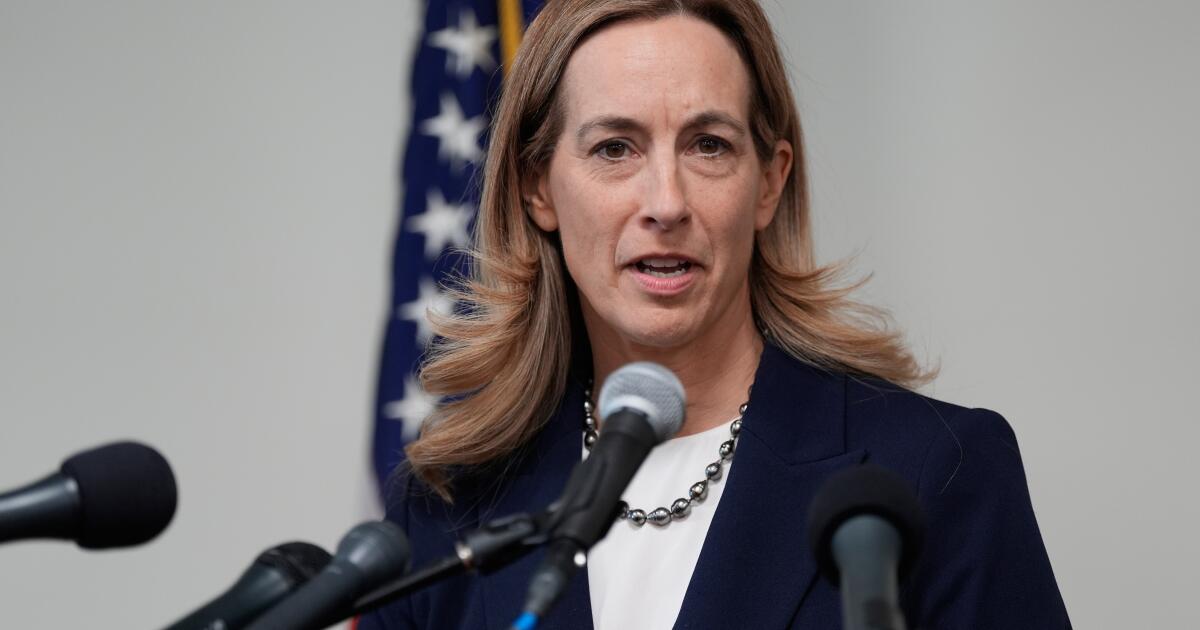
New Jersey Gov. Mikie Sherrill signed a measure Tuesday night to charge employers that have at least 50 workers covered by Medicaid, and the state budget she approved earlier in the week counts on raising $145 million this year from the program.

Under the plan, companies will be billed for each employee and employees’ dependent receiving Medicaid, the joint state-federal insurance program.

The fees per person would start at $325 a year for companies with 50 to 249 Medicaid beneficiaries and top out at $725 annually for employers with at least 500 recipients.

A bill passed this week in California doesn’t impose a charge now, but it does direct the state administration to present lawmakers options for doing so next year.

Finishing the job would fall to the successor of Gov. Gavin Newsom, a Democrat who is leaving office in January. Democratic gubernatorial candidate Xavier Becerra has made an employer charge part of his election platform.

State Sen. John Laird, a Democrat who sponsored the California proposal, said the big tax and policy law President Trump signed a year ago was a major factor in the need for action because it could prompt the state to spend more on Medicaid to plug holes left by federal changes.

The nonpartisan Congressional Budget Office expects more than 10 million people will be uninsured because of the law by 2034. It requires some beneficiaries to work, be in school or volunteer — and requires even more to document whether they meet the requirements.

Most employees at the bigger companies would not be at risk of losing Medicaid coverage as long as they’re working at least 20 hours a week.

Laird also said there’s an equity issue involved.

“If you’re a small business person in California, you are quite likely paying for health insurance for your employees. And through your taxes, you’re paying for health insurance for some of the biggest employers in California,” he said. “And that’s not fair.”

Legislation with similar intents passed one legislative chamber in both Colorado and Oregon this year, but neither made it to law. A measure was also introduced in Washington.

Connecticut Gov. Ned Lamont, a Democrat who is seeking a third term in November’s election, has called for the same move there with the idea of making it a part of the state budget that would kick in two years from now.

Opposition comes from business and some liberal groups

It’s no surprise that business organizations have criticized the approach, which would add to their expenses.

“The fact remains that many job-creators are still going to be penalized for something they have no control over,” Christopher Emigholz, the chief government affairs officer at the New Jersey Business and Industry Assn., said in a statement. “If an employee declines an employer-provided health plan because they’d rather be on Medicaid, it is unfair to penalize the employer for that employee’s decision.”

Some left-leaning policy organizations also oppose the charges.

Gideon Lukens, who analyzes health policy at the left-leaning Center on Budget and Policy Priorities, said that while the idea may be well-intentioned, it could lead companies to employ fewer people from low-income household or single parents. He said companies could also consider the policy in decisions about whom to hire or lay off — and also on where to locate or how many workers to employ.

And, he said, it could make employees — or potential employees — less likely to enroll in Medicaid knowing it would make them less attractive to employers.

“Usually, when I see a tax on something it’s going to discourage whatever being taxed,” he said in an interview.

New Jersey’s legislation tries to address some of the concerns. It would exempt temporary, seasonal and part-time employees. It would also bar employment decisions based on a workers’ Medicaid status.

Charging companies whose workers are covered by Medicaid isn’t a new idea. At least two states have previously enacted it, and it’s been proposed in Congress.

Massachusetts lawmakers in 2017 adopted a charge on employers up to $750 per nondisabled worker who was covered through Medicaid or a state-subsidized health exchange plan. The program began in 2018 was not renewed when it expired the next year.

An even earlier policy in Maryland, in 2006, immediately affected only Walmart. An industry group challenged it in court and won, stopping the fees.

The latest generation of proposals may avoid that legal pitfall by not referencing those health plans in the legislation.

Mulvihill writes for the Associated Press.

Source link

Newsom, California Legislature reach $351.7-billion budget deal

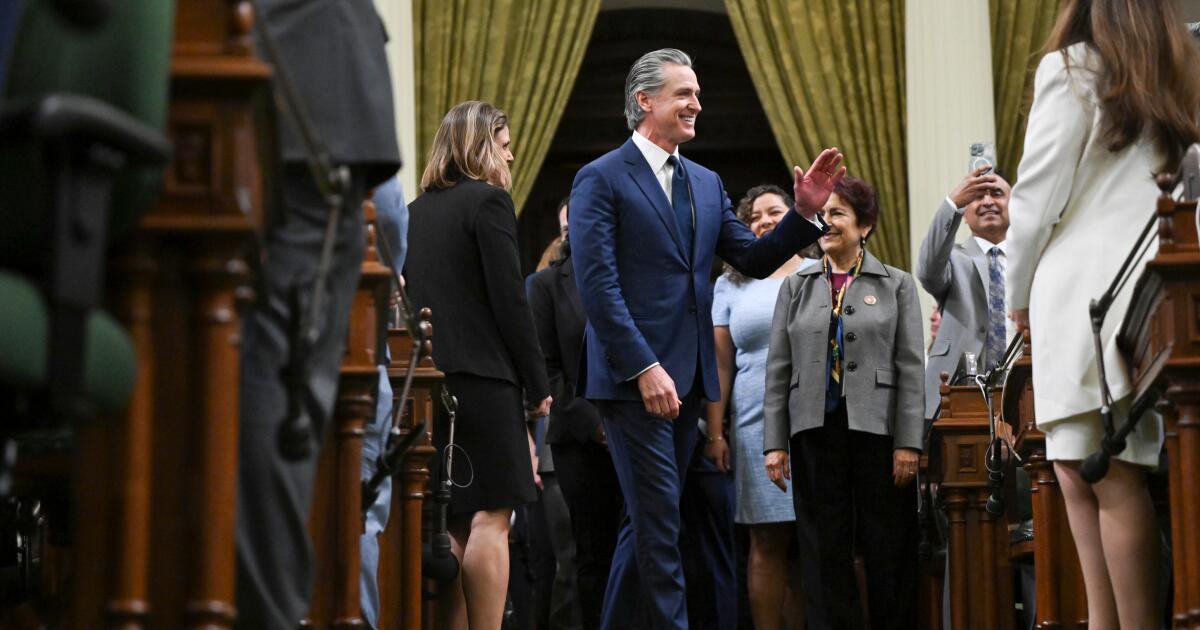
Gov. Gavin Newsom reached an agreement Friday with legislative leaders on a $351.7-billion state budget in his final year as governor, a spending plan that uses a tax windfall to avoid major cuts and lessen California’s chronic deficit in the years ahead.

The deal provides nearly $2 billion in state revenue next year through tax hikes on corporations, new levies on software sales and a revamped tax on managed healthcare organizations. Lawmakers and the governor continue major investments in education, healthcare and agreed to increase spending on subsidized childcare and affordable housing.

“We want to leave the next governor not only a balanced budget, but a budget that is substantially structurally sound, and we’re going to accomplish that,” Newsom said in an interview Friday. “We were very cautious in terms of new spending,”

The agreement ends weeks of lobbying by outside interests and negotiations among lawmakers and the governor at the state Capitol about how to handle a surge of income tax collected on stock market gains related to artificial intelligence.

Early forecasts last June projected a $12.6-billion deficit in 2026-27, according to the California Department of Finance. Updated predictions now suggest the state will end the year with a surplus of $4.5 billion.

Democrats, following Newsom’s lead, are tucking away $6.4 billion for future years, which allows the governor to knock down a deficit previously projected through 2027-28 and assuage criticism about his spending habits.

But economists say the fix and revenue increase is likely only temporary.

Spending in California has generally exceeded revenue growth during Newsom’s tenure in the governor’s office, creating a chronic shortfall. Despite the extra funding, the budget continues a trend of relying on reserves, shifting funds, borrowing and suspending debt payments to balance state spending.

The Legislative Analyst’s Office, the nonpartisan fiscal advisor for lawmakers, has warned of a roughly $10-billion gap between the amount of money the state brings in and spends, which could grow dramatically worse if the stock market turns downward. The LAO has said the existence of any operating deficit during a revenue boom is a red flag and that the state is “ill-prepared” for even a modest decline.

Christopher Thornberg, an economist and founder of the consulting firm Beacon Economics, said it’s business as usual in Sacramento.

“They love increasing spending. But it seems politically impossible to go the other way,” Thornberg said. “We’ve seen this play out over and over again.”

Lawmakers and the governor offered a different take and asserted that their decision to put the $6.4 billion into a short-term reserve, called the Projected Surplus Temporary Holding Account, and ask voters to allow them to store more money in the rainy day fund are examples of prudent budgeting.

“You see us save more and you see try to address the immediate needs of our community, but also the structural budget that potentially awaits us,” said Senate President Pro Tem Monique Limón (D-Goleta) in an interview. “We are forecasting a moment where we will need to address these issues and we want to start now to think about the future as well.”

Under a progressive tax structure, the state budget is dependent on income taxes paid by the ultra-rich on earnings largely from capital gains. The set up leaves California vulnerable to the unpredictable nature of the stock market, dramatic swings in revenue and, in recent years, reliant on poor projections.

Negotiations at the state Capitol included an agreement on a constitutional amendment that seeks to offset the revenue highs and lows.

If approved by voters on the statewide ballot in November, the amendment would raise a cap on mandatory deposits into the rainy day fund from 10% to 20% of general fund revenue. The measure would also allow lawmakers to exempt money they put into the rainy day fund and the temporary holding account from state spending limits.

Under an existing state appropriations restraint, also known as the Gann Limit, lawmakers cannot spend more than an amount determined by a formula that takes annual tax proceeds, changes to the population and cost of living into consideration. Tax revenue above the limit must be divided between schools and refunds to taxpayers.

With few exceptions, the limit applies to most appropriations of tax revenue, including when lawmakers put money away in the rainy day fund and other reserves.

Newsom said the change will leave the state in a much better position to weather the volatility. Though calls for tax reform remain in California, the governor said being able to place more money into the reserves could ultimately solve the state’s budget challenges.

“The one thing missing is the one thing that I think we finally landed, which is the change in the reserves,” Newsom said. “It changes the political dynamic, where now you’re not exchanging general fund priorities.”

Republicans criticized the proposed constitutional amendment, which passed in a budget trailer bill this week, for failing to require that excess revenue pays down the state’s $22 billion in unemployment insurance debt.

State Sen. Tony Strickland (R-Huntington Beach) called it a missed opportunity.

“It does not require debt payment to go to the UI debt,” Strickland said. “It facilitates more spending, exempting reserve deposits from the state spending limit.”

As part of the negotiations, lawmakers agreed to delay some healthcare cuts that would have required monthly premiums for immigrants and eliminated dental care. The deal adopts a Medi-Cal asset test of $21,000 on July 1, 2027, instead of a $2,000.

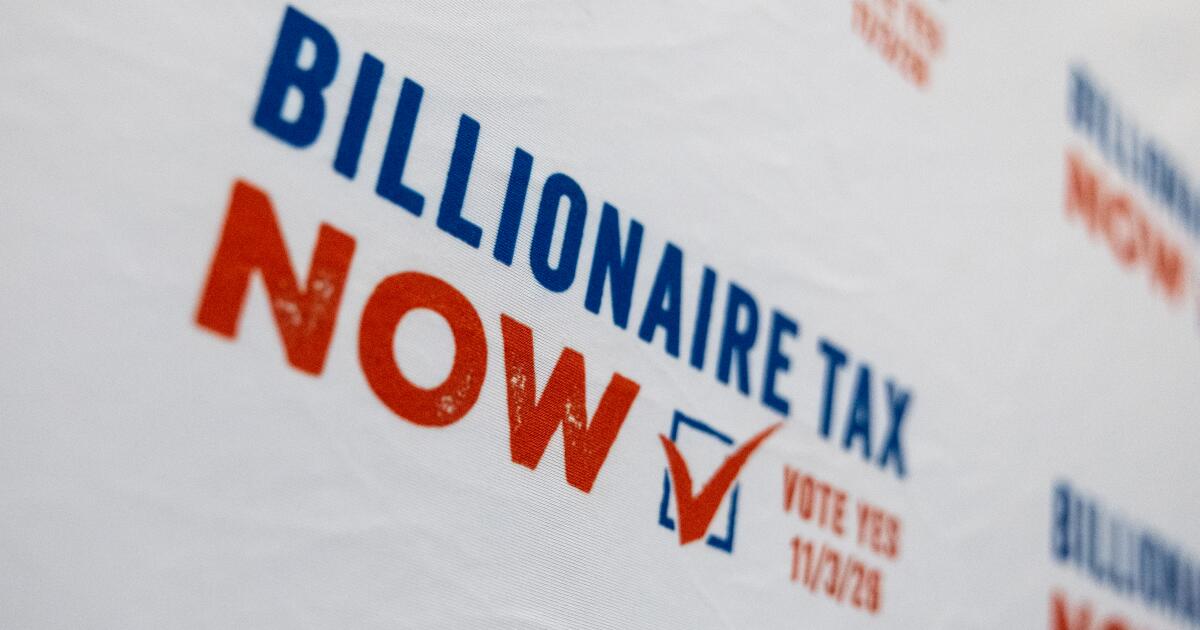
The budget agreement includes a provision requiring California’s next governor to develop options to reduce taxpayer subsidies for corporations whose employees receive state-sponsored healthcare through Medi-Cal instead of the company’s health plan. The plan is aimed at raising revenue to offset federal cuts that are expected to leave millions of Californians without access to healthcare.

The California Department of Finance said state reserves are expected to total $28.8 billion under the 2026-27 budget.

Source link