Tribute specials are always a bit macabre. They exist, and are sometimes quickly thrown together, to honor and celebrate an artist who impacted so many. They are also ratings and advertising cash grabs that air on major TV and streaming platforms.
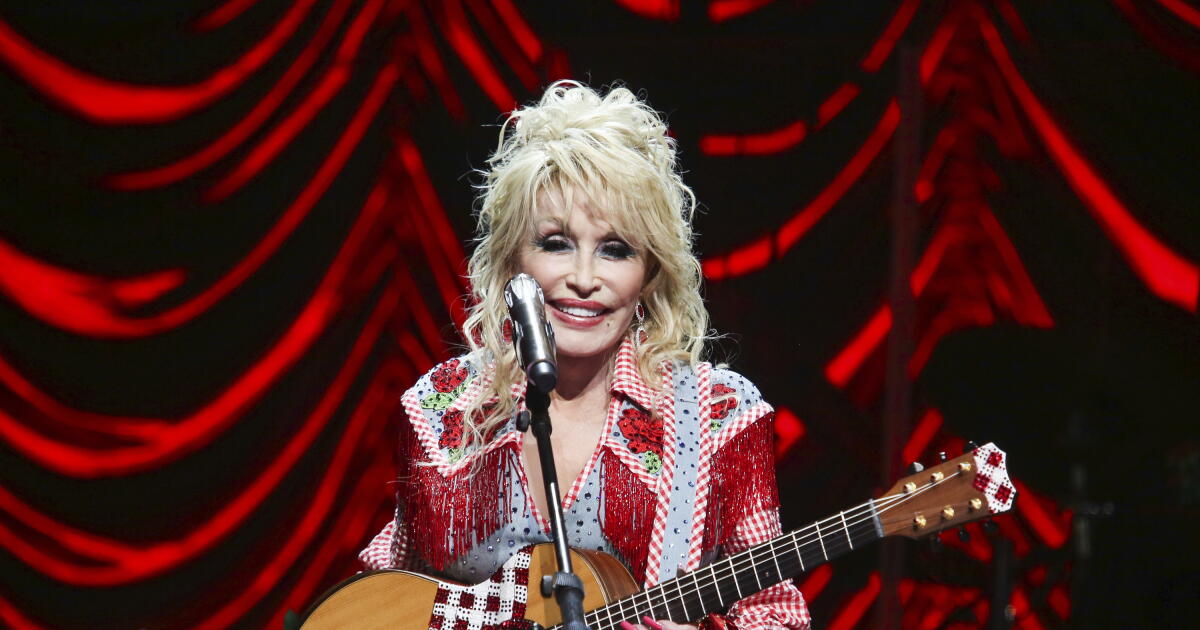
“CMA Presents I Will Always Love You: A Celebration of Dolly Parton,” which aired Wednesday on ABC and Disney+, was a lovely tribute to the music and cultural icon who died from cancer in August. It also was a missed opportunity. As music superstar Vince Gill said toward the end of the two-hour program, “this is not a memorial; but a celebration of an undeniable force of nature. Dolly was somebody that everyone loved: City, country, young, old.”
But most likely because the event was put on by the Country Music Assn. — which naturally wanted to showcase its own talent — it lacked a chance to really celebrate that she and her music could not be contained by one genre.
This isn’t just ironic because Parton’s most-known song — a song that was both the title of the special and the end performance of it — was made all the more famous by Whitney Houston, another iconic performer and also one who happens to have been a woman a color and who did not have any other direct ties to the Nashville scene. Dolly herself, famously, appreciated so many other kinds of music. After her passing, Eminem shared on social media a letter she’d written to him to congratulate him on his 2022 induction to the Rock & Roll Hall of Fame.
“She definitely didn’t have to take the time to do it,” he said as part of the post. “Even for a kid who mostly listened to rap music, she was an icon. A superstar in every sense.”
That said, from Reba McEntire opening the show with stories of just how kind her friend was in real life to a pre-recorded tribute from Bono where his Irish accent briefly attempts to slip into a Southern one while emulating her conversations with him, there were some touching and memorable moments. We’ve rounded up five of them here:
Reba McEntire, “He’s Alive”
Technically, the song is meant to be the apostle Peter singing about Jesus Christ’s resurrection. But McEntire’s take on Parton’s take of the Don Francisco gospel brought in the very modern-day sense of fear that so many parents and partners feel when their loved ones go out to dangerous jobs or even just leave the house for school or concerts.
Carrie Underwood, “I Will Always Love You”
There’s no denying that this is a perfect song and that Underwood is a once-in-a-lifetime voice. And credit must be due to Underwood for pulling off an undertaking where any little slip would be pounced on by critics. But staging her to stand in front of one of the many animatronic butterflies that lined the stage in such a way that it looked like she had angel wings was … a choice.
Carly Pearce and Kristin Chenoweth, “9 to 5”
Both of these women, especially Tony winner Chenoweth, are masters of stage presence. Their banter with each other before singing, not to mention their duet itself, embraced the liveliness and feminine feminist-ness of that song.
Ella Langley, “Jolene”
This was not the most powerful performance of the night, as Langley seemed happier to dance on the stage than belt out the music. And it didn’t boil with the grief and seething rage of a scorned woman the way that Beyonce’s 2024 cover did. But it was nice to see a symbolic baton be passed to the “Choosin’ Texas” singer.
Zac Brown, “Butterfly”
Brown’s backstory of writing, and then recording, what would become his 2025 duet with Parton came off as sweet and genuine. It also helped it not feel awkward or gratuitous when he and the producers opted not to recast the Parton half of the song and instead let her voice carry through the speakers.
Two months ago, legendary NASCAR driver and longtime Fox Sports broadcaster Darrell Waltrip stepped away from public life at age 79 because of a progressive brain disease. His family said in a statement that his frontotemporal degeneration (FTD) diagnosis was complicated by possible chronic traumatic encephalopathy (CTE) — “likely from injuries incurred during his racing career.”
Now Fred Lorenzen — another Hall of Fame NASCAR driver — has been diagnosed posthumously with CTE, according to a statement Tuesday from his children, Chris Lorenzen and Amanda Lorenzen Gardstrom.
His is the first known case of CTE in a NASCAR driver, according to the Concussion & CTE Foundation. CTE can only be diagnosed after death through a microscopic examination of brain tissue during an autopsy.
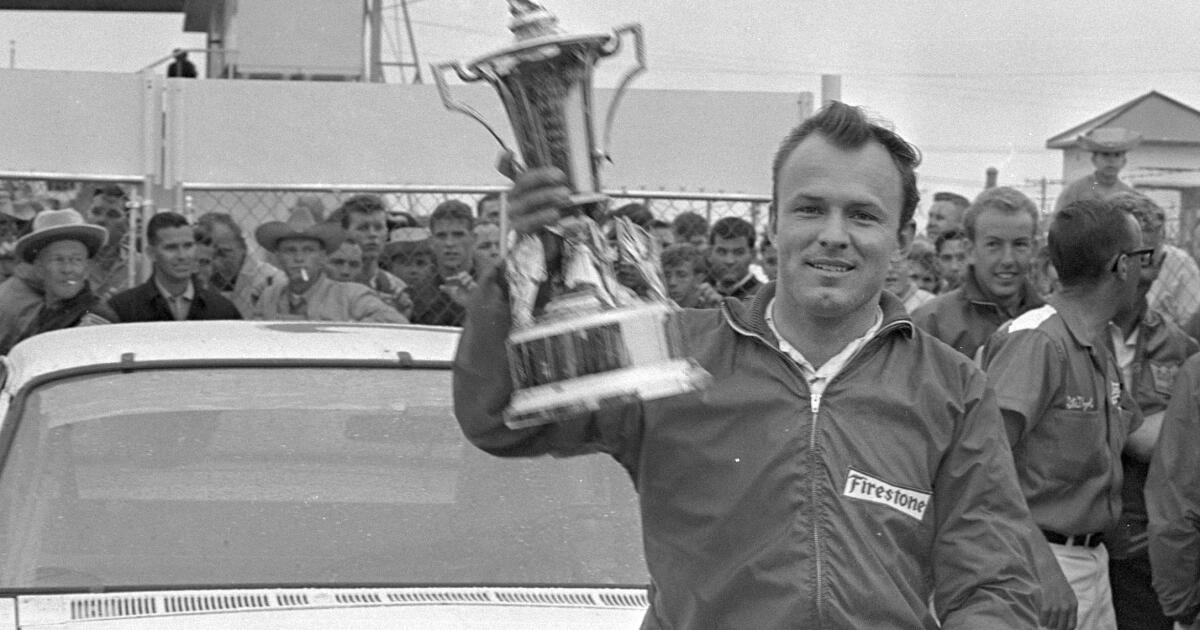
Lorenzen, who went by the nicknames “The Golden Boy” and “Fast Freddie” when he dominated NASCAR in the 1960s, died Dec. 18, 2024, at age 89. He lived with dementia for 20 years, yet had the foresight in 2016 to pledge to donate his brain for research. Lorenzen had been inducted into the NASCAR Hall of Fame a year earlier — one of the first 25 drivers to be enshrined — but was already living in a nursing home, unable to walk. His son, Chris, delivered his Hall of Fame speech for him.
Researchers at the Boston University CTE Center — a renowned research facility that conducts high-impact research on repetitive brain trauma in athletes, military personnel, and first responders — diagnosed Lorenzen with Stage 3 CTE, the second-most severe of four stages.
Although safety precautions for drivers have vastly improved since the heyday of Lorenzen and Waltrip, concussions and the prospect of CTE remain a constant fear within the sport.
Former NASCAR Cup Series champion Kurt Busch was forced to end his full-time racing career after sustaining a severe concussion during a qualifying crash at Pocono Raceway in 2022. Dale Earnhardt Jr. estimates that he suffered as many as 50 concussions over his 20-year racing career and 10 years ago tweeted that he intends to have his brain donated for concussion research after his death.
CTE is most closely associated with football players. A study published in the British Medical Journal in August reported that 315 of the 338 brains studied from players who died between 2008 and 2021 were diagnosed with CTE. It is becoming clear that NASCAR drivers may also sustain the kind of brain trauma that can cause the condition.
Lorenzen’s children made a $1 million donation to the Concussion and CTE Foundation, creating the Fred Lorenzen Memorial HelpLine to help drivers and their families find care when necessary.
Outgoing and friendly during his career, Lorenzen was the first driver in series history to earn $100,000 in prize money in a single season. He was voted NASCAR’s most popular driver in 1963 and 1965.
He won 26 races from 1961 to 1967, more than “The King” Richard Petty, and won the Daytona 500 in 1965 and the World 600 (now the Coca-Cola 600) in 1963 and 1965. He also won six times at Martinsville Speedway, famously launching the tradition of giving the winner a Ridgeway grandfather clock.
Israeli protesters disrupted a Tel Aviv university event featuring far-right National Security Minister Itamar Ben-Gvir. Demonstrators chanted ‘There will be no fascism here’, staged a sit-in and scuffled with security personnel before Ben-Gvir left the venue under escort.
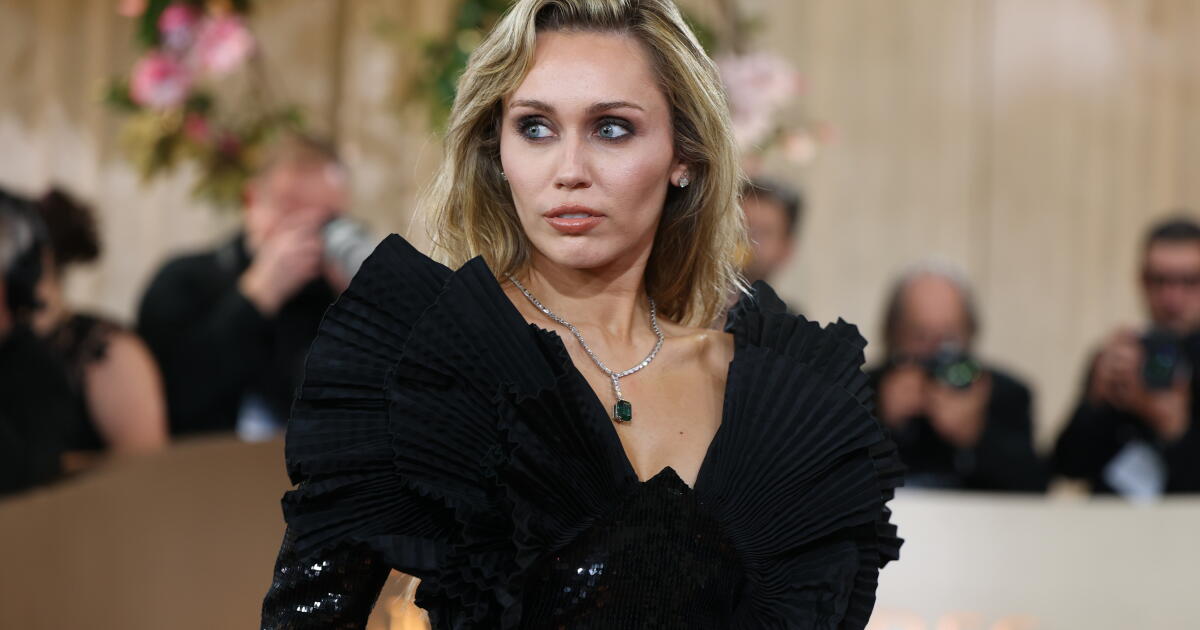
“For me, performance can’t be everything,” Miley Cyrus declared on Friday night, and you had to admire her choice of setting: onstage at the Hollywood Bowl in front of approximately 18,000 people who’d turned up precisely to see her perform.
A star since her teenage days on the Disney Channel’s “Hannah Montana,” the 33-year-old musician and actor was maybe half an hour into the first of two sold-out concerts at the iconic hillside amphitheater — a place close to Cyrus’ heart, as she explained in a videotaped intro recalling a gig she and her fiancé, Maxx Morando, caught last year by the French band Air.
“I step into wine, which soaks onto my boots,” she said in the dramatic black-and-white clip. “I don’t mind stained leather — it only adds to their character.”
Cyrus’ shows were billed as part of the rollout of her latest album, “Bass Persuades,” which came out in September (and which found her dropping her last name to go simply by Miley). Yet the two-night engagement is really meant to mark her grand return to the stage after she said a few years ago that she’d sworn off touring because it was too harmful to her mental health.
Is “grand” the right word for a comeback as equivocal as this one? Despite all the hype surrounding this weekend’s concerts, Cyrus spoke again and again Friday about how much less space for performance she has in her life these days than she used to; she talked repeatedly about her quest to balance her fans’ emotional needs with her own.
At one point, after singing a couple of numbers on a small B-stage about halfway up the bowl, she walked through the crowd back to the main stage, gripping and grinning the entire way. Then she described the toll her trip had just taken: “I appreciate each of you guys reaching out and touching me, and me getting to feel you. But I do want to say — it is a lot for me,” she said. “It is a little bit overwhelming.”
In an era of parasocial pop stardom, the radical honesty of Cyrus’ approach — her clear-eyed appraisal of the relationship that binds an idol and her audience — was kind of a thrill to behold. The problem was that her singing for the most part wasn’t.
As she described being overwhelmed, her band slowly revved up her song “Wrecking Ball.” It’s one of the great power ballads of the last 25 years, with a chorus as cathartic as any in modern pop; Cyrus, the showbiz lifer, surely understood the payoff she was building toward. Except when the moment arrived, she inexplicably dodged it, skipping the song’s first chorus and soft-pedaling the second — an anticlimax for the ages.
Indeed, Cyrus let the audience and her backup singers handle vocals for many of her biggest hits, among them “The Climb,” “Party in the U.S.A.” and “We Can’t Stop”; during that last one, she twerked for a second, evoking memories of the infamous 2013 MTV performance that briefly scandalized a nation.
She sang more heartily in songs from “Bass Persuades,” which would’ve been better news if that tuneless mishmash of bleary synths and dated club beats weren’t one of the year’s least likable pop records. (This month Variety reported that, after debuting at No. 1 on the Billboard 200, the album took the biggest fall in chart history in its second week of release.)
The paradox of Cyrus’ career at this stage is that she wants to do the thing that nobody wants her to do — “Bass Persuades” is just the latest in a string of crummy LPs — and doesn’t want to do the thing that everybody wants her to do. Truly, her bad taste should be studied: On Friday, she welcomed Wayne Coyne of the Flaming Lips to the B-stage for a duet on “Karen Don’t Be Sad,” from the miserable psych-rock record they made together in 2015. Naturally, Cyrus said it was her favorite of her albums.
One highlight of the show was Cyrus’ tribute to her late godmother, Dolly Parton, whom she memorialized with a rendition of “Jolene” and with a funny and touching account of the time Parton tried unsuccessfully to get Cyrus to sing with her at the Bowl.
I also found myself moved near the end of the night by Cyrus’ performance of the only keeper on “Bass Persuades” — a dreamy little love song called “Let’s Get Married” for which Morando joined her onstage. As he played drums, she ran her hand tenderly over his chest before laying her head on his shoulder; the moment reminded me of that goofy intro video about the Air concert, which she likened to a bubble containing only the two of them.
“That’s how it feels when we’re together,” she said. “I think I’d live in that bubble.”
MILEY Cyrus broke down in tears on stage at the Hollywood Bowl as she paid an emotional tribute to her late “aunt” Dolly Parton.
The Wrecking Ball hitmaker, 33, halted proceedings at the Los Angeles venue for a heart-wrenching monologue in which she said she and the country music icon are “eternal”.
Miley Cyrus broke down in tears on stage as she halted her Los Angeles concert to pay an emotional tribute to the late Dolly PartonCredit: tiktok/@unholylozThe country singer, affectionately known as ‘aunt Dolly’ was Miley’s godmotherCredit: Getty Images – Getty
Miley said she ‘can’t f**king wait’ to see Dolly again before performing Jolene in tributeCredit: tiktok/@unholylozShe told how the pair’s bond was ‘eternal’Credit: AFP
Disney Channel alum Miley added: “Some of the greatest music that we have today was written, produced, performed by my aunt Dolly.
“This is one of those songs,” before the band started to play Jolene as the sixth song in her set.
One fan confessed on TikTok: “Now I’m crying”.
Another put: “Miley was the first person I thought of when I heard about Dolly”.
A third added: “And now I’m bawling over Dolly Parton again”.
Miley kicked off her 18-track show with song Orbit, and wrapped with Flowers.
Fan favourites The Climb, We Can’t Stop and Party In The USA also featured.
After dolly’s passing, she said she no longer wants fans to call her by her full moniker and revealed the change on social media.
She now appears to have dropped “Cyrus” completely from her stage name.
Miley later penned a heartfelt tribute to her “Aunt Dolly” on Instagram, saying that the late singer “would want me to feel it, write a song about it, and then continue on and be strong.”
Dolly had first gotten close to Miley’s father, Billy Ray Cyrus, 65, after the success of his 1992 country hit, Achy Breaky Heart.
The pair toured together that same year, and Billy asked the I Will Always Love You hitmaker to be Miley’s godmother.
Rumors have circulated that Dolly, who did not have children of her own, left behind the rights and royalties of her hit track, Jolene, to Miley.
However, The U.S. Sun confirmed that no court filings related to Dolly’s will or official plans for what will happen to her $650 million fortune have been made yet.
It has been five years since Michael Che’s last stand-up special. Of course, he has a good excuse, being busy much of the year co-writing and performing “Weekend Update” on “Saturday Night Live,” and he also wrote and starred in two series of his acclaimed sketch comedy show, “That Damn Michael Che.”
But he feels more like himself on the stage, he said in a recent interview. “I really miss stand-up when I’m not doing it because I can really let loose on stage and say all the words I want,” he says.
In his new Netflix hour, with the pointed title, “Michael Che: Shot in Minnesota,” he wastes no time in getting into it, opening with a series of jokes saying a lot of words about Charlie Kirk’s murder: He believes that it happened because “straight white conservative Christian men are being silenced.”
He clearly loves poking at people’s sensitive spots. His favorite joke, he says onstage, is, “Men want anal sex the way women want a sensitive man. It just sounds nice… until you see them crying.”
He talks about race (“I don’t care what color you are — if you’re rich, you’re white”) and goes after President Trump and people who try to police language, but he also talks up how much fun he had at a Pride parade and about growing up poor, with his mother cleaning houses to help make ends meet. In our interview done via Zoom (without a camera on) while he was stuck in traffic on the way to 30 Rockefeller Center and then in an elevator and then in the SNL offices, he discussed it all.
This interview has been edited for length and clarity.
Did anyone in your family shape your humor and your storytelling?
My family has a different kind of humor. It’s a little meaner, if I’m being honest with you.
I’d like to see Thanksgiving at your house.
A lot of people would. It’s kind of crazy.
But the one person was my grandfather who was a pastor. He knew how to hold court and tell a story and he was a funny guy. He could be silly or absurd or dry. So maybe there’s a lot of him in what I do. But he did it week after week with different material.
Speaking of week after week, which is closer to your real self, the “Weekend Update” persona or your stand-up persona?
The stand-up is the most me; “Update” is a job and it’s a character. On stage you get to hear more nuances — on “Weekend Update” it’s a short segment, and I’m splitting time with Colin and guests. There are more needs being met than just mine. I say that respectfully, but there are things we have to touch on that I wouldn’t in my personal work and there are things other people write so it’s never all me.
I can listen, I can build, I can take you on a journey, I can make you think this is a bad joke, but it’s actually a good joke. I can make you think it’s a dirty joke, but it’s a clean joke.
I miss doing stand-up full time, but maybe that’s only because I don’t do it full time. But maybe if I did it full time, I’d miss doing it part time. Getting this hour together for the special, Lorne [Michaels, SNL’s iconic boss] was nice enough to let me go on the road even during show weeks, and he didn’t ask as much of me this past season. He was really kind, and I really appreciate it.
Colin Jost, left, and Michael Che on “Weekend Update” on “Saturday Night Live” on Saturday, March 11, 2023. Che has been doing “Weekend Update” for 12 years, as has Jost.
(Will Heath / NBC)
Your stand-up persona is definitely more thoughtful and open-minded than your “Weekend Update” one. Are you conscious of revealing yourself onstage or just thinking about what’s funny?
They tell you in the criminal world that the longer you talk to the police the more chances there are you’re going to reveal something. And I feel like it’s true for comedy, too. A lot of the stuff that I do is just thoughts that we haven’t said out loud and explored yet. I start with the thought, and if I can get a joke, a one liner out of the thought, that’s then I start to explore it onstage. I only write one line because I can’t write in a vacuum. I need to be able to listen to see what an audience gives me; otherwise, I only know how it makes me feel.
You open this special with that riff on Charlie Kirk’s murder. Your audience is not filled with Turning Point members, but people still may be hesitant to laugh. Are you starting there to challenge yourself or challenge your audience, or is it just because you think it’s funny?
I think all three of those things can be true. Those jokes are funny, but it is hard to laugh at. That’s the sort of feat I seek to pull off, to make people laugh about things that they’re not necessarily expecting to hear without being gross and gratuitous. I did those jokes on Shane Gillis’ show and his audience reacted favorably.
None of this is to make any kind of larger point other than I want you to laugh at the things that horrify you. It’s just horrifying on the surface so people think you can’t make a joke about it. People are afraid of the attempt. And I say, “Well, what about this one?” I do like that.
Then you move on to the R-word and the N-word. Are you simply pushing buttons for laughs or pushing people to think about their own biases and preconceptions about language and their political sensibilities?
I don’t want to let words dictate my next emotions. I want you to put the responsibility of self-control on yourself. People are going to say nasty things literally just to get a rise out of you, and it’s up to you to decide how you’re going to handle that. Also, I’m trying to be consistent. If I start with jokes about Charlie Kirk, but then somebody wants to call me the N-word, I can’t say, “Well, that’s crossing the line.” Right now there ain’t no more lines. We’re in a culture war and bombs are going to fly. So let’s see who’s got the stomach for it.
When you refer to a guy buying you drinks in a bar as “visibly gay,” the audience gets uncomfortably quiet in a way. How do you feel when they hush over a line like that?
With a lot of these jokes it’s like dribbling a football, you just don’t know where it’s going to land. But I like putting people on their heels and being a Black comic of my generation, they expect the joke to go one way because they’ve heard the jokes that come from others so they’re apprehensive. I expect them to be apprehensive and then talk them through it. When the joke lands differently with a punchline they’re not expecting, they’re pleasantly surprised.
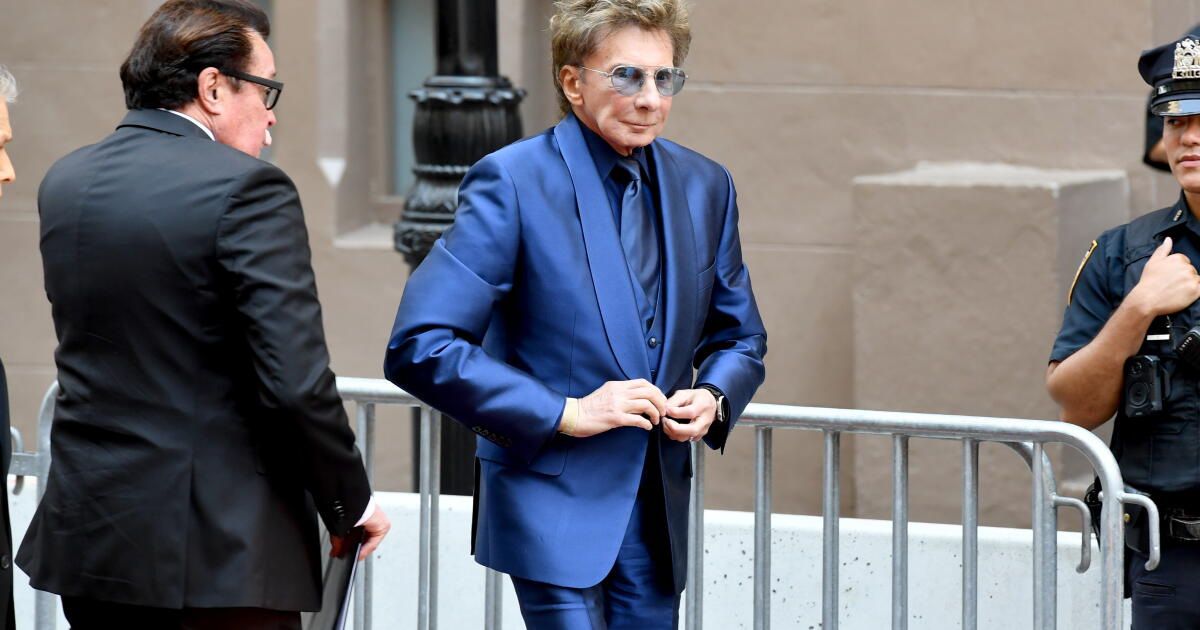
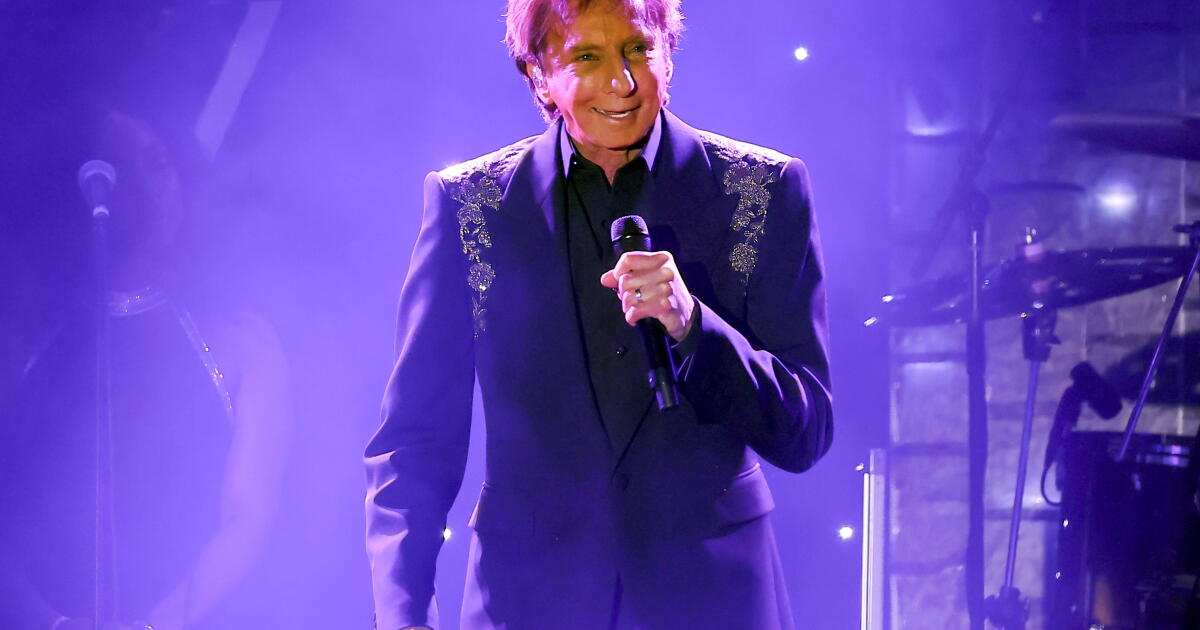
As swiftly as Barry Manilow returned to the stage following a health-related hiatus, he has stepped away.
On Friday, Manilow cut his concert short just two songs after it began. The 83-year-old crooner abruptly told the crowd to talk among themselves as he walked off stage, according to concertgoers who detailed the incident on social media. The curtain dropped, and a few moments later the audience was told the show was a wrap. Manilow’s performance slated for Saturday was subsequently nixed.
The day before, on Thursday, the “Copacabana” singer had returned after a six-week break to perform at the International Theater at the Westgate Las Vegas Resort & Casino, telling the audience, “I’m back!” Manilow appeared to be spry and energetic throughout the show. “God, I feel like I’m a teenage idol again,” he joked when a couple of audience members tossed underwear onto the stage. He picked up a pair of full-coverage briefs and asked if they needed to go to the laundry, then a pink lacy thong and joked, “I’ll keep this pair.”
“After a triumphant welcome-back concert on Thursday, Barry got hit with bronchitis and had to cancel his Friday and Saturday shows,” reps for Manilow told Paste Magazine.
Last year, Manilow revealed that he had been diagnosed with lung cancer and that surgery would require him to postpone several performances. In May, he told The Times that, since he had surgery, he was getting winded just walking down the hallway. “Ninety minutes of screaming in tune, which is what I do for a living — I’m not up for that yet,” he said at the time. “I will be, but it’s taking a long time to get my voice back. They warned me that I’d have to learn to breathe again. So these days, I get up, I go to my piano and I try to be creative. Before I know it, the afternoon’s over.”
The star returned to the stage in June following a six-month hiatus, in support of his latest album, “What a Time,” his first LP loaded with new material in almost 15 years.
But in August, Manilow canceled shows because of vocal and technical problems before telling fans he needed to pause. “We just finished a fantastic summer tour, 29 shows in 68 days,” the singer said. “The shows were fantastic. The audiences were fantastic. And I sounded fantastic. But it seems that we were pushing a little too hard.
“Now we all need to sit down and shut up,” Manilow said.
It was only Adéla’s second headlining show in Los Angeles — and she was only about 20 minutes into it — but the ascendant pop star already had an apology she needed to get off her chest.
“The next song that I’m gonna sing is a little bit awkward,” she said Thursday night at the Fonda Theatre. “So I’m gonna need y’all to bear with me as I explain why I made a song called ‘The Baddest Bitches Ain’t in L.A.,’ OK?”
Added Adéla: “Please don’t boo.”
To be precise, the song in question is titled “Ain’t in L.A.” — a woozy banger from the 22-year-old’s buzzy debut album, “Prima.” But you took her point: Here she was in front of a hyped-up crowd that included Chappell Roan and members of the girl group Katseye, and what she was about to tell us is that true coolness lies elsewhere.
Based on her assertion that the Hollywood dream machine is “all a lie,” “Ain’t in L.A.” looks back with scorn at Adéla’s experience as a first-round flameout on “Dream Academy,” the build-a-band reality series that documented Katseye’s creation under the watchful eye of the K-pop kingpin Bang Si-hyuk. At the Fonda, Adéla recounted moving here from her native Slovakia and working alongside the show’s other contestants to “try to become pop stars together,” she said.
“And guess what? That didn’t work out for me. But it did for them.” She peered up at the venue’s balcony. “Shout out to y’all,” she said.
Except now it’s working out for Adéla too: Thursday’s show was the first of two at the Fonda behind last month’s release of “Prima,” whose title nods to the singer’s background as a ballet dancer; in addition to “Ain’t in L.A.,” which has more than 190 million streams on Spotify, the album has spun off a second hit in “Nicole Kidman,” which reached No. 1 on that platform’s U.S. singles chart thanks in part to the enthusiastic embrace of the Hollywood meme queen herself.
This week, Kidman appeared in a viral TikTok video showing her, Kristen Wiig, Pedro Pascal and Dua Lipa lip syncing to “Nicole Kidman” at a Chanel fashion show in Paris.
Adéla’s breakthrough comes amid a broader surge by a generation of young pop singers — think of Slayyyter and think of Tinashe — finding success with music that plays up rather than sands down its rough edges; each is working in the wake of Charli XCX’s influential “Brat,” which offered new ways to think about how pop balances polish and filth, swagger and confession.
Adéla made “Prima” with the producers Dylan Brady (of the duo 100 gecs) and Blake Slatkin (who’s scored hits with Lizzo and Justin Bieber); together the three get an appealingly scuzzy sound that puts chirpy vocal hooks over serrated club beats à la “Blackout”-era Britney Spears. What I’m saying, basically, is that the indie-sleaze revival is real.
At the Fonda, Adéla brought her songs to life on a stage that was bare except for a ballet barre, which she and a small crew of dancers used to execute choreography that grew raunchier and more elaborate as the show progressed. Both she and a guy danced en pointe; Adéla never went long without whipping her long pink hair, which was one style choice widely replicated throughout the room.
Before she closed with “Nicole Kidman,” the singer sat down at the front of the stage with her journal and told the crowd she wanted to “take a second and manifest a little bit.” She asked the universe to give her a long career, and she asked that her fans, after having gotten home safe, remember this night forever. She also asked — again — that L.A. not be mad at her for writing “Ain’t in L.A.”
“I really do feel bad,” she said, and not a boo could be heard.
Barry Manilow has returned to the stage after taking a break following his summer tour.
Manilow performed at the International Theater at the Westgate Las Vegas Resort & Casino on Thursday night, telling the audience, “This is the first time back in a long time. I have some medical problems, but I’m back!”
The audience cheered and a couple of crowd members tossed underwear onto the stage. He picked up a pair of full-coverage briefs and asked if they needed to go to the laundry, and then a pink lacy thong and joked, “I’ll keep this pair.”
“God, I feel like I’m a teenage idol again.”
Last year, Manilow revealed that he had been diagnosed with lung cancer and that surgery would require him to postpone several performances. The star returned to the stage in June following a six-month hiatus, in support of his latest album, “What a Time,” his first LP loaded with new material in almost 15 years.
But in August, he canceled shows because of vocal and technical problems before telling fans he needed to pause. “We just finished a fantastic summer tour, 29 shows in 68 days,” the singer said. “The shows were fantastic. The audiences were fantastic. And I sounded fantastic. But it seems that we were pushing a little too hard.
“Now we all need to sit down and shut up,” Manilow said. “So, we’re going to take a break until we return to the Westgate Las Vegas on Oct. 8. When I’ll be singing like a bird. I hope to see you then.”
The “Copacabana” singer is slated to hit the stage again on Friday evening.
The United Kingdom could be heading toward its most significant expansion of ground-based air defense in generations, under a plan announced by the Conservative Party. For now, however, with the Conservatives in opposition, the proposed £10 billion (about $13.3 billion) “Britannia Shield” exists only as a policy commitment rather than an approved government program. At the same time, it highlights the seriousness of U.K. military deficiencies in this area, as the threat from the air continues to grow.
The proposal will move into the U.K. Ministry of Defense acquisition system if the party returns to government following the next general election and then follows through on the funding and procurement decisions required to turn the pledge into an operational capability. The party has proposed spreading the investment over a decade, with an initial capability intended to emerge during the first term of a future Conservative government and the wider network established after that.
Britannia Shield comes with the character of the air threat facing Europe having changed dramatically over the last decade. Russia’s war in Ukraine has demonstrated the scale at which relatively inexpensive drones can be employed alongside cruise and ballistic missiles, while recent fighting in the Middle East has clearly shown the costs involved in maintaining a sophisticated, layered air defense system under sustained attack. At the same time, the threat is no longer confined to weapons fielded by major state militaries. Small, widely available drone technologies can be weaponized with relative ease by non-state actors, providing a cheap and potentially highly scalable means of attack.
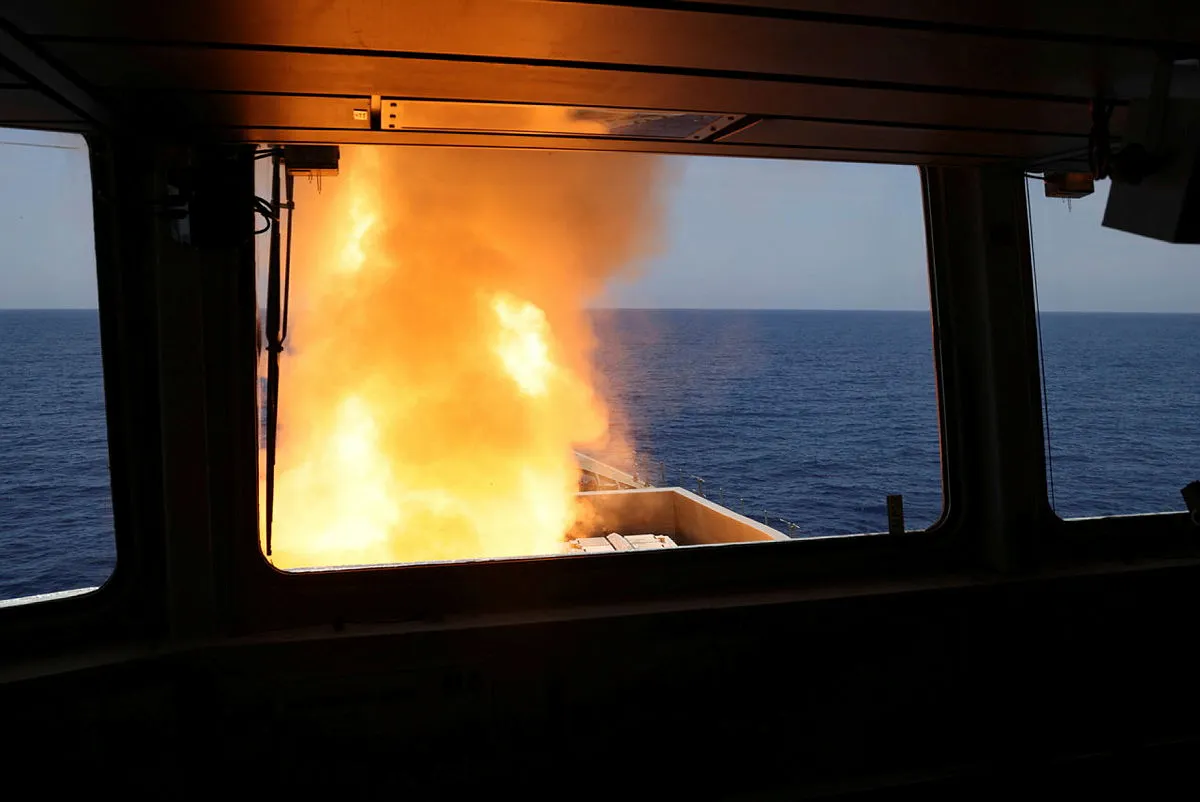
Operating in the Red Sea in 2024, the Type 45 destroyer HMS Diamond uses its Sea Viper missile system to shoot down a missile fired by the Iranian-backed Houthis from Yemen. Crown Copyright
For Britain, which has traditionally relied heavily on fighter aircraft, naval air defense, and the protection provided by geography and NATO, it is increasingly doubtful whether those capabilities provide enough coverage for the infrastructure that would be most important to keep functioning during a major conflict.
While a party press release refers to it directly, Conservative leader Kemi Badenoch has made efforts to distinguish Britannia Shield from a British version of Israel’s Iron Dome.
Iron Dome has become one of the best-known elements of Israel’s layered air defense network, having been developed primarily to deal with short-range rockets, artillery, and mortar rounds threatening populated areas. The system has evolved, however, and newer configurations can also engage threats including cruise missiles and drones. Importantly, Israel’s Iron Dome systems protect a country a twelfth of the size of United Kingdom and deal with only a portion of the potential threats in critical areas.
Iron Dome
Mention should also be made of the U.S. Golden Dome missile defense initiative, which envisions integrating sensors, interceptors, and other defensive capabilities as part of an enormous architecture with a greater emphasis on protecting the U.S. against a range of aerial and missile threats, up to and including intercontinental ballistic missiles.
Talking to the BBC, Badenoch argued that Britain does not face the same kind of persistent rocket and missile threat as Israel and therefore does not require an equivalent level of coverage. Instead, the Conservative proposal is intended to combine improved radar, command and control, interceptor missiles, and counter-drone capabilities into an integrated network designed around the threats Britain is considered most likely to face.
Britain already has some of the components that such a system could leverage. Royal Navy Type 45 destroyers — when they are available — provide a highly capable long-range air-defense layer through Sea Viper missiles, while the Army’s Sky Sabre system uses CAMM missiles for shorter-range engagements. The RAF provides combat aircraft and airborne surveillance capabilities, and Britain is integrated into NATO’s wider air and missile defense architecture. The problem is that these capabilities were not designed to provide a dense, permanent defensive umbrella over critical infrastructure, and the ground-based component in particular remains relatively limited when compared with the scale of the potential target set. There is also the reality that these assets are required to defend locales far from the British Isles themselves.
A British Army Sky Sabre battery. Crown Copyright
The government’s own 2025 Strategic Defense Review acknowledged that changing threat environment, allocating up to £1 billion in new funding for homeland air and missile defense and calling for improvements to the United Kingdom’s wider integrated air and missile defense architecture. Britannia Shield would therefore be a much larger political commitment to expanding and integrating capabilities that already exist, while adding new layers intended to deal with the growing drone and missile threat.
The £10 billion figure provides little idea of the scope of capabilities. The scale of the proposed system will determine whether that additional money represents a major expansion or simply the beginning of a much larger requirement.
Gen. Sir Richard Barrons has previously estimated that an entry-level system of the kind outlined could cost around £80 billion over a decade, illustrating how quickly the cost can rise once the requirement expands from protecting selected sites to providing something approaching comprehensive national coverage.
2/ Estimates suggest north of £80bn for the full cost of a perfect system, so we almost certainly need to think differently than a “dome” solution. A layered air defence will include a number of elements, including the ability to deter and strike back at an adversary.
Badenoch’s description of the threat instead points toward a system in which Britain would identify the infrastructure and military facilities most important to national resilience and then build increasingly dense layers of protection around them. That would include major airbases, ports, energy infrastructure, communications facilities, and other critical nodes, rather than attempting to create a continuous defensive bubble over the entire country.
RAF No. 617 Squadron F-35B jets at RAF Marham in England. Crown Copyright
Such a system would also have to account for the fact that the location of the launch platform can be as critical as the weapon itself. Badenoch described a scenario in which an adversary could operate in the English Channel to launch drones or missiles against targets in Britain. The resulting reduction in warning time would place greater demands on sensors and command systems, but it would also mean that the defensive problem could begin well before an incoming weapon reached British airspace. Maritime surveillance, intelligence collection, fighter aircraft, and naval forces could all potentially contribute to detecting or disrupting a launch platform before it had the opportunity to fire.
A Russian Kilo class submarine, its accompanying tugboat (center), and the RFA fast fleet tanker Tidesurge (background), as seen from a Merlin helicopter from 814 Naval Air Squadron. The helicopter and RFA tanker shadowed the submarine and tugboat as they sailed westward from the North Sea, through the Strait of Dover and into the English Channel in 2025. Crown Copyright
That broader approach is particularly important because the economics of countering drones are fundamentally different from those associated with conventional air defense targets. A system that responds to inexpensive drones by firing a sophisticated interceptor costing hundreds of thousands or millions of dollars would rapidly become unsustainable during a large attack. Any serious British architecture would therefore need several layers, with electronic warfare, guns, low-cost interceptors, and other counter-drone systems, potentially including directed-energy weapons, dealing with the lower end of the threat wherever possible. Meanwhile, more expensive surface-to-air missiles would be preserved for cruise missiles, aircraft and other targets that cannot be economically engaged by cheaper means.
A British Army Wolfhound armored vehicle, seen here with a mounted portable Laser Directed Energy Weapon (LDEW). This was the first high-powered laser energy weapon to be successfully fired from a British Army combat vehicle. Crown Copyright
The recent situation at RAF Fairford adds another dimension to that problem. The United States recently withdrew a dozen B-1 bombers from the Gloucestershire base amid reported concerns about a possible Iran-backed attack, after U.S. officials said commanders had received new information about a potential plot. British authorities maintained that the base was safe, while British sources reportedly questioned whether Iran could reproduce the kind of complex operation carried out by Ukraine against Russian airfields in 2025. The episode nevertheless demonstrated the degree to which even a major military installation can become a concern when an adversary is believed to be looking for unconventional ways to reach it.
A B-1B Lancer assigned to the 9th Expeditionary Bomb Squadron parks on the flightline at RAF Fairford, United Kingdom, in 2023. U.S. Air Force Photo by Senior Airman Ryan Hayman
That brings Operation Spiderweb into the discussion, although there is no public evidence that Iran is preparing a comparable operation against Britain. Ukraine’s June 2025 attack was prepared over roughly 18 months and involved small drones being moved deep into Russia inside containers carried by trucks before being launched remotely against military airfields. The operation illustrated that once relatively cheap drones have been positioned close to their targets, the defender may have little opportunity to intercept them through traditional long-range air defense means. This is exactly a scenario we have been warning of for many years.
Today, Ukrainian intelligence reportedly launched 117 attack drones from trucks that had been placed near Russian air bases. I tasked several collects this morning via @umbraspace and my first images have already started processing. What a remarkable success in a well-executed… pic.twitter.com/LzXulw8jnK
For Britannia Shield, that means protecting an airbase such as RAF Fairford cannot simply be a matter of installing missile batteries. Physical security, counter-intelligence, surveillance of access routes, low-level drone detection, electronic warfare and the ability to identify suspicious activity before an attack begins would all become part of the same defensive problem. Hardened infrastructure would also be essential, helping to protect aircraft, fuel, munitions, command facilities and other critical assets from attacks that penetrate the outer layers of the defense. The distinction is increasingly important as military aircraft themselves become more valuable and as relatively inexpensive unmanned systems demonstrate their ability to threaten aircraft on the ground without ever having to penetrate the surrounding air defense network.
The new British proposal also becomes more complicated because its intended coverage extends beyond the British mainland. Badenoch has specifically referred to defending installations in Cyprus and the Falkland Islands, which introduces a very different set of operational and logistical requirements. A network supporting critical infrastructure in Britain can draw on dense communications infrastructure, nearby industrial support and the wider NATO system, whereas a defensive capability at RAF Akrotiri or in the Falklands requires its own radar coverage, launchers, personnel, ammunition stocks, and sustainment arrangements. Extending the same architecture across those locations would therefore consume considerably more resources.
A RAF 1435 Flight Typhoon FGR4 pair flying over West Falkland island during a routine training flight. Crown Copyright
A similar problem exists with ammunition stocks. Ukraine has repeatedly demonstrated that sophisticated air defenses can come under sustained pressure during large missile and drone attacks, while Western countries have struggled to replenish some categories of precision-guided weapons at anything approaching wartime consumption rates. A British system that looks impressive on paper but has only a small stockpile of interceptors would provide much less meaningful protection during a prolonged campaign, particularly if an adversary deliberately attempted to exhaust the defenses through repeated attacks using inexpensive drones.
Ukraine also offers lessons for how Britain could organize such a network. Mobile air defense teams, distributed sensors, acoustic detection systems, and digital applications that connect air defense operators with military units and civilian spotters have all become increasingly important in Ukraine, where defenders have had to detect and respond to large numbers of drones and missiles across a wide area. There are echoes here of the distributed air defense networks developed during World War II, when observers, radar operators, fighter controllers, and anti-aircraft units were linked together to provide early warning and direct defensive responses. As in 1940, Britain would need an air defense network that is distributed, mobile, and adaptable to new threats.
A RAF Regiment light anti-aircraft gun team man their Bofors 40mm gun in a rain-sodden emplacement in southeast England, to help defend London from flying bombs in World War II. Crown Copyright
The most revealing details of Britannia Shield are yet to be provided. The number of defended sites, the types and numbers of radars, the number of launchers, the size of interceptor stocks, and the proportion of the budget devoted to counter-drone capabilities all remain unclear for now. The same applies to the money required for training, maintenance, software, communications, and replenishment across the life of the system.
There is also a straightforward political limitation to the proposal. The Conservatives have pledged to invest in Britannia Shield as part of a broader plan to increase defense spending, but that money is not currently sitting in a government procurement account waiting to be spent and defense budgets are increasingly stretched by other big-ticket programs. The Conservatives would first have to return to government, establish the program as a formal requirement, and then make the associated spending and procurement decisions. Even if those steps were taken quickly, the most capable elements of the system would take years to design, procure, integrate, and deploy.
A rendering of of the new Dreadnought class of ballistic submarines for the Royal Navy, representing the largest British defense investment of recent years. Crown Copyright
Whether £10 billion would ultimately be sufficient depends on the mission the future government assigns to the system. If Britannia Shield were expected to provide nationwide protection against sustained attacks involving ballistic missiles, cruise missiles, and large numbers of drones, the budget would fall far short, particularly once interceptor stocks and long-term sustainment are included. If it is designed as a layered network protecting a defined group of critical infrastructure sites and military bases, integrated with the RAF, Royal Navy, Army, and NATO systems already in place, the proposal becomes more realistic, but it wouldn’t address higher-end threats, like longer-range ballistic missiles.
That limitation is particularly significant when considering Russia, which remains the most serious military threat to the United Kingdom and its European allies. From what we know so far, Britannia Shield is heavily focused on drones and shorter-range missile threats, but Russia possesses a much broader strike arsenal that includes ballistic missiles, cruise missiles, and hypersonic weapons. A British air defense program that concentrates primarily on the lower and middle tiers of the threat therefore leaves a significant gap at the upper end of the spectrum.
Russian Yars intercontinental ballistic missiles travel through central Moscow during a rehearsal for the Victory Day parade in 2025. Photo by Alexander NEMENOV / AFP
The United Kingdom is also not considering this problem in isolation. Across Europe, governments are increasingly pursuing multinational efforts to strengthen air and missile defenses, as the return of large-scale state-on-state warfare and the experience of the war in Ukraine have made the vulnerability of European infrastructure and military forces much more tangible. Nearly three decades after the end of the Cold War, ballistic and cruise missile defense has once again become a central European security requirement. Britannia Shield would therefore need to be considered not only as a national counter-drone and air-defense program, but as part of a much broader European effort to rebuild layered air and missile defenses against the full range of modern threats.
The experience of Ukraine and the Middle East suggests that Britain is unlikely to solve this problem simply by buying more surface-to-air missiles. Increasingly, air warfare relies on complex networks that find the attacker, identify the weapon, choose the appropriate response, and undertake this all at a cost that can be sustained throughout a conflict. That network also has to extend beyond the airspace itself, because the threat may involve a launch platform approaching the coast, a drone operator operating near a military installation, or small drones already hidden inside the defender’s security perimeter.
Last line of defense: British Army riflemen testing a Mossberg 590M Counter SUAS shotgun (foreground) and handheld Counter-Unmanned Aerial System effectors against drones. Crown Copyright
With their proposed reorientation of Britain’s air defense priorities, the Conservatives have put a financial value and a recognizable name around a capability gap that has become increasingly difficult to ignore. If they return to government, there will be many tougher questions to address, including which sites should receive protection, how many layers are required, how much ammunition must be held in reserve, and how the system can be sustained on a wartime footing.
The recent concerns surrounding RAF Fairford, together with the lessons of Operation Spiderweb, underline why that question is becoming more complicated. The next serious attack on a British military installation may not arrive as a large formation of aircraft or a visible wave of missiles crossing the Channel. It could involve a mixture of long-range weapons, cheap drones, electronic warfare, and hybrid warfare activity taking place much closer to the target. A future Britannia Shield would have to be designed around that reality, and would come with a price tag to match.
Macklemore’s replacement as the warm-up act for Ed Sheeran’s under-fire tour has come to lightCredit: GettyThe US leg of Ed’s Loop tour has been shrouded in controversy relating to politicsCredit: Getty
Billionaire businessman Robert Kraft banned the American musician, real name Benjamin Haggerty, from his stadium after he made a speech on stage in support of Palestinians amid the ongoing conflict with Israel.
At the time, Robert deemed his words “hate speech” and the move sparked a mass exodus of support acts who all quit 35-year-old Ed’s tour in solidarity with the Thrift Shop hitmaker.
Sign up for the Showbiz newsletter
Thank you!
Ed continued to perform alone, but he has now been joined by surprise guest, The Fray’s Isaac Slade.
The rock band’s former frontman, 45, opened proceedings at Atlanta’s Mercedes-Benz Stadium on Saturday, with his band’s hits, which included How to Save a Life and You Found Me.
The Fray’s Isaac Slade was Ed’s opening act in AtlantaCredit: GettyIsaac addressed the ‘wrong’ situation in Gaza life on stageCredit: Nick Ray – The TimesSinger Ed made it clear that he was not personally responsible for Macklemore’s departureCredit: ReutersThe pair have been pals for 13 yearsCredit: AFP
Despite politics taking precedence over performances during the Loop tour, Isaac had his say.
He told fans: “What’s happening over there [in Gaza] is wrong, but if we’re going to get through it, we’re going to need people to step into that middle place, that common ground.
“That bonfire in the middle of the field that sees both sides, that understands that peace is not a lack of conflict. Peace is not a blank canvas that we need to guard and be polite.”
“[Peace] holds enough beauty, enough tragedy, enough sorrow, enough joy and life if we learn how to integrate it and hold each other in balance.
“We will find a way through this together”.
It isn’t the first time that Isaac, who quit The Fray in 2022, has appeared on the tour.
He also took to the stage in Toronto in August.
Following the Macklemore controversy, which saw Billie Eilish‘s brother Finneas, Irish acts Aaron Rowe and Beoga, and Danish pop star Lukas Graham withdraw in solidarity, Ed spoke out.
Ed insisted in a statement that he would not be drawn on voicing his own views on the Israel/Gaza conflict publicly but is committed to ensuring his gigs are a place of “safety and sanctuary” for people from all ethnicities, faiths and backgrounds.
He also made it clear that he was not personally responsible for Macklemore’s departure and had been trying to find a solution with promoters and billionaire Robert, who owns Massachusetts‘ Gillette Stadium.
New England Patriots owner Robert had accused Macklemore of having a “broader history of antisemitic rhetoric and imagery that we believe has been deeply offensive and hurtful to the Jewish community”.
It was Macklemore declaring “Free Palestine” ahead of his protest song Free Hind’s Hall, written about pro-Palestinian protesters at Columbia University, which sparked the controversy.
In his own statement, Macklemore insisted his stance was a “criticism of apartheid and genocide” and not of the Jewish people.
Ed wrote on social media: “Macklemore coming off tour was the promoter’s decision, it was not mine.
“I would never let down the fans who had made plans, nor would I abandon the touring crew and the other support acts and musicians who rely on me for work and to make a living.”
He added that fans at his shows did not want a “political forum” and that despite his apolitical stance he is “not complicit”.
Ed and Macklemore’s friendship goes back 13 years and the latter said he hoped it would continue despite them having had “difficult conversations”.
The other acts also highlighted their friendships with Ed and their gratitude for being given the opportunity to perform on such a high-profile tour, but said they could not continue with clear conscience knowing a fellow artist had been “silenced”.
Greaney said blame rested with Travelodge as an organisation rather than with individual staff, and a culture had developed in which room intrusions were regarded as “one of those things”.
The woman emailed a complaint to Travelodge in January 2023, addressed to chief executive Jo Boydell and others.
The review concluded the email was handled by her office without her knowledge, and did not come to Boydell’s attention until March 2026.
The woman’s complaint was instead investigated by a manager who was himself criticised in it, and the customer services team offered her a refund for her night’s stay, which she understood to be £30.
Boydell stepped down as chief executive in August following criticism over the company’s handling of safety complaints. The review said she deserved credit for driving improvements from March.
The attack became national news in March after the woman contacted the BBC, saying the case raised serious questions about room security at Travelodge hotels.
Then prime minister Sir Keir Starmer wrote to Boydell in March urging her to “seriously engage” with the government over security. Greaney was appointed to lead the review the following month.
THEY are marking 25 years with a record-breaking anniversary tour.
But despite celebrating a quarter of a century together, Westlife say they have never felt younger — thanks to fans still throwing their bras onto the stage.
Kian Egan, Shane Filan and Nicky Byrne have been inundated with fans throwing their undergarments on to the stage during their gigs at Dublin’s 3ArenaCredit: SuppliedThe band with Sun’s EmilyCredit: supplied
Speaking to Biz on Sunday’s Emily backstage on Friday night, Kian said: “We have a B-stage where we get quite close to the audience. One bra got thrown up, and before we knew [it], it started growing to ten, 14 . . . It is a bit of fun, and nostalgic.”
Sign up for the Showbiz newsletter
Thank you!
Shane added: “We aren’t leaning into it too much or the stage would be covered!”
The Irish hitmakers are on track to surpass 150 dates on their 25th Anniversary World Tour and completed a record-breaking 13-show residency at the 3Arena last night.
They head to Aberdeen on Tuesday before playing dates across England, Wales and Scotland for their diehard fans.
Shane said: “We have 150 dates and it is growing. We don’t know how many it is going to be, but it is going to be more than 150 for sure.
“You keep yourself fit, you go to the gym, go for a run or surf — you just want to be in good shape for it. It is a very physical show.
“We aren’t out drinking every night, but we still get to enjoy it. We came off stage on the first night with a few pints of Guinness together. It was a lovely moment.”
The boys were fresh-faced twenty-somethings when they embarked on their first tour, East Meets Westlife, in 2000.
Asked if they feel fitter now, Shane said: “Without a doubt. We are getting older but we feel the same on stage.”
Now on their 15th tour, the band have made sure their hits World Of Our Own and Flying Without Wings still form part of their two-hour set.
“All these people have been with us since day one and now they get to relive these 25 years in one show for two hours,” Shane said.
Kian said: “It has never been discussed, but you never know.”
Niall, over to you . . .
SET LIST
World Of Our Own Uptown Girl Bop Bop Baby What About Now When You’re Looking Like That (includes a Sweet Child O’ Mine guitar solo) What Makes A Man I Have A Dream I Lay My Love On You Starlight Queen Of My Heart Chariot Fool Again If I Let You Go My Love Unbreakable Mandy Flying Without Wings Hello My Love You Raise Me Up Swear It Again
Westlife, The 3Arena, Dublin *****
WESTLIFE were the life and soul of Dublin for their 25th Anniversary World Tour concert on Friday night.
Shane Filan, Kian Egan and Nicky Byrne weaved through two hours of hits including World Of Our Own and Flying Without Wings for their adoring fans at the 3Arena.
Despite being the penultimate night of their 13-date residency in the Irish capital, the boys made sure every member of the audience had the time of their life.
The mesmerising drone show during You Raise Me Up and pitch-perfect vocals proved they were still the masters of a good ballad.
Their 1999 debut single Swear It Again got the crowd gushing like teenagers over their boyband heartthrobs.
The astonishing number of dates on this tour is a credit to the love Westlife have for performing.
The energy is infectious and I defy anyone to leave without a smile.
NEW LOOK IS A CARDI BY GUCCI
Cardi B looked ready for winter in her furry white jacket at Milan Fashion Week on FridayCredit: GettyThe American rapper was spotted out in the Italian city, where she proved she’s quite the fashion queen herselfCredit: Getty
CARDI B looked ready for winter in her furry white jacket at Milan Fashion Week on Friday.
The American rapper was spotted out in the Italian city, where she proved she’s quite the fashion queen herself.
Cardi teamed the Gucci coat with tights from the same Italian luxury fashion house.
And she shared snaps of her look to her 160million online followers, captioning them: “Lord that new Gucci collection.
“So clean, sickening, sexy and detailed.
“Go ahead, just take my whole wallet.”
If I had Cardi’s money, I’d do the same.
ENGLAND rugby legend James Haskell would love to follow ex-footballer Vinnie Jones into acting in a gangster drama, like Guy Ritchie’s hit Netflix series The Gentlemen.
He told me: “I met Guy once. We didn’t talk about roles but if there was ever the opportunity, I’d 100 per cent do it.”
SINGER TALIA MAR has released her video for track Pyscho On A Couch.
The Stay The Night hitmaker stars in the video as herself and a therapist as she explains her troubles.
Fans can catch Talia at Koko in London on October 6.
If this video is anything to go by, Talia will certainly put on a show.
PALOMA HAS FAITH IN VOICE
Paloma Faith is ready to teach contestants on The Voice how to make their own kind of musicCredit: Getty
PALOMA FAITH is ready to teach contestants on The Voice how to make their own kind of music.
The singer will join Sir Tom Jones as one of the guest mentors as the ITV show’s Battles – in which teammates duet – kick off on October 10.
Delta Goodrem joins Kelly Rowland’s group; Cheryl Tweedy works with WILL.I.AM’s team; and McFly’s Dougie Poynter and Harry Judd assist bandmates Danny Jones and Tom Fletcher.
Next Saturday, viewers get a glimpse of the guests at London’s Alexandra Palace, discussing which acts should make the semi-finals.
A source said: “Watching Cheryl’s return to TV and a glimpse of her role as a coach next series will give fans plenty to look forward to.
“Alongside the experience brought by Paloma, Delta, Dougie and Harry, the Battles will be a series highlight.”