sponsor

U.S. officially delists Syria as a state sponsor of terrorism

Aug. 24 (UPI) — The U.S. State Department officially delisted Syria as a state sponsor of terrorism on Monday, marking a significant step toward the country’s reintegration into the global economy and the international community.

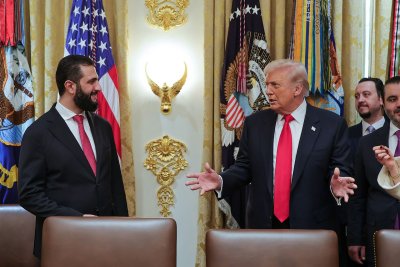
The announcement by Secretary of State Marco Rubio comes about a month and a half after President Donald Trump informed Congress of his intent to lift Syria’s decades-old terrorism designation that barred it from most U.S. foreign assistance and clamped down on what could be exported to it. It also meant the United States would oppose foreign institutions, such as the World Bank, granting it loans.

Along with the delisting of Syria, Rubio said he also removed Hay’at Tahrir al-Sham, the coalition of northern Syria-based Sunni Islamist groups that led the military campaign that toppled Syrian President Bashar Al-Assad in late 2024, from its list of specially designated global terrorists.

“These actions were all taken in recognition of the positive actions taken and further commitments by the Syrian government under President Ahmed al-Sharaa to fully distance Syria from acts of international terrorism,” Rubio said in a statement, listing as reasons Damascus’ joining the Global Coalition to Defeat the Islamic State and conducting terrorism-disrupting operations targeting ISIS and Iran-backed Hezbollah.

Rubio said removing the designations “eliminates the final major barrier for private sector investment in Syria and promotes economic recovery and reintegration into the global economy.”

Al-Sharaa issued a statement congratulating the Syrian people on their country’s removal from the U.S. state sponsors of terrorism list.

“Today, Syria is casting off a black mark from its shoulders, and with its own hands, tearing out a page from its painful past, so that it may set out toward development, reconstruction and building,” he said in a recorded statement.

“Great people of Syria, you have done it again. The sanctions have been lifted from you and the restrictions have been removed. I ask almighty God to help us serve you.”

Syria was among the first countries designated by the United States as a state sponsor of terrorism in 1979 over its hostility to Israel, fighting with Lebanon, partnership with Iran, alignment with Russia, support for terrorist groups and development of weapons of mass destruction, according to a Congressional Research Service report.

Since the fall of al-Assad in late 2024, Syria’s relations with the United States — and much of the Western world — have steadily improved. In June, Trump signed an executive order ending most U.S. sanctions on Damascus and informed Congress in July of his intent to delist it as a state sponsor of terrorism, starting the 45-day congressional notification clock before it could be formally removed.

“Lifting Syria’s designation as a state sponsor of terrorism is a historic step that returns it to its natural place within the global economic system,” Safwat Raslan, the governor of the Central Bank of Syria, said in a statement Monday.

“And we at the Central Bank of Syria are working to build a modern and reliable financial system, capable of keeping pace with and benefiting from all opportunities. And what is to come is better, God willing.”

Source link

US removes Syria from ‘state sponsor of terrorism’ list | Syria’s War News

Washington also rescinded designation of HTS, formerly led by Syrian President Ahmed al-Sharaa, as a ‘terrorist’ organisation.

The United States has removed Syria from its list of “State Sponsors of Terrorism,” the US Treasury has announced.

A statement issued on Monday confirmed the revocation of a decades-old designation placed on the country during the rule of the ousted Assad regime.

Recommended Stories

list of 4 itemsend of list

The announcement confirms a decision initially revealed last month. It also revoked the designation of al-Nusrah Front – the group formerly led by the now-President Ahmed al-Sharaa, also known as Hayat Tahrir al-Sham (HTS) – as a global “terrorist” organisation.

The move, first announced earlier this year pending a review by Congress, removes a critical impediment to investment in Syria, as the country seeks to reestablish itself in the international community and markets.

It represents a further vote of confidence in al-Sharaa, who has launched what many experts have described as a charm offensive aimed at Western powers, including meetings with President Donald Trump and French President Emmanuel Macron.

“Today’s action will help foster additional investment in Syria to promote political and economic stability,” Treasury Secretary Scott Bessent said in a statement, adding that it is “in line with President Trump’s promise to deliver sanctions relief to Syria”.

Having lifted sanctions on Syria in June 2025, alongside the European Union, the US announced in July its decision to delist Syria from its “terror” list, citing efforts by al-Sharaa to unify the country.

HTS was once al-Qaeda’s official branch in Syria and was led by al-Sharaa. Under his leadership, the group removed former President Bashar al-Assad in December 2024 following a lightning offensive.

The ⁠designation of the state carried restrictions on US foreign ⁠assistance, defence exports, and ⁠financial transactions, so Syria’s removal from the list is already being celebrated in the country, particularly by financial officials.

The governor of Syria’s central bank, Safwat Raslan, said on X that this is “a historic step that restores the country to its natural place in the global economic system”. He added that the bank is “working to build a modern and reliable financial system”.

Syrian Finance Minister Mohammed Barnieh described Washington’s move as “a major and historic success for Syrian diplomacy”, according to the country’s official news agency SANA.

It “opens a major and long-awaited door to strengthening Syria’s integration into the global economic and financial system, attracting investment and modern technologies, and supporting development opportunities”, he said.

US envoy to Syria Tom Barrack, meanwhile, called the end of the designation a “decisive step in Syria’s remarkable journey from isolation to partnership, and from a source of terrorism to a committed partner in the global fight against it”.

Source link

U.S. Senator warns of administration plan to hastily remove over 500 unaccompanied migrant children

A Democratic U.S. senator warns the Trump administration is getting ready to round up 500 immigrant children in a hasty effort to remove them from the country, bypassing legal protections. It would be their second attempt after a federal court intervened last year in an overnight plan to fly out hundreds of children on Labor Day weekend.

Sen. Ron Wyden of Oregon wrote in a letter Wednesday to U.S. Health Secretary Robert F. Kennedy Jr., which oversees the Office of Refugee Resettlement caring for unaccompanied migrant children, that he had “credible information” that the Trump administration had a list of more than 500 migrant children it was targeting for a fast-track removal process and that the department was racing to act in days. He warned that the administration was abdicating “core humanitarian and child welfare mandates” and demanded an immediate halt to any plans to remove the children.

Wyden, who is the ranking member and senior Democrat of the Senate Finance Committee, which has jurisdiction over ORR, did not detail how he came by his information. His office declined to provide further details. ORR falls under the Department of Health and Human Services.

An HHS spokesperson denied any such plans.

“The new information I obtained leads me to believe that the Department is laying the groundwork for another lawless deportation effort, this time on a greater scale, across more countries of origin,” Wyden wrote.

“You have been entrusted with the care and safety of the children placed within the ORR network. Proceeding with this plan knowingly endangers their lives and violates your duty to these vulnerable children.”

Wyden also issued an early warning last August ahead of what eventually became a chaotic weekend of efforts by the Trump administration to remove Guatemalan children in its care and send them home.

HHS spokesperson Emily Hilliard said in “there are no plans to target these children,” calling Wyden’s claims ”irresponsible fearmongering.”

“The Trump Administration is working to identify the parents or legal guardians of unaccompanied alien children in our care because ensuring every child is placed with a properly vetted sponsor is our top priority,” she said.

Over the Labor Day weekend, dozens of migrant children either staying in government-supervised shelters or with foster families were taken from their homes and bused to airfields in Texas bound for Guatemala. A federal judge woken up in the middle of the night eventually stopped the planes. Lawyers for the children — many who had fled violence at home to come to the U.S. — later described how traumatic the middle-of-the-night removal effort was for them.

The administration insisted it was reuniting the Guatemalan children — at the Central American nation’s request — with parents or guardians who sought their return. Lawyers for at least some of the children said that wasn’t true and argued that in any event, authorities still would have to follow a legal process that they did not.

Migrant children traveling alone are usually entrusted to U.S. government care, and there are various legal protections designed to protect them once they’re in the U.S. and navigating the immigration system.

The Trafficking Victims Protection Reauthorization Act of 2008 is one of the key pieces of legislation designed to protect them. With some limited exceptions, it requires that children be placed in the “least restrictive setting possible,” which generally means that they can be released to a sponsor such as a relative in the U.S. while their immigration proceedings play out.

The children can apply for a specially protected status if they can’t return to their home country because of abuse or neglect and they can also apply for asylum.

The Trump administration has made it increasingly difficult for those children to be released to sponsors though. The administration says that they are doing due diligence to make sure that sponsors are thoroughly vetted and that in the past, children were released into dangerous situations.

But advocates say that the result has been children lingering for months in government shelters.

This time, Wyden said the children at risk of being removed come from various countries, potentially including Guatemala, Honduras, El Salvador, and Afghanistan, and have been in U.S. custody — mainly in foster care — for at least 180 days. He said they were described as not having any “viable sponsor” who could come forward and take care of them in the U.S.

Not having an identified sponsor could mean the child’s parents are in their home countries, are deceased or are too afraid to claim their children after ICE started arresting some parents who are not in the country legally during their reunification efforts.

Gonzalez and Santana write for the Associated Press.

Source link

Trump administration cracks down on ‘super-sponsors’ of immigrants

The Trump administration has identified more than 15,000 cases of adults gaining custody of multiple immigrant children who enter the U.S. without a parent, officials said Thursday, signaling a potential push to prosecute prolific child sponsors.

The Justice Department highlighted cases against three Guatemalan nationals that they say underscore the dangers of improper vetting of sponsors in a program that seeks to unite kids with relatives or family friends after they enter the U.S. Officials said they are investigating numerous other so-called super-sponsors — those who gained custody of more than three unrelated children — to determine whether the sponsors took the kids in fraudulently.

“We will not accept half measures when it comes to securing the border, protecting American lives and saving children from exploitation,” Acting Atty. Gen. Todd Blanche told reporters.

Taking custody of multiple unrelated migrant children is not a crime. The sponsors may be caring and well-intentioned, but senior administration officials calling them out suggests that authorities harbor suspicion about them and may subject them to deeper scrutiny.

Under former President Biden, officials tried to release children to eligible adult sponsors within 30 days, reuniting many families quickly. But the approach also yielded errors, with some children being released to adults who forced them to work illegally or to people who provided clearly false identification and addresses.

Under Trump, the administration tightened rules aimed at preventing traffickers from illegally bringing children into the country, and that has also led to a dramatic increase in federal custody times for kids. As of May, children are held in federal custody for an average of 206 days before they’re released, compared with an average of 37 days when Trump took office. At the same time, the number of total children in custody has steadily dropped.

Striking a balance between releasing children to vetted sponsors and shielding them from danger has proved a contentious partisan disagreement.

Democrats “want to claim that Republicans, because we’re enforcing the laws, it’s inhumane, somehow,” Blanche said after criticizing the vetting procedures under the Biden administration. “What’s inhumane about taking care of our kids?”

The cases announced Thursday include charges against a woman who, authorities say, was living in the U.S. illegally, schemed with others to smuggle kids across the border, then used fake identities to gain custody of them in exchange for money. In another case, a woman is accused of falsely claiming that she was siblings with a teen who had entered the U.S. illegally in her application to become the teen’s sponsor.

The Associated Press has sought comment from attorneys representing the accused in those cases.

Critics of the Trump administration have raised concerns over wellness checks carried out by immigration officers at elementary schools, immigration officers showing up and detaining sponsors at reunification meetings with children, and newly required documentation that’s created a “paperwork barrier” and led to a recent lawsuit.

Even sponsors willing to undergo the new vetting procedures have been forced to wait through unnecessary delays.

A Chicago father who is a U.S. citizen and had a valid birth certificate for his child was kept waiting for five months before the government could schedule a fingerprinting appointment. During the wait, his toddler daughter was sexually abused in federal custody, a lawsuit claimed.

Richer and Gonzalez write for the Associated Press. Gonzalez reported from McAllen, Texas.

Source link