spark

L.A. birthday party spots that will spark your inner child

I have a “big” birthday coming up. It’s the big 70 (gulp!). I’d like to throw myself a party, but one that might seem more fit for a 7-year-old than a 70-year-old (except when it comes to the food). I would like for there to be activities or games such as scavenger hunts, escape rooms, billiards, pinball, karaoke, pin-the-tail-on-the-donkey — you name it. But my friends and I also appreciate gourmet-quality food like the stuff that’s served at Providence, Crustacean and Mélisse. Is there any way to combine all of that into a party for 20-30 people? — Marla Levine

Looking for things to do in L.A.? Ask us your questions and our expert guides will share highly specific recommendations.

Here’s what we suggest:

Marla, I love that you want to celebrate your milestone birthday in a playful way that sparks your inner child. Who says you can’t run around and play games with your friends just because you’re a “grown-up”?

Similar to you, I prefer fun activities over stuffy, formal parties. I’ve celebrated my birthday at a go-kart racing track and a bowling alley. One year, I hosted an adult field day at the park with sack races, water balloons and snow cones, so I have some fun ideas for you. While many of these spots don’t offer gourmet-level cuisine — unless you consider chicken tenders and fries fancy — I’ve paired them with nearby restaurants that you can walk to. Depending on your vibe, you can do the activity first then walk to dinner, or vice versa.

One of my favorite adult-only barcades in Los Angeles is EightyTwo in the Arts District. Not only is it nestled between an array of bars, shops and restaurants, it is home to more than 50 vintage pinball and arcade machines. They have all of the classics like “Donkey Kong,” “Galaga,” “Mario Bros.,” “Ms. Pac-Man” and “Mortal Kombat.” On certain nights, you can catch live DJ sets as well. For a meal, consider the Michelin-recommended restaurant Manuela, which received a stamp of approval from the late Times restaurant critic Jonathan Gold. Tucked inside of the Hauser & Wirth complex, Manuela is a farm-to-table establishment with a variety of modern American bites to choose from. Whatever you do, be sure to order cream biscuits for the table.

An activity that instantly makes me feel like a kid again is singing — OK, more like belting — my favorite song into a microphone while surrounded by loved ones. One of the coolest karaoke spots in L.A. is Break Room 86, a nostalgic speakeasy hidden inside Koreatown’s Line hotel, which has private karaoke rooms, live DJs (and sometimes dancers, including a Michael Jackson impersonator) and an ice cream truck that serves boozy ice cream and Jell-O shots. Times senior food editor Danielle Dorsey says, “Entering the bar feels like you’ve stepped through an ’80s time machine with vintage arcade games, stacks of box TVs with static-fuzzy screens and tape cassettes decorating the walls.” Break Room 86 doesn’t open until 9 p.m., so check out Openaire for a sunset dinner. Led by Michelin-starred chef Josiah Citrin (the same guy behind one of your favorites, Mélisse), the rooftop restaurant offers elevated American fare such as a brick-pressed jidori chicken and grilled branzino — and it’s inside a glorious light-filled greenhouse.

Another spot that would make for an enjoyable birthday celebration is Highland Park Bowl, the oldest functioning bowling alley in L.A. Built in 1927 during the Prohibition era, the venue still has that vintage aesthetic with old pinsetters that serve as chandeliers, a revamped mural from the 1930s and eight refurbished bowling lanes. There’s also a billiards room and a full bar (with a tasty cocktail menu that rotates twice a year). When you get hungry, take a quick walk to Checker Hall, a neighborhood bar and restaurant that serves California-Mediterranean food such as skewers, turkish chicken and chicken schnitzel. Actor-comedian Hannah Pilkes told The Times it’s her “favorite bar in all of L.A.” How she described it: “It has the best cocktails and it almost feels like you’re in New Orleans when you step inside. It has a beautiful patio overlooking Highland Park. The decor is funky and kitschy yet classy; it’s magical.” Afterward, you can take another short walk to Jeni’s Splendid Ice Creams for a sweet treat (if you don’t have a cake).

My colleague Todd Martens, who writes about theme parks and immersive experiences, says it’s difficult to find escape rooms that can accommodate 20 to 30 people, but if you don’t mind splitting up and staggering your start times, check out Hatch Escapes near Koreatown. The venue can accommodate about 10 people at a time. Martens wrote about their room called “the Ladder,” which he describes as a “90-minute interactive movie with puzzles, taking guests through five decades, beginning in the 1950s, in which they will play an exaggerated game of corporate life.” The room “incorporates a wide variety of games, puzzles, as well as film and animation,” he adds. If this theme doesn’t spark your interest, there are three other options, including “Lab Rat,” which can accommodate 12 people.

You sound like a fun person, so I have a feeling that anything you do will be a good time. I hope that these suggestions are helpful in planning your special day. If you end up visiting any of these spots, please send us a photo. We’d love to see it. Happy birthday!

Source link

Shaky Sparks attempting to rebuild future with the past

Amid a glittering sports celebration, a team from Los Angeles dominated the WNBA draft.

But it wasn’t Los Angeles’ WNBA team.

The Sparks couldn’t hold a candle to UCLA.

At a Monday event during which six Bruins were drafted among the first 18 picks — a WNBA record — the Sparks didn’t have their first pick until No. 20 in the second round.

Two years earlier, they had traded away their first-round pick for the rights to draft the exciting Rickea Jackson.

Whom they recently traded to Chicago for somebody named Ariel Atkins.

You can see where we’re going with this…

One of the WNBA’s founding franchises, the failure-ridden Sparks enter the league’s 30th season attempting to break a five-year playoff drought with an understandable yet unremarkable game plan.

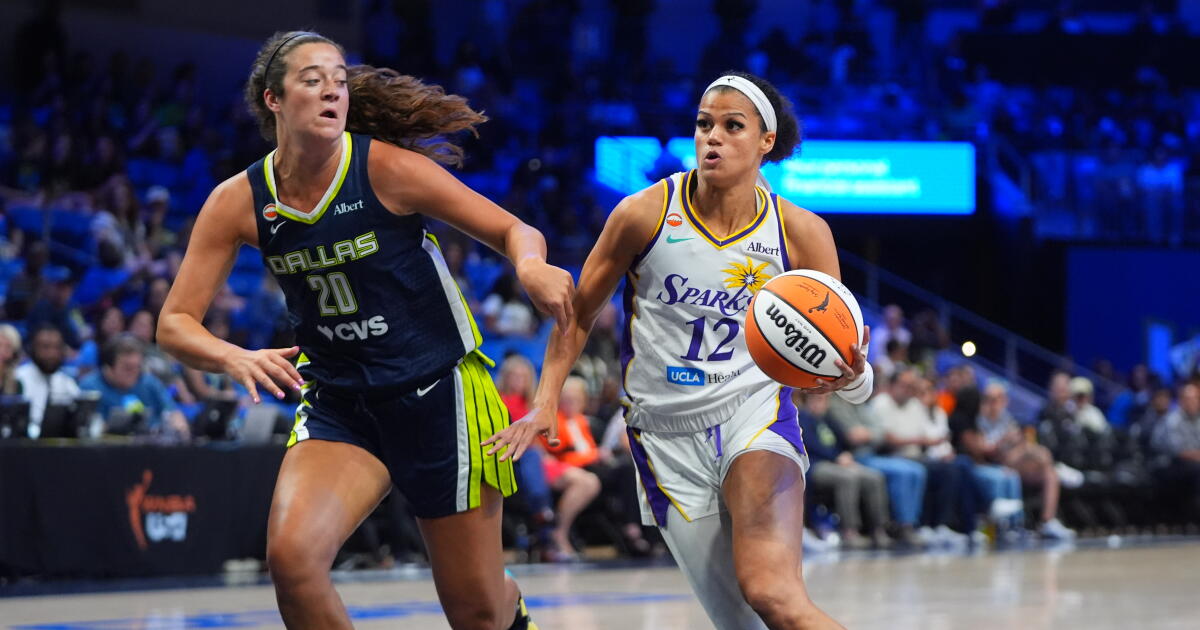
They’re going old. They don’t have a choice. Five years of lottery missteps have produced exactly one current Sparks player, Cameron Brink, a social media star who’s been an injured basketball bust.

While the national champion Bruins spent Monday dancing across the league from Toronto to Chicago, the Sparks didn’t get a chance to acquire any of them, and wound up with three late picks who will raise no eyebrows and play few minutes.

So, yeah, old.

When the Sparks open the season by hosting defending champion Las Vegas May 10, their fans are going to say, “Oh yeah!” followed by a resounding chorus of, “Oh no!”

Oh yeah, they’re bringing back longtime Sparks star Nneka Ogwumike, a bruising inside force for 14 seasons. She played well for Seattle last year, but, oh no, she’ll be 36 during the season, and one wonders when the physicality will take its toll.

Oh yeah, they’re bringing back Erica Wheeler, who played strong minutes here several years ago. But, oh no, she played for three teams in the last four years and will be 35 during the season.

Oh yeah, they’re bringing in Atkins, who once won a WNBA championship with the Washington Mystics. But, oh no, that was seven years ago, and she’s bounced around with six international teams and two WNBA teams since.

Those three veterans will be joining a team with two returning starters — Kelsey Plum and Dearica Hamby — but little else.

The league’s celebrated new CBA made all these players rich, but did little for the Sparks, who were unable to make a dent in the league-wide free agent market and were out of decent draft picks and so must survive for one more season before getting a shot at JuJu Watkins.

So they should tank? No! Not yet! I’ve got season tickets! But you’ve got to wonder. And if this aging band gets off to a slow start, you’ve got to wonder if they’re wondering.

“I’m super excited about the roster we have,” said coach Lynne Roberts on a Zoom call Monday night. “We brought in some tremendous leadership.”

But they also lost some tremendous youth by giving up on Jackson, who averaged nearly 15 points last season and provided much-needed energy to another deadly dull squad. While the Sparks made nice with her publicly, one can read between the lines on the following Zoom quote from general manager Raegan Pebley.

”Loved having her here … she’ll be successful wherever she goes,” said Pebley of Jackson. “But we’re focused on winning a championship and finding that fit and balance and getting all those pieces locked in with each other.”

Here’s guessing Jackson, an independent spirit, was never quite locked in. And now she’s locked out of a new culture that will be solid and steady… but will they be any good?

“You have to have that balance of youth and experience and I think our roster has nailed that,” said Pebley.

Who knows? Will Brink stop trying to be an influencer long enough to be an inside presence? Will Rae Burrell take another step in her fifth season? Can the new veterans stay healthy enough to inspire the kids, who could include draft picks Ta’Niya Latson, Chance Gray and Amelia Hassett? Can Roberts, a relative WNBA newcomer who lost more than half of her games in her debut last season, actually coach?

They’ve already had one win with the ongoing construction of an $150-million El Segundo practice facility, which should open next year and serve to attract the type of stars that a Los Angeles team deserves.

They have another steady win with a Crypto.com Arena fan-friendly game experience that ranks among the best in this city’s sports landscape.

Now they just need wins on the scoreboard, lots of them, enough to restore faith in what was once one of this city’s shining basketball operations.

The odds aren’t good — going old usually means going home early — but what else can they do? No Bruins are walking through that door. For at least one more year, the Sparks have to marinate in their past mistakes and hope that their veterans can somehow lay a foundation for their future..

“This isn’t a slow roll,” said Roberts. “We want to do it.”

The rest of the league, which has greatly benefited from five years of Sparks’ bad basketball decisions, will be waiting.

Their passionate fans, who have loyally kept showing up for the last five years to watch the lousy basketball those decisions have wrought, will be wanting.

And JuJu will be watching.

Source link

Sparks excited to land versatile Ta’Niya Latson late in WNBA draft

The Sparks might have gotten the steal of the WNBA draft.

The team didn’t have a pick until the No. 21 overall slot in the second round, but the Sparks still ended up with South Carolina guard Ta’Niya Latson.

“She can shoot it, she can get to the basket, she’s great in transition,” Sparks coach Lynne Roberts said. “That’s something we really needed. We’re excited about her defense. She’s really good on ball, but you know, she’s a winner and we’re just excited. It’s hard as a rookie, especially at that point guard spot, to adapt. But I’m expecting her to be a great addition to our squad.”

Latson led the nation in scoring with 25.4 points per game for Florida State during the 2024-25 season before transferring to South Carolina, where she scored 14.1 points and shot a career-high 48.6% from the floor this season for the national championship game runner-up Gamecocks.

After averaging 21 or more points per game during the last three seasons at Florida State, Latson went to South Carolina coach Dawn Staley’s team to learn to share the ball and play strong defense.

Latson took a career-low 10.3 shots per game but shot a career best field-goal percentage.

“She took on a different role in terms of, that team had two other first-round draft picks from that roster playing with that South Carolina team,” Roberts said. “And so we watched her closely. Our draft model and everything had her a lot higher than 20. And so we were excited that she was still there.”

Latson fills a direct need for the Sparks, who even after signing veteran Erica Wheeler this week still lacked some guard depth off the bench.

South Carolina guard Ta'Niya Latson drives to the basket in front of Southern California guard Kara Dunn on Nov. 15.

South Carolina guard Ta’Niya Latson drives to the basket in front of USC guard Kara Dunn at Crypto.com Arena on Nov. 15.

(Gina Ferazzi / Los Angeles Times)

“Having vets like Kelsey Plum and Erica Wheeler around a young guard like that is a tremendous opportunity for her,” Sparks general manager Raegan Pebley said. “She’ll soak up everything that they have to teach her. …. This is a great offense for her to excel in and to be great in and shine. So I think the table is set for Latson, I think, to have some success in her rookie year.”

The Sparks later selected Chance Gray from Ohio State with the No. 24 pick. That pick was acquired from Seattle in the Plum trade last year. Gray averaged 14.7 points in 35 games for the Buckeyes while shooting 45.3% from the field and 40.5% from three-point range.

In the third round, the Sparks took Amelia Hassett at No. 35 overall from Kentucky. Hassett is a stretch center who shot 36.1% from three on 7.6 attempts per game. She averaged 10.5 points and 5.3 rebounds per game with the Wildcats.

The Sparks are pushing to contend for a playoff spot this season after bringing back veteran forward Nneka Ogwumike and guards Ariel Atkins and Wheeler to build one of their deepest rosters in years.

Latson has a chance to get some playing time, while Gray could challenge for an end-of-the-bench spot and Hassett has a niche that could get her minutes in the league.

“We want to have sustained success,” Roberts said. “We want to win championships, and this isn’t a slow roll, like we want to do it. And so you have to have that balance of youth and experience, and I think our roster has nailed that.”

Source link

WNBA mock draft: Four UCLA Bruins will be picked in first round

This year’s WNBA draft is bigger than ever with two expansion teams joining the league. It’s also a top-heavy draft, with a ton of depth in the first round and no clear first overall pick.

This is also the first year teams will be selecting talent knowing players can be signed to two developmental roster spots per team that don’t count against the salary cap, which might change the way teams use their picks.

The Sparks don’t pick until the mid-second round, but they should have options to help address depth needs. Here’s how the draft is projected to unfold.

First round

1. Dallas Wings: Awa Fam | C | Spain | 6-foot-4

This is one of the first years in recent memory without an obvious No. 1 overall pick. Fam could go anywhere from first to fourth, but the 19-year-old would benefit from an environment where she doesn’t have to dominate right away. The Wings also need size.

2. Minnesota Lynx: Olivia Miles | G | TCU | 5-foot-10

The Texas Christian star nearly averaged a triple-double during the Horned Frogs’ Elite Eight run and she is the best point guard in this draft. Minnesota needs backcourt depth.

UConn guard Azzi Fudd dribbles up the court during Sweet 16 game against North Carolina on March 27 in Fort Worth, Texas

UConn guard Azzi Fudd dribbles up the court during Sweet 16 game against North Carolina on March 27 in Fort Worth, Texas.

(Julio Cortez / Associated Press)

3. Seattle Storm: Azzi Fudd | G | Connecticut | 5-foot-11

Fudd’s stock might have dropped because of an underwhelming NCAA tournament, but she is still a pro-ready offensive threat who will get playing time with a rebuilding Storm squad.

4. Washington Mystics: Flau’jae Johnson | G | LSU | 6-foot

Johnson could join an up-and-coming Washington squad as a three-level scorer who can play defense as a two-way guard. With second-year player Sonia Citron already ahead of her at her position, the Mystics can develop Johnson.

5. Chicago Sky: Kiki Rice | G | UCLA | 5-foot-11

The Sky need a guard who can score and defend, and with Courtney Vandersloot out to start the season, Rice might get some early playing time. She can rebound and scrap for loose balls too, and with Ariel Atkins reportedly being traded, Rice could play a big role.

6. Toronto Tempo: Lauren Betts | C | UCLA | 6-foot-7

Betts could become one of the faces of the new franchise as a starting center. She is a pro-ready post scorer who can continue to develop defensively and play against bigger players.

UCLA guard Kiki Rice drives around South Carolina Gamecocks guard Raven Johnson during the NCAA championship game.

UCLA guard Kiki Rice drives around South Carolina Gamecocks guard Raven Johnson during the NCAA championship game on April 4.

(Ronaldo Bolanos/Los Angeles Times)

7. Portland Fire: Nell Angloma | F | France | 5-foot-11

Angloma needs time to develop, but general manager Vanja Cernivec has seen her plenty. She is a physical guard who has proven she can score against much older players.

8. Golden State Valkyries: Gabriela Jaquez | F | UCLA | 6 feet

Jaquez can score and win rebounds and would fit in well with the Valkyries’ scrappy style. She fits in a clear role and is the type of player coach Natalie Nakase and company prefer to draft. Jaquez could have some electric games off the bench.

9. Washington: Iyana Martín Carrion | G | Spain | 5-foot-9

With three first-round picks, the Mystics could consider a draft-and-stash here, and that might just be Carrion. She’s a good shooter and passer and plays bigger than her size. They can be patient and develop her into a starting point guard in a few years.

10. Indiana Fever: Madina Okot | C | South Carolina | 6-foot-6

Indiana can add the third-best center in the draft early here and get a physical player who can create space on the floor as long as she can assert herself in the post.

11. Washington: Raven Johnson | G | South Carolina | 5-foot-9

Johnson’s defensive ability and facilitating skills make her one of the most WNBA-ready players in the draft. Her shutdown defense on Sarah Strong in the Final Four showed she can handle tough assignments.

12. Connecticut Sun: Cotie McMahon | F | Mississippi | 6-foot

McMahon could get early playing time as a ballhandler for a Sun team in transition that needs versatility. She can make her own shot and slot in wherever Connecticut needs her.

UCLA forward Gabriela Jaquez dribble past Carolina Gamecocks forward Joyce Edwards during the NCAA women's championship.

UCLA forward Gabriela Jaquez dribble past Carolina Gamecocks forward Joyce Edwards during the NCAA women’s championship on April 4.

(Ronaldo Bolanos/Los Angeles Times)

13. Atlanta Dream: Ta’Niya Latson | G | South Carolina | 5-foot-8

There was a time when Latson was the best scorer in the college game, and she could join an Atlanta team building both to win now and for a future run. She wouldn’t be relied on too heavily, which would give her room to develop as a scorer at the pro level.

14. Seattle: Marta Suarez | F | TCU | 6-foot-3

Suarez may have seen her WNBA draft stock rise the most this season, her first at TCU, where she led the Horned Frogs to a Sweet 16 game in which she scored 33 points. She’s an older prospect at 24 but still kind of raw. She could help a Storm team trying to find itself.

15. Connecticut: Gianna Kneepkens | G | UCLA | 5-foot-11

Kneepkens is a shooter who can play decent defense and is likely as WNBA-ready as anyone in this first round. She could jump in off the bench and make some serious shots, developing into a starter pretty quickly.

Second round

16. Seattle: Frieda Buhner | G | Spain | 6-foot-2

A big guard, Buhner can shoot the three-ball when she’s at her best, collect rebounds and bang in the post.

17. Portland: Jessica Timmons | G | Alabama | 5-foot-8

Timmons had a breakout year for Alabama as an All-SEC player. She can create her own offense and hit shots.

UCLA forward Angela Dugalic shoots over South Carolina forward Joyce Edwards during the NCAA championship.

UCLA forward Angela Dugalic shoots over South Carolina forward Joyce Edwards during the NCAA championship on April 4 in Phoenix.

(Ronaldo Bolanos/Los Angeles Times)

18. Connecticut: Angela Dugalic | F | UCLA | 6-foot-4

At 24, Dugalic will be one of the more experienced rookies in the WNBA, which could help mold a Sun team in transition. A tough interior presence who also can shoot from distance, Dugalic was arguably the best bench player in the nation during UCLA’s title run.

19. Washington: Shay Ciezki | G | Indiana | 5-foot-7

After averaging 22.8 points per game, Ciezki proved she can score in a variety of ways. She is undersized but could get time to develop on the young Mystics.

20. Sparks: Charlisse Leger-Walker | G | UCLA | 5-foot-8

The first pick for the Sparks of this draft, they stay close to home and get a much-needed ballhandler who can hang defensively. Leger-Walker went from a flashy three-point scorer at Washington State to a well-rounded player who can add energy to the Sparks’ bench.

21. Chicago: Yarden Garzon | G | Maryland | 6-foot-3

Garzon did not have a great senior campaign with Maryland, but Chicago needs guard depth, and she has size and can shoot from distance.

UCLA guard Charlisse Leger-Walker slips past Minnesota guard Tori McKinney and scores on March 27 in Sacramento.

UCLA guard Charlisse Leger-Walker slips past Minnesota guard Tori McKinney and scores on March 27 in Sacramento.

(Eric Thayer/Los Angeles Times)

22. Toronto: Janiah Barker | F | Tennessee | 6-foot-4

A 6-4 forward who can shoot, Barker has plenty of talent but moved around a lot in her college career. Toronto can be patient with her.

23. Golden State: Serah Williams | C| UConn | 6-foot-4

The Valkyries might need some size with Monique Billings moving on and Temi Fagbenle’s future unclear.

24. Sparks: Teoni Key | F | Kentucky | 6-foot-5

Key would give the Sparks some size off the bench behind Cameron Brink, Nneka Ogwumike and Dearica Hamby. Key is more physical than Brink and could give her a bit of a break in the post.

25. Indiana: Ashlon Jackson | G | Duke | 6-foot

Jackson had perhaps the most iconic shot of the NCAA tournament with her game-winner in the Sweet 16 over Louisiana State with 2.5 seconds left.

Michigan State forward Grace VanSlooten dribbles the ball during a game against Washington on Jan. 8.

Michigan State forward Grace VanSlooten dribbles the ball during a game against Washington on Jan. 8.

(Stephen Brashear / Associated Press)

26. Toronto: Grace VanSlooten | G | Michigan State | 6-foot-3

An elite two-point shooter for the Spartans, VanSlooten has a high motor on the offensive side and can play a quick defensive game.

27. Phoenix Mercury: Rori Harmon | G | Texas | 5-foot-6

As an undersized but scrappy guard, underestimate Harmon at your own risk. One of the peskiest point-of-attack defenders in the country, Harmon was named to four all-defense teams during her time at Texas.

28. Atlanta: Dari Littlepage-Buggs | F | Baylor | 6-foot-1

A strong rebounder who can move the ball upcourt, Littlepage-Buggs is worth a pick to see how she might adapt to the WNBA. She is someone whom the developmental slots might help a lot.

29. Las Vegas Aces: Maggie Doogan | F | Richmond | 6-foot-2

The Aces already have a core in place, but Doogan has enough upside to be worth a late-round pick as a reliable bench shooter.

30. Washington: Justine Pissott | F | Vanderbilt | 6-foot-4

Another versatile player, Pissott was a part of a dynamic Vanderbilt offense this season. She can space the floor and add depth to the Mystics.

Third round

31. Dallas: Laila Phelia | F | Syracuse | 6-foot

Phelia is a solid defensive forward who can shoot well for her position.

32. Chicago: Tonie Morgan | G | Kentucky | 5-foot-9

Morgan is a terrific passer who can attack downhill.

Texas center Kyla Oldacre shoots over UCLA center Lauren Betts during a Final Four game on April 3 in Phoenix.

Texas center Kyla Oldacre shoots over UCLA center Lauren Betts during a Final Four game on April 3 in Phoenix.

(Rick Scuteri / Associated Press)

33. Connecticut: Kyla Oldacre | C | Texas | 6-foot-6

This would be a pure depth pick after the Sun added Brittney Griner.

34. Washington: Kara Dunn | G | USC | 5-foot-11

Dunn has averaged better than 15 points per game during each of her last three seasons (two at Georgia Tech and one at USC) and been efficient in doing so, most recently shooting 57.3% from the field and 37.8% from three-point range.

35. Sparks: Jalyn Brown | G | Michigan State | 6-foot-1

An incredibly efficient shooter, Brown has size and is a three-level scorer who has been a top perimeter defender in the Big 12 and Big Ten. She is a true wing and could give the Sparks a developmental player with a high floor.

36. Toronto: Lani White | F | Utah | 6-foot

White started for only one season but showed she can shoot from distance and give the Tempo another forward to build their bench depth.

USC guard Kara Dunn dribbles up the court during a game against Saint Mary's at the Galen Center on Dec. 2.

USC guard Kara Dunn dribbles up the court during a game against Saint Mary’s at the Galen Center on Dec. 2.

(Ronaldo Bolanos/Los Angeles Times)

37. Portland: Raegan Beers | C | Oklahoma | 6-foot-4

For a while, Beers was one of the most interesting prospects in the college game. She proved she can be an efficient scorer when she went from Oregon State to Oklahoma. Her offense is far ahead of her defense, though.

38. Golden State: Elle Ladine | G | Washington | 5-foot-11

A San Francisco native, Ladine, when she is on, can be a dynamic three-way scorer.

39. Seattle: Saffron Shiels | G | Australia | 6-foot-2

A big guard who could be a late-round steal because of an ankle injury last season.

40. Indiana: Jordan Harrison | G | West Virginia | 5-foot-6

Harrison is undersized but was a good defender in the Big 12. She can facilitate and cause havoc on the court too.

41. New York Liberty: Hannah Stuelke | F | Iowa | 6-foot-2

This is the Liberty’s only pick, and Stuelke is a tough rebounder who has a high upside.

Notre Dame guard Cassandre Prosper drives to the basket under pressure from UConn guard Azzi Fudd.

Notre Dame guard Cassandre Prosper drives to the basket under pressure from UConn guard Azzi Fudd during an Elite Eight game on March 29.

(LM Otero / Associated Press)

42. Phoenix: Cassandre Prosper | C | Notre Dame | 6-foot-3

The Atlantic Coast Conference’s most improved player, Prosper can score and rebound while also being surprisingly quick for her size in the frontcourt.

43. Atlanta: Laura Ziegler | F | Louisville | 6-foot-2

An All-ACC first-team player for an underrated Louisville team, Ziegler can pass and make threes.

44. Las Vegas: Mya Perry | G | Cincinnati | 5-foot-11

A 17.8-point scorer, Perry is a three-point shooter who could earn a developmental slot.

45. Minnesota: Madison St. Rose | G | Princeton | 5-foot-10

St. Rose led Princeton in scoring and could be worth a shot as a developmental player.

Source link

What Nneka Ogwumike’s return means for the Sparks’ playoff push

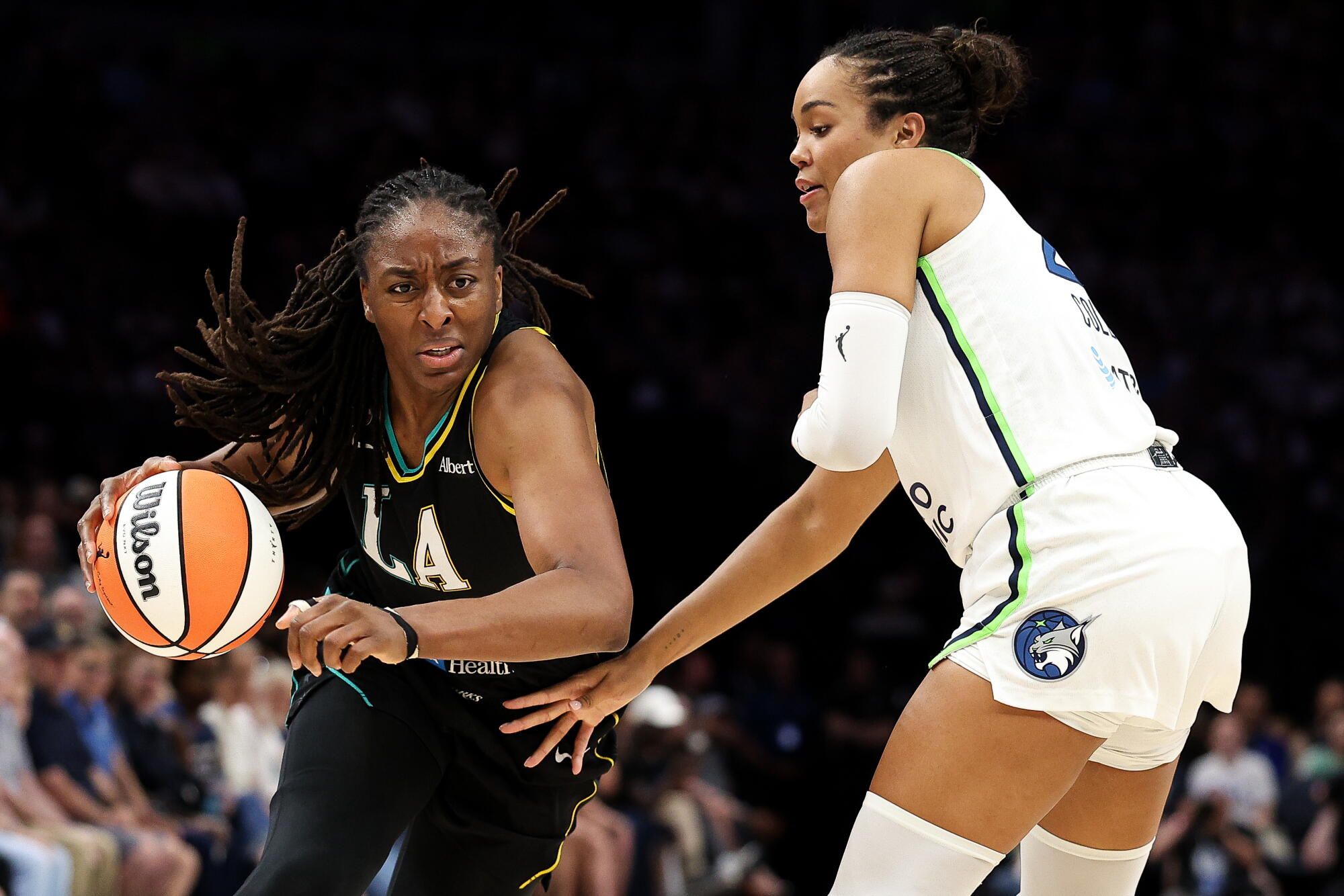
Nneka Ogwumike is coming home in a strong endorsement of the Sparks’ vow to succeed during the upcoming season.

Ogwumike, a 10-time WNBA All-Star, spent the first 12 seasons of her career with the Sparks after she was drafted No. 1 overall by the franchise in 2012.

But Ogwumike left two seasons ago as the Sparks were struggling to win and signed with a Seattle Storm team with talent capable of pushing for a championship, a female coach and state-of-the-art facilities.

While she was gone, the Sparks replaced coach Curt Miller with Lynne Roberts, traded for All-Star guard Kelsey Plum and broke ground on a new practice facility in El Segundo.

Ogwumike posted a 45-second video on social media Friday morning that indicated her intention to return to the Sparks. Free agents are free to sign with new teams Saturday, when the Sparks are expected to officially announce her return.

“It was always ‘see you later,’ now I’ll see you soon,” Ogwumike wrote in the post.

She did not post any contract terms, and they have yet to be reported.

Chiney Ogwumike, an ESPN analyst, longtime Spark and Nneka’s sister, broke the news on X, posting: “10x WNBA All-Star and 2016 MVP Nneka Ogwumike intends to re-sign with the Los Angeles Sparks.

“She previously played 12 seasons in LA and ‘is looking forward to returning home.’”

The Sparks last made the playoffs in 2020, and while they showed some potential last year, going 21-23 but fizzling out in the second half of the season, adding the 35-year-old veteran bolsters their push to take a big step forward into the playoff mix.

Adding the appeal of some of the talent already on their roster and a new $150-million practice facility scheduled to open next year, the Sparks are positioning themselves for a return to their winning ways.

The Sparks are expected to trade 2024 first-round pick Rickea Jackson to Chicago this weekend for guard Ariel Atkins, according to reports. Atkins, who turns 30 in July, is a two-time All-Star and five-time all-defensive player who had an important role in the Washington Mystics’ 2019 championship.

Sparks players cheer as WNBA president Lisa Borders hands the championship trophy to team owner Magic Johnson in 2016.

Sparks players cheer as WNBA President Lisa Borders hands the championship trophy to team owner Magic Johnson in 2016. Nneka Ogwumike was on the team that won the Sparks’ most recent title.

(Hannah Foslien / Getty Images)

That leaves the Sparks with just three other players — Plum, who signed a core contract, Cameron Brink and Sania Feagin — under contract. The Sparks extended qualifying offers to Rae Burrell, Julie Vanloo and Alissa Pili this week, essentially retaining their rights.

But Ogwumike is the kind of player whom the Sparks could build a competitive campaign around, especially playing alongside Brink in a potent frontcourt. With Plum and likely Atkins in the fold, the Sparks could use an upgraded ball-handler, unless they go with Plum at point guard and focus on bringing in another forward.

Forward Azura Stevens announced on social media she is not returning. The Sparks also lost starting point guard Julie Allemand to Toronto in the expansion draft last week.

Forward Dearica Hamby remains unsigned. She started 84 games in the last two seasons and was an All-Star in 2024 but likely is behind Ogwumike and Brink on the Sparks’ depth chart and might push for a bigger role with another team.

The Sparks don’t have a first-round draft pick, so they will need to pursue talent on the robust free-agent market or make another trade to bolster their backcourt. If they elect to go with Plum at point guard, they could start Burrell as a small forward after her strong offseason in the Unrivaled three-on-three league, but they still need more depth.

During the next seven days, the Sparks will have a chance to make moves to support a veteran core of Ogwumike and Plum alongside a rising star in Brink as they push to build a team that can make the playoffs.

Last season in Seattle, Ogwumike averaged 18.3 points, 7.0 rebounds, 2.3 assists and 1.1 steals. Her departure was somewhat expected after Noelle Quinn was fired as coach following the Storm’s first-round playoff exit.

The president of the players association, Ogwumike played an essential role in the historic collective bargaining agreement the league and players agreed to in March, which led to the salary cap being raised to $7 million per team.

Nneka Ogwumike is airborne holding a basketball in front of a downtown L.A. skyline at night

Nneka Ogwumike, photographed in downtown Los Angeles in 2019, is returning to the Sparks after two seasons in Seattle.

(Christina House/Los Angeles Times)

On Wednesday, speculation was rampant that Ogwumike might end up in Minnesota after a balloon company shared a video of a balloon sign that read: “Welcome Nneka,” but the forward clarified on Instagram that it was just a greeting welcoming her to a meeting with the Lynx, not an indication she was signing there.

With the majority of the league’s players free agents, teams have an opportunity to reinvent themselves this offseason. It seems likely that Seattle, with Skylar Diggins-Smith and Gabby Williams as free agents, could take a step back.

The forecast for expansion clubs Portland and Toronto, meanwhile, won’t take shape until they finish building their rosters.

The Sparks gave up the most points per game last season, 88.2, a flaw they hope to address with Ogwumike, the expected addition of Atkins and a full season of Brink, who has been limited by injuries to 34 games in her first two seasons after being drafted No. 2 in 2024.

The Sparks promised fans they would complete their rebuild and become title contenders again. Ogwumike’s return suggests she believes in the plan.

Source link

Women’s Six Nations: Lleucu George hoping to add spark to Wales attack

Wales open their campaign against Scotland, who crushed their World Cup hopes last summer in a sobering opening match.

In fact, Wales have not tasted victory over their Celtic rivals in more than three years, but George says Saturday will be far from a grudge match.

“It doesn’t matter who we’re coming up against in the first week, it’s the first game, so we really want to try and put a stamp down,” she said.

“It’s a fresh start, we’ve got new coaches coming in and a different style of playing.

“It’s the same for them, they’ve got new coaches. We don’t really know what they’re going to bring, but we’re concentrating on ourselves as much as we can. Obviously we’ll look a little bit at them, but the onus is on us.”

Source link

Venezuelan Trade Unions Stage Protests, Spark Renewed Minimum Wage Debate

Thursday’s protest ended at the National Assembly in Caracas. (Archive)

Caracas, March 14, 2026 (venezuelanalysis.com) – Venezuelan workers, activists, and trade union organizers held marches in several cities on Thursday to demand wage increases and respect for labor rights.

A coalition of labor organizations staged protests in Caracas and over 25 other cities across the country. In the Venezuelan capital, around 1,000 demonstrators marched from Plaza Morelos and broke through a police cordon to reach the National Assembly in the city center.

“Mobilizations like the one we had today will continue and grow until the government changes its salary policies,” José Gregorio Afonso, president of the Central University of Venezuela (UCV) professors’ association, stated. “We believe the economic conditions allow for the establishment of a minimum wage as determined by the Constitution and the Labor Law.”

Afonso added that the Constitution mandates the government adjust the minimum wage at least once a year to keep up with inflation, but the last increase was in 2022. He likewise pointed to recent official figures of economic growth and prospects of increased oil revenues.

Thursday’s rally consisted largely of education sector trade unions, as well as public sector retirees. A commission met with a group of legislators at the end of the march to deliver a list of 17 demands signed by over 200 trade unions. 

A similar document was delivered to the Labor Ministry following prior nationwide rallies on February 26. The labor organizations’ demands include raising the minimum wage in accordance with the Constitution and labor legislation, the release of workers and trade unionists allegedly arrested for defending labor rights, and the repeal of statutes such as the 2792 Memorandum that suspended several collective bargaining rights.

Activists have also voiced opposition to plans to implement a pro-business reform of the country’s Organic Law of Labor and Workers (LOTTT) that would cut benefits, social security contributions, and other employer responsibilities. 

The historic 2012 law, approved by former President Hugo Chávez, prohibits unfair dismissal and outsourcing, enshrines the world’s third-longest maternity leave, guarantees the right to work for both women and people with disabilities, and extends retirement pensions to all workers, including full-time mothers and the self-employed.

Later on Thursday, the ruling Socialist Party (PSUV) held its own march in Caracas along the same route, with spokespeople urging the defense of the country’s peace and sovereignty, as well as calling for the release of kidnapped President Nicolás Maduro and First Lady Cilia Flores.

Labor Minister Eduardo Piñate told reporters that the rally was in “firm backing” of the Maduro and Rodríguez government’s labor policies.

Gov’t increases bonus amid salary debates

On Friday, unofficial channels reported that the acting Rodríguez administration had raised the monthly “economic war bonus” by 25 percent, from US $120 to $150. Coupled with a $40 food bonus, the move brings the monthly income floor for public sector workers to $190. The amount is paid in bolívars at the official exchange rate.

Venezuelan government officials have not commented on the increase. It is not presently known whether public sector retirees and pensioners, who receive $70 and $50 economic war bonuses, respectively, will benefit from similar hikes.

Venezuela’s monthly minimum wage was set at 130 bolívars (BsD) in March 2022 and has not been adjusted since. At the time, 130 BsD amounted to around US $30, but with the Venezuelan currency’s devaluation, it is now equivalent to $0.29. With the Venezuelan economy heavily battered by US sanctions, the Nicolás Maduro government prioritized non-wage bonuses as the main income source for workers and pensioners.

Trade unions and leftist organizations have criticized the policy for violating the country’s labor laws and favoring business sector interests by reducing labor costs and making dismissals more flexible.

In recent weeks, trade union coalitions have put forward proposals for a minimum wage adjustment. Center-right and right-wing alliances such as the Independent Union Alliance (ASI) and the Confederation of Venezuelan Workers (CTV) have urged authorities to set the monthly minimum salary at $200 before pegging it to a cost-of-living index.

For its part, the government-aligned Bolivarian Socialist Union of Workers (CBST) proposed that the minimum wage be raised by $50 each quarter, though it did not specify a time frame. The CBST added that, should the government deem the salary increase unfeasible, it should implement a similar increase in non-wage bonuses.

Liberal economists, including Asdrúbal Oliveros and José Guerra, have argued that minimum wage increases beyond $100 and $150 a month, respectively, might place too high a burden on the state’s budget. At the same time, business sector representatives have called for a flexibilization of labor protections and benefits.

Leftist economists, including former PSUV congressman Tony Boza, Pasqualina Curcio, and Juan Carlos Valdez, have proposed raising wages and pegging them to inflation as is currently done by private banks with interest rates.

Edited by Lucas Koerner in Fusagasugá, Colombia.


Source link