Spanish

A family holiday on the hoof: donkey trekking in the Spanish Pyrenees | Family holidays

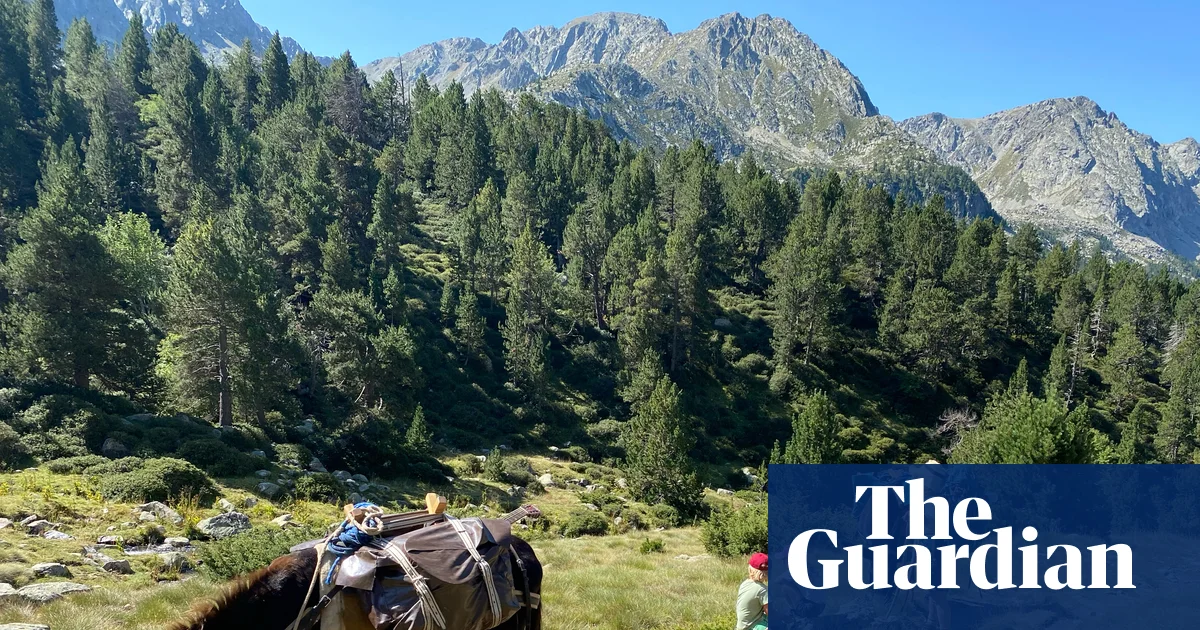
It’s said the 19th-century Parisian flâneur, intent on not rushing past the beauties of the street, would take a tortoise on a lead to set the pace. I thought about this as my donkey bent his head to another thistle and I turned my attention to the view, waiting for him to finish. Every way I looked, layers of mountains receded in deepening shades of eggshell blue. There were no sounds but the wind, the squeals of marmots and the giggles of my two young kids. I was extremely, uncomplicatedly happy.

Our donkeys were on loan from Burrotrek, a small outfit run by Swiss-born Denise Wirth. Twenty years ago, Denise spent four and a half months walking the Camino from Switzerland to Santiago de Compostela with two donkeys. She liked Spain, and she loved donkeys, so she settled on the idea of offering donkey treks in the Pyrenees. She has not looked back. For much of the year she is based where she settled, near Cadaqués, and offers a variety of self-guided itineraries through the vineyards in the foothills and along the Mediterranean coast, with trips lasting between a day and a week. But for the summer months, when temperatures soar, she relocates with her donkeys to Cal Jan de la Llosa in the province of Girona, a gorgeous ruin of a farm several miles up an unpaved track. From here, she lends her animals to people who, for whatever reason, have a romantic notion of what it might be like to take a donkey up a mountain.

Illustration: Guardian Graphics

My family (myself, Ulli, and our two kids, aged five and seven) bought Interrail passes (under-12s go free) and caught the sleeper down from Paris, crossed the border to Catalonia at Puigcerdà and, after a late lunch of tapas at the station bar, piled into a taxi for an hour’s drive up a long series of switchbacks to the farm. That first night we pitched our tents in a field behind the barn. The dark welled up from the valley floor and house martins shuttled through the dusk. We fell asleep to the rushing of the river and the occasional braying of a donkey.

The next morning we met our animals. We would be borrowing two donkeys, Om and Rebot, which we called Robot or, in moments of frustration, Roadblock. Om was described by Denise as “sporty”, and seemed up for most things, while Rebot was older and content to bring up the rear. Denise ran us through the basics: how to saddle them; how to groom them; how to check their hooves. A donkey can carry a fifth of its bodyweight, which meant around 30kg each. It was just as well, as we had a lot of stuff with us: a week’s worth of food and the explosion in camping gear that seemed to have occurred along with having children.

We had not taken our children to the mountains before, and I hadn’t had an interaction with a donkey since Bournemouth beach about 35 years previously. The learning curve was steep. The donkeys had a powerful sense of what they wanted, which didn’t always align with ours. Yet they were generally amenable, and we soon grew very fond of them. Denise waved us off with our children clutching the ropes and Om and Rebot trotting amiably behind them. She had suggested a loop that would take a week, with a mix of wild camping and mountain huts.

The going was easy, along wooded valleys, through pretty stone villages. At lunchtime, we tied the donkeys up to graze beside a stream while we splashed around, and then lay basking on the rocks, eating bread and cheese. Four hours in and I felt like Laurie Lee.

The path unwound along a series of thin rivers that burst out of the mountainsides

On the second night, we camped in a meadow during the worst storm I’ve ever known. It came out of a wide blue sky and suddenly it was hailing, the ground blanketed white. The donkeys stood stolidly beneath a tree, ears drooping. The downpour continued until dawn, the thunder like cannon fire. The kids, of course, slept through it, while Ulli and I sat up all night, watching their faces in the lightning. Were we out of our depth? Our tents were not meant for such weather and by morning the kids were the only dry things we had. The sun was out and the grass was steaming. We saddled the donkeys and carried on.

We dried out in Refugi dels Estanys de la Pera, a wonderful cabin alive with warm hospitality and good food. And then the path began to climb in earnest, winding up towards Andorra. At times it felt as though we were carrying two donkeys up the mountain. A group of Spanish hikers advised us to shout “arré,” an Arabic word imported by the Moors. It was unclear if it worked, but it gave us something to do. The donkeys took cautious, dainty steps, selecting each foothold before placing it. We were learning that they set the pace, and we should follow where they led.

‘A gorgeous ruin of a farm several miles up an unpaved track’ … camping at Cal Jan de la Llosa at the end of the walk

By the time we made the border at the Perafita Pass, at an altitude of 2,574 metres, we were in the cloud and giddy with success. We squatted in an ancient corral of stones and ate biscuits. But as we descended the cloud burned off and Andorra opened up before us. A vast plateau of long grasses and crooked, lightning-struck spruce trees, scattered with lakes in craters gouged by ancient glaciers. It was achingly beautiful, silent and wild. A herd of chamois, flushed from their hiding place, took off down the slopes at full pelt.

The path unwound along a series of thin rivers that burst out of the mountainsides, Riu de Perafita, Riu Madriu, rattling urgently along their rocky beds. We drank straight from springs bubbling out of the rocks and plunged into small pools, blisteringly cold. A herd of horses approached us one morning to examine their diminutive relatives, and Om and Rebot stood there, stoic as ever, until the horses galloped on.

I had worried this trip might be a hard sell to the kids, but their capacity to create fun proved boundless. Every time we stopped, and we stopped a lot, they found a stream to paddle in, a frog to play with, a marmot to sneak up on. The days weren’t long, six or seven miles at most, but if we try a walk at home we rarely get beyond the car park. The donkeys and the mountains meant they scarcely noticed we had tricked them into walking. In the evenings, they groomed the animals and charged about the camp. They ate everything we gave them – noodles, lentils, pasta – and fell asleep in seconds. It was a revelation.

Rebot the donkey set the pace

We spent our last night in Refugi de l’Illa, a vast, metal-clad, solar-panelled structure on a barren plateau that appeared to have touched down from space. We washed in hot water, drank wine at dinner and slept on a mattress. It was nice, but I hadn’t missed it. We were keen to get going again. As we walked back into Spain, the donkeys seemed to know they were nearing home. The path eased down across pastures of wild flowers and by dinner time on the eighth day we were back at the farm.

Some of my happiest moments as a parent are when I am doing something that I loved before having kids, but now with these brilliant, curious people – sharing the basic pleasures of cooking after a long day outside, or looking up at a sky bright with stars. We pitched our tent for one final night outside and reluctantly handed our donkeys back. They trotted into their field with the others, nosing each other’s necks in welcome. We were very sorry to see them go.

The trip was provided by Burrotrek; donkey hire from €55 a day including an introductory course and equipment. Half-board at Refugi de l’Illa, €61 adults/€48 children. Half-board at Refugi dels Estanys de la Pera, €46 adults/from €33.50 children

Lone Wolf by Adam Weymouth is published in paperback by Penguin on 25 June (£11.99). To support the Guardian, order your copy at guardianbookshop.com. Delivery charges may apply.
Source link

The Spanish attraction that ‘feels like being on Mars’ and you can explore it by vintage train

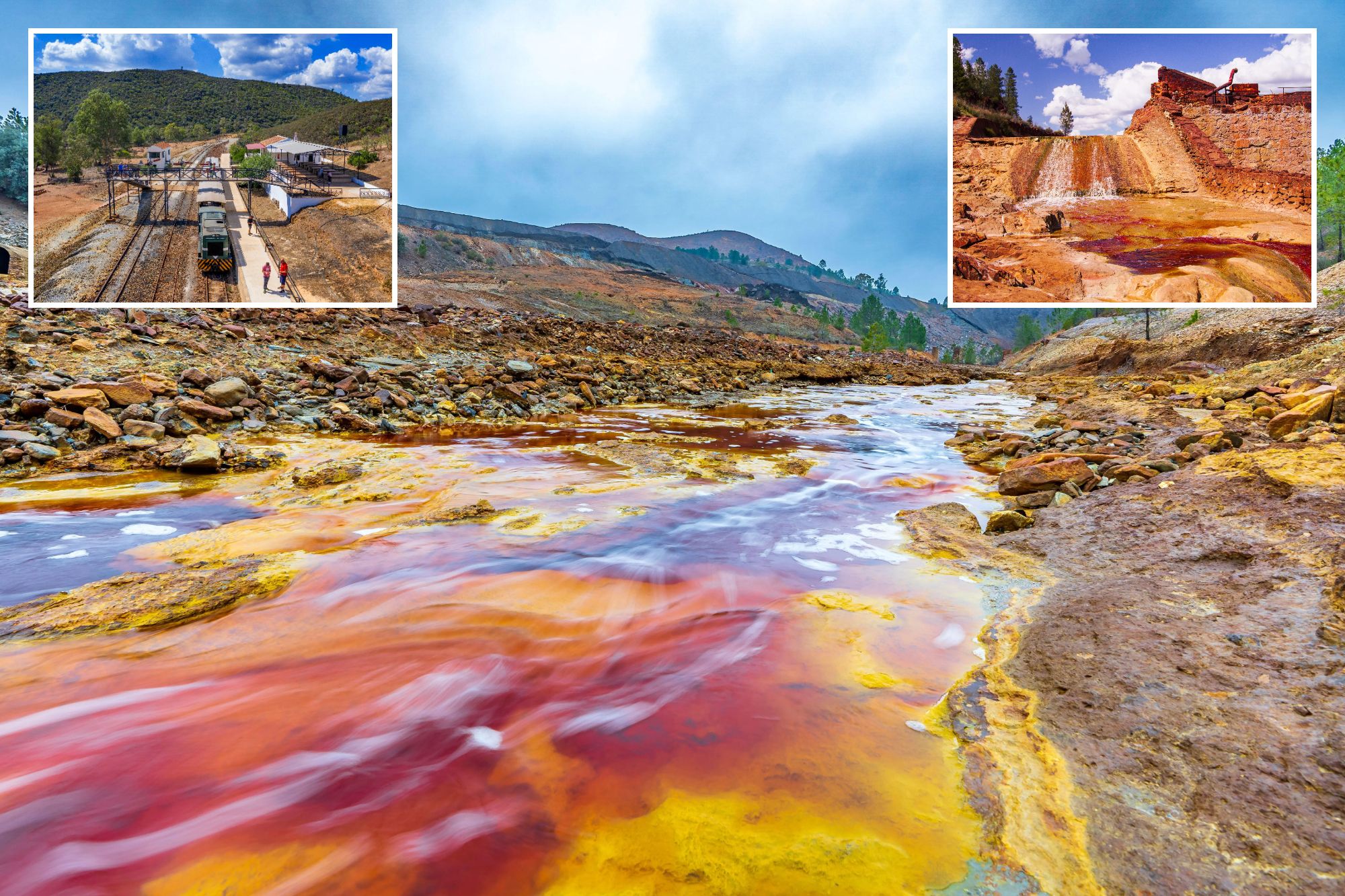
An image collage containing 3 images, Image 1 shows A long exposure shot of the red Rio Tinto river flowing through a mining park in Spain, Image 2 shows Touristic train at Rio Tinto mining area in Huelva, Spain, Image 3 shows A waterfall in the Rio Tinto Mining Park, Spain, flows over orange and red rocks, with a stone structure and forest on the left and a stone wall on the right under a bright blue sky with white clouds

WITH its flowing red rivers and rocky landscape, this attraction has been described as looking ”more like Mars than Earth’.

The open-air mining park is in the Huelva region of southern Spain and visitors can take a tour onboard a vintage train.

Rio Tinto Mining Park has been compared to Mars thanks to its red river and rocks Credit: Alamy
Visitors can explore the mine site on a restored tourist train Credit: Alamy

The Rio Tinto Mining Park has over 5,000 years of history and is renowned for having a unique red landscape.

Formerly used for mining, the site is now considered an open-air museum and first opened to the public in 1992.

Through the site runs the Rio Tinto river which is toxic – it’s highly acidic which is why the water has red and orange hues.

Thanks to this, the attraction has earned itself a comparison to the planet Mars.

IT’S A WASHOUT

UK indoor waterparks with VIP spas, mega slides and 30C tropical climates


CHEAP THRILL

UK’s best-value theme parks MAPPED, plus hotels nearby for £29 & cheap parking

It’s appeared in movies like The Heart of Earth, which tells the story of miners working at Rio Tinto in 1888.

The area has also been used by the likes of NASA for space testing as it has an ‘extreme environment’ just like that found on Mars.

One visitor wrote on Tripadvisor that is look “more like Mars than Earth” with another calling it “truly breathtaking.”

Dotted around the site are viewpoints, underground walks to view excavated spaces and there’s a chance to explore its museum too.

Another way to tour the mines is onboard a refurbished mine train.

The Rio Tinto railway itself was built in the late 1800s and once had 186 miles of track.

The red river is toxic and runs through the middle of the site Credit: Alamy

Now, the tourist railway ride covers just over seven miles of that on its restored railway line inside vintage diesel trains.

From the windows, visitors can look out over the bright red river and rocks.

The train journey is up to two hours long and there’s a chance of a pit stop in the middle before it loops back around.

The park is open daily with day tours that can be up to six hours long.

On Saturdays, there’s a chance to do the ‘Mars on Earth‘ circuit which starts at the Mining Railway Station and heads through the Red Planet-like scenery.

If you want to visit Rio Tinto Mining Park the closest airport is in Seville which is around an hour a half away by car.


Source link

Spanish hotel chain Meliá to shutter hotels in Cuba in latest blow to island’s tourism sector

Spanish hotel chain Meliá has joined a growing list of companies with a long-standing presence in Cuba that are withdrawing or limiting their operations on the island after the U.S. announced new sanctions while upholding an oil embargo.

Meliá will cease operations at 15 of the 34 hotels it manages on the island, according to state website Cubadebate, dealing a blow to Cuba’s vital tourism sector, which has plummeted since its 2018 peak.

The report on Wednesday stated that Meliá’s decision was based on “a sense of corporate responsibility and external factors that have significantly affected the operation, legality and security of these establishments.”

The decision was announced May 26, just weeks after President Trump signed an executive order expanding sanctions against the island. Most of the sanctions targeted Grupo de Administración Empresarial S.A., a business conglomerate operated by the Cuban Revolutionary Armed Forces, with the U.S. asserting it was a threat to its national security.

The executive order freezes the assets of foreign companies, seizes their accounts in the United States and prohibits travel by their shareholders, investors and employees— virtually eliminating their activity in the U.S. financial system.

GAESA, a Cuban conglomerate created in the 1990s, owns a wide range of businesses, from car rentals and retail stores to transportation companies. It is Meliá’s partner in hotel management through one of its subsidiaries, Gaviota.

Meliá deals new blow to Cuba’s crumbling tourism sector

Meliá is one of Cuba’s most important partners in its vital tourism sector. Until its partial withdrawal, it operated some 14,000 rooms.

Spanish and Canadian firms are the biggest investors in Cuba’s hotel sector, noted Lee Schlenker, a research associate at the Quincy Institute’s Global South program, a Washington think tank.

“With the lack of international tourism, the fuel shortages, and just the broader decline since COVID…I’m sure that these companies will be rethinking their operations in Cuba with major implications for the people of Cuba, not just GAESA,” he said. “There are thousands of Cubans who work in these hotels.”

Several of the hotels that Meliá abandoned in idyllic destinations like the resorts of Varadero, Cayo Santa María and Jardines del Rey “were already closed and inactive due to energy problems and the drop in demand in Cuba,” according to Cubadebate.

Cuba’s government has blamed the U.S. energy blockade for prolonged blackouts, water shortages, supply problems, deficiencies in the healthcare system and disruptions in all aspects of daily life.

Those who work in Cuba’s crumbling tourism sector lamented Meliá’s announcement.

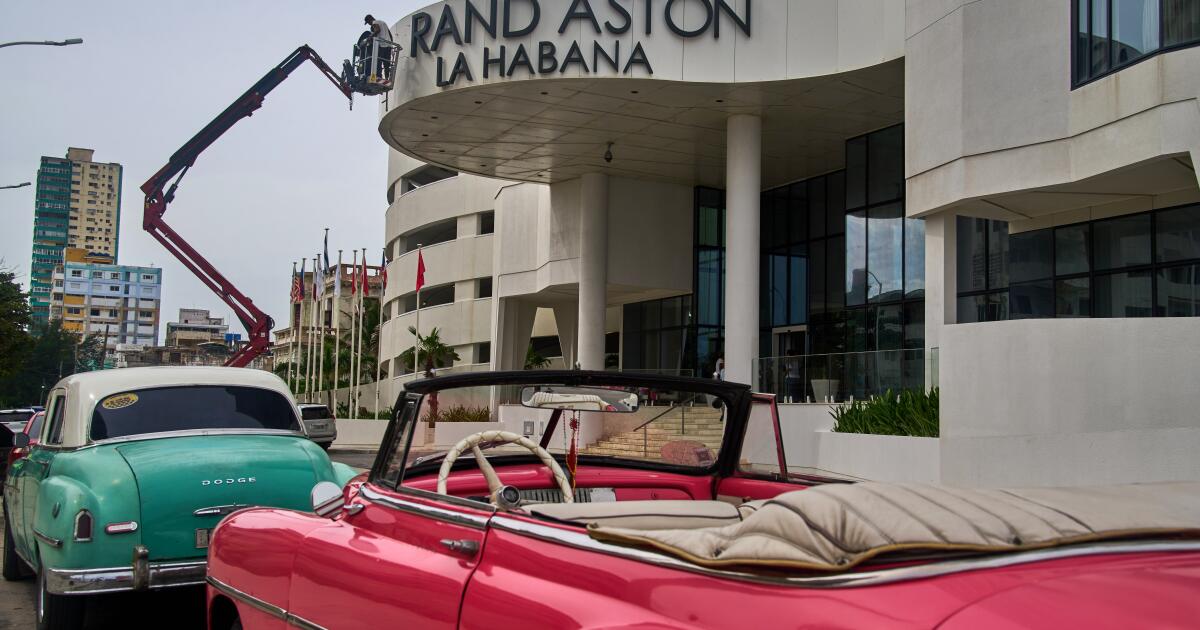
“It’s going to affect us, our families, and everyone involved in tourism. Our pay and income depend on this,” said Erich López, a driver of a green 1950s Dodge who has been driving for two decades to support his family.

For Carlos Luis Carbonel, a 62-year-old parking attendant who works in front of the giant Meliá Cohiba hotel in Havana, the situation “is going to be a blow.”

“This is terrible for everyone: for tour guides, for parking attendants, for hotel workers, for everyone,” he said.

Other major hotel chains including Canadian-owned Royalton and Spain’s Iberostar have limited or suspended operations in Cuba in the past week.

Tourism in Cuba, which reached a peak of 4.3 million visitors in 2019, saw a significant drop in the number of tourists arriving in the first quarter of this year, 48% lower than in the same period in 2025.

Only 298,000 tourists arrived in Cuba in January, February and March, compared to 573,300 international visitors during the same period last year, according to government data.

Cuba struggles to breathe

On Wednesday, the enormous and iconic sign of the Royalton Paseo del Prado hotel at the entrance of Old Havana was removed, as confirmed by The Associated Press during a visit. Meanwhile, the 500-room Iberostar Selection — also known as Tower K — the most modern and luxurious of the hotels slated to open in 2025, standing over 490 feet tall, has remained closed for days.

Airlines including World2Fly, Air France and Iberia have canceled flights to and from Cuba.

Also on Wednesday, Cuba’s Central Bank announced that Visa and MasterCard operations on the island would be suspended following the termination of relationships between foreign entities and FINCIMEX S.A., a Cuba-based agency affiliated with GAESA.

Last month, Canadian miner Sherritt International Corp. signed a non-binding agreement with Gillon Capital LLC, a family office linked to a former Trump adviser, to sell its stake in a mining business in Cuba.

In late January, Trump threatened tariffs on any country that sells or supplies oil to Cuba, as his administration pressures for a change in its political system and government. The move has deepened a crisis caused by seven decades of U.S. sanctions.

While U.S. and Cuban officials held talks earlier this year, tensions have risen. In late May, former President Raúl Castro was charged in a U.S. indictment for his alleged role in the downing of two civilian aircraft operated by Miami-based exiles in 1996 in Cuban waters.

Rodríguez writes for the Associated Press.

Source link