FORGET racing round the sights – the best Spanish holidays begin the second you stop asking what happens next.
That’s the idea behind San Miguel’s Spanish Summer – less a checklist, more a state of mind: warm, curious and always ready for a “shall we?” that turns into the best bit of the trip.
You know the signs – your phone disappears into the beach bag, lunch drifts gloriously late and nobody remembers who ordered the extra plate, but everyone is reaching for it.
Start with a small rebellion against routine.
Sign up for the Travel newsletter
Thank you!
In Benidorm, swap the pool for a barefoot morning on Poniente beach, then wander into the Old Town without checking a single review.
Take the street that looks busy. Take the one that doesn’t.
In Majorca, drive the road that curls away from the coast – it may lead to a pine-framed cove, a village square or a bakery window stacked with warm ensaimadapastries.
The point is not to get lost but to give up needing to know exactly where you are the whole time.
Remember: “si” opens doors, whether you’re saying yes to a volcanic rock pool in the Canary Islands or an Ibizan stallholder who insists that patterned shirt is totally you.
Even just agreeing to join your friend in Malaga who’s become “captain” of a boat trip booked 20 minutes ago.
New experiences don’t have to be huge.
Sometimes discovery is ordering the thing you cannot pronounce, taking the table with the wobble but the view, or walking one more street because there is music around the corner.
In Malaga, follow the smoke to a beach chiringuito and order espetos – sardines skewered and cooked by the fire until they taste of salt, sea and, yes, summer.
In Majorca, share pa amb oli, the island’s simple genius of bread, tomato and olive oil.
And in the Canaries, pass round papas arrugadas con mojo while everyone claims they are “not that hungry” as they keep going back in.
Nobody has their own plate for long – that shared-table feeling is where Spanish summer comes alive: sunglasses pushed into hair, sandy feet under the chair, a cold San Miguel on the table and three conversations happening at once.
Then the light begins to soften.
Benidorm turns gold as the beach crowd spills on to the promenade.
Ibiza gets that famous hum as sunseekers gather by the water and the first beat slips into the evening.
Stay salty. Keep the flip-flops on. Let sunset become dinner and dinner become whatever happens next.
Ibiza may tempt you from a hippy market to a cove and then into a night of music.
Malaga can carry you from sea air to rooftop lights without making the day feel over.
In Majorca, a village fiesta can pull you in before you know what is being celebrated.
The best local traditions are often the simplest ones: join the evening paseo, and watch families reclaim the streets when the heat drops.
Notice how every generation seems to fit around the same table.
In the Canary Islands, linger over one more story.
In Benidorm, follow the laughter.
That is why the memories that last are rarely the ones you scheduled – they are the accidental swim; the sunset nobody spoke through.
The song that became the holiday anthem or the waiter who remembered your name.
The stranger who took the group photo who “must have been a professional”.
San Miguel’s Spanish Summer guide offers the spark: places to eat, swim, listen, wander and wonder across five Spanish escapes.
But leave gaps in the plan because that is where summer gets really interesting.
Spanish Summer is not about seeing everything – it is about being open to anything.
Tragedy struck in the Salamanca province when a 13-year-old died during celebrations for the win against Argentina.
Published On 20 Jul 202620 Jul 2026
A 13-year-old died and another child was among the injured when a fountain partially collapsed in western Spain during mass celebrations of the country’s second football World Cup final victory, regional emergency services have said.
The accident occurred shortly after midnight on Monday in Ciudad Rodrigo, a walled medieval city of about 12,000 in Salamanca province, near the border with Portugal.
Recommended Stories
list of 4 itemsend of list
Hundreds of residents had gathered at the Arbol Gordo fountain in the city’s centre when the upper part of the monument broke loose and struck several people, emergency services said.
In a statement, Ciudad Rodrigo’s town hall expressed condolences for the victim.
“The entire city feels this loss and accompanies the minor’s friends and family in their grief … What should have been a celebration of the Spanish national team’s World Cup victory has turned into a tragedy,” it said.
It is understood that the fountain collapsed under the weight of numerous people who had climbed onto it to celebrate Spain’s first World Cup victory since 2010.
“A few minutes after 12:30 am local time, rescue services received calls over a fountain collapsing on numerous people,” emergency services said in a post on X, adding that another youth, believed to be in a serious condition with a broken leg, was among the injured.
Spain beat Argentina 1-0 to win the 2026 edition of FIFA’s showpiece global event, which was staged at New York New Jersey Stadium by cohosts United States.
The match was 0-0 after regulation time, forcing the game to extra time where Ferran Torres scored the only goal of the game.
Last night, Spain defeated Argentina to win the World Cup. Ordinarily, for those of us with no national connection to either country, the choice of whom to support would have been gloriously trivial. We might have chosen the team that played more beautiful football, the player we most admired or simply the side whose colours we preferred.
But these are no ordinary times.
Gaza and Palestine have changed the way many of us see the world. It has become a moral prism, refracting our judgments not only about governments and political leaders, but about institutions, universities, media, corporations and public figures. We have watched people and institutions we once respected avert their eyes from the destruction of a people. We have watched others discover elaborate vocabularies of qualification and equivocation when confronted with horrors that, in another place and against another people, they would have condemned without hesitation.
And we have remembered those who refused to look away.
That is why, last night, I was Spanish.
Of course, a football team is not a government. Spanish footballers are not responsible for the policies of Spanish Prime Minister Pedro Sánchez, any more than Lionel Messi and his teammates are responsible for the politics of Argentinian President Javier Milei.
But sport has never existed in the hermetically sealed apolitical world we sometimes pretend it inhabits. We bring ourselves to sport. We bring our histories, our identities, our sympathies and, inevitably, our moral judgements. We decide whom we want to win for reasons that often have very little to do with formations and statistics.
And so, for many people of conscience, Spain has come to represent something larger.
At a moment when much of the Western political establishment has twisted itself into moral and linguistic contortions over Gaza, Spain has stood apart. Sánchez and his government have been willing to speak with a clarity conspicuously absent from many of Spain’s Western allies. Spain recognised the State of Palestine. Sánchez has openly used the word genocide to describe what is being done in Gaza. His government has moved to entrench an arms embargo against Israel.
One need not agree with every policy of the Spanish government to recognise the significance of that position. Moral courage is measured precisely when taking a position carries a cost.
There was also something deeply moving about seeing Lamine Yamal, one of the brightest young stars in world football, waving the Palestinian flag during Barcelona’s celebrations after winning La Liga.
It was a small gesture in the vast landscape of Palestinian suffering. But symbols matter, particularly when so many powerful institutions have worked so hard to make Palestine invisible.
There was Yamal, at the summit of sporting success, surrounded by celebration, holding up the flag of a people whose suffering the world has been asked repeatedly to forget. And last night he wore the colours of Spain in a World Cup final and emerged a world champion.
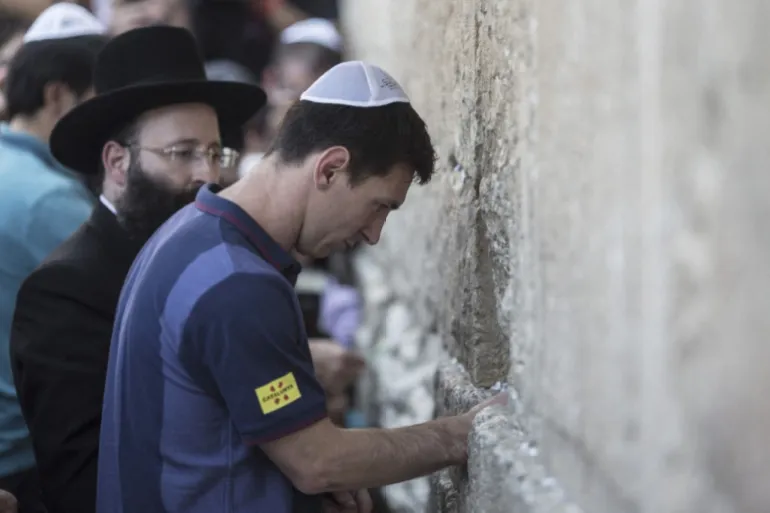
On the other side stood Argentina, a magnificent footballing nation led by perhaps the greatest footballer of his generation. And here, too, Gaza intruded upon the emotions with which some of us watched. An image of Lionel Messi at the Western Wall in occupied East Jerusalem has circulated widely. It dates back to Barcelona’s 2013 visit to Israel and the Occupied Palestinian Territory, years before the present catastrophe. But images have lives beyond the circumstances in which they were created, and Gaza has transformed the way many of us see them.
FC Barcelona football player Lionel Messi puts a paper with wishes in a crack in the Western Wall, Judaism’s holiest site, in occupied East Jerusalem on August 4, 2013 [Oliver Weiken/AFP]
The contrast with Lamine Yamal is striking. There is the image of Messi at the Western Wall. And there is the image of Yamal, at one of the happiest moments of his young career, waving the Palestinian flag. Different moments, different circumstances, different intentions.
But symbols matter. For those whose view of the world has been transformed by Gaza, it is impossible not to feel the emotional force of the contrast.
And beyond Messi stands the politics of Javier Milei. Argentina’s president has made his allegiances clear. He has embraced US President Donald Trump and declared himself “the most Zionist president in the world” at precisely the historical moment when Palestinians in Gaza have endured unimaginable destruction.
Argentina’s footballers are not responsible for Milei, and its people cannot be reduced to their president. But neither can those politics be entirely erased from the emotions with which the rest of us watch.
Then there was another recent vote, far removed from Gaza but revealing in its own way. In March, the United Nations General Assembly adopted a landmark resolution confronting the historical wrongs of the transatlantic trafficking and enslavement of Africans and calling for reparatory justice. One hundred and twenty-three countries voted in favour. Fifty-two abstained. Only three countries in the entire world voted against it: the United States, Israel and Argentina.
There is something extraordinary about that alignment. On an issue concerning one of humanity’s greatest historical crimes and the continuing demand for reparatory justice, Trump’s America, Benjamin Netanyahu’s Israel and Milei’s Argentina found themselves standing together, virtually alone.
It is difficult for those of us who increasingly view the world through the prism of Gaza not to notice the pattern. The issues are different, the histories are different and the legal questions are different. But the moral instinct seems eerily familiar: when the victims of historical injustice demand recognition, accountability and redress, the same governments so often seem to find reasons to stand on the other side.
So, yes, last night I watched a football match.
I admired Messi because greatness remains greatness. I marvelled at the extraordinary history of Argentine football.
But I wanted Spain to win.
And Spain won.
Perhaps that says something about what Gaza has done to us. It has rearranged our moral geography. Countries that once felt distant can suddenly feel close because they spoke when others were silent. Governments we barely thought about can earn our respect because, at a moment of profound moral testing, they refused to avert their gaze.
A mural painted by Palestinian artists depicts football star Lamine Yamal, who waved a Palestinian flag during Barcelona’s LaLiga victory parade, on the rubble of buildings destroyed by the Israeli army in Al Shati refugee camp in Gaza City on May 13, 2026 [Ebrahim Hajjaj/Reuters]
And sometimes that moral geography spills into the most unexpected places.
Last night it spilled onto a football pitch.
Millions celebrated Spain’s victory because they love Spanish football, because they admire Lamine Yamal or simply because their team had won the greatest prize in the sport.
But many also celebrated out of solidarity with the Palestinian people.
A World Cup cannot deliver justice to Palestine. Spain’s victory will not feed a hungry child in Gaza, rebuild a destroyed home or bring back the dead. We should never confuse symbolism with justice.
But human beings live partly through symbols. And last night, for some of us, the red shirt of Spain carried a meaning it was never designed to bear.
When Lamine Yamal and his teammates lifted the World Cup, I celebrated with them.
Not because football can change what has happened in Gaza.
But because Gaza has changed the way I watch even a game of football.
The views expressed in this article are the author’s own and do not necessarily reflect Al Jazeera’s editorial stance.
There will also be new shops at the airport, as well as a VIP lounge for non-Schengen departures.
Several areas outside the airport will see improvements as well, including car parking and new taxi and bus drop-off zones.
If you don’t plan on driving to and from the airport, then this too will become easier with a new rail link that would have an underground station.
The train will link onto a nearby commuter line and is expected to be built between now and 2030.
There will be a new area dedicated for non-Schengen departuresCredit: GettyInside, there will also be the latest technology as well as new shopsCredit: WERNER WILMES/Wikipedia
The first phase will start in 2027 and is expected to be completed by 2031.
The second phase will then take place in the mid-2030s.
The upgrade was first announced last year.
The project comes as the airport handled nearly 20million passengers last year, with it expected to pass that number this year, with Brits making up one of the largest groups of tourists.
WATCHING the morning sun sparkle on an immaculate padel court as the first players warm up, I can’t help but admire their dedication.
I, however, have a different priority in mind and a few minutes later I’m settled at a shaded table on a flower-filled terrace, enjoying breakfast of omelette, mini tortillas and crushed tomatoes on crusty bread.
Sign up for the Travel newsletter
Thank you!
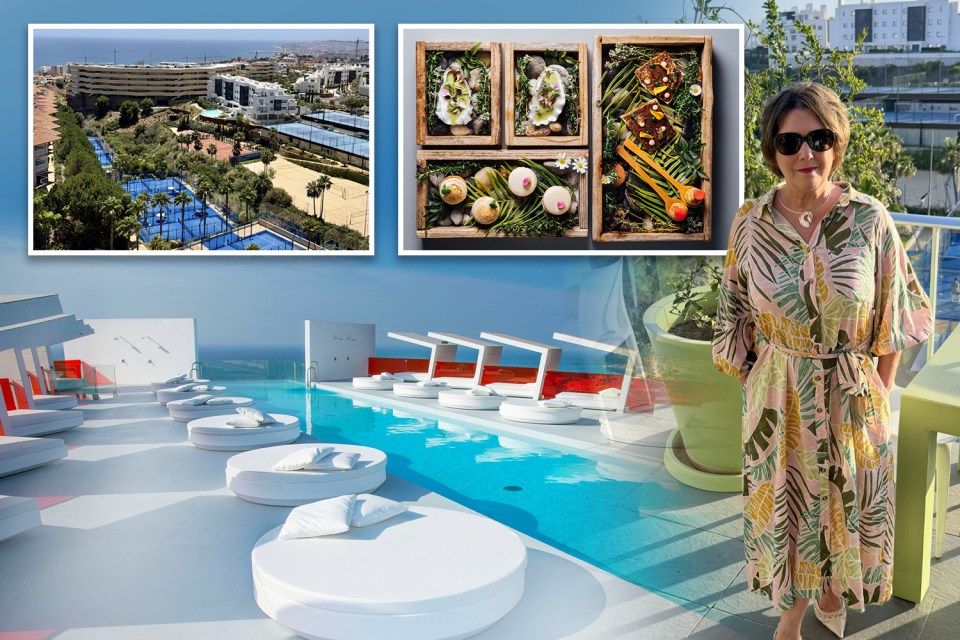
I stayed at the beautiful Higueron Spanish hotelCredit: SuppliedIndulge in Michelin star foodCredit: Supplied
Fellow guests in their pristine tennis whites head towards yet more courts as the Andalusian sun rises into a clear blue sky.
Perhaps later. For me, the comfy Balinese beds beside the terrace pool are calling.
And that’s the joy of the Higueron Hotel Malaga Curio Collection by Hilton on Spain’s Costa del Sol.
There are sporting and spa facilities that would put a posh country club to shame — and all sorts of indulgent ways to do very little but soak up all that sunshine.
While it has Malaga in the title, the hotel actually sits in the hills directly above the bustling, British beach favourites of Benalmadena and Fuengirola.
Malaga city itself — with its Picasso Museum and buzzing tapas bars — is an easy 30-minute drive away.
Meanwhile, the superyachts, designer boutiques and champagne-fuelled glamour of Marbella and Puerto Banus sit 30 minutes in the other direction.
Snag yourself a cheap hire car from the airport and the whole coast is your oyster.
But the joy of this hotel is just how much there is to keep you busy without ever leaving the grounds.
The extensive sporting facilities include not just the ten padel and tennis courts, but beach volleyball sand courts and three for basketball as well as indoor and outdoor pools and a huge air-conditioned gym.
The spa is just as comprehensive, with a hydro circuit in its heated pool with pressure jets, massage beds, Jacuzzi and waterfalls.
There’s also a sauna, steam rooms and dedicated rooms for treatments.
Luckily for me, the hotel had plenty to keep non-sporty guests busy.
As well as the main pools and terraces — including a stunning adult-only rooftop infinity pool — there’s also a private beach club on the coast.
Work up a sweat at the expansive tennis and padel courtsCredit: SuppliedThe Sun’s Lisa Minot at the stunning resortCredit: Supplied
A free hotel shuttle whisks you down the hill to yet more comfy lounging spots, a pool and two superb restaurants.
And what could be more indulgent on a sunshine break than food created by a Michelin-starred chef?
There are seven a-la-carte restaurants in the hotel and the beach club, three of which have menus designed by award-winning chef Diego Gallegos.
While the Michelin-starred Sollo has tasting menus at £150pp, you can still enjoy the chef’s creations at funky fusion restaurant Arara.
Its £51 tasting menu features Brazilian, Peruvian and Andalusian flavours with a South East Asian twist, with eight courses designed to be shared by diners.
For daytime indulgences, catch more chef- inspired dishes at the beach club, including clams cooked in sherry with flying fish roe and delicious prawns in a spicy pil pil sauce.
Rooms in the main resort are ultra-modern — opt for a deluxe for stunning views of the resort and Mediterranean beyond.
And if you’ve really got cash to splash, the exclusive Leiro Suites are another level.
There’s more space, Scandi designs and funky balcony furniture.
But you’ll also get the choice of breakfast at the rooftop Infinity restaurant and access to the Balinese beds there and at the Beach Club.
Also included is spa access, free guided sports activity, early check-in and late check-out and parking, as well as priority reservations.
The hotel offers the best of the Costa Del Sol and a host of sporting options to keep you fit and healthy.
For me though, those Balinese beds at the Infinity Rooftop are the reason
I’ll definitely be returning for the stunning views — and the most chilled of snoozes.
Early in “Romería,” the film’s main character, Marina, is asked by some children if she’s ever seen the Santa Compaña, a collection of ghosts who, in Spanish legend, supposedly wander in a pack across the landscape. Humoring the kids, Marina says she hasn’t. That’s good, one of the girls responds. “They’re spirits that can’t die.”
As it happens, Marina is actually on a journey of sorts to connect with the dead — and so is Spanish writer-director Carla Simón, whose third feature is an autobiographical tale about her own quest to make peace with her late parents. Slender but flecked with magical touches, “Romería” is so gentle it never quite qualifies as haunting. Nonetheless, Simón stirs up the ineffable sadness that comes with wanting answers to the mysteries of your family — and then, like it or not, receiving them.
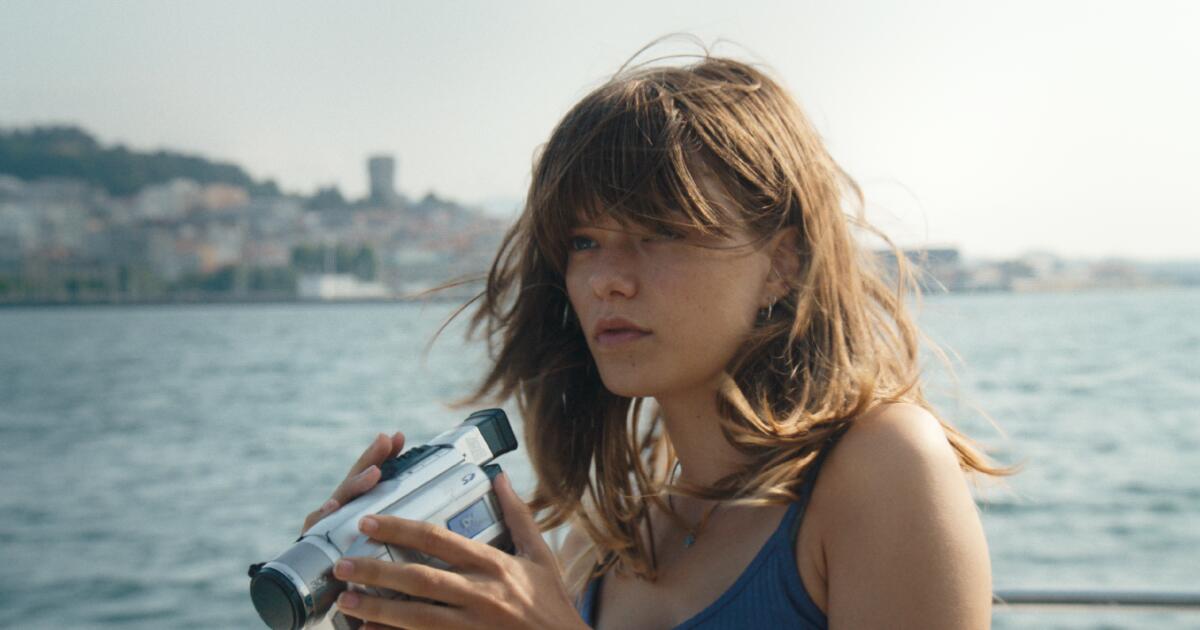
Newcomer Llúcia Garcia plays Marina, an 18-year-old aspiring filmmaker. It’s July 2004, and she’s traveled to the picturesque port city of Vigo to obtain government paperwork that will make her eligible for a university scholarship. She never knew her father Alfonso, who died in 1987. For some reason, there are no records indicating that she was his daughter. Hence the trip to Vigo to see her paternal grandparents for the first time so she can authenticate her ancestry.
Simón, whose previous features “Summer 1993” and “Alcarràs” also grappled with family matters, follows along with Marina on the way to this anxious meeting. Marina’s mother died only a few years after Alfonso, making Marina an orphan. But the mom’s parting gift, a diary, provides opaque glimpses into her life with Alfonso in the mid-1980s. Before Marina arrives at her grandparents’ home, though, she must run a gauntlet of uncles, aunts and cousins, their reactions to her existence varying from warm to wary. Repeatedly, Marina is told she looks just like her mom, but the comment occasionally contains a trace of bitterness. Many of these new faces view her as an unwelcome reminder of a past they’d prefer to forget. When they see Marina, it’s like they’re looking at a ghost.
The strongest component of Garcia’s doe-like performance is the way it captures someone in the midst of shedding her adolescence, gingerly trying on adulthood. Over the course of a few days, this bashful teen, always armed with her camcorder and far less free-spirited than her cousins, will be beset by her father’s feuding family. Silently observing the passive-aggressive maelstrom, Marina will receive an intense immersion in what her life might have been like if he’d lived.
But she quickly realizes that their memories of the man are far from perfect. No one can decide exactly where Alfonso lived in Vigo. And, more troublingly, Marina’s belief that he died in 1987 is contradicted by relatives, who insist that it was five years later. If Marina has that information wrong, what else does she not know?
“Romería” is hardly the first film in which an impressionable soul goes on the hunt for the parents she never had. Likewise, viewers will not be startled when Marina eventually discovers painful secrets about her mom and dad that cause her to reconsider those phantom figures.
Simón, who undertook a similar odyssey at the same age, never allows this delicate story to succumb to self-indulgence or an inflated sense of its own importance. Instead, her film is suffused with a rich, casual immediacy. Simón and her star bracingly recall the electricity of youth as Marina prepares for life as an artist. The movie, in part, is about how she finds her voice.
Simón’s films favor naturalism and “Romería” leaves ample room for Spain’s seaside beauty and glorious sunshine. The calming locales both complement and contradict the plot’s revelations, which are hardly bombshells but do speak to how well-to-do families labor to shove inconvenient skeletons into the closet. If anything, Marina will be more shocked by her grandparents (José Ángel Egido and Marina Troncoso), whose fiercely icy demeanor suggests this teenager should consider herself lucky not to have grown up around them.
Because “Romería” is a coming-of-age story, Marina will be tempted by cute boys; she’ll also begin to display a rebellious streak. As the picture rolls along, Garcia shows a more assertive side, relishing her character’s emergence from her shell. But this modest saga saves its biggest surprise for its final reels, when the narrative folds in on itself beguilingly, allowing Marina to relate to her mom and dad in ways she never had before. Maybe we can never truly know our parents, but if we’re lucky, we can gain the maturity to one day see them in ourselves.
‘Romería’
In Spanish, Catalan, Galician and French, with subtitles
Not rated
Running time: 1 hour, 54 minutes
Playing: Opens Wednesday, July 1, at Laemmle Royal and Laemmle Glendale
A TikTok video has showcased the stunning lake, with the bubblegum pink hue leaving viewers desperate to visit the spot
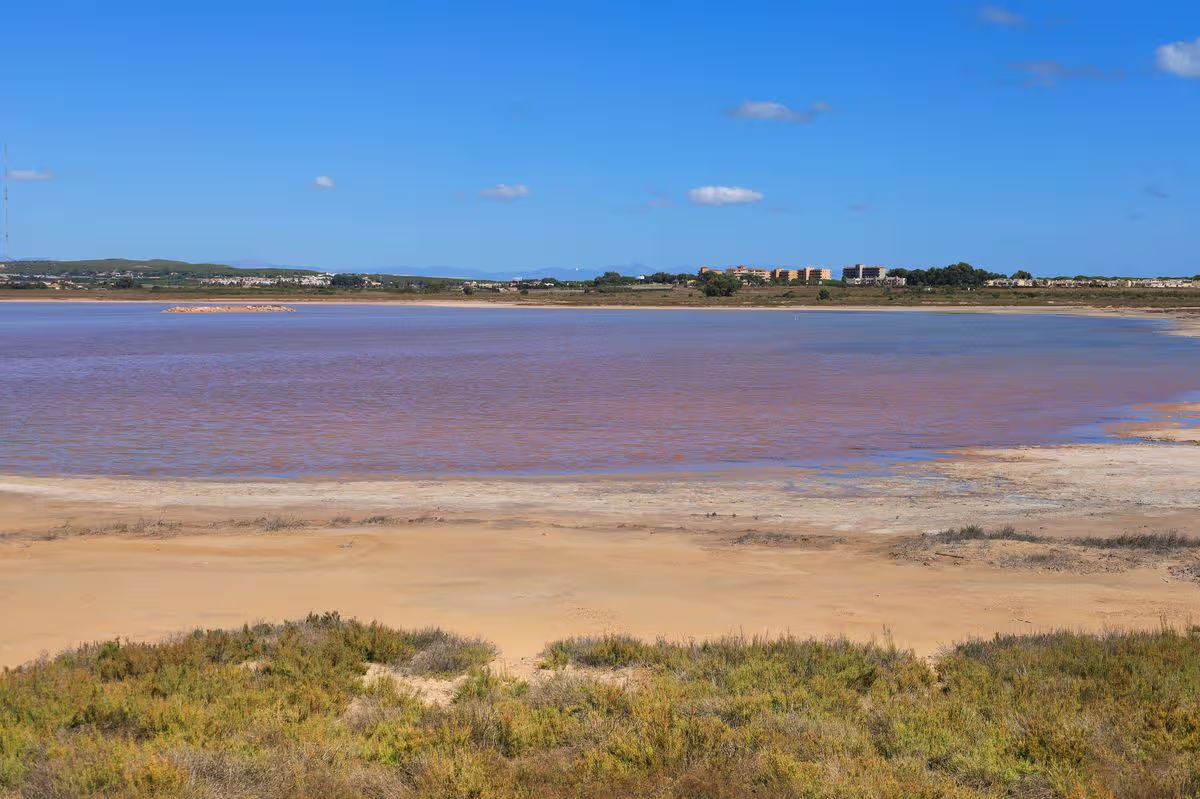
Laguna Salada de Torrevieja is located just an hour from Benidorm (Image: soniabonet via Getty Images)
When you picture Spain, you imagine stunning beaches, delicious cuisine and breathtaking scenery. And this specific corner of Spain has now got tourists buzzing about its natural beauty.
The must-visit bubblegum pink lake sits just an hour’s drive from popular British hotspot Benidorm. Holiday provider Travel Republic has shared everything you need to know about the must-see travel spot, including its health benefits and the reason behind its striking pink hue.
One TikTokker, who goes by the username @carielizabethh, has posted a video of “one of the coolest” experiences you can have just outside of Alicante, Spain.
The video has amassed over 6.5 million views and it’s easy to see why. She goes on to explain that while visiting her boyfriend’s parents, who live nearby, they took the couple to experience the spectacular Laguna Salada de Torrevieja.
The captivating lake is described as “one of the most unique experiences” thanks to its salt content which allows you to float with zero effort.
What’s more, legend has it that covering yourself from head to toe in mud before swimming offers numerous therapeutic benefits.
Users of the platform are intrigued and keen to visit, taking to the comments to say: “It’s giving rose quartz lake vibes”, “omg so cool” and “We have to go “.
The video does caution, however, that visitors should be “super respectful” and not “swim outside of the designated area which is protected by wooden planks”.
So what exactly gives it that striking colour?
The lake’s distinctive strawberry hue is down to the activity of various microorganisms living within the water.
The two key ingredients are salt bacteria and micro-algae. Both flourish in highly saline conditions and produce natural pigments responsible for the water’s stunning pink appearance.
What are the ‘therapeutic’ benefits of the Laguna Salada de Torrevieja?
This remarkable salt lake and its mud are said to offer a wealth of health benefits. Immersing yourself in this natural spa has been credited with helping to prevent skin and lung conditions, while also deeply exfoliating and nourishing the skin.
It’s reportedly beneficial for those suffering from eczema and may also assist with reducing inflammation and easing pain. Those with sensitive skin are advised to take care, however, as the high salt content can cause irritation or a mild stinging sensation.
The water’s elevated salt levels also provide the ideal habitat for brine shrimp, making it a prime feeding ground for flamingos. It is, in fact, these very shrimp that are responsible for giving flamingos their iconic pink plumage.
CAMPSITES are getting cooler – letting you have a family holiday with all the frills but without the expensive costs.
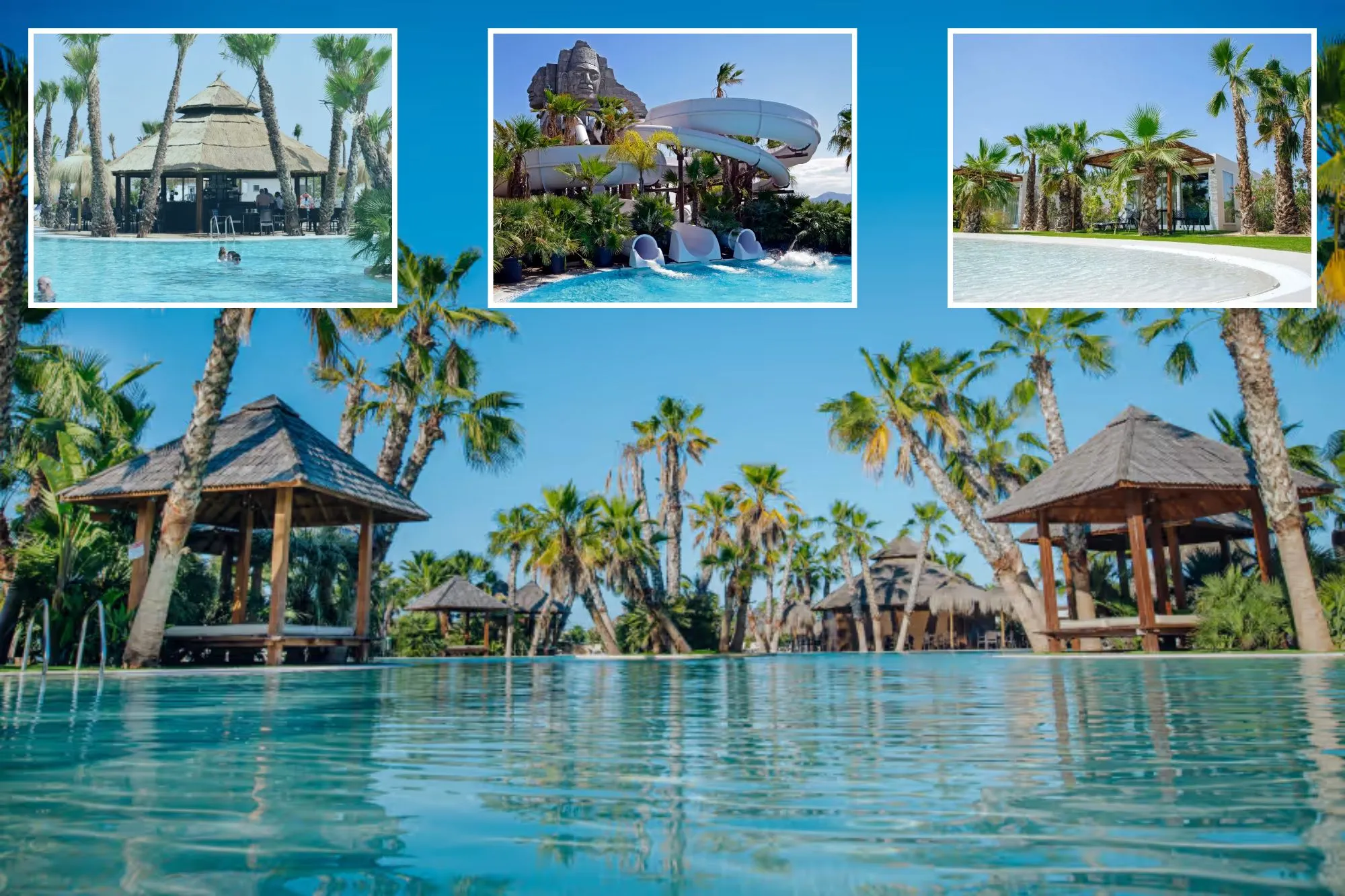
One of the most fun ones on the block is Alannia Costa Blanca Resort in Spain, one of the largest of it’s kind in the country.
Sign up for the Travel newsletter
Thank you!
There’s a campsite in Spain that people are saying has pools like the MaldivesCredit: Alannia ResortsAlannia Costa Blanca Resort isn’t a tent campsite, but with lodges insteadCredit: Alannia Resorts
The five-star camping resort isn’t one where you’ll be pitching tents, but instead with holiday lodges instead.
But the main attraction is its huge tropical waterpark, with Indonesian Island stone heads overlooking it.
It has loads of pools (one of which is heated) as well as slides and splash zones.
Adults can head over to the spa centre or gyms, if they want a break, or take the kids to the many sports facilities including tennis and padel.
You won’t have to leave the resort for anything – even with a hair salon and supermarket on-site.
Otherwise the main restaurant has both local and international dishes, or grab drinks and ice creams from the poolside bar.
The resort has poolside bars, heated pools and waterslidesCredit: Alannia ResortsThere are loads of spots like tennis and padel on offer as wellCredit: Alannia Resorts
When the sun goes down, there is lots to do as well with a vast programme of activities including discos, shows and bingo.
While the resort isn’t on the beach, the nearby Costa Blanca coastline is around 20 minutes away by car.
If you’re visiting in the peak summer season, expect prices to be around £1,719 for a week’s stay.
Visit outside of the peak summer season and you’ll pay just £554 for a week’s stay – and with lodges sleeping five, this works out to just £16 each a night.
There is loads for kids too with splash parks and smaller slidesStays can be found for £554 for the week outside of the school holidaysCredit: Alannia Resorts
Rooms range from premium two and three-bedroom holiday homes to larger lodges and chalets.
Families have raved about the campsite online, with one saying it was the “best camping site they had been to”.
Another said the pools “make you think you’re in Thailand“.
A third added: “The Tahiti pool is out of this world. Felt like we were in the Maldives.”
Chris, 34, was holidaying in Salou when he filmed the video. He said that some people had been in the queue for an hour
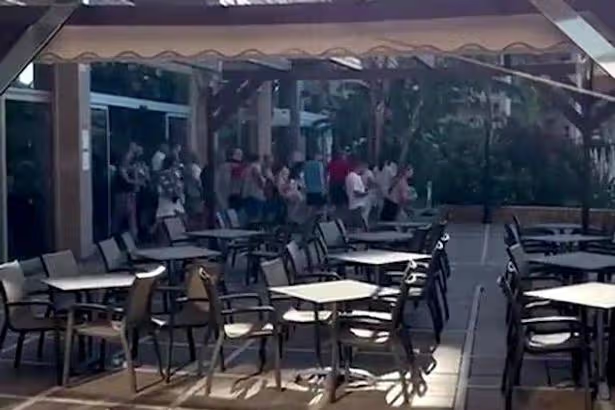
Manic tourists race for sunbeds at Spanish hotel
Holidaymakers were filmed in a “manic race” for the prime sunbeds surrounding the pool at a Spanish hotel — after queuing for an hour. Chris, 34, was on holiday in Salou, Spain, last week when he witnessed the spectacle unfold on June 24, as over 40 tourists rushed out.
The holidaymakers had been standing by the doors for an hour before the pool opened at 9am. Chris, from Glasgow, Scotland, said he observed the sun-seekers lining up at the doors on each day of his week-long break.
He said tourists would dash out, reserve a sunbed with their towel and belongings before heading back inside for breakfast. Chris found the spectacle amusing but thought it was somewhat unfair that nobody else would manage to get a sunbed for the entire day.
Chris, from Glasgow, Scotland, said: “It was a manic race and scramble for the sunbeds surrounding the pool at the hotel. I don’t judge but found it funny so had to film it.
“Some people just rolled out their bed, queued up, mad-dashed to secure the bed then they were seen going back to their hotel rooms or off for breakfast.”
“It doesn’t leave room for those who don’t queue for an hour.”
Families heading abroad for the summer have been warned
Parents have been told to keep small children within arms-reach (Image: Getty)
With countless families anxiously awaiting their summer break at the beach, the holidays could end in tragedy for some if they don’t heed some advice. The Foreign, Commonwealth and Development Office (FCDO) has updated its travel guidance for Spain, urging parents to put their children’s safety first particularly in swimming pools and beaches at the popular holiday destination this summer.
In the update on June 26, the Foreign Office issued specific advise for each swimming location and highlighted a sad but startling truth parents should keep in mind even while trying to relax on holiday: “Every year, people drown in the sea and in swimming pools in Spain.”
According to the Royal Life Saving Society UK, an average of 82 UK citizens drown each year while they are abroad.
Swimming pools
The Foreign Office advised parents to always keep an eye on their children, regardless of their age, while they are in or near swimming pools. For small children, the office urged parents to keep them no further than arms-reach away even if they are able to swim or there is a lifeguard nearby.
Beaches
The Foreign Office advised: “Take care when swimming in the sea. Always supervise children and keep small children within arms-reach. Some beaches, especially around Spanish islands, may have strong undercurrents.”
In the ocean, there are a few more concerns that both everyday beachgoers and parents may need to keep in mind when swimming to avoid serious injuries. This includes hidden rocks, shallow depths, strong undertows and waves coming into shore further and quicker than expected.
The warning continued: “Many beaches have a flag system. Make sure you understand the system and follow any warnings (a red flag means you must not enter the water). Take extra care and get local knowledge if there are no lifeguards, flags or signs.”
The Royal Life Saving Society UK recommends a few simple steps to avoid having an emergency in the water. Including keeping children within arms-reach as it notes: “86% of child drownings occur in the absence of adult supervision.”
Before you head into the water, the experts recommend:
Review local safety notices and learn what the signs and flags mean
Look out for potential hazards in your surroundings and warn the rest of your group
Wear brightly coloured swimwear so you can be seen underwater
Never use inflatables in open water as it can easily be blown out to sea
Take extra care when intoxicated around water and never enter the water whilst under the influence
The FCDO provides travel advice for more than 220 countries and territories across the globe, covering everything from entry requirements and safety risks to health precautions and local regulations.
A short trip from Benidorm will take you to a picturesque Costa Blanca town that is often compared to the Greek island of Mykonos – and it’s a must-see hidden gem for anyone visiting the area
08:57, 27 Jun 2026Updated 08:58, 27 Jun 2026
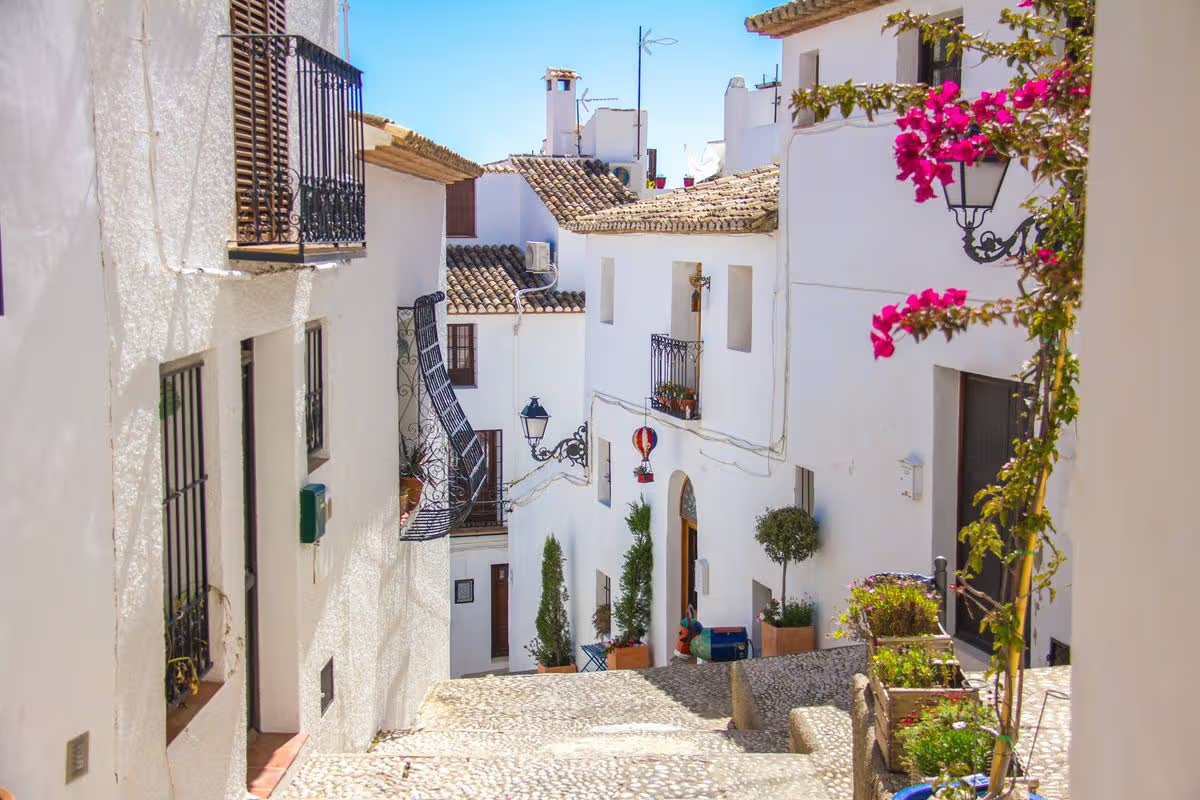
The Spanish town near Benidorm is often compared to Mykonos (stock image)(Image: MiniMoon Photo via Getty Images)
Benidorm, a firm favourite among British holidaymakers, is renowned for its sun-drenched beaches, budget-friendly breaks, and the vibrant Calle Gerona, lovingly known as ‘the strip’. However, beneath the surface of stag and hen parties, Benidorm conceals beautiful spots that countless visitors have yet to discover.
For those seeking an escape from the party scene, a brief trip unveils a peaceful town. Located just moments from Benidorm, it provides a calm alternative to the raucous nightlife, with comparisons drawn to the allure of Mykonos. A quick 18-minute drive or a short 12-minute bus journey from Benidorm Intermodal brings you to the picturesque Altea, Alicante.
Hailed as one of Spain’s “most iconic” towns, Altea whisks visitors back in time with its captivating old quarter, complete with winding cobbled streets and sparkling white houses. Wandering through Altea’s alleyways, the tempting aromas of freshly made coffee and mouth-watering food drift from intimate cafés and delightful restaurants.
The town’s jewel in the crown is the parish church, Nuestra Señora del Consuelo or Iglesia de Arriba, which mesmerises tourists with its splendour. From this elevated spot, the sweeping views stretch across the brilliant blue sea to the vast beach beneath.
Alice, an influencer who highlights Benidorm’s best features and reveals her favourite recommendations online, recently visited Altea and proclaimed it a must-see destination for any travel bucket list.
Content cannot be displayed without consent
Boasting more than 37,000 TikTok followers, Alice gushed: “Hidden gem only 15 mins from Benidorm! Maybe Altea isn’t a hidden gem for those in the know, but the way you could lowkey be just 15 mins away from this gorgeous slice of history and culture while on your holibobs in Benidorm!”
She went on to say: “It’s an absolute MUST see if you’re looking to escape for an afternoon to see some of the best views on the entire Costa Blanca. It’s giving cheeky Altea day trip, don’t you think?”.
The response was overwhelmingly positive — the short clip has racked up more than 17,900 likes alongside a flood of glowing comments.
One visitor shared: “I went there in December. Very nice.”
Another remarked: “There are stunning restaurants and bars. It’s not Benidorm. They may be close but they are worlds apart. Altea is beautiful.”
A third chimed in: “It’s simply a stunning old and new town.”
One commenter went as far as calling it their “favourite place of all time”, while another declared it had firmly earned a spot on their bucket list, writing: “Definitely heading here.. never knew it was so close.”
Flights from the UK to Alicante can be snapped up from as little as £40.
From there, you can hop on a bus, grab a cab or take the tram to Benidorm, which should take roughly 40 minutes by road.
TOURISTS may face fees for rinsing off at a popular Spanish beach holiday resort.
A controversial smart meter has been installed at beach showers, upsetting both locals and visitors.
Sign up for the Travel newsletter
Thank you!
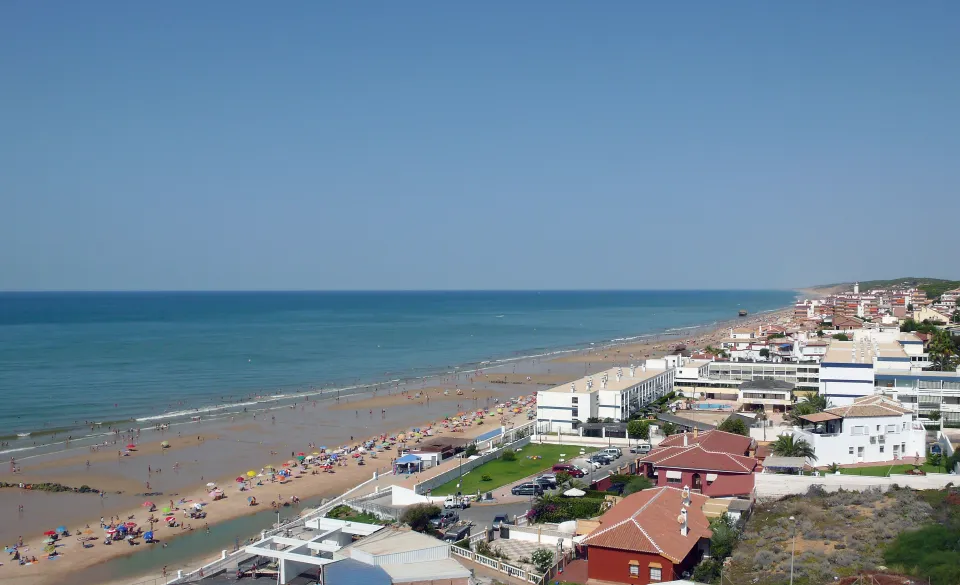
Matalascanas Beach is currently trialling a smart meter on its public showerCredit: SolarpixBeach-goers can opt to use coins or their mobile phone to pay for a shower, which lasts less than one minuteCredit: Solarpix
The smart shower is currently being trialled at Matalascanas Beach at Costa de Luz in south-west Spain.
While it is currently free to use, the plan is for users to be charged via a QR code or they can pay with cash.
The meter accepts two types of coins, with “no change given”, or beach-goers can use their mobile phones to scan the code and pay online.
This initiative has been promoted by two local engineers as a water-saving scheme.
However, claims that the set-up could cost a family-of-four around £3.50 to quickly wash off the sand on their bodies, has caused a stir.
The smart shower has been installed by the four-star On Hotel Oceanfront, which is understood to be the only shower in operation along the entire 2.6 mile-long beach.
It has already been met with backlash from residents, with many pointing out the issues with the set-up.
“Great idea. You have to get your mobile out and when you go to shower where do you leave it?” asked one person.
Another said: “I understand that water is important but I think this is terrible. Do you have to shower with your mobile in your hand?”
Commenting on an online discussion over the proposed charges, one social media user said: “Little by little, we normalize paying for everything.”
“By next year there will be parking metres, paid showers, and in a few years they’ll charge us for stepping on the sand – private beaches, like in other European countries,” they added.
Another person said: “This year the trial to find out how much they’re going to get, and next year they charge everyone.”
Almonte Council, the local authority covering the beach, has not confirmed how long the free trial period will last.
The estimated cost of a shower lasting less than a minute has been put at around €1 (85 p).
It comes after several beaches on the eastern end of the Costa del Sol decided to shut their showers last summer, with only foot washes remaining open.
However, the situation is expected to be much better this summer following a winter of heavy rain.
Rincon de la Victoria Council announced last month it would be opening its beach showers as normal this year.
Cruise passengers who dock for the day in Barcelona now face having to pay a hefty fee per passenger per day, as the mayor looks to slash the number of short-stay cruise visitors to zero
Visitors to Barcelona could soon end up paying nearly £26 just to wander its streets(Image: Aylin Mercan/Anadolu via Getty Images)
Barcelona’s city council has approved plans to triple the amount that cruise passengers pay when they take a day trip to the popular city break hotspot.
The levy for cruise ship passengers will be hiked from €8 to €24 per passenger. In addition, a €6 regional tourist tax is already payable to visitors who spend less than 12 hours in Barcelona, which means the cost of setting foot in the capital for cruise passengers will rise to €30 per person, just under £26.
The hike is part of Barcelona mayor Jaume Collboni’s plans to slash cruise tourism to the Catalan city according to cruise news outlet Deep Arrival.
Barcelona welcomed around 16 million visitors in 2025, 3.99 million of which were cruise passengers, with campaigners claiming that the influx puts a strain on public services and leads to overcrowding during the peak summer months. The tax increase is aimed at discouraging cruises from visiting the city completely, rather than just reducing overall numbers.
In July 2025, the city’s council approved plans to gradually increase the levy paid by cruise passengers gradually over four years, but reports within cruise trade publications indicate that this timeline could be sped up, and higher charges could be implemented as soon as 2027.
Cruises that begin or end in Barcelona would not be charged this increased fee, as these sailings are seen to have a postive impact on the city compared to day trips. A report on the sustainability of cruises on the city showed that day trippers from cruises spent an average of 5.7 hours in the city, and mostly visited popular attractions as as the Sagrada Familia and Park Güell.
Last year, Barcelona cut the number of cruise terminals from seven to five, and began to reroute larger cruise ships away from the most central ports, which now prioritise smaller boats and local marine traffic.
It’s not just cruise passengers who’ll pay higher fees in Barcelona. As of April 1, general accommodation tourist taxes have also increased, making them among the highest in Europe. Visitors pay both a regional and a municipal surcharge, meaning the total tourist tax ranges from €7 to €12 per person per night (approximately £6 to £10.38).
Barcelona has been at the heart of the overtourism protests sweeping Spain, and in June 2025 the city hit the headlines as protestors marched through the streets holding signs with slogans such as “Your Airbnb used to be my home”, and people sitting on outside terraces were squirted with water pistols.
Further protests are expected this summer from groups such as Menys Turisme Més Vida (Less Tourism More Life), including protests in Palma, Majorca set for July 26 to coincide with the start of school holiday season.
Have a story you want to share? Email us at webtravel@reachplc.com
New study showed UK passengers ‘unaware’ of problem as concerns raised at people deserting hotspots
15:02, 22 Jun 2026Updated 15:02, 22 Jun 2026
Adolfo Suarez Madrid-Barajas Airport. Passengers are being warned of big delays this summer(Image: Getty Images)
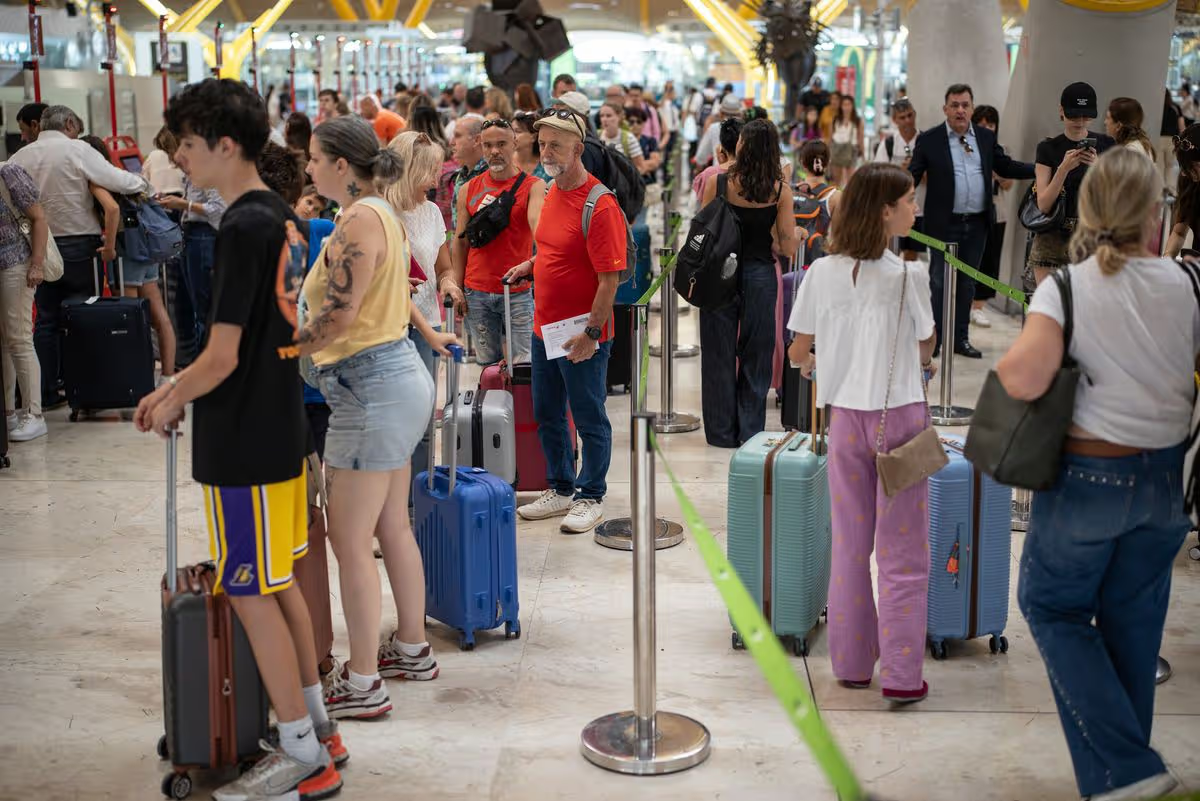
Spanish media are reporting six-hour queues could hit this summer at airports. The Majorca Daily Bulletin said the International Air Transport Association (IATA) has said the European Union’s new digital border system is going to come under major strain.
The Entry/Exit System (EES) has been fully operational across the Schengen Area since April 10. Two months in, it is producing long lines, missed flights, and growing alarm across the travel industry. Airports Council International Europe said that waits of up to three and a half hours have already been recorded during peak periods. The six-hour figure is IATA’s projection for the busiest summer months.
Budget airlines from the UK Ryanair, easyJet, and Jet2 have all warned of missed departures, disrupted schedules, and rising operational costs. Ryanair passengers who need to use its airport check-in or bag-drop services will be required to finish the process 20 minutes earlier.
The airline announced it will close the services an hour before the scheduled departure of a flight – compared with 40 minutes currently – to give passengers more time to get through security and passport checks. This will reduce the “very small number of passengers” who miss their flight while stuck in queues, the carrier added.
Ryanair’s website says passengers who fail to check in on time “may be denied boarding without refund”. The new policy will be in place from November 10. Passengers will still able to check in online until two hours before departure.
Jet2 check-in desks open exactly 3 hours before scheduled departure and will not open any earlier, even with the new EES (EU Entry/Exit System) checks. It is advised not to arrive at the airport earlier than this, as early arrivals may be asked to wait to prevent congestion
The airline said: “There may be longer wait times than usual when you arrive in destination and before your flight back to the UK. We’re really sorry for any inconvenience this may cause but unfortunately this is outside of our control.”
The UK boss of budget airline Wizz Air has warned British holidaymakers to arrive at European airports three hours before their flight home departs due to lengthy queues caused by new border checks.
Wizz Air’s UK managing director Yvonne Moynihan said: “When you land in the destination airport, there might be queues, so you should bring a portable charger or water,” she said.
Because EES information has to be verified when people leave, she also highlighted the risk of queues before flights back to the UK. “Because there is another passport check…that’s where we see that people have, again, experienced longer waiting times than anticipated,” she said.
She said usual advice is to get to the airport two hours ahead of your flight – “but in these circumstances, we are advising three hours”.
easyJet said: “Airports across Europe may experience longer waiting times at passport control due to the new European Entry/Exit System (EES). This could mean you need to have your biometrics taken at border checks, including the scanning of facial images and fingerprints.”
Research from the World Travel & Tourism Council (WTTC) warned up to 41 million visitor arrivals and $45.4 billion in spending could be lost if delays of three hours or more become routine. The findings come from a May 2026 survey of 2,512 travelers in the UK, US, Canada, and Australia. About one-third said regular three-to-four-hour waits would make them much less likely to visit the Schengen Area, or stop them from visiting altogether. British travellers are the most sensitive, with 39% saying that they would be much less likely to travel. The figure is 33% for Americans and Canadians and 27% for Australians.
Awareness is another problem. More than half of those surveyed (55%) had heard little or nothing about EES, and 49% do not know what the border will require of them. In one incident, more than 100 passengers reportedly missed a flight from Milan to Manchester after getting stuck in passport queues. Ryanair, easyJet, and Jet2 have all warned of missed departures, disrupted schedules, and rising operational costs.
Spanish first lady Begona Gomez, left, and her husband, Spanish Prime Minister Pedro Sanchez pictured earlier this month visiting Pope Leo XIV during his week-long trip to Spain. Photo by Alejandro Garcia/EPA
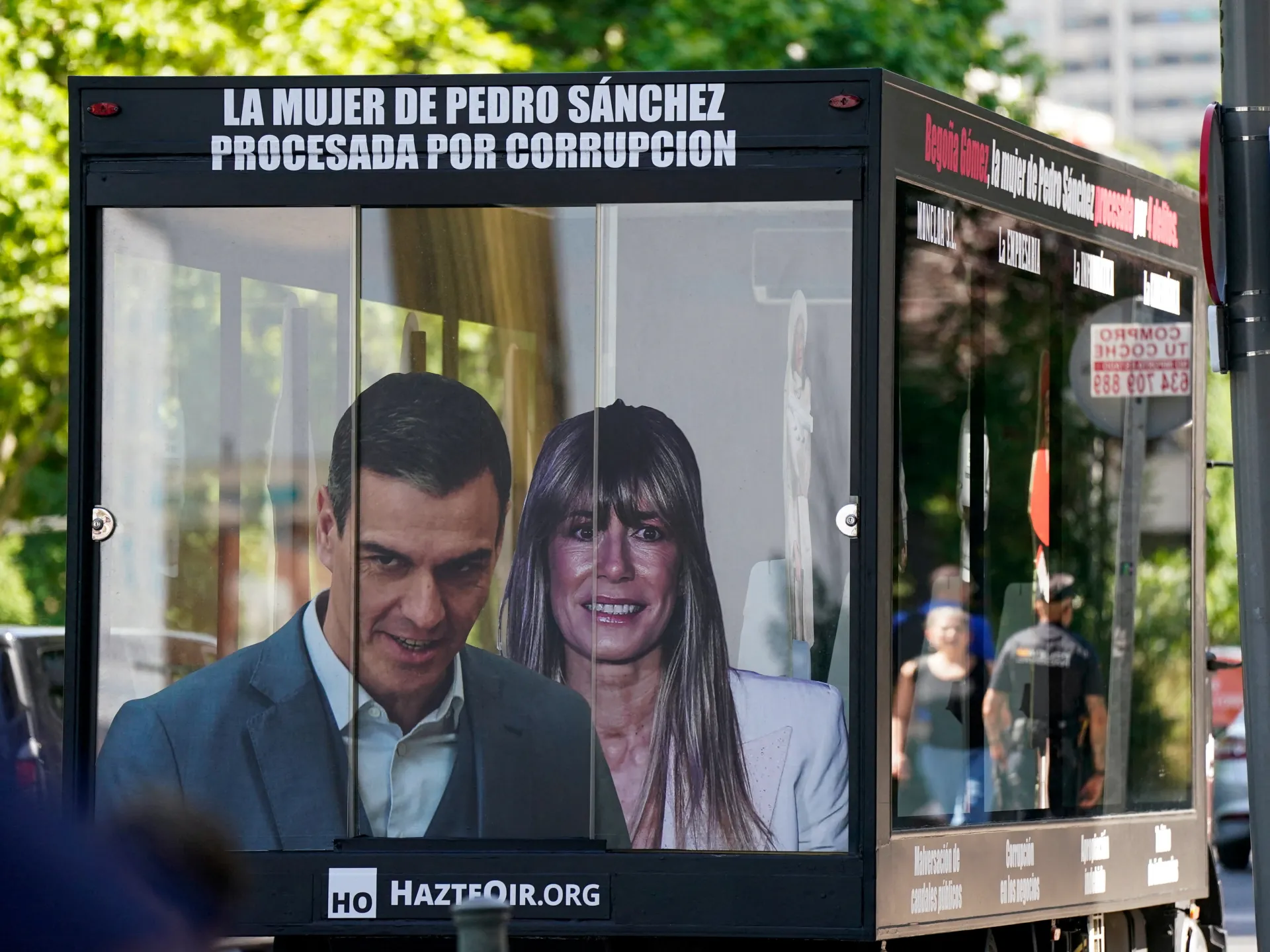
June 20 (UPI) — Begona Gomez, the wife of Spanish Prime Minister Pedro Sanchez, had her passport revoked on Saturday because a judge said she is a flight risk ahead of her trial on corruption charges.
Gomez is alleged to have exploited her position in Spain’s government to obtain a position at the Complutense University of Madrid and used public money for her own private interests, Politico, El Pais and The New York Times reported.
In barring Gomez from leaving the country, Judge Juan Carlos Peinado also is requiring her to appear in court every 15 days until her trial, a date for which has not been set.
The first lady has been under investigation since 2024, and is one of several of Sanchez’s allies and relatives that have been accused of corruption, as well — including his predecessor Jose Luis Rodriguez Zapatero.
In addition to Gomez, Peinado ruled to allow her assistant, Cristina Alvarez, and a businessman who allegedly benefited Gomez’s actions, Juan Carlos Barrabes Consul, to also stand trial.
Allies of both Gomez and Sanchez calling the ruling unprecedented, as well as “delusional, obsessive and shameful.”
“She is innocent,” the Spanish Socialist Workers’ Party, which Gomez runs and her husband is member of, said in a statement on X.
“She has been judicially and politically persecuted for two years,” PSOE said in the statement. “What happened today is just another step, a democratic scandal that doesn’t hold up. They won’t stop.”
The investigations into Gomez over the last two years are based on complaints alleging that she aimed to benefit from public contracts for companies she has ties to.
“Behaviors such as these emanating from presidential palaces seem more characteristic of absolutist regimes, thankfully long forgotten in our country,” Peinado said in Saturday’s ruling.
President Donald Trump presents a Medal of Honor to Tom Ripley on behalf of his father, John W. Ripley, during a Medal of Honor award ceremony in the East Room of the White House on Thursday. Photo by Aaron Schwartz/UPI | License Photo
Spanish painter Nieves González arrives in Los Angeles for her first U.S. solo exhibition having already experienced a taste of fame.
The 29-year-old caught the attention of the art and fashion worlds last year after being discovered on Instagram and commissioned to paint the cover of Lily Allen’s album “West End Girl.” Depicting the singer as a Baroque aristocrat clad in contemporary designer fashion, the portrait helped propel González onto an international stage.
Collectors have taken notice. The 13 paintings in “A Friendship Story,” opening Saturday at Richard Heller Gallery in Santa Monica, have already sold out, according to the gallery, with prices ranging from $4,000 to $20,000.
Share via
Elle magazine dubbed González “Fashion’s Favorite New Artist,” while exhibitions in Rome, Paris, Belfast and Bilbao, Spain, expanded her reputation across Europe.
González developed her classic yet defiantly modern approach while studying at the University of Seville, where Spanish masters such as Diego Velázquez and Francisco de Zurbarán painted in the naturalist Baroque tradition. Drawing liberally from fashion, art history and everyday life, she often dresses the subjects of her portraits in puffer jackets — garments she wears herself during the cold winters of Granada, Spain, where she lives. The material, she said, recalls the sculptural rendering of fabric in paintings by Zurbarán and Velázquez: the folds, the volumes, the high shine.
Nieves González often dresses her subjects in puffer jackets.
(Genaro Molina / Los Angeles Times)
“It works beautifully from a visual standpoint,” she said, speaking Spanish during an interview at Santa Monica’s Bergamot Station a few days before the exhibition opened. Wearing blue jeans and a pink button-down blouse, she echoed the pastel blues and pinks that appear throughout many of the works surrounding her.
“Fashion inspires me,” she said. “Just as 17th century artists drew inspiration from the fashion of their day — often creating paintings that served as catalogs of current styles — I do the same,” she said. “The goal is to not merely convey a specific message or ideology but to create a testament to a generation and the era in which we live.”
This fall, González’s painting “La Sfida” (2025) will appear in the Städel Museum’s exhibition “Mary Magdalene. Sin. Pray. Love” in Frankfurt, Germany, alongside works by Lady Gaga, Marlene Dumas and Auguste Rodin. The painting depicts Mary Magdalene with long, flowing hair, draped in a regal red garment and clutching a skull — a contemporary interpretation of one of Christianity’s most enduring figures.
“Nieves González is the youngest of these artists and, at the same time, probably the one who most closely follows in the tradition of the Old Masters,” curators Bastian Eclercy and Stefan Roller wrote in an email.
The Santa Monica exhibition marks an evolution from the paintings that established González’s reputation. Earlier works often centered on solitary women posed with the self-possession of royal portraits or religious icons. “A Friendship Story” focuses on relationships between pairs of women, exploring friendship, intimacy, support and shared experience.
For González, friendship is one of the most profound aspects of women’s lives and a subject she felt deserved greater attention in painting.
Victoria Rios, a curator who works with González, said the artist’s paintings “rewrite the narratives of the past, rewrite the history of martyrdom and place women at the center.”
“Nothing in her painting is arbitrary,” Rios said in an email. “Every formal decision is also an ethical one.”
“The horse elevates the art; symbolically, it carries connotations of elegance and nobility,” Nieves González said. “It seemed like a way to elevate the concept of friendship.”
(Genaro Molina / Los Angeles Times)
González frequently turns art historical conventions on their head. In “Salir a robar caballos: Go out to steal horses,” she replaces the archetypal portrait of a gallant man on horseback with two young women dressed in puffer and vinyl jackets, posed like contemporary Amazons atop rearing horses.
“The horse elevates the art; symbolically, it carries connotations of elegance and nobility,” González said. “It seemed like a way to elevate the concept of friendship. It also has an element of play, adventure and fun, since having fun is part of the bond too.”
The artist also sees her work through a feminist lens.
“We live in a patriarchal society, and so, unfortunately, I belong to the oppressed segment of that society, and my work relates to that,” she said. “It stems from a struggle, an understanding and a process of redefining concepts that we have historically established as normal, natural and habitual.”
“I am interested in portraying us as brave and powerful, sometimes even with an air of haughtiness,” she said.
Another painting, “Something’s crossed over me and I can’t go back” (2026), captures González’s fusion of historical and contemporary references. Two women dressed in green and pink fur cradle each other’s heads, reimagining medieval depictions of cephalophores — Christian martyrs who carry their severed heads while continuing to preach or pray.
The title comes from a pivotal line in the 1991 film “Thelma & Louise,” marking the turning point for Geena Davis’ character Thelma, fully committing to her ultimately fatal adventure with Susan Sarandon’s Louise.
Nieves González, “Holding You,” 2026 (oil on canvas).
(Genaro Molina / Los Angeles Times)
González builds each painting from what she calls a “Frankenstein” — a digital composite assembled from archival photographs, found images and reference material. The painting process then takes over. A mid-project visit to the Prado Museum in Madrid, for instance, might send her back to the digital sketch to pull in a compositional element from Velázquez before returning to the canvas. “The final result often ends up being completely different from what I initially envisioned,” she said.
Heller began representing González, whom he calls an “original voice,” last year after being introduced to her work by another painter.
Staging her first U.S. solo exhibition in Los Angeles rather than New York reflects what he sees as a more relaxed environment for an emerging artist, without the glare and expectations of the New York art world.
“L.A. feels a little less constrained,” Heller said. “It feels a little more free.”
González’s portrait of Allen is currently on view at London’s National Portrait Gallery, hanging in the same room as a self-portrait by David Hockney. She said while it “has been very significant in terms of media exposure,” exhibitions and professional opportunities were already in motion before the album cover brought wider attention.
“I’ve always said that what I want to do in life is make a living from painting,” she said.
Mission accomplished.
‘Nieves González: A Friendship Story’
Where: Richard Heller Gallery, 2525 Michigan Ave. #B-5A, Santa Monica
Begona Gomez is accused of using her position as the prime minister’s wife to secure work contracts.
Published On 20 Jun 202620 Jun 2026
The wife of Spain’s Prime Minister Pedro Sanchez has been barred from travelling abroad as she prepares to face trial on corruption charges.
Investigating judge Juan Carlos Peinado issued the ruling on Saturday, ordering Sanchez’s wife, Begona Gomez, to hand in her passport and appear in front of court twice per month until a verdict is issued. She is charged with embezzlement, influence peddling, corruption in business dealings and misappropriation of funds.
Recommended Stories
list of 3 itemsend of list
Gomez has consistently denied any wrongdoing in the case, which stems from a complaint filed by an anticorruption group with far-right ties. It focuses on the creation and management of a chair at Madrid’s Complutense University that was co-directed by Gomez, as well as the alleged use of public resources and personal connections to advance private interests.
Sanchez has dismissed the allegations against his wife as an attempt by the right wing to undermine his government. Sanchez’s Socialist Party has said Gomez is innocent and subject to a years-long campaign of political persecution
No date has yet been set for the politically explosive trial.
The case is one of several corruption investigations involving Sanchez’s allies that are approaching trial or already before the courts, increasing pressure on the prime minister.
Several close allies, including the Socialist Party’s number three and Sanchez’s former transport minister, are under investigation in cases involving alleged kickbacks linked to public works, oil and gas contracts, and the procurement of masks during the pandemic. They deny wrongdoing.
Separately, Spain’s High Court said it was investigating former Prime Minister Jose Luis Rodriguez Zapatero over allegations he led a network that profited from lobbying public authorities on behalf of third parties, including airline Plus Ultra. He denies the claims.
Sanchez, who has not been named in any of the cases, has rejected opposition calls to step down and call early elections.
Fox is under fire for missing on-field action during the first match of the World Cup last week. .
Many sports fans were irate when the network aired a full-screen ad when play resumed after a water break during last Thursday’s Mexico–South Africa match.
In the second half, the referee called for the newly instated hydration break, but the call came during a replay, which led to a miscommunication over when the three-minute break actually started.
Fox ran its full-screen ad late, and because the break didn’t last the full three minutes, players were reportedly left stalling on the field — and many Fox viewers missed the restart entirely.
“The reason that I keep coming back to these games as a fan is for 45 solid minutes of entertainment. Anything that interrupts that, whether it’s [these hydration breaks] or anything else, is not great for the game,” Garrett Denney, an avid World Cup fan and frequent user of the World Cup Reddit page, said. “What we want to see is that kind of rhythm and tempo, the intensity for a full half of soccer.”
Fox declined to comment.
The hydration break is new to the World Cup. FIFA announced it in December as a way to protect players’ health in the summer heat. In every match, the referee is to call for a break around the 22-minute mark of both halves, regardless of weather.
A FIFA spoesperson declined to comment, but pointed to a previous press release describing the breaks as a “focused attempt to ensure the best possible conditions for players, drawing upon the experiences of previous tournaments.”
The extra minutes also created something else — a new advertising window, and broadcasters are taking advantage.
Networks are supposed to leave the on-field action 20 seconds after the referee signals the break and return 30 seconds before play resumes, allowing for ads of up to two minutes and 10 seconds in total. They can air any full-screen ad they’d like, or run a split-screen ad — though a split-screen has to feature a FIFA partner, like Coca-Cola or Adidas.
The stakes are especially high for Fox, which is also leaning on the tournament to promote Fox One, its streaming service that lets subscribers watch its programming without a traditional pay-TV subscription. The World Cup broadcast has been a major plus for the platform, which costs $19.99 a month.
For some soccer fans, though, the commercial breaks are an intrusions.
“The FIFA hydration break is pure capitalism,” comedian Kevin Fredericks wrote on X.
Musician Lloyd Cole made a similar point about the new ad windows: “US tv finally got their 4 quarters. Fifa, corrupt? Fifa?”
After Fox’s stumble, many fans started questioning the intention behind the rule itself.
That frustration has pushed some viewers toward an alternative: Telemundo. The Spanish-language network, available through the Peacock streaming platform, opted for minimal hydration-break ads instead of full-screen takeovers.
During the same Mexico–South Africa match, while Fox aired its full-screen ad, Telemundo kept players on camera, let its commentators share their thoughts, and ran a Lays ad in the corner of the screen. The network has described it as a conscious decision to prioritize authenticity and keep viewers immersed.
“No ads on Telemundo and I’m learning Spanish at the same time!” one user quipped on the World Cup subreddit.
Denney, who’s rooting for Team USA, said his family prefers the Telemundo stream too — even with only part of the household fluent in Spanish.
“Part of our household is fully fluent in Spanish, part is not. And even despite the language barrier, we’ve really gravitated toward the quality of the Telemundo stream,” Denney said. “It’s really more of a rhythmic commentary. You can get deep into the game, you’re not pulled so far out of that experience and it feels almost like you’re at the stadium.”
Kevin and daughter Natalie (Kennedy News and Media)
A dad faces a £30,000 medical bill after falling ill on holiday because he didn’t declare a common ailment on his travel insurance. Kevin Turner flew to Alicante with his partner Joy Peck in May after feeling poorly the week before with a chest infection.
After taking antibiotics and steroids, the 63-year-old said he felt assured by his GP that he was ‘good to go’ and was prescribed more medication to account for being away. The retired painter and decorator felt ‘off’ when he landed but put it down to the journey. It was when his chest pains worsened the following day that Joy called an ambulance.
After being rushed to a hospital in Alicante, doctors discovered Kevin had a pierced lung and pneumonia and he was put in intensive care. Despite having holiday insurance, Kevin’s family says his medical bills aren’t covered as he didn’t declare his chest infection before travelling – meaning he faces bills of at least £30,000.
Kevin’s daughters Sam Turner, 44, and Natalie Fowell, 40, have set up a GoFundMe to help pay his medical bills and get him home to the UK. Sam, from Winsford, Cheshire, said: “It was really, really scary because obviously you’re helpless. You’re over here and you don’t know what’s going on.
“He did have an existing chest infection that he had visited the doctor for that week and had been given antibiotics and steroids. He did also say that he was due to go on holiday and there were no warnings or concerns around that [from the GP] so he thought he was good to go.
“They just gave him enough medication for the fact that he was going away and that was it. He’d arrived at midnight, had something to eat and drink and gone to bed, feeling a bit off but just put it down to travel. It got progressively worse from there.
“By the next day the pains were just so much that in hindsight he probably already had pneumonia when he got on the flight, but he wasn’t aware. Joy rang me from the hotel and said ‘I’ve had to call him an ambulance, he’s not good’ and we were like ‘right, ok get him to the hospital’, trying to get updates all the time.
“They [doctors] said he had a pierced lung and chest and stomach pain where it’s believed air and gases had built up and had to be drained.”
Wedding co-ordinator Sam flew out to be with her dad on May 30 to be by his bedside. After contacting the insurance company, Sam says she was told that Kevin’s medical bills wouldn’t be covered as he didn’t declare the ongoing chest infection on his travel insurance before flying.
Sam said: “It very much looks like it’s a case of, the small print says if there are any significant health changes up to the date of travel then you must notify them. He’s still in intensive care and we’re trying to find out what the prognosis is.
“He hasn’t been out of bed, he hasn’t used his legs or feet and he’s just really worried because he’s lost all feeling in them. The insurance took about two weeks for them to decide that they weren’t going to pay out. It involved a lot of chasing from us.
“I would always say read the small print of the insurance document, make sure you go with a reputable company and look at their reviews.”
Spain is one of the most popular holiday destinations for Brits, but if you want to avoid the crowds, one holidaymaker has shared a ‘hidden gem’ with stunning views and rich history
14:42, 12 Jun 2026Updated 14:42, 12 Jun 2026
A holidaymaker claims to have found a ‘hidden gem’ in historic city near Malaga (stock image)(Image: Getty Images)
When it comes to summer getaways, Spain consistently ranks as one of the most beloved destinations for British holidaymakers, and it’s not hard to see why. Nestled in Southern Europe, it enjoys pleasant weather all year round, with summer temperatures frequently soaring to 30 degrees on a daily basis.
Even during quieter months, visitors can expect comfortable temperatures of around 20 to 25 degrees. With the mainland just a short two-hour flight from the UK – although the Canary Islands can take up to four hours to reach – many Brits consider it the ideal distance for a break.
That said, Spanish authorities have previously voiced frustration with the sheer volume of tourists flocking to the country, leaving hotspots such as Mallorca and Palma absolutely packed to the rafters during the summer months.
Now, however, one traveller named Andrew McDonnell claims to have uncovered one of Spain’s best-kept secrets – a destination that delivers scorching summers and stunning scenery, without the overwhelming crowds. He took to TikTok, where he has amassed more than 12,100 followers, to share highlights from his trip to the historic southern Spanish city.
“One of Spain’s hidden gems left me truly speechless,” read the caption accompanying his post.
Content cannot be displayed without consent
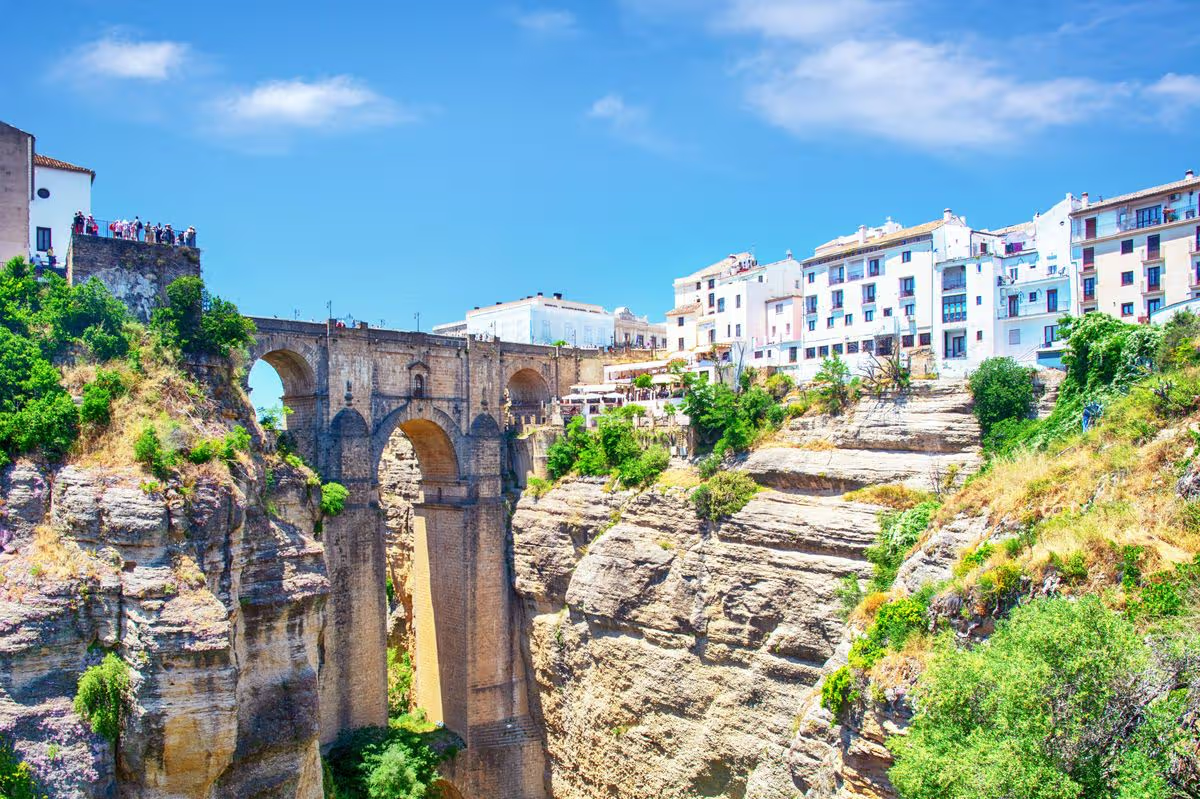
Ronda is a stunning mountaintop city situated in the Málaga province of Andalusia in Southern Spain. It is renowned for its dramatic position perched atop the sweeping El Tajo gorge, which divides the city’s 15th-century new town from its ancient old town, which dates back to the era of Moorish rule.
The iconic Puente Nuevo, a striking stone bridge that spans the dramatic gorge, features a viewpoint offering breathtaking views. The new town’s Plaza de Toros, a legendary 18th-century bullring, remains one of the city’s most instantly recognisable landmarks.
Ronda is also widely regarded as the birthplace of modern bullfighting, with a bullring dating back to 1784. Although the bullring remains open to visitors, actual bullfights are an increasingly rare sight, with just one symbolic event staged there annually during the Corrida Goyesca, as part of the Feria de Pedro Romero, which traditionally takes place in the last week of August.
Beyond its rich and fascinating history, the city also possesses a romantic charm that has captivated poets and writers for centuries, bolstered further by its spectacular mountaintop setting, widely considered one of the most stunning locations in the entire country.
Being a compact town, everything is easily reachable on foot. And while it stands as one of the most celebrated of Andalusia’s ‘pueblos blancos’ (white villages), it has managed to avoid the mass tourism that has overwhelmed its coastal neighbours, such as Malaga.
Andrew went on to say: “Ronda is one of those places that simply doesn’t need any words to be described, because being there and seeing it for yourself is enough. The content really doesn’t do this place any justice for how spectacular it is.”
And situated in Southern Spain, you can anticipate the typical Mediterranean climate, featuring hot, dry summers and cool, wet winters.
Thanks to its elevated position (roughly 739 metres), it does see chillier winters and occasionally hotter summers than neighbouring coastal resorts.
As it’s just 100km from Malaga, roughly an hour and a half’s drive away, Ronda serves as an ideal day trip during your holiday, or a peaceful and relaxing base for your next Spanish getaway.
IF you’re looking for five-star stays on the cheap, check out Zaragoza in northeastern Spain.
The city has rooms in luxury hotels for as little as £79 per night for two people, as well as a thriving tapas scene – and it’s going to be very hot next week.
Sign up for the Travel newsletter
Thank you!
Zaragoza has rooms at five-star hotels for under £80 per nightCredit: AlamyHotel Palafox has a rooftop pool and rooms from £80Credit: booking.com
After a restful night, there’s plenty to do in Zaragoza which sits on the banks of the Ebro River.
And if you fancy a visit soon, the city is set to reach highs of 37C next week.
For tapas, head to El Tubo which has maze-like and narrow streets filled with restaurants.
The small dishes are generally served from 1-4pm and 8pm-midnight.
Hotel Palafox has rooms from singles to grand suitesCredit: Expedia
Some tapas specialities here include Ternasco de Aragón (lamb), migas (fried breadcrumbs), and borraja which is local wild greens.
It’s also a prime bar-hopping spot during the evenings.
If anyone is heading there as a family, there’s lots to keep children entertained like the aquarium and the Emoz origami museum is filled with tiny paper treasures.
The city has some impressive buildings, some of which are Basilica de Nuestra Senora del Pilar and Palacio de la Aljaferia.
Further afield, visitors can take a day trip to the Monasterio de Piedra which is a national park that has lots of pretty waterfalls.
Brits heading to popular Spanish islands this summer may find themselves at the heart of anti-tourism protests, with a pressure group insisting that there will be a “historic turnout”
14:57, 09 Jun 2026Updated 16:48, 09 Jun 2026
Antitourism protests – such as those seen in 2024 and 2025 – could be bigger this summer(Image: Europa Press Canarias via Getty Images)
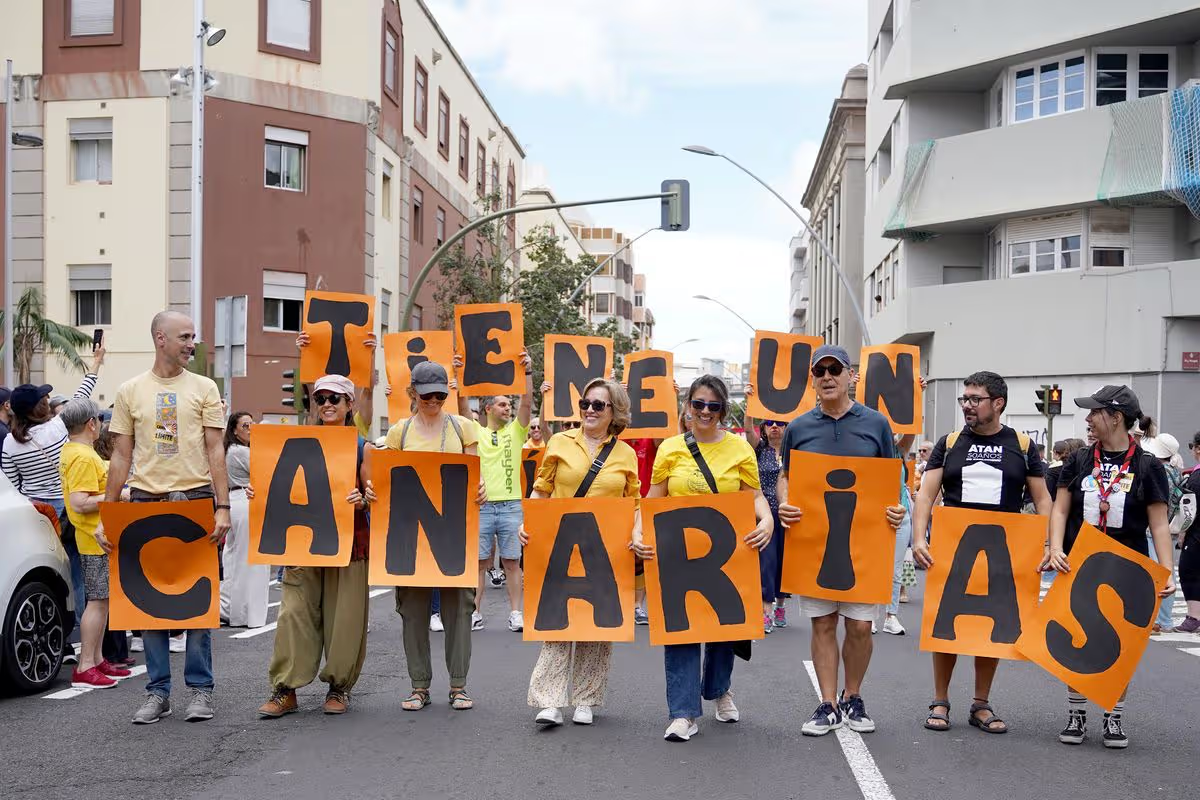
The news comes as sites in the Canary Islands have been daubed with anti-tourist graffiti, including reports from local news outlet Canarian Weekly of a ‘kill a tourist’ slogan being spotted in Tenerife. The graffiti was spotted by two expats hiking in Punta del Hidalgo, who then claimed they saw further disturbing graffiti during a walk to Bollullo Beach on the island’s north coast.
In a separate incident last week, five estate agents in Majorca with international names were daubed with graffiti including ‘guilty’ and ‘Guiris out!’ in an overnight attack. Guiri is a derogatory Spanish term used for tourists from Northern Europe.
Menys Turisme Més Vida announced a protest in Palma, a popular destination for Brits on the island of Majorca on July 26, which coincides with the start of the busiest school holiday season. Meanwhile there are protests planned in Menorca on June 13 with a similar anti-tourism sentiment.
In a statement on its website, the group said: “️We consider that the demands expressed during previous mobilisations have been ignored while problems such as the housing access crisis, tourist saturation, the destruction of the territory, the precariousness of living conditions and the pressure on public resources and services continue to worsen.
“Under the slogan ‘Majorca at the limit’, the call aims to once again demonstrate the strength of existing social unrest in the face of an economic model that continues to break tourism records while the living conditions of a growing part of the resident population worsen.”, it added.
The group claims that the protest has the support of 53 social , environmental, trade union, neighbourhood and cultural groups on the island, which sees nearly 13 million tourists annually, with Brits the second-largest percentage after Germany.
Majorca saw protests last June that organisers claim were attended by 30,000 people, although varying reports claim numbers from 5,000 to 8,000. This included reports of some people sitting on terraces being harassed by protestors. Another notable protest took place in Barcelona on June 15, 2025, in which smoke devices were used and tourists soaked with water pistols.
While there have been reports of a tourist slowdown in the Balearics and Canaries, anti-tourism protests do not seem to have a massive impact on visitor numbers. In April, the Canaries saw a drop in visitors of 8.3% compared to the year before, but this meant 1.2 million foreign tourists still visited the islands. It was also the first drop seen on the volcanic archipelago since the pandemic.
Over Easter, the Balearics reported a fall of nearly 20% in in-person tourist spending by card, despite an overall increase in spending across Spain as a whole, suggesting visitors were choosing to spend their money elsewhere.
Have a story you want to share? Email us at webtravel@reachplc.com