SpaceX

Elon Musk’s SpaceX eyes $1.77tn valuation ahead of historic IPO | Technology News

Elon Musk’s rocket company SpaceX is targeting a valuation of nearly $1.77 trillion in its blockbuster initial public offering (IPO), paving the way for the largest stock market debut in history.

In a filing with the US Securities and Exchange Commission on Wednesday, SpaceX said that it plans to sell 555.6 million shares at $135 apiece, raising approximately $75bn.

Recommended Stories

list of 4 itemsend of list

The eye-popping valuation would make SpaceX the world’s seventh-largest company by market capitalisation, ahead of Musk’s electric vehicle maker Tesla and social media giant Meta, and just behind Taiwanese chipmaker TSMC.

It would also eclipse energy giant Saudi Aramco’s 2019 debut, which raised $26bn at a valuation of $1.7 trillion.

Musk, who holds a roughly 42 percent stake in SpaceX, is poised to become the world’s first trillionaire upon the company’s debut on the New York-based Nasdaq stock exchange on June 12.

Despite the public listing, Musk will retain effective control of SpaceX with more than 82 percent of voting rights, the result of a dual-class stock structure that grants certain shares 10 votes instead of one.

The Texas-based firm’s decision to set a specific share price ahead of its IPO marks a break from usual practice.

Companies preparing for a public listing usually announce a preliminary price range that can be adjusted based on investor interest.

“The genuine surprise is that SpaceX fixed a price before the investor roadshow began,” Fabien Yip, a market analyst at online trading and investment company IG Group, told Al Jazeera.

“To me, this reflects Musk’s control over the deal terms and his confidence that the book will fill.”

Musk
Elon Musk departs after a welcome ceremony with USPresident Donald Trump and China’s President Xi Jinping at the Great Hall of the People, in Beijing, China, on May 14, 2026 [File: Mark Schiefelbein/AP]

Founded by Musk in 2002, SpaceX is best known for designing and launching rockets, spacecraft and reusable launch vehicles on behalf of NASA and private companies.

The company also provides internet services and artificial intelligence models through its Starlink and xAI divisions.

Musk has outlined lofty ambitions for SpaceX, including to establish a “self-sustaining” city on Mars, “make life multiplanetary,” and “extend the light of consciousness to the stars”.

SpaceX’s listing will be a test of investors’ confidence in Musk’s vision, which has yet to translate into profits at the company.

SpaceX reported a net loss of $4.9bn on revenue of 18.7bn in 2025, followed by a $4.3bn loss in the first quarter of this year.

Jay R Ritter, an emeritus professor at the University of Florida who specialises in IPOs, said the SpaceX IPO differs from Saudi Aramco’s blockbuster listing as the state-owned oil company had a track record of generating large revenues and profits.

“SpaceX, in contrast, has trailing annual revenue of less than $20bn, and is not profitable,” Ritter told Al Jazeera.

“So, one company’s valuation was – and is – based on its demonstrated profitability, while the other company’s valuation is based on potential.”

“With SpaceX, there is a risk that cash flows will be used to send hundreds of thousands of people to Mars, at a loss,” Ritter added.

Despite SpaceX’s lack of profitability, market sentiment is strong, said IG’s Yip, noting that buyers of investment products linked to the listing are pricing the company’s end-of-first-day market capitalisation at $2.2 trillion.

“The Tesla parallel is perhaps worth drawing: It debuted in 2010 as a loss-making company and largely tracked the S&P 500 for years, only breaking away decisively once it turned profitable for the first time in Q1 2013,” Yip said, referring to the benchmark stock index on Wall Street.

“SpaceX investors are making a similar bet on future growth, with the added complexity that SpaceX’s addressable market – rockets, satellite internet, AI – is considerably broader than Tesla’s was at listing.”

Source link

Mega-Cap IPOs Make Major Waves for Index Investors

As SpaceX and Anthropic eye public listings, index providers brace for major market dislocations.

When mega-cap companies go public, index providers and investors will see it as dropping battleships into the old fishing pond. The resulting waves are going to soak everyone.

Privately held artificial intelligence (AI) vendor Anthropic announced its filing of a draft registration statement with the U.S. Securities and Exchange Commission (SEC) for an initial public offering at a later date. According to the company’s website, Anthropic has not decided on the number of shares it will offer, nor at what price. The company recently closed a $65 billion fundraising round, valuing the company at $965 billion post-money.

The news comes as the SEC published SpaceX’s revised Form S-1 on the market regulator’s EDGAR database. The conspicuously absent OpenAI reportedly is filling out its underwriters bench for a possible September IPO. The AI company reached a post-money valuation of $852 billion, according to CNBC.

The Index Aspect

If index providers add these firms that would instantly become one of the 10-largest listed companies by market cap before their trading prices stabilize, it could cost them dearly due to resulting massive price dislocations.

“Leaving out a mega-cap company means the index is not doing its job,” James Angel, associate professor and faculty affiliate at Georgetown University’s Psaros Center for Financial Markets and Policy, tells Global Finance. “It thus makes sense to include a big IPO fairly quickly.”

“Big IPO” is not an understatement. Wall Street consensus expects SpaceX’s IPO to result in a market capitalization between $1.75 trillion and $2 trillion, would lower Meta’s and Tesla’s rankings in the10-largest Nasdaq-100 Index components by market capitalization while move Micron Technology out of the Top 10. If rumors of a SpaceX-Teslamerger prove true, only Nvidia, Alphabet, and Apple would have a larger market capitalization than the resulting $3.4 trillion behemoth.

The Fast Path

Nasdaq has already addressed the mega-cap issue by updating the methodology for inclusion in its Nasdaq-100 Index, which represents the 100 largest Nasdaq-listed non-financial companies, in May.

Among the major changes made by Nasdaq was introducing quarterly index reconstitutions in March, June, and September, in addition to its regular December reconstitution. Nasdaq has also incorporated a “Fast Entry” pathway for new listings that rank among the top 40 of the current Nasdaq-100 constituents by full market capitalization, based on both listed and unlisted shares.

“These companies are evaluated on their seventh trading day and, if eligible, added shortly thereafter, with all existing liquidity requirements still applying,” explained Emily Spurling, Global Head of Index at Nasdaq Global Indexes, in an interview posted on the Nasdaq website. “The quarterly rebalance handles the broader population of eligible companies; Fast Entry ensures the index can respond in a timely way when a company of significant scale enters the public market.”

SpaceX stock could see its highest price jump not on June 12, its reported IPO day, but on July 7, the earliest it could be added to the Nasdaq-100 Index, according to The Motley Fool’s Sean Williams.

“Taking into account the Juneteenth (June 19) and Independence Day (July 3) holidays for the stock market, the 15th trading day, including its IPO day, is July 6,” he wrote. “Index funds that attempt to mirror the market-cap-weighted Nasdaq-100 will be required to purchase a jaw-dropping number of shares after this 15-day period comes to a close. Mandatory purchases from exchange-traded funds and index funds are estimated at $22 billion to $27 billion.”

“Nasdaq made the biggest change in the Nasdaq-100 rules as an inducement to listing on Nasdaq,” says Angel.  “The other index providers have no similar incentive to shorten the seasoning period.  I get the impression they are just doing it to make their indices more reflective of what is going on in the market.”

The Not-So-Fast Path

Meanwhile, S&P Dow Jones Indices (S&P DJI)  is mulling methodology changes to its S&P U.S. Indices and Dow Jones U.S. Total Stock Market Indices. The company is considering whether to implement a “narrowly defined rule exception for MegaCap companies and adjustment to the IPO seasoning period,” according to a prepared statement.

The index vendor defines mega-cap companies as those with a market capitalization equal to or greater than the 100th largest company in the S&P Total Market Index, which was approximately $150 billion at the start of June.

According to reports from Bloomberg News, the major consideration is whether to reduce the seasoning period for IPOs before they are eligible for inclusion in an index to six months from 12 months

The consultation period ended on May 28, and any changes that S&P DJI proposes to implement would take effect “prior to the market open on Monday, June 8, 2026, unless otherwise announced,” the statement continued.

The company declined to comment beyond its published statement.

Source link

Anthropic confidentially files for initial public offering

June 1 (UPI) — Artificial intelligence company Anthropic confidentially filed Monday for an initial public offering with the Securities and Exchange Commission, joining SpaceX and OpenAI in plans to go public this year.

“This gives us the option to go public after the SEC completes its review,” Anthropic said in a statement, CNBC reported. “The proposed initial public offering will depend on market conditions and other factors.”

That makes three prominent companies with IPO plans in 2026. SpaceX plans to debut next week, while OpenAI is preparing to file. Anthropic’s filing did not give any further information on timing, but it could go public as soon as this fall, The New York Times reported.

Last week, Anthropic passed OpenAI in valuation, reporting $965 billion as opposed to OpenAI’s $852 billion reported in March, CNBC reported. The company, based in San Francisco, is the creator of the Claude chatbot and the Claude Mythos Preview AI model. It has a focus on software coding.

Anthropic’s founders left OpenAI in 2021 to found the new company after concerns about OpenAI’s direction. Anthropic leaders have stressed safety in the use of AI, which caused issues with the U.S. Department of Defense after the company wanted limits on military and intelligence usage of its products.

President Donald Trump then called it a “radical left, woke company” and ordered federal agencies to stop using Anthropic products, while Pete Hegseth, the secretary of defense, called the company a supply chain risk to national security. Anthropic has sued the Trump administration to reverse the blacklisting, and that lawsuit is ongoing. Meanwhile, the company’s growth in the private sector has accelerated, CNBC reported.

Source link

Cost To Link LUCAS Kamikaze Drones To Starlink Highlights Pentagon’s Ever-Growing Dependence On SpaceX

The cost to connect each of the U.S. military’s Low-Cost Uncrewed Combat Attack System (LUCAS) one-way attack drones to space-based networks has risen from $5,000 to $25,000 a month, according to a new report. This is said to be the result of a switch from using the commercial Starlink network to its more secure government-focused cousin Starshield, which SpaceX demanded after extensive use of LUCAS drones in the latest conflict with Iran. The Pentagon has pushed back on the story, but it still highlights how critical SpaceX’s networks and other space services have become across the U.S. government, which TWZ has previously explored in detail.

Reuters first reported on the price increase to connect the datalinks on LUCAS drones to SpaceX’s space-based networks earlier today. The story cites anonymous sources, as well as Pentagon documents the outlet says it reviewed. This follows the recent announcement that the Pentagon is working to make LUCAS more autonomous with new artificial intelligence (AI) driven swarming capabilities, which could impact future connectivity demands.

An array of LUCAS kamikaze drones. CENTCOM

Produced by SpektreWorks, LUCAS was developed in close cooperation with the U.S. military. It is a reverse-engineered clone of the Iranian-designed Shahed-136 and has a unit cost of around $35,000. The American drone already comes in multiple variations, and there is a related target drone design for use in training and test and evaluation activities. Versions fitted with miniature beyond-line-of-sight satellite datalinks, allowing for dynamic control and for their progress to be otherwise monitored after launch, have been a fixture in official pictures of LUCAS drones in the Middle East.

In the video in the social media post below, the satellite communications terminal can be seen hanging from a cord on a LUCAS drone said to have been recovered largely intact in Iraq.

Local Iraqi residents are taking the newly deployed, nearly intact American LUCAS drone for themselves. pic.twitter.com/fbx411iAYU

— Special Kherson Cat 🐈🇺🇦 (@bayraktar_1love) March 2, 2026

The U.S. military announced it had begun fielding LUCAS drones operationally last December with a special operations-led task force in the Middle East. LUCAS’s official combat debut came in the opening wave of strikes on Iran on February 28. U.S. Navy Adm. Brad Cooper, head of U.S. Central Command, subsequently described the one-way attackers as an “indispensable” component of that operation, dubbed Epic Fury.

What we know about SpaceX’s reported upcharge for LUCAS

“Within weeks of the United States launching its bombing campaign, SpaceX executives met Pentagon officials and argued ​the military had been paying about $5,000 for connection per terminal while effectively using a higher tier of service worth closer to $25,000,” according to Reuters. “SpaceX argued the ⁠LUCAS drones were operating under conditions that aligned more closely with its aviation tier subscription rather than a lower priced land or mobility service. Pentagon officials argued that the $25,000 price tag – a monthly fee – was designed for aircraft, not kamikaze drones that used Starlink connection for a matter of minutes ​or hours.”

“The Pentagon, which was ramping up strikes on Iran, ultimately agreed to pay SpaceX’s proposed price increase,” Reuters‘ report added.

The story also said this reflected broader “tensions” between the Pentagon and SpaceX that have been growing recently over Starlink fees.

“The Fake News media has the story wrong, again,” top Pentagon spokesperson Sean Parnell subsequently wrote in a post on X. “The claims in this article are simply not based in reality and do not reflect the close, effective collaboration between our teams.”

The Fake News media has the story wrong, again. @SpaceX remains a strong and valued partner to the Department of War.

The claims in this article are simply not based in reality and do not reflect the close, effective collaboration between our teams. https://t.co/872Maa5FX2

— Sean Parnell (@SeanParnellASW) May 26, 2026

When reached for comment by TWZ earlier today before Parnell’s post, the Pentagon did not directly address Reuters‘ report.

“The Department of War is committed to fostering a competitive environment for commercial satellite communications and is conducting comprehensive market research to continuously monitor commercial offerings that align with government requirements,” a Pentagon official told us. “We are actively engaging with industry to identify innovative solutions and new entrants, ensuring acquisitions are inclusive of a diverse range of capable vendors.”

“The Commercial Satellite Communications Office is working on additional options with other proliferated low earth orbit partners as part of its strategy to leverage the unprecedented capabilities provided by the commercial SATCOM industry,” that same official added. “The U.S. Space Force is operating in accordance with the terms and conditions of its contracts.”

TWZ has also reached out to SpaceX for more information.

“It is a violation of commercial Starlink terms of service to use the terminal for weapon systems. This applies to all users and is shut down when discovered,” Elon Musk, who is the founder and CEO of SpaceX among his other endeavors, had written on X on March 1 in response to a post about LUCAS making use of Starlink. “There is a separate network called Starshield, which is operated by the US government. This is not under SpaceX control.”

It is a violation of commercial Starlink terms of service to use the terminal for weapon systems. This applies to all users and is shut down when discovered.

There is a separate network called Starshield, which is operated by the US government. This is not under SpaceX control.

— Elon Musk (@elonmusk) March 2, 2026

SpaceX’s networks and the LUCAS cost equation

Though described as a “monthly fee,” Reuters‘ report indicates that the U.S. military pays the $25,000 only once to employ a LUCAS drone. As the piece points out, the Pentagon reportedly argued that it should get to pay the lower $5,000 rate because it was only using the network to support LUCAS in timeframes measured in “minutes ​or hours.” This is also in line with Reuters describing the added cost as effectively approaching doubling the LUCAS drone’s $35,000 unit price.

The entire point of these one-way-attack drones is to offer a lower-cost complement to traditional exquisite long-range strike munitions. The Tomahawk cruise missile, the unit cost of a current-generation version of which is generally said to be in the $2 to $2.5 million range, is often used as a point of comparison, although they are far from equal in many ways. The underlying argument for LUCAS also relies on the drone being relatively cheap and easy to produce, as well as employ in large volumes. TWZ laid all of this out in a detailed case for the Pentagon acquiring exactly these kinds of drones in mass, which we published just three months before LUCAS was confirmed to be in operational service.

A combined price tag of some $60,000 (the unit cost plus one month’s fee to connect to Starshield, as reported by Reuters) would still be far less expensive than the cost of a single Tomahawk. Using Starlink/Starshield terminals to begin with, beyond their connectivity advantages, offers the benefit of miniaturized high-bandwidth hardware that is being produced at a commercial scale.

A close-up look at a LUCAS drone, with its square-shaped satellite communications antenna seen at the rear of the main body. CENTCOM

Plans to make LUCAS more autonomous through the addition of new swarming capabilities could affect future network connectivity requirements for the drones. This will be enabled by the integration of Shield AI’s Hivemind autonomy software, as you can read more about here.

Shield AI flies Hivemind AI Pilot on 6th Aircraft thumbnail

Shield AI flies Hivemind AI Pilot on 6th Aircraft


As TWZ recently wrote:

“For the time being, the U.S. military demands a human operator is ‘in or on the loop’ for kinetic or otherwise potentially deadly actions, as opposed to letting autonomous weapons choose what targets to attack on their own without any extra authorization. While less controversial morally, this can also be a tactical hindrance, slowing the swarm’s potential and adding complexity and vulnerabilities to its operations. The debate around this choice will only get more heated as adversaries bypass this elected restriction in order to get an upper hand in future combat scenarios.”

“As we pointed out in our initial reporting on LUCAS’s emergence, the fact that some of the LUCAS drones already include miniature SATCOM terminals is very noteworthy. After all, ‘human in the loop’ swarming would not be possible without this form of communications at the beyond line-of-sight ranges these drones fly. At the same time, an entire swarm can be controlled in this manner, even if just a handful are equipped with SATCOM terminals. While a swarm can be mesh networked within line-of-sight, it has to relay all the important information back to an operator. By using some of the drones as SATCOM relay nodes, the entire swarm can be controlled remotely from most places on the planet.”

“Regardless, the Hivemind AI pilot will allow appropriately equipped LUCAS drones to perceive their environment, make decisions, and act autonomously without continuous human input. Unlike conventional autopilots tied to fixed flight paths, Hivemind is designed to dynamically adjust mission plans, react to unforeseen conditions, avoid obstacles, and carry out complex tasks with minimal operator oversight.”

A LUCAS drone seen being tested at the Yuma Proving Ground in Arizona. Mark Schauer/US Army

An increase in fees to connect individual SATCOM terminals to SpaceX’s networks, as well as cost savings on hardware, might further push the Pentagon toward a hub-and-spoke mesh-like networking arrangement like the one described above. LUCAS drones could also be employed in other contexts where satellite connectivity throughout the course of a mission might not be required, including if used essentially as fire-and-forget missiles aimed at fixed target coordinates. A SATCOM terminal would not be necessary at all for this kind of mission set, although it would be beneficial.

There is also a question about the total bandwidth that might be required to support swarms of LUCAS drones. From Reuters‘ reporting today, the increased load on its networks was a central factor in SpaceX’s demands for higher fees after strikes on Iran began. That being said, as already mentioned, Starlink/Starshield terminals are already designed with relatively high bandwidth use in mind.

These same considerations will apply to current and future programs that rely heavily on SpaceX’s satellite communications networks.

Dependence on SpaceX and U.S. national security

Specific cost figures aside, the LUCAS drone’s reliance on Starlink/Starshield underscores SpaceX’s dominance in the satellite communications market globally. It also highlights how essential the company’s space-based networks have already become for the U.S. military. TWZ explored this reality in detail amid open feuding between President Donald Trump and Elon Musk last year. The relationship between Trump and Musk has since rebounded, with the latter accompanying the President on his recent state visit to China.

Reuters reported today that there are some 10,000 satellites in SpaceX’s constellation supporting Starlink and Starshield, and that this represents more than 60 percent of all satellites currently in orbit. The company’s space-based networks, far and away, dominate the commercial satellite communications space globally. Offerings from competitors like OneWeb and Amazon Leo are more limited in scale and scope.

Watch SpaceX deploy Starlink satellites into space thumbnail

Watch SpaceX deploy Starlink satellites into space


This is reflected in the U.S. government’s ever-growing use of Starlink/Starshield on aircraft, ships, and in settings on land. This includes integration on some very high-value assets, including the U.S. Marine Corps’ VH-92 Patriot presidential helicopters and U.S. Navy aircraft carriers. There has also been a steadily growing push to use these networks to support tactical operations, as now highlighted by the link to LUCAS. The U.S. military had first demonstrated the ability to use Starlink to transmit targeting data years ago.

The U.S. government’s increasing use of Starlink/Starshield has already prompted operational security questions, even just in the context of supporting day-to-day peacetime operations, as you can read more about here. Starshield is designed to be more secure to help address these concerns for government customers.

At the same time, heavy use of Starlink on both sides of the conflict in Ukraine, including as a means of guiding one-way attackers in the air and at sea, has further underscored potential risks associated with the use of the networks in tactical scenarios. SpaceX and CEO Musk have faced particularly significant criticism in the past over limiting some Ukrainian use of the network. Actions SpaceX took earlier this year to block unregistered Starlink terminals also had major consequences for Russian forces, which were sent scrambling to find alternatives to fill the massive resulting communications gaps.

The very first Ukrainian kamikaze uncrewed surface vessel to emerge in 2022, seen here, very prominently had a Starlink antenna mounted toward the stern. via X

What SpaceX might have been prepared to do if the Pentagon did not agree to pay increased fees to support LUCAS is unknown. We also do not know what kind of protections are currently baked into U.S. contracts with SpaceX to prevent government users from being suddenly disconnected without warning. Regardless, as noted earlier, the Pentagon could deploy LUCAS swarms with just a handful of drones equipped with terminals to relay the critical info needed to control the rest of the formation, and LUCAS can still be used as a fire-and-forget weapon without any beyond line-of-sight connectivity, although this would greatly curtail its flexibility and, in some cases, its efficacy.

A LUCAS drone is prepared for launch from the Independence class Littoral Combat Ship (LCS) USS Santa Barbara during a test. Courtesy photo/Naval Air Warfare Center Weapons Division

As the Pentagon official noted to TWZ today, there is a push to explore commercial alternatives to Starlink/Starshield and promote further competition in this space. At the same time, part of the attractiveness of Starlink/Starshield for the U.S. government has been the relatively low costs and other benefits associated with leveraging such well-established networks, as well as the knowledge base that comes along with that pedigree. Just today, the U.S. Space Force announced it had finalized a new Other Transaction Authority (OTA) agreement with SpaceX, valued at $2.29 billion, for work on the Space Data Network (SDN) Backbone program. The SDN is tied to work on new space-based sensing and targeting capabilities, particularly for missile defense, which could now feed into the Golden Dome initiative.

Beyond satellite communications, SpaceX is reportedly also now a critical player in U.S. military efforts to increasingly move air and ground moving target indicator (AMTI/GMTI) tasks into orbit.

On top of all this, SpaceX is also by far the top provider of space launch services globally, as well as other space-related services, including for the U.S. government. The core elements of Golden Dome, including the sustainment of planned batteries of space-based interceptors, require reliable, routine access to space at a frequency that only SpaceX can provide within budget constraints.

SpaceX looks set to remain a dominant force in this market space worldwide for the foreseeable future, and it continues to expand its presence, driven heavily by commercial demand. The company’s government contracts, though substantial, only account for around a fifth of its annual revenue, according to Reuters.

Despite the Pentagon’s response to the particulars of Reuters’ story today, being so heavily reliant on one provider for critical technologies still raises important questions not just for LUCAS, but for other efforts across the U.S. military that rely on robust and secure satellite communications connectivity.

Contact the author: joe@twz.com

Joseph has been a member of The War Zone team since early 2017. Prior to that, he was an Associate Editor at War Is Boring, and his byline has appeared in other publications, including Small Arms Review, Small Arms Defense Journal, Reuters, We Are the Mighty, and Task & Purpose.


Howard is a Senior Staff Writer for The War Zone, and a former Senior Managing Editor for Military Times. Prior to this, he covered military affairs for the Tampa Bay Times as a Senior Writer. Howard’s work has appeared in various publications including Yahoo News, RealClearDefense, and Air Force Times.


Source link

Pentagon’s Plans To Track Aircraft From Orbit Accelerated With New $4B SpaceX Deal

The U.S. Space Force has awarded SpaceX a $4.16B deal to help accelerate work on what could be a game-changing space-based air moving-target indicator (AMTI) sensor network. The service says it now hopes to have an “early capability” in orbit by 2028, years ahead of the timelines officials have put forward in the past.

Plans for an AMTI satellite constellation were directly tied to an attempt in the past year to axe purchases of E-7 Wedgetail airborne early warning and control aircraft, something the Pentagon has now fully abandoned after Congress intervened. Though the Air Force is moving ahead again with the E-7, which will succeed its aging E-3 Sentry Airborne Warning and Control System (AWACS) jets, the end goal remains to eventually push most, if not all, AMTI tasks into space.

Aircraft like the E-7 Wedgetail seen here have historically been critical providers of AMTI capability. Australian Department of Defense

“The long-standing method of military airborne platforms to track moving targets faces continued challenges as adversaries develop increasingly sophisticated anti-access/area-denial (A2/AD) systems,” the Space Force said in its press release about the new deal with SpaceX today. “To compliment [sic; complement] traditional airborne sensing, the requirement for a layered, highly resilient tracking architecture is evident. SB-AMTI aims to enhance the Space Force’s capabilities to the Joint Force through the establishment of a persistent, global capability to sense and track airborne targets from space.”

The Space Force has described the $4.16 billion deal with SpaceX for the Space-Based Airborne Moving Target Indicator (SB-AMTI) program as a “competitive Other Transaction Authority (OTA) agreement,” rather than a traditional contract. The agreement came via the office of the Portfolio Acquisition Executive for Space-Based Sensing & Targeting (PAE SBST).

“This initial award is projected to field a constellation of satellites by 2028, providing the Joint Force with an early capability to eliminate operational blind spots,” according to the Space Force release.

DARPA

In the past, U.S. officials have generally talked about space-based AMTI becoming a reality sometime in the 2030s. Work is underway to push ground moving-target indicator (GMTI) tasks into orbit, as well.

Some degree of on-orbit prototype AMTI sensor testing has already been ongoing for at least a year, if not much longer, but this work has been heavily classified. In addition to the U.S. Air Force and Space Force, both of which fall under the Department of the Air Force, the National Reconnaissance Office (NRO). The NRO, the activities of which are shrouded in heavy secrecy, is a U.S. military organization that serves as America’s main remote sensing intelligence arm.

“The capabilities that are happening in space are far exceeding our expectations,” then-Air Force Maj. Gen. Christopher Niemi said at a hearing earlier this year as part of a response to a question about plans for the E-7. He declined to offer more details publicly. Niemi, who has since been promoted to lieutenant general, is currently Deputy Chief of Staff of the Air Force for Force Modernization, and the service’s Chief Modernization Officer

SpaceX has already reportedly been deeply involved in this work, too, as you can read about more in this past TWZ feature. This underscores the company’s ever-growing dominance globally in all aspects of the space industry, which we will come back to later on.

As mentioned, a functional, persistent, and distributed AMTI (and GMTI) sensor network in orbit has the potential to be game-changing. As TWZ wrote back in 2024, talking primarily about the future of space-based GMTI capabilities:

A larger, distributed constellation would have the ability to monitor huge swathes of the Earth simultaneously, and depending on the size of the constellation, at least far more persistently to seamlessly. This could make it difficult, if not impossible, for an opponent to hide activities of interest. A very low revisit rate, or even eliminating revisit rate altogether, could even open up the possibility of continuous ‘streaming’ coverage of a location from low Earth orbit. This would also be essential for persistent GMTI coverage that tracks ground movements in real time that will actually be high enough in fidelity to guide weapons onto those tracks. It’s possible that aerial tracking could also be a function, as well, even to a more limited degree. The E-3 Sentry Airborne Warning and Control System (AWACS) will also be replaced at least partially by space-based capabilities, along with the E-7 Wedgetail.”

A US Air Force E-3 Sentry AWACS jet. USAF

“There is also a fair chance that this is another type of system, perhaps to execute broad area optical/infrared imaging with some exotic capabilities to provide tracking. We just don’t know.”

“Regardless, yes, we are talking about the possibility of panoptic or near panoptic targeting and surveillance from space.”

“Greater collaborative capabilities, especially ones enabled by the use of machine learning and artificial intelligence (AI) technologies, could help to find targets of interest and anomalies far faster than ever before. This could also open a door to more autonomous collection, tasking/retasking, and other capabilities, as well. Areas of interest that need seamless coverage could have extra satellites retasked to the necessary orbit in order to do so automatically, without the need for human deconfliction and even direct operator direction.”

It is not hard to imagine how the satellite constellation being described here would fundamentally change the U.S. military’s ability to not just spot and track targets globally, but also close the kill chains to engage them, even at very long ranges. This has massive implications for future net-centric warfare where all sorts of tangential capabilities will increasingly be networked together. It might impact how tactical aircraft are equipped in the future, including the need for their own radars. There could at least be a reduced need for them to use their own radars to guide missiles, even when no supporting sensor network within the Earth’s atmosphere has relevant data to provide.

Unlike having to rely on a single plane in a single surveillance place, a space-based sensor network made up of a very large number of individual satellites would also be highly resilient to attacks, as well as other attrition just due to technical breakdowns or other factors.

All this being said, U.S. officials have been open about potential challenges when it comes to making space-based AMTI capabilities a reality, even just compared to establishing GMTI networks in orbit.

L3Harris

“So GMTI [ground moving-target indicator capability] and AMTI [air moving-target indicator capability] sound like they’re really close, just because one little letter that is all you changed, [but it] turns out they’re pretty different,” Chief of Space Operations Gen. Chance Saltzman, U.S. Space Force’s top officer, said during a press briefing on the sidelines of a conference in December 2025, according to Breaking Defense. “What it takes to accomplish AMTI is different than what it takes to accomplish GMTI.”

“Things on the ground move slower than things on [sic] the air, so [they] require different levels of fidelity tracks,” he added.

“The [AMTI] data the Intelligence Community and warfighter need presents a multi-phenomenology challenge that requires automated orchestration of the NRO’s collectors, low-latency data transport, and rapid data fusion by the NRO’s unmatched space communications and ground architecture capabilities,” a spokesperson for NRO also told Breaking Defense earlier this year.

It’s worth noting here that satellites with sensors are only one component of the total equation. Robust, resilient, and secure communications networks will be vital to getting the data collected where it needs to go. This is a separate area where SpaceX is already playing an increasingly central role with its Starlink and Starshield networks, as you can read more about here. Laser-based communications relays are set to be another key supporting capability.

Watch SpaceX deploy Starlink satellites into space thumbnail

Watch SpaceX deploy Starlink satellites into space


In its announcement today, the Space Force did explicitly stress that SpaceX will not be the only company supporting the SB-AMTI effort going forward, and that it has established a larger “vendor pool.”

“By utilizing this multi-vendor framework, we are capitalizing on established industry capacity and continuously evaluating and onboarding the best tech to field this essential capability at speed and scale,” Space Force Col. Ryan Frazier, the acting PAE SBST, said in a statement. “We will not leverage any one single provider; instead, we are partnering with a highly diversified pool of traditional and non-traditional vendors, each bringing various capabilities to support the SB-AMTI architecture, ensuring the Joint Force has access to a strong, competitive industrial base well into the future.”

At the same time, as TWZ has noted in the past, SpaceX’s dominance in the market gives the company a clear advantage for securing further deals. This extends to the additional demands to put all this architecture in space. At least currently, no other company has the same capacity to provide the U.S. military with the kind of reliable access to space at the required cadence, and within budget constraints. SB-AMTI is already a major budget priority, with the Space Force asking for more than $7 billion in additional funds to procure additional elements of the system in its 2027 Fiscal Year budget request.

These are all factors that are also notably set to play into how the Golden Dome missile defense initiative evolves. There has already been talk about Golden Dome leveraging existing work, including programs under the umbrella of PAE SBST, to help accelerate the fielding of at least an initial layer of capability.

It should also be reiterated that the Air Force is now moving ahead again with the E-7 program, and traditional aerial AMTI capabilities look set to remain an important element of U.S. military operations for the foreseeable future.

That being said, the new $4.16 billion agreement with SpaceX makes clear that the Space Force is pressing ahead with its plans for a space-based AMTI sensor network with hopes that at least an early operational capability could be in place within the next two years.

Contact the author: joe@twz.com

Joseph has been a member of The War Zone team since early 2017. Prior to that, he was an Associate Editor at War Is Boring, and his byline has appeared in other publications, including Small Arms Review, Small Arms Defense Journal, Reuters, We Are the Mighty, and Task & Purpose.


Source link

FAA tells SpaceX to investigate booster failure during test launch

May 27 (UPI) — The Federal Aviation Administration on Wednesday ordered SpaceX to investigate why a booster for its Starship rocket system failed during a test flight Friday, grounding the megarocket for a time.

The FAA declared the incident a “mishap” that involved the Super Heavy first-stage booster as it separated from the main ship and returned to the Gulf of Mexico after launch. The booster was supposed to perform a sustained burn to a controlled landing in the gulf, but a possible engine failure meant it fell back to Earth instead in a “hard splashdown,” SpaceX said in its launch report. The FAA said there were no reports of public injury or damage to public property from the mishap.

“The FAA will oversee the SpaceX-led investigation, be involved in every step in the process, and approve SpaceX’s final report, including any corrective actions,” the agency statement said.

“A mishap investigation is designed to enhance public safety, determine the root cause of the event, and identify corrective actions to avoid it from happening again,” the statement continued. “A return to flight of the Starship-Super Heavy vehicle is based on the FAA determining that any system, process, or procedure related to the mishap does not effect public safety.”

This means that another launch is less likely before the company’s planned initial public offering in June, TechCrunch reported.

The Starship system has two parts: the Super Heavy booster and the spacecraft itself, also called Starship. This was the first launch of the third version of the system, which is the first capable of deep-space flight. Plans call for Starship to carry Artemis 4 astronauts to the surface of the moon in a mission set for late 2028.

The Starship portion of the overall system did make it to space during this test launch, although it also lost one of its Raptor 3 vacuum engines there. Overall, this and other portions of the launch, including deployment of satellites and simulators, were considered a success.

The SpaceX Falcon Heavy rocket launches the ViaSat-3 F3 satellite from Launch Complex 39A at the Kennedy Space Center in Florida on April 29, 2026. Photo by Joe Marino/UPI | License Photo

Source link

SpaceX launch of updated Starship V3 ‘delivered’ on first flight

May 22 (UPI) — SpaceX successfully launched an updated version of its Starship on Friday evening, meeting all goals the company said it was aiming for.

The launch was the first of the company’s V3 version of both the booster rocket and “Ship” upper stage, which is a key part of NASA’s Artemis series of missions to the moon and, potentially, to Mars.

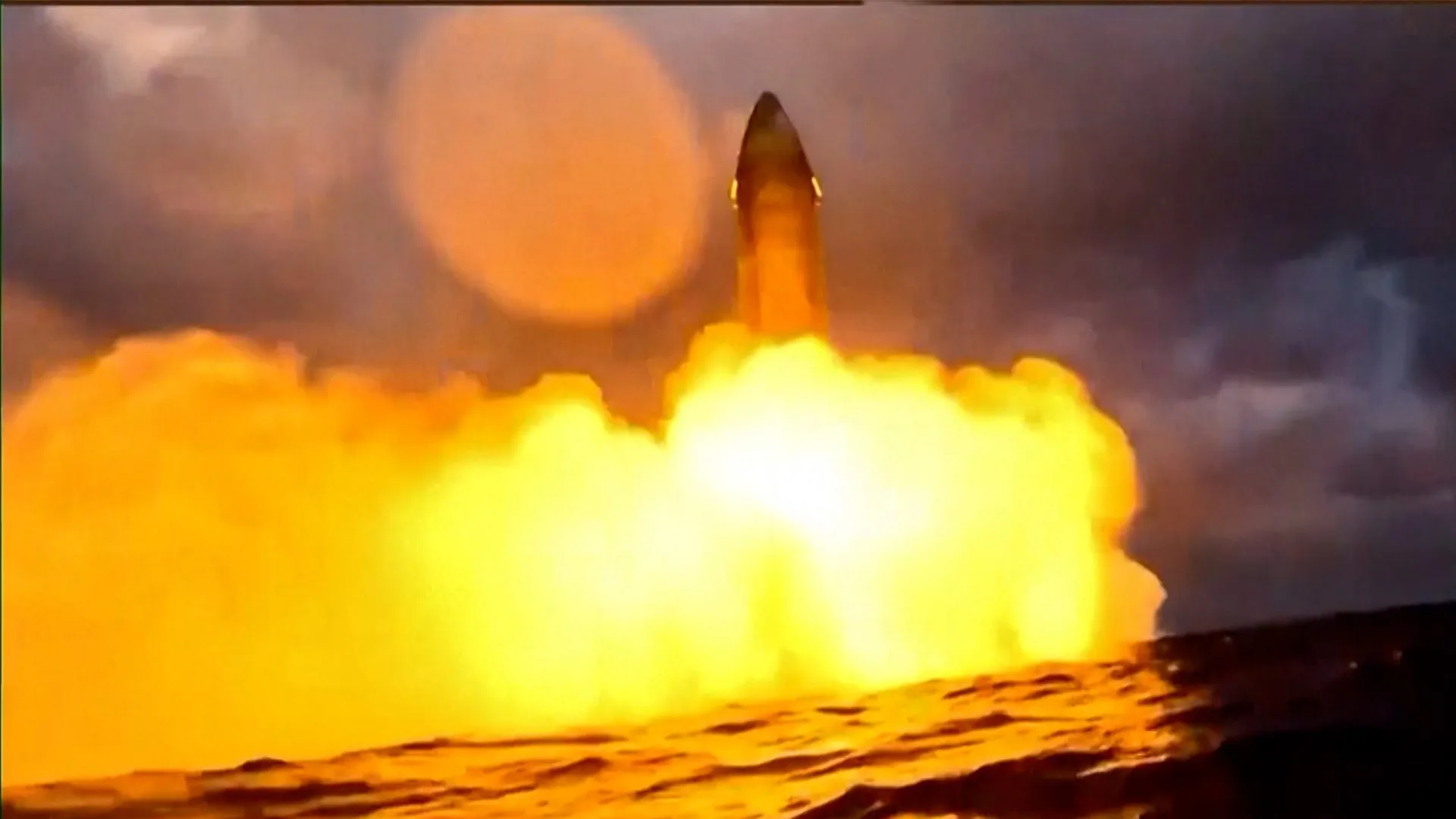
SpaceX commentators said during the company’s official broadcast that the updated Starship, which delivered 22 simulator Starlink satellites into orbit and converted flight adjustments it will need when it lands instead splashing down in water, “delivered.”

The company had scrubbed the first attempted launch of the megarocket, the largest ever built, on Thursday because of an engineering issue that could not be fixed in time to make the scheduled launch window.

The mission for the 408-foot-tall Super Heavy rocket, which is powered by 33 newly redesigned Raptor engines, the same as Starship, was to successfully launch, ascend, separate from the second stage — Starship — and then perform boost back and landing burns before splashing down in the Gulf of Mexico.

After separation, Starship’s goals were to light its engines, enter a sub-orbital path and release a series of dummy Starlink satellites before performing a series of maneuvers and testing its newly designed heat shield.

When Starship splashed down in the Indian Ocean after its tests, SpaceX commentators said during the broadcast that the fireball when it hit the Indian Ocean was the goal, “as weird as that sounds.”

Kevin Warsh takes the oath of office as he is sworn-in as the new chairman of the Federal Reserve by Supreme Court Associate Justice Clarence Thomas in the East Room of the White House on Friday. Photo by Yuri Gripas/UPI | License Photo

This version of Starship is not the final one, but rather is a prototype of one of several that are planned for NASA’s return of Americans to the moon.

NASA’s planned Artemis III mission in 2028 is expected to test connecting the Orion crew capsule — which was tested on its first crew mission earlier this year — to both Starship and Blue Origin‘s Blue Moon space vessel, which has yet to take its first flight.

Source link

SpaceX scrubs planned launch of newly upgraded Starship V3 megarocket

May 21 (UPI) — SpaceX on Thursday scrubbed the planned first test flight for its redesigned Super Heavy megarocket, the largest rocket ever built, from its new Texas launch pad.

Following several delays of the countdown at 40 seconds remaining, SpaceX spokesman Dan Huot announced the launch would be delayed due to engineering issues which could not be immediately remedied.

“We are expecting to be able to make another flight attempt tomorrow, but obviously stay tuned to our social media,” he said.

In addition to trying out the redesigned Super Heavy propulsion system, the launch is meant to assess upgraded systems on Starship, including the deployment of 22 Starlink satellite simulators, intentionally stressing its new flight control flaps and attempting the “dynamic banking maneuver” that it eventually will use to land back on its pad.

When it takes off, the uncrewed mission will be the 12th flight for Starship as SpaceX develops what is expected to be a primary vehicle for NASA’s Artemis missions to the moon.

“The flight test’s primary goal will be to demonstrate each of these new pieces in the flight environment for the first time, with each element of the Starship architecture featuring significant redesigns to enable full and rapid reuse that incorporate learnings from years of development and testing,” SpaceX said on its website.

The V3, which is 408 feet tall and more powerful than previous Super Heavy rockets, includes 33 redesigned Raptor engines — Starship has six of its own — will take off from South Texas for a round of primary tests similar to previous launches.

The rocket, SpaceX said, is hoped to successfully launch, ascend, separate from the second stage — Starship — and then perform boostback and landing burns in the Gulf of Mexico.

“As this is the first flight test of a significantly redesigned vehicle, the booster will not attempt a return to the launch site for catch,” the company said.

During the hot-stage separation, Starship will light its engines to enter a sub-orbital path, performing tests and then splashing down in the Indian Ocean.

Tests of the space vessel are important as NASA’s Artemis III mission in 2028 is expected to test connecting the Orion crew capsule to both Starship and Blue Origin‘s Blue Moon, although Blue Moon has yet to be launched for its first test flight.

Starship also is expected to be the ship that delivers Americans back to the moon in the next several years.

Source link

SpaceX IPO ready for launch as countdown begins for what could be the biggest ever listing

SpaceX founder Elon Musk announced plans on Wednesday for one of the biggest stock sales ever, by taking a space company public that is currently losing billions of dollars a year.


ADVERTISEMENT


ADVERTISEMENT

A filing shows that SpaceX lost $2.6 billion (€2.24bn) from operations last year on $18.7 billion in revenue, and the losses continued at the start of this year.

The prospectus did not put a dollar figure on the amount Musk hopes to raise, but various reports have estimated it at around $75bn (€64.5bn). An offering of that size would easily surpass the current title holder, Saudi Aramco, the oil giant that went public seven years ago and raised $26bn (€22.4bn).

SpaceX, formally known as Space Exploration Technologies Corp., said the money will help finance projects to put people on the Moon and Mars, as part of its goal to make humans an interplanetary species in the face of existential threats that could wipe out civilisation.

“We do not want humans to have the same fate as dinosaurs,” the filing states.

The prospectus reads, in part, like a Hollywood-style vision of the future, detailing in one section that part of Musk’s compensation will be granted only if he maintains “a permanent human colony on Mars with at least one million inhabitants.”

Short of that, the stock sale alone could make Musk — the founder and a major shareholder of SpaceX — the world’s first trillionaire. Forbes currently estimates his net worth at $839bn (€722bn), roughly equivalent to Poland’s annual GDP.

Losses mount despite strong revenue and Starlink growth

In addition to making reusable rockets to send astronauts into orbit, SpaceX has other businesses, some successful and others struggling, with plenty of question marks.

The document shows that Starlink, the world’s largest satellite communications company, is a major source of cash, generating $4.4bn (€3.8bn) in operating income last year. The business uses 10,000 satellites in low orbit to provide internet service to 10 million people in 150 countries and territories.

Among the struggling businesses are two Musk ventures recently acquired by SpaceX — his social media platform X, formerly Twitter, and his artificial intelligence firm xAI. Those purchases were criticised by some SpaceX investors as bailouts, as both are significant loss-makers.

The prospectus said its AI business lost $6.4bn (€5.5bn) from operations last year.

The original SpaceX business — building rockets and conducting launches — has benefited from major government contracts, raising questions that could come back to affect the company. Given Musk’s close ties to the Trump administration, government ethics lawyers and watchdogs have questioned whether he received preferential treatment in securing taxpayer-funded contracts, and whether that support will continue once Donald Trump leaves office.

SpaceX has won contracts worth $6bn (€5.2bn) from NASA, the Defence Department and other government agencies over the past five years, according to USAspending.gov. The company noted in its filing that one-fifth of its revenue last year came from the federal government.

Musk was the biggest donor to Trump’s presidential campaign and remains a major backer, despite a sometimes rocky relationship following his role in the government cost-cutting effort known as DOGE early last year.

Musk’s pay tied to ambitious targets as he retains firm control

Like many corporate CEOs, Musk’s compensation goes far beyond his annual salary, which was $54,080 (€46,538.5)in 2025 and has remained unchanged since 2019, according to the filing.

The prospectus says stock grants for him will be divided into 15 nearly equal tranches — 67 million shares each — and will vest only as the company reaches preset market capitalisation targets. In addition to the Mars colony milestone, SpaceX’s market value would need to reach $7.5 trillion (€6.45tr) for him to receive the full award.

He would receive additional stock awards if SpaceX succeeds in deploying giant data centres the size of football fields in space.

The document shows Musk will retain significant control over the business.

It states that he and certain other shareholders will receive shares in a special class of stock that gives them 10 votes per share. These shareholders will be able, among other things, to elect a majority of the company’s board of directors.

“This will limit or preclude your ability to influence corporate matters and the election of our directors,” SpaceX said in a warning to prospective investors.

SpaceX will be able to market the offering to investors — in what is known on Wall Street as a “roadshow” — 15 days after making its prospectus public. In this case, that would be 4 June.

Source link

Xi, Trump attend gala dinner, toast friendship at high-stakes summit

1 of 2 | U.S. President Donald Trump (L) and Chinese President Xi Jinping (R) lead their delegations into a gala dinner at the Great Hall of the People in Beijing on Thursday during a high-stakes summit in the Chinese capital. Photo by Chinese Ministry of Foreign Affairs

May 14 (UPI) — Chinese President Xi Jinping hosted President Trump at a glittering state banquet in the Beijing’s Great Hall of the People on Thursday as the two leaders wrapped up the first day of a planned two-day summit.

The elegant dinner came after a day of discussions in which Xi warned Trump that mishandling the matter of Taiwan’s independence could push the two superpowers into “conflict,” but which also included moments of agreement and praise offered by both leaders.

The dinner menu included roast duck, pork buns and and beef ribs served by waiters in traditional red clothing, the Australian Broadcasting Corporation reported, while the entertainment program was highlighted by a performance of the American hit song “YMCA” by the People’s Liberation Army band.

During his speech at the elaborate dinner, Trump described U.S.-China relations as “one of the most important in history” and focused on the long-standing ties between Washington and Beijing.

Xi, meanwhile, drew parallels between the 250th anniversary of U.S. independence and the start of China’s 15th Five-Year Plan for economic and social development.

“The over 300 million American people are reinvigorating the spirit of patriotism, innovation and enterprise, and ushering in a new journey for the development of the United States,” he said, according to the Chinese Ministry of Foreign Affairs.

The peoples of both China and the United States are “great,” Xi added, saying, “Achieving the great rejuvenation of the Chinese nation and making America great again can go hand in hand. We can help each other succeed and advance the well-being of the whole world.”

Among the banquet attendees were administration officials such as Secretary of State Marco Rubio, Treasury Secretary Scott Bessent, Defense Secretary Pete Hegseth and White House Chief of Staff Stephen Miller, as well as U.S. business leaders including Tim Cook of Apple and Elon Musk of Tesla and SpaceX, the New York Times reported.

The dinner came during a day of talks held against the backdrop of the Iran conflict and mounting tensions over trade, technology and regional security.

Xi, however, placed Taiwan — a self-governing island of 23 million people that China claims as its territory and has vowed to bring under its control — at the top of the agenda.

“The Taiwan question is the most important issue in China-U.S. relations,” Xi told Trump, according to a readout from China’s Foreign Ministry.

“If it is handled properly, the bilateral relationship will enjoy overall stability,” Xi said. “Otherwise, the two countries will have clashes and even conflicts, putting the entire relationship in great jeopardy.”

Trump did not answer questions from reporters about Taiwan after the meeting.

“Great. Great place. Incredible. China’s beautiful,” Trump said when asked about the talks with Xi, according to a pool report.

Washington does not maintain formal diplomatic relations with Taipei but is Taiwan’s main international backer and arms supplier under the Taiwan Relations Act, a 1979 law that states threats to the island are “of grave concern” to the United States.

The Trump administration announced an $11 billion arms package for Taiwan in December, including rocket systems, drones and anti-tank missiles, though delivery has yet to move forward. Trump said in February that he discussed the sale with Xi and would make a determination “pretty soon.”

Trade also loomed large over the summit after years of tensions over tariffs, export controls and advanced technology restrictions. Trump traveled with a delegation of prominent U.S. executives as his administration seeks expanded Chinese purchases of American aircraft, agricultural goods and energy products.

Xi and Trump also discussed the Middle East, Ukraine and the Korean Peninsula during their meeting, according to the Foreign Ministry.

Trump arrived in Beijing on Wednesday evening for his first visit to China since 2017. Xi did not meet Trump at the airport, but welcomed him Thursday with a red carpet ceremony, troop review and 21-gun salute at the Great Hall of the People. Children waved flowers and American flags as the leaders entered the hall for talks.

In comments at the start of their meeting, Xi said the world was at a “new crossroads” amid mounting geopolitical instability and called on the two countries to work together.

“Currently, transformation not seen in a century is accelerating across the globe and the international situation is fluid and turbulent,” Xi said. “Can we meet global challenges together and provide more stability for the world?”

“We should be partners, not rivals,” he added.

Trump called the gathering “maybe the biggest summit ever” and praised Xi’s leadership.

“We’ve had a fantastic relationship,” Trump said. “We’re going to have a fantastic future together. Such respect for China, the job you’ve done. You’re a great leader.”

After talks lasting more than two hours, Trump and Xi traveled to the Temple of Heaven, a ceremonial complex dating to the Ming Dynasty where Chinese emperors once prayed for good harvests. A state banquet was scheduled for Thursday evening.

Source link

SpaceX Falcon Heavy rocket launch called off due to weather

Lying horizontal on the pad, the SpaceX Falcon Heavy rocket is being prepared to launch the ViaSat-3 F3 Satellite from Launch Complex 39A at the Kennedy Space Center, Florida on Sunday. ViaSat-3 will be the third latest generation VisSat satellite to be lifted to a geosynchronous orbit. Photo by Joe Marino/UPI | License Photo

April 27 (UPI) — SpaceX‘s first Falcon Heavy rocket in 18 months was called off due to unfavorable weather Monday at NASA’s Kennedy Space Center in Florida.

The rocket, which was meant to carry a ViaSat-3 F3 communications satellite into orbit, was scheduled to launch during an 85-minute window beginning at 10:21 a.m. EDT.

SpaceX announced on social media that the launch would be rescheduled.

“Standing down from today’s Falcon Heavy launch of the @viasat-3 F3 mission due to unfavorable weather,” the company said on X. “Vehicle and payload remain healthy. A new target date will be shared once confirmed.”

The 45th Weather Squadron earlier said that Monday’s launch window had about a 70% chance of favorable weather conditions.

The Falcon Heavy, which last launched in October 2024, uses three modified versions of the SpaceX Falcon 9 rocket’s first stage, with an upper stage contained in the central booster. The Falcon Heavy features 5.1 million pounds of thrust at liftoff, making it the second most powerful rocket in current use, after NASA’s Space Launch System moon rocket, which boasts 8.8 million pounds of thrust.

The 6.6-ton ViaSat-3 F3 satellite will head to geostationary orbit 22,236 miles over the surface of the Earth. It will provide broadband coverage to ViaSat’s commercial, defense and consumer customers in the Asia-Pacific region.

The Falcon Heavy rocket made its first flight in 2018, and has since launched for 10 missions, including carrying previous ViaSat-3 satellites into orbit.

Dave Abrahamian, ViaSat’s vice president of satellite systems, said the newest satellite is expected to be ready for use faster than the most recent ViaSat-3 satellite, which was carried into orbit by United Launch Alliance’s Atlas 5 rocket.

“Falcon Heavy is a more powerful vehicle than Atlas 5 was, so they can put us in a more favorable transfer orbit for the electric propulsion,” Abrahamian told Spaceflight Now.

Children race to push colored eggs across the grass during the annual Easter Egg Roll event on the South Lawn of the White House in Washington on April 21, 2025. Easter this year takes place on April 5. Photo by Samuel Corum/UPI | License Photo

Source link