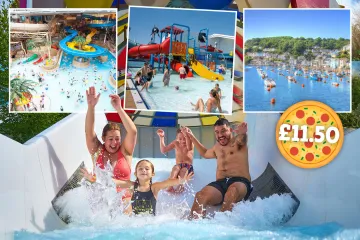
IF you are looking for a last-minute summer break for the whole family, check out these Eurocamp resorts.
With swimming complexes, waterslides, sports, entertainment and nearby beaches it will keep everyone entertained – and we’ve found 10 that still have spaces this August from £10.60pppn.
Terme Čatež in Slovenia has multiple swimming pools and spaces in AugustCredit: Eurocamp This Château de Fonrives in France has three swimming pools and five thrilling waterslidesCredit: Paul-N. Dubuisson
Château de Fonrives, Dordogne, France
Anyone who’s a fan of water will love this Eurocamp as it has three swimming pools and five thrilling waterslides.
For relaxation, check into the wellness centre which has a sauna, massages and beauty treatments – there’s also direct access to nearby lakes and a free kids clubs for children between 5-17.
Sign up for the Travel newsletter
Thank you!
Seven-nights from August 22 in a Comfort three bedroom holiday home that sleeps up to six guests, from £446.53 per party – or £10.60pppn.
Les Ecureuils, Vendée, France
This Eurocamp in France is surrounded by miles of sandy beachesCredit: Eurocamp
Found on the coast of France, this Eurocamp is surrounded by miles of sandy beaches.
There’s also a huge family pool, children’s splash park and waterslides as well as a lazy river and Jacuzzi – when it comes to eating, take a look in the restaurant called Amy’s House which serves up salads, pasta and burger dishes.
Seven-nights from August 22 staying in a two bedroom Safari Tent that sleeps up to five guests, from £543.06 per party – or £15.50pppn.
Sole di Sari, Corsica, France
There are great views from Sole di Sari along with evening entertainmentCredit: DIDIER-CAVAILHES
This stretch of Corsican coast is part of a nature reserve and within touching distance of the sea.
It also has a newly refurbished waterpark with a family pool, shallow children’s pool, splash park and and twisty waterslide – during the summer months there’s evening entertainment too.
Seven-nights from August 22 staying in a Comfort three bedroom holiday home that sleeps up to six guests, from £597.38 per party – or £14.22pppn.
Camping Fabulous Village, Rome, Italy
You can definitely relax in this sunbathing area and get an ice cream from the gelateriaCredit: Paul-N. Dubuisson
This fabulous village has it all for a family fun holiday from its many swimming pools to its large sunbathing area.
Along with its on-site restaurant and bar there’s also a gelateria for when it’s time to cool down – when it comes to activities, kids can try out tennis, football, volleyball and trampolining.
Seven nights from August 22 staying in a Classic two bedroom holiday home that sleeps up to four guests, from £663.74 per party – or £23.70pppn.
Klein Canada, Limburg, Netherlands
Enjoy the great outdoors at Klein Canada in the NetherlandsCredit: Eurocamp
This Eurocamp sits on the Maasduinen National Park and it has pools, ponds with a touch of Canadian adventure.
Along with its outdoor swimming pools, there’s a fishing pond regularly stocked with carp and whitefish for enthusiasts. With the National Park on your doorstep, it’s a great spot for walking through forests, heathlands, and river dunes.
Seven-nights from August 22 staying in a Premium three bedroom holiday home that sleeps up to six guests, from £681.87 per party – or £16.24pppn.
hu Norcenni Girasole Village, Tuscany, Italy
Along with its swimming pools this Eurocamp has regular wine tastingsCredit: Eurocamp
Thanks to its location, pitches at this steep park have incredible views of the Tuscan countryside.
Adults will love this Eurocamp as it has wine tasting excursions and and wine tasting evenings at the on-site shop – it also has eight swimming pools and six watersides and is close to Florence, Pisa and Siena.
Seven nights from August 22 staying in a Classic two bedroom holiday home that sleeps up to six guests, from £718.06 per party – £17.10pppn.
Aminess Maravea, Istria, Croatia
Aminess Maravea is surrounded by greenery and is right next to the beachCredit: Unknown
There are activities and water sports galore at this beachside Eurocamp in Croatia – it might be surrounded by leafy trees but it’s right next to the water too.
Adults can cool off in its tidal infinity pool and lido, while kids can paddle in their own pool complete with slides and spray park. You can to try traditional Croatian cuisine here too at Restaurant Loop which provides all-day selection of meals and snacks.
Seven nights from Saturday 22nd August 2026 staying in a two bedroom Super Lodge Tent that sleeps up to five guests, from £718.06 per party – £17.10pppn.
Atlantic Club Montalivet, Gironde, France
Atlantic Club Montalivet has direct access to the beach and lots of sports facilitiesCredit: Eurocamp
The Atlantic Club Montalivet is surrounded by pine trees but is right by the ocean too with direct access to the beach.
It has multiple swimming pools and guests will love the U-shaped waterslide which you can go down on with an inflatable. Sports are well covered too from tennis, mini golf, beach volleyball and football to pétanque.
Seven nights from August 22 staying in a Comfort two bedroom holiday home that sleeps up to six guests, from £802.55 per party – or £19.11pppn.
hu Birkelt Village, Mullerthal, Luxembourg
hu Birkelt Village in Luxembourg is nicknamed ‘Little Switzerland’Credit: Unknown
This Eurocamp is nicknamed Little Switzerland thanks to its surrounding meadows, woodlands and rivers.
It has an impressive pool complex which has a retractable roof that opens when the sun arrives along with a kids’ disco, play area, bar and restaurant.
Seven-nights from Saturday 22nd August 2026 staying in a Comfort three bedroom holiday home that sleeps up to six guests, from £947.31 per party – or £22.55pppn.
Terme Čatež, Lower Carniola, Slovenia
Terme Čatež has an unbelievable waterpark with a private island and lazy riverCredit: Eurocamp
The highlight of Terme Čatež has to be its outdoor waterpark with waterslides, a wave pool, an Olympic-sized swimming pool, 450-metre lazy river and even a pirate island.
The Pri Kapitanu restaurant serves regional specialities which guests can enjoy on its lakeside terrace. For sight-seeing, Croatia’s capital, Zagreb, is under one hour away.
Seven nights from August 22 staying in a two bedroom Safari Tent that sleeps up to five guests, from £977.48 per party – or £27.93pppn.
SPAIN is set to implement stricter rules when it comes to smoking and vaping – and it will affect all holidaymakers.
The list of smoke-free places that already exists could be expanded to beaches and national parks under new law.
Spain is set to ban smoking and vaping in more places – like National ParksCredit: AlamyStricter rules could be on the cards thanks to a new billCredit: Getty
This week, Spain approved a draft law to extend the list of smoke-free places.
It will be forbidden to smoke or vape on the terraces of bars and restaurants as well as on beaches, riverside beaches, national parks and swimming pools.
Sign up for the Travel newsletter
Thank you!
Health Minister Mónica García said: “Anyone who wants to have a coffee or enjoy their leisure time freely on a terrace should be able to do so without the smoke from nearby tables becoming part of the menu.”
Also affected are outdoor performance spaces, university campuses and work vehicles such as delivery vans.
It’s not just a ban directly in these areas – Spain is also hoping to introduce ‘enhanced protection zones’
This is where smoking and vaping will be banned within a 15-metre perimeter around them in certain places like museums and children’s parks and playgrounds.
The amount people can be fined could also change.
According to local media, those breaking these rules could be be fined between €200-€600 (£170-£511).
The law will also ban the use of tobacco-related products by those under the age of 18.
Until now, the law only prohibited the sale and supply to under 18s.
If the new bill is approved then fines could also increase to up to €600Credit: Alamy
For minors who break the ban on consuming tobacco or vapes,fines for minor offences will start at €200 (£170).
Athough this could be replaced by community service.
These rules aren’t in effect yet as the changes will only be made if the bill is approved by Spanish parliament.
It’s not the only rule that could see you fined in Spain – some areas ban sunlounger hogging, with £216 fines.
Research has named the best place in the UK to raise a child, thanks to a number of factors from the variety of countryside spaces to lower than average house prices
16:39, 19 Jun 2026Updated 16:41, 19 Jun 2026
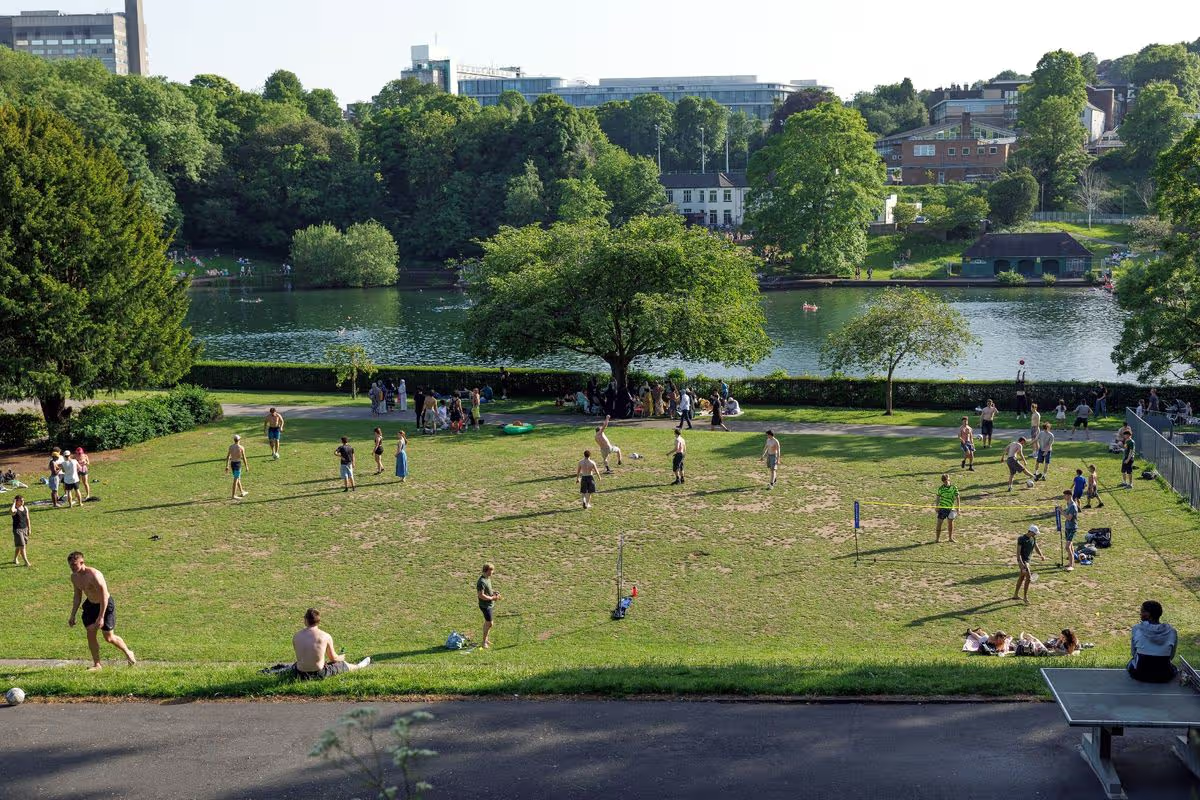
The city was praised for its large outdoor green spaces(Image: Katy Blackwood/NurPhoto/Shutterstock)
Raising a child in the modern world is a demanding task, and there are lots of big decisions parents-to-be need to make to give their offspring the best chance in life.
One of the most important factors is where to live, and parents will be seeking somewhere with a balance between safety, education quality, childcare costs, plus outdoor spaces to raise free-range kids.
To give parents a hand when making this life-changing choice, Outdoor Toys has created an index of the best places to raise a child in the UK for 2026, and its research looked at a huge number of factors. These included the number of child-friendly attractions, crime rates, and the percentage of schools with a good or outstanding OFSTED rating. This gave each town and city a child raise-ability score out of ten, and the overall winner scored an impressive 7.32.
Sheffield in South Yorkshire took the top spot thanks to offering double the average amount of green space per person . It also has relatively affordable childcare costs of £918.33 per month, which is below the UK average of £1,128 per child without government support.
Housing is also a major factor for growing families, and according to the Office of National Statistics (ONS), the average house price in Sheffield stands at £222,000. This is below the UK wide average of £270,080, and far below areas such as the south east at £379,000.
Green spaces that can be enjoyed around the city include the Sheffield Botanical Gardens, which includes colourful flowers and plants from around the world, some of them kept in huge Victorian greenhouses. Outside, kids can wander the endless trails, spotting statues, fountains, and other pretty features.
Graves Park is another spot that’s much-loved by families. It has two playgrounds, woodlands, lakes, and much more to explore, while Kelham Island Museum is a fun day out where kids can learn all about the area’s industrial heritage in an interactive environment.
Second place in the rankings was Milton Keynes, its score boosted by the fact it offered the widest range of child-friendly attractions. MK residents enjoy 31 kid-friendly attractions per 100,000 people, 11 more than the study’s average, meaning families who live in the city certainly won’t get bored.
While Milton Keynes lost some ground due to its costly childcare – an average of £1,416 per month – it offered large amounts of green space per person as well as a high percentage of schools OFSTED graded as good or outstanding.
Swindon came in third place, in part due to having the lowest crime rate in the study at 68 per 1,000 people. It also offered average childcare costs of £900, below the UK average, while two-thirds of its schools had good or higher OFSTED ratings.
Have a story you want to share? Email us at webtravel@reachplc.com