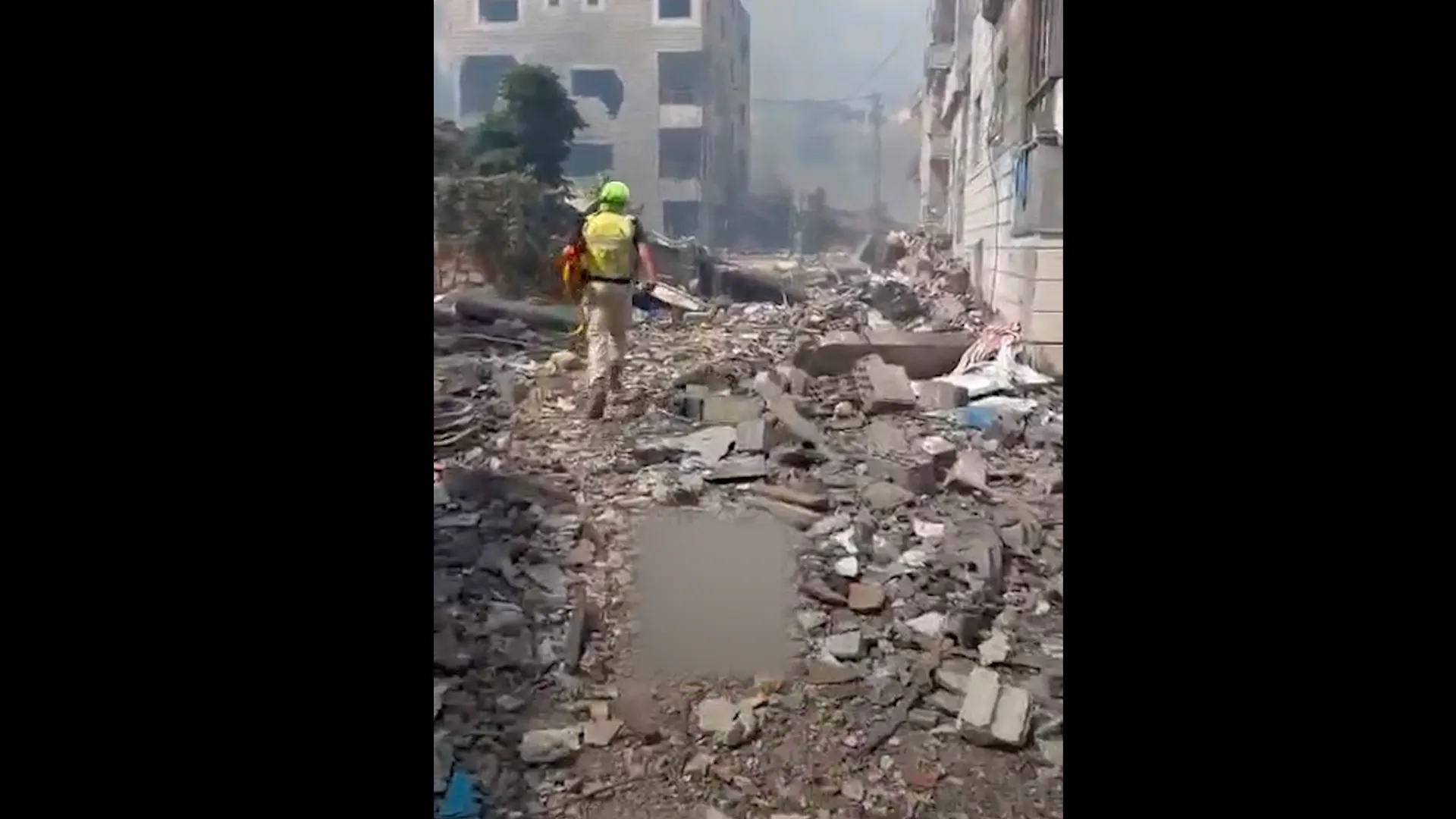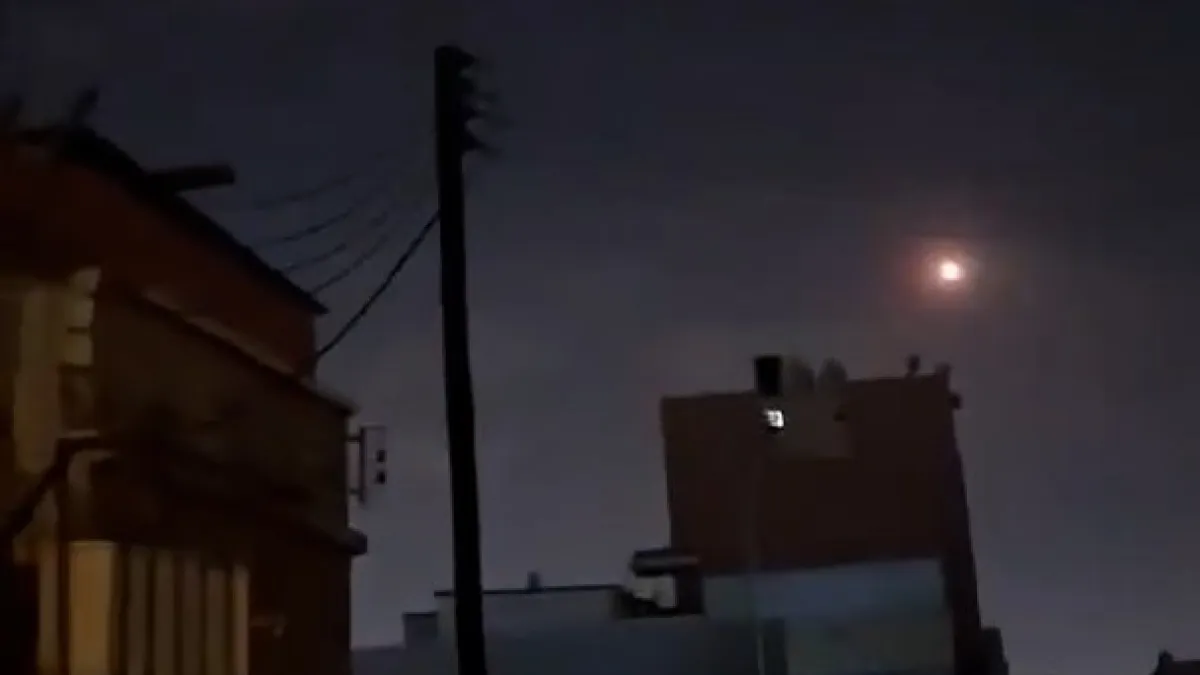
Witnesses say Lebanese citizens have been killed and Israeli soldiers wounded amid a new Israeli offensive in southern Lebanon. Social media video shows rockets and helicopters in the skies above Kfar Tebnit and Ali al-Taher.
Drone attacks target vehicles in Nabatieh amid fragile ceasefire negotiations between Iran and the US.
Published On 16 Jun 202616 Jun 2026
Multiple Israeli strikes have killed at least four people in southern Lebanon’s Nabatieh governorate, according to Lebanon’s National News Agency (NNA), despite a ceasefire and a recent understanding between the United States and Iran to end the war on all fronts.
Tuesday’s killing took place as separate drone attacks targeted two vehicles in Mayfadoun. A third vehicle was also targeted in the village of Shoukin, the agency said.
Recommended Stories
list of 3 itemsend of list
Throughout the often fragile negotiations between Iran and the US, Iranian officials repeatedly said that any ceasefire arrangement would need to include an end to Israeli attacks on Lebanon.
While the final text of the memorandum of understanding has not yet been made public, the prime minister of Pakistan, which is acting as one of the mediators in the conflict, said on Monday that the agreement envisaged an immediate halt to military operations “on all fronts, including Lebanon”.
Iran’s Foreign Minister Abbas Araghchi said on Tuesday that Israel’s continued occupation of southern Lebanon would violate the deal, adding that “without the withdrawal of Israeli forces from the territories they occupied during this war, the war has not fully come to an end”.
In a phone conversation with Lebanon’s Parliament Speaker Nabih Berri, Iran’s top negotiator, Mohammad Bagher Ghalibaf, called for the US to compel Israel to end its war on Lebanon, stop home demolitions, and withdraw from occupied Lebanese territory.
Soon after the announcement of the deal between the US and Iran, Israel’s Prime Minister Benjamin Netanyahu said that Israel will continue to occupy southern Lebanon.
Meanwhile, Lebanese group Hezbollah says it has received assurances from Iran that Tehran will demand a withdrawal of Israeli troops from Lebanon in its next phase of talks with the US, the Reuters news agency reported.
Since the resumption in fighting on March 2, at least 3,826 people have been killed by Israeli attacks in Lebanon and 11,851 wounded, according to the country’s health ministry.
Al Jazeera’s Heidi Pett reports from the site of an Israeli attack on a residential building in southern Beirut, which Israel calls a Hezbollah command centre. The strike came hours before President Trump said a US-Iran deal was meant to be signed.
An offshore earthquake with a magnitude of 7.8 has struck the southern Philippines, killing at least 35 people and injuring more than 200.
The quake on Monday is the strongest to hit the country this year, according to Teresito Bacolcol, director of the Philippine Institute of Volcanology and Seismology.
Several low-rise buildings collapsed or sustained heavy damage in the hard-hit city of General Santos.
Tsunami damage was reported in at least one southern coastal village, while smaller waves were recorded in Indonesia, Palau and as far away as southern Japan.
The quake also triggered a landslide in Glan, a municipality in the province of Sarangani, that killed 13 villagers, provincial disaster-mitigation official Rene Punzalan told the DZBB radio network. Four other villagers died in Sarangani, he added.
The United States, an ally of the Philippines, said it was coordinating with Manila and was ready to support Philippine response efforts. France, Japan and New Zealand also expressed support.
The epicentre was offshore near Mindanao, the second most populous island in the Philippine archipelago. Bacolcol said the quake struck at a depth of 33km (20 miles), about 32km (20 miles) southwest of Maasim town in Sarangani province.
President Ferdinand Marcos Jr ordered the cancellation of classes and directed disaster-response agencies to immediately get to work in quake-hit provinces, saying “the national government is moving and we will not leave Mindanao behind”.
The Pacific Tsunami Warning Center said the threat of a tsunami had largely passed about five hours after the quake. Philippine officials also lifted a tsunami warning by mid-afternoon. Six shanties on stilts were damaged in a coastal village in Zamboanga del Sur province due to the quake and higher waves, officials said.
Aside from the Sarangani landslide, most of the other deaths were caused by collapsing buildings and falling debris, including in a damaged mosque, in the southern provinces of South Cotabato and Davao Occidental and on Balut Island, according to disaster-mitigation official Ednar Dayanghirang.
The Philippines frequently experiences earthquakes and volcanic eruptions because it lies on the Pacific “Ring of Fire,” an arc of seismic faults encircling the ocean.
Videos show the aftermath of an Israeli attack on Beirut’s southern suburbs, with multiple explosions reported. Israel says it targeted Hezbollah headquarters, while Lebanese media says residential apartments were hit. The attack comes just days after US President Donald Trump told Benjamin Netanyahu that Beirut was off limits as Washington pursues a deal with Iran.
At least 14 people were killed and several others wounded in Israeli airstrikes in southern Lebanon on Sunday amid continued violations of an ongoing ceasefire, Anadolu reports.
The Lebanese Health Ministry said 11 people were killed and nine others injured in an Israeli strike on the town of Seir al-Gharbiyeh in Nabatieh province in southern Lebanon.
A fighter jet struck the town of Bazouriyeh in the Tyre district, killing one person and injuring two others, the state news agency NNA reported.
An Israeli drone strike also killed a young man in the town of Arabsalim in Nabatieh district, the outlet said.
A house was also hit in an Israeli strike in the town of Toura in Tyre, killing a woman and injuring two people.
The Israeli attacks came despite a US-mediated ceasefire that is supposed to remain in effect until early July.
More than 3,100 people have been killed, over 9,500 injured, and 1.6 million displaced by Israeli bombardment in Lebanon since March 2 amid cross-border attacks with Hezbollah, according to Lebanese officials.
Israel’s military has advanced beyond Lebanon’s Litani River for the first time since 2006.
Israel’s military has advanced beyond the Litani River in southern Lebanon for the first time since 2006 and appear poised to encircle the major city of Nabatieh.
Senior Lebanese military sources on Saturday told the Turkish state news agency Anadolu that Israeli forces had crossed the Litani River, which Israel has declared the perimeter of its unofficial buffer zone.
Recommended Stories
list of 3 itemsend of list
Israeli forces are now on the outskirts of Nabatieh, a city that is key to southern Lebanon’s economy and a cultural hub for the region. If the Shia-majority city were to fall, it would mark a significant development in the war on Lebanon, which began in October 2023 and subsequent official ceasefire.
Nabatieh is viewed by many Lebanese as a symbol of resistance due to its historic role on the frontline of Israeli assaults.
Reporting from the southern city of Tyre, Al Jazeera’s Obaida Hitto said Israel was expanding its air campaign in southern Lebanon and encircling Nabatieh in preparation for a potential assault on the city.
“It looks like Israel is trying to make this final push to encircle Nabatieh, breaking through the second and third lines of defence of Hezbollah and isolating the western Bekaa Valley from the south of the country,” Hitto said.
Israel has issued evacuation orders for at least 10 villages in southern Lebanon, as it expands its invasion, despite being engaged in ongoing peace talks with Lebanese officials.
The Israeli army’s Arabic spokesperson, Avichay Adraee, instructed residents in several Lebanese villages to evacuate immediately, warning they could be killed if they remained.
The order came the day after officials from both countries met in Washington to discuss a permanent end to the war. It began in early March when Iran-backed Hezbollah began attacking Israel following the assassination of Iran’s Supreme Leader, Ali Khamenei.
Hitto said people fleeing their homes have few options, with more than 20 percent of the population — around 1.2 million people — displaced by fighting.
“Those options are turning into basically people living with relatives if they have that option, or people living in makeshift camps in public parks and public spaces. I’ve seen many families living in their vehicles for long periods of time,” Hitto said.
“Some of these families have been continuously displaced since 2023,” Hitto added.
The latest forced displacement orders are a further test to the nominal “ceasefire” in place since mid-April and repeatedly violated by Israel. It justifies its actions by saying it is targeting Hezbollah as part of efforts to disarm the group.
On Friday, at least 14 people were killed in Israeli air raids in southern Lebanon.
Lebanese officials are working to disarm Hezbollah, but the task has proved extremely difficult.
Lebanese and Israeli officials are currently engaged in negotiations to end the war, marking the first time the two sides have spoken directly in decades.
The talks are being facilitated by the United States, and a new round is expected in Washington next week.
Lebanon’s President, Joseph Aoun, held talks with Prime Minister Nawaf Salam on Saturday to discuss the security situation and ongoing negotiations with Israel. According to the state-run National News Agency, they agreed to intensify efforts to end the war, which has triggered a humanitarian crisis.
Aoun also spoke by phone with US Secretary of State Marco Rubio and stressed the importance of Israel respecting the current ceasefire.
The Southern Section will hold nine baseball championship games this weekend, led by the Division 1 final at 7 p.m. Friday at Cal State Fullerton between St. John Bosco and Norco.
Here’s a look at top matchups:
FRIDAY
Division 1: St. John Bosco vs. Norco at Cal State Fullerton, 7 p.m. Both schools will have their top pitchers ready to go, which means runs will be at a premium. Julian Garcia of St. John Bosco was in the dugout last season when the Braves won the title but couldn’t play as he was rehabbing from Tommy John surgery. He’s come back with a flourish, going 8-1 with a 0.88 ERA. All the Braves’ key pitchers are available, including closers Jack Champlin and Brayden Krakowski. Norco will start Jordan Ayala, who shut out Orange Lutheran in the quarterfinals. It’s going to come down to defense and someone getting a clutch hit against very good pitching.
SATURDAY
Division 2: Ganesha vs. Loyola at Rancho Cucamonga Quakes, 5:30 p.m.: Likely first-round draft pick Logan Schmidt will be on the mound for Ganesha, offering a huge challenge for the Cubs. He’s also the team’s top hitter. Loyola has faced top pitching all season in the Mission League and will have rising freshman Sheriff Hall on the mound. The Cubs also have players who can hit home runs, such as Jack Murray and Luca Marucci.
Updated baseball finals schedule. Brentwood has graduation Saturday. Game moved to 4 p.m. Mira Costa-Agoura has prom. Moved to 1 p.m. pic.twitter.com/ZdPmcZg29Q
Division 3: Mira Costa vs. Agoura at Cal State Fullerton, 4 p.m.. Both schools have prom in the evening, so watch for players rushing to cars after the game. Mira Costa has somehow made it to the final despite losing its No. 1 and No. 2 pitchers to injury. Others have stepped forward, and the hitting attack has been good in the playoffs. Austin Olness hit a two-run home run in a 12-0 semifinal win over St. Francis. Agoura, under first-year coach Adam Goldstein, is another overachiever. Senior Tyler Starling hits and pitches with the best, but it’s been underclassmen pushing the Chargers toward a title.
Division 4: Glendora vs. Laguna Beach at Cal State Fullerton, 7:30 p.m. Senior Tanner Grable leads Glendora with 36 hits and four home runs and also can pitch. Junior Dylan Yencho is having a big season for Laguna Beach, batting .455 with 50 hits and an 0.94 ERA as a closer.
Division 5: Kaiser vs. Culver City at Rancho Cucamonga Quakes, 11 a.m. Senior Tino Cuellar is Kaiser’s leadoff hitter with 34 hits. Culver City finished second to Santa Monica in the Ocean League and has a productive freshman in Matthew Riesenberg, who has 36 hits, a .431 batting average and 29 RBIs.
Division 6: Brentwood vs. Covina at Cal State Fullerton, 1 p.m. The Eagles won’t have ace Jack Kaplan available after he threw a shutout in the semifinals, but there’s plenty of hot hitters, including junior Hudson Chase, who has 42 hits and seven home runs. Covina, which knocked out Lakewood and longtime coach Spud O’Neil in the semifinals, was second in the Valle Vista League to Charter Oak. Senior Lucas Thorpe has been providing key hits all season, including four in the semifinals.
This is a daily look at the positive happenings in high school sports. To submit any news, please email eric.sondheimer@latimes.com.
WASHINGTON — A Justice Department indictment against the Southern Poverty Law Center is part of a “top-down” campaign of retribution against President Trump’s perceived political enemies and constitutes a vindictive prosecution that must be dismissed, lawyers for the nonprofit argued Tuesday in urging a judge to toss out the case.
The Alabama-based nonprofit was indicted in April on fraud and money laundering charges that accuse it of misleading donors by paying informants inside white supremacist and other extremist organizations to obtain inside information about their activities.
Lawyers for the SPLC already argued that law enforcement agencies have long known that the nonprofit paid informants to report on the movements of hate groups. They also said acting Atty. Gen. Todd Blanche made a false statement at a news conference and in interviews when he said the organization had not shared with law enforcement information it learned from informants. Blanche later appeared to walk back that claim in a television interview, saying it was true that the SPLC “selectively” shared information with law enforcement over the years.
The attorneys for the center expanded on those arguments Tuesday, saying in a motion to dismiss the case that the prosecution was the “culmination of a top-down, retributive campaign” in which Trump pushed the Justice Department “to go after those individuals and groups he deemed his political enemies, including the SPLC.”
The motion was filed against the backdrop of other politically charged prosecutions that have raised concerns that the Justice Department is operating as a weapon to target Trump’s opponents. It aims to draw a parallel between the SPLC indictment and the human smuggling prosecution of Kilmar Abrego Garcia, which was dismissed Friday on similar vindictive prosecution grounds by a judge who called the case an “abuse of prosecuting power.”
The SPLC has said its now-defunct program of paying informants to infiltrate hate groups was developed to glean key insights into their activities so that potential victims could be protected. An earlier federal investigation into the practice was closed without charges, but the motion paints the current Justice Department as pursuing the case with renewed — and rushed — vigor.
The department decided to pursue the indictment without interviewing any current SPLC employees and did not seek any documents from the group until after it told defense lawyers that criminal charges were coming, the defense motion states. During a meeting requested by defense lawyers who hoped to avert to indictment, Justice Department officials informed them that the decision already had been made to pursue charges, according to the motion.
“These procedural irregularities show that the charges against the SPLC were a foregone conclusion based on prosecutorial vindictiveness — driven by the White House and FBI leadership’s retribution campaign — rather than the result of a good faith examination of the evidence,” the motion states, saying the indictment was “premised on conclusory accusations but devoid of provable facts or a proper statement of the law.”
The motion also cites whistleblower accounts that accused top Justice Department officials of rushing forward with an indictment despite internal concerns about the merits of the case and the strength of the evidence.
“For weeks, we have been arguing against these false allegations levied against the SPLC — an organization that for 55 years has stood as a beacon of hope fighting white supremacy and various forms of injustice to create a multiracial democracy where we can all live and thrive,” Bryan Fair, the interim president and chief executive officer of SPLC, said in a statement. “The government can’t prosecute the SPLC as payback for its protected speech — it violates basic constitutional rights.”
The administration has painted SPLC as partisan
Founded in 1971 as a civil rights organization, the SPLC over the decades has used litigation to fight white supremacist groups. It also tracks the activities and locations of domestic extremists. But its work has made it a popular target among Republicans who see it as overly leftist and partisan.
The center, for instance, received fresh attention last year after the assassination of conservative activist Charlie Kirk because the SPLC had included a section on the group that Kirk founded and led, Turning Point USA, in a report titled “The Year in Hate and Extremism 2024.”
FBI Director Kash Patel announced in October that the bureau would be severing its relationship with the SPLC, saying it had turned into a “partisan smear machine,” and he accused it of defaming “mainstream Americans” with its “hate map” that documents alleged antigovernment and hate groups inside the United States.
The defense motion says “animus” from senior levels of the administration helped shape the indictment.
It cites, among other comments, a statement from Trump deriding the SPLC as “a total scam run by the Democrats,” as well as a news media interview in which Harmeet Dhillon, the Justice Department’s top civil rights official, said the indictment was “personal” to her because she had “a lot of journalist friends … and groups that I’ve represented who have been targeted by the Southern Poverty Law Center.”
New videos show widespread destruction in Maarakeh following deadly Israeli strikes across southern Lebanon. On Tuesday, the Israeli military issued forced displacement orders for more than a dozen towns and villages, expanding its ground operation beyond its new, so-called ‘yellow line’.
The Southern Section finalized its championship schedule for softball this week, and the Division 1 final between La Mirada and JSerra will take place Friday at 7 p.m. at Bill Barber Park in Irvine.
La Mirada is 26-4 and will be facing JSerra pitcher Liliana Escobar, the best in the Southland. La Mirada lost to JSerra 5-2 on March 7. The Matadores have been led by Riley Hilliard, who’s hitting .577 with 10 home runs.
JSerra (24-8), which began the school year winning the Southern Section flag football championship, is trying to end the year on top behind the arm of Escobar, who has 252 strikeouts in 146 innings. The top hitter has been sophomore catcher Annabel Raftery.
The Division 2 final will match Mater Dei against Whittier Christian on Friday at 4 p.m.
The Southern Section is waiting for the baseball semifinals to be played on Tuesday before announcing dates and times. The only certainty is the Division 1 final will be played on Friday at 7 p.m. at Cal State Fullerton unless either of the finalists has a scheduling issue on that date.
This is a daily look at the positive happenings in high school sports. To submit any news, please email eric.sondheimer@latimes.com.
The U.S. Central Command said U.S. forces carried out “defensive strikes” in southern Iran on Monday, targeting missile launch sites and Iranian boats attempting to emplace mines. U.S. Navy photo by Mass Communication Specialist Seaman Zoe Simpson
May 25 (UPI) — The United States launched strikes in southern Iran on Monday even as negotiators for Tehran and Washington were preparing for further talks to end their war, a U.S. military spokesman said.
Capt. Tim Hawkins of the U.S. Central Command said in a statement issued to media outlets that the strikes were “self-defensive” in nature and were carried out “to protect our troops from threats posed by Iranian forces.”
“Targets included missile launch sites and Iranian boats attempting to emplace mines,” Hawkins said. “U.S. Central Command continues to defend our forces while using restraint during the ongoing cease-fire.”
The semi-official Mehr News Agency in Iran reported that “several explosions” were heard in the area of Bandar Abbas along the Strait of Hormuz and that civil defense sirens had been sounding there.
The agency said the situation in the city “is completely under control and there is no reason for any concern for the honorable people of Bandar Abbas.”
The announcement of new strikes came only hours after U.S. President Donald Trump wrote on his Truth Social platform that negotiations with Iran were “proceeding nicely,” but also issued a warning that the war could reignite if an agreement isn’t reached.
Iran, meanwhile, confirmed some progress had been made but cautioned that no agreement was on the verge of being signed.
Tehran’s lead negotiator, Parliament Speaker Mohammad Ghalibaf, and Foreign Minister Seyed Abbas Araghchi arrived in Doha for the talks, the semi-official Fars News Agency reported.
The renewed attacks came on the heels of Secretary of State Marco Rubio signaling to reporters while in India that an agreement appeared on the horizon before walking it back hours later.
Rubio had said that the president may have an update on negotiations but later walked that back, saying the agreement was “still a work in progress.”
The United States is seeking to have Iran reopen the important Strait of Hormuz energy route. After that is achieved, negotiations will entered the next phase focused on ending the war.
Iranians rally after a ceasefire announcement at Enqhelab Square, in Tehran on April 8, 2026. Photo by Behnam Tofighi/UPI | License Photo
A coalition of conservation groups wants Southern California to get 85% of its water locally, up from the 50% it gets now, by 2045, and says a new plan shows how.
It’s urging state leaders to scrap plans for a 45-mile tunnel beneath the Sacramento-San Joaquin River Delta and consider asking voters to approve a bond measure to fund local water solutions. The 34-page strategy was released as critical decisions loom for local officials, California’s next governor and legislators.
Over the last century, Southern California has grown and thrived thanks to giant aqueducts it built to bring water from hundreds of miles away — the Eastern Sierra, the Colorado River and Northern California.
But with water costs rising and climate change jeopardizing these distant sources, there is growing interest in finding ways to get more water locally.
The allied groups are calling for recycling more wastewater, capturing more stormwater, improving efficiency and cleaning up contaminated groundwater.
“We have to prioritize our investments, and prioritizing them in local water makes the most sense,” said Bruce Reznik, executive director of the group Los Angeles Waterkeeper.
The coalition includes fishing groups, environmental organizations and Northern California’s Winnemem Wintu Tribe.
Its plan calls for a “new urban water renaissance” in California that prioritizes local water. This approach would reliably yield more and cost far less than Gov. Gavin Newsom’s proposed Delta Conveyance Project beneath the Delta.
The state estimated in 2024 the tunnel would cost $20.1 billion, but opponents say it could cost three to five times more.
“Local water is reliable, it’s more affordable, and it’s more flexible, so that we’re not committing California ratepayers to higher bills that they don’t need,” said Kyle Jones, a water expert and consultant who helped prepare the plan for the coalition.
Southern California imports about half of its water from other regions.
The coalition’s plan says the region can secure up to 2 million acre-feet of local water per year. It estimates the costs of more conservation and efficiency, more stormwater and groundwater cleaning, and more water recycling at $44 billion over two decades. The Delta tunnel, in contrast, could cost $60 billion to $100 billion, it says.
Whether the tunnel project is ultimately built may hinge on whether large water agencies, including the Metropolitan Water District of Southern California, decide to participate and pay for it.
1
2
3
1.Cranes rise above the Donald C. Tillman Water Reclamation Plant in Van Nuys.2.When completed, Los Angeles will nearly double recycled water for 500,000 residents.3.Storage tanks sit behind a fence before being placed in the ground at the plant.(Myung J. Chun / Los Angeles Times)
“Metropolitan Water District really does have a significant choice on it, that not just impacts their ratepayers but impacts every single person in the state,” said Barbara Barrigan-Parrilla, executive director of the group Restore the Delta. “Are we going to spend $20, $60, maybe upward to $100 million on a tunnel? Or are we going to invest significant money in local solutions that provide water resiliency and sustainability for everyone in California? That is what is at stake right now.”
“At the same time, water imported from the northern Sierra and the Colorado River provides the foundation of water supply reliability for Southern California,” said Shivaji Deshmukh, the MWD’s general manager.
He noted that the MWD invests in water efficiency and capturing stormwater, and has helped reduce per-person water use by more than 40% since 1990.
Los Angeles city leaders and L.A. County supervisors have also set goals for becoming more locally self-sufficient.
The advocates who wrote the policy plan said these efforts should accelerate and expand. They pointed out that the Colorado River’s reservoirs are falling to perilously low levels, and native fish in the Delta are in decline as the pumping of water takes an ecological toll.
“Climate change is exacerbating the challenges in those ecosystems, meaning that less and less water will be available to import,” said Ashley Overhouse, water policy advisor for the group Defenders of Wildlife. “All the while, the cost of water is continuing to rise.”
About 20 other environmental groups endorsed the coalition’s strategy.
“We have got to do a better job in the next 100 years than we did in the last 100 years, if we truly want to create a place of abundance once again,” said Frankie Myers, a member of the Yurok Tribe in Northern California. “This idea that we can steal … and divert water however we want with no consequences has got to end.”
Construction continues at the Donald C. Tillman Water Reclamation Plant in Van Nuys in October 2025.
“Traditional sources for imported water are less reliable than they used to be,” Bass said. “The most reliable source of water in the future is local water.”
Other experts have reached similar conclusions.
Researchers at the Pacific Institute, a water think tank in Oakland, have examined improvements such as fixing leaks in pipes, switching out inefficient washing machines and toilets, and replacing thirsty lawns with plants suited to the state’s Mediterranean climate.
In a 2022 report, they found that a set of standard practices and technologies could reduce total urban water use by 30% or more.
Israel’s attacks on southern Lebanon seem to be expanding with these fresh strikes.
Published On 24 May 202624 May 2026
Israeli strikes have killed at least six people in southern Lebanon as the Israeli army issues fresh evacuation orders.
Israeli air raids in al-Namiriya killed two young men who were riding on a motorcycle, and another young man in al-Duweir was also killed while he was on a motorcycle, according to Lebanon’s National News Agency (NNA).
Recommended Stories
list of 4 itemsend of list
In the town of Abba, a Syrian man driving a motorcycle was killed by an Israeli strike, and in Jebchit, one man was killed in another attack. A paramedic was killed by a drone strike while he was inspecting the site of a recent air strike in Arab Salim, and an air raid in Bazouriyeh in Tyre left one person dead, NNA reported.
Israel’s army spokesperson issued 16 evacuation orders in southern Lebanon, and local sources said Israel was striking before and after the order was given.
“These attacks are very violent, and they are targeting places that are filled with many people, homes and communities,” said Al Jazeera’s correspondent in Tyre, Obaida Hitto. He explained that many of these places are not near the front line.
‘Expansion of Israeli attacks’
“We are seeing significant expansion of Israeli attacks,” Hitto said.
Rescue teams managed to recover three bodies from the rubble of a house that was targeted by Israeli warplanes in the town of Srifa, in southern Lebanon’s Tyre district, according to the NNA.
Hezbollah said it carried out a series of attacks on Israeli military infrastructure and military positions throughout the day. Hezbollah forces targeted Israeli soldiers stationed in a house in the Biyyada area of the South Governorate with a drone.
Hezbollah also launched a rocket barrage at soldiers in the town of Rashaf in Nabatieh Governorate.
Since Israel’s conflict with Hezbollah began in early March, Israeli air strikes in Lebanon have killed 3,151 people and wounded 9,571, the Health Ministry has said in a statement carried by the NNA.
Hitto said civilians are stuck between a rock and a hard place, having to decide whether they should stay in the south, closer to their homes and communities, or continue a long-term displacement outside the south.
Naim Qassem, the secretary-general of Hezbollah, called upon the Lebanese government to “reverse the decisions it has taken to criminalise the resistance”.
In remarks reported by NNA, Qassem vowed that recent US sanctions against nine people linked to Hezbollah “will only strengthen our resolve”, and criticised Beirut for not taking a stronger stance against Israel.
Clara Adams expected to win the 400-meter dash Saturday in the Southern Section Masters Meet at Moorpark High. The Long Beach Wilson junior not only won, she broke the section record, circling the track in 51.98 seconds.
“To be honest, I did not expect a 51 today … that was my end goal and I got it before state,” said Adams, who topped the previous mark [set by Norco’s Shae Anderson in 2017] by one hundredth of a second. “It says a lot about my training and teammates who push me in practice every day. I’m ecstatic.”
Even better than breaking a section record is breaking a state record and Adams was smiling wider several hours later after she and teammates Brooke Blue, Brooklyn Fowler and Saniah Varnado did just that by clocking 3:33.83 in the 4×400 relay to obliterate the time of 3:35.49 set by Moore League rival Long Beach Poly in 2004. Rosary Academy was a distant second in 3:41.33.
“The 400 was our first race of the day, all of us ran it and we all qualified for state and that carries over to the rest of the day,” said Adams, who ran the third leg and widened the Bruins’ lead before handing the baton to Varnado for the anchor leg. “The state record is a bonus. We handled our business and now we have a week to prepare to go for the national record.”
Florida Montverde Academy owns the national record of 3:31.68, achieved at the 2024 New Balance Nationals Outdoor in Philadelphia, but Wilson’s foursome was content with the state record, at least for now.
“We already had a good lead when I got it but everyone was getting loud and I was pushing,” Varnado said. “I was thinking we could run in the high 3:30s. I’m proud of how well we did and hopefully we can do even bigger things at state.”
The CIF state track and field championships are next weekend (prelims Friday and finals Saturday) at Buchanan High in Clovis and as usual the Southern Section will be well-represented as numerous athletes met the qualifying standards.
After three-peating in the 1,600 and 800 one week before at the Southern Section finals, Corona Santiago senior Braelyn Combe won both events again Saturday, winning the 1,600 in 4:43.03, well off her 4:41.36 effort at the section finals but still more than two seconds faster than runner-up Reese Holley of JSerra. She won the 800 Saturday by about the same margin in 2:06.04.
Calabasas dominated at the section finals with four runners breaking the Division 3 record in the 100. They were back at it Saturday as last week’s champion Malia Rainey ran 11.33 to win the first heat. Devyn Sproles equaled Rainey’s 11.41 one week before to win the second heat and take second overall. Marley Scoggins (11.46) was third and Coyotes teammate Olivia Kirk (11.62) was fifth.
Tra’via Flournoy led off Rosary’s 4×100 relay, which won in 44.79 at the Masters Meet on Saturday in Moorpark.
(Steve Galluzzo / For The Times)
Rosary’s 4×100 relay established itself as the favorite at state finals with a 44.79, more than a second faster than runner-up Canyon Country Canyon. The Royals’ foursome of Tra’via Flournoy, Justine Wilson, Pfeiffer Lee and Maliyah Collins is hoping to top the state-record (44.23) it set at Arcadia in April when it heads north for the state meet.
“It wasn’t a [personal record] but it was faster than last week,” said sophomore Collins, who ran the anchor leg. “This was a tuneup. Our handoffs were clean and we got the baton around the track. That was our main focus.”
West Ranch junior Tamea Crear (23.50), Kirk (23.54) and Rosary’s Wilson (23.61) and Collins (23.69) took the top four spots in the 200 meters.
San Jacinto Valley Academy sophomore Kaaliyah Lacy clocked 13.44 to win the 100 hurdles, one hundredth off her state-leading time that earned her the Division 4 section title one week ago. Varnado won the 300 hurdles in 41.53.
Irvine senior and Duke commit Summer Wilson, a three-time Southern Section champion in the 3,200, ran a new-season best (10:14.45) and shaved nearly 10 seconds off her time in the Division 2 sectional race.
Irvine’s Summer Wilson wins the 3200 meters in 10:14.45 at the Masters Meet after placing third last year.
(Steve Galluzzo / For The Times)
After sweeping the all three jumps events at the Division 3 section finals, Jurupa Valley senior AB Hernandez did the same Saturday, winning the long jump in 20 feet, 0.75 inches, the triple jump in 40-7 and the high jump in 5-8.
Los Alamitos senior Cassidy Nguyen cleared 13-2 to win the pole vault while Aliso Niguel was first in the discus (165-10) and shot put (49-0) after winning the Division I section crown in both last week.
Woodbridge junior Aidan Antonio won the 3,200 boys race in 8:55.30 while Sterling White of Oaks Christian became the first freshman in state history to break nine minutes, finishing seventh in 8:59.26 to break the ninth-grade record of 9:01.1 set by Eric Hulst of Laguna Beach in 1973.
Riverside King’s Maximo Zavaleta (4:06.30) and Antonio (4:06.54) battled all the way to the finish line to claim the top two spots in the 1,600.
Having won the Division 3 boys title in 38.39 one week earlier, Servite’s 4×100 relay won Saturday’s race in 40.17, followed by Moorpark (40.60) and Loyola (40.83).
“I like the first leg and coming out of the blocks because I get to see my teammates win,” said Jace Wells, whose exchange to Jorden Wells was smooth. Kamil Pelovello and Benjamin Harris ran the last two legs. The foursome set the state record (39.70) at Arcadia.
Harris won the 100 in a wind-aided 10.17 (one hundredth faster than his time in the Division 3 section finals last week), then won the 200 in 20.80 (31 hundredths slower than his winning time a week ago).
“It’s what I expected — I’m proud of it,” Harris said of his 100 time. “I just wanted to execute, win my race and move on. There’s more work to be done.”
Loyola’s Ejam Yohannes beats Servite’s Jaelen Hunter by 11 hundredths of a second in the 400-meter dash.
(Steve Galluzzo / For the Times)
In the most exciting finish of the day, Loyola senior Ejam Yohannes edged Servite sophomore Jaelen Hunter by 11 hundredths of a second in 46.40 in the 400 meters, one week after Hunter ran 46.36 to set a section Division 3 record. Johannes cut three tenths off his Division I winning time last week.
Upland (3:18.54) won the boys 4×400 and Gardena Serra (3:18.88) was second. Crean Lutheran’s Noah Richardson cleared 15-6 to win the pole vault while Redondo Union’s Bo Ausmus won the discus with a throw of 185-7 and the shot put with a mark of 61-9.
Having won the Southern Section Division 3 high jump crown in a lifetime best and state-leading 7-01 seven days earlier, Sherman Oaks Notre Dame senior JJ Harel still had the best height Saturday at 6-10, tied with Nathaniel Baca but winning on fewer misses. Harel aims to repeat as state champion.
Moorpark’s Davis Benson was first in the long jump Saturday at 22-11.75 (he won the Division 3 section crown with a leap of 23-5 last week), followed by Dane Malloy (22-10.5) and Harel (22-9.25). Paloma Valley senior Arthur Stringer won the triple jump in 47-4.5.
Long Beach Poly’s Lynnox Newton won the 110 high hurdles in 13.69, Etiwanda’s Brandon Andrade (13.85) was second and Benson (13.94) third. Andrade (37.01) was second behind Palm Desert’s Kingston Penny (36.86) in the 300 hurdles.