
Tesla’s South Korea sales quadruple in March, crosses 11,000 units for first time
Tesla’s South Korea sales quadruple in March, crosses 11,000 units for first time
Source link
Tesla’s South Korea sales quadruple in March, crosses 11,000 units for first time
Source link
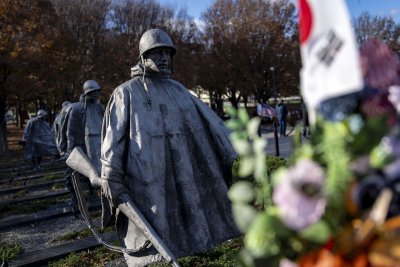

April 6 (UPI) — The United States and South Korea began a joint investigation Monday to locate the wreckage of at least three U.S. aircraft that crashed off South Korea’s northeastern coast during the Korean War, officials said.
The four-week survey of the Gangneung and Yangyang areas of northeastern Gangwon Province seeks to trace the wreckage of a fighter plane and two transport aircraft, ahead of underwater investigations scheduled for August, South Korea’s Ministry of Defense said in a statement.
The joint survey is being conducted by the Pentagon’s POW/MIA Accounting Agency and South Korea’s Ministry of National Defense Agency for KIA Recovery and Identification, which will collect materials, including information from local residents, as well as confirm the availability of medical decompression chamber facilities essential for underwater operations.
“Since 2024, I have been coming to Korea for three years to work with MAKRI to find traces of the heroes who fought in the war,” U.S. Marine Staff Sgt. Jordyn King, deputy team leader of the Pentagon’s DPAA investigation team in South Korea, said in a statement.
“During the one month given to us, we will carefully gather materials so that we can achieve good results in the future underwater investigation.”
Seoul said the survey covers three aircraft crash sites, including that of a transport plane that crashed on Nov. 15, 1952, after departing Gangneung Air Base for Pohang with nine people, including a South Korean service member, on board.
The plane suffered engine trouble mid-flight and crashed into the sea.
A second site is waters near Yangyang County, where a U.S. aircraft crashed on Feb. 21, 1952. The third is in waters near Gangneung, where a transport plane with 17 people on board crashed on Oct. 16 of that same year after suffering a mechanical problem.
“Just as we recover the remains of South Korean troops killed in action, we will spare no support in helping to find the war dead and missing of the U.S. military who helped us,” Lt. Col. Kim Seong-hwan, acting head of MAKRI, said in a statement.
The announcement comes months after the two agencies signed a memorandum of understanding in Arlington, Va., committing to the recovery and identification of remains of soldiers who were classified as missing during the Korean War of 1950-1953, which ended with an armistice.
According to a DPAA release announcing the signing in August, the agreement enhances cooperation and collaboration between the two agencies, while streamlining efforts to locate, excavate and identify the remains of fallen service members.
More than 1.8 million Americans served in the Korean War of 1950-1953, about 37,000 of whom were killed, more than 92,000 wounded and roughly 8,000 were listed as missing, according to Pentagon statistics.

1 of 2 |
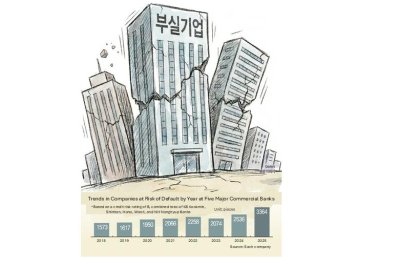
Illustration depicts rising corporate distress in South Korea, with the number of at-risk firms climbing to 3,364 in 2025. Graphic by Asia Today and translated by UPI
April 5 (Asia Today) — The number of financially vulnerable companies in South Korea has surged to a record high, with many firms struggling to cover even interest payments as high borrowing costs and weak domestic demand persist.
According to data from five major commercial banks, 3,364 companies were classified as at high risk of becoming distressed in 2025 credit assessments, up 828 from a year earlier. The figure marks the highest level since records began in 2005 and exceeds levels seen during the COVID-19 pandemic.
The increase reflects prolonged high interest rates and a slow recovery in domestic consumption, which have made it difficult for many firms to repay both principal and interest on loans.
More companies are also slipping into actual distress. Firms categorized as showing clear signs of financial trouble rose to 45, while those deemed unlikely to recover climbed to 98.
The strain is evident in broader financial indicators. The Bank of Korea said 46.4% of companies had an interest coverage ratio below 1 as of the third quarter of last year, meaning nearly half were unable to generate enough operating profit to cover interest expenses.
The rise in vulnerable firms is adding pressure on banks, which are already tightening lending standards. Non-performing corporate loans at the five major banks reached about 4.2 trillion won ($3.1 billion), even as overall corporate lending growth slowed.
Banks have responded by applying stricter credit risk assessments, but the rapid increase in troubled borrowers is raising concerns about asset quality in the financial sector.
Analysts warn that risks could grow further if geopolitical tensions in the Middle East continue to push up oil prices, fueling inflation and weakening corporate profitability.
A central bank official said prolonged external shocks could erode companies’ ability to service debt, potentially undermining financial stability.
— Reported by Asia Today; translated by UPI
© Asia Today. Unauthorized reproduction or redistribution prohibited.
Original Korean report: https://www.asiatoday.co.kr/kn/view.php?key=20260406010001361

It was dominating. It was overwhelming. It was powder-blue pummeling, eight-clap crushing, Westwood wonderful.
It was the UCLA women’s basketball team needing barely two hours to complete the struggles of 45 years, a stunningly swarming triumph unmatched in even the finest of Bruin athletic traditions.
Break out a new banner. Make room in the Pauley rafters. A new collection of heroes is coming home, and they started the party early.
For the first time since 1978, and the first time in the NCAA era, the UCLA women are national basketball champions after a 79-51 finals blowout victory Sunday over favored powerhouse South Carolina.
“Oh my gosh,” said weeping star Lauren Betts after the final buzzer.
Oh my, Lauren. This was a heartfelt triumph for the towering tournament Most Outstanding Player who overcame mental health issues to become the toughest figure on the floor.
“I do it for my teammates,” she said during the celebration. “I don’t do it for me.”
Oh my, Gabby. This was a legendary triumph for Gabriela Jaquez, who scored 21 points with 10 rebounds in the finals while her brother, former Bruin star Jaime Jaquez Jr., watched from the stands one day after he scored 32 points for the Miami Heat.

UCLA forward Gabriela Jaquez hugs coach Cori Close during the second half of the Bruins’ win over South Carolina in the NCAA women’s national championship Sunday.
(Ronaldo Bolanos / Los Angeles Times)
“I imagined this moment, I imagined it so many times,” she said. “Oh my gosh, I’m so happy.”
Oh my, Kiki Rice, Angela Dugalic, Gianna Kneepkens and Charlisse Leger-Walker, this being a victory for the rarest of teams in college basketball — a group led by six seniors and graduate students who scored more than 90% of the points during the tournament and were openly fueled by a desire to play one more game together.
Oh my, Cori, this being a legacy triumph for Coach Cori Close, a John Wooden disciple who led through thoughtful motivation instead of mindless screaming. This was her 15th season as the Bruins’ boss, which previously made her the longest tenured coach without a national title.
“It’s truly indescribable,” she said from the celebration stage afterward. “The loyalty, the steadfast spirit, the character that they’ve chosen day in and day out. … I am just so humbled that they’ve chosen to commit to our mission.”
One of Close’ mantras is, “Sometimes you, sometimes me, always us.”
In Sunday’s finale, it was always all of them, a scrambling, scrapping bunch that stunned the three-time champion Gamecocks into submission in the third biggest blowout in women’s final history.
This was UCLA’s first finals appearance in the NCAA era, and they were trying to win their first title since Anne Meyers-Drysdale led the Bruins to an AIAW championship in 1978.
Yet they never blinked.
“This was a business trip for us,” said Dugalic. “We had the mentality that the job’s not finished. Now the job is finished.”
Jaquez set the tone in the first quarter by following a Dugalic miss with a flying layup as she was sent sprawling to the floor. She was fouled, converted a three-point play, and the Bruins were quickly sending a message.
They would not be intimidated. They would not be pushed around. And they would play every second, as evidenced by the first-quarter, buzzer-beating trey by Rice as she tumbled backward to give them a 21-10 lead.
The Bruins didn’t even panic when their leader seemed to panic, as Betts spent nearly half of the first quarter on the bench complaining that, “I’ve got something stuck in my throat.”

UCLA coach Cori Close, center, celebrates with her players after guiding the Bruins to the NCAA women’s basketball national championship on Sunday.
(Ronaldo Bolanos / Los Angeles Times)
Trainers checked her throat, gave her an inhaler and eventually nursed her back on to the court, where she told an ESPN interviewer that her throat was just dry from the desert air.
The Bruins kept the heat on during a second quarter in which they made mistakes, seemed to lose momentum, then collected themselves to maintain their huge edge. At one point UCLA committed four consecutive turnovers and the Gamecocks closed the gap to 11, but then UCLA’s defense got tough again and layups by Rice and Kneepkens helped them regain their advantage.
At halftime UCLA led 36-23 and the game was essentially over.
Jaquez put the bow on it when she hit a late three-pointer that made it 79-45, her shot followed by a smile and a scream to the heavens.

Highlights from UCLA’s win over South Carolina in the NCAA women’s basketball national championship game.
“Gabs is incredible,” said Leger-Walker. “She is that person that you never doubt is going to give her all. She impacts the game in so many ways.”
Leger-Walker ended the afternoon dancing with her teammates just as they have danced all season.
“I’m still processing the fact that we are national champions,” she said.
Believe it. These Bruins will be dancing forever.

UCLA players celebrate after defeating South Carolina for the NCAA women’s basketball championship.

PHOENIX — The greatest team in UCLA women’s basketball history has earned its crown.
With a 30-point lead by the end of the third quarter, much of the end of Sunday’s NCAA championship victory was a celebration of what UCLA had built en route to its 79-51 victory over South Carolina.
By the final buzzer, it was a full-blown party.
It was one of the largest margins of victory in Final Four history.
UCLA won an AIAW title in 1978 against Maryland before women’s basketball was an NCAA sport.

UCLA’s Kiki Rice, right, drives around South Carolina’s Raven Johnson during the first half of the NCAA national title game on Sunday.
(Ronaldo Bolanos / Los Angeles Times)
Last season, UCLA’s 34-point loss to Connecticut in the semifinal became the worst loss in tournament history.
This season, there was no doubt UCLA was ready for the moment and it ensured it could reverse the history books.
It was perhaps the most UCLA performance the Bruins could have had. In their final collegiate games, Lauren Betts (14 points, 11 rebounds) and Gabriela Jaquez (21 points, 10 rebounds) earned double-doubles and all five starters scored in double digits. They dominated the boards (49-36), played stellar defense and most important, didn’t turn the ball over often.
After the Bruins held Texas to a season-low 44 points in Friday’s semifinal, they held the Gamecocks to 51, also their lowest total all season.

UCLA’s Lauren Betts shoots over South Carolina’s Maryam Dauda in the first half of the NCAA national championship game Sunday.
(Ronaldo Bolanos / Los Angeles Times)
The Bruins jumped out early while South Carolina struggled with the Bruins’ size and went three for 18 from the floor. Kiki Rice (10 points, six rebounds, five assists) hit a buzzer-beating three-pointer to end the opening quarter with the Bruins holding on to a 21-10 lead.
Near the end of the first, Betts came back to the bench coughing and sputtering, seemingly unable to clear her throat. At the start of the second quarter, she was at the end of the UCLA bench and used an inhaler before returning to the game.
UCLA’s suffocating defense held the Gamecocks to 25.7% shooting in the first half. Unlike Friday’s win over Texas, the Bruins’ offense recovered from a one-for-10 stretch far earlier.
South Carolina made a mid-second quarter adjustment into a zone defense and a half-court press that forced one 10-second violation and another turnover that led to a fast-break layup and and free throw from Ta’Niya Latson.

UCLA’s Gabriela Jaquez celebrates after scoring while being fouled during the first quarter Sunday against South Carolina.
(Ronaldo Bolanos / Los Angeles Times)
UCLA led 36-23 at the half.
One of the Gamecocks’ only interior presences, center Madina Okot, had three fouls early in the third quarter. With her off the floor, UCLA extended its lead to 18 off a three-pointer from Charlisse Leger-Walker.
Midway through the quarter, a sequence of a Betts layup over the South Carolina defense, a Betts block of a Latson shot and a Jaquez fast-break layup gave the Bruins a resounding 22-point lead.
The Bruins outscored the Gamecocks 25-9 during the third quarter to earn a 61-32 lead off a 13-0 run. It was the largest lead ever for a team going into the fourth quarter of an NCAA championship game.
South Carolina shot a season-worst 18 for 62 from the floor and two for 15 from three-point range.

UCLA players, including Kiki Rice, left, and Gabriela Jaquez celebrate after winning the NCAA women’s basketball national championship on Sunday.
(Ronaldo Bolanos/Los Angeles Times)
The Bruins held Latson to four points and Raven Johnson to three on one-for-seven shooting.
South Carolina had taken down then-undefeated UConn in the semifinal on Friday.
UCLA will need to rebuild with few returners, but now that her players have won a national title, coach Cori Close should have her pick of the transfer portal.
Now, Close and the Bruins have championship pedigree.
Highlights from UCLA’s win over South Carolina in the NCAA women’s basketball national championship game.


Prosecutor Park Sang-yong submits a written explanation for refusing to take the witness oath during a parliamentary inquiry at the National Assembly in Seoul. Photo by Yonhap News Agency
April 5 (Asia Today) — A senior South Korean prosecutor refused to take an oath before a parliamentary inquiry, escalating tensions between the prosecution and lawmakers and raising the possibility of coordinated action within the prosecution.
Park Sang-yong, a deputy chief prosecutor leading an investigation into alleged illegal financial transfers to North Korea, declined to be sworn in as a witness during a National Assembly inquiry into allegations of politically motivated prosecutions under the previous administration.
Under South Korean law, witnesses may refuse to take an oath if their testimony could expose them to criminal liability.
Park submitted a seven-page written explanation to the committee chair and left the hearing after about 38 minutes. He later said the inquiry itself was unconstitutional and illegal, arguing that participating would amount to cooperating with an improper process.
“The law allows a refusal to take the oath if justified, yet I was prevented from following that procedure,” Park said after leaving the session.
Justice Minister Jeong Seong-ho criticized the move as “highly inappropriate,” saying it undermined accountability. The acting prosecutor general also expressed regret, calling the incident unacceptable.
The dispute stems from an investigation into alleged payments to North Korea involving a South Korean company. Park has also faced separate allegations of misconduct during the probe, which are under investigation by prosecutors.
Within the prosecution, signs of collective action have emerged. Members of the investigative team reportedly created a group chat, fueling speculation about a coordinated response to the inquiry.
Legal experts warned the standoff could weaken the effectiveness of the parliamentary probe and deepen concerns over institutional conflict between the legislature and prosecution.
Some analysts said the episode reflects broader tensions over the independence of investigative authorities and the limits of parliamentary oversight.
— Reported by Asia Today; translated by UPI
© Asia Today. Unauthorized reproduction or redistribution prohibited.
Original Korean report: https://www.asiatoday.co.kr/kn/view.php?key=20260405010001293


If you grew up in the ‘70s or ‘80s, your vision of suburban America probably looks a lot like South Pasadena. There’s good reason. The picturesque town on the western edge of the San Gabriel Valley was often used as a backdrop in films like “Halloween,” “Pretty in Pink” and “Back to the Future” (the street where George McFly, Lorraine and Biff lived is actually Bushnell Avenue).
Today in South Pasadena, you’ll still find this idyllic Anytown USA landscape — but with a twist: Along with verdant parks, Craftsman bungalows and tree-lined streets, the city gleams with cool new developments like the recently opened Sid the Cat Auditorium, an all-ages live music venue in a converted 1930s elementary school; the always-packed Cannonball from chef Matt Molina; L.A.’s first nonalcoholic bottle shop Burden of Proof and a high-tech head spa imported from Japan. Add on a walkable downtown and a bustling Thursday night farmers market and it’s easy to see why so many Angelenos are drawn to this increasingly hip community.

Get to know Los Angeles through the places that bring it to life. From restaurants to shops to outdoor spaces, here’s what to discover now.
“So few pockets of L.A. County are actually great for families and that’s what makes South Pas so compelling,” said my friend Tom, who moved to the area after having a baby two years ago. “Plus, it has light-rail.”
Located six miles from downtown L.A., South Pasadena was marketed as a “garden community” when it was founded in the late 19th century. New residents were promised homes with flowering vines and sweet-smelling gardens, all just a short cable car ride away from a bustling metropolis.
“It was that early promise of suburbia,” said Becky Nicolaides, a historian and author of the book “The New Suburbia: How Diversity Remade Suburban Life in Los Angeles After 1945.” “When it was incorporated, there weren’t cars, so the town was built to be walkable.”
But that peaceful facade hid an ugly truth. Like many suburbs in the L.A. area, the town’s officials put race restrictive covenants into place soon after its founding, making it illegal for residents to sell property to people of color.
Those covenants became illegal in 1948, but the town continued to discourage people of color from living within its boundaries for several more decades. That began to change in the 1960s and South Pasadena has diversified, particularly over the past decade. In recent years, town leadership has taken steps to acknowledge its racist past.
Now, even as a new energy permeates, the city continues to lean into its early suburban history. The town is just 3.4 square miles, but it encompasses 100 acres of parks and playgrounds as well as 21,000 trees. There’s an old-fashioned pharmacy where parents have taken their kids for a phosphate soda (or just a regular old milkshake) for over 100 years and volunteers from the community still decorate a float for the Tournament of Roses each year, just as they have since 1911.
And though its historic Red Car trolleys have been discontinued for decades, today it’s still a comfort to take the Metro home from work at the end of a long day and enjoy the peace and quiet of this pastoral suburb, just like its founders did more than a century ago.
What’s included in this guide
Anyone who’s lived in a major metropolis can tell you that neighborhoods are a tricky thing. They’re eternally malleable and evoke sociological questions around how we place our homes, our neighbors and our communities within a wider tapestry. In the name of neighborly generosity, we may include gems that linger outside of technical parameters. Instead of leaning into stark definitions, we hope to celebrate all of the places that make us love where we live.
Our journalists independently visited every spot recommended in this guide. We do not accept free meals or experiences. What L.A. neighborhood should we check out next? Send ideas to guides@latimes.com.

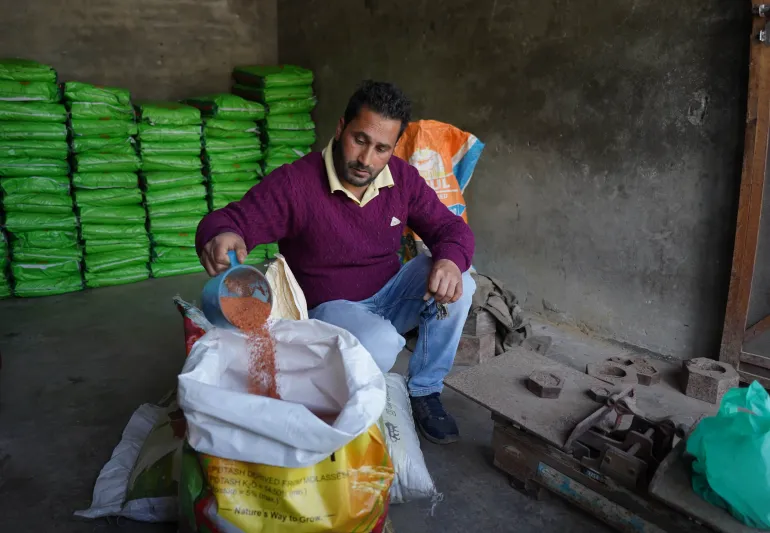
Gurdaspur, Punjab, India – Ramesh Kumar, 42, is anxiously doing the calculations for his crops this year.
Standing at the edge of his wheat field in northwest Punjab’s Gurdaspur, he runs through the numbers in his head, totting up fertiliser costs, expected yield, and market prices.
Then he shifts to more personal concerns: School fees, household expenses, loan repayments and the money he has been saving for his daughter Varsha’s wedding.
“I don’t know if we can afford it this year,” he says. “Everything depends on the crop.”
The uncertainty has crept in quietly.
Fertiliser, once a fairly predictable staple in farming, has become more expensive and harder to secure in time. For Kumar, it is not so much a question of cost as it is the difference between stability and strain.
“If prices go up more, we will have to cut somewhere,” he says. “Maybe delay the wedding. If things get worse … even children’s education becomes difficult.”
School fees for his eldest son, Amit, 12, are due in the coming weeks, and Kumar has been setting aside money for his younger daughter Varsha’s future wedding.
It’s never easily affordable, even in good times. “We somehow manage,” Kumar says. “But if the harvest is weak, then we have to think about what to prioritise, what to delay.”
For farmers like him across South Asia, the United States-Israel war on Iran – unfolding thousands of kilometres away – is not just a matter of distant geopolitics.
It is shaping decisions inside their homes.

At the centre of the unfolding crisis is the Strait of Hormuz, a narrow shipping lane more than 2,000km (1,240 miles) from India’s northern plains. It lies between Iran and Oman, linking the Gulf and its oil producers to the open ocean and, from there, to global markets.
About one-fifth of the world’s oil and liquefied natural gas (LNG) supplies pass through this body of water, which Iran closed down shortly after the first US-Israeli strikes on Tehran on February 28.
Vast volumes of LNG, essential for manufacturing nitrogen-based fertilisers, are transported from Gulf producers to Asia via this route. Any disruption can delay shipments, push up freight and insurance costs and place a stranglehold on supply.
Interruptions to the supply of fertiliser can ripple quickly, reducing crop yields, increasing costs and raising food prices.
The risks are already being felt thousands of kilometres away.
South Asia, home to nearly two billion people, relies heavily on fertiliser-intensive farming to produce staple crops such as wheat and rice. Over the past few decades, the increasing use of fertilisers – which can hugely boost crop yields – has played a key role in agricultural productivity across the region.
The agriculture sector now employs about 46 percent of the workforce in India, about 38 percent in Pakistan, nearly 40 percent in Bangladesh, and more than 60 percent in Nepal.

The degree to which countries in the region depend on the Strait of Hormuz varies, but all rely heavily on the trade in fertilisers that this shipping route facilitates.
In India, the agriculture sector is worth $400bn, according to Indian government and World Bank data, and supports the livelihoods of more than half the population, either directly or indirectly. More than 100 million farming families are directly dependent on the sector.
The country imports a substantial share of its fertiliser requirements and other key raw materials, particularly phosphates and potash, as well as natural gas used to manufacture fertiliser, with about 30–35 percent of these supplies moving through or originating from routes that pass via the Strait of Hormuz.
In Pakistan, the agriculture sector contributes close to 20 percent of gross domestic product (GDP), according to Pakistan government estimates, and employs millions. About 20-25 percent of Pakistan’s fertiliser imports, particularly DAP (diammonium phosphate), pass through the Strait of Hormuz at some point in transit. Additionally, the sector relies on domestic natural gas for the production of urea, a key nitrogen-based fertiliser and, with Gulf natural gas supplies held up in the Strait of Hormuz, the price of natural gas everywhere – even at home – is on the rise.
In Bangladesh, where millions of smallholder farmers rely heavily on imported fertilisers, the agricultural sector accounts for about 12-13 percent of GDP, according to government data. The country’s farming industry relies heavily on imported fertilisers to sustain crops, meaning farmers are highly exposed to international supply shocks and price swings.
Furthermore, roughly 25-30 percent of Bangladesh’s imported fertiliser is shipped via routes passing through the Strait of Hormuz.
Nepal, where agriculture contributes about 24 percent of GDP, imports nearly all of its fertiliser needs, with about 25-30 percent of arriving via India, via the Gulf and the Strait of Hormuz.

Overall, even minor disruption in the Gulf – let alone the complete closure of the critical Strait of Hormuz – can have dire consequences for hundreds of millions of people.
The Indian government has sought to reassure farmers that supplies remain secure – for now.
Prime Minister Narendra Modi told Parliament on March 23: “Adequate arrangements have been made for fertiliser supply for the summer sowing season…The government has diversified options for oil, gas and fertiliser imports… Domestic production of urea, DAP and NPK [nitrogen, phosphorus and potassium fertilisers] has been expanded… Farmers now have access to Made in India Nano Urea and are encouraged to adopt natural farming…”
He added: “Under the PM Kusum scheme, more than 22 lakh (2.2 million) solar pumps have been provided, reducing dependence on diesel… I am confident that through joint efforts, India will manage these challenges effectively and continue to support our farmers.”
On the ground, however, confidence is low. Farmers say uncertainty is already influencing decisions.
In Pampore, in the south of Indian-administered Kashmir, 53-year-old mustard farmer Ghulam Rasool says price signals travel faster than supply disruptions.
“We hear about war, about shipping problems,” he tells Al Jazeera. “Even before shortages happen, fertiliser becomes expensive.”
Rasool says farmers often respond early by cutting down on the amount of fertiliser they are using, even before actual shortages emerge.
“If we use less, production will fall,” he says. “But sometimes we have no choice.”
In Pakistan’s South Punjab, wheat farmer Muneer Ahmad, 45, is preparing for the next sowing cycle.
“If fertiliser becomes expensive, it will affect everyone here,” he says.
Government officials have expressed confidence in Pakistan’s fertiliser supply amid the Middle East conflict, and claim the government is fully prepared to ensure adequate supplies during the region’s peak sowing period, which typically begins between April and June, depending on the crop.
According to a statement by Pakistan’s federal secretary for agriculture to Al Jazeera, Federal Minister Rana Tanveer Hussain told a meeting on March 25 that the government has started proactive monitoring, is expanding domestic urea and DAP production and taking steps to ensure fertilisers reach farmers at affordable prices.
However, urea production requires supplies of natural gas, meaning global energy price shocks can still translate into rising production costs.

“We already have loans and expenses,” Ahmad says. “If costs go up, we feel it immediately.”
In Rangpur, northwestern Bangladesh, farmer Mohammad Ibrahim, 41, says fertiliser supplies are already becoming unpredictable.
“Sometimes it is available, sometimes not,” he says. “And when it comes, the price is higher.”
Meanwhile, in Nepal’s Gulmi district, farmer Meghnath Aryal, 38, worries that crops will be reduced if a major supply problem does appear.
“If fertiliser does not arrive on time, the crop suffers,” he says. “If it becomes expensive, we reduce use.”
Bangladesh’s Agriculture Secretary Rafiqul Mohammad told Al Jazeera the government is “closely monitoring the situation” and officials have tried to reassure farmers that fertiliser supplies are sufficient for the coming months.
The government has finalised plans to import about 500,000 tonnes of urea in the near term, while also exploring alternative suppliers such as China and Morocco to secure additional supplies in the longer term.
There is no immediate shortage at present, the Agriculture Ministry says.
Ram Krishna Shrestha, joint secretary at Nepal’s Ministry of Agriculture and Livestock Development, told Al Jazeera that fertiliser distribution within the country remains largely stable for now, with supplies already secured for the upcoming rainy season, particularly for paddy crops such as rice.
However, he warned that there may be delays to contracted shipments as a result of the Middle East crisis.
“We have managed fertilisers for the upcoming season, but there could be challenges in timely supply because of the current situation,” he said, pointing to global price increases and logistical disruptions, including those caused by the closure of the Strait of Hormuz.
Shrestha added that as companies report shortages and rising prices in international markets, the government has asked suppliers to expedite deliveries.
“Authorities are also advising farmers to increase the use of traditional nutrient sources such as farmyard manure, compost, green manuring and azolla [a natural fertiliser] to offset any potential shortfall in chemical fertilisers,” he said.
No immediate new fertiliser subsidies have been announced, he said, though adjustments remain under discussion as the situation evolves.

The implications extend beyond individual farmers.
Across South Asia, fertiliser use has been central to maintaining crop yields – and keeping large populations fed. Any reduction in availability or increase in costs can quickly lower production. That, in turn, pushes up food prices, a sensitive issue in a region where households spend a large proportion of their income on food.
For governments, the challenge is complex.
In the past, subsidies have kept fertilisers affordable for farmers, but this becomes a fragile balancing act if global prices rise, placing additional pressure on public finances.
In India, Ramesh Kumar is already making adjustments – but he is walking a tightrope.
He has decided to use less fertiliser this season, even though he knows it could reduce yields.
“It is a risk,” he says. “But what choice do we have?”
Lower production will mean less income and harder decisions at home.
“School fees have to be paid,” he says. “Household expenses cannot stop.” He looks across his field.
“And the wedding… we will see.”
Ultimately, sacrifices will have to be made in his household.
Across borders, the same uncertainty is unfolding.
In Pakistan, Ahmad is worried about rising costs. In Bangladesh, Ibrahim is mostly concerned about the availability of fertiliser and, in Nepal, Aryal fears delays in supply.
For Ramesh Kumar, the stakes are clear.
“For others, this is about war,” he says. “For us, it is about whether we can take care of our family.”

After the China tie, Team Whyte, who are ranked in the world’s top five but are making their debut at this level, continue the round-robin against Norway (02:00). They conclude it with matches against the Swiss and Czech Republic on Thursday, with the tie with Switzerland available to watch on the BBC Sport website and app.
Whyte – along with Robin Brydone, Euan Kyle and Craig Waddell – are representing Scotland after world top-ranked rink Team Mouat elected not to compete after their silver medal at the Olympics in Cortina earlier this year.
The top six progress, with the top two going straight into the semi-finals and the other four teams competing to join them.
“We have two tough games [on Wednesday] in China and Norway,” said Whyte.
“Both teams seem to be playing quite well, so if we can try to come out firing and put in some good performances then that would be great to allow in the last stage to maybe get us two more wins and hopefully secure us the semi-final spot.
“However, there are a lot of teams around that area that could easily also get that semi-final spot, so there a lot of big games still to be played, but we are feeling positive.”

New Zealand all-rounder Amelia Kerr hit a stunning 179 not out off 139 balls to inspire her side to chase down 346 against South Africa in the highest successful run chase in women’s one-day international history.
Laura Wolvaardt’s 69 from 74 balls, a 91 from 90 balls by Anneke Bosch and Chloe Tryon’s 25-ball 52 helped South Africa post 346-6 in the second ODI of their series against the Kiwis.
Kerr came in at 21-1 in New Zealand’s reply and struck 23 fours and one six at a strike rate of 128.78 during her match-winning knock.
She was helped by Izzy Gaze, who made 68 from 48 balls, as the Kiwis made 350-8 in reaching their target with two balls to spare and levelling the series.
The previous highest successful chase in women’s ODI cricket was when India made 341-5 in reaching a 338 target set by Australia in their World Cup semi-final last October.
Kerr is no stranger to producing heroics, especially against South Africa, as she inspired New Zealand to victory against them in a T20 World Cup final in 2024.
She was also the ICC’s women’s cricketer of the year in 2024.
Kerr also holds the record for the highest individual innings in a women’s ODI, having hit an unbeaten 232 against Ireland when aged 17 in 2018.

Data provided by the Ministry of Economy and Finance. Graphic by Asia Today and translated by UPI
March 31 (Asia Today) — South Korea’s Ministry of the Interior and Safety proposed a 9.52 trillion won ($7.1 billion) supplementary budget on Monday to ease the impact of high oil prices and inflation driven by instability in the Middle East.
The plan includes direct cash payments ranging from 100,000 won to 600,000 won ($75 to $450) per person for low- and middle-income households, along with increased funding for local governments and youth employment programs.
The proposal was approved at a Cabinet meeting and will be submitted to the National Assembly for review.
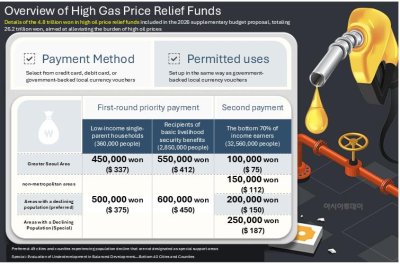
At the center of the package is a 4.82 trillion won ($3.6 billion) relief program targeting the bottom 70% of income earners. Payments will vary depending on region and socioeconomic status.
Residents in the Seoul metropolitan area would receive 100,000 won ($75), while those outside the capital region would receive 150,000 won ($112). People living in areas facing population decline would receive between 200,000 won and 250,000 won ($150 to $187).
Additional support is aimed at vulnerable groups. Single-parent households and those in the near-poor category would receive 450,000 won ($337), rising to as much as 500,000 won ($375) for those outside the capital region. Recipients of basic livelihood assistance would receive 550,000 won ($412), or up to 600,000 won ($450) with regional adjustments.
The government estimates the program will cover about 32.56 million people in the bottom 70% income bracket, along with 360,000 near-poor and single-parent households and 2.85 million recipients of basic livelihood benefits.
Details such as eligibility criteria, payment timing and methods will be finalized through interagency consultations and announced separately.
The ministry also set aside 19.5 billion won ($14.5 million) for youth work experience programs, focusing on sectors such as caregiving, culture and environmental services. Officials said the initiative is designed to support young people facing increased employment uncertainty amid global economic volatility.
An additional 4.67 trillion won ($3.5 billion) in local government grants is included to help regional authorities respond quickly to local economic conditions and fund projects aimed at stabilizing livelihoods and boosting economic activity.
Interior and Safety Minister Yoon Ho-joong said the relief payments were structured to provide greater support to regions and populations facing deeper economic hardship.
“With growing external uncertainties, including the conflict in the Middle East, we will work closely with the National Assembly to ensure this budget serves as a stabilizing force for people affected by rising fuel costs and inflation,” Yoon said.
— Reported by Asia Today; translated by UPI
© Asia Today. Unauthorized reproduction or redistribution prohibited.
Original Korean report: https://www.asiatoday.co.kr/kn/view.php?key=20260331010009533
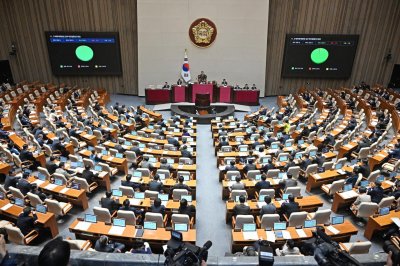

Lawmakers pass a revision to the Restriction of Special Taxation Act during a plenary session at the National Assembly in Seoul, with 206 votes in favor, 2 against and 2 abstentions out of 210 members present. Photo by Asia Today
March 31 (Asia Today) — South Korea’s ruling and opposition parties agreed Tuesday to pass a package of economic measures, including a currency stabilization bill, as the won weakened sharply amid prolonged conflict in the Middle East.
The legislation was approved during a plenary session alongside more than 60 bills aimed at stabilizing the economy and supporting livelihoods.
The currency measure includes tax incentives designed to encourage domestic investment by individuals who have invested in overseas markets, often referred to in South Korea as retail investors in foreign stocks. Officials said the goal is to increase demand for the Korean won and reduce volatility in foreign exchange markets.
The won traded at 1,530.1 per U.S. dollar on Tuesday, well above the psychologically significant 1,500 level, adding to inflationary pressure.
Floor leader Han Byung-do said the worsening Middle East crisis had begun to affect everyday life, emphasizing the need to contain exchange rate volatility and shield the economy from external shocks.
Lawmakers also approved additional economic legislation tied to the crisis. These include a measure to support corporate restructuring, allowing companies to streamline mergers and spin-offs and receive tax benefits as they respond to industrial challenges and shift into new sectors.
Other bills passed include revisions to trade-related laws aimed at helping businesses adapt to changes in the global trade environment.
Separately, lawmakers voted to fill several vacant leadership posts in National Assembly committees. The Democratic Party nominated Rep. Seo Young-kyo as chair of the Legislation and Judiciary Committee, along with Rep. Kwon Chil-seung and Rep. So Byung-hoon for other committee leadership roles. Their terms will run through May.
The votes were conducted by secret ballot and passed with support from the Democratic Party, while the People Power Party is believed to have opposed the selections.
The People Power Party had argued that the judiciary committee chair should be held by the opposition to ensure checks and balances, noting that the Democratic Party already holds the position of National Assembly speaker.
— Reported by Asia Today; translated by UPI
© Asia Today. Unauthorized reproduction or redistribution prohibited.
Original Korean report: https://www.asiatoday.co.kr/kn/view.php?key=20260401010009707
Hezbollah attempts to make Lebanon ground invasion ‘costly’ for Israeli army as it continues its advance.

Published On 31 Mar 202631 Mar 2026
The Israeli military has said four soldiers were killed in combat in southern Lebanon, where its forces are clashing with Hezbollah fighters after launching a ground invasion of the country.
An army statement on Tuesday named three soldiers from the same battalion who “fell during combat”. In a separate statement, it said another soldier had been killed in the same incident and two others wounded, without naming them.
list of 3 itemsend of list
Ten Israeli soldiers have been reported killed since fighting between Israel and Hezbollah flared up on March 2, following a United States-Israeli joint attack on Iran. More than 1,200 people have been killed in Israeli attacks on Lebanon, according to the Lebanese Ministry of Public Health, and more than a million displaced.
This comes a day after the United Nations Interim Force in Lebanon (UNIFIL) said two peacekeepers were killed “when an explosion of unknown origin destroyed their vehicle” near the southern Lebanese village of Bani Haiyyan. Another peacekeeper was killed by a projectile on Sunday near the southern Lebanese village of Aadchit el-Qsair.
Israeli Prime Minister Benjamin Netanyahu on Monday ordered the military to expand its invasion in southern Lebanon, pushing deeper to extend what he calls a “buffer zone” reaching the Litani River.
Israel’s far-right ministers have urged Netanyahu to annex southern Lebanon, as the military destroys bridges and homes to cut the area off from the rest of the country.
Al Jazeera’s Lebanon correspondent Zeina Khodr said Monday night marked a new escalation as Israel opened a new front in Lebanon’s Bekaa Valley, targeting roads that link towns known to be Hezbollah strongholds and strategic supply lines for the group.
“In the past weeks, [the Israeli army] hit bridges over the Litani, now they are trying to isolate the west Bekaa from southern Lebanon,” Khodr said, reporting from Beirut.
“Hezbollah Secretary-General Naim Qassem made it very clear they know the imbalance of power. They are not going to be able to stop this invasion, and the Israeli army will most likely reach until the Litani River, but they will not make it easy for them to consolidate control,” she continued.
“What Hezbollah is trying to do is make this a costly war for Israel.”
The escalation in Lebanon comes amid the ongoing US-Israel war on Iran, which has killed more than 1,340 people since February 28.
The Israel Hayom newspaper on Monday reported that Netanyahu told senior US officials that any future agreement between the US and Tehran would not stop Israel’s war in Lebanon.
Israel’s far-right Minister of Finance Bezalel Smotrich last week said in an Israeli radio interview that the war in Lebanon “needs to end with a different reality entirely”, which includes a “change of Israel’s borders”.
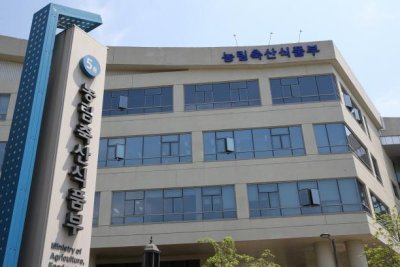

The Ministry of Agriculture, Food and Rural Affairs building. Photo by Asia Today
March 30 (Asia Today) — South Korea’s agriculture ministry said Monday it will urgently import 15 million broiler hatching eggs in an effort to curb rising chicken prices.
The Ministry of Agriculture, Food and Rural Affairs said retail prices for broiler chicken have climbed sharply in recent days, increasing by about 300 won (about $0.22) per kilogram over the past 10 days.
According to the Korea Agro-Fisheries and Food Trade Corporation’s price system, the average price rose from 6,252 won ($4.60) per kilogram on March 19 to 6,534 won ($4.80) on March 28. Peak prices rose from 7,182 won ($5.30) to 7,980 won ($5.90) over the same period.
Officials warned that rising chicken costs could lead to higher prices for fried chicken, a widely consumed food in South Korea, potentially pushing up overall dining-out inflation.
The ministry said it is in talks with the Netherlands over quarantine procedures for importing the eggs and is also considering Belgium as an alternative supplier if negotiations stall.
If talks are successful, imports could begin as early as early April. Combined with 778,000 eggs already imported from Spain in March, total imports would reach about 23 million eggs.
However, officials acknowledged that the measure may not provide immediate relief. It is expected to take about two months for the imported eggs to be hatched, raised and processed into chicken products available in stores.
The ministry is also reviewing measures to ask major poultry producers to refrain from raising prices during the period.
— Reported by Asia Today; translated by UPI
© Asia Today. Unauthorized reproduction or redistribution prohibited.
Original Korean report: https://www.asiatoday.co.kr/kn/view.php?key=20260330010009113
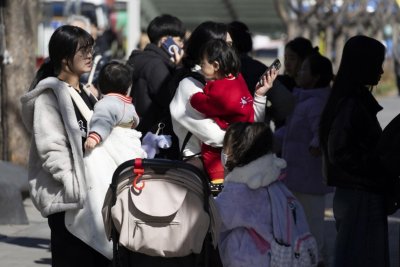

Two mothers stand with their children in downtown Seoul, South Korea, 25 February 2026. According to data released by the Ministry of Data and Statistics, the number of births in South Korea in December 2025 reached 20,003, an increase of 1,747, or 9.6 percent, compared to the same month a year earlier. Photo by JEON HEON-KYUN / EPA
March 30 (Asia Today) — South Korea’s fertility rate rose to 0.99 in January, nearing the symbolic threshold of 1.0, but experts warn the increase does not signal a sustained recovery.
Statistics Korea reported 26,916 births in January, the highest monthly figure in nearly seven years, while marriages also reached their highest level since 2018. The rise in marriages, a leading indicator of births, has raised expectations that birth numbers could continue to increase over the next two to three years.
Despite the uptick, analysts say the improvement reflects a temporary demographic effect rather than a fundamental shift. The increase is largely attributed to people born in the early 1990s entering peak childbearing years, boosting birth numbers in what is often referred to as an “echo boom.”
Experts caution that broader structural challenges – including population decline, rapid aging and regional depopulation – continue to worsen.
The government is planning to restructure its population policy framework in response. Officials aim to expand the Presidential Committee on Low Birthrate and Aging Society into a “population strategy committee” with broader authority covering labor supply, immigration and regional demographics.
The proposed body would also coordinate policies across ministries and be granted authority to review budgets in advance, signaling a shift toward more centralized management of population-related policies.
The policy approach itself is also expected to change. Rather than focusing solely on raising the birth rate, the government is moving toward strategies that assume continued population decline and aim to adapt to long-term demographic changes.
However, progress has been slow. The vice chair position of the presidential committee has remained vacant for about three months, and plans to expand and strengthen the organization have yet to gain momentum.
Experts say policy must focus less on short-term birth rate figures and more on underlying structural issues.
Ha Hye-young, a senior researcher at the National Assembly Research Service, pointed to Japan’s experience with regional revitalization policies, saying South Korea should adopt models that account for a shrinking population rather than attempting to reverse it.
Kim Jong-hoon, head of a population research institute, said South Korea faces a growing imbalance as the working-age population declines while the burden of supporting older generations increases. He added that many current policies amount to a “zero-sum” effort to attract residents from other regions rather than expanding the overall population base.
— Reported by Asia Today; translated by UPI
© Asia Today. Unauthorized reproduction or redistribution prohibited.
Original Korean report: https://www.asiatoday.co.kr/kn/view.php?key=20260330010009243
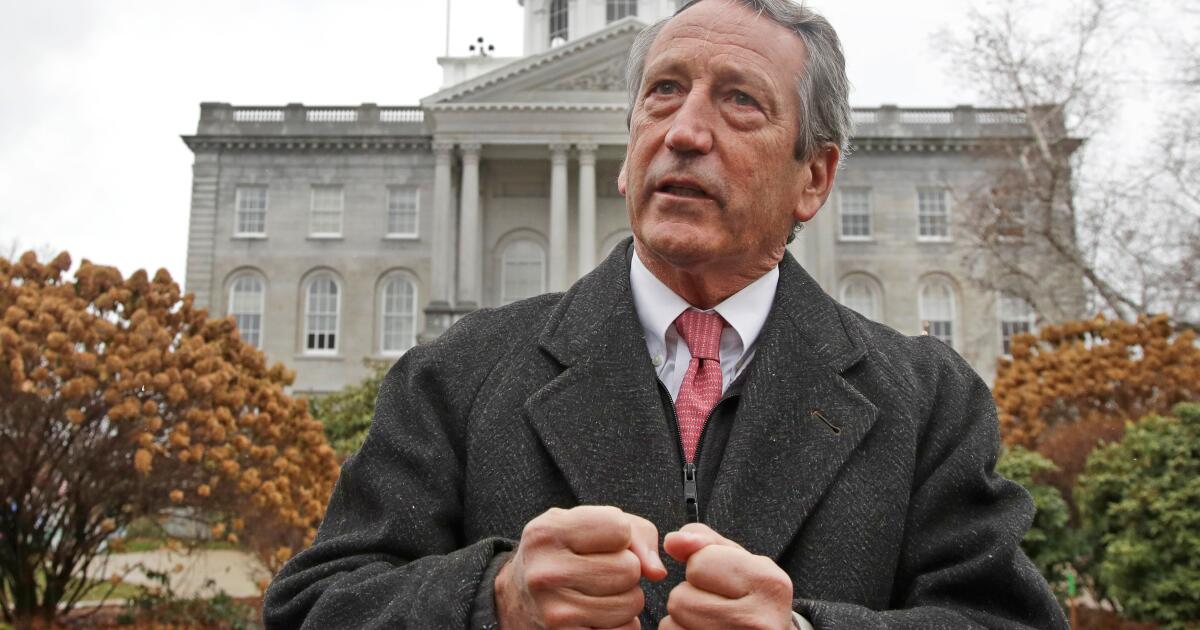
COLUMBIA, S.C. — Mark Sanford, the former South Carolina congressman and governor whose political ascendancy was stalled by a 2009 affair, wants to return to Congress — again.
Just hours ahead of the deadline to do so, Sanford filed candidacy paperwork with state officials to run in the June 9 GOP primary for South Carolina’s 1st District seat, which he has held twice before.
Sanford’s first political office was in the 1st District. An outsider with almost no name recognition, he navigated a primary for the open seat, finishing second before winning the runoff. He served for six years before his outside run at governor, again pushing his way through a crowded primary, then knocking off the last Democrat to hold the office.
But his eight years were overshadowed by the Appalachian Trail, which became shorthand for Sanford’s disappearance to go to Argentina to see his lover. Sanford’s wife, family and his staff didn’t know where he was.
Beating back both an ethics inquiry and calls to resign, Sanford held fast, leaving office on his own terms.
In 2013, Sanford won back his old seat, beating 15 other candidates in a primary and runoff. He won two more full terms before falling to a GOP challenger in 2018 who had President Trump’s backing.
The seat would go on to flip to Democratic hands that fall for the first time in decades, won back by GOP Rep. Nancy Mace in 2020. Mace is running for governor this year.
Sanford, 65, also briefly ran for president in 2020, challenging Trump for the nomination in what he characterized as a “long shot” effort around warnings about the national debt. Some, including Sanford’s former gubernatorial staffers, initially questioned whether the effort was a serious one, positing that it might be an effort to stay relevant after the 2018 defeat.
Sanford dropped out of the contest just ahead of the New Hampshire primary. Sanford’s home state would ultimately opt not to hold a 2020 GOP presidential primary, clearing the way for Trump’s nomination in South Carolina.
Sanford did not immediately return a message seeking comment on Monday. True to the themes that have dominated his political thinking, an email release on Sanford’s candidacy focused on the national debt, with the candidate saying he felt 1st District voters wanted a representative “who is an advocate for financial sanity that has been lost in Washington for all too long.“
Since leaving the U.S. House, Sanford has hung onto more than $1.3 million in a federal campaign account, funds that he can now use in a primary already crowded with multiple Republican and Democratic candidates.
Kinnard and Collins write for the Associated Press.

Published On 29 Mar 202629 Mar 2026
South African sprinter Caster Semenya, a two-time Olympic 800-metres champion, says the International Olympic Committee’s (IOC’s) reinstatement of gender verification tests for the 2028 Los Angeles Games is “a disrespect for women”.
The hyperandrogenic athlete on Sunday also expressed her disappointment that the measure was taken under new IOC President Kirsty Coventry of Zimbabwe.
list of 3 itemsend of list
“For me personally, for her being a woman coming from Africa, knowing how African women or women in the Global South are affected by that, of course it causes harm,” Semenya said in Cape Town on the sidelines of a sporting competition.
The IOC said on Thursday that only “biological females” will be allowed to compete in women’s events, preventing transgender women from competing.
The IOC had previously used chromosomal sex testing from 1968 to the 1996 Atlanta Olympics before abandoning it in 1999 under pressure from the scientific community, which questioned its effectiveness, and from its own athletes commission.
“It came as a failure, and that’s why it was dropped,” Semenya said.
“It’s like now we need to prove that we are worthy as women to take part in sports. That’s a disrespect for women.”
Semenya has become the symbol of the struggle of hyperandrogenic athletes, a battle on the athletics tracks and then in courtrooms, to assert her rights, which she has waged since her first world title in the 800m in 2009.
In 2025, she won a partial victory at the European Court of Human Rights in her seven-year legal fight against track and field’s sex eligibility rules.
The court’s highest chamber said in a 15-2 ruling that Semenya had some of her rights to a fair hearing violated before Switzerland’s Supreme Court, where she had appealed against a decision by the Court of Arbitration for Sport. It had ruled in favour of track’s international governing body, World Athletics.
The original case between Semenya and Monaco-based World Athletics was about whether female athletes who have specific medical conditions, a typically male chromosome pattern and naturally high testosterone levels, should be allowed to compete freely in women’s sports.
The European court’s ruling did not overturn the World Athletics rules that in effect ended Semenya’s career running the 800m after she had won two Olympic gold medals and three world titles since emerging on the global stage as a teenager in 2009.
In a major shift of policy, the IOC is abandoning rules it brought in in 2021 that allowed individual federations to decide their own policy and is instead implementing a policy across all Olympic sports.
“Eligibility for any female category event at the Olympic Games or any other IOC event, including individual and team sports, is now limited to biological females, determined on the basis of a one-time SRY gene screening,” the IOC said in a statement.
They will be carried out through a saliva sample, cheek swab or blood sample. It will be done once in an athlete’s lifetime.
“The policy we have announced is based on science and has been led by medical experts,” Coventry said.
“At the Olympic Games, even the smallest margins can be the difference between victory and defeat, so it is absolutely clear that it would not be fair for biological males to compete in the female category. In addition, in some sports it would simply not be safe.”
The new policy removes a potential source of conflict between the IOC and United States President Donald Trump as the 2028 Los Angeles Olympics comes onto the horizon.
Trump issued an executive order banning transgender athletes from women’s sport soon after he returned to office in January 2025.
The US leader took credit for the IOC’s new policy in a post on his Truth Social network on Thursday.
“Congratulations to the International Olympic Committee on their decision to ban Men from Women’s Sports,” Trump wrote. “This is only happening because of my powerful Executive Order, standing up for Women and Girls!”
While sports such as swimming, athletics, cycling and rowing have brought in bans, many others have permitted transgender women to compete in the female category if they lowered their testosterone levels, normally through taking a course of drugs.
The IOC is bringing in the new policy after the women’s boxing competition at the 2024 Paris Olympics was rocked by a gender row involving Algerian fighter Imane Khelif and Lin Yu-ting of Taiwan.
Khelif and Lin were excluded from the International Boxing Association’s 2023 world championships after the IBA said they had failed eligibility tests.
However, the IOC allowed them both to compete at the Paris Games, saying they had been victims of “a sudden and arbitrary decision by the IBA”.
Both boxers went on to win gold medals.
Lin has since been cleared to compete in the female category at events run by World Boxing, the body that will oversee the sport at the Los Angeles Summer Games.
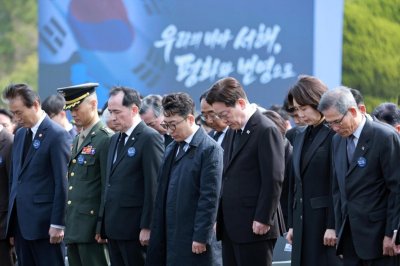

South Korean President Lee Jae Myung (3-R) offers a silent prayer at a national cemetery in Daejeon, South Korea, 27 March 2026, during a ceremony to mark the 11th anniversary of the commemoration day for 55 troops who died in three major clashes with North Korea in the West Sea, comprising an inter-Korean naval skirmish in 2002, North Korea’s torpedo attack on the corvette Cheonan in 2010 and its shelling of the border island of Yeonpyeong in the same year. Since 2016, the government has designated the fourth Friday of March as the commemoration day, known as the West Sea Defense Day. Photo by YONHAP / EPA
March 27 (Asia Today) — President Lee Jae-myung said Friday that building a peaceful Korean Peninsula while maintaining a strong defense is the historic mission left behind by South Korea’s fallen West Sea heroes.
Speaking at the 11th West Sea Defense Day ceremony at Daejeon National Cemetery, Lee said the 55 service members honored each year had protected not only a maritime boundary, but also the everyday peace South Koreans enjoy and the future their descendants deserve.
“Our task is to firmly protect our people and the territory of the Republic of Korea with strong national defense capabilities, while also building a peaceful Korean Peninsula free from the worries of war and hostility,” Lee said.
He said the waters defended by the fallen should no longer remain a symbol of conflict, but be turned into “a foundation of peace and prosperity.”
“Peace is our livelihood, and peace is the greatest security,” Lee said. “Winning a fight matters, but winning without fighting matters even more. More important still is a peace in which there is no need to fight.”
Lee said his government would work to end the legacy of confrontation and tension in the West Sea and open a new chapter of shared growth and prosperity.
He also paid tribute to the bereaved families, saying the government would remember the dead, preserve their record and honor them properly.
Lee said his administration was trying to close gaps in veterans support under the principle that special sacrifice deserves special compensation.
Beginning in May, spouses of financially struggling war veterans will receive monthly living support payments, he said.
Lee also said the government plans to expand the number of designated veterans medical institutions nationwide to 2,000 by 2030 so national meritorious persons can receive treatment more easily at nearby hospitals.
He said mandatory military service should be recognized as a legitimate social asset so former service members can take pride in their time in uniform.
To that end, Lee said the public sector will be required to count mandatory service periods when calculating pay grades and wages for discharged veterans.
West Sea Defense Day is a national commemoration honoring those killed in the Second Battle of Yeonpyeong on June 29, 2002, the sinking of the Cheonan on March 26, 2010, and the shelling of Yeonpyeong Island on Nov. 23, 2010.
Before the ceremony, Lee and first lady Kim Hye-kyung paid respects at the graves of those killed in the Second Battle of Yeonpyeong, the Yeonpyeong shelling, the 46 sailors killed in the Cheonan sinking and the late warrant officer Han Ju-ho.
— Reported by Asia Today; translated by UPI
© Asia Today. Unauthorized reproduction or redistribution prohibited.
Original Korean report: https://www.asiatoday.co.kr/kn/view.php?key=20260327010008430
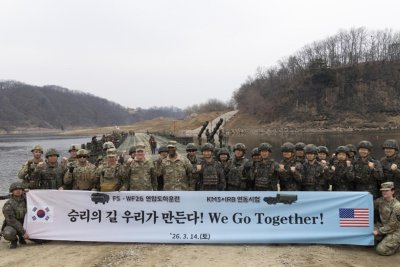

U.S. Gen. Xavier Brunson (C), chief of the South Korea–U.S. Combined Forces Command, attends a combined exercise (maneuvering, wet gap crossing) with South Korean soldiers from the Lightning Brigade, Capital Mechanized Infantry Division and 7th Engineer Brigade, as part of the Freedom Shield 26 exercise, in Yeoncheon, Gyeonggi province, South Korea, 14 March 2026. According to South Korea’s Joint Chiefs of Staff (JCS), North Korea launched ballistic missiles into the east sea on 14 March as South Korea and the United States were conducting their military exercise. Photo by JEON HEON-KYUN/EPA
March 27 (Asia Today) — The United States and South Korea have established a new joint command unit aimed at integrating nuclear and conventional forces to strengthen deterrence against North Korea, according to defense officials.
The unit, known as J10, has been set up within U.S. Forces Korea headquarters at Camp Humphreys in Pyeongtaek. It is designed to move beyond the traditional concept of a “nuclear umbrella” and enable real-time operational coordination between U.S. strategic assets and South Korean conventional forces.
Originally separated from the U.S. Forces Korea planning directorate in June 2024, J10 is led by a colonel-level commander and serves as a centralized command structure for combined nuclear and conventional operations.
Military experts said the creation of J10 marks a shift from declaratory deterrence to operational readiness, allowing faster execution of joint responses in the event of a North Korean nuclear threat.
The unit is expected to play a key role in implementing decisions made by the bilateral Nuclear Consultative Group established under the Washington Declaration, with the ability to coordinate immediate response measures from the Korean Peninsula.
J10 will oversee operational planning that aligns U.S. strategic assets – such as long-range bombers and nuclear-powered submarines – with South Korean support forces. It is also expected to match response options to specific North Korean threat scenarios to accelerate execution speed.
Previously, U.S. nuclear operations were largely managed by command structures based in the United States. The new arrangement places a dedicated coordination function on the Korean Peninsula, enabling continuous, real-time management of response planning.
Analysts said the move is intended to strengthen integration between South Korea’s “three-axis” defense system and U.S. nuclear capabilities, increasing military pressure on North Korea.
However, officials noted that the effectiveness of J10 will depend on the level of real-time intelligence sharing between the two allies.
A senior official described J10 as “the final piece” in building an integrated extended deterrence framework, adding that its capabilities will be tested in upcoming large-scale joint military exercises.
— Reported by Asia Today; translated by UPI
© Asia Today. Unauthorized reproduction or redistribution prohibited.
Original Korean report: https://www.asiatoday.co.kr/kn/view.php?key=20260327010008515

Iranian rescue workers have been pulling survivors and bodies out of a residential building in south Tehran after a US-Israeli missile strike. Al Jazeera’s Tohid Asadi was at the scene.
Published On 27 Mar 202627 Mar 2026
Share
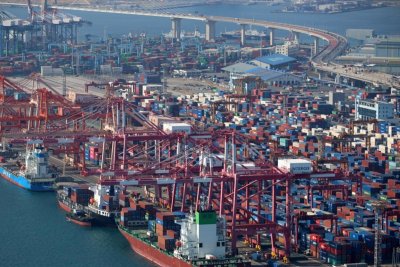

A container pier in South Korea’s southeastern port city of Busan, South Korea. The Organization for Economic Cooperation and Development cut South Korea’s 2026 growth forecast to 1.7% from 2.1%, citing the economic fallout from rising energy prices and supply disruptions linked to the conflict in the Middle East. File. Photo by YONHAP / EPA
March 26 (Asia Today) — The Organization for Economic Cooperation and Development cut South Korea’s 2026 growth forecast to 1.7% from 2.1%, citing the economic fallout from rising energy prices and supply disruptions linked to the conflict in the Middle East.
The OECD released the revised outlook Thursday in its interim economic report, which said the conflict has disrupted shipments through the Strait of Hormuz, pushed up energy costs and added uncertainty to global demand.
South Korea’s downgrade of 0.4 percentage points was one of the largest among Group of 20 economies, according to the report. The OECD kept its 2027 growth forecast for South Korea unchanged at 2.1%.
The OECD also raised its forecast for South Korea’s inflation this year to 2.7%, up 0.9 percentage points from its previous projection. It said inflation is expected to ease to 2.0% next year as energy price pressures fade.
The report said countries that depend heavily on imported energy are especially vulnerable if the Middle East conflict drags on, as higher fuel costs can weigh on output and feed broader price pressures.
Despite the downgrade, the OECD said South Korea’s medium-term outlook remains relatively stable, with growth expected to recover next year if current energy disruptions prove temporary. The organization said its projections assume energy prices begin easing in mid-2026.
South Korea’s Ministry of Economy and Finance said it would maintain emergency readiness, warning that the economic impact could widen if the Middle East war continues longer than expected.
— Reported by Asia Today; translated by UPI
© Asia Today. Unauthorized reproduction or redistribution prohibited.
Original Korean report: https://www.asiatoday.co.kr/kn/view.php?key=20260326010008288

South Dakota Gov. Larry Rhoden on Thursday signed a bill into law requiring people registering in the state for the first time to prove their citizenship. File Photo by Graeme Sloan/EPA
March 26 (UPI) — South Dakota Gov. Larry Rhoden on Thursday signed six election-related bills, including one that requires newly registered voters to prove their citizenship.
The bills, which Rhoden, his administration and the state legislature said are meant to protect the integrity of the state’s elections, also affect campaign finance disclosures, publication of election results, processing of absentee ballots, publication of statewide voter registration files and the submission of nomination petitions.
The voter registration law, called the South Dakota SAVE Act, is one of several that states across the country have been considering as similar legislation has been the subject of heated debate in both the U.S. House and U.S. Senate.
“In South Dakota, we do things right, especially when running out state elections,” Rhoden said in a press release.
“This bill ensures only citizens vote in state elections, keeping our elections safe and secure,” he said.
All six bills that Rhoden signed were named emergencies, which allows them to go into effect immediately, as opposed to July 1, when laws in South Dakota usually go into effect.
This will allow for the requirements to apply to the state’s June 2 primary elections, registration for which has a May 18 deadline, the South Dakota Searchlight reported.
The governor’s office said the state’s SAVE Act applies only to state elections and only to people who are registering to vote in South Dakota for the first time, and will need to show a passport, birth certificate or other document that proves they are a U.S. citizen.
South Dakota residents who are already registered do not need to take any action, and those who need to update their name, address or other information are not required to prove their U.S. citizenship.
“Noncitizens cannot vote in South Dakota — this bill is wholly unnecessary,” South Dakota Democratic state Rep. Erik Muckey said during debate of the bill, The New York Times reported.
Earlier this year, Rhoden also signed into law a bill that would allow voters to challenge the citizenship of other registered voters with a sign, sworn statement and some type of documented evidence.
That law will not take effect before the primary, but it will be effective during the general election in November.
