small business

Huge UK indoor adventure park shuts ‘with immediate effect’ after plunging into administration

AN enormous indoor adventure park, fitted with inflatable obstacle courses and thrilling activities, has shut down with immediate effect.

The family-friendly attraction has been a hit with the community for over six years, welcoming 400,000 visitors during that time.

Indoor adventure park, "Ultimate Warriors", with obstacles and inflatables lit by red and blue lights.
Ultimate Warriors adventure park in Gloucester has plunged into administration Credit: Ultimate Warriors
Indoor adventure park with red and grey slides and a multi-level climbing structure.
The site, fitted with obstacle courses, was enjoyed by hundreds of thousands of visitors Credit: Ultimate Warriors

Ultimate Warriors, formerly Ninja Warrior UK, in Gloucester, shut down earlier this month.

This comes after the adventure park was plunged into administration, only a year after leaving the national Ninja Warrior group.

Ultimate Warriors hoped to sell the business, exploring every option to remain open.

Following a sale falling through last minute, they had no option but to close, nearly seven years after it opened in October 2019.

LONG WAIT

World’s longest flight set to take 22 hours delayed AGAIN due to Iran crisis


ON TRACK

Huge £99million upgrade to transform one of Britain’s busiest train stations

Only recently, Ultimate Warriors had refreshed its equipment and activities, running independently as a family-run business.

Ultimate Warriors Gloucester said on Facebook: “After six and a half wonderful years, it is with great sadness that we announce Ultimate Warriors has entered administration and has closed its doors.

“We explored every possible option to keep our much-loved venue open. Unfortunately, despite strong interest, we are devastated to have a sale fall through at the last minute.

“As a small business, we simply do not have the financial reserves to continue operating in such uncertain economic conditions, even with the incredible support and feedback we have received from our guests over the years.”

Ultimate Warriors was formerly part of the Ninja Warrior UK franchise, which owns 16 adventure parks across the UK, all based on the hit ITV show.

Similar to the Ninja Warrior UK set up, Ultimate Warriors in Gloucester had a variety of activities, including monkey bars, slides and climbing walls.

Now, the Ultimate Warriors team is supporting its staff get new jobs, including reaching out to Airhop Gloucester to possibly accommodate them.

Ultimate Warriors Gloucester said: “To everyone who visited us, celebrated with us, worked with us, or supported us along the way – thank you. Your support, loyalty, and memories will stay with us forever.”

Source link

Tom Steyer courted Latino voters in Santa Ana. Did he succeed?

When a friend asked if Tom Steyer could stop by my wife Delilah’s downtown Santa Ana restaurant, I had to explain to her who he was.

It’s not political apathy in my honey’s case. She’s just exhausted from running her small business, Alta Baja Market, in these inflationary times. She’s one of the 16% of undecided voters in a recent California Democratic Party poll — a group that may determine which two candidates for governor face each other in the general election.

Delilah agreed that Steyer could visit on Saturday after I told her that many of our friends support the billionaire’s progressive platform.

“Politics is your job, not mine,” she joked as we drove to Alta Baja and I named the other major candidates. The only ones she had heard of were Antonio Villaraigosa (“I liked him as mayor, but he needed to keep his pants on,” referring to his extramarital affairs) and Katie Porter (“Some of my workers like her, but I don’t know what she’s done”). She might be the last person left in the Golden State who hasn’t seen any of Steyer’s television and YouTube ads.

His campaign seems to have stalled in the polls even as he has spent more than $150 million of his own money amid doubts from some voters about whether they want a billionaire to lead the state.

So a visit to Santa Ana, the heart of Latino Orange County, was a good move. At Alta Baja, he could talk to my Mexican American wife and other blue-collar Latinos.

When rival Xavier Becerra came to O.C. a few weeks ago, on the other hand, he appeared at a private fundraiser attended mostly by professional Latinos.

“I just want someone who tells us where our taxes are going and treats this country like a business, and we’re not wasting money,” Delilah said. She’s a socially liberal and fiscally conservative Democrat who has been especially angered by President Trump’s deportation deluge, which left the streets of downtown Santa Ana empty for months last summer. “Because right now, our government is a hot-ass mess.”

I asked what questions she had for Steyer.

“So insurance had to cover all the disasters that happened with the fires,” Delilah replied. “So why is everybody else having to pay for it? And what are you really gonna do to help the state?”

She paused. “Tom is a Democrat, right?”

Delilah prepared for Steyer’s noontime stop as if it were any other day. She has fed the likes of U.S. Sen. Alex Padilla, Orange County Dist. Atty. Todd Spitzer and former Speaker of the Assembly Anthony Rendon. Republican gubernatorial candidate Steve Hilton is a fan of Alta Baja’s blue cornbread; Oakland Mayor Barbara Lee held a meet-and-greet there when she ran for president two years ago.

“You know who should ask questions?” Delilah said after she set the till for the day. “Angela.”

That would be 19-year-old Alta Baja employee Angela Nino, who will be voting in her first election.

“She’ll always be telling me, ‘Did you see the debate? Did you see the debate?’ And I always say, ‘No, I’m too tired to watch.’”

Nino soon clocked in.

“Guess who’s coming, Angela?” Delilah said before looking at me. “Is his name Tim or Tom?”

“It’s like I agree with some of his things, but he’s a billionaire,” said the Orange Coast College student and Santa Ana resident when I asked about Steyer. “His answers at debates have been pretty broad so far.”

Delilah smiled.

“You’re the future, girl, so ask him anything.”

Almost everyone who came in as we waited for Steyer was a campaign worker or volunteer. Former state Controller Betty Yee, who ended her campaign for governor last month and endorsed Steyer, sat at a table with her husband. Orange County Supervisor Vicente Sarmiento, who initiated Steyer’s Santa Ana visit, thanked Delilah for the opportunity. He has known her since the start of his political career on the Santa Ana City Council nearly 20 years ago,

“This is a city where our residents were criminalized because of ICE, our downtown suffered because of construction, and all this on the heels of a pandemic,” he told me. “These are the folks Tom needs to listen to.”

Sarmiento’s staffer got his attention. Steyer was here.

The candidate strolled in with a videographer and photographer. He wore his usual casual billionaire outfit — white-and-cardinal Nikes, jeans, checkered shirt with rolled-up sleeves and a colorful Southwestern-style fabric belt.

Steyer went straight to the counter.

“Are you running for governor?” he cracked while shaking Delilah’s hand.

“I don’t want to,” she replied.

“I knew you were a smart woman!”

He listened with wide eyes and a stern face as Delilah complained about a years-long light-rail project in front of Alta Baja “that has been worse for businesses here than COVID.” Insurance rates have gone up 30% in the last year alone, she said.

“Well, look, that’s my whole thing,” Steyer responded in his low, gravelly voice. “I’m willing to take on the big corporations who are ripping off California. And they’re all spending a lot of money against me.”

It was the Steyer I’ve heard on too many commercials: pugnacious, compassionate but spouting a whole bunch of boilerplate. Delilah smiled weakly.

“I appreciate that,” she said. “And we need more of that.”

Then she waved Nino over. Usually shy, the architecture major now channeled her inner Lesley Stahl.

“Why do you have to be governor in order to do something while you have billions of dollars?” she said.

Steyer didn’t flinch as he explained how he has funded ballot propositions and nonprofit initiatives to fight for a more equitable California.

“So I’ve been able to do something, but what I see in California — and what Delilah and I were just talking about — is big corporations actually run the state,” he said.

“That’s true,” Nino conceded.

“You have to take on the big corporations that are screwing everybody. And you can really only do that as governor,” Steyer continued.

“You want to tax the billionaires, is that correct?” Nino asked next, as Steyer nodded. “How come on some [campaign disclosure] forms, it shows that your billions are in different [countries] besides in the U.S.?”

The candidate vigorously shook his head.

“I might have investments outside the United States, but there’s nothing I’m doing to not pay — I pay full California and American taxes on everything, promise. There’s a lot of ways I could avoid taxes, but I don’t. And so, anything that I’m doing overseas is not to avoid taxes. … I give you my word.”

One more from Nino!

“And how can the people trust billionaires when currently they have been very disappointing towards us?”

“I understand why people are skeptical,” Steyer replied. “They couldn’t be more skeptical than I am.”

He argued that other moguls “are supporting every other candidate. Those people hate me — like, they think I stand for something really bad, which is making them pay their fair share,” referring to a proposed November ballot initiative that would impose a one-time 5% tax on billionaires like Steyer (he supports the measure).

“And they’re right,” Steyer concluded. “And so it’s like, they hate me, and that’s fine.”

Nino stayed silent. Delilah thanked Steyer, who was off to visit other local businesses owned by friends of ours. He bought a bottle of rosé, posed for photos with Delilah and Sarmiento and went off — but not before a staffer adjusted the back of his collar.

Delilah and Nino went back to prepping lunch orders. What did they think about Steyer?

“To be honest, I’m so skeptical,” Nino said. “I don’t think he has enough experience as some of the other candidates, and I feel like he could have been more into detail about his policies.”

What about you, honey?

“Gracious, very kind and not pompous, which is what I would expect from most politicians,” Delilah said. “I like that he heard out Angela — that’s important [that] politicians listen to the next generation, and I think everybody should be doing that. But I wasn’t satisfied with my insurance question.”

“And we don’t know if this is a performance,” Nino added, drawing a playful gasp from Delilah. “We’ve seen, like, throughout the years, many political people go into, like, regular [businesses] to seem like, ‘Oh, we’re relatable to the people. We know your struggles.’”

“Do they really?” Delilah interjected.

Nino frowned.

They could just be putting on a show for the cameras, she said.

Source link

Huge BA business class upgrade faces delays over fears crew can’t safely restrain drunk passengers in new seats

An image collage containing 1 images, Image 1 shows British Airways Airbus A380 taking off from Dallas Fort Worth International Airport

BRITISH Airways’ multi-million pound superjumbo refit faces certification delays over fears crew cannot safely restrain drunk passengers in its new business class seats.

The airline is in the process of upgrading its Airbus A380 fleet with its latest Club Suite, which comes with a sliding privacy door.

But the makeover could hit delays because of concerns over how staff would deal with an air rage passenger on the upper deck.

BA plans to move a small section economy seats off the top floor and replace them with a larger Club World cabin.

Its passenger restraint kit is understood to be approved for economy and premium economy seats – not the new suite-style business seats.

That could leave crew with a major problem if a passenger became violent or disruptive upstairs.

secret code

Flight attendants spill the tea on what ‘Bob’ passenger nickname actually means


SPAIN PAIN

Ryanair warns Spain to stop new entry rules as ‘queues are longer than flights’

Sources said hauling a violent passenger down the A380’s narrow staircases could put crew and other passengers at risk.

The first aircraft are currently being worked on in Manila, Philippines, as part of the refurbishment programme.

Industry sources have also suggested there may be certification concerns over the weight of the new business seats, which include motors and sliding doors.

Extra weight on the upper deck could affect the plane’s payload limits.

However, any delay may also be linked to wider supply chain issues affecting premium aircraft seats across the industry.

British Airways said the A380 refit programme remains on schedule for 2026.

Source link

Trump’s latest 10% tariffs found unlawful by U.S. trade court

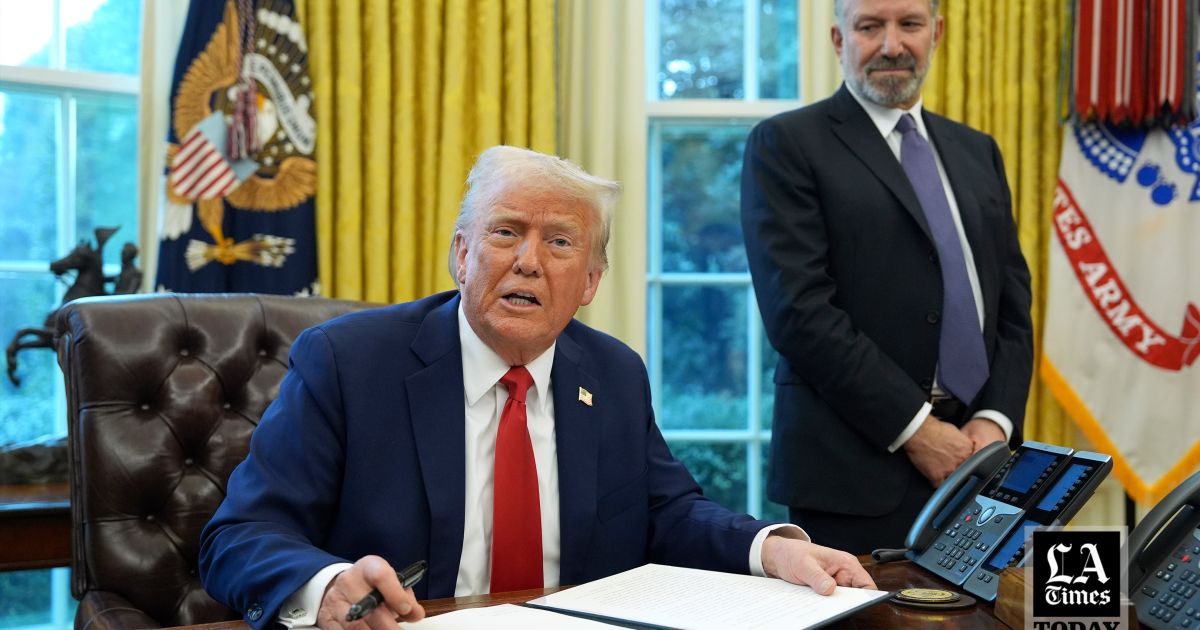
President Trump’s 10% global tariffs were declared unlawful by a federal trade court in a fresh blow to the administration’s economic agenda, several months after the U.S. Supreme Court vacated earlier levies he’d imposed.

A divided three-judge panel at the U.S. Court of International Trade in Manhattan on Thursday granted a request by a group of small businesses and two dozen mostly Democrat-led states to vacate the tariffs. Trump imposed the 10% duties in February under Section 122 of the Trade Act of 1974, which had never previously been invoked.

The court for now only immediately blocked the administration from enforcing the tariffs against the two companies that sued and Washington state, making clear that it was not issuing a so-called universal injunction. The panel found that the other states that sued lacked standing because they aren’t direct importers, instead arguing that they were harmed by having to pay higher prices for goods when businesses passed on tariff costs.

It wasn’t immediately clear what the ruling would mean for now for other importers that had been paying the contested levies.

The majority of the panel rejected the administration’s stance that “balance-of-payments deficits” — a key criterion for imposing the Section 122 tariffs — was “a malleable phrase.” They concluded that Trump’s proclamation imposing the levies failed to identify that such deficits existed within the meaning of the 1974 law, instead using “trade and current account deficits to stand in the place.”

The decision is the latest setback for the president’s effort to levy tariffs without input from Congress. Earlier duties — overturned by the Supreme Court on Feb. 20 — were issued under a different law, the International Emergency Economic Powers Act, or IEEPA. In that case, the justices ruled Trump had exceeded his authority, kicking off a legal scramble by importers for almost $170 billion in refunds.

The U.S. Justice Department could challenge the trade court’s latest ruling by taking the case to the U.S. Court of Appeals for the Federal Circuit, which ruled against the Trump administration during the last tariff fight.

Section 122 allows presidents to impose duties in situations where the U.S. faces what the law defines as “fundamental international payments problems.” Even before Trump issued the tariffs, economists and policy experts debated whether the president would be able to build a solid legal framework using the statute.

In a proclamation declaring the use of Section 122, Trump said that tariffs were justified because the U.S. runs a “large and serious” trade deficit. He also pointed to the negative net flows of income from investments Americans have overseas and other things that showed the U.S. balance-of-payments relationship with the rest of the world was deteriorating.

Under the law, presidents have the ability to impose tariffs on goods imported into the U.S. on a short-term basis to address concerns about how money is flowing in and out of the country. Those concerns include “large and serious United States balance-of-payments deficits” and an “imminent and significant depreciation of the dollar.”

Unlike other legal options Trump might pursue to impose tariffs, Section 122 can be invoked without waiting for a federal agency to conduct an investigation to determine whether the levies are justifiable. But they can still be challenged in court.

The small businesses and states that sued argued that Section 122 became outdated when the U.S. ditched the gold standard decades ago. They say Trump improperly conflated “balance-of-payments deficits” with U.S. trade deficits in order to justify using the law.

They also allege that Trump’s order announcing the Section 122 tariffs was “riddled with omissions and mischaracterizations” around the meaning of a balance-of-payments deficit. The trade deficit cited by Trump is just one part of calculating the country’s balance of payments position, the states say.

Under Section 122, the president can order import duties of as much as 15%. The executive action can last 150 days, at which point Congress would have to extend it. Trump has said he would aim to increase the rate to 15% from 10%.

The states argue that Trump’s new tariffs violate other requirements in Section 122, including that such duties not be discriminatory in their application. The states argue that Trump’s new tariffs improperly exempt some goods from Canada, Mexico, Costa Rica, the Dominican Republic, El Salvador, Guatemala, Honduras and Nicaragua.

According to the complaint, the Trump administration conceded during the previous litigation over his IEEPA tariffs that trade deficits “are conceptually distinct from balance-of-payments deficits.”

The clash over Section 122 emerged just as the legal fight over refunds from Trump’s IEEPA tariffs began to heat up. A different judge in the Court of International Trade, U.S. Judge Richard Eaton, is overseeing the massive refund effort and ordered Customs and Border Protection to give him regular updates on a largely automated process the government will use to issue most refunds.

Larson and Tillman write for Bloomberg.

Source link