slowing

Why is US GDP growth slowing, and how can it be reversed? | International Trade News

United States economic growth slowed in the second quarter of 2026 amid a growing deficit and increasing inflationary pressures.

US gross domestic product (GDP) grew by 1.5 percent between April and June. That is a sharp decline from 2.1 percent growth in the first quarter of the year, according to a Bureau of Economic Analysis (BEA) report released on Thursday.

Recommended Stories

list of 4 itemsend of list

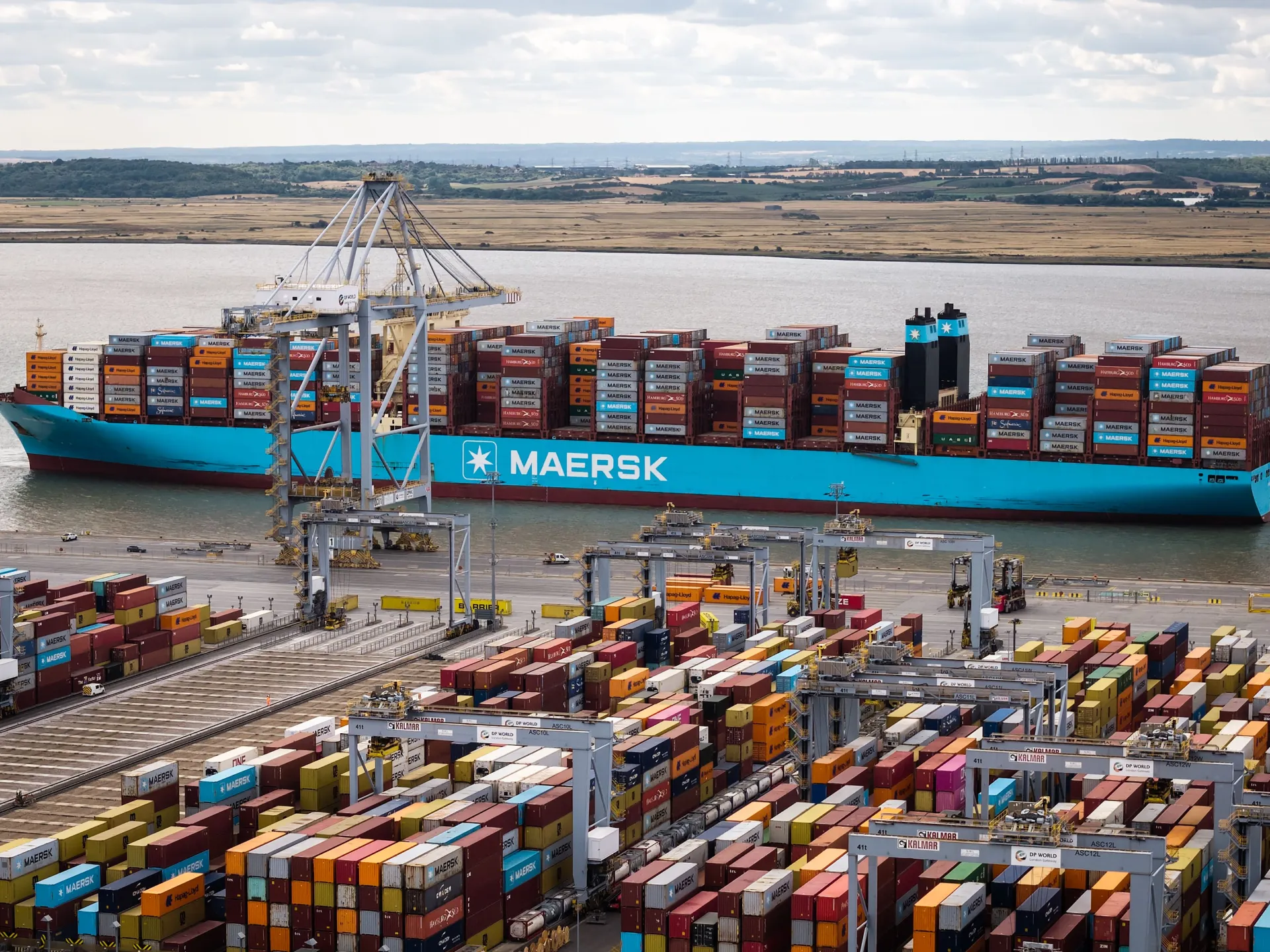
A widening trade deficit is a key reason why GDP is slowing, as is a jump in petrol prices, experts say.

“It’s a classic supply shock. The combination of tariffs and oil price spikes is exactly what a macroeconomist would expect to happen,” Michael Klein, professor of international economic affairs at The Fletcher School at Tufts University, told Al Jazeera.

The US has increased purchases of goods like semiconductors, telecommunications equipment, and industrial equipment, according to BEA data. Business investment in equipment rose by more than 15 percent in the second quarter. Those are essentially the elements needed for the ongoing investment boom to support the growth of artificial intelligence (AI).

“Imports rose due to the investment and consumption driver, and so net exports were a drag on overall growth. Overall, the US is investing and consuming more but not producing more,” Rachel Ziemba, adjunct senior fellow at the Center for a New American Security, told Al Jazeera.

Exports have not kept pace. The trade deficit in May grew to $77.6bn, a 42 percent increase from the month before, according to BEA data.

Exports tumbled by 3.2 percent to $317.7bn, and imports rose by 3.3 percent to $395.3bn.

This comes as countries around the globe seek to reduce their dependence on the US due to President Donald Trump’s tariff policies.

Among them is Canada, historically one of the US’s biggest trading partners. Canadian Prime Minister Mark Carney has pursued new trade deals with China and Saudi Arabia in recent months, for example, as Trump has slapped steep tariffs on the country, threatened to annex it and called it the 51st state, and refused to renew a trade deal with Canada and Mexico.

Are US tensions with Iran a factor?

In the second quarter, energy prices fluctuated greatly over the past few months. For US consumers, that was mostly reflected in petrol prices. During the second quarter, US petrol prices hit $4.48 per gallon (3.78 litres) in May.

They later retreated to $3.96 per gallon by the end of June. But the reprieve was short-lived as a fragile peace deal failed to take hold, with petrol prices increasing throughout July after the deadline for data to be included in second-quarter GDP had passed. Prices have since moved back above the $4 mark.

Petrol prices drove inflation for much of the second quarter. Between March and April, petrol prices jumped 5.4 percent. The next month, they jumped another 7 percent. They eased between May and June, falling 9.7 percent as global benchmark prices pulled back.

According to analysis from Bank of America, discretionary spending surged in June, the final month of the second quarter, as spending on products outside of petrol jumped while fuel prices temporarily eased.

“With gasoline prices easing in June, total card spending excluding gas surged 5.6% YoY [year over year] – also the strongest growth since April 2022,” the report said.

How can the GDP recover?

US consumers have ramped up spending on prescription drugs, automobiles like light trucks, and new furniture. There was also increased spending in areas like restaurants and hotels, suggesting that consumers remain somewhat resilient.

But, says Fletcher School’s Klein, that spending is by high-income earners, a trend that indicates a K-shaped economy, which is when the wealthy thrive, while lower-income consumers and small businesses face tougher economic conditions.

“The continued consumption growth of those who are better off depends upon things like the stock market staying strong and housing prices staying strong, because people feel wealthier through the value of their house or their stock portfolios, so they’ll spend more. But by a number of measures, the stock market seems to be very highly valued,” Klein, who also authors the EconoFact economic analysis website, told Al Jazeera.

Overall, consumer confidence fell for the third straight month in July, according to a Conference Board report released on Tuesday. Consumers attributed the decline to “current business conditions”, and the organisation expects “little improvement” for the remainder of the year.

Business investment would also need to surge more broadly to lift the wider economy. While there has been a boom in the AI sector, other industries have not been as eager to keep their inventories stocked.

Klein says consistent trade policies would change that.

“The pervasive uncertainty in the economy will affect businesses’ decisions on hiring and investing. That can also contribute to the slowdown, because, in an uncertain environment, businesses don’t want to make decisions that have long-lasting consequences when they have little idea of what the future will look like,” Klein said.

Creating economic conditions that encourage consumers and businesses to spend would help drive up GDP in the coming quarters. However, uncertain trade policies and concerns about widespread layoffs, as has been the case in several tech companies, have made consumers more cautious with the pocket books.

“If people were more secure and felt that their jobs would be there next year; if they felt that things weren’t more expensive and they could afford to spend more. But those are not easy fixes, right? And talk is not going to change what people rightly perceive as a fraught situation,” Klein added.

Source link

Why Is China Avoiding Major Economic Stimulus Despite Slowing Growth?

China’s top leaders pledged on Thursday to support the country’s slowing economy by accelerating spending on already-approved infrastructure projects instead of rolling out large-scale stimulus measures. The decision came after recent economic data showed second-quarter growth slowed to 4.3%, the weakest pace in more than three years and below the government’s annual target range of 4.5% to 5.0%.

The commitment followed a meeting of the Communist Party’s Politburo, where policymakers acknowledged mounting economic challenges but signaled confidence that existing fiscal resources would be sufficient to stabilize growth through the remainder of the year.

Infrastructure Spending Takes Center Stage

Rather than introducing fresh stimulus packages, Beijing plans to speed up implementation of projects that have already been budgeted. Analysts said the government still has significant fiscal room because infrastructure spending and bond issuance progressed more slowly than planned during the first half of the year.

Economists expect much of the spending to focus on China’s “six networks” initiative, covering investments in water systems, logistics infrastructure, underground pipelines, electricity grids, telecommunications and computing power centers. State media has previously indicated that roughly $1 trillion has been allocated for these projects.

Stay ahead of the geopolitical week.

MD Briefing delivers expert analysis across five global fronts — the Indo-Pacific, energy, geoeconomics, European security, and the Middle East — every Monday morning. Free.

Analysts viewed the Politburo’s statement as confirmation that Beijing intends to support growth without significantly expanding its fiscal deficit.

Concerns Over Overcapacity Remain

Chinese leaders continue to avoid aggressive stimulus partly because they remain focused on tackling industrial overcapacity and encouraging local governments to maintain fiscal discipline.

The Politburo reiterated its commitment to addressing what it described as “involution competition”—a term referring to intense price wars among manufacturers competing for market share at the expense of profitability. While many economists argue that excess industrial capacity is driving these price wars, Beijing continues to reject claims that overcapacity is a structural problem.

Weak Consumer Demand Continues to Weigh on Growth

Although manufacturing exports and advances in artificial intelligence have supported parts of the economy, domestic consumption remains weak.

China’s prolonged property downturn, sluggish wage growth and a challenging labor market have reduced household confidence. Millions of workers have shifted into lower-paying gig economy jobs with limited social protections, encouraging higher savings rather than consumer spending.

This imbalance has increased China’s reliance on exports to sustain growth, raising concerns among trading partners that Chinese manufacturers are flooding global markets while domestic demand remains subdued.

Employment Support Remains a Priority

The Politburo pledged to strengthen domestic demand by expanding employment support, particularly for flexible workers and those in newer forms of employment. However, officials did not announce specific policies aimed at boosting household incomes.

Economists noted that while Beijing continues to emphasize consumption, its strategy remains focused on improving the supply of goods and services rather than directly increasing consumer purchasing power through large-scale income support or cash stimulus.

Outlook

The latest policy signals suggest Beijing is seeking to balance economic stability with long-term structural reforms. Rather than relying on broad stimulus, China’s leadership is betting that faster implementation of existing infrastructure investments and targeted employment measures will be enough to keep the economy on track while avoiding a surge in debt and further industrial overcapacity.

With information from Reuters.

Source link

I stayed in a treetop cabin in Norway’s fairytale forest and learned the Nordic art of slowing down

Less than two hours from Oslo airport, PAN’s sky-high forest cabins offer hot tubs, canoe trips, wildlife spotting and a lesson in slowing down.

What is the lure of a treehouse? Is it the memory of climbing trees, higher and higher into the secret world of pinecones and canopy? Or something more primordial – not just admiring nature from a distance, but becoming part of it?

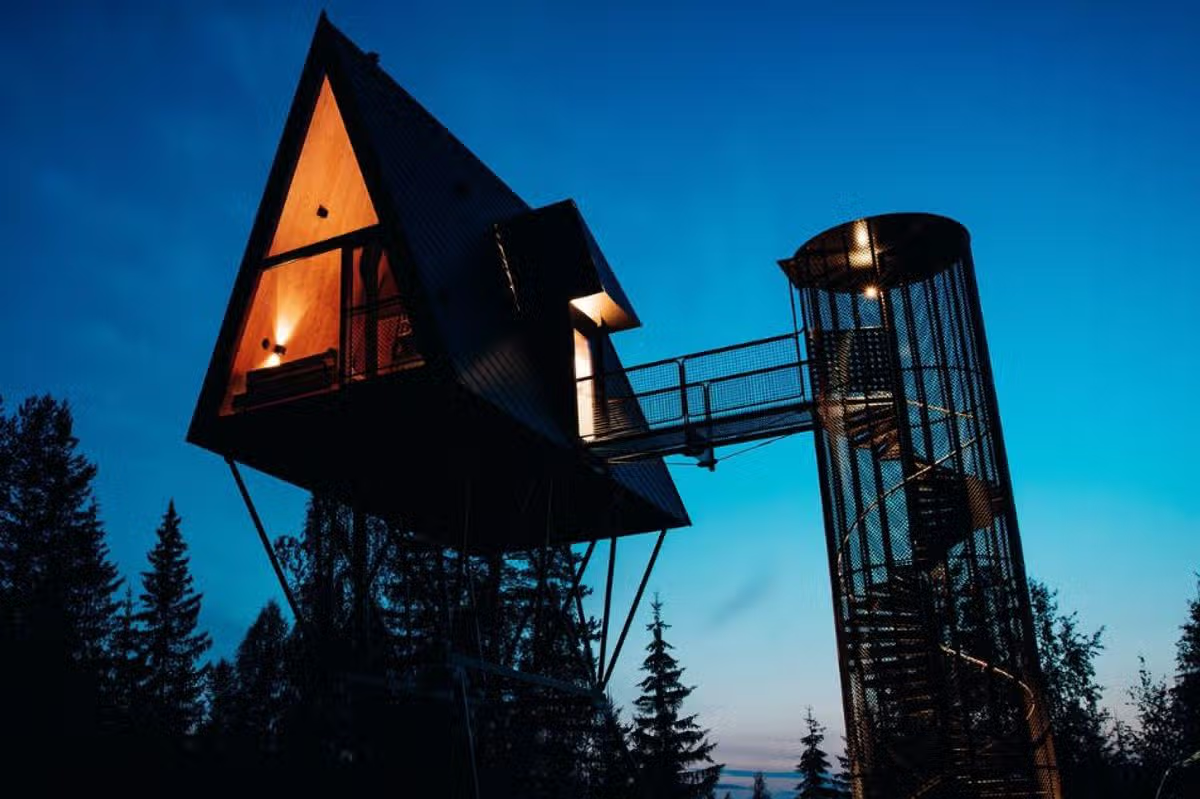
In the depths of the Norwegian forests, there are many places to escape into wilderness, but few are as beguiling as PAN’s Treetop Cabins. Three futuristic prisms, eight metres up on metal frames. Up here, you’re level with the treetops, and the world falls away. They have an otherworldly, science-fiction feel, yet they’re discreet. You come upon them suddenly, before they merge secretively back among the pines.

READ MORE:

I discovered the the cabin life in Kent – the ideal mix of simple and luxurious

READ MORE:

World’s biggest rodeo and space exploration – here’s why to need visit Houston

Less than two hours drive from Oslo airport, they stand on a hillside of Finnskogen, a vast forest nudging up against the Swedish border. These woods have an ancient feel – silent and still. It’s easy to understand Norway’s guiding philosophy of friluftsliv here – that wellbeing is found outdoors.

Sleeping in the sky

Inside, each lodge is the perfect tiny house – a pocketsize kitchen and living area at the front, the bathroom in the centre section with a spacious shower. The walls are pine-clad and it all has that Scandinavian sleekness: everything you need, nothing you don’t. On the upper platform, the double bed overlooks the triangular view.

Oh, that view. Pan is the kind of place where you can feel happy filling your time with very little. You can while away a whole afternoon curled up on the sofa, watching the birds flit between branches, and the sun peel out over the lake below. It’s fascinating in any weather. We had blue-sky sunshine, sunsets and a storm that rolled in over the horizon like slate sheets. It hit the lake and we watched from afar, cosy in our sky-high retreat. I put my phone down, opened the floor-to-ceiling window, listened to the hush of the forest and read a whole book in one sitting.

Embracing the cabin life

Meals can be as hands-on or hands-off as you choose. The cabins are stocked with essentials, but PAN can also arrange breakfast hampers and catering from local producers. We woke to a basket of fresh bread, pancakes, local cheeses and honey, and in the evening I made elk stew with juniper berries, to their neatly measured recipe.

In the simple, pared-back cabin life, cooking and eating together felt celebratory, with the panorama of forest and lake beneath us. As evening settled over the trees, we lingered over dinner by the window, watching the changing light on the water long after the plates were empty.

At ground level, we found a table dotted with tall candles in glass lanterns, to light up al fresco suppers. Off-season, you can barbecue here (not in summer, to prevent wildfires), but any time of year you can lie out on the fur-clad seats, pull up a blanket and watch a billion stars overhead.

Exploring Norway’s ancient forest

There is much to pack quiet days with. Bicycles await to pedal the wooded paths, but we loved just walking. This forest is special. Centuries ago, Finnish refugees were drawn here, bringing myths and folklore with them. The silence is immense, the lichen underfoot puffs green dust, and sometimes a strange mist hangs in the distance, as though a forest spirit has shifted its form, just as you came upon it.

There are still wolves, bears and lynx, moose, foxes and arctic hares. We saw the latter two – not the rest to my chagrin. Our host explained we wouldn’t – “They know how to disappear when they hear you coming,” she commiserated.

But the highlight for me was the ‘Room with Three Walls’ – the outdoor, wood-fired hot tub. The fourth wall is the forest, the ceiling is the sky, and sitting in the steaming water as the forest turns gold in the sunset, with a glass of something sparkling in my hand (which, heads up, I bought at the duty free in London because booze is mighty spenny over in Norway), was holiday perfection.

A river safari through the wilderness

We signed up for an evening canoe down the Fløgåa River, sharing a boat with our guide, Amund. We pushed off into the dark waters and floated quietly downstream. Along the journey, signs of beavers were everywhere – dams of muddled twigs and neat points on felled tree trunks you’d need a Black & Decker to be able to recreate, though the elusive creatures refused to materialise.

By now, we were used to the silent stillness of the Finnskogen, but on the river, with the gentle lap of the oar and the forested bank reflected in the depths, it felt closer than ever. As we approached the final bend, Amund hissed, “There. On the left,” and a fat beaver trundled down his slipway and submerged into the current with barely a ripple.

On the journey home: Norway’s famous buns and Europe’s only emerald mine

A final tip if you’re driving the route back to the airport, along the shores of Norway’s largest lake, Mjosa. There are two stops enroute, both bizarre… and unmissable.

For a sweet treat, pull into the service station at Espa (suspend your disbelief) for Norway’s most famous bakery, Bolleland. It’s packed with neon ‘I [heart] Bolleland’ merch that lends it a crazed vibe, but the chocolate and caramel buns are legendary.

Don’t scoff them in the car, head to the emerald mines – Ole Jørgen Bjørnstad Smaragdgruvene, where you can eat them on the stony lakeshore while you sift for small – yet genuine – emeralds. It’s the only such mine in Europe where you can keep anything you find. A viridescent souvenir of the forestlands.

How to book PAN’s treetop cabins

PAN’s Cabins are available from £480 per night. Breakfast and meals available at an extra cost. Book your river kayak (and other nature experiences) through Pan.

Source link