SOFIA Vergara was spotted getting cosy with Imagine Dragons frontman Dan Reynolds on a date night.
The Modern Family star, 54, looked smitten while she enjoyed a romantic dinner with the Believer singer, 39, in Los Angeles.
Sofia Vergara was spotted holding hands with a newly single pop starCredit: Instagram / sofiavergaraThe actress looked smitten on a dinner date with Imagine Dragons singer Dan ReynoldsCredit: Getty
The pair could be seen holding hands across the table at swanky Italian restaurant Cipriani in Beverley Hills.
In photos obtained by TMZ, Sofia and Dan struggled to keep their eyes off each other.
Sign up for the Showbiz newsletter
Thank you!
The pair were joined by some friends including cosmetic company owner Anastasia Soare, with the group appearing deep in conversation.
The publication reported that Sofia and Dan made a secret exit at around 12.30am.
Sofia and Dan made a ‘secret exit at around 12.30am’Credit: GettyDan split from girlfriend of four years Minka Kelly in OctoberCredit: GettySofia’s ex-husband Joe Manganiello lifted the lid on their very messy splitCredit: GettySofia has been enjoying single life since the splitCredit: instagram
It comes after singer Dan and actress Minka Kelly split up in early October after four years of dating.
Last month Sofia’s ex-husband Joe Manganiello decided to lift the lid on their once very private eight-year relationship in his new book, Bloodlines.
Two years ago, Sofia claimed the couple split over a disagreement on growing their family together.
Sofia has an adult son named Manolo, whom she gave birth to when she was a teenager.
“My marriage broke up because my husband was younger; he wanted to have kids, and I didn’t want to be an old mom,” Sofia told Spanish newspaper El País in January 2024.
“I respect whoever does it, but that’s not for me anymore,” she explained.
“I had a son at 19, who is now 32, and I’m ready to be a grandmother, not a mother.”
“I didn’t think because of my career, the way I live my life, the way my marriage was, that it was fair to bring a kid to this world, and I’m not going to be able to give 100%.”
Six months later, Joe called the claims “simply not true.”
“We had a huge conversation right out of the gate during the first month we dated,” he told People in July 2024.
“I said, ‘If you’re done with kids, then I understand. Just tell me, and I’ll know what this is, and that’s okay.’ And I swore to her that I would never leave if it didn’t work out. And I didn’t.
“To be painted as if I had some sort of midlife crisis, and after nine years, turned to somebody and gave them an ultimatum of, ‘Do this potentially unhealthy thing to your body, or else I’m gone’? That’s never who I was.”
He said their marriage had “become devoid of any emotionality whatsoever” as he privately struggled for years with an autoimmune disorder that ravaged his body.
He claimed Sofia “refused to hug him” even when he begged for affection.
According to People, she also “ridiculed” him for rescuing a 5-pound chihuahua named Bubbles in 2019.
All the issues led to the couple announcing their separation in July 2023.
After the dust settled, Joe got engaged to Caitlin O’Connor in 2025.
Sofia now appears to be playing the field after the split.
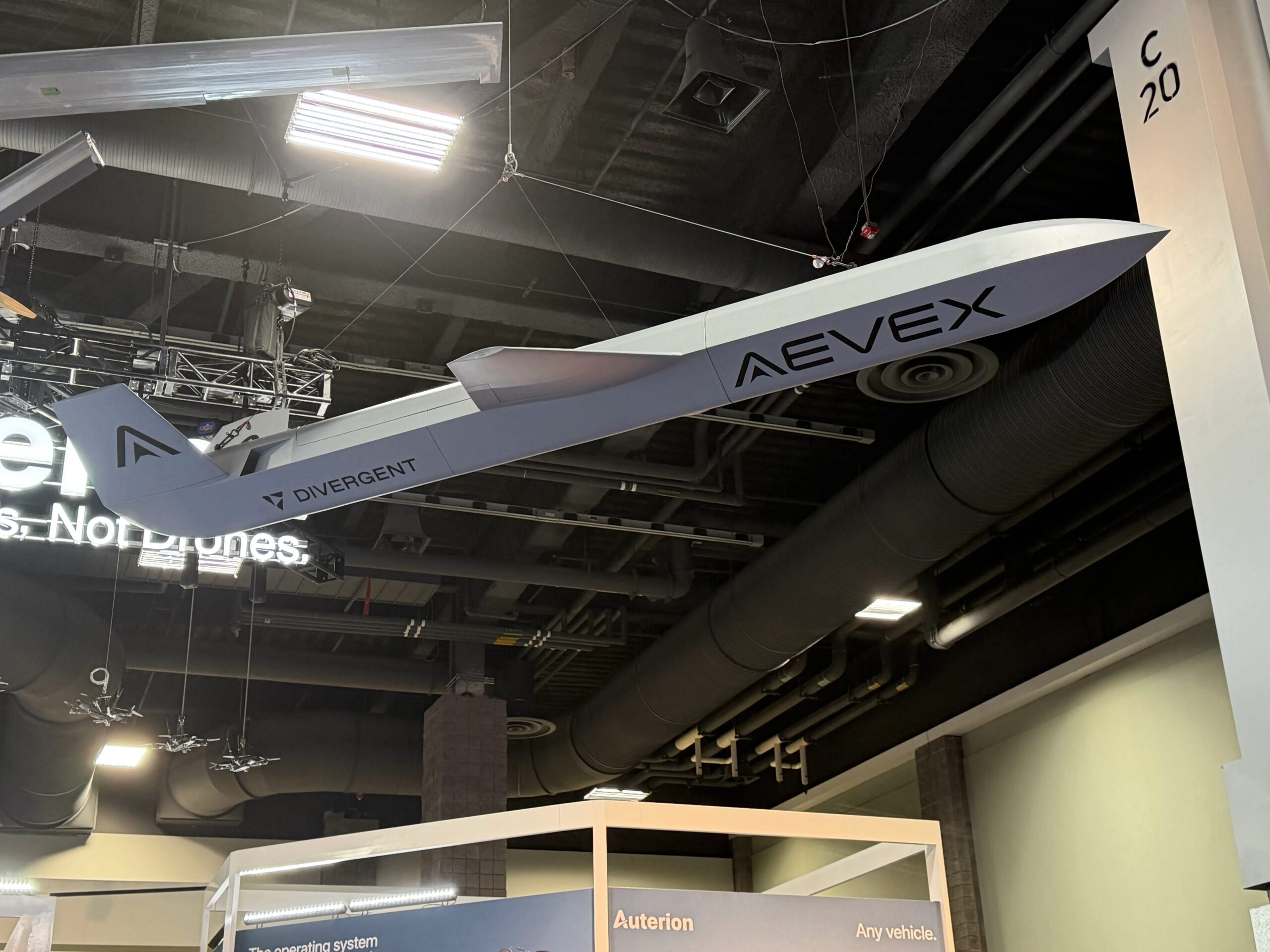
AEVEX Corp. has publicly shown its Specter jet-powered drone for the first time at the Association of the U.S. Army’s (AUSA) annual meeting in Washington, D.C., where TWZ is in attendance. The aircraft is the latest development from a company that has played a significant role in the U.S. military’s one-way attack drone efforts. Most notably, it built the secretive Phoenix Ghost family rushed to Ukraine in 2022.
AEVEX announced Specter in September, describing it as a high-speed, low-cost, jet-powered autonomous platform designed for high-risk operational environments. The aircraft is being developed around a modular architecture, with ground-launched and air-launched variants planned. Its interchangeable nose section is intended to accommodate different payloads, including kinetic warheads, electronic warfare equipment, intelligence, surveillance and reconnaissance (ISR) systems, and other future capabilities.
The Specter jet-powered drone shown for the first time at the Association of the U.S. Army’s (AUSA) annual meeting in Washington, D.C. Jamie Hunter
That flexibility is central to how AEVEX is pitching the aircraft. The company is aiming for an adaptable system that can be configured for different operational needs while remaining affordable enough to be used basically as a cruise missile in combat applications.
The aircraft’s external configuration features a prominent V-shaped lower fuselage, high-mounted, unswept trapezoidal wings, a v-tail and rear-mounted conformal engine intakes. Clearly, low observability was one design driver for Specter, with the goal of balancing survivability with low-cost likely factored in heavily. AEVEX has not publicly discussed Specter’s low-observable characteristics.
The company has also not disclosed key performance and technical details, including the aircraft’s range, payload capacity, communications architecture, terminal targeting methods or the extent of its autonomous capabilities.
A rendering of the Specter in flight. AEVEX Corp. AEVEX Corp.
“We’re really excited to kind of really up our stats on range and speed,” Craig Anders, an AEVEX representative, told TWZ at AUSA, describing Specter’s turbine engine. The aircraft is being designed to reach speeds in the sub-Mach range, he said.
Anders also elaborated on how Specter is intended to carry more than a conventional warhead. “This thing is going to have the ability to carry cameras and different types of non-kinetic effect payloads,” he said, describing it as a “multi-mission, multi-domain fighter.”
Despite that broader mission set, attrition remains a core part of the concept. Anders said the idea was for the aircraft to be attritable, with a relatively low price tag allowing commanders to send it farther into dangerous areas without putting more expensive capabilities at risk.
The distinction is important. Specter is not being presented simply as a disposable munition, nor as a high-end unmanned combat aircraft. Instead, AEVEX appears to be pursuing a middle ground: a jet-powered platform that can perform one-way attack missions but also support reconnaissance and provide other effects in high-threat areas, depending on its configuration. It is also meant to be built economically at scale.
AEVEX is developing Specter with Divergent, an engineering and manufacturing company known for its digital production processes and metal additive manufacturing. The partnership is intended to help make the aircraft easier to manufacture at scale while supporting changes to its design and configuration.
Anders said Divergent works with AEVEX engineers on the aircraft’s digital design and produces its fuselage. AEVEX is responsible for the internal systems, mission integration, flight characteristics and navigation science, he explained.
The manufacturing approach is a significant part of the program’s affordability ambitions. AEVEX says Divergent’s Digital Manufacturing and Production System (DAPS) is being used to support scalable production and manufacturability. However, the companies have not disclosed Specter’s projected unit cost or demonstrated that it can yet be produced at the volumes and prices the concept ultimately requires.
Introduction to DAPS™
AEVEX is also drawing on its CompassX autonomy architecture and experience delivering thousands of autonomous systems. The company says Specter’s open interfaces and software-defined capabilities are intended to allow the platform to evolve as operational requirements change, rather than being optimized around one fixed mission.
Specter remains in development, with its first flight planned for December 2026. Anders said the initial flight would be a basic test, with early test aircraft fitted with landing gear so they can be recovered and reused for work on flight characteristics and handling. It isn’t clear if a truly reusable gear-equipped operational version is eyed for the future. Regardless, further testing could include tuning the aircraft’s dive profile.
The planned initial configuration uses a ground launch assisted by a rocket, or rocket-assisted takeoff (RATO), system. An air-launched version is also on the roadmap, Anders said, with that capability expected to follow in the relatively near term.
AEVEX is pursuing several potential military applications. Anders identified the U.S. Army’s Family of Affordable Mass Missiles (FAMM) effort as a primary focus, while noting that the service has its own high-speed requirements. He also said the company is looking at opportunities associated with Rapid Dragon and other programs.
In FY 2027, the US Air Force is requesting $55 Million in discretionary and $300 Million in mandatory (reconciliation) funds for the Family of Affordable Mass Missile (FAMM) to procure 1,000 All Up Rounds covering both the Palletized (FAMM-P) and Lugged (FAMM-L) variants. The… pic.twitter.com/EgVaefmJgY
— Air-Power | NatSec Ledger (@NatSecLedger) April 22, 2026
Those comments indicate the range of applications AEVEX hopes Specter could address, not that the aircraft has been selected for any of them. Its performance, cost and ability to meet specific requirements will need to be demonstrated as development and testing progress.
Specter’s intended combination of jet propulsion, attritability and modular payloads could offer an enticing balance. It is not being presented as a higher-end ‘exquisite’ cruise missile, but neither is it limited to carrying a single payload type. The challenge for AEVEX will be delivering enough speed, range and mission flexibility to make the aircraft useful across multiple roles without pushing its price beyond what operators can justify procuring it in large numbers.
A stealthy weapon that is jet-powered like Specter, one that can be configured for various types of one-way missions, could bridge the gap between far more advanced and costly autonomous aircraft and cruise missiles and lower-end one-way attack drones. There have been other concepts that are similar to Specter, we are living in a low-cost cruise missile explosion of sorts, but the company’s unique pedigree of innovation and fast fielding in the one-way attack munition space could give Specter additional credence.
Kim Kardashian has opened up about being single for five years after her divorce from Kanye WestCredit: GettyKim has been dating Lewis Hamilton since the beginning of 2026Credit: Getty
Kim, 45, said: “I was really single for five years. And that felt great. “I felt like I needed my time. I wanted to completely heal and just work on myself.
“I wasn’t ready to open up. I really wasn’t even thinking about it. The universe works in your favour when you just allow it to.”
Sign up for the Showbiz newsletter
Thank you!
The mogul filed for divorce from Ye, 49, in February 2021 following a turbulent period driven by his erratic behavior and public breakdown.
In a new interview with The Sunday Times, the Skims founder admits she worries about exposing her four children with the rapper – North, 13, Saint, 10, Chicago, 8, and Psalm, 7 – to her stratospheric fame.
Kim filed for divorce from Kanye in 2021Credit: GettyKim has known Lewis for yearsCredit: InstagramKim and Lewis had a romantic break in Paris break to see Celine Dion recentlyCredit: InstagramKim has four children with her ex husband and talks about parenting in her interview with The Sunday TimesCredit: AFP
Describing herself as an “intermediate-strict parent,” Kim bans her kids from taking part in any storyline drama on Keeping Up with the Kardashians.
She said: “I do worry about it. Each kid does what they’re comfortable with.
“So, my little ones come around when I’m filming but they don’t really do storylines.
“North loves it a little bit more than the rest. I hold her back. All she wants to do is forward-facing projects.
“And with her, since it’s more music-related, that is something that her dad and I have better communication about. We make sure that we’re aligned and that she’s in projects that we both approve.”
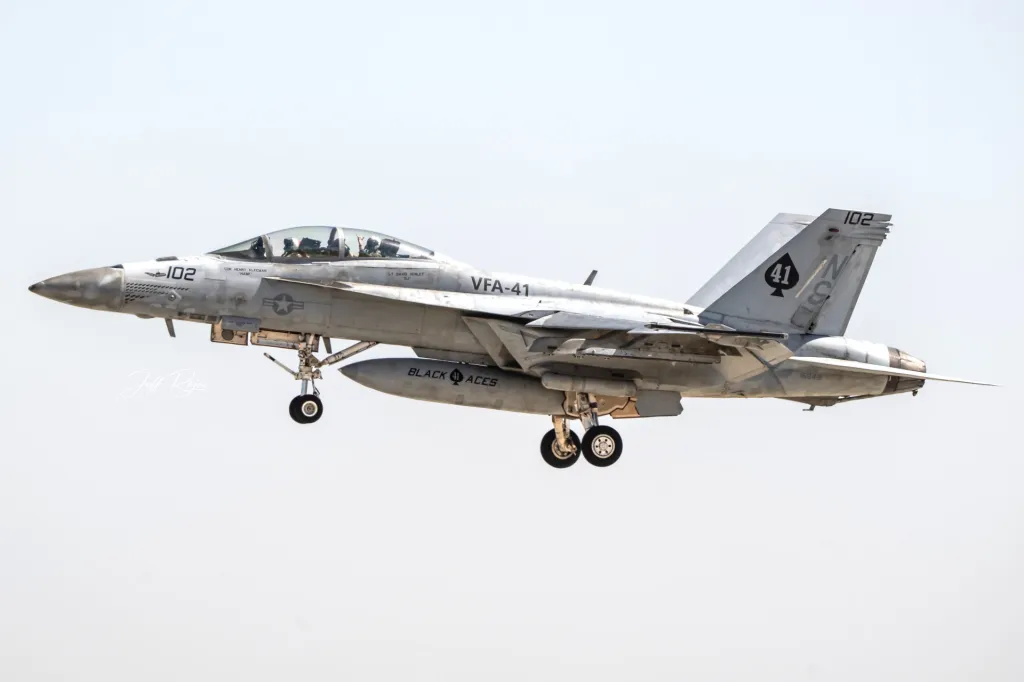
The volume of munitions expended in the course of U.S. operations against Iran this year has been and continues to be a hot topic of discussion, and there has been relatively little official data provided on this front. However, now we know that the F/A-18F Super Hornets of the U.S. Navy’s Strike Fighter Squadron 41 (VFA-41), the “Black Aces,” launched 421 missiles and bombs during their time supporting Operation Epic Fury.
This new insight into VFA-41’s role in the conflict with Iran comes from a photo of a large board listing the squadron’s weapons expenditures during Epic Fury, via Jeff Rojas, who goes by the handle @jro_photography on Instagram. Rojas also shared pictures recently taken of VFA-41’s Super Hornets. The Black Aces were one of the squadrons assigned to the Nimitz class aircraft carrier USS Abraham Lincoln, which has been on a marathon deploymentsince last year. The carrier only left the Middle East region last month and is now set to formally return home to San Diego, California, within days. Per the Pentagon’s official timeline, Operation Epic Fury began on February 28 and concluded on May 5, though U.S. forces have continued to conduct strikes on Iran, on and off, since then.
One of VFA-41’s F/A-18F Super Hornets spotted recently. Jeff Rojas Jeffrey Rojas
The complete tally of munitions employed as shown on the board, broken down by type, from greatest to fewest, is as follows:
The total cost of all of these munitions, using available data from U.S. military budget documents, is very roughly $43,646,000, at least. Unit costs fluctuate regularly due to a variety of factors. Furthermore, the exact price tag for different JDAMs can be somewhat difficult to calculate given how the individual components are budgeted.
The JDAM is really a family of kits that turn standard unguided ‘iron bombs,’ which can vary significantly in the kinds of effects they are designed to produce, into warheads for precision-guided munitions. This is exemplified by the (V)2 and (V)4 subvariants of the GBU-31/B mentioned here, which are built using standard high-explosive and bunker-buster bombs, respectively. No specific subvariants of the GBU-32, GBU-38, or GBU-54 were mentioned in the information provided. Standard JDAMs can also only be employed against static target coordinates. The LJDAM kits add a laser guidance component (akin to what is found on Paveway-series bombs) that enables strikes against moving targets.
A JDAM, as well as a pair of AIM-9Xs, seen under the wing of a VFA-41 Super Hornet in August. NAVCENT
No specific version of AGM-154 is mentioned, either, but the C and C-1 types, which have multi-stage bunker-busting warheads, are the only ones understood to be in service today. Remaining A variants, which were loaded with 145 small bomblets, were removed from U.S. service in 2008 as a result of new guidelines on cluster munitions issued under President George W. Bush. A planned AGM-154B, which would have contained six “smart” Sensor Fuzed Munition bomblets, was never produced. You can read more about the full JSOW family here.
We do not know exactly what targets any of these munitions were employed against. However, a picture that Jeff Rojas grabbed of one of VFA-41’s Super Hornets, seen toward the top of this story and in part below, shows a very interesting broken submarine kill marking, with the added text “Sub Buster.” The jet also has a number of more typical bomb-shaped kill marks.
A close-up look at the broken submarine and other kill marks on one of VFA-41’s Super Hornets. Jeff Rojas Jeffrey Rojas
The video montage in the social media post below includes a clip, starting at 0:13 in the runtime, of a Hellfire missile hitting what looks to be a Ghadir class diesel-electric midget submarine in port.
U.S. forces are degrading the Iranian regime’s ability to project power at sea and harass international shipping. For years, Iranian forces have threatened freedom of navigation in waters essential to American, regional and global security and prosperity. pic.twitter.com/gIBN02mowh
It is extremely likely that the AIM-9Xs and AIM-120s were fired at Iranian drones, though they could have been launched at incoming cruise missiles, as well. At the time of writing, there are no known or reported instances of U.S. military jets engaging crewed Iranian aircraft in the course of the conflict to date. In 2024, the Navy carried out a crash program that increased the total number of AIM-9Xs that F/A-18E/Fs could carry per sortie, specifically in response to Houthi drone threats. Super Hornets loaded with nine air-to-air missiles are now referred to as “Murder Hornets.”
It is also important to remember that this is a discussion of the munitions expended by just one Navy strike fighter squadron. Lincoln‘s air wing includes four strike squadrons, three with Super Hornets and one with F-35Cs, as well as units flying other types of aircraft and helicopters. The carrier was just one part of a much larger array of air, naval, and ground forces that participated in Operation Epic Fury and subsequent operations against Iran. For additional context, consider that the entire Eisenhower Carrier Strike Group, including its entire air wing and escorting ships, fired off 770 munitions in total, by the official count, during very active combat operations in and around the Red Sea between November 2023 and June 2024.
VFA-41 Super Hornets seen flying together recently. Jeff Rojas
As such, the tally of munitions launched from VFA-41 Super Hornets offers a very interesting view into that squadron’s contributions to Operation Epic Fury, as well as the full scale and scope of the conflict with Iran.
Special thanks again to Jeff Rojas for sharing the details about VFA-41’s participation in Operation Epic Fury and his pictures with us.