signs

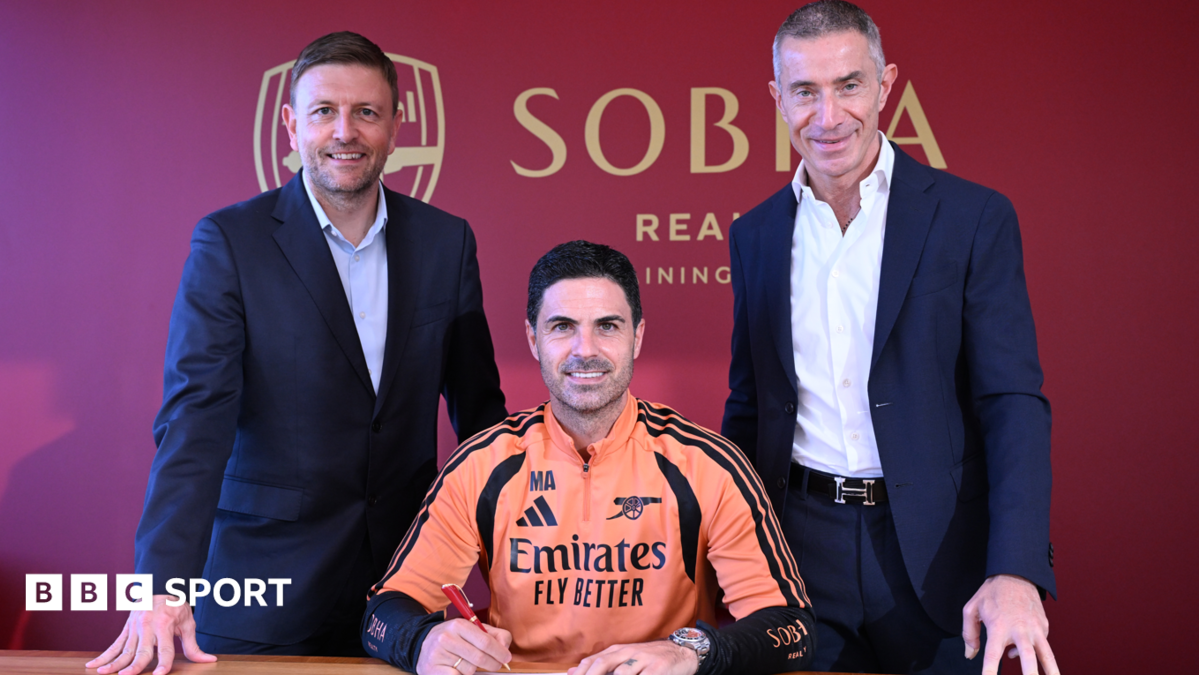
Mikel Arteta: Arsenal boss signs new contract until 2030

News of Arteta’s new deal at Arsenal won’t come as a shock.

The fact his previous deal expired at the end of the season did put a slightly greater emphasis on the speed of discussions than normal.

But Arteta has been transparent about his desire to stay at the club beyond the end of this campaign.

Dynasty building is what has driven Arteta’s decision. Winning Arsenal‘s first Premier League title in 20 years last season is viewed as just the start.

Coming within a penalty kick of winning their first Champions League trophy came as a gut-wrenching blow – but also a huge motivation.

“We share a special bond with Mikel. We are so proud of everything we have achieved since he returned to the club in 2019,” co-chairmen Stan and Josh Kroenke said.

“He has a deep understanding of Arsenal‘s values and carries them in his heart. He knows what this club means to everyone connected to it and is committed to building on everything we have achieved together.”

With that in mind, there was never a sense Arteta was preparing to walk away from the team he has built to become one of the best in European football.

So with a deal for their manager to stay now agreed, the foundation of Arsenal‘s recent revitalisation into a footballing force remains in place.

Does more history beckon? Arteta is committed to finding out.

Source link

Brighton Pride ‘signs up’ international megastar for first UK gig in 15 years

AN international megastar is being lined up to headline Brighton and Hove Pride.

The Sun can exclusively reveal how Jennifer Lopez is deep in discussions to take to the stage for her first full-length UK gig in 15 years.

Jennifer Lopez is in talks to headline Brighton Pride next year Credit: Getty
The pop performer is expected to take to the stage next summer Credit: Getty

The Jenny From The Block hitmaker, 57,  has been approached by organisers to perform at the event, which takes place next summer.

It comes after the high profile bash, which raises funds for LGBTQ+ charities, has previously welcomed a series of superstars onto its stage, including Diana Ross, Paris Hilton, Raye, Mariah Carey, Christina Aguilera, Kylie Minogue and Britney Spears.

A source said: “The event gets bigger and bigger every year and organisers are in the planning stages of booking talent and have reached out to JLo’s team, everyone is really excited to pull it off.

“She’d be a perfect headliner, they’re just working out schedules.”

YES SIR

Jennifer Lopez takes inspiration from Maya Jama in The Gentleman with new look


GOING FOR GOLD

J-Lo & Jennifer Lawrence stun in sheer gowns as they lead Golden Globes glam

It would mark her first UK headlining gig in 15 years Credit: Getty
She follows a series of megastars to headline the major gig Credit: Shutterstock Editorial

After headlining World Pride in Washington, D.C. in 2025, Lopez revealed her priorities in her life changed.

She said: “I played Pride last year and I felt like it was the beginning of the new chapter of my life.

“The LGBTQ+ community, for me, has always been a loyal and big part of my fanbase.”

J.Lo last headlined a gig in the country on her Dance Again World Tour when she played London’s O2 Arena in 2012.

This year, Raye and superstar Diana Ross headlined the festivities which are held every year at Preston Park in Brighton in August.

The year before, Girls Aloud played their only UK festival appearance as part of their 2024 reunion at the event.

Source link

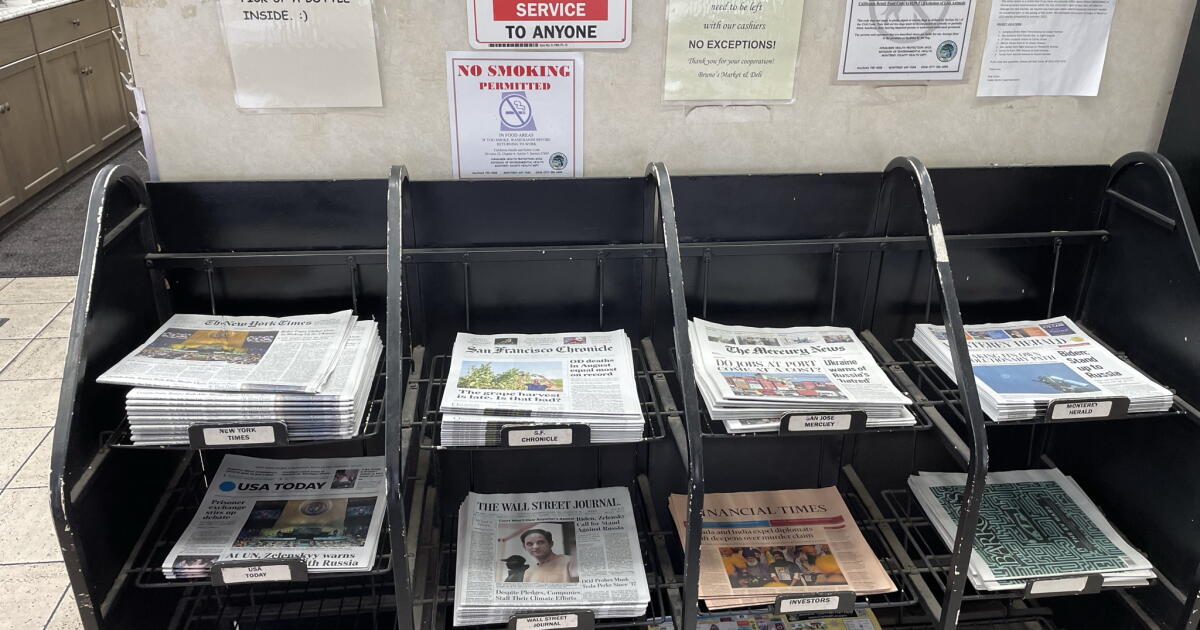
Newsom signs landmark bill aimed at giving lifeline to struggling California newsrooms

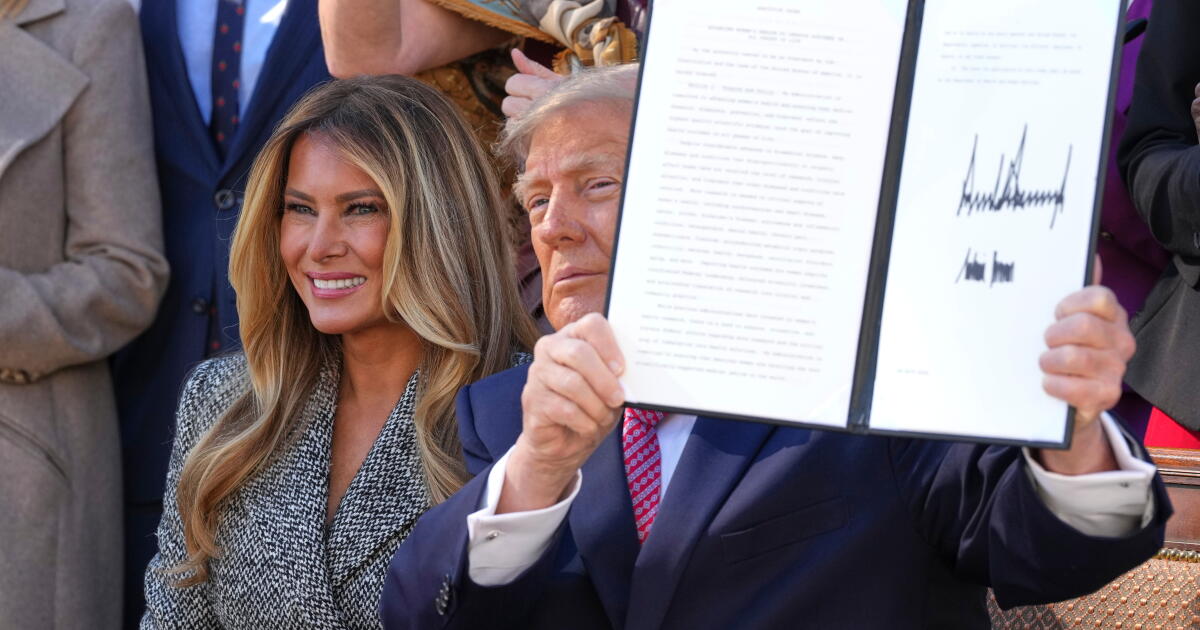
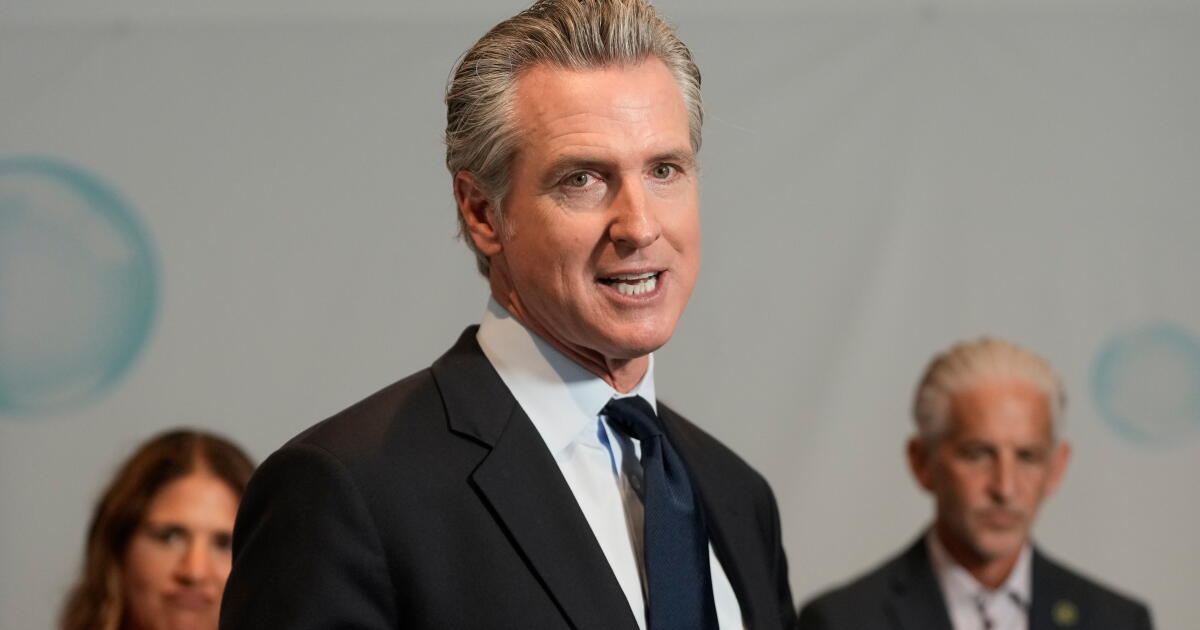
Gov. Gavin Newsom signed a landmark bill that would give a financial boost to California’s struggling newsrooms.

Assembly Bill 2222 will create refundable tax credits for California local news organizations based on the number of journalists they employ. It passed through both houses. It marks an innovative yet controversial attempt to slow the decline of local journalism.

The bill, called the Community Newsroom Employment and Workforce Sustainability Act, works by assigning a “job retention credit” of $20,000 per journalist for up to five positions, and after that $15,000 for every additional journalist. Part-time positions will be awarded half-credits. It also stacks an additional $15,000 credit for each new hire, to incentivize expanding journalist head counts.

Before signing the bill Wednesday morning, Newsom spoke about what he called the “assault on the free press and the First Amendment..coming from Washington D.C. and Donald Trump.”

“It’s journalists that need to report those stories and local journalists that need to uncover and sort of peel back the facade if democracy is going to survive, let alone thrive,” Newsom said.

The bill was supported by the California News Publishers Assn., of which the Los Angeles Times is a member and a wide range of other community news boosters. Backers said it could be a lifeline to local news organizations, many of which have struggled to maintain staffing levels over the past two decades.

California has lost more than 12,000 of its local journalists since 2002, according to nonprofit advocacy group Rebuild Local News. And almost 40% of all local U.S. newspapers have vanished, according to an annual report on the state of local news put out by Northwestern University’s Medill journalism school.

To pay for the credits, the bill would amend California’s tax code to align with a little-discussed component of President Trump’s “Big Beautiful” tax bill that expanded taxes on some companies by eliminating a deduction for executive salaries of over $1 million annually.

It is common practice for the state to consider aligning its tax code with the federal structure to make filing taxes easier and administering them more cheaply. But California has not yet sought to adopt this federal tax change, a move which would increase tax revenues to the state.

The California Taxpayers Assn. and groups representing business interests such as the California Chamber of Commerce oppose the bill because it raises taxes on employers that they argue already face billions of dollars in new taxes.

They contend that the higher costs will be passed along to consumers.

The governor’s finance office issued an analysis opposing the bill for not including a cap on the tax credits, thus creating “unlimited fiscal liability to the state,” and argued the bill mainly subsidizes existing activity rather than encouraging the creation of new jobs.

While speaking with reporters on Wednesday, Newsom acknowledged some of the concerns that have been raised about those who will receive benefits from the bill’s funds, specifically hedge funds and billionaire owners and outlets who he says spread propaganda.

“It does subsidize those that don’t need to be subsidized,” he said. “We have hedge funds in this space. We have billionaires in this space. We have people that are profiteering in this space by gutting the newsrooms and extracting value out of the space that also are the beneficiaries.”

Newsom said he chose not to veto the bill because he believes its benefits outweigh the liabilities. He added that he hopes the legislature and next governor can work to narrow down who benefits most from the legislation.

“We should not be subsidizing hedge funds,” he said. “We should be focused on where the need is the greatest, in my humble opinion, and I do think when you have no cap, the limitlessness of this…to some of the most well-heeled organizations, where now they simply could pull from this bill the benefits that they didn’t even ask for or need, is self-evident.”

Assemblymember Chris Ward (D-San Diego), who authored the bill, said the governor’s signature shows California’s commitment to the free press at a time when newsrooms are shrinking and misinformation is rampant.

“Local journalism is the backbone of an informed democracy, and today California made clear that the people doing this essential work are worth investing in,” Ward said in a statement. “This historic investment will help keep reporters in our communities, strengthen nonprofit and public media, and ensure Californians continue to have access to trusted, fact-based local news.”

In signing the bill, Newsom emphasized the role of journalism in uncovering scandal and wrongdoing.

“The L.A. Times to their credit did a big investigative piece on Bell, and people getting paid a million dollars in some cases, local government officials, a million damn dollars a year. No one would have known had it not been for local journalism. How many more Bells are out there, not just in this state, but all across the country?”

Source link

Newsom signs bills pushing back on Trump’s immigration agenda

Gov. Gavin Newsom signed a raft of bills designed to push back on the Trump administration’s immigration enforcement in California, including bans on electric shock gloves and a revamped ban on law enforcement face coverings after a previous law was blocked by a federal judge.

The more than 20 bills approved by the governor Tuesday were crafted to thwart tactics used by Immigration and Customs Enforcement agents, including the use of facial coverings and making arrests outside immigration hearings. Other bills are meant to boost state oversight of federal detention centers in the state.

“Trump has put his political interests above the health, safety and livelihood of American families. California is taking action to strengthen transparency, accountability, and oversight around immigration enforcement in our state,” Newsom said in a statement. “This is about stepping up where the federal government has failed our communities. We will continue protecting our people, upholding the rule of law, and making clear that if the federal government operates in California, we will hold them accountable.”

The governor signed legislation to ban the use of electric shock gloves by any law enforcement in the state, which was hastily written and passed after reports that the Department of Homeland Security planned to spend $20 million to outfit agents with the gloves.

One bill, dubbed the “No Kings Act,” makes it easier for residents to sue federal agents for alleged civil rights violations, such as racial profiling, unlawful searches or interfering with the right to free speech.

Its author, Sen. Scott Wiener (D-San Francisco) said the law already applies to state and local officials and that his bill, SB 747, closes a loophole that exempts federal officials.

Newsom signed another bill by Wiener that bans ICE agents and other law enforcement from wearing face coverings or masks while on duty. After a federal judge blocked his prior bill, which applied to federal agents but not state police, Wiener passed legislation that applies to both.

Many of the bills Newsom signed Tuesday aim to improve state oversight at immigration detention centers within the state and slowroll the development of new facilities.

Among them is AB 1801, which requires municipalities to wait at least 180 days and hold public hearings before approving any plans to build or convert facilities into immigration detention centers.

Newsom signed a 25% tax on companies that operate immigration detention centers in the state. Most of the detention centers in California are run by the private prison companies GEO Group and CoreCivic, under contracts with the federal government. AB 1633 by Assemblymember Matt Haney (D-San Francisco) would raise an estimated $177 million, according to a fiscal analysis of the bill.

Another new law requires local agencies to disclose 911 calls made from immigration detention centers. It stems from a CalMatters investigation which found alleged sexual assaults at Otay Mesa, a detention center in San Diego, were being investigated by CoreCivic, the company that operates the facility, rather than local law enforcement.

“Our communities deserve safety, and no person in detention should have to resort to throwing notes over the walls of a detention facility to have their needs met and their voice heard,” Sen. Lena Gonzalez (D-Long Beach), chair of the Legislative Latino Caucus and the bill’s author, said in a statement after lawmakers passed her legislation.

Activists and Democratic lawmakers have raised alarms about the rising number of in-custody deaths and poor conditions inside ICE detention facilities. The federal government has reported 57 in-custody deaths during Trump’s second term, up from the 26 deaths reported during the previous four years.

During reviews of detention centers around the state last year, Atty. Gen. Rob Bonta’s office found substandard conditions including overcrowding, delays in medical care and poor quality food and drinking water. At one center, detainees were not given clothing warm enough to protect against extremely low temperatures in the facility, Justice Department staff reported.

Newsom signed legislation indefinitely extending the attorney general’s duty to review private detention centers, which had been set to expire next year.

Source link

Newsom signs bill banning tee-time brokers at public golf courses

Gov. Gavin Newsom has signed a bill that prohibits third-party brokers from advertising, selling or transferring tee-time reservations at publicly owned golf courses without the written consent of the course operator.

The state legislation is a response to a network of brokers that had sprouted up around Los Angeles municipal golf course tee times.

These brokers, many of whom were in the Korean community, would gobble up tee times, then advertise them on social media, particularly the Korean app KakaoTalk. They charged up to $40 as a booking fee.

Getting tee-time reservations at L.A. municipal golf courses had long been difficult. But after golf influencer Dave Fink revealed evidence of the broker network to his viewers, the problem became public.

“This is an issue that affects everybody who pays taxes in the city, and anybody who plays golf as well, so I just felt like it was my duty to say something,” Fink said in an interview with The Times in March 2024.

After Fink’s videos went viral, the L.A. Department of Recreation and Parks announced an investigation into the practice.

The state has more than 200 municipally owned golf courses, according to Assemblymember Christopher M. Ward (D-San Diego), who authored the bill.

“Public golf courses belong to the public, and residents shouldn’t have to compete with brokers buying up tee times just to turn around and sell them at inflated prices,” he said in a statement Sunday.

The legislation “puts an end,” he said, “to this unfair practice and helps ensure local residents, seniors, students and families can continue accessing the public courses their communities support.”

Source link

Newsom signs bills aimed at protecting LGBTQ people

Gov. Gavin Newsom signed a package of bills Saturday that increases protections for LGBTQ people in California, saying the legislation was needed because of recent moves by the Trump administration that threaten that support.

One of the six bills would provide housing, employment and other help to service members discharged from the U.S. military as a result of President Donald Trump’s efforts to ban transgender people from serving.

“I’m grateful to Governor Newsom for signing this legislation and proud that California is standing with the veterans who were unjustly forced out of uniform,” said Assemblymember Chris Ward (D-San Diego), the author of Assembly Bill 1775.

Other bills Newsom signed create stronger privacy protections by limiting the sharing of sexual orientation and gender identity, while also requiring healthcare providers to notify the California Attorney General when they receive a subpoena regarding healthcare activities the state protects.

Another new law will enhance access to drugs known as PrEP and PEP, which are aimed at preventing HIV.

“The Trump administration has launched an all-out assault on the LGBTQ community, using medical records to target U.S. servicemembers and civilians alike, hurting countless people and betraying hard-won trust,” Newsom’s office said in a press release. “California will not stand for it.”

The bills Newsom signed Saturday were priority bills of the California Legislative LGBTQ Caucus.

Since taking office in 2019, Newsom has signed dozens of bills adding protections for LGBTQ people.

The governor’s office noted that this year’s state budget included $66 million to help people get access to gender-affirming care and abortion.

“I’m proud of the work our Caucus has done to advance legislation that meets the real needs of our community, and I thank Governor Newsom for signing these important bills,” said state Senator Sabrina Cervantes (D-Riverside), who is chair-elect of the LGBTQ Caucus.

“This progress reflects what we can accomplish when we work together to build a California where LGBTQ+ people and their families can live with greater safety, opportunity, and dignity,” Cervantes said.

Source link

Newsom signs bills to expand reproductive healthcare in California

Gov. Gavin Newsom has signed a package of bills that he says are intended to build on California’s record of protecting reproductive rights and expanding access to care.

One of the measures, sponsored by Assemblymember Catherine Stefani (D-San Francisco), increases access to medication abortion by making it available on community college campuses.

Another bill, sponsored by Assemblymember Jacqui Irwin (D-Thousand Oaks), focuses on military veterans, aiming to address a gap in their healthcare after the Trump administration largely banned the U.S. Department of Veterans Affairs from providing abortion services. The measure enables California veterans to access abortion and contraception services through a state program.

“Freedom means being able to make deeply personal decisions without elected officials inserting themselves in pursuit of a political agenda,” Newsom said. “California is protecting that freedom and showing the nation, particularly under increasingly severe attacks by the Trump administration, what is possible when we put patients and people first — not politics.”

The governor announced the signing of the bills on Sunday, saying they will strengthen reproductive healthcare in the state.

One of the bills, introduced by Stefani, expands the ability of certified nurse-midwives to provide care for pregnant and postpartum patients by specifying that supervision by a physician is not required when providing certain services.

The legislation also included a bill sponsored by Assemblymember Celeste Rodriguez (D-San Fernando) that aims to expand access to breast pumps and services for nursing mothers through Medi-Cal.

Source link

Newsom signs bills to regulate data center industry, criticizes Trump for inaction

California’s growing data center industry will have more oversight after Gov. Gavin Newsom signed seven bills to regulate the industry’s electricity costs and track water consumption.

The new laws come amid growing public concerns about environmental and economic impacts of the massive facilities, and are aimed at protecting consumers from growing electricity costs and tracking the centers’ immense energy and water consumption.

Newsom on Monday criticized President Trump for dismissing calls to curtail or regulate the facilities and heralding them as “money machines,” even as states and communities across the nation take action to ban or regulate the centers.

“While the Trump administration moves toward deregulation, communities are left to deal with the consequences — higher electricity demand, grid constraints, water use, and pollution,” Newsom said in a written statement Monday. “With these laws, we are ensuring that Californians remain in the driver’s seat — and that those profiting from data centers aren’t doing so at our expense.”

Senate Bill 886 by Sen. Steve Padilla (D-Chula Vista) and Assembly Bill 2383 by Assemblymember Rick Chavez Zbur (D-Los Angeles) establish special rules for data centers’ electrical use. The law orders California Public Utilities Commission to create special requirements and rates for data centers’ use of electricity, including the costs for new power and for infrastructure upgrades.

Scores of other states have already passed similar legislation, according to utility groups.

Two bills by Assemblymember Diane Papan (D-San Mateo) will require oversight of data center water consumption. One measure will require data center operators, when applying for a business license or permit, to disclose an estimate of their water use and the expected source of water. Another will bar cities and counties from approving a new or expanded data center unless the developer submits a water assessment and a water scarcity plan, and will require developers to cover the cost of any water system upgrade that is necessary.

Newsom vetoed a similar Papan bill last year that would have required new data centers to disclose their expected water use. The governor said he was “reluctant to impose rigid reporting requirements” on “this critically important digital infrastructure” without understanding the full impact on the businesses.

But over the past year, a wave of data center pushback has swept the nation, including California, where dozens of cities and counties have proposed or adopted moratoriums on the facilities. While California lawmakers have hesitated to pursue outright moratoriums and bans that the public is calling for, the political tide has nevertheless turned against the facilities.

Data centers have existed for decades but are rapidly expanding because of the rise of artificial intelligence, or AI. The centers help power everything from streaming services to videoconferencing calls.

Data centers in California are typically smaller than the mammoth, 500+-megawatt AI facilities making headlines in other parts of the country. Electricity costs and state regulations on gas-powered generators limit the vast majority of them to under 100 megawatts.

But as proposals increase in number, opposition has been fierce and growing. A Public Policy Institute of California poll from July showed that 73% of residents oppose the construction of data centers in their communities.

Source link

Newsom signs bills to shield California elections from Trump interference, increase transparency

Gov. Gavin Newsom on Saturday signed legislation to increase security for the state’s voting systems and protect Californians’ ability to cast ballots in an effort to guard against potential interference in the Nov. 3 election, including by the Trump administration.

Newsom pointed to the Trump administration’s recent effort to restrict mail-in voting through the U.S. Postal Service, which was struck down by the U.S. Supreme Court, and the presence of federal monitors at California polls last year as evidence that Trump “will continue his efforts to interfere with the November election.”

“Donald Trump won’t stop until he can exert dictatorial control over your free vote and disenfranchise millions of people this November. California will stop him at every opportunity,” Newsom said in a statement.”We have no bigger task than fighting to protect the right to vote from interference and meddling — the future of democracy is on the line. These bills today build upon the wall California has built to safeguard our electoral process.”

The governor signed the package of bills at the Japanese American National Museum in Little Tokyo, where a year earlier federal agents gathered outside a political rally he was hosting. Then Border Patrol Sector Chief Gregory Bovino, who had been leading the immigration operations in California, was among those outside the event, joined by agents in helmets, camouflage, masks and holding guns. Newsom described their presence as political intimidation.

One bill Newsom signed Saturday cites efforts to “weaponize law enforcement authority for political purposes,” including Republican “Sheriff Chad Bianco’s seizure of ballots in Riverside County,” and the election monitors sent by the U.S. Justice Department to polling sites in five counties during a 2025 special election on redistricting.

Such moves “have given rise to unprecedented concerns about law enforcement interference” in elections and “[demonstrate] that these threats are not merely hypothetical,” the bill by Sen. Tom Umberg (D-Santa Ana) reads.

The law, Senate Bill 884, which takes effect immediately, requires counties to open ballot drop-off locations 30 days before an election — two days earlier than usual — and allows counties to ban electioneering, or trying to influence voters’ decisions, within up to 200 feet of polling sites. It also bans police from making arrests near voting locations except for crimes against people, property, or disrupting the voting process.

Bianco, a GOP candidate for governor who placed fourth in the primary, drew swift condemnation and legal challenges this spring after he ordered deputies to seize more than 650,000 ballots from the Riverside County elections office. Voting rights groups and Atty. Gen. Rob Bonta challenged the move, which is being decided by the California Supreme Court.

Bianco carted off truckloads of ballots from the Riverside County Registrar of Voters in February after securing a warrant based on claims that the office allowed fraudulent votes in the special election to redraw California’s congressional districts under Proposition 50 in 2025.

Earlier this year, Newsom signed a bill preventing local and federal law enforcement agencies from taking ballots without a warrant.

On Saturday the Democratic governor signed a bill making it a felony to seize or order the seizure of ballots, election records or voting machines. Future seizures could be punishable by up to four years in prison.

“The federal administration and those seeking to spread lies about our democracy continue to call for interference in elections in ways we have never seen before in this country,” Assemblymember Gail Pellerin (D-Santa Cruz), the bill’s author and a former longtime county elections chief, said last month. “AB 282 helps ensure that every lawfully cast vote can be counted, and that the will of the voters of every political party will be respected.”

Republican lawmakers argued in previous hearings that the bill is unnecessary because it is already a crime to steal ballots.

Another bill, Senate Bill 259, makes it a crime to interfere with a mail ballot on the way to or from a voter or order the seizure of ballots that are in transit to a local elections office.

Newsom signed Assembly Bill 1664, which requires elections officials to immediately notify the attorney general and secretary of state immediately upon learning of any warrants, subpoenas or law enforcement investigations involving election records or voting equipment.

Newsom also signed bills to boost protections under the California Voting Rights Act, including an explicit ban on voter suppression and expanded access to election materials in languages other than English.

The governor also signed legislation to require more transparency from social media influencers who are paid by political campaigns. The measure, Assembly Bill 1130, came in the wake of a controversy in the June primary election when social media influencers took on a more visible role in the campaigns.

Candidates including Democratic billionaire Tom Steyer paid thousands of dollars to influencers who posted videos endorsing Steyer or talking about him in a positive light. These videos did not always disclose that influencers were paid by a candidate’s campaign.

Source link

Newsom signs California’s first standalone post-production tax credit

In another push to revitalize California’s film and TV industry, Gov. Gavin Newsom on Saturday signed the state’s first standalone post-production tax incentive.

The new incentive is aimed at bringing back jobs for the industry’s editors, sound mixers, composers and visual effects artists. It will allow a 35% to 50% credit on qualified expenses related specifically to post-production work done in California, and unlike the state’s existing film and TV credit, it doesn’t require productions to shoot here.

“This legislation protects the extraordinary people who make this industry possible and makes it unmistakably clear: California is still the future of film and television,” said Gov. Newsom in a statement. “We have the talent. We have the infrastructure.”

The bill, AB 2319, was authored by Assemblymember Nick Schultz (D-Burbank) and introduced earlier this year. It cleared the state Senate 33 to 5 on Aug. 30, and the Assembly approved the final version 72 to 2 the same day. Schultz originally sought $100 million for the program. It is expected to start in January with $10 million, according to the Assemblymember Schulz’s office.

“It’s a historic moment for California’s post-production community. But it’s also just the beginning of what we really need to do to to fight for our industry,” said Marielle Abaunza, president of the California Post Alliance, a group advocating for the bill. She said the group is readying its strategy to get more funding for the program next year.

As Hollywood productions continue chase tax credits to other states and countries, much of the post-production work is going with them. California’s share of U.S. post-production employment has fallen from 53% to 42% over the last 13 years, according to CVL Economics, an economic consulting firm tied to California Post Alliance. The state had about 12,000 post-production jobs last year, per CVL Economics.

Ben Urquhart, 51, spent 18 years as a post-production executive at NBCUniversal. The Culver City resident hasn’t been able to find work in the two and a half years since he was laid off.

“It’s grim and it’s hard. There are jobs, but we have a large amount of extremely qualified people competing for every level of job,” Urquhart said. “When I was a kid, I was a [production assistant] in the 90s, and you could get a job within a couple of weeks. But when I got laid off a couple of years ago, I realized that is certainly not the case at all anymore. It’s been a large-scale transformation.”

Urquhart said the new incentive would help California compete with jurisdictions that already offer these credits and “level the playing field.”

Last year, California expanded its film and TV tax credit program, more than doubling the old $330-million cap to $750 million through June 30, 2030. The existing program already covers post-production, but only if 75% of filming or the overall budget is spent in the state.

Newsom also signed a bill that would strengthen the current tax incentive program overall. In June he revealed a state budget measure that capped how much in tax credits a business can claim each year, a limit industry groups warned would undercut the expanded program. But the new Senate Bill 186 enhances refundability for the industry and exempts independent productions from the credit limits, starting next year.

There’s also been a recent push for a federal film and TV tax incentive. President Trump has previously voiced his support for the effort, and Rep. Laura Friedman (D-Glendale) and Rep. Brian Jack (R-Ga.) are leading a bipartisan effort to draft one.

Source link

Arab News | Film AlUla signs memorandum of understanding with Sherborne Media at TIFF 2026

DUBAI: Film AlUla has signed a memorandum of understanding with international film financier Sherborne Media at the 2026 Toronto International Film Festival, establishing a financial framework designed to expand production support for Saudi, regional, and international filmmakers shooting in AlUla in the northwest of Saudi Arabia.

Qualifying productions filming in AlUla will be able to access debt financing solutions secured against available production rebates, grants, incentives, and soft money. The combined support packages will cover up to 50 percent of eligible production expenditure incurred in AlUla.

The partnership aims to address one of the filmmaking industry’s key barriers: upfront liquidity for producers against their contracted rebate and incentives receivables, ensuring sufficient cash flow to facilitate production.

By providing a standardized, transparent process for financial due diligence, the initiative supports established Saudi, MENA (Middle East and North Africa), and international storytellers in bringing their projects to life using AlUla’s production facilities, purpose-built soundstages, and historic landscapes.

The partnership will also integrate workforce development opportunities to support the sustainable growth of Saudi Arabia’s film industry. Film AlUla and Sherborne will collaborate on structured training programmes, crew upskilling, and local hiring initiatives to build long-term regional production capacity.

Zaid Shaker, acting executive director of Film AlUla, said: “Financing remains one of the most critical challenges facing creators today — particularly for emerging creators in Saudi Arabia and the region. Our partnership with Sherborne Media allows us to establish an efficient, transparent mechanism that bridges the gap between creative vision and financial execution. By pairing our state-of-the-art facilities and rebate structures with institutional debt solutions, we are providing a reliable platform for local and international artists to tell authentic, compelling stories – right here in AlUla.”

Alastair Burlingham, CO-CEO of Sherborne Media, said: “Saudi Arabia’s screen sector is expanding rapidly, supported by strategic leadership and infrastructure investment. After the successful financing and production of ‘Chasing Red’ earlier in 2026, and leveraging the services offered by Caravan — our Saudi joint venture company with Stampede — we are delighted to join forces with Film AlUla during TIFF 2026 to help facilitate its growth by introducing a structured financing model.

“Curated credit facilities against soft money and incentives receivables give producers the financial certainty required to execute high-quality feature and television projects efficiently in AlUla.”

Source link

Newsom signs first-in-U.S. standards for homes damaged by wildfire smoke

Thousands of Los Angeles homeowners faced a persistent problem long after the devastating wildfires in January 2025: While their homes were left standing, they had been infiltrated by heavy, toxic smoke and ash, and remained unsafe.

Residents were forced into lengthy battles with their insurance companies to prove contamination and get help paying for the cleanup and additional living expenses.

Backed by wildfire survivors and advocates in Altadena, California Gov. Gavin Newsom on Tuesday announced he had signed legislation to create new, first-in-the-nation standards to test and remediate homes damaged by wildfire smoke, and to require insurance companies to pay for the associated costs.

“California will not leave survivors to navigate recovery alone,” Newsom said. “These new protections will make insurer obligations clearer and give homeowners more financial flexibility when they need it most. As fire seasons across the West become a year-round reality, California’s commitment to recovery must be just as enduring.”

The January 2025 Eaton and Palisades fires were two of the deadliest and most destructive in state history. Together, they burned more than 16,000 structures and killed 31 people.

Assemblymember John Harabedian (D-Pasadena) authored Assembly Bill 1642 after hearing repeatedly from constituents concerned that the fires had left layers of ash contaminated with asbestos, lead and toxic materials in and around their homes.

The now-signed bill directs the state to create scientific standards for what constitutes a safe home and provide guidance on how to properly remediate residences.

Twenty months after Jane Lawton Potelle sat in a friend’s garage — already suffering from a cough and chest pain as her Altadena home stood contaminated with toxic smoke — she stood alongside Newsom as he signed the bill, which was championed by her advocacy group, Eaton Fire Residents United.

“Early days, we were told we were the lucky ones,” said Potelle, who founded EFRU as her neighbors shared concerning test results on Facebook — all while government agencies and insurers offered conflicting guidance and little support.

“To have this bill signed is acknowledgment that just because your home is left standing and looks fine, doesn’t mean that it’s actually safe to return,” she said.

The data EFRU collected in the months after the fire showed the vast majority of homes tested had lead levels beyond what the U.S. Environmental Protection Agency considers acceptable. With no clear guidance, haphazard and improvised efforts by companies to clean these homes left 6 in 10 residences still unsafe.

A companion bill signed by the governor, AB 1795, was born out of a Department of Insurance task force and requires insurers to abide by the AB 1642 standards in the insurance claims process and to do so in a timely manner.

If these laws had been in place when the Eaton fire broke out, “we’d all be home by now,” Potelle said.

Potelle’s home — like many others’ — remains contaminated as disputes with her insurance company drag on. Her Christmas tree, from 2024, is still up.

“Going forward, the question of whether a family can safely return home should be answered by science, not by an insurance company’s guesswork,” Harabedian said in a statement. “Families should not have to fight for the testing they need or be left trying to figure out on their own whether their homes are safe.”

More than 13,000 insurance claims filed after the fires involved homes that were damaged by smoke, not flames, according to an estimate from the Department of Insurance.

Newsom also signed legislation from Harabedian that will allow homeowners in the future to seek up to one year of mortgage forbearance if their home becomes uninhabitable due to the effects of a wildfire or other disaster. Another bill signed into law extends existing mortgage relief for those affected by the Palisades and Eaton fires for another year.

Source link

Arab News | Qiddiya City signs MoUs with 5 leading travel and tourism companies

Qiddiya City has announced the signing of memoranda of understanding (MoUs) with five major travel and tourism service providers: Al Faris International Travel and Tourism, Travel Destinations Solutions, Al Matar Commercial Services Company, AlMosafer Travel and Tourism Company, and Fursan Travel and Tourism Company.

The agreements form part of a strategic direction aimed at expanding Qiddiya City’s network of partnerships in the travel and tourism sector, strengthening its readiness to welcome visitors, and developing more integrated pathways for accessing its diverse destinations and experiences from within the Kingdom and abroad, SPA reported.

The MoUs aim to establish shared frameworks for cooperation with a select group of travel and tourism service providers, contributing to the development of more integrated and flexible solutions for the visitor journey; from planning and booking, through travel and arrival arrangements, to enjoying Qiddiya City’s experiences more smoothly and efficiently.

Through these partnerships, Qiddiya City will leverage the specialized expertise, booking infrastructure, and commercial networks of these travel companies. The joint focus will be on delivering integrated and flexible solutions across every stage of the visitor journey, from initial planning and booking to travel arrangements and arrival.

These MoUs reinforce Qiddiya City’s ongoing commitment to build quality partnerships with key players in the tourism and travel ecosystem, and form part of its future plans to develop integrated tourism solutions that enhance the readiness of its destinations to welcome visitors from within the Kingdom and abroad.

These partnerships also contribute to expanding the scope of cooperation with sector partners and providing more flexible and efficient options for the visitor journey, supporting the company’s objectives in establishing Qiddiya as a global destination that brings together entertainment, sport, and culture, offering inspiring experiences built on the concept of “Power of Play.”

This article was first published on Asharq Al-Awsat.


Source link

Newsom signs bills that aim to make social media, AI chatbots safer for young people

California, home to the world’s largest tech companies, is placing more guardrails around social media and artificial intelligence as child safety concerns escalate.

On Thursday, California Gov. Gavin Newsom signed more than 10 bills aimed at keeping young people safe online.

From suicides to sextortion, parents and their children are wrestling with how social media and AI chatbots could be harming people’s mental and physical health. The anxiety comes as technology becomes more powerful, playing a bigger role in classrooms, offices and homes.

California lawmakers have tried to tackle online safety concerns for years and they’ve faced intense lobbying from tech companies with deep pockets. The state’s laws have a disproportionate impact on the global tech industry because so many of the field’s titans are based here.

“We cannot hand children technology engineered by some of the most sophisticated companies in the world, and then place the burden on kids to defend themselves against it,” said California First Partner Jennifer Siebel Newsom in a news conference Thursday in the San Francisco Bay Area.

The California governor, who has tried to strike a balance between safety concerns and supporting innovation, has rejected online safety bills in the past that he thought were too restrictive or premature.

The batch of new legislation includes Senate Bill 1119, which would require companion chatbot operators to assess risks, notify parents in certain cases if their child threatened to harm themselves, and take other safety steps.

Lawmakers named the bill Adam’s Law, after Adam Raine, a California teen who died by suicide in 2025 after conversing with OpenAI’s ChatGPT. The teen’s parents sued OpenAI, alleging in the lawsuit that ChatGPT provided information about suicide methods that the teen used. OpenAI and Pinterest publicly expressed support for the bill on Thursday.

Adam Raine’s mom, Maria, said in the news conference that the new law will help save lives and hopes that other states will enact similar legislation.

“Powerful AI companionship chatbots were unleashed on our kids with vastly inadequate protections. Adam was an early adopter of AI, and so many of us parents did not understand the dangers back then,” said Maria Raine, who came to the event with a photo of her son.

Suicide prevention and crisis counseling resources

If you or someone you know is struggling with suicidal thoughts, seek help from a professional or call 988. The nationwide three-digit mental health crisis hotline will connect callers with trained mental health counselors. Or text “HOME” to 741741 in the U.S. and Canada to reach the Crisis Text Line.

At the event, Democratic and Republican politicians shared their experiences as parents who have seen firsthand how technology affects children.

Assemblyman Josh Lowenthal (D-Long Beach) said parents are seeing anxiety and depression among children who grew up in front of screens.

“That anxiety is because the pace of technology is moving faster than government can put guardrails in, and that’s left families across the state struggling to figure out how to keep their kids safe,” Lowenthal said.

Lowenthal introduced Assembly Bill 1709, which Newsom also signed. It would bar certain online platforms from providing an “addictive feature” such as autoplay and feeds that display recommended content to users under 16 years old.

Tech industry groups opposed the bill, raising concerns that it could cut off access to social media’s benefits, such as people’s ability to connect with family and friends. Tech industry groups such as TechNet say that lawmakers should enforce current laws to strengthen parental controls rather than pass new ones.

NetChoice, which has sued California and other states to block the enforcement of new online safety laws, said in a statement that the group has First Amendment concerns about the new bills Newsom signed.

“The state cannot simply describe speech as addictive and then claim a right to regulate access to it,” said Zach Lilly, Director of Government Affairs at NetChoice. “Whether the governor and legislature choose to respect it, Californians have a right to express themselves, and NetChoice will continue to fight for that right.”

The new safety restrictions come as tech companies, including Meta, Google and others, face more scrutiny over how they design products. The companies have suffered several legal blows in courtrooms in California this year.

Meta, which owns Facebook and Instagram, agreed in August to pay up to $17 billion and make child-safety changes to resolve a multistate lawsuit. The lawsuit accused the tech company of designing and deploying harmful features while misleading the public about them.

As part of the settlement, Meta said it would impose time limits and mute notifications during certain hours for teens. Young people would also have the option to choose to view a non-algorithmic social media feed that isn’t personalized and disable autoplay.

Earlier this year, Meta and YouTube also lost a social media addiction lawsuit in Los Angeles.

While new legislation goes further than the settlements, some countries have passed stricter restrictions on social media. Last year, Australia started banning social media for children under 16, though enforcement has posed a challenge because teens are finding ways to get around the restriction.

Newsom, who pushed for federal regulation, said that he thinks California’s approach to social media is “better” than Australia’s because children are “all figuring out a way to game that system.”

“This is about the features themselves. This is about actually addressing the problem, the scrolling, the algorithms,” he said.

Safety concerns around technology have also heightened as companies double down on advancing artificial intelligence.

This week, a researcher for AI company Anthropic said he left the company over concerns that AI companies, including OpenAI, are “gambling with our lives” as they race ahead to improve AI that could surpass human intelligence.

The researcher, Jacob Coxon, shared a viral social media post that said: “People building AI earnestly believe that it could kill us all by the end of the decade.”

Newsom signaled the work to protect children isn’t over.

“We need to move, but one thing we’re not doing is we’re not sitting back and we’re not letting it rip,” he said.

Source link

Venezuelan Gov’t Signs Wildlife Conservation Deal with Controversial Indian Group

Acting President Rodríguez has pursued trade opportunities with the Modi government and associated business groups. (Presidential Press)

Caracas, September 10, 2026 (venezuelanalysis.com) – Venezuelan Acting President Delcy Rodríguez presided over the signing of a memorandum of understanding between the Ministry of Ecosocialism and India’s Greens Zoological Rescue and Rehabilitation Centre (GZRRC) to “modernize and strengthen” Venezuela’s network of zoos, bioparks, and wildlife conservation centers.

GZRRC is the operating entity of the global conservation initiative Vantara, based in the Indian state of Gujarat.

According to the Venezuelan leader, Greens will provide “technical assistance, training, and technology to raise the standards for the management and protection of Venezuela’s biodiversity.” 

“Our professionals will be able to attend courses in India,” she added during the televised event on Saturday, September 5.

Rodríguez noted that Venezuela has 16 zoos and aquariums, 12 breeding centers, and four rescue centers. She also announced that the agreement involves “incorporating an aquarium, a wildlife conservation center, a veterinary center, and a wildlife hospital into the master plan for the recovery of La Guaira State” in the wake of the June 24 double earthquake.

The initiative with Vantara, which has a five-year time frame, also includes exchange programs for veterinarians, biologists, and other professionals involved in wildlife management and conservation.

Days earlier, Venezuela enacted the Law Approving the Framework Agreement for the Establishment of the International Big Cat Alliance (IBCA), which will focus on protecting seven feline species considered among the planet’s most representative. Venezuela is home to six of the world’s most important feline species, accounting for 14 percent of global feline biodiversity.

The legislation stems from a proposal put forward by India in 2023, which currently has the backing of 13 member states and applications for membership from more than 25 others.

During the recent ceremony, Rodríguez thanked Indian Prime Minister Narendra Modi, Ambassador P.K. Ashok Babu, Vantara, and the wealthy Ambani family for “all their support.”

Venezuela’s Acting President held a four-day visit to India in June to offer investment and trade opportunities to major Indian companies, including the Tata Group, Amul, and Reliance. The latter has been a major importer of Venezuelan crude in recent months.

Vantara is backed by Reliance Industries, a major conglomerate owned by the Ambani family, with a major presence in multiple economic sectors, including energy, telecommunications, financial services, and retail. Its wildlife rescue center is located within the Jamnagar refining complex in Gujarat, the largest in the world. The facility, which covers approximately 3,500 acres, is managed by businessman Anant Ambani, the youngest son of India’s richest man, Mukesh Ambani.

Despite Vantara’s declared wildlife conservation mission and philanthropic endeavors, the company has faced controversy in recent years.

Various environmental groups and international organizations have accused it of operating as “a large-scale private zoo,” managing wildlife as commodities around the world, and taking advantage of loopholes in international regulations that seek to ensure that the trade in wild animals and plants does not threaten their survival.

In 2024, India’s Supreme Court appointed a panel of retired judges to investigate the alleged illegal acquisition of animals by Vantara, particularly elephants, as well as possible violations of wildlife regulations and money laundering allegations. The court ultimately dismissed the complaint filed by the Karanartham Viramah Foundation.

However, criticism that Vantara is breeding exotic animals for trade, as well as environmental concerns over setting up a wildlife sanctuary in the vicinity of an oil refinery, have persisted.

Venezuela had dealings with the Indian group before the latest memorandum of understanding. A joint investigation by Süddeutsche Zeitung and Venezuelan outlet Armando.info claimed that at least 39,000 wild animals from all over the world had been transferred to Vantara’s facilities by the end of 2024. 

The identified transfers included over 5,000 animals from Venezuela, among them members of protected species such as the Orinoco crocodile, harpy eagle, lowland tapir, giant anteater, jaguars, and spider monkeys.

Edited by Ricardo Vaz in Caracas.

Source link