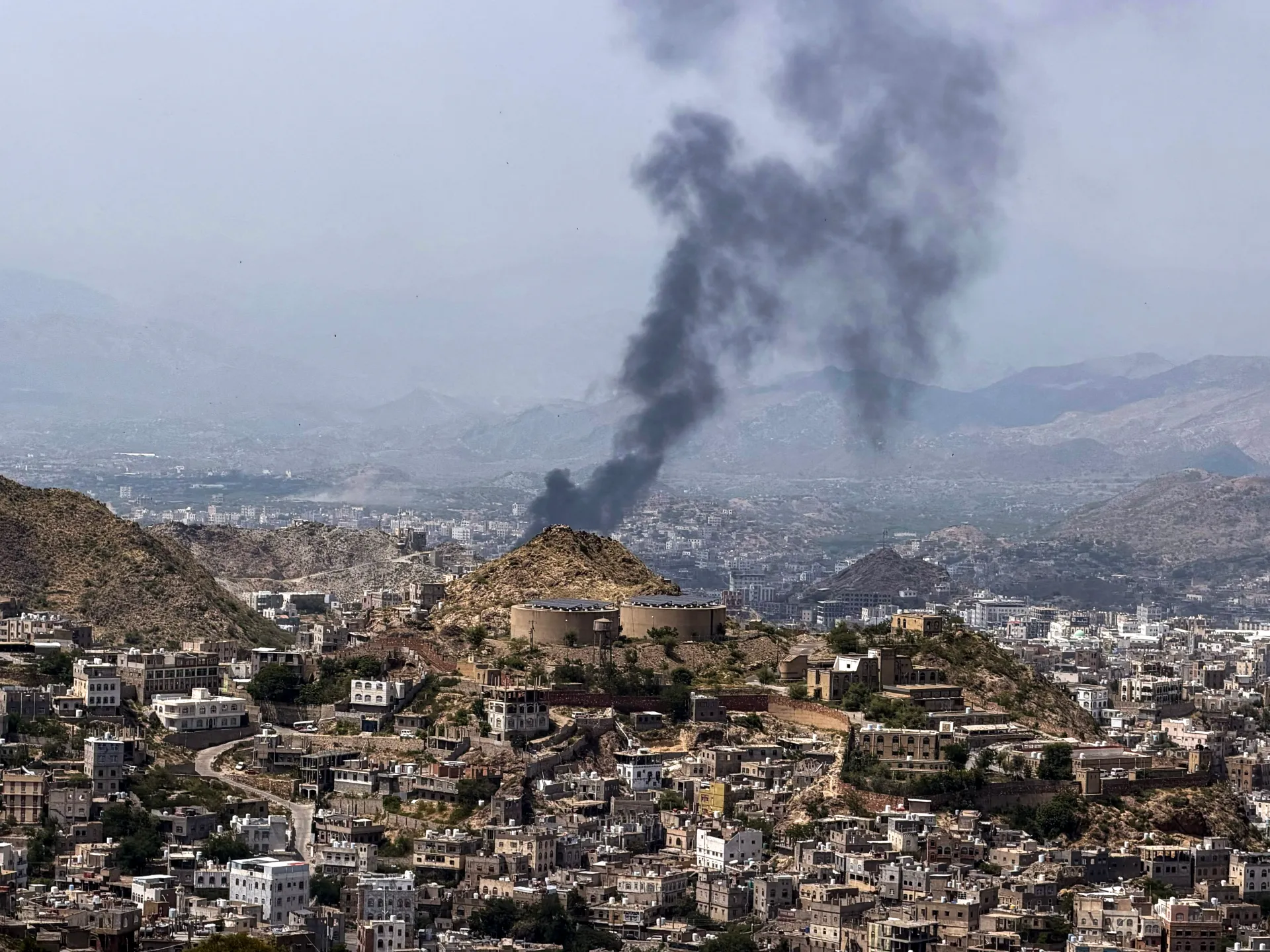
siege

Sheikh Hamad: The Arab leader who broke Israel’s siege on Gaza | Israel-Palestine conflict News

Following the passing of Qatar’s Father Emir Sheikh Hamad bin Khalifa Al Thani on Sunday, his solidarity with the Palestinian people remains one of the defining legacies of his leadership. He is being remembered not only as a regional statesman, but also as a steadfast ally of the Palestinian people and the only Arab leader to physically break the crippling siege on the Gaza Strip.

In October 2012, Sheikh Hamad visited the embattled Gaza Strip, six years after Israel imposed its crippling international blockade on the territory, following the 2006 Palestinian elections.

Accompanied by his wife, Sheikha Moza bint Nasser, and a high-level delegation, the emir bypassed the political isolation imposed on the enclave by Western powers and regional actors, leading to a massive official and popular reception.

The head of Hamas’s diaspora office, Khaled Meshaal, told Al Jazeera that the visit to the Strip means that “Jerusalem, Gaza and Palestine mourn him.”

“He was the first Arab and Muslim leader to visit Gaza, standing by its side with chivalry and magnanimity, as if officially announcing the breaking of the siege in its darkest circumstances,” Meshaal told Al Jazeera. “He was intelligent, brave and a man of principles.”

Ahmed al-Sheikh, a senior journalist, Arab affairs commentator and former news director at Al Jazeera Arabic Channel, said the Father Emir had ”a special kind of love for Palestine”.

“Has any other leader in the Arab world done that [visit to Gaza], except Hamad bin Khalifa?” al-Sheikh reflected in a recent interview.

”Why did he go to Gaza? It’s because he saw that everyone around Gaza is neglecting it”, he added.

Sheikh Hamad bin Khalifa Al-Thani
The late Emir of Qatar greets people in Gaza City as he arrives for a cornerstone-laying ceremony at a Qatari-funded rehabilitation centre, October 23, 2012 [Hatem Moussa-Pool/Getty Images]

During that landmark visit, Sheikh Hamad announced an increase in Qatar’s reconstruction grant to the enclave from $254m to $400m, laying the foundation for vital housing, infrastructure and healthcare projects that benefited thousands of Palestinians.

Addressing crowds at the Islamic University of Gaza – which awarded him and Sheikha Moza honorary doctorates for their humanitarian efforts – he praised the resilience of the Palestinian people, while criticising the international community’s double standards.

Sheikh Hamad Qatar former emir Gaza
Palestinian leaders and the former Emir arrive at a cornerstone-laying ceremony for a new residential neighbourhood called Hamad in Khan Younis, October 23, 2012 [Mohammed Salem-Pool/Getty Images]

Personal pain and the ‘spearhead’ of liberation

His commitment to the Palestinian cause predated the blockade on Gaza. In 1999, Sheikh Hamad became the first Gulf leader to visit the Palestinian territories since 1967, meeting with the late Palestinian President Yasser Arafat during a critical political impasse.

According to al-Sheikh, the emir viewed the Palestinian struggle through a deeply personal lens. When former Israeli Prime Minister Ariel Sharon besieged Arafat’s headquarters in Ramallah, the emir was profoundly pained. He told his aides that when Sharon attacked the Muqata’a, it felt as though he was attacking Qatar itself.

His connection to Palestine was coupled with a regret that he had never visited Jerusalem before its occupation in 1967, According to al-Sheikh, that prompted him to commission an extensive three-hour documentary on the holy city to capture its history and identity.

Rather than relying solely on international intervention, he believed in the agency of the Palestinian people and that they were the essential spearhead of their movement. “You will do the primary action and without this action there can be no liberation,” the emir once told al-Sheikh.

Defying regional consensus

This stance put him frequently at odds with the regional consensus. During Israel’s devastating 2008–2009 war on Gaza, deep divisions emerged among Gulf Cooperation Council (GCC) members over how to respond to the crisis.

Sheikh Hamad called for an emergency Arab summit in Doha, proposing a $250m reconstruction fund and a maritime corridor to bypass the blockade. He famously expressed his disappointment on live television about the lack of an Arab quorum for the emergency meeting. “God is sufficient for us and he is the best disposer of affairs.”

Some of Gaza’s most vital infrastructure projects before the outbreak of Israel’s genocidal war in October 2023 were the result of financial pledges made by Sheikh Hamad.

Qatar funded the rehabilitation of vital highways and the flagship Sheikh Hamad City in Khan Younis—a $58m public housing project with 53 modern apartment buildings for thousands of low-income families.

GAZA CITY, GAZA - OCTOBER 23: The Emir of Qatar Sheikh Hamad bin Khalifa al-Thani (L) and Hamas Prime Minister Ismail Haniyeh of the Palestinian National Authority wave to the crowd as they arrive to a cornerstone-laying ceremony of a Qatari funded rehabilitation center October 23, 2012 in Gaza City, Gaza. The Emir of Qatar received a hero's welcome in Gaza, becoming the first head of state to visit the Palestinian territory since the Islamist militant Hamas seized control there in 2007. (Photo by Hatem Moussa-Pool/Getty Images)
The former Emir with Hamas Prime Minister Ismail Haniyeh at a ceremony for a Qatari-funded rehabilitation centre in Gaza City, October 23, 2012 [Hatem Moussa-Pool/Getty Images]

Additionally, the Sheikh Hamad Hospital for Rehabilitation and Prosthetics, which officially opened in April 2019, became the territory’s premier facility for amputees and children with hearing impairments.

Israel’s genocidal war on Gaza has systematically erased much of the infrastructure Qatar helped finance during Sheikh Hamad’s leadership. Satellite imagery from May this year confirms that Hamad City and other areas in southern Gaza have been wiped from the map.

The Sheikh Hamad Hospital managed to resume its vital services last December, despite suffering direct attacks, severe shortages and the broader collapse of Gaza’s healthcare system. Operating the only CT scanner in northern Gaza, the hospital has even opened a new branch in the south to cope with a 225 percent increase in amputation cases.

Sheikh Hamad Hospital’s continued operations during the ongoing genocide in Gaza remain a tangible remnant of the late emir’s unprecedented efforts in the besieged enclave. His support for Gaza will remain for generations to come.

Palestinian children wave colored balloons and Qatari flags while waiting for the convoy of Emir of Qatar Sheikh Hamad bin Khalifa al-Thani, not pictured, to pass by a street in Gaza City, Tuesday, Oct. 23, 2012. The emir of Qatar received a hero's welcome in Gaza on Tuesday, becoming the first head of state to visit the Palestinian territory since the Islamist militant Hamas seized control there in 2007. (AP Photo/Hatem Moussa)
Palestinian children wave Qatari flags while waiting for the former Emir to arrive in Gaza City, October 23, 2012 [Hatem Moussa/AP]

Source link

Russia sends weapons to help Mali’s government hold off rebel siege | Al-Qaeda

NewsFeed

Al Jazeera’s Nicolas Haque reports from West Africa where the Russian navy is carrying a shipment of weapons to help Mali’s government hold off a rebel advance. Al-Qaeda-linked militants and Tuareg separatists are laying siege to areas of Mali’s north, with Russian-backed forces stepping in to keep Mali’s military junta from collapsing.

Source link

Revisiting Srebrenica and the siege of Sarajevo, and the similarities to events in Gaza – Middle East Monitor

The world is witnessing one of the most horrific onslaughts and siege against Palestinian civilians in Gaza by the Israeli occupation forces, which show no end to their appetite for death and destruction. As we watch helplessly while the people of Gaza search for food and water, amid Israeli air strikes destroying building after building, town after town, including civilian infrastructure, we are reminded of an earlier genocide and siege in the early 1990s. Sarajevo and Srebrenica are bywords for siege and genocide during the Bosnian War of 1992-1996, and carry striking similarities to what is happening in the “complete siege” of Gaza. The siege of Sarajevo lasted for four years, and while the siege in Srebrenica lasted for “only” three years, it proved to be more detrimental due to the genocidal killing of 8,000 Bosnian Muslim men and boys. These prolonged sieges, including the one in Gaza (which has actually been blockaded by Israel and its allies since 2006), serves as a sobering reminder of how oppressive powers use such tactics to inflict collective punishment on whole populations.

While it is essential to recognise the specific histories, approaches and geopolitical factors that contribute to each situation, both the war in Bosnia and the war in Palestine remain a struggle for control over land.

In Palestine, the occupation of the land in question took place within living memory.

What is unfathomable is the “genocidal conduct” committed with intent to destroy, in whole or in part, a national, ethnical, racial or religious group by military forces involved in these conflicts. The actions of the Bosnian Serb army in Bosnia and the Israel Defence (Occupation) Forces in Gaza have an unsettling resemblance, particularly in imposing a blockade and restricting the movement of civilians. In both cases, civilians faced (and in Palestine continue to face) immense human rights violations, including indiscriminate shelling, sniping, the demolition of religious buildings and the destruction of civilian infrastructure, including homes, schools and medical facilities. As this reign of terror is unleashed, the entire territory is cordoned off and people are unable to seek safety elsewhere. Mass graves tend to be a common factor. When Israeli soldiers left Gaza’s Al-Shifa and Nasser Hospitals after ransacking and destroying both, hundreds of decomposed dead bodies were dug-up in the hospital compounds. In Bosnia, mass graves were found across the country.

READ: Bodies of 73 more Palestinians found in Nasser Hospital mass grave

During the Bosnian War, the Serb army used hunger as a tactic to create unbearable conditions before launching a final offensive. Similarly, in Gaza, Israel has weaponised starvation against civilians. The task was made easier by the occupation state being in a position to cut off water, food and fuel supplies completely, and block humanitarian aid.

Moreover, humanitarian workers are often attacked. Since 7 October, at least 249 aid workers have been killed in Gaza, including 181 UN staff. In Bosnia, thousands of humanitarian workers were killed. Such killings are deliberate, and intended to deter NGOs and their staff from entering conflict zones, exacerbating the humanitarian catastrophe affecting the local population in desperate need. EU foreign policy chief Joseph Borrell blamed Israel for blocking aid and closing land crossings used for transporting essential supplies. Such acts reduce the potential for peace and security.

Another disturbing aspect witnessed in both Bosnia and Palestine is the dehumanisation of the people. For instance, Bosnian Muslims were often called “balijas” (“dogs”) that must be left to die without food and water. After announcing the “complete siege” of Gaza and cutting off the food, fuel and water supplies, Israeli Defence Minister Yoav Gallant announced that, “We are fighting human animals and we will act accordingly.” Such abuse exposes deep-seated religious and racial hatred. Moreover, the denial of the very existence of an “undesirable population” of Muslims in Bosnia and Palestine is common among hyper-ethnonationalist forces; the Serbs and Israelis share this characteristic.

The targeting of journalists in Palestine is yet another common feature shared with Bosnia. Local and foreign journalists are often harassed, intimidated and physically attacked while doing their job. Such actions perpetuate a culture of fear and censorship, making it increasingly difficult for the international community to gain on the ground knowledge and a comprehensive understanding of what is going on.

Whether in Bosnia or occupied Palestine, the displacement of millions of people has far-reaching consequences.

They include not only the immediate loss of homes, belongings and security, but also the long-term challenges of rebuilding lives and addressing the physical and psychological effects on displaced individuals. The war in Bosnia displaced at least 2.2 million people, and the ongoing war in Gaza has already displaced 80 per cent of the population: that’s 1.8m people.

READ: Pro-Palestine protests at US universities reach UK shores across Atlantic

In any war, women face a higher risk of sexual and physical violence, which has severe and long-lasting physical and psychological consequences. Although, the violence in Gaza mirrors that in Bosnia with civilians targeted disproportionately, it is the vulnerable sections of society such as children, pregnant women and the elderly and sick people who are most at risk. This, of course, is entirely deliberate on the part of the aggressors.

Thirty years after Bosnia, we are again seeing a world watching as genocide unfolds. Political and diplomatic bias, as well as military support for one side or the other, makes members of the international community complicit in what is happening. In Bosnia, the West was determined to make sure that a Muslim state did not materialise in Europe after the break-up of the former Yugoslavia. In occupied Palestine, the settler-colonial state of Israel acts as a “bastion of European civilisation in a sea of barbarism”, to quote its early proponents. The latest crisis is entirely man-made.

Although, the US Congress and the EU have condemned starvation as a weapon of war, both have failed to take strong action to hold Israel accountable for its actions in Palestine. Similarly, the US and Europe condemned the genocide in Srebrenica but failed to take any measures while the mass slaughter was going on. In fact, the US responded very differently to the situation by saying that, “We are not and we cannot be the worlds’ policeman.”

As a Senator, Joe Biden openly blamed the West for its failure to intervene with air power in Bosnia. He also visited the country at the time of the siege and expressed his anger over the atrocities: “Shame on the West,” he railed. As US president, though, he has an altogether different stance towards Bosnia, whereby he favours Bosnian Serb and Croat hardliners while side-lining the Muslims. Palestinians and Bosnians alike have called Biden’s foreign policy ‘hypocritical’ and ‘deeply flawed’. Unquestioned US support for Israel echoes Senator Biden’s 1986 statement that, “If there were not an Israel, we’d have to invent one.” He repeated that in October, as America’s commitment to uphold international law and its own federal law flew out of the window in order to protect the Zionist state.

OPINION: Every university should divest from the military-industrial complex

The genocide in Srebrenica was recognised by the International Criminal Tribunal for the former Yugoslavia and the International Court of Justice as such, but the ICJ failed to classify the entire conflict as genocidal in nature. The current appalling situation in Gaza also raises the same questions about the international community’s responsibility to prevent genocide occurring, whether in Gaza or elsewhere. It also challenges the credibility of the West in claiming to uphold international laws and conventions in the pursuit of peace and justice around the world, not least in Bosnia and Palestine.

The views expressed in this article belong to the author and do not necessarily reflect the editorial policy of Middle East Monitor.

Source link

After the US Bombing, a Venezuelan Community Under Siege Speaks

A solidarity delegation visited Ciudad Tiuna after the Jan. 3 US bombings. (Roger Harris)

The large-scale US airstrike on Venezuela was unprecedented in modern history. The surprise attack forcibly kidnapped President Nicolás Maduro and his wife, First Combatant Cilia Flores, from Fort Tiuna on the outskirts of Caracas. The US killed over 100 people in the early morning hours of January 3, 2026, including reportedly some civilians in the neighboring Ciudad Tiuna social housing complex.

We visited Ciudad Tiuna 50 days after the US bombing to hear the resident’s accounts. We were the second “solidarity brigade” to visit Venezuela and the first to arrive by air. The delegation consisted primarily of activists from the US, along with Canada, Colombia, Brazil, and Mexico. CodePink,  Task Force on the AmericasVeterans for Peace, and World Beyond War were among the solidarity organizations represented.

“Welcome to the socialist city of Tiuna.” (Roger Harris)

Ciudad Tiuna is a planned housing complex of some 20,000 units, part of the national Gran Misión Vivienda Venezuela program. Apartments are allocated with priority to families displaced by disasters and to low-income households. As of December 2025, over 5 million units have reportedly been delivered nationwide.

We were enthusiastically greeted by a community-based club affiliated with the Abuelos y Abuelas de la Patria (Grandparents of the Homeland) mission, a government program empowering seniors in communal life. They organized a cultural presentation and introduced us to social and political organizations in their socialist city.

The grandparents of the homeland greeted us. (Roger Harris)

A woman sang for mother earth accompanied by a shaman drum. A man read poetry by Allen Ginsberg and Walt Whitman, remarking “not all North Americans fornicate with their mothers” (loosely translated from Spanish).

In a tribute to Cuba, residents said they do not speak of solidarity with Cubans because “we are one people.” They praised the Cuban’s courage, including the 32 presidential guards murdered by the US in the January 3 attack. They also highlighted Cuban’s generosity in helping Venezuela achieve “territory free of illiteracy” status by 2005. Programs such as Misión Barrio Adentro brought thousands of Cuban doctors into poor urban and rural communities to provide free primary care.

And most of all, they deeply lamented the current US military blockade of Cuba, which has prevented Venezuela from supplying vital oil to the island. The suffering imposed by Washington on the Cubans pained them deeply.

They do not speak of solidarity with Cubans because “we are one people.” (Roger Harris)

They shared a flyer titled “Never Again – January 3 – Diplomacy for Peace,” which read in part:

Neither forgiveness nor forgetting! Memory is not resentment, but the heart of the people’s dignity who have been attacked. A people without justice becomes submissive. Impunity flourishes if we do not sow justice. We will not tire of weaving unity to triumph.

Their immediate demand is the release of their president and first lady. The flyer also calls for defense of popular sovereignty, no intervention by imperialism in Venezuelan affairs, and reparations for the “offended homeland.”

Their immediate demand is the release of their president and first lady. (Roger Harris)

The flier concludes with a quote from Delcy Rodríguez: “The dignity of the Venezuelan people is the first line of defense. We have to preserve our integrity as a people, guarantee our territorial integrity, and preserve our national independence.”

January 3 was not unanticipated but nevertheless a great shock. During a walking tour, they described the terror of the sneak attack. They told us each time the Venezuelan people successfully resisted Washington’s attempts at regime change – attacks dating back from the founding of their Bolivarian Revolution 26 years ago by then Venezuelan President Hugo Chávez – the siege has been racketed up.

“We were all running because we were being bombed.” (Roger Harris)

Fabricio, age 11, described a sky lit red with explosions and filled with US helicopters. The elders vowed: “Never again will we allow our children to be traumatized.” Government mental health workers have since been regularly visiting Ciudad Tiuna.

“Never again will we allow our children to be traumatized.” (Roger Harris)

They explained how they truly felt the horror that the Palestinians experience. The difference, they added, was that for them it was a single day while in Gaza it is every day.

At the time, many feared the attack could signal a protracted full-scale land invasion. Such an incursion, they warned, could well be launched in the future. (This was also the opinion of government officials that we conferred with.)

They are proud that the Bolivarian leadership remains firm and united. This they attribute to the support of the people such as themselves. The concessions forced upon the government under the threat of an even more devastating attack have been bitter to accept, but better than the alternative of greater destruction.

Dudar es traición – to doubt is to betray. (Roger Harris)

Our hosts described themselves as Chavistas, militants in support of the current government. Some wore shirts bearing the phrase dudar es traición – to doubt is to betray. Their lived experience is of a nation under imperial siege – in a perpetual state of war with the threat of more. Under such circumstances unity is prioritized.

Under conditions of siege, unity is prioritized. (Roger Harris)

They rejected speculation that the kidnapping was aided by traitors within, arguing that such narratives serve the purposes of the enemy of eroding unity by fostering distrust. They emphasized the continuity of revolutionary policy from Chávez to Maduro and now to Delcy, as she is affectionately called.

Conditions have changed but not the leadership’s dedication. They noted that regional solidarity has weakened, leaving Venezuela ever more isolated.

Before we departed, several children gave us gifts: handmade wristbands in the national colors, decorated pencils, and a book on climate change from a Marxist perspective. Our hosts also had a frank take-home message for us: “We never invaded; we liberated. Take our passion and love to give you strength to do what you must and rise up.” The hardships caused by the US sanctions – including shortages of medicine and essential goods– are linked to the failure of North Americans to restrain our own government.

After being scared away by the US bombing, the wild parrots have returned to the community. (Roger Harris)

Meanwhile, the wild guacamayas (blue-and-yellow macaws), which once came to Ciudad Tiuna to be fed by residents but disappeared after the bombing, have now returned to a community that asks only to be left in peace.

Roger D. Harris is with the Venezuela Solidarity Network, the Task Force on the Americas, and the US Peace Council.

The views expressed in this article are the author’s own and do not necessarily reflect those of the Venezuelanalysis editorial staff.

Source: Common Dreams

Venezuela is a territory of peace. (Roger Harris)

Source link