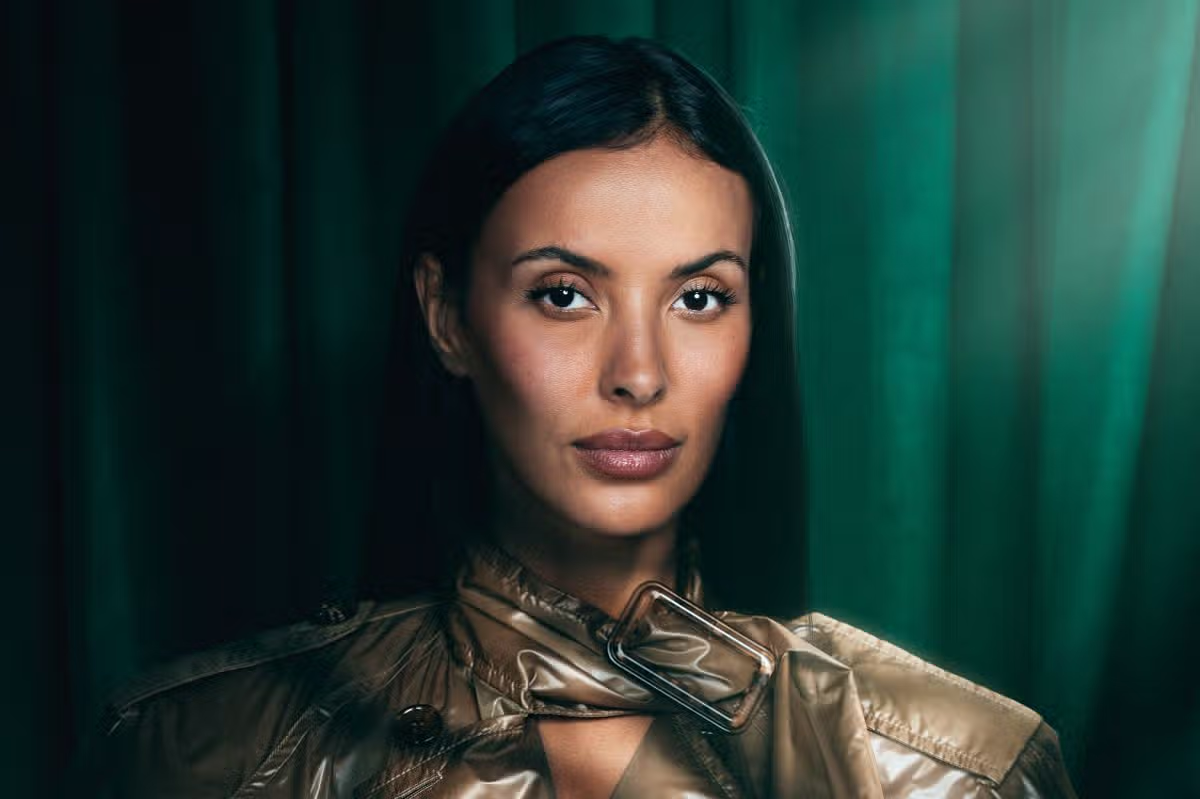
Maya Jama could be about to exit The Celebrity Traitors after making a plan for the latest murder game and viewers of the BBC show think she has been ‘too obvious’ with her tactics
Fans think Maya Jama could be about to be banished from the castle(Image: CREDIT LINE:BBC/Studio Lambert/Cody Burridge/BBC Creative)
Maya Jama could be about to exit The Celebrity Traitors after being “too obvious” in front of a Faithful.
The Love Island host, 30, is currently taking part in the hit BBC game show as a Traitor fronted by Claudia Winkleman and in Friday night’s episode, she had to join in with a yawning game. The challenge, which left all three of the Traitors feeling the pressure, was to get either of Faithfuls, Jerry Hall or Ross Kemp, to yawn in a specific room after spraying some “deadly sleeping powder” from a perfume bottle, which would be breathed in.
Reading out the instructions in disbelief, comedian James Acaster said: “To seal the murder you must then say, ’Am I boring you?’ – followed by the victim’s name. I can’t believe this.”
To see more of the stories you love from The Mirror and to find them easily in Google then make us your preferred source. Free and easy-to-do, just click on the link here to find more from The Mirror at the top of your feed.
Viewers will have to wait until next Thursday to find out who will be leaving the castle for good, but fans think that Maya could be up for the chop after making the apparent mistake of inviting EastEnders legend Ross into the mix, having decided that the only way to instigate the murder was to start up some contagious yawning.
But many viewers think this strategy will backfire on Maya, as her pretend yawning was deemed “too obvious” and think she could be rumbled as a Traitor immediately if not careful.
One person wrote on X: “Ross Kemp was the last person the Traitors should have encouraged into the room. He will be all over this ‘murder in plain sight’. Captain’s hat anyone?” A third wrote: “Ross clocking Maya’s GCSE drama yawning.” A fourth said: “So you’re telling me Ross was freaking out about every possible evidence of murder at the beginning and now he’s sitting in a room full of yawning traitors, possibly not suspecting a thing.”
A fifth added: “This yawning task is too obvious in front of Ross Kemp.” Another wrote: “Maya Jama’s yawning was more obvious than Richard E Grant saying he was a traitor.”
Meanwhile, Clare Balding, who competed on the first series, said she thinks the best thing for the Traitors is if Ross yawns. Believe me, if Jerry yawns and Jerry goes, Ross will notice,” she said on Uncloaked.
However, other fans had just taken umbrage with the fact they will now have to wait to find out what happens next. One fan said: “NOOOOOOOOOOOO You cant leave on that cliffhanger, the producers are just geniuses. I think the Traitors FAILED to Get them to yawn in the Time…. AND they will be punished in some way IMO!!”
Another wrote: “10 million people are now going to have a tense wait of 6 days to find out whether Ross Kemp or Jerry Hall yawn first. Now thats a TV cliffhanger.”
The biggest tech battles many people face are things like frequent two-factor authentication, a time suck that makes you want to hurl a device across the room, and sigh-inducing texts to parents letting them know that the video of a cat cooking eggs they 100% believe is real is actually AI slop.
But in “Cupertino,” the legal minds at the center of the show are taking on more consequential tech disputes in the courtroom.
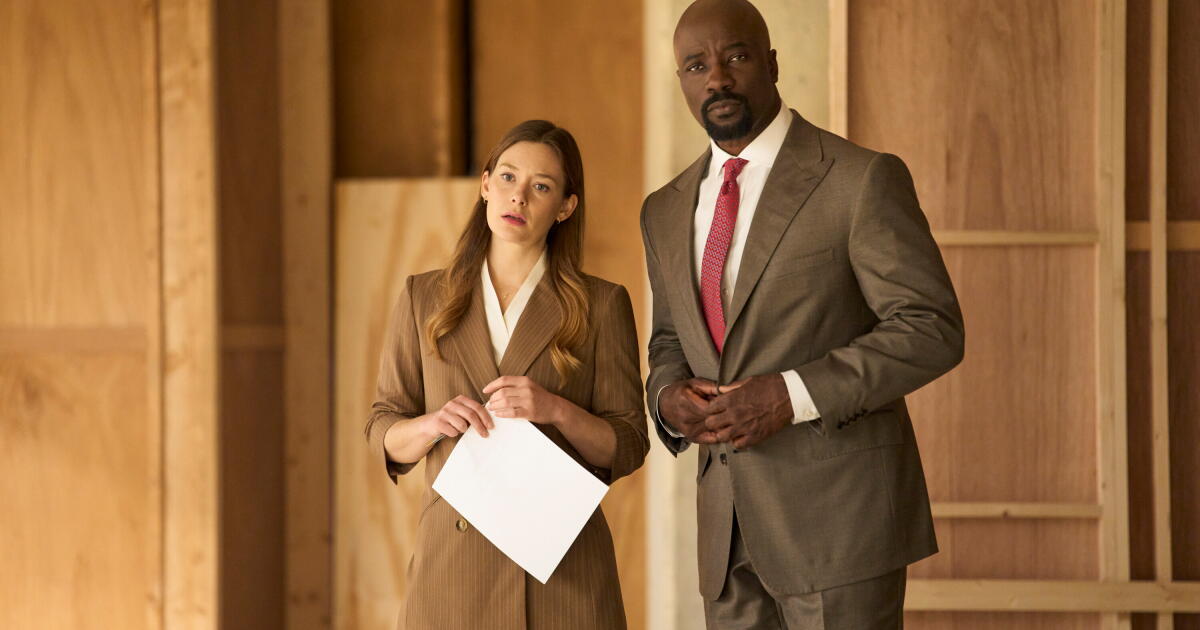
The series joins a wave of recent films and TV shows exploring and confronting the rapidly evolving tech sector. Created by Robert and Michelle King, veterans of the legal drama genre with shows like “The Good Wife” and its spinoff “The Good Fight,” the Silicon Valley-set courtroom drama is interested in David vs. Goliath tension. It follows Michael Price (Mike Colter), an attorney fired by his tech startup employer S-Talk, as he teams up with fellow ousted lawyer Olivia Siffre (Rachel Keller) to launch their own ad-hoc law firm to take on cases — including their own — for everyday people against tech giants.
“There are big companies that have a lot of money, deep pockets — they could suffocate you, they can bog you down in litigation to the point where you can’t financially match them,” Colter said. “They’re planning on people just rolling over because they don’t want to deal with it. That’s where Michael and Olivia come in. We get the justice for people who otherwise won’t see any. I’m just excited and intrigued by the stories they [the Kings] want to tell here.”
The Kings’ exploration of tech’s litigation underbelly arrives at at a critical moment. High-stakes conflicts over artificial intelligence, data privacy, workplace culture, antitrust laws and other issues are dominating the news and defining our modern era. “The headlines, the way that it lines up is crazy,” Keller said. “It’s really important some of the cases they’re bringing to the show — real things that are happening to real people.”
But the show’s origins are grounded in personal history — Robert grew up in San José; his father worked on mainframes for IBM and the now-defunct Control Data Corp. before personal computers took over — and a desire to bring a fresh backdrop to the Kings’ signature legal drama style.
“When you go back and visit family, you started to see how Silicon Valley — we just call it the Bay Area — was changing,” Robert said. “Not only in the make of cars that everyone was buying, but in these massive offices that were taking over suburban streets; homes were just being plowed under and house values were going up. There was good and bad. It started with that — how much it was changing the world.”
They were also inspired to explore a new legal angle: “It felt like other shows weren’t really looking at the way tech was impacting the law,” he said.
“We were less interested in looking at the tech titans than the Davids of this world — the people that were fighting them,” Michelle added. But she stresses the show is not anti-tech or meant to be a soapbox, even while showing the power everyday people can and do wield: “It wasn’t created to be vegetables. It’s created to be crème brûlée — it’s meant to be funny, or tasty. If it isn’t delicious to people, I really feel as though we’ve wasted our time.”
Fans of “The Good Wife” or “The Good Fight” are familiar with how the Kings turned emerging tech issues — particularly ones involving Google, Amazon or Facebook — into narrative catalysts for cases. It was often through the lens of a fictional tech giant known as ChumHum, a Google-like search engine created by a guy named Neil Gross (John Benjamin Hickey), that got embroiled in a variety of cases, including ones about secrecy and search result modifications. “Cupertino” blends real and fictitious companies.
The second episode of the CBS drama aired Thursday. We spoke with the Kings to unpack some of the cases they chose to kick off the season.
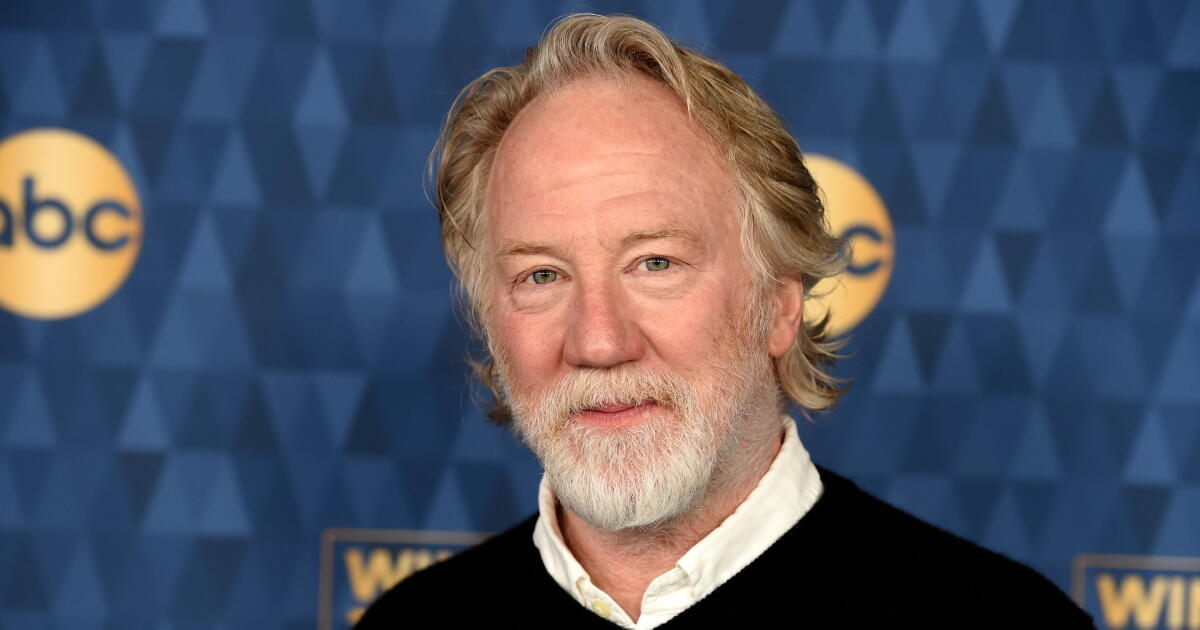
A New Mexico judge on Friday ruled in favor of Emmy winner Timothy Busfield, tossing out multiple child sex abuse charges against the actor.
During a hearing, Judge Joseph A. Montano granted Busfield’s motion to dismiss his indictment, citing prosecutorial misconduct and errors that undermined the grand jury process. According to the order, “the prosecuting attorney failed to act in a fair and impartial manner” and proceedings thus far “were conducted in a manner that violated grand jury statutes designed to protect the structural integrity of our grand jury system.”
State prosecutors had indicted Busfield in February and charged him with four counts of criminal sexual contact of a child. The since-dismissed charges stemmed from his alleged behavior with two actors, who are brothers, on the set of the Fox crime drama “The Cleaning Lady.” The actor, known for “The West Wing” and “Thirtysomething,” has pleaded not guilty to those charges.
While a legal representative for Busfield did not immediately respond Friday to The Times’ request for comment, a spokesperson for the Bernalillo County District Attorney’s Office said prosecutors are “evaluating our options to determine how we will proceed.”
A New Mexico judge issued a warrant for Busfield’s arrest in January, citing two counts of criminal sexual contact with a minor and a single count of child abuse. Busfield was accused of inappropriately touching the child actors during his time as an actor, director and producer on “The Cleaning Lady,” according to an affidavit filed by New Mexico officials.
One child actor alleged Busfield first touched his “private areas” multiple times on set when he was 7 years old, according to the complaint. He said that Busfield touched him inappropriately again several times when he was 8. The affidavit also detailed a police interview with Busfield in which he suggested that the boys’ mother might have sought “revenge” on the director for “not bringing her kids back for the final season.”
Busfield filed his motion to quash the indictment in June, alleging the court refused to provide members of the grand jury with additional information and that prosecutors refused to allow jury members to hear from other witnesses, among other claims, according to court documents.
“The State treated the grand jury not as an independent body, but as the arm of the prosecution our courts have forbidden,” the motion says. “The resulting indictment must be dismissed.” Prosecutors rebutted Busfield’s allegations in a response to the dismissal and asked the court to deny his motion.
Before Friday’s order, a jury trial was scheduled to begin May 10, 2027.
The heart of Screenland is cozying up to artificial intelligence.
The open space in Culver Steps typically hosts community events and movie nights. But on Wednesday, it turned into a job fair for companies looking to hire talent for AI studios.
Companies showed off their life-like AI videos, urging emerging talent — and out-of-work creatives — to join them as they worked to reinvent traditional filmmaking.
“It’s a great breeding ground for this new filmmaking,” Dave Clark, cofounder of AI film production studio Promise, said about Culver City. “To the independent filmmakers here, it’s time to take back power.”
The event was part of LA Tech Week, a citywide event organized by venture capital firm Andreessen Horowitz.
Culver City is already home to big names in Hollywood and technology like Amazon MGM Studios, TikTok, Apple, and Sony Pictures Entertainment. Recently, a growing cluster of AI studios, including Promise, TrueShort, Native Foreign, and PhantomX, are expanding in the neighborhood.
Luma AI, a $4-billion Palo Alto startup that makes generative AI video software, opened a facility in Culver City last year. The company’s Dream Lab occupies a 7,000 square feet space and employs a team of 13.
“Culver City is the future of AI and filmmaking,” Caroline Ingeborn, Luma AI’s chief operating officer, said in a statement.
The companies said they are drawn by the legacy studios they hope to rival. The fact that space is available and affordable thanks to the general decline of the entertainment business in L.A. also helps.
Proponents of AI see it as an antidote to high production costs and say it allows creatives to make films that otherwise would never be made. However, many in Hollywood, its unions, and the public at large are suspicious of the surge in AI use, worried it is stealing the work of human creatives and taking people’s jobs.
The new wave of AI filmmakers have accepted the rise of AI as inevitable, and are forging ahead, increasingly in Culver City.
The city is not opposed to it.
“We’re a hub for the creative economy that is continuing to evolve,” said Adam Troy, Culver City assistant city manager, in a statement. “We look forward to what’s next in the space and what businesses see their future here in Culver City.”
TrueShort moved into Culver City last month, taking over most of a 5,000-square-foot office space near Amazon’s studio. The AI studio has raised $17 million and employs about 45 people. Around 75% of them are creatives: filmmakers, editors, sound designers and composers.
Its streaming app hosts short-form true crime audio and video shows that are fully AI-generated. On average, a 10-minute episode costs about $10,000 to make and takes about 10 days to go from idea to release.
“The next Netflix or the next Disney is going to come out of AI this time,” said Nate Tepper, cofounder of TrueShort. “And, in a way, it kind of needs to be a startup because the big incumbents are not going to move as fast. They’re going to be afraid of backlash.”
The company outgrew its Santa Monica office and is now located near Culver Theater.
“It is cool being next to the other bigger lots like Sony and Amazon, only because it’s inspiring,” Tepper said. “We want the lot. We want to become the big studio.”
Culver City-based creative studio Native Foreign makes AI commercials for brands that are more open than Hollywood about AI use. It has done ads for Virgin and Toys R Us.
It made one of the first AI-animated shorts, “Critterz,” using OpenAI’s software and planned to help make a movie based on it, but OpenAI pulled out of the project and canceled its video-making AI model.
“We don’t have the kind of opportunities that maybe some huge huge studios and companies have, so we are able to bag above our weight with these tools,” Nik Kleverov, co-founder of the company, said on a panel at LA Tech Week.
Google-backed Promise is another Culver City-adjacent AI studio that’s a proponent of hybrid productions, where human actors work with AI specialists. The company uses AI to generate backgrounds, visual effects, and synthetic humans for its slate of films, but a lot of the performances are shot on soundstages across L.A. using actors.
In late 2024, the studio acquired Curious Refuge, an online AI school that teaches traditional artists and newbies to use generative AI tools for filmmaking. Promise moved close to Culver from Venice in June.
Excitement about AI grows even as the industry puts up guardrails to contain it. The actors’ guild SAG-AFTRA has secured special protection against fully synthetic performers in the union contract signed this year.
However, some Hollywood veterans point out that the industry has fought over technology before. Alex Cancado, who spent years in visual effects and has worked on over 80 movies, now works in the AI Studios division of Amazon MGM Studios.
Pitching the crowd of creatives on Wednesday, he said the transition from practical effects to computer graphics was equally fraught.
“It was a challenge getting CG to be accepted by directors and producers,” Cancado said.
Much of the buzz around AI use for big productions started with a conference in Culver City called “AI on the Lot,” which started in 2023. It has since grown to thousands of attendees.
The organization also sponsored the job fair on Culver Steps and a networking happy hour for media AI companies in Culver City. It estimates that AI media companies with $2 billion in backing have converged on the city.
Mike Gioia, a founder of AI on the Lot, attends City Hall meetings and is trying to build momentum around the concept of a “Culver cluster” — bringing more companies and individuals working in AI to the neighborhood.
“We want to make Culver City the capital of AI media,” said Gioia.
There is now a six day wait to find out if Ross Kemp or Jerry Hall has been murdered – or if the Traitors failed.
21:03, 16 Oct 2026Updated 21:17, 16 Oct 2026
Maya was yawning like crazy in a bid to make a Faithful join in
Celebrity Traitors fans now have a tense wait to discover whether Ross Kemp or Jerry Hall will seal their own fate by yawning in the castle – or if the turret trio will fail their challenge to kill in plain sight.
In the UK game, the Traitors have never faltered at this before, but it has happened in international versions including in Denmark and Canada, when it was felt too many people were present to carry out the task – set by producers – without being caught.
If Maya Jama, James Acaster and Kenny Ojuederie do fail, their punishment would come in the form of a missed murder, meaning everyone arrives at breakfast the following morning and wonders what happened.
Jerry, 70, did say she was feeling tired during last night’s programme but did not respond to the many yawns made by Maya and James, which normally prompt a copycat response.
To see more of the stories you love from The Mirror and to find them easily in Google then make us your preferred source. Free and easy-to-do, just click on the link here to find more from The Mirror at the top of your feed.
If Ross succumbs, it could be seen as a fitting end to his time in the castle after he spent the whole of the first day convinced he’d been murdered in plain sight by first Bella Ramsey and then Leigh-Anne Pinnock.
Jerry – voted as the player whose head was most in the clouds during the latest mission – would be greatly missed for her eccentric ways, while Ross’s huge contribution to the missions would also be a sad loss for the whole team.
In last night’s show the ex-EastEnder, 62, said he felt angry with the Traitors for repeatedly setting him up and making the other Faithful feel suspicious of him.
But this time he and Jerry have been selected entirely at random, in the same way that Paloma Faith became Alan Carr’s first kill last year, even though she was one of his best pals.
The challenge, which left all three of the Traitors feeling the pressure, was to get any of the Faithful to yawn in a specific room after spraying some “deadly sleeping powder” from a perfume bottle, which would be breathed in.
Reading out the instructions in disbelief, comedian James said: “To seal the murder you must then say, ’Am I boring you?’ – followed by the victim’s name. I can’t believe this.” Viewers won’t discover the outcome until next Thursday’s episode at 8pm on BBC1.
Joe Lycett was voted off after telling the Faithful he was desperate to become a Traitor, admitting afterwards ‘I’ve done this to myself’
21:07, 16 Oct 2026Updated 21:08, 16 Oct 2026
Joe was the architect of his own downfall – and he knows it
Banished Faithful Joe Lycett was so desperate for a green cloak that after being voted out of The Celebrity Traitors he called for a rule change allowing dumped players to return as baddies.
His exit last night came after he loudly proclaimed he wanted to be recruited into the turret – which didn’t happen – but nobody believed him when he truthfully announced his disappointment the next morning.
“I’d like to motivate the Traitors to find an unknown clause in the contract that can bring back a Faithful that’s been banished to recruit because I’m there if they want me,” he laughed.
The comedian, 38, received 11 of the 14 votes after what seemed like a big slip-up at the round table in which he said that if he went, the Traitors would need to recruit again. Afterwards he acknowledged that he only had himself to blame. “I sort of didn’t play being a Faithful or a Traitor right. I tried to straddle both, and I was being greedy and I was rightly punished for it.
“I’m a silly billy – it was a combination of me begging for recruitment and then the Faithful being thick as mince. I concede I’ve done this very much to myself, but I was too hungry to be recruited. And you know, if being passionate is a crime, then banish me from the castle.”
Joe, who was instrumental in exposing Richard E Grant as a Traitor by asking him what he was on the first day, said the experience of being kept separate from friends and family during filming had been enjoyable. Asked to explain what he’d learned about himself by taking part in the game, he said: “The word that comes to mind for this whole experience is gratitude. It’s made me really grateful for my life. I’m really grateful that I am in a position that I get to experience this, because I’m famous enough to be in the mix. I loved having my phone taken away from me, and I’m really grateful for the fact that I have a lovely life to miss.”
Admitting that the game was sometimes “infuriating”, but also “joyous and thrilling”, Joe said he thinks the most likely winner is Romesh Ranganathan. “I think Romesh is a front runner,” he said. “I think he’s kind of unreadable but may get heat just on that basis. Then I think there could be a real curve ball, like Jerry or Joanne, someone who’s playing it in a way that’s out there.”
But he said it was hard to stick to strategies when you were inside the castle. “I’ve gone to Round Tables not knowing who I was going to vote for, and I don’t know who’s a Traitor – any of them could win at this stage.”
Miranda Hart formed such a close bond with Joe during their time filming together that she wept when he left – having refused to put his name on her slate and writing Ross instead. During the programme she explained: “Three or four years ago, due to illness, I thought that I might not ever have a gentle walk around a park again. Now I find myself on a Scottish Highland wheelbarrowing along a very large head. It’s really exciting.”
Miranda, 53, has been suffering from chronic fatigue syndrome for many years, which she believes was caused by having Lyme disease as a teenager. Having recently recovered enough to sign up for the programme, she has joined in with the missions wholeheartedly. In last night’s effort she grew tired carrying the statue parts at one point so swapped to transport a giant head in a wheelbarrow towards the plinth where it could be erected on top of its body, earning money for the prize pot. The current fund stands at £46,000, after the players successfully constructed five out of the six statues.
The comedy star tearfully told James Acaster that having fun outside with Joe had made her feel the happiest she’d felt in a long time. “I can’t believe how emotional I’m getting,” she said, as the floodgates opened. “Connection and laughter and joy are bigger than this game and to meet someone and to just play and laugh, it’s all us humans need.”
The good news is that she is proving so popular in the castle that many fans are calling for a return of her BBC sitcom Miranda, which last aired with a Christmas special in 2015. Another suggestion is that she stars in a different show. “A Miranda detective series like Jonathan Creek would be… such fun!” one fan said.
Joe felt that he would miss her too. “Miranda is someone that I’ve met briefly in the past and I’ve always loved. I’m really pleased that I got a chance to play with her, do some sort of an improv, essentially, and kind of mess about. I got very close with her.”
He said that – against his expectations – he’d got on well with everyone. “I really, really liked them all – and didn’t expect to when I saw the lineup. I thought, well, there’s going to be some people I’m going to find difficult, or are divas or whatever. And the reality was completely different.”
Joe’s high point came right at the start when he asked the question that sparked Richard E Grant’s astonishing outburst. The comic said he was glad he hadn’t been persuaded to ignore it. “I know lots of people tried to steer me away from it, but I was like, there’s no game around that, he absolutely meant it when he said it to me. God knows what was going through his head. It was an absolutely superb, classic, Richard E. Grant way of responding to this game. It’s one of the most iconic performances I’ve ever seen.”
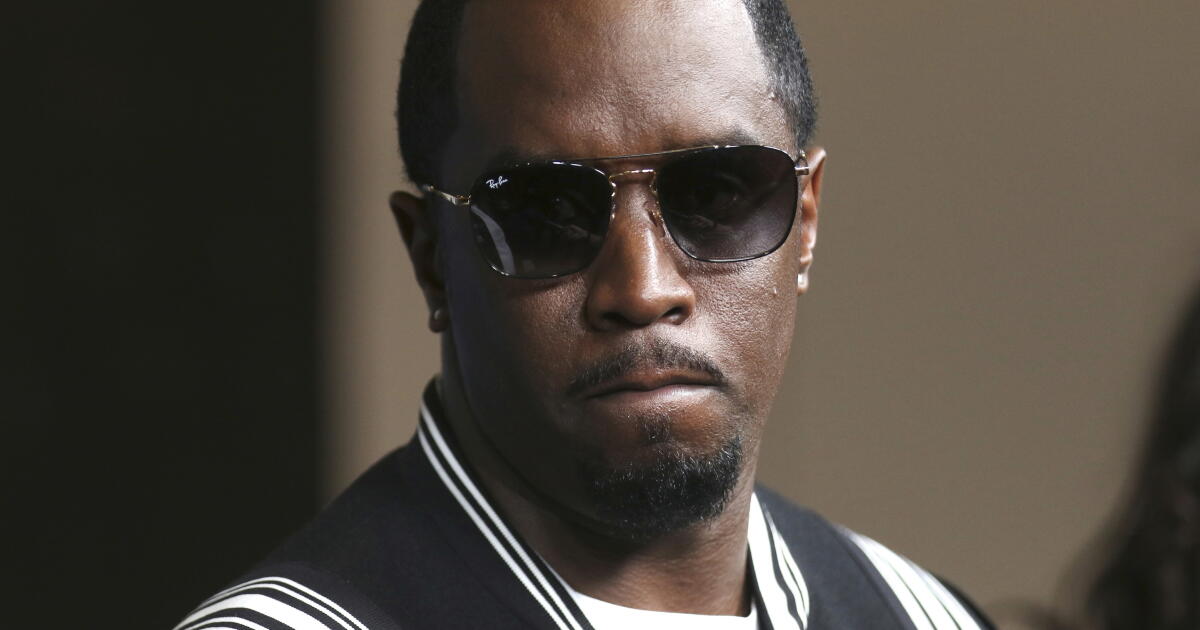
Sean “Diddy” Combs has been relocated to a new prison, following reports of lavish prison perks and a head injury that saw him hospitalized.
The 56-year-old was transferred on Friday from FCI Fort Dix in New Jersey to FCI Allenwood, a low-security prison in Pennsylvania, a Bureau of Prisons spokesperson confirmed with The Times.
Combs’ representatives welcomed the change.
“We appreciate the Bureau of Prisons taking the safety and security of Sean and everyone involved seriously,” Combs’ spokesperson said in an email to The Times on Friday. “His transfer from one low-security facility to another is an important distinction, and while we cannot speak to the BOP’s specific reasons for the move, it is consistent with a decision made with safety and security in mind. We are grateful for the attention being given to his well-being and hope he can continue serving his time without unnecessary disruption.”
Although the Bureau of Prisons is not at liberty to disclose the reasons for the transfer, it has been a hectic series of weeks for the disgraced music mogul, who was convicted in July 2025 of transporting prostitutes across state lines for drug-fueled sex performances known as “freak-offs” and sentenced to 50 months in prison in October that year.
During his time at FCI Fort Dix, Combs was reportedly living a pampered lifestyle behind bars. Combs paid inmates to clean and cook special meals for him, including curry chicken, pizza and empanadas, and that the hip-hop artist also received Chinese-style massages, four sources told NBC News. They also reported that the hip-hop and R&B music producer obtained a contraband phone, had access to a “jailbroken” tablet and had smuggled an illegal stash of alcohol.
To pay for the labor, individuals outside of the prison were allegedly paying thousands of dollars into the commissary accounts of those serving the “Bad Boy for Life” rapper, the sources claimed.
Reports of his posh prison life emerged on Sept. 29, just as news of Diddy’s shortened prison stint made headlines. His release date had moved up to Jan. 21, 2028, a September search of the Federal Bureau of Prisons inmate database showed. Following the prison perk allegations against the “I’ll Be Missing You” singer, however, an updated search on the database revealed that his release was pushed to March 2, 2028.
Combs also was reportedly placed in solitary confinement on Sept. 30 shortly following the report of his prison perks. The producer remained in the special unit as late as Oct. 8.
But extra solitary time in the slammer wasn’t the last blow for the singer: Combs was rushed to the hospital Oct. 10 with a non-life-threatening head injury. Despite reports that Combs sustained the injury in a retaliatory attack by another inmate, a Federal Bureau of Prisons representative said that the reported fight is “false and did not happen,” according to Page Six.
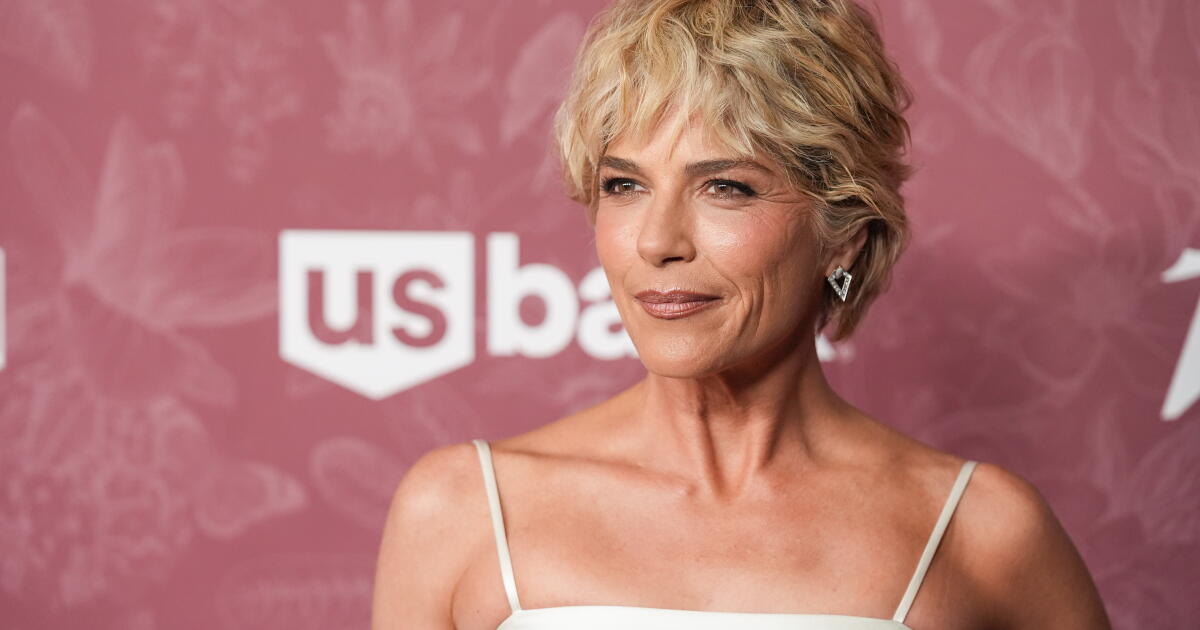
Selma Blair’s team has released a lengthy statement regarding the actor’s recent arrest following an incident while aboard a flight.
“Selma Blair experienced a medical emergency on the flight,” said the statement provided to People on Friday. “There was no attempt to open the door of the aircraft. Selma did not intend to harm anyone.”
The statement is intended to “correct the record on a few points already in public circulation” regarding Blair’s alleged violent conduct aboard a Delta Airlines flight. The Times has reached out to Blair’s reps for comment.
The “Cruel Intentions” star was arrested at John F. Kennedy International Airport late Sunday after an alleged altercation with staff during a flight from Los Angeles. Upon landing, Blair, 54, was taken into custody, then transported to Jamaica Hospital Medical Center. In addition to her alleged actions aboard the flight, the “Legally Blonde” star has been accused of kicking a Port Authority Police Department officer as she was being transported to the hospital, as well as kicking a nurse.
“Since Sunday night, the public account of what happened to Selma aboard a flight to New York has been built almost entirely on a police statement and a decade-old headline,” Blair’s spokesperson said in the Friday statement to People.
The spokesperson called out the lack of “fair reporting” around the situation, adding that they are grateful for the “handful of journalists [who] have taken the time to report on Selma as a human being rather than a headline.”
Blair was charged with two counts of second-degree assault on Monday for her alleged actions involving the police officer and nurse. Blair pleaded not guilty to the charges. At the hearing, her attorney, Shawn Barnes, reportedly told the judge that “this was not an intentional assault” and that the actor had “missed several doses of … a powerful medication that controls severe neurological symptoms,” per the New York Post.
Blair lives with multiple sclerosis, a chronic neurological disorder and autoimmune disease, which she has been open about since 2018.
The statement also addressed Blair’s medical condition — denouncing any who suggest the actor does not have multiple sclerosis — how and why she travels with a service dog, her activism and her busy schedule as an actor and entrepreneur.
“Selma had never been arrested before Sunday night,” the statement said. “There is much more to this story than has been reported, and we ask to consider the entirety of the facts before rushing to judgment, whether in the courtroom or in the court of public opinion.”
Cameron Winter had one last knife to twist for the Dodger faithful in the audience at Hollywood Forever on Thursday night.
“My husband lost everything but the kitchen sink, because he spent it all on DraftKings,” Winter deadpanned during the band’s closing hit “Trinidad,” where he typically sneers ad-libs about domestic nihilism. “He bet everything on the Dodgers, and they f—ing lost.”
The crowd cracked up in grim commiseration (as a Mets fan, Winter could probably sympathize). It felt cathartic when he hit that song’s freaked-out chorus — “There’s a bomb in my car!” — in a hail of guitar noise.
Geese had an atypical, if kind of old-fashioned, run on the hype train for a young rock band. Structured around Winter’s twitchy, stentorian vocals with contortions of feedback and meditative jams, the New York City quartet is, to paraphrase something Brian Eno said about My Bloody Valentine, “The vaguest music ever to have been a hit.” A group rooted both in Sonic Youth’s avant-garde pedal squalling and haunted, pre-Beatles rock ’n’ roll, they can still play “Saturday Night Live” and get its frontman a luscious prestige concert doc filmed at Carnegie Hall directed by Paul Thomas Anderson.
That sudden ascent, for a band spiritually in league with the Velvet Underground and Suicide, led some to wonder what exactly happened behind the social media scenes to get them there (one conspiratorial phrase got thrown around in particular). Geese were always an odd band to pin to anxieties about fabricated culture — if a label had resources and abilities to manufacture stars, why not do it for a 100x-hyperscaling pop act instead? But if they didn’t have the goods after three LPs so far, they’d fade out soon enough.
At Hollywood Forever, Geese showed they did indeed have the mettle to run their scabrous noise into arenas. Much has been made of Winter’s idiosyncratic star power, and as an extremely tall, wet-dog-handsome instrumental virtuoso with a one-of-a-kind voice and just enough self-aware wit and lacerating lyricism to keep it relatable, that’s indisputable.
Geese perform at Hollywood Forever on Oct. 15.
(Lewis Evans)
But Geese is also a band, in the sense that every musician matters to a distinct aesthetic. I was just as compelled by guitarist Emily Green’s swells of reversed reverbs and sad-eyed, contrapuntal melodies, or drummer Max Bassin’s patience in building moods before firing off a relentless, redlining backbeat halfway between outlaw country and krautrock. Bassist Dominic DiGesu brought gnarled ballast to everything, and even touring keyboardist Sam Revaz added texture and levity (what was up with that twenty-second, heavily filtered sample of Randy Newman’s “I Love L.A.” halfway through “2122”?)
Last year’s LP “Getting Killed” raised the stakes formidably, both for the band’s fame and their songwriting prowess. From “Long Island City Here I Come” onward, the band were merciless but measured in their attack. The slinky, lurching “Husbands,” “Islands of Men” and frantic “Bow Down” sounded meaner and more electric than on the record. “Au Pays du Cocaine” hit even more mournful and lonesome in an actual cemetery — “You can stay with me, and just pretend I’m not there” never felt so apropos.
A few tracks from 2023’s “3D Country” like “Cowboy Nudes” and “Gravity Blues” showed their insouciant Americana streak — you can easily imagine Bruce Springsteen getting wind of another grimy New York noise-rock act to champion. To judge from the lines of young, very devoted fans snaking around the cemetery, Geese has already built the requisite subculture to thrive longer-term. In decades past, some greasy label dude would probably tell them to go write a real hit next. These days, what they’re doing now already feels like one.
Winter will have some tough choices about how to balance both Geese and his regal piano-centric solo career (his late 2024 solo LP “Heavy Metal” is fantastic, and captivated no less an authority than PTA himself). You can see why Olivia Rodrigo wanted to get dinner with him. But for the next couple of nights in L.A., a genuinely beguiling and astringent new rock band is at the height of its powers and has captured the zeitgeist. Savor that.
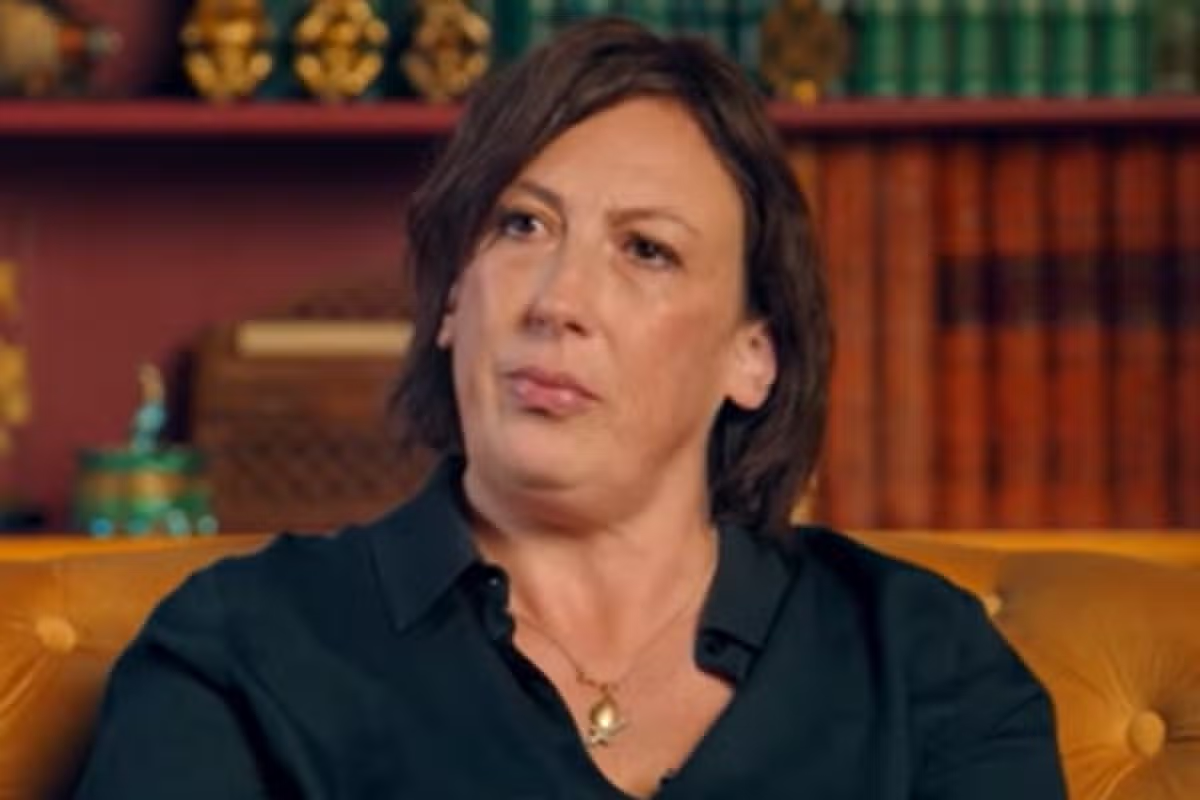
Miranda Hart broke down in tears on the latest episode of Celebrity Traitors following the exit of Joe Lycett and spoke candidly of the connection they had struck up following her illness
21:27, 16 Oct 2026Updated 21:27, 16 Oct 2026
Miranda Hart broke down in tears on the latest episode of Celebrity Traitors(Image: BBC)
The comedienne, 53, had a hugely successful career in the 2010s with her eponymous sitcom but had to take time out of the spotlight after struggling with chronic fatigue. She had struck up such a close bond with fellow Faithful Joe that when he was banished from the castle, she was visibly moved.
She said: “I can’t believe how emotional I’m getting. Wow. Connection and laughter and joy are bigger than this game and to meet someone and just play and laugh – it’s all us humans need.
“I’ve had times in my life when I haven’t had that through illness and it’s brought up that in a silly sensitive soul.”
Ensure our latest headlines always appear at the top of your Google Search by making us a Preferred Source. Click here to activate or add us as your Preferred Source in your Google search settings.
Speaking to Traitor James Acaster, who comforted her with a hug, she said: “I haven’t played like that in so long. The floodgates just opened i guess, it suddenly wasn’t about a silly Faithful or Traitor.”
The TV star previously told how she had suffered a “tick-borne illness” while living in the USA as a teenager. At one point, she was diagnosed with myalgic encephalomyelitis (ME), also known as chronic fatigue syndrome, before eventually being diagnosed with Lyme Disease in 2020.
She said: “My decision making in life generally, and certainly work, is follow the joy. I haven’t done much TV work for a long time, having only recently come out of long-term ill health issues and when I was offered this, my whole body sort of relaxed, I smiled, and I just wanted to jump about like a schoolgirl with joy.
“It’s just fun. It’s outdoors, it’s games. All the stuff I love. It’s play basically. And I’m passionate about encouraging people to play more generally, and this game is that in spades.
“It’s a brilliant television show – the only flaw in taking part is that as a fan of the show it will be less fun to watch it with myself in it!”
Despite her new lease of life, the former Call the Midwife star, who secretly got married in late 2024, is still living with elements of her illness and is struggling to a point but has been able to manage her symptoms and insisted she felt well enough to join Claudia Winkleman’s hit BBC game show.
She added: “I’m still living with elements of ME, and that brings fatigue and pain to manage, but I have come to a point where I feel well enough to step out, and that’s also partly why I’m doing this.
“The joy of mucking about on television again will hopefully outweigh some of the challenges. And I think it will be challenging on my body, so it’ll be interesting, and it’ll take some courage as this is a big next step.
“When you live with a chronic illness, it’s invisible, so people don’t know that you’re sitting there in pain. But then it reminds you that everybody’s got their thing. So, I’m also really looking forward to making friends and looking after each other and hopefully they can carry me up a hill or whatever we’re going to have to do!”
AJ Odudu and Will Best hosted another live eviction on Friday, which saw one housemate bid farewell
Another housemate was forced to leave on Friday(Image: ITV)
Another housemate has been kicked out of the Big Brother house.
The hit ITV2 competition returned to screens on Friday night (October 16) for another live eviction. The housemates nominated earlier this week, leaving Twinks and Rob at risk of elimination.
Twinks received six nominations from Rochelle, Frankie, Rhianna, Philip, Yasmin and Omar. Rob also received six nominations from Philip, Rhianna, Omar, Frankie, Lynx and Rochelle. After receiving the most nominations, Twinks and Rob joined Yasmin in the eviction line-up, after she was handed a killer nomination at the end of a House of Power task.
This marked Rob’s second week being up for eviction. He was notably saved by the public last week, when Pauline bid her farewells to the house for the final time. But did he manage to survive another eviction?
Who left Big Brother tonight?
After surviving last week’s eviction, Rob has now been voted out of the Big Brother house. “I’ve made five weeks!” Rob declared, after his exit was announced by hosts AJ Odudu and Will Best.
Fans were quick to react to the eviction, with many taking to social media to share their thoughts on who was sent packing. “Absolutely abysmal that Rob is the first man to get the boot considering who else is in there but hey, these were the cards we were dealt,” one person wrote on X.
Ensure our latest Big Brother stories always appear at the top of your Google Search by making us a Preferred Source. Click here to activate or add us as Preferred Source in your Google search settings
Another added: “I’M SCREAMING.” A third said: “I’m actually so upset. Why did they vote Rob out???? He was having such a good time.”
The frustration continued, as someone else commented: “Devastated but I would’ve been upset whatever happened.” A fifth viewer echoed the sentiment: “Rob is ROBBED! How people even booing him is WILD! He was the most himself of everyone in that house that got him evicted sadly. Rob you were a fantastic housemate.”
Meanwhile, other viewers predicted the winner of the series, after Yasmin received loud cheers at the eviction. “Yasmin is going to win surely after that reception?” one person wrote. Another added: “Aww Yasmin’s face when she heard the cheers.”
Elsewhere on tonight’s Big Brother, the housemates took part in a characteristic survey as part of this week’s shopping task. In the garden, the housemates had to select a random ball, take a seat on the “mood swing”, and throw it into the net of the housemate they believed received the most votes for a certain characteristic.
When it was Rhianna’s turn for the red team, she retrieved the ball that said “most secretive”. As she made her decision, Rhianna said: “I feel like the most secretive in the house could be Frankie, only because you have a lot going on in your head and you’re just telling Yasmin something.”
Rochelle then described Yasmin as the “most flirty”, before Frankie had to identify who had been branded the “biggest headache”. Tensions later flared in the house, after Rob called Philip and Rochelle out for eating the red team’s basic rations.
“I f****** know I’m right, is what I’m saying,” Philip fumed. “If I want a cracker, I’ll have a f****** cracker and don’t tell me I can’t otherwise, okay?”
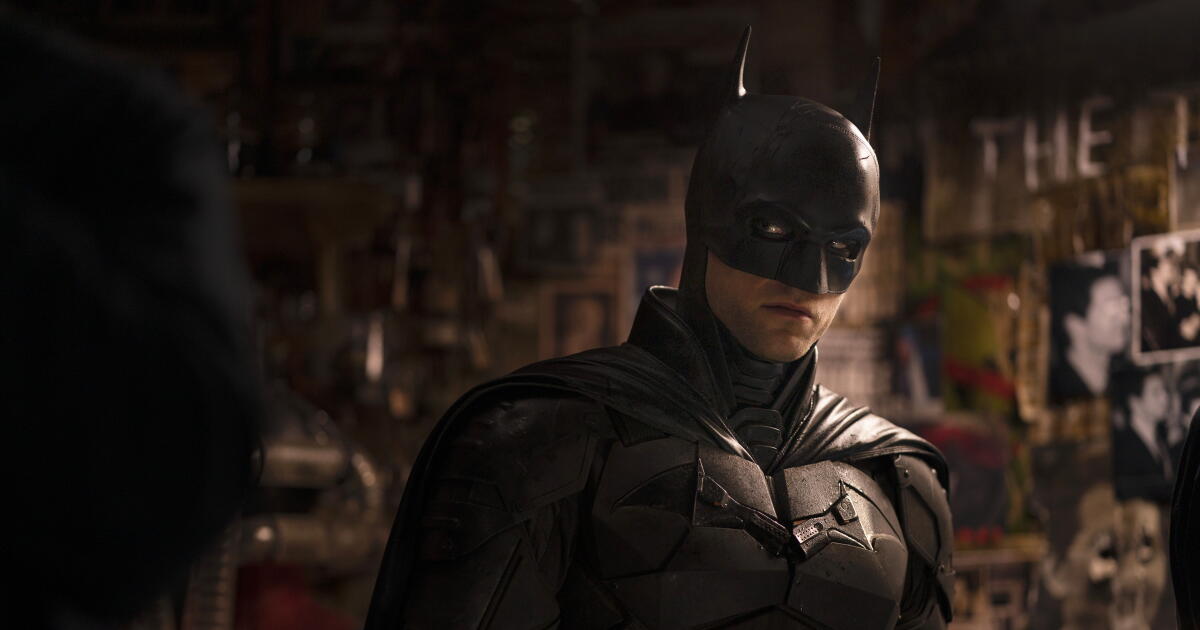
Steven Soderbergh is stepping in to help finish shooting “The Batman Part II” while director Matt Reeves continues to deal with a personal matter.
“As Matt Reeves continues to attend to an ongoing family matter, Steven Soderbergh, as an admirer of Matt’s work, approached Matt and will step in, with the full support of DC Studios, to help the writer-director complete the final weeks of principal photography on ‘The Batman Part 2,’” the studio said Thursday in a statement first reported by Deadline. “Matt and Steven will work closely together with the actors and crew to fulfill Matt’s vision of the film.”
DC Studios chief James Gunn confirmed the news on social media Thursday while reiterating that Reeves remains the director of “The Batman Part II.”
“Matt is still the director of The Batman 2 and always will be,” he wrote on Threads. “I can’t express how profoundly grateful and moved we are by Steven’s offer to help him complete his vision.”
“Matt has the full support of DC Studios and we look forward to continuing the journey soon,” the studio said in a statement at the time.
The writer-director also took to social media Thursday to express his gratitude and to confirm he would be continuing his work on “The Batman 2.”
“Just to be clear, I am not leaving The Batman Part II,” Reeves wrote in a post on X. “I am profoundly grateful to Steven for coming to my aid during this challenging time to help me finish principal photography. Thank you to all for your concern and well wishes.”
Soderbergh expressed his appreciation for Reeves’ work while addressing his new role Thursday in a widely reported statement.
“I thought Matt Reeves’ work on ‘The Batman’ was stunning; it was intentional, specific, and rigorously coherent,” he said in his statement, first reported by Deadline. “The goal here is to work with Matt and his team to generate footage that will integrate seamlessly with what’s already been shot so Matt can properly finish his film.”
A follow-up to Reeves’ 2022 reboot, “The Batman,” the upcoming film will once again star Robert Pattinson as Gotham’s iconic Caped Crusader. “The Batman Part II” began filming in London in June after a number of previous delays while Reeves and Mattson Tomlin wrote the script. The movie is slated to hit theaters on Feb. 18, 2028.
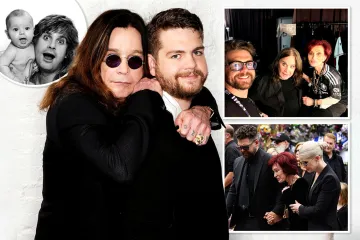
Sharon Osbourne has revealed she has a dent in her face from botched surgeryCredit: The Osbournes/ YoutubeSharon has revealed that she won’t be having anymore surgeryCredit: The Osbournes/ Youtube
Speaking on The Osbournes podcast with her son Jack, she explained: “I have an indentation left from it here, all the way down here.”
As she showed the damage above her mouth, Sharon said: “I think the surgeon left it to his mate to do.
Sign up for the Showbiz newsletter
Thank you!
“I think he took a phone call and then his mate was all, tap in.”
Sharon did not identify which operation had left the markCredit: GettySharon’s husband Ozzy Osbourne died last yearCredit: GettySharon has allegedly had a few surgeries over the yearsCredit: GettySharon revealed that a huge actor had insulted her at an eventCredit: Getty
Sharon did not identify which operation had left the dent but said: “You go and you complain and you go there.
“And then he starts injecting, and you go, ‘What is in this that you’re injecting me with?”
She said he replied: “Don’t worry, it’s my special concoction. It’ll work!”
However, she revealed that it didn’t f***ing work because she was still left with a dent.
She said: “The actor came over to me and he said you know what? I couldn’t believe that Ozzy married somebody that looks like a Fraulein.”
Jack explained that a Fraulein was a German word used to describe a full figured woman.
Sharon continued: “I knew exactly what he was saying and I wanted to grab him by the throat and say, you motherf*****, and headbutt him.
“But I thought it wouldn’t go down well. So I just ignored it. But when you are not expecting it you just go f***.”
Sharon explained how remarks about her appearance could erode her confidence.
She said: “You go home and you think, I have got to do something. I have to. So if you’re with this all the time, it affects you mentally.”
She also explained that she believed people who had never struggled with how they look might find it difficult to understand why others had surgery.
She said: “Unless you’re unhappy with your body or your face, other people don’t realise what it’s like to walk around in our bodies having that face that every time you look in a mirror, you don’t like it.
“And it bothers you and how insecure it makes you feel.”
She added: “From the minute you’re born, people are mean about you and you feel uncomfortable in the body that you have.”
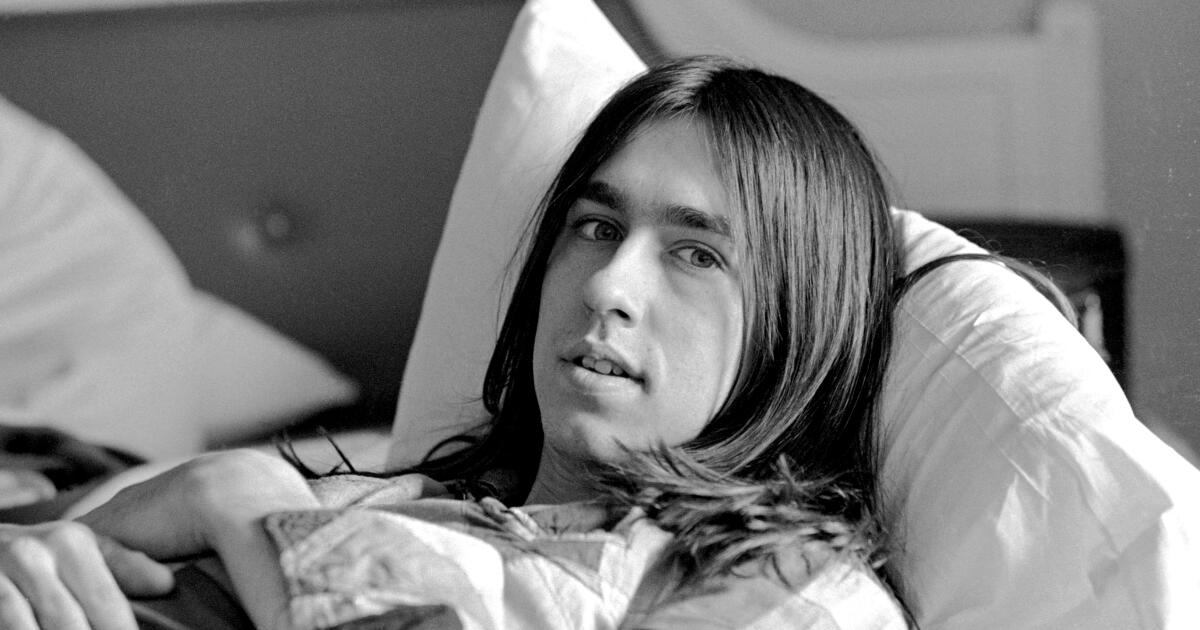
Rock band Pavlov’s Dog is mourning the loss of singer-songwriter and lead vocalist David Surkamp, who died Monday at age 74.
Violinist and Pavlov’s Dog member Abbie Steiling announced Surkamp’s death Wednesday on Facebook. Additional information about Surkamp’s passing, including a cause of death, was not revealed.
“David leaves behind a legacy of endless creativity, unmistakable artistry, and a body of music that has touched lives across generations and around the world,” Steiling said on the band’s behalf.
Pavlov’s Dog also remembered its vocalist for his “profoundly poetic spirit and a romantic heart that found its way into every note, every lyric and every performance.”
Surkamp was born May 23, 1952, and led Pavlov’s Dog, known for songs “Julia” and “Late November,” since its founding in 1973 in St. Louis. He founded the band alongside bassist Rick Stockton, violinist Siegfried Carver and drummer Mike Safron, according to the band’s website. The group, which first signed to ABC Records under a six-figure deal, released its debut album “Pampered Menial” in 1975. The release featured the band’s most popular songs and showcased Surkamp’s high-pitched and trembling, yet powerful, vocals.
Pavlov’s Dog’s second release “At the Sound of the Bell” followed in 1976 and its third, “Lost in America,” came more than a decade later in 1990. Surkamp departed Pavlov’s Dog while recording its junior album and traveled to Seattle to further develop his musical talents. This led to a collaboration with British musician Iain Matthews and their power pop duo Hi-Fi.
Surkamp and his Pavlov’s Dog collaborators reunited in the early 2000s and Surkamp’s wife, Sara, joined as a vocalist and guitarist. The group went on to tour Europe, including playing the Netherlands’ Arrow Rock Festival in 2006. Over the years, Pavlov’s Dog saw members come and go: Some musicians departed the group because of conflicting commitments and others — including founding members Carver and Rayburn — died in the late aughts and early 2010s.
The group, with Surkamp still at the helm, later released albums “Echo & Boo” in 2011, “Wonderlust” in 2025 alongside some live albums, remasters and unreleased demos.
“He always allowed the musicians around him to shine in their strengths, generous with the spotlight and appreciative of what each brought to the music,” Steiling continued in the band’s Facebook post. “No matter what life held for him, he came alive onstage. Even on his hardest days, when the lights came up and the count-off began, he was a consummate performer. If he was playing music, it was a great day.”
Surkamp was preceded in death by his wife Sara, who died in 2025 at age 72. He is survived by children Saylor and Evan.
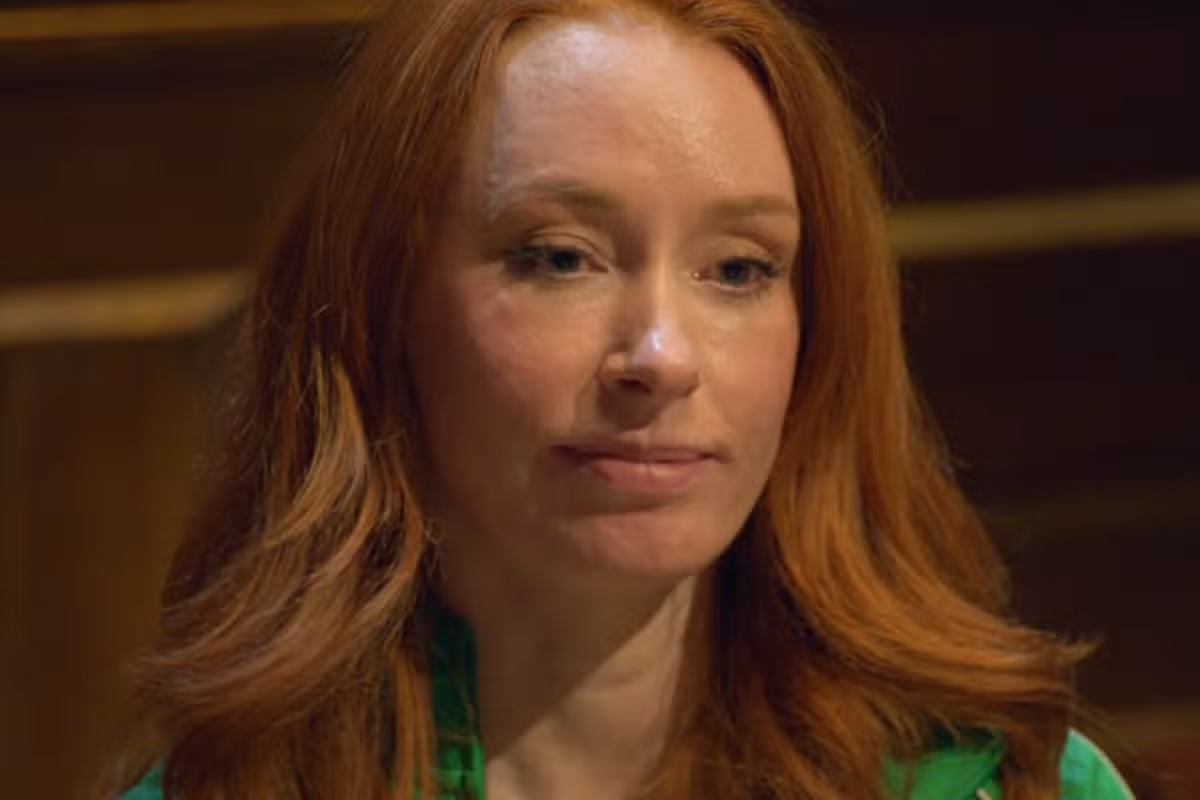
Banished Traitors star Hannah Fry revealed she is actually related to one of her co-stars and shared her true opinions of them after leaving Ardross Castle
Hannah Fry was banished from the Traitors castle(Image: BBC)
The aim of the game is for faithfuls to hunt out the Traitors, but for one contestant, they discovered more than they bargained for in the latest series of Celebrity Traitors.
Recently ousted traitor Hannah Fry was part of the group of famous faces battling it out to bag a big lump sum for charity in the second celeb offering of the BBC show.
Thursday’s episode of the saw Hannah feel the force as fellow Traitors Maya Jama and James Acaster turned on her in a bid to save themselves. The mathematician and author, 42, discovered she is related to one of her co-stars.
When she was asked who she was closest to in the Ardross Castle, Hannah said: “I really like Joanne. We actually discovered that we’re cousins, by marriage. So her cousin is married to my cousin.”
To see more of the stories you love from The Mirror and to find them easily in Google, make us your preferred source. Free and easy to do, just click on the link here to find more from The Mirror at the top of your feed.
She then joked: “We’re basically sisters. I really loved her so much. She described herself as how she came out of the womb as a show pony.
“That’s the perfect description of that woman. She is phenomenal. She knows exactly who she is, and she is totally unapologetic about it. I cannot tell you how much I admire her. She’s phenomenal.”
In the same episode as Hannah being banished, comedian Rob Beckett was also murdered. He admitted he found being murdered funny. but Hannah she’d cried more during her five days of playing the game than at any other point in her life.
Speaking in the immediate aftermath of her leaving the castle, she said she found the whole experience a rollercoaster of emotions. Hannah said: “I laughed more, cried more and got more excited than I ever have in the entirety of the rest of my life combined.
“I really preferred being Faithful. I think it’s just a much more authentic experience.” She went on to say hat one of the lessons learned was that she hated “lying to people’s faces”.
She continued: “I think there’s actually some pride in being a rubbish Traitor.” And she admitted she knew she wasn’t destined to last long in the game.
“On the first day, I asked Michael Sheen who he would murder, and he said, ‘You’. At that point I knew I was really in trouble,” she said.
As Puerto Rico continues to grapple with the long aftermath of Hurricane Maria — from an unreliable electrical grid to ongoing water shortages — the need for stories that see the island as more than a backdrop feels especially urgent.
That’s part of what makes “Hurricane Seasons,” an intimate new independent film about a Puerto Rican family returning home, feel so timely. The film, which screens Sunday at the Newport Beach Film Festival, stars comedian Aida Rodriguez as Glori, a Brooklyn-based artist and community-center worker. She returns to Puerto Rico to help her sister (Justina Machado) care for their terminally ill mother (Priscilla Lopez).
When their matriarch convinces the family to embark on a bucket-list road trip around the island, old family secrets surface as the 2019 protests following Hurricane Maria unfold around them. Directed by Nicole Gomez Fisher and written by Xavier Ortiz — with Rodriguez also serving as a producer — the film is both a story of a multigenerational family and a love letter to Puerto Rico.
For Rodriguez, who is best known as a stand-up comedian, “Hurricane Seasons” also marked a return to a part of her artistic identity that existed long before comedy — her love of acting. But she admits that stepping back into acting, especially as the film’s protagonist, wasn’t an easy transition.
Aida Rodriguez, left, and Priscilla Lopez in a scene from “Hurricane Seasons,” directed by Nicole Gomez-Fisher.
(Laura T Magruder)
“It was terrifying. It was very scary because as a stand-up comedian, I work very hard at trying to obtain my most authentic self so that I can share it with everybody — to be my truest self, my truest Aida,” she says. “And when you loan yourself to a character and the art form of acting, you’re loaning yourself to that character and bringing yourself to that character, of course, because that is why they choose you. But you are telling a story from the perspective of another person.”
Rodriguez had pursued acting before going into stand-up comedy. Upon moving to Los Angeles, she quickly booked acting work, signed with an agency and began taking classes.
But comedy eventually taught her to do almost the opposite of what acting required.
“When I started doing standup, the direction and the notes were always like: ‘Release any character you have in mind and just access yourself,’” she says. “So it was a battle for me. Coming back to becoming an actor and giving the character Glori what Glori deserved — and allowing Glori to live, and Aida to sit in the back — became something important for me to do.”
She adds that it took a lot of work with coaches and classes for her to relax into acting again, allowing Aida the comedian to rest while focusing on what this role required of her.
The film’s protagonist, Glori, is a Brooklyn-born-and-raised Puerto Rican woman whose connection to the island runs deep, despite her living stateside. This is something Rodriguez, who is half Puerto Rican and half Dominican, born and raised in the States, also personally relates to.
That tension — between where you live, where your family comes from, and who gets to decide whether you are “Puerto Rican enough” — is one of the film’s central themes and one reason the script resonated with Rodriguez.
“My testimony through my art has always been finding unity, solidarity, power and connection with other people,” she says. “I think that the story of growing up in the States and connecting to the island is a universal story that most people, regardless of where they come from, experience. [There’s this] idea that you’re never American enough nor whatever you are — in this case Puerto Rican enough — because there’s always a judge and jury on both sides.”
Rodriguez sees those tensions as a consequence of a much larger and complex history. She believes so much of the judgment on both sides is a lingering effect of colonization.
“For me, that was one of the most attractive things about the script — [it] was being able to engage in a conversation about what being Puerto Rican really is,” she says. “Is it based on colonial standards? Or is it based on maintaining our cultural richness and our legacy, that is handed down to us regardless of where we are?”
That question takes on even more weight today as Puerto Rico sits in the aftermath of Hurricane Maria, which Rodriguez believes shifted the relationship between Puerto Ricans on the island and those living stateside.
“There was a shift, because there are wounds from both places,” she says. “There are wounds from the people on the island that stayed and stuck it out. [They want to ask] the ones who left, ‘why do you get to claim this, if you’re not here sticking it out with us?’ Then the people who leave feel like, ‘we had to do this, so that we can not only survive, but send money back to the island.”
Rodriguez explains that, in many ways, the aftermath of the hurricane sparked arguments on both sides that were necessary to begin healing the tension. She believes it highlighted issues that Puerto Ricans, as part of a diaspora, could no longer ignore; it also highlighted an island and a community that Americans outside of the Latine community paid little to no attention to.
“It took a hurricane for people to know what Puerto Ricans were,” she says. “I think there was a cultural shift and there was a conversation that needed to be had, about what happens on the island. And what that means to those of us who are not there.”
That conversation serves as the meat and bones of “Hurricane Seasons,” in which Puerto Rico isn’t simply a location. It’s an integral presence in the story. Rodriguez, Ortiz and Gomez Fisher all agreed that filming most of the movie on the island was essential, not only creatively but also economically and culturally.
“The other thing that was very important about taking the movie back to Puerto Rico was to invest in Puerto Rico and to stimulate some sort of revenues for the island and that the crew was a Puerto Rican crew,” she says. “The DP [director of photography] was a Puerto Rican DP — all people that live on the island.”
It was important to them that if they were going to tell a story about Puerto Rico that was also shot in Puerto Rico, that Puerto Ricans on the island actually benefited from the production.
“It’s not cool to go to Puerto Rico and shoot a movie and bring in your own people from the States, and the people in Puerto Rico have to be inconvenienced with their roads being blocked and things shut down and an influx of Americans that come there to be disrespectful and them not making anything out of it,” Rodriguez says.
This commitment shows in the protest scenes. Rather than using background actors, the film features real Puerto Rican residents, including a local activist and singer.
“It didn’t feel rehearsed. It didn’t feel fake,” she says. “I just think that the feelings and the passion and the rage and the sense of urgency is still there.”
Ortiz’s commitment to specificity extended to the family casting, intentionally matching the actors to the real-life relatives they are based on.
“It wasn’t performative. It was actually real because that’s what all of our families look like,” she says. “Puerto Ricans, Dominicans, we just have that diversity because of all the stuff that’s happened in the past.”
Glori’s character also represents a refreshing departure from the way Latina women are often portrayed onscreen. She is a mother, a daughter, a community center worker, an artist — and a woman with a complicated romantic and family history. She is beautiful and desirable, but her sexuality isn’t the defining characteristic of her existence — something we don’t see enough when it comes to Latina roles.
“For me, I didn’t have to step outside of myself for the role, which was really refreshing because every audition that I ever get, I do have to step out of myself because when people write Latinas in Hollywood, they tend to write them one way,” says Rodriguez. “They look a certain way, they talk a certain way, and that’s not the reality of what being Latino, especially in America, is like.”
Rodriguez could freely inhabit a Latina character without feeling as though she had to perform her Puerto Rican-ness for the audience.
“I didn’t feel like I had to perform my Latinidad. I could just exist in it,” she says.
Rodriguez adds she’s ready for a Hollywood that wants Latina actors to have the same range of characterization that white actors have long been afforded. She’s open to seeing Latinas being everything in TV and film, where can they exist in a world in which they can just be people who just happen to be Latinas.
“I really do look for a day when we can just be people and not just be the funny, spicy friend,” she adds. “Some Latinas are not spicy. Some Latinas are nerds, and some Latinas are quirky, and some of them are goofy and some of them are clumsy. And just like everybody gets to see the spectrum of whiteness with all the different kinds of characters, I would love to see that for our people. For all people of color, actually. I think it’s important to see us all as full human beings, and that means that we can be anything.”
The film’s multigenerational story touches on the cultural inheritance passed between mothers, daughters and grandmothers — whether through old traditions or ordinary rituals. It’s something audiences, regardless of background, can likely relate to.
“The most important message that I’ve kept from my [foremothers] was never to lose my sense of Puerto Rico; that, even if I don’t live in Puerto Rico, Puerto Rico lives in me,” she says. So much of that inheritance lives in the little things she remembers about her Puerto Rican grandmother, she says, from the té de tilo she’d make for an upset stomach; the recao that grew on her grandmother’s balcony because she didn’t have a backyard; or the azabache she still wears to this day for spiritual protection. They are the same small traditions she has passed on to her kids.
“My daughter makes better arroz con gandules than all of us,” Rodriguez says. “And her recipe is true to what my grandmother’s recipe was. That will continue to live on, until we are able to go back to our island and live in peace.”
That freedom is one reason Rodriguez believes independent film is so important for stories like “Hurricane Seasons.” Without a studio machine making decisions based primarily on commercial expectations, filmmakers have more room to tell a story on their own terms.
“Once the studio gets involved, they start thinking about dollars, which they got to make money, but they prioritize the dollars,” Rodriguez says. “And I think that’s why a lot of these big projects that they spend a lot of money on have failed because they don’t honor the storytelling. They don’t honor the authenticity of the world, the authenticity of the stories.”
Her hope is that “Hurricane Seasons” encourages more people to tell their own stories — especially Puerto Ricans.
“Puerto Ricans are not a joke; we’re not a punchline. You don’t get to tell us we don’t speak correct Spanish and make fun of our songs. Then, years later, appropriate our culture and become big time doing what we do, using our terms and our colloquialisms because it brings you capital,” she says. “We are people. We’ve been doing this for a very long time, and our grandmothers and our tias and tios matter, and they’re not [a] costume that you can just put on [to] make money off of it.”
Before we wrapped up the call, Rodriguez paused for a moment when I asked her what Puerto Rico means to her. Then her eyes lit up, and her voice softened as she described why the island means so much to her — and why so many people, even outside of the diaspora, find themselves drawn to it.
“Puerto Rico is a very special place, which is why so many people want to kick us out, so they can move [in],” she says. “But they’ll never have the magic, because the magic is us.”
Remember Edward Warchoki? The Polish humanoid robot that went viral in April for chasing wild boars through a parking lot in Warsaw? Even late-night comedian John Oliver did a bit on him, calling Warchoki “a pretty canny PR campaign for anthropomorphic robots. All I’m saying is, ‘That is a nice way to get us all used to him before he’s inevitably one day used as a weapon of war.’ ”
Warchoki has not yet turned into a weapon of war — unless you consider being an online influencer a form of digital warfare. As the first robot influencer, Warchoki has his own social media accounts and appeared at Poland’s parliament. Last week he entered the art world when he was among the first visitors to what looks to be a fascinating exhibition, “How to Feel Real. Art, Technology and Us,” at MO Museum in Vilnius, Lithuania. The show is a collaboration of the modern art museum with ZKM | Center for Art and Media Karlsruhe, which specializes in media art.
According to a news release, the show “explores questions that are becoming increasingly urgent in a world shaped by technology: How do we feel real, and what does it mean to be alive?” Apparently Warchoki was there to address the issue head on.
“People keep asking me if I’m real, so when I heard about an exhibition asking what ‘real’ actually means, I thought: Finally, someone is asking the right question. I’m coming to the beautiful Vilnius to see what the artists have to say — and, of course, to check whether they think I’m real,” Warchocki said in the release.
A number of works in the exhibit explore artificial intelligence, automation, “and the ways machines are increasingly taking on roles we once considered distinctly human,” said MO Museum director Milda Ivanauskienė. “Bringing Edward into the museum is a playful extension of this idea, as his deliberately human-like and slightly absurd persona makes the questions raised by the exhibition tangible — inviting us to wonder why we are so eager to find the human in a machine.”
I am intrigued by this last question and wonder about it myself: Why exactly are we so quick to anthropomorphize AI? Every time I’ve interacted with a chatbot I feel the urge to be polite in my dealings, to say “please” and “thank you” when I ask questions. I certainly don’t do that with a Google search. And once, when I saw a delivery robot hopelessly stuck in a pothole, I felt genuinely bad for it. “Poor little guy,” I thought. I imagine if I met Warchoki, I’d react the same way.
I’m glad MO Museum is exploring these impulses by using artist’s thoughts and interpretations as a way to offer answers to an issue that is not going away — but only growing more powerful and omnipresent by the day.
I’m Arts editor Jessica Gelt and I’ve got a pickle-kimchi lollipop to sell you. This is your arts and culture news for the week.
You’re reading Essential Arts
Our critics and reporters guide you through events and happenings in the SoCal arts scene. In your inbox every Friday.
By continuing, you agree to our Terms of Service, which include arbitration and a class action waiver. You agree that we and our third-party vendors may collect and use your information, including through cookies, pixels and similar technologies, for the purposes set forth in our Privacy Policy such as personalizing your experience and ads.
The week ahead: A curated calendar
FRIDAY
Elim Chan conducts the L.A. Phil in 2024.
(Gina Ferazzi/Los Angeles Times)
Elim Chan Conducts the L.A. Phil It will be a busy couple of weekends in L.A. for the San Francisco Symphony music director-designate. First up is a program featuring Dongshoon Shin’s “Dance Card,” Franz Liszt’s “Piano Concerto No. 2 in A major, S. 125” with pianist Yefim Bronfman, and Pyotr Ilyich Tchaikovsky’s suite from “Swan Lake.” Next week will be “A Symphonic Ballet,” with Claude Debussy’s “Prelude to the Afternoon of a Faun, L. 86,” Karen Gomyo premiering Samuel Adams’ “Violin Concerto No. 2 (The Wheel),” and Igor Stravinsky’s “Petrushka (1947).” “Swan Lake,” 8 p.m. Friday-Saturday, 2 p.m. Sunday. “Symphonic Ballet,” 8 p.m. Thursday, 2 p.m. Oct. 17-18. Walt Disney Concert Hall, 111 S. Grand Ave., downtown L.A. laphil.com
Kuniko Kato Presents Reich90 The North American tour of the Steve Reich Project, conceived and produced by Japanese percussionist Kato arrives downtown in honor of the composer’s 90th birthday. 7:30 p.m. Colburn School, Zipper Hall, 200 S. Grand Ave., downtown L.A. colburnschool.edu
Victoria Marks : A Deer Walks into a Dance The award-winning choreographer and four performers (Rian Alcid, Maya Billig, Karen Chuang and Aaron Mason) explore the idea connection in a world of division via movement, text and the deconstruction of a (bad) joke. 8 p.m. Friday-Saturday. UCLA Nimoy Theater, 1262 Westwood Blvd., Westwood. cap.ucla.edu
SATURDAY
L.A. Opera’s new music director, Domingo Hindoyan, conducts a dress rehearsal of “Carmen.”
(Jason Armond / Los Angeles Times)
Carmen Los Angeles Opera’s new music director, Venezuelan conductor Domingo Hindoyan, opens the company’s season with a new production of Bizet’s “Carmen.” It stars mezzo-soprano Rihab Chaieb, who has dazzled in Mozart at L.A. Opera. The Spanish gothic new production is by director/designer Thaddeus Strassberger and choreographer Antonio Najarro. (Mark Swed) The season-opening performance will be broadcast live in high definition, free of charge, at Steinmetz Park in Hacienda Heights and at the Santa Monica Pier. Through Nov. 7. Dorothy Chandler Pavilion, 135 N. Grand Ave., downtown L.A. Free simulcast, 6 p.m. Saturday, Santa Monica Pier and Steinmetz Park, 545 S. Stimson Ave., Hacienda Heights. laopera.org
Strauss, Ravel, Beethoven Music Director Jaime Martín conducts the Los Angeles Chamber Orchestra in Richard Strauss’ “Metamorphosen,” Maurice Ravel’s “Piano Concerto in G Major” with Conrad Tao, and Ludwig van Beethoven’s “Symphony No. 3 in E-flat Major (Eroica).” 7:30 p.m. Saturday. Zipper Hall, 200 S. Grand Ave., downtown L.A.; 4 p.m. Sunday. The Wallis, 9390 N. Santa Monica Blvd., Beverly Hills. laco.org
SUNDAY
Dale Brockman Davis, Alonzo Davis and David Hammons.
(Museum Associates)
The Brockman Gallery: Los Angeles,1967-1990 For more than two decades, the Leimert Park gallery, founded by Alonzo and Dale Davis, served as a vital cultural hub, staging exhibitions, festivals, concerts, literary events and more. Named after the brothers’ maternal grandmother, born enslaved, the Brockman Gallery was a flourishing, ongoing act of self-determination in the wake of the 1965 Watts Rebellion. It showcased Black artists whose opportunities were severely limited at mainstream, white-run institutions and galleries: David Hammons, Suzanne Jackson, John Outterbridge, Elizabeth Catlett, Betye Saar, Carrie Mae Weems, Senga Nengudi, Noah Purifoy and many more. More than 60 works by artists associated with the gallery will be included in this first full-scale consideration of the Brockman’s scope and impact. (Leah Ollman) Through Jan. 24. Los Angeles County Museum of Art, 5905 Wilshire Blvd. lacma.org
Pacific Jazz Orchestra: A Tribute to Quincy Jones Led by Chris Walden, and featuring vocalists Nayanna Holley and Adam ‘Aejaye’ Jackson, the ensemble performs early work by the late producer/composer. Presented by Ventura Music Festival, 3 p.m. Sunday. Rancho Campana Performing Arts Center, 4235 Mar Vista Drive, Camarillo. pacificjazz.org
TUESDAY
Mendelssohn & Brahms Members of the Los Angeles Philharmonic perform a program of chamber works from Joseph Haydn, Felix Mendelssohn and Johannes Brahms. 8 p.m. Walt Disney Concert Hall, 111 S. Grand Ave., downtown L.A. laphil.com
Ulysse Marion A new work by choreographer Dimitri Chamblas, created with former Paris Opera Ballet dancer Marion Barbeau and dancer and musician Ulysse Zangs, explores the journey of a performer throughout a life in art. 8 p.m. Tuesday-Wednesday. REDCAT, 631 W. 2nd St., downtown L.A. redcat.org
THURSDAY
At the Very Bottom of A Body Of Water The latest work by Benjamin Benne, a dramatist many have been keeping close tabs on, continues his collaboration with veteran director (and fellow L.A. native) Juliette Carrillo, and dives even further into magical realism in an unconventional work exploring the oceanic depths that grief can reveal. (Charles McNulty) Through Nov. 29. Boston Court Pasadena, 70 N. Mentor Ave. bostoncourtpasadena.org
Judy Baca, detail from the 1960s segment of the Great Wall of Los Angeles mural.
(Judy Baca and the SPARC Archives.)
Skirball Cultural Center Three new exhibits open: “The 1960s — A Generation on Fire: Judy Baca’s Great Wall of Los Angeles” presents new murals as part of the evolving L.A. landmark; “Patrisse Cullors: Wishes Made Material” features three new works inspired by conversations between Black and Jewish communities; and “Jenny Yurshansky: What We Carry” explores local immigration stories, memories and family history through collected objects. Skirball Cultural Center, 2701 N. Sepulveda Blvd. skirball.org
The SoCal scene
Zoe Ryan, director of UCLA’s Hammer Museum.
(Christina House/Los Angeles Times)
ICYMI, the best of this week’s L.A. Times arts coverage:
Climate activists in Tallahassee this week unveiled a statue of Florida Gov. Ron DeSantis that was created to melt. “In response to the Governor’s recent ‘Don’t say climate change’ action in state law, 350Action (one of the world’s most influential climate change advocates) built quite a visual — a statue that couldn’t withstand Florida’s daily climate. It’s provocative but for a purpose, to encourage young people to vote in a few weeks for candidates that recognize the threat from climate change,” a news release noted of the “climate denial statue.”
And finally, not strictly arts related, but some Halloween fun for you: Street Food Cinema is hosting its annual Boo-ze, Bites and Frights events with some spooky horror film screenings at Heritage Square and the Ford over the next few weekends, including a Saturday showing of “A Nightmare on Elm Street,” which is a film that still genuinely terrifies me.
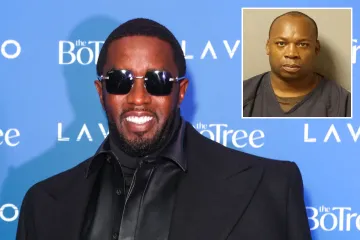
SEAN “Diddy” Combs has been transferred to a new prison just days after he was hospitalised following a vicious brawl with another inmate, it is reported.
The disgraced music mogul was removed from his federal lock up in New Jersey, FCI Fort Dix, this morning.
Sean Combs has reportedly been transferred to a new prisonCredit: APCombs has reportedly been moved to Allenwood prison in PennsylvaniaCredit: Public Domain
Prison officials have not given a reason for the transfer to Allenwood in Pennsylvania, first reported by TMZ.
But Combs had been hauled into solitary confinement on two separate occasions for prison violations.
Sign up for the Showbiz newsletter
Thank you!
The former hip hop star was written up by staff at Fort Dix for phone violations and violent behaviour, the outlet reported.
Allenwood is a low security prison with just 1,000 inmates – compared with Fort Dix’s 4,000.
Combs was reportedly injured in a fight with prison kingpin DudusCredit: U.S. Marshals ServiceCombs was said to have been conscious and speaking following the alleged incidentCredit: Getty
It was later revealed he suffered a head injury in a brawl with Jamaican drug lord Christopher Coke, known as “Dudus”.
Multiple sources inside the prison told TMZ the pair came to blows last Friday but Dudus had the upper hand.
The fight was reportedly sparked over inmates’ anger at Combs for getting exposed in a recent NBC News report about his lavish lifestyle behind bars.
The shamed rapper reportedly had access to a cellphone, alcohol and had paid other inmates for their prescription medication.
As a result of the leak, prison officials conducted two raids and confiscated cell phones from inmates – including Dudas.
The convict – serving a 23-year sentence since 2012 – is a kingpin at the prison, sources told TMZ.
Combs was said to have been conscious and speaking following the alleged incident.
He was reportedly taken back to prison grounds before sunrise the same day.
After the punch- up, both men were reportedly hauled into solitary confinement for twoweeks’s punishment.
A rep for the Grammy winner previously told Page Six: “We are aware of the reports concerning Sean Combs and are working to confirm the circumstances.”
“Sean’s health and well-being are our immediate concern,” they continued, “and we appreciate everyone who has reached out.”
The shamed rapper was sentenced to 50 months in FCI Fort Dix prison last year on two charges related to prostitution.
Combs was acquitted on more serious charges of racketeering and sex trafficking.
He was due to be let out on May 8, 2028, under his initial sentencing terms but his final day behind bars has now been moved to January 21, 2028.
IT IS two years to the day since Liam Payne’s family – and his millions of fans – had their hearts broken when the pop star plunged to his death from a third-floor balcony at the Casa Sur Hotel in Buenos Aires.
Now, a bombshell update has ripped through the investigation. Argentinian businessman Rogelio ‘Roger’ Nores, 38, once facing the terrifying prospect of prison for negligent homicide, has been officially cleared of all criminal liability. Two hotel workers have also walked free.
It has been almost two years since Liam Payne plunged from a third-floor balcony at a hotel in Buenos AiresCredit: Shutterstock EditorialLiam’s close friend Rogelio ‘Roger’ Nores, left, with the former One Direction star in the days leading up to his deathCredit: Unknown
Meanwhile, two defendants charged with selling cocaine to Liam await their fate, but case sources now think a full trial over his death will never take place.
For Liam’s grieving family and millions of devoted fans, Roger being cleared does not bring closure.
It simply shines a spotlight on the agonising black holes still in the official narrative as a UK inquest into Liam’s death is still ongoing, despite a series of setbacks.
Here are the chilling questions that still demand answers:
Who really delivered the fatal dose?
Liam and Argentinian waiter Braian Nahuel Paiz, who is accused of supplying drugs to the pop star
While Nores and two hotel workers, Gilda Martin and Esteban Grassi, have had manslaughter charges dropped, the drug trail hasn’t gone cold. Toxicology reports confirmed a lethal cocktail of “alcohol, cocaine, and a prescription antidepressant” in Liam’s system.
Two men, Ezequiel Pereya, 22, and Braian Paiz, 26, are currently languishing in an Argentine jail awaiting trial, accused of selling Liam the narcotics.
Braian Paiz was working at a high end restaurant in Buenos Aires when he first met the One Direction singer on October 2, 2024.
He has claimed as Liam was leaving he asked the starstruck waiter if he had any cocaine and the pair exchanged Instagram handles.
Over a week later Liam, who was still in the Argentine capital, contacted him to ask for drugs.
Braian admitted in his witness statement: “He ended up convincing me to get [drugs] for him. And, in all honesty, I didn’t want to miss the opportunity to see him again. That’s why I agreed to do it.”
In a later newspaper interview, he said: “I’ve suffered so much psychological damage due to all this and the social condemnation, and of course I’m worried now I might be in prison for many years. But I don’t regret meeting Liam. I was a fan.”
But it has become clear Liam was getting drugs from many sources, so the question remains: how did a global superstar, supposedly in a secure VIP suite, become a target for local dealers? Was there a wider network exploiting vulnerable guests at the Casa Sur?
When will the trial of the two accused take place?
Floral tributes to Liam in his hometown of WolverhamptonCredit: PA
The two defendants charged with selling cocaine to Liam in the lead up to his death are still awaiting trial.
Restaurant waiter Braian Nahuel Paiz, 26, and hotel worker Ezequiel David Pereyra, 22, served over one year in police precincts and in a federal prison until they were released in March.
The Sun understands that there have been negotiations for a plea deal for the two young men.
That could mean that a full trial over Liam’s death never takes place.
The pair are accused of selling drugs to Liam but if the plea deal goes ahead that charge could be reduced to supply of drugs for free, which carries a maximum sentence of six months.
According to legal experts, given the pair have no prior criminal convictions, the sentence would already be covered by time served.
Pereyra’s defense attorney, Augusto Maria Cassiau, told The New York Post: “We would be inclined to accept the offer.”
What part will Cheryl play in the ongoing investigation?
Cheryl has been officially named as a co-administrator of Liam’s massive estateCredit: PA:Press Association
Since Liam tragically passed away without leaving a will, his entire £25.7 million estate will eventually pass to his young son.
In May 2025, Cheryl was officially named as a co-administrator of his massive estate alongside attorney Richard Mark Bray.
However, her power is strictly administrative. She and Bray can “manage the money” but cannot distribute it without further legal authority.
Shortly after Liam’s passing, Cheryl issued a searing statement condemning the “abhorrent reports and media exploitation” surrounding his death, begging for Liam to be given “the little dignity he has left”.
Cheryl is a plaintiff, on behalf of their son Bear, in the case against the waiter and the hotel worker, who are charged with supplying Liam drugs.
The Sun understands that she could ultimately have the last say over any plea deal agreed with the Argentine authorities – but she, or her lawyers, have so far not objected to the rulings in Roger’s favour.
Now as the inquest stalls, how much longer will Cheryl and Bear have to wait for the final legal chapter to close?
What happened on the balcony?
An aerial view of the poolside area of the hotel where Liam diedCredit: AFP
The most haunting mystery of all. We know Liam fell from the third floor of the hotel, where he was staying in Room 10.
But the moments leading up to that fatal plunge are still shrouded in silence. The UK coroner, Crispin Butler, has been desperately chasing “eyewitness statements” from Argentina since late 2025.
Following his death, it was reported that Liam jumped off his balcony, perhaps trying to reach the swimming pool below that it was claimed he had been denied access to because of his intoxicated state.
But it later became clear he had fallen backwards, possibly after falling unconscious, causing unsurvivable injuries to his head and dying instantly.
The toxicology report read: “Due to the position in which the body was found and the injuries from the fall, it is presumed that Payne did not adopt a reflexive posture to protect himself and may have fallen in a state of semi or total unconsciousness.”
After forensic experts studied the singer’s hands, they did not find any defensive injuries, which led them to believe that “the injuries on the body were vital and produced at the same time, and that no injuries were observed that could suggest the intervention of third parties”.
Are there witnesses who saw the build-up? Were there warning signs ignored by hotel management before he stepped onto the balcony? And why did they let him back into his room?
Why are the Argentine authorities not working more closely with their UK counterparts?
For Liam’s family, the wait for justice is becoming a cruel joke.
The UK inquest has been delayed repeatedly, first pushed to May 2026, and now stalled again because British coroners are still waiting on fully translated case files and evidence disclosures from the Foreign, Commonwealth and Development Office.
Coroner Crispin Butler told a pre-inquest hearing there had been no updates since a last review in January 2025, when he said he would seek full reports and eyewitness statements before a final inquest.
He added: “We have had no further disclosure of evidence from Argentina via the Foreign, Commonwealth and Development Office.”
It has been 24 months. Why are the Argentine authorities dragging their heels in handing over the final, unredacted timeline?
A GROOVE Armada gig has sparked a surge in hearing checks.
The Superstylin’ hitmakers headlined a one-off event exclusively for over-50s that saw music fans take action for their hearing health to be in with a chance of securing tickets.
The exclusive gig took place at Phonox in Brixton, LondonCredit: SWNS/SpecsaversThe party was exclusively for over 50s onlyCredit: swns/specsavers
The initiative, from Specsavers, saw more than 50,000 people complete a free three-minute online hearing screener before being entered onto ‘The Testlist’ a club guestlist exclusively for the over-50s across the UK and Ireland.
Among the over-50s who took the hearing screener, 75 per cent were told a check-up with a hearing expert could be worthwhile, while 25 per cent received results in the good-to-fair range.
Sign up for the Showbiz newsletter
Thank you!
The exclusive gig took place at Phonox in Brixton, London, last night, marking the first time Groove Armada have played the venue.
It followed further research of 2,000 adults which found 47 per cent of over-50s say some of their happiest memories revolve around the music they love.
Sound performance was measured at the eventCredit: swns/specsaversFree hearing protection was providedCredit: swns/specsavers
While 21 per cent would attend more live music events if experiences were designed with their generation in mind.
Helping put that into practice was University of Derby’s associate professor of electroacoustics, Adam Hill, a live sound engineer and chair of the Healthy Ears, Limited Annoyance (HELA) Initiative.
He is also a supporter of the ‘Listen for Life’ campaign championed by the Night Time Industries Association and was enlisted to oversee safe listening measures.
Working closely with the venue, Dr Hill assessed the sound system’s performance, identified a dedicated quiet zone and conducted staff training.
50,000 people took the online hearing screener to be part of the gigCredit: swns/specsaversTom Findlay thinks that music lovers should not take their ears for grantedCredit: swns/specsavers
During the event, sound levels were assessed and free hearing protection was provided to all attendees.
All these measures ensured that the event aligned with the World Health Organization’s Global Standard for Safe Listening Venues and Events.
Andy Cato, one half of the dance music duo, said: “We’ve been making and playing music for decades. For most of that time, the attitude to volume was the louder the better. Loud is exciting after all.
“As we approach our 30th birthday, still in DJ booths and still with lots of music to make, it would have been nice for there to have been greater awareness around enjoying the dancefloor experiences we all love whilst looking after your hearing.
“It’s nice to see this collaboration with Specsavers spreading the word and making a check-up for your ears as normal as one for your eyes.”
His bandmate, Tom Findlay, added: “When music’s been such a big part of your life, you don’t want to take your hearing for granted. It’s something I’ve come to appreciate more over the years, and I know what a difference taking care of it can make.
“The great thing is, it doesn’t mean changing the way you enjoy music, just being a bit more aware of it.
“And the fact that over 50,000 people took the online hearing screener to be part of this gig is fantastic.
“It’s a brilliant way to get people thinking about their hearing, while bringing everyone together through music.”
The poll of 2,000 adults also found 75 per cent of over-50s are still attending live music events, but 44 per cent have experienced ringing in their ears after a show.
Another 22 per cent have walked away from a venue with muffled hearing after a performance.
But 61 per cent added the availability of hearing protection would be important or essential when choosing where to go to enjoy live events.
Jo Cammell, from Oxfordshire, was one of the fans who secured a place at the Groove Armada gig after completing the free online hearing screener.
Now in her 50s, she returned to Brixton, where she last saw the dance music duo perform in 2004 while six months pregnant with her son Tom, alongside two lifelong friends.
Jo said: “Music has always brought our friendship group together. We started going out dancing in the early 90s and we’ve not hung up our dancing shoes yet. Nothing beats hearing music live.
“Superstylin’ has always been our tune, so coming back to Brixton to see Groove Armada more than 20 years after the last time feels incredibly special. It’s a reminder that dance music isn’t just for the young and that you’re never too old for a great night out.
“Taking the Specsavers hearing screener was really interesting because it made me stop and think about how important my hearing health is for the first time, so I can continue enjoying live music for years to come.”
Netflix subscribers have been urged to check out a ‘heartbreaking’ true story that has been compared to Green Mile – but be warned as it’s said to be ‘one of the saddest films to ever exist’
Netflix viewers have been urged to check out the movie(Image: NETFLIX)
Netflix viewers have been left in floods of tears after watching a ‘hidden gem’ tucked away on the video streaming platform. Luke Eccleston, who reviews movies and television shows on social media, is urging Netflix subscribers to check out a ‘heartbreaking’ true story that’s perfect for Green Mile fans.
Luke, who posts under the username Eccy Reviews, said on TikTok: “I’m not saying this lightly, but you need to run to Netflix immediately because I’ve just discovered the biggest hidden gem. I’ll be very surprised if you’ve seen this film, and once you have, you will never, ever forget about it. The film that I’m talking about is called Miracle in Cell No 7. Now, if you’re someone who’s seen this film, you’ll know that this is one of the saddest films to ever exist.”
Ensure our latest headlines always appear at the top of your Google Search by making us a Preferred Source. Click here to activate or add us as Preferred Source in your Google search settings…
Content cannot be displayed without consent
‘This is one of the saddest films to ever exist’
Based on the the Korean movie Miracle in Cell No 7, it tells a story of love between a mentally-ill father who was wrongly accused of murder and his lovely six-year-old daughter.
Luke added: “It is actually based on a true story. This follows this man with special needs who has this younger daughter.
“After an incident where another little girl is killed, he is framed and sent to prison. He is sentenced to death. The people in the prison believe that he did the things.
“What he is accused of and the things they do to him is honestly awful. After time, they begin to realise who and what he is.
“The story, what comes out of it is genuinely incredible. I was shocked so many times watching this film. I was in so many tears.
“I’ve recommended this to so many friends, and every single person who’s watched it has said that they cried.”
‘I loved this movie, cried and cried’
Starring Aras Bulut Iynemli, Nisa Sofiya Aksongur, and Deniz Baysal, the movie has won 12 awards alongside its 13 nominations.
Commenting on Luke’s video, one user said: “Just put it on, I’ve got my tissues ready.”
Another user added: “Similar to Green Mile.”
A third user said: “I loved this movie, cried and cried. Amazing!”
Rishi told the ITV stars: “There’s the pitter-patter of brand new little dancing feet in the Strictly family. Big Brother host Will Best has announced he’s become a dad for the first time, welcoming a baby boy with his fiancée, Tobi Rose.
“The couple have named their little bundle of joy Sonny. Will shared some adorable snaps from the hospital, saying they’re feeling ‘very lucky’ and, of course, very tired. With Strictly’s Icons Week coming up tomorrow night, Will’s got a very little special supporter cheering him on from home.”
The programme then played a clip from Will’s socials where he was seen holding his newborn in the hospital. He told his followers he had got a “cool new thing today”, and he gave a glimpse at his newly born son.
When the clip ended, Ranvir called it “so lovely” as Rishi highlighted how small the baby was. Ranvir added, “You know what’s funny, though? Will Best will go, ‘Gosh, you know what love, I’m so tired’. She’ll be like, ‘Err, I’ve just given birth to a baby?’. You know what I mean?”
As Kate suggested, Will could get out of the night feeds, Ranvir stated he wouldn’t want to, as she added: “Congratulations, Will and Tobi”.
Will took to Instagram to announce the news himself on October 15 as he shared a selection of adorable images introducing Sonny to the world.
He captioned the post: “Well, who do we have here then?! Welcome to the world, Sonny Best, you little smasher. @tobiroseofficial, you’re a miracle, and I love you so much. A couple of tired new parents (see last slide), but oh my goodness, aren’t we lucky xxx”
Content cannot be displayed without consent
It wasn’t long before people commented on the announcement, with one person saying: “Oh Will! He’s perfect! Huge huge congrats to you and Tobi!” Another wrote: “Huge congrats to you both!! Welcome to the world, Sonny!”
Currently, Will is one of the 13 remaining celebrities taking part in Strictly Come Dancing. He’s been matched with professional dancer Dianne Buswell, with the pair expected to perform an Elton John-inspired routine on Saturday night for Icons Week.
Good Morning Britain continues weekdays on ITV from 6am. Strictly Come Dancing airs Saturday October 17 on BBC One from 6:15pm.