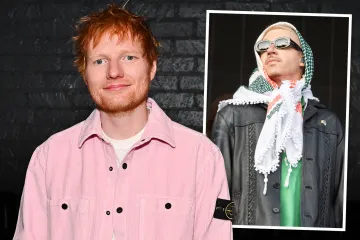
Macklemore’s replacement as the warm-up act for Ed Sheeran’s under-fire tour has come to lightCredit: GettyThe US leg of Ed’s Loop tour has been shrouded in controversy relating to politicsCredit: Getty
Billionaire businessman Robert Kraft banned the American musician, real name Benjamin Haggerty, from his stadium after he made a speech on stage in support of Palestinians amid the ongoing conflict with Israel.
At the time, Robert deemed his words “hate speech” and the move sparked a mass exodus of support acts who all quit 35-year-old Ed’s tour in solidarity with the Thrift Shop hitmaker.
Sign up for the Showbiz newsletter
Thank you!
Ed continued to perform alone, but he has now been joined by surprise guest, The Fray’s Isaac Slade.
The rock band’s former frontman, 45, opened proceedings at Atlanta’s Mercedes-Benz Stadium on Saturday, with his band’s hits, which included How to Save a Life and You Found Me.
The Fray’s Isaac Slade was Ed’s opening act in AtlantaCredit: GettyIsaac addressed the ‘wrong’ situation in Gaza life on stageCredit: Nick Ray – The TimesSinger Ed made it clear that he was not personally responsible for Macklemore’s departureCredit: ReutersThe pair have been pals for 13 yearsCredit: AFP
Despite politics taking precedence over performances during the Loop tour, Isaac had his say.
He told fans: “What’s happening over there [in Gaza] is wrong, but if we’re going to get through it, we’re going to need people to step into that middle place, that common ground.
“That bonfire in the middle of the field that sees both sides, that understands that peace is not a lack of conflict. Peace is not a blank canvas that we need to guard and be polite.”
“[Peace] holds enough beauty, enough tragedy, enough sorrow, enough joy and life if we learn how to integrate it and hold each other in balance.
“We will find a way through this together”.
It isn’t the first time that Isaac, who quit The Fray in 2022, has appeared on the tour.
He also took to the stage in Toronto in August.
Following the Macklemore controversy, which saw Billie Eilish‘s brother Finneas, Irish acts Aaron Rowe and Beoga, and Danish pop star Lukas Graham withdraw in solidarity, Ed spoke out.
Ed insisted in a statement that he would not be drawn on voicing his own views on the Israel/Gaza conflict publicly but is committed to ensuring his gigs are a place of “safety and sanctuary” for people from all ethnicities, faiths and backgrounds.
He also made it clear that he was not personally responsible for Macklemore’s departure and had been trying to find a solution with promoters and billionaire Robert, who owns Massachusetts‘ Gillette Stadium.
New England Patriots owner Robert had accused Macklemore of having a “broader history of antisemitic rhetoric and imagery that we believe has been deeply offensive and hurtful to the Jewish community”.
It was Macklemore declaring “Free Palestine” ahead of his protest song Free Hind’s Hall, written about pro-Palestinian protesters at Columbia University, which sparked the controversy.
In his own statement, Macklemore insisted his stance was a “criticism of apartheid and genocide” and not of the Jewish people.
Ed wrote on social media: “Macklemore coming off tour was the promoter’s decision, it was not mine.
“I would never let down the fans who had made plans, nor would I abandon the touring crew and the other support acts and musicians who rely on me for work and to make a living.”
He added that fans at his shows did not want a “political forum” and that despite his apolitical stance he is “not complicit”.
Ed and Macklemore’s friendship goes back 13 years and the latter said he hoped it would continue despite them having had “difficult conversations”.
The other acts also highlighted their friendships with Ed and their gratitude for being given the opportunity to perform on such a high-profile tour, but said they could not continue with clear conscience knowing a fellow artist had been “silenced”.
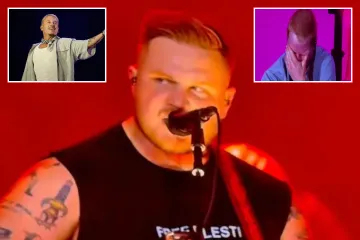
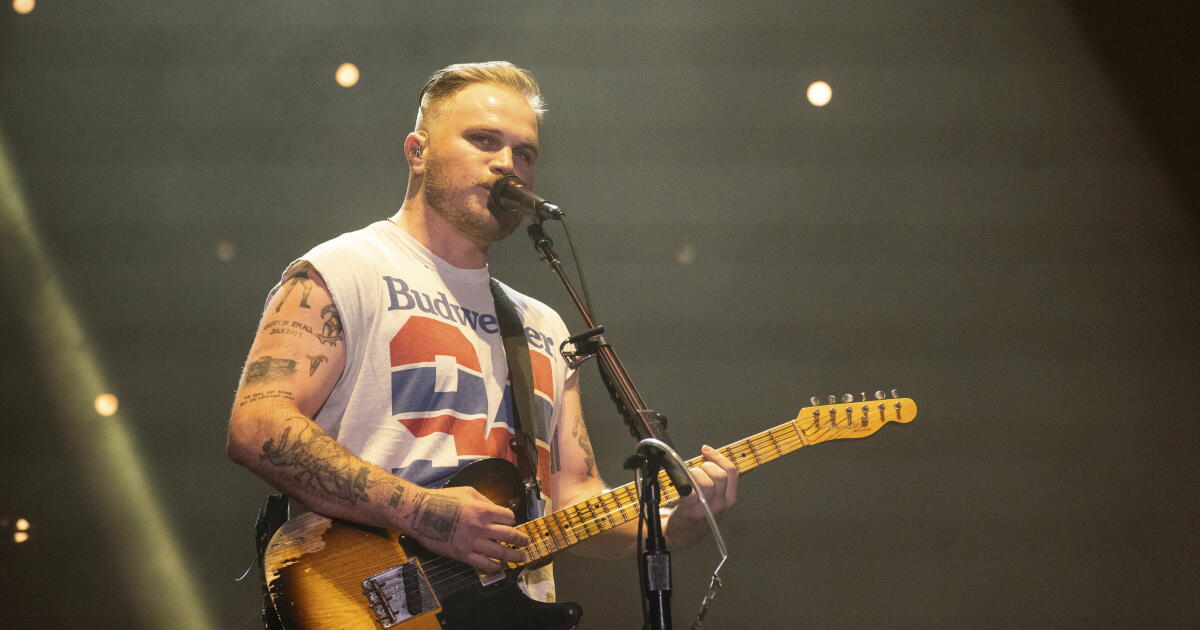
Country music star Zach Bryan signaled his support for Palestinians at the same stadium that recently banned rapper Macklemore over his efforts to do the same.
Grammy winner Bryan donned a black T-shirt emblazoned with the words “Free Palestine” and “Appeal to Heaven” during his Friday concert at Gillette Stadium in Foxborough, Mass., according to photos and videos shared on social media.
Members of his backing band also wore similar shirts, including drummer Nate Head, whose jersey paid homage to Hind Rajab, the 5-year-old girl killed alongside five members of her family in a 2024 attack by Israeli forces in Gaza.
Bryan’s Friday concert marked the first of two at Gillette Stadium, owned by billionaire Robert Kraft. The musician’s public display of support for Palestinians comes weeks after Kraft urged pop star Ed Sheeran to remove Macklemore from his tour, citing concerns over his pro-Palestinian messaging.
Last month, Sheeran and his touring team faced pressure to remove former opening act Macklemore from the rest of the tour. The Grammy-winning “Same Love” musician faced backlash from a number of Jewish advocacy groups over his performances at MetLife Stadium in New Jersey.
Days after the New Jersey shows, Messina Touring dismissed the rapper, who has been a vocal advocate for the Palestinian cause. “Shape of You” singer Sheeran denied playing a part in Macklemore’s departure, but confirmed in a statement that he spoke with Kraft, who was among the stadium owners expressing concern about Macklemore’s further involvement.
The remaining supporting acts for Sheeran’s tour, including Grammy winner Finneas (and brother of Billie Eilish) and folk band Beoga (Sheeran’s backing band), quit Sheeran’s Loop tour in solidarity. Sheeran carried on with his tour, but it hit another snag when his shows at Gillette Stadium last weekend were canceled “due to severe weather warnings” in the region.
Following the fallout, Macklemore announced his Free Palestine tour, which begins later this month with three shows in Dublin, Paris and London. Macklemore said he will be joined by artists “who have shown up and used their stages to stand in solidarity with the Palestinian people.”
The rapper announced on Wednesday that “all three shows sold out immediately.” He also said the full concert lineups and U.S. tour stops will come in a later announcement.
Macklemore, in his announcement, said all proceeds from the tour will go to a handful of charities supporting the Palestinians amid Israel’s war in Gaza. Macklemore previously said he would donate all $1 million of his earnings from his time on Sheeran’s tour to numerous pro-Palestinian charities.
Bryan’s With Heaven on Tour will return Saturday at Gillette Stadium. The “I Remember Everything” and “Pink Skies” singer will conclude his tour Oct. 10 at Jordan-Hare Stadium in Auburn, Ala.
The country star and U.S. Navy veteran, 30, is no stranger to channeling his political views in his music and performances. In 2025, Bryan released “Bad News,” a song critical of nationwide federal immigration enforcement operations.
Bryan’s pro-Palestinian stage gesture adds to a noticeable shift among mainstream artists speaking openly about their support for Palestinians amid Israel’s ongoing strikes on Gaza. Melissa Barrera, Rachel Zegler, Irish rap trio Kneecap and rap-punk group Bob Vylan have been among the entertainers who faced professional backlash for their criticism of Israel.
In April 2025, Cornell University also dismissed Kehlani from her headlining performance at the school after President Michael Kotlikoff accused the singer of espousing “antisemitic, anti-Israel sentiments in performances, videos, and on social media.”
In recent months, however, artists and entertainers, including Mark Ruffalo and the Israeli “NAZA” filmmakers Yuval Abraham and Rachel Szor (co-directors of Oscar winner “No Other Land”), continue to face backlash for criticizing Israel.
Macklemore says ‘being apolitical during a genocide doesn’t work’, promises to donate proceeds to Palestinian causes.
Grammy Award-winning rapper Macklemore has announced a string of shows in support of Palestine after he was controversially dropped from Ed Sheeran’s United States tour after speaking out against Israel’s genocidal war on Gaza.
The 43-year-old American rapper, who has almost 40 million monthly listeners on Spotify, announced his Free Palestine Tour on Thursday, with shows set to take place in Dublin, Paris and London in late October.
Recommended Stories
list of 3 itemsend of list
Macklemore said he will be joined by other musicians and will announce their names soon. He added that US shows are currently being organised.
He said all proceeds raised from the tour will be donated to causes supporting the Palestinian people and the wider movement.
“If these last couple of weeks have shown us anything, it’s that something has shifted over the last three years,” Macklemore said in a statement.
“There has been a collective awakening around Palestinian liberation, the power of billionaires that try to censor that call, and what we expect from artists right now. It’s 2026. Being apolitical during a genocide doesn’t work anymore,” he continued.
“People are asking artists to show up, educate themselves and be in community. To use the stage for more than entertainment. To push back when the call for a Free Palestine is met with attempts to silence it.”
English punk rap duo Bob Vylan have expressed their support for the tour, responding to Macklemore’s Instagram post with a heart emoji. The British YouTuber and influencer known as Chunkz, who has more than four million followers on Instagram, also praised Macklemore.
Attempts to silence Macklemore
On September 4 at New Jersey’s MetLife Stadium, Macklemore, who was one of Sheeran’s opening acts, expressed support for Palestine.
“A big part of the reason why I wanted to do this tour in the first place is so I could stand up in stadiums like this and say two words that are very near and dear to my heart: ‘Free Palestine’ … My message is for peace; love for all human beings to be treated with dignity, respect, and equality,” Macklemore told the audience at the time.
Soon after, the rapper announced that he had been dropped from the Sheeran tour.
Venue owner Robert Kraft later confirmed that Macklemore was barred from performing at his Gillette Stadium in Foxborough, Massachusetts. Kraft denounced what he described as the rapper’s “broader history of antisemitic rhetoric and imagery” and argued that such actions led him to decide that allowing Macklemore to perform at his venue “would cross that line”.
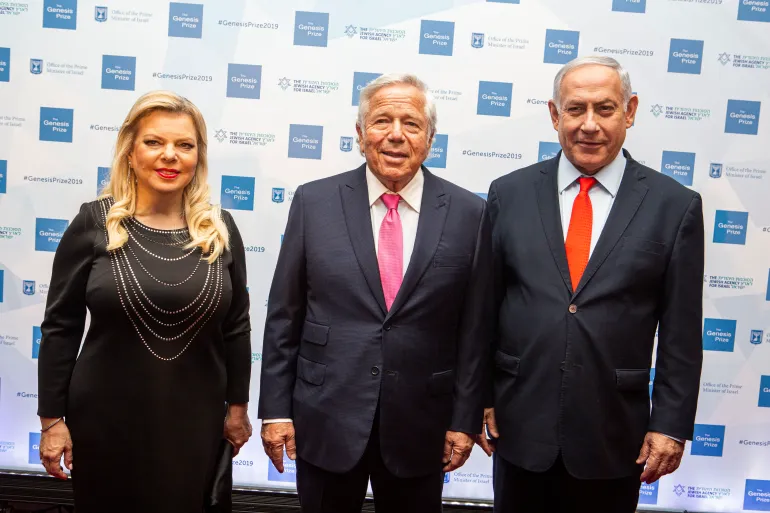
Kraft is a Jewish-American billionaire and has donated to several Israeli causes. Israeli Prime Minister Benjamin Netanyahu, who is the subject of an arrest warrant issued by the International Criminal Court (ICC) for war crimes and crimes against humanity, said in 2019 that Israel did not have a “more loyal friend” than Kraft.
From left, Sara Netanyahu, Robert Kraft and Israeli Prime Minister Benjamin Netanyahu at the Genesis Prize at The Jerusalem Theater on June 20, 2019 [File: Getty]
Macklemore claimed Sheeran and his team removed him from the tour following pressure from Kraft.
He alleged that Kraft rallied the owners of the remaining stadiums that the tour would include and persuaded them not to allow him to perform. The rapper said that Kraft then told Sheeran the tour would not go ahead unless he was dropped.
Neither Kraft nor Sheeran have commented on Macklemore’s allegations that stadium owners were contacted by Kraft.
ED Sheeran has made a major show change as he admitted he was “afraid” of being pelted by projectiles after the Macklemore controversy.
The singer yesterday broke his silence on the huge Palestine row, which saw Macklemorebe pulled from his gigs over comments about the conflict – andhis own band quit in protest.
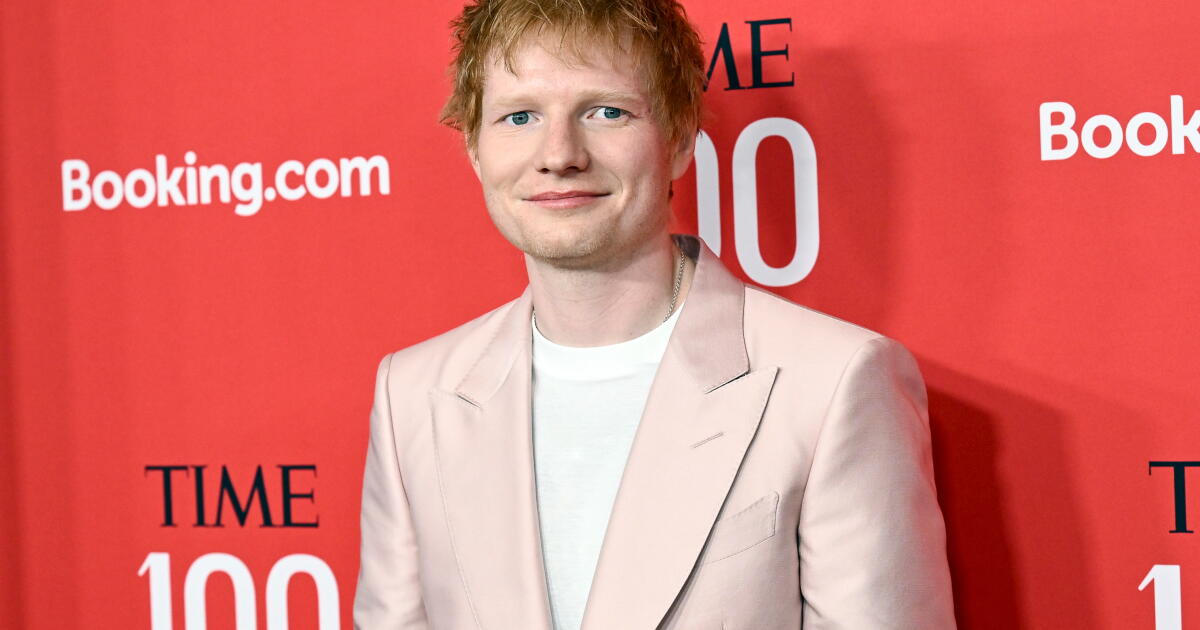
Singer Ed Sheeran admitted he was ‘afraid’ to be near the crowd at his show last night for fear they would throw projectiles at himCredit: ReutersMacklemore was pulled from Ed Sheeran’s gigsCredit: Redferns
As masked protesters waving Palestinian flags gathered outside the Lincoln Financial Field venue in Philadelphia, Ed took to the stage.
Near the end of the gig, Ed confessed he was forced to pivot from his original show plan over fears he didn’t know what the “audience would be like.”
Sign up for the Showbiz newsletter
Thank you!
Speaking at his stadium show, Ed said: “The show itself, at this point in the show, to be honest like I usually go out to B stage and I’m gonna be totally honest with you I didn’t know what the audience would be like tonight.
“I didn’t know if I was going to have things thrown at me. I didn’t know if people would be angry at me.”
The audience cheered as Ed continued: “I apologise that today is not the usual Loop show where I stand on the B stage but I was afraid of standing in the middle.
“I will admit that.”
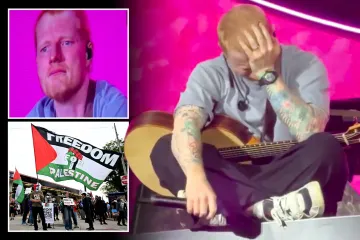
Elsewhere in the show, Ed broke down in tears as he bowed to pressure threatening the future of his US tour, Loop, and apologised.
He said he had tried not to be a “political commentator” because he wanted his music to be about “unity”.
Ed Sheeran broke down in tears at his Philadelphia gig last nightCredit: InstagramThe 35-year-old told fans he’d questioned whether he even wanted to be an artist anymore following the controversyCredit: YouTube
But then admitted on stage: “I cannot hide how I feel about it anymore.”
“What is happening in Gaza is catastrophic and unjustifiable and disproportionate.
“My heart has been broken by the scale of devastation and loss of civilians’ lives, children’s lives.
“And the systemic injustice we are seeing unfold in the West Bank cannot be overlooked.”
The controversy started when US rapper Macklemore was banned by Gillette Stadium owner Robert Kraft from performing at the venue at a gig planned for later this month.
Kraft said he would not “provide a platform for hate speech” after the rapper spoke out about Palestine onstage.
But when Macklemore was pulled from the tour, several other support acts quit in solidarity – including Ed’s own band.
Other acts who dropped out included Grammy award-winning musician Finneas, Irish singer Aaron Rowe and Danish singer Lukas Graham.
Thousands then cancelled tickets and the musician was unsure if he’d be able to carry on with performances at all.
Emotional Ed said he had questioned whether he “wanted to be an artist at all” after the toxic fallout.
The devastated star thanked his fans for still coming out to his gig, saying: “This concert is still a place where everyone is welcome and everyone here can stand beside people that have opposing views, and everyone can stand beside people that they don’t agree with on everything, but they can all agree on singing these songs.”
Singer Ed Sheeran speaks on stage as he addresses a controversy over Macklemore being pulled from the tourCredit: ReutersPro-Palestinian protesters gather neared Sheeran’s Philadelphia showCredit: ReutersThe singer-songwriter broke down on stage, saying he didn’t know if the tour was going to be able to continueCredit: PASheeran’s gig was protested after the controversyCredit: Getty
Protesters mounted a demo outside his Philadelphia gig at the Lincoln Financial Field.
Sheeran said he had questioned whether he “wanted to be an artist at all” after the huge row.
Sign up for the Showbiz newsletter
Thank you!
The singer-songwriter said onstage last night: “I’ve had to take, and make, difficult decisions, and I am making mistakes and I’m so, so sorry for them.
“I don’t want to disappoint fans, and I’ve never wanted to be an activist musician, but this has put me in the middle of an important and passionate argument about freedom of speech and the most complex political issue on the planet.”
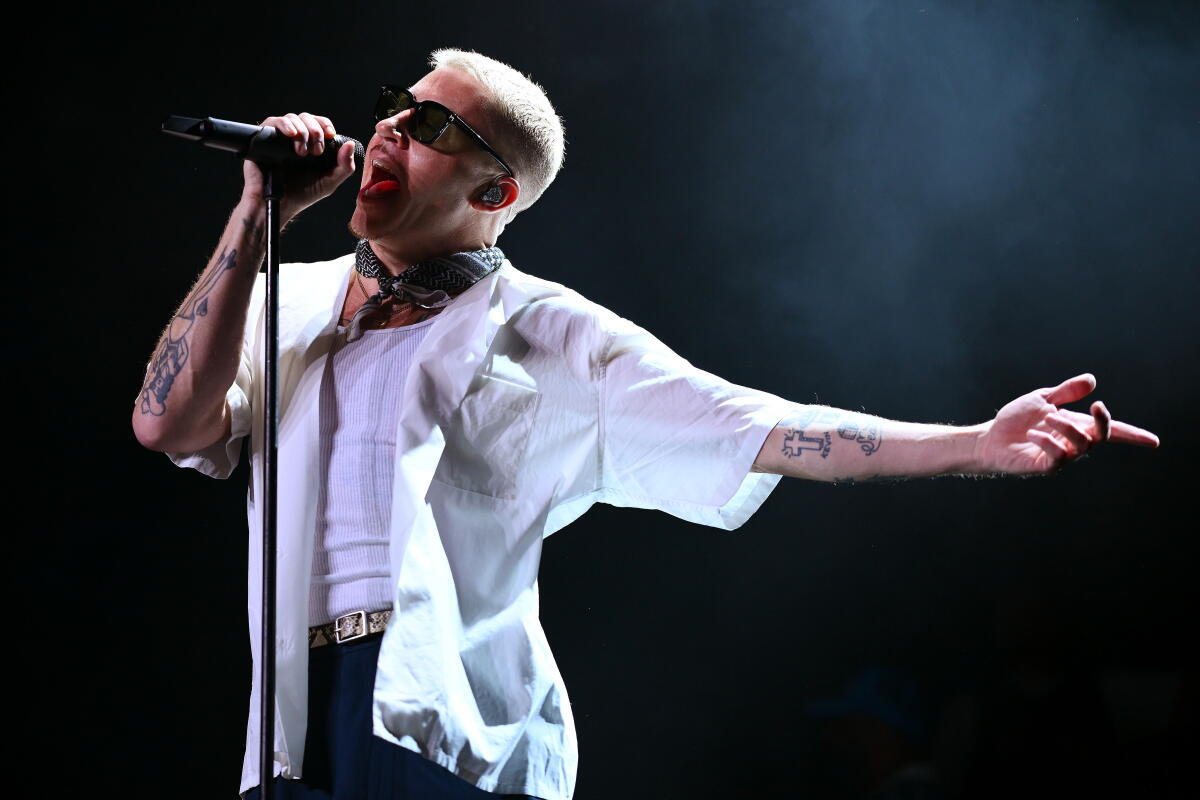
US rapper, singer, dancer and DJ, Benjamin Haggerty, known as Macklemore was pulled from Sheeran’s Loop tour afterCredit: AFPAfter Macklemore was scrapped when he expressed pro-Palestine views, a whole wave of other bands dropped out in solidarityCredit: Redferns
He said he had tried not to be a “political commentator” because he wanted his music to be about “unity”.
But after days of increased pressure threatening the future of his US tour Loop, the singer admitted onstage: “I cannot hide how I feel about it anymore.”
“What is happening in Gaza is catastrophic and unjustifiable and disproportionate.
“My heart has been broken by the scale of devastation and loss of civilians’ lives, children’s lives.
“And the systemic injustice we are seeing unfold in the West Bank cannot be overlooked.”
The controversy started when US rapper Macklemore was banned by Gillette Stadium owner Robert Kraft from performing at the venue at a gig planned for later this month.
Kraft said he would not “provide a platform for hate speech” after the rapper spoke out about Palestine onstage.
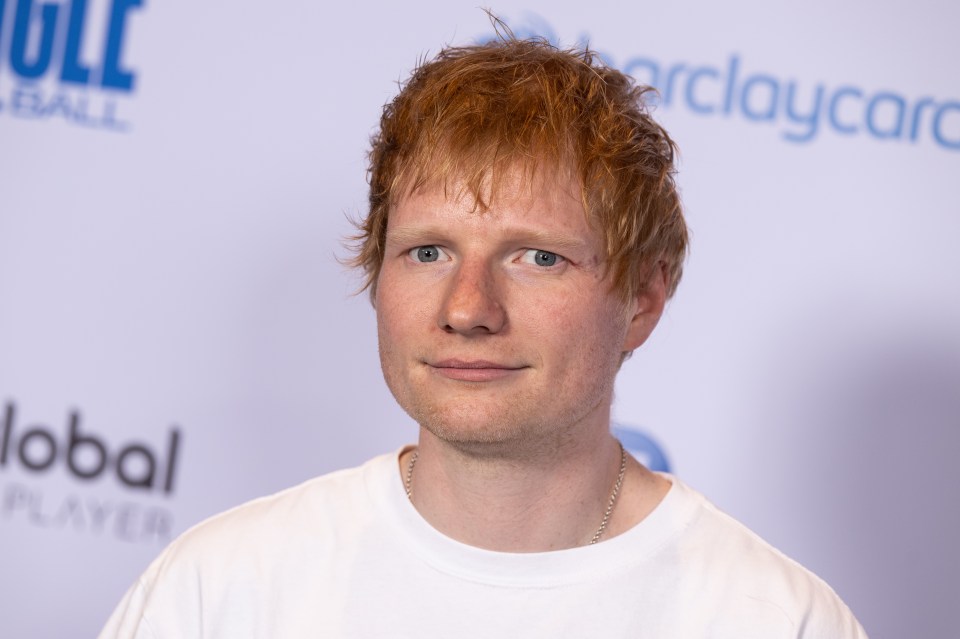
The singer-songwriter said he had tried not to be a ‘political commentator’ because he wanted his music to be about ‘unity’Credit: Getty
Getting cancelled for literally saying nothing
BY Jeremy Clarkson
IT’S always difficult to predict who’s going to get cancelled next.
A penniless author writes a series of books that children adore and then, one day, she casually mentions that men shouldn’t be allowed to use women’s lavatories.
And that was that.
We were all instructed by a braying mob to burn her books — and even the actors and actresses she’d propelled to fame in the Harry Potter films were quick to denounce her.
She was done. Finished. Cancelled.
So who would be next? Moira Stuart? Judi Dench? Nicholas Lyndhurst?
He literally said nothing at all and, for that, his fans are trying to offload tickets for his forthcoming tour, his support acts have all walked and, from what I hear, even his band is refusing to play with him.
They want him to sound off on Palestine, and because he’s not really that sort of person, the keyboard warriors have sent him to Coventry.
It’s bullying. There’s no other word for it.
But when Macklemore was pulled from the tour, several other support acts quit in solidarity – including Sheeran’s own band.
Other acts who dropped out included Grammy award-winning musician Finneas, Irish singer Aaron Rowe and Danish singer Lukas Graham.
Thousands then cancelled tickets and the musician was unsure if he’d be able to carry on with performances at all.
Emotional Sheeran last night thanked fans for still coming out to his gig, saying: “This concert is still a place where everyone is welcome and everyone here can stand beside people that have opposing views, and everyone can stand beside people that they don’t agree with on everything, but they can all agree on singing these songs.”
He ended the gig by saying: “The world is a scary place right now. America is a scary place right now. This gives hope.”
After losing his warm-up acts, Sheeran’s concert start time was pushed back from 5.30pm local time to 8pm.
The tour began in Auckland, New Zealand, in January and is set to finish in Mexico City in December after 16 more dates across America.
PHILADELPHIA — Ed Sheeran opened a solo concert in Philadelphia on Saturday with comments about Gaza, saying what’s happening is “catastrophic and unjustifiable.”
“My heart has been broken by the scale of devastation and loss of civilians’ lives, of children’s lives,” Sheeran said at his nighttime performance at Lincoln Financial Field.
Sheeran also said he wants his music and shows to be about unity and humanity, not politics.
He then addressed the controversy that unfolded since his supporting acts withdrew in solidarity with opener Macklemore, who was dropped from the tour after making pro-Palestinian comments onstage.
Sheeran has performed much of his Loop Tour concerts solo, but he had been joined for several songs at each stop by the Irish folk band Beoga. Macklemore, Sheeran’s original U.S. opener, had been replaced by Danish band Lukas Graham and Irish singer Aaron Rowe before they backed out.
Finneas, Billie Eilish’s brother and musical collaborator, was due to tour with Sheeran in South America later this year before he too dropped out earlier this week.
As of Saturday afternoon, tickets were still available for the show, and Sheeran’s website did not list any replacement acts.
Earlier a group of about 50 pro-Palestinian demonstrators congregated outside the stadium before the show. Hillary Steinberg, 34, of Philadelphia, said she got tickets a year ago but wound up getting a refund and attending the demonstration instead, disappointed that Sheeran had not taken a stand.
“I was, until this week, a big Ed Sheeran fan,” Steinberg said. “I think all art is political, and all music is political, and so this choice — even though he was saying that he wasn’t complicit — is a political choice.”
The show comes after a tumultuous week that opened with Macklemore being dropped in response to exclaiming “Free Palestine!” during a Sept. 5 show in New Jersey. Sheeran has said he was not responsible for the decision, which came at the urging of New England Patriots owner Robert Kraft. His company owns a stadium where Sheeran’s tour was scheduled to play Friday.
Within hours of Sheeran’s statement Tuesday, his supporting acts withdrew.
Diane Savitz, a 53-year-old concertgoer from Stroudsburg, Pa., got her tickets to the show months ago and is a big Sheeran fan. She said she does not think that he did anything wrong or that a concert is the place for politics.
“A concert should be for people enjoying the music. Music should bring people together,” Savitz said. “Everyone has their right to freedom of speech, but not every platform is the place for it.”
Macklemore said Wednesday he is donating $1 million to support Palestinian relief efforts and called on Kraft to match the gift; a spokesperson for Kraft has said the billionaire and Sheeran have each agreed to donate $2 million but have not specified where the money will be directed. Sheeran’s representatives have not responded to multiple requests for comment.
Sheeran’s Loop Tour was the highest-grossing in the world, with an average box office gross of over $7 million per city, Pollstar said in May. Through the end of 2025, Sheeran was the No. 3 top-earning concert act since 2021.
Sheeran has said the tour promoter was ultimately responsible for the decision to drop Macklemore.
The Grammy winner was adamant in his Tuesday statement that he wouldn’t be drawn into discussion of the war in Gaza, arguing that his fans don’t come to his shows to hear about these issues.
He also said he “spoke with the venues at length all week to try to build a bridge” before Macklemore was dropped. He insisted he would never willingly let down his fans or abandon the touring crew and others who rely on him to make a living.
While promoters and venues wield great power over concert tours, experts say an artist of Sheeran’s magnitude generally has the final say about what happens concerning the shows.
Sheeran told the crowd in Philadelphia that everyone is welcome at his concerts, and they can have opposing points of view while still singing his songs, which are about “love, hope, and unity.”
Vejpongsa writes for the Associated Press. AP journalist Jessica Hill in Las Vegas contributed to this report.
In Super Macklemore 64, players are chased by a giant Ed Sheeran, dodge tiny billionaire Robert Krafts and summon musicians to chant “Free Palestine”. Creator Jonathan Mann says it highlights the “absurdity” of Macklemore being dropped from Sheeran’s concerts and Israel’s genocide in Gaza.
SUPERSTAR Ed Sheeran quietly donated £1.5million to aid in the Middle East ongoing conflict amid the fallout from Macklemore being removed from his Loop tour.
Ed Sheeran quietly donated £1.5 million ($2 million) to aid in the Middle East ongoing conflict amid the fallout from Macklemore being removed from his Loop tourCredit: GettyUS stadium owner Robert Kraft took the unprecedented move to ban Ed’s support act Macklemore, pictured, for his pro-Palestine stanceCredit: AP
Rather than publicize the generous move himself, Ed’s donation has come to light after Macklemore publicly challenged Robert to match his own £750,000 ($1 million) donation to Palestinian organizations.
Taking to Instagram, Robert wrote: “Earlier today, before Macklemore challenged me to match his donation, Ed called me and asked me to commit $2 million to match his donation to aid in the region to fight this humanitarian crisis.
Sign up for the Showbiz newsletter
Thank you!
“Ed now plans to reach out to other venue owners and our goal is to continue to work together to build bridges.”
Ed’s huge donation comes after 15 years of supporting countless charities around the globe.
He teamed up with Médecins Sans Frontières across both his Mathematics and Divide tours to help raise money for some of the world’s most conflict-torn states.
The charity provides humanitarian medical care—focusing on projects in conflict zones and in countries affected by endemic diseases.
The rapper had used previous support slots to call for a “Free Palestine” on stage and flashed up images of Gaza.
As well as referring to the war as “genocide,” Macklemore also dedicated a song to pro-Palestinian protesters.
Macklemore took to social media to slam the move, prompting a global backlash.
In his statement on Tuesday, Ed, who has tried to keep out of politics all his career, said: “I am appalled by the conflict between Israel and Palestine.
“The suffering and pain caused on both sides is a human tragedy. There are too many wars across the world causing immeasurable pain, none of which should be tolerated.”
He added: “Macklemore coming off tour was the promoter’s decision, it was not mine. I would never let down the fans who had made plans, nor would I abandon the touring crew and the other support acts and musicians who rely on me for work and to make a living.”
In a matter of days, Ed Sheeran has gone from the most agreeable, defiantly middle-of-the-road singer-songwriter on the pop charts to music’s newest villain. The Times’ August Brown and Mikael Wood gathered to break down what happened — and to figure out what it all means.
August Brown: To recap, Sheeran dropped his tour opener, the rapper Macklemore, after the MC described Israel’s actions in Gaza as a genocide and said “Free Palestine” onstage this month at two New Jersey dates of Sheeran’s ongoing stadium tour. Macklemore, in a statement, cited his long friendship with Sheeran while criticizing the singer for allegedly acquiescing to a demand from Robert Kraft, the owner of the NFL’s New England Patriots, that the rapper not be allowed to perform at the Patriots’ Gillette Stadium outside Boston due to his comments.
Kraft, a Trump-supporting billionaire with his own colorful history, released a statement about the tour, saying he was “ensuring that events held at our venue do not provide a platform for hate speech.”
But Sheeran, who performed at Kraft’s wedding in 2022, arguably made things much worse with his own comments on the decision to drop Macklemore from the tour, which ranged from shifting accountability (“Macklemore coming off tour was the promoter’s decision, it was not mine”) to promising that he held compassionate beliefs on this volatile issue but wouldn’t articulate them publicly (“I am not complicit. I have my personal views on this devastating conflict. Just because I choose not to speak publicly, it doesn’t mean I don’t have them, and it doesn’t mean I don’t care.”)
This prompted Sheeran’s remaining openers — including the musician and producer Finneas, the Danish rock combo Lukas Graham and singer-songwriter Aaron Rowe — to drop off the tour, each giving their plainspoken support for both Macklemore’s advocacy and the Palestinian people as their reasons for leaving. The traditional Irish group Beoga, which backs Sheeran for a portion of his nightly show, also quit the tour, saying it was responding to “the silencing of Macklemore by Zionist lobbies.”
It’s too soon to know how this will affect a CVS-core pop star like Sheeran, but it’s clear that for the first time in his career, he’s chosen the path of maximum conflict and controversy for little gain. What do you think he should he have done instead?
Macklemore
(Morgan Hancock / Getty Images)
Mikael Wood: Not let Macklemore be booted from his tour?
Look, I understand Sheeran’s position here: that he views himself as an artist whose audience comes to his show precisely because they’d like to avoid the messy realities of the world for two or three hours. We can choose a different day to discuss how tenable (or not) that position is here in the era of a reality-TV president who long ago blurred the line between politics and entertainment.
But setting aside one’s views on Israel and Palestine, it’s impossible for me to see how Sheeran ever thought his actions would be seen as anything other than allowing a fellow artist to be silenced — a clear loser in the eyes of both the left and the right.
It would be one thing if Macklemore’s comments in New Jersey truly resembled the hate speech that Kraft accused him of dispensing. (Many online have posted images of a costume the rapper wore onstage in 2014 that resembled an ugly Jewish caricature; Macklemore apologized at the time, saying he understood the criticism.)
And of course I get that the very idea of hate speech is slippery — one reason, perhaps, that the folks at AT&T Stadium near Dallas (where Sheeran is scheduled to perform next month) appear to have no problem hosting a concert in November by Ye, who not so long ago released a song called, uh, “Heil Hitler.”
But given how measured Macklemore’s comments were, Sheeran’s decision to go along with the demands for his removal feels less like a fulfillment of his desire to create a conflict-free zone and more like a capitulation to a rich and powerful friend.
August, what do you make of the various statements from the musicians who’ve opted to leave the tour in the wake of all this?
August Brown: The other openers had the most to lose here by bowing out of a huge tour. Yet they took unambiguous stances in favor of Macklemore’s Palestinian advocacy. (On Wednesday, the rapper said on Instagram that he planned to donate “the entire $1 million of my net earnings” from Sheeran’s tour to six organizations “working directly to support the Palestinian people.” He also invited Kraft to match his donation.)
“Artists must not be silenced when they speak up for the oppressed,” Finneas wrote. “I stand with Palestine and its people.”
Lukas Graham went even harder: “We should be able to speak about war, about civilians being killed, about children who deserve to grow up,” the group wrote. “Money doesn’t give you the right to own the conversation.”
Sheeran could have done what many fans regard as the right thing: Defy Kraft’s demands, cancel the Gillette Stadium dates with Macklemore and reroute the tour to somewhere that would support an opening act’s fairly anodyne support of a popular human rights cause. Sheeran is extremely wealthy, and he’d have been on the right side of history, if for no other reason than to say that billionaires shouldn’t have a veto over an artist’s human rights advocacy onstage.
I’m sympathetic to the idea that crews’ livelihoods and fans’ investment in the shows are meaningful things to toss out. But an artist as big as Sheeran can make up the difference. Even a hypothetical statement like “I stand for Macklemore’s freedom of speech and the rights of the Palestinian people. My team’s livelihoods depends on the shows happening, so I will play the Gillette dates as planned,” with a promise for a donation or a benefit show with Macklemore down the line — even that would have smoothed this over.
But his actions here — deflecting accountability, being vague yet defensive about his own politics — and his history with Kraft suggest his sympathies might not lie with the causes his opening acts stand for.
It’s interesting that Beoga and Aaron Rowe, both Irish acts, acknowledged their own country’s history of colonial occupation as reason to stand up for Palestinians (and free speech around it). “Ed has been a friend to me and has changed my life, I could never thank him enough for this,” Rowe wrote in his statement. “But as Irish people we know all too well about genocide, forced famine, and violent occupation.”
Even Lukas Graham cited the band’s roots in Christiania, a Danish enclave with a history as an anarchist commune, as an example they’re following by bailing on this tour. Sheeran likes to say that, through his father, he is culturally Irish though he was born and raised in England. In a country that rallied for Kneecap, the Irish rap group and advocates for Palestinians, his reputation is likely taking a real hit. Whether that extends to his ultra-mainstream U.S. fan base remains to be seen.
Not every artist is obliged to comment on contentious issues — though the success of Olivia Rodrigo’s Daisy Chain Fields festival, which raised money for an array of abortion-rights advocacy groups, showed that A-listers can speak out when they want to. But whatever he actually believes, Sheeran’s long-cultivated neutrality is in tatters. Taking a stand would have been the path of least resistance. Instead, he committed the most basic onstage error: a failure to read the room.
Ed Sheeran’s Loop tour, in the span of less than two weeks, became an unexpected lightning rod for controversy and conversation about artist activism amid Israel’s deadly war in Gaza. Still, the show will go on.
Sheeran’s tour will proceed as planned, The Times has learned. He is scheduled to play on Saturday at Lincoln Financial Field in Philadelphia. The venue also confirmed on Wednesday that the Saturday concert is still a go, but that supporting acts have yet to be finalized.
A representative for Sheeran’s tour did not immediately respond to requests for additional information, including who will be the new supporting acts.
In a rapid turn of events since rapper and former opening act Macklemore called for Palestinian liberation onstage earlier this month, Sheeran — the singer of inoffensive hits including “Thinking Out Loud” and “Shape of You” — fell out with the fellow Grammy winner, witnessed all supporting acts drop from his lineup and defended himself against accusations of complicity in silencing criticism of Israel. Additionally, Sheeran confronted scrutiny over his largely apolitical public presence. He attributed this to his longtime desire to “bring people from all backgrounds and cultures together” via his music and performances.
“I am not complicit. I have my personal views on this devastating conflict,” he wrote Tuesday on Instagram. “Just because I choose not to speak publicly, it doesn’t mean I don’t have them, and it doesn’t mean I don’t care. Nor does it mean I don’t support causes in my own, personal way.”
Ahead of Sheeran’s first concert since the scrutiny surrounding Macklemore’s performance, read on for what preceded the fallout of Sheeran’s Loop tour.
Macklemore goes from “Thrift Shop” to “Hind’s Hall”
Macklemore performs at Rod Laver Arena on May 15, 2024, in Melbourne, Australia.
(Morgan Hancock / Getty Images)
Before hitting the stage for Sheeran’s Loop tour, Macklemore famously burst onto the music scene in 2012 as part of the duo Macklemore & Ryan Lewis. The pair gained popularity for the then-inescapable hit “Thrift Shop,” the fourth single off their acclaimed debut album, “The Heist.”
The duo gained further notoriety with hits “Can’t Hold Us” and same-sex marriage anthem “Same Love.” They notoriously bested Kendrick Lamar at the 2014 Grammy Awards in the rap album category. Lamar was nominated for his striking debut “Good Kid, M.A.A.D City.”
A year after releasing their 2016 album, “This Unruly Mess I’ve Made,” the duo announced an indefinite hiatus. Macklemore focused on his solo work, including collaborations with Kesha, Lil Yachty and Skylar Grey. In recent years, Macklemore has taken on a new purpose with his platform.
Macklemore, like many musical acts including Kehlani, Finneas and Irish rap group Kneecap, became a vocal supporter of the Palestinian cause after Israel began its offensive in Gaza in the wake of the Hamas attacks on Oct. 7, 2023. The rapper has channeled his views on the conflict into his music, releasing his protest song “Hind’s Hall” in May 2024. The song calls for a ceasefire, an end to Israeli occupation in Gaza and highlights pro-Palestinian protests on college campuses.
Ed Sheeran announces his Loop tour
Ed Sheeran performs during iHeartRadio Kiss 108’s Jingle Ball 2025 at TD Garden on Dec. 14, 2025, in Boston, Mass..
(Scott Eisen / Getty Images for iHeartRadio)
Last September, Sheeran unveiled his plans to hit the road to promote his eighth studio album, “Play.”
The British “A Team” singer announced at the time that his tour would begin June 2026 with a stop at Arizona’s State Farm Stadium and would run through early November. The announcement did not disclose the supporting acts set to share the stage with him, but informed fans the singer would perform shows across large venues including Inglewood’s SoFi Stadium in August and a pair of performances at MetLife Stadium in New Jersey.
The concerts at MetLife Stadium would later embroil Sheeran, his tour, Macklemore — and somehow pop star Pink — in controversy.
Macklemore calls to ‘Free Palestine’: Performance or ‘propaganda?’
When Macklemore took the MetLife Stadium stage as the supporting act for Sheeran’s Sept. 4 and 5 concerts, he did not mince words in his message. During his set, Macklemore criticized Israel for its war in Gaza and accused it of genocide of Palestinians. He also projected an edited version of his “Hind’s Hall” music video, which features footage of pro-Palestinian college encampments and protests and military strikes in Gaza.
Video of Macklemore’s performance spread online, drawing ire from some Jewish advocacy groups including StopAntisemitism, which accused Macklemore on Instagram of turning “a mainstream event into a political nightmare against the Jewish state.” Pop star Pink, who is Jewish, shared StopAntisemitism’s post to her Instagram story. She faced backlash for the repost and later clarified in a three-part statement that she took issue with the imagery Macklemore displayed during his performance. She also accused the rapper of taking “the mic to tell all the Jews in the stadium that it wasn’t about them.”
In the wake of Macklemore’s performance, the Israeli American Council and the Anti-Defamation League also decried Macklemore’s performance on social media, with the former publishing a petition calling on Sheeran to remove the rapper from the remaining shows of his tour.
“Freedom of expression does not give anyone the right to turn someone else’s stage into a platform for political propaganda,” the Israeli American Council said on Instagram.
Amid the mounting backlash, Macklemore defended his stance and shared video on social media of his full address to the MetLife crowd. “I said ‘Free Palestine.’ I want those words to be loud and clear so that the people in Gaza all the way to the occupied West Bank know that we have not forgotten them,” he tells concertgoers in his introduction to “Hind’s Hall.”
“To all my Jewish brothers and sisters, criticism of Israel, criticism of apartheid, being against genocide in no way is a criticism of you,” he adds, according to video of his address. “My message is for peace, love for all human beings to be treated with dignity, respect and equality.”
The fallout begins: Macklemore fired from Loop tour
Whether Macklemore would remain on Sheeran’s tour amid the public outcry remained uncertain, until he confirmed his status earlier this week. He said in a lengthy statement shared to Facebook that his continued, vocal support for Palestinians amid Israel’s war in Gaza has cost him professionally.
The rapper said he was removed after “some difficult conversations” with Sheeran. He also went into depth about the inner workings that led to his removal from the tour, including conversations between Sheeran and wealthy venue owners, including billionaire Robert Kraft, whose Kraft Group owns Gillette Stadium in Massachusetts, where Sheeran is set to play later this month.
“Ed told me that Kraft said I would not be allowed to perform in his stadium,” Macklemore wrote. “Ed also told me that Kraft had rallied some of the other stadium owners and collectively they gave him an ultimatum: if Macklemore stays on the tour, you will not be allowed to play in our venues.”
Sheeran in a separate statement shared on Tuesday confirmed he had conversations with Kraft but did not speak to the alleged ultimatum. The singer also said removing Macklemore from the tour “was the promoter’s decision, it was not mine” and that Macklemore’s contract was with its promoter. Messina Touring announced on Monday it had dropped Macklemore from the remaining tour dates “after discussions with stakeholders.”
Additionally, Macklemore wrote that Sheeran’s “typical apolitical stance was being challenged” amid the public scrutiny and “he couldn’t get past his public facing, ‘I don’t take sides.’”
Sheeran appeared to address that criticism, writing in his missive that attendees at his concerts “do not expect a political forum.” The singer also wrote he thinks there can be different ways to work toward peace.
“If we only focus on shouting the loudest, nothing will ever change,” he wrote.
Macklemore said in his Monday statement he was hopeful this turn of events would not mean an end to his friendship with Sheeran and he was grateful for the opportunity to play on tour, regardless.
“I didn’t need 10 Shows from Ed. I needed 2,” he wrote. “Two chances to stand in front of 90,000 people and say … ‘Free Palestine.’”
Supporting acts depart tour in solidarity
Grammy winner Finneas was among the supporting acts who announced their departure from Ed Sheeran’s tour on Tuesday.
(Monica Schipper / Getty Images)
Hours after Sheeran shared his side to the controversy, numerous musical acts including Grammy winner Finneas and folk band Beoga, Sheeran’s backing band, pulled from the Loop tour in solidarity with Macklemore and in support of Palestinians.
“Artists must not be silenced when they speak up for the oppressed. I have decided to withdraw from my upcoming tour dates with Ed Sheeran,” wrote Finneas, who has been a vocal supporter of Palestinians. “I stand with Palestine and its people.”
Pop band Lukas Graham and Irish singer-songwriter Aaron Rowe, both billed as supporting acts for several upcoming dates on Sheeran’s tour, voiced support for the Palestinian people and spoke against the inner workings that led to Macklemore’s removal.
In its statement, Lukas Graham wrote: “Money doesn’t give you the right to own the conversation. Nobody’s bank balance should decide who gets to speak or which suffering we’re allowed to acknowledge.”
Rowe in his Instagram statement said that Sheeran “has been a friend to me and has changed my life” but that he is sympathetic to the Palestinian cause. “As Irish people we know all too well about genocide, forced famine and violent occupation,” he wrote. The “Hey Ma” singer accused elites of leveraging their power to “silence the rightful voices” and criticism of Israel.
“I need to be true to myself and my ancestors who resisted colonisation, and fought for a freedom that I enjoy today in Ireland,” Rowe continued.
Macklemore announced Wednesday that he will donate his earnings from his shows with Sheeran to charities supporting Palestinians. He also invited Kraft to match his donation and reaffirmed his dedication to the Palestinian cause.
“This is what this has always been about,” he wrote. “Not me. Not a tour. Not the headlines or the controversy.”
The North American leg of Sheeran’s Loop tour is scheduled to end Nov. 7 at Raymond James Stadium in Tampa, Fla. — the same venue that platformed controversial rapper Ye (formerly Kanye West) earlier this summer.