Trump signals swift return of sanctions on Russian oil as G7 refocuses on Ukraine
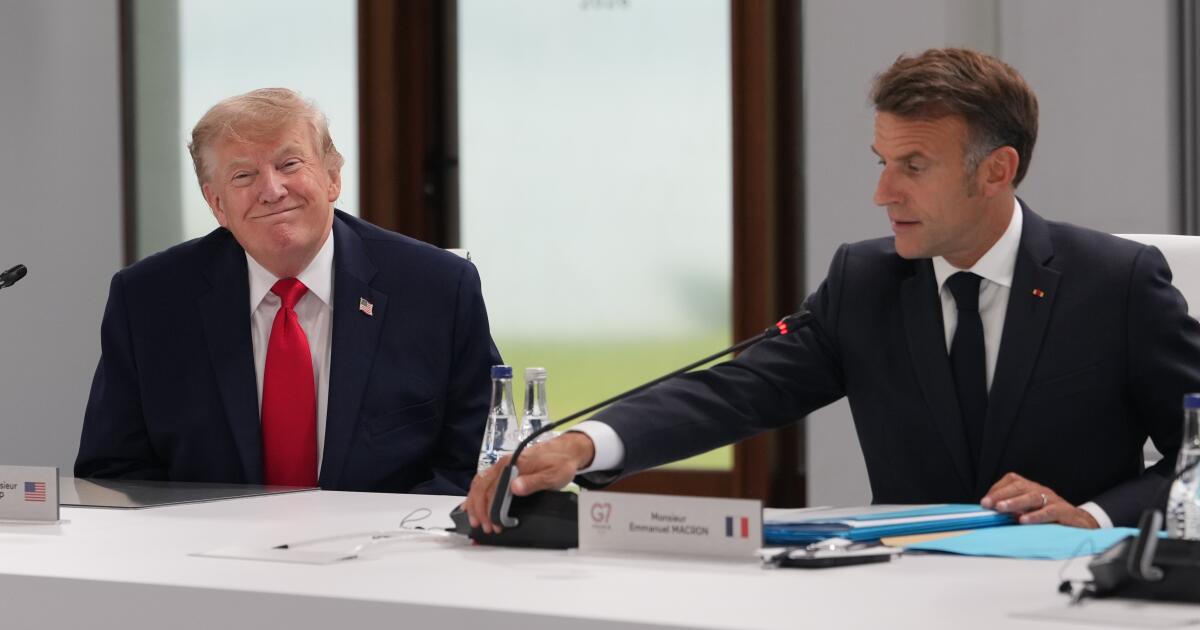
EVIAN-LES-BAINS, France — The United States could soon reimpose sanctions on Russian oil shipments after President Trump and fellow leaders at the Group of Seven summit of major industrialized democracies moved Tuesday to put the war in Ukraine back on top of their agenda, more than four years after Russia launched its full-scale invasion.
The Iran war has recently overshadowed Ukraine, but Trump said he wants to shift the focus following the announcement of an agreement to end the 3½-month-old conflict in the Gulf.
Trump said Iran will soon be “back in the rearview mirror.”
Trump said the sanctions on Russia that were eased during the Iran war to help lower oil prices can go back in place as more oil moves through the Strait of Hormuz.
“Soon we’ll be able to do that because the oil is now flowing,” Trump told reporters in Evian, the French spa town close to the Swiss border that is hosting the summit. “We’re in a position to do that soon.”
The U.S. in March temporarily eased some sanctions on some Russian oil shipments as crude prices sharply increased. The waiver has been extended.
Zelensky joins G7 leaders for talks
Ukrainian President Volodymyr Zelensky joined the G7 leaders for talks on the war in his country. They wrapped quickly, after just 75 minutes.
Zelensky said Ukraine is serious about peace while Russia toys with world leaders. “The entire ‘Seven’ supports Ukraine unanimously today,” he said.
Zelensky added that G7 leaders supported Ukraine’s need for more Patriot missiles and discussed how to increase production by licensing production. Patriot missiles are able to counter Russian ballistic missile attacks on Ukraine’s power grid and cities.
As the U.S. under Trump has cut back aid to Ukraine, France and its European allies are now the biggest providers of military and financial support to Kyiv.
Trump downplayed the impact of the Russia-Ukraine war on the U.S. but lamented the death toll.
“The whole thing is ridiculous,” Trump said. “So, yeah, I’m going to do whatever I can.”
Meanwhile, the U.K. announced new sanctions targeting the “shadow fleet ” Russia uses to ship oil and gas, and the finance networks used by Moscow to evade Western sanctions. The ships targeted include several recently purchased by Russia to transport liquefied natural gas from its sanctioned Arctic LNG 2 project.
Russia fires again at Ukraine’s biggest cities
Hours before the summit began Monday, Russia fired hundreds of drones and dozens of missiles at Ukraine’s biggest cities in a barrage that killed 11 people and set fire to a religious landmark.
The attacks came after Zelensky and Putin spoke separately by phone with Trump on Sunday, the U.S. leader’s 80th birthday.
While campaigning in 2024 for a return to the White House, Trump claimed he could end the Russia-Ukraine war within 24 hours of taking office. However, negotiations have faltered and Trump has acknowledged it has proved much harder than he thought.
Ukraine on Monday officially started European Union membership negotiations, launching a process that will require its government to commit to years of political reforms even as it fights the Russian invasion.
Ukraine sees EU membership as a security guarantee for a stable future once the war ends. Its best guarantee would be membership in the NATO military alliance, but the Trump administration insists that cannot happen, and others are wary of Ukraine joining while the war continues.
Trump says he may send Iran deal to Congress
The U.S.-Iran ceasefire deal got plenty of attention at Tuesday’s sessions, with Trump voicing his openness to sending the deal to Congress for review. The text has not been made public.
“I like the idea, send it to Congress please,” Trump said at the start of a meeting with United Arab Emirates President Sheikh Mohamed bin Zayed Al Nahyan on the summit’s sidelines. He added, “I mean who wouldn’t approve it?”
Republicans on Capitol Hill say they want Trump to provide more information about the agreement, with some expressing skepticism that the deal can deter Iran from pursuing a nuclear weapon.
Trump also met with the Emir of Qatar, Sheikh Tamim bin Hamad al-Thani. The Gulf nations are not part of the G7, but French President Emmanuel Macron extended invitations to their leaders at a fraught moment for their region.
Trump also expressed frustration over Israel’s continued hostilities with the Iranian-backed militia Hezbollah in Lebanon, telling reporters he’s “not happy with the way Israel has handled themselves with Lebanon and with Hezbollah.”
Trump said Israeli operations to target Hezbollah “should have been able to deal with them faster,” adding: “It just goes on forever. And when that happens, it throws a negative light on the big deal. And that’s the deal with Iran.”
Macron said France and other Western partners are “ready to take action very quickly” to help reopen the Strait of Hormuz peacefully to ease the economic impact of rising oil prices. France and the U.K. have championed a mission to restore maritime security there as soon as conditions allow.
The G7 comprises France, the United States, Canada, Germany, Italy, Japan and the United Kingdom. Other guest nations, including Brazil, India, Kenya and South Korea, were invited to participate in some discussions.
Superville, Corbet and Madhani write for the Associated Press. Madhani reported from Geneva. AP writers Jill Lawless and Samuel Petrequin in London, Collin Binkley in Washington and Illia Novikov in Kyiv contributed to this report.