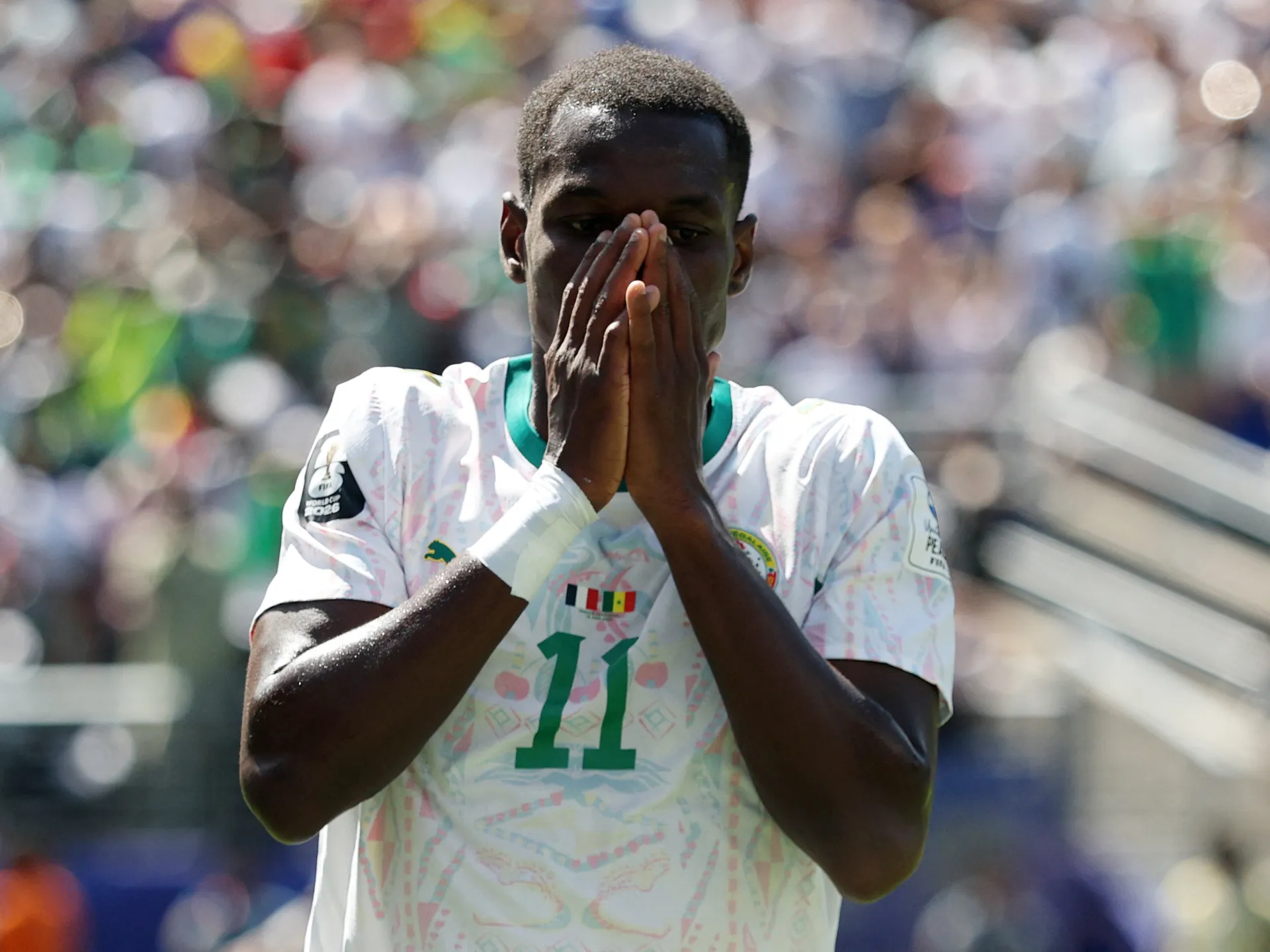
Senegal

World Cup 2026: Can sub-Saharan Africa outdo noisy neighbours from north? | Football News

Africa’s performance at World Cups peaked at Qatar 2022 when Morocco became the first side from the continent to reach the semifinal stage.

Even their quarterfinal appearance was noteworthy – the Atlas Lions were only the fourth African nation to get there.

Recommended Stories

list of 4 itemsend of list

Although Cameroon, Senegal and Ghana are the three other African teams to reach the quarterfinals, North Africa has dominated the continent’s success overall at the World Cup and at the Africa Cup of Nations.

Egypt are the record seven-time winners of AFCON, while three of the top five African qualifiers for World Cup finals are Morocco, Tunisia and Algeria.

Al Jazeera breaks down the chances of the sub-Saharan nations looking to outshine their neighbours from the north at the tournament which kicks off on June 11:

SENEGAL

World Cup Appearances: Four – 2002, 2018, 2022 and 2026
Best finish: Quarterfinals
Overall record: P12 W5 D3 L4 F16 A17
FIFA ranking: 14
Prediction: Eliminated at quarterfinal stage

Senegal head to World Cup 2026 with a burning sense of injustice firing their campaign. The Lions of Teranga were stripped of the Africa Cup of Nations (AFCON) title by the Confederation of African Football (CAF), which decided the mid-game walk-off by the Senegalese players and staff voided January’s final – which was later awarded to Morocco, along with the trophy, as a 3-0 win.

In 2002, Senegal upset the odds and reached the ⁠quarter-finals in their World Cup debut at the tournament co-hosted by Japan and South Korea.

More than two decades later, expectations are running high – perhaps carrying the greatest expectation on all African teams, including Morocco.

The depth of the 26-man squad is seen as their greatest strength over continental neighbours, but their star power is also envied by rivals.

Sadio Mane remains the country’s greatest export. Although midfield kingpin Pape Gueye, goalkeeper Edouard Mendy and captain Kalidou Koulibaly would grace almost any side at the tournament.

All three are French-born and another shot at the two-time winners of the competition is in their sights.

A 1-0 win against then defending champions France at the 2002 edition announced Senegal as a rising footballing powerhouse. Their first Group ⁠I encounter this time around is against Didier Deschamps side in New York on June 16.

“It’s always a pleasure to play against France. It’s a country we know well,” said Senegal coach Pape Bouna Thiaw, who moved to France aged 17.

“If I lose even a second of my belief that I can win the World Cup with Senegal, I will step down,” he added.

Senegal’s group is completed by Iraq and Norway.

Senegal player Sadio Mane(10) waves to the crowd after the game at Bank of America Stadium
Sadio Mane remains the star name for Senegal [Bob Donnan/Reuters]

GHANA

World Cup Appearances: Five – 2006, 2010, 2014, 2022 and 2026
Best finish: Quarterfinals
Overall record: P15 W5 D3 L7 F18 A23
FIFA ranking: 74
Prediction: Eliminated at quarterfinal stage

Ghana have only missed one World Cup since their 2006 debut.

Four years after their global bow they became the third African side to reach the quarterfinal stage at Germany 2010.

Their run-up to this tournament has not been smooth, with a late change of coach as veteran Portuguese Carlos ⁠Queiroz replaced Otto Addo following a run of poor results.

The German-born former Ghana international led his nation at Qatar 2022, but the ⁠failure to qualify for the last AFCON and comprehensive losses in their four high-profile games in November and March saw him fired in early April.

It will be a fifth successive World Cup for the 73-year-old Queiroz, whose past African experience has been with South Africa and Egypt, and who managed Real Madrid, and was Alex Ferguson’s right-hand man at Manchester United.

Group L, against Panama, England and Croatia, appears to be the ‘group of death’ in the opening stage of the competition, but with Manchester City’s Antoine Semenyo leading a strong attack, Ghana will fully expect to progress.

“I think that this country has a huge, enormous potential. This is a country of footballers,” Queiroz said.

The Black Stars will, however, be without the injured Tottenham forward Mohammed Kudus, who has become the team’s talisman and key factor in their last two successful qualifying campaigns.

Ghana players pose for a team group photo before the match
Ghana have only missed one World Cup since their 2006 debut [Paul Childs/Reuters]

IVORY COAST

World Cup Appearances: Four – 2006, 2010, 2014 and 2026
Best finish: Group Stage
Overall record: P9 W3 D1 L5 F13 A14
FIFA ranking: 34
Prediction: Eliminated at quarterfinal stage

The Ivory Coast return to the global stage after a 12-year absence – one that was hard-felt following the retirement of some of their greatest players in Yaya Toure and Didier Drogba.

It has been a long rebuild for the Ivorians, but they have won two AFCON titles since their last World Cup appearance.

Their youthful attack led by teenager attacker Yan Diomande, alongside Simon Adingra and Amad Diallo of ⁠Manchester United, will be key to their chances.

When hosting AFCON two years ago, Ivory Coast were nearly eliminated in the group stage, but they promoted Emerse Fae from assistant manager for their final game of the opening phase and went on to win the title.

“I believe Ivory Coast has the potential to achieve something exceptional – why not aim for the final?” Fae said ahead of the tournament, that will begin with matches against Curacao, Ecuador and former world champions Germany.

 Ivory Coast's Amad reacts
Manchester United’s Amad Diallo has become one of Ivory Coast’s stars [Jason Cairnduff/Reuters]

CAPE VERDE

World Cup Appearances: One – 2026
Best finish: NA
Overall record: NA
FIFA ranking: 69
Prediction: Eliminated at group stage

One of the debutants, Cape Verde – with a population of about ⁠600,000 – is the third ⁠smallest nation to qualify in the tournament’s long history.

They only debuted at AFCON in 2013, but did go on to reach the quarterfinals – a feat repeated in 2023.

The task before them now – which will be led by their diaspora of players in the main – is daunting, with Uruguay, Saudi Arabia and European champions Spain, lying in wait in the group stage.

“We’ve always been aware of our talent but ‌we haven’t always believed that it could take us much further than we had achieved up to that point,” said manager Bubista, named African Coach of the Year in 2025.

“Therefore, it took courage to face any opponent. The first step in our success was truly believing in our potential. In other words, we changed the players’ mindset.”

Cape Verde's Benchimol celebrates scoring their third goal
Cape Verde’s Benchimol celebrates scoring in a pre-World Cup friendly against Serbia [Rodrigo Antunes/Reuters]

SOUTH AFRICA

World Cup Appearances: Four – 1998, 2002, 2010 and 2026
Best finish: Group stage
Overall record: P9 W2 D4 L3 F11 A16
FIFA ranking: 60
Prediction: Eliminated at round of 32 stage

After a burgeoning beginning to their return to the international fold, with qualification for the 1998 World Cup, South Africa’s fortunes have taken a downtown in the last 16 years.

A first appearance in the finals since 2010 feels long overdue for a nation hoping to reap the rewards of strong domestic growth as they head to North America.

South African ‌club Mamelodi Sundowns are the newly crowned African Champions League winners and eight of their players are in Bafana Bafana’s squad. There are also ⁠eight players from Orlando Pirates – the domestic league champions, who pipped Sundowns to the title by a point.

“We can say that we have players of the best teams of the season. Those guys have much experience at a high level,” South Africa’s Belgian-born coach Hugo Broos said of his 26-man selection.

“I’m certainly happy that Sundowns won the Champions League, because I was afraid that if they should lose, I would get players who would be very ⁠disappointed. So now they all have that boost of confidence, and that ⁠helps a lot.”

South Africa are in the other so-called ‘group of death’ as they take on Czech Republic, South Korea and co-hosts Mexico, who they face in the opening game of the tournament

South Africa players pose for a team group photo
South Africa’s squad includes eight players who won this season’s African Champions League [Siphiwe Sibeko/Reuters]

DR CONGO

World Cup Appearances: Two – 1974 and 2026
Best finish: Group stage
Overall record: P3 W0 D0 L3 F0 A14
FIFA ranking: 46
Prediction: Eliminated at quarterfinal stage

DRC’s only previous appearance was when it was still known as Zaire, competing at the 1974 finals in West ⁠Germany – the first African side from south of the Sahara to go to the World Cup.

As reigning continental champions, their 9-0 thumping by Yugoslavia did little to raise the flag for Africa at the time.

Much has changed since then for the continent and in its second-largest country. The Congolese players will arrive in North America with a FIFA ranking that outstrips three of the other five sub-Saharan qualifiers.

It did take two playoffs to reach this edition – the African legs saw the Congolese eliminate Cameroon and Nigeria, before edging Jamaica in extra time in their intercontinental playoff

Most of the squad are European-born, either in Belgium, France or Switzerland, plus the London-born Aaron Wan-Bissaka, previously called up by England but who missed out on a cap through injury.

“We ‌are ‌extremely proud because a whole generation hasn’t been able to see its national team in the World Cup but now they will see them there,” said their French coach, Sebastien Desabre.

Democratic Republic of Congo's Meschack Elia and team members applaud fans after the match
Democratic Republic of Congo return to the World Cup after 52 years [Nicolas Economou/Reuters]

Source link

Senegal football fans return home after royal pardon in Morocco | Football News

Fans arrested in Morocco in the aftermath of the AFCON 2025 final returned on a humanitarian pardon by Moroccan king.

A group of Senegalese football supporters jailed following their country’s chaotic, violence-plagued Africa Cup of Nations (AFCON) final in Morocco in January have returned home after being pardoned by the Moroccan king.

King Mohammed VI granted the fans a pardon “on humanitarian grounds” on the occasion of the Muslim holiday of Eid al-Adha, Morocco’s royal court said on Saturday.

Senegalese President Bassirou Diomaye Faye welcomed the jubilant supporters on their arrival at the airport outside Dakar on Sunday.

“We’re very happy to have them back on Senegalese soil,” Faye, who donned a tracksuit for the occasion, told journalists.

He thanked Moroccan authorities for the pardon but, in what Morocco will likely perceive as a new dig, hailed the national team as “two-time African champions”, even though the January final is the subject of an ongoing dispute before the Court of Arbitration for Sport in Switzerland.

Senegal won the tumultuous continental final against Morocco in Rabat on January 18, but the match was later awarded on appeal to the hosts.

With the match tied at 0-0, after a penalty awarded to Morocco in stoppage time of the second half – just after a Senegal goal was disallowed – Senegalese fans tried to storm the pitch and hurled projectiles.

The Senegalese team left the pitch in protest against the penalty decision, halting play for nearly 20 minutes.

When they returned, they gleefully watched Morocco miss their penalty and went on to score a 94th-minute winner.

In February, Moroccan courts sentenced 18 Senegalese supporters held in Morocco since the final to prison terms ranging from three months to a year for hooliganism.

Three were released from jail in mid-April after completing their three-month sentences.

Following that release, another 15 Senegalese fans remained imprisoned after receiving sentences ranging from six months to one year.

The royal pardon applied to those 15.

Mending ties

The episode has strained relations between Morocco and Senegal, countries with a history of friendly ties.

But Morocco’s royal court said that in view “of the age-old fraternal ties” between the two countries “and on the occasion of the advent of Eid al-Adha”, which will be celebrated in the country on Wednesday, the king had “granted, on humanitarian grounds, his royal pardon to the Senegalese supporters”.

The Senegalese president had earlier welcomed the decision in a post on X.

“Our compatriots … are free. They will soon be reunited with their loved ones,” Faye wrote.

He thanked King Mohammed VI for the decision “imbued with clemency and humanity”.

According to the Moroccan public prosecutor’s office, the charges against the 18 football supporters were based mainly on footage from cameras at Rabat’s Moulay Abdellah Stadium, and on medical certificates for injured law enforcement officers and stewards.

Material damage from the violence was estimated at more than 370,000 euros (about $430,000).

At the end of January, the Confederation of African Football (CAF) imposed disciplinary sanctions on both national federations for unsporting conduct and violations of the principles of fair play.

After the CAF decided on March 17 to award the title to Morocco by administrative ruling, Senegal appealed to the Court of Arbitration for Sport.

The two countries have a history of cooperation in sectors including tourism and energy, and share strong religious ties.

Senegalese make up the largest foreign community living in Morocco.

Source link

Morocco king pardons jailed Senegal football fans for humanitarian reasons | Football News

Morocco jailed 17 Senegal fans following fan disturbances at the Africa Cup of Nations final in January.

Morocco’s King Mohammed VI has pardoned the Senegalese football supporters jailed after violence at the 2025 Africa Cup of Nations (AFCON) final in Rabat for “humanitarian reasons”, a royal court statement has confirmed.

It said that in view “of the age-old fraternal ties” between the two countries “and on the occasion of the advent of Eid al-Adha”, the king has “granted, on humanitarian grounds, his royal pardon to the Senegalese supporters”.

Recommended Stories

list of 4 itemsend of list

The Muslim holiday will be celebrated on Wednesday in Morocco.

The 18 fans were jailed following a pitch invasion that followed the awarding of a penalty to Morocco in injury time of the final on January 18.

The game was stopped for 14 minutes while the Senegal players and staff left the field in protest at the decision. When play resumed, Morocco missed the penalty before Senegal sealed a 1-0 win in injury time.

The Confederation of African Football (CAF), the continent’s governing body for football, overturned the decision on March 17, awarding the game as a 3-0 win to Morocco, which saw the North Africans crowned champions.

CAF upheld the appeal by the Royal Moroccan Football Federation, saying Senegal had infringed tournament regulations by walking off.

Senegal have lodged their own appeal to the Court of Arbitration for Sport, a ruling from the Switzerland-based body could take up to a year.

Source link

Senegal’s President Faye sacks PM Sonko and dissolves government | News

The renewed instability could complicate bailout negotiations with the International Monetary Fund.

Senegal’s President Bassirou Diomaye Faye has dismissed Prime Minister Ousmane Sonko and dissolved the government, a move that risks deepening uncertainty in a country grappling with a debt crisis and ⁠ongoing talks with the International Monetary Fund (IMF).

A statement read out by a presidential aide on state media on Friday informed the nation that all ministers were dismissed, with the outgoing government tasked with handling day-to-day affairs.

Recommended Stories

list of 3 itemsend of list

The decision follows months of growing tensions between Faye and Sonko. Sonko, a charismatic figure with a strong youth following, had backed Faye in the 2024 election after being barred from running himself due to a defamation conviction, but the two allies became increasingly estranged.

The split comes as Senegal faces mounting economic pressure. The IMF froze a $1.8bn lending programme following ‌the discovery of misreported debt hidden by the previous government, pushing the country’s end-2024 debt level to 132 percent of its economic output.

Faye’s move raises the risk of further delays in reaching a new agreement with the IMF.

Earlier on Friday, before Sonko’s dismissal, Finance Minister Cheikh Diba told parliament that the government expects to resume talks with the IMF in the week of June 8 and hopes to reach an agreement on key points by June 30.

Sonko was a popular opposition leader under the previous administration of President Macky Sall, whose decision to delay the 2024 election spurred unrest.

Both Faye and Sonko are former tax officials who ⁠were jailed ahead of the 2024 election. They were released 10 days before the rescheduled contest, which Faye went on to win with 54 percent of the vote.

Faye then appointed Sonko as prime minister.

Now that ⁠Sonko is out of that job, it is unclear what his next steps will ⁠be. In March, he said he would be willing to take his Pastef party out of the government and return to opposition if Faye departed from the party’s agenda.

Pastef dominates the National Assembly, meaning it could complicate governance and the passage of reforms needed to secure IMF support. Last ‌month, politicians overwhelmingly approved electoral code changes that could pave the way for Sonko to run for president in 2029.

Source link

BSIC Sénégal: Bridging Innovation and Financial Inclusion in Africa

Global Finance: Please describe BSIC Group and why the Sénégal subsidiary is important to its African strategy.

Sami Gargouri: BSIC Group, or the Banque Sahélo-Saharienne pour l’Investissement et le Commerce, is a pan-African public bank established in 1999 as a key institution of the Community of Sahel-Saharan States (CEN-SAD). Headquartered in Tripoli, Libya, it is owned by the governments of 14 African nations, including Libya (majority stakeholder), Senegal, Cóte d’Ivoire, Gambia, Benin, Burkina Faso, Mali, Chad, Guinea Conakry, Togo,  Central African Republic (CAR), Niger, Sudan, Ghana, and 2 representative offices in Morocco and Tunisia, with a focus on mobilizing public and private financial resources to drive economic and social development, combat poverty, and boost intra-regional trade across the Sahel-Sahara zone. Operating as both a commercial and investment bank, BSIC offers services ranging from loans and asset management (BSIC Capital) to trade financing, supporting SMEs, agro-industry, and cross-border commerce. Its strategy emphasizes regional integration, financial inclusion, and innovation to foster growth in underserved areas, aligning with CEN-SAD’s goals of poverty alleviation and economic unity.

The Senegal subsidiary, BSIC Sénégal SA, is pivotal to this African strategy due to its location in a stable, dynamic West African economy with strong a entrepreneurial ecosystemand high mobile money penetration. Launched in Dakar, it serves over 50,000 clients through a network of branches in key areas like Thiès, Mbour, Saint Louis, Touba and Kaolack, channeling resources into local sectors such as agriculture, SMEs, and exports directly supporting BSIC’s mission of intra-regional trade. As a bridge between French- and English-speaking Africa, BSIC Sénégal enhances the group’s diversification, gains market share in Senegal’s competitive banking sector (aiming for top rankings), and tests scalable innovations that can be rolled out group-wide, amplifying BSIC’s role as a pan-African development engine.

GF: How has BSIC Sénégal become an innovation hub for the group?

SG: BSIC Sénégal has evolved into an innovation hub for the BSIC Group by leveraging customer insights, a test-and-learn approach, and cross-functional collaboration to pioneer digital solutions tailored to West Africa’s mobile-first economy. Since its establishment, the subsidiary has prioritized digitalization, drawing from direct feedback from SMEs and merchants during meetings to address pain points like payment delays and limited access to diverse transaction channels. This led to the creation of a dedicated project management office involving departments such as Marketing, IT, Risk, Compliance, Legal, and Logistics, alongside fintech partners for seamless API integrations—enabling rapid prototyping and deployment of products like the SMART TPE in November 2023.

BSIC Sénégal has positioned itself as a dynamic player, launching innovative offers that combine digital tools with client-centric design, such as enhanced Visa cards, a dealing room for economic operators, and mobile payment expansions resulting in market share gains and improved client experiences. Its pilot-to-scale model, starting with select merchants before group-wide rollout, has made it a testing ground for group initiatives. This approach fosters financial inclusion, serves as a model for other subsidiaries in digital transformation and SME support, and solidifies Sénégal’s role in BSIC’s pan-African innovation ecosystem.

GF: What is SMART TPE and how is it part of the BSIC Group’s digital transformation?

SG: SMART TPE (Smart Terminal de Paiement Électronique) is an innovative electronic payment terminal launched by BSIC Sénégal in November 2023, designed to enhance financial inclusion and merchant efficiency in mobile money-dominant markets. It transforms traditional card-based POS terminals into versatile devices that offer customers dual payment options: bank card or mobile money via operators like Orange Money or Wave. When a customer selects mobile money, the terminal displays operator choices and generates a QR code for instant scanning and transaction completion – ensuring funds deposit directly into the merchant’s BSIC account within the same day, bypassing multi-day delays from direct operator payouts. This first-of-its-kind integration on existing POS disrupts the status quo by empowering merchants with better cash management, reduced commissions, and diversified payment channels. It leverages fintech APIs for quick, secure development – ultimately boosting sales by 30-50% in pilots and simplifying user experiences for both merchants and non-banked customers.

As a cornerstone of BSIC Group’s digital transformation, SMART TPE exemplifies the group’s shift toward tech-driven inclusion, born from customer needs and deployed via a collaborative pilot involving IT, monetics, and fintech. It supports BSIC’s broader strategy of digitalizing services across subsidiaries – enhancing API ecosystems, combating fraud, and scaling mobile solutions regionally—to make banking more accessible, efficient, and aligned with Africa’s fintech boom, while advancing goals of poverty reduction and economic growth.

Source link