senate

An all-female Senate delegation is heading to the Arctic to reassure U.S. allies

Seeking to reassure U.S. allies, a bipartisan group of senators is departing for a tour of Arctic nations. And this time they’re leaving the men behind.

From the eight senators to their staff and military liaison officers, the all-female group will pay diplomatic visits to government officials in four Arctic nations, witness the challenges for militaries in the region and visit a Norwegian archipelago so remote they will need escorts to avoid run-ins with polar bears.

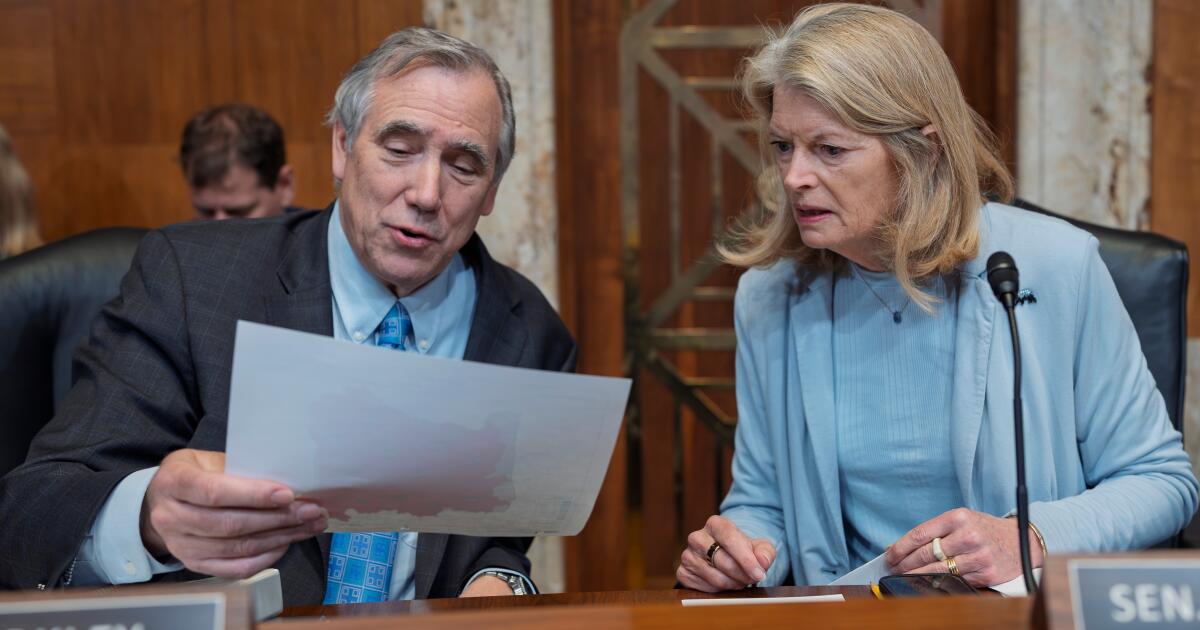
“I want them to experience, first of all, the awesomeness of the Arctic,” said Republican Sen. Lisa Murkowski of Alaska, who is leading the trip alongside Democratic Sen. Jeanne Shaheen of New Hampshire, the top Democrat on the Senate Foreign Relations Committee.

The trip was born out of both senators’ work to stabilize relations with U.S. allies in North America and northern Europe at a time when President Trump has taken an aggressive, go-it-alone stance in the region. Just this week, the Pentagon announced that the U.S. would pause participation on a joint board with Canada for continental defense that dates back to World War II.

Murkowski and Shaheen said that is the wrong approach in an Arctic region that has increasing strategic value and unique challenges.

“We will reassure our allies that we recognize and appreciate the importance of our allies and partners in the Arctic as in so many other areas,” Shaheen told the Associated Press, adding that she expected the group to discuss “what more we can do as members of Congress to support those relationships.”

The group is split evenly between Democrats and Republicans, with Sens. Cindy Hyde Smith, Katie Britt and Cynthia Lummis making up the Republican side, and Sens. Maggie Hassan, Kirsten Gillibrand and Catherine Cortez Masto from the Democrats. Departing Friday, they will visit Arctic or sub-Arctic regions in Canada; Greenland, which is an autonomous territory of Denmark; Svalbard, a Norwegian archipelago that is one of the northernmost inhabited areas on Earth; and Iceland.

Understanding the Arctic

Murkowski and Shaheen said they want the group to come away with a deeper understanding and appreciation for Arctic communities that are experiencing the effects of climate change, as well as the unique challenges of conducting military operations in the region.

“It’s to understand what it means to go into a remote, isolated community that has no access by road,” Murkowski said, adding that the group would see how military sites need airplane hangars because aircraft cannot be kept outside overnight in the Arctic cold.

NATO has recently tried to foster cooperation in the High North through a series of joint military exercises, especially as nations like China and Russia increase their activities there.

As climate change thins the Arctic ice, it could potentially create a northwest passage for international trade as well as reignite competition with Russia, China and other countries over access to the region’s mineral resources. The region is also host to a number of undersea cable projects that hold strategic value.

The group will also visit Indigenous communities that have lived in the region for generations and understand the environment. Murkowski said she hopes the senators come away from the trip “excited and intrigued and hopefully inspired.”

As Trump threatened to take Greenland earlier this year, Shaheen and Murkowski also teamed up to push for legislation that would prevent the U.S. from attacking any fellow NATO member. They are among the lawmakers pushing to include language in this year’s defense legislation that would prevent the Trump administration from withdrawing military commitments to NATO allies.

Shaheen said, “I also want to know if there are policy directives that we should be thinking about. And it will be great to have a strong bipartisan group there to discuss what we might want to do when we get back.”

How an all-female trip will be different

For some of the nations the group will be visiting, a high representation of women is nothing new. Iceland’s parliamentary body is comprised of roughly 46% women, one of the top ranking countries globally for female political representation.

Shaheen said that research suggests that “when women are the negotiating table, that agreements that are made have a much better chance of lasting for a longer period of time.”

She added that data show that representation of women in government leads to more stable societies, as well as investments back into their communities.

“There are very real reasons why we need to make sure that women are at the table,” she added.

Groves writes for the Associated Press.

Source link

Republicans mull dropping $1-billion security money request for the White House and Trump’s ballroom

Republican senators are considering dropping a proposal for $1 billion in security money for the White House complex and President Trump’s ballroom after it has failed to win enough party support on Capitol Hill.

Pressured by the White House, Republicans have tried to add the money to a roughly $70-billion bill to restore funding to U.S. Immigration and Customs Enforcement and the Border Patrol. But the security proposal has met with backlash from some GOP lawmakers who are questioning the cost and the lack of detail from the White House and U.S. Secret Service about how the taxpayer dollars would be used.

Sen. John Kennedy (R-La.) said Wednesday that the bill was “back to square one” without the security money because “the votes are not there.”

Sen. Thom Tillis (R-N.C.) said the effort to add the security package to the bill was a “bad idea” and he does not think there is enough backing to pass it, even if it were reduced.

The text of the bill has not yet been released. But Senate Majority Leader John Thune (R-S.D.) acknowledged “ongoing vote issues” as leaders try to measure Republican support, as well as “ongoing parliamentarian issues” as they try to figure out what will be allowed in the bill under the chamber’s rules.

The wrangling comes as Democrats have criticized Republicans for trying to fund Trump’s ballroom when voters are concerned about basic affordability issues — and as some GOP lawmakers have grown increasingly frustrated with Trump. Several have spoken out against the administration’s $1.8-billion settlement fund designed to compensate Trump’s allies, and many were upset by the president’s endorsement Tuesday of Texas Atty. Gen. Ken Paxton in the party primary runoff next week against Sen. John Cornyn.

“There’s always a consequence with taking on United States senators,” Thune said. Trump “obviously has his favorites and people he wants to endorse and that’s his prerogative. But what we have to deal with up here is moving the agenda, and obviously that can become slightly more complicated.”

Republican opposition blocks Secret Service request

Under the Secret Service request, about $220 million would pay for security improvements related to the ballroom. The rest would go for a new screening center for visitors, training and other security measures.

Tillis said the bill should not have included the other security improvements “because it’s just giving everybody the ‘billion-dollar ballroom.’”

“They need to explain to me why we need this,” Tillis said, noting that Trump had originally said private money would cover the project.

Several other Republicans in the House and Senate have questioned the request, and senators left a briefing with the director of the Secret Service last week saying they needed a lot more information.

People “can’t afford groceries and gasoline and healthcare, and we’re going to do a billion dollars for a ballroom?” asked Louisiana Sen. Bill Cassidy (R-La.), who lost reelection in the GOP primary on Saturday after Trump endorsed one of his opponents.

Sen. Jim Justice (R-W.Va.) said he is supportive of the security money and thinks it is necessary to protect the president. But he acknowledged that the optics are not very good for Republicans, and that they have not communicated about it well.

“We’ve got people out there who are worried about how in the world they’re going to have enough gas to get home,” Justice said.

Tensions rise between Senate and White House

As Republicans challenged parts of his agenda, Trump unloaded on the Senate in a social media post.

He urged Republicans to fire the Senate parliamentarian, Elizabeth MacDonough, who said over the weekend that parts of the $1-billion security proposal cannot remain in the ICE and Border Patrol bill. Trump renewed his long-standing calls for the Senate to pass the SAVE Act, a Republican bill that would require all voters to prove U.S. citizenship, and to end the Senate filibuster.

“Republicans play a very soft game compared to the Dumocrats,” he wrote. “It is their single biggest disadvantage in politics.”

Trump said Democrats would eliminate the filibuster “on the First Day” if they ever get full power in Washington again and that Republicans need to “get smart and tough” or “you’ll all be looking for a job much sooner than you thought possible!”

Republicans have been loyal to Trump on most issues, but they have resisted his repeated calls — even in his first term — to kill the filibuster, which triggers a 60-vote threshold in the Senate.

Hanging over the growing GOP rift is Trump’s surprise endorsement of Paxton. That intervention has Republican senators privately fuming that it could cost them their majority in November as they view the incumbent, Cornyn, as the better candidate in the November general election.

Democrats test Republicans on settlement fund

As Republicans move forward on the immigration enforcement legislation, Senate Democratic leader Chuck Schumer of New York said Democrats plan to force a vote on Trump’s proposed settlement fund.

Democrats have an opening because Republicans are trying to pass the immigration enforcement bill through a complicated budget process that requires a long series of amendment votes. Democrats are considering multiple amendments potentially to block that new fund outright or to ban any payments to Trump supporters who harmed law enforcement officers in the Jan. 6, 2021, attack on the Capitol.

Those amendments, along with others, could pass as a growing number of Republicans speak out against the fund and other parts of Trump’s agenda.

Thune said he was “not a big fan” of the new fund, which the administration announced as a part of a settlement that resolves the president’s lawsuit against the IRS over the leak of his tax returns. Cassidy called it a “slush fund” and said “you can’t just make up things.”

Tillis said he thinks it is a “real risk” that some of the rioters charged — and later pardoned by Trump — in the Jan. 6 attack could get compensation through the fund. He said that would be “absurd.”

On Wednesday, two police officers who helped defend the Capitol in the 2021 assault sued to block the payouts. Acting Atty. Gen. Todd Blanche, a personal attorney for Trump before joining the Department of Justice in Trump’s second term, would not rule out the possibility that rioters who assaulted police on Jan. 6 would be eligible for compensation when he testified in a Senate hearing this week.

Jalonick, Freking and Cappelletti write for the Associated Press.

Source link

Senate advances Democrats’ Iran war powers measure in 8th vote

May 20 (UPI) — In its eighth war powers resolution vote since the United States went to war with Iran, the U.S. Senate has advanced legislation seeking to curb President Donald Trump‘s ability to engage in conflict with Tehran.

Senate Democrats have repeatedly used War Power Resolution privileges to force votes on ending Trump’s use of military force in the Middle Eastern country without congressional approval and have vowed to continue to do so for as long as necessary.

In its eighth vote on the resolution Tuesday, Democrats were able to court enough Republican votes to advanced the measure in a 50-47 result, with three lawmakers not voting.

The Democratic victory is largely procedural, as it discharges the resolution from committee for floor consideration, limited debate and a final vote on whether to send it to the House for consideration.

The Democrats have slowly cobbled together a handful of Republican votes as the war and its effects on the economy drag on.

Republican Sen. Bill Cassidy of Louisiana cast the deciding vote to push the legislation over the threshold on Tuesday, days after thee 15-year-veteran lost the Republican primary to Rep. Julia Letlow, whom Trump endorsed in turning against Cassidy for voting to convict him during his second impeachment trial in 2021.

“While I support the administration’s efforts to dismantle Iran’s nuclear program, the White House and Pentagon have left Congress in the dark on Operation Epic Fury,” he said in a social media statement, referring to the Defense Department name for its military operation against Iran.

“In Louisiana, I’ve heard from people, including President Trump’s supporters, who are concerned about this war. Until the administration provides clarity, no congressional authorization or extension can be justified.”

Since the war began on Feb. 28 with the joint U.S.-Israeli attacks on Iran, Democrats have been accusing the Trump administration of waging an unlawful war, stating the Constitution mandates that only Congress can authorize such military force.

The president is required to end the use of U.S. forces after 60 days unless Congress authorizes the action or extends the deadline, which was May 1.

Trump argues the resolution effort is moot, stating the conflict is over, and pointing to the fragile cease-fire announced in April.

The cease-fire “gives you additional time,” he told reporters earlier this month, describing the Democrats behind the legislative effort as “not patriotic people.”

Sen. Tim Kaine, D-Va., the sponsor of Tuesday’s bill, said he was grateful that “enough of my colleagues stood up for the Constitution and listened to their constituents.”

“President Trump’s deeply unpopular war of choice in Iran has imposed a tremendous cost on the American people — including deaths and injuries of our service members and soaring gas prices,” he said in a statement.

The vote, he continued, sends “a strong message” to the Trump administration “that the American people aren’t interested in more war in the Middle East.”

The other three Republicans to vote in favor of the resolution were Sens. Susan Collins of Maine, Lisa Murkowski of Alaska and Rand Paul of Kentucky.

Sen. John Fetterman of Pennsylvania has been the lone Democrat to consistently vote with the Republicans on this war powers measure.

Source link

Senate advances bill aimed at ending Iran war as Cassidy, after primary loss, flips to support it

The Senate advanced legislation Tuesday that seeks to force President Donald Trump to withdraw from the Iran war, as a growing number of Republicans defied the president’s wishes.

Since Trump ordered the attack on Iran at the end of February, Democrats have forced repeated votes on war powers resolutions that would require him to either gain congressional approval for the war or withdraw troops. Republicans had been able to muster the votes to reject those proposals, but Louisiana Sen. Bill Cassidy — fresh off a primary election loss in which Trump endorsed his opponent — switched sides to deliver a crucial vote to pass the legislation.

The 50-47 vote tally demonstrated the small but crucial number of Republicans voting to halt the war with Iran. The legislation will get a vote on final passage, but the timing was not immediately clear.

Republican Sens. Rand Paul of Kentucky, Susan Collins of Maine and Lisa Murkowski of Alaska had all previously voted for similar war powers resolutions and did so again Tuesday. Cassidy voted for the legislation for the first time.

After his primary election loss last week, Cassidy returned to Washington saying that he was proud of his work to uphold the Constitution and would carefully consider how he would vote on several priorities of the Trump administration.

Groves writes for the Associated Press.

Source link

Senate parliamentarian deals blow to $1-billion security proposal for White House

A proposal to fund $1 billion in security additions for the White House campus and President Trump’s new ballroom fails to meet procedural rules, according to the Senate parliamentarian, dealing a blow to Republican plans to include it as part of a bill to fund immigration enforcement agencies for the next three years.

The parliamentarian’s ruling, described late Saturday by Senate Democrats, said that funding for a project as large and complex as Trump’s massive East Wing renovation is too broad to be included in the narrow GOP budget bill, which cannot be filibustered and needs only a simple majority to pass.

It’s unclear whether Republicans will be able to immediately salvage any part of the billion-dollar Secret Service proposal, which would fund security for Trump’s ballroom along with other parts of the White House, including a new visitor screening center, additional training for agents and extra reinforcements for large events. Republicans said Saturday night that they are revising the legislation based on the parliamentarian’s advice.

Ryan Wrasse, a spokesman for Senate Majority Leader John Thune (R-S.D.), wrote in a post on X that “none of this is abnormal” during the complicated budget process that Republicans are using to try to pass the immigration enforcement and White House security money on a partisan basis.

“Redraft. Refine. Resubmit,” Wrasse said in the post.

Democrats say they’re ‘ready to stop them again’

Democrats have seized on the security request, accusing Republicans of dedicating federal resources to the ballroom project instead of focusing on helping Americans with rising costs. Republicans have insisted that private donations will be used to build the ballroom and that the federal dollars are focused just on much-needed security enhancements.

Senate Minority Leader Chuck Schumer (D-N.Y.) took credit for the ruling after Democrats argued to the parliamentarian that the security money doesn’t belong in the bill.

“Republicans tried to make taxpayers foot the bill for Trump’s billion-dollar ballroom,” Schumer said Saturday evening. “Senate Democrats fought back — and blew up their first attempt.”

Schumer added that Democrats “will be ready to stop them again” as Republicans say they will revise the bill.

The ruling from the Senate parliamentarian is advisory, but such rulings are rarely if ever ignored when lawmakers put together legislation that can pass with a simple majority. Most bills are subject to a filibuster and thus need 60 votes for passage — meaning Republicans must find some Democratic support in the 53-47 Senate.

Part of immigration bill

Republicans are looking to approve a roughly $72-billion package to fund Immigration and Customs Enforcement and Customs and Border Protection until the end of Trump’s term after Democrats have blocked the money for months.

As part of that package, Republicans included $1 billion for White House security enhancements, part of it connected to Trump’s ballroom. The Secret Service had requested the money after a man was charged with trying to assassinate Trump at the White House Correspondents’ Assn. dinner last month.

The overall budget package is providing another boost of funding for Trump’s immigration and deportation agenda, fueling operations through September 2029. It comes on top of Immigration and Customs Enforcement and Border Patrol funds Congress provided last year in the One Big Beautiful Bill Act that Trump signed into law.

The parliamentarian kept most of the immigration portion of the legislation intact, though some minor provisions were blocked, including Customs and Border Patrol funds to hire, train and pay Border Patrol agents. Republicans said those were only technical fixes.

Oregon Sen. Jeff Merkley, the top Democrat on the Senate Budget Committee, said Saturday evening that “Democrats are prepared to challenge any change to this bill.”

Americans shouldn’t spend “a single dime” on Trump’s “Louis XIV-style ballroom and throw tens of billions more at two lawless agencies,” Merkley said.

Jalonick and Freking write for the Associated Press. AP writer Lisa Mascaro contributed to this report.

Source link

Philippine politician wanted by ICC flees Senate | ICC News

Police spokesperson Randulf Tuano says one person has been arrested after gunshots rang out in Senate.

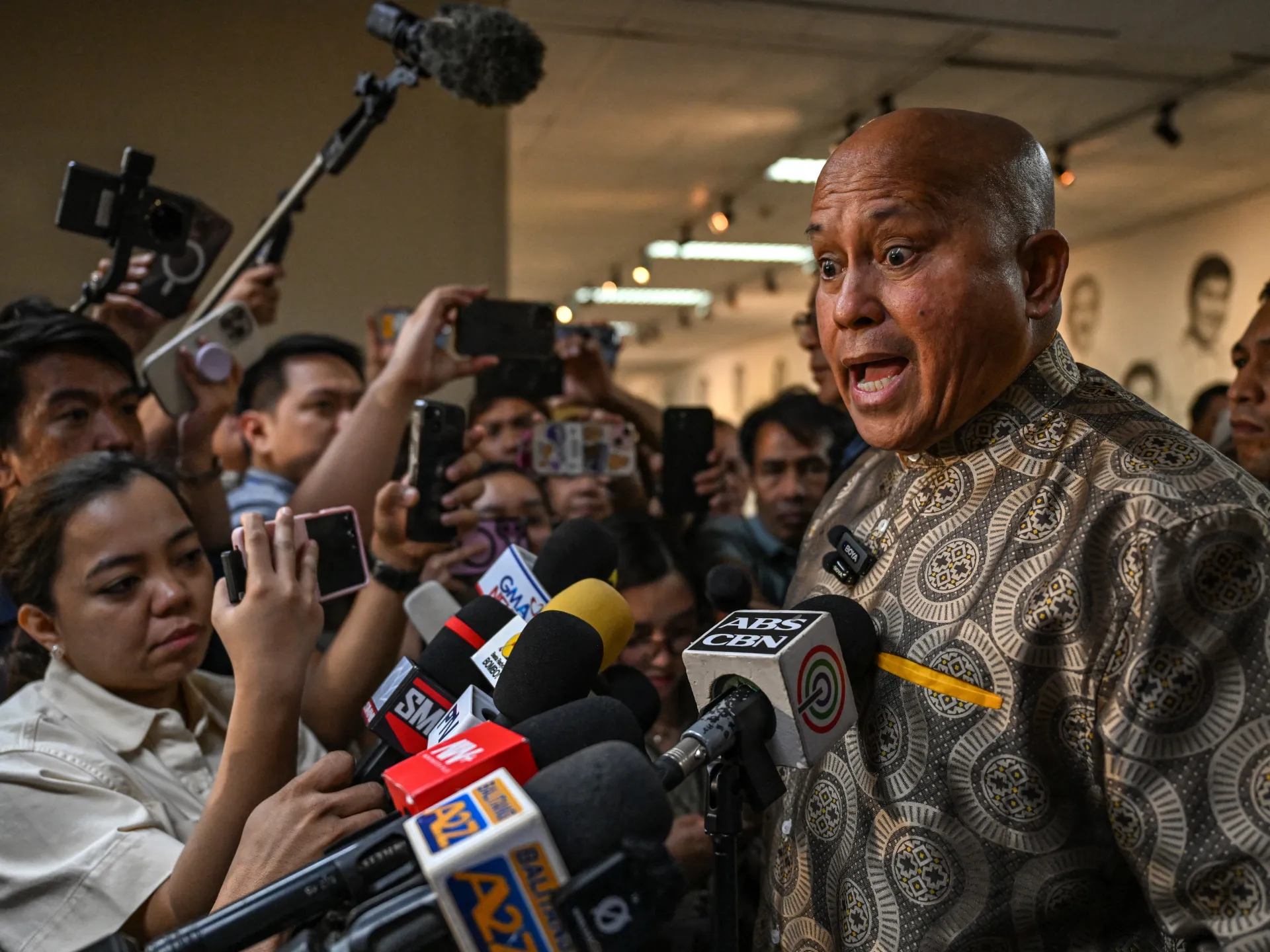
⁠The ⁠Philippine Senate President says that a politician wanted by the International Court (ICC) was no longer in the Senate building where he had ⁠been taking refuge, fearing his arrest.

Senator Ronald “Bato” dela Rosa, the former national police chief and top enforcer of former President Rodrigo Duterte’s bloody “war on drugs”, has ⁠been under Senate protection and is wanted for crimes against humanity, the same charges Duterte is accused of.

“The ⁠sergeant-at-arms has confirmed that he ⁠is no ⁠longer in the ⁠building,” Senate President Alan Peter Cayetano told reporters on Thursday.

The announcement comes a day after gunfire rang out at the Senate, where dela Rosa had been holed up. Confusion and chaos filled the legislature as people inside scrambled for cover on Wednesday, hours after dela Rosa, had appealed to his supporters on social media to mobilise and said law enforcement agents were planning on arresting him.

The incident caused chaos, with a heavy police presence and armed guards at the Senate. Protests were also held outside, and more than a dozen shots were fired after the Marines were called in to help the situation.

Philippine President Ferdinand Marcos Jr held an emergency meeting with government and security chiefs on Thursday, as police spokesperson Randulf Tuano told DZBB radio that one person had been arrested following the shooting and investigations were under way.

“The person has provided names, but these still need confirmation,” Tuano told the radio station.

Dela Rosa has denied involvement in the illegal killings, but on Monday, the ICC unsealed an arrest warrant for him.

Duterte is also accused of crimes against humanity and has been held in ICC custody in The Hague since March 2025. The ICC estimates that between 12,000 and 30,000 people were killed from 2016 to 2019 in the former president’s “war on drugs”.

Reporting from Manila, Al Jazeera’s Jamela Alindogan said two independent, credible sources confirmed that dela Rosa had fled the building.

“He was able to escape at around 2 or 3 this morning,” she said.

Lawyer Jimmy Bondoc, who represents dela Rosa, also told reporters that he spoke to the lawmaker late at night and believed he was inside the Senate after the incident.

“As his lawyer, I asked him if you have plans to leave, he said none,” Bondoc told reporters.

In an interview that aired on DZBB radio on Thursday morning, dela Rosa said he would “exhaust all available remedies” to block his transfer to the ICC, and after learning about the conditions Duterte was being held under, he was no longer willing to fight his case at The Hague.

It remains unclear when the interview was initially conducted.

Source link

Republican resistance to Iran war grows in the Senate as Murkowski flips

Senate Republicans on Wednesday again blocked Democratic legislation that would halt President Trump’s war with Iran, but the number of GOP senators voting against the war grew.

Republican Sen. Lisa Murkowski of Alaska voted against the war for the first time since it began at the end of February. Two other Republicans, Sens. Susan Collins of Maine and Rand Paul of Kentucky, also voted against the war, as they had done previously.

The war powers legislation ultimately failed to advance 49-50, with Sen. John Fetterman of Pennsylvania the only Democrat to oppose it, yet the close tally reflected growing unease with Trump’s war. Several other Republican senators have signaled they want Congress to weigh in on the direction of the conflict.

“There will be a day — and it might be soon, I believe — where this Senate will say to the president, ‘Stop this war,’” Democratic Sen. Tim Kaine of Virginia, who has spearheaded his party’s tactic of forcing repeated votes on the war, said before the vote.

Even if it passes the Senate, a war powers resolution would have a slim chance of passing the House and would also certainly be vetoed by Trump. But Democrats say the votes are about building political pressure on the president either to withdraw from the conflict or seek congressional authorization to wage the war.

Trump officials downplay role for Congress

The White House, meanwhile, has asserted that it does not need congressional authorization for the war and has circumvented legal requirements to gain approval from Congress to continue the military campaign. It claims that it has “terminated” hostilities with Iran because the U.S. has entered a ceasefire.

That posture has created tension between the Republican-controlled Congress and the White House because presidents under the War Powers Resolution of 1973 are required to obtain authorization from Congress after 60 days of engaging in a conflict.

Defense Secretary Pete Hegseth told lawmakers this week that the U.S. could start attacking Iran again without the White House seeking congressional approval. He told Murkowski during a hearing on Tuesday that the Trump administration believes it has “all the authorities necessary.”

Murkowski voiced skepticism about that argument. She pointed to the troops and war ships deployed to the region, saying, “It doesn’t appear that hostilities have ended.”

GOP leaders back the war, but unease grows

Republican leadership has continued to back the war with Iran, arguing that the stalemate in the Strait of Hormuz that has blocked most commercial shipping puts more economic pressure on Iran than it does on the U.S.

“Iran’s economy is on life support. Its leadership is eliminated,” said Sen. John Barrasso, the No. 2 Republican in leadership, during a floor speech Wednesday.

He also argued that the Democratic effort on the war is all about undermining Trump. Forcing the issue just as he arrived in China for a summit would “pull out the rug from under him,” Barrasso said.

Still, Republicans are also growing uneasy about the high gas prices, especially as the November elections draw near.

Sen. Mike Rounds, a Republican from South Dakota, said Wednesday he’d prefer that the two branches of government work out the constitutional issues instead of a congressional war powers vote or a potential challenge in court.

The two sides should sit down together and say “we have shared constitutional responsibilities,” Rounds said.

Democrats plan to keep forcing weekly votes on war powers resolutions and are looking ahead to put limitations on Trump during the debate over annual legislation that authorizes and funds the military.

Sen. Jeff Merkley, an Oregon Democrat who sponsored Wednesday’s resolution, told reporters that he believes there is an “erosion of support, erosion of enthusiasm, an increase in skepticism” about the war from Republicans.

Groves writes for the Associated Press.

Source link

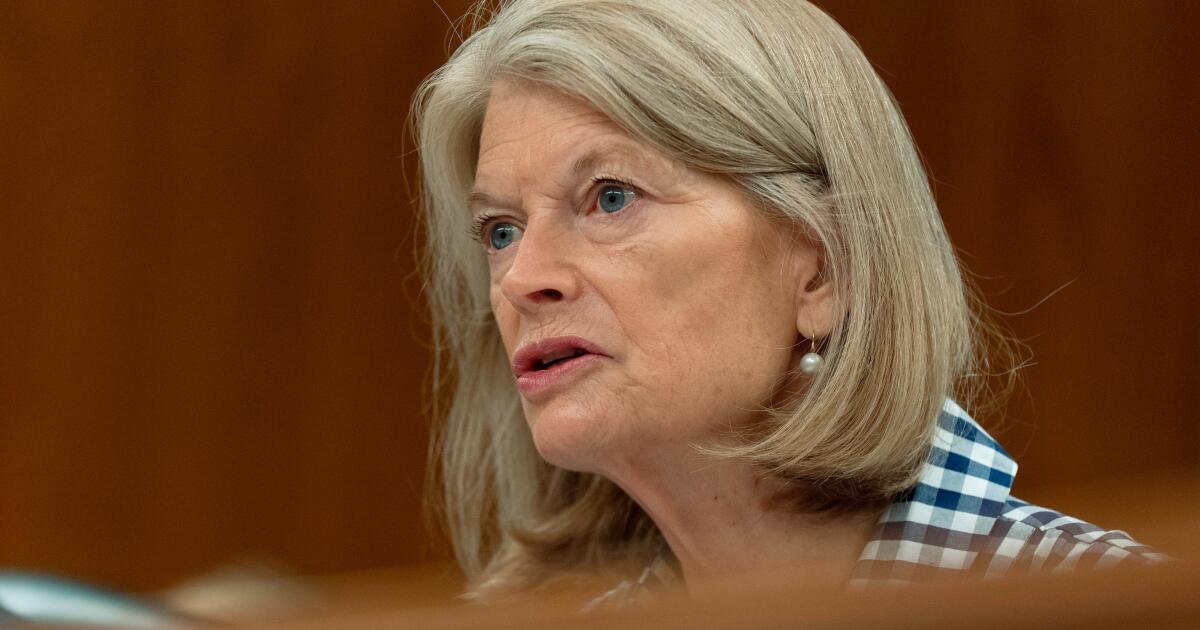
Senate confirms Trump pick Warsh as chairman of the Federal Reserve

The Senate confirmed President Trump’s nominee to lead the Federal Reserve, Kevin Warsh, bringing new leadership to the world’s most powerful central bank at a fraught moment for the global economy.

Warsh was confirmed Wednesday in a largely party-line vote. His nomination had been thrown into doubt in recent months after Republican Sen. Thom Tillis of North Carolina said he would block the nomination while the Justice Department investigated Fed Chair Jerome H. Powell. The Powell inquiry was dropped in April, clearing the way for the Senate to confirm Warsh.

Senate Majority Leader John Thune (R-S.D.) urged colleagues to support Warsh during a floor speech Wednesday morning, saying it’s crucial that a Fed chair “understand not only the macro” but also “appreciate the microeconomy: and that’s the hardworking Americans, their jobs and their livelihoods.”

“Kevin Warsh is just such a person,” Thune said.

Warsh, 56, a former top Fed official, will become chair at an unusually difficult time for the independent agency.

Inflation has topped the Fed’s 2% target for five years and is now rising faster because of surging gas prices. The Fed’s interest rate-setting committee is divided and saw the most dissenting votes in more than three decades last month. And Powell, after years of personal attacks from the Republican president and an unprecedented legal investigation by the Justice Department, plans to stay on the Fed’s board even after his term as chair ends, potentially creating a competing power center.

Trump has demanded change at the Federal Reserve

The Fed has faced numerous threats to its independence from Trump, who has repeatedly attacked Powell for not cutting interest rates. Trump also sought to fire Fed Gov. Lisa Cook and launched an investigation into brief Senate testimony by Powell on a building renovation.

Kevin Hassett, director of the White House’s National Economic Council, said in a Fox News interview on Sunday that he believes the markets are relieved that Warsh “is going to help lower interest rates over time.”

“Obviously, data driven,” said Hassett. “I’m not putting any pressure on Kevin Warsh.”

In December, Trump said on his social media platform that he wanted a Fed chair who would cut interest rates when the stock market rose — the opposite of what traditional economics would prescribe — and added, “Anyone that disagrees with me will never be the Fed chairman!”

Trump’s comments have fueled concerns over whether Warsh will set rates based on economic conditions or seek to cut rates to appease Trump, even if doing so could worsen inflation. At Warsh’s confirmation hearing last month, Sen. Elizabeth Warren, a Democrat from Massachusetts, derided him as a “sock puppet” for Trump. Warsh declined to say that Democrat Joe Biden had won the 2020 election against Trump, who has falsely claimed that voter fraud cost him reelection.

Still, Warsh denied at the hearing that Trump had pressured him to reduce the Fed’s key rate.

“The president never once asked me to commit to any particular interest rate decision, period,” Warsh said then. “Nor would I ever agree to do so if he had. … I will be an independent actor if confirmed as chair of the Federal Reserve.”

A critic of the Fed’s leadership in the past

Warsh has been highly critical of the Fed’s recent track record, particularly the inflation spike in 2021-22, the worst in four decades, and has called for “regime change.” Yet he has provided only broad outlines of what that change would involve.

He has called for limiting the Fed’s communications, which would be a sharp shift after decades of increasing transparency. He has argued that some of its communications tools, such as quarterly forecasts of where its key rate may head, have made it harder for officials to switch gears.

Senate Democrats also have condemned Warsh for not fully divulging the details of his extensive wealth, which disclosures show amounts to at least $100 million. His investments include stakes in Polymarket and SpaceX, but he hasn’t revealed how large those holdings are. He promised to sell all such assets within 90 days of being sworn in.

“He will be the wealthiest Fed chair in history, but he refuses to provide transparency to the American people about who he is entangled with,” Warren said.

Warsh faces difficult economic conditions

The Fed is still grappling with how to respond to the 50% jump in gas prices from the Iran war. The increase has boosted inflation, which reached 3.8% in April.

The Fed is tasked by Congress with keeping prices stable, which it seeks to do by raising its short-term rate to make borrowing and spending more expensive, cooling growth and inflation.

The Fed typically looks past temporary price increases that stem from supply disruptions, such as the war’s cutoff of oil through the Strait of Hormuz, because those prices typically level off — or even fall back down — once the supply is restored.

But the Fed also followed that approach after the COVID-19 pandemic snarled global supply chains for goods, lifting prices for things such as cars, furniture and electronics. Inflation turned out to last longer than expected, and Powell and other Fed officials have acknowledged they waited too long to raise rates. Inflation surged to 9.1% by June 2022.

The Fed’s rate-setting committee has kept rates unchanged for three straight meetings as it evaluates the effect of the gas price spike. At its most recent meeting last month, three members of the committee objected to language that suggested its next move would be a rate cut. They preferred more neutral language that would allow for a hike. Many Fed watchers saw those dissents as a warning shot to Warsh that he won’t be able to easily engineer rate reductions.

A fourth member of the 12-member committee, Stephen Miran, dissented in favor of a rate cut, as he has at every meeting since Trump appointed him to the Fed’s board last September. Miran is serving until a replacement is named, and Warsh will take his spot.

Powell, meanwhile, said at a news conference April 29 that he would remain as a Fed governor until the Justice Department closes its investigation into the Fed’s building project, the first time a chair may stay on the board for an extended period since 1948. His term as a governor lasts until January 2028.

U.S. Atty. Jeanine Pirro has dropped the government’s investigation, but she has said it could be reopened if the Fed’s inspector general office, which has looked into the renovation project since last July, finds evidence of criminal activity.

Rugaber and Cappelletti write for the Associated Press.
Source link

South Carolina Senate rejects extension for redistricting despite Trump pressure

May 12 (UPI) — The South Carolina Senate voted Tuesday against a measure to extend its legislative session to redraw the state’s congressional map. President Donald Trump has pressured lawmakers to move forward with redistricting to give Republicans an advantage.

Five Republicans joined Democrats in voting against the resolution, which would have extended the session by a week, NBC News reported. This would have given the Senate more time to vote on a plan that would break up the state’s only Black-majority district. The legislative session ends Thursday, and the state’s primaries are June 9.

The redistricting push by Trump comes after a U.S. Supreme Court decision in late April that badly weakened a key part of the landmark Voting Rights Act of 1965, one that had helped ensure minority groups could elect their choice of candidates.

State Sen. Shane Massey, a Republican and Senate majority leader, spoke out about the efforts before the vote, saying it’s a show of weakness to use redistricting to quash minority votes, Greenville News reported.

“My conscience is clear on this one,” Massey said. “I know what the right thing to do is.”

Massey said he’d received a call from Trump in recent days about pushing forward redistricting. On Monday night, Trump posted on social media that he was watching the vote closely.

“South Carolina Republicans: BE BOLD AND COURAGEOUS, just like the Republicans of the Great State of Tennessee were last week!” he wrote.

Last Thursday, the Tennessee state legislature passed a redistricting map that eliminated the state’s last Democrat-leaning, Black-majority district. Other Southern states have also been moving in this direction.

Senate Minority Leader Brad Hutto said the vote sends a message that the state rejects a White House power grab, Greenville News reported.

“The people of this state expect us to focus on real issues affecting their daily lives, not carry out an outside political agenda,” he said.

Later Tuesday, Republican candidates for governor in South Carolina criticized the members of their party who voted against the resolution.

Rep. Nancy Mace, who’s been endorsed by Trump for the governor position, posted on social media that the state needs “a Governor who the statehouse will fear and listen to.”

“You know I’d whip every single ‘NO’ vote into shape if I was Governor,” she posted.

Source link

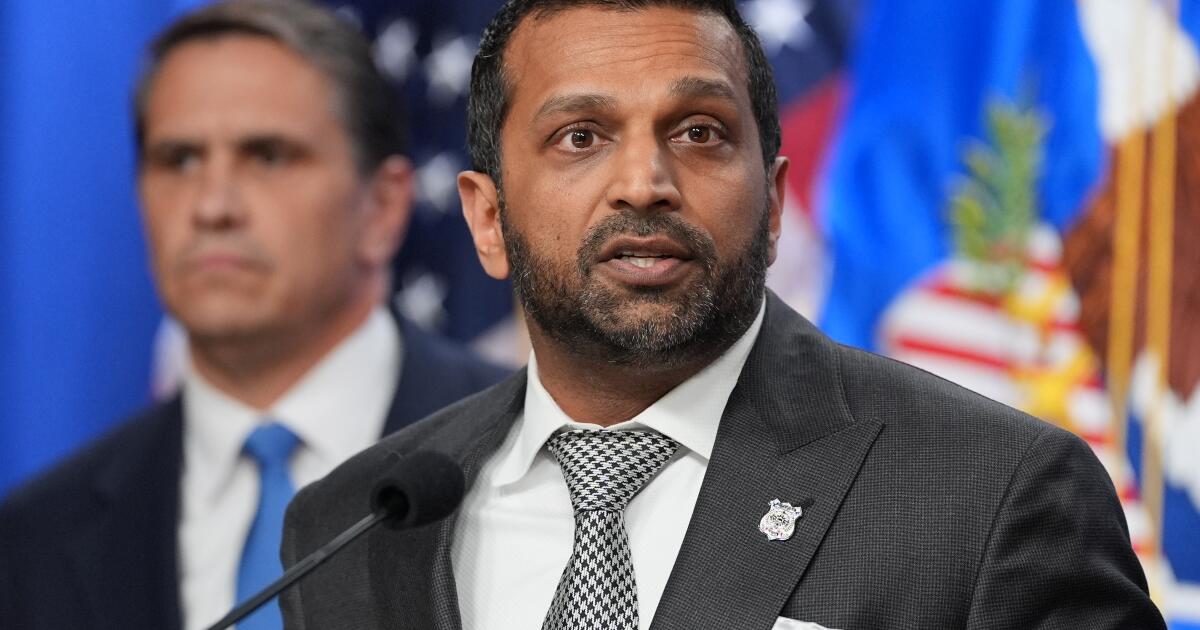
FBI Director Kash Patel denies drinking allegations in heated Senate exchange

FBI Director Kash Patel angrily lashed out at a Democratic lawmaker at a budget hearing Tuesday, calling allegations that he drinks excessively on the job and has been unreachable at times to his staff “unequivocally, categorically false.”

“I will not be tarnished by baseless allegations,” Patel told Sen. Chris Van Hollen when the Maryland Democrat confronted him about a recent article in the Atlantic magazine that painted an unflattering portrait of his leadership of the nation’s premier federal law enforcement agency. Patel has sued over the story. The Atlantic has said it stands by its reporting and will vigorously defend against the “meritless lawsuit.”

Patel shouted over Van Hollen and sought to turn the tables by accusing him of “slinging margaritas” in El Salvador, a reference to a visit the Democrat paid last year to Kilmar Abrego Garcia while he was jailed there following his arrest in Maryland.

The testy exchange occurred at an annual Senate committee budget hearing featuring Patel and other senior law enforcement leaders.

Tucker writes for the Associated Press.
Source link