senate

Senate passes resolution to begin budget reconciliation to fund DHS

April 23 (UPI) — Senate Republicans were up all night voting, eventually adopting a budget reconciliation package Thursday morning to prepare to fund the Department of Homeland Security.

The Senate plans to fund the department without Democrats’ help. The resolution was adopted at around 3:30 a.m. EDT Thursday by a vote of 50-48 after about six hours.

The only Republicans to vote against the resolution were Sens. Lisa Murkowski, R-Alaska, and Rand Paul, R-Ky. The bill now goes to the House. If the House adopts the resolution, the final funding bill can be written and voted on by Congress.

They are following a deadline of June 1 set by President Donald Trump.

“We have a multistep process ahead of us, but at the end Republicans will have helped ensure that America’s borders are secure and prevented Democrats from defunding these important agencies,” said Senate Republican Leader John Thune, R-N.D.

Thune told fellow senators to keep the package narrow to ensure speedy passage.

Since the January deaths of Renee Good and Alex Pretti in Minnesota, both shot and killed by DHS officers, Democrats have refused to support funding the department without reforms. The department has been shut down since Feb, 14, though Trump told the department to use emergency funds to pay essential workers.

Just before the Easter recess, the Senate passed a bill that would fund most of DHS but not ICE and Border Patrol. But the House rejected it.

Republicans are hoping to fund the department through 2029 at a cost of between $70 and $80 billion.

The late-night vote-a-rama included votes about amendments that could be added to the resolution. Two Republican Senators who are vulnerable in the November elections — Sens. Susan Collins, R-Maine, and Dan Sullivan, R-Alaska — broke ranks on some amendments.

Collins and Sullivan voted for amendments to lower health care costs, to reverse last year’s Supplemental Nutrition Assistance Program cuts and to tackle insurance companies that delay or deny medical care. Sen. Josh Hawley, R-Mo., joined with Collins and Sullivan on the latter.

Sen. Bernie Sanders, I-Vt., also sponsored an amendment that would tell the budget committee chair to help cut prescription drug prices by half. Hawley, Collins and Sullivan supported Sanders on it. Sanders said his amendment would codify ensuring that Americans wouldn’t pay more for prescriptions than Canadians or Europeans.

The amendments wouldn’t have the power to force Republicans’ hands, but they would make Republicans go on record about their views of these items.

“This reconciliation, or this budget act, will show who’s on whose side, and clearly if Republicans vote against our amendments, they’re not on the side of the American people,” Democratic Leader Chuck Schumer, D-N.Y., said on the Senate floor.

Homeland Security Secretary Markwayne Mullin told Fox and Friends on Tuesday that the department will run out of money for salaries next month.

“I’ve got one payroll left, and there is no more emergency funds so the president can’t do another executive order because there’s no more money there,” The Hill reported he said.

The resolution does not include the SAVE America Act, the voter security bill that Trump and other Republicans have pushed for. Sen. John Kennedy, R-La., sponsored an amendment to add similar restrictions, but it failed 48-50. Collins, Murkowski, Sen. Thom Tillis, R-S.C., and Sen. Mitch McConnell, R-Ky., voted against it.

FBI Director Kash Patel speaks during a press conference at Department of Justice Headquarters on Tuesday. The Trump Administration announced charges against the Southern Poverty Law Center, which the government alleges funneled over $3 million toward white supremacist and extremists groups. Photo by Bonnie Cash/UPI | License Photo

Source link

Senate Republicans again block Democrats’ bid to limit war powers

April 23 (UPI) — Senate Republicans have again blocked the Democrats from curbing President Donald Trump‘s ability to wage war with Iran, as negotiators try to find a diplomatic end to the conflict during the fragile cease-fire.

The Senate voted 51-46 on Wednesday afternoon against Sen. Tammy Baldwin‘s War Powers Resolution, the fifth time since March 4 that the Senate has voted against directing the removal of U.S. Armed Forces from hostilities with Iran until authorized by Congress.

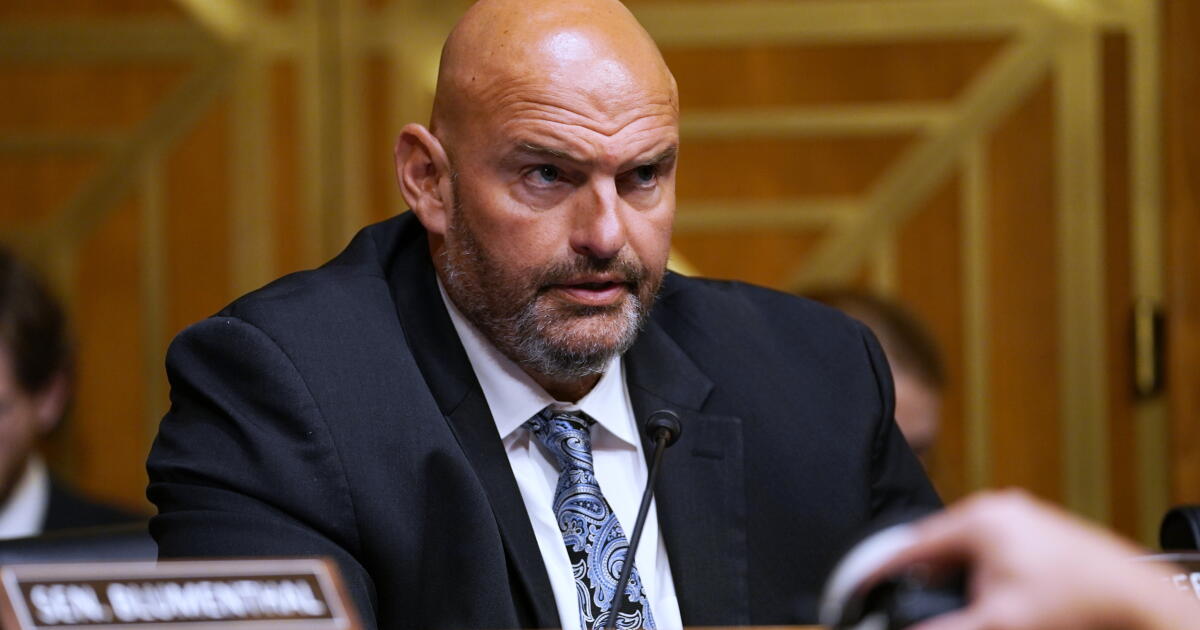
As with previous votes, Wednesday’s was mostly along party lines with Republican Sen. Rand Paul of Kentucky again voting with his Democratic colleagues, and Democratic Sen. John Fetterman of Pennsylvania again voting with the Republicans.

“This entire war has been unnecessary, illegal and unwise. And we need to put a check on this president before it gets even worse,” Baldwin said from the Senate floor on Wednesday.

“Unfortunately, the president has shown us that he did not have a plan after day one. The president said the war would be over in a matter of days; we are coming up on the two-month mark with no real end in sight. And over the course of 50-plus days we have seen nothing short of a disaster.”

Sen. Tammy Duckworth, D-Ill., a veteran, vowed in a statement that the Democrats will continue to do all in their power to end the war.

“It’s infuriating that Senate Republicans keep shirking their oaths and giving Donald Trump the green light to plunge our nation even deeper into his war of choice, further endangering our troops abroad and surging prices at home,” she said.

“This wanna-be dictator keeps breaking every single promise he’s made to the American people who are sick and tired of watching Republicans duck their responsibility to stop this chaos.”

The war began Feb. 28 with the United States and Israel attacking Iran.

Since then, 13 Americans have been killed. At least 3,646 people have been killed in Iran, according to HRANA.

Gas prices have surged as Iran has restricted access to the important Strait of Hormuz energy transportation route, and the United States is enforcing a blockade of Iran’s ports, cutting it off from sea-based trade.

The vote was held as a two-week cease-fire was to end before President Donald Trump announced an indefinite extension amid negotiations. On Wednesday, Iran’s military claimed to have seized two cargo ships in the conflict over the waterway.

Since the war began, Democrats have been seeking to rein in Trump’s war powers, arguing the ongoing war with Iran violates the Constitution, which mandates that only Congress has the power to declare war.

Democrats in the Senate have pledged to use their powers to force weekly debates on the war as well as weekly votes, forcing Republicans to repeatedly and publicly state their position on the conflict.

The vote was held less than a week before the 60-day limit of the war passes. On April 28, the War Powers Act will compel Trump to seek congressional authorization for the war.

Sen. Lisa Murkowski, R-Alaska, has said that Trump should have sought Congress’ authorization, and appears to be leading Republican efforts to draft legislation for the continuation of the use of military force as that deadline comes.

“My focus is on the safety of America’s armed forces and the American civilians who are on the ground in the Middle East,” she said in a statement in early March, just days after the war began.

“At this point, we have little choice but to continue the military operation to degrade and destroy Iran’s capability for nuclear weapons.”

Source link

RFK Jr. goes before the Senate. One lawmaker’s competing loyalties will be on display

Bill Cassidy’s roles as a lawmaker, a doctor and a political candidate will collide on Wednesday as he questions Health Secretary Robert F. Kennedy Jr. in two high-stakes Senate hearings.

The Louisiana Republican chairs one of the Senate committees that oversees Kennedy’s department and sits on another, giving him two chances to interrogate the secretary about his plans for an agency responsible for public health programs and research. As a doctor, Cassidy has clashed with Kennedy’s anti-vaccine ideas even though he provided crucial support for the health secretary’s nomination last year.

At the same time, Cassidy is fighting for his political future in next month’s primary in Louisiana, where President Trump has endorsed one of his opponents in an unusual attempt to oust a sitting senator from his own party.

How Cassidy handles the hearings could affect his chances at a pivotal moment of his reelection campaign and set the tone for how Congress oversees the nation’s health agenda at a time of rampant distrust and misinformation.

Cassidy hasn’t faced Kennedy in public since September. In the subsequent months, Kennedy has attempted a dramatic rollback of vaccine recommendations that, if not blocked by an ongoing lawsuit, could undermine protections against diseases like flu, hepatitis B and RSV.

After a backlash, Kennedy has also pivoted to spending more time talking about less controversial topics like healthy eating — albeit with his own spin, including sharing exaggerated claims that various ailments can be cured by diet alone.

Cassidy will have to decide on Wednesday whether to grill Kennedy on vaccines, an issue deeply important to him, or put their differences aside and prioritize loyalty to the Trump administration.

“He’s taken a risk showing any sort of resistance to RFK,” said Claire Leavitt, an assistant professor at Smith College who studies congressional oversight. “He may pay an electoral price for that.”

Cassidy has long advocated for vaccines

Cassidy has spent years walking a political tightrope. He’s one of the few Republican senators who voted to convict Trump during an impeachment trial after the Jan. 6, 2021, attack on the U.S. Capitol.

As a liver doctor, he advocated for babies to receive hepatitis B vaccines shortly after birth, a step that could have prevented the disease in his patients. But when Trump nominated Kennedy, a longtime anti-vaccine activist, Cassidy supported him. He did so after securing various commitments, including that Kennedy would work within the current vaccine approval and safety monitoring system and support the childhood vaccine schedule.

The vote for Kennedy did not appear to mollify Trump. The president endorsed U.S. Rep. Julia Letlow, one of Cassidy’s two primary opponents.

Cassidy also faces opposition from Kennedy’s allies in the “Make America Healthy Again” movement, a group that includes both anti-vaccine activists and a wide variety of other crusaders for health and the environment. The MAHA PAC, aligned with Kennedy, has pledged $1 million to Letlow’s campaign. While the organization hasn’t publicly said so, some have questioned whether the support is partly in retaliation against Cassidy for criticizing Kennedy’s vaccine policy agenda.

“I’m not really sure what MAHA’s beef is,” Cassidy told reporters earlier this month. “Let me point out that I am the reason that Robert F. Kennedy is now the secretary of HHS. He would not have gotten there otherwise.”

Cassidy argues that he has “strongly supported” the MAHA agenda, especially when it comes to the fight against ultraprocessed foods. However, the physician-turned-senator acknowledged that he and MAHA have “disagreed on vaccines.”

“We’ve seen, frankly, that I am right,” Cassidy added, pointing to recent measles-related deaths of children who were not vaccinated.

At a hearing in September, he slammed Kennedy’s decision to slash funding for mRNA vaccine development. He interrogated Kennedy over his attempt to replace members of a vaccine committee, suggesting the new members could have conflicts of interest. He also raised concerns that Kennedy’s vaccine policy decisions could be making it harder for Americans to get COVID-19 shots.

Later that month, Cassidy convened a hearing featuring former U.S. Centers for Disease Control and Prevention Director Susan Monarez, who was ousted by Kennedy less than a month into her tenure after they clashed over vaccine policy, and former CDC Chief Medical Officer Debra Houry, who resigned in August citing an erosion of science at the agency.

“I want to work with the president to fulfill his campaign promise to reform the CDC and Make America Healthy Again. The president says radical transparency is the way to do that,” Cassidy said at the time.

Experts say Cassidy’s vaccine stance might not hurt him

Political consultants said they expect Cassidy’s primary opponents, Letlow and Louisiana Treasurer John Fleming, to seize on any sound bites from Wednesday’s hearings that can make Cassidy seem at odds with the Trump administration.

But Dorit Reiss, a vaccine law expert at UC Law San Francisco, said the political risk of advocating for vaccines may not be as strong among Republicans as some people assume.

“He’s probably not alienating voters by focusing on the issue and calling it out,” she said.

Louisiana political consultant Mary-Patricia Wray said she thinks most diehard MAHA voters already know who they are voting for, and it’s probably not Cassidy.

Instead, she said, he may still be able to appeal to Democrats who switch their party registration to vote in the primary, as well as a wide swath of still-undecided Republican voters who care about the same health care affordability issues he advocates for every day in Congress.

“If I was advising Bill Cassidy, I would tell him your goal here is not to get out unscathed,” Wray said. “Your goal is to prove that your consistency on issues regarding public health is an asset in your campaign, not a detriment.”

Election outcome will shape future oversight of HHS

Also at stake if Cassidy doesn’t make it to November’s general election is what will happen to his responsibility to oversee the massive U.S. Department of Health and Human Services as the chair of the Senate Health, Education, Labor and Pensions committee.

Leavitt, the Smith College professor, said seniority typically plays the most important role in who chairs Senate committees. She said another Republican in today’s increasingly hyperpartisan Congress may not be as willing as Cassidy to check Kennedy’s power.

Reiss, the vaccine law expert, said she wishes Cassidy had done more hearings or introduced legislation to rein in Kennedy. And she said the senator bears the blame for allowing Kennedy to bring unfounded vaccine fears into the government in the first place.

“His original sin, of course, was voting for Kennedy at all,” Reiss said.

Swenson writes for the Associated Press. AP writer Sara Cline contributed to this report.

Source link

Fed chair nominee Warsh rejects ‘Trump sock puppet’ label at Senate hearing

Kevin Warsh, the man nominated to lead the Federal Reserve, the world’s most important financial institution, told the US Senate Banking Committee on Tuesday that he had made no secret agreements with the White House over interest rate policy, defending his professional integrity.


ADVERTISEMENT


ADVERTISEMENT

He said he would act independently if confirmed to succeed Jerome Powell, despite continued public pressure from US President Donald Trump for lower borrowing costs.

The question of that independence was put sharply to him during the hearing, when Republican Senator John Kennedy asked whether he would be Trump’s “human sock puppet”. Warsh replied: “Absolutely not.”

His comments came amid broader concerns on Capitol Hill about the future direction of the central bank, with lawmakers divided over his past record and approach to monetary policy.

Warsh insisted that the President had never asked him to commit to any specific interest rate path and said he would not have agreed to such a request.

The hearing highlighted the significant pressure facing the Federal Reserve as it maintains its independence while addressing inflation, which remains at 3.3%.

Just hours before the session began, US President Donald Trump stated in a CNBC interview that he would be disappointed if Warsh did not immediately implement rate cuts.

This current friction suggests that the White House may struggle to secure the necessary votes to confirm Warsh before Powell’s term as Fed Chair expires on 15 May.

Democratic opposition and Republican dissent

Democratic senators were particularly vocal in their scepticism, accusing Warsh of shifting his economic stance to suit the political climate.

US Senator Elizabeth Warren labelled the nominee a “sock puppet”, suggesting his installation would facilitate an “illegal takeover” of the institution.

Critics also pointed to his historical record, alleging that he favoured higher rates during Democratic administrations but has become more dovish under Republican leadership.

US Senator Ruben Gallego cited reporting from the Wall Street Journal (WSJ), which claimed the President had previously urged Warsh to reduce borrowing costs. Warsh responded by stating that such reports were based on inaccurate sources and reiterated that the independence of the Fed is “essential” for economic stability.

Despite Trump’s backing, the nomination also faces a critical roadblock within the Republican Party.

US Senator Thom Tillis, a Republican from North Carolina, reiterated his refusal to support Warsh as long as a Department of Justice investigation into Jerome Powell continues.

The probe, led by Assistant US Attorney Jeannine Pirro, is examining whether Powell committed perjury during testimony last year regarding the budget of a Federal Reserve building renovation project.

Tillis and other Republican colleagues have expressed their support for Powell, arguing that the investigation is meritless. According to Tillis, he will not vote for a successor until the “investigation is dropped,” a stance that effectively freezes the nomination in a closely divided committee.

Federal prosecutors have reportedly continued their efforts to access Fed records as recently as last week, even after a judge previously found no evidence to support the charges.

Legal and ethical hurdles

The proceedings also delved into Warsh’s personal financial interests and the logistical challenges of a potential leadership transition.

US Senator Elizabeth Warren raised questions about the nominee’s investments in private entities, including SpaceX and Polymarket, noting that the specific size of these holdings had not been fully disclosed to the public.

Warsh defended his position by stating that the Office of Government Ethics has already approved his plan to divest all assets within 90 days of his confirmation.

Compounding the uncertainty is the unique situation involving Jerome Powell.

Unlike most departing Chairs, Powell has indicated he intends to remain on the Federal Reserve’s governing board until his separate term ends in 2028, or until the perjury investigation is concluded.

This could create an awkward power dynamic where the former Chair sits alongside his successor, a scenario not seen in Washington since the late 1940s.

While US President Donald Trump has threatened to remove Powell from the board entirely, legal experts suggest such a move would be difficult, particularly given recent US Supreme Court precedents relating to the protection of Fed governors from political dismissal.

Source link

Democratic Senate hopefuls put California cash in the bank

Democrats who once saw retaking the U.S. Senate as a long shot in 2026 have newfound hope thanks to an unpopular president and a California donor machine that has snapped into action.

Californians provided the most out-of-state cash to Democrats in nearly every hotly contested race, and in several cases gave more than in-state donors, according to a Times analysis of campaign finance filings covering the first three months of 2026.

Sen. Jon Ossoff of Georgia, who took in more than $14 million overall, received nearly as much from California backers as from supporters in his home state among donors who contributed at least $200 and whose identities were disclosed.

James Talarico, a Democratic Senate candidate in Texas, has raised a staggering $27 million so far this year, with California donors contributing just under $1.2 million to back his campaign — second only to Texas supporters among those donors whose names were disclosed.

Donors who give less than $200 are not required to be identified in campaign finance reports and made up a significant share of the donors to Ossoff’s and Talarico’s campaigns.

Republicans currently have control of the Senate with 53 of the chamber’s 100 seats. This year 35 seats are at play, including special elections in Florida and Ohio.

GOP still winning a key cash race

While more of the seats up for grabs are in Republican hands, polling showing the potential for tight races in several of them has given Democrats hope that they might be able to shrink or reverse their deficit in November.

Top Democratic candidates have out-raised their GOP rivals in the most competitive Senate races, but Republicans are winning the cash race among big-money committees that can accept checks far larger than the $7,000 cap on donations to candidate committees.

Those Democratic candidates have continued a tradition of relying on donors in the country’s most populous state to bankroll their campaigns.

“California has been a rich gold mine for many a candidate and continues to be that,” said Michael Beckel, director of money in politics reform at Issue One, a bipartisan advocacy group.

Democratic Senate candidates in a few races raised more from California donors than from donors in their home states, according to campaign finance reports filed Wednesday.

Democratic former Rep. Mary Peltola of Alaska, who is challenging incumbent Republican Sen. Dan Sullivan, brought in nearly $900,000 from California donors who had contributed at least $200. Alaska donors contributed just over $520,000 to Peltola in the same time period.

Two of the three leading Democratic hopefuls in Michigan’s open Senate race, Rep. Haley Stevens and physician Abdul El-Sayed, reported taking in more from California donors than from donors in Michigan. California was the second biggest bank of support for the other top Democratic contender, state Sen. Mallory McMorrow.

And in Nebraska, independent Dan Osborn, who is challenging incumbent Republican Sen. Pete Ricketts, took in $80,000 more from disclosed California donors than from Nebraskans.

Dozens of California donors gave to at least five Senate candidates across the country, according to The Times’ analysis of the filing data.

Burbank playwright and screenwriter Winnie Holzman has donated to Democratic candidates in nine key races and said she has been inspired to give to them — and other candidates and political groups — because of concerns about the policies of President Trump’s administration and what she sees as its violation of the law.

“This isn’t just about who is in the Senate,” said Holzman, who wrote the script for the play “Wicked” and co-wrote its movie adaptations. “But if enough Democrats were in the Senate right now, there would be a lot more ability to push back on this.”

The impressive fundraising hauls by Democrats come with a significant caveat.

The two most prominent political committees that support Republican Senate candidates — the party-affiliated National Republican Senatorial Committee and the Senate Leadership Fund super PAC, have both outraised rival Democratic groups by a significant margin this cycle.

For the NRSC, an $11.5-million fundraising advantage since the start of 2025 has translated to a modest $2-million advantage in cash in the bank through the end of February compared with the Democratic Senatorial Campaign Committee.

But the Senate Leadership Fund, which can accept unlimited amounts of cash from donors, had $91.6 million more to spend at the end of March than the Democratic rival Senate Majority PAC.

And the pro-Trump super PAC MAGA Inc. had a stunning $312 million in the bank at the end of February.

Money raised by candidate campaign committees does, however, bring some advantages over money raised by other committees. Most significantly, candidates are able to buy advertising at cheaper rates than other political committees.

That is an important distinction in a year when advertising spending in Senate races is expected to top $2.8 billion.

The Senate map

While political analysts expect that Democrats will likely perform well in congressional races — with early signs pointing to a strong possibility that the party regains control of the House — winning control of the Senate would be a much taller order.

“The Senate is going to be won or lost in red states,” said Kyle Kondik, managing editor of Sabato’s Crystal Ball at the University of Virginia’s Center for Politics.

Even in the best-case scenario for Democrats, to retake control of the chamber they would probably need to win in at least two states such as Iowa, Alaska, Ohio or Texas, all of which went to Trump in the 2024 presidential election by double-digit margins.

With the vast sums likely to be raised — and spent — by both sides, Kondik said that fundraising can reach a point of diminishing returns.

“You’d rather have more than less, obviously, but the actual effect is pretty debatable,” he said.

And history shows that fundraising prowess doesn’t necessarily translate to electoral success in November.

Take the example of Texas Democrat Beto O’Rourke.

In his 2018 challenge of incumbent Republican Ted Cruz, O’Rourke brought in more than $80 million, more than double Cruz’s fundraising haul of $35 million.

But it wasn’t enough to put the then-congressman from El Paso over the top.

O’Rourke lost the race by about 2.5 percentage points.

Source link

Senate extends surveillance powers until April 30 after longer renewal collapsed in House

The Senate approved a short-term renewal until April 30 of a controversial surveillance program used by U.S. spy agencies, following a chaotic, post-midnight scramble in the House to keep the authority from expiring.

The measure cleared the Senate by voice vote, without a formal roll call, as Congress raced to meet a Monday deadline. It now heads to President Trump, who had pushed for a clean 18-month extension, for his signature.

GOP leaders in the House rushed lawmakers back into session late Thursday with a series of back-to-back votes that collapsed in dramatic failure, before they quickly pushed ahead the stopgap measure as they race to keep the surveillance program running past Monday’s expiration date.

First they unveiled a new plan that would have extended the program for five years, with revisions. Then they tried to salvage a shorter 18-month renewal that Trump had demanded and Speaker Mike Johnson had previously backed. Some 20 Republicans joined most Democrats in blocking its advance.

Shortly after 2 a.m. they quickly agreed to the 10-day extension, which was agreed to on a voice vote without a formal roll call. It next goes to the Senate, which is gaveling for a rare Friday session, as Congress races to keep the surveillance program running.

“We were very close tonight,” said Johnson after the late-night action.

But Democrats blasted the middle-of-the-night voting as amateur hour. “Are you kidding me? Who the hell is running this place?” said Rep. Jim McGovern, D-Mass., during a fiery floor debate.

At the center of the standoff that has stretched throughout the week is Section 702 of the Foreign Intelligence Surveillance Act, which permits the CIA, National Security Agency, FBI and other agencies to collect and analyze vast amounts of overseas communications without a warrant. In doing so, they can incidentally sweep up communications involving Americans who interact with foreign targets.

U.S. officials say the authority is critical to disrupting terrorist plots, cyber intrusions and foreign espionage.

Surveillance program fight is a debate over privacy and security

Its path to passage has teetered all week in a familiar fight, as lawmakers weigh civil liberties concerns against intelligence officials’ warnings about national security risks.

Opponents of the surveillance tool point to past misuses. FBI officials repeatedly violated their own standards when searching intelligence related to the Jan. 6, 2021, attack on the Capitol and racial justice protests in 2020, according to a 2024 court order.

Trump and his allies had lobbied aggressively all week for a clean renewal of the program, without changes.

A group of Republicans traveled to the White House on Tuesday, and on Wednesday CIA Director John Ratcliffe spoke directly with GOP lawmakers. House Majority Leader Steve Scalise said Thursday there had “been negotiations late into the night with the White House and some of our members.”

“I am asking Republicans to UNIFY, and vote together on the test vote to bring a clean Bill to the floor,” Trump wrote on Truth Social this week. “We need to stick together.”

The result of days of negotiations

Thursday’s proceedings came to a standstill as lawmakers retreated behind closed doors and Johnson reached for an agreement to resolve the standoff.

Shortly before midnight GOP leaders announced a new proposal, a five-year extension, with revisions. The changes were designed to win over skeptics of the surveillance program who have demanded greater oversight to protect Americans’ privacy.

Among the changes are new provisions to ensure that only FBI attorneys can authorize queries on U.S. persons, and to require the Office of the Director of National Intelligence to review such cases, said Rep. Austin Scott, R-Ga., during the debate.

But the final product, a 14-page amendment, did not go far enough for some holdouts in either party.

With Johnson controlling a slim majority, he has little room for dissent. As the Republicans fell short on both efforts before the short extension, a handful of Democrats stepped in to try to help them advance the longer extensions, but most Democrats were opposed.

“We just defeated Johnson’s efforts to sneak through a 5-year FISA authorization tonight,” said Democratic Rep, Ro Khanna of California. “Now, they will have to fight in daylight.”

Cappelletti and Mascaro write for the Associated Press.

Source link

Thune: Senate may vote next week on ICE, Border Patrol funding

April 14 (UPI) — A budget resolution to fund federal immigration enforcement could hit the Senate floor by next week, Senate Majority Leader John Thune said Tuesday, as Republicans seek to bypass Democratic demands for reforms to Immigration and Customs Enforcement and Border Patrol.

Federal funding for Immigration and Customs Enforcement and Border Patrol lapsed on Feb. 14 after Republicans agreed with the Democrats to remove the Department of Homeland Security from a larger spending package and avert a government shutdown.

Neither agency has been funded through regular DHS appropriations since, though they continue operating through other, emergency funding.

Democrats began demanding reforms to the federal immigration enforcement agencies before agreeing to restore funding after two U.S. citizens were killed by federal immigration officers amid President Donald Trump‘s aggressive immigration crackdown.

Amid a stalemate in negotiations, Republicans are considering passing three years of funding for the agencies through a complicated legislative mechanism called a budget reconciliation bill that permits certain spending legislation to pass with a simple majority rather than 60 votes, Thune told reporters Tuesday in the Capitol.

“Republicans are going to stand with our Border Patrol, with our law enforcement agencies and we’re going to ensure that they are funded, not only today but well into the future,” Thune, R-S.D., said.

Sen. Lindsey Graham, R-S.C., is preparing the resolution to fund the agencies that will be followed by the reconciliation bill “to ensure the job gets done,” he said.

Democrats have blocked funding for ICE and Border Patrol until reforms — including requiring judicial warrants and banning officers from wearing masks — are made, but the reconciliation bill tactic could ensure funding without any votes from Democratic lawmakers.

The same tactic was used last year to pass Trump’s sweeping spending and tax cut bill, which provided $75 billion for ICE.

“All of the things that the Democrats made this about, which was supposed to be about reforms to the way that ICE and Border Patrol operate — they get none of that,” Thune said.

“And now, we’re going to fund those agencies for three years into the future. The only thing the Democrats got out of this was they now own the issue of open borders and defund law enforcement.”

Republicans hold a narrow 53-47 majority in the Senate, with two independents caucusing with the Democrats, as well as a 218-213 majority in the House.

The Senate has twice passed bipartisan bills to fund DHS aside from ICE and Border Patrol, which the House has balked at. Democrats blame the Trump administration’s influence on the lower chamber.

“Republicans are dragging the Senate through a partisan circus just to avoid basic accountability for ICE and Border Patrol,” Senate Minority Leader Chuck Schumer told reporters at the Capitol during a separate press conference on Tuesday.

He said Democrats will continue to push for immigration enforcement reforms.

“So, the pattern, unfortunately, with this administration is clearer and clearer,” the veteran New York Democrat said. “Chaos abroad — the war; chaos at home with not funding DHS with reforms. A failed war overseas, a manufactured crisis here in Washington — in both cases Republicans aren’t leading, they are following orders.”

Source link

Senate judicial confirmations skip 2 California nominees

Some of President Obama’s most disputed judicial nominations — including UC Berkeley law professor Goodwin Liu and San Francisco federal Magistrate Edward M. Chen — are about to expire without getting a vote in the Senate.

Dozens of Obama’s judicial nominees have languished, but in the past four days, the Senate has approved 12 of them without opposition. Another seven are expected to be confirmed before the lame-duck session of Congress ends. Four others, including Liu and Chen, aren’t expected to get a vote.

Their nominations will lapse after this congressional session. Although Obama could renominate them, their chances of confirmation would be even slimmer because Republicans will hold several more seats in the next Senate.

Liu, nominated to the U.S. 9th Circuit Court of Appeals, is well-regarded among liberals and legal scholars and won a “well qualified” rating from the American Bar Assn. But several Republicans contend that his liberal views put him “outside the mainstream.”

They also criticize his 2006 testimony against Samuel A. Alito’s confirmation to the U.S. Supreme Court. “Judge Alito’s record envisions an America where police may shoot and kill an unarmed boy to stop him from running away with a stolen purse … where a black man may be sentenced to death by an all-white jury for killing a white man,” Liu said then. “I humbly submit that this is not the America we know. Nor is it the America we aspire to be.”

The 9th Circuit has jurisdiction over California and eight other Western states.

Chen, nominated to be a U.S. district judge in San Francisco, also ran into solid Republican opposition. Some conservatives complain about his former affiliation with the American Civil Liberties Union. He was an ACLU attorney before becoming a magistrate.

Liberal activists pointed out that Republicans during the George W. Bush administration argued that the president’s nominees deserved an up-or-down vote.

“If Republicans kept to their old playbook and allowed the Senate to vote on Goodwin Liu, he’d be a shoo-in given his stellar qualifications,” said Nan Aron, president of the Alliance for Justice.

Two other district court nominees — Louis Butler of Wisconsin and Jack McConnell of Rhode Island — also face Republican opposition and are unlikely to be confirmed.

Obama will finish his first two years in office with far fewer judges confirmed than any recent chief executive.

As of Monday, the Senate had confirmed 53 of Obama’s 103 judicial nominees to the federal district or appeals courts in the last two years. Another seven approvals would bring the total to 60.

By contrast, President Clinton won approval for 126 lower court judges in his first two years, when his party controlled the Senate. One hundred judicial nominees were confirmed during George W. Bush’s first two years, even though Democrats narrowly controlled the Senate for most of that time.

Democrats have held a strong Senate majority in the last two years, and a judge can be confirmed with a simple majority vote. But a single senator can block a vote. Senate Republican Leader Mitch McConnell of Kentucky has done just that to prevent votes on nominees opposed by most Republicans.

Opponents also can filibuster nominees, and it takes 60 votes to cut off debate and set a final vote. Senate Majority Leader Harry Reid (D-Nev.) has been reluctant to tie up the chamber in a prolonged debate over a lower-court judgeship.

Nominees confirmed in the last four days include Albert Diaz, a North Carolina state judge who won a unanimous vote of the Judiciary Committee in January. He will join the U.S. 4th Circuit Court of Appeals in Richmond, Va.

Sacramento Magistrate Kimberly Mueller was confirmed to be a federal district judge there, and Chicago prosecutor Edmond E. Chang was confirmed as a federal district judge for northern Illinois.

david.savage@latimes.com

Source link

Column: We’re stuck with an unchecked mad king until January

Amid all the alarming and unhinged comments of the president of the United States in recent days threatening Iran with genocide — remarks beyond even the usual cray-cray blather from Donald Trump — it was a statement from his spokesperson on Tuesday that really put the madness in the White House in perspective.

“Only the President knows where things stand and what he will do,” Karoline Leavitt said.

She issued those words just hours before Trump’s 8 p.m. Tuesday deadline for Iran to either reopen the Strait of Hormuz to international shipping or face Armageddon — that is, war crimes by the United States. The statement from the White House press secretary was as clear a description as Americans could get of governance under Trump these days: A mad king reigns, virtually unchecked.

And as a practical matter, there is nothing under the Constitution, neither impeachment nor removal under the 25th Amendment, that can be done about him. There’s only voters’ opportunity to eject the complicit Republican majorities in the House and Senate in November’s midterm elections, to install a Democratic — and democratic — check on Trump for the remaining two years of his term.

By now we know that, just before Trump’s deadline to Iran warning “a whole civilization will die tonight,” he announced a fragile two-week ceasefire for negotiations. The commander in chief declared victory, natch. But so did Iran. And it had the better of the argument: Iran continued to control and monetize passage through the strait, unlike before Trump’s war began Feb. 28, and already on Wednesday it flexed that power by closing the route in retaliation for Israeli strikes. The ceasefire also lets Iran retain possession of its enriched, nearly bomb-grade uranium, and the nation won Trump’s offer of possible tariff and sanctions relief.

So much for the “UNCONDITIONAL SURRENDER!” he demanded in a post a month ago.

I’m writing these words on Wednesday. Who knows where things will stand by the time you’re reading this? “Only the president knows.”

Trump has fluctuated, reversed and contradicted himself repeatedly — even within a single social-media screed or chest-thumping performance for the press — since he ordered war against Iran nearly six weeks ago, without notice to Congress, let alone its authorization. Since Sunday, he’s variously called Iran’s leaders “crazy bastards” and “animals” and taken credit for “Total Regime Change, where different, smarter, and less radicalized minds prevail.”

Presidential rule by fiat and whim would be wrong in any case under the Constitution’s checks and balances of power, and specifically of war power. But in Trump’s case, America has a president who lately has piled on the evidence that he is mentally unstable, unfit for the office.

And spare us the cheerleaders’ claims on Fox News about how he’s playing multidimensional chess. When even Alex Jones likens Trump to “crazy King Lear” and calls for invoking the 25th Amendment to remove him from power — echoing former Trump promoters including Marjorie Taylor Greene and Candace Owens, among others — you know he’s crossed a line by his unilateral war-making and profane threats (on Easter Sunday!) of genocidal apocalypse.

The evidence of Trump’s dangerous instability has been there from his political genesis. In his first term, he warned he’d unleash “fire and fury like the world has never seen” against nuclear-armed North Korea then declared that he “fell in love” with dictator Kim Jong-un (without achieving any diminution in Kim’s arsenal). He celebrates the deaths of political enemies and prosecutes those still living. He repeatedly interrupts himself on some policy question to bloviate about his ballroom plans.

He’s ordered armed agents into American neighborhoods on immigration raids, then expressed neither responsibility nor remorse when citizens died and legal residents got deported. The national security leaders of his first term let it be known that they’d prevented him from acting on his worst impulses, but there’s no chance of that from Defense Secretary Pete Hegseth. Retired Gen. Mark Milley, former chair of the Joint Chiefs of Staff, in 2021 described first-term Trump as being in mental decline and “fascist to the core.”

You’d be hard-pressed to find anyone who thinks Trump has gotten better in the intervening five years.

The country “can’t be a therapy session for … a troubled man like this,” Trump’s first-term attorney general, William P. Barr, told CBS in 2023 as Trump campaigned to return to office.

If only the presidency were therapy for Trump. Instead he’s like a power addict in the world’s most powerful job, mainlining its intoxicants, and no one will stop him. Only people with extraordinary egos seek the White House in the first place, but when an actual egomaniac inhabits that warping bubble of butter-uppers, there’s danger. I remain haunted by the words of retired Gen. John F. Kelly, Trump’s first-term Homeland Security secretary and then White House chief of staff, who in 2023 said of Trump’s potential reelection: “God help us.”

Having failed twice to convict and remove Trump in his first term, Democrats have shied from a third attempt, until now. Scores in Congress have called for impeachment or invocation of the 25th Amendment to oust him. There’s some value in sending a message. But Democrats are offering supporters false hope. A Republican-led Congress and a Cabinet of clownish sycophants will not exercise the powers they have, even against a mad king.

The authors of the Constitution, having thrown off a king, debated at length how to guard against a power-crazed president. But they didn’t anticipate political parties that put tribal loyalty over the country. That partisanship has rendered the high bars to a president’s removal — a vote of two-thirds of the Senate for conviction after impeachment, or, under the 25th Amendment, action by the vice president and a Cabinet majority — all but insurmountable.

That leaves the voters, who in special and off-year elections as recently as Tuesday have shown their zeal to punish Trump’s party. We can hope that a new Congress will check him come January.

And we can pray.

Bluesky: @jackiecalmes
Threads: @jkcalmes
X: @jackiekcalmes

Source link

How big of a tent do Democrats want? Michigan’s Senate primary is testing the limits

By the time Hasan Piker takes the microphone at two campaign events with a Senate candidate in Michigan on Tuesday, the popular but controversial online streamer will have already generated plenty of noise inside the Democratic Party.

Some have pitched him as a gateway to young people — particularly young men — who have drifted to the right in recent years. Others fear he is a sign of the party beholden to its extremes, pointing to inflammatory rhetoric like “Hamas is a thousand times better” than Israel, describing some Orthodox Jews as “inbred” and that “America deserved 9/11.”

Piker’s scheduled appearances with Abdul El-Sayed, a progressive candidate in the Democratic primary for U.S. Senate in Michigan, have catalyzed questions of how big a tent the party wants to build as it works to regain power in the midterm elections and win back the White House.

In an interview with the Associated Press, Piker cast the reaction as part of a broader fight for the party’s future.

“There is definitely, I think, a battle right now for who gets to be more representative of the national Democratic Party,” he said.

Piker remains largely unapologetic for his past remarks, although he’s said some were poorly worded. He called the renewed focus on them “totally ridiculous, especially considering that there are far more consequential things happening in the world right now.”

“The super wealthy are picking apart the scraps of the American carcass like a bunch of vultures, and some of the Democrats are talking about their affiliations with a Twitch streamer,” Piker said. “I think Americans understand that this is totally ridiculous.”

The 34-year-old Turkish American streamer has 3.1 million followers on Twitch and 1.8 million on YouTube, making him an influential voice in a shifting media landscape where mainstream outlets are losing clout. Unlike traditional podcasts, his livestreams are often unscripted and interactive. He has hosted prominent Democrats, including Rep. Alexandria Ocasio-Cortez and New York City Mayor Zohran Mamdani.

Piker said he is a “megaphone” for an angry electorate, and he believes the criticism that he faces is less about him personally and more about what he represents — a younger, more populist wing of the party.

“I think they find me to be a more appropriate target than to just actively disparage the voters,” he said.

El-Sayed, who has been backed by progressive Sen. Bernie Sanders, is attempting to channel that appeal in appearances at Michigan State University and the University of Michigan on Tuesday. A physician and former county health official, he is locked in a competitive Senate primary with U.S. Rep. Haley Stevens and state Sen. Mallory McMorrow. It’s a critical race for a seat being vacated by Democratic Sen. Gary Peters and the winner of the primary will likely face former Republican Rep. Mike Rogers.

The three candidates have differing views on U.S. foreign policy toward Israel. Both El-Sayed and McMorrow have described the war in Gaza as a genocide. El-Sayed wants to stop all military assistance while McMorrow has pushed for a two-state solution. Stevens has described herself as a “proud pro-Israel Democrat.”

McMorrow told Jewish Insider that Piker was someone who “says extremely offensive things in order to generate clicks and views and followers,” and she compared him to white supremacist Nick Fuentes. Trump’s decision to dine with Fuentes between his presidencies ignited a firestorm of controversy over his association with extreme voices on the right. Stevens said El-Sayed is “choosing to campaign with someone who has a history of antisemitic rhetoric.”

El-Sayed responded to the backlash over Piker by saying “if we want to have a conversation where we’re actually bringing people together about the things that we need and deserve, we’re gonna have to go to unlikely and uncommon places.”

Not everyone in the party wants to go to those places. Rep. Brad Schneider of Illinois, who chairs the moderate New Democratic Coalition and co-chairs the Congressional Jewish Caucus, called Piker “an unapologetic antisemite.”

“We are deeply disappointed by the decision to host a speaker at the University of Michigan with a documented record of antisemitic rhetoric,” said Rabbi Davey Rosen, the CEO of Michigan Hillel. “Such invitations normalize hate and contribute to a hostile environment for Jewish students.”

Piker said he is not antisemitic and describes himself as anti-Zionist. Hostility toward Israel has risen across the political spectrum and became a fault line within the Democratic Party during the war in Gaza.

Criticism has centered on Piker’s past remarks. After the Oct. 7 attack on Israel, Piker argued that whether reports of sexual violence are accurate “doesn’t change the dynamic” of the conflict. He has repeatedly said the core issue is Israel’s conduct in Gaza.

Piker has drawn backlash for a comment in which he said “America deserved 9/11,” made during a 2019 livestream while discussing U.S. foreign policy. Piker has said the remark was poorly worded and added in the AP interview that he “didn’t mean that Americans deserved to die.”

Cappelletti writes for the Associated Press.

Source link

Justice Alito fell ill at a March event and was treated for dehydration, Supreme Court says

Supreme Court Justice Samuel A. Alito Jr. fell ill at an event in Philadelphia last month and was treated for dehydration before returning home to suburban Washington, the court’s spokeswoman said Friday.

Alito’s illness did not require an overnight hospital stay and he was back on the bench the following Monday, spokeswoman Patricia McCabe said in a statement.

Alito was an active questioner during arguments that day in an important case about mailed ballots and participated in all the court’s hearings over the ensuing two weeks.

Alito, who turned 76 on Wednesday, is the second-oldest member of the court, after 77-year-old Justice Clarence Thomas.

The episode was first reported by CNN, which also said the treatment was administered at a Philadelphia hospital. The court did not say where Alito had been taken.

The incident is the latest example of the justices’ reticence to discuss their health, at least until the news somehow leaks.

In 2020, the court confirmed that Chief Justice John G. Roberts Jr. had spent a night in the hospital after a fall that required stitches in his forehead, only after the Washington Post reported it first.

Alito was driven by his security detail from Washington to what CNN said was a dinner following a Federalist Society panel that looked at his 20 years on the court.

When he didn’t feel well in the evening, “he agreed with his security detail’s recommendation to see a physician before the three-hour drive home” to northern Virginia, McCabe said. He was given fluids for dehydration, she said.

While the justice has not said anything about retirement, speculation has swirled that Alito might soon step down, which would give President Trump the chance to appoint a fourth justice, after the three who were confirmed during his first term.

While Alito is young by Supreme Court standards, he might not want to stay around and gamble on the possibility of Democrats flipping the Senate in the November elections and seeing a Democrat capture the White House two years later.

Retiring in the summer would allow Trump to name a similarly conservative but much younger replacement who would almost certainly win confirmation from the Republican-led Senate.

Sherman writes for the Associated Press.

Source link

Trump’s Iran war leaves Republicans adrift ahead of midterms

This is not the run up to the midterm elections that Republicans wanted.

A year and a half after winning the White House by promising to lower costs and end wars, Donald Trump is a wartime president overseeing surging energy costs and an escalating overseas conflict that many in his own party do not like.

He offered little clarity to a nation eager for answers this week during a prime-time address from the White House, his first since the U.S. and Israel attacked Iran more than a month ago, simultaneously suggesting that the war was ending and expanding.

“Thanks to the progress we’ve made, I can say tonight that we are on track to complete all of America’s military objectives shortly, very shortly,” Trump said. “We’re going to hit them extremely hard over the next two to three weeks.”

Trump’s comments come roughly six months before voters across the nation begin to cast ballots in elections that will decide control of Congress and key governorships for Trump’s final two years in office. For now, Republicans, who control all branches of government in Washington, are bracing for a painful political backlash.

“You’re looking at an ugly November,” warned veteran Republican pollster Neil Newhouse. “At a point in time when we need every break possible to hold the House and Senate, our edge is being chipped away.”

Republicans confront evolving political landscape

It’s hard to overstate how dramatically the political landscape has shifted.

At this time last year, many Republican leaders believed there was a path to preserve their narrow House majority and easily hold the Senate. Now they privately concede that the House is all but lost and Democrats have a realistic shot at taking the Senate.

Republicans are also struggling to coalesce around a clear midterm message on Iran.

The Republican National Committee has largely avoided the war in talking points issued to surrogates over the last month. The leaders of the party’s campaign committees responsible for the House and Senate declined interview requests. Many vulnerable Republican candidates sidestep the issue, unwilling to defend or challenge Trump publicly.

The president remains deeply popular with Republican voters, and he has vocal supporters like Sen. Lindsey Graham of South Carolina.

“That was the best speech I could’ve hoped for,” he wrote on social media after Trump’s address on Wednesday evening. Graham said Trump “gave the American people a clear and coherent pathway forward.”

Trump made little effort to sell the conflict to Americans before the initial attack. Five weeks later, at least 13 U.S. service members have been killed and hundreds more injured. Thousands more troops have converged on the region, and the Pentagon requested $200 billion in new funding.

The Strait of Hormuz, a key passage for a fifth of the world’s oil, remains closed. The average price for a gallon of gasoline in the U.S. was $4.08 on Thursday, according to AAA, almost a full dollar higher than on President Joe Biden’s last day in office.

On Wednesday, Trump insisted that gas prices would fall quickly once the war concluded but offered no solution for reopening the Strait of Hormuz. Instead, he invited skeptical U.S. allies to do it themselves.

He insisted that the war would be worth it.

“This is a true investment in your grandchildren and your grandchildren’s future,” Trump said. “When it’s all over, the United States will be safer, stronger, more prosperous and greater than it has ever been before.”

Former Rep. Marjorie Taylor Greene, a Georgia Republican who was once among Trump’s most vocal allies in Congress, lashed out against his Iran policy.

“I wanted so much for President Trump to put America First. That’s what I believed he would do. All I heard from his speech tonight was WAR WAR WAR,” she wrote on social media. “Nothing to lower the cost of living for Americans.”

Time is not on Trump’s side

About 6 in 10 U.S. adults say the U.S. military action in Iran has “gone too far,” according to AP-NORC polling from March. Roughly a third approve of how he’s handling Iran overall.

The possibility of sending U.S. forces into Iran also appears politically unpalatable.

About 6 in 10 adults are “strongly” or “somewhat” opposed to deploying U.S. troops on the ground to fight Iran. That includes about half of Republicans. Only about 1 in 10 favor deploying troops.

At the same time, Trump’s approval ratings have remained consistently weak. About 4 in 10 Americans approve of how he’s handling the presidency, roughly in line with how it’s been throughout his second term.

Republican strategist Ari Fleischer, a senior aide in former President George W. Bush’s administration, acknowledged that Trump has not received the polling bump in this war that Bush got after invading Iraq.

Bush, of course, worked to build public backing for the Iraq War before going in. Immediately after the 2003 invasion, Bush’s popularity soared, as did the stock market.

Public sentiment and the economy soured only after the conflict stretched on. It ultimately spanned more than eight years, spawning a generation of anti-war Republicans — and sowing the seeds of Trump’s “America First” foreign policy.

“My hope is that the Trump experience is the exact opposite of the Bush experience,” Fleischer said.

He said Trump must win the war decisively and quickly to avoid a further backlash, saying there could be a “very significant political upside if things end well, oil comes down and markets rally.”

Fleischer added that Trump’s actions will matter much more than his words.

“Ultimately, he is not going to get judged on his persuasion or his explanations or his assertions, he’s going to get judged on results,” he said.

Peoples writes for the Associated Press. AP writer Linley Sanders in Washington contributed to this report.

Source link

Speaker Johnson reverses his scathing criticism of the Senate’s Homeland Security funding plan

Less than a week after he and other House Republican lawmakers rejected a Senate plan to fund the Department of Homeland Security — but not its immigration enforcement operations — Speaker Mike Johnson has made a complete about-face.

Johnson’s embrace of a two-track Senate bill marks a sharp reversal, after he had derided it as a “joke,” and said he was “quite convinced that it can’t be that every Senate Republican read the language of this bill.”

But now that Johnson appears to be fully on board, securing support from his own conference could prove more difficult after a sizable group of House Republicans blasted the Senate-passed bill last week.

President Trump said Thursday he will sign an order to pay all Homeland Security employees who have gone without paychecks during the partial government shutdown that has reached a record 48 days.

Trump used a similar maneuver to resume pay for the Transportation Security Administration after many employees had called out from work, resulting in long delays at airport security lines for travelers. Trump’s latest intervention is expected to apply to other non-law enforcement employees at the department, including many employees at the Federal Emergency Management Agency, U.S. Coast Guard and the agency responsible for coordinating federal cybersecurity efforts.

Despite that unilateral move announced in a social media post, the funding lapse for some Homeland Security needs is likely to stretch into next week as the House contemplates passing the very same Senate plan it previously rejected.

There was no legislative resolution Thursday after both the House and Senate met for just a few minutes in pro forma sessions. Nonetheless, the Republican leadership and Trump have coalesced around a plan to fully fund Homeland Security as part of a two-step process. The agreement puts the congressional leaders on the same page for ending the impasse after they had pursued separate paths that resulted in Congress leaving Washington for its spring recess without a fix.

During the brief sessions, Senate Majority Leader John Thune (R-S.D.) put aside the House plan to fund the entire department for 60 days. Then the House met briefly without taking up the bipartisan Senate plan that had been worked out with Democrats, though Thune is looking toward eventual passage.

“I don’t know the particulars around what the House will do with it,” Thune told reporters. “My assumption is, at some point, hopefully, they’ll move it.”

Johnson’s about-face

Johnson (R-La.) and Thune announced Wednesday that they would return to the Senate measure, which funds most of Homeland Security with the exception of U.S. Immigration and Customs Enforcement and U.S. Border Patrol. Republicans will try later to fund those agencies through party-line spending legislation that could take months to finish.

Neither outcome is guaranteed, and the strategy could potentially still face opposition from the GOP’s ranks even though Trump has given his support.

House Republicans held a conference call later Thursday to discuss the next steps. The GOP leadership indicated to lawmakers that it does not expect to recall them to Washington during the spring recess; they are due back April 14.

Public backlash was swift after lawmakers left Washington last week without a resolution, with the tabloid website TMZ posting paparazzi-style photos of members at airports and out of town. The regularly scheduled break, while drawing criticism, is typically used by lawmakers to reconnect with constituents and travel abroad.

Lawmakers also heard from White House budget director Russ Vought. The White House is expected to release Trump’s 2027 budget proposal on Friday.

Funding ICE remains a hurdle

Democrats in both chambers were aligned last week with the Senate’s plan, and Senate Democratic leader Chuck Schumer of New York blamed House Republicans on Thursday for taking no action on it during the brief morning session.

“The deep division and dysfunction among House Republicans is needlessly extending the DHS shutdown and hurting federal workers who are missing another paycheck,” Schumer said.

Johnson will look to persuade the most conservative lawmakers within his conference to go along with the two-step approach agreed upon with the president, and Trump’s latest social media post could help. The president thanked Thune and Johnson for their work, and sought to project Republican unity.

“Republicans are UNIFIED, and moving forward on a plan that will reload funding for our FANTASTIC Border Patrol and Immigration Enforcement Officers,” Trump wrote.

Many in the GOP conference have taken the stance that ICE and the Border Patrol need to be included as part of any funding agreement.

“Let’s make this simple: caving to Democrats and not paying CBP and ICE is agreeing to defund Law Enforcement and leaving our borders wide open again,” Rep. Scott Perry (R-Pa.) posted on X. “If that’s the vote, I’m a NO.”

Meanwhile, the budget package that Trump wants voted on by June 1 is expected to fund ICE and Border Patrol through the remainder of Trump’s term, as a way to try to ensure those agencies are no longer at risk from Democrats objecting to his immigration enforcement agenda.

Thune acknowledged the potential hurdles to that route, such as efforts to expand the scope of the bill. He said the goal is to keep it “as narrow and focused as possible” in order to pass it “with haste.”

The vast majority of Homeland Security employees have reported to work during the shutdown, but many thousands have gone without pay. As more Transportation Security Administration agents called out from work, there was increasing frustration for air travelers confronted by long waits at some airport security lines. Those bottlenecks appeared to be clearing this week as agents began receiving backpay after Trump signed an executive order.

About 10,000 FEMA workers are being paid because their wages come out of the non-lapsing Disaster Relief Fund. At least 4,000 FEMA employees are furloughed or currently working without pay.

Freking and Cappelletti write for the Associated Press. AP writer Lisa Mascaro contributed to this report.

Source link

From TMZ to Trump, pressure grows to bring Congress back during partial shutdown

TMZ built its brand tracking celebrities. Now it’s turning its attention to Congress, chasing down paparazzi-style shots of lawmakers on break from Washington during a record-long partial government shutdown.

Videos and photos posted by the tabloid website showing lawmakers in airports, Las Vegas and even Disney World have racked up millions of views and fueled a growing backlash. With travel disruptions persisting and some federal workers going without pay, pressure is mounting on Congress to cut short its regularly scheduled recess.

Beyond TMZ, President Trump also wants lawmakers to come back, even hinting he might invoke rarely used powers to call Congress into session.

Still, it’s not clear what a return would accomplish, with the 45-day partial government shutdown at a deeper impasse than ever. The Senate reached a bipartisan funding deal last week, but House Speaker Mike Johnson rejected it, and House Republicans passed their own version before heading for the exits.

“I’m not sure that we’d come,” Democratic Sen. Chris Coons said Monday when asked about members being called back. “And I’m not sure that there would be any difference from what’s happened so far.”

On recess — and on camera

As lawmakers headed out of Washington last week, the celebrity-gossip outlet TMZ put out a call.

“TMZ is on the hunt for photos of politicians on vacay as TSA officers suffer!” the outlet said in a social media post.

The focus from TMZ — an outlet known more for capturing unflattering footage of celebrities than digging into the nuances of federal policy — was the latest example of how politics is being fueled by viral images and populist sentiment.

Videos quickly followed, showing senators moving through airports — often attempting to shield themselves from cameras — with provocative headlines layered on top. The clips racked up millions of views.

The outlet didn’t stop there. Photos of lawmakers on vacation soon followed, including viral images of Republican Sen. Lindsey Graham at Disney World with captions such as: “Lindsey Graham lives it up at Disney World during the partial government shutdown!”

Graham said that he had been in Florida for a meeting with Trump administration officials and had made a stop at Disney World with a friend. He also blamed Democrats for the shutdown.

Another widely shared post showed Democratic Rep. Robert Garcia in Las Vegas.

“Actually I don’t mind what TMZ is doing here,” Garcia posted in response, adding that he was visiting his father. “Like I said a few days ago, Speaker Mike Johnson should have never sent us all home.”

The effort grew out of frustration, said TMZ executive producer Harvey Levin, after the outlet interviewed a TSA worker struggling due to missed paychecks during the shutdown.

“It outraged us so much we wanted to use our platforms to show how Congress — Dems AND Republicans — have betrayed us,” Levin said in a statement.

He added that lawmakers shouldn’t expect the coverage to end anytime soon.

“Several months ago we decided to amp up our presence and our voice,” Levin said. “We now have a producer and a photog circulating in the Capitol, showing the intersection between politics and pop culture.”

Pressure mounts on Congress to return

The backlash playing out online is fueling other pressure as well. Trump has called on Congress to return. He spoke with Senate Majority Leader John Thune on Sunday and Monday, and White House press secretary Karoline Leavitt said he has urged leadership to cancel recess “repeatedly.”

“He’ll host a big Easter dinner here at the White House if Congress will come back,” she added.

So far, Republican leadership has not blinked, raising questions about how much pressure Trump will ultimately apply — and whether he would be willing to concede ground to Democrats to end the shutdown.

Unions are adding to that pressure.

“To leave Washington while tens of thousands of workers are going without pay shows a clear lack of respect for the essential employees tasked with keeping our nation safe,” said Hydrick Thomas, president of the American Federation of Government Employees TSA Council 100.

Although vacation snapshots have stirred outrage, recess is also an opportunity for lawmakers to reconnect with constituents back home. Some hold town hall events. Others go on trips abroad, such as joining a delegation to Taiwan.

Why the funding impasse won’t be easy to solve

Even if lawmakers return to Washington, there isn’t an easy way out of the funding impasse.

Senators already labored for weeks to try to find agreement on Democrats’ demand that any funding for the Department of Homeland Security come with restrictions on how federal immigration agents conduct enforcement. In vote after failed vote, Democrats showed they wouldn’t budge.

As the partial government shutdown extended to the longest in U.S. history, the Senate settled on a last-ditch effort to fund most of DHS while leaving out money for Immigration and Customs Enforcement and U.S. Border Patrol.

But that deal was rejected by Johnson in the House, who instead pushed through a bill to extend DHS funding on a party-line vote. The collapse of the bipartisan agreement has soured the mood for negotiations and left lawmakers pointing fingers.

“There’s no point in calling us back because that was the result of a conscious choice by the Republican majority,” said Coons, a Delaware Democrat.

Johnson, a Louisiana Republican, told Fox News on Tuesday that the House can come back “on a moment’s notice,” but “the Senate has to do their job and help us on this heavy lift.”

But Thune, a South Dakota Republican, has been clear that he sees no way to get a DHS funding bill through the Senate with its 60-vote threshold for advancing legislation, known as the filibuster.

Still, Thune is coming under renewed pressure to find a way past the funding impasse — with calls from Trump and some conservatives to get rid of the filibuster.

That’s unlikely to work either because of a handful of Republican senators who have made it clear they won’t vote to change the Senate’s rules. Still, Trump told reporters Sunday night that, “They should terminate the filibuster and they should vote.”

Sen. Mike Lee, a Utah Republican, agreed. He said on social media that he thinks one of the only options for the Senate is to “nuke the filibuster and pass everything.”

“Inaction is unacceptable,” he added.

Cappelletti and Groves write for the Associated Press. AP writer Mary Clare Jalonick contributed to this report.

Source link

Schumer had a plan to win back the Senate. But some Democrats aren’t on board

Democrats’ hopes of reclaiming the U.S. Senate are colliding with a fight within their own party.

In Maine, Senate Minority Leader Chuck Schumer has thrown his weight behind Gov. Janet Mills in a crucial race, but some of his Senate colleagues are backing insurgent candidate Graham Platner in a rebuke of his strategic vision. A similar dynamic is playing out in other battlegrounds, including Michigan and Minnesota, where progressive senators are endorsing non-establishment candidates.

At stake is more than any single race. Democrats are fighting over whether the party’s traditional playbook still works in a country that elected Donald Trump for a second time — and whether leaders like Schumer should remain in charge.

“Clearly there’s a disagreement of strategy here,” said New Mexico Sen. Martin Heinrich, who has endorsed Platner.

He added that “the business-as-usual calculation for what is going to be successful in a given election cycle does not necessarily, in my view, meet the moment.”

The divide reflects a Democratic base frustrated after the last presidential election, when President Biden ran for a second term despite widespread concerns about his age. He dropped out and endorsed Vice President Kamala Harris, who lost to Trump.

Nan Whaley, a Democratic strategist in Ohio who ran for governor four years ago, said the debate is no longer about progressive or moderate.

“It’s really about, who do you trust? Establishment or not establishment?” she said. “And frankly, the establishment hasn’t given us a lot to trust these past few years.”

‘A rebuke of Schumer’

In Maine, Schumer and the Democratic Senatorial Campaign Committee have backed Mills, a 78-year-old moderate in her second term.

Platner, a veteran and oyster farmer, quickly won the backing of Sen. Bernie Sanders (I-Vt.), just days after launching his campaign. His bid has since gained momentum despite scrutiny over past controversial comments and a tattoo resembling a Nazi symbol.

In recent weeks, Heinrich, Arizona Sen. Ruben Gallego and Massachusetts Sen. Elizabeth Warren have endorsed Platner as he builds support on Capitol Hill. Heinrich and Rhode Island Sen. Sheldon Whitehouse held a fundraiser for him, too.

Gallego, a first-term senator who won a battleground race in 2024, downplayed the endorsements as a broader critique of party leadership.

“Senate leadership didn’t back me at the beginning. So I didn’t take that as a critique,” Gallego said.

Michigan also has a contentious primary, with three high-profile candidates. State Sen. Mallory McMorrow has said she would not support Schumer as the caucus leader if Democrats regain the majority, and she’s been endorsed by four senators.

Abdul El-Sayed, running further to the left, has been endorsed by Sanders and has also run on an anti-establishment platform.

U.S. Rep. Haley Stevens has aligned with establishment figures, working with a former executive director of the Democratic campaign committee and securing support from two senators.

Democratic strategist Lis Smith said the endorsements in races like Maine and Michigan are “as much as a rebuke of Schumer as it is an endorsement of these candidates.”

“It’s pretty uncommon for sitting senators to endorse against the Senate leader,” Smith said. “Senators are reading the tea leaves and are getting feedback from the grassroots that they are dissatisfied with Schumer’s performance as leader.”

In Minnesota, an open-seat race has similarly emerged as a test of the party’s direction. Rep. Angie Craig is seen as the centrist candidate in the primary, with endorsements from House Democratic Leader Hakeem Jeffries and Rep. Nancy Pelosi. Lt. Gov. Peggy Flanagan, the more progressive candidate, has been backed by Sanders, Warren and others, including Minnesota Sen. Tina Smith, who is vacating the seat.

“She understands that right now what we need are fierce fighters, people who are willing to stand up to the status quo,” Smith said in her endorsement.

‘The election may impact’ Schumer’s time as leader

Some tensions trace to March 2025, when Schumer voted with Republicans to end a government shutdown, drawing backlash from Democrats who argued he did not push hard enough against Trump’s agenda.

Later that year, Democrats held firm in a record-long shutdown fight, helping regain some ground with activists and progressives. But divisions resurfaced when a group of moderates ultimately sided with Republicans, fueling renewed frustration with party leadership even as Schumer opposed the move.

Since he became Senate leader in 2017, Schumer’s record in elections has been mixed. He led Democrats back to the majority in 2020 and expanded it in 2022 but lost ground in both 2018 and 2024.

“Leader Schumer’s North Star is taking back the Senate and is pursuing a path to do just that,” said Allison Biasotti, a spokesperson for Schumer.

He’s recruited high-profile candidates this year in tough Senate races, such as Alaska, Ohio and North Carolina. Maeve Coyle, communications director for the campaign committee, said Schumer “created a path to win a Democratic Senate majority this cycle” with the recruitment.

“Senate Democrats overperformed in the last four election cycles and in 2026, we will win seats and flip the majority,” she added.

David Axelrod, who served as a top strategist for President Obama, said that being Senate leader is never easy, and that Schumer “has been under fire for some time, particularly from progressives in the party.”

Schumer’s time as leader, Axelrod added, is likely directly linked to the outcome of the 2026 midterms.

“There’s questions as to whether he’ll run in 2028. There’s even questions as to whether he might be challenged as leader,” he said. “I think the results of this election may impact that.”

For now, Schumer’s caucus is tentatively standing behind him. None have explicitly called for him to step aside. But discontent has lingered, with some openly questioning whether the party needs a new direction.

“How people did politics in the 1990s is going to feel different than in the 2020s,” said Heinrich.

Cappelletti writes for the Associated Press.

Source link

California Senate calls on Congress to change immigration laws

A watered-down resolution calling for Congress to “repair” the nation’s “historically broken” immigration laws won bipartisan support by the state Senate on Monday.

The Senate voted 32 to 0 to support Senate Joint Resolution 8 by Sen. Lou Correa (D-Santa Ana).

The measure originally called for illegal immigrants to have access to “a logical and streamlined path to citizenship,” but it was changed to provide that path for “individuals after they gain legal status.”

The resolution also originally said: “This reform should also include a way to help families remain together throughout the lengthy bureaucratic process,” but that provision was removed. It now calls for the reform to “recognize the societal and cultural benefits of keeping the family unit intact.”

Senate Republican leader Robert Huff of Diamond Bar noted that California is home to a large number of illegal immigrants, many of them providing important work in agriculture, and he said immigration laws are not working.

“The status quo is hurting our state,” Huff said.

Sen. Anthony Cannella of Ceres is among the Republicans who have supported proposals in Washington that include a path to citizenship for illegal immigrants.

“We must recognize the hard work and contribution of our immigrant community,” Cannella told his colleagues Monday.

ALSO:

Brown goes electric to lure Chinese tourists

Brown’s first day in Shanghai is heavy on ceremony

Skelton: Special interests give Brown a free ride to China

patrick.mcgreevy@latimes.com

Source link

How the DHS deal unraveled and split Republican leaders

For several hours Friday, in the stillness before dawn, the Senate appeared to have finally figured out how to fund most of the Department of Homeland Security before it faced the longest partial shutdown in U.S. history.

Senators handed House Speaker Mike Johnson (R-La.) their deal and headed for the airports, seemingly confident of success.

Then it collapsed. Spectacularly.

An incensed Johnson marched out of his office Friday afternoon. He angrily denounced the plan that the Senate had unanimously agreed to as a “joke.”

“I have to protect the House, and I have to protect the American people,” Johnson told reporters.

It was a dramatic denunciation of a deal that his counterpart, Senate Majority Leader John Thune (R-S.D.), had negotiated after weeks of effort, and was the latest abrupt turn in a funding saga that has bedeviled top Republicans for much of the year.

The collapse of the deal leaves Congress, now on a two-week spring break, with no easy way out of the impasse that has put the Homeland Security Department into a shutdown since mid-February. It also has exposed a rare rupture between the two Republican leaders in Congress, testing their alliances as they labor to move another set of President Trump’s priorities into law before the November elections.

Nothing ahead is likely to be easy.

How the deal collapsed

Thune had a deal with Democratic senators after negotiating for weeks on their demands for new restrictions on the department’s immigration enforcement work. Offers were traded several times. The talks moved along at a stop-start pace. Votes failed again and again.

Out of time and patience, senators essentially settled on a draw for the bill: They would not include funding for U.S. Immigration and Customs Enforcement and for U.S. Border Patrol, as Democrats had proposed repeatedly in the last week, but while setting aside all the Democratic demands for new limits on the agencies.

Thune pointed out that Congress had allotted money for immigration enforcement and he told reporters that “we can get at least a lot of the government opened up again and then we’ll go from there.”

Asked if he had cleared the compromise with Johnson, Thune said the two had texted.

“I don’t know what the House will do,” the senator said early Friday as the deal came together.

But as House Republicans woke up to the news, their outrage was swift.

Rep. Nick LaLota (R-N.Y.) said that on a GOP conference call that morning to discuss their path forward, a few dozen members ranging from moderates to hard-line conservatives spoke in opposition to what the Senate had done.

“The Senate chickened out,” he said. “The cowards there, only a few of them in the middle of the night with I think only three to five senators present on the floor, chickened out because they wanted to go home for two weeks. We need to raise the bar.”

What’s next for Republicans?

The bitter split threatens to make the job for Republican leaders more difficult as they try to advance their priorities while they still have guaranteed control of both chambers. Trump has said that legislation to impose strict new proof of citizenship requirements on voting is his top priority, but there is no real path for that plan in the Senate with its 60-vote threshold for advancing legislation.

Some Republicans have pushed instead for a budget package that could potentially put some parts of the voting law in place. Republicans are also contemplating how to pass an expected request from the White House to fund the war with Iran that could total more than $200 billion, among other priorities.

Meanwhile, the flop of the funding deal has given Democrats another chance to pin the partial shutdown on House Republicans.

“They know this is a continuation of the shutdown because the Senate is gone,” said Massachusetts Rep. Katherine Clark, the No. 2 Democratic leader. “So they know fully well what they’re doing.”

It is not clear what the Senate will do next. A quick resumption of talks is unlikely. Negotiations ended acrimoniously on both sides, with each blaming the other as moving the goalposts along the way.

Senate Democratic leader Chuck Schumer of New York said he was proud of his caucus for “holding the line.” But Republican Sen. Susan Collins of Maine, who leads the Senate Appropriations Committee, said Democrats were “intransigent and unreasonable.”

Thune said he believed that Democrats never wanted a deal and would not vote for ICE funding under any circumstances.

“I felt like from the beginning, they just didn’t want to get to ‘yes,’” Thune said after the vote.

The dynamic left senators convinced that the deal was the only way to move past their disagreements and reopen the Homeland Security Department.

But House Republicans on Friday night seemed to revel in the fact they had defied the wishes of the Senate. GOP members said that they work from a perspective that is closer to the will of their constituents.

To Rep. Virginia Foxx (R-N.C.), the Senate’s proposal was “nothing more than unconditional surrender masquerading as a solution.” She said the House ”will not bend itself into submission by acquiescing.”

Those searching for a way out of the shutdown seemed discouraged.

“This takes two chambers to get the job done,” said Pennsylvania Rep. Brian Fitzpatrick, a moderate Republican. “Apparently, there’s not enough communication between those chambers.”

Groves, Jalonick and Cappelletti write for the Associated Press. AP writer Kevin Freking contributed to this report.

Source link

Senate approves funding for TSA and most of Homeland Security, but not immigration enforcement

The Senate early Friday morning approved Homeland Security funds to pay Transportation Security Administration agents and most other agencies, but not the immigration enforcement operations at the heart of the budget impasse that has jammed airports, disrupted travel and imposed financial hardship on workers.

The deal, which the Senate approved unanimously without a roll call, next goes to the House, which is expected to consider it Friday.

“We can get at least a lot of the government opened up again and then we’ll go from there,” said Senate Majority Leader John Thune, R-S.D. “Obviously, we’ll still have some work ahead of us.”

With pressure mounting to resolve the 42-day stalemate over funding for the Department of Homeland Security, the endgame emerged in the final hours before TSA workers miss another paycheck Friday. President Donald Trump said he would sign an order to immediately pay the TSA agents, saying he wanted to quickly stop the “Chaos at the Airports.” The deal did not include any of the restraints Democrats have demanded as they sought to rein in Trump’s mass deportation agenda.

Senate Democratic Leader Chuck Schumer said the outcome could have been reached weeks ago, and vowed that his party would continue fighting to ensure Trump’s “rogue” immigration operation “does not get more funding without serious reform.”

What’s in and out of the funding package

Senators worked through the night on the deal that would fund much of the rest of the department, including the Federal Emergency Management Agency, the Coast Guard and TSA, but without funding for Immigration and Customs Enforcement. Customs was funded, but Border Protection was not.

The package puts no new limits on immigration enforcement, which has remained largely uninterrupted by the shutdown. The GOP’s big tax cuts bill that Trump signed into law last year funneled billions in extra funds to DHS, including $75 billion for ICE operations, ensuring the immigration officers are still being paid despite the lapse.

Next steps in the House, where Speaker Mike Johnson, R-La., holds a slim majority, are uncertain. Passage will almost certainly require bipartisan support, as lawmakers on the left and right flanks revolt.

Conservative Republicans have panned their own party’s proposals, demanding full funding for immigration operations. Many have vowed to ensure ICE has the resources it needs in the next budget package to carry out Trump’s agenda.

“We will fully fund ICE. That is what this fight is about,” Sen. Eric Schmitt, R-Mo., said as he tried to offer legislation to fund the agency. “The border is closing. The next task is deportation.”

On-again, off-again talks collapsed

Earlier Thursday, Thune announced he had given a “last and final” offer to the Democrats. But as the day dragged on, action stalled out.

Democrats argued the GOP proposals have not gone far enough at putting guardrails on officers from ICE, Customs and Border Protection, and other federal agencies who are engaged in the immigration sweeps, particularly after the deaths of two Americans protesting the actions in Minneapolis.

They want federal agents to wear identification, remove their face masks and refrain from conducting raids around schools, churches or other sensitive places. Democrats have also pushed for an end of administrative warrants, insisting that judges sign off before agents search people’s homes or private spaces — something new Homeland Security Secretary Markwayne Mullin has said he is open to considering.

Trump had largely left the issue to Congress, but warned he was ready to take action, threatening to send the National Guard to airports in addition to his deployment of ICE agents who are now checking travelers’ IDs.

The White House had floated the extraordinary move of invoking a national emergency to pay the TSA agents, a politically and legally fraught approach. Instead, Trump’s order would pay TSA agents using money from his 2025 tax bill, according to a senior administration official who spoke on condition of anonymity because they weren’t authorized to discuss it publicly.

If the Senate package is approved by the House and signed it into law, the action Trump announced to pay TSA agents may be temporary or unneeded.

Airport lines grow as TSA workers endure hardships

The funding shutdown has resulted in travel delays and even warnings of airport closures as TSA workers missing paychecks stop coming to work.

Multiple airports are experiencing greater than 40% callout rates of TSA workers and nearly 500 of the agency’s nearly 50,000 transportation security officers have quit during the shutdown. Nationwide on Wednesday, more than 11% of the TSA employees on the schedule missed work, according to DHS. That is more than 3,120 callouts.

Everett Kelley, the president of the American Federation of Government Employees, said the union is grateful the TSA workers will be paid, but said Congress must stay in session to pass a deal “that funds DHS, pays all DHS workers, and keeps these vital agencies running.”

At George Bush Intercontinental Airport in Houston, Melissa Gates said she would not make her flight to Baton Rouge, Louisiana, after waiting more than 2½ hours and still not reaching the security checkpoint. She said no other flights were available until Friday.

“I should have just driven, right?” Gates said. “Five hours would have been hilarious next to this.”

Associated Press writers Joey Cappelletti, Kevin Freking, Rebecca Santana, Collin Binkley and Ben Finley in Washington, Lekan Oyekanmi in Houston, Wyatte Grantham-Philips in New York, Rio Yamat in Las Vegas, Russ Bynum in Savannah, Georgia, and Gabriela Aoun Angueira in San Diego contributed to this report.

Mascaro and Jalonick write for the Associated Press.

Source link

Senate Democrats block DHS funding bill for seventh time

March 26 (UPI) — Senate Democrats blocked a funding bill for the Department of Homeland Security after they could not reach terms on a bill 41 days into its shutdown.

A bill to fund all of DHS failed in the Senate for the seventh time, once again along a mostly party line vote, 53 to 47, as the Senate is expected to leave for a two-week recess that includes several members traveling outside the country, The Hill reported.

The is not expected to reconvene until April 13, but the GOP has not ruled out delaying, shortening or canceling the recess.

With the lack of action from Congress, President Donald Trump on Thursday said that he plans to declare a national emergency forcing DHS to pay TSA employees.

“I am going to sign an Order instructing the Secretary of Homeland Security, Markwayne Mullin, to immediately pay our TSA Agents in order to address this Emergency Situation, and to quickly stop the Democrat Chaos at the Airports,” Trump said in a post on Truth Social.

Senate Republican majority leader John Thune, R-S.D., who’d earlier called the GOP’s latest plan “our last and final offer,” told reporters on Thursday night the executive order would temporarily relieve “the immediate pressure” on the Senate to solve the situation.

Senators actively negotiated Thursday on the DHS shutdown ahead of Friday’s deadline, which is the start of a two-week Easter recess.

Thune, also, however, kept a procedural vote open on the Senate floor to prevent requests for unanimous consent to fund only TSA as the rest of the funding bill gets worked out.

“Let’s let the Dems react to what’s out there, and hopefully we can find a pathway to drive this to the finish,” CBS News reported Thune said.

He didn’t share details of the plan, but said it’s close to what they offered earlier this week, which Democrats voted down because it didn’t create reforms for Immigration and Customs Enforcement.

Though recess is scheduled to start this weekend, if the Senate doesn’t agree on a funding bill, Thune said, “I suspect we’ll probably be around here.”

Sen. Andy Kim, D-N.J., said Democrats were looking at the offer, but he doesn’t think it’s enough.

“We’re talking through it right now but it’s not where we want it to be,” Kim said. “We just continue to be stuck here.”

He didn’t give details about the offer, but said, “it’s not good enough for me.”

Thune later walked back his “final offer” statement, saying that the GOP senators are willing to work with Democrats to tweak the bill.

“If there’s something that they think needs to be tweaked, one way or the other, as long as that’s a final thing, then we’ll see if it can get done,” Thune said.

“At some point they got to take yes for an answer,” Thune said.

The department has been shut down since Feb. 14 as Democrats and Republicans battle over a funding bill. Democrats don’t want to fund the department without putting some restrictions on ICE enforcement, and Republicans have agreed to some measures but not the ones on which Democrats insist.

Because of this, Transportation Security Administration workers have been working without pay for more than a month. Some are quitting or taking days off work, creating long lines at airports. Trump has sent ICE agents to some airports to help TSA agents.

Sen. John Hoeven, R-N.D., told reporters this morning that talks have increased.

“We put options in front of the Democrats, and they just need to quit backing up on us and vote to get DHS funded and TSA agents paid,” CBS reported Hoeven said.

“I’m hoping that as we get to the end of this week — you know how it works around here with deadlines — that that’s going to get us to a point where we get it done,” he said. “But we’re still working.”

Thursday morning, President Donald Trump began a Cabinet meeting by saying that Democrats are “really punishing the American people.”

“They need to end the shutdown immediately, or we’ll have to take some very drastic measures,” he said. He didn’t explain what he meant.

The only Democrat who has voted for the Republican bill was Sen. John Fetterman, D-Pa. Some Democrats fear that other centrists will defect and vote for the Republican bill, The Hill reported.

Some who voted to reopen the government last fall met with White House border czar Tom Homan last week, including Sens. Catherine Cortez Masto, D-Nev.; Maggie Hassan, D-N.H.; and Angus King, I-Maine, who caucuses with Democrats. So far, they haven’t broken with the Democrats, but there is anxiety that they will, The Hill reported.

President Donald Trump speaks as Secretary of State Marco Rubio listens during a cabinet meeting at the White House on Thursday. Photo by Will Oliver/UPI | License Photo

Source link

Senate Republicans again block Democrats’ effort to stop Trump’s Iran war

March 25 (UPI) — Republican senators have again backed President Donald Trump‘s war against Iran, blocking a Democratic-led effort to curb his ability to wage war without congressional approval.

The Senate voted 53-47, mostly along party lines, on Tuesday evening to block Democrats’ war powers resolution, the third time Senate Republicans have blocked a resolution to require the removal of U.S. forces from hostilities against Iran unless Congress authorizes them.

Sen. Rand Paul of Kentucky was the only Republican to vote in favor of the motion with his Democratic colleagues, while Sen. John Fetterman of Pennsylvania was the only Democrat to vote against it with the GOP lawmakers.

Since the war began on Feb. 28, when the United States and Israel attacked Iran, Democratic lawmakers have argued the war is unconstitutional because only Congress has the power to declare war, while Republicans contend Trump is within his authority as commander in chief to defend the country.

Sen. Chris Murphy of Connecticut said he forced the vote Tuesday to have debate on Trump’s war in Iran.

“This is increasingly important because this war is spiraling out of control,” he said in a video posted to social media ahead of heading into the Senate.

“The cost of plastic just doubled, prices at the pump are sky high, the Strait of Hormuz is still shut down, new wars are breaking out in the region, we’ve had a dozen Americans killed, $2 billion being spent a day and for what!”

From the floor, Senate Minority Leader Chuck Schumer, D-N.Y., called on Republicans to vote in favor of the resolution, saying it was time for the war to come to an end.

“The war is expanding, and the Senate has an obligation to step in,” he said.

“I say to my Republican colleagues: if there was ever a time to stand up for the authority of the Senate, stand up for the powers given to us through the Constitution, the time is now.”

Sen. Jim Risch of Idaho, who has repeatedly argued against the war powers resolution, took to the floor again on Tuesday to say the Democrats were going to receive the same negative result as they had the two previous times.

Iran started the war, he said, pointing to the Iran hostage crisis of 1979 and stating that the Islamic regime has since killed thousands of Americans.

“The president of the United States said, ‘We have had enough.’ He had very good reasons to pull the trigger at the time that he did and… The fact of the matter is, we are in conflict,” he said, stating the Senate needs to back the Americans fighting in the war and their president.

“We all know this isn’t going to go on very long, but it needs to be done.”

The vote was held less than a week after Democrats used the war powers resolution to force a vote on Wednesday on a similar motion, which Republicans blocked in the same 53-47 outcome. Both Paul and Fetterman voted against their parties.

Source link

Senate ready to confirm Mullin to Homeland Security as TSA standoff deepens

The Senate is on track to confirm Markwayne Mullin as Department of Homeland Security secretary, President Trump’s nominee to take over the embattled department after firing Kristi Noem amid a public backlash over the administration’s immigration enforcement and mass deportation operations.

Mullin, a Republican senator from Oklahoma known for his close friendship with Trump, has tried to present himself as a steady hand, saying that his goal as secretary would be to get the department off the front page of the news. But Mullin tangled with Republican Sen. Rand Paul of Kentucky, the chairman of the Homeland Security Committee, who questioned Mullin’s character and temperament during last week’s combative confirmation hearing.

Senators advanced Mullin’s nomination on Sunday during a rare weekend session on a largely party-line vote, and confirmation is expected late Monday.

He would take the helm of the department at a difficult time. The department’s routine funding has been shut down, leading to long waits at U.S. airports during the busy spring break travel season, as Democrats demand changes in immigration enforcement operations after the deaths of two U.S. citizens during protests this year in Minneapolis.

Trump announced over the weekend he’s ordering immigration officers to help Transportation Security Administration agents, which lawmakers and others warned could escalate tensions at crowded airports.
Although the senator comes to the position after more than a dozen years in Congress, and with the management experience of running an expanding family plumbing business in Oklahoma, he has not been seen as a key force in immigration issues.

A former mixed martial arts fighter and collegiate wrestler who has led early-morning workout sessions in the members-only House gym, he became close with members of both parties and is often seen as a negotiator in partisan Washington.

It is his loyalty to Trump that landed him the job, and he’s not expected to sway from the president’s approach. Mullin was a strong supporter of Trump’s immigration agenda and ICE officers before being tapped for the Homeland Security job.

“I can have different opinions with everybody in this room, but as secretary of homeland I’ll be protecting everybody,” Mullin said during his confirmation hearing.

Santana writes for the Associated Press.

Source link

Senate Republicans advance Markwayne Mullin’s nomination to lead DHS

March 23 (UPI) — Senate Republicans have advanced the nomination of Sen. Markwayne Mullin for secretary of the Department of Homeland Security, paving the way for his confirmation as early as Monday evening.

The Senate voted 54-37 Sunday afternoon to invoke cloture, clearing a procedural hurdle permitting a final vote on his confirmation.

The vote was mostly along party lines, with Democratic Sens. John Fetterman of Pennsylvania and Martin Heinrich of New Mexico joining their Republican colleagues in approving the motion.

Nine lawmakers, including eight Democrats, did not vote, including GOP Sen. Rand Paul of Kentucky, chair of the Homeland Security and Governmental Affairs Committee, who has been vocally opposed to Mullin’s confirmation.

Paul was the only Republican to vote against the Oklahoma senator when his committee voted last week to advance his nomination to the full Senate.

The Senate is expected to vote on his confirmation Monday night.

President Donald Trump nominated Mullin after firing Kristi Noem following months of controversy over her leadership of the department, especially after the fatal shootings of two U.S. citizens by federal immigration officers in Minneapolis and a $220 million advertising contract.

Fetterman was among those who called for Noem’s firing, and said he was supportive of Mullin to lead the DHS.

He has said he approached Mullin’s confirmation “with an open mind.”

“My AYE is rooted in a strong committed, constructive working relationship with Senator Mullin for our nation’s security,” he said.

Following Sunday’s vote, Heinrich issued a statement, similarly addressing the Oklahoma senator as “a friend” with whom he shares “a very honest and constructive working relationship.”

“We often disagree and when we do, we work to find whatever common ground we share,” he said.

“I have also seen first-hand that Markwayne is not someone who can simply be bullied into changing his views, and I look forward to having a secretary who doesn’t take their orders from Stephen Miller.”

Miller is Trump’s far-right Homeland Security adviser.

Mullin is likely to be confirmed by the GOP-controlled Senate, despite opposition from Paul, who voted against him during last week’s committee hearing and did not vote on Sunday.

Paul confronted Mullin during the committee hearing over reportedly calling him “a freaking snake.” He also accused Mullin of lying when he told a reporter he had told Paul that he “completely” understood why a man had attacked him in late 2017, breaking five of his ribs.

“You got a chance today. You can either continue to lie or you can correct the record,” Paul said in his opening statement.

“You have never had the courage to look me in the eye and tell me that the assault was justified, so today, you’ll have your chance.”

When it was Mullin’s turn to give his opening statement he began by addressing Paul’s comments, stating that he had made the remarks while Paul was in the same room and that it was due to his behavior of seemingly going against hardline Republican policies.

“As far as my terms of a snake in the grass, I worked to try to fix problems. I’ve worked with many people in this room. It seems like you fight Republicans more than you work with us.”

President Donald Trump presents the Commander in Chief’s Trophy to the Navy Midshipmen football team during a ceremony in the East Room of the White House on Friday. The award is presented annually to the winner of the football competition between the Navy, Air Force and Army. Navy has won the trophy back to back years and 13 times over the last 23 years. Photo by Bonnie Cash/UPI | License Photo

Source link