senate

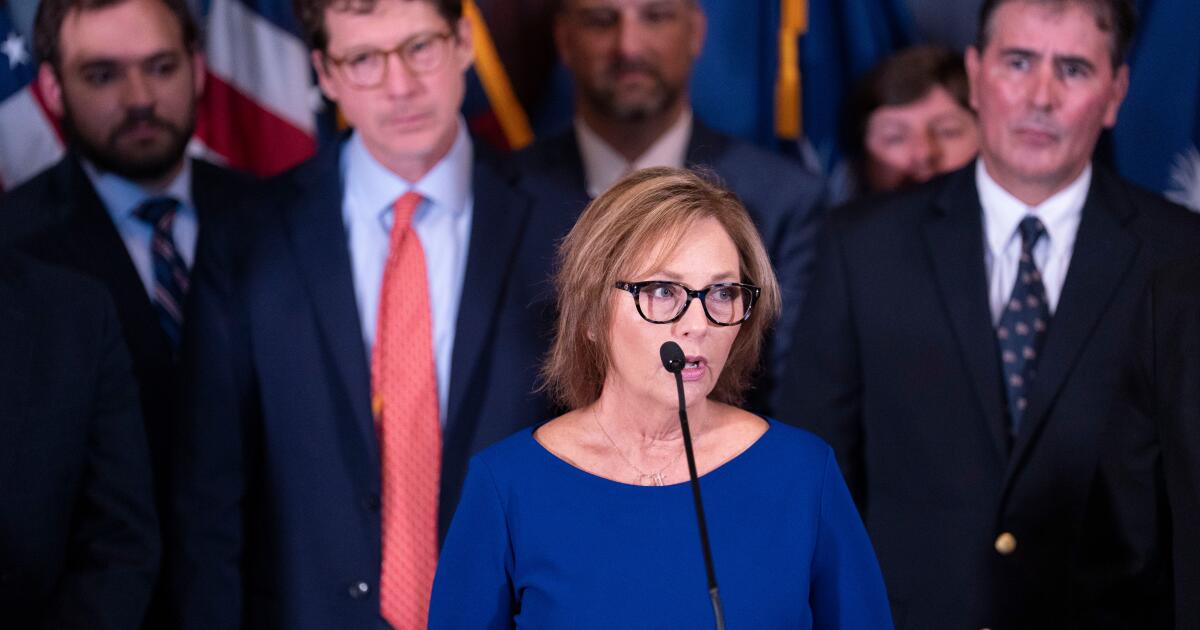
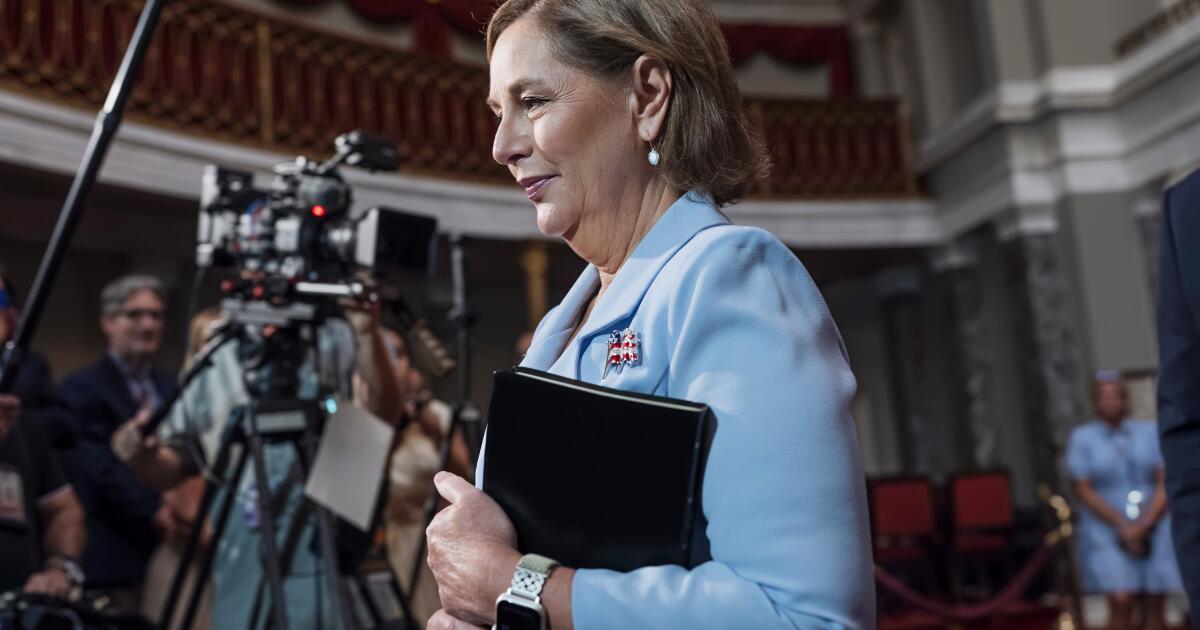
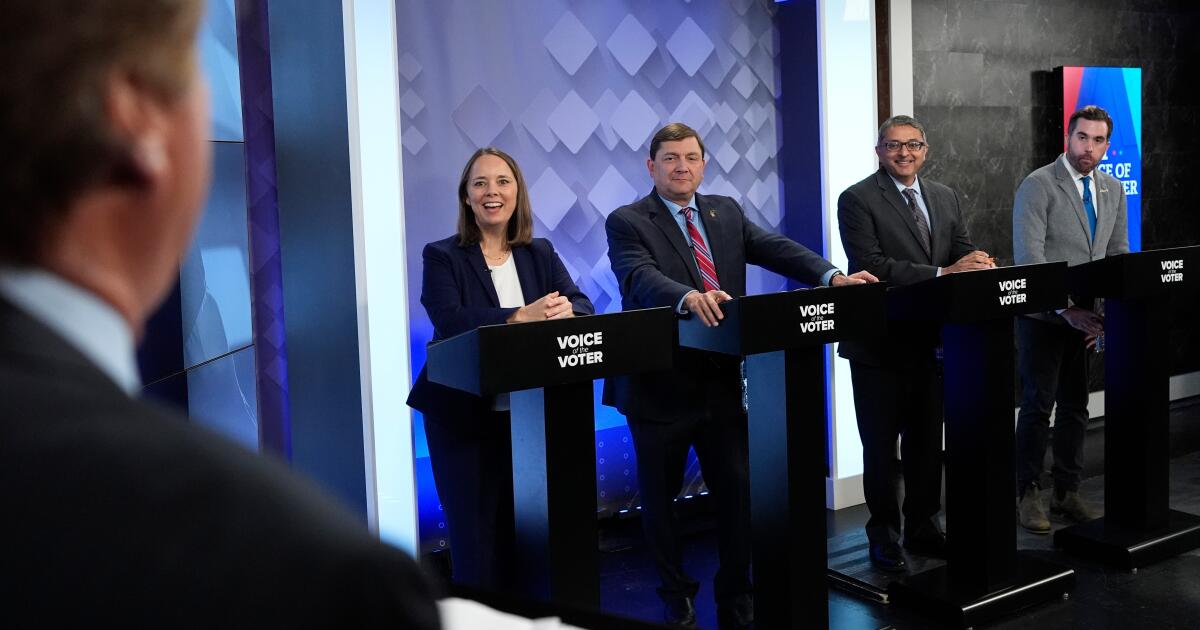
Contributor: A Democratic takeover of the Senate is now imaginable

I’ve seen enough. It’s time to revise our expectations about the midterms.

For more than a year now, conventional wisdom has been that Democrats would take back the House — but not the Senate — in the November midterms.

That’s because this year’s Senate map would require Democrats to win numerous seats in red states.

In fact, if you had asked me a couple of months ago, I would have told you that, yes, Democrats have a shot at the Senate, but in the same way my teenage son has a shot at someday dating Sydney Sweeney. Which is to say, technically possible but cosmically unlikely.

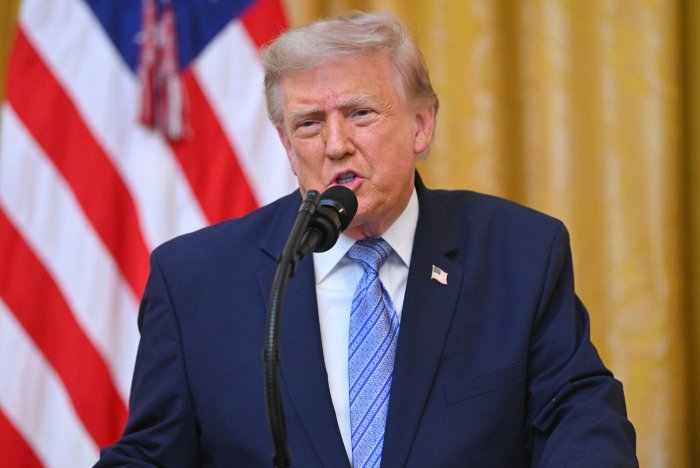
But recent developments (such as President Trump’s plunging approval ratings on the economy) are encouraging me to revise my thinking.

I’m not alone. Independent journalist Chris Cillizza recently observed that for the first time ever, prediction markets like Polymarket and Kalshi showed Democrats with a narrow edge.

Now, prediction markets are not scientific. Neither, for that matter, is licking your finger and holding it up to the wind — but both have outperformed political polling at various times in the last couple of years.

The difference is that in prediction markets, people are wagering actual money, which tends to sharpen the mind in ways that answering a pollster’s call during dinner does not.

Of course, you probably haven’t heard much about this revised political outlook. That’s because nobody has any incentive to shout it from the rooftops.

Democrats don’t want to inflate expectations and risk turning a solid win into a perceived disappointment. Republicans, meanwhile, are not eager to advertise that their Senate majority is wobbling like a shopping cart with a bad wheel. And we pundits, chastened by having been burned, are reluctant to get too far out over our skis.

Even Cillizza still leans Republican on balance. But if I had to bet today — and I tend to define bet as “regret later” — I’d put my chips on the Democrats. Not because it’s a sure thing, but because almost every political and economic development seems to be trending in their direction.

History helps. The “out” party in the midterms usually does well. Current events help. Policies, including the war in Iran and rising gas prices, tend to sour voters on whoever’s in charge. And candidate quality helps. Voters do occasionally notice who’s actually on the ballot, and Democrats are serving up a semi-respectable offering.

Let’s pause to appreciate what’s at stake. Control of the Senate isn’t just about who gets the nicer office furniture. It determines judicial confirmations, including the possibility that Trump could fill a fourth Supreme Court vacancy (if one opens up in 2027 or 2028).

Now, it would be irresponsible of me to just drop this idea without delving into some logistical details.

For Democrats to flip the Senate, they need to net four seats. That means defending everything they already have while winning four more. The encouraging news (if you’re rooting for the Democrats) is that there are at least eight plausible opportunities for that to happen.

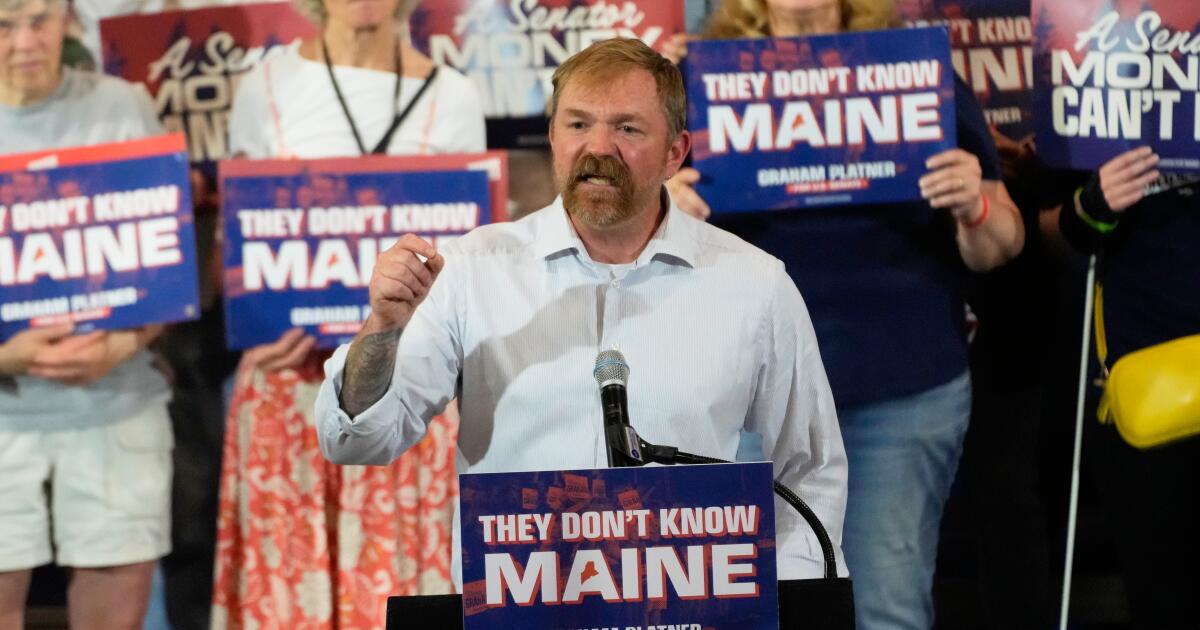
In North Carolina, incumbent Gov. Roy Cooper, a Democrat, is widely expected to win. In Maine, Republican Sen. Susan Collins once again finds herself in a political knife fight — her natural habitat, though perhaps not her preferred one. She will face Maine’s current governor or a flamboyant and controversial oysterman. I’m not sure who’d be the tougher opponent.

Out in Ohio, former Sen. Sherrod Brown benefits from the rare political skill of being a Democrat who still seems at home in Ohio.

The Democrat running in Alaska is a former member of Congress (and the first Alaska Native elected to Congress). And for the open seat in Iowa, Democrats seem likely to nominate a two-time Paralympic gold medalist who represents the reddest state house seat held by a Democrat.

Then there’s Texas, the perennial Democratic mirage — always shimmering on the horizon. But this year, it might come into clear view. James Talarico has emerged for Democrats, while Republicans are stuck choosing between scandal-plagued Atty. Gen. Ken Paxton and incumbent Sen. John Cornyn — a process that currently resembles a family feud conducted with vicious attack ads.

Meanwhile, in Nebraska and Montana, Democrats aren’t even pretending to compete. Instead, they’re relying on independents who — like Sens. Bernie Sanders and Angus King — would likely caucus with them.

In Nebraska, independent Dan Osborn already proved he can make it close: He lost in 2024 — a bad year to run against a Republican. And in Montana, the sudden announced retirement of Sen. Steve Daines has created an opening that didn’t exist five minutes ago (in political time).

Let’s not get carried away. The idea that Democrats could sweep all these races is still the kind of thing you say after your third drink. But winning half of them? That’s no longer fantasy. That’s … plausible. Maybe even more likely than not.

This isn’t a safe bet. It’s not even a comfortable one. But for the first time, it’s starting to look like smart money isn’t laughing at the idea anymore — it’s quietly sliding chips across the table.

Matt K. Lewis is the author of “Filthy Rich Politicians” and “Too Dumb to Fail.”

Source link

Senate Republicans block Democrat’s war powers resolution

March 19 (UPI) — Senate Republicans have blocked a Democrat-led effort to curb President Donald Trump‘s powers to wage war against Iran, as the nearly three-week-old conflict escalates and rattles global energy markets.

The Senate voted 53-47 mostly along party lines Wednesday night to reject a resolution that would withdraw U.S. armed forces from conflict with Iran absent congressional approval.

Sen. Rand Paul of Kentucky was the only Republican to join his Democratic colleagues and vote in favor of the motion, while Democratic Sen. John Fetterman of Pennsylvania was the only member of his caucus to vote against it.

“We do not have a king. We are a democratic republic with a constitution and no one is above the law,” Sen. Cory Booker, D-N.Y., said Wednesday from the Senate floor before the vote.

“This president cannot take us to war without coming through this body. He is not able to do that unless this body supplicates itself before that man and surrenders its responsibilities.”

Senate Democrats forced the vote on the resolution that Booker sponsored as the conflict escalated on Wednesday, with Iran attacking Persian Gulf energy facilities in retaliation for Israel striking its South Pars gas field.

Thirteen American service members have been killed, and another 200 have been wounded so far in the conflict, which is threatening to become a regional war as Iran has retaliated by attacking U.S. bases and its allies in the Middle East.

Democrats of both chambers of Congress have been attempting to rein in Trump’s war powers through resolutions since the war with Iran began late last month. They argue the United States’ ongoing war with Iran violates the Constitution, which mandates that only Congress has the power to declare war.

The conflict has also seen the cost of oil surge. On Thursday, Brent crude reached nearly $110 a barrel, up from an average $71 before the war began on Feb. 28.

Wednesday’s vote is the third time — and the second by the Senate — that the majority Republicans have blocked war powers motions.

From the floor, Senate Minority Leader Chuck Schumer said, “Enough is enough.”

“To my Republican colleagues: The American people are watching. They oppose this war. They expect us to do our jobs,” he said.

“No more senseless wars in the Middle East. No more gas prices shooting through the roof. No more U.S. service members fighting and dying for in endless wars.”

Though the war has exposed fissures in the Republican Party, its members still mostly stand behind the president, who campaigned on ending conflicts and warning Americans that the Democrats would wage war with Iran if they won the White House.

Sen. Lindsey Graham, a staunch Trump ally, argued on the Senate floor that the war is intended to prevent Iran from securing a nuclear weapon.

He said during the prior negotiations the United States offered Iran what he called “a lifetime fuel supply for free” if the Islamic regime agreed to hand over its cache of highly enriched uranium. It is believed that Iran had enriched uranium to 60%, according to a recent International Atomic Energy Agency report, which is below weapons grade enrichment at 90%.

Graham compared the Islamic regime of Iran to Nazi Germany.

“If you do not see this as an imminent threat, then you’re blind from your hatred of Trump,” he said.

“There are people on the left and people in my own party that are more afraid of Trump being successful than the Ayatollah having a nuclear weapon. That’s sick.”

Source link

Gabbard tells Senate panel only Trump can determine imminent threats

1 of 2 | Director of National Intelligence Tulsi Gabbard prepares to testify during a Senate Intelligence Committee hearing on worldwide threats in the Hart Senate Office Building on Capitol Hill in Washington, D.C., on Wednesday. Photo by Annabelle Gordon/UPI | License Photo

March 18 (UPI) — Director of National Intelligence Tulsi Gabbard defended U.S. military strikes on Iran during a Senate Intelligence Committee hearing Wednesday, calling them a strategic success.

Senators challenged Gabbard to reconcile the words of President Donald Trump with the intelligence her department has received on Iran. When pressed, Gabbard yielded that Trump has the final say on what threats the United States faces.

When the United States performed strikes on Iranian nuclear facilities in June, Trump said Iran’s nuclear capabilities were “obliterated.” Earlier this month, he said Iran’s development of nuclear weapons posed an imminent nuclear threat to national security, justifying military action.

Gabbard affirmed Wednesday that Iran’s nuclear enrichment program was “obliterated” in the June strikes.

“It is not the intelligence community’s responsibility to determine what is and is not an imminent threat,” Gabbard said. “That is up to the president, based on a volume of information he receives.”

Gabbard was once a vocal opponent of engaging in a war with Iran, even selling shirts that read “No War With Iran” in 2019 while she campaigned for the Democratic presidential nomination.

Iran is one of the United States’ top adversaries, the Office of the Director of National Intelligence’s “Annual Threat Assessment” said. China, Russia and North Korea are also on that list.

In the 19 days since the war with Iran began, Gabbard said the Iranian regime “appears to be intact but largely degraded.”

“Even so, Iran and its proxies remain capable of and continue to attack U.S. and allied interests in the Middle East,” Gabbard said. “The IC assesses that if a hostile regime survives it will seek to begin a yearslong effort to rebuild its missiles and UAV forces.”

President Donald Trump receives a bowl of shamrocks from Irish Taoiseach Micheal Martin to celebrate St. Patrick’s Day at the White House on Tuesday. Photo by Yuri Gripas/UPI | License Photo

Source link

Illinois primary: Lt. Gov. Stratton wins Democratic race for Senate seat

March 18 (UPI) — Illinois Lt. Gov. Juliana Stratton claimed victory late Tuesday in a close race to be the Democratic Senate nominee in November, as voters headed to the polls to cast ballots in primary elections.

Dozens of local and federal contests were held throughout the state on a busy election Tuesday that included 17 U.S. House races but only one for the Senate — a seat being left vacant by the retiring Dick Durbin, the six-term senator and the No. 2 Democrat in the Senate.

Stratton claimed victory in a packed race for the Democratic nomination for Durbin’s seat.

“We did it,” she told supporters in her victory speech in Chicago.

“Tonight, we showed what’s possible when you listen to the people and give the people what they want.”

Stratton ran on a progressive platform of securing a single-payer healthcare system and a $25 minimum wage, while rejecting all corporate Political Action Committee funding during her campaign.

U.S. Reps. Raja Krishnamoorthi and Robin Kelly emerged as her main political rivals.

Krishnamoorthi told his supporters in a brief speech Tuesday night at the Westin Hotel in Chicago’s River North neighborhood that he had called Stratton to congratulate her on winning the primary.

“I offered her my full support on the road ahead,” he said.

Krishnamoorthi positioned himself as the anti-President Donald Trump Democrat, often railing against the Republican leader and campaigning on his so-called Trump accountability plan of reforms to rein in presidential power to prevent abuses of power.

“Obviously, this is not the result we sought, but unlike Donald Trump, I’m not going to question the outcome,” he said.

“Now we must come together as Democrats and as Americans to make sure that we return to principles that made us a beacon of freedom and opportunity for the world.”

Kelly conceded online.

“Tonight’s isn’t the outcome we wanted, but I am so proud of us, and I still believe in putting people over profits,” she said in a statement.

“You want to know that your elected leaders are fighting for YOU, not distracted by outside noise. I’ll continue that fight in the U.S. house. I still have your back.”

As of early Wednesday, when an estimated 92% of the ballots had been counted, Stratton had secured about 40.1% of the vote share to Krishnamoorthi’s 33.2% and Kelly’s 18.1%, CNN and CBS News reported.

In a statement, Durbin, who did not endorse any candidate in the race, said he looked forward to “passing the torch” to Stratton when his term ends, while congratulating Krishnamoorthi and Kelly.

“Now our attention must turn to ensuring Juliana wins the general election on November 3,” he said. “With Donald Trump in the White House for another two years, the challenges facing our country and state will continue to be historic and unprecedented. We need Juliana Stratton fighting alongside Sen. [Tammy] Duckworth every day.”

On the GOP side, Don Tracy, former Illinois Republican Party chairman, was poised to seek Durbin’s vacant Senate seat as his party’s nominee.

Tracy campaigned in the blue state by positioning himself as a center-right candidate at a time of extremism in his party, stating on his website that he would seek “common sense solutions over extreme agendas.”

He also argued to be a voice for the entire state, voicing concerns that all federal elections had become contests for Chicago and Cook County.

“It’s time to make Illinois a two-party state again,” he said in a statement claiming victory on Facebook, while bashing Stratton as “the most extreme far-left U.S. Senate candidate this state has ever seen.”

“I will push for common sense solutions that make life more affordable for working families. I will work for everyday Illinoisans, not special interests or extreme agendas.”

Tracy was poised to win early Wednesday with nearly 40% of the vote share compared to lawyer Jeannie Evans’ nearly 23%, the closest runner-up, CNN and CBS News reported.

Evans campaigned on being a political outsider and a conservative Republican, while championing lowering costs and fighting crime.

In the governor’s race, Illinois is poised to have a rematch of 2022, when Gov. JB Pritzker, a Democrat, beat Republican farmer Darren Bailey.

While Pritzker ran uncontested, Bailey was seemingly coasting to the GOP nomination in a landslide.

With 94% of ballots counted, Bailey had won 53.5% of the vote share to runner-up Ted Dabrowski’s 28.8%, according to CNN and CBS News tallies.

“The first fight has been won, but make no mistake, we are just getting warmed up,” he said in his victory speech.

“Best birthday ever.”

Bailey ran on a law-and-order campaign that included lowering property taxes, cutting government spending and cracking down on repeated criminal offenders.

Source link

Republicans launch a voting bill debate that could last days or even weeks

Republicans launched an unprecedented effort on Tuesday to hold the Senate floor and talk for days about a bill that they know won’t pass — an attempt to capture public attention on legislation requiring stricter voter registration rules as President Trump pressures Congress to act before November’s midterm elections.

The talkathon could last a week or longer, potentially through the weekend, as Senate Majority Leader John Thune (R-S.D.) tries to navigate Trump’s insistence on the issue and Democrats’ united opposition. Trump has urged Thune to scrap the legislative filibuster, which triggers a 60-vote threshold in the 100-member Senate, or find another workaround to pass the bill, but Thune has repeatedly said he doesn’t have the votes to do that.

Instead, Republicans intend to make a long, noisy show of support for the legislation, which would require Americans to prove they are U.S. citizens before they register to vote and to show identification at the polls, among other things. It’s a risky strategy, with no guarantee it will be enough for Trump, who has said he won’t sign other bills until the Safeguard American Voter Eligibility Act — also known as the SAVE America Act or the SAVE Act — is passed.

The floor debate is expected to eventually end with a failed vote. Republicans need 60 votes to advance the bill to a final vote, but they hold 53 seats, and all 45 Democrats and both independents, who caucus with the Democrats, oppose it.

The debate will “put Democrats on the record,” Thune said. He added that “how it ends remains to be seen.”

The Senate voted 51 to 48 Tuesday to begin the debate, with Alaska Sen. Lisa Murkowski the only Republican voting against moving forward on the bill.

In a social media post on Tuesday morning, Trump issued a warning to any Republican who doesn’t support the bill: “I WILL NEVER (EVER!) ENDORSE ANYONE WHO VOTES AGAINST ‘SAVE AMERICA!!!’”

Creating strict voter registration rules

Trump says, without evidence, that Democrats can only win in the midterms if they cheat and explicitly said Republicans need the SAVE America Act to win in November. The House passed the legislation earlier this year, but the Senate turned to other issues as it became evident that Republicans didn’t have the votes to pass it.

But Trump made clear he wasn’t satisfied and pushed the Senate to act. The Republican president has said he won’t sign other legislation, including a bipartisan housing bill backed by the White House, until the voting bill passes.

The bill contains a slew of provisions that Trump and his most loyal supporters have pushed as part of a broad effort to assert federal control over elections. It would require voters nationwide to provide proof of citizenship when they register and to show accepted voter identification when casting a ballot.

It would also create new penalties for election workers who register voters without proof of citizenship and require states to hand voter data over to the Department of Homeland Security so federal officials could screen for voters who are in the country illegally.

Trump also wants new provisions added to the bill, including a ban on most mail-in ballots.

“It’ll guarantee the midterms,” Trump said of the bill last week. “If you don’t get it, big trouble.”

Democratic opposition to the bill is firm

Democrats and many groups that champion voter access say there is little evidence of noncitizens voting and say the bill would disenfranchise millions of voters — including Republicans — by creating new burdens to prove citizenship.

It is already illegal to vote if you are not a U.S. citizen, but the bill would lay out strict new rules for paperwork that most people would have to present in person to register to vote. Opponents of the measure say those documents are not always readily available for many people and argue that it would kill voter registration efforts and unfairly penalize young people who are registering to vote for the first time, married women who change their last name and people who cannot travel to present their documents, among other groups.

While Republicans have focused on the bill’s new requirements to show identification when they show up to vote, Democrats say they are most concerned that the legislation would allow the federal government to take voters off the rolls.

Senate Minority Leader Chuck Schumer (D-N.Y.) said that Democrats are not opposed to voter identification but “this is about purging the voter rolls in a massive way, so you never even get the chance to show a voter ID when you showed up to vote.”

Expect a show on the Senate floor

Trump, backed by Republican Sen. Mike Lee of Utah, has pushed for a talking filibuster, which would force Democrats to talk for days or weeks to delay passage of the bill. But Thune and the larger GOP conference rejected that idea, arguing that it would end in failure after giving Democrats a stage and the opportunity to offer endless amendments, potentially adding their priorities to the bill.

Republicans are instead taking over the floor with their own speeches, proceeding under regular order but operating outside the normal time limits that are customary when debating legislation. Democrats are expected to answer with their own procedural hijinks, potentially forcing Republicans to come to the floor at all hours for votes, meaning they will need to stay close to the Senate for the duration.

Lee said last week that it’s unclear how it will all play out. He said he thinks Trump “understands that we need to put in an aggressive effort here.”

“And a lot of that,” he said, “is going to have to be determined in real time as we go about it.”

The extent of Trump’s satisfaction with the process, Lee said, “will depend on whether, in his view, we gave it everything we have.”

On Monday night, Lee was rallying voters in Trump’s base on X.

“Once we’re on this bill,” he wrote, “we must stay on it until it’s passed into law.”

Jalonick writes for the Associated Press. AP writer Lisa Mascaro contributed to this report.

Source link

Senate prepares to debate SAVE Act amid partisan split

March 16 (UPI) — Senate Republicans are trying to pass the SAVE America Act this week, as both the GOP and Democrats are gearing up to fight over the election reform bill that would require those registering to vote to show proof of citizenship with passports or birth certificates.

The Safeguard American Voter Eligibility Act already has broad public support, but Democrats are strongly against it. Republicans and President Donald Trump want a prolonged fight, forcing Democrats to defend their opposition.

Republicans say it will make elections safer, but Democrats call it a “voter suppression act.”

The bill would force people registering to vote to show proof of citizenship with a passport or certified birth certificate. People who have legally changed their name, including transgender people and most married women, would have a more difficult time.

According to State Department statistics, around half of Americans have a valid passport, and a first-time applicant would have to pay $165 to get one. The University of Maryland’s Center for Democracy and Civic Engagement said that 2.6 million Americans do not have a government-issued photo ID.

A recent Harvard CAPS/Harris poll showed that 71% of voters support the SAVE Act.

House Republicans passed a version of the bill along party lines in February. But the Senate needs 60 votes to avoid a filibuster. Right now, Republicans have a 53-47 majority, and Sen. John Fetterman, I-Pa., who usually votes with the GOP, has said he’s against the bill.

On Thursday, Senate Majority Leader John Thune, R-S.D., said he wants to bring the bill to a vote to “put Democrats on the record.”

Sen. Mike Lee, R-Utah, told The Hill that Trump wants to see an epic fight, similar to the two-month battle to pass the 1964 Civil Rights Act.

“What I want to do is try to maximize the period of time in which we debate it,” Lee said.

“They faced a 32-vote cloture deficit at the time it came over from the House in March of ’64,” Lee told The Hill. “They were able to close a 32-vote cloture deficit. It took them 60 days, but they got there.”

He said taking a longer time gives lawmakers clarity.

“Debating a bill that continues to get more popular even as people are trying to slow it down and stop it and obstruct it sometimes sharpens the minds of individual lawmakers and makes them more amenable in the end to negotiation,” Lee added. “That’s what we’re looking at here.”

Trump and other conservative Senators want to force Democrats to do a talking filibuster, but Thune has said there just aren’t enough votes to do so. He said the Republicans aren’t unified enough to table potential Democratic amendments.

“The votes aren’t there, one, to nuke the filibuster and the votes aren’t there for a talking filibuster. It’s just a reality,” The Hill reported Thune said last week. “I’m the person who has to deliver sometimes the not-so-good news that the math doesn’t add up but those are the facts and there’s no getting around it.”

Senate Minority Leader Chuck Schumer, D-N.Y., said Democrats are prepared for the battle.

“We don’t yet know what Thune is doing … but we’re prepared for every possible scenario,” Schumer told reporters Sunday.

“My caucus really feels strongly that this would be a horror … one of the worst things that’s happened in the history of this country in terms of allowing people to vote,” he said.

Trump has said he will not sign any legislation until the act passes the Senate.

President Donald Trump speaks during an event celebrating Women’s History Month in the East Room of the White House on Thursday. Photo by Bonnie Cash/UPI | License Photo

Source link

Senate rebukes Elizabeth Warren for quoting Martin Luther King Jr.’s widow in debate on Jeff Sessions

Sen. Elizabeth Warren has earned a rare rebuke by the Senate for — believe it or not — quoting Coretta Scott King on the Senate floor.

The Massachusetts Democrat ran afoul of the chamber’s arcane rules by reading a 30-year-old letter from Dr. Martin Luther King’s widow that dated to Sen. Jeff Sessions’ failed judicial nomination three decades ago.

The chamber is debating the Alabama Republican’s nomination for attorney general, with Democrats dropping senatorial niceties to oppose Sessions and Republicans sticking up for him.

King wrote that when acting as a federal prosecutor, Sessions used his power to “chill the free exercise of the vote by black citizens.”

Quoting King technically put Warren in violation of Senate rules for “impugning the motives” of Sessions, though senators have said far worse stuff. And Warren was reading from a letter that was written 10 years before Sessions was even elected to the Senate.

Still, top Senate Republican Mitch McConnell invoked the rules. After a few parliamentary moves, the GOP-controlled Senate voted to back him up.

Now, Warren is forbidden from speaking again on Sessions’ nomination. A vote on Sessions is expected Wednesday evening.

Democrats pointed out that McConnell didn’t object when Sen. Ted Cruz (R-Texas) called him a liar in a 2015 dustup.

“I’m reading a letter from Coretta Scott King to the Judiciary Committee from 1986 that was admitted into the record. I’m simply reading what she wrote about what the nomination of Jeff Sessions to be a federal court judge meant and what it would mean in history for her,” Warren said.

Source link

Senate passes bipartisan housing bill to improve access and affordability

The Senate passed a broad bill on Thursday to make U.S. housing more accessible and affordable, a rare bipartisan effort in Congress to address a growing national problem.

The bill, which passed 89 to 10, would reduce regulations, regulate corporate investors and expand how housing dollars can be used to build affordable homes and rentals. It will now head back to the House, which passed a similar bill earlier this year.

“We have a housing shortage all across America,” said Sen. Elizabeth Warren (D-Mass.), who worked with Republicans to win overwhelming support from both parties for the legislation. “We need more housing of every kind. More housing for first-time home buyers, more housing for renters, more housing for seniors, more housing for people with disabilities, more rural housing, more urban housing, more, more, and more.”

The legislation, she said “will help drive down prices.”

Senate Banking Committee Chairman Tim Scott (R-S.C.), led the effort with Warren. He said ahead of the vote that the Senate could “do what so many people failed to do in this legislative body for the last few decades, and that is pass consequential legislation that makes it easier to become a homeowner.”

Roadblocks ahead for the legislation

Despite the overwhelming bipartisan vote in the Senate, It’s unclear whether the House will pass the legislation again — or if President Trump will sign it.

Trump has strongly backed the bill through the bipartisan negotiations, but he has also slowed its momentum with a declaration last weekend that he won’t sign any new measures unless Congress passes legislation that would require voters to show proof of citizenship and end most mail-in balloting. The Senate is expected to begin consideration of that bill next week, but it is unlikely to pass as all Democrats oppose it.

At the same time, House leaders have indicated that they are unlikely to accept the Senate version of the housing legislation and have suggested they could launch a formal conference process to negotiate a final deal between the chambers — a process that could take months.

Senate Majority Leader John Thune (R-S.D.) said ahead of the bill’s passage on Thursday that conference negotiations are a possibility, “but obviously the quickest way to do this would be to pick up the Senate bill and pass it.”

If the White House wants that to happen, he said, “they’ll probably have to make that argument to House leadership.”

Making housing more attainable

The bill would give local governments more power on housing issues, allow banks to invest more in affordable housing and lift limits on the number of units in a public housing development that can receive private financing through Section 8 funding that helps rehabilitate properties.

“You’ve got many provisions in this bill that stop treating the U.S. like one single housing market and start giving local leaders the tools they need to fix their unique regional puzzle,” said Peter Carroll with Cotality, a company that tracks housing data.

The bill aims to make homebuilding easier by streamlining some regulations that require environmental reviews and inspections. It also eliminates a limit on a grant for emergency shelter beds and street homelessness outreach.

As many affordable housing developers are leaning on manufactured and modular homes that can be transported to areas that need housing, the legislation also lifts the requirement that they have to be built on a permanent chassis, making them easier to build and design.

Housing advocacy and policy groups say they wish the bill went further by investing money in building more housing and assisting renters.

“This legislation is the product of essentially senators and House members wanting to come up with something that could pass with both Democratic and Republican votes, which means it’s inherently less ambitious,” said Yonah Freemark, a researcher at Urban Institute.

Corporate investors

One of the more contested provisions of the bill would bar institutional investors from buying single-family homes — a top priority for Trump.

The bill defines such investors as any that directly or indirectly own 350 or more single-family homes. Investors of any size would not be required to sell single-family homes bought before the date that the bill becomes a law.

They would still be allowed to buy or build single-family homes if they rent them out, but would be required to sell them to an individual homebuyer after seven years and offer that buyer “price concessions” and give tenants a 30-day “first-look” period when the time comes to sell the home.

A need for reform

The U.S. housing market has been in a slump dating back to 2022, when mortgage rates began to climb from pandemic-era lows.

Sales of previously occupied U.S. homes have been hovering close to a 4-million annual pace now going back to 2023 — well short of the 5.2-million annual pace that’s historically been the norm. They slowed last year to a 30-year low and have remained sluggish so far this year, declining in January and February versus a year earlier.

A sharp run-up in home prices, especially in the early years of this decade, and a chronic shortage of homes nationally worsened by years of below-average home construction have left many aspiring homeowners priced out of the market.

Meanwhile, while the median U.S. monthly rent has been declining for more than two years, it was still 15.2% higher in January than it was at the start of 2020, according to data from Realtor.com.

The trends have ratcheted pressure on lawmakers this year, with midterm elections looming in November, to show they’re working on ways to make homeownership and rental housing costs more affordable.

Kramon, Veiga and Jalonick write for the Associated Press. Kramon reported from Atlanta and Veiga reported from Los Angeles.

Source link