The leading candidates in Michigan’s heated Senate race have faced off in their first televised debate, with less than a month remaining before the United States midterm elections.
Thursday’s hour-long debate was a microcosm of how tense the toss-up race has become.
Recommended Stories
list of 3 itemsend of list
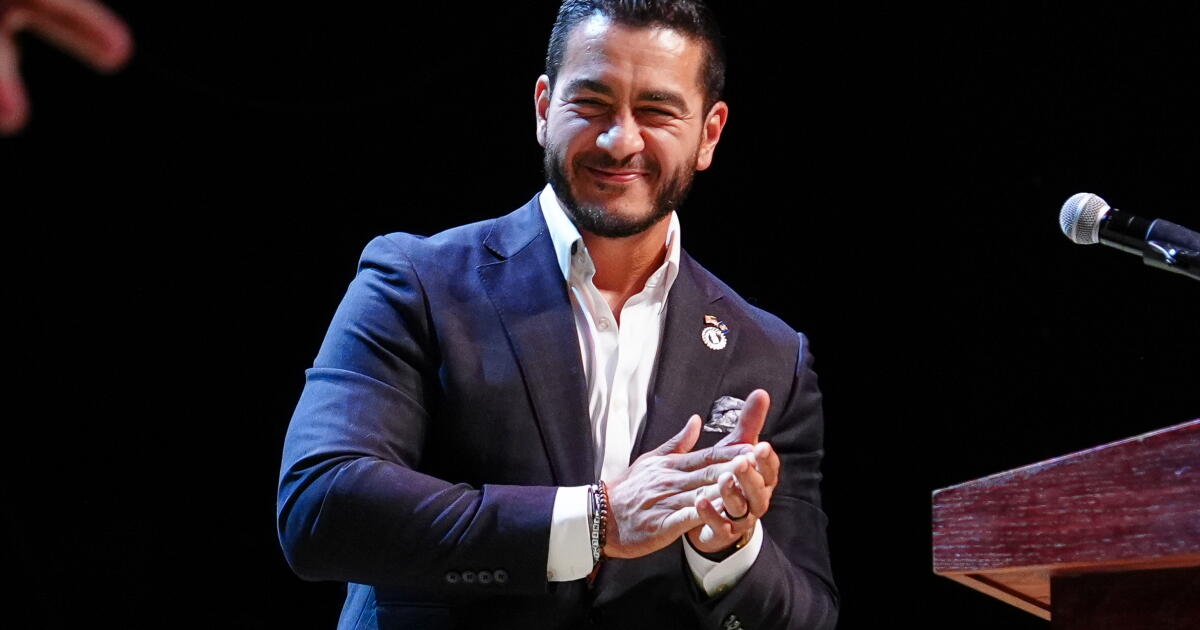
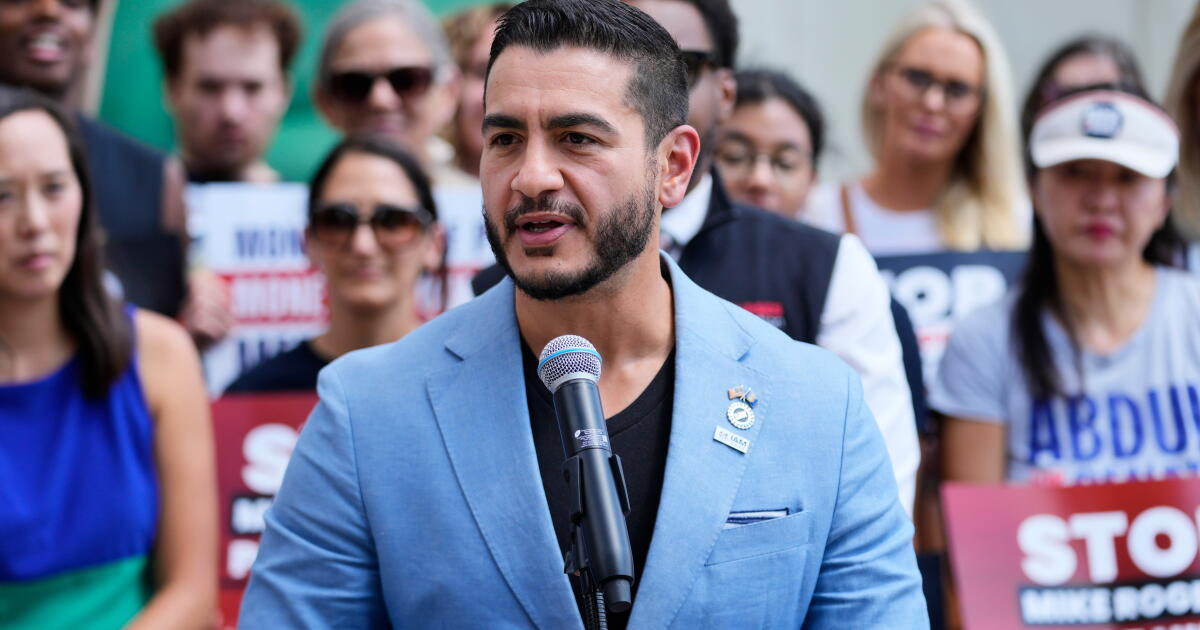
Democratic nominee Abdul El-Sayed, formerly the health director for Wayne County, repeatedly sought to paint his Republican adversary Mike Rogers as a yacht-owning millionaire out of touch with ordinary voters.
For his part, Rogers, a former member of the US House of Representatives, lobbed accusations at El-Sayed that he was soft on “terrorism” and had foreign sympathies.
The Michigan-born El-Sayed has repeatedly faced Islamophobic attacks while on the campaign trail, with Republican President Donald Trump labelling him an “extremist, terrorist sympathizer” whose history “goes back to the days of the Jihad”. If elected, El-Sayed would be the first Muslim member of the US Senate.
The two candidates spent much of their hour onstage together speaking over one another, as they exchanged pointed barbs.
“He can’t condemn a terrorist act that happened on our soil in the state of Michigan. He can’t bring himself to condemn –,” Rogers began, referencing a March attack on a synagogue.
“I did condemn it,” El-Sayed said, jumping in. “No, you did not,” Rogers replied, with El-Sayed quickly responding, “You make stuff up. You make stuff up.”
The Senate race in Michigan is considered key to the battle for control of the US Senate. Democrats are seeking to flip both chambers of Congress, but shifting control of the Senate will be a tougher prospect, given that only a third of its 100 seats are on the November 3 ballot.
Host Rick Albin at times struggled to keep the debate on track, as tensions rose.
“We’ve got dozens of questions we want to get to. You can’t litigate all of these with 14 different rebuttals, so please work with me,” Albin told the two candidates at one point.
Here are the key takeaways from the evening’s debate.
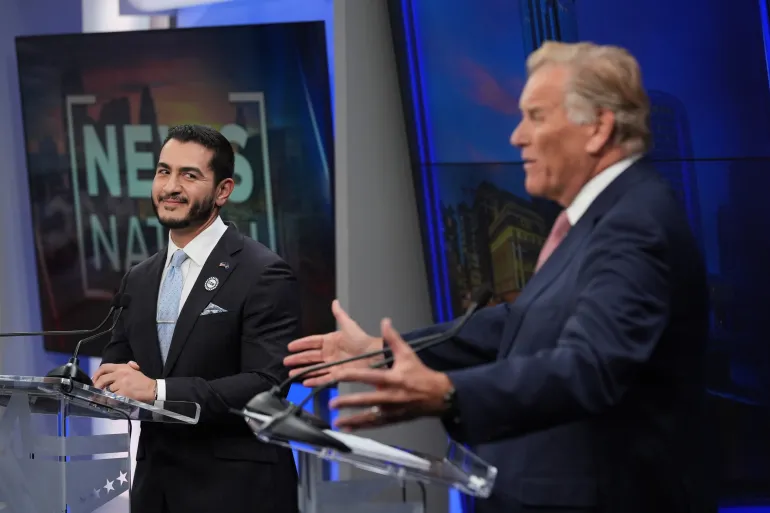
Republican nominee Mike Rogers, right, speaks during a televised debate with Democratic nominee Abdul El-Sayed [Paul Sancya/Pool via AP Photo]
Rogers insinuates El-Sayed family ties to ‘terrorism watch list’
The ferocity of the debate was underscored by the high volume of ad hominem attacks the candidates deployed against each other.
But Rogers repeatedly pushed a series of attacks that seemed to centre on El-Sayed’s identity as a Muslim.
In response to a question about healthcare, Rogers said that El-Sayed has “taken money from individuals on his campaign who openly support Hamas, Hezbollah, al-Qaeda”.
Later, when asked about his position on surveillance by Flock cameras, Rogers argued that such technology has helped catch people suspected of terrorism. He then implied that El-Sayed’s concerns about the cameras were suggestive.
“Why would that bother you?” Rogers asked El-Sayed. “Well, if you have somebody in your family that might be on the terrorism watch list …”
El-Sayed interjected, seeming to dare Rogers to continue his thought.
“Are you going to go ahead and say that I’m a – go ahead and say it,” El-Sayed said. “You’ve been tiptoeing about it the whole time. Just say it. Just say it. Go ahead and say it.”
Muslim and Arab candidates in the US have frequently been subjected to Islamophobic attacks on the campaign trail, accusing them of support for “terrorism” and Islamic fundamentalism.
Republican Mike Rogers insinuated El-Sayed may have family on the ‘terrorism watch list’ [Paul Sancya/Pool via AP Photo]
Both sides agree on ending the Iran war
There were issues, however, on which both candidates found a measure of common ground.
Both Rogers and El-Sayed agreed the US-Israeli war against Iran should end, but they had opposite views on Washington’s relationship with Israel and its role in the conflict.
High gasoline prices and inflation, El-Sayed said, were directly caused by the Iran war, and he blamed the Trump administration for Iran’s decision to shut down the Strait of Hormuz, a critical trade route.
“This is what happens when you start wars you never should be fighting,” El-Sayed said. “We literally taught the Iranian regime that they have a choke on the Strait of Hormuz, and now we’re living in that reality.”
Rogers agreed that “we need [the war] to come to an end”, but he also justified the conflict, saying that Iran’s uranium enrichment programme had been “set back twenty years”, echoing a frequent White House talking point.
The Trump administration has argued that the war was necessary to prevent Iran from creating a nuclear weapon, a goal Tehran has long denied.
Rogers’s position led El-Sayed to accuse him of “cheerleading” for the war and the Trump administration.
Democratic nominee Abdul El-Sayed pushed for an end to unconditional support for Israel [Paul Sancya/Pool via AP Photo]
Rogers backs continued Israel aid, El-Sayed calls for end
As part of the debate about US foreign policy, the candidates were also pressed on their positions about the US alliance with Israel.
The country is considered the largest overall recipient of US aid since World War II. From the start of Israel’s genocidal war on Gaza in October 2023 through September 2025, experts estimate that Israel received nearly $21.7bn in military aid.
El-Sayed has openly called for ending aid to Israel, and he has repeatedly denounced the conflict in Gaza as a genocide, in line with evaluations from United Nations experts and human rights watchdogs.
During the debate, he indicated he preferred US taxpayer dollars to be spent on domestic concerns like education and healthcare, rather than Israeli aid.
“He wants unconditional support for a foreign government,” El-Sayed said of Rogers. “I want unconditional support for kids in our schools, unconditional support for our healthcare, childcare.”
He also blamed Israel for the US military action in Iran. “I don’t want to be pushed into war by Israel, and I don’t want to be in war with Iran,” El-Sayed said.
Rogers, meanwhile, has joined most of his fellow Republicans in continuing to support aid for Israel. He argued that the country had “the right to defend itself in a very difficult neighbourhood”.
“Is there anything Israel could do that would lose your support?” the debate host asked.
“Listen, if they’re talking about using nuclear weapons, they would definitely lose my support,” Rogers replied.
Abdul El-Sayed, right, and Mike Rogers shake hands prior to their debate [Paul Sancya/Pool via AP Photo]
Another hot-button issue during the debate was Trump’s crackdown on immigration.
The Republican leader has pledged to carry out the largest mass deportation effort in US history, and his campaign has spurred human rights concerns.
When asked how they would approach the crackdown, both Rogers and El-Sayed agreed on tempering the militarised nature of the campaign.
In several cities, including Minneapolis, Minnesota, immigration authorities have been accused of racial profiling and using excessive force against immigrants and protesters, as well as violating their rights to due process.
Multiple fatal shootings have occurred during immigration enforcement operations, including the deaths of Renee Good and Alex Pretti in January.
Rogers indicated he would not have supported such confrontational operations, but he repeated a Trump claim that the raids were taking dangerous criminals off the streets.
“I think the public efforts in Minnesota were probably not appropriate,” Rogers said. “You always want to go in quiet, get the bad guy, get out of the neighbourhood for less problems. So that, to me, was something that they could have done differently.”
He later claimed that, under Trump, the country had seen “the largest decrease in murders ever recorded”.
El-Sayed, meanwhile, has previously voiced support for abolishing Immigration and Customs Enforcement (ICE), a key agency in Trump’s deportation campaign. He defended that stance on the debate stage.
“ICE right now is not about immigration enforcement. ICE is about terrorising our streets,” he said.
Mike Rogers speaks to reporters in the spin room after the debate on October 8, 2026 [Jim Vondruska/Reuters]
Candidates debate Canada trade war and tariffs
Donald Trump’s trade war with Canada, felt acutely in neighbouring Michigan, was another key topic of conversation.
El-Sayed depicted Rogers as an uncritical backer of Trump and his tariffs and tied him to past free trade deals such as the North American Free Trade Agreement (NAFTA), which paved the way for companies to shift manufacturing facilities out of the US – though Rogers did not enter Congress until 2001, eight years after NAFTA passed.
“You did that, man. That was your policy. NAFTA, that was your policy,” said El-Sayed.
Rogers sought to distance himself from the current trade war but expressed support for a deal with Canada that would loosen some of Ottawa’s tariffs on US goods.
“I would like to see the deal made,” said Rogers, adding that high Canadian tariffs for US goods “should be eliminated”.
Both candidates tried to strike a balance between criticism of the economic fallout of the trade war and qualifying their support for more selective tariffs, favoured by some industries and labour unions as a means of protecting domestic jobs.
There are few people, if any, who’ve tracked U.S. elections for longer or in greater depth than Charlie Cook.
Ever since 1984, when he started his eponymous political newsletter, Cook and his stellar crew of nonpartisan analysts have plumbed many thousands of races — for president, Congress, governor — following the money, sussing out the candidates, watching their ads and assaying the campaign landscape at a granular level.
What’s unusual, Cook suggested, is the prospect of big Democratic gains when Republicans started out this election season with so many advantages. (And that was before the GOP set off on a gerrymandering jag at Trump’s behest.)
Roughly two-thirds of the Senate seats up in November are in states Trump carried in 2024. Five of the seven toss-up races are in states Trump won, several by double digits.
On the House side, Republicans maintain control by an exceedingly narrow margin, meaning there aren’t a lot of low-hanging districts for Democrats to aim for. As Cook rightly noted, “A party cannot lose a seat they don’t have.”
We’ll get to predictions in a moment. (Patience, dear reader.)
First, let’s hear from Nathan Gonzales, another longtime election handicapper. He’s been tracking political contests nationwide for more than 25 years and edits and publishes Inside Elections — formerly the Rothenberg Political Report — another nonpartisan field guide to campaigns. Like Cook, he traffics in clear-eyed, dispassionate analysis, not partisan wish-casting or political spin.
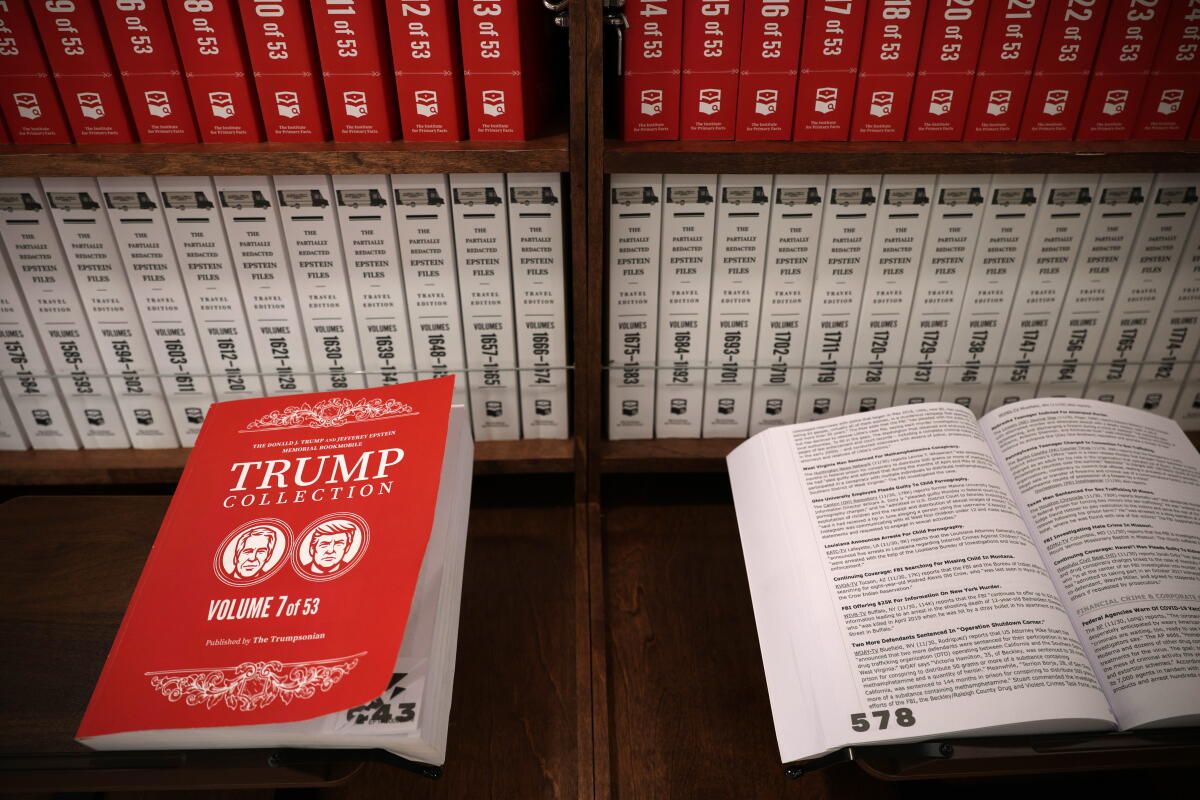
A detail of the exhibit in the Epstein Files Bookmobile during a campaign stop for Democratic House candidate Bob Brooks at the United Steelworkers of America office in Bethlehem, Pa. Brooks is challenging Republican incumbent Ryan Mackenzie (R-Pa.) in Pennsylvania’s highly competitive 7th Congressional District in the upcoming midterm election.
(Alex Wong / Getty Images)
Trump’s performance — his approval rating is flirting with record lows — “has inspired Democrats, turned off independents and created a group of apathetic Republicans,” Gonzales said, “and those are the ingredients for a good or great Democratic year.”
He noted Democrats don’t need a big wave to seize control of the House. A pickup of just three seats would flip the House, marking the seventh straight midterm election in which one chamber or the other changed partisan hands.
(For the record, there is no authoritative definition of a wave election, though it’s generally agreed the term applies to an election in which one party or the other gains a large and lopsided number of House and Senate seats.)
It’s beginning to feel a lot like 2006, Gonzales said.
Gonzales and his team of experts believe the House is most likely gone for Republicans, forecasting a Democratic gain of seven to 15 seats, unless the bottom falls out for the GOP and their losses climb much higher.
In the Senate, where Democrats need to pick up four seats to take control, Gonzales sees the chamber teetering on a knife’s edge, forecasting a Democratic gain of three to five seats.
“It’s too late to fundamentally change the trajectory of this election,” Gonzales said. “But if Republicans can boost Republican turnout, it might be enough to save the Senate.”
For his part, Cook agrees that Mike Johnson may be nearing the end of his speakership. The best-case scenario for the GOP would be keeping its losses to 25 House seats or less, Cook said, which is right around the average for midterm elections going back well over half a century.
“It starts getting into eyebrow-raising territory if it gets north of 35,” Cook said, “because that shouldn’t be possible with the few competitive districts we have now.”
As for the Senate, he suggested the best Republicans can hope for is a net loss of two seats, keeping the GOP barely in control. (A loss of three would mean a 50-50 split, leaving Vice President JD Vance poised to be the tiebreaker on close votes — and wouldn’t he love having to drop off the 2028 campaign trail to be on hand, just in case.)
Of course, there’s still an election to be held, votes to be cast and ballots to be counted.
SEATTLE — A judge on Thursday overturned President Trump’s decision to fire the court-appointed top U.S. prosecutor in Seattle, the latest development in a legal tug-of-war over the administration’s efforts to control who occupies the powerful Justice Department posts.
The 17 active and senior judges in the Western District of Washington unanimously named Roger Rogoff, a former judge and veteran prosecutor, U.S. attorney in July, after Trump failed to fill the post with a nominee confirmed by the U.S. Senate.
The president fired Rogoff less than an hour later. Rogoff sued, and in a ruling Thursday, U.S. District Judge Stanley Bastian found the termination unlawful and reinstated him.
Bastian noted that when presidents fail to fill a U.S. attorney post with a nominee confirmed by the Senate, federal law authorizes the judges of that district to appoint someone “until the vacancy is filled.”
“It does not say ‘until the president fires the person selected,’” Bastian said.
He concluded: “Mr. Roger Rogoff is the United States attorney for the Western District of Washington and has been the rightful holder of that office since July 15, 2026, when he took the oath of office.”
The Justice Department said in a written statement it disagreed with the decision and would appeal.
Rogoff is the latest in a series of judicially appointed U.S. attorneys to be ousted by the Trump administration, and he is believed to be the first to sue over the removal, setting up a direct legal battle over the issue.
Presidents normally appoint U.S. attorneys, the top federal prosecutor in each judicial district. The positions require Senate confirmation, except in temporary appointments, which can last up to 120 days. When temporary appointments expire before a nominee is confirmed, the judges in a judicial district can name a U.S. attorney.
But under Trump, the Justice Department has sought to leave unconfirmed prosecutors in their positions indefinitely, often through novel personnel maneuvers. Trump named Charles Neil Floyd, who previously served as an immigration judge, interim U.S. attorney in Seattle in October 2025 but never forwarded his nomination to the Senate.
When Floyd’s time as interim U.S. attorney expired, Trump simply shifted his title, a tactic the administration has also tried in other federal judicial districts: It named him first assistant U.S. attorney, while leaving the top post empty.
Trump last month nominated Pete Serrano, the first assistant U.S. attorney in eastern Washington, to be the U.S. attorney in Seattle. But Serrano has not been confirmed, and his nomination is opposed by Washington’s senior Democratic senator, Patty Murray.
“Today’s ruling is an important victory for the rule of law and the people in Western Washington who deserve a U.S. attorney that answers to the law, not Donald Trump,” Murray said in a written statement Thursday.
Bastian is the chief judge in eastern Washington. He heard the case because the judges in western Washington were recused.
In December, Alina Habbaresigned as the top federal prosecutor for New Jersey after an appeals court said she had been serving in the post unlawfully.
Lindsey Halligan, who pursued indictments against a pair of Trump’s adversaries, left her position as an acting U.S. attorney in Virginia after a judge concluded her appointment was unlawful and that indictments she brought against James and former FBI Director James Comey must be dismissed.
The judges there named James Hundley, who had handled criminal and civil cases for more than 30 years, but the administration fired him. It also fired a court-appointed U.S. attorney in northern New York.
WASHINGTON — Dr. Nicole Saphier, President Trump ‘s third nominee for surgeon general, moved a step closer to confirmation after a Senate committee voted to advance her nomination on Wednesday.
Saphier, a radiologist and former Fox News Channel contributor, was advanced out of the Senate Committee on Health, Education, Labor and Pensions on a 12 to 11 vote to serve as surgeon general after she was grilled at her confirmation hearing earlier this month about her stance on childhood vaccines.
She expressed support for vaccines and told lawmakers she didn’t believe they cause autism. The Trump administration has sought to revisit claims about a link between vaccines and autism, although widespread scientific consensus and decades of studies have firmly concluded there is none.
Timothy Westlake, who was nominated to serve as assistant secretary for mental health and substance use at the Department of Health and Human Services, was also advanced out of committee on the same en bloc vote.
It was not immediately clear when the officials would face a full Senate vote for their confirmation, but they are expected to be approved.
During her confirmation hearing, Republican Sen. Bill Cassidy pressed Saphier to declare whether she believed there was a link between vaccines and autism. Saphier responded that she does “not believe childhood vaccines cause autism,” adding that “the MMR vaccine is our greatest tool for combating measles,” in response to a question by Cassidy over whether parents should give children that shot.
MMR stands for measles, mumps and rubella, and the president recently called for the shots to be spaced out, against the guidance of medical groups.
The surgeon general position carries limited policymaking power but serves as a loud megaphone as the nation’s top communicator to Americans on public health issues.
Cassidy, who led the inquiry into Saphier’s views on vaccines, ultimately voted in support of her nomination.
Sen. Bernie Sanders, the ranking member of the Senate HELP committee, said ahead of Saphier’s vote that he would vote down her nomination because in part Saphier “has questioned the need for the hepatitis B vaccine at birth, when the data science has been clear.”
“We need a surgeon general who will tell the truth about vaccines, not someone who misleads the public,” Sanders said. At her confirmation hearing, Saphier said the universal birth dose of hepatitis B was safe and effective.
Chris Klomp, who was nominated to serve as deputy secretary of the Department of Health and Human Services, was advanced out of the Senate Finance Committee last week on a 15 to 12 vote. He was questioned during the same hearing as Saphier about his duties associated with the role as the current chief counselor of the Department of Health and Human Services under the leadership of Health Secretary Robert F. Kennedy Jr. as well as about his vaccine stance.
In protesting Klomp’s nomination at the Senate Finance Committee, Sen. Ron Wyden said Klomp “tried to create the impression that he will be the adult in the room on vaccines. Yet, as we sit here today, the vaccine chaos that we’ve come to expect from Robert Kennedy’s HHS continues.”
Republican Senator Rand Paul is standing in the way of the bipartisan Connected Vehicle Security Act of 2026, sponsored by Senators Bernie Moreno of Ohio and Elissa Slotkin of Michigan, from passing through the Senate. The legislation aims to prohibit the import, manufacture, and sale
The resolution cites a ‘lack of accountability’ by Israel’s government and an ‘inability to secure justice’ by the US.
The United States Senate has blocked a resolution that would have required President Donald Trump’s administration to report on the killing of nine Americans in the occupied West Bank and on Israel’s treatment of Palestinian children in military detention.
The resolution failed 47-53 on Tuesday, with senators voting largely along party lines.
Recommended Stories
list of 4 itemsend of list
It was brought to the floor by Senator Chris Van Hollen, a Democrat from Maryland, and cited a “lack of accountability” from the government of Israeli Prime Minister Benjamin Netanyahu and an “inability to secure justice” from the US government.
Senator John Fetterman of Pennsylvania was the only Democrat to vote against advancing the resolution, while Senator Rand Paul, a Republican from Kentucky, joined Democrats in supporting it.
Van Hollen forced the vote under the Foreign Assistance Act of 1961, which allows individual members of Congress to demand a formal State Department report on the human rights practices of any country that receives US security assistance.
“Violence is raging in the West Bank, & despite the deaths of nine Americans, the wrongful detention of even more, & the daily torment of Palestinians, we have no accountability from the U.S. or Israeli govt”, Van Hollen wrote on X before the resolution was brought to a vote.
Nine Americans killed
The resolution called for an unclassified report within 30 days of adoption. It would have detailed investigations into the deaths of the Americans, the treatment of US citizens held in Israeli prisons, and the conditions facing Palestinian children in Israeli military detention.
The measure cited the deaths of nine American citizens in the occupied West Bank since January 2022, including Shireen Abu Akleh, a Palestinian-American journalist and Al Jazeera correspondent who was shot in the head and killed in May 2022 while reporting in the city of Jenin.
It also included Aysenur Ezgi Eygi, who was shot in the head and killed by an Israeli soldier in September 2024, and Sayfollah Kamel Musallet, who was beaten to death by Israeli settlers in July 2025.
The others were Amer Mohammad Saada Rabee, who was 14; Tawfic Abdel Jabbar and Mohamed Ahmad Alkhdour, both 17; Omar Assad; Khamid Ayyad; Nasrallah Abu Siyam; and Khamis Rabee Jabara.
The resolution also noted the arrests of several Palestinian-American children by Israeli forces.
Among them was Mohammed Ibrahim, a 16-year-old from Florida, who was arrested in February 2025 and held in pretrial detention for nine months without contact with his family. It noted that US embassy officials and lawyers who met him told his family that he had lost nearly a quarter of his body weight, contracted scabies, and was beaten and tortured.
Other Palestinian Americans who remain in custody include Adam Wajeh Abdelfattah Karakrah, 16, and Sama Safi, 20, a student detained in June in raids targeting students at Birzeit University.
The resolution cited rights groups that have documented the deaths of at least 44 Palestinians in Israeli military camps since the Hamas-led attacks of October 7, 2023. Those groups, it said, have documented widespread abuses, including beatings, sexual violence, harassment and threats, “pointing to systemic and deliberate mistreatment”.
It also went on to note a sharp escalation in Israeli settler pogroms in the occupied West Bank, and stressed that there have been no convictions for the killings of Palestinian civilians by Israeli settlers since 2020.
WASHINGTON — The Senate on Monday is expected to approve a bipartisan bill that would give the NCAA and its member conferences the authority to enforce uniform national rules on college athletics.
If the bill is passed by the Senate, it would move to the House and, if approved, on to President Trump for his signature to become law.
What the Protect College Sports Act would do
Under the Protect College Sports Act — co-authored by Sen. Maria Cantwell (D-Wash.) and Sen. Ted Cruz (R-Tex.) — the NCAA would be granted a limited antitrust exemption that would allow the organization to create standardized rules around athlete eligibility, limit conference realignment and prevent the creation of a super league — a private-equity model for college sports that would replace NCAA subdivisions.
The bill is also an attempt to codify the $2.8-billion antitrust settlement reached last year in House vs. NCAA, which allowed Division 1 schools to share revenue with their current players and compensate past players. The new bill would increase the revenue sharing cap to around $50 million per school from $21.5 million, albeit with a more strict and enforceable model.
Under Name, Image and Likeness deals, wealthier schools were able to circumvent the “soft” $21.5-million cap by lining up lucrative corporate sponsorships and endorsements for prospective athletes. The bill would allow the NCAA to crack down on attempts to bypass the limit by incorporating booster or affiliated-entity money into total revenue sharing calculations, while also giving schools an additional $27 million in the funding cap to retain current athletes.
Potential boost for smaller schools
A potential consequence of the bill could be that big-name programs lose their ability to draw the best college athletes with promises of massive compensation, allowing smaller programs to compete under NCAA regulations.
The NCAA and its affiliates have spent tens of millions of dollars lobbying for congressional intervention on its rule-making power over the last seven years. Supporters of the bill, including Cruz, have said the bill would bring order and consistent regulation to college sports.
“If we’re going to be having a national competition … it is only Congress that can establish a clear and enforceable legal rule book,” Cruz said on the Senate floor last week.
Influential figures in college sports, including former Alabama head football coach Nick Saban and ESPN analyst Pat McAfee, have publicly called on Congress to pass the measure. It has also drawn support from 24 of the NCAA’s athletic conferences.
“Congress does need to fix the mess in the courts and create a national framework so the people inside college sports can enforce fair rules,” Saban said during a Senate Commerce, Science and Transportation committee hearing in June. “Without that legal certainty, every rule becomes another lawsuit, every standard becomes another risk, and the system keeps drifting toward a professional model.”
What the opponents say
The legislation is not without its opponents. Some players, labor organizations and members of Congress argue that the bill would prevent highly sought-after college athletes from participating in their own negotiation process.
“What this bill does, at its core, is protect a system of exploitation,” Sen. Chris Murphy (D-Conn.) said in an AFL-CIO trade union press release. “This bill protects the billions of dollars that coaches and executives are making by suppressing compensation for some of the most highly valued athletes in the world.”
The Congressional Black Caucus and the NAACP have also brought forward concerns that the bill does not allow Black athletes — who make up a majority of players in the football and basketball programs — into the collective bargaining process.
The NCAA plans to enforce a five-year eligibility rule, cap agent fees at 5%, put penalties on second transfers and codify student-athlete protections, such as 10-year degree completion assistance and post-eligibility healthcare. If the bill passes, all challenges to these rules would have to be handled in federal court.
Some senior Republican officials in the House, including Rep. Tim Walberg (R-Mich.) and Rep. Brett Guthrie (R-Ky.), have expressed some hesitance in passing the legislation without clarity as to whether student-athletes will be considered employees and if further limits should be placed on international student-athletes. If changes are made in the House, the bill would be returned to the Senate for another vote.
Support from Trump
Trump, on the other hand, has expressed strong support for the bill.
“THE PROTECT COLLEGE SPORTS ACT is a great Bill, and the Senate will hopefully stay in D.C. until it passes,” he wrote on Truth Social last month. “Without this Bill, millions of young Athletes will be hurt, programs will be canceled … the fans will be robbed, and Universities will go broke”
JUNEAU, Alaska — One of the most biting insults in Alaska politics is to be accused of being aligned with the “Lower 48,” code for candidates taking marching orders from powerful forces in the contiguous United States rather than sticking up for Alaskans.
It’s a central theme of the Alaska’s U.S. Senate race, one of a handful expected to determine control of the chamber in the November elections.
Republican Sen. Dan Sullivan’s campaign has made it a key attack line against Democrat Mary Peltola, a former congresswoman. He lumps her in with “Lower 48 liberals” who have opposed expanded oil and gas drilling in a state that has relied heavily on that industry for decades.
Peltola, an Alaska Native, has countered that she “took on” then-President Biden, a fellow Democrat, to help win approval in 2023 of the huge Willow oil project, which environmentalists strongly opposed. She also says she will “take on anyone, including Democrats — anyone in the Lower 48 who doesn’t understand what Alaska needs.”
The pejorative label reflects a mystique about Alaska, which outsiders often refer to as “The Last Frontier.” A state for less than 70 years, Alaska is renowned for its natural beauty, wildlife and vast landscapes. Its rural nature — isolated from the rest of the country and with many of its communities accessible only by air or water — breeds a self-reliance. It’s a place where many residents hunt and fish to fill their freezers for winter and take pride in their independence.
The two major Senate campaigns and some third-party groups have leaned into that sentiment — that Alaska is different — and cast their candidates as authentic voices for Alaskans.
“We love the persona Alaska is a tough place to live,” said Republican Andrew Halcro, a political podcast host and former state lawmaker who has lived in the state nearly all his life.
Abundance of oil and other resources has created friction with federal government
Alaska, rich in natural resources, has long had a love-hate relationship with the federal government, which owns about 60% of the state’s land. That relationship has been especially strained under Democratic presidential administrations that have sought to restrict logging, mining and the availability of areas for oil and gas development over environmental concerns.
Policies can shift dramatically from one administration to the next.
The Democratic Obama and Biden administrations banned leasing on roughly half the National Petroleum Reserve-Alaska, which is home to wildlife such as caribou and polar bears and provides habitat for millions of migrating birds. Republican President Trump’s administration has rolled back those and other restrictions as part of a broader push for expanded oil and gas development in Alaska. The administration also is supporting lease sales in the Arctic National Wildlife Refuge.
The state also has bristled at Democratic efforts to stifle road building and logging in areas such as the Tongass National Forest, a temperate rainforest in southeast Alaska. That dispute dates to the Clinton administration.
Alaska’s share of royalty revenue from oil and minerals on federal land has been another ongoing source of tension. Some lawmakers say the state was promised a larger share at statehood and that the federal government has failed to uphold its end of the deal.
While oil production is a fraction of what it was at its peak in the late 1980s and has fallen in recent years, political leaders have pointed to signs of a turnaround. They cite in part the strong interest from major companies that snatched up leases in a sale earlier this year for the petroleum reserve, home to the Willow project.
Alaska communities have been hit hard by spikes in fuel prices caused by the Iran war. That is especially true for remote communities that must have their fuel flown in or delivered by barge before the rivers ice over.
Oil development is the top issue in this year’s election for Darryl Hugo, who lives in the small North Slope community of Anaktuvuk Pass. He is backing Sullivan and notes that revenue from oil development is largely responsible for his town’s health clinic, school, police and fire departments and water system.
“My region’s economy depends on oil,” he said via a messaging app.
Candidates are seen as trying to stake claim as ‘the real spokesperson for the real Alaska’
Robert Sewell, an independent from the Juneau area, said he sees the “Lower 48” taunts and Peltola trying to distance herself from national Democrats as examples of the candidates “fighting to establish who is the real spokesperson for the real Alaska.”
He also likens it a bit to the schoolyard jeer, “I know you are, but what am I?”
Peltola, during her unsuccessful 2024 congressional reelection campaign, refused to endorse Democratic presidential nominee Kamala Harris and said she would not vote for Trump. This year, before Alaska’s August primary, Harris sent a fundraising appeal that offered support of Peltola.
In response, Peltola’s campaign told reporters that she “isn’t seeking endorsements from anyone from the Lower 48.”
In videos highlighting her backing of the Willow oil project, Peltola said she will work with Trump, who handily carried Alaska each of the three times he has run, to advance more oil and gas projects.
“I took on Joe Biden to secure the largest development project in decades,” she said in one video on social media. “And I’ll work with Donald Trump on more.”
Sewell, a Peltola supporter, said he does not begrudge that position. He said he does not think “for one moment that she likes Trump or Trump’s agendas” on other issues.
‘Lower 48’ jabs fill social media and airwaves, but do voters care?
Peltola, who is Yup’ik, is among the roughly 43% of Alaskans born in the state. She grew up fishing on the Kuskokwim River in western Alaska and prominently displays fishing photos on her website. Her campaign slogan, “Fish, Family, Freedom,” is intended to appeal to what she believes are Alaskans’ shared values.
Sullivan, originally from Ohio, came to Alaska in the late 1990s when he was in his early 30s. Now a retired Marine, he served as Alaska attorney general and natural resources commissioner, and was an assistant secretary of state in President George W. Bush’s administration.
Sullivan spokesperson Nate Adams said that for the senator, “being an Alaskan means loving this state, fighting everyday for his fellow Alaskans and making sure Alaskans, not Lower 48 liberals, decide our future.”
The SLF PAC, which supports a Republican Senate majority, has been keying in on that theme. In one of its ads, a speaker says of Peltola, “They dress her up, throw her out on a stream somewhere, make her look like an Alaskan.” Another says: “Mary Peltola sounds like Alaska, but toes a different line in Washington, D.C.”
Peltola’s campaign said Alaskans “won’t be fooled by mudslinging ads.” In a statement, her campaign sought to link Sullivan with “Lower 48 special interest donors.”
Halcro, the former lawmaker and podcaster, said Alaskans have been inundated with such ads and flyers, but he is not sure the messaging over which candidate aligns less with the “Lower 48” is one voters want to hear this year.
“It’s all of this stuff just to make us angry at a time where we really genuinely, genuinely just need stability,” he said. “We just need to elect somebody who’s not going to break anything.”
The vote marks the first time the far-right party gained enough seats to form its own caucus.
Published On 28 Sep 202628 Sep 2026
France’s far-right National Rally (RN) party and its allies have secured a record 14 seats in the Senate, effectively quadrupling its number in the 348-seat chamber just months before a presidential election.
Sunday’s indirect election of senators marked the first time Marine Le Pen’s party won enough seats to form its own caucus.
Recommended Stories
list of 3 itemsend of list
“The results have exceeded our expectations,” Le Pen, the party’s leader and presidential candidate, said in a post on X.
“This is a historic victory, and a major milestone with the formation for the first time of a group in the Senate.”
RN entered the Senate for the first time with two seats in 2014, when it was known as the National Front, and won three seats in 2023.
It emerged as the single largest party in the lower-house National Assembly after President Emmanuel Macron called snap polls in 2024, though it fell well short of a majority.
Le Pen is preparing to run in next year’s presidential election when centrist Macron steps down.
RN president Jordan Bardella said the party’s senators would form an alliance with the Union of the Right for the Republic (UDR).
The right, centre and left-wing Socialists looked set to remain the three major forces in the upper house, according to initial results.
WASHINGTON — President Trump’s trade war with Canada could intensify the headwinds Republicans are navigating ahead of the November midterms, with its effects poised to reverberate in northern battleground states with crucial Senate races.
The escalating beef with Canada — Trump attacked the country anew on social media Wednesday — stands to heighten voters’ economic worries and add to the GOP’s political challenge in dead-heat races, analysts said.
“It doesn’t make things easier. It’s not helping,” said Rusty Hills, a University of Michigan public policy professor and onetime chair of the Michigan Republican Party.
The president’s unpopular policies on the war in Iran, the economy and data centers have already handed Republican candidates the tough task of appearing responsive to Americans’ frustration with cost-of-living issues without alienating Trump and his voter base.
The trade war, said Lance Dutson, a Maine Republican media strategist, puts “another log on the fire” of the affordability issue.
The tariffs have appeared unpopular in recent polling, including among a majority of independent voters. Though they are not expected to dramatically increase consumer prices, they could affect voters’ perception of the economy — and even small economic impacts on certain industries, such as auto manufacturing in Michigan, could have an effect in very close midterm races, experts said.
Trump’s new import bans on some Canadian goods are set to begin next week, a response to retaliatory tariffs Canada levied earlier this month. Trump argues that Canada has “been ripping off” the United States and that tariffs will help domestic manufacturers.
On Wednesday, the president inaccurately claimed on Truth Social that Canada is allowing “millions and millions” of immigrants into its country.
“It is a Liberal takeover that will end very badly. Already showing up in their numbers. Big unemployment. ‘Oh Canada!” the president wrote on social media Wednesday morning.
Five of the nine states most likely to decide Senate control border Canada — Alaska, Ohio, Michigan, New Hampshire and Maine. Two more, Texas and Iowa, also do substantial trade with Canada.
Democrats must retain their Senate seats including New Hampshire and Michigan and flip four of the other states to win a majority, a tall task. As the landscape worsens for Republicans, however, some aretesting how much they can distance themselves from Trump.
“It’s a tightrope, there’s no question,” Hills said. “[Candidates] are looking for some wiggle room on some of these issues like the war and prices and Canada tariffs, because they need every independent and swing voter they can get.”
A majority of Americans oppose raising tariffs on Canadian goods, including 64% of independents, anEconomist/YouGov poll found. Only 14% of independents said they supported additional U.S. tariffs on Canada in a late AugustIpsos poll.
And in Michigan, 68% of independent voters disapprove of the tariffs, a poll this month from the Washington Post and Schar School found.
“The more we put tariffs on stuff, the more they put tariffs on stuff … prices are just ultimately going to go up for all of us,” said one Michigan swing voter in a Sept. 9 focus group conducted by the firm Engagious, in which 11 of 13 participants said the trade war was bad for the state.
The highest costs of the tariffs will be concentrated within a few industries, including auto and other manufacturing, dairy, and alcohol and spirits, said Alex Durante, a senior economist at the Tax Foundation. The tariffs likely won’t create a major change for consumers, but the general impression that tariffs can contribute to higher prices might turn off voters who are already worried about inflation, he said.
Counter-tariffs imposed by Canada in response to U.S tariffs last year resulted in a 6% increase in the prices of affected goods, researchers found in paper published by the Journal of Monetary Economics.
Canadian lumber products at Gutherie Lumber in Livonia, Mich., in August.
(Paul Sancya / Associated Press)
“This trade war is certainly not helping the president and his party in the midterms,” Durante said. “What’s weighing on the top of people’s minds is this general affordability crisis … and they realize that tariffs are another factor that is impacting affordability.”
The latest escalation of the trade dispute began in July, when Trump threatened new 50% tariffs on some Canadian goods, reinvigorating a conflict that began with tariffs the president imposed in 2025.
The two countries began trade talks, but the negotiations fell apart in late August, and Trump imposed tariffs on about $20-billion worth of Canadian goods. Canada retaliated with tariffs on about $20-billion worth of American goods that took effect Sept. 8. Trump then announced import bans on some Canadian goods, including certain alcohol and dairy products, which go into effect next week.
Construction and farm equipment in Illinois, aluminum and pipe products in New York, and iron and steel products in Ohio are among the goods targeted by Canada’s counter-tariffs, the Canadian Broadcasting Corp. reported. In California, about 10.5% of the state’s Canadian imports are exposed to the counter-tariffs imposed by Canada.
Democrats have seized on the issue as another way to tie Republican candidates to Trump’s policies, something that analysts said may have varying degrees of success in different swing states.
Maine Republican Sen. Susan Collins campaigns in August in Kittery, Maine.
(CJ Gunther / Getty Images)
In Maine and New Hampshire, where the Republican Senate nominees have criticized Trump’s move, the tariff issue may be less likely to stick. Efforts to tie Republicans to Trump have historically been less successful in the region because of its independent streak, said Jim Merrill, a veteran Republican strategist in New Hampshire.
Maine Republican Sen. Susan Collins warned the White House against imposing tariffs and successfully pushed for the administration to exempt road salt and cement this month. She told Politico that the Trump administration had “very much underestimated” the effect of the tariffs on Maine residents.
Republican John Sununu, a former senator who is running to retake the seat in New Hampshire, has also criticized the tariffs, saying a trade war with Canada “doesn’t make any sense.” He indicated he would support legislation in Congress to restrain the president’s tariff powers.
Elsewhere, Senate nominees have walked a careful line on tariffs. In Alaska, Sen. Dan Sullivan has largely avoided the issue, even as Democrats there have used it to ramp up attacks on his record in recent days. In Ohio, former Sen. Jon Husted told the National Review in August that the public “would like to understand the strategy behind what the president’s trying to do.”
Former Rep. Mike Rogers of Michigan, the Republican Senate nominee, told reporters over the weekend that he was in favor of “good” tariffs that would help Michigan and opposed to “bad” tariffs that would hurt the state.
Focusing on issues other than tariffs may be the right strategy on the campaign trail, Hills said.
“He’d much rather be talking about the Republican plan for affordability,” Hills suggested. “There’s interesting things we need to be talking about in order to win this election, and this isn’t one of them.”
WASHINGTON — Despite rising political anxiety over the Iran war, senators on Thursday narrowly rejected a war powers resolution seeking to halt President Trump’s military action, which has been largely blamed for the spike in gas prices and become a flashpoint in the midterm election.
The Senate tally, 49-50, coming days after Trump’s bombastic address to the United Nations in which he threatened to “annihilate” Iran, was likely the last chance for lawmakers to go on record about the war ahead of November. More Republicans are peeling way from the president as the war drags on, a rare slap back to Trump, as they campaign for control of Congress. The Senate outcome fell short, with four GOP senators joining most Democrats in favor of the resolution.
“They have been carrying water for this ridiculous and illegal war for months and months and months and not listening to their constituents,” said Sen. Tim Kaine (D-Va.), who pushed the war powers resolution forward.
About half of rural American voters believe the economy is worse off now than when Trump returned to office, according to a new survey from the Associated Press in partnership with KFF. The costs of groceries, gas and healthcare rank as top pain points for the rural voters.
“We’ve got to break the cycle,” said Sen. Thom Tillis (R-N.C.), who joined in voting yes.
Republican Sens. Susan Collins of Maine, Lisa Murkowski of Alaska and Rand Paul of Kentucky also voted for the resolution to end the war, as they have in many previous tallies, and Democratic Sen. John Fetterman voted against.
This was the 14th time the Senate has considered a war powers resolution since Trump launched the conflict Feb. 28.
War powers resolutions are largely political statements, without the full force of law, but stand among the sharper tools the House and Senate have to express disapproval of the White House, short of halting funds for Trump’s military actions. As resolutions, they do not go to the president’s desk for his signature.
As gas prices climb, Republicans start to question the war
Republicans in control of Congress have shied away from directly confronting Trump over the war, now stretching past the seven-month mark. But their unrest is surfacing as stubbornly high gas prices leave voters in a cash crunch back home.
Diesel costs, in particular, have almost doubled, topping $6 a gallon, according to AAA.
Just returning from a swing through Iowa, Kansas and Nebraska stumping for GOP candidates who are suddenly at risk in their elections, Sen. John Kennedy of Louisiana called on Trump to hold a prime-time address to the nation to explain the Iran war strategy and the end game.
“People are confused about the war and upset about the cost of living,” he said.
But he and others were not yet ready to vote against the war.
“My own view is that the focus right now needs to be on attacking the cost of living issues,” said Sen. Josh Hawley (R-Mo.), who opposes the war powers resolution and believes the president is acting within his authority to conduct the military action.
House Democratic Leader Hakeem Jeffries scoffed at the handful of Republicans now trying to distance themselves from what he called Trump’s failed economy. “Now all of a sudden they’re waking up,” he said.
Democrats keep pushing war powers votes in Congress
Earlier this month, the House for a third time approved a war powers resolution, this time with seven Republicans joining the Democrats, including two from battleground Iowa, Rep. Zach Nunn and Rep. Mariannette Miller Meeks, where affordability issues among rural voters are dominating the campaigns.
Senators, though, have rarely been able to confront Trump by passing a war powers resolution.
In June, the Senate approved a war powers resolution after four GOP senators joined Democrats, but Republicans abruptly reversed course the next day after Trump berated them during a private lunch over the outcome.
At the time, Sen. Bill Cassidy of Louisiana stood up to defend his vote only to end up in a shouting match with Trump. He later switched to oppose the war powers resolution after receiving a personal briefing from the White House.
Thursday’s vote was on a resolution that had passed the House in July with GOP support. Rep. Pramila Jayapal (D-Wash.) who authored the House resolution, said the Senate outcome was “a slap in the face to the millions of American people who want this war to end.”
Other options to halt the Iran war
As the war drags on, costing $43.5 billion so far, Congress is also seeking other ways to force Trump to rethink his military strategy in Iran.
Rep. Thomas Massie, the renegade Republican from Kentucky, pushed forward articles of impeachment against Secretary of Defense Pete Hegseth before the GOP leadership abruptly adjourned the House and sent lawmakers home to campaign for the election, avoiding any potential vote on the matter.
Lawmakers also have the power of the purse to curtail military spending, something Republicans have been reluctant to do but Democrats are sure to tackle if they win power in the midterm election. The White House’s request for an additional $87.6-billion funding package for the war and other needs has idled in Congress.
First created in the aftermath of the Vietnam War as a way to hold a president accountable for military actions, the war powers act has long posed a test of the balance of power between the executive and legislative branches of government.
While the Constitution says only Congress can declare war, the president as commander-in-chief is also able to engage the military. The war powers act seeks to provide clarity by requiring the president, within 60 days of any such action, to seek approval — or risk disapproval — from Congress.
Mascaro writes for the Associated Press. AP writers Joey Cappelletti and Mary Clare Jalonick contributed to this report.
WASHINGTON — President Trump’s pick to lead the Food and Drug Administration voiced support for the safety of long-established vaccines at a hearing Thursday, even as senators questioned her about the White House’s efforts to upend childhood immunizations.
Dr. Heidi Overton, a physician serving as a White House adviser, has worked on a series of Trump health initiatives, including an executive order last month that called for splitting up and spacing out decades-old childhood vaccinations. Overton stood beside Trump in the Oval Office when he falsely remarked that the combined measles, mumps and rubella, or MMR, vaccine is “quite lethal.”
Senate Health Committee Chairman Sen. Bill Cassidy, a physician from Louisiana, pushed Overton to reject that statement and affirm the safety of FDA-approved vaccines.
“Right now every vaccine that is on the market has been determined to be safe and effective,” including the MMR vaccine, Overton said.
Cassidy repeatedly has tried to extract commitments from Trump health nominees to uphold vaccine standards, including from Health Secretary Robert F. Kennedy Jr., only to see the Republican administration push forward with efforts undermining their use.
“Kennedy gave me guarantees, and he did not keep them,” said Cassidy, a Republican. “If the president asks you to do something that goes against those guarantees you give us today, what will you do?”
Overton said she would “follow the statutory requirements” for FDA commissioners and give Trump her best advice.
If confirmed by the Senate, Overton would inherit a raft of other controversial projects at the agency, including a safety review of the nation’s principal abortion drug and new rules that make it easier to sell flavored electronic cigarettes. Both issues were a focus for Republicans and Democrats on the panel, who will vote on Overton’s nomination.
Overton sidesteps past statements on abortion pill
The FDA approved the abortion pill mifepristone in 2000 and repeatedly has affirmed its safety while broadening access, including allowing it to be sent through the mail. But Kennedy ordered an FDA review of the drug’s safety last year, following calls from antiabortion groups and lawmakers favoring abortion restrictions.
While working at the Trump-aligned America First Policy Institute, Overton called the FDA decision to allow mail delivery of mifepristone “dangerous for women,” referring to the practice as “chemical abortion on demand.”
In response to questions from Washington Sen. Patty Murray, Overton sidestepped her personal views on the drug, stating that it “has met the safety and efficacy determinations of the FDA.” Overton said she didn’t want to “prejudge” the FDA’s safety review of the pill.
“The FDA has said this is safe,” responded Murray, a Democrat. “We need someone in FDA to make sure this is done by science.”
Overton’s abortion views could complicate her efforts to win over two moderate Republicans on the panel: Maine Sen. Susan Collins and Alaska Sen. Lisa Murkowski. Both have bucked their party on the issue, supporting federal access to abortion. Collins is locked in a tight reelection race in which abortion access is a central issue.
But Collins focused her questions Thursday on a different issue: recent FDA decisions allowing new flavored e-cigarettes onto the market. Under previous administrations, including Trump’s first term, the agency had restricted sweet flavors that appeal to kids.
Overton pointed out that approval of the fruit-flavored products had the backing of FDA scientists, who determined the products met the standard of “appropriate for the protection of public health,” by helping adult smokers quit cigarettes.
“They believed that standard was met because so many adult smokers are using flavors preferentially,” Overton said.
To become commissioner, Overton will need a majority of votes from the 21-member health committee, followed by a positive vote from the full Senate.
Under the current administration, leading the agency has involved balancing Trump’s demands for slashing regulations — such as those for vaping products — alongside Kennedy’s interests in scrutinizing vaccines, drugs and food ingredients.
The previous FDA head faced numerous challenges before quitting
Those challenges dogged the tenure of the previous FDA head, Dr. Marty Makary, who resigned in May. Makary’s time at the agency was defined by scientific disputes, leadership changes and a string of media stories detailing low morale and internal dysfunction among staffers. The FDA has lost about 20% of its employees to layoffs, buyouts, retirements or resignations since Trump took office.
Overton studied under Makary at Johns Hopkins University, where she received a doctoral degree in clinical research after earning her medical degree at the University of New Mexico.
Like Makary, Overton has no experience running a large bureaucracy, a critical skill for steering the FDA’s 16,000 staffers spread across numerous U.S. and international locations.
In financial disclosure forms, Overton reported no investments in healthcare or food companies. That’s a stark contrast to Makary and other recent FDA nominees who have had to divest investments or cut other financial ties with companies regulated by the FDA.
Overton reported $50,000 to $100,000 in student loans.
ByJacqueline Ganun and Bill BarrowAssociated Press/Report for America
DETROIT — Michigan U.S. Senate nominee Abdul El-Sayed said Tuesday that he wants Kamala Harris’ midterm campaign stop in Detroit to unify Democrats in the key swing state where their party’s factions were on full display in a hotly contested primary earlier this year — and in Harris’ 2024 presidential defeat.
“We’re building an electoral coalition here,” El-Sayed said, speaking about the economy hours ahead of a planned appearance with the former vice president.
An unapologetic progressive, El-Sayed downplayed his differences with Harris over the Biden administration’s support for U.S. military aid to Israel. El-Sayed has called Israel’s military actions in Gaza a genocide against Palestinians. Israel rejects that position, but it aligns El-Sayed with many voters in Michigan’s large Arab American community and with progressives who withheld their votes from Harris in 2024, when the state tipped narrowly to Republican Donald Trump.
That election “ended where it did because we could not find the places of agreement to be able to bring people together or move in the direction that we need to move,” El-Sayed said, emphasizing that he and Harris both want to help voters who are struggling economically.
Harris, the first Black vice president, remains popular among Black voters who anchor the Democratic base in Detroit and who leaned in favor of El-Sayed’s primary opponent, Rep. Haley Stevens, in the August primary. El-Sayed said Harris, who will attend a roundtable on Black maternal health with him and separately join an event hosted by the Detroit chapter of the NAACP, is a critical advocate in helping him close ranks as he tries to defeat Republican Mike Rogers.
“Her presence here speaking to communities that were really empowered by her voice throughout her political career, I think will help us to continue to bring our coalition together,” El-Sayed said.
El-Sayed vs. Rogers is a critical contest for Senate control
The Democrat’s matchup against Rogers, a former congressman, will help determine control of the Senate for the final two years of Trump’s presidency. If Democrats hold the seat, which was opened by Sen. Gary Peters’ announced retirement, they’d still need to win at least four more currently held by Republicans to flip the chamber. A Rogers victory would narrow Democrats’ path to a majority.
Rogers’ campaign framed Harris’ visit as a sign of weakness for both Democrats.
“Abdul is so desperate that he’s parachuting Kamala Harris into Michigan to save his flailing campaign,” said Alyssa Brouillet, Rogers’ spokesperson.
Rogers has been campaigning in Detroit, a predominantly Black city where his campaign is optimistic he can pick up support from voters hesitant to support El-Sayed.
Black voters could prove especially critical as El-Sayed also faces pressure among white Jewish voters who typically back Democrats.
“Jews in Michigan are currently scared” by their Senate options, said Barry Goodman, a Democratic National Committee member and major Michigan fundraiser in the party. Goodman backed Stevens in the primary.
The race is also seen as another referendum on progressives’ viability in battleground races. El-Sayed is running to the left of the Democratic Party establishment, including advocating for universal healthcare.
Goodman described himself and many other Jewish Democrats as “holding our noses and voting for Abdul” because they “believe in the Democratic ticket and they believe that one man can help win the Senate but can’t destroy the Senate.” Other moderates, Goodman said, are still deciding whether to back Rogers or sit out the Senate race.
El-Sayed has attempted to soften his approach on Israel and Gaza. He has apologized for some past controversial comments and said he is committed to Jewish safety.
Michigan will also be a key state for the 2028 Democratic presidential primary
For Harris, the trip comes as questions swirl about her intentions to run for president again. Under the Democratic National Committee’s recently revised nominating calendar, Michigan now will hold the fifth presidential preference primary in 2028.
It’s unclear whether Harris will use the trip to restate or recalibrate her past statements on Israel. But campaigning with El-Sayed is notable, nonetheless, given her past tensions with Democrats’ left flank.
“She probably figures she won’t lose her establishment folks, so maybe she makes gains to her left,” Goodman said.
Harris has said she’s in no rush to announce whether she will run in 2028. But ahead of Election Day this November, she also has campaign stops planned in Nevada and Georgia, two other important states on the political map.
Ganun and Barrow write for the Associated Press. Barrow reported from Atlanta.
WASHINGTON — As Republicans contend with President Trump’s deep unpopularity, Democrats are attempting to seize the opening to take the U.S. Senate in the Nov. 3 midterm elections. Polls have shown Trump with an approval rating consistently below 40%, with no end in sight to the Iran war and voters expressing deep economic anxiety.
Republicans currently hold a 53-47 edge in the Senate, and 35 seats are on the November ballot.
Months of polling indicate that eight Senate seats — six of which are currently held by Republicans — are now up for grabs. Democrats will need to win at least four of them, while holding on to two contested seats currently held by their party, in order to flip the chamber.
Five key races are unexpectedly close, with some polls giving Democrats a better edge than expected, but the outcomes are still in doubt, as swaths of voters remain undecided. The Cook Political Report, a leading forecaster, rates each one a toss-up. Here’s how they are shaping up:
Michigan: El-Sayed vs. Rogers
In perhaps the highest-profile contest, former public health official Abdul El-Sayed is facing Republican Mike Rogers for the seat being vacated by retiring Democratic Sen. Gary Peters.
El-Sayed, aligned with the party’s progressive wing, narrowly defeated moderate Rep. Haley Stevens in a heated Democratic primary. He is looking to rally her supporters as well as disaffected Republican voters.
Rogers is courting independents and a cohort of Jewish Democrats who view El-Sayed’s desire to reduce funding to Israel’s military as a dangerous proposition.
According to a CNN/SSRS poll of likely voters released Sept. 9, El-Sayed led Rogers 47% to 44%, a result within the margin of error. Notably, 26% of respondents said they could still be persuaded to vote for either candidate, leaving the race wide open.
The barbs in this race have become deeply personal, with anti-Muslim rhetoric taking center stage.
In a series of ads and artificial-intelligence-generated images, Republican groups — including the National Republican Senatorial Committee and Front Line Action — have cast El-Sayed as a supporter of terrorism. During speeches and interviews, members of the Trump administration, including the president, have repeatedly referred to the candidate by his full name, Abdulrahman Mohamad El-Sayed.
Rogers has continually drawn attention to a campaign event hosted by El-Sayed that included Hasan Piker — a Los Angeles-based online political commentator who recently drew widespread attention for a 2019 comment that “America deserved 9/11” while discussing blowback against U.S. foreign policy in the Middle East.
El-Sayed has railed against Rogers for refusing to debate and for his endorsement by Trump.
This week, El-Sayed stood alone on the Fox 2 Detroit debate stage after Rogers declined an invitation, dubbing his opponent “Mike Dodgers” on several occasions.
Rogers later accused the moderator of bias toward the Democratic candidate. The candidates have agreed to debate on Oct. 8 and 21.
Texas: Talarico vs. Paxton
State Rep. James Talarico is seeking to become the first Texas Democrat elected to the Senate since 1993.
His Republican opponent, state Atty. Gen. Ken Paxton, received Trump’s endorsement and defeated four-term incumbent Sen. John Cornyn in the primary.
While gaining a seat in Texas has long been a far-off dream for Democrats, Paxton’s controversies have dogged him during the race. A Mason-Dixon Research poll showed the Democrat leading Paxton 46 to 43, in a state that Trump won by nearly 14 points in 2024. Other polls, including one from Insider Advantage, had the margin at a single point.
Paxton is seen as a prominent fixture in the MAGA movement, using his position as attorney general to contest Obama-era clean energy and healthcare acts and launching lawsuits against the Biden administration for its immigration policy.
Talarico has made Paxton’s association with the president a key piece of his campaign, slamming Paxton as “the most corrupt politician in Texas” and spotlighting his impeachment by the Texas House of Representatives in 2023 over allegations of bribery, breach of public trust and misuse of his office to aid a donor. (Paxton survived the impeachment vote and denied wrongdoing.)
Several attack ads on Talarico, launched by Republican political action committees, have focused on his past support for transgender youth and accused him of exaggerating his faith to garner the Christian vote.
Maine: Jackson vs. Collins
Six-term incumbent Republican Sen. Susan Collins is hoping to retain her seat as Democratic challenger Troy Jackson attempts to replicate the grassroots success of former nominee Graham Platner’s campaign.
Jackson, a former state lawmaker, was chosen by Maine Democratic Party delegates to run in place of Platner, who dropped out in July after sexual misconduct allegations against him. A former lumberjack, Jackson shares Platner’s working-class background and is running on Medicare for All and increased taxes for billionaires.
Collins has repeatedly demonstrated her staying power and won reelection in 2020 even as the state went blue in the presidential race. Her willingness to stand up to Trump could become a deciding factor this time around; Collins is working to highlight her votes to block Trump’s $1.8-billion Department of Justice anti-weaponization fund and against the Iran war.
She has mostly stuck to promoting her decades-long record on the campaign trail, which has recently focused on increased healthcare access for seniors, workforce development and Social Security benefit increases.
She has faced criticism from Jackson and others over her vote to confirm Supreme Court Justice Brett M. Kavanaugh, who faced sexual assault allegations, which he denied, and later voted to strike down Roe vs. Wade, which had granted a constitutional right to choose an abortion.
Jackson has had difficulty generating the same enthusiasm among voters as his predecessor, Platner, who consistently held town halls across the state and had a viral social media presence. Over Labor Day weekend, Jackson hosted at least a dozen events up and down Maine to make his first public introductions to voters deep into the cycle.
A recent poll from YouGov shows Jackson narrowly leading the incumbent, 46% to 44%, with a crucial 9% undecided.
Alaska: Peltola vs. Sullivan
Former Democratic Rep. Mary Peltola and incumbent Republican Sen. Dan Sullivan are leading a field of candidates — including another Dan Sullivan — ahead of a ranked-choice general vote.
Alaska hasn’t elected a Democratic senator since 1995, giving Peltola an uphill battle in a state that Trump won by 13 percentage points in 2024.
A late July poll by Change Research showed Peltola in the lead by six percentage points. A more recent poll from Alaska Survey Research had the race within 1 point in favor of Peltola.
Much of the media attention surrounding this race, however, has focused on the third-place candidate, who only received 2.5% of the primary vote — and also happens to be named Dan Sullivan.
Dan J. Sullivan, a retired teacher who made the top four in ranked-choice voting, has been accused by Republicans of being a Democratic plant that could potentially confuse voters. Sullivan has denied these accusations and the Alaska Supreme Court decided to keep him on the ballot.
If none of the candidates receive over 50% of first-place ranked-choice votes — which is likely in this race — the last-place candidate will be eliminated, with their vote distributed to their next choice until one candidate receives a majority of the total.
Iowa: Turek vs. Hinson
In a race that has seen the candidates trade political jabs in separate speeches on the same state fairgrounds, Republican Rep. Ashley Hinson and Democratic state Rep. Josh Turek are nearly neck and neck.
According to a Suffolk University poll, Hinson is leading Turek 45% to 40%, in a state where Trump won by 13 points in 2024. A poll conducted by YouGov, however, has Turek in front by a single point.
GOP incumbent Sen. Joni Ernst elected not to run this year, leaving the seat open for a potential flip.
Turek, a two-time Paralympics gold medalist, has attacked Hinson for past campaign ads in which she said: “I don’t trade stocks, and no one else in Congress should either.” Tucker pointed to the fact that Hinson purchased and sold stocks in Amazon, Tesla and insurance firms after she was elected, according to financial disclosure forms.
In return, Hinson criticized Turek for missing over half of his state Legislature floor votes, and labeled him an “anti-ag” activist.
Crypto markets dropped late on Tuesday and early Wednesday, as investors digested a defeat that few in the industry had expected.
ADVERTISEMENT
ADVERTISEMENT
The procedural motion on the CLARITY Act drew 49 votes in favour and 50 against, 11 short of the 60 required to advance, dealing a major setback to efforts to pass market structure legislation this year.
The CLARITY Act, formally the Digital Asset Market Clarity Act, was meant to divide supervision of digital assets between the US Commodity Futures Trading Commission and the Securities and Exchange Commission, replacing a fragmented system in which classification has largely been settled through enforcement actions and litigation.
Bitcoin fell almost 34 over the past 24 hours to below $76,000, while HYPE, the token behind the decentralised exchange Hyperliquid, which stood to benefit from the legislation, also dropped about 4% to below $78.
Most major tokens fell alongside them.
A deal that still was not enough
The bill’s defeat is striking because so much had been conceded.
US President Donald Trump agreed over the weekend to ethics restrictions he had long resisted, including a requirement that federal officials and their spouses divest significant financial interests in crypto issuers or place them in a blind trust, and a role for state attorneys general in enforcing those rules.
Republican negotiators said that over 120 Democratic requests were written into the final text of the more than 600-page bill, representing a major bipartisan effort.
Still, it was not enough.
Four Republicans, Jerry Moran, Susan Collins, Josh Hawley and Thom Tillis, joined the 45 Democrats who voted against it. The Democratic Senator Chris Coons did not vote.
Democratic Senator Elizabeth Warren, the bill’s most prominent opponent, said it “fails to adequately protect investors, our financial system and our national security,” and attacked Trump’s crypto ventures on the US Senate floor hours before the vote.
Republican Senator Thom Tillis’s vote was a procedural exception. After having publicly backing the ethics package that morning, Tillis voted no to preserve a motion to reconsider, leaving open the possibility of another cloture vote.
Senator Cynthia Lummis, the Wyoming Republican who has led crypto legislation in the US Senate since co-authoring the Responsible Financial Innovation Act in 2022, was blunt afterwards.
“I think we’re done. It’s over,” she told reporters before going considerably further online.
“The once-proud Democratic Party is anti-consumer and pro-illicit finance, anti-ethics, anti-free enterprise, anti-worker, anti-livable wage jobs and pro-socialism,” she wrote in a social media post.
The failed vote likely means the crypto industry will have to wait until next year for clearer rules to be discussed.
The US midterm elections are in just seven weeks which complicates bringing the bill back up for consideration in the short term.
Senators are scheduled to leave Washington in early October and not return until after the election and the House recesses even earlier, heading out of town already at the end of this week.
Members, especially those in tight races, are eager to return to their home states and hit the campaign trail.
Regulators inherit the problem
The legislation’s failure does not mean nothing happens. It means the rules are more likely to be written by agencies instead.
The US Securities and Exchange Commission under Paul Atkins and the US Commodity Futures Trading Commission under Michael Selig have already been building a framework without Congress.
The two signed a cooperation agreement in March and issued a joint interpretation sorting tokens into five categories, with Atkins stating that most crypto assets are not, in themselves, securities.
The SEC’s own agenda includes registration exemptions for token launches, a safe harbour for projects decentralising away from central control, and rules on custody and trading venues.
Analysts expect that work to accelerate now.
However, the catch is durability, because agency rules can be rewritten by a future US administration, which is precisely the instability the CLARITY Act was meant to end.
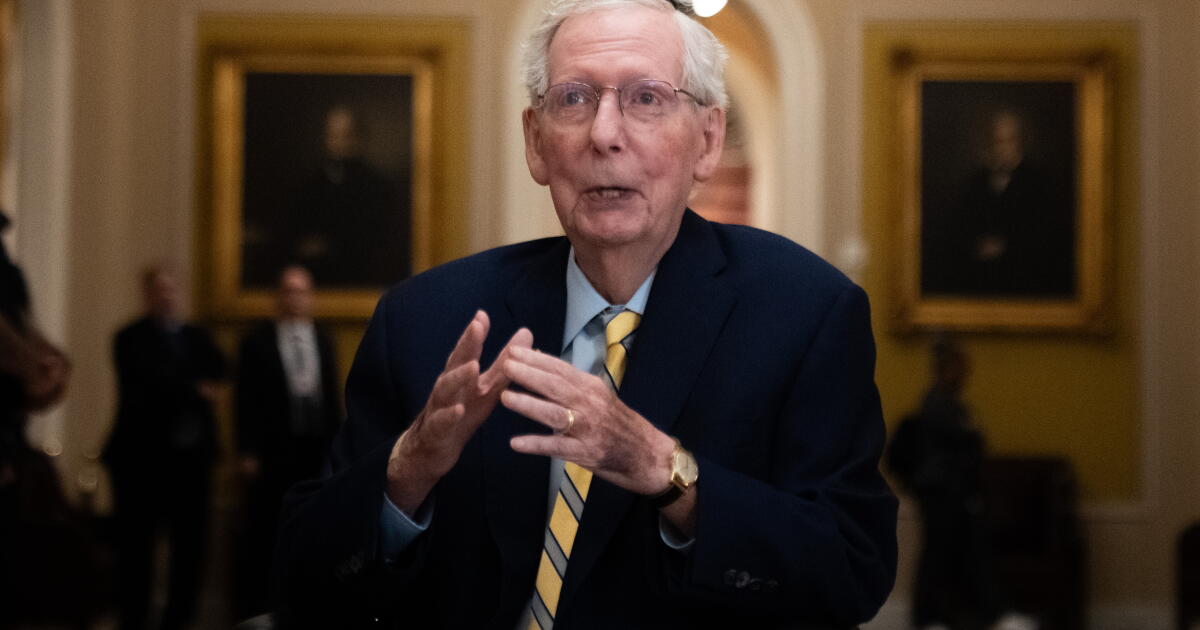
WASHINGTON — Republican Sen. Mitch McConnell of Kentucky returned to the Senate to vote on Monday for the first time in three months, looking noticeably more frail after he was hospitalized for a June fall in his home.
McConnell’s lengthy absence from the Senate generated a flood of criticism and online speculation, as he initially remained quiet for weeks about his condition. The 84-year-old senator eventually disclosed a month later that he had been “briefly unconscious” due to the fall and had also been treated for mild pneumonia in the hospital.
He briefly addressed reporters Monday from a wheelchair outside the Senate chamber, smiling but speaking slowly and with some difficulty. McConnell joked that he wasn’t sure how many reporters would be there after dodging so many questions during his almost two decades as leader.
He said he was back in the Senate to work on a pending farm bill and because he has an ongoing interest in NATO and “backing up our good friends who are totally in the fight against the Russians.”
Reporters and photographers were told by Senate staff not to take video of his remarks in the second-floor hallway, even though video is often permitted in that area. Still images were allowed.
McConnell, who holds the distinction of being the longest-serving Senate leader, is in his final months of his four decades in office. He is retiring at the end of January after one of the most consequential careers in modern politics.
Republicans have nominated U.S. Rep. Andy Barr to replace him, while Democrats have nominated former state lawmaker Charles Booker. McConnell has said he is determined to finish out his term.
McConnell suggests he’s still recovering
In a statement issued before his remarks, McConnell made clear that he may still miss some votes due to his health issues.
He said that he is “still not quite back to 100%, but I’ve assured Leader (John) Thune that, as I continue with physical therapy on the advice of my doctors, I will do my best to be present for tough votes when our Conference needs me.”
“My recovery has been a long and often frustrating process, and the lingering effects of childhood polio haven’t made it any easier,” McConnell said in the statement.
The senator’s extended leave highlighted increasing public concern about the age of lawmakers and their capacity to carry out their duties. Speculation about his condition grew so intense at one point that Kentucky’s Democratic Gov. Andy Beshear took the extraordinary step of issuing a public letter asking McConnell to update the public in a “transparent manner.”
McConnell’s absence was also felt over the summer as Republicans were unable to advance a farm bill out of committee. His return could give GOP leaders a needed vote as they try to advance legislation on cryptocurrency regulation and college sports.
A history of health problems
McConnell had polio in his early childhood and has long acknowledged difficulty as an adult in walking and climbing stairs.
A statement from the Capitol physician that was included with McConnell’s July release said that the senator has “experienced several falls through the year” due to his “post-polio condition.” The office said his physical therapy was aimed at reducing the risk of him falling again.
“A comprehensive evaluation by a multidisciplinary team determined that he had no fractures, cardiac abnormalities, stroke, tumor, or hemorrhage,” the physician’s office said.
McConnell was first elected to the Senate in 1984 and was the Republican leader from 2007 until last year, serving as both majority and minority leader during that period.
Toward the end of his time as leader and in the last two years as a rank and file senator, McConnell’s health has visibly declined.
He was hospitalized with a concussion in March 2023 and missed several weeks of work after falling in a Washington hotel. He twice froze up during news conferences after he returned, staring vacantly ahead before colleagues and staff. A year later, he fell and sprained his wrist while walking out of a GOP luncheon.
Indiana GOP Senate candidate Richard Mourdock opposes abortion even in the case of rape and incest, he said at a Tuesday night debate, because pregnancy from rape is “something that God intended to happen.”
Mourdock, who is in a tight race with Democratic Rep. Joe Donnelly, was responding to a question about whether abortion should be legal in cases of rape or incest.
“I know there are some who disagree, and I respect their point of view, but I believe that life begins at conception,” the tea party-backed Mourdock said. “The only exception I have, to have an abortion, is in that case of the life of the mother.
“I’ve struggled with it myself for a long time, but I came to realize that life is that gift from God,” Mourdock said, appearing to choke back tears. “And even when life begins in that horrible situation of rape, that it is something that God intended to happen.”
Mourdock’s statement came near the end of the debate. Afterward, according to the Associated Press, Donnelly said he didn’t believe “my God, or any God, would intend that to happen.”
The controversy came as the Mourdock campaign unveiled a new ad featuring Republican presidential candidate Mitt Romney making an on-camera endorsement of him.
In the ad, Romney calls Mourdock “the 51st vote to repeal and replace government-run healthcare,” and says he “will help stop the liberal Reid-Pelosi agenda.”
Casting Mourdock’s comment as “part and parcel of the modern Republican Party’s platform toward women’s health,” Democratic National Committee Chairwoman Debbie Wasserman Schultz called on Romney to get the ad off the air.
“As Mourdock’s most prominent booster and the star of Mourdock’s current campaign ads, Mitt Romney should immediately denounce these comments and request that the ad featuring him speaking directly to the camera on Mourdock’s behalf be taken off the air,” Wasserman Schultz said.
Romney campaign spokeswoman Andrea Saul tried to distance Romney from the comment. “Gov. Romney disagrees with Richard Mourdock’s comments, and they do not reflect his views,” Saul said in a statement.
The flap comes about two months after Missouri’s Republican candidate for Senate, Todd Akin, said a woman is unlikely to become pregnant from “legitimate rape” because “the female body has ways to try to shut that whole thing down.” That comment also came in response to a question on whether victims of rape and incest should be able to obtain an abortion.
Romney and most other prominent Republicans urged Akin to drop out of the race, but he did not. Instead, Akin said he had spoken inartfully, then apologized, but persisted in challenging embattled incumbent Claire McCaskill.
The Akin and Mourdock comments have the potential to undercut Romney’s efforts to reduce the gender gap — the margin by which women have tended to prefer President Obama.
Mourdock, the state treasurer, ousted moderate longtime Sen. Richard G. Lugar in the GOP primary in May. Romney embraced Mourdock’s candidacy and traveled to Indiana in August to campaign for him.
“This is a man that I want to see in Washington to make sure that we cannot just talk about changing things but actually have the votes to get things changed,” Romney said at the time.
After Tuesday’s debate in southern Indiana, Mourdock clarified his position on rape and pregnancy.
“Are you trying to suggest that somehow I think God ordained or pre-ordained rape?” Mourdock said, according to the Evansville Courier & Press. “No, I don’t think that anyone could suggest that. That’s a sick, twisted – no, that’s not even close to what I said.
“It’s a fundamental part of my faith that God gives us life,” he continued. “God determines when life begins. I believe in an almighty God who makes those calls…. There are some things in life that are above my pay grade.”
TORONTO — Ontario Premier Doug Ford said Thursday he hopes President Trump’s Republicans lose both the House and Senate in the midterm elections, saying voters should punish Trump politically for his escalating trade war with Canada.
“Hopefully he’s going to lose the Senate. He’s going to lose Congress. I hope so, and hold him accountable,” Ford said. “But we’ll see how that goes. We aren’t going to interfere in the U.S. election.”
Ford has emerged as one of Trump’s most outspoken Canadian critics, accusing him of trying to strip industry out of Ontario and move it south of the border as the two trade personal insults and threats.
Ford’s comments came two days after Washington escalated the dispute by banning some Canadian dairy products and motorcycles and most alcoholic beverages after Canadian retaliatory tariffs took effect on about $20 billion in U.S. goods. Trump also moved to shut Canadian products out of large, long-term U.S. government contracts.
“He’s not reliable at all,” Ford said. “He could make a deal today and then change his mind. And we’ve seen that over and over again.”
Still, Ford said he believes Trump wants an agreement before the midterms and that Canada should return to negotiations as soon as possible.
“I truly believe President Trump wants a deal before the midterms,” Ford said. “I could be wrong, but I think it’s best that we sit down and get a deal.”
Last year, Trump abruptly ended trade talks with Canada after Ford’s Ontario government aired an anti-tariff television ad in the United States using former President Ronald Reagan’s criticism of tariffs.
The feud repeatedly has turned personal. In an interview with the Associated Press last month, Ford mocked Trump for keeping a portrait of Reagan near his desk while pursuing tariffs the former president had criticized, saying Reagan would be “throwing up on him from the picture if he knew what was going on.”
Trump described him as “the less charismatic, intelligent, and overall unimpressive brother of the late, great, Rob Ford.”
Trump also signed an executive order directing the U.S. government to refer to Lake Ontario as “Lake America,” a name Canada does not recognize.
Ford said Thursday that Trump unintentionally strengthened Canada by forcing it to reduce its dependence on the United States.
“The only two good things Donald Trump has ever done for Canada,” Ford said, were that “he woke us up” and “he united the country like I’ve never seen before.”
ABC comedian Jimmy Kimmel’s interview with Texas Senate candidate James Talarico won’t air on broadcast television amid the network’s high-stakes skirmish with the Federal Communications Commission.
Kimmel, during his Wednesday night monologue, said his talk with the 37-year-old Texas Democrat would instead stream on his show’s YouTube channel — depriving ABC viewers and TV stations of a potentially newsworthy interview with Talarico, who has been surging in the polls.
The Texas race is shaping up as a key contest in what could help decide control of the U.S. Senate in the mid-term elections.
Kimmel alluded to the Walt Disney Co. network’s ongoing dispute with FCC Chairman Brendan Carr as the reason for the switch. This spring, Carr’s Media Bureau ordered ABC to submit to an early review of its TV station licenses for Disney’s eight owned stations. The FCC launched the review a day after President Trump demanded Kimmel be fired after First Lady Melania Trump became upset over a joke the comedian told on his program, “Jimmy Kimmel Live!”
ABC has since sued the FCC, alleging Trump’s disdain for Kimmel and other ABC programs has fueled the FCC’s heavy-handed approach to the network, in violation of its 1st Amendment rights.
Kimmel pointed to the “unusual circumstances” in his monologue.
“For the whole 20-plus years of our show, in fact, I’ve been interviewing Americans who are running for office with no problem at all, just like [David] Letterman did, [Jay] Leno did, Arsenio [Hall], etc. etc.,” Kimmel said. “I’ve interviewed a lot of political candidates — from Hilary Clinton to Ted Cruz to Donald Trump.”
But, Kimmel said that in the current climate, airing the Talarico interview on the public airwaves carried too much risk.
“Out of consideration for our local stations, especially our ABC affiliates in Texas who would have to deal with this nonsense,” the ABC interview, which was scheduled for Thursday, would instead play on YouTube, he said.
ABC declined to comment. An FCC spokesperson did not immediately respond to a request for comment.
The issue surfaced nearly one year after a major dust-up when ABC temporarily benched Kimmel after comments he made on his show over the shooting of conservative activist Charlie Kirk. During that episode, Carr seemed to threaten Disney by saying that Kimmel should be punished.
“We can do this the easy way or the hard way,” Carr said. “These companies can find ways … to take action … on Kimmel or there is going to be additional work for the FCC.”
Two station groups removed Kimmel’s show, but ABC eventually stood by the comedian returning him to his perch the following week.
The Disney-owned station licenses were not set to expire for several years when the FCC demanded that Disney defend its stewardship of the outlets. The license for Disney’s KABC-TV Channel 7 in Los Angeles extends to 2030 but it is now being challenged.
The Burbank giant has asked a federal judge to issue a temporary restraining order and injunction to halt the FCC’s early station review.
ABC also is defending against an FCC probe into whether its daytime talk show, “The View,” should be entitled to an exemption from the so-called equal-time rule for political candidates who appear as guests.
Carr has challenged the status of “The View,” arguing that the topical chat show is not a bona fide news program and, thus, should not be entitled to the exemption.
The same issue tripped up former CBS late night comedian Stephen Colbert who interviewed Talarico in February — before his program, “The Late Show with Stephen Colbert, was canceled.
At the time, Colbert told viewers CBS lawyers forbid him from airing a Talarico interview on his program due to the FCC’s increased scrutiny of exemptions to the equal-time rule, an allegation that CBS disputed.
But Colbert’s interview played on the program’s YouTube channel — not the CBS network.
The FCC has said it was investigating ABC stations over whether the company’s diversity and inclusion policies are in violation of the Communications Act of 1934 and the agency’s rules, including its “prohibition on unlawful discrimination.”
Last week, the FCC asked a federal judge in Washington to dismiss ABC’s 1st Amendment lawsuit, calling Disney’s challenge to the early review “meritless” because the commission hasn’t made a decision on whether to escalate the matter or rescind Disney’s station licenses.
Kimmel ended his monologue, saying he was grateful for the YouTube channel “because in the America we live in right now, that is the best that we can do until November.”