seeks

Trump seeks prime-time spotlight for election claims, raising concerns

President Trump appeared poised to question the security of U.S. elections with a planned prime-time speech Thursday night, eliciting fears from Democrats and voting rights advocates that he is planning yet another play for federal control over voting in November’s midterms.

The exact reason for the speech has not been disclosed by the White House, with Trump only characterizing it to reporters this week as “really, really big news.” He confirmed it would have to do with “free and fair elections.”

The Washington Post reported, citing sources, that Trump planned to argue that there are vulnerabilities in the nation’s election infrastructure and claim that China had accessed U.S. voter data. The White House declined to confirm any such details Wednesday.

The announcement of the speech set off concerns among the president’s political opponents, as well as elections experts and voting rights advocates, that Trump could again escalate claims that the nation’s voting system is vulnerable to domestic fraud and foreign attacks.

He has previously said that Republicans should “nationalize” election administration, a job that falls to the states under the Constitution, and has pressured his party to tighten federal voting rules.

“We don’t know anything about what he might say … or what he might try to do with his very limited powers, as the president, over elections,” said David Becker, executive director of the nonpartisan Center for Election Innovation and Research. “I expect we’re going to hear a lot of rehashed and debunked claims.”

The president could potentially use new claims to argue that the nation is facing an emergency in upcoming elections that necessitates further federal intervention into voting, Rep. Joseph Morelle of New York, the ranking Democrat on the House Administration Committee, which has oversight of elections, said in an interview with The Times.

“This is going to be the rationale for declaring a national emergency,” Morelle said. “It’s transparent that he is creating the emergency and he’s creating the evidence out of whole cloth to suggest there is an emergency.”

Sen. Alex Padilla (D-Calif.), the top Democrat on the Senate Rules Committee, which oversees federal elections, told The Times on Wednesday that Trump was using a known playbook to “[sow] doubt about the outcome before a single vote has been cast.”

“All signs show that tomorrow’s speech will be more of the same: debunked conspiracy theories offered up not because they’re true, but because chaos and doubt are the only cards he has left to play,” Padilla said.

The speech, which Trump announced on social media Monday, comes four months ahead of midterm elections that will determine whether his party retains legislative control in Washington.

White House spokesperson Karoline Leavitt dismissed news reports about what Trump might say in the 6 p.m. PDT speech as speculation, and said “nobody knows yet what President Trump will ultimately say.”

The address also comes as Trump’s ceasefire with Iran has fallen apart, renewing expectations for increased gas prices, and his approval rating on the economy has steadily dropped. On Tuesday, it also became public that Trump had paid $5.6 million to the writer E. Jean Carroll, as ordered by a jury that in 2023 found Trump liable for sexually abusing and defaming her.

“What we’re going to be talking about Thursday is, it doesn’t get bigger,” Trump told reporters who asked Tuesday about the speech. “Because without free and fair elections you don’t have a country.”

Trump has spread baseless claims of widespread election fraud for years. But his prioritization of his claims about the voting system — even as much of the nation’s attention is on cost-of-living issues — has been on particularly clear display in recent days.

He has aggressively lobbied reluctant Republican senators to pass his voter ID legislation, refusing to sign a bipartisan housing bill over it; he fired all remaining members of the bipartisan U.S. Elections Assistance Commission; and his Justice Department said it would send election monitors to six states.

Since the midterm primaries began, Trump has also sown doubt about election security — chiefly in California, where he suggested Democrats had cheated or attempted to in the gubernatorial and Los Angeles mayoral primaries.

Georgia Democratic Sen. Jon Ossoff, whose state was often at the center of Trump’s 2020 fraud claims, said the president’s speech posed a threat to voting rights.

“I expect him to use whatever he puts out there on Thursday as a pretext, either for some attempted unconstitutional use of federal power to interfere in the election,” Ossoff said Tuesday on MS Now, “or to give his proxies and loyalists in state and local jurisdictions some cover for whatever they might attempt, or to lay the groundwork for challenging the result.”

Any effort to federalize or take over elections would face serious legal obstacles, said Nahal Kazemi, a Chapman University law professor. Although Congress can pass laws regarding election administration, as it did with the Voting Rights Act, the executive branch doesn’t play a role in running elections.

“You run into essentially a brick wall that is the Constitution, which makes very plain that states run elections,” Kazemi said.

When it comes to concerns about foreign interference, experts say there is little evidence of other countries attempting to hack systems or change votes. Instead, foreign actors have largely operated via disinformation campaigns, as the U.S. determined had occurred in the 2016 and 2020 elections.

“Of the information that is available to us now, there’s no reason to be alarmed about the possibility that a foreign adversary is going to take over election systems,” said Kazemi, who has studied foreign election interference.

One of the things that helps make American elections generally secure, she said, is that they are not centralized but are run by thousands of counties. Hacking into so many voting systems would be extraordinarily difficult for a foreign adversary, she said.

Jenny Farrell, executive director of the League of Women Voters of California, said California “takes elections security extremely seriously” and has one of the most secure systems in the country, subject to strict voter verification measures and intense chain of custody and auditing procedures.

Democrats have worked with elections experts in recent months on attempts to assure the public that U.S. elections are safe and secure. They have also tried to counter claims by Trump that mail ballots and voting machines are unreliable.

A slew of 2020 election reviews, including by Trump’s first administration, concluded that Trump lost and Biden won. Election experts say there is no evidence that widespread fraud determined the outcome of the election.

A judge also found that claims pushed by Trump and his attorneys that the company Dominion Voting Systems manipulated votes cast through its machines in favor of Biden were untrue.

Source link

China Says It Seeks Partnership Not Influence in Pacific Islands

China said on Tuesday it does not seek a “sphere of influence” in the Pacific, as Foreign Minister Wang Yi defended Beijing’s growing engagement with Pacific island nations following criticism over a recent missile test in the South Pacific.

The remarks came during talks in Beijing with Solomon Islands Foreign Minister Rick Houenipwela, as regional tensions continue to intensify amid strategic competition between China and Western allies.

China Rejects Geopolitical Motives

Wang Yi said China’s cooperation with Pacific island nations is based on mutual respect and shared development rather than geopolitical ambitions.

He stressed that Beijing’s partnerships come without political conditions and are not imposed on other countries. Wang also said Pacific island states are independent and sovereign nations that should not be treated as any country’s “backyard” or be subject to outside interference.

Stay ahead of the geopolitical week.

MD Briefing delivers expert analysis across five global fronts — the Indo-Pacific, energy, geoeconomics, European security, and the Middle East — every Monday morning. Free.

China reaffirmed its willingness to expand cooperation with the Solomon Islands in areas including green energy, healthcare, and climate change.

Missile Test Sparks Regional Concerns

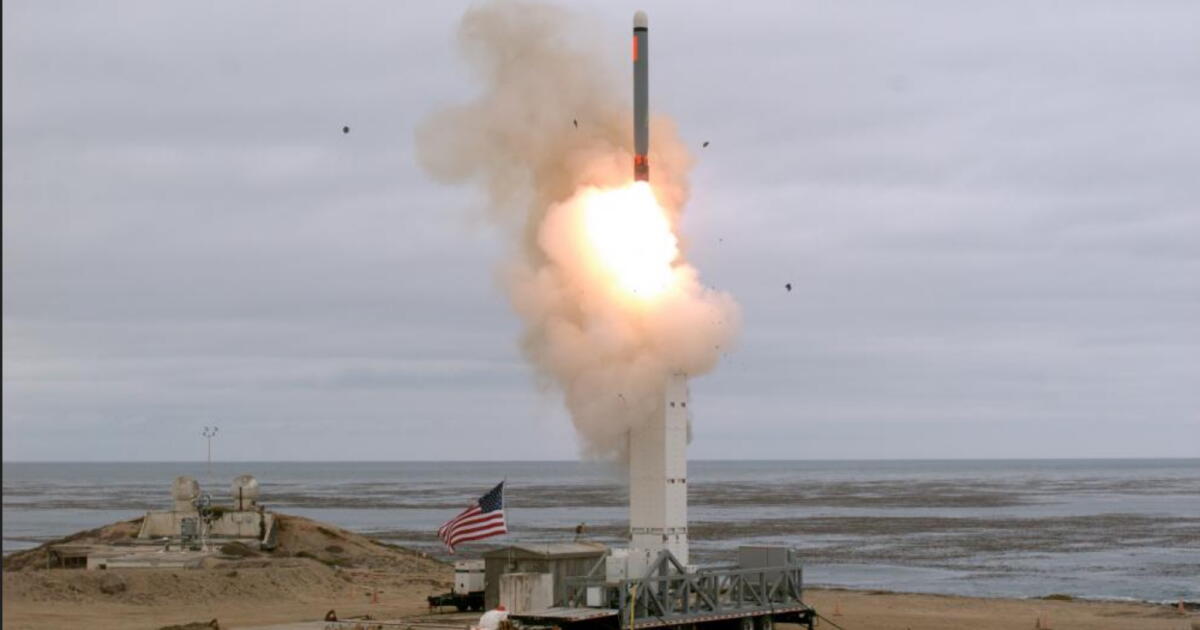
The meeting followed China’s recent test launch of a missile carrying a dummy warhead from a nuclear powered submarine into the South Pacific.

The test drew criticism from several regional governments, including the Solomon Islands, which questioned both the timing and the message sent by the launch.

Solomon Islands Prime Minister Matthew Wale described China as “a good friend” but said the missile test was “not something a friend does,” while reaffirming his country’s commitment to strengthening ties with Australia.

The launch also coincided with the signing of a new mutual defense agreement between Fiji and Australia, highlighting growing security cooperation among Pacific nations.

Pacific Becomes Strategic Battleground

The Pacific has become an increasingly important arena for geopolitical competition as China expands its diplomatic, economic, and security engagement across the region.

Meanwhile, Australia, the United States, New Zealand, and other partners have stepped up investment, defense cooperation, and development assistance in an effort to maintain their influence among Pacific island countries.

Many Pacific governments continue to pursue a balanced foreign policy, seeking economic cooperation with multiple partners while avoiding alignment with any single major power.

Why This Matters

China’s latest comments underscore the growing diplomatic contest for influence in the Pacific, where infrastructure investment, security partnerships, and climate cooperation have become central to regional politics. The region’s strategic location and maritime significance make it increasingly important in broader competition between China and Western allies.

Future Outlook

China is expected to continue expanding economic and development cooperation with Pacific island nations, particularly in renewable energy, healthcare, and infrastructure. At the same time, Australia and its partners are likely to deepen security and development initiatives across the region. As strategic competition intensifies, Pacific governments will continue balancing relationships with competing powers while seeking investment and support that align with their national priorities.

With information from Reuters.

Source link

Special counsel seeks 13 years for Unification Church leader

Han Hak-ja, leader of the Family Federation for World Peace and Unification, arrives Thursday at the Seoul Central District Court for the final hearing in her trial over alleged improper ties between religion and politics under the Yoon Suk Yeol government. Photo by Yonhap News Agency

July 10 (Asia Today) — A special counsel team on Thursday sought a 13-year prison term for Han Hak-ja, leader of the Family Federation for World Peace and Unification, commonly known as the Unification Church, over allegations involving improper ties between religion and politics.

The team led by special counsel Min Joong-ki made the request during the final hearing in Han’s trial at the Seoul Central District Court. Han has been charged with violating the Political Funds Act and other offenses.

The special counsel asked the court to sentence Han to five years in prison on the political funds charge and eight years on the remaining charges.

“Han and others used vast financial resources to unlawfully and improperly use public authority in an effort to expand religious interests and influence and realize the integration of religion and politics,” the special counsel team said.

The team said the alleged crimes “directly violated the spirit of the Constitution and damaged representative democracy.”

“Han and others, as top leaders of a religious organization, privately used donations voluntarily made by believers and improperly colluded with political forces in an attempt to influence South Korea,” the team said.

The special counsel also sought prison terms for other defendants being tried with Han.

For a former chief of staff identified only by the surname Chung, the team requested four years in prison on the political funds charge and six years on the remaining charges.

For Yun Young-ho, former head of the church’s world headquarters, the team sought one year and six months in prison on the political funds charge and two years on the remaining charges. The team requested three years in prison for Yun’s wife, identified only by the surname Lee.

Han is accused of conspiring with Yun and others to deliver 100 million won, about $66,000, in political funds to People Power Party lawmaker Kweon Seong-dong in January 2022.

She is also accused of involvement in delivering gifts to former first lady Kim Keon Hee through Jeon Seong-bae, a religious figure known as Geonjin, while seeking favors related to church affairs in 2022.

Han also faces allegations that she embezzled church funds and ordered Yun to destroy evidence in October 2022 in preparation for a police investigation into allegations that she gambled overseas.

Han arrived at the court at about 9:29 a.m. wearing a black jacket and white pants and using a wheelchair. She did not answer reporters’ questions, including whether she had given gifts to Kim.

— Reported by Asia Today; translated by UPI

© Asia Today. Unauthorized reproduction or redistribution prohibited.

Original Korean report: https://www.asiatoday.co.kr/kn/view.php?key=20260710010003980

Source link

Trump seeks to limit funding that doesn’t ‘advance’ presidential policies

A new rule proposed by the White House Office of Management and Budget would fundamentally overhaul the way federal grants are awarded and overseen — a sweeping change that one scientific society said “would all but end the use of scientific merit in the selection of grants and programs across the government.”

Proposed in late May, the rule would give political appointees unprecedented control over federal grants for research, education and infrastructure, and specifies that government funds can only be spent on projects “aligned with administration policies and priorities,” according to a copy of the proposed rule.

The rule would also restrict research topics, limit U.S. scientists’ ability to collaborate with colleagues in other countries and make it easier for the government to suspend or cancel grants at any time.

The changes are intended to improve “transparency, accountability, and oversight for Federal awards” while “ensuring that American tax dollars are not wasted or misused,” according to the White House office.

But critics say that if the rule is implemented, the final sign-off for grants will no longer be in the hands of subject-matter experts within individual agencies, but in those of political appointees.

“This touches all parts of American life,” said Dr. Eric Rafla-Yuan, a psychiatrist who practices at the Veterans Administration and San Diego County’s psychiatric hospital.

“Control of how all of the federal grants and programs are funded will fall under a small group of highly partisan individuals who would have very few limits on how they spend these billions of taxpayer dollars,” said Rafla-Yuan, who also chairs the Committee to Protect Public Mental Health advocacy group. “This touches everyone’s life, even if they don’t realize it.”

OMB published the proposed rule May 29, opening a 45-day comment period that closes July 13.

Opposition to the proposed rule has mobilized multiple sectors of society. Professional groups representing cancer researchers, civil engineers, county governments, medical schools, housing agencies, city and municipal governments, nonprofits and others have publicly expressed concerns about potential consequences.

By midday Thursday, the Federal Register logged nearly 100,000 comments about the proposal, many of them expressing concern.

“I understand the need for oversight, fiscal responsibility, and accountability. That is not the issue,” wrote Jack Feldman, a neuroscientist who holds the David Geffen School of Medicine Chair in Neuroscience at UCLA. “The issue is whether scientific research is to be judged by scientific merit, or whether it can be approved, denied, or terminated according to broad political criteria that may change from one administration to the next.”

Crucially, the rule converts policies governing federal grants from “guidance” into binding regulations that all agencies would be required to follow. It would give political appointees power to override federal agencies’ merit-based reviews and mandate that a political appointee review decisions to ensure that all awards “demonstrably advance the President’s policy priorities.”

The elevation of political appointees in what were previously merit-based decisions has alarmed many scientists.

“The proposed rule changes would all but end the use of scientific merit in the selection of grants and programs across the government,” read a statement from the Planetary Society, a nonprofit dedicated to space research.

Researchers and science groups have also expressed concern about a section of the rule prohibiting the promotion of “theories of disparate-impact liability” — a legal concept that refers to policies that appear neutral but cause disproportionate harm to certain groups.

The section’s vague language and many loopholes could have a chilling effect on any research that studies the effects of a disease, policy or public health intervention on any specific group of people, Rafla-Yuan said.

As an example, he said, “if there’s a specific age range that is at higher risk for suicide, and we want to figure out, well, what’s going on with people that are aged 14 to 19 … we can’t do that under the wording in this rule.”

New restrictions on collaborations with scientists in other countries would hinder opportunities for U.S. researchers and limit innovation, said Joanne Padrón Carney, chief government relations officer for the American Assn. for the Advancement of Science.

“Science is a global enterprise. Especially in biomedical and public health fields, diseases don’t care about borders or government policies,” she said.

California’s congressional delegation sent a letter Wednesday asking OMB to rescind the proposal, outlining concerns about its impact on scientific innovation, U.S. competitiveness and the fiscal stability of local governments, many of which rely on federal grants for local services.

The proposed rule grants the federal government broad powers to suspend or cancel grants for any reason, introducing “unprecedented unpredictability into local governance,” the lawmakers wrote, “leaving vital infrastructure projects unfinished and abandoning vulnerable populations who rely on these services.”

Republican Sen. Susan Collins has also asked the White House to withdraw certain parts of the letter and extend the public comment period, saying the proposed rule as written would “harm small and rural communities, undermine scientific and biomedical research, and conflict with Congress’ control over the federal funding process.”

Source link

South Korea seeks wartime command transfer target this year

Defense Minister Ahn Gyu-back speaks during a ceremony at the Navy’s 2nd Fleet Command in Pyeongtaek, South Korea, 29 June 2026, to mark the 24th anniversary of an inter-Korean naval battle on the seas off South Korea’s northern Yeonpyeong Island. Six South Korean seamen were killed and 19 others injured in the 2002 skirmish, called the Second Battle of Yeonpyeong, which broke out as two North Korean patrol boats violated the inter-Korean maritime border in the Yellow Sea. Photo by YONHAP / EPA

July 1 (Asia Today) — South Korean Defense Minister Ahn Gyu-back urged senior commanders Wednesday to complete a key military capability review and work toward proposing a target year for the transfer of wartime operational control by the end of 2026.

“A military that cannot make its own decisions cannot become a strong military,” Ahn said while presiding over a meeting of senior commanders from across the armed forces at the Defense Ministry in Seoul.

Ahn called on the military to make every effort to present what officials have described as an “X-year” for the command transfer at this year’s South Korea-U.S. Security Consultative Meeting.

“Regaining wartime operational control is a path toward building a stronger Republic of Korea and advancing the South Korea-U.S. alliance to a new level,” Ahn said.

He said the transfer would allow the South Korean military to take the lead in wartime planning, operational preparations and the execution of military operations.

Ahn made similar remarks earlier Wednesday while chairing a quarterly meeting reviewing progress on the command transfer.

“This year, we face the critical task of completing the Full Operational Capability verification and determining the timing of the OPCON transition,” Ahn said. “Let us fulfill the historic mission of regaining wartime operational control.”

The Defense Ministry aims to complete verification of the future Combined Forces Command’s Full Operational Capability at the annual Security Consultative Meeting, or SCM, scheduled for November in Washington.

The ministry then plans to recommend a target year for the transfer to the presidents of South Korea and the United States.

South Korea regained peacetime operational control of its armed forces in 1994. During wartime, designated South Korean and U.S. forces remain under the operational control of the South Korea-U.S. Combined Forces Command, which is led by a U.S. general.

The allies have agreed that wartime command will be transferred after mutually established conditions are met rather than on a predetermined timetable.

The assessment of South Korea’s ability to lead the combined defense is divided into three stages: Initial Operational Capability, Full Operational Capability and Full Mission Capability.

The ministry said the Full Operational Capability assessment has been completed and that finishing its verification would allow the allies to begin specifying a transfer timetable.

U.S. and South Korean defense officials have repeatedly said the transition must be carried out in a stable and systematic manner under their jointly approved conditions-based plan.

Ahn also emphasized cooperation among the Army, Navy and Air Force.

He said each service must maintain its professional expertise but warned that service-specific interests should not create barriers to joint operations.

“Each service should ask itself how much time it allocates to joint training during the year,” Ahn said.

“Jointness must become part of military culture through the process of learning, training and thinking together beginning at the service academies and then be refined and developed in the field.”

The remarks came amid concern that the ministry’s plans to reform and potentially integrate elements of the military academy system could weaken the specialized education provided by each service.

Senior commanders also discussed developing a military based on artificial intelligence and advanced technology and restructuring South Korea’s armed forces by 2040.

They reviewed lessons from Russia’s war in Ukraine and recent fighting in the Middle East, including the growing battlefield use of artificial intelligence, drones and robots as relatively inexpensive and efficient weapons.

The ministry said it would begin pilot programs using newly developed artificial intelligence models during the second half of the year.

It also plans to provide private companies with a catalog of military data that could support defense technology development.

The military will expand the number of units assigned to test commercially developed drones from one to nine to support South Korea’s domestic drone industry, the ministry said.

— Reported by Asia Today; translated by UPI

© Asia Today. Unauthorized reproduction or redistribution prohibited.

Original Korean report: https://www.asiatoday.co.kr/kn/view.php?key=20260701010000411

Source link

Ex-CIA chief Brennan seeks preservation of Trump-era inquiry records

Former CIA Director John Brennan sued the Trump administration on Wednesday, demanding a court order that would require officials to preserve records from investigations that he says are targeting him for “phantom criminal conduct.”

Brennan said in the lawsuit that the records would be essential for him to mount a defense on vindictive prosecution grounds in the event of an indictment brought by the administration. Such a defense, his lawyers said, would be supported by the more than 100 verbal or written statements that President Trump has made since 2017 lambasting Brennan and by the Republican president’s directives to his Department of Justice to initiate cases “without regard to factual or legal justification.”

“To fully consider those motions, the reviewing judge would need to scrutinize the motivations of the Justice Department officials who directed, oversaw, or undertook those actions to determine whether they violated Director Brennan’s rights, and specifically whether they were motivated by a desire to vindictively prosecute him as an act of retribution,” Brennan’s lawyers wrote in the lawsuit filed in federal court in Washington.

The lawsuit names as defendants Trump and other top law enforcement officials from his administration, including acting Atty. Gen. Todd Blanche, FBI Director Kash Patel and the prosecutors in Florida who have been overseeing investigations related to Brennan and other perceived Trump adversaries.

The lawsuit says Brennan is facing separate investigations in Florida, including one examining whether he made a false statement to Congress related to an assessment by intelligence agencies documenting Russian interference in the 2016 presidential election, in which Trump defeated Democrat Hillary Clinton. The other investigation aims to determine whether former law enforcement and intelligence officials conspired to undermine Trump, including during the course of the Russian interference investigation.

No charges have been brought. The Department of Justice has denied claims of weaponization.

Tucker writes for the Associated Press.

Source link

Pentagon seeks $80 billion from Congress for Iran war

The Pentagon has told senators it needs roughly $80 billion, mostly to cover the cost of the U.S. war against Iran, adding to what is already a sizable military spending boost being sought by President Trump.

Meanwhile, the Senate for the first time approved a war powers resolution Tuesday seeking to block U.S. military action against Iran, as lawmakers warily watch President Trump’s efforts to resolve a conflict that the administration launched on its own and now needs Congress to fund.

It was the 10th time the Senate has tried to stop the war, and the outcome, on a vote of 50-48, was a stunning turnaround from past efforts. Although the resolution is largely symbolic, and does not fully carry the force of law, it reflects the growing concerns from a number of Republican lawmakers in the House and Senate over the war and the deal Trump struck with Iran to end it. The House approved the resolution earlier this month.

The White House Office of Management and Budget has yet to make a formal request to Congress for more money for the war. But Defense Secretary Pete Hegseth has been making the rounds on Capitol Hill, including Monday evening. A top deputy Defense secretary told senators about the Iran funding request last week, according to two people familiar with the situation but not authorized to discuss it publicly.

The Wall Street Journal first reported on the developments.

The push for billions of dollars in Iran war funding comes at a fraught political moment. Lawmakers are not only skeptical of the deal Trump struck with Iran to bring an end to the war, but also wary of next steps. The White House has requested a remarkable $1.5 trillion for the Pentagon — a nearly 50% increase over the current fiscal year’s funding levels.

Senate Majority Leader John Thune said he’s expecting a supplemental spending request from the administration for the war, and when it arrives, “we’ll work through it and see where the votes are.”

“We need to make sure we’re doing everything we can to replenish, resupply a lot our munitions that have been depleted — not only just with what’s happening with Iran, but prior to that,” said Thune (R-S.D.).

Deputy Defense Secretary Stephen Feinberg spoke to several senators about the proposal in calls last week and he notified congressional committees that the $80-billion request had been sent to the Office of Management and Budget. The Pentagon did not immediately respond to a request for comment.

However, the funding package will almost certainly run into trouble from lawmakers who refuse to support Trump’s decision to go to war and are reluctant to give the Pentagon more money at a time of high costs of living for Americans at home.

“You’re spending families’ hard-earned tax dollars on a war that many strongly oppose,” Democratic Sen. Patty Murray of Washington told Hegseth in a hearing last month.

In addition to the Iran funding, Republicans hope to secure about $1.1 trillion through the regular appropriations process, which typically requires support from both parties for approval. Then, they hope to secure an additional $350 billion through a mostly party-line vote later this summer.

The amount being sought by the Pentagon is far higher than the $29-billion estimate of war costs that Hegseth gave Congress during his testimony last month. The bulk of that amount was related to replacing munitions and repairing equipment but also included operational costs to keep forces deployed. That estimate did not include the cost to repair or rebuild U.S. military sites damaged in the region.

It’s also far lower than the initial $200 billion the Pentagon floated as the costs at the start of the war. An early estimate put the cost of the first week of the war at $11.3 billion.

Sen. Brian Schatz of Hawaii, a member of Democratic party leadership, said he expects the actual price tag could be much higher than the $80 billion being proposed.

Schatz said he hasn’t done any counting of Democrats about whether there is support for an Iran-focused bill, “but I haven’t found anyone who wants to do this.”

But Republican Sen. Jim Banks of Indiana said, “To me it’s less about the war, it’s more about the stockpiles.”

Banks said, “I would sell it to my state as an investment in our defense industrial base, reshoring defense production to Indiana.”

Sen. Jack Reed of Rhode Island, the top Democrat on the Senate Armed Services Committee, said funding for an Iran supplemental can’t be done in isolation. It has to be done after lawmakers from both parties have agreed to a total spending amount for both defense and non-defense programs, “then the rest of this would follow pretty quickly,” Reed said.

And Sen. John Hoeven of North Dakota, a member of the Appropriations subcommittee on Defense, said he has been working with the administration to broaden the package to include funds for disaster aid for California, Hawaii and other states hard hit by fires and weather problems, as well as agricultural aid for farmers.

“I think that’s the kind of combination that could pass,” Hoeven said.

Hegseth declined to answer questions from reporters late Monday as he strode around the Capitol.

But on the issue of the cost of the war, Hegseth responded rhetorically during a Senate hearing last month, asking, “What is the cost of Iran obtaining a nuclear weapon?”

He acknowledged the president’s decision to confront the threat of a nuclear Iran “comes with cost — and we recognize that.”

Freking and Mascaro write for the Associated Press. AP writers Konstantin Toropin and Ben Finley contributed to this report.

Source link

South Korea seeks to turn defense exports into growth engine

1 of 3 | Government officials, lawmakers, researchers and defense industry executives attend a seminar marking the 20th anniversary of South Korea’s Defense Acquisition Program Administration in Seoul on Friday. Photo by Asia Today

June 19 (Asia Today) — South Korea is seeking to transform its defense industry into a national growth engine by integrating military procurement, weapons exports, advanced technology and industrial policy, government and industry officials said Friday.

Officials at a public-private seminar in Seoul rejected the long-standing argument that growing foreign orders could divert production capacity from the South Korean military and delay domestic weapons deliveries.

Instead, they said an analysis of about 2,000 South Korean defense companies found that exports increased factory utilization, encouraged investment in research and production facilities and eventually reduced manufacturing costs.

The findings were presented at a seminar titled “A New Leap Forward in Acquisition and the Defense Industry,” held at the Fairmont Ambassador Seoul in the city’s Yeouido financial district.

The Defense Acquisition Program Administration organized the event as it marked the 20th anniversary of its establishment.

Participants included lawmakers, officials from the defense, industry, science and small-business ministries, defense company executives and academic researchers.

They called for an end to treating military procurement and defense exports as separate policy areas.

Lee Yong-cheol, minister of the Defense Acquisition Program Administration, said South Korea’s annual defense exports had grown from about $250 million when the agency was established to $15.4 billion last year.

“Defense exports are no longer merely a supplement to domestic military procurement,” Lee said. “They have become a central growth engine driving the Republic of Korea as a whole.”

Lee said South Korea also needed to move beyond selling individual weapons.

He proposed combining weapons with energy systems, infrastructure, maintenance, repair and overhaul services and other forms of industrial cooperation.

“The era of selling weapons as stand-alone products is over,” Lee said. “We will transform the K-defense paradigm through cross-industry package cooperation.”

Lawmakers from South Korea’s governing and opposition parties pledged bipartisan legislative support for faster procurement and stronger financing for small and midsized defense companies.

They said a system that can take about 15 years to plan, develop and deploy a weapon is not suitable for an era in which artificial intelligence, drones and robotic systems evolve rapidly.

Participants also cited research indicating that financial instability among smaller suppliers, rather than export production, was a more important cause of delivery delays.

They called for expanded government-backed financing to prevent small manufacturers in the defense supply chain from being overwhelmed by debt and working-capital shortages.

Study links exports to stronger domestic production

South Korea’s defense industry has long debated whether large export contracts weaken or strengthen the country’s own military procurement.

Critics have warned that foreign orders could occupy production lines and delay the delivery of weapons to South Korean forces.

Supporters have argued that exports create economies of scale, preserve production capacity and lower the price paid by the South Korean military.

Research presented at Friday’s seminar supported the second view.

A team led by researchers from Myongji University analyzed data from about 2,000 South Korean defense-related companies.

The analysis found that increasing exports produced an immediate rise in factory utilization. Higher utilization was then associated with greater investment in research, development and production facilities.

Researchers said the benefits became more evident about three years after an export increase.

The analysis identified improvements in operating profit, lower production costs and greater independence in critical technologies after that period.

Repeated production also allowed factory workers and engineers to improve their skills and reduce defects, a process commonly described as a learning effect.

At the same time, producing weapons in larger quantities spread fixed development and manufacturing expenses across more units.

Researchers said those effects increased the competitiveness of South Korean products in foreign markets while potentially lowering the cost of weapons purchased by the South Korean military.

Industry experts cited South Korea’s large exports of K2 tanks and K9 self-propelled howitzers to Poland as an example.

They said the contracts increased domestic production, helped reduce unit costs and accelerated work on upgraded models.

Kim Myung-keun, an executive at Hyundai Rotem, said the company achieved economies of scale after receiving Poland’s large K2 tank order.

“Mass production lowered costs, reduced the acquisition cost for our own military and accelerated the development of upgraded models,” Kim said.

Yoon Byung-jo, an executive at SNT Motiv, said repeated production generated through large export orders also strengthened technical capabilities on factory floors.

“The learning effect accumulated by technicians during repeated production is the most powerful tool for reducing defects in critical components and increasing technological independence and localization,” Yoon said.

Lee Jung-hyun, a Myongji University professor involved in the study, said the analysis did not identify export volume as the principal cause of delayed deliveries.

“The real causes of delivery delays were companies’ debt ratios and financial soundness,” Lee said. “Exports instead improved operating profits and technological capabilities after a time lag of about three years.”

Lee said the government should strengthen the financial stability of smaller defense companies rather than restrict exports.

Officials seek to shorten 15-year procurement cycle

Government officials said South Korea’s traditional weapons acquisition process is too slow to keep pace with civilian advances in AI, drones, robots and human-machine teaming systems.

Weapons programs can take about 15 years from initial planning through development and operational deployment.

Officials said that schedule risks delivering technology that has already become outdated by the time it reaches military units.

Won Jong-dae, an assistant defense minister, said the existing system had become a national security obstacle.

“In the age of AI and drones, an acquisition process that takes 15 years is an impediment to security,” Won said.

He said the government would seek legislation tentatively called the Advanced Defense Capabilities Projects Act to shorten the process from initial requirements planning through deployment.

Kim Seong-su, a senior research and development official at the Science and Technology Ministry, said innovation in the civilian sector was advancing more quickly than military technology.

Kim called for an adaptive research and development system that would allow mature commercial technologies to be introduced into the military without passing through the full conventional development process.

The acquisition agency said it plans to expand rapid-introduction programs, particularly for drones and AI-related technologies.

The programs would allow the military to test and deploy promising civilian products more quickly while making adjustments based on operational experience.

Jeong Hwan, chief executive of infrared sensor manufacturer i3system, said smaller companies with advanced commercial technologies often cannot withstand the military’s complicated testing requirements and lengthy acquisition schedule.

He urged the government to make rapid acquisition programs more flexible and accessible to technology companies.

Financial support sought for smaller suppliers

Officials said South Korea must also strengthen small and midsized companies that produce components and materials for major weapons manufacturers.

Park Yong-soon, a senior official at the Ministry of SMEs and Startups, said the research presented Friday showed that financial weakness was a major source of supply-chain disruption.

Park said the government would shift policy toward stronger financial support for vulnerable suppliers and seek to increase the share of domestic defense revenue generated by small companies.

Smaller companies currently account for about 18% of South Korean defense industry sales. The government aims to raise the proportion to 25%.

Officials said those businesses can face severe cash-flow pressures because defense contracts require lengthy development, testing and certification before companies receive full payment.

The problem can become more serious when a small supplier must expand production rapidly to meet a major overseas order.

Park said the government must ensure that otherwise competitive companies do not collapse because they cannot obtain sufficient operating capital.

Park Dong-il, a senior official at the Industry Ministry, also warned that South Korea’s export portfolio remained concentrated in ground weapons.

More than 60% of the country’s defense exports come from land-based systems, he said.

Park said the government would work to diversify the industry into aerospace, next-generation satellites and advanced naval vessels while strengthening the domestic manufacturing and component ecosystem.

South Korea plans national security export packages

The acquisition agency said future export efforts would go beyond individual tanks, aircraft or artillery systems.

The government plans to package defense products with energy projects, transportation and industrial infrastructure, information and communications technology, maintenance services and technology transfers.

Officials described the approach as exporting an integrated security platform rather than a single weapon.

They cited Poland as a model.

South Korean arms agreements with Warsaw have included not only K2 tanks, K9 howitzers and other weapon systems but also plans for local production, technology cooperation, training and long-term maintenance.

An industry official said future transactions could involve building a partner country’s broader security and industrial system.

“The business will no longer be about exporting one tank,” the official said. “It will become a platform business that exports an entire national security system.”

Such packages can help importing countries create domestic jobs, develop supply chains and maintain weapons locally.

They can also give South Korean companies access to long-term revenue from training, spare parts, upgrades and depot-level maintenance after the initial sale.

The approach, however, requires coordination among several ministries because infrastructure, export financing and industrial cooperation extend beyond the authority of the acquisition agency.

Kim Il-dong, deputy minister of the Defense Acquisition Program Administration, said procurement and exports should be viewed as two sides of the same coin.

Kim said the acquisition agency could not achieve South Korea’s defense industry goals on its own.

He called for coordinated action by the defense, science, industry and small-business ministries to develop the sector as a strategic national industry.

Seoul targets 5% share of global defense market

The Defense Acquisition Program Administration said it aims to increase South Korea’s share of the global defense market to at least 5% and establish the country as one of the world’s four largest defense exporters.

Officials said South Korea’s defense industry had already approached the global top five based on its 2025 export performance.

Future growth will depend on moving beyond the country’s current strength in tanks, armored vehicles and artillery, they said.

The government plans to support companies working in AI, space systems, drones, advanced ships and autonomous and human-machine teaming technologies.

It also wants to foster globally competitive defense startups and companies capable of reaching valuations of more than $1 billion.

Officials and industry representatives said South Korea’s defense sector had completed an initial period of quantitative growth and now needed to focus on technology, productivity and supply-chain resilience.

“The past 20 years were a period of quantitative growth in which K-defense built weapons capabilities from the ground up,” seminar participants said. “The next 20 years should be remembered as an era of qualitative growth centered on AI, space, drones and unmanned systems.”

They said military procurement and the defense industry should no longer be treated as separate areas.

Instead, both should be viewed as parts of a single strategic industry supporting South Korea’s security, technological development and economic growth.

— Reported by Asia Today; translated by UPI

© Asia Today. Unauthorized reproduction or redistribution prohibited.

Original Korean report: https://www.asiatoday.co.kr/kn/view.php?key=20260619010006831

Source link

Arizona prosecutors dismisses fake elector case, seeks new indictment

Arizona Atty. Gen. Kris Mayes is dismissing a sprawling criminal case that alleged President Trump’s former chief of staff Mark Meadows, former New York City Mayor Rudy Giuliani and others tried to overturn Trump’s 2020 loss in the state.

The decision, announced Thursday, marks the third such fake elector case filed by states to be dismissed, though the Democratic attorney general is vowing to bring it back to a grand jury in hopes of securing another indictment.

The legal maneuver is aimed at getting around a Friday deadline for starting new grand jury proceedings after Mayes lost an appeal earlier this month. The appeal was filed after defense attorneys argued successfully that the original grand jury hadn’t been shown the relevant parts of a law that governs how presidential contests are certified.

Courts have dismissed similar cases in Michigan and Georgia, and a special prosecutor dropped a federal case in late 2024 that charged Trump with conspiring to overturn the 2020 election. Those cases ended after Trump defeated Democratic Vice President Kamala Harris in 2024. Cases related to the fake elector scheme remain in Nevada and Wisconsin.

The Nevada charges were dismissed in 2024 after a judge concluded Clark County, the state’s most populous county and home to Las Vegas, was the wrong venue for the case. Later that year, though, the case was refiled in Carson City, Nevada’s capital.

The Arizona case had been stalled for well over a year while Mayes pursued the appeal.

In Arizona, defense lawyers argued the law allowed for multiple slates of electors to be submitted to Congress in case the results were disputed. Federal law was amended in 2022 to specify that any given state could put forward only one slate of electors and that state governors are responsible for signing off.

Joe Biden won Arizona in 2020 by 10,457 votes.

The state attorney general has faced steep challenges in making her case.

It was filed nearly three and a half years after the 2020 election and levels complicated conspiracy charges against the 18 defendants. A dozen dismissal requests filed by defense attorneys have slowed progress in court.

The first judge on the case recused himself in late 2024 after an email surfaced in which he told fellow judges to speak out against attacks on Harris’ campaign for the presidency. The next judge ordered the case to be sent back to a grand jury.

Of the 18 Arizona defendants, two were former Trump aides, five were lawyers working for Trump and 11 were Republicans who submitted a document falsely claiming Trump won Arizona.

Three defendants have resolved their cases, including one who pleaded guilty to a misdemeanor charge.

The rest pleaded not guilty. Some said they signed the certificate in case Trump won court challenges and a new slate of electors was needed urgently before Congress’ Jan. 6 deadline to tally votes.

The case has factored into Arizona’s attorney general race, where both Republican challengers to Mayes have publicly said they will dismiss the charges if they were elected to the post.

Billeaud writes for The Associated Press.

Source link

Ukraine hits Moscow refinery as Zelenskyy seeks Trump support to end war | Russia-Ukraine war News

Russia’s oil refineries have been heavily targeted, damaging its energy facilities and the country’s fuel crisis.

Ukrainian drones have hit a Moscow oil refinery for the second time ⁠this week while Russia fired missiles at Kyiv, as President Volodymyr Zelenskyy seeks support from the United States and Europe to reach a deal to end the war.

Russia’s Defence Ministry said on Thursday that its air defences shot down 555 Ukrainian drones over several regions overnight, with almost 200 intercepted as they were approaching the Russian capital.

Recommended Stories

list of 4 itemsend of list

Moscow Mayor Sergey Sobyanin said several drones hit an oil refinery.

“Air defence forces continue to repel a massive attack. Several drones managed to reach the Moscow oil refinery,” Sobyanin said, adding that a shopping centre also suffered minor damage.

The attack on the oil facility is the second this week, after a drone attack on Tuesday halted operations at the refinery, according to the Reuters news agency, as widespread damage to Russian energy facilities worsens the country’s fuel crisis.

The regional governor said that in the surrounding Moscow region, a high-rise residential building, an industrial facility and a number of private houses were also damaged in the drone attack. The Sheremetyevo airport, Moscow’s busiest, suspended flights and evacuated people, as several sought shelter in the car park, the airport said in a statement.

Kyiv meanwhile came under a second Russian air attack this week, as ballistic missiles were unleashed on the Ukrainian capital, city officials said. Earlier this week, a major attack on Kyiv by Russia killed 11 people and damaged a UNESCO-listed 1,000-year-old monastery, drawing condemnation from European leaders. Russia denied striking the monastery.

The attacks come as Zelenskyy works to pressure Russia into negotiating an end to its more than four-year-long war. Zelenskyy said he had spoken to US President Donald Trump, French President Emmanuel Macron and other leaders from G7 countries to coordinate ways to end the ⁠war.

G7 leaders pledged to strengthen Ukraine’s air defences and increase pressure on Moscow’s war economy, including by tightening sanctions on the Russian oil and gas sectors.

Trump told reporters he was “gonna do whatever I can” to end the war.

Zelenskyy said he received important commitments from the G7, including “more air defence missiles along with licenses to produce them, and a winter support package.”

“Importantly, the US is ready to provide backstop across these lines of effort,” Zelenskyy wrote on X. “It is key that everything discussed be implemented. Russia must come to learn that its war will never be normalised.”

Source link

Trump administration seeks to halt air pollution lawsuit against Musk’s xAI | Technology News

US Department of Justice claims NAACP lawsuit threatens ‘national, economic, and energy security’.

The United States government has intervened on the side of Elon Musk’s xAI in a legal dispute over a $20bn data centre, claiming that efforts to block a related power project threaten national security.

In a court motion filed this week, the Department of Justice requested the dismissal of a lawsuit accusing xAI of illegally operating dozens of natural gas turbines erected to power the Colossus 2 data center in Memphis, Tennessee.

Recommended Stories

list of 4 itemsend of list

The National Association for the Advancement of Colored People (NAACP), the largest civil rights group for African Americans, filed the lawsuit in April under the 1963 Clean Air Act, which allows citizens to seek injunctions and civil penalties against alleged polluters.

The NAACP alleges that xAI built the turbines, located in nearby Southaven, Mississippi, without obtaining the necessary permits, exposing hundreds of thousands of residents to harmful pollutants linked to “increases in asthma, respiratory diseases, heart problems, and certain cancers”.

The lawsuit notes that a “much larger share” of residents are Black compared with the US general population.

In its motion, filed in a US District Court on Monday, the Justice Department accused the NAACP of threatening “national, economic, and energy security by seeking to shut off the power supply for artificial intelligence innovation that supports the Department of War’s military operations”.

The motion also claims that the US Constitution vests the power to seek civil penalties “conclusively and preclusively” in the executive branch, including the “discretion to decide when such an enforcement action is unwarranted or inconsistent with federal enforcement priorities”.

Adam Gustafson, the top prosecutor at the Justice Department’s environment and natural resources division, said in a statement that the government would “not sit idly by while private organisations use environmental laws to undermine our national security”.

xAI, which is a subsidiary of Musk’s SpaceX, did not immediately respond to a request for comment.

Musk
Elon Musk listens to a speech by Chinese President Xi Jinping during a state dinner with US President Donald Trump at the Great Hall of the People, in Beijing, China, on May 14, 2026 [File: Mark Schiefelbein/AP]

Earthjustice, an advocacy group representing the NAACP in the lawsuit, condemned the intervention as a “massive power grab” by President Donald Trump’s administration.

“Trump’s Justice Department wants to shield Elon Musk’s data center company, xAI, from being held accountable for its illegal pollution – and it’s attempting to grab power from impacted communities, the courts, and Congress to do so,” Laura Thoms, director of enforcement for Earthjustice, said in a statement.

“There is no moral or legal precedent for this.”

Ann Carlson, a professor of environmental law at  UCLA School of Law, described the Trump administration’s argument as a “brazen attempt” to limit enforcement of the Clean Air Act.

“It’s based on a radical notion that the executive branch can dismiss lawsuits brought by citizen groups that Congress has authorised based on no rationale at all,” Carlson told Al Jazeera, adding that the Justice Department’s position would let “polluters off the hook even for blatant violations of the law.”

“This motion is also just one of many ways in which the administration is undermining efforts to protect air quality,” Carlson said.

The Trump administration has cultivated close ties with Musk, the world’s richest man, tapping the tech titan as a temporary cost-cutting tsar and using xAI’s flagship model Grok in the Pentagon’s drive to become an “AI-enabled fighting force”.

In testimony in support of Monday’s motion, Cameron Stanley, the Pentagon’s top official for AI, said that Grok had been used to launch more than 2,000 munitions at 2,000 targets within the first 96 hours of the US-Israel war on Iran.

If Grok cannot be deployed and upgraded due to “limitations in energy supply or limited reserve compute capability”, numerous tools used by the Pentagon would be “severely impacted”, Stanley said in a declaration made under oath.

Source link

Lawsuit seeks to stop Trump’s planned White House UFC match | Donald Trump News

Legal challenge claims US president did not seek proper approval for fighting event to be held on his 80th birthday.

A lawsuit is seeking to stop United States President Donald Trump from hosting an Ultimate Fighting Championship (UFC) match at the White House.

The lawsuit, lodged on behalf of two Virginia residents, is the first known legal challenge to the mixed martial arts event, which is set to be hosted on June 14.

Recommended Stories

list of 3 itemsend of list

The event will take place on Trump’s 80th birthday. It is also pegged to the 250th anniversary of the signing of the Declaration of Independence, which the US will commemorate on July 4 of this year.

The legal challenge filed on Saturday maintained that Trump did not receive proper authorisation to host the fight.

It argued that the event violated US National Park Service regulations prohibiting sporting events on federal parklands, that Congress did not consent to the construction of a towering arch overlooking the event space, and that no environmental review was conducted before the construction.

“This is fundamentally a private, commercial, corrupt use of our most sacred national monuments for private gain,” said Brendan Ballou, a lawyer for the plaintiffs. “And that is what is motivating this lawsuit.”

In a statement to the Associated Press, the White House dismissed the lawsuit as “obstructionist, baseless, and dilatory”.

The White House maintained the UFC fight was “no different than the various other White House-hosted events on the South Lawn and properly permitted events on the Ellipse and National Mall throughout the year”.

Crews have been erecting an octagon-shaped fighting cage on the South Lawn of the White House, with Trump saying the project will include a “5,000-seat arena right outside the front door of the White House”.

Attendance at the fight will be invite-only and closely monitored. The Military Times news site reported earlier this week that 1,200 service members given tickets to the event must meet certain waist-to-height ratio standards.

Public viewing areas will also be set up at the nearby Ellipse.

Trump has long been closely involved with both professional wrestling and UFC, with his casinos and event spaces hosting past events.

He regularly appeared as a version of himself in World Wrestling Entertainment (WWE) events throughout the 1990s and early 2000s. His current secretary of education, Linda McMahon, is a co-founder of the WWE.

Trump has more recently embraced UFC, which is currently owned by the same company, TKO Group Holdings, as the WWE.

UFC president Dana White has been a close ally of Trump’s.

Political analysts have credited Trump’s embrace of the sport with reaching disaffected male voters in the US, particularly during his 2024 election campaign.

Source link

To combat copper thefts, L.A. city agency seeks its own armed police

For thieves looking to strip Los Angeles for parts, copper has become a fast-moving currency.

The problem has become so persistent that the Los Angeles Department of Water and Power is now asking for its own armed police force to protect vulnerable utility equipment, street lighting and critical infrastructure, insisting that the department’s contracted and unarmed security guards aren’t cutting it.

“They lack the authority to detain or arrest suspects, intervene in crimes in progress, conduct searches, or carry firearms for enforcement purposes,” according to a May 21 report from the city agency. “Delays hinder timely intervention, reduce investigative effectiveness, and contribute to repeat victimization of LADWP facilities.”

Under DWP’s current “observe and report” security model, an officer who sees someone cutting a fence or stripping copper from a transformer has little authority apart from yelling a warning or making a 911 call, according to the department report.

The proposal asks for 20 to 50 sworn officers to start, hired over a five-year period, along with support staff. If approved, the force would give the agency’s officers the authority to carry a firearm, make arrests and investigate thefts. The plan was scheduled to be discussed Thursday by the City Council.

The push comes as citywide service requests for streetlight repairs have surged over the last several years.

Dark streetlights.

L.A.’s historic streetlights outside the Bureau of Street Lighting near Virgil Avenue and Santa Monica Boulevard.

(Jason Armond/Los Angeles Times)

The city logged 14,328 electronic streetlight service requests in 2018, according to data from the Bureau of Street Lighting. Requests have tripled since then, reaching an all-time high of 46,079 in 2024, the last full year of available data.

Mayor Karen Bass’ office said in March that copper thefts are a leading cause of streetlight outages. Repairs have been backlogged for months.

Prices for the metal are at an all-time high, driven by major supply disruptions in Indonesia and Chile, and soaring demand from artificial intelligence data centers and electric grid infrastructure. Thieves typically exchange the metal for cash at recycling centers, where it can fetch up to $5.30 per pound. The City Council last year approved a program offering up to $5,000 for information in metal and wire theft cases.

Theft losses alone exceed $1 million annually, according to DWP.

Establishing a new police force would require changing the city charter, meaning voters will have a say come the November midterm elections. Authorities will also need to obtain state legislative approval for the plan.

Officials said rolling out the police department would cost $9.7 million over three years, plus up to $6 million annually to pay for staffing. They maintain those costs are less than the $46 million combined DWP spends each year on private security contractors and unarmed staff security.

A metal pole and base, with an opening in the base.

On Hill Street in downtown L.A., streetlights have been targeted by thieves and vandals.

(Jason Armond/Los Angeles Times)

Any cost overflows would be paid for by DWP customers.

Timothy O’Connor, executive director for the Los Angeles Office of Public Accountability, a spending watchdog, said his office is not convinced that the agency could minimize long-term cost creep, or that the new force would offset enough costs to justify the program. The proposed force of a few dozen officers, he said, would be too small to get the job done.

“Theft losses at DWP are real and are increasing. However, eliminating these losses is not enough to offset the proposed costs,” he said. “Furthermore, DWP will be unable to fully eliminate theft given the diffuse nature of the DWP system.”

But O’Connor also said the department is faced with real security risks like those posed by drone attacks or terrorism threats, which he said “appear to justify the proposal at some level.”

In February, a man shot himself after he drove his car through the perimeter fence of a power substation while carrying explosives and several firearms. Dubbing the incident an attempted terrorist attack, officials said the episode could have caused catastrophic infrastructure damage.

David Levitus, executive director of the advocacy group LA Forward, said he was surprised to learn of the proposal so late in Los Angeles’ ongoing charter reform process, which his organization has monitored closely.

“The fact that this is being dumped in late May — what’s the rush?” Levitus said. “I think we really need to be wary of creating new police departments in general, but especially without a clear case and clear constraints and accountability mechanisms.”

Source link

Southern Poverty Law Center seeks dismissal of ‘vindictive’ indictment

A Justice Department indictment against the Southern Poverty Law Center is part of a “top-down” campaign of retribution against President Trump’s perceived political enemies and constitutes a vindictive prosecution that must be dismissed, lawyers for the nonprofit argued Tuesday in urging a judge to toss out the case.

The Alabama-based nonprofit was indicted in April on fraud and money laundering charges that accuse it of misleading donors by paying informants inside white supremacist and other extremist organizations to obtain inside information about their activities.

Lawyers for the SPLC already argued that law enforcement agencies have long known that the nonprofit paid informants to report on the movements of hate groups. They also said acting Atty. Gen. Todd Blanche made a false statement at a news conference and in interviews when he said the organization had not shared with law enforcement information it learned from informants. Blanche later appeared to walk back that claim in a television interview, saying it was true that the SPLC “selectively” shared information with law enforcement over the years.

The attorneys for the center expanded on those arguments Tuesday, saying in a motion to dismiss the case that the prosecution was the “culmination of a top-down, retributive campaign” in which Trump pushed the Justice Department “to go after those individuals and groups he deemed his political enemies, including the SPLC.”

Defense says indictment fits broader retaliation campaign

The motion was filed against the backdrop of other politically charged prosecutions that have raised concerns that the Justice Department is operating as a weapon to target Trump’s opponents. It aims to draw a parallel between the SPLC indictment and the human smuggling prosecution of Kilmar Abrego Garcia, which was dismissed Friday on similar vindictive prosecution grounds by a judge who called the case an “abuse of prosecuting power.”

The SPLC has said its now-defunct program of paying informants to infiltrate hate groups was developed to glean key insights into their activities so that potential victims could be protected. An earlier federal investigation into the practice was closed without charges, but the motion paints the current Justice Department as pursuing the case with renewed — and rushed — vigor.

The department decided to pursue the indictment without interviewing any current SPLC employees and did not seek any documents from the group until after it told defense lawyers that criminal charges were coming, the defense motion states. During a meeting requested by defense lawyers who hoped to avert to indictment, Justice Department officials informed them that the decision already had been made to pursue charges, according to the motion.

“These procedural irregularities show that the charges against the SPLC were a foregone conclusion based on prosecutorial vindictiveness — driven by the White House and FBI leadership’s retribution campaign — rather than the result of a good faith examination of the evidence,” the motion states, saying the indictment was “premised on conclusory accusations but devoid of provable facts or a proper statement of the law.”

The motion also cites whistleblower accounts that accused top Justice Department officials of rushing forward with an indictment despite internal concerns about the merits of the case and the strength of the evidence.

“For weeks, we have been arguing against these false allegations levied against the SPLC — an organization that for 55 years has stood as a beacon of hope fighting white supremacy and various forms of injustice to create a multiracial democracy where we can all live and thrive,” Bryan Fair, the interim president and chief executive officer of SPLC, said in a statement. “The government can’t prosecute the SPLC as payback for its protected speech — it violates basic constitutional rights.”

The administration has painted SPLC as partisan

Founded in 1971 as a civil rights organization, the SPLC over the decades has used litigation to fight white supremacist groups. It also tracks the activities and locations of domestic extremists. But its work has made it a popular target among Republicans who see it as overly leftist and partisan.

The center, for instance, received fresh attention last year after the assassination of conservative activist Charlie Kirk because the SPLC had included a section on the group that Kirk founded and led, Turning Point USA, in a report titled “The Year in Hate and Extremism 2024.”

FBI Director Kash Patel announced in October that the bureau would be severing its relationship with the SPLC, saying it had turned into a “partisan smear machine,” and he accused it of defaming “mainstream Americans” with its “hate map” that documents alleged antigovernment and hate groups inside the United States.

The defense motion says “animus” from senior levels of the administration helped shape the indictment.

It cites, among other comments, a statement from Trump deriding the SPLC as “a total scam run by the Democrats,” as well as a news media interview in which Harmeet Dhillon, the Justice Department’s top civil rights official, said the indictment was “personal” to her because she had “a lot of journalist friends … and groups that I’ve represented who have been targeted by the Southern Poverty Law Center.”

Tucker writes for the Associated Press.

Source link

Xi Jinping seeks to strengthen ties with Putin during China visit | Politics

NewsFeed

China’s Xi Jinping is hosting Russian President Vladimir Putin, just days after welcoming Donald Trump to Beijing. The Chinese leader is set to discuss energy security and trade, while balancing access to European markets, as Al Jazeera’s Katrina Yu explains.

Source link

Cinerama Dome seeks a conditional-use alcohol permit

A city hearing concerning on-site alcohol sales provided the public a chance to air their opinions on the possible reopening of the Cinerama Dome and ArcLight Hollywood on Tuesday morning.

Though a final letter of determination is still to be issued, Tim Fargo, the associate zoning administrator in charge of Tuesday’s meeting, said he was “inclined to approve” the conditional-use permit under consideration. The permit would cover the Cinerama Dome, 14 adjacent auditoriums and a restaurant café with two outdoor spaces.

The Dome closed in March 2020 with the onset of the COVID-19 pandemic and in April 2021 it was announced that the venue would not be reopening. Film lovers in Los Angeles and around the world have since been hopeful the venue, seen by many as a symbol for Hollywood itself, could reopen.

During the meeting, Elizabeth Peterson-Gower, a land use consultant representing the owner and applicant Dome Center LLC, was asked if there was a timeline for reopening the theaters. She responded, “I too don’t have a schedule yet, but when I do, I’ll convey it to you.”

In a separate phone interview following the meeting Tuesday, Peterson-Gower referred to the approval of the conditional-use permit as a “milestone” in the process of reopening the theaters and added that ownership has noted the intense public interest around the Dome and the ArcLight and that “it will inspire a time frame in the near future.”

Throughout the meeting, Peterson-Gower referred to the success of the Blue Note jazz club that opened on a corner of the property in August 2025.

“What it proves to me is that the ownership cares greatly,” Peterson-Gower said after the meeting. “That’s a big undertaking and a big statement in favor of the fact that ownership care what’s there.”

Numerous other voices were heard throughout the hearing as well. Ted Walker, planning deputy for Council District 13, where the theater is located, said, “Too often we see [historic-cultural monuments] around our city sitting vacant. So we’re very supportive of anything to bring some life back into this. We know there’s a lot of love for the Cinerama Dome and we want to acknowledge the work of all the community members who are advocating for it. We believe resuming these operations will further enhance the vibrancy of Hollywood.”

Burbank City Council member Konstantine Anthony noted that he was a former usher at the Dome and also voiced support for the reopening.

More than 30 people provided public comment. Among those were Kat Kramer, daughter of filmmaker Stanley Kramer, director of “It’s a Mad, Mad, Mad, Mad World,” the very first film to play in the Dome in 1963, film critic Wade Major and Ben Steinberg, who has led a grassroots campaign to get the venue reopened.

The Blue Note Jazz Club undergoes construction near the Cinerama Dome in Los Angeles

The Blue Note Jazz Club undergoes construction near the Cinerama Dome on Tuesday, Aug. 5, 2025, in Los Angeles.

(Juliana Yamada / Los Angeles Times)

One commenter said, “Why have they kept it closed? Is this just a strategy to let it rot so that they can get building violations and just tear it down and build condos? There’s a lot of fear about what’s going to happen with this thing that people feel attached to. And to not answer questions over all this time has frankly been offensive.”

Another commenter said that the delays in reopening feel like ownership “keeping a bit of our heritage hostage from us.”

Even those who were asking for clear specifics from ownership were nearly all in favor of granting the conditional-use permit, which was the ostensible purpose of the meeting. As local preservation advocate Kim Cooper said, “I know that this has been hard and it has seemed like the citizens versus the ownership — that’s not what it is. People want to come together and help and bring this place back.”

Speaking after the meeting, Peterson-Gower noted her own history with the Dome, having been involved with many events there in the late ’80s and early ’90s when she was vice president of the Hollywood Athletic Club, located just a few blocks away on Sunset Boulevard.

“Everyone has a story about the Dome that’s lived here, even me,” she added. “I didn’t want to bring my personal life into the hearing, but I care passionately as well about it opening.”

While the final outcome of the hearing is still to be fully determined, all signs point to the permit being granted and the project being free to move forward.

“I was overwhelmingly pleased with the comments,” said Peterson-Gower. “I think that it shows that there’s a great historic use in a historic property and I think that people care passionately about it operating and are very, very proud of the property being here in Hollywood.”

Source link

Oversight chair seeks information from OpenAI’s Sam Altman about potential financial conflicts

The chair of the House Oversight Committee has sent a letter to OpenAI Chief Executive Sam Altman requesting information about potential conflicts of interest between Altman’s personal investments and his operation of the company.

The letter, sent Friday, comes amid a high-stakes legal battle currently playing out in an Oakland federal courtroom between one-time partners Altman and Elon Musk, the world’s richest man, who in 2015 co-founded the AI company best known for creating ChatGPT.

The company was first established solely as a non-profit corporation and the letter sent to Altman by Rep. James Comer (R-Ky.), the Republican chair of the Oversight committee, indicates that the committee is “investigating potential conflicts of interest involving capital from nonprofit corporations invested in startups and other for-profit companies.”

Comer has requested by May 22 a briefing from the company official responsible for oversight of potential conflicts involving company officers and directors, including Altman, as well as all documents related to conflict of interest policies and guidance for those executives.

While OpenAI was created as a non-profit designed to responsibly harness the power of the emerging artificial intelligence technology, the company created a for-profit subsidiary in 2019 and three years later released ChatGPT, which jumpstarted widespread adoption of the technology.

Musk, the chief executive of Tesla, left Open AI’s board in 2018, one year before the creation of the for-profit arm. He is arguing that Altman and another co-founder, Greg Brockman, betrayed the original mission of the non-profit organization, driven by their desire to “cash in” on the technology.

Musk added Microsoft, a significant investor in OpenAI, to the lawsuit in 2024. OpenAI is rumored to be gearing up to go public later this year or early next, and was recently valued at $852 billion.

Musk has said that he invested $38 million in the OpenAI non-profit, but he does not stand to benefit from a potential OpenAI public offering.

He created a rival company xAI in 2023 that was later folded into his company SpaceX

In the lawsuit, Musk is seeking $150 billion in damages, for Altman to be removed from the company and for the company to be fully returned to its non-profit status.

Musk’s complaint also alleges that Altman engaged in self-dealing by directing OpenAI to pursue deals with companies in which he also held a personal stake, including nuclear fusion power company Helion.

Comer’s letter cites reporting that Altman’s pursuit of a Helion deal, which is still ongoing, would come at a lofty valuation of the power-company, boosting the company’s worth, and the value of Altman’s investment.

Altman was briefly forced to step down from leadership of OpenAI in 2023 in part due to concerns about potential conflicts between his personal investments and his operation of the company, but was soon reinstated.

While the company’s board created an audit committee to investigate the potential conflicts of Altman and other officers, the findings were never disclosed.

Comer has requested that Altman turn over all documents and communication related to that audit committee.

Representatives for OpenAI did not immediately respond to requests for comment.

Source link

Suspect in White House correspondents’ dinner attack seeks exclusion of top Justice Dept. officials

A man charged with attacking the White House Correspondents’ Assn. dinner is seeking to disqualify top Justice Department officials from direct involvement in prosecuting him because they could be considered victims or witnesses in the case, creating a potential conflict of interest.

Acting Atty. Gen. Todd Blanche and U.S. Atty. Jeanine Pirro were attending the April 25 event at the Washington Hilton when Cole Tomas Allen allegedly ran through a security checkpoint and fired a shotgun at a Secret Service officer.

In a court filing late Thursday, Allen’s attorneys argued that it creates at least the appearance of a conflict of interest for Blanche and Pirro to be making any prosecutorial decisions in the case.

“As this case proceeds closer to trial, the country and the world will continue to wonder — how can the American justice system permit a victim to prosecute a criminal defendant in a case involving them?” defense attorneys Eugene Ohm and Tezira Abe wrote.

Ohm and Abe, who are assistant federal public defenders, suggested that the appointment of a special prosecutor might be warranted. They urged U.S. District Judge Trevor McFadden, a Trump nominee assigned to Allen’s case, to disqualify Pirro, Blanche and possibly other Justice Department officials from direct involvement in the investigation and prosecution.

“Both heard gunshots, which presumably forced them to duck below the tables with the rest of the occupants. They were quickly evacuated. Shortly thereafter, they learned that law enforcement believed the target was certain administration officials,” Ohm and Abe wrote.

Pirro said her office will respond to the defense lawyers’ arguments in its own court filing.

“We will not tolerate people who come to the District of Columbia to engage in antidemocratic acts of political violence; and we will prosecute all such acts to the fullest extent of the law,” Pirro said in a statement.

Allen is scheduled to be arraigned Monday on charges in an indictment handed up Tuesday by a grand jury in Washington.

The charges include attempting to assassinate President Trump, who is a longtime friend of Pirro’s. Blanche served as a personal attorney for Trump before joining the Justice Department last year.

Blanche, through a spokesperson, referred a request for comment to Pirro’s office.

Allen also is charged with assaulting a federal officer with a deadly weapon and two additional firearms counts. He faces a maximum sentence of life in prison if convicted of the attempted assassination charge alone.

The Secret Service officer who was shot once in a bullet-resistant vest fired his own weapon five times without hitting anybody. Allen, 31, of Torrance, was injured but was not shot.

Kunzelman writes for the Associated Press.

Source link

Rubio presses Europe on Iran action as he seeks to mend ties with Italy and Vatican

U.S. Secretary of State Marco Rubio urged European allies Friday to move beyond rhetoric and take concrete action against Iran, even as he sought to repair strained ties with Italy and the Vatican during a two-day visit following tensions over the U.S.-Israeli war in Iran.

Speaking after meetings with Premier Giorgia Meloni and Foreign Minister Antonio Tajani, Rubio warned that Tehran was attempting to assert control over the strategic Strait of Hormuz, calling the move “unacceptable” and a threat to global security.

“Everybody says Iran is a threat. Everybody says that Iran can’t have a nuclear weapon … but you’ve got to do something about it,” Rubio told reporters in Rome. “If the answer is no … then you better have something more than just strongly worded statements to back it up.”

Clear ‘red line’

Rubio said Iran was trying to normalize control over an international waterway, a precedent he warned could encourage similar actions elsewhere. He also cautioned Tehran against targeting U.S. maritime assets, saying the United States had thwarted attacks on three Navy ships in the strait.

“The red line is clear. They threaten Americans, they are going to be blown up,” he said.

Rubio said Washington was pursuing a diplomatic track, including a proposed U.N. Security Council resolution aimed at preserving freedom of navigation. He added the U.S. was awaiting Iran’s response on Friday to ongoing diplomatic efforts.

Rubio’s visit comes after weeks of sharp disagreements between Washington and Rome over the Iran war, tariffs and President Trump’s criticism of both Meloni and Pope Leo XIV.

Differences remain over Iran war

Meloni described her meeting with Rubio as “constructive, frank and productive,” focused on both bilateral relations and major international issues. She said the talks covered strategic topics, including the Middle East, freedom of navigation in the Strait of Hormuz, Ukraine, China and areas of Italian interest such as Libya and Lebanon.

“We both understand how important the trans-Atlantic relationship is, but we also understand that each country must defend its own national interests,” Meloni stressed after the meeting.

Tajani struck a more conciliatory tone after meeting his U.S. counterpart, reaffirming the importance of the trans-Atlantic alliance.

“I am convinced Europe needs America — Italy needs America — and the United States also needs Europe and Italy,” Tajani said, adding he hoped “tensions have been calmed.”

He said discussions covered the Iran conflict and its spillover into Lebanon, as well as Venezuela and Cuba. The U.S. State Department said Rubio also raised the need to protect economic interests and end the war in Ukraine.

Despite the effort to ease tensions, differences remain over the Iran conflict. Italy has opposed the U.S.-Israeli bombing campaign, with Meloni calling it “illegal,” and has resisted involvement in offensive operations.

Tajani said Italy would be prepared to contribute naval forces to demine the Strait of Hormuz once a permanent ceasefire is reached, and would maintain its role in the U.N. peacekeeping mission in Lebanon. He also stressed the importance of continued U.S. troop presence in Europe amid concerns about possible reductions.

No final decision on NATO troops adjustments

Rubio said “no final decision” had been made on NATO troop adjustments, noting that any changes would depend on U.S. national interests and global priorities.

The U.S. has announced a decision to pull 5,000 military personnel from Germany and Trump has threatened to withdraw more troops from Italy and Spain over their stance on the war.

Italy, a key logistics hub for U.S. and allied operations in the Mediterranean and beyond, has already signaled limits to its cooperation. In March, it declined to allow U.S. bombers bound for the Middle East to use a base in Sicily without parliamentary approval, reflecting constitutional constraints and strong domestic opposition to the war.

Meloni, weakened by a recent referendum defeat and facing public unease over the conflict, has insisted that any use of Italian bases for offensive operations would require parliamentary backing.

The war has also raised economic concerns in Italy, with Meloni warning that disruptions in the Strait of Hormuz risk driving up energy costs and inflation, while U.S. tariff threats weigh on the country’s export-driven economy.

An attempt to de-escalate at the Vatican

Rubio also sought to ease tensions with the Vatican following Trump’s criticism of the pope’s calls for peace. After a lengthy meeting on Thursday with the pontiff and Vatican Secretary of State Cardinal Pietro Parolin, Rubio said Washington remained committed to a “productive and fruitful” relationship with the Catholic Church.

“The president’s perspective is clear. He thinks that Iran is a threat, and it needs to be addressed. And that position remains unchanged,” Rubio said.

Rubio confirmed that Cuba was also discussed at the Vatican, with Washington hoping the church’s Caritas charity organization would continue distributing humanitarian aid.

Rubio said the U.S. has provided about $6 million in humanitarian aid to Cuba, to be distributed through Caritas, should the Cubans allow it. He added Washington has also offered up to $100 million in additional aid, but the Cuban government has not accepted it so far. Rubio blamed Cuba’s government for blocking assistance and worsening conditions, describing it as “incompetent.”

U.S. officials said the Vatican talks underscored strong bilateral ties and a shared commitment to promoting peace, even as differences over the Iran war persist.

Zampano and Winfield write for the Associated Press.

Source link

Justice Department seeks the names of 2020 election workers in Georgia’s Fulton County

The Department of Justice is seeking the names of every person who worked in the 2020 election in Georgia’s Fulton County, a Democratic stronghold that Donald Trump has long accused of widespread voter fraud he falsely says cost him victory against Joe Biden in the state that year.

Lawyers for the county filed a motion on Monday night to quash a grand jury subpoena that asks for the names and personal contact information of county employees and volunteer poll workers. This latest action comes after the FBI in January went to a Fulton County elections warehouse and seized ballots and other documents from the 2020 election, which Georgia’s certified totals showed Trump lost in the state to Biden by 11,779 votes out of nearly 5 million cast. Trump, a Republican, still insists the election was stolen from him even though judges and his own attorney general concluded otherwise.

Monday’s court filing says the subpoena is meant to “target, harass and punish the President’s perceived political opponents.” The request is “grossly overbroad and untethered to any reasonable need,” the county’s lawyers argue. It “cannot yield any evidence that could result in a criminal prosecution,” they wrote, arguing that the statute of limitations on any federal crime related to the 2020 election has already expired.

The Justice Department did not immediately respond to an email seeking comment Tuesday.

County Board of Commissioners Chairman Robb Pitts, in an emailed statement, called the subpoena “yet another act of outrageous federal overreach designed to intimidate and chill participation in elections.”

“Let me be crystal clear. Fulton County will not be intimidated,” said Pitts, a Democrat who’s running for reelection.

Since the 2020 election, Trump “has obsessively propagated the debunked conspiracy theory that Fulton County ‘stole’ the 2020 election from him,” the county’s lawyers wrote. “And he has made it clear that he seeks retribution against those who refuse to indulge his baseless claims.”

Trump has already targeted individual poll workers like Ruby Freeman, who was attacked by him and his supporters after the election. Freeman, who’s Black, has said she was forced to flee her home after false claims of election fraud against her led to racist threats and strangers showing up at her home.

The grand jury subpoena, dated April 17, was served on the county’s director of elections on April 20, the county’s court filing says. It seeks the “name, position/function, residential and email addresses, and personal telephone number(s)” for thousands of election workers “ranging from county employees who assisted on election day, to bus drivers who operated a mobile voting location, to volunteers and temporary poll workers,” the filing says.

The subpoena “is a chilling escalation in the campaign to terrorize Fulton County election workers,” the county’s lawyers wrote, adding that threats arising from the current political environment have caused election workers to “fear for their physical safety.” That and other stresses “including the likelihood of being scapegoated by public officials” are causing election workers to leave their jobs “in unprecedented numbers,” they wrote.

The county’s lawyers note that the subpoena directs the county to provide the records not to the grand jury but to an out-of-state Justice Department lawyer or to the FBI agent who wrote the affidavit used for the seizure of the county’s 2020 ballots in January.

The January seizure of the ballots and other records from Fulton County was one in a string of moves by Trump’s administration to obtain past election records from critical swing states. The FBI in March used a subpoena to get records related to an audit of the 2020 presidential election in Maricopa County in Arizona. And the Justice Department in April demanded that Michigan’s Wayne County turn over its ballots from the 2024 election, which Trump won against Biden’s vice president, Kamala Harris.

The Justice Department is also fighting numerous states in court for access to voter data that includes sensitive personal information. Election officials, including some Republicans, have said handing over the information would violate state and federal privacy laws.

Brumback writes for the Associated Press.

Source link

What to know about the U.S. military presence in Europe as Trump seeks to draw down troops

President Trump’s vow to shrink America’s military deployment in Germany has put a new spotlight on the U.S. role in Europe.

There are usually 80,000 to 100,000 troops on the continent, with more than 36,000 in Germany. The Pentagon announced Friday that it would remove 5,000 troops from Germany, and Trump said the next day that he would go “a lot further” than that.

The U.S. military presence is a legacy of World War II, when Americans helped stabilize and rebuild Europe, and the Cold War, when the troops served as a bulwark against Soviet expansion. More recently, the deployment has played a key role supporting operations in the Arctic, Africa and the Middle East including the current conflict with Iran.

But Trump has broken with years of bipartisan consensus, criticizing European allies in NATO and following through on threats to reduce the U.S. commitment to the continent’s security. The recent announcement comes after escalating tensions with German Chancellor Friedrich Merz, who last week said the U.S. was being “humiliated” by Iran and accused Washington of lacking a clear strategy.

Here’s a look at America’s current deployment in Europe and how it could change.

What to know about the U.S. defense posture in Europe

The U.S. European Command, created in 1947 and known as EUCOM, is one of 11 combat commands within the Defense Department, and covers some 50 countries and territories.

In addition to more than 36,000 troops in Germany, Italy hosts more than 12,000 and there’s another 10,000 in the United Kingdom, according to Pentagon numbers from December.

The Pentagon has offered few details about which troops or operations would be affected in the drawdown announced Friday.

The U.S. increased its European deployment after Russia launched its full-scale war on Ukraine four years ago. NATO allies like Germany have expected for over a year that these troops would be the first to leave.

European deployment has global role

Aside from its role as a deterrent to Russia, the U.S. military presence in Europe helps Washington project power across the globe.

U.S. Gen. Alexus Grynkewich, who is the commander in Europe of both U.S. and NATO forces, reinforced the benefits of a strong footprint on the continent to the Senate Armed Services Committee in March.

“It is having capabilities in Europe, munitions in Europe that allow us to help U.S. Africa Command to target terrorists in Africa, or to help U.S. Central Command as they execute Operation Epic Fury,” he told lawmakers, referring to the Iran war. “The distances are shorter, it’s less expensive and it’s much easier to project power.”

Germany hosts the headquarters of the U.S. European and Africa commands, Ramstein Air Base and a medical center in Landstuhl, where casualties from the wars in Afghanistan and Iraq were treated. U.S. nuclear weapons are also stationed in the country.

The U.S. has approximately 100 nuclear bombs deployed to bases in Europe that would be delivered by aircraft, according to a March estimate from the Federation of American Scientists. The group’s report said the bombs are at bases in Belgium, Germany, Italy, the Netherlands and Turkey, while it’s possible they’re also at a base in the United Kingdom.

A call to move U.S. forces further east in Europe

Even before Trump’s comment Saturday to reporters, Republican leaders of both armed services committees in Congress expressed concern about the Pentagon plan, warning a premature drawdown in Europe would send “the wrong signal to Vladimir Putin” as the Russian president continues his war in Ukraine.

Sen. Roger Wicker of Mississippi and Rep. Mike Rogers of Alabama said troops should be shifted to bases in Eastern Europe rather than withdrawn.

The lawmakers also said allies have made “substantial investments to host U.S. troops.”

Wicker and Rogers said the Pentagon, following its announcement Friday, has also decided to cancel the planned deployment to Germany of one of the U.S. Army’s long-range fires battalions, which operate ground-launched missile systems.

Trump’s vision: DIY defense in Europe

As part of its National Defense Strategy announced in January — a sweeping document laying out a vision on everything from deterring China to defending against cyberattacks to disrupting Iran’s nuclear ambitions — the administration said Europe must do more for its own defense.

While “we are and will remain engaged in Europe, we must — and will — prioritize defending the U.S. Homeland and deterring China,” it said.

Among other things, the document noted that Europe’s economic power, while shrinking in relative terms globally, remains significant, and said that Germany’s economy alone “dwarfs that of Russia.”

“Fortunately, our NATO allies are substantially more powerful than Russia — it is not even close,” it said, noting a recent commitment among NATO allies to raise national defense spending to 5% of GDP in total, a push led by Trump.

What Germany has been doing to beef up its forces

Germany has moved to modernize its long-neglected military, or Bundeswehr, since Russia’s invasion of Ukraine in 2022. That year, it set up a $117 billion special fund to boost Bundeswehr, much of which has been committed to procuring new equipment.

Late last year, Merz’s government announced plans to raise the number of military personnel to 260,000, up from about 180,000. In 2001, when Germany still had conscription, the headcount was 300,000 — more than a third of them conscripts.

Berlin says it will also need around 200,000 reservists, more than double the current figure.

Defense Minister Boris Pistorius, in comments to German news agency dpa after the Pentagon’s drawdown plan was announced Friday, acknowledged that Europe must take more responsibility for its own security — and said the Bundeswehr is growing, military equipment is being procured more quickly, and infrastructure is being developed.

Keaten and Finley write for the Associated Press. Keaten reported from Geneva.

Source link