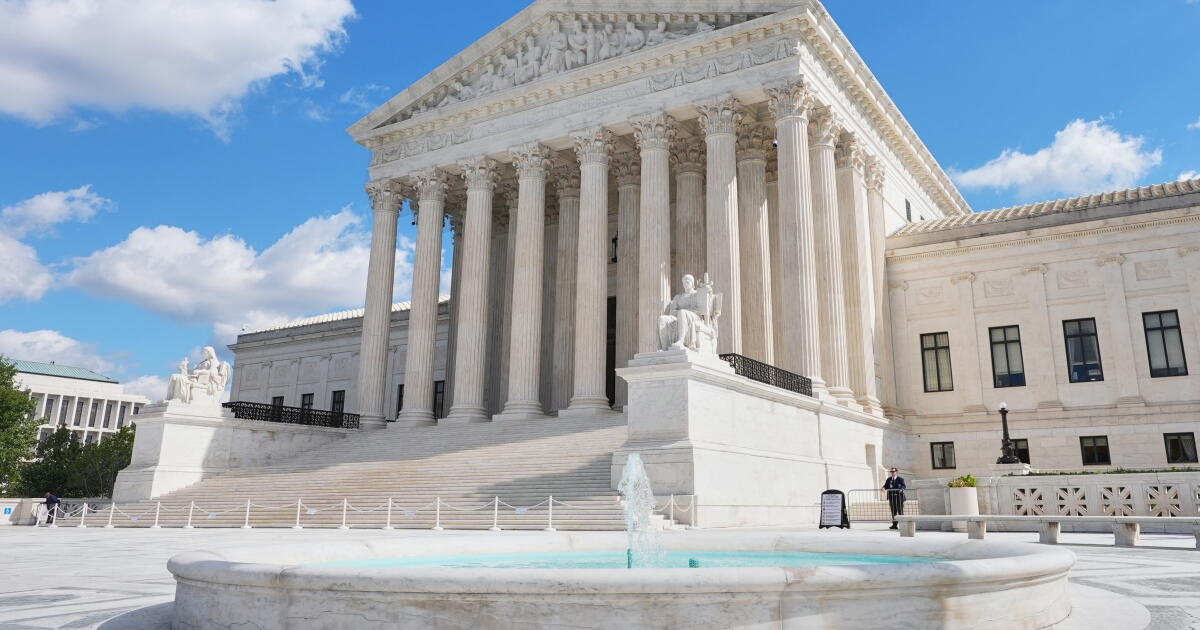
WASHINGTON — The Supreme Court agreed Tuesday to hear arguments in a watchdog’s lawsuit seeking public records about trillionaire Elon Musk’s Department of Government Efficiency.
The high court is intervening for a second time in Citizens for Responsibility and Ethics in Washington’s case, which seeks access to DOGE records from its operations in the early days of President Trump’s second term. The Trump administration asked the court to hear the case.
Last year, the high court reined in a district court’s order for the government to produce DOGE-related records to CREW. The high court’s conservative majority concluded in June 2025 that U.S. District Judge Christopher Cooper ruled too broadly in ordering documents to be turned over to the group.
CREW claims DOGE is a federal agency and therefore is subject to the Freedom of Information Act.
The Trump administration argues that DOGE is exempt from FOIA’s requirements as a presidential advisory body.
Cooper ruled in CREW’s favor and ordered expedited processing of the group’s records request. An appeals court panel also sided with CREW.
The Trump administration claims the panel ignored the Supreme Court’s direction to consider separation-of-powers concerns and intruded on the “autonomy and confidentiality” of presidential advisers.
“Subjecting advisory bodies to intrusive discovery triggers the very concerns that Congress sought to avoid by excluding presidential advisory bodies from FOIA’s reach,” Justice Department attorneys wrote.
The administration also says the appeals court impermissibly authorized the plaintiffs to take a sworn deposition of DOGE acting administrator Amy Gleason.
CREW says the appeals court fully complied with the Supreme Court’s previous order. The group also asserts that the public has a right to know how DOGE helped the administration carry out a sweeping overhaul of government operations in 2025.
“Undisputed facts in the public record — including the President’s statements — confirmed that (DOGE) was wielding enormous independent authority across the federal government,” its attorneys wrote.
“We need people in Congress who have the background, the training, the knowledge to basically hold this administration accountable,” Pan said last week on a baking 100-degree day in the Sacramento suburbs.
“I know what it’s like to be on the front lines,” said Pan, who spent a dozen years teaching and practicing pediatrics before being elected to the Assembly in 2010. “I’ve seen measles, right?”
The political organization 3.14 Action — its name a decimal approximation of pi — has recruited and helped elect hundreds of candidates from STEM backgrounds (science, technology, engineering and mathematics) and endorsed more than 500 of those running this year, including Pan in his race in Sacramento and in neighboring Placer and Yolo counties.
Dr. Richard Pan meets Dr. Teah Harris-Johnson and her daughter before participating in a roundtable discussion at Liberty Towers Church in Sacramento.
(Jose Luis Villegas / For The Times)
Shaughnessy Naughton, a chemist who worked on drug discovery and breast cancer research, founded 3.14 Action in 2016 after two unsuccessful tries for a congressional seat in the Philadelphia suburbs. When she started the organization, Naughton noted, there were more talk radio hosts on Capitol Hill than scientists and engineers. (Nearly two dozen doctors and nurses currently serve in Congress. More than 30 have run this election cycle.)
“There isn’t an issue that doesn’t benefit by having fact-based decision-makers, people that will go into office as problem-solvers,” Naughton said from Pennsylvania, which is in the throes of the nation’s worst measles outbreak in more than three decades. Health and Human Services Secretary Kennedy has downplayed the severity, even as the incidence of other vaccine-preventable diseases is rising.
“That’s essentially what scientists and physicians are,” Naughton said. “They are problem-solvers. and clearly our country is facing a lot of problems.”
Among those she cited was “the arsonist in charge of HHS.”
Like his jury-rigged political persona, Kiley seems to want it both ways on vaccines.
Before going to Congress, while serving in the Assembly, Kiley voted against Pan’s legislation cracking down on fraudulent vaccine exemptions. He’s described vaccines as a vital public health tool, but condemned government mandates and suggested vaccination should be a matter of parental choice. He claims Pan has eroded public trust by politicizing the issue.
As for Kennedy, Kiley told the San Francisco Chronicle a lot of things “that I don’t agree with,” though he’s never called out the secretary for his cuckoo-land theories — vaccines cause autism, the fluoride in public water supplies is making Americans “stupider,” and many more — or denounced his destructive policies.
That passivity, Pan said, amounts to complicity.
“It’s not just simply a talking point,” Pan said of public health policy. “It’s reality and we need to have policy based on what’s really happening, not on some ideological conspiracy theory.”
Dr. Richard Pan participates in a discussion during a Black maternal health roundtable last week at Liberty Towers Church in Sacramento.
Like most Democrats, he’s made affordability a key part of his candidacy, citing higher gas and grocery prices and, inevitably, the rising cost of healthcare and the roughly $1-trillion cut from Medicaid under last year’s Big Sop To Billionaires Bill.
The super-wealthy got tax cuts, Pan told a silver-haired audience at a 55-and-older community in Roseville, while the bill will make healthcare less accessible for millions and undermine both Medicare and Social Security. Kiley supported the legislation, the centerpiece of Trump’s second term. As a doctor and state lawmaker, Pan said, he worked to expand healthcare and address the needs of his community.
“We don’t pass laws to make lives harder,” Pan said. “That’s what he’s done.”
Later, at a forum on Black maternal health, Pan said Trump’s attacks on diversity, equity and inclusion programs and the so-called war on woke ignores glaring disparities in the treatment of Black women versus other patients. “The data is there,” said Pan, speaking before a banner decorated with purple butterflies and the proclamation, “Black Mothers Matter.”
“The facts are there,” Pan went on. “It’s a very, very real problem and it needs to be addressed and it needs to be solved.”
He brought up, somewhat sheepishly, his campaign.
“That’s why I’m running,” Pan said, to “have another person in Congress … who’s going to tell the administration we are not going to bury DEI. We’re not going to bury disparities. These are real problems.”
Tom Kim topped the men’s leaderboard after the third round at the Asian Games as he seeks a gold medal that will significantly reduce the time he is required to spend in South Korea’s military.
Having started two shots off the lead, Kim hit a brilliant five-under 65 that included five birdies and an eagle, taking him a stroke clear at 12 under par with one round to play.
Able-bodied South Korean males are usually required to undertake between 18 and 21 months of military service before the age of 28.
However the government rewards Asian Games gold medals and Olympic medals of any colour with a service exemption bar basic training, which lasts less than a month.
Athletes who have previously secured the exemption include former Tottenham footballer Son Heung-min, who served for only three weeks in 2020 having won the Asian Games two years earlier.
Kim hurried from the Presidents Cup in the United States to tee off at the Kasugai Country Club in Japan, having to manage on just six hours of sleep and a 14-hour time difference.
The 24-year-old previously came close to securing an exemption at the Paris Olympics in 2024, finishing day one tied for third before ultimately finishing eighth.
Having looked visibly emotional after that result, Kim is now chasing another chance to stop military service stalling his promising career, which has already featured an Asian Tour order of merit crown and four PGA Tour titles.
The world number 32’s lead would have been larger had he not missed birdie putts on the 14th and 18th holes, but he stands clear of Taiwan’s Wang Wei-hsuan, who had led overnight, and Japan’s Kazuki Higa going into day four.
The men’s team event title offers another route for military exemption, with South Korea also topping the men’s leaderboard by one stroke.
Gold in that event will exempt Tom Kim and SH Kim, 28, regardless of the individual result, but it would come too late for the third team member, Mun Do-yeob, who has already served.
“I think about it. It’s so tough,” SH Kim said of the possibility of military service.
“I am 100% nervous, for sure. It’s a lot of pressure. I could stay on the PGA Tour (with a gold). That’s my goal.”
The resolution cites a ‘lack of accountability’ by Israel’s government and an ‘inability to secure justice’ by the US.
The United States Senate has blocked a resolution that would have required President Donald Trump’s administration to report on the killing of nine Americans in the occupied West Bank and on Israel’s treatment of Palestinian children in military detention.
The resolution failed 47-53 on Tuesday, with senators voting largely along party lines.
Recommended Stories
list of 4 itemsend of list
It was brought to the floor by Senator Chris Van Hollen, a Democrat from Maryland, and cited a “lack of accountability” from the government of Israeli Prime Minister Benjamin Netanyahu and an “inability to secure justice” from the US government.
Senator John Fetterman of Pennsylvania was the only Democrat to vote against advancing the resolution, while Senator Rand Paul, a Republican from Kentucky, joined Democrats in supporting it.
Van Hollen forced the vote under the Foreign Assistance Act of 1961, which allows individual members of Congress to demand a formal State Department report on the human rights practices of any country that receives US security assistance.
“Violence is raging in the West Bank, & despite the deaths of nine Americans, the wrongful detention of even more, & the daily torment of Palestinians, we have no accountability from the U.S. or Israeli govt”, Van Hollen wrote on X before the resolution was brought to a vote.
Nine Americans killed
The resolution called for an unclassified report within 30 days of adoption. It would have detailed investigations into the deaths of the Americans, the treatment of US citizens held in Israeli prisons, and the conditions facing Palestinian children in Israeli military detention.
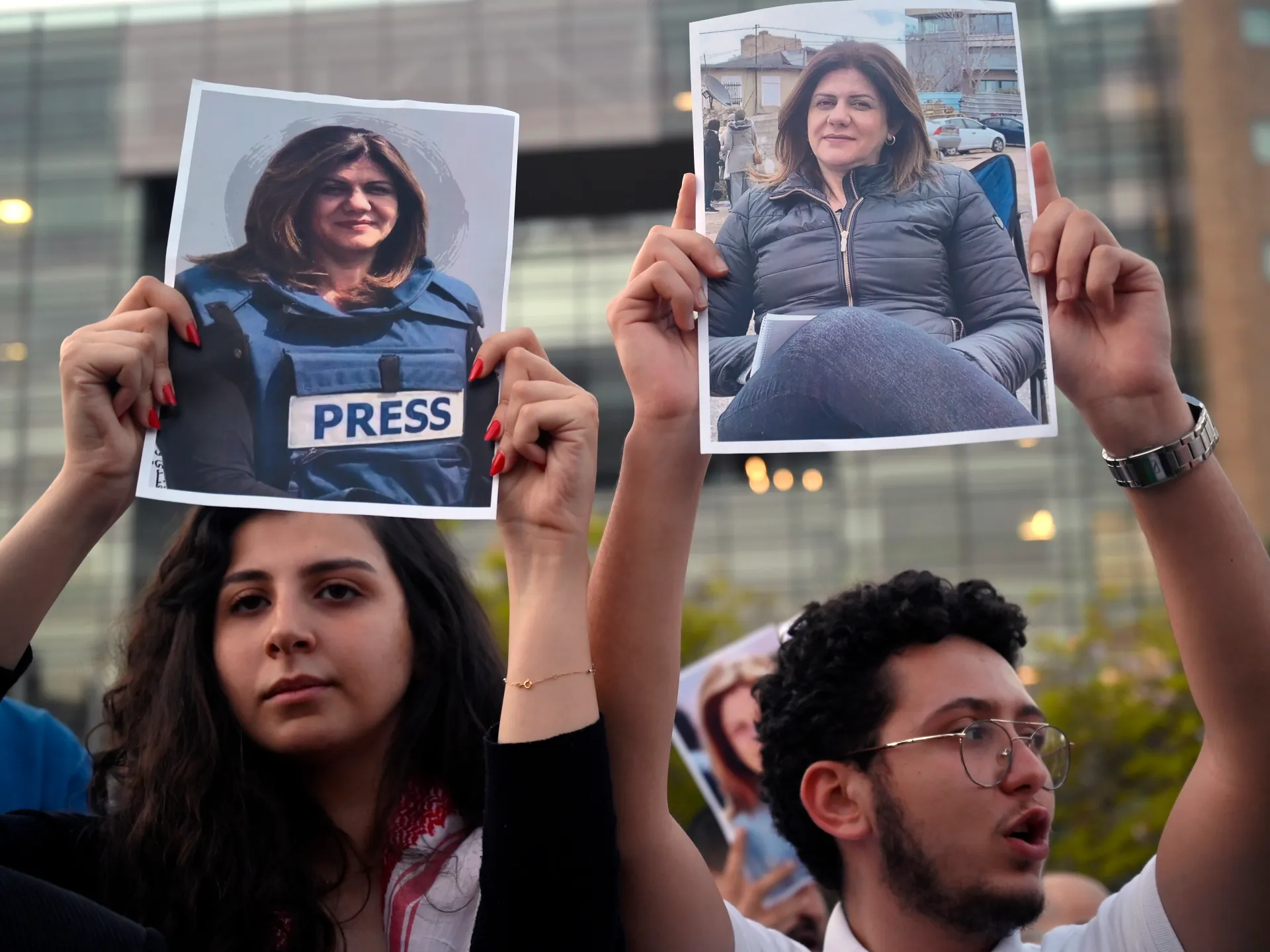
The measure cited the deaths of nine American citizens in the occupied West Bank since January 2022, including Shireen Abu Akleh, a Palestinian-American journalist and Al Jazeera correspondent who was shot in the head and killed in May 2022 while reporting in the city of Jenin.
It also included Aysenur Ezgi Eygi, who was shot in the head and killed by an Israeli soldier in September 2024, and Sayfollah Kamel Musallet, who was beaten to death by Israeli settlers in July 2025.
The others were Amer Mohammad Saada Rabee, who was 14; Tawfic Abdel Jabbar and Mohamed Ahmad Alkhdour, both 17; Omar Assad; Khamid Ayyad; Nasrallah Abu Siyam; and Khamis Rabee Jabara.
The resolution also noted the arrests of several Palestinian-American children by Israeli forces.
Among them was Mohammed Ibrahim, a 16-year-old from Florida, who was arrested in February 2025 and held in pretrial detention for nine months without contact with his family. It noted that US embassy officials and lawyers who met him told his family that he had lost nearly a quarter of his body weight, contracted scabies, and was beaten and tortured.
Other Palestinian Americans who remain in custody include Adam Wajeh Abdelfattah Karakrah, 16, and Sama Safi, 20, a student detained in June in raids targeting students at Birzeit University.
The resolution cited rights groups that have documented the deaths of at least 44 Palestinians in Israeli military camps since the Hamas-led attacks of October 7, 2023. Those groups, it said, have documented widespread abuses, including beatings, sexual violence, harassment and threats, “pointing to systemic and deliberate mistreatment”.
It also went on to note a sharp escalation in Israeli settler pogroms in the occupied West Bank, and stressed that there have been no convictions for the killings of Palestinian civilians by Israeli settlers since 2020.
Sep 25, 2026, 12:00 AM ETBy: Jay Mehta, SA News Editor
kyoshino/E+ via Getty Images
5:15 AM John Williams Speaks
Participates in a policy panel at the 6th Monetary Economics Conference organized by the University of Oxford, the New York Fed, and the Bank of England.