
screening

Inside Telluride’s secret screening: a meta Elizabeth Holmes doc

The Telluride Film Festival has always enjoyed keeping a secret. Tucked away in the Colorado mountains with nary a red carpet or paparazzo in sight, the low-key film festival doesn’t announce its lineup until the day before opening and surprise additions have long been a fixture of the event.

But even by Telluride standards, organizers went to unusual lengths this year to keep their biggest surprise under wraps. They had carved out a prime Sunday evening slot for a world premiere that, fingers crossed, would remain unknown until the audience was seated inside the theater. Festival director Julie Huntsinger offered only a few clues beforehand. The film involved some “very known names,” she told The Times. “Do not miss it. Your jaw will be on the ground for the entire length of the film.”

For three days, trying to crack the mystery became Telluride’s unofficial parlor game. Was it Aaron Sorkin’s “The Social Reckoning”? Denis Villeneuve’s “Dune: Part Three”? Alex Gibney’s Elon Musk documentary “Musk”? By Sunday, the mounting speculation had become fodder for jokes: Introducing his new movie “Club Kid” earlier in the day, writer-director-star Jordan Firstman announced that the evening’s TBA would be a newly restored print of Jerry Seinfeld’s 2007 animated film “Bee Movie.” “Just kidding,” he added. “I love Jerry.”

The festival kept the suspense going right up to showtime. Before entering the Werner Herzog Theatre on Sunday evening, hundreds of moviegoers were required to lock their phones in pouches to prevent spreading the word. Inside, they were warned that security guards equipped with night-vision goggles would be watching for anyone who managed to keep a phone accessible.

Taking the stage, Huntsinger made one last plea for secrecy. “What happens in Telluride stays in Telluride,” she told the crowd, before bringing out Nathan Fielder, the deadpan comic mind behind the reality-bending television shows “Nathan for You,” “The Rehearsal” and “The Curse.”

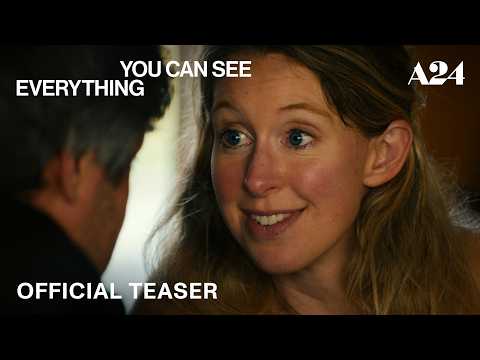
What Telluride had been guarding so carefully was “You Can See Everything,” a nearly three-hour documentary about convicted Theranos founder Elizabeth Holmes, co-directed by Fielder and documentary filmmaker Lance Oppenheim. The film, which A24 will release theatrically in October, had been made largely in secret over three years.

“For those of you who don’t know who we are and are disappointed, I apologize,” Fielder, joined onstage by Oppenheim, told the crowd to laughs. “But hopefully by the end of the film, you’ll be slightly less disappointed.”

The movie begins 34 days before Holmes is due to report to federal prison, with Fielder, Oppenheim and a small crew given extraordinary access to her life with her partner, Billy Evans, and their young children. Holmes and Evans embrace what they call “radical transparency,” opening their home to the cameras in hopes of convincing the filmmakers — and eventually the world — that the public has fundamentally misunderstood her.

But as anyone familiar with Fielder’s reenactment-heavy work can imagine, “You Can See Everything” quickly becomes something far stranger than a conventional documentary. Fielder finds himself drawn from behind the camera into the story, struggling to determine whether Holmes and Evans are being candid with him or manipulating him. From there, the movie takes a series of increasingly surreal turns, including elaborate reenactments involving a Hollywood actress (her arrival is too good to spoil) that further scramble the line between reality and performance.

During a post-screening Q&A moderated by Emma Stone, who co-starred with Fielder in the darkly comic A24 series “The Curse,” Fielder said that his own inability to get a firm grip on what he was witnessing became one of the forces driving the project.

“We’re all smart and we’re really working at the top of our intelligence,” he recalled thinking as he and the crew tried to make sense of their time with Holmes and Evans. “Why can’t we make sense of what’s happening in this house?”

The project began, appropriately enough, with a magic trick.

Oppenheim said he and Fielder were at the Magic Castle in Los Angeles several years ago when a magician asked the audience to name a celebrity. Someone called out Elizabeth Holmes. Afterward, Oppenheim told Fielder he had heard through a friend of a friend that Holmes was looking for someone to document her life.

Fielder had read John Carreyrou’s “Bad Blood,” the bestselling 2018 account of Theranos’ rise and collapse and initially saw little reason to make another documentary about Holmes.

“I thought the story was really fully told,” he told the Telluride crowd. Holmes, however, had largely disappeared from public view, and Fielder was curious about what she might have to say for herself.

Meeting her only deepened that curiosity. Sitting across from Holmes, Fielder said, he found her “sort of honest and charming,” even as his brain was warning him, “No, don’t trust.” That disconnect — between what he knew about Holmes and what he felt in her presence — became central to the movie.

A24 gave Fielder and Oppenheim unusual freedom to pursue the project without any deadline or obligation to turn what they captured into a finished film. If nothing came of it, Fielder recalled being told, “you can just throw everything away.”

Holmes founded Theranos in 2003 and became one of Silicon Valley’s most celebrated young entrepreneurs by claiming the company could perform a wide range of medical tests using only a few drops of blood. The company collapsed after investigations exposed serious problems with its technology and business practices. In 2022, Holmes was convicted on four counts related to defrauding investors and later sentenced to more than 11 years in federal prison.

As shown in “You Can See Everything,” once Holmes reports to federal prison, the filmmakers’ access to her changes dramatically, with Evans — who takes over Holmes’ Twitter feed and assumes power of attorney over her decisions — becoming their main conduit. Fielder said the relationship grew strained as Evans tried to exert greater control over the project. Neither Holmes nor Evans has seen the finished movie.

Fielder is hoping to keep the film’s biggest surprises under wraps. During the Q&A, he told the Telluride audience he hoped future viewers could experience the film without knowing where it was headed. Stone seconded the request.

“You won’t be upsetting me,” Fielder joked. “You’ll be upsetting Oscar-winning actress Emma Stone.”

Fielder said that even after three years immersed in her world, he still doesn’t know quite what to make of Holmes — or how much of what she says can be believed.

“I really am struggling to this day to understand exactly what I experienced in this,” he said. “I don’t quite know what I went through.”

As the crowd filed out of the Herzog, one reaction seemed to recur more than any other: “That was wild.”

Source link

Travel insurance warning issued over ‘medical screening’

Some issues can make it harder to find affordable travel insurance

Expert advice has been issued for many Brits planning to go abroad. People with disabilities and long-term medical conditions are being warned to shop around for travel insurance as their health history can send premiums soaring.

Having a medical condition does not mean you cannot get travel insurance – but it can make finding affordable cover considerably harder. Research by Which? highlighted in a new post on X on Wednesday, September 2 found that seven in 10 of its members who had bought travel insurance in the previous two years had declared a medical condition. While most said this had only a minor effect on their ability to find an insurer willing to cover them, many reported that their condition pushed up the price.

One in four said their medical conditions had a major impact on what they paid. The problem can become particularly acute for older travellers.

Data from Compare the Market cited by Which? suggests customers aged over 65 pay roughly double once their medical conditions are taken into account. And simply buying a standard travel policy without declaring a condition could leave holidaymakers dangerously exposed.

Insurers usually require travellers to disclose their medical history, with specialist medical screening companies assessing the risks involved. The resulting risk assessment can affect whether an insurer will provide cover and how much it charges.

But different insurers can make different decisions – meaning it pays to shop around rather than accepting the first quote.

Specialist policies to consider

Which? assessed policies from specialist providers and identified several as Best Buys. Saga came out on top, with its Plus annual multi-trip policy scoring 82%.

It provides up to £20 million of medical expenses cover, £20,000 cancellation cover and £10,000 for baggage and valuables. Saga’s Plus single-trip policy scored 81%, while its Standard annual multi-trip policy scored 77%.

Staysure Signature scored 74%, with unlimited medical expenses cover, £15,000 cancellation cover and £5,000 for baggage. AllClear Platinum scored 70%, also offering unlimited medical expenses cover.

Which? also highlighted InsuranceWith’s Platinum policy, which scored 68% and includes £5,000 of gadget cover.

Don’t hide your medical condition

Travellers should be completely open about their health when buying cover. A medical condition may result in a higher premium or an exclusion being added to a policy. An exclusion could mean claims linked to that condition are not covered – potentially leaving someone facing a huge bill if they become ill abroad.

Which? insurance expert Dean Sobers said there is a reason it publishes information about the medical screening companies used by insurers. The organisation found that 80% of the policies it assessed used Verisk for medical screening, while 12% used Protectif.

This can matter because insurers may reach different decisions about whether to cover someone – and what to charge – even when the same screening process is involved. He said: “When searching for quotes, you may have found yourself answering what feels like identical health-related questions over and over even when trying different insurers. You’re not imagining it: medical screening is outsourced by most travel insurers, with the vast majority using just two firms – Verisk and Protectif.

“While the insurer makes the ultimate decision about how much to charge you, the different approaches of the screening companies can lead to a different picture of your risk. Verisk, for example, asks you to state the name of your medical condition, while Protectif begins by asking you which medications you’re taking and works backwards from that.

“No particular screening company is necessarily going to deliver a cheaper quote, but if you feel like you’ve hit a brick wall with one, trying another could be worth it.”

Specialist insurers are specifically designed to deal with travellers who may be rejected, heavily loaded or offered limited cover by mainstream providers. And with the cost of holidays already high, shopping around could make the difference between being properly protected and taking a potentially disastrous gamble by travelling without adequate insurance.
Source link

Pentagon rescinds mandatory testosterone screening guidance

Sept. 3 (UPI) — The U.S. Defense Department has temporarily rescinded its recently announced mandatory testosterone screening guidance for men over age 30 on active duty or in the reserves.

The guidance, which was announced on Wednesday, required that men over 30 get testosterone blood tests. Those under 30 would be tested only if health professionals felt it was necessary or if service members wanted it.

The Pentagon’s website before Thursday showed a link for “Clinical Guidance for Health and Human Performance Optimization” that detailed the testosterone deficiency screening requirements for male and female service members over 30. However, that link read “PAGE NOT FOUND” on Thursday.

According to The Hill, an unnamed Pentagon official said the guidelines were rescinded to allow for “updates.”

“The Department remains committed to addressing hormone deficiencies, protecting the long-term health of its Service members and enabling peak operational performance,” the Pentagon official said.

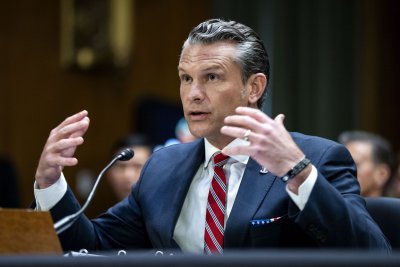
Defense Secretary Pete Hegseth in July announced service members would be screened for their testosterone levels and be offered testosterone replacement therapy, saying it would keep troops on the “leading edge of lethality.”

Source link