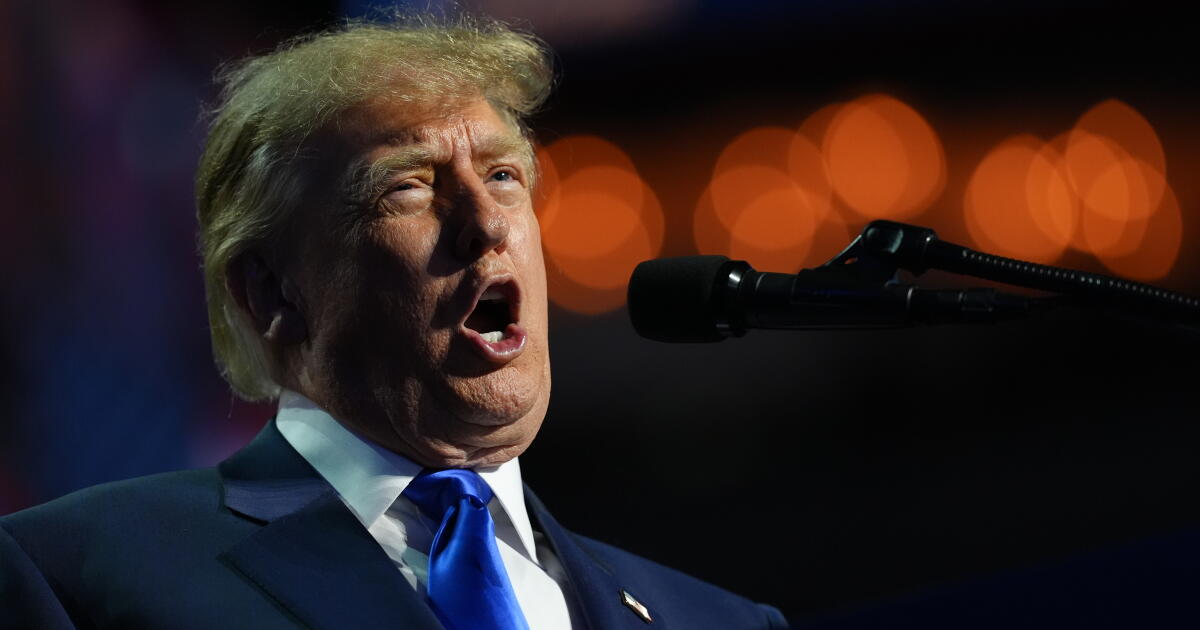
Scott Bessent

High-Yield Reality: CFOs Rethink Corporate Debt Strategies

With high rates here to stay, CFOs rely on internal cash and working capital for stability.

In August, U.S. Treasury yields reached multi-decade highs. Treasury Secretary Scott Bessent responded by doubling the size of buyback operations for 10- to 20-year and 20- to 30-year securities to a floor of $4 billion each, effective Sept. 9 — a stopgap lasting through November 4, when the Treasury releases its next official policy statement.

Yet while Washington intervenes to stabilize government debt, finance chiefs must reckon with higher costs of capital.

“Higher rates have changed the math and, more importantly, reduced the margin for error,” Thomas DeFabrizio, CFO, Americas at Impellam Group, said in an email. “The hurdle rate should move when the cost of capital moves. Otherwise, you are pretending the financing environment has not changed.”

This reality is forcing companies to look inward, turning operational efficiency into a primary source of funding. “Every dollar released from receivables or inventory is a dollar you do not have to borrow at today’s rate,” DeFabrizio said — a meaningful gap when investment-grade credit is yielding around 5.5% and broad high-yield debt is near 7%, with lower-rated credit running considerably higher.

“That makes working capital much more than a finance housekeeping exercise,” DeFabrizio added. “It becomes a capital-allocation decision.”

Era of Cheap Capital Ends

Elevated borrowing costs directly filter down into corporate balance sheets and consumer demand, sparking broader concerns over whether public and private debt issuance has reached a tipping point. Rather than waiting for a rate relief cycle that may never materialize, finance leaders are taking direct defensive action.

Duncan Young, principal at San Francisco-based consulting firm Saorsa Growth Partners, specializes in providing fractional CFO services to companies. Businesses, he told Global Finance via email, are now prioritizing balance sheet durability over aggressive expansion.

To hedge against benchmark rate risks, companies are restructuring their short-term obligations and shifting benchmark exposure.

Portrait photo of Duncan Young,
Saorsa Growth Partners
Duncan Young,
Saorsa Growth Partners

“This is likely a function of risk-off bondholders and bank balance sheets, shifting away from Treasuries towards corporates. We’re pricing off SOFR when possible, to avoid the Treasury rate risk,” he said.

Instead of speculating on interest rate cuts, companies with near-term debt maturities are moving quickly to lock in fixed terms to insulate themselves from further upside volatility in yields.

“Our ‘current debt’ revolvers are being paid back [or] termed out to give us more resilience, heading into uncertainty. We aren’t expecting yields to ease,” Young said.

That posture is showing up across the broader CFO community.

Companies Are ‘Stretched Thin’

Middle-market companies, firms that typically generate less than $1 billion in annual revenue, have even less room to maneuver. Nick Araco, CEO of CFO Alliance, hears that many CFOs “are stretched thinner on what their current options are.”

As a result, they’re watching the Federal Reserve more closely, he added. “They don’t have the same flexibility to just refinance on their own timeline.”

“The ones sitting on debt maturing in the next 12 to 24 months are largely not betting on yields easing meaningfully,” Araco said, describing conversations across the group’s roughly 9,000 members.

This conservative stance is fundamentally altering capital allocation strategies. Rather than relying on leverage to fuel aggressive top-line targets, firms are relying on internal cash generation. They’re scaling back capital expenditures and holding cash as a strategic buffer.

“Return on cash gives us some benefit — for example, it softens the opportunity cost of us paying off debt. Terming out on a fixed rate and sitting on the cash so we can stay liquid in the next liquidity crisis is insurance worth paying,” Young added. “Given the AI outlook and the consequences of a bubble pop, we’re prioritizing resilience over growth rate, and this means less leverage and a more liquid balance sheet.”

Preparing for Double Shock

Government debt continues to test the limits of market capacity. An August 30-year Treasury auction drew below-average demand and record dealer absorption as yields hit 5.2% — the highest since 2001. Meanwhile, foreign investors’ share of U.S. debt has slid to about 30% from a 2008 peak of 49%, according to the Committee for a Responsible Federal Budget and the Bipartisan Policy Center.

That combination — elevated base yields sitting alongside historically tight credit spreads — is unsettling CFOs more than the headline numbers suggest.

“Tight spreads feel almost like a false sense of calm,” Araco said. CFOs aren’t treating today’s all-in cost of debt as the new normal, he added. They’re stress-testing what happens if spreads normalize on top of already-elevated base rates.

“It’s less about action today and more about scenario planning,” Araco said, “and making sure that their capital structure isn’t fragile if that spread compression reverses.”

Corporate leaders are taking matters into their own hands. By prioritizing liquidity, extending duration, and managing leverage, CFOs are ensuring their organizations remain resilient regardless of where government bond yields head next.

“If Treasury yields remain elevated and spreads widen at the same time, the all-in borrowing cost can change quickly. I would model that combined shock now,” DeFabrizio warns. “Once you need the capital, your negotiating position has already changed.”

Anthony Noto covers corporate finance and private credit. Contact him at anoto@gfmag.com

Source link

G20 finance chiefs gather in North Carolina with Iran sanctions and tariffs in focus

The United States takes its turn chairing the G20 finance track this week under distinctly awkward conditions.


ADVERTISEMENT


ADVERTISEMENT

US Treasury Secretary Scott Bessent and Federal Reserve Chair Kevin Warsh are hosting counterparts in the North Carolina mountains, following a deputies meeting held over the weekend, with the formal agenda covering economic growth, global imbalances, sovereign debt restructuring, banking regulation and energy security.

Asheville was chosen deliberately.

The city was devastated by Hurricane Helene in September 2024, a storm that killed more than 250 people and caused close to $80 billion (€69bn) in damage from Florida to the Carolinas, and Bessent has cited its rebuilding as a fitting backdrop for talks about economic growth.

“We want the rest of the world to come along with our growth agenda, whether it’s deregulation, the energy independence […]” he said, adding that “the world has this mountain of debt, and we do have to grow our way out of it,” confirming public debt will feature prominently in the discussions.

The setting may prove easier than the substance.

Trade friction between the US and Canada escalated after negotiations broke down, hostilities with Iran have resumed through economic rather than military means, and Warsh arrives days after a hawkish first Jackson Hole address that sharply raised the odds of a US rate rise this month.

Both meetings serve as groundwork for the leaders’ summit at Trump National Doral in Miami on 14 and 15 December, and come weeks before Xi Jinping is expected in Washington on 24 September.

Bessent’s push on Iran

The US Treasury Secretary intends to use bilateral meetings to build support for squeezing Tehran, and stated that Washington will sanction another bank this week, though he declined to name it.

“This is going to be financial violence if we have to,” Bessent told AP.

“We are showing people that we know who you are, you know who you are, and this has got to stop,” he added.

The campaign’s opening move came on Friday, when the US Treasury proposed a rule that would cut the Emirati branches of Banque Misr, Egypt’s second-largest lender, off from the American financial system.

By stopping short of full sanctions, the US administration appeared to signal reluctance to punish major trading partners that still deal with Iran, notably China and India.

On Beijing specifically, Bessent said “all options are on the table” over its continued oil purchases, while dismissing suggestions of hesitancy as “a completely false narrative that the media picked up on.”

The meetings are also being held under unusual media restrictions, after the US Treasury barred certain reporters from the New York Times, Wall Street Journal and Bloomberg from covering them.

The New York Times called the move “not just another disturbing effort by the administration to undermine independent journalism, but a blatant attempt to evade public scrutiny.”

The department has not explained its decision, though Bessent told the AP that “it has nothing to do with point of view.”

Who speaks for Europe at the G20

The EU is represented by Ireland’s Tánaiste and Finance Minister Simon Harris, who holds the role by virtue of Ireland’s EU presidency since 1 July, alongside ECB President Christine Lagarde and Economy Commissioner Valdis Dombrovskis.

Harris said he was looking forward to “the first Ministerial meeting of the G20 Finance Ministers and Central Bank Governors since Ireland assumed the Presidency of the EU,” describing the forum as a place where the largest economies “can exchange views and work towards international economic and financial stability.”

The Irish minister’s stated priority reflects the conflict shaping much of the agenda at this G20 meeting.

Among the EU’s concerns, Harris listed “energy security and ensuring we have secure and resilient energy supplies at a time of severe volatility caused by the conflict in the Middle East.”

He will also hold bilateral meetings with counterparts from G20 member states as Ireland has also been invited as a guest for the December leaders’ summit in Miami.

Additional sources • AP

Source link

US threatens Iran with ‘economic D-Day’ as markets await sanctions announcement

Published on

The US is ramping up its economic pressure on Iran after Treasury Secretary Scott Bessent declared the start of an “economic D-Day”.


ADVERTISEMENT


ADVERTISEMENT

According to Bessent, this represents “the single greatest financial offensive ever marshalled against an adversary.” He set out the position in a post on X late on Sunday and in a Financial Times opinion article published the same day.

Bessent stated that US President Donald Trump’s military campaign had “significantly dismantled Iran’s military capabilities and weakened its nuclear programme”. He added that the administration is now “entering the endgame” and that the economic measures begin at dawn.

The objective, according to the US Treasury Secretary, is to “sever every economic lifeline that sustains the tyrannical regime until Tehran stands alone”.

Bessent cautioned countries that continue to buy or transport Iranian petroleum, facilitate financial flows through exchange houses and free trade zones, handle flights, maintain ship registries or enable seaborne fuel transfers, that any remaining links would accelerate their own isolation.

The comments follow remarks by US President Donald Trump last week. At the time, Trump announced in a Truth Social post “the most crushing economic operation ever taken agaisnt any country!”

Despite both declarations, specific measures have not yet been set out.

According to Bessent’s outline, the package could centre on secondary sanctions against nations and entities that keep purchasing Iranian oil, process its finances, operate related banks or support shipping and other commercial channels, layered on top of the existing naval blockade.

Bessent is scheduled to hold a press conference at 7 PM CET on Monday to announce the concrete steps.

Market reaction

Oil prices are lower on Monday morning even as the rhetoric intensifies.

At the time of writing, Brent crude, the international standard, is trading at around $91.5 which is 2% lower than Friday’s close while West Texas Intermediate stands at roughly $86.2, about 1.5% lower than last week’s close.

The fall may stem from profit-taking after recent gains and from reports of a temporary rise in tanker movements through the Strait of Hormuz.

According to shipping information cited by Axios, around 40 tankers transited the southern channel on Friday night, moving roughly 16 million barrels of oil, higher than the 15-20 vessels recorded on preceding nights.

Overall volumes through the waterway remain well below pre-conflict levels.

On the other hand, US futures are also in the red ahead of market open while European stocks are trading flat.

Source link

US debt tops $40 trillion as Treasury doubles bond buybacks to calm markets

Published on

The US national debt now stands at a record $40 trillion (€34.4tn), while the Treasury has responded to the bond market pressure by pledging to buy back far more of its own older securities.


ADVERTISEMENT


ADVERTISEMENT

Washington’s two announcements landed on the same day and represent two symptoms of the same underlying strain: a government borrowing at a record pace just as buyers of its longest-dated debt are demanding higher returns to keep lending.

Buybacks work like a targeted repurchase. Rather than printing new money, the US Treasury uses cash it already has to repurchase older, harder-to-trade bonds from investors, improving liquidity without changing the total stock of debt.

From 9 September, the maximum size of each buyback operation in the 10-to-20-year and 20-to-30-year markets will at least double, from $2 billion (€1.7bn) to $4 billion (€3.4bn), running through the next quarterly refunding on 4 November.

The US Treasury said the change reflects “strong sponsorship from market participants” in that part of the curve, but the timing of the decision was no accident.

The 30-year yield had climbed on Tuesday to its highest level since 2007 amid what analysts called a buyers’ strike stretching back to late June, aggravated by a swelling supply of corporate debt tied to AI data centre spending.

Yields duly fell after Wednesday’s announcement, with the 30-year dropping roughly 9 basis points and the 10-year around 6, and Wall Street rallied.

Asked whether Americans should worry about the volatility, US President Donald Trump simply said: “No, I don’t think so.”

However, not everyone is convinced the fix goes deep enough.

The size of the increase is modest next to the $32 trillion (€27.5tn) Treasury market it is meant to steady, and notable economist Mohamed El-Erian suggested the outsized market reaction reflected hopes of broader intervention to come rather than the direct effect of the buybacks themselves.

Thomas Simons, chief US economist at Jefferies, said the announcement broke with Treasury’s usual pattern of steady, well-flagged communication about its borrowing plans and felt “shot from the hip”.

How the US national debt reached $40 trillion

The debt figure, confirmed by US Treasury data covering Tuesday, splits into $32.27 trillion (€27.75tn) held by the public and $7.78 trillion (€6.69tn) owed between government accounts.

It arrived roughly two fiscal years earlier than expected as the US Congressional Budget Office projected in May 2023 that the threshold would not be crossed until 2028, and it came remarkably fast even by recent standards: $39 trillion (€33.5tn) was reached only in March, $38 trillion (€32.6tn) the previous October.

The US government borrowed $1.8 trillion (€1.5tn) in the first ten months of this fiscal year alone, already more than it borrowed in the whole of the last one, as spending on Social Security, Medicare, defence and interest payments continues to outrun revenue.

“The national debt is not just a number on the government’s balance sheet,” said David Young, president of the Conference Board’s CEO Center, noting it shapes the financial decisions Americans make daily.

The two stories feed each other.

A bigger debt load makes investors warier about lending long-term, which pushes yields higher. In turn, higher yields then raise the government’s own interest bill, adding further to the debt the US Treasury has to finance next.

Wednesday’s buyback expansion may ease the immediate pressure, but it does nothing to slow the borrowing driving it.

Source link