Scams and fraud

From rigged taxes to the free gift con, all the tricks scammers use to target YOU on holiday

WITH the summer holidays in full swing, travellers would do well to be wary of scammers spoiling their trips abroad.

A British tourist was recently charged £490 for an £8 taxi fare in Paris after a cabbie got her out of his car, claiming his internet connection was poor, changed the amount on the card reader, then got her to pay through the window.

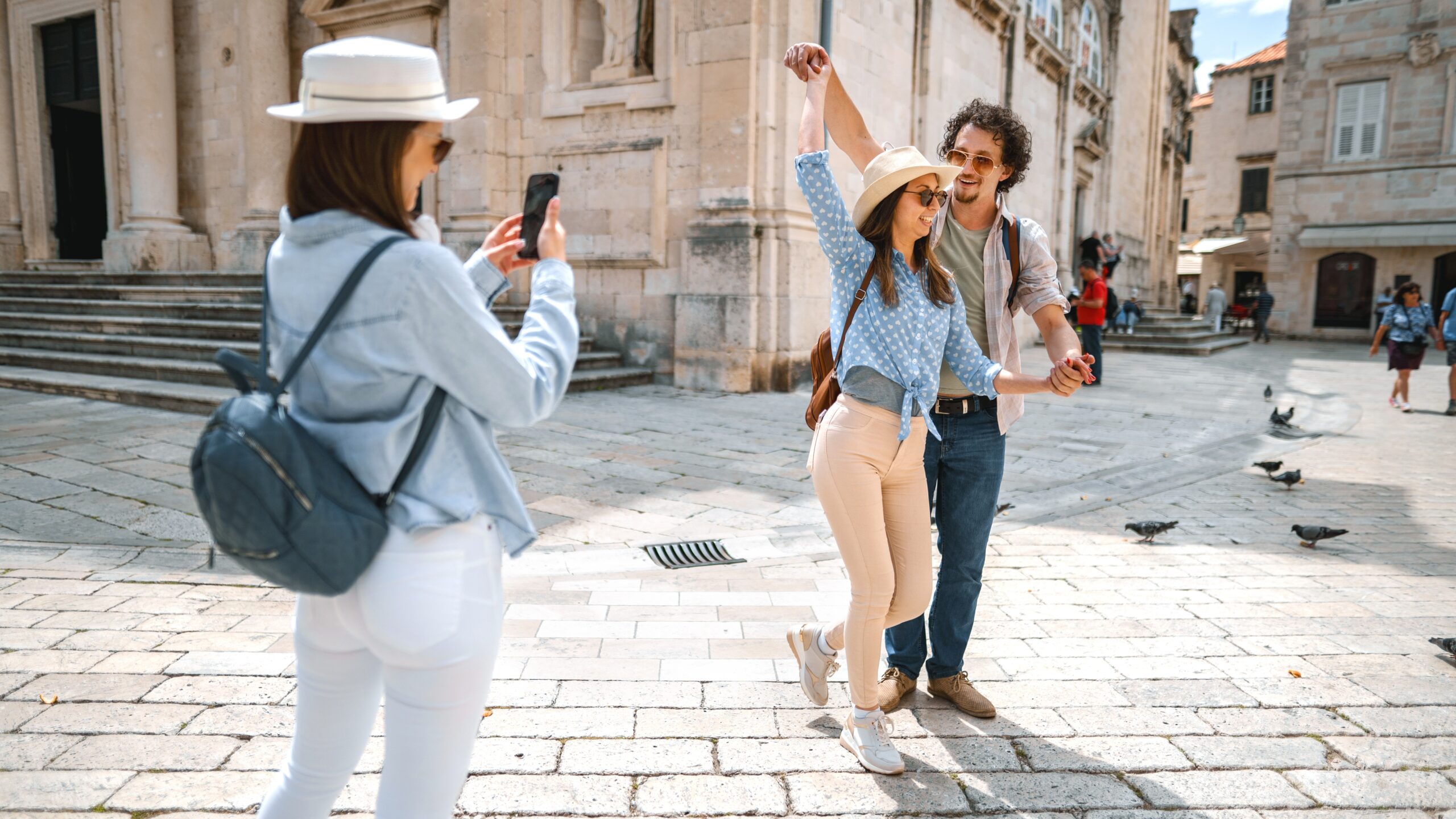
Beware random couples asking for you to take their photo – they’ll grab your belongings — and because they’re experts at what they do, you won’t feel a thing Credit: Getty
Snapping holiday photos can drain your phone’s batteries, but be careful as scammers tamper with public USB charging Credit: Getty

In-person payments like this don’t offer the same automatic protection against fraud as bank transfers.

Around one in every 20 British holidaymakers falls victim to some sort of physical or digital scam while travelling overseas, and more than 9.4million have been caught out over the past five years.

Graeme Buck, Abta’s director of communications, said: “Always apply the same personal safety rules that you would at home, and read the Foreign, Commonwealth and Development Office travel advice for the destination you are travelling to.”

With millions of us jetting off this month and next, we reveal tricks con artists use to target you, as well as tips on how to keep your hard-earned holiday cash safe.

CLEAN BANDITS

IF you suddenly find an “accidental” dollop of ketchup, spilt coffee or fake bird droppings on your jacket or bag and an over-friendly local steps in to dab it off with tissues, keep your wits about you.

While you are distracted by the person cleaning you, their accomplice will rifle through your pockets and help themselves to valuables.

BED RECEPTION

TIRED after a long day travelling, you check in at your hotel and head off to bed.

Then someone claiming to be from reception calls to explain there is a glitch with the card you have just used, and they ask you to verify again your payment details over the phone.

But it could be a scammer after your money.

Never give card details over the phone. Go down to the desk to verify what the caller said.

JUICE JACKING

SNAPPING holiday photos can drain your phone’s batteries.

Exploiting this vulnerability, scammers tamper with public USB charging ports in hotels, cafes and aiports to steal data such as bank information, or to infect your mobile with malware.

Plug your own charger into a standard wall outlet or use a USB data blocker (an adapter that cuts off data transfer).

Or safer still, invest in a portable power bank.

Always tap “don’t trust” if a pop-up asks to share data.

FREE GRIFT

Couples tend to be a magnet for this sort of con in Paris, Milan, Rome and other European cities.

A stranger hands you a flower or ties a bracelet to your wrist, then demands a large cash payment — or the fake act of kindness is a distraction technique for pickpocketing.

Refuse the item and walk away.

THE SELFIE STEAL

WOMEN are mostly the target for this scam.

A random friendly couple asks you to take their photo.

The request might seem harmless — but do not oblige if they then ask you to join them for a selfie.

Once up close they’ll grab your purse, phone, watch and jewellery — and because they’re experts at what they do, you won’t feel a thing.

THE FRIENDLY WAITER

WHILE out sightseeing, you bump into a waiter who claims to recognise you and says: “I served you last night at dinner at your hotel. Don’t you remember?”

This is a red flag. Unsuspecting holidaymakers have told how they were conned into a “cheaper tour” by someone pretending to be their waiter, and intimidated into buying items from their friends’ shops — only to discover the conman didn’t work in their hotel at all.

Scammers can know where you are staying just by looking at your wristband, so turn it inside out when venturing outside the hotel.

PEA & CUP GAME

A trickster lines up cups, hides a pea under one and moves them around, but you’ll win the first round and lose the rest Credit: Getty

THE trickster lines up cups, hides a pea under one and moves them around.

You’re encouraged to bet on which one contains the pea.

A couple who are in on the scam get it right — and because you can see where the pea is, you then take a risk.

You win the first round but lose the rest.

One victim explained: “They won’t let you get away until you’re skint, and you’ll find it very intimidating. Just walk on by.”

TAKEN FOR A RIDE

Always ensure the meter is running, use trusted apps such as Uber, Bolt or Freenow, or pre-book air-port transfers before your trip via a trusted site Credit: Getty

A taxi driver insists the meter is broken, takes longer routes or charges hidden fees for the ride.

Or, upon picking you up from the airport or station, they claim your booked hotel is closed, under renovation or in a dangerous location.

The driver offers to take you to a better hotel where they get a commission for your new booking.

Always ensure the meter is running, use trusted apps such as Uber, Bolt or Freenow, or pre-book air-port transfers before your trip via a trusted site.

There’s a tourist Facebook site for many destinations, so head to the relevant one for transfer recommendations.

WHATSAPP TRAP

Scammers hack legitimate hotel and Airbnb messaging accounts so they can message guests shortly before arrival.

The con artists claim your booking will be cancelled unless you re-enter your card details, often via a WhatsApp or phishing link.

Never pay or click links outside the official app platform.

JUST SIGN HERE

TRICKSTERS — usually groups of young people — approach British tourists near major sights asking them to sign an English petition for a deaf charity or human rights cause.

While you are holding the board to read the details or sign, they pressure you for cash or pickpocket you.

TICKET TRICK

Hanging around busy stations such as Paris Gare du Nord or Rome Termini, swindlers posing as transit staff or helpful locals offer to assist you with the complicated ticket machines.

They will overcharge you, snatch your change or sell you cheap child-fare or invalid tickets.

Source link

The Sun’s Clemmie gets £1k back from HSBC after Lee Andrews’ scam

HSBC has praised our investigation into Katie Price’s husband Lee Andrews — and repaid the £1,000 our journalist spent to expose him as a fraudster.

Clemmie Moodie sent conman Andrews the money from her account with the bank via its app to see if he would make good on promises to treble it.

HSBC has praised our investigation into Katie Price’s husband Lee Andrews Credit: mistraesthetics/Instagram
The bank repaid the £1,000 our journalist Clemmie Moodie, pictured with Katie, spent to expose Lee as a fraudster Credit: Louis Wood

David Callington, head of economic crime prevention at HSBC UK, said: “It’s great that The Sun is educating readers on how to spot and avoid fraud and what warning signs to look out for.

“If any HSBC UK customers find themselves in the same position as Clemmie, we’d invite them to get in touch with us to see how we can help.”

The bank concluded Andrews had forged its own branding to fabricate a fake payment screenshot — a document showing £2,900 due to land in Clemmie’s account on May 15 that never arrived.

She had transferred the cash after he pitched a “zero risk” investment.

FAME GAME

Princess Andre makes This Morning debut as Katie Price finds ‘missing’ husband


LEE-VE ME ALONE

Watch the moment Katie Price’s sister BANS Lee Andrews from speaking to her

What followed was a string of excuses about stock market turns and Abu Dhabi banking hours, then the fake HSBC screenshot, then silence.

Nineteen days after handing the money over, Clemmie went public.

Andrews, a Dubai-based self-styled businessman who has called himself an “international mastermind criminal”, is now wanted by Interpol after Hertfordshire Police escalated their investigation into him.

Former glamour model Katie, 48, claims her missing husband is in prison on spying charges in Dubai.

Lee Andrews is a Dubai-based self-styled businessman who has called himself an ‘international mastermind criminal’ Credit: wesleeeandrews/Instagram
Katie with Lee before he ‘disappeared’ and stopped responding to her messages Credit: Instagram

Mr Callington warned: “Social media has become a leading hunting ground for investment scammers.

“They will share fake testimonials and forged documents with their victims to build trust quickly.

“The first major red flag with any investment scam is usually the assurance of guaranteed, unrealistically high returns.

“Take time to do your research, and speak to your bank if you are unsure about the legitimacy of an investment.”

HSBC experts have identified key red flags customers need to know.

5 SCAM RED FLAGS TO LOOK OUT FOR

HSBC experts have identified key red flags customers need to know Credit: Getty

1. “GUARANTEED” or unusually high returns are the first warning sign. If fixed, risk-free or above-market returns are promised — think “8% a month” or “double your money” — walk away. Legitimate investments carry risk.

2. PRESSURE and urgency tactics are the scammer’s best friend. They include phrases like “limited allocation”. If someone tells you not to seek independent advice or creates a false deadline, that is a major alarm bell.

3. UNREGULATED or hard-to-verify firms are a serious danger sign. If the product description is vague, treat it with extreme caution. No audited financials or clear documents where you would expect them? That is a red flag.

4. WATCH how they ask you to pay. Requests to send money to personal accounts, to use crypto or gift cards are classic scam tactics. And beware of anyone who tells you to pay fees or tax upfront in order to “release” profits.

5. A SLICK-looking app may show profits climbing, but when you try to withdraw, there are delays, blocked requests or a need to “top up” funds. If a platform makes it hard to get your money back, something is very wrong.

Source link