Brits now prefer taking multiple UK-based micro-cations throughout the year and EV savings make cost-effective short breaks even cheaper.
11:55, 24 Aug 2026Updated 12:00, 24 Aug 2026
Smart Energy GB explore how Brits are enjoying Bank Holiday weekend
More than four in 10 Brits now favour taking several UK-based micro-cations throughout the year – rather than a single annual holiday, according to new research. A survey of 2,000 adults revealed they would rather put the money a big getaway would cost towards multiple short breaks spread across the year. A fifth are planning one of these short trips – within 100 miles of their home – this bank holiday weekend.
According to the findings, 44% are now taking more micro-cations than they were five years ago. Three quarters enjoy these types of breaks as they have helped them uncover more historical landmarks, coastal towns, and greater swathes of the British countryside.
The study, commissioned by Smart Energy GB, found 49% have taken a micro-cation in the past year alone, while 58% agreed micro-cations are now firmly part of their annual travel plans. For 44%, they have become a first-choice option.
Victoria Bacon, director at Smart Energy GB, said: “With household budgets under pressure, shorter breaks closer to home offer the chance to relax, recharge and create lasting memories without travelling far and often at a lower cost.”
The research also revealed that 69% agreed a micro-cation was more affordable than heading overseas, and of those who have swapped a foreign holiday for a micro-cation, 67% did so to save money.
Of those who’ve cut costs by taking this type of break, 34% have used the extra cash to enjoy more short trips, while 47% put it straight into their savings.
The research also surveyed 593 EV drivers and discovered that almost half (47%) said owning an electric vehicle has made them more inclined to take a micro-cation.
Two in five (39%) appreciated the ease of setting off from home with a fully charged car, without having to hunt down a service station or public charging point.
Based on publicly available data verified by New Automotive, a 200-mile round trip costs £36.57 in fuel in an average family car. By contrast, it costs as little as £14.92 to charge an EV at home on a standard electricity tariff to cover the same distance – a saving of 59%.
Meanwhile, smart meter owners can trim costs even further by charging overnight on a flexible EV tariff – bringing the cost down to just £4.57 on average. It turns out that 37% of electric car drivers are already doing this, compared to just 14% who opt for public charging points.
Victoria Bacon added: “By using a smart meter to access an EV tariff that fits your needs best, you can save a significant amount on travel costs by charging during cheaper, off-peak periods.”
Double Olympic champion and EV enthusiast, Helen Glover OBE, said: “Some of our best family adventures haven’t involved travelling hundreds of miles – they’ve been spontaneous trips that are less than a couple of hours away by car.
“Whether it’s the rolling countryside of Devon, the dramatic coastline of Cornwall or the peaceful trails of Dartmoor, there are so many hidden gems waiting to be discovered.
“As an EV driver, those local adventures can be more affordable, convenient and sustainable too.”
TOP 10 REASONS BRITS ARE PACKING FOR A MICRO-CATION:.
NS&I has just improved the prize draw odds but the personal finance expert has warned over the best place for money
11:18, 24 Aug 2026Updated 11:24, 24 Aug 2026
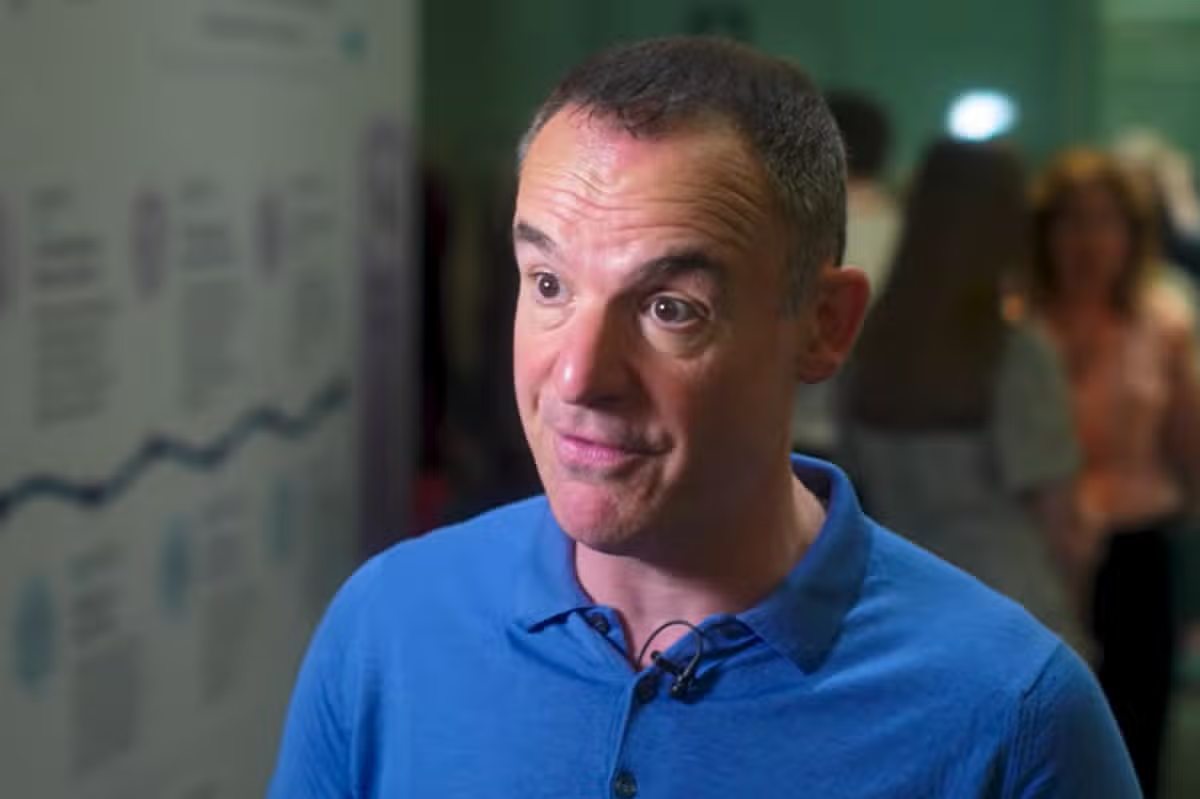
Martin Lewis has given advice for anyone with Premium Bonds on the chances of winning(Image: ITV)
Personal finance expert Martin Lewis has told anyone with Premium Bonds about the ‘£5,000 rule’ and warned about the chances of actually winning anything. The ITV and BBC star has said that unless people have at least £5,000 in there, the statistics suggest they might be wasting their time.
Premium Bonds are a government-backed UK savings product issued by NS&I (National Savings and Investments). Instead of earning regular interest, a person’s money buys unique £1 bond numbers that are entered into a monthly prize draw to win tax-free cash prizes ranging from £25 to £1 million.
Mr Lewis has spoken out about the bonds, and last week, in a new update, NS&I said that there will be an increase to the Premium Bonds prize fund rate and improved odds from the September 2026 draw. There will be an estimated £63 million of extra tax-free prizes in September, compared to August 2026, NS&I said. There is also an immediate interest rate increase for around 428,000 Direct Saver and 222,000 Income Bonds customers.
More than 22 million Premium Bonds holders will see a boost to the prize fund rate to 4.35%, up from 3.80%, for the September 2026 draw. At the same time, holders will have even more chances to win, with the odds shortening to 21,000 to 1 from 22,000 to 1. The Premium Bonds prize fund rate and odds were last improved in July 2026.
However, Mr Lewis has said that people would have a much better return with normal savings – if they don’t put enough money in – because of the odds. He explained that premium bonds are only worth getting if you have a certain amount of money. In particular, he advised that many grandparents would be better off giving grandchildren cash via normal savings accounts.
He said: “For years, many people, especially grandparents, have gifted their children premium bonds. And frankly, in my view, for many they would’ve done better sticking with normal savings. Premium bonds are government-backed savings, where the interest is based on a prize draw. The current prize fund rate is just 3.6 per cent, yet even that overestimates what most people will actually win with typical luck.”
Martin said that premium bonds are typically only worth buying if you have more than £5,000, to give you a chance of winning the prizes. He noted that premium bonds are “best for”: Those with larger savings, say over £5,000, as then you’ve a better chance of earning closer to the published prize fund rate. “With less, the odds are you will win little or nothing”, he said
Those who pay tax on their savings interest, who have used up their ISA allowances, as premium bond winnings are always tax-free
He added: “As most children have small amounts of savings and aren’t taxpayers, premium bonds are particularly unsuitable. Of course, there’s the ludicrously small chance your child will win a million, but they could also toss a coin and it land on its edge.”
“So if you’re thinking of putting £1,000 or less into premium bonds for a child, it’s worth noting that with average luck our premium bonds probability calculator shows they are likely to win nothing over a year (give it a try based on your scenario).”
He has also delivered his assessment of Premium Bonds in general: “Premium Bond prizes aren’t taxed, which means that if you’ve larger savings in cash, and have maxed out your £20,000 a year ISA allowance and earn enough interest to exceed your PSA, Premium Bonds are probably a decent choice… if you can accept the random nature of the ‘interest’.
“For everyone else, cash ISAs – savings accounts you never pay tax on – are still likely to be the better choice. The top easy-access cash ISA rate is currently 4.4% – slightly lower than the standard non-ISA rate, but tax-free and offering a guaranteed return that’s higher than the current Premium Bond prize rate of 3.6% (which you need to be lucky to get).”
He also said the prize rate – 4.35 per cent from September up from 3.80 per cent is the average return. He said: “The smallest prize is £25. So what happens on £100 is a lot of people get nothing and a few get £25.” He said the mena average, which is 4.35 per cent from Sept, but more important: “Is the median average which is zero on £100 in Premium Bonds over a year.
“Median is if you lined everybody up who had £100 in Premium Bonds from those who win the most to those who win the least what would the person exactly halfway along win.
“The first thing to say is someone with typical luck will always win less than the mean average. What affects the amount you win, generally, is the amount you’ve got in. The more you have in the closer you will get to the mean average on typical luck.”
However, the ‘tax-free’ nature of Premium Bonds could offer a benefit, he suggested: “Most people do not pay tax on savings. That’s because, as well as your normal personal allowance up to £12,570 a year you can earn from any source, most people are getting either a £1,000 personal savings allowance – so that’s £1,000 of interest they can earn a year without paying tax on it – or £500 personal savings allowance if you are a higher rate taxpayer.”
If someone has a lot of savings, it could mean they’re paying tax on the interest, and if that’s the case, he said people should consider making sure their ISA allowance is full.
He said: “If you’ve got a cash ISA allowance available, I’d be putting it there. Then, if you’re paying tax on your savings and you’ve filled up your cash ISA allowance, and especially if you’re higher rate taxpayers which means you’re going to be losing 40 per cent off your savings interest on any that you pay tax on, at that point, Premium Bonds even on typical luck at around 3.2 3.3 per cent after tax start to look good value.”
Mr Lewis also urged people to place their savings in high-yield accounts. For those who relish the excitement of potentially winning big, he proposed purchasing a small Lotto ticket: “To all those people who say ‘what about the thrill of winning’, yes there’s the thrill of winning but, you know what, if you put savings account, you’re going to win interest each month and you’ll know exactly how much you’ll be getting and it’ll probably be bigger.
“There is a chance of winning a million, but if you really want to talk about the thrill of winning, then it’s probably far more sensible and more effective for those people who don’t pay tax on savings and who aren’t higher rate taxpayers, to go and put their money in top savings and then take a couple of quid out and put it in the National Lottery and then you get your thrill of winning anyway but you get more return on the underlying savings.”
NS&I responded at the time: “Premium Bonds remain one of the nation’s favourite savings products and are a flexible and fun way to save. They offer the excitement of potentially winning tax-free prizes every month, the safety and security of the 100% government guarantee, and easy access to withdrawals.
“Every Premium Bond has a separate and equal chance of winning a prize each month, however the more Bonds you buy, the better your chances of winning.
“Each month we pay out millions of prizes ranging from £25 to £1 million. In our most recent draw, there were more than 6.1 million prizes worth over £403 million.”
PROFESSOR Green has revealed he’s got no savings despite his chart-topping success – and faces selling his house.
The rapper first hit the Top 10 in 2010 with debut single I Need You Tonight before going on to have a number one single with Read All About It in 2011.
Professor Green has revealed he has no saving and is considering selling his houseCredit: GettyThe rapper has had plenty chart success but hasn’t had much guidance regarding finances and savingsCredit: Alamy
But despite his chart success and collaborations with the likes of Lily Allen, Example and Emeli Sande, the star has revealed his finances do not reflect that.
In a new interview with The i Paper, Professor Green – real name Stephen Manderson – said: “So many artists get chewed up, spat out and come out the other side of it with f**k all.
Sign up for the Showbiz newsletter
Thank you!
“Everyone around them makes money – apart from them, because they’re good with words, songs and feelings, but they’re not good with money.
“It’s weird to get to this age and realise I’ve had no financial advice. I’m 42 and I spoke to a financial adviser for the first time recently, which was very telling.”
He continued: “I’ve got no real savings, no investments, no stocks, no shares, no ISAs.
“It’s hard to comprehend that I’ve got so much of my money tied up in a house that I don’t entirely own.
“Now that interest rates are no longer 1.7 per cent, I even wonder whether I should sell my house and rent, to future-proof myself.
“I’m forever on Rightmove, looking at houses I can’t afford.”
While he has continued to make music, Pro Green has also turned his hand to TV in recent months, appearing on The Masked Singer as the character Teabag in January.
Then in May he appeared on the 15th series of Celebs Go Dating on E4.
ANTALYA has long been the default answer for families wanting guaranteed sunshine, massive all-inclusive resorts, and enough waterslides to make returning home genuinely depressing.
But after several years of Turkey completely dominating our booking charts, I’m noticing a clear case of Antalya fatigue with Brits.
Antalya has long been popular but there are some great swaps that could save you moneyCredit: On the BeachDestinations like Sharm el Sheikh offer the same amazing waterpark hotels and and beautiful beaches but without the costCredit: Alamy
It’s still a brilliant option, but holidaymakers are starting to shop around – and discovering that plenty of other destinations have caught up.
Egypt, Tunisia, Greece, Morocco, and even Spain now boast the same mega four and five-star resorts, waterparks, and hot weather that used to make Antalya so difficult to beat.
And crucially, they can be significantly cheaper.
I’ve crunched my booking data to find where the previously most Turkey-loyal customers have swapped Antalya for in 2026, and how much cheaper they are in comparison to a Turkey holiday.
1. Playa Blanca, Lanzarote – save 19%
Lanzarote might sound like a wildcard swap, mostly because the Canaries aren’t usually associated with budget all-inclusive mega-resorts.
Playa Blanca, however, serves up a proper lineup of big family hotels alongside golden sand, a smart waterfront, and guaranteed sun.
It feels more chilled and far more walkable than many of Antalya’s sprawling hotel blocks, plus the slightly shorter flight from the UK is a godsend if you’re traveling with kids who ask if you’re nearly there before you’ve even cleared the runway.
Our data shows that the customers who made this switch in 2026 pocketed a 19% saving on average.
And the hotel that topped the swap charts here is the four-star HL Paradise Island – where I clocked five nights all-inclusive here from £295pp, flying direct from London Gatwick this September.
And it’s easy to understand why people are making the switch here when you spot their on-site Dino Waterpark, which is packed with proper drop slides, splash zones, and multi-lane racers that keep kids of all ages busy.
Lanzarote – from £295pp
If you click on a link in this box, we will earn affiliate revenue
This Rhodes hotel has nine outdoor pools – including a pirate splash parkCredit: On the Beach
Rhodes is the ultimate Greek swap for anyone who loves the scale of Antalya but wants a slightly fresh landscape.
The southeastern resort of Kiotari is tailor-made for this: it’s quieter and completely hotel-focused, featuring massive beachfront properties, reliable heat, and ancient Lindos sitting just 20 minutes down the road when you want to swap the sunlounger for a spot of culture.
Hundreds of customers shifted their booking from Antalya to Rhodes, saving an average of 20% in the process.
The absolute favourite with these switching customers was the four-star Kiotari Miraluna Beach Resort where you can grab five nights all-inclusive from £338pp, flying direct from Gatwick in late September.
It sits right on the sand and boasts nine outdoor pools – including a pirate splash park – alongside nine different bars and restaurants.
Plus, several room options here offer direct swim-up pool access straight from your terrace. And everyone loves a swim-up room, right?
Rhodes – from £338pp
If you click on a link in this box, we will earn affiliate revenue
Switching Antalya for Calas de Majorca in 2026 saved Brits around 20%Credit: On the Beach
Majorca is the ultimate low-effort swap if you want the convenience of an Antalya all-inclusive without putting your kids through a four-hour flight.
Calas de Mallorca on the east coast is a purpose-built family pocket surrounded by quiet coves and crystal-clear water.
It’s far more relaxed than Magaluf or Alcudia, with the hotels doing all the heavy lifting when it comes to entertainment.
Switching Antalya for Calas de Majorca in 2026 saved Brits around 20%, according to the stats.
And the most popular hotel to switch to here was the four-star HYB Eurocalas – and I spotted five nights all-inclusive here from £318pp, flying direct from Birmingham on 24th September.
This hotel’s a massive family favorite on our board, packing in multiple pool zones, sports courts, splash parks, and a dedicated kids’ club. No brainer.
Majorca – from £318pp
If you click on a link in this box, we will earn affiliate revenue
Marrakech offers both a proper city break AND a flop-and-drop resort holiday rolled into oneCredit: On the Beach
People usually associate Marrakech with bustling souks and rooftop tea, but step outside the city center and you’ll find some seriously massive all-inclusive resorts.
The Palmeraie area sits in a quiet palm grove outside the old city, giving you sprawling hotels, massive pools, and mountain backdrops.
You get something Antalya can rarely deliver: a proper city break AND a flop-and-drop resort holiday rolled into one.
Our figures show that customers who swapped Antalya for Marrakech for their all-inclusive resort holiday bagged an average 21% saving.
And the four-star Marrakech Ryads Parc & Spa is the value highlight and the most popular for a switch. I found five nights all-inclusive here from £240pp, flying direct from Gatwick in late September which is absolutely perfect weather-wise.
This hotel has the exact scale, massive pool footprint, and self-contained feel of a Turkish mega-resort, but adds a free daily shuttle into the medina when you want to explore.
Marrakech – from £240pp
If you click on a link in this box, we will earn affiliate revenue
The Hurghada coastline is wall-to-wall with all-inclusives, private beaches, and on-site waterparks,Credit: On the Beach
Hurghada is an absolute slam-dunk if you care purely about the resort footprint rather than the destination town.
The coastline is wall-to-wall with all-inclusives, private beaches, and on-site waterparks, while the guaranteed Egyptian heat makes it a goldmine for late-season breaks.
Hurghada was also the third most-popular destination that people traded Antalya for, bagging an average 21% saving.
And the most popular hotel people made the switch for was the four-star Rewaya Inn Resort.
Probably because this place gives you the full Turkish mega-resort experience without the hefty price tag – it’s a proper fly-and-flop complex anchored around an enormous lagoon-style pool network.
You can lock in five nights all-inclusive from £393pp, flying direct from London right at the start of September
Hurghada – from £393pp
If you click on a link in this box, we will earn affiliate revenue
Don’t discount Benidorm as a great Turkey swapCredit: On the Beach
On paper, Benidorm and Antalya look like completely different beasts, but they serve the exact same holiday brief: tons of hotel choice, guaranteed sun, world-class beaches, and enough family entertainment to fill every evening.
Benidorm just pulls it all closer together – and cuts an chunk off your flight time.
Our booking data shows an average saving of 22% for Brits who switched from Antalya to the Costa Blanca, with their new holidays averaging £92 per person, per night. Not bad.
The four-star Rosamar Hotel topped the charts when it came to switches.
I clocked five nights all-inclusive here from £285pp, flying direct from Gatwick at the end of September.
It sits right near Levante Beach and has a brilliant on-site splash park loaded with slides and water features, essentially acting as a cheat code for tiring out energetic kids before bedtime.
Benidorm – from £285pp
If you click on a link in this box, we will earn affiliate revenue
The Red Sea offers some of the best house-reef snorkeling in the worldCredit: On the Beach
Sharm El Sheikh is the single closest direct alternative to Antalya on the map.
You get scorching temperatures, all-inclusive mega-resorts, massive pool complexes, and hotels designed so you never actually have to leave the gates.
The massive bonus here though is the Red Sea itself, which offers some of the best house-reef snorkeling in the world right off the hotel jetties.
A staggering amount of customers swapped Antalya for Sharm El Sheikh – more than any other spot on this list – all while saving an average of 23%.
One of the most popular hotels in Sharm is the five-star Rehana Sharm Resort in Nabq Bay where I found five nights all-inclusive from £413pp, flying direct from London slap-bang in the middle of September.
This hotel’s a cracker too, and features a sprawling pool network, an aquapark, kids’ clubs, and several dining options – but best of all, it sits just six miles from the airport, so you can go from baggage reclaim to sunbed in record time.
Sharm el Sheikh – from £413pp
If you click on a link in this box, we will earn affiliate revenue
Sousse combines massive beachfront resorts with an authentic historic medinaCredit: On the Beach
If your absolute priority is getting the maximum amount of resort facilities per pound spent, Tunisia should be right at the top of your list.
Sousse combines massive beachfront resorts with an authentic historic medina, fine sand, and the smart marina at Port El Kantaoui just down the road.
And hundreds and hundreds of people swapped Antalya for Tunisia, averaging a rock-bottom £70 per person, per night on their Tunisian holiday.
That makes it the cheapest destination on this list and delivers the biggest average saving at 25%. A popular Tunisian destination is the four-star Royal Jinene Sousse.
This hotel’s built directly on its own private sandy beach and features indoor and outdoor pools, waterslides, and a dedicated beach bar – meaning the distance between your lounger and a cold drink is virtually zero.
And if you fancy it, you can grab five nights all-inclusive this September from just £243pp. Bargain.
Sousse – from £243pp
If you click on a link in this box, we will earn affiliate revenue
TRYING to fill the long school holidays without spending an absolute fortune can seem impossible.
However, the recently launched Great British Summer Savings scheme is offering loads of deals and discounts until September 1 – meaning family days out will cost a lot less at a whole host of attractions across the UK.
Hundreds of attractions across the UK have discounted entry this summerCredit: AlamyFrom waterparks to theme parks, here are the top offersCredit: Sandcastle Waterpark Blackpool / Facebook
The temporary scheme is slashing VAT from 20 per cent to five per cent on family activities, children’s meals in restaurants, children’s tickets for theatres and cinemas and tickets for everyone for soft play, adventure centres, and theme parks.
And along with free local bus travel for kids aged between five and 15 this August, you can easily find an affordable day out.
With nearly 2,000 spots across the UK taking part in the scheme, we’ve found some of the best, with the biggest savings.
Blackpool Pleasure Beach Resort
With wooden rollercoasters and dark water rides, there is something for everyone at Blackpool Pleasure Beach, with an All You Can Ride eTicket costing £29 per person, instead of £60 on the gate.
You can also get an ‘Ultimate Ticket’, which includes Blackpool Pleasure Beach, Sandcastle Waterpark, The Blackpool Tower Eye, Blackpool Tower Dungeon and Madame Tussauds for £56.88, down from £65.
Savings: Up to £124 for a family of four
Make the most of the savings at Blackpool Pleasure Beach ResortCredit: Alamy
Zip World (various locations)
Across the eight different Zip World locations, families can now save money including ziplines and underground trampolines.
The biggest savings offered are on Velocity, which is the world’s fastest zip line. Instead of £124, tickets now cost £99 per person.
Savings: Up to£100 for a family of four
Save £25 on the world’s fastest ziplineCredit: Zip World
The Crystal Maze Experience, London or Manchester
Fans of the Crystal Maze TV show should try out the Crystal Maze Experience where you compete in a number of different challenges across an hour.
Tickets now cost £26.50 per person, instead of £39.50 – although you must get a minimum of three tickets per order, with one being a child (over nine).
Savings: Up to £52 for a family of four
Fans of the TV series Crystal Maze should head to the live experienceCredit: � 2024 The Edge, all rights reserved.
Woodlands Adventure Park, Devon
Spread across 100 acres, Woodlands Family Theme Park is home to water coasters, rides, animals and a giant indoor soft play area.
If you book online in advance, tickets will cost just £20 instead of £29.15 per adult, and £15 instead of £21.45 per child.
Savings: Up to £31.20 per family of four
Buy tickets online to save cash for your trip at Woodlands Family Theme ParkCredit: Alamy
Spinnaker Tower, Portsmouth
You can capture panoramic views from the Spinnaker Tower in Portsmouth, right to the Isle of Wight.
An all-day adult ticket now costs £12 instead of £19.25, and an all-day child ticket costs £10 instead of £15.50 or a family of four ticket also now costs less – £40 instead of £68.50.
Savings: Up to £28.50 for a family of four
Portsmouth’s Spinnaker Tower is 170m tall and has panoramic viewsCredit: Getty
Go Ape (various locations)
Want to make the most of the sunshine? Go Ape has 37 sites across the UK, with up to 15 per cent off.
Tickets cost from £36.95 – prices may vary depending on location, and you need to use the code ‘VATSUMMER’.
Savings: Up to £26.96 for a family of four
Get 15 per cent off at Go Ape by entering the code ‘VATSUMMER’Credit: Alamy
Chaos Karts, Manchester
If you want to live out your Mario Kart dreams, then head to Chaos Karts in Manchester.
You can compete in immersive themed races with tickets now costing £21 per person, instead of £27 (though you must get a minimum of three tickets per order, with one being a child).
Savings: Up to £24 for a family of four
Drayton Manor, Staffordshire
Spread across 180 acres, Drayton Manorfeatures four themed lands, including Thomas Land, Vikings, Adventure Cove and Frontier Falls and across these lands visitors can head on rides ideal for smaller children.
Day tickets cost from £39 instead of £45 per person.
Tickets cost £23.50 per adult instead of £29.50, if you use the code ‘SUMMER’. Kids tickets then cost £4.80 each and youth (13 to 15-year-olds) cost £11.20 each.
Savings: Up to £24 for a family of four
Harry Potter Studio Tour, Watford
For Potterheads who haven’t been to the Warner Bros studio tour yet, now is the perfect time with five per cent off tickets.
Instead of £58.50 per adult, you now pay £51.19 and instead of £47 per child, it is now £41.13. The family offer, which used to be £188 per family of four, is now £164.52.
Savings: Up to£23.48 per family of four
Blenheim Palace
There are three different ticket types for Blenheim Palace but if you want the ultimate experience, opt for the palace, park, gardens and adventure play for £44.63 per adult (was £51) and £35.88 per child (was £41).
Alternatively, you could get a family ticket for £144.38, instead of £165.
Savings: Up to £20.62 for a family of four
Waterworld, Stoke-on-Trent
Waterworld is the UK’s number one indoor tropical aqua park with more than 30 rides and attractions, including a huge wave pool and the thrilling Thunderbolt trap-door slide.
Tickets now cost £20 per person over 1.1 metres tall, instead of £26 per person. Kids under 1.1 metres tall, cost £18 now instead of £22.
Savings: Up to £20 for a family of four
RockReef, Bournemouth
Found at the end of Bournemouth Pier, you can head to RockReef with 28 Clip ‘n Climb walls suitable for all ages and PierZip – which is the world’s first pier-to-shore zip wire.
A Clip ‘n Climb session now costs £15 per person, instead of £20.
Savings: Up to £20 for a family of four
Coronation Street Experience, Manchester
Corrie fans should use this summer to head to the world of Coronation Street in Manchester, where you can step onto the famous cobbles.
Guided tour tickets cost £35 instead of £40 per person.
Savings: Up to £20 for a family of four
You can enjoy Alton Towers’ 40 rides and attractions for less now, as tickets now cost £34.13 for a day pass instead of £39Credit: Alamy
Alton Towers, Stoke-on-Trent
You can enjoy Alton Towers‘ 40 rides and attractions for less now, as online tickets now cost £34.13 for a day pass instead of £39 (guests under 90cm still visit for free) when bought online in advance (you’d save £135.48 for a family of four compared to the original on the gate tickets).
You can save even more by getting the ‘twice the fun’ ticket that allows you into two theme parks for £34.13 until the last weekend of July, including Alton Towers, Legoland, Chessington World of Adventures and Thorpe Park.
A day ticket online costs from £34.13, instead of £39 per person (you’d save £127.48 for a family of four compared to the original on the gate tickets).
Savings: Up to £19.48 for a family of four
Legoland, Windsor
Great for little kids and Lego fans alike, online tickets to Legoland now cost from £34.13 for a day pass instead of £39 and guests under 90cm still visit for free (you’d save £135.48 for a family of four compared to the original on the gate tickets).
The park has 11 themed lands, with more than 55 rides as well as live shows.
Saving: Up to £19.48 for a family of four
Thorpe Park, Chertsey
With over 25 rides and attractions including rollercoaster The Smiler, there’s loads to see and do at Thorpe Park, with online tickets instead costing £34.13 for a day pass instead of £39 (you’d save £127.48 for a family of four compared to the original on the gate tickets).
With the day pass, kids under 1.2 metres tall go for free still and all day tickets include a free return visit.
Saving: Up to £19.48 for a family of four
All English Heritage properties have discounted entry across the countryCredit: Handout/Craig Hickey
English Heritage properties (various locations)
All English Heritage properties across the country are taking part in the scheme.
This means you can get 12.5 per cent off the ticket price, which is automatically applied at check out.
Savings vary depending on the attraction you are heading to, but for example, if you went to Stonehenge, an adult ticket would cost from £23.65 and a child ticket would cost from £11.82.
This is instead of £27.20 per adult and £17.20 per child.
Saving: Up to £17.86 for a family of four
Paultons Park
Often dubbed the UK’s most affordable theme park, Paultons Park is now even cheaper to visit – and thanks to a new £12million themed world – Valgard: Realm of the Vikings – there could not be a more perfect time to visit.
Tickets were previously £46.75, and now cost from £43.
Savings: Up to £15 for a family of four
Warwick Castle, Warwickshire
History buffs can head to Warwick Castle, which is home to over 1,100 years of history and inside the castle, you will find immersive experiences as well as a bird show.
Online tickets cost £25.38 instead of £29 per person (you’d save £54.44 for a family of four compared to the original on the gate tickets).
Savings: Up to £14.48 for a family of four
You could head to any of the four Gulliver’s World resorts for less this summerCredit: Gullivers World / sidekick
Gulliver’s World (all four locations)
Gulliver’s World has four locations across the UK including Milton Keynes, Matlock Bath, Warrington and Rotherham.
Ticket prices vary per park, but you could get half-day tickets for as little as £13.75 per person. Day tickets cost from £22.50 per person, instead of £26 per person.
Savings: Up to £14 for a family of four
London Eye, London
One of London’s landmarks sat on the banks of the River Thames is suitable for all ages and offers great views of the city.
Tickets now cost £25.38 per adult instead of £29, and £22.75 per child, instead of £26.
Savings: Up to £13.74 for a family of four
If you fancy heading to a waterpark, Quaywest is the UK’s biggest one outdoorsCredit: Alamy
Splashdown Quaywest, Paignton
Fancy cooling off in all this heat? Then you could head to the largest outdoor waterpark in the UK, with 18 slides.
A day ticket used to cost £31 per adult or £26 per child under the age of nine-years-old but now, day tickets cost £27.15 per adult and £22.75 per child.
Savings: Up to £13.50 for a family of four
Sandcastle Waterpark, Blackpool
Sandcastle Waterpark in Blackpool is the biggest indoor waterpark in the UK, with 18 slides and attractions as well as a spa.
Tickets cost from £22.31 instead of £25.50 per adult or child aged eight to 11 and £13.96 instead of £16.50 per child aged three to seven.
You can also get an ‘Ultimate Ticket’, which includes a range of attractions in the seaside resort.
This includes Blackpool Pleasure Beach, Sandcastle Waterpark, The Blackpool Tower Eye, Blackpool Tower Dungeon and Madame Tussauds for £56.88, down from £65.
Savings: Up to £12.76 for a family of four
Madame Tussauds, London
You can spend the day up close to 150 lifelike wax figures of celebs, royals and historical figures at Madame Tussauds in London.
Instead of £27, you’d now pay £23.63 per adult and instead of £24, you’d pay £21 per child.
Savings: Up to £12.74 for a family of four
Camera Obscura and World of Illusions, Edinburgh
Located across five floors, you can visit Edinburgh‘s oldest visitor attraction with more than 100 interactive exhibits and the attraction even has panoramic rooftop views.
Adult tickets used to cost £24.95 and are now £21.85 per person, while children’s tickets used to cost £17.95 and are now £15.70 per person.
Savings: Up to £12.70 for a family of four
Perfect for a sunny day, you could head to Kew GardensCredit: Getty
Kew Gardens, London
Sprawled across 326 acres, Kew Gardens features a myriad of different gardens to explore, including indoor gardens and there’s also a giant kids play area.
Tickets cost £21.85 per adult instead of £25, £1.75 per child under 16-years-old and £8.75 for those aged between 16 and 29-years-old.
Savings: Up to £12.60 for a family of four
Rugby Football Union, Twickenham
You could head to the World Rugby Museum in Twickenham, which is home to the world’s most prestigious collection of rugby memorabilia.
Family tickets have been reduced from £80 to £67.50 in the case of two adults and two children.
Savings: Up to £12.50 per family of four
Butlin’s (various locations)
Butlin’s has three resorts in the UK, all of which are taking part in the scheme.
Visitors can get reduced day visits during the school summer holidays, with access to the Splash Waterworld pools, unlimited fairground rides, all live shows on the Skyline Pavillion stage, playgrounds, soft play and paid-for activities.
Day visit tickets now cost £13.60 per child instead of £16 and £20.40 per adult, instead of £24.
Under two’s still go free.
Savings: Up to £12 for a family of four
Butlin’s is doing discounted day visit passesCredit: Free for editorial use
Eden Project, Cornwall
Down in Cornwall, you could head to the Eden Project where you can explore the world’s largest indoor Rainforest.
Adult tickets cost from £31.06 instead of £35.50 and children’s tickets cost from £10.94, instead of £12.50.
Savings: Up to£12 for a family of four
Frameless, London
For something different, you could head to Frameless, which is the UK’s largest permanent immersive art destination with masterpieces including by Van Gogh and Monet.
Flexible adult tickets cost £31.06 instead of £35.50, and flexible child tickets cost £22.75 instead of £26 each. You can also get a family of four ticket for £19.69 per person, instead of £22.50.
Savings: Up to £11.24 for a family of four
Wake the Tiger, Bristol
You could head to an immersive ‘amazement park’ in Bristol, which meshes theatre with art and an immersive experience to make you feel as if you are in a different world.
Adult tickets cost £21.88 instead of £25 each and children’s tickets cost £17.50 instead of £20.
Adult tickets now cost £25 each instead of £28.60 and children’s tickets cost £10 instead of £11.40 each.
Savings: Up to £10 for a family of four
Flamingo Land, North Yorkshire
With over 40 rides, 140 species of animals and even a holiday park, you won’t be short of things to do at Flamingo Land Resort in North Yorkshire.
Tickets now cost £43.50 instead of £46 per person.
Savings: Up to £10 per family of four
Shrek’s Adventure has a 4D flying bus ride and 10 immersive showsCredit: Supplied
Shrek’s Adventure, London
At Shrek’s Adventure in London, you can walk through an immersive experience with a 4D flying bus ride, mirror maze and 10 live shows.
Instead of £21 per adult, tickets cost £18.38 and for kids, tickets cost £14 instead of £16.
Savings: Up to £9.24 for a family of four
Cadbury World, Birmingham
If you are based in the north then you could head to Cadbury World for the day to find out about the history of the iconic chocolate brand – the self-guided tour features exhibits as well as a 4D cinema experience.
Tickets cost from £15.75 per person, instead of £18.
Savings: Up to £9 for a family of four
A family of four can save £9 when visiting Cadbury WorldCredit: Supplied
The Historic Dockyard Chatham
For Naval history fans, you could head to the Historic Dockyard Chatham and explore the ships, galleries and exhibitions – including Steve Backshall’s Awesome Oceans Family Trail.
Tickets for a family of four cost £70 instead of £79.
Savings: Up to £9 for a family of four
Techniquest, Cardiff
Techniquest is Wales‘ largest science discovery centre, spread across three floors with live shows and lab workshops.
Tickets used to cost £17 per adult and £15 per child, but are now £14.87 and £13.12 respectively.
Savings: Up to £8.02 for a family of four
The Big Sheep, North Devon
The Big Sheep family theme park in Bideford is home to both farm animals and rides, as well as live entertainment for when the weather isn’t great.
Tickets cost £14.95 per person instead of £16.95 and £6 instead of £8 per child under three-foot tall.
Earnings Call Insights: Great Southern Bancorp (GSBC) Q2 2026
Management View
CEO Joseph Turner said results showed “the strength and resilience of our core banking franchise,” while noting Q2 net income of $15.8 million, or $1.43 per diluted share, “was negatively impacted by several one-time expenses
Seeking Alpha’s Disclaimer:This article was automatically generated by an AI tool based on content available on the Seeking Alpha website, and has not been curated or reviewed by humans. Due to inherent limitations in using AI-based tools, the accuracy, completeness, or timeliness of such articles cannot be guaranteed. This article is intended for informational purposes only. Seeking Alpha does not take account of your objectives or your financial situation and does not offer any personalized investment advice. Seeking Alpha is not a licensed securities dealer, broker or US investment adviser or investment bank.
Earnings Call Insights: Educational Development Corporation (EDUC) Q1 fiscal 2027
Management View
“During March, we ran a recruiting special surrounding our March 14 Pi Day, which yielded better-than-expected results. We added over 1,300 new brand partners, which brought our Active Brand Partner numbers above
Seeking Alpha’s Disclaimer:This article was automatically generated by an AI tool based on content available on the Seeking Alpha website, and has not been curated or reviewed by humans. Due to inherent limitations in using AI-based tools, the accuracy, completeness, or timeliness of such articles cannot be guaranteed. This article is intended for informational purposes only. Seeking Alpha does not take account of your objectives or your financial situation and does not offer any personalized investment advice. Seeking Alpha is not a licensed securities dealer, broker or US investment adviser or investment bank.
When Klarna chose New York over Europe for its stock market listing, it highlighted a challenge Brussels has been trying to solve for years: Europe’s fastest-growing companies often look across the Atlantic for deeper pools of capital.
ADVERTISEMENT
ADVERTISEMENT
As the EU seeks to build its own AI champions, strengthen its defence industry and keep more high-growth companies raising money at home, one question remains: why does a bloc with €37tn in household savings still struggle to finance its own fastest-growing businesses?
Now the European Union has stepped up efforts to reform its capital markets, aiming to make capital flow more freely across the bloc.
Policymakers are pursuing incremental reforms, including greater supervisory alignment, but a fully unified capital market is likely to take many years, as member states struggle to agree on key technical details, slowing the process.
The competitiveness challenge
The current speed of negotiations does not reflect the urgency being expressed by the EU’s political leadership: Europe needs more integrated capital markets to compete globally with major powers such as the US and China.
To do so, billions need to be invested in strategic sectors such as AI and defence, amid intense geopolitical uncertainty, including wars and trade tensions.
Lacking strategic industrial and technological leadership means sacrificing geopolitical power and economic resilience, especially in a global landscape where dominance, or even survival, depends on control over resources and expertise.
This narrative has been championed by leading EU politicians, including European Commission President Ursula von der Leyen, whose goal of making Europe more competitive on the global stage has become the North Star of her political mandate.
For this reason, von der Leyen tasked former European Central Bank President and Italian Prime Minister Mario Draghi with preparing a report on EU competitiveness, which identified capital markets reform as one of its central recommendations.
Presented in autumn 2024, the report says Europe needs €750bn-€800bn in investment each year, equivalent to up to 5% of GDP, to fulfil its competitiveness goals and remain globally competitive.
“It’s ‘Do this,’ or it’s a slow agony,” Draghi warned in one of his best-known remarks. Draghi describes this “agony” as a prolonged and cumulative erosion of Europe’s economic position, driven by structural weaknesses such as high energy costs and a fragmented single market, which together make the continent less conducive to investment and innovation.
The EU is focusing on two priorities to unlock the potential of its capital markets.
The first is convincing households to invest, mobilising a small percentage of the estimated €37tn in savings. The second is integrating national financial markets across the EU to reduce barriers within the single market, making it easier for businesses to raise funding and for investors to put their money to work.
For this to happen, households need better access to capital markets, along with a better understanding of how to invest and the potential benefits involved. For example, greater participation in financial markets can help individuals build their retirement savings.
At the same time, Brussels must advance the legislative framework — known as the Savings and Investments Union (SIU) — to enable these reforms to take place.
Why do businesses find it easier to seek funding in the US?
Capital markets are marketplaces where individuals, institutions and governments buy and sell long-term financial instruments, such as equities or debt.
They offer businesses a way to raise funds and support their growth. However, scaling up in Europe remains challenging. Cross-border operations can be costly, time-consuming and involve significant administrative burdens. This is because rules differ between member states, and even where they are the same, their implementation may differ.
These are among the reasons why firms in Europe obtain most of their financing through bank credit.
“What we need to develop is a more diversified funding source,” the head of the European Securities and Markets Authority (ESMA), Verena Ross, told Euronews in an exclusive interview with Euronews Business editor Angela Barnes.
Without enough diversification, businesses look for other markets where funding is more readily available, such as the US.
“The US capital market benefits from a more consolidated supervisory approach. There are fewer layers of bureaucracy and red tape because the US uses a single currency,” Rebecca Christie, senior fellow at Brussels-based think tank Bruegel, told Euronews.
Christie also said the US benefits from having a long-established federal system and from the dollar’s status as the world’s dominant reserve currency, both of which reduce barriers and increase its attractiveness.
“Anybody who needs financing has an incentive to go to US markets because that’s where the money is,” she said.
A less fragmented European capital market would have far-reaching implications, including making more capital available for strategic investments and strengthening the euro’s international role as a global currency — another major ambition of the current EU leadership amid the dollar’s declining role.
“We live in a global world and, particularly, capital markets are global by their nature. We also need to be attractive to overseas investors, whether they are American, Asian or from wherever they come, and make sure that Europe is a destination for that investment capital,” Ross told Euronews.
Why is a capital markets union so hard to achieve?
Despite broad agreement that capital markets need greater integration, there is still strong disagreement over how to make it happen.
The capital markets union legislation forms part of the Savings and Investments Union (SIU), a package of legislative proposals currently under negotiation.
One of the key pieces of legislation aimed at harmonising capital markets is the Market Integration and Supervision Package, known as MISP.
Despite the intensification of talks on MISP in recent months, member states have yet to reach a common position, particularly on how to harmonise capital markets supervision.
Last spring, the six largest European economies — Germany, France, Spain, Italy, Poland and the Netherlands — made a proposal setting out how to centralise supervisory powers.
In particular, they propose transferring some supervisory powers to ESMA, but there is no consensus on whether to proceed, an EU diplomat told Euronews on condition of anonymity. Even among those who agree, there are differing views on how and over what timeframe this should be implemented.
“The problem with the integration of capital markets is not even a political one; it is more a national issue,” Aurore Lalucq, chair of the European Parliament’s Committee on Economic and Monetary Affairs, who played an important role in the legislation, told Euronews.
“I think there will be progress in supervision, but there are a lot of details that will be tough to negotiate due to very different perspectives,” Lalucq added, referring to the fact that member states have very different capital market cultures.
Klarna’s decision to look across the Atlantic for deeper capital markets illustrates the challenge Europe faces. While there is broad agreement that the bloc needs to mobilise more private investment, national interests continue to slow progress towards a truly unified capital market.