The Austin, Texas-headquartered Saronic said it plans to invest more than $3 billion of its own money to build the facility, which it is calling Port Alpha. The location was chosen after a year-long search.
“Brownsville was selected after a rigorous review of workforce availability, infrastructure readiness, land scale, logistics, and expansion potential,” the company said in a release. “Initially situated on 835 acres at the Port of Brownsville, with the opportunity to expand to nearly 4,400 acres, Port Alpha will encompass a shipyard and manufacturing facility capable of producing vessels up to 850 feet. Future site expansion could support the production of vessels over 1,200 ft. The site provides hundreds of acres of waterfront access, deepwater channel connectivity, multimodal logistics infrastructure, and room for long-term expansion—everything required to anchor a next-generation shipbuilding hub.”
Today, we’re proud to announce the future home of Port Alpha: Brownsville, Texas.
Our next-generation shipyard moves from vision to reality through a planned investment of more than $3 billion to establish one of the world’s most advanced shipyards, built for software-defined… pic.twitter.com/vIxkB2YUG0
“Port Alpha is planned to be the largest shipyard in the Western Hemisphere,” Lehman told us. “We are seeing the need for more shipbuilding capacity, and we are answering the call with a greenfield new yard that will provide the Navy, Coast Guard — all of our sea services — the capacity that they’ve been asking for, and they desperately need.”
“We are here to help address the gaps that we are facing and do it at a speed and scale that hasn’t been seen before,” he added.
Asked about what kinds of ships the yard will build, Lehman said Port Alpha “will be capable of producing everything up to Panamax-sized cargo containers, roll on/roll offs, we are open to a variety of different ship classes, both commercial and military.”
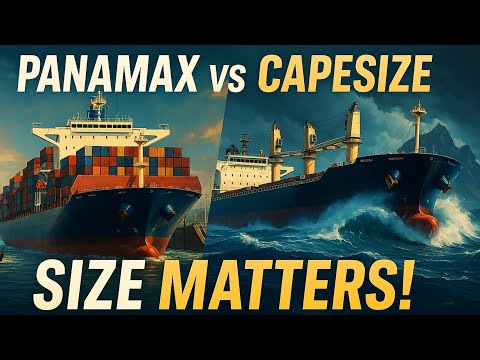
Panamax ships — so named because they are the biggest vessels that can fit through the Panama Canal — have a maximum length of 294 meters and a maximum width of 32 meters, according to SeaRates.com.
Panamax vs Capesize Ships: What’s the Real Difference? #panamax #capsize #ruzave
Lehman said Saronic is focusing on “how do we create a shipyard of the future that is able to support multiple types of vessels and move at a pace and a level of agility that aligns with how technology is advancing. So commercial ships, military ships, modules, everything under the sun.”
“We are keenly focused and ruthlessly focused, frankly, on what does the customer set need, what are they unable to acquire or sustain within the timelines that they require, and how can we address that? So, as long as we know what’s needed, we can put our private capital to work and not force the government to pay never-ending research and development costs.”
At the time of the interview, Lehman declined to provide any further details about the plans or the exact location. However, he did compare it to an existing shipyard the company purchased last year.
“When we acquired the former Gulf Craft yard last April, [compared] to what it looks like now, we’re investing $300 million into that yard already to expand capacity,” he noted. “We’re bringing hundreds and thousands of jobs to the Gulf Coast, and we look to take that same model and just on steroids at Port Alpha. So, unlike Gulf Craft, it’ll be a greenfield yard, so we have all of the flexibility to design the shipyard of the future without the constraints of an existing physical plant.”
“We acquired Gulf Craft because we believe in their culture and what they’ve been able to produce to date… We see the value they can bring to scaling production of our autonomous surface vessels, so we’re going to invest heavily there.” https://t.co/GbaeAMx5JA
In the media release issued today, Saronic claimed that “the project is expected to generate more than $160 billion in regional economic impact for Cameron County and $264.5 billion for the State of Texas, while creating up to 10,000 direct jobs. This makes Port Alpha one of the largest economic development projects in modern Texas history.”
Construction is anticipated to begin in 2026, with Port Alpha expected to open for operations in 2028, the release continued. Company officials did not specify exactly what ships will be built at Port Alpha. Currently, Saronic makes three uncrewed surface vessels (USV).
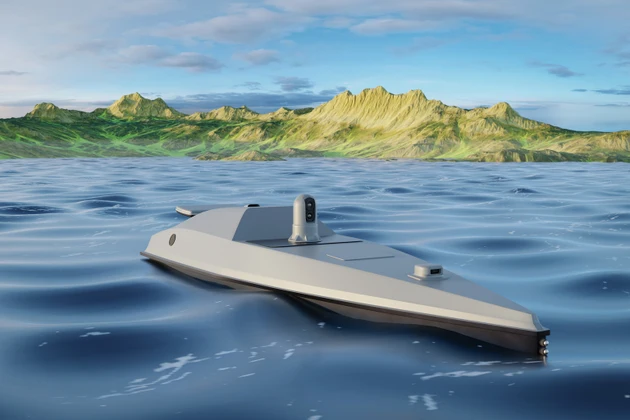
Corsair, the aforementioned USV used as a kamikaze weapon, is a 24-foot vessel capable of carrying up to 1,000 lbs over 1,000 NM.
The Corsair uncrewed surface vessel (USV) (Saronic)
Mirage is a 52-foot USV with a range of 2,500 NM of range and 3,500 lbs of payload capacity.
The Mirage uncrewed surface vessel (USV) (Saronic)
Marauder is a 180-foot USV with a range of 5,200 NM and is capable of carrying up to 150 metric tons in four 40-foot containers, eight 20-foot containers, or other modular payload configurations.
The Navy is set to evaluate Marauder, as well as designs from six other companies, as part of the first round of prototyping under its latest Medium Unmanned Surface Vessel (MUSV) effort. This is part of a larger strategy the service rolled out in March to try to field more USVs and do so faster, as you can read more about here
The Marauder uncrewed surface vessel (USV) (Saronic)
Saronic is on a roll of late. As we noted earlier in this story, three of its Corsair sea drones were used earlier this week to attack “a submarine and ship maintenance facility in Iran,” U.S. Central Command (CENTCOM) announced. It marked the first time that the U.S. used sea drones as kamikaze attack weapons.
Yesterday, using multiple one-way attack surface drones, CENTCOM forces successfully struck a submarine and ship maintenance facility in Iran. Three Corsair unmanned surface vessels hit the port at Bandar Abbas Naval Base, marking the first time American forces have employed sea… pic.twitter.com/bOM2kmgRxz
Last month, a Saronic Corsair USV rescued the crew of a U.S. Army AH-64 Apache that crashed in the Gulf of Oman after it was downed by Iran. That was the first known instance of a drone boat being used to recover personnel as part of a search and rescue mission, and has major implications for these operations going forward.
Big news from #RNDF: @SECNAV announced Saronic has been awarded a $392M production contract with the U.S. Navy, with nearly $200M immediately put on contract.
We are proud to partner with @USNavy to rapidly field advanced autonomous maritime capabilities. From day one, we… https://t.co/wnNROUcgd6
If Port Alpha lives up to the hype, it would be a boon to the Navy and an American shipbuilding industry that struggles to get new vessels out on time and on budget, while supporting those that are already in the water.
As we noted in previous coverage of U.S. shipbuilding woes, keeping existing vessels afloat “has been a massive challenge as the Navy’s fleet ages while demands for more hulls increase.Crumbling shipyards around the U.S.and a limited number of them that can support mainline military vessels is a huge problem that hasled to major delays in maintenance, greatly harming available end strength. It is also of major concern ifships were to get damaged in battle during a conflict and need to be regenerated quickly. While some improvements and investments have been made in upgrading shipyards, it is still a glaring and highly concerning issue.”
GAO: Poor Conditions at Navy Shipyards
The situation is so dire that “the U.S. Navy has officially issued two Requests for Information (RFIs) to major South Korean shipbuilders to assess their capacity to build American destroyers and fleet tankers,” according to Naval News. Such a move “could end an 80-year ban on foreign warship construction,” the outlet added.
Given the state of U.S. shipbuilding, a lot is riding on Port Alpha and the future of this plan is definitely worth keeping an eye on.
Saronic Technologies, the startup whose naval drones this week were used in combat by the U.S. military for the first time, is building a $3.2 billion shipyard in South Texas.
The facility, called Port Alpha, will manufacture autonomous boats at the Port
California Forever, the tech billionaire-backed group that hopes to build a city from scratch on farmland in the outer San Francisco Bay Area, is lobbying state leaders to fast-track a massive shipbuilding deal that would kick-start its development after years of local opposition.
The billionaires behind the project are seeking a deal to expedite environmental reviews of the development and, if necessary, bypass county restrictions on building by being absorbed into Suisun City boundaries. They’ve hired former Senate President Pro Tem Darrell Steinberg and former Senate Majority Leader Bob Hertzberg — Democratic architects of landmark environmental laws — to make their case, and are using the prospect of luring a major shipbuilder to California to accelerate the dealmaking.
California Forever has pursued its project for nearly a decade, though the vision has shifted: At first pitched as a walkable city with cottages, bike lanes and even a water park, the plan then added a major shipbuilding operation and, last summer, a significant manufacturing hub. California Forever’s proponents, led by the state’s powerful building trades union along with Realtors, peace officers and pro-housing groups, argue the latest proposal would boost the state’s economy and bring an estimated half a million jobs to California. And now, a prospective tenant has emerged: Defense company Saronic Technologies Inc., which builds autonomous vessels for use in national security, is deciding between California and Texas for its next factory. The state must fast-track the development or lose the deal, supporters argue.
The developers are seeking the state’s permission to use an 18-year-old environmental impact report for the shipyard development, limit any legal challenges to the project to 270 days, and allow Suisun City to annex their land if needed, according to Steinberg and Hertzberg.
“In short, if legislation is not approved, California will lose billions of dollars in investments and tens of thousands of jobs this summer to Texas and other states,” proponents wrote in a joint letter to Gov. Gavin Newsom and legislative leaders this week.
But some locals and lawmakers are skeptical, arguing that details about the project remain scarce. The proposed development would convert vast farmlands into factories and risk harming the surrounding ecosystem, they said, which deserves rigorous environmental review under the landmark California Environmental Quality Act that proponents are seeking to expedite.
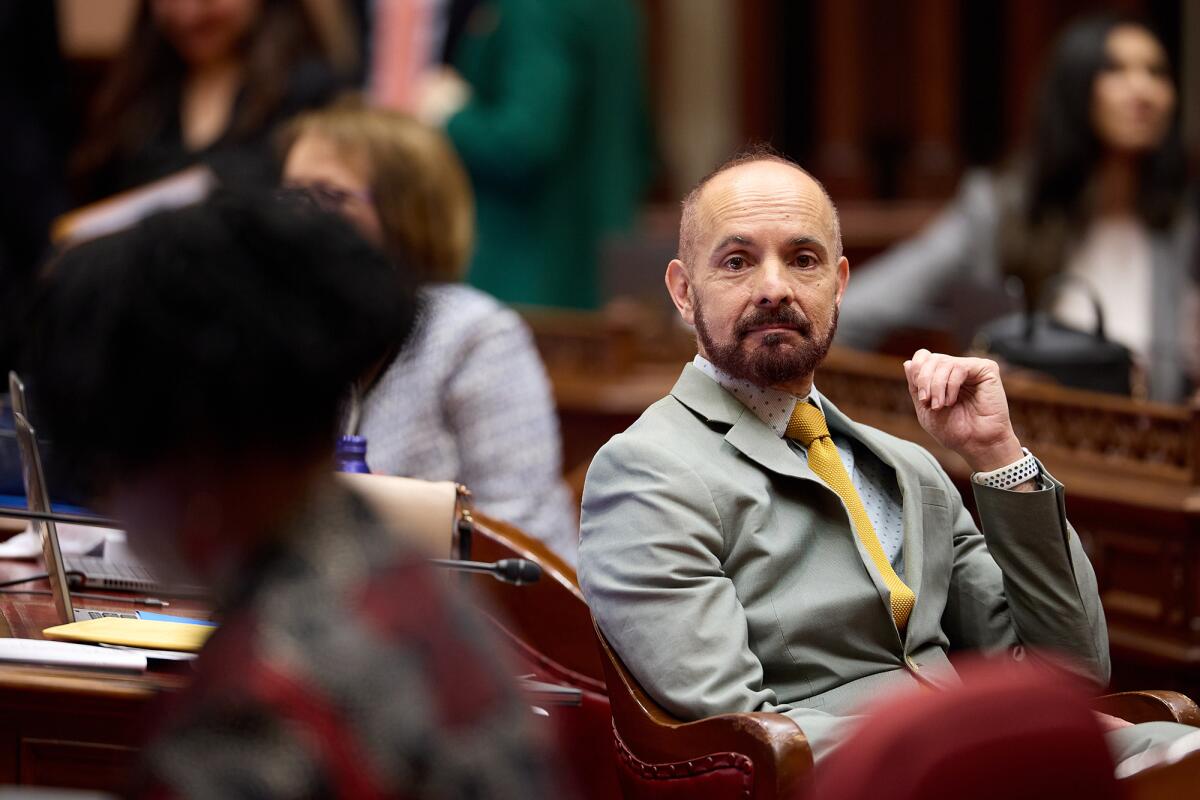
State Sen. Christopher Cabaldon (D-West Sacramento) is shown during a Senate floor session at the state Capitol in Sacramento on Feb. 20, 2025.
(Fred Greaves / CalMatters)
“For a project this scale in this location, it is what the [law] was designed for,” said Sen. Christopher Cabaldon (D-West Sacramento), who represents the area. “A central question for the people of Solano County is: Is this going to be for the community or is this a conversion project that leaves them behind?”
Opponents also slammed California Forever for pursuing relief behind closed doors with state leaders and circumventing local opposition. Since 2018, the group has secretly bought up agricultural land, shelled out hundreds of millions of dollars to court local residents and spent at least $330,000 lobbying the governor and legislative leaders for favorable legislation.
“I think they know that the only way this actually happens is under cover of darkness, by trying to essentially get the governor to work this plan for them,” said Jordan Grimes, legislative director at Greenbelt Alliance, which has advocated for streamlined environmental reviews for housing projects.
Secretive beginnings foment distrust
For residents of Solano County, an agricultural community on the outskirts of the Bay Area that includes coastal areas next to a deep-water shipping lane, the suspicion around California Forever has been hard to shake.
The group’s subsidiary, Flannery Associates, started buying up farmland in 2018, eventually acquiring 62,000 acres while routinely refusing to answer questions about its backers. Some farmers later alleged the company used strong-arm tactics to get them to sell.
In 2023, Flannery’s backers were unmasked as a group of wealthy venture capitalists, including the founders of LinkedIn and Netscape, all led by former Goldman Sachs trader and real estate developer Jan Sramek. Marc Andreessen, co-founder of venture capital firm Andreessen Horowitz, holds investments in both California Forever and Saronic, the defense company eyeing California. Andreessen’s firm did not immediately return a CalMatters inquiry for comment.
Despite rocky beginnings, California Forever needed the majority of Solano County voters on its side due to a 1984 “orderly growth” law that requires voters to approve development on unincorporated land.
In 2024, the company debuted the East Solano Plan to rezone 17,500 acres of agricultural land for a dense, 400,000-person city. The proposal was set to go before voters that year, but its backers pulled it following powerful grassroots opposition, poor polling and a county assessment that found holes in the plan. Sramek acknowledged the group likely moved too fast and said the initiative would go back before voters in 2026.
Instead, the group has pivoted. The East Solano Plan has become the Suisun Expansion Plan and the Solano Shipyard. In January 2025, Suisun City’s city council directed its manager to explore expanding the city’s limits through annexation, which is now underway, although it could take years.
State Route 113 runs through land where California Forever plans to put its new city in Solano County.
(Loren Elliott / CalMatters)
“The annexation and the shipbuilding have been a clear way to work around the need for voter support in Solano County,” said Nate Huntington, a member of the grassroots group Solano Together, which formed in response to the secretive land purchases. Huntington pointed out that California Forever hasn’t even submitted a proposal for a shipbuilding facility to the county.
“All of this has been happening in backrooms of Sacramento, and it’s not been publicly available.”
Seeking state environmental relief
California Forever is now selling the development to the state as a major incentive to lure manufacturers and shipbuilders to California — and the subsequent need for housing to accommodate the promised jobs.
The company wants the governor and state lawmakers to cut red tape for the development and require enough housing for the new jobs. Steinberg and Hertzberg told CalMatters they are contemplating legislation to that end, but only after California Forever signs a lease with a manufacturer or shipbuilder.
Their plan would allow the governor to designate construction on company land as “environmental leadership development projects,” which would effectively require any litigation to be resolved within 270 days. Steinberg authored the state law streamlining that process in 2013.
State law requires government agencies to prepare a report for any project that might have a significant impact on the environment. Instead of assessing the impact of the proposed shipyard, Steinberg and Hertzberg’s proposal would use a 2008 report, which designated the area where the shipyard would go as “water-dependent industrial usage.” Most of California Forever’s 7,500-acre planned footprint does not have that designation.
Steinberg told CalMatters the report is sufficient since the site has changed little.
“The state and county need the ability to say yes now to these numerous opportunities,” he said in a text. A new report, he said, “would require years of additional delay and lost opportunities.”
But the report is outdated, Cabaldon argues.
“This is completely different,” he said. “Just the notion that you would just say, ‘We are not going to do any assessments at all and we’ll just rely on this old one’ — that is not consistent with what the public interest is.”
Steinberg and Hertzberg also want the state to require enough housing in the area, but to allow surrounding cities and Solano County to permit local housing developers to build first.
But if local governments aren’t willing to or cannot build enough housing within the timeline the manufacturer or the shipbuilder wants, Steinberg and Hertzberg’s proposal would allow Suisun City to annex adjacent California Forever-owned county land into its city boundaries — a controversial idea that has drawn fierce local opposition. The move would be a “last resort,” Steinberg and Hertzberg stressed repeatedly.
The annexation would effectively bypass the county’s orderly growth initiative, which requires voters to have a say in development.
“The shipbuilders and manufacturers need certainty on a much faster timeline,” Steinberg said.
Cabaldon said the pitch to build new housing to accommodate theoretical jobs is “fantastical,” noting that Saronic, the proposed shipbuilder, is a leader in automation.
“There’s no indication that this is going to generate on an ongoing basis that many jobs, and certainly not more jobs than we have housing for even today without building a single additional unit,” he said.
Historic union agreement prompts support
In January, California Forever announced it had signed a 40-year deal with the Napa/Solano Building Trades Council and Northern California Carpenters Union to use union labor to build its development. The agreement was an important political alliance for Chief Executive Sramek, bringing more influential advocates to the table.
According to Digital Democracy, both the Building Trades Council and the Carpenters Union have given roughly $10 million in direct donations to legislative candidates since 2000.
Those advocates made themselves heard over the last few weeks, following a Texas county court approving significant tax incentives to lure Saronic to Brownsville. In a statement, Saronic said its nationwide search is still “active and ongoing.”
The California Alliance for Jobs, an alliance of influential construction companies and workers, drafted two letters in quick succession calling for legislative leaders to streamline the California Forever expansion and shipyard.
“We champed at the bit to go all in to get this project moving, and to get legislation through Sacramento this session,” said Joshua Arce, executive director of the alliance.
Suisun City Councilmember Princess Washington, who has consistently been the sole vote on the council against the annexation plan, said she feels organized labor is being used as “political pressure” to win approval.
“Processes are slow, but they’re done that way through government to ensure that it’s being done correctly, that all parties of interest are being treated fairly, and there’s checks and balances,” Washington said.
“It’s unheard of for a project to be done as quickly as they want it to be done.”
In a statement, California Forever spokesperson Jim Wunderman said any shipyard project will comply with all California environmental and land-use laws. He said county supervisors already approved using the 2008 impact report, and that legislation would allow the group to “meet prospective employers’ timelines.”
He said by pursuing expansion within Suisun City, California Forever is following the community’s preferences by channeling new growth into existing cities.
An ongoing presence in the Capitol
Since 2024, California Forever has spent at least $330,000 lobbying the Legislature and governor’s office on bills and other actions, according to campaign finance records.
Steinberg and Hertzberg told CalMatters they were hired in April as “special counsel,” not lobbyists, meaning they are spending less than a third of their time talking with public officials.
Grimes, who said he respects Steinberg for leading landmark environmental land-use reforms in the Legislature, said he’s disappointed in his advocacy for California Forever, “a project that is antithetical to all of this.”
Sheep graze on land where California Forever plans to build its new city in Solano County.
(Loren Elliott / CalMatters)
California Forever reported spending $90,000 lobbying the governor’s office and the Governor’s Office of Business and Economic Development, called GO-Biz, last year on “federal shipbuilding activities and California business attraction and retention activities.”
“GO-Biz has discussed relevant state incentive programs with Saronic and explained how they operate,” said GO-Biz spokesperson Willie Rudman. He said the agency does not offer incentive packages to specific companies.
Last fall though, GO-Biz helped organize a bid for Saronic to settle in Solano County. County staff reported during a board meeting that GO-Biz supported a legislative effort to override the county’s “orderly growth” law.
County supervisors rushed through a proposal to change the boundaries of the Solano Shipyard to comply, but with just days remaining before the end of the legislative session, Assemblymember Lori D. Wilson, a Democrat from Suisun City, said there wasn’t time to introduce legislation.
Since then, Wilson said, the proposal has been on the table, but “nothing’s been requested” of her office by California Forever.
The company also urged lawmakers to act fast or risk losing the shipbuilder to Texas last year — a negotiating tactic common in economic development, Cabaldon said.
But Cabaldon argued that Saronic will decide where to place its shipyard based on “defense needs of the United States of America” instead of state incentives.
“We have to negotiate with our eyes open,” he said.