
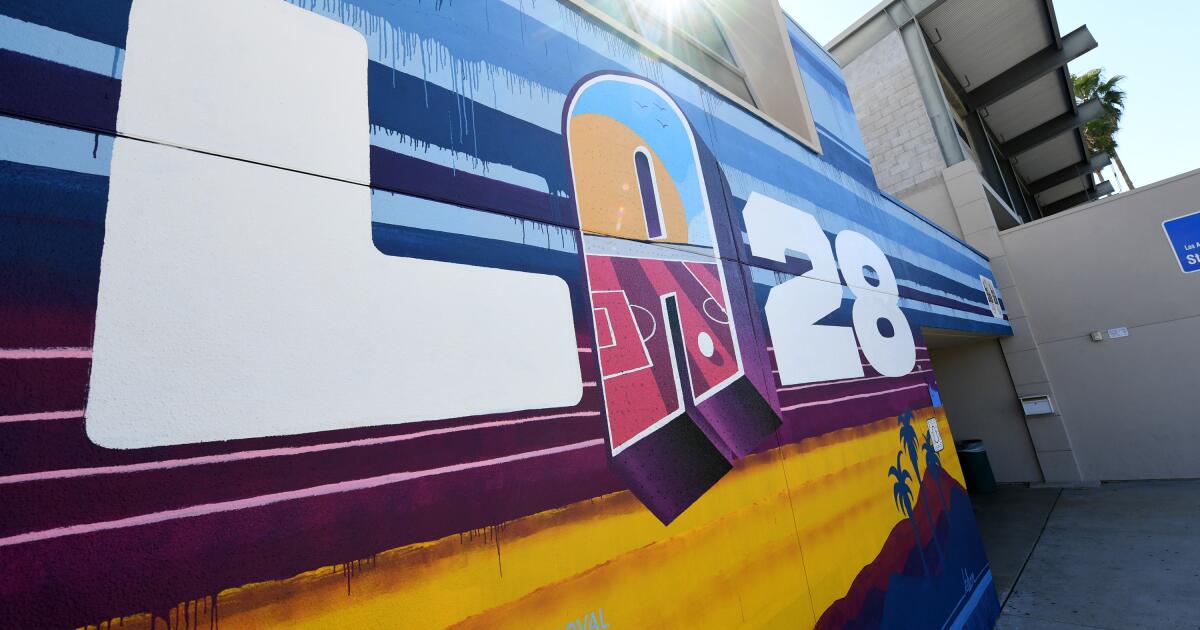

LA28 reserved the first Olympic tickets for locals. To kick off the second round of ticket sales, it’s a sponsorship connection that could help fans get to the front of the line.
Before the second Olympic ticket drop officially begins Aug. 10, LA28 announced Wednesday there will be a presale for Visa cardholders that will run from July 29-31.
Visa has sponsored the Olympics for 40 years and is the only credit card accepted for payment in Olympic zones. For a chance to be selected for the presale, fans need to first confirm their status as a Visa cardholder. Fans who have already registered can log into their existing LA28 ticket account, check the “Visa presale box” and save changes. New registrants must select the Visa cardholder option during the registration process. All ticket sales during the presale must be completed with a Visa credit card.
Fans can register for the second ticket drop at tickets.la28.org until July 22. Those who already registered for Drop 1 but weren’t selected or didn’t purchase their full 12-ticket allotment do not have to sign up again and are automatically entered into the lottery for Drop 2, which will run from Aug. 10-20.
Fans who are randomly selected for the Visa presale will be notified of their time slot on July 27. Those who aren’t selected for the presale remain eligible for a time slot in Drop 2. Email notifications for Drop 2 time slots will go out from Aug. 6-7.
The second ticket drop will offer tickets across all Olympic sports at a range of price points, LA28 said in a statement, subject to inventory availability. Prices start at $28 for individual tickets, but of the total 1 million $28 Olympic tickets, half were scooped up during the Drop 1 presale that was reserved for locals living near venue cities in Southern California and Oklahoma City.
April’s ticketing debut frustrated fans who were surprised by high prices, a 24% service fee on every ticket and limited inventory for key events. Still, LA28 sold 4 million tickets across 85 countries, a historic number that had International Olympic Committee officials giddy for the potential of the 2028 Games.
“What we thought we were going to sell, and what we thought we were going to get for people who registered for interest, we exceeded those by magnitudes,” LA28 Chief Executive Officer Reynold Hoover told The Times on June 4 after IOC members visited L.A. “We were able to set Olympic records in terms of sale, but I think the broader picture about all of that is people want to be a part of something really big and be part of something here in L.A., a part of history.”
LA28, the organizing committee behind L.A.’s first Olympics in 40 years, expects to generate $2.5 billion in ticketing and hospitality to support what has been advertised as a privately funded Games. The estimated $7.1-billion operations budget is also buoyed by $2.5 billion in expected sponsorship revenue. LA28 already has $2 billion in domestic partnership money.
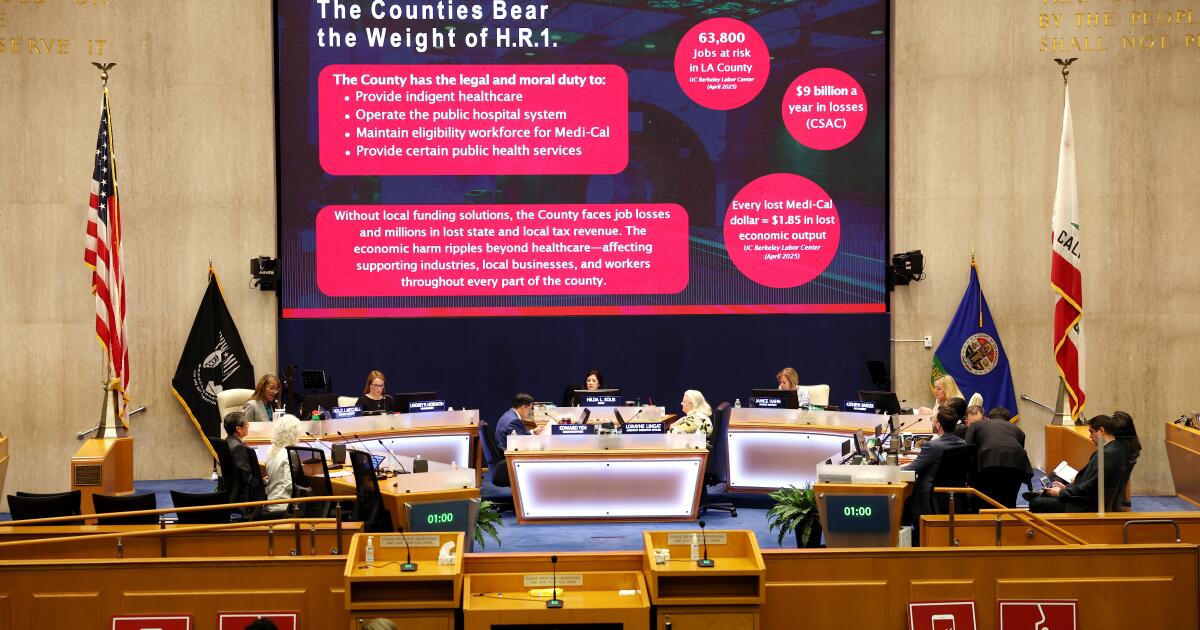
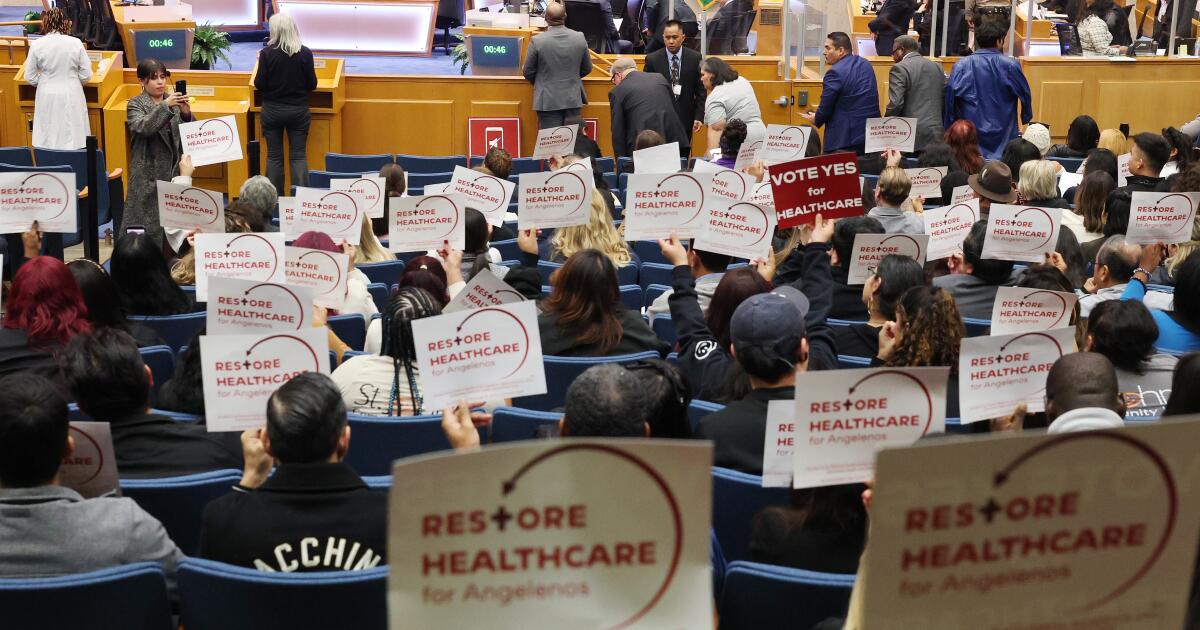
Supporters of a half-cent sales tax proposed to help fund health services in Los Angeles County declared victory Tuesday after days of steadily gaining ground as more ballots were counted.
The latest results show the “yes” camp ahead by a slim margin, with just more than 50% of the vote. The measure needs a simple majority to win.
“Today, Angelenos sent a clear message: we take care of each other,” said Jim Mangia, chief executive of St. John’s Community Health and a spokesperson for the campaign, in a statement. “For months, we watched Washington make decisions that stripped healthcare away from hundreds of thousands of our neighbors — and today, Los Angeles County answered.”
The campaign said it would be organizing a news conference Wednesday to celebrate the “historic win.”
The proposal, on the ballot as Measure ER, had gained traction since election night, when results showed the tax had failed to gain a majority of support among early voters. Voters have not rejected a sales tax hike in L.A. County since 2012, when a transportation measure fell just short of a needed two-thirds majority with 66.1% support.
Approval of Measure ER would impose a new sales tax of half a penny of every dollar spent in the county, with the proceeds going to local hospitals and clinics that say they’re bleeding funding after federal cuts. Officials anticipate it will bring in $1 billion annually to patch the holes in the health services network.
The tax, which was championed by a coalition of healthcare advocates, takes effect Oct. 1 and will last for five years.
Earnings Call Insights: Designer Brands Inc. (DBI) Q1 fiscal 2026
Management View
Seeking Alpha’s Disclaimer:This article was automatically generated by an AI tool based on content available on the Seeking Alpha website, and has not been curated or reviewed by humans. Due to inherent limitations in using AI-based tools, the accuracy, completeness, or timeliness of such articles cannot be guaranteed. This article is intended for informational purposes only. Seeking Alpha does not take account of your objectives or your financial situation and does not offer any personalized investment advice. Seeking Alpha is not a licensed securities dealer, broker or US investment adviser or investment bank.
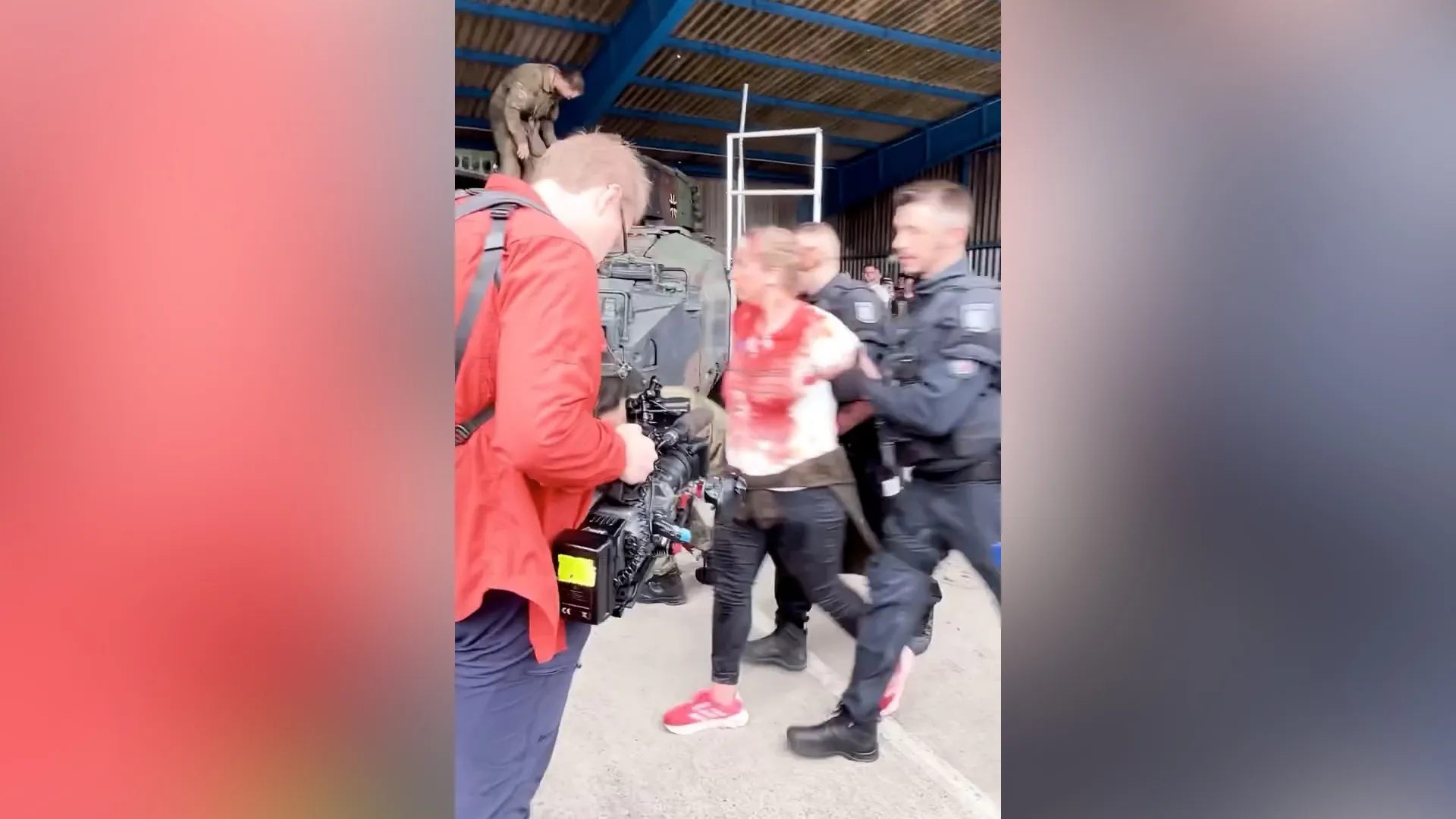
Pro-Palestine activists interrupted an army recruitment event during German Armed Forces Day. They climbed onto a tank and unfurled a banner reading ‘Genocide with German weapons’ and named Rheinmetall, a key arms supplier to Israel’s military.
It wasn’t too good to be true, but it was too good to remain true.
World Cup fans still reeling from FIFA’s pricey water policy change have a new gripe: Soccer’s governing body is demanding payment from about 60 people who secured tickets for free because of a glitch on the FIFA website during checkout.
FIFA confirmed the mistake with a swift response, issuing a statement that said pay up or stay home:
“The tickets requested by these fans remain reserved, and the affected fans have been invited to complete payment of the correct amount. FIFA regrets the error and any inconvenience caused.”
What, did anyone think a governing body denying fans free water in the summer heat would allow 60 souls into stadiums without paying admission? Even when FIFA admitted its mistake?
One week before matches begin in 16 North American venues, including SoFi Stadium that will be referred to during the tournament as Los Angeles Stadium, FIFA reversed its policy that allowed refillable plastic bottles when temperatures were high enough to justify it.
Now, no plastic water bottles are allowed except the ones sold in the stadium. Last summer during the Club World Cup, bottled water at FIFA venues fetched $4 to $6.
Coca-Cola products will be sold at all World Cup venues, including Dasani water. In a statement to the Athletic on Thursday night, FIFA skirted questions about whether it was influenced by commercial priorities.
“The decision to prohibit capped water bottles is based on a number of factors related to safety and security, including mitigating risks to players and spectators, ensuring a safe and efficient ingress experience for all attendees, and the presence of additional heat mitigation and alternative hydration strategies at FIFA World Cup 2026 stadiums,” the statement read.
Toronto Mayor Olivia Chow questioned FIFA’s motive.
“Why do you need to buy a water bottle when you can just carry your water in? It is cheaper that way and it is good for the environment,” Chow told CTV News. “It is outrageous. They are just trying to make more money. They are already making billions of dollars. Stop it.”
Chow’s ire likely grew upon learning that the group-stage matches the 60 people who now must pay for tickets FIFA mistakenly provided them are all in Toronto.
Complaints have mushroomed for months about World Cup ticket price fluctuations caused by sophisticated algorithms that can dramatically increase costs based on demand. Prices adjust in real time, increasing when interest surges.
The attorneys general of New Jersey and New York a week ago launched an investigation into World Cup ticket sales following reports that fans were misled about the locations of seats they purchased.
The attorneys general sent subpoenas to FIFA, requesting details about ticketing practices for eight World Cup matches hosted in New Jersey, including the World Cup final.
FIFA has about $6.14 billion in total assets and $3 billion in cash reserves.
The organization has defended its steep ticket prices, saying they reflect standard practices for major global sporting and entertainment events.
“If you think of McDonald’s or Nike, they’re trying to please consumers because they know the consumers can go someplace else,” Kuper said. “There’s only one World Cup, so FIFA is a monopoly purveyor. It’s more like one man running the cash box.”
Parking will be another opportunity to generate revenue. A spot nearly two miles from SoFi Stadium will cost $300 for the U.S. opener against Paraguay next week.
The Spanish fashion giant behind Zara, Inditex, posted net income of €1.4 billion in the first quarter, up 5.4% year-on-year and ahead of market expectations.
ADVERTISEMENT
ADVERTISEMENT
Sales rose 5.8% to €8.7bn, or 8.8% at constant exchange rates, ahead of the roughly 8% analysts had anticipated.
Gross profit rose 6.9% to €5.4bn, helped by an improvement in profit margins, meaning the company kept a larger share of revenue as profit. EBITDA, a measure of underlying earnings, increased 7.3% to €2.6bn.
Inditex shares rose more than 5% on Wednesday after the company reported a strong start to the second quarter, with sales increasing 11.5% between 1 May and 1 June, reassuring investors that the Zara owner remains resilient despite signs of weakening consumer spending.
“Inditex continued its strong momentum with its latest results beating first quarter expectations, and also seen a strong start to the second quarter too, as sales grew more or less in line with the rate the company exited with in the previous quarter,” said Mamta Valechha, consumer discretionary analyst at Quilter Cheviot.
The revenue jump from one of the world’s largest listed clothing retailers points to solid consumer appetite heading into the summer, despite concerns that a more uncertain economic and geopolitical backdrop could weigh on spending in the months ahead.
Navigating geopolitical risks
The results come as businesses around the world face growing uncertainty over the global economy and concerns that consumers may cut back on spending.
Inditex said its wide-ranging supply chain and flexible transport network had helped it keep products flowing to stores around the world despite recent disruptions.
“Ultimately, Inditex continues to have a resilient business model that can withstand significant economic pressures and currency headwinds,” said Mamta Valechha, consumer discretionary analyst at Quilter Cheviot.
Valechha said strong customer demand and the company’s ability to source products close to its key markets had helped it keep collections up to date while limiting the need for discounts. Productivity improvements had also helped protect profitability.
Inditex also said that the current “geopolitical challenges” had an impact on the sales in the Middle East, a region that Barclays estimates accounts for about 5% of its revenue.
The company also warned that ongoing instability in the region could affect its performance in the months ahead.
Inditex faces a number of other challenges, including higher shipping costs and rising prices for raw materials such as cotton and polyester. Currency movements are also expected to weigh on results this year.
Inditex ended the quarter with 5,456 stores and a net cash position of €10.8bn.
The board has proposed a dividend of €1.75 per share for the last fiscal year, comprising an ordinary component of €1.20 and a bonus of €0.55, payable in two instalments in May and November 2026.
Despite the strong start to the year, Inditex left its outlook unchanged. It said it expects sales growth to continue into the second quarter, supported by strong demand for its spring and summer collections and ongoing improvements to its stores and operations.
However, the company said currency fluctuations are likely to reduce sales growth by around 1% over the full year. It also expects to invest about €2.3bn in the business during the current financial year.
Los Angeles County’s half-cent sales tax to fund healthcare services was trailing Tuesday, with early returns showing a majority of voters rejecting the measure.
The tax — a half-penny of every dollar spent in the county — is meant to prop up local hospitals and clinics that are hemorrhaging funding after recent federal cuts.
The sales tax, which needs a simple majority to pass, would take effect Oct. 1 and last five years. Officials say it would pull in $1 billion annually to help plug the budget holes hitting local hospitals and clinics.
L.A. County health officials anticipate the One Big Beautiful Bill Act, signed into law by President Trump last summer, will slash more than $2 billion from the county’s health services budget within the next three years. Due to eligibility changes, the county will no longer be able to get reimbursements for many Californians who have lost Medi-Cal.
The measure was championed by a coalition of healthcare advocates called Restore Healthcare for Angelenos who warned that mass layoffs and emergency room closures could be imminent if new funding didn’t come fast. The Department of Public Health recently closed seven clinics — a grim sign, supporters said, of service cuts to come.
Voters haven’t rejected a sales tax hike since 2012, when a transportation measure fell just short with 66.1% support. It needed 66.7% to pass.
A majority of county supervisors had supported the new tax proposal, voting 4 to 1 this February to put it on the ballot. But the measure faced significant opposition from local cities, with opponents arguing the sales tax hike would unfairly burden the poorest county residents and encourage people to spend their dollars across the county line.
Supervisor Kathryn Barger, the board’s lone opponent of the tax, said she was concerned it was a “general” tax, meaning the money wouldn’t be earmarked for healthcare costs. Instead, she argued, politicians would have final say over how the money gets spent.
The supervisors have created a plan for spending the tax money, with the largest chunk of the money meant to cover the costs for patients without insurance. The measure also asked voters to sign off on a nine-member oversight committee.
The county currently has a base sales tax rate of 9.75%, and cities impose local taxes on top of that.
The EU’s new car market maintained steady growth through the first four months of 2026, with nearly 3.8 million vehicles registered, up 4.2% from the same period in 2025. This is according to data published on Wednesday by the European Automobile Manufacturers’ Association (ACEA).
ADVERTISEMENT
ADVERTISEMENT
The figures show a market increasingly dominated by electric and hybrid vehicles, helped by government incentives in major economies and growing competition from Chinese carmakers.
According to ACEA, between January and April 2026, battery-electric cars accounted for 19.7% of the EU market, up from 15.3% a year earlier. Growth was mainly driven by the bloc’s four largest markets, with Italy (+25.5%), Spain (+19.7%), Germany (+6.6%) and France (+2.3%) all recording gains.
In April alone, sales of battery electric vehicles were up by 37.7% in the EU from the same month last year, lifting their market share to 20.6% for the month.
Hybrid-electric vehicles remained the most popular single powertrain choice in April, up 12%, accounting for roughly 36.9% of the month’s sales.
Plug-in hybrids added 16.4%, capturing roughly a 9.8% share in April registrations.
On the other side of the ledger, petrol car registrations fell 16.3% to fewer than 218,500 units, while diesel dropped 17.1% to around 74,000.
Together, petrol and diesel cars accounted for less than 30% of vehicles sold across the EU in April.
European brands performance in 2026
Volkswagen Group retained its position as the bloc’s largest carmaker in the first four months of 2026, accounting for 26.7% of all new registrations, with just over one million units sold, up 2.9% year-on-year.
However, performance varied across the group. Skoda registrations rose 15.5%, and Audi gained 8.6%, while the core Volkswagen brand slipped 3.2%, losing ground across multiple segments.
Stellantis ranked second with a 17.1% market share and over 648,000 units, up a robust 7.8%, driven by a recovery at Fiat of over 32%, and strong gains at Opel and Vauxhall, which together rose 22% in registrations.
Renault Group was the weakest performer in the top three, declining 7.4% to around 384,250 units and accounting for a 10.1% market share, with Dacia registering a particularly sharp fall of more than 15%.
BMW Group and Mercedes-Benz posted gains of 3.9% and 3.8%, respectively, while Toyota and Hyundai Group both recorded modest declines of between 2.5% and 3.1%.
The Chinese surge
The most significant trend in April’s data was the continued rise of Chinese carmakers.
According to ACEA figures, BYD’s EU registrations more than doubled year-on-year in the first four months of 2026, surging 152.9% to more than 71,850 units.
Chery Automobile, through its Omoda, Jaecoo and Jetour brands, grew 267.1% to more than 48,350 units, while Leapmotor, distributing through its joint venture with Stellantis, soared 558.8% to over 28,700 units.
SAIC Motor, owner of the MG brand and the largest Chinese group by EU volume, added a further 10.4% to reach more than 77,000 units.
Combined, Chinese brands accounted for around 6% of EU car registrations between January and April 2026, compared with 3.2% in the same period a year earlier. Across the wider European market, including the UK and EFTA countries, Chinese brands accounted for a combined market share of roughly 7.3% over the same period, up from 3.7% a year earlier.
A chart shows Hyundai Motor and Kia’s growing share of the U.S. hybrid vehicle market from 2022 through the first quarter of 2026, with Hyundai reaching 10.9% and Kia 7.9%. Data from Kiwoom Securities. Graphic generate by Asia Today and translated by UPI
May 26 (Asia Today) — Hyundai Motor Company and Kia are accelerating efforts to secure the No. 2 position in the U.S. hybrid vehicle market as demand for gasoline-electric models continues to rise.
The South Korean automakers are expanding local hybrid production in the United States to reduce tariff costs and increase utilization at Hyundai Motor Group Metaplant America, or HMGMA, in Georgia.
The U.S. auto market has seen growing consumer demand for hybrids since the expiration of federal electric vehicle tax credits in September 2025.
Hybrid vehicle penetration in the United States rose from 10.1% in 2024 to 13.7% in the first quarter of this year, while electric vehicle penetration fell from 7.9% to 5.6%, according to industry data.
Data from Kiwoom Securities and EV-Volumes showed Hyundai Motor’s share of the U.S. hybrid market reached 10.9% in the January-March period, up from 8.0% in 2024.
Kia’s share rose to 7.9% from 4.2% two years earlier.
Combined hybrid sales by the two companies totaled 97,627 vehicles in the first quarter, a 53.2% increase from a year earlier.
Industry analysts said demand for hybrids could continue to grow in the second half of the year if high fuel prices persist.
Unlike the increasingly crowded electric vehicle market, where companies including Tesla, Toyota Motor Corporation, General Motors, Rivian and Ford Motor Company compete aggressively, the hybrid segment remains dominated by Toyota, Honda Motor Co. and Hyundai Motor Group, which together account for about 85% of sales.
Hyundai Motor Group plans to further increase U.S. production of hybrid models.
Kia is expected to begin producing the Sportage hybrid at HMGMA later this year, while Hyundai Motor is expected to manufacture the Palisade hybrid and Tucson hybrid at the plant beginning next year.
The strategy is aimed at reducing tariff burdens estimated at about 15% while boosting production efficiency at the Georgia facility.
Analysts said the compact SUV segment will be a key battleground.
Honda’s CR-V led the segment in the United States with about 56,000 units sold in the first quarter, followed by Toyota’s RAV4 with about 37,000 units. Hyundai Tucson and Kia Sportage each sold about 17,000 units during the period.
“The current CR-V model was introduced in 2023 and is beginning to age,” Kiwoom Securities analyst Shin Yoon-cheol said. “Hyundai Motor Group’s new hybrid product cycle could create pressure for Honda.”
Shin added that if Hyundai and Kia capture 10% of CR-V hybrid sales in the United States, the companies’ combined market share could improve by 0.1 percentage points.
Coffee chain has seen ‘very significant’ drop in sales after campaign that evoked deadly crackdown, local operator says.
By Reuters and The Associated Press
Published On 26 May 202626 May 2026
Starbucks Korea has suffered a “very significant” drop in sales after a marketing campaign that evoked a brutal 1980 military crackdown on pro-democracy protesters triggered a public outcry, according to the coffee chain’s local operator.
Shinsegae Group, whose subsidiary E-Mart owns the coffee chain in South Korea, has faced mounting criticism over its so-called “Tank Day” campaign, launched on the anniversary of the May 18 Gwangju Uprising, when the military government deployed troops and tanks to suppress pro-democracy demonstrations.
Recommended Stories
list of 4 itemsend of list
In a news conference on Tuesday, Shinsegae Group chairman Chung Yong-jin made a public apology and asked people not to take out any anger on Starbucks Korea employees and front-line staff.
“I take it very seriously, the fact that many people felt deep pain and anger because of Starbucks Korea’s inappropriate marketing campaign,” Chung said.
“I will take all responsibility for the incident.”
Chung also asked people not to take out their frustration on staff at Starbucks shops, saying the responsibility lies with management. There were no immediate reports of major incidents at stores.
Chung issued his first apology on May 19, saying in a statement that the campaign caused “deep pain to the victims and bereaved families of the May 18 Democratization Movement as well as to the public”.
Shinsegae fired the head of Starbucks Korea last week after apologising over the campaign. Starbucks Global also apologised and said that an investigation had begun.
A Shinsegae official said sales had fallen sharply since the marketing controversy.
“While sales are not our main concern at the moment, we have seen a very significant drop,” said the official.
At Tuesday’s news conference, Jeon Sangjin, a senior Shinsegae Group executive, said the company had yet to find conclusive evidence that Starbucks Korea marketing employees intended to mock the pro-democracy movement, an accusation the employees have denied.
However, he said some employees refused management requests to hand over their smartphones during a weeklong internal review.
Jeon said the company would look at the results from the police inquiry, and any employee found to have intended to ridicule protesters would be fired.
The anger over the campaign has triggered public calls for boycotts, amplified by government officials, including Interior and Safety Minister Yoon Ho-jung, who said Starbucks products will no longer be used at government events and lamented the chain’s “anti-historical behaviour”.
The country’s president, Lee Jae Myung, said on X last week that the campaign displayed “inhumane and disgraceful behaviour by cheap profiteers who deny the values of the South Korean community, basic human rights and democracy”.
Hundreds of people are estimated to have died or gone missing when Chun Doo-hwan’s military government cracked down on the protests in Gwangju.
Many details remain unconfirmed, including who gave the order to open fire.
Earnings Call Insights: The TJX Companies (TJX) Q1 fiscal 2027
Management View
“First quarter sales, profitability and earnings per share were all well above our expectations… Overall comp sales were up an outstanding 6%… With our above planned first quarter sales, we are raising
Seeking Alpha’s Disclaimer:This article was automatically generated by an AI tool based on content available on the Seeking Alpha website, and has not been curated or reviewed by humans. Due to inherent limitations in using AI-based tools, the accuracy, completeness, or timeliness of such articles cannot be guaranteed. This article is intended for informational purposes only. Seeking Alpha does not take account of your objectives or your financial situation and does not offer any personalized investment advice. Seeking Alpha is not a licensed securities dealer, broker or US investment adviser or investment bank.
China’s economy slowed down sharply in April 2026 as geopolitical fallout from the war in Iran weighed heavily on consumer spending and factory output.
Retail Sales: Growth flattened to just 0.2% year-over-year, marking the weakest performance since late 2022. This was a sharp deceleration
May 14 (UPI) — U.S. consumers spent $757.1 billion on retail and food services in April, a 0.5% increase over March, the U.S. Census Bureau reported Thursday.
For 12 months ending in April, not adjusted for price changes, sales increased by 4.9%. Total sales for February through April increased 4.4% over the same period in 2025.
Gasoline sales climbed 2.8% in April after jumping 13.7% in March.
Retail trade sales increased by 0.5% over March and 5.2% over last year. Non-store retail went up 11.1% for the year. Sales minus gasoline and building materials increased 0.46%.
While retail sales increased in April, they did so at a slower rate than in March, which increased by 1.6% for the month. Yet it was still the third consecutive monthly increase.
Retail sales as a whole grew but several categories experienced declines, including furniture store sales, down 2%, car dealerships, down 0.5%, department stores, down 3.2%, and clothing stores, down 1.5%.
A consumer survey conducted by the University of Michigan found that consumer sentiments are low due to concerns about high prices and current economic conditions. This has caused consumers to hold off on making major purchases, such as furniture and automobiles.
Vice President JD Vance speaks during a news conference on anti-fraud initiatives in the Indian Treaty Room of the Eisenhower Executive Office Building at the White House on Wednesday. Photo by Daniel Heuer/UPI | License Photo
The U.S. has cleared around 10 Chinese firms to buy Nvidia’s (NVDA) second-most powerful AI chip, the H200, but not a single delivery has been made so far, leaving a major technology deal in limbo as CEO Jensen Huang seeks a breakthrough in China
BEIJING — President Trump arrived in Beijing on Wednesday for his hotly anticipated talks with Chinese President Xi Jinping on the Iran war, trade and U.S. arms sales to Taiwan.
The meat of the summit doesn’t start until Thursday, when the leaders hold bilateral talks, visit the Temple of Heaven, where Chinese emperors once prayed for bumper crops, and take part in a formal banquet. But the Chinese offered Trump a pomp-filled welcome, literally rolling out the red carpet for him after Air Force One landed in the Chinese capital.
The president was greeted by Chinese Vice President Han Zheng; Xie Feng, China’s ambassador to Washington; Ma Zhaoxu, executive vice minister of foreign affairs; and the U.S. envoy to Beijing, David Perdue.
The welcoming ceremony included a military honor guard, a military band and some 300 Chinese youths waving Chinese and American flags and chanting, “Welcome, welcome! Warm welcome!” as Trump made his way to his waiting limousine. The youth greeters were decked out in white and robin’s egg blue outfits that matched the paint job of the iconic presidential plane.
President Trump walks with China’s Vice President Han Zheng during an arrival ceremony Wednesday at Beijing Capital International Airport, as Eric and Lara Trump, Elon Musk, Secretary of State Marco Rubio, Defense Secretary Pete Hegseth and U.S. Trade Representative Jamieson Greer follow.
(Mark Schiefelbein / Associated Press)
“We’re the two superpowers,” Trump told reporters as he departed the White House on Tuesday for the long flight to Beijing. “We’re the strongest nation on Earth in terms of military. China’s considered second.”
While Trump likes to project a sense of strength, the visit occurs at a delicate moment for his presidency as his popularity at home has been weighed down by the U.S. and Israel’s war with Iran and rising inflation as a consequence of that conflict. The Republican president is seeking a win by signing deals with China to buy more American soybeans, beef and aircraft, saying he’ll be talking with Xi about trade “more than anything else.”
The Trump administration hopes to begin establishing a Board of Trade with China to address differences between the countries. The board could help prevent the trade war ignited last year after Trump’s tariff hikes, an action China countered through its control of rare earth minerals. That led to a one-year truce last October.
But Trump is visiting Beijing when Iran continues to dominate his domestic agenda. The war has led to the effective closure of the Strait of Hormuz, stranding oil and natural gas tankers and causing energy prices to spike to levels that could sabotage global economic growth. The U.S. president declared that Xi didn’t need to assist in resolving the conflict, even though Iran’s Foreign Minister Abbas Araghchi was in Beijing last week.
Fellow rescuers carry the coffins of two members of the civil defense who were reportedly killed in Israeli airstrikes in Nabatieh the previous day, during their funeral in the southern city of Sidon on May 13, 2026. Israel hammered south Lebanon with strikes on May 12 ahead of talks between the two countries in Washington, as Beirut reported 380 people killed in Israeli attacks since an April 17 ceasefire took effect.
(Mahmoud Zayyat/AFP via Getty Images)
“We have a lot of things to discuss. I wouldn’t say Iran is one of them, to be honest with you, because we have Iran very much under control,” Trump told reporters Tuesday.
Taiwan high on the agenda
The status of Taiwan also will be a major topic as China is displeased with U.S. plans to sell weapons to the self-governing island, which the Chinese government claims as part of its own territory.
Trump told reporters on Monday that he would be discussing with Xi an $11 billion weapons package for Taiwan that the U.S. administration authorized in December but has not yet begun fulfilling. The arms package is the largest ever approved for Taiwan.
But Trump has demonstrated greater ambivalence toward Taiwan, an approach that’s raising questions about whether the U.S. leader could be open to dialing back support for the island democracy.
The Taiwanese flag at Democracy Boulevard is lowered at the end of the day as the Chiang Kai-shek Memorial Hall is seen in the background in Taipei on May 13, 2026.
(I-Hwa Cheng/AFP via Getty Images)
At the same time, Taiwan — as the world’s leading chipmaker — has become essential for the development of artificial intelligence, with the U.S. importing more goods so far this year from Taiwan than China. Trump has sought to use Biden-era programs and his own deals to bring more chipmaking to America.
The Chinese Communist Party’s news outlet, People’s Daily, published a strongly worded editorial ahead of Trump’s arrival underscoring that Taiwan is “the first red line that cannot be crossed in China-U.S. relations” and is “the biggest point of risk” between the two nations.
Trump was already portraying the trip as a success before he even left White House grounds. He openly mused about Xi’s planned reciprocal visit to the U.S. later this year, lamenting that the White House ballroom under construction would not be completed in time to properly fete the Chinese leader.
“We’re going to have a great relationship for many, many decades to come,” Trump said of the U.S. and China.
Counter snipers and other security forces watch over Air Force One while refueling at Joint Base Elmendorf during a trip with US President Donald J. Trump in Anchorage, Alaska, on May 12, 2026. Donald Trump was due in Beijing on May 13, 2026 on the first visit to China by a US president in nearly a decade, as he seeks to ramp up trade despite potential friction over Taiwan and Iran.
(Brendan Smialowski/AFP via Getty Images)
Trump embarked on Air Force One for the big meeting with a coterie of aides, family members and business world titans, including Nvidia’s Jensen Huang and Tesla and SpaceX’s Elon Musk. While en route to Beijing, he posted on social media that his “first request” to Xi during the visit will be to ask the Chinese leader to bolster the presence of U.S. firms in China.
“I will be asking President Xi, a Leader of extraordinary distinction, to ‘open up’ China so that these brilliant people can work their magic, and help bring the People’s Republic to an even higher level!” Trump wrote.
Tajikistan’s President Emomali Rahmon and China’s President Xi Jinping attend a welcoming ceremony at the Great Hall of the People on Tuesday, in Beijing.
(Maxim Shemetov—Pool / Getty Images)
Despite Trump’s outward confidence, China appears to be entering the meeting from “a much stronger place,” said Scott Kennedy, a senior adviser on Chinese business and economics at the Center for Strategic and International Studies, a Washington think tank.
China would like to reduce tech restrictions on accessing computer chips and find ways to reduce tariffs, among other goals.
“But even if they don’t get much on any of those things, as long as there’s not a blow-up in the meeting and President Trump doesn’t go away and look to re-escalate, China basically comes out stronger,” Kennedy said.
U.S. Treasury Secretary Scott Bessent and Chinese Vice Premier He Lifeng met on Wednesday to discuss economic and trade issues at Incheon International Airport, just west of the South Korean capital of Seoul, according to the Chinese state run Xinhua News Agency.
Bystanders are kept back by police tape as they film the motorcade of President Donald Trump as he arrives at the Four Seasons Hotel on Wednesday in Beijing.
(Kevin Frayer / Getty Images)
Trump wants 3-way nuclear arms deal
Trump also intends to raise the idea of the U.S., China and Russia signing a pact that would set limits on the nuclear weapons each nation keeps in its arsenal, according to a senior Trump administration official who briefed reporters ahead of the trip. The official spoke on the condition of anonymity under ground rules set by the White House.
China has previously been cool to entering such a pact. Beijing’s arsenal, according to Pentagon estimates, exceeds more than 600 operational nuclear warheads and is far from parity with the U.S. and Russia, which each are estimated to have more than 5,000 nuclear warheads.
The last nuclear arms pact, known as the New START treaty, between Russia and the United States expired in February, removing any caps on the two largest atomic arsenals for the first time in more than a half-century. As the treaty was set to expire, Trump rejected a call by Russia to extend the two-country deal for another year and called for “a new, improved, and modernized” deal that includes China.
The Pentagon estimates China will have more than 1,000 operational nuclear warheads by 2030.
Madhani, Weissert and Boak write for the Associated Press. Boak reported from Washington. AP writers Darlene Superville in Washington, Huizhong Wu in Bangkok, Hyung-jin Kim in Seoul, South Korea, and Kanis Leung in Hong Kong contributed to this report.
China renewed its strong opposition to U.S. arms sales to Taiwan ahead of the high profile summit between U.S. President Donald Trump and Chinese President Xi Jinping in Beijing.
Taiwan is expected to be one of the most sensitive issues discussed during the two day meeting, alongside trade disputes, regional security, and the ongoing Iran conflict.
Beijing considers Taiwan part of its territory, while the United States maintains unofficial relations with Taipei and remains legally committed to helping the island defend itself.
China Repeats Opposition to Arms Sales
China’s Taiwan Affairs Office warned Washington against expanding military cooperation with Taiwan and criticized U.S. weapons sales to the island.
Spokesperson Zhang Han described Taiwan as a core Chinese national interest and called on the United States to honor previous commitments under the One China framework.
Beijing argues that Taiwan is an internal Chinese matter and strongly opposes any foreign military involvement with the island.
Record US Weapons Package Raises Tensions
The Trump administration approved an $11 billion weapons package for Taiwan in December, marking the largest U.S. arms sale to the island to date.
Reports have also suggested that another arms package worth around $14 billion could be approved after Trump’s visit to China, though its current status remains unclear.
The United States says such sales are necessary to ensure Taiwan can defend itself against possible military pressure from China.
Taiwan Defence Budget Faces Scrutiny
The issue gained further attention after Taiwan’s opposition controlled parliament approved only part of a proposed $40 billion defense budget requested by President Lai Ching-te.
The approved funding prioritizes purchases of U.S. weapons while reducing spending on some domestic defense programs, including drones.
American officials reportedly expressed disappointment that the budget fell short of what Washington believes Taiwan needs for adequate defense preparedness.
Taiwanese officials fear Beijing could use the reduced spending as leverage during talks with Trump to argue against further U.S. military support for the island.
Taiwan Rejects Beijing Sovereignty Claims
Speaking at the Copenhagen Democracy Summit, Lai described Taiwan as a sovereign and independent nation that would not yield to external pressure.
China quickly rejected those remarks, reiterating that Taiwan has never been and will never become an independent country.
Beijing also repeated warnings that it retains the option of using force to bring Taiwan under its control, although it continues to publicly favor peaceful reunification.
Taiwan’s ruling Democratic Progressive Party responded by emphasizing the island’s democratic system, independent government, and military institutions.
Taiwan Remains Central to US China Rivalry
Taiwan has become one of the most dangerous flashpoints in U.S. China relations, with both powers viewing the issue as tied directly to national credibility and regional influence.
For China, Taiwan represents sovereignty, territorial integrity, and national unity. For the United States, support for Taiwan is linked to maintaining regional stability and reassuring allies in the Indo Pacific.
Analysts warn that increasing military activity, arms sales, and political tensions surrounding Taiwan continue to raise the risk of miscalculation between Washington and Beijing.
Analysis
China’s warning ahead of the Trump Xi summit highlights how deeply the Taiwan issue shapes the broader strategic rivalry between the United States and China.
Despite ongoing diplomatic engagement and trade negotiations, Taiwan remains the most sensitive and potentially explosive issue in the bilateral relationship. Both sides see compromise on Taiwan as politically risky and strategically costly.
The large U.S. arms packages demonstrate Washington’s determination to strengthen Taiwan’s defense capabilities, especially as China rapidly expands its military presence around the island.
At the same time, Taiwan’s internal political debates over defense spending reveal concerns within the island about balancing military preparedness with economic and domestic priorities.
For Beijing, any increase in U.S. military support for Taiwan is viewed as interference in China’s internal affairs and a challenge to its sovereignty claims.
The summit between Trump and Xi may help reduce immediate tensions, but the fundamental disagreement over Taiwan is unlikely to ease. As military capabilities expand and political rhetoric hardens on all sides, Taiwan will remain a central test of whether the United States and China can manage strategic competition without drifting toward confrontation.