PROTESTS have spread across Europe with cities like Milan and Rome affected – and with more strikes on the horizon, is it still safe to travel to?
Here’s everything you need to know right now about travelling to Italy right now.
Protests have been taking place across Italy over the last few daysCredit: AFPStrikes have been scheduled for next week impacting air travelCredit: Getty
Where are the demonstrations and strikes in Italy?
Following the unrest in France, around 100,000 people in more than 40 cities across Italy took part in a demonstration called “No Meloni Day” last Friday.
Some of the destinations most affected include Rome, Bologna, Milan and Turin.
Sign up for the Travel newsletter
Thank you!
The strikes have been around the rising costs of living, a new government budget plan and students are protesting over school conditions.
Italy has said as a result, it will introduce stricter anti-riot laws. Prime Minister Giorgia Meloni said: “Demonstrating is a right, but destroying our cities is not.”
The new law will impact anyone joining a group of at least five people and will endanger public safety during protests with penalties up to five years in prison and a maximum fine of €20,000 (£16,759).
It’s not just demonstrations – there are strikes across the country for the next few months affecting public transport and air travel.
Ground handling staff at Bologna Airport have confirmed a four-hour walkout listed for October 29 between 12pm to 16pm, according to Italy’s transport ministry strike register.
The largest strike however is scheduled for October 30 which is a 24-hour walkout by workers in many public sectors across the country.
This includes ENIT/ENAV air traffic control and local aviation services at airports such as in Tuscany, Pisa and Florence.
Police clashed with protesters in Milan last weekCredit: AFP
Rail staff will also walkout affecting services on the Metro, on the motorways, staff and toll services are set to strike too.
Dockworkers and port staff are also set to strike and on the day there could be closures at attractions like museums.
Is it safe to travel to Italy right now?
The FCDO recently updated its advice: “Recent demonstrations across northern Italian cities have led to violent riots and looting.
“There is an increased presence of police and military personnel in Milan. Further demonstrations may take place in major cities. See Political demonstrations.
“A national strike is planned for 30 October and is expected to affect transport systems. Check with your travel provider for the latest information.”
However, Italy still remains a safe place to travel.
Are flights still going to Italy?
Currently flights are still going to and from Italy. But there could be problems in the coming days.
Wizz Air has warned its customers that flights to or from Italian airports could face delays because protests and road blockades are disrupting fuel supplies for several airports.
The airline added: “Our operational teams are closely coordinating with airports and fuel suppliers and reviewing alternative arrangements to minimize the impact on our customers, while maintaining safety as our highest priority.”
It’s advising customers to check the status of their flight before travelling to the airport.
On October 30, the planned strikes are scheduled to start at 12am until 11.59pm.
Passengers flying to or from Italy should check their airline’s flight status and monitor updates before travelling.
What if I have a holiday to Italy booked?
The FCDO has advised caution for anyone travelling to Italy, but a ‘do not travel’ warning has not been issued.
Holidaymakers can still visit Italy, and travel insurance should remain valid, but check your policy details.
If you decide not to go on a booked holiday, operators won’t have to give a refund because travel advice says it is still safe for travel.
Flight compensation rules
A look at your rights if a flight is delayed or cancelled, when your entitled to compensation and if your travel insurance can cover the costs.
What are my rights if my flight is cancelled or delayed?
Under UK law, airlines have to provide compensation if your flight arrives at its destination more than three hours late.
If you’re flying to or from the UK, your airline must let you choose a refund or an alternative flight.
You will be able to get your money back for the part of your ticket that you haven’t used yet.
So if you booked a return flight and the outbound leg is cancelled, you can get the full cost of the return ticket refunded.
But if travelling is essential, then your airline has to find you an alternative flight. This could even be with another airline.
When am I not entitled to compensation?
The airline doesn’t have to give you a refund if the flight was cancelled due to reasons beyond their control, such as extreme weather.
Disruptions caused by things like extreme weather, airport or air traffic control employee strikes or other ‘extraordinary circumstances’ are not eligible for compensation.
Some airlines may stretch the definition of “extraordinary circumstances” but you can challenge them through the aviation regulator the Civil Aviation Authority (CAA).
Will my insurance cover me if my flight is cancelled?
If you can’t claim compensation directly through the airline, your travel insurance may refund you.
Policies vary so you should check the small print, but a delay of eight to 12 hours will normally mean you qualify for some money from your insurer.
Remember to get written confirmation of your delay from the airport as your insurer will need proof.
If your flight is cancelled entirely, you’re unlikely to be covered by your insurance.
VIEWERS of Big Brother have been left raging at the results of this week’s nominations as Omar was spared from the public vote.
Fans flocked to X as it was revealed he was safe from Friday’s eviction, after slamming his “controlling” and “coercive” behaviour towards co-star Rhianna.
Fans of Big Brother have been left raging at the results of this week’s nominations as Omar was spared from the public voteCredit: ITVFans flocked to X as it was revealed he was safe from Friday’s eviction, having slammed his “controlling” and “coercive” behaviour towards co-star RhiannaCredit: ITV
The episode saw him snapping at Rhianna in front of the rest of the house ahead of nominations, telling them “she’s f**ked me off today!”
He said: “I haven’t made her cry, so don’t walk around saying I’ve made you cry, then I have housemates come up to me saying I’m horrible.
Sign up for the Showbiz newsletter
Thank you!
“She’s miserable anyway, she’s immature. Stop being a weirdo, I did not make you cry!”
The episode saw him snapping at Rhianna in front of the rest of the house ahead of nominations, saying “she’s f**ked me off today!”Credit: ITVRhianna said: “You did make me cry!”Credit: ITVOmar replied: “Was I abusive? Did I scream at you? Did I hit you? So don’t lie!”Credit: ITVThe rest of the house had a front row seat to the drama between the pairCredit: ITV
To which Omar replied: “Was I abusive? Did I scream at you? Did I hit you? So don’t lie!
“Even when you’re wrong you convince yourself you’re right!
“Zero accountability – maximum immaturity!”
Catrin, Harry, Sam and Twinks will be the next Housemates on the chopping block, with Omar through to next week.
The public slammed the Housemates for not voting for Omar, with one claiming the show’s final will be “a finale of bullies”.
Another fumed: “Big Brother is actually f**king rage baiting me it’s that serious!”
Someone else raged at Rhianna’s decision to vote for Catrin and Twinks, who have had her back amid the Omar drama.
“Rhianna – both of those women supported you when your ‘man’ was treating you like doodoo on public television and you were BAWLIN’ – like… what dimension have these people actually spawned from?!?!”
Another penned: “I have NEVER been so p**sed off with nominations! Rhianna is a SNAKE – oh and get Omar, Phillip and Frankie out! VILE… and yes there is a hierarchy!”
“Another eviction to not put Omar up ugh BB needs to tell Rhianna and Omar that sooner or later they are both going have to vote for each other!” another posted.
This comes after viewers witnessed Omar continuing to argue with Rhianna earlier in the episode, claiming she was crying to make him look bad, insisting he had done nothing wrong.
His behaviour has even been branded “coercive and abusive” by Women’s Aid.
The charity has spoken out following complaints over “worrying” scenes, with spokesman Veronica Oakeshott warning that Big Brother bosses are risking “presenting abuse as a form of entertainment”.
The 21-year-old scolded Rhianna for speaking about their argument to her co-stars before using “red-flag” language including “don’t talk about me”, “don’t cry”, “don’t look away from me”, “sort yourself out” and “fix up”.
Tearful Rhianna had earlier cried to Housemates, telling them: “I can’t have him telling me to f*** off, shut up, you’re sh*t.”
However, later in the show, Rhianna told Omar: “I don’t want to argue with you” and he replied “Well, then, don’t say mad things that you don’t mean. It’s not fair. You need to sort it out, get it together.”
Rhianna then whispered “I’m sorry” and he accepted her apology saying “it’s OK” before they spent the night together in bed.
Veronica told The Sun: “The nature of abuse means that it often begins with ‘red flag’ coercive and controlling behaviours like isolating you from friends or repeatedly putting you down, before escalating into other forms of abuse.
“Coercive control creates invisible chains and a sense of fear that impacts every element of a survivor‘s life.
“It’s worrying to see behaviours like this being given a platform in popular media like Big Brother.”
Women’s Aid has been contacted by “many viewers who have expressed concern”, added Veronica.
We also told how fans, ex-Housemates and celebrities have all demanded Omar is axed over his behaviour – with viewers in their droves contacting TV regulator, Ofcom.
Speaking about ITV‘s decision to allow Omar to remain on the programme, Veronica said: “Not only does Big Brother risk minimising survivors’ experiences, it also risks presenting abuse as a form of entertainment.
“We must do better to call out and reject abuse as soon as we see it, so women and children can learn the signs and themselves feel confident in speaking up and seeking safety.
“Producers should understand their responsibility to keep contestants emotionally and physically safe. The women in these programmes are real people and need real support.
“We continue to urge television companies such as ITV to engage with experts like Women’s Aid to understand the nature of abuse and how they can do better to protect contestants. We would welcome a discussion with the Big Brother team.”
In one sinister moment from last night’s hard-to-watch episode, Omar interrupted Rhianna’s conversation with Rochelle and Phillip to whisper in her ear.
Bending down to Rhianna in bed to conceal his warning, Omar said: “Do me a favour, I know you’re upset, but don’t talk about me. Thank you.”
One viewer commented: “The fact Omar’s comfortable doing this on national TV scares me for he does behind closed doors.”
Another added: “This has become dangerous now. Omar needs removing from the house.
“He has been gaslighting and emotionally abusing Rhianna for weeks. You don’t have to be a genius to know what would be happening if the cameras and other housemates weren’t there.”
After being approached by The Sun, a Big Brother spokesman said: “All Housemates receive Respect and Inclusion training and an extensive briefing from the Big Brother Senior team to prepare them for living in the House and to set out Big Brother’s expectations for appropriate behaviour and language.
“Housemates are monitored 24 hours a day and any instances of inappropriate behaviour are responded to appropriately.
“Welfare and safeguarding are prioritised throughout the production, with a dedicated welfare team available to support Housemates before, during and after their time in the House.”
DEMONSTRATONS across France turned violent over the weekend with shops being looted and cars being set on fire – so is it still safe to travel to?
Here’s everything you need to know right now about travelling to Paris.
Some of the protests across France turned violent in cities like ParisCredit: GettyIn some cities, like Paris, fires were lit and shops were lootedCredit: Getty
Where are the riots?
The riots in France began on Saturday with demonstrations against rising living costs and declining public services being held across the last two days.
Some spiralled out of control resulting in fires and looting – it’s been called ‘some of the worst violence the country has witnessed for decades’.
Sign up for the Travel newsletter
Thank you!
Local authorities said that around 550,000 people took part in protests across France on Saturday, however it’s predicted there were as many as 800,000.
Over the weekend, 2,400 people were arrested for violence and looting.
In Paris, there was widespread damage to shops and businesses – protesters clashed with riot police, who turned tear gas and water cannon on the crowds.
Some groups lit fires in the street and torched vehicles.
On Sunday morning in Paris, the aftermath included smashed glass fronts of designer shops and clearing up rubbish and glass in the streets.
Other cities faced violence too like Marseille, Lille and Lyon, as well as Limoges where a 19th century town hall that survived the two World Wars was set alight and collapsed.
The French Prime Minister, Emmanuel Macron, is holding a crisis meeting today.
He said: “Those who looted will have to pay for the damage, and those who sought to bring down the Republic will be held accountable.”
Riot police were deployed to control the crowdsCredit: Getty
The FCDO does warn however that “demonstrations, political gatherings, or marches can take place with little or no warning, particularly in cities.
“Whilst most demonstrations are peaceful, if you’re near areas where they are taking place, you should remain aware of what is happening around you and follow the advice of the police and local authorities.”
Brits can continue to travel to and from Paris, but visitors should keep an eye on updates about the demonstrations and avoid large crowds.
Also allow extra time for possible road closures within the city.
Over the weekend, attractions like museums, and the Metro were limited, so check everything is open before planning visits.
President Macron said that ‘those who looted will have to pay for the damage’Credit: REUTERSThe aftermath shows burnt out bikes with rubbish and debris left on the streetsCredit: Getty
Are flights and trains still going to Paris?
Yes, flights and train travel including the Eurostar remain scheduled as usual.
If you are due to travel and have concerns, it may be worth contacting the operator to check if services are running normally.
What if I have a holiday to Paris booked?
As the Foreign Office has not warned against travel to France, there are no special circumstances in place for holidaymakers to cancel their trip and receive a full refund.
Can I cancel my trip?
If you do choose to cancel your trip, it is best to contact your airline, train operator or holiday provider.
There is no obligation for companies to refund bookings unless government advice changes.
SAUDI Arabia has been targeted by missile attacks over the weekend – some of which hit the King Khalid International Airport in Riyadh.
It has led to a change in FCDO advice – so what happens if you have a holiday booked, or a flight stopover?
King Khalid International Airport was targeted in a missile attack over the weekendCredit: APAs a result, the FCDO for Brits advises against all travel to Saudi ArabiaCredit: REUTERS
What is happening in Saudi Arabia?
Over the weekend, Houthi forces in Yemen launched an attack on in Saudi Arabia’s capital city, Riyadh.
The FCDO advises against all travel to parts of Saudi Arabia.
It read: “Following a serious incident at King Khalid International Airport on 10 October 2026 at approximately 1500 (local time), we advise British nationals to stay away from King Khalid International Airport until the airport is secure and to monitor the advice of the Saudi authorities.”
It adds that it advises against:
all but essential travel to all airports within Saudi Arabia except for Medina International Airport
all travel to within 10km of the border with Yemen
all but essential travel to Aseer province, Riyadh province, Najran province, Jizan province and the cities of Taif, Jeddah and Dammam
It continued to say: “There is a heightened threat against airports, military bases, ports and energy infrastructure across Saudi Arabia, including Abha, Jizan, Najran, Riyadh, Taif, Jeddah and Yanbu, as well as Saudi shipping vessels in the Red Sea.”
“Further attacks against airports are very likely. Follow Saudi Civil Defence alerts.”
Riyadh is frequently used as a stopover destination for BritsCredit: Getty
Are flights still going to Saudi Arabia?
King Khalid International Airport closed on Saturday following the missile strikes and remains closed with flight disruption across the region.
While the Saudi Arabia air space remains open, there is a high risk of short-notice airport closures, diversions and airspace disruption.
Reuters has reported that certain airlines have suspended flights to Riyadh.
Lufthansa Group has suspended flights to Riyadh until October 16.
Air France-KLM has halted services to the Saudi capital until the end of the month.
Emirates which flies Brits to Riyadh via Dubai has been affected by cancellations.
What if I’m currently in Saudi Arabia?
The FCDO advice reads that any British national in the Middle East should prepare for flight cancellations and possible airspace closures.
The advice also states:
follow advice from the local authorities and sign up to FCDO Travel Advice email alerts
refrain from capturing or sharing images of conflict-related incidents
monitor local and international media for the latest information, including updates relating to airports and airspace which could close at short notice
stay away from areas around oil infrastructure and military facilities. Exercise caution at transport hubs
keep your travel plans under review and ensure your travel documents are up to date
before you travel, check that your route does not include travelling through areas or airports where FCDO advises against all but essential travel and, if it does, consider whether your travel is essential
if travelling by air, check that your reservation is confirmed and the status of your flight before travelling to the airport. Remain alert at airports and follow instructions from local authorities
if you are advised to take shelter, stay indoors or find the nearest safe building or designated shelter. An interior stairwell or a room with as few external walls or windows as possible may provide additional protection. The greatest risk is from falling debris caused by intercepts, and you are safest inside a secure structure
Saudi Civil Defence may issue early warning alerts to people in affected areas
Head here to read the latest guidance on ‘how to prepare for a crisis’ and what to include in emergency supplies.
What if I have a holiday booked and can I cancel my trip?
Before you cancel a flight or holiday booking, speak to your travel provider first – especially if it’s a stopover flight as it may be rerouted.
In places where the FCDO advises against all but essential travel, you may be able to cancel a package holiday and get a full refund.
The newspaper wrote that the new information was part of the same threat warnings from three weeks ago, but officials acted quickly after specific details emerged in the past 24 hours.
Ezra Cohen, who served as a defence official under Trump’s first administration, called the US’ decision “prudent”.
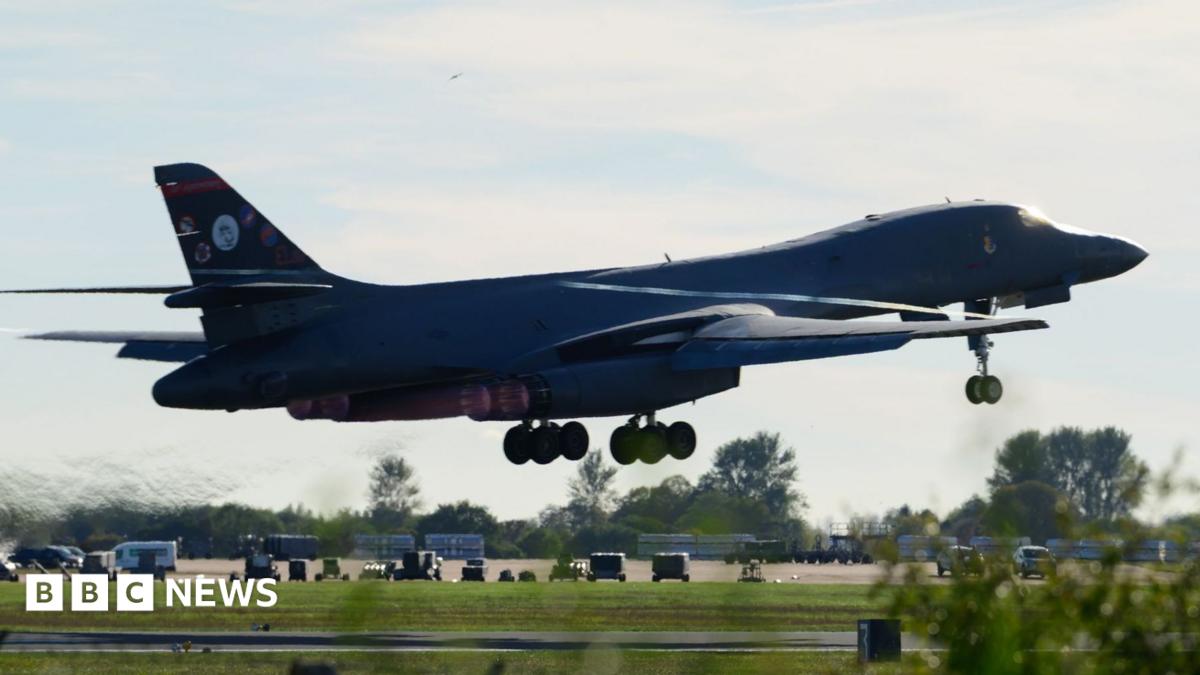
He told BBC Radio 4’s Today programme: “These are very, very unique platforms that aren’t being produced anymore, and we have a limited number of them. The B-1 bomber is a strategic asset, and we’re going to take steps to protect it from all sorts of threats.”
But the removal of the bombers from RAF Fairford will see the US lose a foothold for the country outside continental Europe.
Liberal Democrat defence spokesperson James MacCleary called the US’ decision to withdraw its bombers “deeply concerning” and called for the government to set out a plan to ensure the country’s military bases are “fit for purpose”.
Days after the incident at RAF Fairford, Prime Minister Andy Burnham said there were “strong indications” that Iran had played a part in the incident but did not provide further details, while US Secretary of State Marco Rubio said on Fox News that it “clearly involve[d] the hands of a foreign actor” without going into further details.
Tehran has strongly denied any involvement.
In July, Iran said “any base used for aggression against Iranian territory constitutes a legitimate target for our forces”.
RAF Fairford, near the village of Whelford in the Cotswolds, has been used as a forward operating location by the USAF for decades.
In recent months, the US has flown B-1 and B-52 bombers from the base for the Middle East, after the UK approved a US request to use it for defensive strikes on Iran.
Residents living close to RAF Fairford told the BBC of their relief at the departure of bombers from the airbase, with one local saying she was “thrilled,” citing the noise and feeling “increasingly vulnerable” in recent weeks.
Another villager, who said he has seen bombs being loaded aboard aircraft from his back garden, said he knew something was happening when he saw planes leaving “one, after another, after another” on Sunday.
SEVERE storms have caused flooding on a popular Greek holiday island.
Crete in Greece is currently suffering from mass flooding causing widespread disruption across the island including some tourists being evacuated from coastal accommodation.
Severe storms have caused mass flooding in CreteCredit: ReutersThe popular holiday island has even had to evacuate some resortsCredit: Reuters
Some cars and trees have even been washed into the sea.
Here is the current advice for travel to or from Crete right now:
Sign up for the Travel newsletter
Thank you!
Where is the flooding?
Flooding in Greece right now is mainly impacting the island of Crete.
Massive storms have been battering the island since October 1 and resulted in torrential rainfall with bad flooding and mudslides.
Worst hit areas include the Milopotamos district and the village of Zoniana, as well as Kato Gouves, Finikia, and Heraklion city.
In Chania, there have been big waves as well which have damaged seafront restaurants.
Is it safe to travel to Crete right now?
There is currently a Red Alert warning in Crete, which has been issued by the local authorities and the Hellenic National Meteorological Service (EMY).
Emergency services are still currently clearing mudslides and damage caused by the flooding.
There is currently a Red Alert in place for weatherCredit: AP
“Greece can experience extreme natural phenomena such as earthquakes, wildfires, extreme heat and flash floods.
“To be alerted to events near where you are located in Greece, make sure your mobile phone is set to allow emergency alerts.
“For instructions on how to do this see:
for iPhones go to Settings > Notifications and enable the ‘Emergency Alerts’ option at the bottom
for Android 11 and higher go to Settings > Notifications > Advanced Settings > Wireless Emergency Alerts
for Samsung devices go to Settings > Apps > Messages > Notifications > Emergency Notifications and enable the ‘Emergency Alerts’ option
“This will allow the Greek government’s Emergency Communication Service alerts to reach you. Always keep your phone with you as you will receive alerts according to the location of your phone.
“Adverse weather conditions, including floods, can happen quickly. Register for Emergency alerts and follow ‘112 Greece’ on X for official updates.”
Are flights still going to Crete?
Currently, flights are not impacted to or from Crete.
However, if you are already in Crete and need to get to the airport you may want to allow for more extra time.
If you are due to fly in and have concerns, it may be worth contacting your airline to check if they are operating normally.
Though flights are not being cancelledCredit: EPAIf you have a holiday to Crete booked, it is worth checking with your travel insurance if you wish to cancel itCredit: EPA
What if I have a holiday to Crete booked?
As the Foreign Office has not warned against travel to Greece, there are no special circumstances in place for holidaymakers to cancel their trip and receive a full refund.
Depending on what travel insurance you have, your policy might include natural disaster cover.
If so, your insurance policy should cover you for when you are unable to reach your holiday destination due to natural disasters, like wildfires.
So it is worth checking your travel insurance policy.
Can I cancel my trip?
If you do choose to cancel your trip, it is best to contact your airline or holiday provider.
There is no obligation for companies to refund bookings unless government advice changes.
British holidaymakers heading to one of Europe’s most popular destinations have been issued a warning
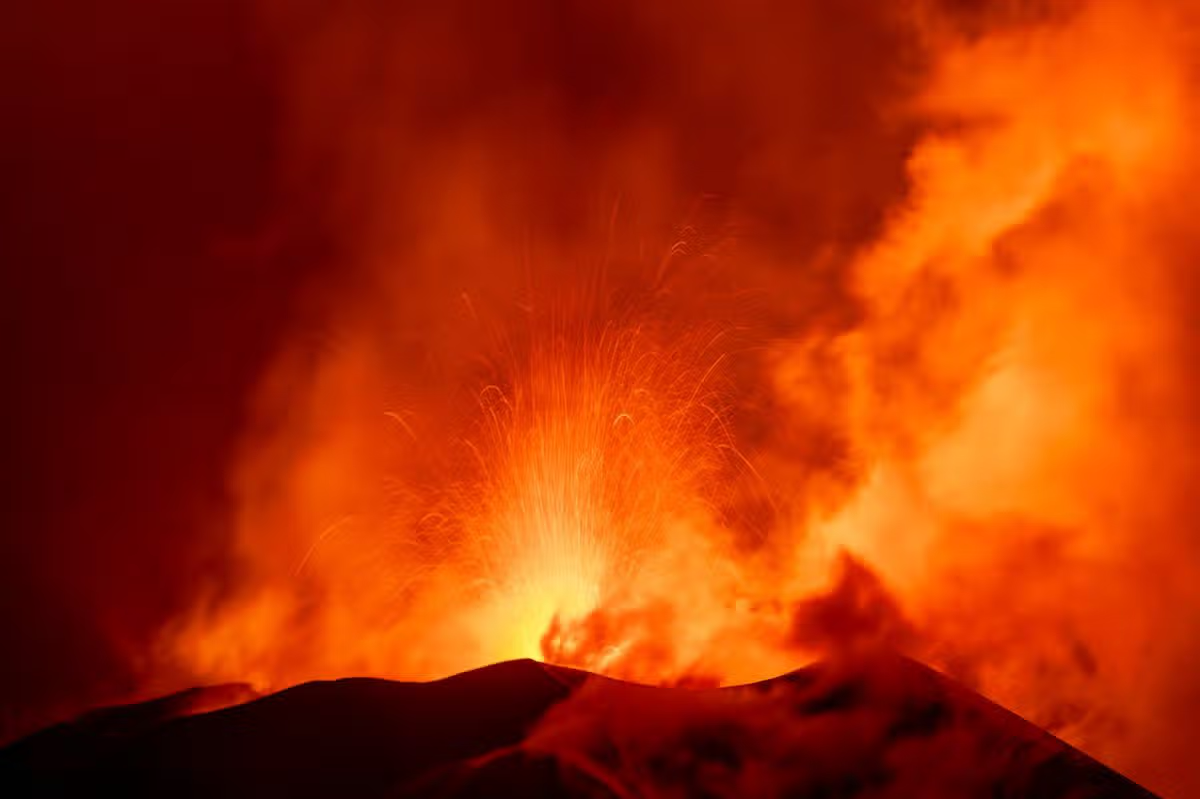
It concerns a volcanic eruption(Image: Getty Images)
Anyone travelling to Italy or the Vatican City this week have been told to check the latest official advice, after an update highlighted a developing issue that could affect some journeys. The Foreign, Commonwealth and Development Office (FCDO) updated its Italy travel advice on Monday, September 28.
The update relates to Mount Etna, the active volcano on Sicily’s eastern coast which is one of the world’s most active volcanoes. According to UNESCO, Etna’s eruptive history stretches back around 500,000 years, with at least 2,700 years of its activity documented by humans.
It is also one of Sicily’s best-known natural landmarks and was added to the UNESCO World Heritage List in 2013 because of its geological importance. UNESCO describes Etna as the highest mountain on a Mediterranean island and says its continuing activity has made it an important site for scientific research.
The latest FCDO advice says Italian authorities have increased the alert level because of volcanic activity at Mount Etna. Travellers are advised to follow instructions from local authorities if an eruption occurs.
It could have consequences for people travelling by air, with the FCDO stating that arrivals and departures at Catania Airport may be cancelled, delayed or rerouted to Palermo or Comiso if volcanic activity affects the airport. Holidaymakers heading to or from Catania have been advised to check with their airline or travel provider and the airport itself.
The FCDO does not advise against travel to Italy as a whole, but its general guidance states that “no travel can be guaranteed safe” and tells travellers to read the full advice before travelling. It also recommends appropriate travel insurance covering an itinerary, planned activities and emergency expenses.
There are also wider safety points for visitors to Italy, with the FCDO warning that demonstrations can occur with little or no warning in cities and advising people to avoid protests, political gatherings and marches. The government also says petty crime, including bag-snatching and pickpocketing, is more common in city centres and at major tourist attractions.
Wildfires remain another risk during Italy’s extended summer months, with the FCDO describing them as dangerous and unpredictable and advising visitors to check local alerts and weather forecasts. The same guidance says people should follow local authorities’ instructions and take care when travelling through woodland areas.
Anyone travelling should therefore check the FCDO advice shortly before departure because circumstances can change. The government’s travel guidance also recommends having appropriate insurance and following instructions from local authorities while abroad.