Ryanair

Latest Ryanair, Jet2, easyJet and TUI boarding pass rules Brits need to know for summer

What you need to know about boarding pass policies for the UK’s biggest airlines, including the carriers that have gone completely paperless and the destinations that require a printed pass

Getting your hands on your boarding pass was once a straightforward affair. You’d turn up at the airport, check in at the desk, and a member of staff would hand you a printed copy.

These days, however, with increasing numbers of passengers choosing to check in online and airlines offering digital boarding passes, the whole process can feel rather bewildering.

If you haven’t got the airline’s app, do you need to download it? And if you choose to use a digital boarding pass, what happens should your phone go missing or your battery gives out?

Here’s what some of the UK’s biggest airlines have to say about boarding passes and what’s expected of you when you travel with them, reports the Liverpool Echo.

Ryanair

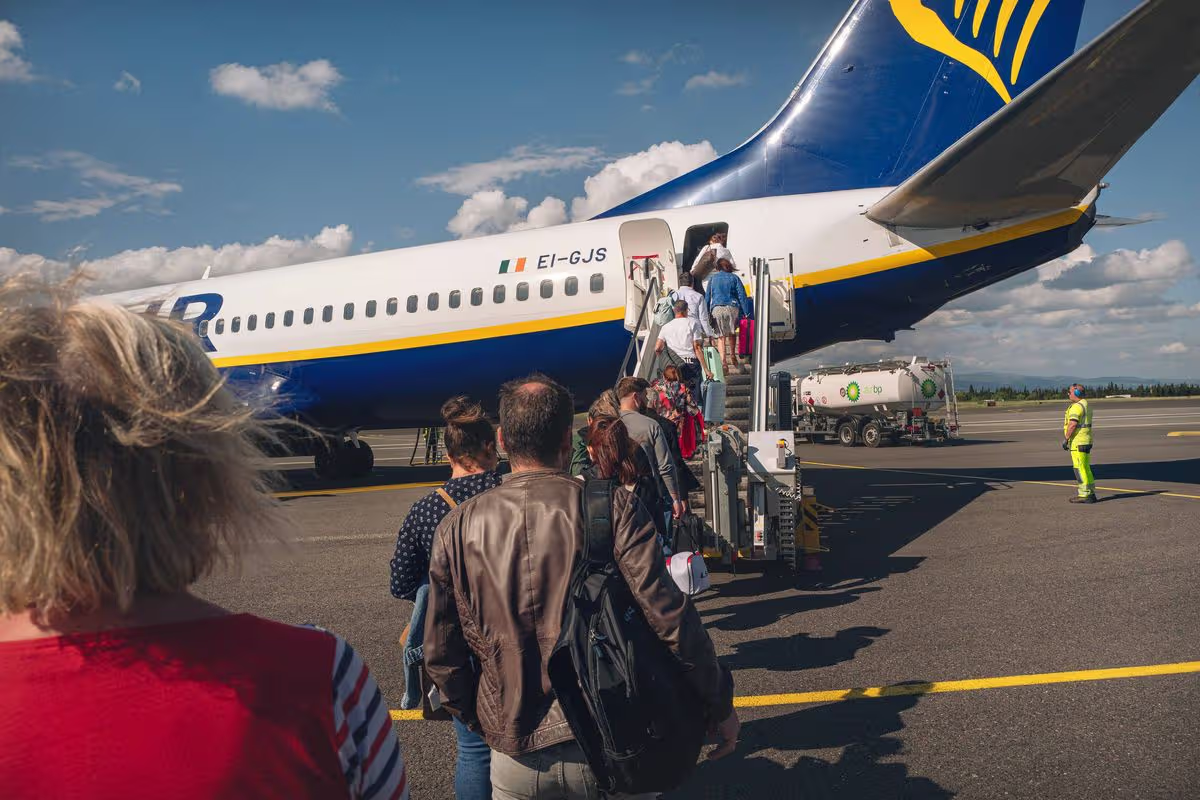
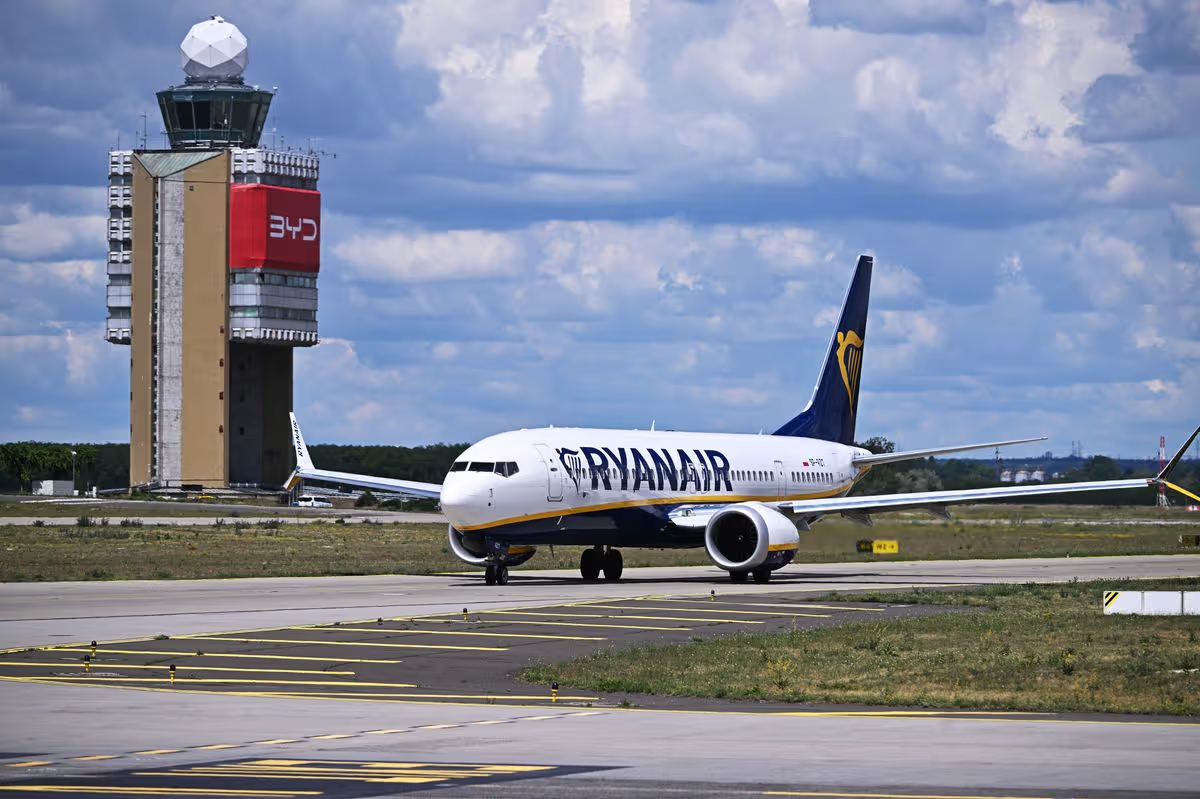
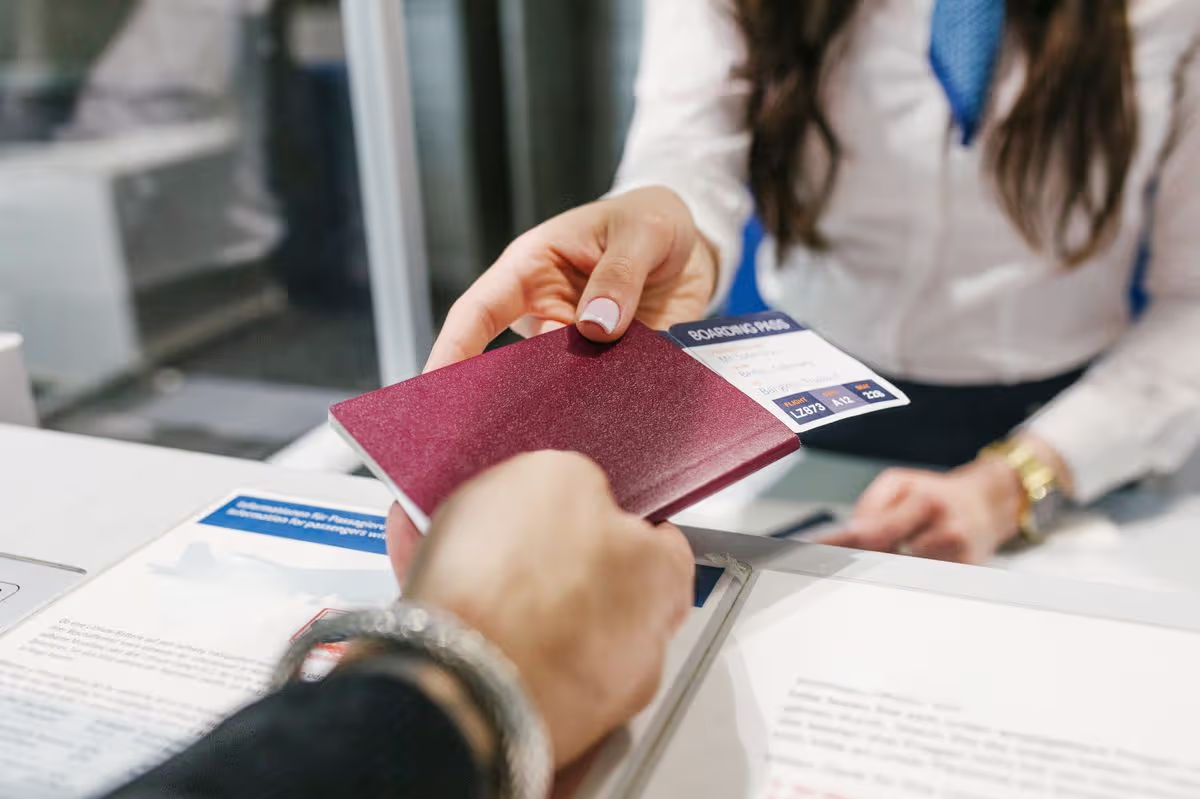
Ryanair has confirmed it has “moved to 100% Digital Boarding Passes (DBP)”. This means you’ll receive your boarding pass via the Ryanair app once you’ve checked in — which can be done either through the website or the app itself.

All travellers will be required to download the Ryanair app and check in online, with reminder notifications sent 48 and then 24 hours before departure. Any passenger who fails to check in online will face an airport check-in fee of €/£55 for most flights, or €/£30 for flights departing from Spain.

Once you’ve checked in, your boarding pass should appear automatically within the Ryanair app. Should you lose your phone or your battery runs flat after checking in, Ryanair confirms it will print a replacement boarding pass free of charge.

Travellers departing from certain airports in Morocco are still required to have a printed boarding pass. Ryanair explain: “Passengers flying from Morocco must check in online as normal and then present their DBP at the airport to collect a printed boarding pass, with the exception of those flying from Marrakech, Fez, Agadir, Tangier, Nador or Oujda, where you can now use your digital boarding pass on the Ryanair app.”

Jet2

Jet2 provides a paperless option for its flights and package holidays. By downloading the Jet2 app, passengers can access documents such as boarding passes all in one place.

Jet2 advise that “you can save boarding passes for up to eight passengers on one device.” It added: “When using multiple boarding passes per device, please make sure your group stays together at the bag drop, security, gate and when boarding the plane.”

For those who prefer the peace of mind that comes with a printed boarding pass, Jet2 explains you can: “Log in to Manage My Booking, then select ‘Get boarding pass’. From here, you can either get a PDF boarding pass sent to you or save it to your device. No need to print – just show the pass on your screen when you get to the airport.”

TUI

TUI explains: “if you’re flying with TUI Airways (flight numbers starting with TOM or BY), you have a choice. TUI Airways accepts both digital and paper boarding passes.”

It clarifies that passengers who would rather have a printed boarding pass should be sure to use A4 paper, ensure their copy is legible with no tears or damage, and that the barcode is clearly visible, as it will need to be scanned at the airport.

It’s important to bear in mind that not all TUI package holidays involve TUI Airways flights. If you’ve arranged a package holiday but the flight is operated by an airline such as Ryanair or easyJet, you’ll need to verify the regulations for the particular airline you’re travelling with.

EasyJet

There is a list of airports that don’t accept mobile boarding passes on easyJet’s website, including Antalya and Izmir. The majority of these are located in Egypt, Turkey, and Tunisia. If you’re travelling to one of these airports you should check in online and print a boarding pass.

That said, for most easyJet flights, the airline suggests downloading its app to keep all your trip details in one place. It says: “For more convenience and to access your boarding passes offline, you can download mobile boarding passes directly to your Apple or Google wallet.”

For those who prefer a paper boarding pass, these remain perfectly acceptable, with easyJet’s website stating: “The best way to store your boarding passes is to use the free easyJet mobile App or you can choose to print them out. You cannot use a PDF scan of your boarding pass on your mobile device as the airport security team will be unable to scan them.

“If you lose your boarding pass don’t worry, you can simply print them again. If printing, make sure the entire boarding pass is clearly printed.”

Have a story you want to share? Email us at webtravel@reachplc.com
Source link

Equipment for fastest growing sport in UK banned from flights as ‘weapon’

Airlines have different rules to cope with the new sports gear

Woman in tears after ‘lucky’ item banned from flight as ‘dangerous weapon’

A woman was left ‘in tears’ when her ‘lucky’ padel racket was confiscated before her flight home due to one simple error. Henrietta Jones-Chapman brought the racket ‘worth more than £100’ to Bali so she could play the sport during a work trip.

But the 27-year-old says that before her flight home, security staff at Bali Denpasar Airport, Indonesia, confiscated the orange racket. ‘Heartbroken’ Henrietta says she was left in tears and could only think workers were worried she’d start ‘hitting someone round the head’ with it’.

She filmed a TikTok video moments after the incident and captioned it ‘don’t bring your padel racket in your hand luggage coming home from Bali’. The clip, which now has more than 230,000 views, includes footage of Henrietta admitting ‘I’m actually crying, it’s so pathetic’.

She explains she brought the racket into the country in the same handbag so is confused why it’s been taken from her. Henrietta says she had to ‘kick up a fuss’ to convince staff to put the racket in the hold for free so she could keep it.

In Indonesian law padel rackets are not allowed in the cabin because they are classified as ‘dangerous devices’ so she should have checked it into the hold. UK Government guidelines allow tennis rackets to be taken as hand luggage but prohibit ‘heavy bats and sticks’ including ‘baseball, softball and cricket bats’.

The list doesn’t appear to contain a rule on padel rackets, which take a tennis shape but are stringless and more solid. However passengers should check with specific airlines regarding equipment restrictions as some allow them on board and others don’t.

Padel is booming in the UK, with an estimated 1,000,000 people now playing the sport. Player participation has surged by over 2,500% making it the fastest growing sport in the country.

Henrietta, from Harlow, Essex, said: “I was heartbroken. I know it’s a bit dramatic but it’s an item that was important to me. I was gutted. It was not just your average racket, it was more than £100 and personalised by my brother so it was sentimental.

“I took it there [Bali] and it was fine to take there so it was still in my hand luggage on the way out like normal and I had no issues at all. It was in my handbag and I didn’t even take it out at security or put it in the tray, I just left it in the bag.

“Then a lady came over with a sign with a padel racket saying it’s a new law that they’re not allowed to bring it in your hand luggage essentially. The lady said ‘no you can’t bring it through’ and I cried. I don’t know if it was because I was leaving Bali as well. I was panicked.

“She took it off me but she was apologetic because she could see I was crying. It was my lucky racket. I don’t see what the danger is unless I start hitting someone round the head with it on the plane but that could be anything, your laptop.

“Because I wasn’t expecting this I was kicking off a bit of a fuss and getting upset and saying ‘I think there should’ve been a warning before we got to that point’. If I hadn’t kicked off it would’ve just been in the bin and gone. I was really relieved.”

Airlines have their own rules on sports rackets such as Ryanair who prohibit them as ‘blunt instruments capable of causing serious injury’. However, British Airways allows passengers to pack padel rackets as long as they’re in a slim protective case.

Henrietta, who had been working in Bali as a girls-only holiday host, says staff told her about the Indonesian law surrounding rackets being banned from hand luggage. They reportedly added that in future they wouldn’t let her go back to check the racket into the hold.

She’s now warning holidaymakers the should always put their rackets in hold luggage to avoid making the same mistake she did. Henrietta said: “Make sure rackets are in your check-in bag if you’re traveling to Bali. Maybe if you’re worried about it getting broken get a proper case or padel bag.

“Make sure it’s checked in with all your rest of your stuff and not have it in your hand luggage because if I was any later my bag might’ve already gone through. There could’ve been extra costs but I was lucky they didn’t charge me but there would’ve been going forwards.

“Now you know it’s one of those things you can easily do. At least now people know it can be safely kept in the hold. I do think there’ll be a lot of people that travel back from Bali with their racket because it’s cheaper to get one over there and it’s played a lot.”

Bali Denpasar Airport has been contacted for comment.

Source link

‘Perfect and versatile’ Home Bargains £10 cabin bag for Ryanair, Jet2, TUI, BA

A budget-friendly cabin bag from Home Bargains is available to buy right now while stocks last

A “versatile” cabin bag described as a “fantastic size” has landed on shelves at Home Bargains, and it could take the hassle out of getting ready for your next trip. The wallet-friendly purchase is designed to provide ample packing room while remaining compatible with a number of airlines operating throughout the UK.

The popular high street retailer is widely recognised for its extensive range of homeware and furnishings, but it has also been steadily growing its selection of budget travel accessories. Step forward the Salisburys Under Seat Bag, which will set you back just £9.99.

Describing the item, Home Bargains said: “Meet the Salisburys Under Seat Bag – your perfect travel companion! With its spacious zipped compartments and sleek design, it’s ideal for keeping your essentials close at hand while you jet off on your next adventure.

“Salisburys presents its broadest line-up of tried and tested luggage solutions with contemporary features to help the modern tourist navigate the hurdles of twenty-first century travel.

“Salisbury Under Seat Bags solve modern travel issues of the check-in case. A fantastic size bag that is versatile for the needs of your modern travel. Large open zipped storage compartment with small zip side pouch.”

Coming in four colours — black, green, light pink and purple — the bag boasts a rectangular design, complete with two carry handles at the top and an adjustable shoulder strap on each side. It comes with a zip fastening along the top, a padded exterior featuring stitched horizontal pockets at the front, plus several zip compartments throughout.

With dimensions of 40cm x 20cm x 25cm, the bag falls within the free under-seat cabin baggage allowances offered by a number of major airlines. It is compatible with carriers including Ryanair, and also fits comfortably within the larger free personal item allowances provided by the likes of easyJet, Jet2, TUI and British Airways.

Holidaymakers are nonetheless urged to double-check their airline’s most up-to-date baggage policy prior to travelling, as regulations can differ depending on ticket type and route. Those keen to find out more are encouraged to head over to the Home Bargains website.

The bag is available both in-store and online, with Home Bargains offering standard home delivery across the UK mainland for £3.95, and free delivery on orders over £100. Larger furniture pieces carry a £10 delivery charge, and standard parcels typically land within four working days.

Source link

All the holiday add-ons and extra fees to be aware of after Ryanair U-turn

Millions of Brits are due to pack up the budgie smugglers and inflatable doughnuts and head abroad – but there are plenty of sneaky charges and questionable practices that can easily ruin a holiday

Are you due to travel abroad for a holiday in the coming months? You’re not alone.

Despite dire warnings of cancelled flights, raising prices and stifling heatwaves, millions of Brits are due to pack up the budgie smugglers and inflatable doughnuts and head abroad.

However, there are lots of extra charges, shoddy practices and other travel traumas that can catch out the unwary traveller. So here’s my guide to some of the holiday horrors that you might not be aware of, so you can get away without a care in the world.

Don’t get caught out by a non-compliant cabin bag

So you’re travelling with just a cabin bag, but it’s looking a bit overstuffed. Beware…

It’s been reported that Ryanair has been paying bonuses to staff for every oversize cabin bag they spot – and are considering increasing this incentive. Meanwhile, other airlines are allegedly paying £1.20 to airline staff who do the same.

Airlines all have specific rules around the size of your cabin bag (the bigger one) and your hand luggage (the smaller one). Despite what it may say on your suitcase, there is no definitive size for cabin bags, though as a general rule the standard is 56 x 45 x 25cm for the cabin bag and 40cm x 30cm x 15cm for an under-seat (hand)bag. There are also weight restrictions too, with most cabin bags limited to a maximum of 7kg to 10kg.

Standard sizes are all well and good, but airlines can set their own, more restrictive rules around the size of both types of carry-on luggage. So before you travel, it’s vital that you understand their rules – and the consequences of not meeting them.

You’ll need to measure the height, depth and width of your carry-on bags. Missing off the wheels when you check the height is one of the more common mistakes.

But the biggie is over-stuffed bags. Having a bag that meets the criteria when empty doesn’t mean it does when you’ve jammed it full of holiday items. Remember that the bag must fit in to that metal box at the boarding gates if you want to get on your flight without paying extra.

Cheeky add-on charges on your flights

Chances are you’ve already booked your luggage costs as part of your flight booking. But make sure you pack your bags a few days before you travel so you know if you need to add on a hold bag, or are at risk of being caught out by those cabin bag rules.

The closer you get to travel, the higher the price you pay for your bags. So if you’ve not paid for your luggage yet, do it now.

So how much extra will you pay for essential add-on charges? By my calculations, the average prices hover around:

  • £40 to £50 if you want to take a 23kg hold bag one way.
  • £30 to £50 for an overhead cabin bag (this has almost doubled since last year – it might be cheaper to share a hold bag for two people).
  • £6 to £25 for the most basic seat reservation

That’s £76 to £125 each way or £152 to £250 for a return. However, you’ll pay more the closer you are to your flight date.

In addition, watch out for charges to book a specific seat. I was charged over £320 for two return flight seat reservations alone through British Airways recently, just so I could sit with my partner! For shorter haul, the seat prices aren’t as high, but are still outrageous.

In fact, Ryanair has U-turned on charging £8 for families to sit with kids after the the Competition and Markets Authority (CMA) announced an investigation.

You can usually book a specific seat 24 to 48 hours before check in opens. But watch out! There’s usually a massive rush to book and you may miss out. I tested the BA website after I’d paid for my shocking seat prices and the website and app went down on both occasions when check in opened.

Apartment traps and questionable locations

Using online travel marketplaces and apartment rental websites can be a great way to find a fabulous place to stay for your big holiday. But you do have to be a bit cautious about what’s on offer and you’ll need to check to see if the places you like are as good as they seem.

You may already be aware of the warnings about ‘tickers’ – those on-screen alerts that say there are only two rooms left in the hotel, or things are ‘booking fast’. Despite numerous warnings and fines, the industry is still finding sneaky ways to panic us in to buying without checking things thoroughly.

But there are other things to watch out for. Many websites offer hotels and aparthotels alongside private lets. There’s nothing wrong with a private let in theory, but with a hotel, you can complain to the reception if things aren’t as advertised, whereas a private let might limit your options if the host is a bit rubbish.

Check photos thoroughly to see if the advertised facilities are all there, ask questions before booking and look at the reviews – focus on recent ones. Watch out for things like extra bedrooms that turn out to be a sofa bed in the living room. I always look for a personal handover and return of keys too as this is a guide to how good your host is.

The latest thing to watch out for is the location of the property. Many sites list properties as being ‘500 metres from the centre’.

Yet, some of the sites I checked don’t specify which centre. You may find that you’re not 500 meters from the centre of Barcelona, but 500 meters from the centre of a suburb nearby. Check out a map online so you know where the main tourist areas are for your destination and cross reference with the details on the booking website.

  • Martyn James is a leading consumer rights campaigner, TV and radio broadcaster and journalist

Source link

Simon Calder says Ryanair is ‘best airline in the world’

The travel expert said it had an exceptional safety record

Travel expert Simon Calder has revealed which airline he believes is the best in the world. Speaking on his The Travel Expert podcast on the Daily Telegraph, he said that budget carrier Ryanair deserves the top position.

He pointed to safety, value for money, and the crew as crucial factors behind his choice. The verdict may surprise some, with Ryanair frequently receiving flak for its bare-bones flying experience, its multitude of extras when purchasing a ticket, and its uncompromising enforcement of baggage rules.

It is also unashamedly combative on social media, while CEO Michael O’Leary is renowned for his forthright and commercially-driven views. Nevertheless, it does possess an outstanding safety record and an extensive range of flights at remarkably cheap prices.

This has enabled it to emerge as the largest airline in Europe by scheduled passengers transported annually. Across the globe, it is the biggest airline by international passengers flown.

Justifying his verdict, Mr Calder said: “Ryanair is not just the biggest budget airline in Europe, I think it’s probably the best carrier in the world.”

“The world? !” host Greg Dickinson replied, taken aback. “It’s got the best safety record of any airline, it’s flown 2.2 billion people without any fatal accidents. It’s mostly on time, I found the staff to be uniformly very friendly and hospitable, and best of all is the price,” Mr Calder continued.

Content cannot be displayed without consent

“For my three flights, I paid a grand total of £52, and I didn’t have any paninis.

“I think sometimes, Simon, we will just have to agree to disagree,” Mr Dickinson answered.

In 2025, Ryanair ran more routes than any other airline across the globe, serving 5,400 airports. Italy remains its most sought-after destination with 46 million seats per annum, with Spain close behind at nearly 39 million seats.

The budget carrier has established itself as Italy’s biggest domestic airline, commanding 48 per cent of the market in 2025. London Stansted remains its busiest hub, with Dublin coming in second place.

This year, Ryanair posted an operating profit of €2,374.2m, operating a short-haul fleet of 647 aircraft and carrying 208 million booked passengers.

Source link

Latest Ryanair and easyJet mobile boarding pass rules

Passengers have been urged to read up on their airline’s mobile boarding pass requirements

With many youngsters soon breaking up from school for the summer holidays, it won’t be long before families begin making their way to the airport.

However, before loading up the car and wheeling out the luggage, it’s worth brushing up on the rules surrounding mobile boarding passes, as certain airports do not accept them. On top of location-specific restrictions, one budget airline has gone entirely paperless since November 2025. Here’s what you need to know if you’re travelling with easyJet or Ryanair.

What are easyJet’s mobile boarding pass rules?

The airline encourages travellers to use mobile boarding passes, as they allow all travel information to be stored in one secure, easy-to-access location. They also help reduce paper waste by eliminating the need for printed boarding passes.

For added convenience and offline access, you can also save your mobile boarding passes directly to your Apple Wallet or Google Wallet.

Not all airports accept mobile boarding passes. Easyjet explains: “The majority of our airports accept mobile boarding passes, however, the airports listed below do not currently accept mobile boarding passes.”

This includes:

  • ADB – Izmir
  • AGA – Agadir
  • AYT – Antalya
  • AQJ – Aqaba
  • BEG – Belgrade-Beograd
  • DJE – Djerba
  • ESU – Essaouira
  • EVE- Harstad
  • HRG – Hurghada
  • JSH – Sitia
  • LXR – Luxor
  • NBE – Enfidha-Hammamet
  • RAK – Marrakech
  • RBA – Rabat Sale
  • RMF – Marsa Alam
  • SCR- Scandinavian Mountains
  • SPX – Cairo Sphinx
  • SSH – Sharm El Sheikh

It adds: “If you’re flying from an airport that doesn’t currently accept mobile boarding passes, please check in online at www.easyJet.com and print out a paper boarding pass for your flight.

“Many of these airports require all passengers to complete a document check before going to security. If travelling from an affected airport, please make sure you, and anyone you’re travelling with goes to our Bag Drop for a document check before going through security.”

You can find out more online via the easyJet website here.

What are Ryanair’s mobile boarding pass rules?

Ryanair confirmed it has “moved to 100% Digital Boarding Passes (DBP). This means all passengers will receive a DBP to their Ryanair App when they check-in online.”

Passengers simply need to check in online via Ryanair.com or through the Ryanair App before arriving at the airport. Once checked in, your DBP will appear automatically within the Ryanair App.

You should present your DBP at airport security and at the boarding gate for your flight. The airline explains the shift to fully digital means:

  • DBP lowers airport costs and fares for all Ryanair passengers.
  • Provides a better service (including flight info) for customers on day of travel.
  • Improves customer service and re-booking during flight disruptions.
  • Better for our environment (gets rid of 300 tonnes of paper annually).

If you have completed online check-in and your smartphone or tablet is lost, stolen, or runs out of battery, you can get a complimentary boarding pass at the airport.

It adds: “If passengers don’t have a smartphone or tablet, as long as they have already checked-in online before arriving at the airport, they will receive a free of charge boarding pass at the airport. However, they will not be able to access real-time flight updates or benefit from enhanced customer service during any flight disruptions.”

If passengers don’t check-in online before arriving at the airport, they will be required to pay the airport check-in fee.

You can find out more online via the Ryanair website here.

Source link

Best plane seat to avoid germs on Ryanair, easyJet, TUI – doctor’s flight advice

The decision of where to sit on a plane could impact the rest of your holiday

As millions of Brits gear up to jet off on their summer holidays, one decision that many may have overlooked could make or break their entire trip. Choosing the right seat on the plane might be the difference between relaxing on a sun-soaked beach or making endless trips to the toilet.

Research has revealed that whether passengers opt for a window, middle, or aisle seat could potentially affect their chances of catching a viral infection before the holiday has even got underway. However, your seat selection alone won’t be the sole factor determining your overall risk of falling ill.

How close you are to someone carrying a virus is the single biggest indicator of how likely you are to pick up an infection. This is followed by how busy the flight is, as the greater the number of passengers on board, the higher the likelihood that some will be carrying viruses.

Airflow throughout the cabin, passenger movement, contact with shared surfaces (such as in the bathroom) and whether or not you wear a mask will all have a bearing on your risk of catching a viral infection during a flight.

Dr Sophie Dix, Head of Medical Affairs at online pharmacy MedExpress, has offered guidance on how travellers can lower their risk of falling ill while flying, including advice on where to sit. She said: “Although there is no guaranteed way to avoid picking up an illness while flying, there are practical steps people can take to reduce their exposure to germs and viruses on planes.”

She shared her top tips for travellers looking to lower their chances of picking up an infection. Here’s what she advised.

Seat selection matters

“The best advice to avoid getting sick on the plane is to try and reduce as much contact with germs and other passengers as possible, so choosing where you sit may have more impact than you might have originally thought.

“Window seats are a great option as they are often far away from high traffic areas such as bathrooms and busy walkways. Aisle seats also increase your exposure to people who frequently pass by throughout the flight, queue for the toilet, and access luggage from overhead compartments. One study found that sitting in a window seat can reduce your interactions with other passengers or crew by up to five times compared to if you sit in a middle or aisle seat.”

She added: “Additionally, research may suggest that leaving the middle aisle free reduces the spread of airborne diseases by 37%, so choosing seats that appear to have middle aisles empty could be a strong choice. Whilst protection from illness is never guaranteed, this highlights that creating distance between other passengers greatly reduces your chances of getting sick.”

Wipe down any surfaces

“Surfaces such as tray tables, armrests, seatbelt buckles, touchscreens, magazines and window shutters can harbour germs easily as they are used so frequently by previous passengers. Wiping down surfaces with disinfectant wipes or sanitiser greatly reduces your risk of coming into contact with germs on them.

Wash your hands regularly

“Maintaining good hygiene standards while travelling can greatly reduce your chances of getting sick. Washing your hands regularly with soapy water or hand sanitiser, especially after coming into contact with surfaces, is a simple but effective way to stop the spread of germs while you’re on the plane.

Stay hydrated

“Cabin air on planes can be extremely dry and irritate your nose and throat whilst travelling, leaving you feeling more run down and vulnerable to picking up any viral infections. Make sure to drink plenty of water and keep on top of hydration throughout the flight to strengthen your immune system. Keep water easily accessible throughout the flight, and drink regularly, especially if you’re travelling with children.

Wear a face mask

“Wearing a face mask greatly reduces the spread of any airborne viruses, as we saw throughout the COVID-19 pandemic. Crowded flights may become a hotspot for any infections due to the cramped space and close proximity to other passengers, so taking preventative measures may help reduce the spread of any current infections.

Ensure you’re well rested

“Those who don’t get adequate rest before a flight are over 4 times more likely to catch a cold compared to those who are fully rested. This is due to your immune system being weaker when you haven’t got enough sleep, making you more susceptible to picking up any infections.

Source link

‘Spacious yet compact’ £10 Home Bargains cabin bag right size for easyJet and BA

Shoppers looking to ‘travel in style’ could do just that with the latest travel deal at Home Bargains

Home Bargains is helping shoppers prepare for their summer holidays with a “spacious yet compact” cabin bag that meets the hand luggage requirements of several major UK airlines. The discount retailer, which has over 600 stores nationwide, claims it is “perfect for your adventures”.

It may be renowned for its affordable homeware and furnishing deals, but Home Bargains’ range extends far beyond side tables, lamps and ornaments. From garden accessories and beauty buys to travel essentials, shoppers can find plenty of wallet-friendly options.

Take the Salisburys Carry-On Cabin Lightweight Backpack, for instance, which retails for a more-than-affordable £9.99. It comes in black, and boasts a very simple aesthetic to suit various tastes.

Describing the product, Home Bargains said: “Travel light and in style with the Salisburys Carry-On Cabin Lightweight Backpack in sleek black! Perfect for your adventures, this spacious yet compact backpack is designed for easy packing and effortless carrying.

“Every Salisburys product has been designed, manufactured and extensively tested to stand the rigours of today’s travel. Every Light Luggage product has been designed, manufactured and extensively tested to stand the rigours of today’s travel.”

According to Home Bargains, the cabin bag measures approximately 45 x 30 x 15cm, making it suitable for use with the cabin luggage allowances of most major airlines, namely easyJet, British Airways, Virgin Atlantic and KLM. Please note, it could be too long for Ryanair, Wizz Air and Jet 2.

Weighing around 760g, it features multiple zipped compartments for organising belongings, a fully lined interior and a lightweight construction designed for travel. Interested shoppers can find out more, and view additional product images, on the Home Bargains website.

It’s available both in-store and online as Home Bargains offers standard delivery across the UK mainland from £3.95, while orders over £100 qualify for free delivery. A £10 delivery fee applies to larger furniture items, and most standard parcels are expected to arrive within four working days.

Home Bargains is also selling the Salisburys Under Seat Bag which will also set you back £9.99. The product description reads: “Meet the Salisburys Under Seat Bag – your perfect travel companion!

“With its spacious zipped compartments and sleek design, it’s ideal for keeping your essentials close at hand while you jet off on your next adventure. Salisburys presents its broadest line-up of tried and tested luggage solutions with contemporary features to help the modern tourist navigate the hurdles of twenty-first century travel.

“Salisbury Under Seat Bags solve modern travel issues of the check-in case. A fantastic size bag that is versatile for the needs of your modern travel. Large open zipped storage compartment with small zip side pouch.”

Source link

Ryanair, TUI and easyJet ban power banks after terrifying fire – full rules

The Civil Aviation Authority (CAA) has issued a warning to passengers about the dangers of packing power banks in hold luggage after a surge in lithium battery incidents on UK flights

UK-based airlines have prohibited a common electrical device labelled the ‘number one safety risk to aircraft’ after footage emerged showing it erupting into flames inside a cabin. Passengers on flights are being urged not to place power banks or vapes in their checked luggage as the busy summer holiday travel season gets underway across parts of the UK.

Several carriers have begun implementing outright bans on power banks that travellers use to charge their phones and tablets amid mounting safety concerns. Generally, power banks are permitted only in hand luggage, not checked baggage, because of worries they could explode and catch fire mid-flight.

Power banks house rechargeable lithium batteries, which pack a considerable amount of energy into a compact space, and when defective can trigger fierce fires that spread rapidly.

Content cannot be displayed without consent

On BBC Breakfast today, correspondent Katy Austin described it as a ‘terrifying situation’ on a recent flight. She said: “Flames broke out in the overhead baggage compartment of an Air China plane last October. The cause is thought to have been a lithium battery. They’re in loads of commonly used devices like laptops, vapes, phones, and power banks. They can store a lot of energy in a small space, but if they overheat or are defective, this video of a test in a lab shows just how quickly a fire can start.

“Last year, UK authorities were informed of 643 incidents where lithium batteries were detected packed in hold bags. That’s nearly twice the number the year before. Reports of devices overheating or malfunctioning also nearly doubled to more than 200. Most were in the cabin where crew could deal with the situation. The fear is that incidents in the hold could not be discovered until it’s too late to control.”

“It contains a lot of energy in a very small space, which is fantastic for, you know, our devices. It means we can use them for longer. But the problem with that is when things go wrong, the fires can be quite ferocious and you can’t put these fires out in the way you can with a normal fire that you might have because these fires are like self fueling.

“The advice for plane passengers is to take items like mobile phones, vapes, and power banks on board with you. Never charge power bank on a flight and turn off laptops completely if they’re going to be put in check-in bags.”

The CAA revealed that reports of passenger devices overheating or malfunctioning last year were almost double the figure from 2024. Instances of lithium battery-powered gadgets being wrongly packed in hold baggage surged by 91% during the same timeframe.

CAA director of aviation safety Giancarlo Buono said: “Pack right for a safe flight, and that means don’t put your batteries in your checked bag. Take them into the cabin with you. This simple tip will make your flight safer for you, and the other passengers you’re flying with.”

Research involving airline passengers revealed that 36% have no idea about the risks associated with packing batteries in hold luggage.

easyJet

EasyJet enforces stringent rules stipulating that all lithium-ion batteries, spare batteries and power banks must be carried in cabin hand luggage only, with a blanket ban on hold luggage due to the risk of fire. Power banks below 100Wh (approximately 27,000mAh) are permitted without prior approval; those between 100-160Wh require authorisation from the airline.

Portable electronic devices containing batteries must be transported exclusively as carry-on baggage.

Should any of these items find their way into checked baggage, steps must be taken to prevent accidental activation and to safeguard the devices from harm; all devices must be completely powered down (not left in sleep or hibernation mode). EasyJet imposes a limit of 15 portable electronic devices per passenger.

Portable electronic devices housing non-spillable batteries must not exceed 12V or 100Wh, and passengers are permitted to carry a maximum of 2 spare batteries. When bringing smart baggage into the cabin, travellers must be able to quickly and easily detach and remove the lithium battery/power bank, although it may remain inside the bag.

Smart baggage will not be accepted for travel if the lithium battery/power bank cannot be readily detached and removed by the passenger. If smart luggage is to be checked into the hold, the lithium battery/power bank must be removed from the smart luggage at Bag Drop and taken into the cabin.

Any exposed terminals must be protected against short circuits. The lithium battery/power bank must be detachable, so if it cannot be removed from your luggage, the bag will not be permitted on board.

For more information, click here.

Ryanair

Passengers may carry up to 15 personal electronic devices (this includes but is not limited to: smartphones, tablets, laptops, cameras, handheld game consoles, headphones, power banks). Spare lithium batteries (including power banks) must be individually protected to prevent short circuits by placing them in their original retail packaging, or by otherwise securing terminals by taping over any exposed terminals or putting each battery in a separate plastic bag or protective pouch, and must only be transported in carry-on baggage.

Passengers are also permitted to bring up to 20 spare lithium batteries, as long as they don’t surpass 100Wh each. Spare lithium batteries, including power banks taken into the cabin, must not go beyond 100Wh and mustn’t be used to charge or power other portable electronic devices during taxi, take-off or landing.

They must not be placed in cabin baggage stored in the overhead locker. Rather, they ought to be kept in cabin baggage under the seat in front of you, or carried on your person.

Devices or batteries exceeding 100Wh are banned in both the cabin and hold, apart from electric wheelchair batteries. Spare batteries, including power banks, are not allowed in checked baggage.

For more information click here.

TUI

TUI’s regulations forbid passengers from packing loose lithium batteries, power banks, or spare batteries in checked-in luggage. These items must only be carried in hand luggage.

Power banks must generally not exceed 100Wh, and terminals must be safeguarded against short circuits. Devices shouldn’t be recharged while on board.

Dry AA(A) batteries (type Alkaline, NiMh, NiC) for small personal items such as a pocket torch or a radio are permitted, provided they’re inside the device or contained in sturdy packaging. When devices are placed in hold baggage, measures must be taken to protect the device from damage and prevent accidental activation; the device must be completely switched off (not in sleep or hibernation mode).

Spare batteries and power banks should be individually protected against short circuits by keeping them in their original packaging, with terminals covered in tape or placed in a plastic bag in hand luggage.

Airline approval is always required for medical devices. For further information, see section Baggage – Medical baggage.

TUI fly requires that all power banks must be carried in hand luggage, never in checked baggage. They must be packaged to prevent short circuits (original packaging or terminals covered with tape).

Generally, capacity is limited to 100 Watt-hours (Wh) per battery, with power banks not permitted to be used for charging devices or recharged while onboard.

  • Hand Luggage Only: Due to fire risk, all lithium-powered battery packs must be in the cabin. Capacity Limits: Power banks up to 100 Wh (roughly 27,000 mAh at 3.7V) are generally permitted.
  • Safety Requirements: Terminals must be protected against short circuits, such as by taping them or keeping them in individual plastic bags.
  • In-flight Usage: Power banks cannot be used to charge phones or laptops during flight, nor should they be recharged using aircraft power outlets.
  • Storage: Keep them in your seat pocket or under your seat, not in overhead bins

For more information click here.

Source link

Huge change at Ryanair as airline DROPS hated hidden charges for families

An image collage containing 1 images, Image 1 shows Ryanair plane on the tarmac

BIG news for families who travel on Ryanair flights.

The airline has announced that it has changed its policy so that families can sit together free of charge.

An image collage containing 1 images, Image 1 shows Ryanair plane on the tarmac
Ryanair has changed its policy so adults can sit with their children with no extra charges Credit: Alamy

In a statement made today, Ryanair said that there will be free parent and child seats available together in the rear of its planes for families.

For adults travelling with children who choose this new seating option, they will be told of their seat allocation after they have checked in for their flight.

This is the case with most other airlines in Europe.

Families who opt for this are likely to be seated towards the back of the plane.

TOP SEA-CRET

Locals’ guide to UK’s top seaside counties… best beaches & pubs and £15 stays


CHEAP DATE

Our fave cheap European destinations with flights under £20 & hotels from £24pp

It’s still an option for families to choose their seats in advance, but this does require a seat reservation fee.

Previously, Ryanair’s Ts&Cs required at least one parent to sit with their children aged 2-11 when they fly.

This was done through what Ryanair calls a “mandatory family seat”, which the parent must pay for in order to secure a seat next to them for their child.

For all other passengers, reserving a seat is optional.

This fee applies to both outbound and return flights and typically costs around £8 each way.

Ryanair’s website refers to “Free reserved seats for kids under 12”, but the parents and guardians had to pay a booking fee to access these seats.

Typically, other airlines offer to seat children with a parent or guardian without the need for a paid-for adult seat reservation, or allocate seats together automatically during booking for free.

The new policy comes in on new bookings made from today.

The airline is facing investigation by the CMA to determine whether the practice is “in line with consumer law”.

On the policy change, a CMA spokesperson said: “Ryanair claims its seating policy now complies with the law, and we’ll test that thoroughly. If true, it’s a win for families – who will no longer have to pay to sit with their children – and it shows the impact our new powers are having.

“But it doesn’t change the fact families have been paying for ‘mandatory family seats’. Our investigation remains ongoing.”

Ryanair boss Michael O’Leary commented on the changes…

Ryanair CEO, Michael O’Leary, said: “Turning a blind eye to the high fares charged by airlines on routes with no Ryanair competition, the CMA has now targeted our family seating policy which has been universally embraced by consumers as the most progressive and transparent in Europe.

“Instead of promoting competitiveness and lower fares for consumers, the CMA is on a mission to force Ryanair to adopt the less transparent and less consumer-friendly family seating policy applied by most other airlines – just because it’s the industry standard.”

He said that the airline will “reluctantly adjust” to the industry standard.

Michael explained that “families may have to wait until after they have checked in to find out their seat allocation”.

And that these seats are likely to be at the “rear of the cabin”


Source link

Exact date easyJet flights will launch from UK airport for first time ever

EASYJET is launching a new international flight route from a UK airport for the first time.

The new route will begin operating flights in 2027.

NINTCHDBPICT001073243583
EasyJet is launching its first international flight out of a UK airport Credit: Alamy
Aerial view of the Newquay (Cornwall) airport terminal with two Flybe aircraft on the ramp.
Newquay Airport in Cornwall will have a new flight route to Geneva Airport in Switzerland by the start of 2027 Credit: Alamy

EasyJet will launch its first international route out of Newquay Airport in Cornwall next year.

Flying between Newquay Airport and Geneva Airport in Switzerland, the route is expected to launch on January 16, 2027.

The seasonal route will then operate once a week on Saturdays until February 27, 2027.

Currently, EasyJet only provides regional and domestic flights from the coastal airport, so the new flight path will be the first international destination for the airline.

FLIGHT FIGHT

Moment hero easyJet captain tackles passenger to floor seconds before take-off


SUN ESCAPE

EasyJet’s ‘sun-guaranteed’ breaks this summer – with VERY cheap holidays

A further 12 routes are also being launched by EasyJet over the next year, including new routes from London Luton to Kittilä in Finland, beginning on November 24, and from Strasbourg in France launching on November 29.

The airline will be operating flights to Kittilä twice a week, on Tuesdays and Saturdays, and fly to Strasbourg four times a week on Mondays, Thursdays, Fridays and Sundays.

New flights from London Southend to Edinburgh, Scotland, will launch on October 25 from £23.99 per person.

The flights will operate twice a week on Thursdays and Sundays between the two cities.

From Birmingham, travellers will be able to fly to Copenhagen, Denmark, from November 16.

Costing from £31.99 per person, the flights will head out twice a week on Mondays and Fridays.

Those living near Manchester can head to Cairo, Egypt from November 9 – the only direct route from the city to the ‘Sphinx’ airport.

Flights will set you back from £131.99 per person and the route operates twice weekly on Mondays and Fridays.

Two new routes are launching from Liverpool Airport to Kittilä in Finland and Reykjavik in Iceland.

Costing from £30.99 per person, flights to Kittilä will begin on November 25 and operate out of the airport twice a week on Wednesdays and Saturdays.

Flights to Reykjavik will launch even earlier, starting on November 2 and will take off twice a week on Mondays and Fridays, costing from £43.99 per person.

Newcastle is set to get several new destinations by the end of the year, including Barcelona in Spain, Berlin in Germany, Copenhagen in Denmark, Hurghada in Egypt and Rovaniemi in Finland.

First to launch will be the flights to Barcelona on October 25, costing from £28.99 per person and operating twice weekly on Fridays and Sundays.

On October 27, flights to Hurghada will launch heading out on Tuesdays and Saturdays and costing from £121.99 per person.

Copenhagen flights are set to begin on November 5, followed by Berlin on November 20 and finally Rovaniemi on November 25.

Source link

‘Stylish’ £6 Home Bargains cabin bag suitable for 30 airlines including Jet2

The discount chain claims this bag is ‘approved by over 30 airlines’ around the world

A ‘compact’ yet ‘stylish’ travel bag is available at Home Bargains, which the store says could help take the stress and worry of overpacking out of holidaymakers‘ minds this summer. It has been approved to comply with the luggage dimension rules of up to 30 airlines worldwide.

People can pick up the Bordlite Under Seat Cabin Bag in an online sale, down from £14.99 to £5.99 (a 60% saving). Shoppers can choose between black and navy for the same price at Home Bargains.

Describing the travel bag online, the store said: “The Bordlite Under Seat Cabin Bag is a lightweight and compact travel essential, approved by over 30 airlines. With three external pockets and a long shoulder strap, it keeps your journey organised and hassle-free.”

According to the Home Bargains website, the bag measures in at “approximately” 40 x 30 x 20cm. Using the provided dimensions, shoppers can confidently pack and use this underseat bag on a variety of airlines.

Home Bargains claims that “over 30” will approve this for travel, including Ryanair, Wizz Air, EasyJet, Jet2 and British Airways. Because the bag fits in with some of the strictest size guides, it automatically works for airlines that offer slightly larger allowances.

Below is a full list of the 30 airlines which accept this size (or bigger) when booking. In most cases, airlines include a free personal or underseat item within the ticket price – but always double-check with the airline itself before getting caught out with an extra airport fee.

For more Home Bargains deals, click here. Some are online-only, meaning shoppers who shop only at their local store could miss out on certain major deals.

What airlines accept this size bag?

UK & Europe:

  1. Ryanair (Up to 40 x 25 x 20cm)
  2. Wizz Air (40 x 30 x 20cm exactly)
  3. FlyOne (40 x 30 x 20cm exactly)
  4. easyJet (Up to 45 x 36 x 20cm)
  5. Jet2 (Up to 45 x 36 x 20cm)
  6. British Airways (Allows a large cabin bag up to 56 x 45 x 25cm for free)
  7. Lufthansa (Up to 40 x 30 x 10cm for personal item, but easily fits their free overhead limit of 55 x 40 x 23cm)
  8. Air France / KLM (Up to 40 x 30 x 15cm for personal item, but easily fits their free overhead limit of 55 x 35 x 25cm)
  9. Norwegian Air (Up to 38 x 30 x 20cm)
  10. Iberia (Up to 40 x 30 x 15cm for personal item / 56 x 45 x 25cm for overhead)
  11. TAP Air Portugal (Up to 40 x 30 x 15cm for personal item / 55 x 40 x 20cm for overhead)
  12. Aegean Airlines (Up to 40 x 30 x 25cm)
  13. Vueling (Up to 40 x 30 x 20cm)
  14. Eurowings (Up to 40 x 30 x 25cm)
  15. Pegasus Airlines (Up to 40 x 30 x 15cm for personal item / 55 x 40 x 20cm for overhead)
  16. SAS (Scandinavian Airlines) (Up to 40 x 30 x 15cm for personal item / 55 x 40 x 23cm for overhead)
  17. Swiss International Air Lines (Up to 40 x 30 x 10cm for personal item / 55 x 40 x 23cm for overhead)

Middle East and Asia

  1. Emirates (Allows an overhead bag up to 55 x 38 x 20cm for free on all tickets).
  2. Qatar Airways (Allows a cabin bag up to 50 x 37 x 25cm for free).
  3. Etihad Airways (Allows a cabin bag up to 56 x 36 x 23cm for free).
  4. Singapore Airlines (Allows a personal item up to 40 x 30 x 10cm or a main cabin bag up to 55 x 40 x 20cm)
  5. Turkish Airlines (Allows a personal item up to 40 x 30 x 15cm or a main cabin bag up to 55 x 40 x 23cm)

American and Transatlantic

  1. Delta Air Lines (no specific personal item dimensions, must fit under the seat)
  2. United Airlines (Up to 43 x 25 x 22cm)
  3. American Airlines (Up to 45 x 35 x 20cm)
  4. Air Canada (Up to 43 x 33 x 16cm for personal item / 55 x 40 x 23cm for overhead)
  5. JetBlue (Up to 43 x 33 x 20cm)
  6. Spirit Airlines (Up to 45 x 35 x 20cm)
  7. Frontier Airlines (Up to 45 x 35 x 20cm)
  8. WestJet (Up to 41 x 33 x 15cm for personal item / 53 x 38 x 23cm for overhead)

Source link

Ryanair, easyJet, Wizz and Jet2 passengers given 6-hour warning at airports – Spanish media

New study showed UK passengers ‘unaware’ of problem as concerns raised at people deserting hotspots

Spanish media are reporting six-hour queues could hit this summer at airports. The Majorca Daily Bulletin said the International Air Transport Association (IATA) has said the European Union’s new digital border system is going to come under major strain.

The Entry/Exit System (EES) has been fully operational across the Schengen Area since April 10. Two months in, it is producing long lines, missed flights, and growing alarm across the travel industry. Airports Council International Europe said that waits of up to three and a half hours have already been recorded during peak periods. The six-hour figure is IATA’s projection for the busiest summer months.

Budget airlines from the UK Ryanair, easyJet, and Jet2 have all warned of missed departures, disrupted schedules, and rising operational costs. Ryanair passengers who need to use its airport check-in or bag-drop services will be required to finish the process 20 minutes earlier.

The airline announced it will close the services an hour before the scheduled departure of a flight – compared with 40 minutes currently – to give passengers more time to get through security and passport checks. This will reduce the “very small number of passengers” who miss their flight while stuck in queues, the carrier added.

Ryanair’s website says passengers who fail to check in on time “may be denied boarding without refund”. The new policy will be in place from November 10. Passengers will still able to check in online until two hours before departure.

Jet2 check-in desks open exactly 3 hours before scheduled departure and will not open any earlier, even with the new EES (EU Entry/Exit System) checks. It is advised not to arrive at the airport earlier than this, as early arrivals may be asked to wait to prevent congestion

The airline said: “There may be longer wait times than usual when you arrive in destination and before your flight back to the UK. We’re really sorry for any inconvenience this may cause but unfortunately this is outside of our control.”

The UK boss of budget airline Wizz Air has warned British holidaymakers to arrive at European airports three hours before their flight home departs due to lengthy queues caused by new border checks.

Wizz Air’s UK managing director Yvonne Moynihan said: “When you land in the destination airport, there might be queues, so you should bring a portable charger or water,” she said.

Because EES information has to be verified when people leave, she also highlighted the risk of queues before flights back to the UK. “Because there is another passport check…that’s where we see that people have, again, experienced longer waiting times than anticipated,” she said.

She said usual advice is to get to the airport two hours ahead of your flight – “but in these circumstances, we are advising three hours”.

easyJet said: “Airports across Europe may experience longer waiting times at passport control due to the new European Entry/Exit System (EES). This could mean you need to have your biometrics taken at border checks, including the scanning of facial images and fingerprints.”

Research from the World Travel & Tourism Council (WTTC) warned up to 41 million visitor arrivals and $45.4 billion in spending could be lost if delays of three hours or more become routine. The findings come from a May 2026 survey of 2,512 travelers in the UK, US, Canada, and Australia. About one-third said regular three-to-four-hour waits would make them much less likely to visit the Schengen Area, or stop them from visiting altogether. British travellers are the most sensitive, with 39% saying that they would be much less likely to travel. The figure is 33% for Americans and Canadians and 27% for Australians.

Awareness is another problem. More than half of those surveyed (55%) had heard little or nothing about EES, and 49% do not know what the border will require of them. In one incident, more than 100 passengers reportedly missed a flight from Milan to Manchester after getting stuck in passport queues. Ryanair, easyJet, and Jet2 have all warned of missed departures, disrupted schedules, and rising operational costs.

Source link

Ryanair, easyJet and Wizz Air ‘genius’ hack to get better seat for free

Travel expert said he has been doing this for ‘literally years’

A travel expert has revealed a “genius” hack that holidaymakers can use to dodge paying for seats on Ryanair and other airlines.

Rob Adcock regularly posts travel videos to his 141,000 Instagram followers, and in a recent clip he shared a tip he has been using for “literally years” to cut costs when flying. In the video, Rob asked: “Does everyone do this Ryanair seat hack or am I an actual genius? [Get] a better seat and it will not cost you a single penny.”

Rob recommends checking in “as normal” and selecting the free, randomly-allocated seat option, rather than forking out to choose where you sit. He continued: “Check-in closes online two hours before the flight departs so just before that go back into the app, click manage booking, then go to add or change seats. Then it’s going to show you a map of all the empty seats that are on the flight. Remember those seats.”

You should then close the app without paying for anything extra or changing your seat. Rob added: “Then when you get on the plane go and find those seats that you saw that were empty – ideally a full row or extra leg room – and just brazenly sit in it, safe in the knowledge that that seat is empty.”

Rob revealed he has been pulling off this trick for “literally years”, adding: “The flight attendant has never once asked me for my seat number. Just be careful of the front five or back five rows on the plane. Sometimes they check people for weight distribution so stay away from those.”

Content cannot be displayed without consent

Although the video focused on Ryanair, he noted in the post’s caption that the trick can be applied to other airlines too, writing: “Best case? Extra leg room. Empty row. Window seat. No stranger falling asleep on your shoulder.

“Worst case? You go back to your original seat and carry on with your life. This obviously won’t magically create business class on a full flight… but for budget airlines like Ryanair, EasyJet and Wizz Air, it’s honestly elite behaviour.”

Both Ryanair and Wizz Air were contacted for a response but had yet to reply at the time of publication. An easyJet spokesperson, however, commented: “We allocate seats for free and also provide the customers with the option to choose a specific seat when booking for a small fee.

“While we require customers to sit in their allocated seats for safety reasons, should customers like to move after take-off, our crew will be happy to help.”

Source link

Airline popular with Brits branded ‘among worst for punctuality’ – not easyJet or Ryanair

One particular route was also named the least punctual with the airline, as Birmingham to the Greek party hotspot of Zante had an average delay of 46 minutes

A popular airline amongst British holidaymakers has been ranked among the worst for punctuality — and it isn’t easyJet, Ryanair, BA or Jet2. Budget carriers easyJet and Ryanair occasionally face criticism from passengers for a whole host of reasons, yet timekeeping doesn’t appear to be one of their shortcomings.

An airline that also offers package holidays widely favoured by Brits has apparently earned a reputation for poor punctuality.

TUI Airways has landed fifth on a list of the five worst airlines for UK flight delays, with Civil Aviation Authority (CAA) data revealing an average delay of 20 minutes and 24 seconds last year.

One particular route was singled out as the least punctual of all — Birmingham to the Greek party island of Zante — with an average hold-up of 46 minutes. Operating out of more than 20 UK airports, the carrier is owned by TUI Group.

Aage Dunhaupt, from TUI Group, told the Mail that “minimising delays remains a top priority”, noting that TUI Airways runs flights “wherever possible, even if they are delayed, rather than cancelling them”.

He said: “If we were to follow broader industry practices of cancelling flights more readily, our punctuality ranking would improve significantly. However, this would come at the expense of our customers.”

Air India was ranked the worst performer for the second year running, with average delays exceeding 36 minutes, while Scandinavian Airlines topped the table as the most punctual, averaging a mere eight minutes.

Taking second spot for the poorest performance was Blue Islands, which ceased trading at the end of last year, followed by TAP Air Portugal and Saudia.

On a more positive note, average delays have fallen from 18 minutes, 18 seconds in 2024 to 14 minutes, 48 seconds.

A spokesperson for trade body Airlines UK told ITV: “The vast majority of UK airline flights depart on time and CAA data shows customer satisfaction levels are at an all-time high.

“Most delays are the result of issues that are entirely outside airline control, such as adverse weather, forced reductions in the number of planes that are able to land and take off each hour, and industrial action.”

They added: “When these delays do occur, airlines work hard to support customers and get them where they need to be as quickly as possible.”

This follows a flight attendant revealing her top five “basic” habits she “absolutely loves” to see passengers doing. Taking to TikTok, she started by saying: “When you take your headphones out as I walk up to your row.

“Instant respect. You see me. I see you. We’re already besties.”

Her other habits were paying attention during announcements, offering a smile and a sincere thank you, keeping shoes on, and not treating the plane like your living room.

She added: “It’s really that simple. Kindness + awareness + basic hygiene = elite passenger status.”

Source link

Jet2, Ryanair, TUI and easyJet have little-known 32kg bag rule for passengers

Passengers flying on popular budget airlines this summer have been warned over a 32kg bag rule that many holidaymakers don’t know about, and it can see your suitcases turned away at check-in

There are endless packing hacks online to help you minimise the amount you take on a plane, but let’s face it, some of us just like to take a lot of extra stuff when we go on holiday.

And it’s not always out of choice. If you’re travelling with a baby, or you need to pack medical equipment, the size of your suitcase can soon grow and the luggage scales at the airport could end up groaning under the weight of your luggage.

Some passengers who travel as a group will use a bag-pooling hack. This means their luggage allowance as a group is spread between multiple cases. For example, if you travel as a couple and buy two 20kg bags, you could have one that weighs 30kg and one that weighs 10kg. But this travel hack does have a major exception some travellers don’t know about.

Not only do airlines’ policies vary on bag-pooling, with each one having its own rules about whether you can use this method, there’s also a strict upper weight limit for a single piece of luggage.

This rule isn’t about the airlines trying to charge extra for luggage. Bags need to stay under a certain weight due to baggage handlers having restrictions on how much they can lift. For most carriers, this is a strict 32kg weight limit for a bag or any item being checked in. Anything tipping the scales over this weight could therefore be refused at the check-in desk.

Here’s a look at what the UK’s most popular airlines say about upper weight limits and whether they allow bag pooling on their flights.

EasyJet

On easyJet’s website, it explains the rules about upper weight limits and sharing baggage allowances: “If you’re travelling with family or friends on the same flight and booking, you can pool your total weight allowance.

“This means that the total weight allowance can be split among the total number of bags booked, as long as no single item weighs more than 32kg. Maximum total size (length + width + height) = under 275cm.”

Jet2

Recently, a passenger with a booking for 10 people took to social media to ask Jet2: “If one person is over does all the weight pool together or does everyone individual need to be 22kg?” The airline replied: “Yes you are able to pool your luggage providing you do not go over your overall weight limit and no one bag weighs more than 32kg.”

The customer then followed up to ask: “So one person won’t be charged if their case is overweight slightly and the rest are under?”, to which Jet2’s customer service representative replied: “That’s correct. If one bag is slightly over, but others are under, you will still have room within your overall allowance and will not be charged.”

TUI

Passengers flying with TUI should check their booking to see whether the flight is operated by TUI airways itself, or another carrier. Some packages booked through TUI fly with third-party airlines.

TUI’s website states: “If you’re travelling with TUI Airways, you’re allowed to pool your luggage allowance with anyone else travelling on your booking. However, each bag can only weigh up to 25kg.

“If you’re unsure of your luggage allowance, then you can find this on your booking confirmation or by logging into Manage my booking”. Passengers who have booked a TUI package with a flight on a different airline should contact the company they are flying with directly for advice.

Ryanair

Ryanair’s FAQs are very clear about bag-pooling, saying: “Yes. Bag pooling is allowed between passengers with check-in bags on the same flight reservation. This means that if you have two 20kg Check-in Bags (40kg total) on your booking, one of those bags could weigh 15kg while the other weighs 25kg.”

But it was clear about its upper weight limit, saying: “However, no bag can weigh more than 32kg.”

Have a story you want to share? Email us at webtravel@reachplc.com
Source link

Ryanair passenger sneaks 20kg of luggage on flight without paying a single penny

A savvy traveller has shared a clever packing hack to beat Ryanair’s baggage allowance fees on a £15 flight — but it comes with risks if you’re caught at the airport

A clever traveller has taken the internet by storm after unveiling his ingenious trick to outsmart Ryanair’s notoriously rigid baggage rules, which frequently leave holidaymakers shelling out extra cash at the airport.

Rob Adcock, from Stoke-on-Trent, who regularly dishes out budget-conscious travel tips to his online following, has gone viral with his latest scheme to dodge luggage charges on a £15 Ryanair flight — a move that could save passengers a tidy sum given the airline’s hefty fees for additional bags.

In a clip that which now racked up over 2.4 million views from cost-conscious travellers, Rob shows how he managed to squeeze 20kg of luggage aboard without spending a single penny extra, by using a vacuum pack machine to compress his clothes down to a fraction of their original size.

With a laugh, he holds up his squashed clothing and quips: “Look at it.”

He then carefully stuffs the vacuum-packed bundles into his rucksack, which is allowed on board as a complimentary carry-on item, and breezes onto the plane without forking out a penny in hold luggage fees.

The video is captioned “POV: You’ve vacuum-packed all your suitcase to fit into a free Ryanair bag so you don’t have to pay for the hold luggage.”

As well as being a crafty way to sidestep additional costs, it carries the welcome bonus of avoiding the often frustratingly long wait at the baggage carousel on arrival.

Scores of fellow travellers found the cheeky wheeze hilarious, with one crowning it the “packing cube final boss”. However, sceptics pointed out potential drawbacks.

One baffled commenter questioned: “How are you supposed to vacuum it back up before going back on the plane when going home?”

A second chipped in with a laugh: “Vacuum packed stuff is HEAVY,” alongside a pair of laughing emojis.

Meanwhile, one female traveller highlighted the disadvantage that this approach would leave garments “creased” — hardly perfect for anyone wanting to look presentable on their break.

What’s more, you do risk being spotted by Ryanair staff at the airport.

One TikTok user shared: “Literally saw someone get caught doing this in Budapest today. It didn’t end well.”

Ryanair imposes a 10kg restriction on cabin luggage, and being caught out at the weighing scales could result in forking out additional charges for your trip.

It’s a risk that might not always work out — but for this passenger, it proved a success!

Source link

Primark’s £25 ‘super slim’ suitcase that ‘fits under Ryanair seat’

The wheels can come off too

A holiday expert has posted a video testing a £25 suitcase from Primark against Ryanair cabin size rules – which have just been updated.

Not only is the suitcase a great price, but its wheels can be removed to help it meet the requirements. Ryanair is one of the most popular airlines in the UK, offering cheap flights to a number of destinations. Its bag rules state: “All fares include one small personal bag (40 x 30 x 20 cm) that must fit under the seat.”

Talking about the free bag, it adds that the small personal bag “such as a handbag or laptop bag” must adhere to its measurements and “fit under the seat in front of you. If you need additional baggage allowance, there are various options available to you.”

Content cannot be displayed without consent

It adds: “Additional options include Priority boarding with a second 10kg cabin bag, checked bags of 10kg, 20kg (up to 3), or 23kg (1 allowed). Infants have no cabin allowance but may bring a 5kg baby bag and two baby equipment items free.”

Focusing on the small personal bag size, and creating five TikTok videos on the bag alone, Chelsea Dickenson, who has appeared on shows like This Morning to share her tips, said she loves the suitcase and is “genuinely impressed with the quality for something that’s fairly affordable.”

Trying to fit the case into the bag size checker, she showed that it didn’t fit. That was until she took off the wheels.

It also remained below the red line, suggesting it met the airline’s standards, and thankfully, she got through security with no issues. Not only does it meet pre-boarding size requirements, but she also demonstrates that it fits neatly under the seat, describing it as “super slim.”

And if you’re wondering where you pop the wheels, she reveals: “It comes with a cloth bag that you can pop the wheels into. These are best put in your pocket – so remember to wear something with pockets big enough! Otherwise, you could pop it back in the suitcase.”

But be careful. In one of her videos on the £25 bag, she says she ended up losing a wheel and advises others to ensure the wheels click securely back into place when reattaching them.

What happens at the boarding gate if my cabin bags are bigger than my allowance?

Ryanair state: “You must adhere strictly to the baggage allowance on your booking. If your small bag or 10kg cabin bag does not fit in the baggage sizers, it will be refused at the boarding gate, or where available, placed in the hold of the aircraft for a fee at the level set out in our Regulations.

“You will be required to leave your bags at the aircraft steps, in the gate bag trolley, or as directed by Ryanair agents, for stowage in the hold.”

READ MORE: Ryanair cabin bag rules to change and it’s good news for passengers


Source link

New EU rule could mean Brits get 400% of travel costs if a flight is cancelled

Brits who find themselves stranded in Europe due to a cancelled flights could soon have new rights to claim back travel replacement costs, amid a shake-up of the EU’s air travel rules

Cancelled flights could soon come with a more costly penalty for airlines, as a landmark air passenger rights agreement was reached between the EU Council and the European Parliament in good news for holidaymakers.

The ruling means that Brits who find themselves stranded in Europe due to their flight being cancelled could soon claim back replacement travel costs worth up to four times the price of their original ticket. It comes amid a raft of changes around airline charges for cabin bags and family seating, which could see Brits getting a fairer deal when they visit destinations such as Spain, Greece, Italy, Portugal, or France.

The law states that, after a flight cancellation, “if an airline fails to offer rerouting within three hours, passengers may organise their own rerouting and claim reimbursement of up to 400% of the original ticket price.” According to AirAdvisor, which specialise in claims for disrupted flights and mishandled baggage, this means passengers will no longer need to wait around for the airline to sort out a journey home for them.

AirAdvisor also said in a statement that this rerouting reimbursement will be separate from the standard compensation that some passengers are entitled to for cancelled flights. It explained: “The Council statement confirms that even when a passenger is rerouted, “airlines remain responsible for compensation for delays at arrival.”

This means passengers could potentially reclaim the cost of replacement flights, as well as claiming for standard cancellation compensation, which can be up to £350 per passenger for a UK to Spain flight, and higher for long-haul journeys.

“However, the standard compensation would still depend on the usual qualifying conditions, including whether the disruption was within the airline’s control. If extraordinary circumstances apply, airlines may not be required to pay financial compensation,” the statement continued.

EU rights aren’t based on nationality, but rather the route and the airline operating the flight. So even post-Brexit, Brits are protected on journeys departing from an EU airport to the UK, or any flights from the UK to the EU that are operated by an EU airline. For example, Brits taking a Ryanair flight from Malaga to the EU would be covered by the legislation.

However, flights from the UK to the EU on non-EU airlines wouldn’t be covered. So, the outbound leg of a London to Madrid flight on a carrier such as British Airways would not follow these rules because it is arriving in the EU from a non-EU country on a non-EU airline.

The UK has its own UK261 framework, which includes the Right to Care for journeys delayed over two hours, but it’s not known whether this legislation will be updated in light of the changes in the EU.

Anton Radchenko, aviation lawyer and CEO of AirAdvisor, said: “For the passengers who are genuinely in trouble, the ones standing at a desk in a European airport being told the next available flight is days away, this is the change that actually matters. A reimbursement cap of up to four times the original ticket price could make a real difference to families who suddenly have to buy last-minute flights home, and it is a part of the reform I would want every British holidaymaker to know about.”

He added: “The importance of this rule is that it gives people a clearer point at which they can act. The harder part, as with every passenger right, will be making sure travellers know it exists before they are stuck at the airport, rather than finding out months later.

“My practical advice to any traveller is straightforward. If your covered flight is cancelled, give the airline its three-hour window to offer a suitable reroute, and then keep everything: your original booking, the cancellation notice, proof of what the airline offered or failed to offer, and every receipt for the travel you arrange yourself.

“In my experience, the passengers who successfully recover what they are owed are almost always the ones who documented the situation as it happened, not the ones who tried to piece it back together weeks later. A right is only ever as useful as the evidence you keep to support it.”

Have a story you want to share? Email us at webtravel@reachplc.com

Source link

Jet2, easyJet, Ryanair and TUI passengers issued ‘£125 fee’ luggage alert

Travellers are being urged not to get caught out and ways to avoid fees

Millions of people across the UK fly with well-known airlines, such as Jet2, easyJet, Ryanair and TUI, and with the peak summer travel season mere weeks away, travellers are being issued handy luggage guidance. With Brits continuing to prioritise travel in 2026, particularly short-haul trips, city breaks and budget airline holidays, the way people pack is evolving.

More travellers are opting for hand luggage only to save time and avoid extra fees. Yet many are still being caught out by oversized cabin bags or overweight suitcases, facing charges of up to £60 at the gate or £65 for exceeding hold luggage limits, which can add up to £125.

As a result, travellers are increasingly looking for smarter, more organised ways to maximise space while staying within airline restrictions. In response to this shift, Nick Gaskin, Sales and Marketing Director at IT Luggage has shared practical advice to help travellers pack more efficiently, whether they’re travelling light with cabin bags or checking in a full suitcase.

Nick Gaskin said: “Packing well isn’t about fitting more in; it’s about travelling smarter. With more people choosing flexible, shorter trips and hand-luggage-only options, organisation and preparation can make a huge difference to the overall travel experience. A few simple habits can save time, reduce stress and help travellers feel more in control from departure to arrival.”
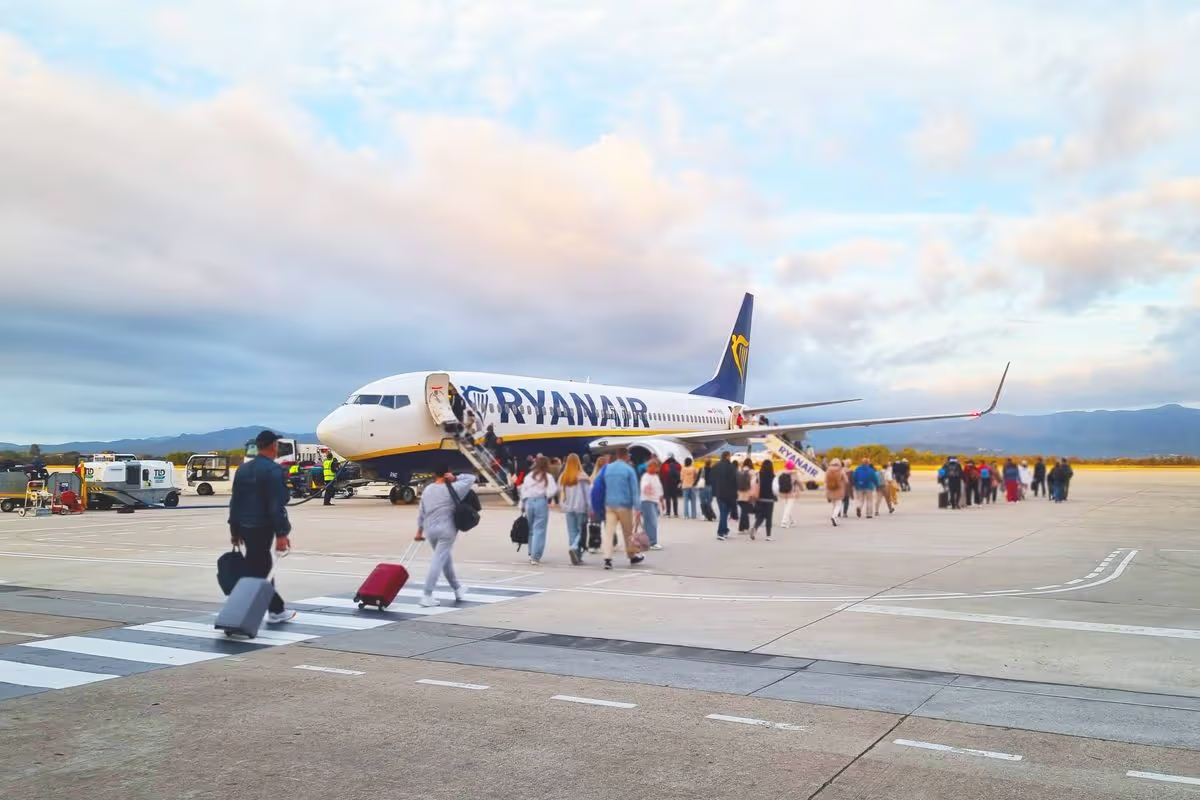
As hand-luggage-only travel becomes increasingly common, making every inch of space count is key. Nick recommends creating a micro essentials kit.

He explains: “Treat your cabin bag as a safety net. Include essentials like underwear, key toiletries – remembering liquid limits – medication and a charger. That way, you’re covered for delays or lost luggage without relying on airport shops.”

He added: “Pack one complete spare outfit”. Rather than throwing in random extras, pack a full outfit using crease-resistant fabrics. This ensures you stay comfortable and presentable if plans change or bags are delayed.

The specialist also suggests carrying a boarding pass backup. “Technology fails more often than people expect”, Nick explains. “Keeping a screenshot or printed boarding pass avoids stress if airport Wi-Fi or apps stop working at a critical moment.”

Keep in-flight items within reach, Nick says. Store items like headphones, snacks and lip balm in a small pouch that fits under the seat, so you don’t need to access the overhead locker mid-flight.

For longer trips or checked bags, organisation is key to avoiding overpacking and keeping belongings in good condition, Nick says. “Pack by outfit, not by item. Grouping complete outfits together — including accessories — makes getting ready easier and prevents packing combinations that don’t work,” he added.

Weigh as you go with packing cubes. “Packing cubes aren’t just for organisation — they’re great for managing weight,” says Nick. “Weigh each cube as you pack it. It’s much easier to adjust before everything goes in the suitcase than deal with excess baggage at the airport.”

Nick also recommends positioning shoes strategically. Place shoes heel-to-toe around the edges of your suitcase and fill them with socks or smaller items to maximise space and help them keep their shape, he said.

Separate clean and worn clothes. A lightweight laundry bag keeps worn clothes contained, helping maintain freshness and making unpacking simpler when you return home, Nick adds.

Combine rolling and folding. He said: “Rolling softer items like T-shirts saves space, while structured garments such as jackets should be folded to reduce creasing. A mixed approach delivers the best results.”

Photograph your packed suitcase. “Taking a quick photo before you travel is a simple but effective step,” Nick adds. “It can support insurance claims if luggage is lost and acts as a reminder of what you’ve packed.”

Source link

Ryanair issues ‘fuel update’ as changes being made to flights

The airline shared an update for passengers in a post on social media

Ryanair has shared a ‘fuel update’ for passengers. The airline shared the news on social media, explaining that it is making changes to flights. Posting on YouTube, Ryanair shared an overview of its plans to improve flights over the coming years.

The video was titled: “Pathway to net zero carbon emissions goal.” As part of the changes, the airline said flights will produce less noise and require less fuel, among other benefits. Ryanair describes itself as Europe’s largest airline group.

In the post, Ryanair told customers: “We’ve developed a pathway to achieve our net-zero carbon emissions goal by 2050, which aligns with the Paris Agreement and the aviation industry’s Destination 2050 initiative. Ryanair’s pathway aims to show incremental progress in decarbonising in line with EU climate targets are possible.”

In the video, the airline highlighted key areas of change. Ryanair started by discussing the benefits of new technology, such as 210 ‘game-changer’ aircraft, which deliver 16% less fuel usage and 40% less noise.

Ryanair also shared how sustainable aviation fuel can reduce lifecycle emissions by 80%. As well as how measures, such as single-engine taxiing and dynamic flight planning, can improve efficiency.

On its website, Ryanair shared further details for passengers interested in its plans. The airline said 32% of its carbon-emission reduction targets would come from technological and operational improvements, 34% from increased use of sustainable aviation fuel, 10% from the Single European Sky initiative, and 24% from offsetting and similar measures.

Ryanair’s website says: “We have teamed up with Trinity College Dublin to put in place a number of innovative actions to accelerate the use of sustainable aviation fuel (SAF). By appointing best-in class researchers, we’ll achieve our goal of powering 12.5% of our flights with SAF by 2030.”

Destination 2050 describes itself as an industry alliance committed to climate-neutral European aviation. The website says: “We believe that together, policy-makers and the industry we can make net zero CO2 emissions happen by 2050. European aviation is committed to play its part and ensure that air transport can continue to grow sustainably in the future.

“By 2030, net CO2 emissions from intra-European flights would be reduced by 55% compared to 1990 levels through a combination of fleet renewal, sustainable aviation fuel (SAF), operational improvements and the EU Emissions Trading System (ETS) –in line with the new EU climate goal for 2030.”

Why is CO2 bad for the environment?

Carbon dioxide (CO2) is a greenhouse gas that holds heat in the Earth’s atmosphere. Although it is essential for maintaining the planet’s warmth, human actions have led to a significant increase in its levels, intensifying the greenhouse effect and causing global warming, severe weather events, and ocean acidification.

Source link

I’ve been to 60 countries

FROM seeing Shakira perform in Rio to a drinking cocktails in the world’s tallest cocktail bar – it’s fair to say I’ve been to a lot of countries in my career as a travel writer.

Since my first trip abroad 30 years ago, I’ve wracked up 60 countries… and counting.

I’ve been to 60 countries but there are some great ones to do on a budget
Agadir is right by the beach and one of the most affordable places to go.

Yet while I love a far-flung trip, some of my favourite cities are a bit closer to home, and MUCH cheaper to fly to.

So here are my 10 favourites which you can get to in just a few hours, and none of the flights there are more than £20.

Agadir

The Moroccan city is perfect for some cheap, quick, winter sun.

Agadir is ideal for those wanting relaxation and was even named the most affordable summer holiday destination earlier this year.

A highlight is Souk el Had, one of the largest markets in Morocco, and I recommend the White Beach Resort Taghazout just outside of the city for a relaxing stay, right on the beach.

Flights can be found with Ryanair for £14.99 from London Stansted or £17.99 from Edinburgh.

Seville

As one of Spain‘s most southern cities, you can expect some scorchingly good weather (just avoid the summers where it hits 40C).

Watch some flamenco, buy some famous Seville orange perfume or explore the Moorish Royal Alcazar Palace.

Make sure to stay at Only U – stays are around £100pp per night and it felt more exclusive members club than hotel thanks to the rooftop pool, onsite florist and bakery and VERY trendy rooms.

Flights can be found with Ryanair for £14.99 from London Stansted or £17.99 from Edinburgh.

Seville has some of the best weather in Spain – and most beautiful palaces Credit: Alamy

Brussels

It was during a Christmas trip to Brussels that I realised it would actually make the perfect girly trip in summer.

I explored the Rue de Flandre neighbourhood – once named one of the world’s coolest – for noodle bars, pizzarias and cosy drinking spots.

I stayed at the Hilton Brussels Grand Palace hotel, with the fancy breakfast room being a highlight. Prices start at £185 for a double room.

Flights from Newcastle start from £14.99 with Ryanair.

There’s more to Brussels than its Christmas markets Credit: Alamy

Faro

Faro gets overlooked for just being the gateway to the Algarve, but it’s criminal to skip this stunning Portuguese city.

It has beautiful Caribbean-like islands just off the coast which are ideal day trips, costing just a few euros.

It is also home to 3HB the city’s only five star hotel complete with high spec rooms and rooftop bars with firepits perfect for Love Island style chats. Rooms start at £76 pp per night.

Flights start from £13 with Wizz Air from London Gatwick.

You can get Caribbean-like islands all to yourself in Faro

Madrid

The Spanish capital has quickly become my favourite place in the country for so many reasons.

There are fun neighbourhoods such as Malasana with bars and shops (try the fantastically decedant bakes in Santo) or visit on weekends to El Rastro, one of Europe‘s biggest flea markets.

If you’re on a budget you can’t go wrong with the recently opened easyHotel too, with rooms starting at £59 per night. It is an easy few metro stops from the city centre – also easy to use even if not used to underground networks.

Flights can be found with Ryanair from £14.99 from Bristol and London Stansted.

El Rastro market is the place to be in Madrid at the weekend Credit: Alamy

Milan

While Milan can be slated as one of the less-loved Italian cities, it is worth a weekend trip – IF you know where to go.

The street-art lined Navigli is popular with locals for its vibey restaurants lining the canal (go just off the main road to Iter for amazing wine and fun interiors).

Try NYX hotel, with double rooms from £156 per night. It is right beside the train station and has a rooftop terrace.

Flights start £14 with Wizz Air from London Luton or from £14.99 with Ryanair from Manchester and London Stansted.

Skip the centre of Milan for Naviglio for the best time Credit: Alamy

Marbella

Marbella may be a beach club capital but in my opinion, off season is the best time to visit – as I found when I planned a trip in April.

This meant quiet dinners in the local-populated Taberna la Nina Del Pisto, or bar hopping from La Tienda to Vinalium Castillejos for cheap wine.

The Hard Rock Hotel is a hilarious place to stay – make sure to get the music-themed massage where music is played from speakers to the vibrations of the bed. Prices start at £120 per night for a double room.

Flights start from £14 with Wizz Air from London Gatwick, or with Ryanair from £14.99 when flying from Bristol, Birmingham, Newcastle, London Luton or Bournemouth.

Marbella out of the peak season is much calmer and affordable

Copenhagen

One of my favourite trips was when I was between jobs, and decided to spend a chic weekend in Copenhagen.

I brunched at Atelier September, explored the Fashion Museum and popped into Tivoli for a step back in time, as well as popped to see the famous Little Mermaid statue and Hans Christian Anderson grave.

Hotel SP34 – from £80 pp per night – is a must, if not just for the free wine and cheese hour ever evening…

Flights from Edinburgh and London Stansted from £14.99 with Ryanair or £16.99 from Bristol and Manchester.

Theme parks and great coffee are best found in Copenhagen Credit: Alamy

Amsterdam

You might have already visited Amsterdam, but let me sell you on Amsterdam Noord.

Get the free ferry over from the main train station along with all the other cycling locals and before dinner and drinks at Next. Don’t forget some of the amazing art galleries and museums – STRAAT and NXT are worth a visit.

Stay at Bunk for a unique stay, built into a church with some VERY interesting artwork and a vibey bar. If you are on a tight budget a pod for one starts at £25.

Flights from London Southend from £14.99 with easyJet.

Amsterdam Noord is full of local-loved bars and museums Credit: Getty

Palermo

You can’t visit Palermo without getting a famous Negroni and Bar Timi claim to have the best in the city (best chased by some fresh arancini at the food markets.

There are loads of flea markets and antique markets to explore, although you could also leave the city to find a beach club for the afternoon as well.

When it comes to hotels, there is the new NH Collection Palermo Palazzo Sitano which feels quintessentially Sicilian but is also in a great location. Prices start at around £95pp per night.

Flights from London Stansted start from £16.99 with Ryanair.

Sun Travel’s Caroline McGuire, Kara Godfrey and Sophie Swietochowski arrive in Palermo with Princess Cruises

Source link