Ukraine says drones hit 11 Russian vessels in the Azov Sea, targeting tankers, dry cargo ships, and a tugboat overnight.
Published On 14 Jul 202614 Jul 2026
Russia says it is working to reroute grain shipments from the Sea of Azov after its vessels came under Ukrainian attacks in the sea, as Kyiv claimed it hit 11 more Russian vessels in overnight strikes.
Russia was preparing to use “alternative shipping routes” and may redirect cargo “to other modes of transport”, Russia’s Ministry of Agriculture said in a statement on Tuesday.
Recommended Stories
list of 3 itemsend of list
The ministry added that “the situation in the Azov Sea will not affect the domestic market’s food supply or our country’s export capabilities.”
Ukrainian military commander Robert Brovdi said on Telegram on Tuesday that drone attacks hit 11 Russian vessels in the Azov Sea overnight. The targets included five tankers, five dry cargo vessels and a tugboat, bringing the total number of vessels struck in the past nine days to 116, he said.
Russia’s Foreign Minister Sergei Lavrov accused Ukraine of carrying out “acts of terrorism”.
“What the Ukrainian regime is doing goes beyond even piracy. Pirates, at least, plunder and keep the spoils for themselves. But here, it benefits neither them nor anyone else – the goal is simply to cause damage and intimidate. It is terrorism, pure and simple,” Lavrov said.
The attacks come as Ukraine steps up long-range strikes on Russian oil refineries and other energy infrastructure, triggering a fuel crisis in Russia.
Russia’s Ministry of Defence said its air defences intercepted 288 Ukrainian drones across the country overnight. Russian authorities said falling debris from a drone attack injured one person and damaged houses in several villages.
One attack sparked a fire at the Afipsky oil refinery, authorities in Russia’s Krasnodar region reported.
Ukraine also struck another oil refinery in the republic of Bashkortostan, which had been hit twice in September 2025. Governor Radiy Khabirov said on Telegram that the attack hit an industrial area in the city of Salavat.
Ukrainian strikes on Russian oil refineries have contributed to a fuel crisis, leading Moscow to ban some fuel exports amid a global surge in energy prices.
Russia’s Defence Ministry also said it hit targets in Kyiv, port infrastructure in Ukraine’s Odesa region, and fuel storage facilities for Ukrainian forces in the port of Yuzhny.
Ukrainian navy spokesman Dmytro Pletenchuk said Russian forces struck a civilian vessel near Ukraine’s Black Sea port of Odesa. Pletenchuk reported no casualties in the attack.
Meanwhile, Ukrainian military officials said their forces shot down seven missiles and 108 drones across the country.
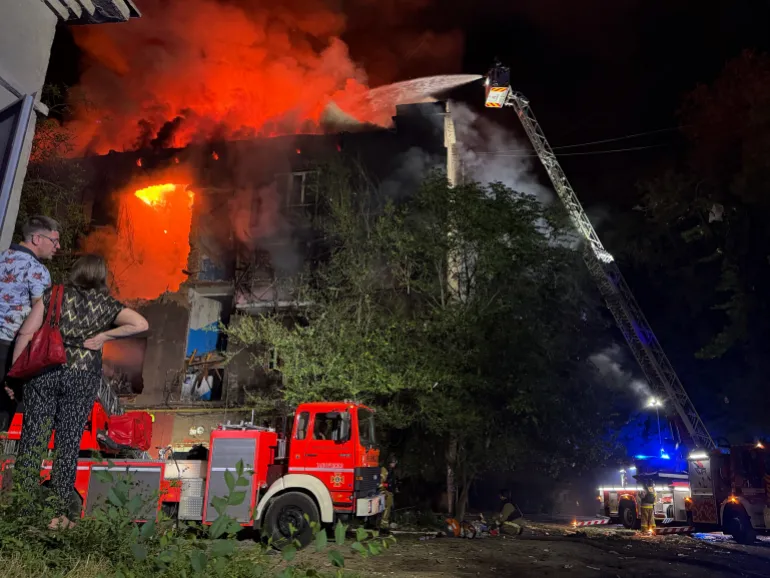
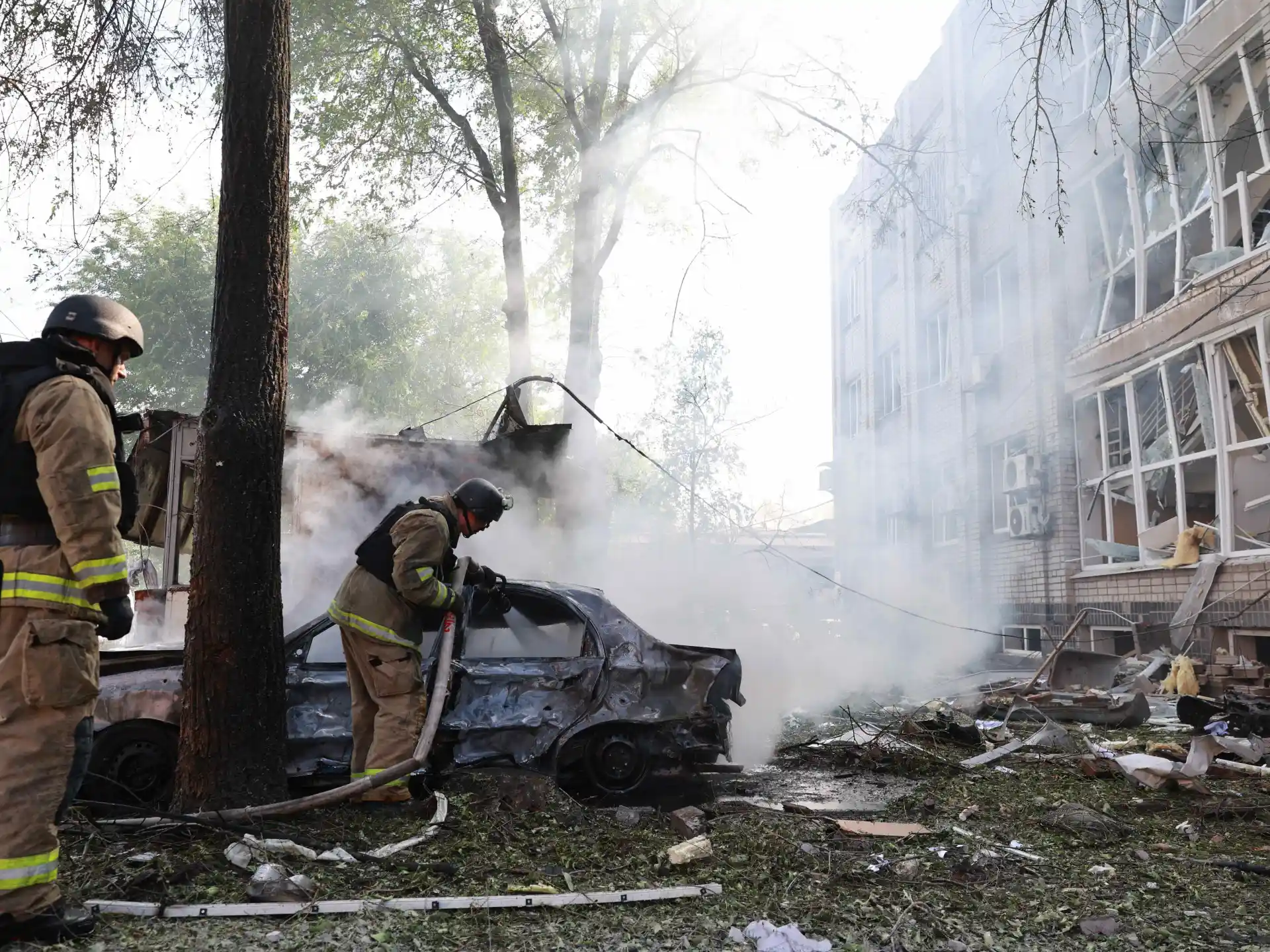
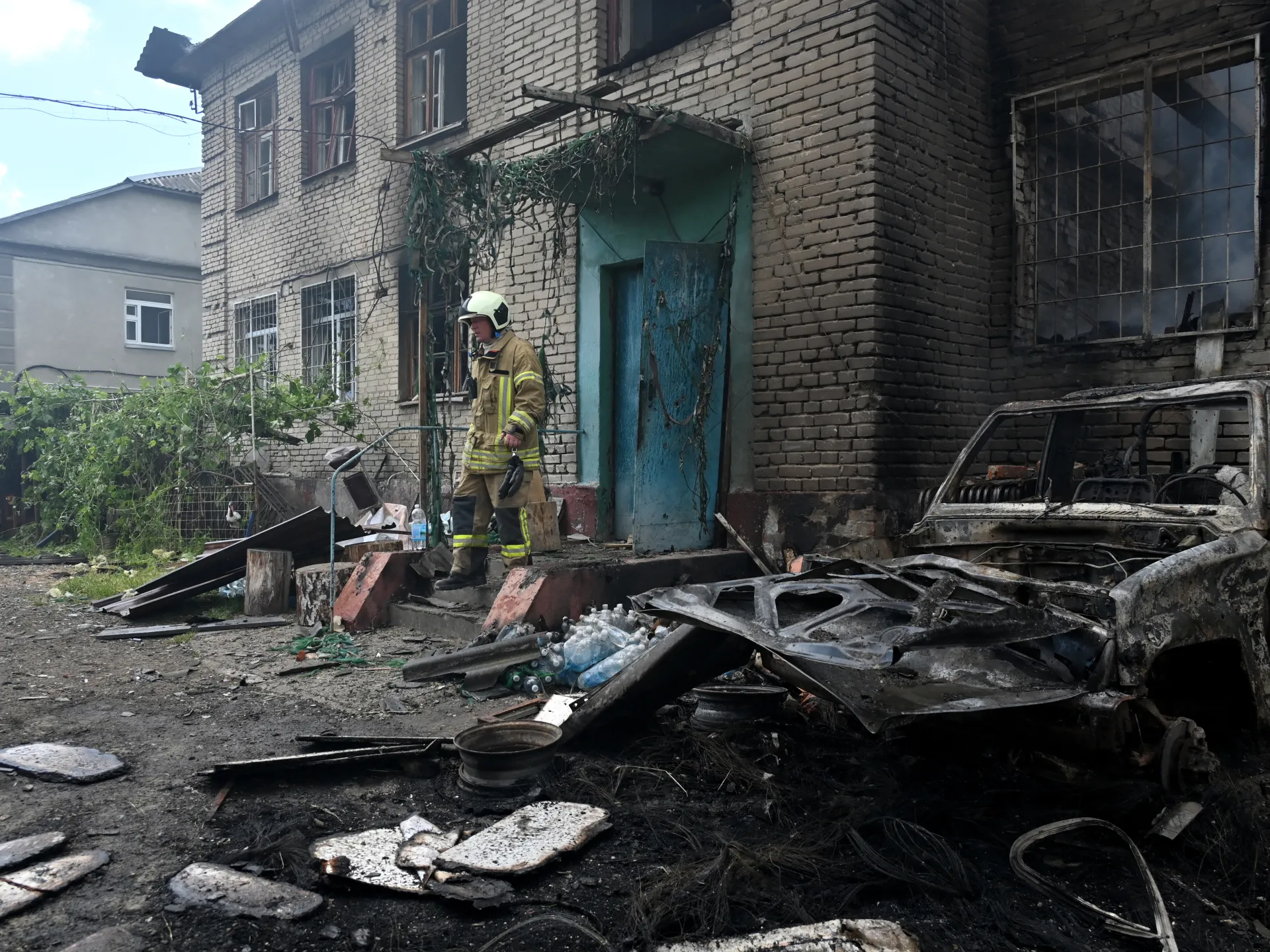
Ukrainian rescuers work to extinguish a fire at a damaged residential building following a Russian drone strike late night in Zaporizhzhia on July 12, 2026, amid the Russian invasion of Ukraine [File: Darya Nazarova/AFP]
Yulia Svyrydenko to step down as prime minister amid government shake-up aimed at prioritising foreign policy and security goals.
Published On 12 Jul 202612 Jul 2026
Ukraine’s President Volodymyr Zelenskyy has announced a government reshuffle, as well as proposing the replacement of Prime Minister Yulia Svyrydenko and the heads of some law enforcement agencies.
“Ukraine is changing its political strategy. Each priority foreign policy direction will be overseen by a specific individual with substantial experience who is capable of delivering on the agreements reached at the leaders’ level and fulfilling the expectations of the Ukrainian people,” Zelenskyy said on Sunday in a lengthy post on social media.
Recommended Stories
list of 3 itemsend of list
“I discussed the details with Ukraine’s Prime Minister, Yulia Svyrydenko. We agreed that implementing these changes requires a renewal of the Cabinet of Ministers.”
Svyrydenko became prime minister a year ago, succeeding Denys Shmyhal. She previously served as first deputy prime minister and economy minister, roles that brought her into close contact with the administration of US President Donald Trump. She was widely credited with negotiating a critical minerals agreement between Washington and Kyiv last year that helped thaw what had initially been a frosty relationship between Trump and Zelenskyy.
“I am proud to have had the honour of leading the Government during one of the most difficult periods in Ukraine’s modern history. I thank every man and woman defending Ukrainian land. Our warriors are our strength and the foundation of our independence,” the 39-year-old wrote on X.
Zelenskyy also said there would be changes in the leadership of law enforcement agencies.
He said the new political strategy would focus on key foreign policy priorities, including agreements to manufacture Patriot air defence systems under licence, advancing Ukraine’s bid for European Union membership and deepening ties with the Gulf region, which he described as one of the world’s “most promising” areas for security and economic cooperation.
Zelenskyy thanked Svyrydenko for her offer to lead a “new significant direction in relations with a key partner”.
Emergency crews are searching for survivors after a Russian air strike on the Ukrainian city of Zaporizhzhia killed at least one person and injured 29, including two children. The city’s mayor says Russian troops have advanced to just over 20 kilometres away.
Ukraine appeared to have begun large-scale strikes against Russian shadow tankers attempting to supply occupied Crimea with fuel, as an energy crisis on the peninsula worsens.
At the same time, Ukraine has continued to cause fuel shortages in Russia itself, striking refineries deep inside the country, including, for the first time, the Omsk refinery in Siberia, Russia’s largest, 2,500km (1,553 miles) from the Ukrainian border.
Recommended Stories
list of 4 itemsend of list
Ukraine’s Unmanned Systems Forces commander Robert Brovdi said his forces had struck 19 Russian tankers, a cargo ship and a ferry between July 6 and 8, including nine tankers on the night of July 7.
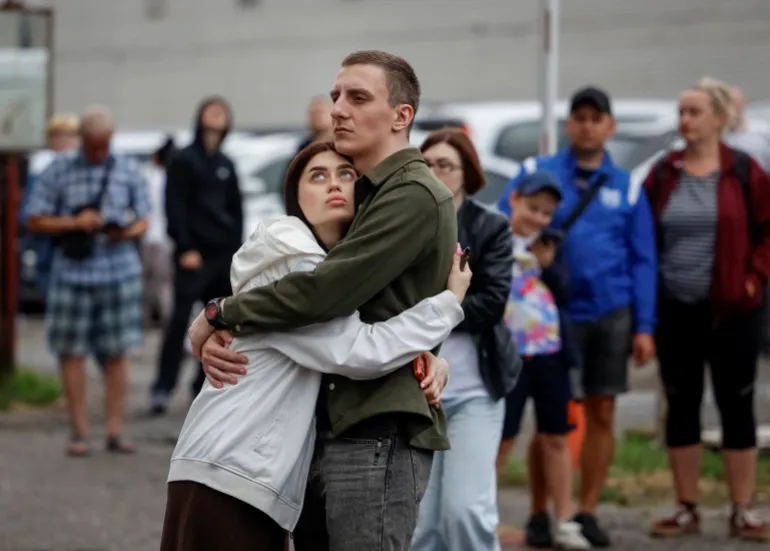
Residents stand near an apartment building hit by a Russian drone strike in Kyiv, Ukraine, July 8, 2026 [ [Reuters]
Ukrainian Navy spokesman Dmytro Pletenchuk told newspaper Suspilne that Russia had rerouted fuel supplies to Crimea after Ukraine deprived it of overland routes.
“They had few options left. It’s either a land corridor or a sea connection,” Pletenchuk said. “As far as we know, they don’t use the Kerch Bridge for such transportation in the necessary volumes,” he said, referring to the bridge connecting Crimea to Russia.
Ukraine detonated a truck on the bridge in 2022, setting alight a fuel train that had been travelling alongside it and demonstrating the risk of using the bridge for large volumes of fuel.
Ukraine pivoted to attacking Crimea in the past few weeks after disabling the oil offloading terminal at Novorossiysk, on the opposite Russian coast, Ukrainian President Volodymyr Zelenskyy told the Financial Times.
“We were slowing down the militarisation of our peninsula occupied by Russia,” he said. “We cut off the logistics and took control of the fuel and energy complex. We showed what it means to operationally control the sky at a specific point, at a specific time.”
The Ukrainian Presidential Office in Crimea said these strikes had caused “a management crisis on the peninsula”.
In Sevastopol, fuel has stopped being sold to civilians, and more than a dozen Crimean regions are suffering from electricity blackouts.
Ukraine continued strikes on the peninsula in the past week, destroying seven Sukhoi aircraft and two sheds containing Shahed aerial drones at the Saky airfield on July 3, the Kerch oil transhipment terminal on July 6 and three hangars at the Guardsman airfield on the same day.
Ukraine also kept up pressure on Russia, launching what mayor Sergei Sobyanin said was its largest strike on Moscow in two years.
More than 400 Ukrainian drones were downed while heading for the city on July 7, which was the first day of a NATO summit in Ankara.
“When our drones weren’t flying to Moscow and St Petersburg, [Russian president Vladimir] Putin didn’t think much about it. He understood that the war was far from the Kremlin,” Zelenskyy told the Financial Times.
“When not a hundred drones, but a thousand would start flying to Moscow, and when he would feel and see this, he would be advised to move somewhere beyond the Urals. This would be a moment like a new page on the path to ending the war.
A rescuer hands a cat named Boniya, found under the rubble of an apartment building damaged by a Russian missile strike a day earlier, to Anastasia Sorokina, a friend of the cat owner in Kyiv, Ukraine, July 7, 2026 [Sergiy Karazy/Reuters]
Ukraine struck several energy targets during the week, furthering its twin goals of starving Russia of petrol and export revenue from oil.
The SBU said it struck and set alight the St Petersburg oil terminal on July 4, which it described as “one of the largest oil product transshipment terminals in the Baltic region”. Zelenskyy posted video purporting to show the terminal in flames.
On Sunday, Ukraine’s General Staff said its forces had struck the Slavneft Yanos refinery in Yaroslavl, 700km (430 miles) from Ukraine, the Ust-Luga refinery on the Baltic Sea, and the Omsk Refinery. Russia’s defence ministry said it had shot down 613 of 625 Ukrainian drones detected in the airspace overnight.
Ukraine’s Air Force said that Russia had lost 42.7 percent of its refining capacity over the past year, and suffered $13.5bn of damage to oil infrastructure.
These strikes have cumulatively caused petrol and diesel shortages in the Russian market, with consumers in urban hubs lining up to fill their cars.
During the week, Ukraine also struck the Kremny EL Group in Bryansk, which it said manufactured microchips, semiconductors and other electronics for the armed forces.
Rescuers working at a site of a Russian missile and drone strike on the previous day, during which a residential building was heavily damaged, amid Russia’s attack on Ukraine, are seen through broken glass, in Kyiv, Ukraine, July 7, 2026 [Alina Smutko/Reuters]
Zelenskyy said the air war would prove “decisive”, because in 2026 Ukraine’s ground troops had effectively stopped Russia’s slow advance of the last two years.
Independent assessments have suggested that Russia gained a total of 97 square kilometres (37 square miles) in the first six months of the year.
“The war is ongoing, but the front line is no longer moving. When the front line is almost not moving, and the enemy cannot invade by sea, the sky remains,” Zelenskyy said.
US President Donald Trump handed Zelenskyy a major victory at the NATO summit in Ankara on Wednesday, saying he would license Ukraine to produce interceptor missiles for anti-air systems.
Zelenskyy has been campaigning for a licence to build Patriot interceptors, which he believes Ukraine can do faster and more cheaply than the US or European manufacturers.
But Zelenskyy said Patriots ultimately are not the answer for European air defence, announcing his intention to develop FREYA, a Ukrainian-designed anti-ballistic system like Patriot “but with a higher production capacity and at a lower cost”.
Is Russia losing?
Zelenskyy’s commander-in-chief warned against dismissing Russia too easily.
“It’s still too early to talk about a qualitative turning point in the war,” Oleksandr Syrskii wrote on his Telegram messaging channel. “The aggressor is showing signs of exhaustion, but retains significant offensive potential,” adding that Russia “plans to extend the front line, which already exceeds 1,250 kilometres (777 miles).”
Putin relaunched the narrative that Moscow will overrun the eastern Ukrainian region of Donetsk, four-fifths of which Russia already controls.
In a televised meeting with his top generals on July 3, Putin was told that Russia has seized 3,000sq km (1,160sq miles) of Ukraine so far this year, and “liberated” 133 settlements. His commander in chief, Valery Gerasimov, also claimed to control the cities of Kupiansk in Kharkiv, and Kostiantynivka in Donetsk.
The Institute for the Study of War, which uses geolocated footage to assess advances, estimated that Russian forces have a presence in 2.4 percent of Kupiansk and 37 percent of Kostiantynivka – and most of that in the form of infiltrations, not firm control.
The Ukrainian military has estimated the number of Russian servicemen in Kostiantynivka at between 100 and 250.
Putin was told that Russian forces seized 636sq km (245sq miles) of Ukraine in June alone. The ISW estimates the real number at 30sq km (11sq miles).
Kostiantynivka is politically important to the Kremlin because it is the first of four heavily fortified cities, including Kramatorsk and Sloviansk, which Moscow must seize to take control of Donetsk – which Putin considers a puppet state and has repeatedly prioritised.
“The capture of Kostyantynovka by the troops of the South battlegroup opens a direct road for further advance to Kramatorsk and Sloviansk, other fortified areas in the Donbas, and is, of course, the key to liberating the entire territory of the Donetsk People’s Republic,” Putin said.
The Donbas includes Donetsk and Luhansk, which Putin mistakenly claimed to have taken in its entirety.
“I understand that we should no longer speak of the Slovyansk-Kramatorsk-Kostyantynovka line, but simply of the Slovyansk-Kramatorsk line,” Putin told the gathering.
The attacks have triggered fires in two districts of Kyiv, according to the city’s mayor.
Published On 7 Jul 20267 Jul 2026
Russian missile attacks have struck Kyiv in the third large-scale assault on the Ukrainian capital in less than a week.
Early on Wednesday, Kyiv Mayor Vitali Klitschko said in a statement on Telegram that the Russian strikes had triggered fires in two districts of the city. It is not clear if there have been any casualties or damage.
Recommended Stories
list of 3 itemsend of list
Moscow also launched a large-scale attack on Kyiv on Monday, killing at least 14 people and damaging at least a dozen buildings.
Both Russia and Ukraine have recently expanded their use of long-range weapons, including missiles, marking a new front in Moscow’s four-year war.
Ukraine has focused its attacks on Russian energy facilities to weaken its war efforts.
Ukraine said on Tuesday that its drones attacked a dozen tankers from Russia’s “shadow fleet” over the past two days that were delivering fuel to Moscow-occupied Crimea. Kyiv’s military said they had struck eight vessels subject to sanctions in the Sea of Azov, each with a deadweight of about 7,000 metric tonnes. Two more tankers were hit later in the day.
The Sea of Azov is a key supply route for Russian forces in Crimea and other occupied parts of southern Ukraine.
Russia annexed Crimea in 2014 – in a move that has been unrecognised internationally – eight years before launching its full-scale invasion of Ukraine.
Moscow has not publicly commented on this week’s attacks on Ukraine, which also included strikes on electrical substations, radar systems, and missile installations.
Attacks amid NATO Summit
The latest exchange of fire between Russia and Ukraine also comes amid NATO’s annual summit, which began on Tuesday. The military alliance’s leaders have gathered in Turkey’s capital Ankara for the two-day summit, where defence spending and the Russia-Ukraine war is under discussion.
NATO is expected to pledge further military support for Ukraine, as President Volodymyr Zelenskyy urges the alliance to step up aid for the country’s air defences following a deadly escalation of Russian attacks on Kyiv.
Zelenskyy – who has renewed his call for Ukraine to be allowed to join the alliance – wrote on social media on Tuesday that he had signed new agreements with Estonia, the Netherlands, and Denmark in Ankara.
The deals create “new opportunities for joint production, the development of innovative defense technologies, systematic exchange of expertise, and the export of Ukrainian battlefield-proven solutions”, he said.
Further agreements are expected with Germany, Norway, Finland, and Canada.
US President Donald Trump is also expected to meet Zelenskyy on the summit sidelines on Wednesday, having spoken with Russian President Vladimir Putin ahead of the NATO gathering.
Asked about Russia’s war in Ukraine, Trump said he hoped it would be settled “soon”.
“I think they both want to make a deal,” Trump said.
“It’s too bad it took so long, but I think something’s going to come out.”
NATO leaders are meeting in Ankara, Turkiye on Tuesday and Wednesday.
The summit gets underway as US President Donald Trump renews pressure on member states over defence spending. European nations are expected to respond with billions of dollars in new military contracts.
At the NATO summit last year, members agreed to increase their target to 5 percent of GDP: 3.5 percent on military spending by 2035 and 1.5 percent on security-related needs.
Who is there and what is at stake?
Leaders from all 32 NATO member states are at the summit in Turkiye this week.
Two non-alliance heads of state will also be there: Ukraine’s Volodymyr Zelenskyy and South Korea’s Lee Jae-myung.
Australia, Japan and New Zealand are sending defence or foreign ministers, as are Gulf countries affected by the US-Israel war on Iran: Bahrain, Kuwait, Qatar and the United Arab Emirates.
Syrian President Ahmed al-Sharaa is not expected to attend the summit but is holding a bilateral meeting with Trump in Ankara.
What Trump wants from NATO allies
Trump has questioned NATO’s value since his first presidential campaign. He argued that the US carried an unfair share of the costs. At the time, only five countries spent the agreed two percent GDP on defence.
His questions about shared defence responsibility have produced some results in recent years within the alliance as member states pledged an increased defence budget.
Ozgur Unluhisarcikli, the German Marshall Fund’s regional director for Turkiye, believes NATO this year will focus on implementing its promises from last year. “NATO allies just decided to increase their defence spending to five percent last year at The Hague and European allies took action to upgrade their defence industries,” he said. “This year in Ankara the discussion will be on how to translate spending to capabilities. It is therefore stronger than it was last year.”
But Paolo von Schirach, president of the Global Policy Institute, noted that any capability gains from increased spending are years away, saying that more orders mean more military hardware but only eventually. “You can spend a lot and obtain not too much,” he said.
What Ukraine needs from this summit
Ukrainian President Volodymyr Zelenskyy is meeting Trump for a bilateral meeting on Wednesday. Ukraine is not a NATO member.
Zelenskyy will be using his face-to-face with the US president to request additional Patriot air defence systems as Russian attacks are intensifying on Ukrainian cities. A drone attack on the Ukrainian capital Kyiv killed at least 11 people on Monday morning.
Jack Watling, a senior research fellow at the Royal United Services Institute said that Ukraine is looking for ongoing political and military technical support from alliance members, to signal to Russia “that this support will be sustained”.
The idea, he said, was “to show Russia that there will be no diminution in its defensive capacity over the next 12-24 months”.
“There is a direct correlation between the number of interceptors supplied to Ukraine and the damage that Russia can inflict with ballistic missiles,” says Watling.
What European nations are trying to solve for
The billions in contracts expected to be announced by European nations at this summit are seen by some analysts as trying to appease the Trump administration.
When European nations didn’t join the war on Iran, Trump stated he didn’t want their money, just their “loyalty”. He added he might not have attended the summit if it wasn’t hosted by Turkish President Recep Tayyip Erdogan. Turkey has in recent years not only increased its defence spending, it also has grown into one of NATO’s largest military exporters.
For now, the tone around defence spending remains sharp. On the eve of the summit, Trump called Germany’s defence spending “ridiculous”. Chancellor Friedrich Merz defended his country’s budget, saying that “this is the greatest effort we have ever made to strengthen our defence capabilities”.
Meanwhile, the US has gone a step beyond rhetoric and announced a phased withdrawal of warplanes, destroyers and submarines from NATO countries. “Less US infantry or armour in Europe has an impact on messaging but little else,” Watling said. But, he added, “the withdrawal of US air power has a more tangible impact”.
Whether the alliance can project unity amid the rhetoric and withdrawals is a key question, said analysts.
“The main value of this summit is political, it shows that the allies are still talking, still meeting, still trying to project unity, even if the underlying disagreements and doubts haven’t disappeared,” von Schirach of the Global Policy Institute said. “Ankara is more about reassurance and signalling than about concrete, immediate changes on the ground.”
A Russian missile and drone attack on Ukraine’s capital has killed at least 10 people and injured 46 on the eve of a NATO summit. Al Jazeera’s Audrey MacAlpine reports from a residential building that was hit.
Ukrainian President Volodymyr Zelenskyy had warned of a likely attack ahead of meeting with US President Donald Trump.
Published On 6 Jul 20266 Jul 2026
A Russian missile and drone attack on Ukraine’s Kyiv has killed at least 10 people and damaged more than a dozen residential buildings in the second large-scale assault on the Ukrainian capital in less than a week.
The attack early on Monday morning injured at least 46 people in Kyiv, according to Tymur Tkachenko, head of the city’s military administration.
Recommended Stories
list of 4 itemsend of list
Another person was killed and 10 others were injured in districts surrounding Kyiv, according to authorities.
Ukraine’s military said Russia fired 68 missiles and 351 drones overnight.
The Kyiv Independent reported that the first explosions were heard at about 1:40am local time, followed by more strikes at 2:10am and 3:15am.
Thousands of residents fled to underground shelters, it reported, as air raid sirens sounded across Ukraine.
At least 15 buildings were damaged in Kyiv in the strikes, including four in the capital’s historic Podilskyi district, Tkachenko said.
Rescue work is under way across the capital and the death toll could rise, he said.
“Unfortunately, this is not the final information,” Tkachenko told reporters as the death toll jumped to nine from seven in Kyiv.
In his nightly address on Sunday, Ukrainian President Volodymyr Zelenskyy warned that another Russian assault might be coming before the NATO summit in Turkiye this week.
He is due to meet United States President Donald Trump on the sidelines of the summit, which begins on Tuesday.
“Intelligence once again indicates that the Russians are preparing a new massive strike,” Zelenskyy said, according to the Kyiv Independent.
“This is typical of Putin: right after America’s Independence Day and before the NATO summit in Ankara.”
Late last week, Russia hit the Ukrainian capital with dozens of missiles and hundreds of drones, killing 31 people.
The strikes were the deadliest to hit Kyiv this year.
Both Russia and Ukraine have recently expanded their use of long-range weapons, including missiles, marking a new front in the four-year war.
Ukraine has focused its attacks on Russian energy facilities to weaken its war efforts.
Mikhail Razvozhayev, the governor of Russian-controlled Sevastopol, a Black Sea port in Crimea, said on Monday a Ukrainian strike near the city had knocked out electricity supplies.
“Following an enemy attack on energy infrastructure near Sevastopol, our city was temporarily left without electricity,” Razvozhayev wrote on Telegram.
Russian forces have claimed capture of Kostiantynivka in eastern Ukraine’s Donetsk region after roughly a nine-month battle. The city sits within Ukraine’s “fortress belt,” a defensive network of cities forming Donbas’s main defensive line. Ukrainian officials denied the city fell.
Moscow, Russia – Russia faces a severe fuel deficit as Ukrainian drone strikes knock out a significant portion of its refining capacity.
With continuing war in Ukraine and agricultural harvesting under way, the government is scrambling to re-route supplies, maintain price caps and enforce export bans to prevent further domestic shortages.
Recommended Stories
list of 4 itemsend of list
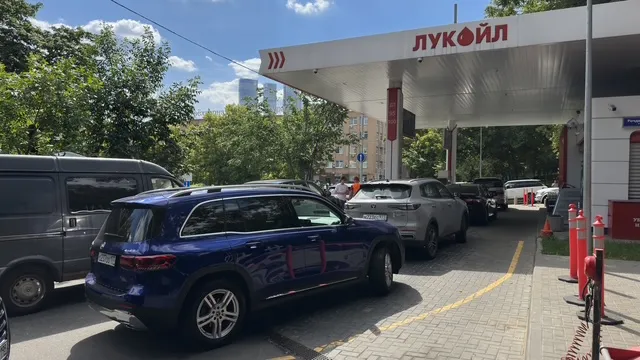
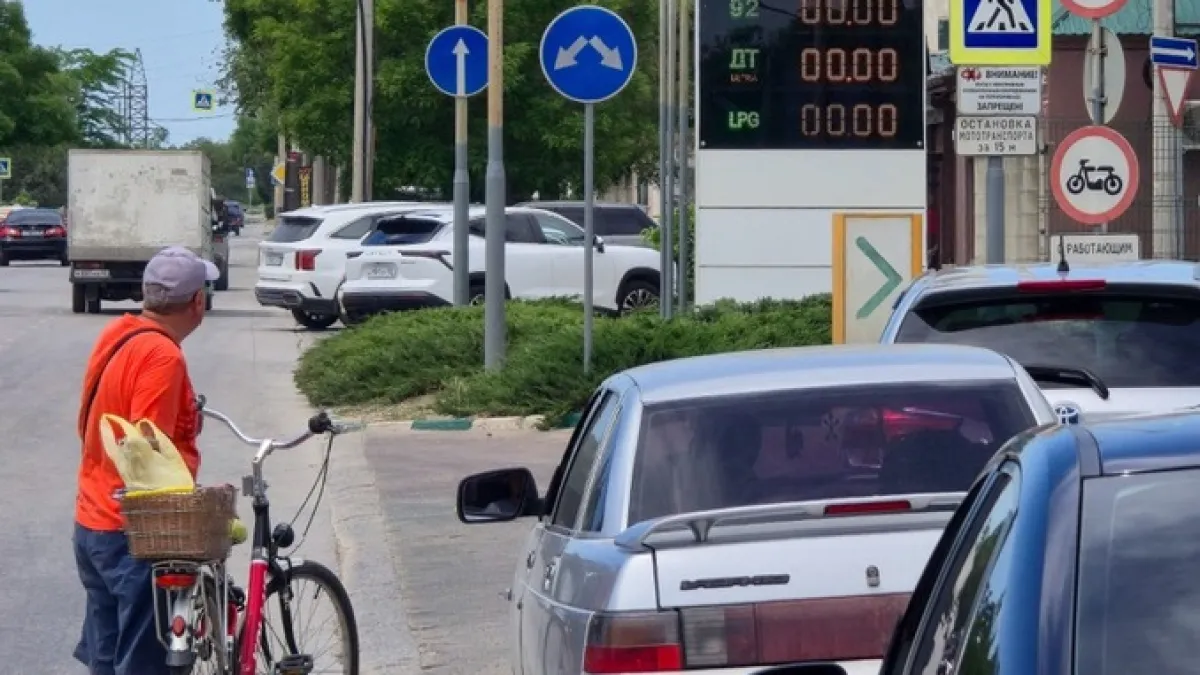
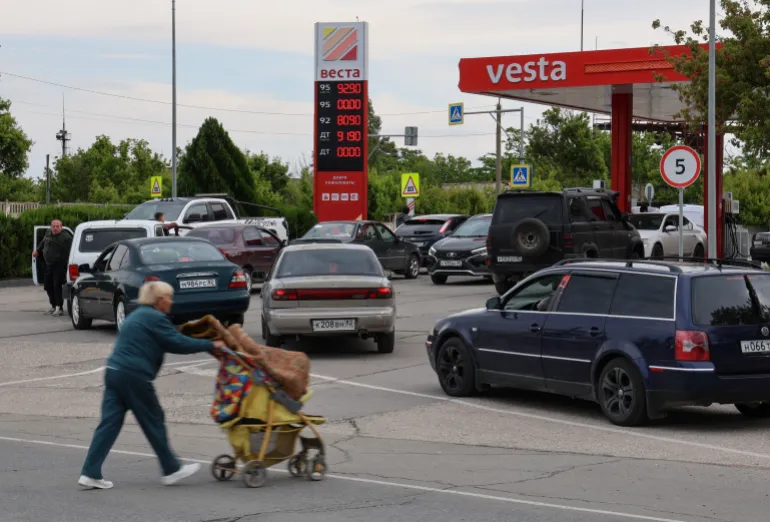
Long lines at petrol stations are now a common sight throughout the country, including in the prosperous capital Moscow.
People wait for hours to fill up their cars. In some places, the pumps are completely dry.
There is a sense of patience but also mounting anxiety in the air.
“I’m deeply frightened by the uncertainty and the lack of understanding where the situation is heading,” a woman named Irina, waiting to fill up her car in Moscow, told Al Jazeera.
Igor, another Moscow resident, said: “I think things can get out of control if the crisis causes major industries to shut down.”
Both interviewees requested to withhold their surnames.
President Putin has dismissed concerns about the fuel shortages, saying the situation is not ‘critical’ [Al Jazeera]
Analysts predict that increased fuel prices will mean higher transportation costs followed by significant price hikes for goods and services.
Stanislav Mitrakhovich, an expert at the National Energy Security Fund at the Russian Financial University, said the crisis is “deep, yet for a long time, Russian authorities were unwilling to acknowledge it”.
He added that the Russian response has led to “greater public distrust” of authorities and, consequently, triggered panic buying.
“Indirect evidence indicates that Ukrainian drone attacks have disabled about a quarter of Russia’s oil refining capacity,” he told Al Jazeera. “Seasonal demand has also contributed to the problem. The crisis has led to rising fuel prices and local shortages, as some regions simply lack oil refineries.”
The situation is “even worse” in regions close to the combat zone, he said. “Measures to restrict and ration fuel sales have long been in place there.”
To tackle the problem, Russia has imposed fuel rationing. Sales are often limited to about 20-30 litres (about 5-8 US gallons) per vehicle, and drivers must pump fuel strictly into vehicle tanks. Filling jerry cans is largely prohibited.
Earlier, the government banned petrol and jet fuel exports. Officials are now weighing a ban on diesel exports, too.
Authorities have loosened fuel-quality regulations, temporarily allowing lower-grade fuel for the domestic market.
As the approaching agricultural harvesting season relies on a steady stream of diesel, authorities are prioritising farming allocations to prevent a hit to food security.
To offset the domestic shortfall, Moscow has sought fuel imports from neighbouring countries, such as Belarus, as well as Asian markets. Moscow has shipped in 60,000 to 80,000 tonnes of petrol from India, according to industry sources cited by the Reuters news agency. Russia reportedly plans to import 400,000 tonnes of petrol monthly from various countries.
‘I would say it is not critical’: Putin
While Russian President Vladimir Putin acknowledges the crisis, he appears reluctant to end the war in Ukraine and insists the situation is under control.
“These attacks on our facilities certainly create problems, that is obvious. We are currently seeing a certain shortage, though I would say it is not critical,” he said.
“First and foremost, we have to rapidly and significantly increase production of air defence systems that are most in demand. We must also continue to improve them … Repairs at refineries must be completed more quickly.”
Ukraine is seizing its opportunity. President Volodymyr Zelenskyy has authorised a 40-day military and intelligence campaign, aimed at pressuring Russia into ending the war.
Mitrakhovich said the way the crisis unfolds from here depends on what’s more effective: Ukraine’s drone strikes or Russia’s air defences.
Prosecutors allege a yacht was used in the sabotage of pipelines, with the suspect leading the operation.
By Reuters and The Associated Press
Published On 2 Jul 20262 Jul 2026
German federal prosecutors have filed charges against a 50-year-old Ukrainian national over a series of explosions that destroyed two Nord Stream underwater gas pipelines linking Russia to Europe in 2022.
The federal prosecutor’s office declined to comment on the specifics of the indictment on Wednesday against the accused, who is identified only as Serhii K in court documents under German privacy rules.
Recommended Stories
list of 4 itemsend of list
Serhii K is accused of attacking civilian energy infrastructure, causing an explosion, and destroying structures, according to the German public broadcaster ARD.
The underwater explosions damaged both the Nord Stream 1 and Nord Stream 2 pipelines so severely that no gas could be transported through them, knocking out the key routes for Russian gas to Europe for months after Moscow’s full-scale invasion of Ukraine in February 2022.
In a December 2025 detention filing by the Federal Court of Justice, prosecutors allege that Serhii K helped coordinate a team that used a sailing yacht, the Andromeda, to place explosive devices on the pipelines near Denmark’s Bornholm Island in September 2022.
According to those documents, Serhii K is suspected of acting as the on-board coordinator and team leader, not as a diver or bomb expert.
The Berlin law firm Menaker, which is representing the accused Ukrainian, has not provided any details on the indictment.
Federal prosecutors confirmed to the AFP news agency that Serhii K was the same suspect who was arrested in August 2025 in Italy and extradited to Germany the following November, and who was named at the time as Serhii Kuznietsov.
At the time of his arrest, German prosecutors said Kuznietsov had used forged identity documents to charter a yacht, which departed from the German city of Rostock to carry out the attacks.
Kuznietsov has denied being part of the sabotage operation. He said he was a member of the Ukrainian armed forces and in Ukraine at the time of the incident, a claim his defence team has said would give him “functional immunity” under international law.
Answering a question from Germany’s Der Spiegel magazine during a news conference in Dublin on Wednesday, Ukrainian President Volodymyr Zelenskyy said it was too soon to comment on the charges against Serhii K in detail.
“We have not officially received any details; at least I have not seen them”, Zelenskyy said. “It is too early to say yet,” he added.
Ukraine’s government has previously denied any involvement in the sabotage or knowledge of the plot to bomb the Nord Stream 1 and Nord Stream 2 pipelines.
Russian President Vladimir Putin says Ukraine has proposed a mutual halt to long-range strikes and a meeting with Kyiv’s leadership. But, though he says he is considering the proposal, he believes the deal would benefit Ukraine more than Russia.
FIFA’s inaugural U-15 World Cup in October has been opened to all of its member associates, paving way for Russia’s return.
Published On 25 Jun 202625 Jun 2026
A Russian team may be allowed to participate in a FIFA event for the first time since Moscow’s 2022 invasion of Ukraine after football’s global authority said its inaugural U-15 World Cup and Festival, set to be held in Azerbaijan in October, is open to all FIFA member associations.
FIFA banned Russia from international competition in February 2022 after it invaded Ukraine, but it lifted the suspension from the country’s U-17 boys’ and girls’ teams the next year.
Recommended Stories
list of 4 itemsend of list
However, Russian teams have remained absent from U-17 tournaments organised by FIFA and UEFA as several European countries, including Ukraine and England, continue to boycott Russia over its ongoing invasion of its neighbour.
“The first edition will be open to boys’ teams from all FIFA member associations, the second instalment in 2027 will feature girls’ teams only,” FIFA said on Wednesday about the U-15 World Cup and Festival.
“From 2028 onwards, all member associations will be invited to participate with both their boys’ and girls’ U-15 teams in two separate competitions.”
The U-15 event will kick off on October 22 and conclude nine days later.
Several Russian regions are facing fuel shortages because of Ukrainian attacks.
Published On 23 Jun 202623 Jun 2026
A Russian missile attack on the central Ukrainian city of Kryvyi Rih has killed at least three people, as Moscow struggles with the economic strain of the four-and-a-half-year Russia-Ukraine war.
Oleksandr Vilkul, the head of the Kryvyi Rih defence council, said in a post on Telegram on Tuesday that 25 people had been wounded in the attack, which he said used a cluster munition warhead.
Recommended Stories
list of 3 itemsend of list
“People died within 200 metres [660 feet] of each other because of this barbaric weapon,” Vilkul said, adding that a day of mourning would be marked on Wednesday.
Kyiv has previously accused Moscow of using cluster munitions, which scatter into smaller explosives when dropped.
Reacting to the attack, Ukraine’s President Volodymyr Zelenskyy called for more international pressure on Moscow to end the war and for quicker supplies of air defence systems.
“Every delay in implementing air defence agreements, every delay in supplies to protect Ukraine and Ukrainians is in effect a loss of life,” he wrote on Telegram.
Ukraine announced on Tuesday that its forces had targeted a railway bridge, a power plant and other key infrastructure in Russian-occupied Crimea.
Weakened rouble
Over the past few months, Russia and Ukraine have significantly ramped up attacks. As Moscow launches barrages of strikes on Ukraine, Kyiv in turn has targeted Russian refineries and infrastructure with its own drones.
Ukraine’s drone attacks have led to fuel shortages in Russia. Many regions across the country have reported restrictions on fuel sales and rising prices for oil products, creating concerns about the stability of Russia’s economy.
On Monday, the Moscow Exchange stock index fell by five percent before it rebounded slightly. It is still around its lowest level since March 2023, while the rouble weakened past the 75-mark against the US dollar for the first time since May 6.
The Kremlin dismissed concerns about the rouble’s weakness.
“The stability of the Russian economy, macroeconomic stability, is absolutely ensured,” government spokesperson Dmitry Peskov said on Tuesday.
Meanwhile, efforts to end the war have remained effectively frozen as United States President Donald Trump has shifted his focus to Iran.
Russian Foreign Minister Sergey Lavrov told foreign envoys in Moscow on Tuesday that the Americans seemed to be “abandoning any claim to the role of an objective mediator and are instead pursuing a course of escalating sanctions pressure on Russia”.
Gas sales in Russian-controlled Crimea have halted after Ukrainian drone strikes on the peninsula’s supply route. Drivers are now looking for other modes of transport.
The move comes after Ukrainian President Volodymyr Zelenskyy was stripped of Poland’s top honour.
Published On 20 Jun 202620 Jun 2026
Top Ukrainian officials have said they are returning Polish awards after President Volodymyr Zelenskyy was stripped of Warsaw’s top honour in a dispute between the allies over World War II massacres.
Zelenskyy’s chief of staff, Kyrylo Budanov; Ukraine’s ambassador to Warsaw, Vasyl Bodnar; and Foreign Minister Andrii Sybiha said on Saturday they would relinquish awards bestowed by Poland.
Recommended Stories
list of 4 itemsend of list
“Our nations have long-standing relations and different pages of history – both heroic and tragic,” Budanov posted on social media. “However, this should be an occasion for deep reflection, not crude political speculation.”
Zelenskyy angered many in Poland over his naming of a military unit after a Ukrainian paramilitary organisation accused of massacring Poles during World War II.
In a decree on May 26, Zelenskyy named a military unit the Ukrainian Insurgent Army (UPA) – the name of a group that operated in the 1940s and 1950s.
On Friday, Polish President Karol Nawrocki announced he would strip Zelenskyy of the Order of the White Eagle, which was bestowed on him by Former Polish President Andrzej Duda in 2023 for services to security, resilience and the defence of human rights.
For most in Poland, “the Ukrainian Insurgent Army remains above all a formation responsible for cruel crimes against the citizens of the Polish Republic during World War II,” Nawrocki said on social media, adding that the decision would not end Poland’s support for Ukraine against Russia.
Ukrainian officials criticised the decision as one that played into Russia’s hands. Budanov, the Ukrainian Presidential Office chief, wrote on Telegram that it was “an unfriendly act toward our people” and “a gift to the Moscow aggressor, which will certainly use it against both of our countries”.
Foreign Minister Sybiha called it a “strategic mistake” while Bodnar said it was “especially painful” as Ukraine fends off Russian attacks.
Polish Prime Minister Donald Tusk, a political rival of President Nawrocki, urged both sides to “calm tensions” in a post on X on Friday.
Conflict between Poland and Ukraine “delights Putin and shocks our allies”, he said.
The UPA fought against both Nazi German and Soviet forces, but is also accused of mass killings of Poles in Nazi-occupied areas. Ukrainians say UPA and Polish underground forces launched large-scale attacks and reprisals against each other that led to deaths among Ukrainian and Polish civilians.
Russia’s oil refineries have been heavily targeted, damaging its energy facilities and the country’s fuel crisis.
Published On 18 Jun 202618 Jun 2026
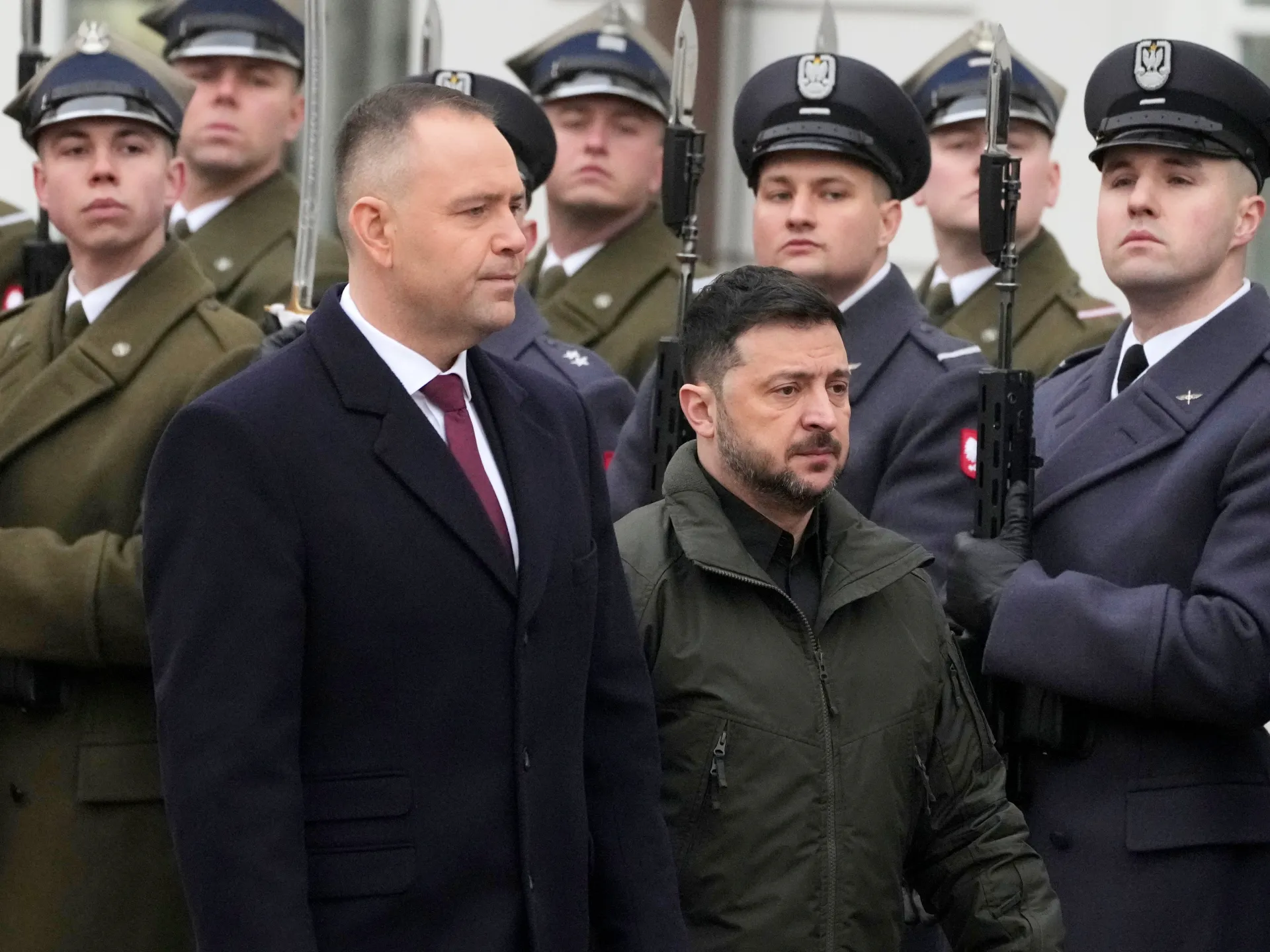
Ukrainian drones have hit a Moscow oil refinery for the second time this week while Russia fired missiles at Kyiv, as President Volodymyr Zelenskyy seeks support from the United States and Europe to reach a deal to end the war.
Russia’s Defence Ministry said on Thursday that its air defences shot down 555 Ukrainian drones over several regions overnight, with almost 200 intercepted as they were approaching the Russian capital.
Recommended Stories
list of 4 itemsend of list
Moscow Mayor Sergey Sobyanin said several drones hit an oil refinery.
“Air defence forces continue to repel a massive attack. Several drones managed to reach the Moscow oil refinery,” Sobyanin said, adding that a shopping centre also suffered minor damage.
The attack on the oil facility is the second this week, after a drone attack on Tuesday halted operations at the refinery, according to the Reuters news agency, as widespread damage to Russian energy facilities worsens the country’s fuel crisis.
The regional governor said that in the surrounding Moscow region, a high-rise residential building, an industrial facility and a number of private houses were also damaged in the drone attack. The Sheremetyevo airport, Moscow’s busiest, suspended flights and evacuated people, as several sought shelter in the car park, the airport said in a statement.
Kyiv meanwhile came under a second Russian air attack this week, as ballistic missiles were unleashed on the Ukrainian capital, city officials said. Earlier this week, a major attack on Kyiv by Russia killed 11 people and damaged a UNESCO-listed 1,000-year-old monastery, drawing condemnation from European leaders. Russia denied striking the monastery.
The attacks come as Zelenskyy works to pressure Russia into negotiating an end to its more than four-year-long war. Zelenskyy said he had spoken to US President Donald Trump, French President Emmanuel Macron and other leaders from G7 countries to coordinate ways to end the war.
G7 leaders pledged to strengthen Ukraine’s air defences and increase pressure on Moscow’s war economy, including by tightening sanctions on the Russian oil and gas sectors.
Trump told reporters he was “gonna do whatever I can” to end the war.
Zelenskyy said he received important commitments from the G7, including “more air defence missiles along with licenses to produce them, and a winter support package.”
“Importantly, the US is ready to provide backstop across these lines of effort,” Zelenskyy wrote on X. “It is key that everything discussed be implemented. Russia must come to learn that its war will never be normalised.”
Kyiv, Ukraine – After almost seven hours in a kilometres-long, snail-paced line made up of hundreds of cars at a gas station near Crimea’s administrative capital, Simferopol, Dilyaver was lucky enough to buy gas.
He paid $22 for 20 litres (5.3 gallons).
Recommended Stories
list of 4 itemsend of list
“There were teenagers running around offering gas for 300 rubles [$4.2], one almost got beaten up by angry guys in the line,” the 52-year-old Crimean Tatar man told Al Jazeera on Saturday.
He withheld his last name and personal details because an interview with foreign media could land him in jail.
Judging by licence plates and accents, some of the men in the line were Russian tourists who decided to cut their vacations short and flee via the $4bn, 19km (12-mile) long Crimean Bridge, Dilyaver said.
“The [tourism] season is ruined, that’s bad news for almost everyone here,” he said, referring to the annual arrival of millions of tourists that feeds many on the arid peninsula, where agriculture has suffered after Kyiv dammed a key water artery.
Dilyaver does not know when he will fill up his rundown Skoda again because he expects fuel shortages to get worse.
But the fuel problem is just the tip of the iceberg of problems Crimea has been facing.
“Crimea’s key problem is not because there’s no fuel,” Nikolay Mitrokhin, a researcher with Germany’s Bremen University who analyses the Russia-Ukraine war, told Al Jazeera. “The problem is that Ukrainian drones began barraging over the peninsula’s domestic roads.”
Cars queue for fuel at a gas station after the authorities restricted fuel sales amid a supply shortage following Ukrainian attacks on logistics routes in the course of the Russia-Ukraine conflict, in the Black Sea resort city of Yevpatoriya, Crimea, June 3, 2026 [Alexey Pavlishak/Reuters]
Since mid-May, Ukrainian drones have attacked hundreds of trucks carrying fuel, ammunition and other supplies from southwestern Russia to Crimea via the “land bridge” through occupied Ukrainian regions.
The drones, whose operators sit in bunkers up to 200km (124 miles) away from the “land bridge”, also pepper roads with mines that weigh only 500 grams (1.1 pounds) and have magnetic or motion sensors.
Cargo ships trying to get fuel and food to Crimea or transporting steel and grain from occupied regions of southeastern Ukraine have also been attacked.
The attacks “illustrate Crimea’s vulnerability”. Volodymyr Fesenko, head of the Kyiv-based Penta think tank, told Al Jazeera. “Ukraine can regularly, daily strike military, infrastructure sites in Crimea … Ukraine turned Crimea into an island surrounded by war and fire.”
‘Just the beginning’
Ukraine’s Third Special Battalion said earlier this month that its drone operators have “taken aerial control” of the strategic supply route from the occupied southern city of Melitopol to the Chongar bridge in northern Crimea.
“That’s just the beginning! There’s more to come!” the Battalion said in a Facebook video with footage of exploding and burning trucks.
Chongar is a key entry to Crimea that can barely be called a peninsula because Sivash, also known as The Rotten Sea, a labyrinth of lagoons, salt marshes and wetlands, divides it from mainland Ukraine, leaving only three strips of land wide and firm enough for roads and a railway.
Just more than a week ago, the Chongar bridge was damaged by drones and is only capable of letting light vehicles through, while buses and trucks take a pontoon bridge nearby.
“The bridge is open, the damaged part is cordoned off, one lane is operational, there are no traffic jams because there’s few cars,” a driver who passed through it wrote on Telegram.
Ukrainian drones also struck fuel depots inside Crimea – along with air defence systems, airfields, military bases, command centres and the facilities of Russia’s Black Sea Fleet that relocated to the Russian port of Novorossiysk after losing at least a third of its vessels.
After Russia’s annexation of the peninsula in 2014, Moscow spent billions of dollars to militarise Crimea by deploying frigates and diesel submarines; advanced S-400 air defence systems; tens of thousands of servicemen; and building new military bases, airfields, radar stations, garrisons and living quarters.
“Putin turned Crimea into a military base, and thus made it the most vulnerable place in the war with Ukraine,” Fesenko said.
The Crimean bridge alone cannot handle the redirected traffic as trucks weighing more than 1.5 tonnes are no longer allowed to pass through.
Early Monday, a Ukrainian drone struck a moving train, killing one of the drivers and prompting Moscow to halt the movement of nine other trains.
Their passengers are being evacuated by buses, Kremlin-appointed authorities said.
Days earlier, one of Russia’s most outspoken warmongers raised his voice about the panic in Crimea.
“What’s happening at Crimean gas stations is a real nightmare for locals and servicemen,” Igor Girkin, an ex-intelligence officer who led the first group of Moscow-backed separatists in southeastern Ukraine in 2014, wrote on Telegram on June 1.
Kyiv “acts brazenly … trying to cut off the peninsula and our southern [military] groups from fuel supply,” Girkin, who was sentenced to four years in jail in 2024 after lambasting Moscow’s military failures in Ukraine, wrote from behind bars.
“To some, Crimea seems like a resort. No, today it’s a front-line region,” he wrote.
And to Crimean Tatars such as Dilyaver, what’s happening around them is part of a decades-old struggle for survival in Moscow’s shadow.
Russian patrol ship Svetlyak in Yurkyne, Crimea, in this screengrab from footage released by Ukraine’s Unmanned Systems Forces commander Robert Brovdi on June 4, 2026 [Robert Brovdi via Telegram/Handout via Reuters]
Since the annexation, his community of about 250,000, or about one-tenth of Crimea’s population, has been under constant pressure.
Masked officers break into the houses of community leaders, activists or observant Muslims at dawn to search for “extremist materials” that in many cases turn out to be religious texts, including The Quran for Children.
Arrests and trials follow – more than 100 Tatars have been sentenced to jail for “extremism,” “separatism” and “terrorism.”
Another dozen went missing without a trace and are believed to have been abducted and killed by Russian intelligence.
Dilyaver owned a tiny grocery store near Simferopol.
But he faced higher taxes and visits by government inspectors who demanded bribes, so Dilyaver, who also suffered a scam, closed the store. He barely makes ends meet now by selling deep-fried meat and cheese pies next to a bus stop.
Dilyaver’s parents were born in Soviet Uzbekistan after the 1944 deportation of every Crimean Tatar by Soviet leader Joseph Stalin, who thought their cultural ties to Turkiye posed a threat to the USSR’s security.
“We have a saying, ‘If a Russian lives next to you, keep an axe ready,’” Dilyaver’s 77-year-old mother Gulsum told Al Jazeera. “We suffered from them so much, and it’s far from over.”
Ukrainian attacks triggered food shortages.
Macaroni, flour, canned meat, fish and vegetables have already been swept off the shelves in some stores and supermarkets, Dilyaver said.
“The Soviet mentality is still at work. If there’s a problem – buy buckwheat,” he quipped, about the cheap and nutritious grain that symbolises resilience in the former Soviet Union.
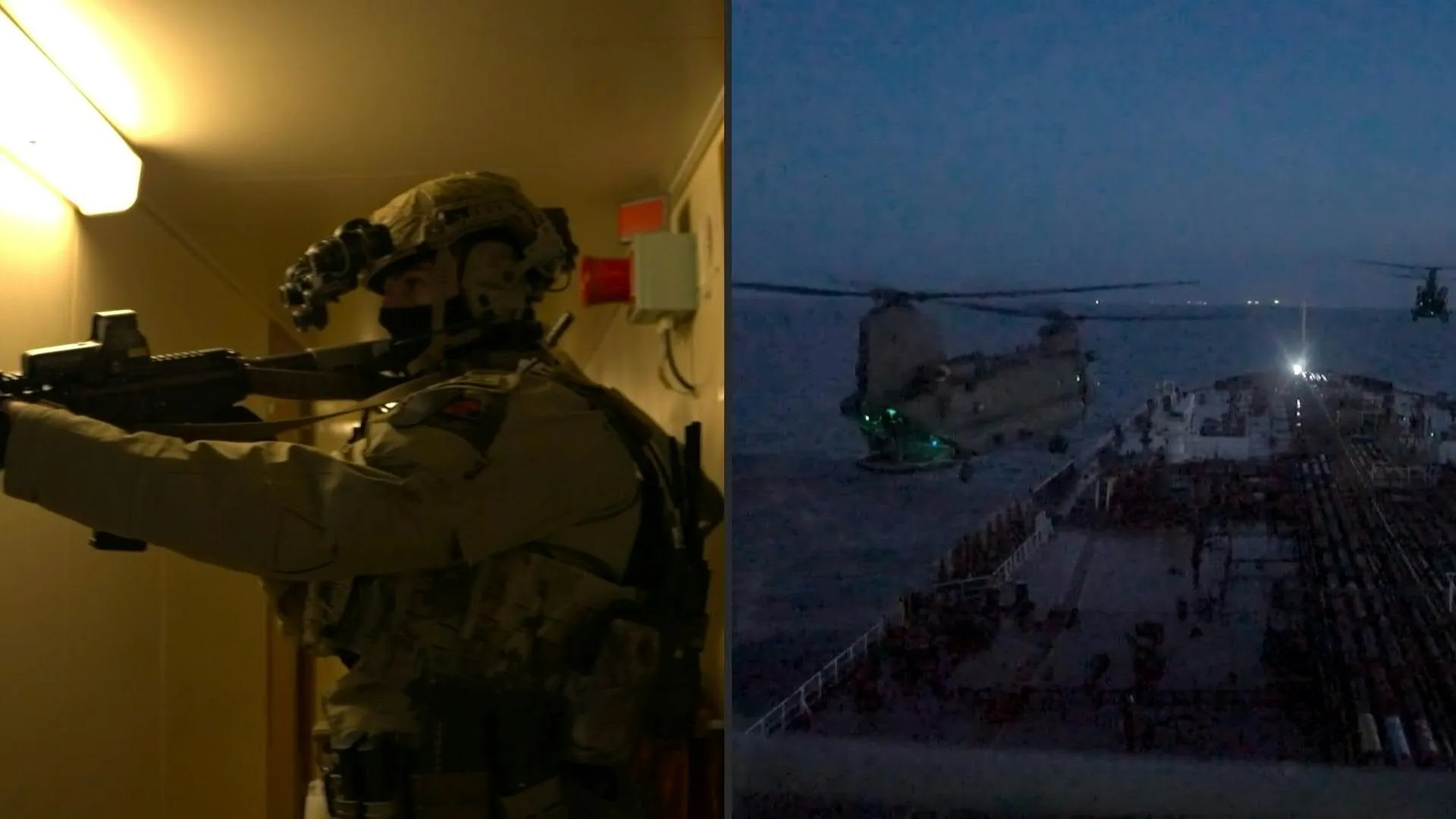
British armed forces intercepted an oil tanker believed to be part of Russia’s sanctioned shadow fleet. The oil tanker ‘SMYRTOS’ was taken in an first-ever operation by the British military in the English Channel.
Three people have been killed in the border region between Russia and Ukraine, according to officials, as the two sides launched attacks on each other in the latest exchange of fire.
In Russia, two civilians were killed and two wounded in the region of Bryansk after Kyiv struck the settlement of Suzemka with artillery, Acting Governor Egor Kovalchuk said in a post on Telegram on Friday.
Recommended Stories
list of 4 itemsend of list
A drone also hit an apartment building in Russia’s central region of Tatarstan, injuring three people, while industrial facilities were hit, regional head Rustam Minnikhanov said on the Telegram messaging app.
Production work was not suspended, however, he added, but did not identify any plants. The region is home to key oil processing and petrochemical facilities, among others.
Russia’s city of Togliatti, home to the country’s biggest carmaker Avtovaz, also came under a drone attack overnight, Samara region Governor Vyacheslav Fedorishchev said on Telegram.
“Attention! Drone attack regime for Togliatti,” he wrote. Togliatti is a city on the Volga River some 800 km (500 miles) southeast of Moscow.
These strikes are what Ukraine refers to as a “logistics lockdown”, said Al Jazeera’s Audrey MacAlpine, reported from Kyiv. She explained that they are mid-range strikes anywhere over 30 kilometres (17 miles) from the front line, using long-range drones and sometimes heavy weaponry to target things like oil refineries, bridges, logistics, and roads as a means of halting Russia’s front-line operations.
At the same time, she said, Ukraine also launches what it calls “long-range sanctions” against Russian targets – a “tongue-in-cheek term … that we’ve seen escalating over the past several months, where Ukraine is targeting Russia’s oil refineries and oil industry,” MacAlpine explained.
In Ukraine, a drone attack in the border region of Sumy caused casualties.
A 44-year-old woman working as a rail station operator died on her way to a shelter during the strike, according to the head of Ukrainian Railways, Oleksandr Pertsovkyi.
Another woman, a station attendant, was wounded in the attack, Pertsovkyi added.
Three people were wounded in separate attacks on Ukraine’s southern Mykolaiv region.
“We’ve seen continual threats by Russia before massive attacks, and we have certainly seen the results of those actions here in cities like Kyiv, where ballistics continue to be the Achilles heel for Ukraine”, MacAlpine said.
Russian fuel shortages after Ukrainian attacks
In recent months, Kyiv has carried out an increasing number of attacks on Russia and Russian-occupied territories.
On Thursday, fuel stations on the Russian-held Crimean Peninsula ran out of petrol after a Ukrainian campaign against the peninsula’s supply lines escalated.
A witness in Sevastopol, the peninsula’s largest city, told the Reuters news agency there was no fuel at most local petrol stations, with supplies struggling to keep up with a rationing regime imposed in recent weeks.
Another witness, in the resort town of Yevpatoriya, said there was a long queue outside the only petrol station open there.
Ukraine has been intensifying drone attacks on supply lines to the peninsula, which Russia seized from Kyiv in 2014. Local authorities have imposed fuel rationing regimes, with some foodstuffs also running short.
Besides Russian-held Crimea, only two regions in Siberia have officially confirmed the shortages.
Most other regions have said the situation is under control, and that some disruptions were caused by panic buying. Moscow has denied there were any problems with fuel supplies.
Estonia, the smallest of the Baltic states, has experienced some dramatic incidents.
In September, Tallinn said Russian MiG-31 fighter jets entered its airspace for 12 minutes. NATO scrambled Italian F-35s stationed in Estonia as part of the Baltic Air Policing mission. Russia denied violating Estonian airspace.
In March, a stray Ukrainian military drone crashed into Estonia’s Auvere power station.
In April and May, Estonian authorities said drones entered their airspace, grounding flights and prompting warnings issued to citizens.
Estonia’s intelligence services have said that the country does not believe Russia is preparing an imminent military attack on NATO, but that Moscow may be rebuilding its forces for the long term while engaging in hybrid attacks through drones, cyber operations, and sabotage.
Tallinn claims one such hybrid method is the so-called “Narva People’s Republic”, a pro-Russian separatist narrative that casts Estonia’s Russian-speaking border region as a distinct political entity, echoing the Donetsk and Luhansk “people’s republics” used by Moscow as a pretext for intervention in Ukraine.
Estonian authorities say it is part of a disinformation campaign rather than a credible separatist movement.
Its military has, at times, been bellicose in its statements.
In May, Estonia’s Lieutenant General Andrus Merilo argued that Russia is rebuilding its military much faster than many Europeans realise and that Estonia must be ready for a renewed military threat within the next few years, marking 2027 as a critical benchmark for readiness.
In September 2024, in an interview with the Estonian public broadcaster ERR, Estonian General Vahur Karus stated that if Moscow showed signs of preparing for an attack, Estonia could strike the Russians first.
“Our capability to neutralise the enemy on its own territory is crucial,” he said.
However, the government’s rhetoric has been more measured.
In April, Ukrainian President Volodomyr Zelenskyy suggested in an interview that a new wave of Russian mobilisation may be used to launch an attack on the Baltic states.
But Estonian politicians, including the foreign minister, warned that the remarks echoed Moscow’s objective of stoking fears and made cooperation difficult.
“We do not see Russia concentrating its forces or preparing in any way militarily to attack NATO or the Baltic states; rather, it is the opposite. Russia is not in a very strong position on the Ukrainian front, and economically as well,” Estonian Foreign Minister Margus Tsahkna told ERR.
“No one is in the streets panicking,” Tony Lawrence, a research fellow at the International Centre for Defence and Security in Tallinn, told Al Jazeera.
The air incursions have “put people on edge”, but there is a sense that Russian forces are too preoccupied in Ukraine, he said.
The drone entered Latvian airspace due to ‘Russian electronic warfare’, the military says.
Published On 8 Jun 20268 Jun 2026
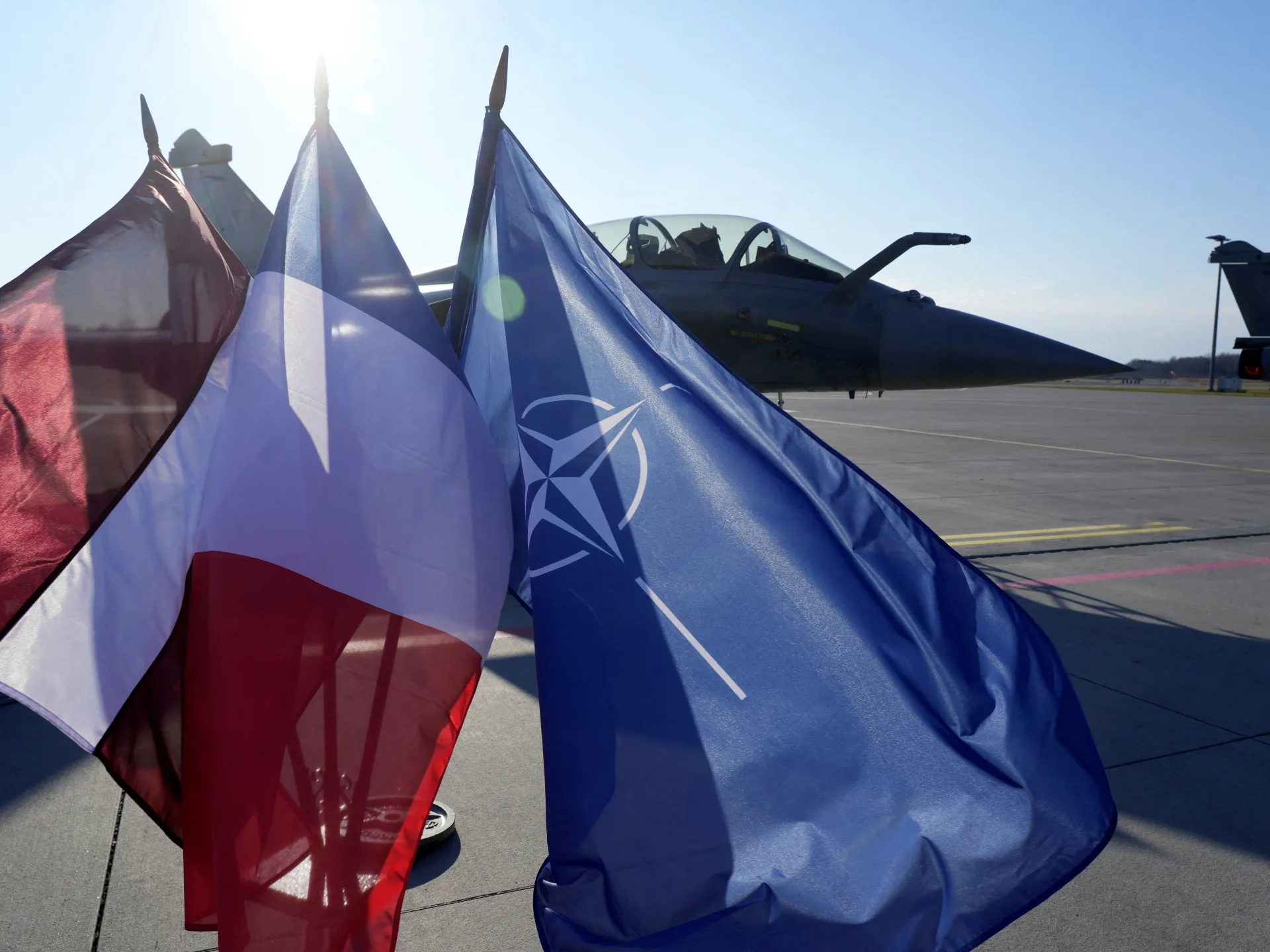
NATO fighters have scrambled to shoot down a drone that entered Latvian airspace from Russia.
The Latvian military said on Monday that French aircraft had destroyed “a foreign unmanned aerial vehicle that had entered Latvian airspace as a result of Russian electronic warfare”, without saying where the drone originated.
Recommended Stories
list of 4 itemsend of list
The incident adds a growing list of incursions from the Russia-Ukraine war into neighbouring countries that are part of the NATO alliance, sparking fears of escalating spillover effects as Moscow’s siege on Ukraine continues apace.
“Thank you to our French allies for shooting down the drone that penetrated Latvian airspace!” Riga’s Foreign Minister Baiba Braze wrote on social media.
Latvian Prime Minister Andris Kulbergs heralded the “swift decision-making and professional action”.
Defence Minister Raivis Melnis told reporters the drone was shot down just after 9am local time (07:00 GMT) near the village of Berzgale, located about 30km (18 miles) from the Russian border. No one was hurt, and no property was damaged, Melnis said.
The French military said in a statement that the jets took off from Siauliai airbase in northern Lithuania and destroyed the drone “over an uninhabited area”.
It added that the incident demonstrated France’s “commitment to contributing to the security of Europe’s eastern flank”.
Authorities had previously warned residents in some parts of eastern Latvia to shelter in place because of the threat.
Ongoing threat
Countries in the region have reported repeated drone incursions from air and sea in recent months, spawning concerns over the widening impact of Russia’s war on Ukraine.
The issue has raised the political pressure in Latvia, leading to the resignation of Prime Minister Evika Silina last month.
The increased frequency of the reports comes as Ukraine has increased its attacks on Russia, with Moscow deflecting drones using electronic jamming. The statement from the Latvian military regarding “Russian electronic warfare” appears to suggest the drone shot down likely came from Ukraine.
Fragments of a Ukrainian drone were also found in a field in Moldova on Monday after it entered from Ukraine, an incident that officials also blamed on Moscow.
Last week, a maritime drone exploded in Romania’s Constanta port. Kyiv later confirmed it involved a Ukrainian drone that was knocked off course by Russian electronic interference.
However, it was a Russian drone that hit an apartment building in eastern Romania in late May, injuring two people and prompting Bucharest to call for NATO to speed up the transfer of anti-drone capabilities.
European Commission President Ursula von der Leyen warned after that crash that Russia’s war on Ukraine is “increasingly becoming a direct threat to countries on our Eastern border” and said solidarity with them was “absolute”.
The French military jet that shot down Monday’s drone is part of the NATO Baltic Air Policing mission, which has patrolled the skies of Latvia, Lithuania and Estonia since they became part of NATO in 2004.