rules

German football federation rules out World Cup boycott to oppose Trump | World Cup 2026 News

German football federation confirms it met to discuss a boycott of the FIFA 2026 World Cup, which is co-hosted by the US.

The German football federation has ruled out a boycott of the World Cup despite calls from within to send a message to United States President Donald Trump.

“We believe in the unifying power of sport and the global impact that a FIFA World Cup can have, the federation said in a statement issued late on Friday. “Our goal is to strengthen this positive force – not to prevent it.”

Recommended Stories

list of 4 itemsend of list

The federation, known as the DFB, said its executive committee met and discussed the option of a boycott of the tournament in the United States, Canada and Mexico, a consideration first proposed last week by DFB Vice President Oke Gottlich.

Gottlich, who is also the president of Bundesliga club St Pauli, referred to Trump’s recent actions and statements and said it was time to “seriously consider” a boycott.

In what appears to be a public rebuke to Gottlich, however, the DFB said “debates on sports policy should be conducted internally and not in public”.

The DFB said a boycott “is not currently under consideration. The DFB is in contact with representatives from politics, security, business, and sports in preparation for the tournament” from June 11-July 19.

Trump has sown discord in Europe with his takeover bid for Greenland and threats to impose tariffs on European countries that opposed it, while US actions in Venezuela and at home in dealing with protests in American cities have also raised alarm.

Former FIFA president Sepp Blatter last week advised fans to stay away from the tournament.

When president, however, Blatter opposed calls to boycott the 2018 World Cup in Russia over concerns about Ukraine.

“Football can not be boycotted in any country,” he said at the time.

Ahead of this summer’s tournament, fans have concerns about high ticket prices, while travel bans imposed by the Trump administration could also prohibit supporters from some competing nations from attending.

Germany’s team, at least, will be there.

“We want to compete fairly against the other qualified teams next summer,” the DFB said. “And we want fans worldwide to celebrate a peaceful festival of football in the stadiums and at fan zones – just as we experienced at the 2024 European Championship in our own country.”

Source link

Appeals court rules DHS Secretary Kristi Noem unlawfully ended TPS for Venezuela, Haiti

Jan. 29 (UPI) — An appeals court ruled that Homeland Security Secretary Kristi Noem unlawfully ended immigration protections for Haiti and Venezuela.

The three judges of the 9th U.S. Circuit Court of Appeals ruled against Noem, who ended the Temporary Protected Status for Venezuelans on Jan. 29, 2025. She ended TPS protection for Haitians on June 28.

The opinion, written late Wednesday by Judge Kim McLane Wardlaw, said Noem’s “unlawful actions have had real and significant consequences for the hundreds of thousands of Venezuelans and Haitians in the United States who rely on TPS.”

She said the move has hurt immigrants who came here to work.

“The record is replete with examples of hard-working, contributing members of society — who are mothers, fathers, wives, husbands, and partners of U.S. citizens, pay taxes, and have no criminal records — who have been deported or detained after losing their TPS,” Wardlaw wrote.

“The Secretary’s actions have left hundreds of thousands of people in a constant state of fear that they will be deported, detained, separated from their families, and returned to a country in which they were subjected to violence or any other number of harms,” she said.

The concurring opinion by Judge Salvador Mendoza Jr. noted that Noem and President Donald Trump had made racist remarks about the people of Venezuela and Haiti, meaning that the decision to end TPS was “preordained” and not based on need.

“The record is replete with public statements by Secretary Noem and President Donald Trump that evince a hostility toward, and desire to rid the country of, TPS holders who are Venezuelan and Haitian,” Mendoza wrote. “And these were not generalized statements about immigration policy toward Venezuela and Haiti or national security concerns to which the Executive is owed deference. Instead, these statements were overtly founded on racist stereotyping based on country of origin.”

The concurring opinion cites Noem calling Venezuelans “dirtbags” and “criminals,” and Trump saying that immigrants are “poisoning the blood” of Americans.

The ruling, though, won’t change the TPS removal for Venezuelans. The Supreme Court ruled in another case in October to allow Noem to end the TPS while the court battles continue.

TPS began as part of the Immigration Act of 1990. It allows the Department of Homeland Security secretary to grant legal status to those fleeing fighting, environmental disaster or “extraordinary and temporary conditions” that prevent a safe return. TPS can last six, 12 or 18 months, and if conditions stay dangerous, they can be extended. It allows TPS holders to work, but there is no path to citizenship.

Haiti was given TPS in 2010 after a magnitude 7 earthquake that killed about 160,000 people. It left more than 1 million without homes.

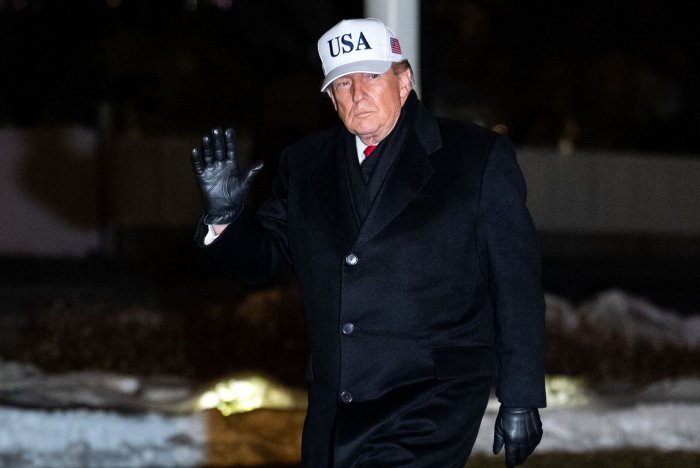
President Donald Trump walks on the South Lawn of the White House after arriving on Marine One on Tuesday. Trump threw his support behind a legislative proposal that would expand sales of higher-ethanol E15 gasoline as he looked to build support for his economic record with a rally in Iowa. Photo by Kent Nishimura/UPI | License Photo

Source link

Corruption case against Curren Price can move to trial, judge rules

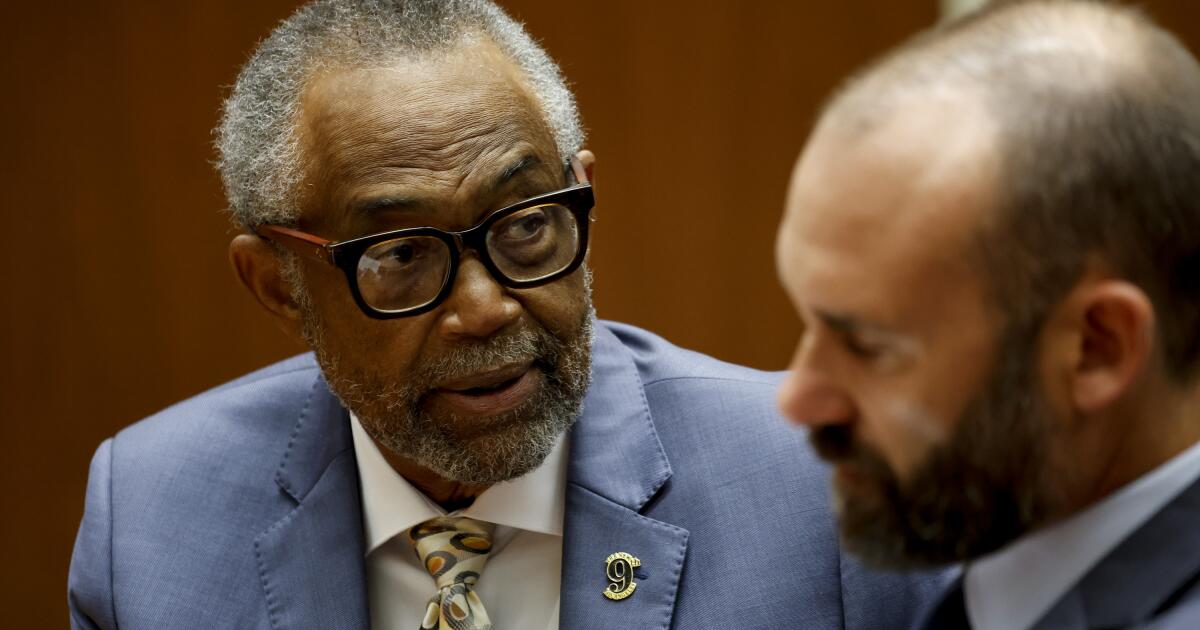
A Los Angeles County judge ruled Wednesday that a corruption case against L.A. City Councilman Curren Price can move forward to trial, ensuring the misconduct scandal will hang over the veteran politician’s final year in office.

L.A. County Superior Court Judge Shelly Torrealba determined that prosecutors had provided enough evidence to move forward on four counts of voting on matters in which Price had a conflict of interest, four counts of embezzlement and four counts of perjury.

Price, who is set to leave the City Council after reaching his term limit at the end of the year, declined to comment after the hearing.

The councilman, who has represented South L.A. for more than a decade, was charged in June 2023. Prosecutors allege Price repeatedly voted to approve sales of land to developers or funding for agencies who had done business with his wife, Del Richardson, and her consulting company. Some of the votes involved funding and grants for the L.A. County Metropolitan Transportation Authority and the city housing authority.

Price, 75, is also accused of perjury for failing to include Richardson’s income on disclosure forms and embezzlement for including her on his city health insurance plan before they were legally married. He is due back in court in March, Torrealba said.

Richardson was named as a “suspect” in the district attorney’s office’s initial investigation in 2022, according to documents made public last year, but she was never charged with a crime. She has been among a group of Price’s supporters who have been in court for the past week. The two wore matching burgundy suits during Wednesday’s hearing.

Much of the weeklong proceeding centered around whether Price knew of potential conflicts of interest before casting votes, or intended to hide his financial stakes in them from the public. Delphi Smith, a former staffer for the councilman, and Price’s deputy chief of staff Maritza Alcaraz took the stand to explain the process they used to flag problematic council votes for Price and insisted they made their best efforts to highlight agenda items linked to vendors or agencies who had worked with Richardson.

“If the Councilman voted on something that was a potential conflict, he did so without knowing,” Alcaraz testified Wednesday.

L.A. County Deputy Dist. Atty. Casey Higgins, however, said Price is ultimately responsible for disclosing conflicts of interest and argued blaming his subordinates was not a defense to corruption charges.

“It’s not only hiding. It’s trying to create a wall around himself, to create this plausible deniability,” Higgins said. “It’s this ostrich with his head in the sand approach.”

Higgins said Alcaraz and Smith were “trying to jump in front of the bus” and that it was impossible to believe that Price had no knowledge of the conflicts. The dealings allegedly took place between 2019 and 2021 — after a 2019 Times investigation revealed he voted on decisions involving at least 10 companies in the same years they were listed as providing at least $10,000 in income to Richardson’s firm.

Price’s defense attorney, Michael Schafler, has argued there is no evidence that Price knew of the conflicts, and claimed payments to Richardson had no influence on Price’s voting decisions. All of the votes referenced in the criminal complaint passed with overwhelming support, and Price’s vote made no difference in the final result.

“There’s been no evidence presented that Mr. Price acted with any wrongful intent. No testimony from any witness … who said Mr. Price acted with willful intent,” Schafler said Wednesday. “I’ve never seen a public corruption case like that in my life.”

There were enormous sums of money on the line in each vote referenced in the criminal complaint. Richardson took in more than a half-million from October 2019 to June 2020 from the city housing authority before Price voted in favor of millions in grant funding for the agency, according to an amended complaint filed against Price last year.

Prosecutors also alleged Price wrote a motion to give $30 million to the L.A. County Metropolitan Transportation Authority during a time frame when Richardson was paid upward of $200,000 by the agency.

After Torrealba’s ruling, Schafler said he was “disappointed” but thought the evidence presented over the past week revealed that “the prosecution’s case has a lot of gaps, a lot of holes, it’s based largely on speculation.”

Some of Price’s City Council colleagues have said Price’s alleged crimes were tantamount to paperwork errors, and should have been handled by the city’s Ethics Commission.

While questioning former employees of Price and Richardson, Higgins sought to paint a more nefarious picture. He repeatedly scrutinized the way that Price’s staff and a former employee of Del Richardson & Associates compiled a list of the firm’s projects that could represent conflicts and communicated about them.

Much of the conflict information was placed on a flash drive and given to Smith in person by Martisa Garcia, an employee of Richardson, Higgins said. Updates to the file were then made over the phone, and not discussed via e-mail, according to Higgins. When Smith and Alcaraz discussed votes in which Price might have to recuse himself, they did so on personal phones rather than city-issued devices, according to evidence Higgins put forth.

Higgins suggested Price’s staff was trying to hide the conflicts of interest.

“Was the thumb drive used to avoid public records requests?” Higgins asked Alcaraz, who curtly replied “No.”

Generally speaking, California Public Records Act requests for an elected official’s communications will only capture what is contained on government devices, not personal phones or e-mails. A spokeswoman for Price, Angelina Valenica, said there was no “intent to avoid PRA requirements” on the part of Price’s staff.

“The Councilmember was not involved in the handling, transport or storage of this information,” she said. “He relied on and trusted his staff to handle the matter appropriately and to seek guidance as necessary.”

While it’s unlikely Price will stand trial before his term runs out, the case could loom large over the race to replace him. A field of seven candidates is running for his council seat, including Price’s deputy chief of staff, Jose Ugarte, who has faced allegations that he failed to disclose consulting income that are similar to the basis of the perjury charges against his boss.

Chris Martin, a candidate and civil rights attorney with Black Lives Matter Los Angeles, said Wednesday that if the allegations are true, Price and his staff need to step down.

“It’s a serious breach of public trust. It’s important that we have leaders in the 9th District who will walk with integrity,” Martin said. “It also seems like he’s got a major issue with his staff enabling him. They should all resign.”

Source link

Charter Reform Commission, L.A. City Council look to impose transparency rules

The Los Angeles City Council voted Tuesday to approve a law aimed at boosting transparency at the Charter Reform Commission, by requiring that members of that panel disclose any private talks they have with the city’s elected officials.

The vote comes about two months before the commission, which began its work in July, is scheduled to finish its deliberations and deliver a list of recommendations to the council.

Councilmember Monica Rodriguez, who proposed the ordinance, said she has been trying since August to pass a measure requiring the disclosure of such private conversations, known as “ex parte” communications. That effort was greeted with “nearly six months of stonewalling,” she said.

“While this is an important victory for oversight and transparency, government accountability shouldn’t be this hard to secure,” she said.

The ordinance, which also applies to communications between commissioners and elected officials’ staff, is expected to go into effect in about a month. Meanwhile, the 13-member Charter Reform Commission approved its own policy a week ago requiring the disclosure of private conversations between its members and city elected officials.

Some government watchdogs say the disclosures are needed to prevent council members and other city elected officials from seeking to dictate the details of the recommendations that are ultimately issued by the commission. The volunteer citizens panel is currently looking at such ideas as increasing the size of the council and potentially changing the duties of citywide elected officials.

“If the public is going to trust the outcomes of our charter reform process, it has to be transparent and credible,” Commissioner Carla Fuentes, who pushed for the new disclosure policy at its Jan. 21 meeting.

The commission has not yet voted on a proposal to also require disclosure of communications with elected officials’ staff.

It is also looking at the idea of adopting ranked choice voting, where voters list all of the candidates in order of preference, and switching the city to a multi-year budget process.

Councilmember Bob Blumenfield raised warnings about the council’s vote on Tuesday, saying charter reform is substantively different from the 2021 redistricting process. Council members should be engaging in conversations with its volunteer commissioners, to help them better understand how the city is run, Blumenfield said.

Those communications will ensure the commissioners make an informed decision what to recommend for the ballot later this year.

“I don’t want this message to be that it’s somehow bad for council members and mayor and elected officials to be engaging in this process,” he said. “To the contrary, I think we need to double down our engagement. We need to speak to those commissioners. They need to learn a lot more about how this city really works for this thing to be effective.”

The commission is scheduled to take up the motion to disclose staffer conversations at its next meeting on Feb. 7.

Rob Quan, an organizer with the group Unrig LA, said he doesn’t want to see a repeat of 2021, when members of the citizens commission on redistricting were regularly contacted by council members’ aides. Those ex parte communications were not disclosed, he said.

“If it didn’t apply to staff, we would simply be reinforcing the power of the staff, which have from day one been the most problematic aspect of this commission,” said Quan, whose group focuses on government oversight.

He and a group of other transparency activists have proposed a total ban on ex parte communication, which hasn’t been considered by the current commission.

Source link