Two more airports could ditch the need for Brits to register their biometric details when entering the Schengen area in the hope of avoiding ‘disaster’ this summer
14:38, 29 Jun 2026Updated 14:39, 29 Jun 2026
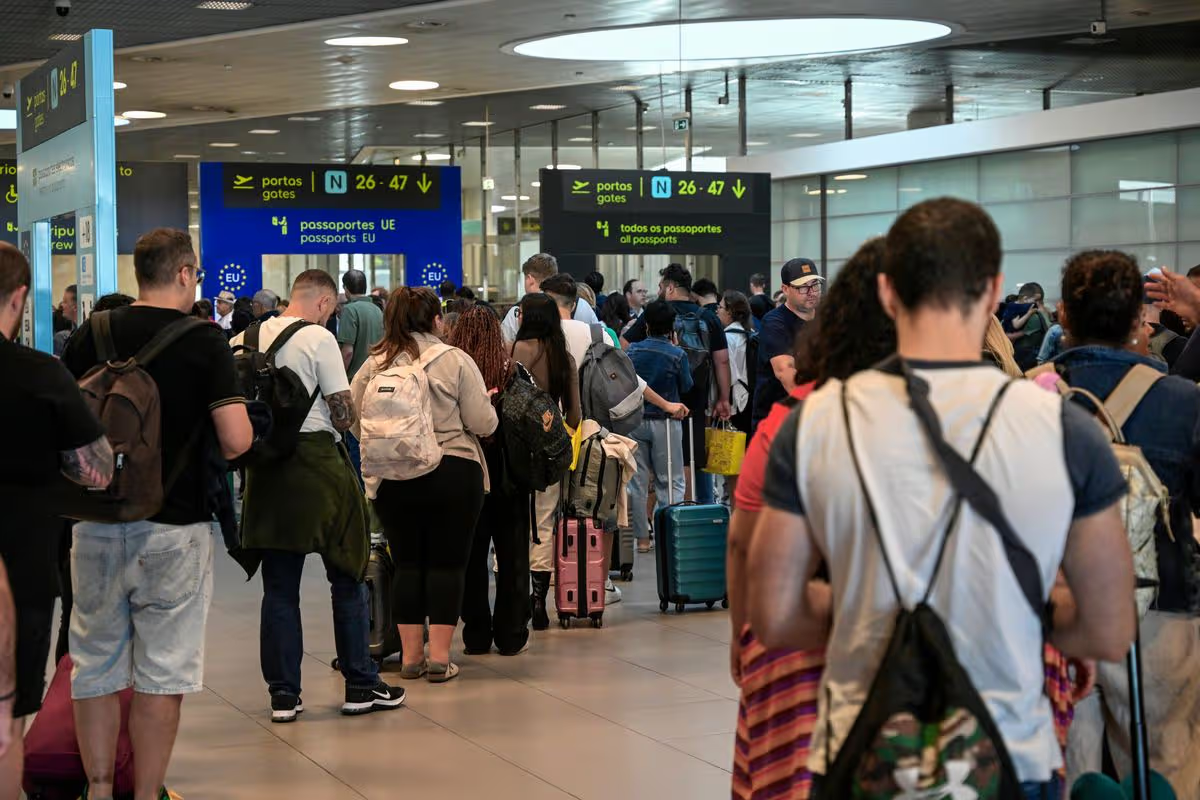
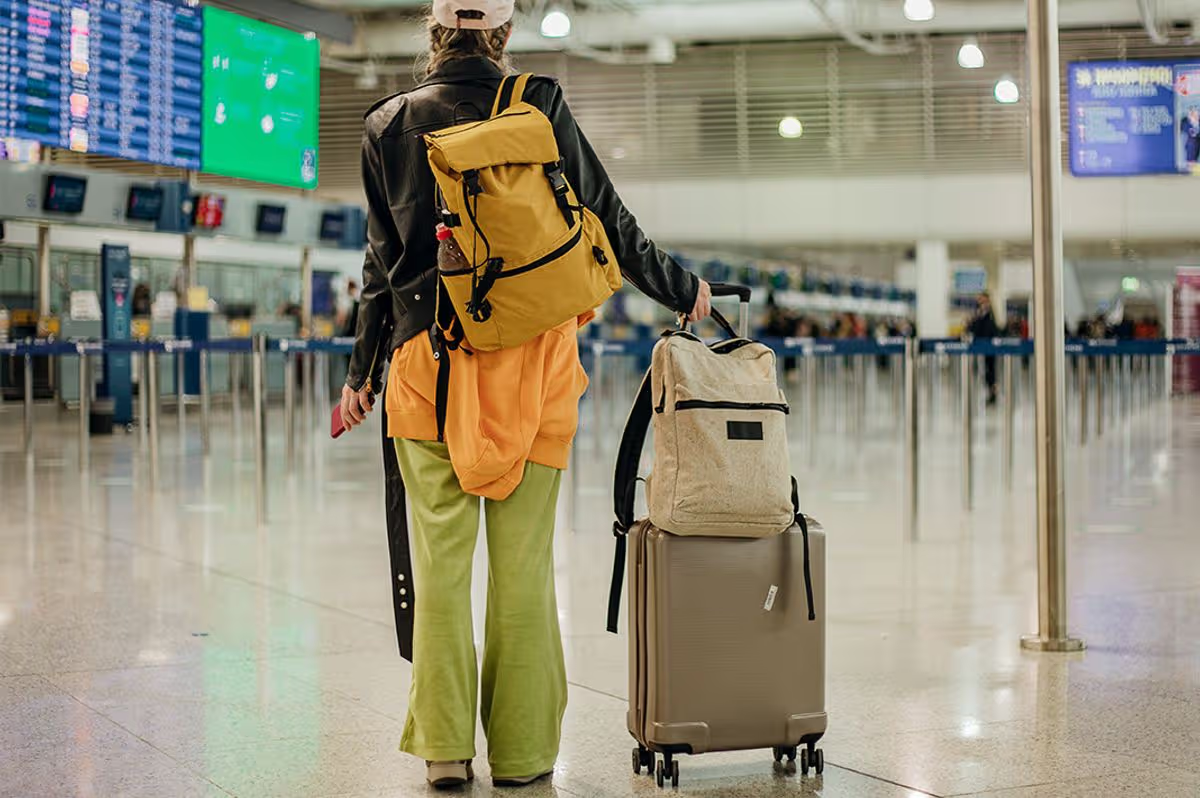
Two more airports could scrap the Entry/Exit System (EES) for Brits amid summer concerns(Image: Getty Images)
The EU’s new travel rules have caused growing concerns for the peak travel season, prompting a number of destinations to look at options to waive them for holidaymakers.
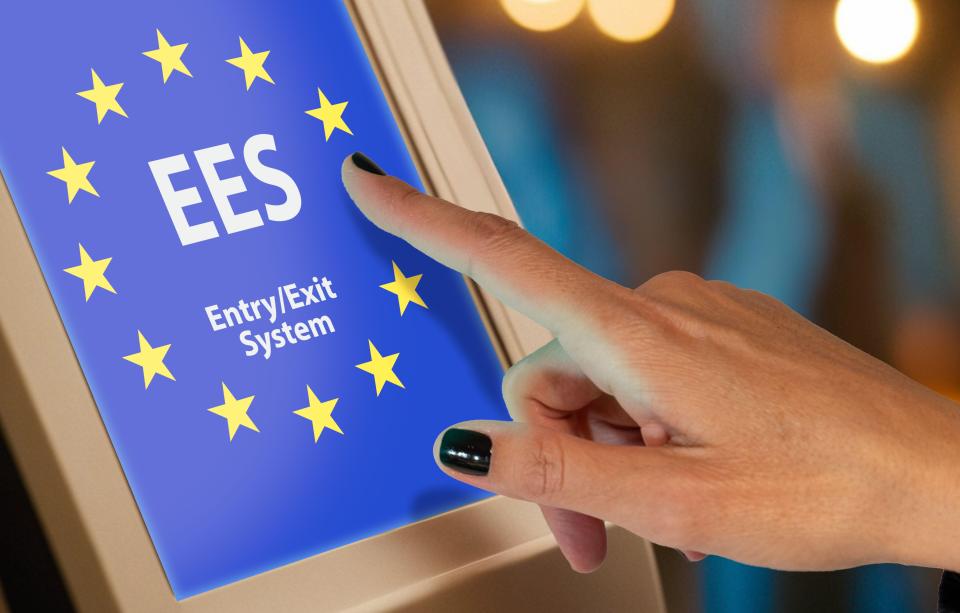
The European Union’s (EU) Entry/Exit System (EES) was fully rolled out on 10 April 2026, requiring all Brits heading to the Schengen area to “create a digital record” and register their biometric details, including fingerprints and a photograph. While it’s been successful in many countries, it continues to cause significant travel disruption at European airports.
There have been reports of Brits being asked to submit their biometric information again, despite having already provided it on their first visit to the Schengen zone. Holidaymakers have also been stuck in gruelling queues lasting up to four hours as they attempt to navigate the digital border system, with missed flights and ruined holiday plans.
In an attempt to ease the travel chaos, particularly during peak travel times, Greece opted to waive the EU requirement for Brits to provide fingerprints and facial scans at airport border controls earlier this year. In an official statement, the Greek Embassy confirmed: “In the framework of the implementation of the Entry/Exit System, as of 10 April 2026, British passport holders are exempt from biometric registration at Greek border crossing points.”
Now, it appears that Rome Fiumicino Airport and Rome Ciampino Airport could join Greece in waiving the EU requirements in a bid to avoid “disaster” during the peak summer travel months.
Aeroporti di Roma Chief Executive Officer Marco Troncone told the Financial Times, “We are very worried for the summer”, and said his concerns were an “eight or nine” out of 10. He added: “The process proves to be incompatible with the peak volumes that we are going to face. So the only way is to open up the valve. There is no way that we can deliver 100% of the enrolment.”
While Rome is yet to make such a change, Greece remains the only country to have officially eased the EU requirements for British travellers. However, an EU official has indicated that European airports could relax EES requirements until September this year.
Uku Särekanno, Deputy Executive Director of Frontex, which helps to manage the external borders of the EU, said earlier this month: “We have until the end of the summer, the possibility during the tourism season to lift the biometric controls or the biometric registration temporarily.
“If there is a peak hour, you see that there are hundreds of people queuing, their queues are getting too long, then member states still have the possibility to lift biometric registration. The EU has considered, for the period of summer, to make sure that there is still some relief for the worst-case scenario.”
The new digital border system is required for the initial arrival at the airport border within the Schengen zone and has replaced the traditional manual passport-stamping process. Once the initial registration is complete, the EES remains valid for three years.
Countries in the Schengen area include: Austria, Belgium, Bulgaria, Croatia, Czechia, Denmark, Estonia, Finland, France, Germany, Greece, Hungary, Iceland, Italy, Latvia, Liechtenstein, Lithuania, Luxembourg, Malta, Netherlands, Norway, Poland, Portugal, Romania, Slovakia, Slovenia, Spain, Sweden, and Switzerland. Meanwhile, the EES system is not needed for travel to the Republic of Ireland and Cyprus, as neither falls within the Schengen area.
The Foreign Office confirmed the EES change for Greece on its travel advice page. It read: “Greek authorities have indicated that they will not collect biometric data (fingerprints and photos) for UK travellers as part of EES. Follow the advice of authorities on the ground. If you are resident in Greece, make sure to show your residence documentation at passport control to ensure you are not registered in EES.”
Some of the major mainland airports in Greece include: the International Airport of Athens, Thessaloniki International Airport, Kalamata International Airport and Aktion National Airport. Meanwhile, those on the islands include Corfu International Airport, Kefalonia International Airport and Zakynthos International Airport.
Do you have a travel story to share? Email webtravel@reachplc.com
Passengers have been urged to read up on their airline’s mobile boarding pass requirements
Passengers flying soon have been urged to stick to the rules(Image: Getty)
With many youngsters soon breaking up from school for the summer holidays, it won’t be long before families begin making their way to the airport.
However, before loading up the car and wheeling out the luggage, it’s worth brushing up on the rules surrounding mobile boarding passes, as certain airports do not accept them. On top of location-specific restrictions, one budget airline has gone entirely paperless since November 2025. Here’s what you need to know if you’re travelling with easyJet or Ryanair.
What are easyJet’s mobile boarding pass rules?
The airline encourages travellers to use mobile boarding passes, as they allow all travel information to be stored in one secure, easy-to-access location. They also help reduce paper waste by eliminating the need for printed boarding passes.
For added convenience and offline access, you can also save your mobile boarding passes directly to your Apple Wallet or Google Wallet.
Not all airports accept mobile boarding passes. Easyjet explains: “The majority of our airports accept mobile boarding passes, however, the airports listed below do not currently accept mobile boarding passes.”
This includes:
ADB – Izmir
AGA – Agadir
AYT – Antalya
AQJ – Aqaba
BEG – Belgrade-Beograd
DJE – Djerba
ESU – Essaouira
EVE- Harstad
HRG – Hurghada
JSH – Sitia
LXR – Luxor
NBE – Enfidha-Hammamet
RAK – Marrakech
RBA – Rabat Sale
RMF – Marsa Alam
SCR- Scandinavian Mountains
SPX – Cairo Sphinx
SSH – Sharm El Sheikh
It adds: “If you’re flying from an airport that doesn’t currently accept mobile boarding passes, please check in online at www.easyJet.com and print out a paper boarding pass for your flight.
“Many of these airports require all passengers to complete a document check before going to security. If travelling from an affected airport, please make sure you, and anyone you’re travelling with goes to our Bag Drop for a document check before going through security.”
Ryanair confirmed it has “moved to 100% Digital Boarding Passes (DBP). This means all passengers will receive a DBP to their Ryanair App when they check-in online.”
Passengers simply need to check in online via Ryanair.com or through the Ryanair App before arriving at the airport. Once checked in, your DBP will appear automatically within the Ryanair App.
You should present your DBP at airport security and at the boarding gate for your flight. The airline explains the shift to fully digital means:
DBP lowers airport costs and fares for all Ryanair passengers.
Provides a better service (including flight info) for customers on day of travel.
Improves customer service and re-booking during flight disruptions.
Better for our environment (gets rid of 300 tonnes of paper annually).
If you have completed online check-in and your smartphone or tablet is lost, stolen, or runs out of battery, you can get a complimentary boarding pass at the airport.
It adds: “If passengers don’t have a smartphone or tablet, as long as they have already checked-in online before arriving at the airport, they will receive a free of charge boarding pass at the airport. However, they will not be able to access real-time flight updates or benefit from enhanced customer service during any flight disruptions.”
If passengers don’t check-in online before arriving at the airport, they will be required to pay the airport check-in fee.
The Civil Aviation Authority (CAA) has issued a warning to passengers about the dangers of packing power banks in hold luggage after a surge in lithium battery incidents on UK flights
13:34, 26 Jun 2026Updated 14:16, 26 Jun 2026
BBC News showed footage of the power bank fire breaking out in the overhead locker of a flight(Image: Getty Images)
UK-based airlines have prohibited a common electrical device labelled the ‘number one safety risk to aircraft’ after footage emerged showing it erupting into flames inside a cabin. Passengers on flights are being urged not to place power banks or vapes in their checked luggage as the busy summer holiday travel season gets underway across parts of the UK.
Several carriers have begun implementing outright bans on power banks that travellers use to charge their phones and tablets amid mounting safety concerns. Generally, power banks are permitted only in hand luggage, not checked baggage, because of worries they could explode and catch fire mid-flight.
Power banks house rechargeable lithium batteries, which pack a considerable amount of energy into a compact space, and when defective can trigger fierce fires that spread rapidly.
Content cannot be displayed without consent
On BBC Breakfast today, correspondent Katy Austin described it as a ‘terrifying situation’ on a recent flight. She said: “Flames broke out in the overhead baggage compartment of an Air China plane last October. The cause is thought to have been a lithium battery. They’re in loads of commonly used devices like laptops, vapes, phones, and power banks. They can store a lot of energy in a small space, but if they overheat or are defective, this video of a test in a lab shows just how quickly a fire can start.
“Last year, UK authorities were informed of 643 incidents where lithium batteries were detected packed in hold bags. That’s nearly twice the number the year before. Reports of devices overheating or malfunctioning also nearly doubled to more than 200. Most were in the cabin where crew could deal with the situation. The fear is that incidents in the hold could not be discovered until it’s too late to control.”
“It contains a lot of energy in a very small space, which is fantastic for, you know, our devices. It means we can use them for longer. But the problem with that is when things go wrong, the fires can be quite ferocious and you can’t put these fires out in the way you can with a normal fire that you might have because these fires are like self fueling.
“The advice for plane passengers is to take items like mobile phones, vapes, and power banks on board with you. Never charge power bank on a flight and turn off laptops completely if they’re going to be put in check-in bags.”
The CAA revealed that reports of passenger devices overheating or malfunctioning last year were almost double the figure from 2024. Instances of lithium battery-powered gadgets being wrongly packed in hold baggage surged by 91% during the same timeframe.
CAA director of aviation safety Giancarlo Buono said: “Pack right for a safe flight, and that means don’t put your batteries in your checked bag. Take them into the cabin with you. This simple tip will make your flight safer for you, and the other passengers you’re flying with.”
Research involving airline passengers revealed that 36% have no idea about the risks associated with packing batteries in hold luggage.
easyJet
EasyJet enforces stringent rules stipulating that all lithium-ion batteries, spare batteries and power banks must be carried in cabin hand luggage only, with a blanket ban on hold luggage due to the risk of fire. Power banks below 100Wh (approximately 27,000mAh) are permitted without prior approval; those between 100-160Wh require authorisation from the airline.
Portable electronic devices containing batteries must be transported exclusively as carry-on baggage.
Should any of these items find their way into checked baggage, steps must be taken to prevent accidental activation and to safeguard the devices from harm; all devices must be completely powered down (not left in sleep or hibernation mode). EasyJet imposes a limit of 15 portable electronic devices per passenger.
Portable electronic devices housing non-spillable batteries must not exceed 12V or 100Wh, and passengers are permitted to carry a maximum of 2 spare batteries. When bringing smart baggage into the cabin, travellers must be able to quickly and easily detach and remove the lithium battery/power bank, although it may remain inside the bag.
Smart baggage will not be accepted for travel if the lithium battery/power bank cannot be readily detached and removed by the passenger. If smart luggage is to be checked into the hold, the lithium battery/power bank must be removed from the smart luggage at Bag Drop and taken into the cabin.
Any exposed terminals must be protected against short circuits. The lithium battery/power bank must be detachable, so if it cannot be removed from your luggage, the bag will not be permitted on board.
Passengers may carry up to 15 personal electronic devices (this includes but is not limited to: smartphones, tablets, laptops, cameras, handheld game consoles, headphones, power banks). Spare lithium batteries (including power banks) must be individually protected to prevent short circuits by placing them in their original retail packaging, or by otherwise securing terminals by taping over any exposed terminals or putting each battery in a separate plastic bag or protective pouch, and must only be transported in carry-on baggage.
Passengers are also permitted to bring up to 20 spare lithium batteries, as long as they don’t surpass 100Wh each. Spare lithium batteries, including power banks taken into the cabin, must not go beyond 100Wh and mustn’t be used to charge or power other portable electronic devices during taxi, take-off or landing.
They must not be placed in cabin baggage stored in the overhead locker. Rather, they ought to be kept in cabin baggage under the seat in front of you, or carried on your person.
Devices or batteries exceeding 100Wh are banned in both the cabin and hold, apart from electric wheelchair batteries. Spare batteries, including power banks, are not allowed in checked baggage.
TUI’s regulations forbid passengers from packing loose lithium batteries, power banks, or spare batteries in checked-in luggage. These items must only be carried in hand luggage.
Power banks must generally not exceed 100Wh, and terminals must be safeguarded against short circuits. Devices shouldn’t be recharged while on board.
Dry AA(A) batteries (type Alkaline, NiMh, NiC) for small personal items such as a pocket torch or a radio are permitted, provided they’re inside the device or contained in sturdy packaging. When devices are placed in hold baggage, measures must be taken to protect the device from damage and prevent accidental activation; the device must be completely switched off (not in sleep or hibernation mode).
Spare batteries and power banks should be individually protected against short circuits by keeping them in their original packaging, with terminals covered in tape or placed in a plastic bag in hand luggage.
Airline approval is always required for medical devices. For further information, see section Baggage – Medical baggage.
TUI fly requires that all power banks must be carried in hand luggage, never in checked baggage. They must be packaged to prevent short circuits (original packaging or terminals covered with tape).
Generally, capacity is limited to 100 Watt-hours (Wh) per battery, with power banks not permitted to be used for charging devices or recharged while onboard.
Hand Luggage Only: Due to fire risk, all lithium-powered battery packs must be in the cabin. Capacity Limits: Power banks up to 100 Wh (roughly 27,000 mAh at 3.7V) are generally permitted.
Safety Requirements: Terminals must be protected against short circuits, such as by taping them or keeping them in individual plastic bags.
In-flight Usage: Power banks cannot be used to charge phones or laptops during flight, nor should they be recharged using aircraft power outlets.
Storage: Keep them in your seat pocket or under your seat, not in overhead bins
THE summer of warned EES chaos is almost upon us – but two airports are set to scrap the new entry rules for Brits.
Both Rome Fiumicino Airport and Rome Ciampino Airport could suspend the requirements to avoid length queues at passport control.
Sign up for the Travel newsletter
Thank you!
EES could be suspended at two Italian airports during the summer periodCredit: Alamy
Talking to the Financial Times, Aeroporti di Roma Chief Executive Officer Marco Troncone said that allowing passengers to skip EES checks is the only way to avoid “disaster”.
He added “we are very worried for the summer” and rated his concerns an “eight or nine” out of 10.
Marco Troncone said: “The process proves to be incompatible with the peak volumes that we are going to face.
“So the only way is to open up the valve. There is no way that we can deliver 100 per cent of the enrolment.”
These two Italian airports can be particularly busy during the summer period.
Rome Fiumicino Airport sees over five million passengers per month during the peak summer travel season.
In recent years, numbers have been as high as 180,000 in a single day.
Rome Ciampino Airport is a little quieter but can still see up to 3.9million total passengers per year.
During the summer, there are estimates of up to 400,000 passengers per month through the airport, according to Aeroporti di Roma.
EES requires UK and other non-EU nationals to register at the border with their biometrics and will replace manual passport stamping.
EES has caused lengthy queues and passengers have even missed their flight homeCredit: Alamy
But since their introduction there have been reported issues which have caused up to six- hour queues through airports.
Another issue was raised by Olivier Jankovec, head of the airports industry group ACI Europe.
H said that one of the biggest problems is that the self-service EES points “don’t work”.
He also said that there is congestion caused by a lack of organisation.
Once enrolled with EES, travellers should be able to go through gates automatically on future trips without needing to use the machines again.
But at the moment, lots of airports haven’t introduced separate queues for those who have already completed EES checks which is adding to wait times.
Queues at passport control have been so long at some airports that passengers have missed flights.
Earlier this month, a Ryanair flight was forced to leave up to 50 of its passengers behind when they were stuck in Athens Airport in what they dubbed a ‘mega queue’.
WASHINGTON — Licensed gun owners have a right to carry a concealed firearm into stores and other private places unless the owner objects, the Supreme Court ruled Thursday.
The 6-3 decision extends gun rights and strikes down laws in Hawaii, California, New York, New Jersey and Maryland.
Those measures would prohibit carrying guns onto private property that is open to the public unless the owner has expressly authorized them.
“This regime hobbles what the 2nd Amendment protects: the right of Americans to carry arms for self-defense as they go about their daily lives. We hold that the law is unconstitutional,” Justice Samuel A. Alito Jr. said for the court.
The new laws, if upheld, would “impose severe restrictions on the daily activities of residents who have satisfied the state’s rigorous requirements for the issuance of a carry permit. When these permit holders leave home in the morning, … they may also be barred from entering many places that people routinely visit in the course of their daily routines, such as gas stations, convenience stores, restaurants, coffee shops, drug stores, grocery stores, ‘big box’ stores, home improvement stores, barber shops or hair salons, dry cleaners, and laundromats.”
The three liberals dissented, saying the law would protect property owners who don’t want guns in their stores.
“There is no constitutional right to enter private property without the owner’s permission, let alone with a firearm,” said Justice Ketanji Brown Jackson.
Trump administration lawyers had joined a coalition of Hawaii gun owners in urging the court to strike down these blue state laws in the case of Wolford vs. Lopez.
They said the laws, if enforced, would mean “a person carrying a handgun for self-defense commits a crime by entering a mall, a gas station, a convenience store, a supermarket, a restaurant or a coffee shop.”
This litigation is part of much broader debate over where guns may be permitted or prohibited.
Four years ago, the justices ruled that law-abiding persons had a right to obtain a permit to carry a concealed gun when they left home. They also agreed there are “sensitive places” where guns may be prohibited, such as schools, courts and other government buildings.
In response, lawmakers in California and Hawaii adopted their own lists of “sensitive places.” They imposed restrictions on concealed weapons at parks, beaches, playgrounds, places of worship and public transit as well as bars and restaurants that serve alcohol.
Gun owners sued but the 9th Circuit Court refused to block most of those restrictions in a single 83-page opinion covering Hawaii and California. Both states would prohibit carrying guns onto private property open to the public without the owner’s consent.
The 9th Circuit upheld that measure in principle but said California went too far by requiring the owner to post a prominent sign expressly authorizing guns.
“While today’s ruling in Wolford is disappointing, owners still have every right to decide whether firearms are allowed in their stores and businesses,” said Janet Carter, managing director of Second Amendment Litigation at Everytown Law. “The Supreme Court may have changed the default rule, but it cannot take away a private property owner’s authority over their own land.”
The Firearms Policy Coalition said the court had properly protected gun rights and barred states from carving out their “own regional version of the 2nd Amendment.”
“The historical record does not support forcing peaceable people to obtain advance permission before carrying for self-defense in places held open to them,” the group said.
Last week, the court upheld gun rights in a Texas case and said the government may not make it a crime for an “unlawful user” of a drug such as marijuana to own a gun.
WASHINGTON — Asylum seekers may be turned away without a hearing at the southern border, the Supreme Court ruled Thursday in a historic retreat from the promise of relief for those who say they are fleeing persecution.
The justices split over whether this was a simple dispute over legal wording or a moral question involving desperate families.
Siding with the Trump administration, the court’s conservatives said the Refugee Act of 1980 offers a right to seek asylum to migrants who “arrive in the United States” but not those who are turned back when they approach a border crossing or a port of entry.
“This case presents a straightforward question” that turns on the word “in,” said Justice Samuel A. Alito Jr. “In ordinary speech, no one would say that a person ‘arrives in’ a place — for example, a house, a city, or a country — before the person enters that place.”
The liberal dissenters agreed with immigration rights lawyers who saw this as a nonsensical reading of the law.
Justice Sonia Sotomayor said the asylum law arose from the “international moral reckoning that followed the Holocaust and World War II.”
She cited the infamous voyage of the MS St. Louis in 1939. More than 900 Jewish refugees attempted to flee persecution in Nazi Germany by setting sail aboard the ship, which was turned away from Cuba and the United States.
Most of the passengers were returned to Europe, and several hundred died in the Holocaust, she said.
“Congress passed the Refugee Act in 1980 because it did not want this country to repeat the mistakes of its past. Yet if the refugees on the M.S. St. Louis were to walk up to a port of entry on our southern border today, the majority’s interpretation would allow immigration officers to refuse even to consider their asylum applications by physically blocking them from stepping foot onto U. S. soil,” Sotomayor wrote.
Justices Elena Kagan and Ketanji Brown Jackson agreed.
The Department of Homeland Security said these asylum seekers must wait on the Mexican side of the border until they could return for a scheduled interview. The policy was extended to other border crossings, but it was challenged as illegal in federal court in San Diego.
Last year, a divided 9th Circuit Court of Appeals ruled that those restrictions were illegal if they prevented migrants from applying for asylum.
“To ‘arrive’ means ‘to reach a destination,’” wrote Judge Michelle Friedland. “A person who presents herself to an official at the border has ‘arrived.’”
She said the “government’s reading would reflect a radical reconstruction of the right to apply for asylum because it would give the executive branch vast discretion to prevent people from applying by blocking them at the border.”
The 2-1 decision upheld a federal judge in San Diego who ruled for migrants who had filed a class-action suit and said they were wrongly denied an asylum hearing.
But Solicitor Gen. D. John Sauer urged the Supreme Court to review and reverse the appellate ruling, noting 15 judges of the 9th Circuit joined dissents that called the decision “radical” and “clearly wrong.”
The administration argued federal immigration law “does not grant aliens throughout the world a right to enter the United States so that they can seek asylum.”
From abroad, they may “seek admission as refugees,” Sauer said, but the government may enforce its laws by “blocking illegal immigrants from stepping on U.S. soil.”
Defenders of the asylum system denounced the decision.
“We believe that today’s ruling violates international law, as well as the express intent of Congress,” said Erika Pinheiro, executive director of the migrant support organization Al Otro Lado, which led the legal fight. “For decades, the United States has allowed individuals and families who are fleeing persecution, torture and death to ask for protection at U.S. borders.”
“Cruelty is not a substitute for real solutions. Blocking people from seeking asylum at official ports of entry will do nothing to fix our broken immigration system, said Rebecca Cassler, senior litigation attorney at the American Immigration Council. “It only makes things more chaotic and dangerous for vulnerable families.”
The Federation for American Immigration Reform applauded the decision.
“Our immigration laws are written to be pro-enforcement, not-anti-enforcement,” said Christopher J. Hajec, deputy general counsel of FAIR. “Because of this, courts that hamstring enforcement are often forced to violate basic logic, as the 9th Circuit did here. We are pleased the Supreme Court saw that the lower court’s reading would make immigration law incoherent, and reversed.”
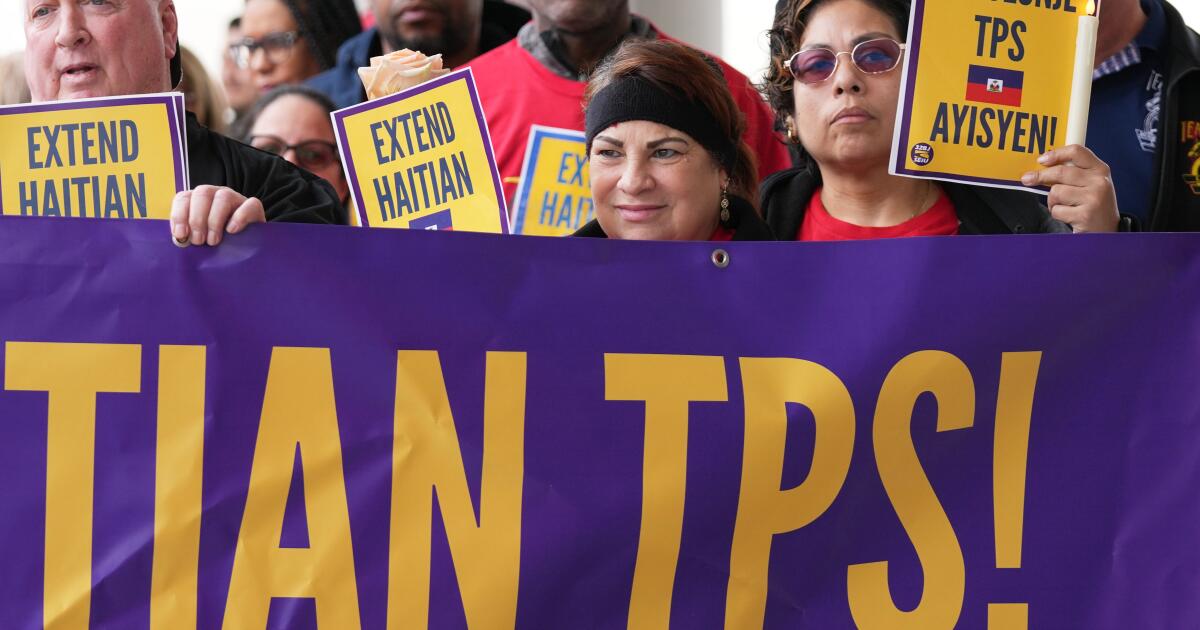
WASHINGTON — The Supreme Court ruled Thursday that the Trump administration may end the Temporary Protected Status granted to more than 350,000 Haitians and Syrians whose home countries remain unsafe.
In a 6-3 decision, the court’s conservative majority said Congress gave the administration, not judges, the power to cancel or renew this temporary protection for non-citizens who are living and working here.
In a second win Thursday for the Trump administration, the court also upheld the administration’s policy of blocking asylum seekers at the southern border.
By the same 6-3 vote, the court said migrants do not have a right to apply for asylum if they are not already in the United States.
The decision on Temporary Protected Status could affect up to 1.3 million non-citizens who are in the country.
In 1990, Congress authorized this emergency humanitarian relief for non-citizens whose home countries were wracked by armed conflict, natural disasters or other extraordinary disruptions.
Under the law, the Department of Homeland Security may grant this protection for 6, 12 or 18 months and either renew or extend it for a similar period.
But this legal authority has been under dispute since Trump returned to the White House last year and targeted the 1.3 million people with TPS from 17 countries who were living in the United States.
Trump’s lawyers said the law made clear there was “no judicial review” of the government’s decision to cancel the grant of temporary protection.
However, immigrant rights lawyers argued the government failed in its duty to consult the State Department and assess whether it was safe for migrants to return home.
Repeatedly, U.S. district judges agreed with the challengers and ruled the administration’s decisions were “arbitrary” and unreasonable. But in nearly every case, the Supreme Court granted emergency appeals from the administration and set aside those orders.
Since TPS was created, the government has ended the protected designation for citizens of 18 countries.
DHS under then-Secretary Kristi Noem ended TPS for Honduras, Nicaragua, Afghanistan and Venezuela. A spokesperson for the agency previously said the Haiti designation became “a de facto amnesty program” and that allowing Syrians to remain is contrary to national interest.
Advocates for the immigrants argue that the administration failed to conduct the required process to properly evaluate each country’s conditions and instead acted on political grounds driven by racial animus.
State Department travel advisories for both countries warn people against traveling to either because of the risk of terrorism, kidnapping and widespread violence. But Federal Register notices announcing the terminations said country conditions had improved enough.
Recently released internal documents show that DHS decided to terminate protections for Haitians without any input from the State Department.
Citing the documents, which were obtained by the National TPS Alliance in a separate lawsuit, lawyers for the Haitians asked the Supreme Court to dismiss the case and send it back to lower courts. They argued that the justices should first consider the communications before issuing a decision.
Internal emails show that homeland security officials sought a recommendation from the State Department in May 2025, ahead of Noem’s early June deadline on whether to extend protections for Haiti. But by the time Noem signed what appears to be a final decision memo, U.S. Citizenship and Immigration Services had not received input from the State Department, the emails show.
“State recommendation for Haiti TPS has not come in despite of many outreach,” a homeland security deputy assistant secretary wrote in a June 2, 2025, email. A recommendation “would be helpful to have,” the person added.
Eleven days later, a USCIS project manager wrote in an email that Noem “recently elected to terminate Haiti without country conditions from DOS.”
USCIS initially recommended automatically extending protections before Homeland Security decided to terminate them, earlier versions of the memo indicate.
The June decision was blocked by a federal judge. In November, DHS issued another notice terminating TPS protections for Haitians.
That time, according a previously publicized email, a homeland security senior counselor asked a State Department official for the agency’s views on the country conditions in Haiti. The official, Spencer Chretien, didn’t address the country conditions but responded that “there would be no foreign policy concerns.”
Lawyers for the Haitians argued that response didn’t meet the legal standard for a sufficient consultation, though the Trump administration disagreed.
There are several Jet2 rules to note when planning your trip
Jet2 has clarified its luggage rules(Image: Getty)
Jet2 has clarified its baggage allowances after an enquiry from a holidaymaker. The customer asked for help as they got ready for their summer getaway.
The person contacted the provider over social media on June 23. The traveller had booked their journey through Jet2holidays, and was due to jet off the following week.
They posed a question about their luggage entitlement. The customer wrote: “We have 3 x 22kg baggage allowance. Assume we are good to check in just two bags provided weight doesn’t exceed allowance?”
They went on to ask if they could check in one suitcase weighing 23kg and another at 25kg while remaining within their total allocation. Jet2 replied to set out the options available to the customer.
Combining your baggage allowance
The airline confirmed: “You can pool your luggage into two suitcases as opposed to three, as long as this doesn’t exceed your combined allowance of 66kg, and that no single article of luggage exceeds 32kg. I hope this helps.”
State Pensioners to face major tax change
According to Jet2’s official guidance: “Any baggage that exceeds your total weight allowance will be carried subject to availability and at our discretion. You’ll also need to pay an excess baggage fee, which is £12 per kg. Please note that no single item of baggage can weigh more than 32kg.”
You can add extra luggage when you book or through the Manage My Booking facility. Simply enter your booking reference, surname and departure date, then navigate to ‘Add Holiday Essentials’.
Query over 10kg allowance
Jet2 was also recently asked another question about its baggage weight rules after a passenger reported receiving contradictory information. The person had a booking for two adults and a six-month-old infant.
They explained: “Told we get two extra carry ons such as a buggy and travel cot that will be checked into the hold at the gate.”
They said they had two 22kg checked bags and that on a prior Jet2 holiday they had been told they qualified for “an extra 10kg for the baby”. According to Jet2’s official website guidance for bookings with children, passengers receive “an extra 10kg allowance for infants” plus “up to two items per child or infant free of charge”.
The passenger asked whether the additional 10kg could be combined with one of the 22kg cases, creating a 32kg allowance. They described receiving mixed messages on their last Jet2 journey. The customer recalled: “On the way out with you we were told it’s fine to have a 32kg case (22kg + the 10kg).
“On the way back we were told the 10kg should be a separate small checked case. Please can you clarify which it is and what the rules are because on our last holiday with you we were told different things.”
Setting the record straight, Jet2 responded to the passenger: “The additional 10kg is applied to one adult’s baggage, allowing for a total of one bag at 32kg and one bag at 22kg.”
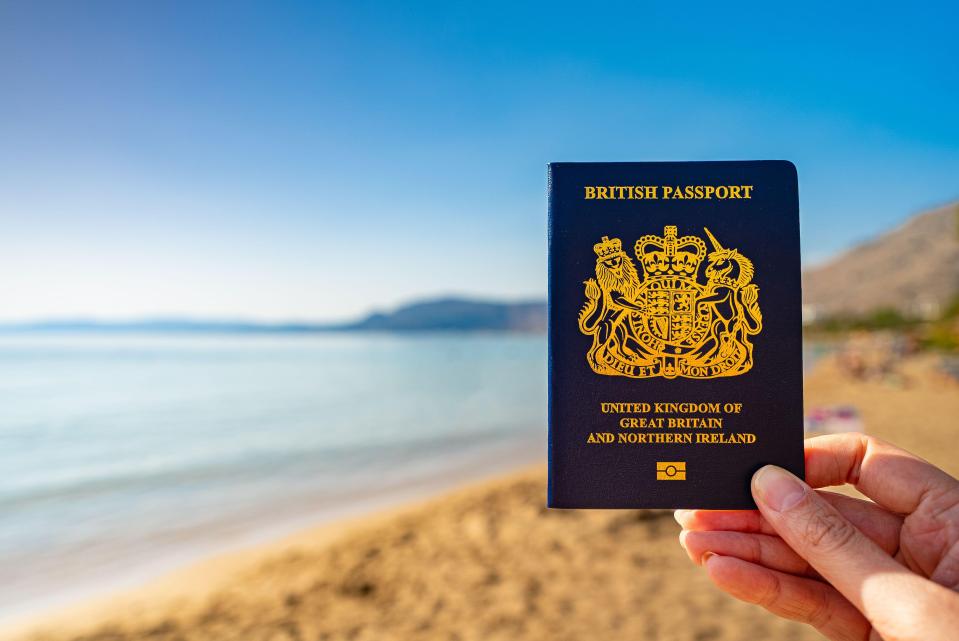
NEW passport rules that came into force earlier this year are STILL catching people out, with one mum recently left stranded abroad.
Brits who are dual national passport holders – thought to be as many as 1.2million – can no longer use their foreign passport to enter the country.
Sign up for the Travel newsletter
Thank you!
The new travel rules came into force in February of this yearCredit: Alamy
Since February 25, the change in rules meant that anyone with dual nationality has to use a valid British passport when arriving into the UK.
Anyone without this must instead have a certificate of entitlement, which costs £589.
Passengers trying to enter the country by plane, ferry or train without either of these risks being banned from travelling.
One British woman was recently caught out when she was trying to travel from Copenhagen to Manchester with her two children, only to be stopped from boarding her flight.
Colette Bjorn-Alderson, who has lived in the UK for 28 years, had been in the Danish country since April, but was returning to the UK with her six-week old and 23-month old for a friend’s wedding.
However, her two children only had Danish passports which meant they didn’t have valid travel documents for returning to the UK.
She told The Times that she felt “unwelcome in my own country” after being turned away from the flight.
Colette sent photocopies of her documents to the Home Office – but ultimately the decision was made that the family could not fly.
Not only has she been left £1,000 out of pocket, she said the only way to get UK passports for them while in Denmark can take up to three months, while the certificates take eight weeks.
She added: “It was a nightmare. I’ve cried a lot.”
Dual nationality passport holders must have a valid UK passport or certificateCredit: Alamy
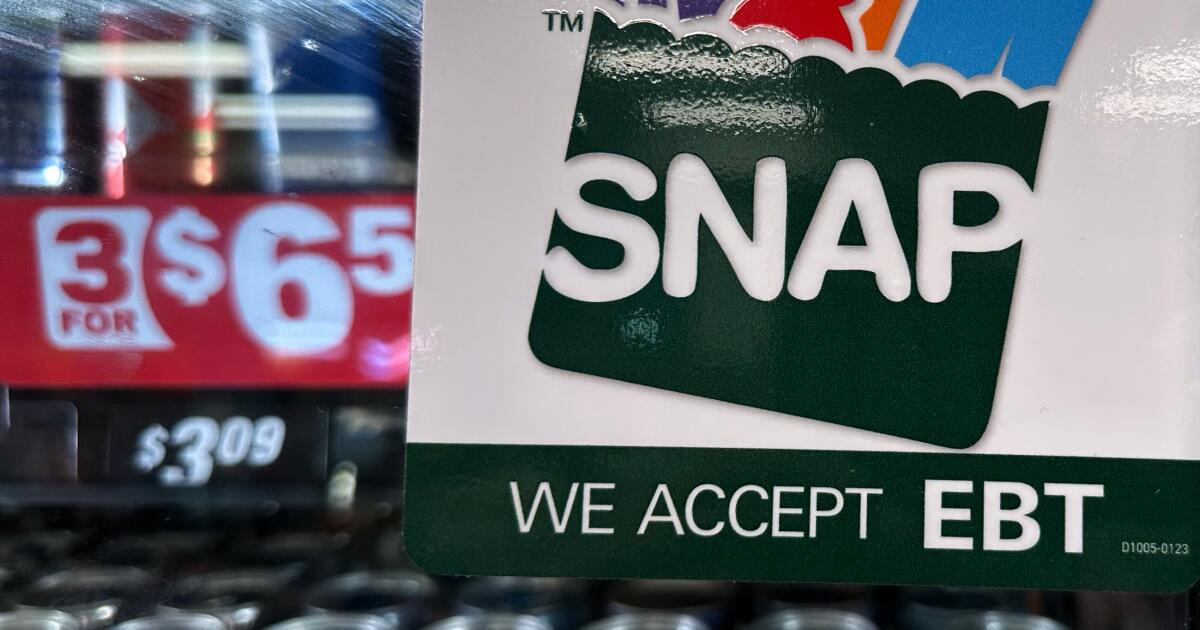
The federal government can’t block benefits from the nation’s largest food aid program from being used to buy candy, soda and other sugary drinks, a judge ruled.
Monday’s ruling scuttles restrictions now in place or planned for the federally funded and state-run Supplemental Nutrition Assistance Program in 23 states. President Trump’s administration has not said whether it will appeal to a higher court.
U.S. District Judge Amy Berman Jackson, who sits in Washington and was nominated to the bench by former President Obama, said in her opinion that the ruling was because the federal government did not follow its own definition of “food.” She said it wasn’t a comment on whether the restrictions are a good idea.
“The federal defendants and the states may have a genuine desire to improve the health of SNAP households by encouraging healthy choices at the store, and they can take lawful steps to meet those goals,” she wrote. “But what they cannot do is violate the law and their own regulations along the way.”
The restrictions are part of the Make America Healthy Again campaign
Agriculture Secretary Brooke Rollins and Health and Human Services Secretary Robert F. Kennedy Jr. have encouraged states to limit what the food aid can be used to buy as part of the “Make America Healthy Again” campaign.
They reason that soda and candy fuel obesity, diabetes and chronic disease epidemics — and taking them off the menu would encourage healthier food choices.
The Agriculture Department has given 23 states so far permission to implement restrictions. Some have been implemented already, while others are queued to take effect in the coming months and years.
At least one state that was set to limit soda and candy purchases changed course earlier this year. Colorado’s human services board voted against implementing the ban after a March hearing in which SNAP beneficiaries and advocates said people would face stigmas if they mistakenly tried to use the benefits on prohibited items. They also said the rules were confusing because they would have allowed buying drinks with at least 50% fruit or vegetable juice, but not those with less.
While the goals are similar, the exact rules vary by state. Some wanted to ban both sugary drinks and candy, while others only sought to ban sugary beverages.
A legal challenge to the candy and soda ban — which includes items such as sports drinks in some states — was filed by SNAP beneficiaries in Colorado, Iowa, Nebraska, Tennessee and West Virginia.
Judge says government ignored a definition of food
Jackson said the main legal misstep in restricting what SNAP benefits could buy came because it ran contrary to Congress’s definition of “food.”
Under the law, SNAP benefits — formerly known as food stamps — can be used for “any food or food product for home consumption except alcoholic beverages, tobacco, hot foods or hot food products ready for immediate consumption.”
The government can waive requirements, but limiting use of the benefits to improve nutrition isn’t listed as a reason to do so. Yet when states asked the Agriculture Department to let them restrict purchases, their requests included using alternate definitions of “food.”
This may not be the final word
The Agriculture Department has not said whether it intends to appeal the ruling.
The case is among scores of challenges to Trump administration policies that hinge on whether the administration has the authority to change policies without congressional approval.
While it’s a big program helping nearly 39 million Americans — about 1 in 9 — buy groceries, SNAP is normally relatively low-profile. That’s been different since Trump returned to office last year.
Under his big tax and policy law signed last year, more recipients are subject to work requirements and states are being required to pay a larger share of administrative costs — and could be on the hook for benefit costs if their error rates are too high.
During a government shutdown last year, courts blocked the administration from cutting off benefits. Meanwhile, Rollins has said that there’s rampant fraud in the program.
WASHINGTON — Prison inmates whose religious rights are clearly violated by guards and wardens may not sue them for damages, a divided Supreme Court ruled Tuesday.
In a 6-3 decision, the justices said federal law protecting religious liberty allows for suits against state prison systems, but not employees of the prison.
The decision came in the case of a devout Rastafarian in Louisiana. Damon Landor had grown dreadlocks for nearly two decades. He had three weeks left in a five-month prison term when he was transferred to another prison in Louisiana.
He had with him a copy of a federal appeals court opinion that said Rastafarian inmates had a protected religious right to wear dreadlocks.
But the guards threw the appeals court decision in the trash, and the warden ordered the guards to handcuff Landor to a chair and shave his head.
Shortly after he was released, Landor sued the warden and the guards for violating the 2000 law, known as RLUIPA, which promised “appropriate relief” to those whose rights were violated.
But a federal judge, the 5th Circuit Court and now the Supreme Court have tossed out Landor’s suit.
Justice Neil M. Gorsuch wrote for the six conservatives.
He explained that when the federal government gives states money for prisons, education, healthcare and other matters, it can require them to follow the law but it does not authorize private lawsuits against their employees
“To know that is enough to know the Court of Appeals was correct. Mr. Landor does not have a federal RLUIPA cause of action against the officers,” Gorsuch wrote. “Congress lacks regulatory authority to impose liability on them directly.”
The three liberals dissented.
“Today’s decision magically transforms a federal statute into an invitation to be accepted or declined, deemed binding only if each particular defendant has explicitly agreed to be penalized,” wrote Justice Ketanji Brown Jackson. “Prisoners like Landor who suffer violations of their religious freedom in state prisons — no matter how blatant — will often be left remediless.” Justices Sonia Sotomayor and Elena Kagan agreed.
Civil liberties advocates denounced the decision.
“Our justice system is built on the promise of accountability when rights are violated,” said Rachel Rossi, president of the Alliance for Justice. “If there is no remedy for such a transgression, then there is no justice. This ruling will further erode critical civil rights protections of the far too many incarcerated people in this country.”
Rachel Laser, chief executive of Americans United for Separation of Church and State, said today’s decision “endangers the religious freedom of incarcerated people, like Damon Landor, who are particularly vulnerable to abuse and having unnecessary burdens placed on their religious exercise. Once again, we see a court that will bend over backward for the religious freedom of Christians, but allows the government to trample the religious freedom of non-Christians.”
WASHINGTON — A federal judge on Monday denied a request to disqualify top Justice Department officials from supervising the prosecution of the man charged with trying to kill President Trump at the White House Correspondents’ Association dinner.
Cole Tomas Allen had argued that involvement in his prosecution by Acting Atty. Gen. Todd Blanche and District of Columbia U.S. Atty. Jeanine Pirro created a potential conflict of interest because they were among many administration officials present at the April dinner. Allen’s attorney also had raised concerns about the close friendship between Trump and Pirro, a former Fox News commentator.
U.S. District Judge Trevor McFadden wrote in his ruling that neither their attendance at the dinner nor Pirro’s personal relationship with the president merited their disqualification. McFadden noted that Allen is not charged with attempting to harm Blanche and Pirro, and there is no evidence to suggest he even knew they would attend the dinner.
“They are unlikely to be trial witnesses, nor do they meet the legal definition of victims,” wrote McFadden, who was nominated to the bench by Trump.
Allen has been accused of trying to breach a security checkpoint armed with guns and knives. He has pleaded not guilty to various charges, including assaulting a federal official with a deadly weapon and attempted assassination of the president. He faces a maximum sentence of life in prison if convicted of the attempted assassination charge alone.
Allen also is accused of firing a shotgun at a Secret Service agent during the attack, which disrupted and ultimately prompted an early end to one of the highest-profile annual events in the nation’s capital. The Secret Service officer who was shot once in a bullet-resistant vest fired his own weapon five times without hitting anyone. Allen, of Torrance, California, was injured but was not shot.
A customer claimed they had been told different things by Jet2 staff
Jet2 has clarified its baggage rules(Image: Getty)
Jet2 has stepped in to clear up confusion over its baggage policy. The update came after a query from a passenger with a group booking.
The traveller sought clarification as their reservation included two adults and a six-month-old infant. They explained: “Told we get two extra carry ons such as a buggy and travel cot that will be checked into the hold at the gate.” They mentioned they had two 22kg suitcases and recalled being informed on a previous Jet2 holiday that they were entitled to “an extra 10kg for the baby”.
According to guidance on the Jet2 website for bookings with children, passengers receive “an extra 10kg allowance for infants” and can also take “up to two items per child or infant free of charge”.
State Pensioners to face major tax change
Differing messages
The customer’s query was whether the additional 10kg could be combined with one of the 22kg cases, creating a 32kg allowance. They said they had received contradictory information on this issue on their last trip with Jet2.
The passenger said: “On the way out with you we were told it’s fine to have a 32kg case (22kg + the 10kg). On the way back we were told the 10kg should be a separate small checked case.
“Please can you clarify which it is and what the rules are because on our last holiday with you we were told different things.” Jet2 responded to settle the matter: “The additional 10kg is applied to one adult’s baggage, allowing for a total of one bag at 32kg and one bag at 22kg.”
Extra items free of charge
When it comes to the two additional items you’re permitted to bring without charge, these may include:
A collapsible pushchair, pram or buggy
A car seat or booster seat
A baby carrier
A travel cot.
Each item must not exceed 32kg in weight. Should you bring any further items or anything beyond this weight limit, the standard excess baggage charges will apply.
In 1846, two amateur baseball teams played under new rules at Hoboken, N.J., planting the first seeds of organized baseball. The New York Nine beat the Knickerbockers, 23-1.
In 1856, the first Republican national convention ended in Philadelphia with the nomination of explorer John Charles Fremont of California for president. James Buchanan, a Federalist nominated by the Democrats, was elected.
In 1864, the Union sloop-of-war USS Kearsarge sank the Confederate commerce raider CSS Alabama in the Battle of Cherbourg off the coast of France.
In 1865, nearly two and a half years after the Emancipation Proclamation, freedom from slavery was announced in Galveston, Texas, the most remote area of the country where slavery was still practiced. The day came to be celebrated annually as Juneteenth, Freedom Day, Jubilee Day and Liberation Day.
In 1867, Austrian Archduke Ferdinand Maximilian, installed as emperor of Mexico by French Emperor Napoleon III in 1864, was executed on the orders of Benito Juarez, president of the Mexican Republic.
In 1905, Pittsburgh showman Harry Davis opened the world’s first nickelodeon, showing “The Great Train Robbery,” a silent Western film. The storefront theater had 96 seats, charged 5 cents and prompted the advent of movie houses across the United States.
In 1910, Spokane, Wash., had the first Father’s Day.
File Photo by Gary C. Caskey/UPI
In 1944, World War II’s Battle of the Philippine Sea began. Japanese forces tried unsuccessfully to prevent further Allied advancement in the South Pacific.
In 1953, convicted spies Julius and Ethel Rosenberg were executed by electric chair at Sing Sing Correctional Facility in Ossining, N.Y.
In 1965, Nguyen Cao Ky became the prime minister of South Vietnam, the ninth leader within the past 20 months.
UPI File Photo
In 1972, Hurricane Agnes made landfall in the Florida Panhandle, going on to kill 128 people along the eastern U.S. seaboard.
In 1987, the U.S. Supreme Court struck down a 1981 Louisiana law that required schools to teach the creationist theory of human origin espoused by fundamentalist Christians.
In 1991, Colombian drug lord Pablo Escobar surrendered to police in Medellin in the wake of the assassination of Luis Carlos Galan. Authorities convinced him to give himself up in exchange for a lighter sentence for prior criminal activity — activity which continued after his imprisonment.
In 1999, horror novelist Stephen King was hit by a car and severely injured while out for a walk in rural Maine.
In 2000, the U.S. Supreme Court ruled that prayers led by students at public high school football games aren’t permitted under the constitutional separation of church and state. In 2022, the high court ruled, however, that a school district in Washington violated a coach’s First Amendment rights when they stopped him from publicly praying on the field after games.
In 2008, U.S. Sen. Barack Obama, D-Ill., the presumptive Democratic presidential nominee, became the first candidate at that level to bypass public financing since the program was established.
In 2014, Felipe VI was proclaimed Spain’s new king after his father, King Juan Carlos, abdicated the throne.
In 2019, Joy Harjo was named the first Native American poet laureate of the United States.
In 2024, the annual Hajj pilgrimage to Mecca, Saudi Arabia, concluded after at least 1,300 people died over the five-day trek. Officials blamed a lack of cooling centers, sleeping accommodations and other critical services as temperatures soared above 125 degrees Fahrenheit.
IT’S NO lie that Brits love a European break but behaving badly could turn your trip into a holiday nightmare.
Across Europe, countries have their own rules relating to tourists – from banned beach items to strict curfews.
Sign up for the Travel newsletter
Thank you!
And if you want to avoid a hefty fine this summer, you’ll want to know what the rules are for each country.
France
A number of major cities in France and holiday hotspots ban drinking alcohol between 4pm and 8pm, including along the Paris riverbanks and the French Riviera.
When it comes to heading to the beach, make sure to not take any of it home with you as a souvenir.
Taking shells for example, is considered environmental theft and you could be fined €250 (£216.60) for doing this.
Swimming is always a fun activity, but men heading to the pool need to make sure you leave the swimming shorts at home.
Due to health and hygiene laws in the country, men in France must wear Speedos.
Some places ban drinking alcohol on the streetsCredit: Getty
Spain
Most cities in Spain have banned drinking alcohol on the streets, such as Madrid, Barcelona and Valencia.
Also don’t jump from your hotel balcony into a pool – you can get kicked out of the hotel and fined.
Across Spain, make sure to not smoke or vape on the terraces of bars or restaurants or at pools.
Make sure to not jump from a hotel room into a pool as you could get kicked outCredit: Alamy
But in Barcelona and popular Balearic and Canary Islands spots, smoking and vaping are banned across all beaches.
Fines for this range from €30 (£25.99) to €2,000 (£1,732.79).
In Barcelona, Malaga and Majorca, make sure not to walk through the streets in a bikini or swimming trunks. If you do, you could face a fine of up to €300 (£259.92).
Also when you are at the beach in Cullera, Calpe or Tenerife, don’t reserve a spot with a towel as you could have your belongings confiscated and be fined up to €3,000 (£2,599.18)
Portugal
In Albufeira, Portugal, there is a Code of Conduct in place for touristsCredit: Getty
In Portugal, there are some rules to be aware of when visiting.
Portable speakers are not allowed to be loud on beaches or you could be fined or it could be confiscated from you.
Fines vary between €200 (£173.28) and €4,000 (£3,465.58) for this.
Also in Albufeira, a Code of Conduct introduced last year is still in place for tourists this year.
The rules basically reinforce that visitors must act respectfully, with public nudity and drinking alcohol on the street banned.
Italy
There are a number of different rules across Italy you’ll need to follow.
In Florence, there are a number of streets where you can’t sit and eat outdoors.
The rule has been introduced to ease congestion.
In Italy, you cannot wear flip flops on the Cinque Terre hiking trailCredit: Getty
Also in Florence, e-scooters are banned in the city centre.
In Liguria, Portofino, over the summer, travellers who walk the cobbled streets either barefoot, in swimwear or topless can be fined.
You could also get fined between €50 (£43.32) to €2,500 (£2,165.99) if you are caught hiking Cinque Terre in flip flops.
Drinking alcohol in the streets is also banned with fines up to £2,568.
And make sure not to sit or lie down on a path, wall or park as this can also get you fined. Fines range from £22 to £433.
Over in Milan, you cannot smoke outdoors unless you are 10 metres away from other people. If caught breaking the rule, you could be fined between €40 (£34.66) to €240 (£207.93).
In Rome, you cannot drink out of a glass bottle on the streets after 10pm and all outdoor drinking is banned after midnight.
While in the city it is also worth being aware that when you visit the famous Spanish Steps, not to sit, eat or drink on them.
And in Venice, it is illegal to feed the pigeonsCredit: Getty
This is to protect the 18th century marble from damage and stains and if you are caught doing this, you could get a fine between €250 (£216.60) and €400 (£346.56).
And if you are visiting the Italian island of Sardinia, make sure you don’t dig a hole, build a sandcastle or take sand or shells from the beach as you could be fined up to €3,000 (£2,599.18).
Heading to Venice? Make sure you don’t feed the pigeons – it is illegal and you can be fined between €25 and €500.
Greece
In Greece, there are some different rules compared to other countries.
For example, at archaeological sites like the Acropolis and the Parthenon you cannot wear high heels.
If you are caught with high heels, you could be fined up to £760.
Drinking on the streets is also not allowed.
And if you are caught topless in public you could face a fine of up to £250.
Even though it may be tempting, make sure you don’t take pebbles from Greek beaches either as you could be slapped with a £771 fine.
It is also worth knowing that across Greece, sunbeds and umbrellas have been banned on 251 beaches and the beaches that do have sunbeds allowed, at least 70 per cent of the sand must be without sunbeds.
WASHINGTON — A unanimous Supreme Court ruled Thursday for gun rights and against drug laws.
In a 9-0 ruling, the justices struck down part of the longstanding federal gun control law that makes it a crime for an “unlawful user” of illegal drugs to possess a gun.
The Trump administration had urged the court to uphold the conviction of a Texas man who was investigated for alleged terrorist ties and admitted to being a regular user of marijuana.
Rejecting that claim, Justice Neil M. Gorsuch, speaking for the court, said the law was far too broad and overly harsh.
“The law automatically bans an individual from possessing a gun from the moment he becomes an unlawful user of any controlled substance until he ceases being one,” he wrote. “It doesn’t matter what controlled substance an individual uses, in what amounts he does so, or whether his drug use has ever made him a danger to himself or others.”
And it can lead to a 15-year prison term, he added.
He noted, however, the court was not ruling on “addicts” or people who were under the influence of drugs when they were arrested.
The American Civil Liberties Union welcomed the ruling.
“Today’s unanimous 9-0 decision makes it clear that the government cannot make it crime for people to own a gun, which the Supreme Court has held is a fundamental constitutional right, simply because they use marijuana,” said Cecillia Wang, legal director at the American Civil Liberties Union. “With nearly half of Americans reporting marijuana use at some point in their lives, this ruling protects the rights of millions and curbs the government’s ability to impose arbitrary and discriminatory penalties.”
Since 1968, federal law has prohibited gun possession by felons, fugitives and other persons deemed to be dangerous. Included was anyone who is “an unlawful user of or addicted to any controlled substance.”
But the 5th Circuit Court of Appeals ruled in a Texas case this restriction on guns violated the 2nd Amendment. It said “there is no historical justification for disarming a sober citizen not presently under an impairing influence.”
Appealing to the Supreme Court, the Trump administration urged the justices to uphold the law.
“Habitual illegal drug users with firearms present unique dangers to society—especially because they pose a grave risk of armed, hostile encounters with police officers while impaired,” said Solicitor Gen. D. John Sauer.
He asked the court to rule in the case of a Pakistani native who was investigated by the FBI for his suspected ties to the Islamic Revolutionary Guard Corps.
In 2020, Ali Danial Hemani and his parents “traveled to Iran to participate in a celebration of the life of Qasem Soleimani, an Iranian general and terrorist who had been killed by an American drone strike the month before,” the administration told the court last year.
The FBI obtained a warrant to search Hemani’s family home.
Agents found a Glock 9mm pistol, 60 grams of marijuana and 4.7 grams of cocaine.
Hemani said he used marijuana about every other day.
A federal grand jury in Texas charged him with possessing a firearm as an unlawful habitual user of marijuana.
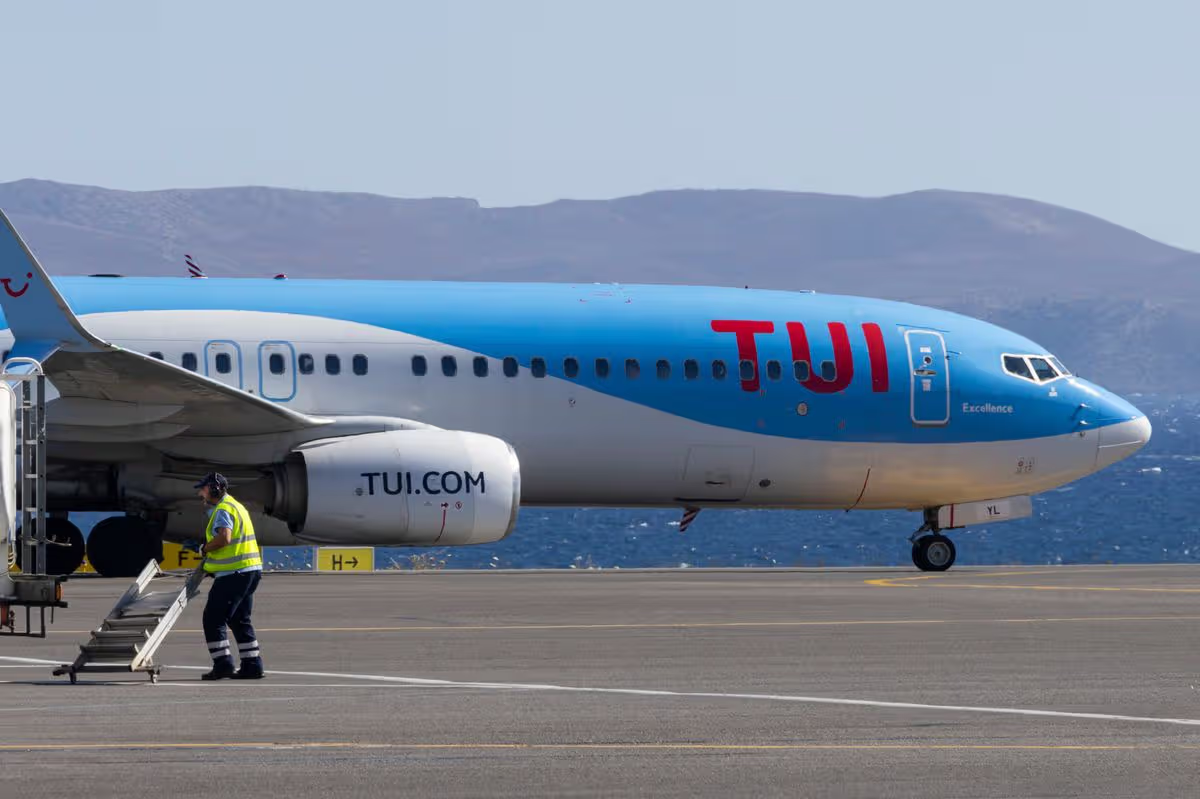
A TUI Boeing 737-800 passenger aircraft on the taxiway with the Aegean Sea in the background
TUI Airways has officially updated its Flight Conditions of Carriage, with the new rules taking effect for bookings starting June 5, 2026. If you booked your getaway before this date, the previous rules (from March 2023) still apply to your trip.
The update streamlines legal language, tightens health policy provisions, and explicitly outlines fees for amendments. The TUI Conditions of Carriage is the official legal contract between you and TUI Airways when you buy a flight. The rules apply to every single passenger flying on a TUI Airways aircraft. This includes people who bought a “Flight Only” ticket and people who booked a TUI package holiday (where the flight is included).
It is a dense legal document split into distinct “Articles” (usually around 15–20 pages if printed). Because nobody reads the full text while packing, it is designed to protect both the airline’s operations and outline your consumer rights. In short, they state: “We promise to fly you and your bags to your destination, provided you show up on time, behave yourself, bring valid legal documents, and don’t pack anything dangerous.”
It covers rules around baggage size and weights, ticket validlty and banning passengers. The key updates and points of focus in the 2026 conditions include:
1. Health Requirements & Mask Policies (Article 1)
While daily travel has largely returned to normal, TUI has modernised its terms to give them a clear mandate for future public health scenarios:
Conditional Mask Requirements: The rules specify that if a local government or health authority mandates them, you must wear an appropriate mask at the airport and on board. Failing to comply can result in a refusal of carriage, and taking it off mid-flight will be treated under TUI’s disruptive passenger policy.
Health Statements : TUI retains the right to require you to fill out a health statement prior to flying out of or returning to a UK airport. Passengers showing symptoms of a major health outbreak, epidemic, or pandemic will be denied boarding.
2. Name Corrections vs. Substitutions
Spelling Mistakes: You can still correct genuine typos or spelling mistakes on your ticket for free, as long as TUI can reasonably verify it is an honest mistake.
Name Substitutions : If the change amounts to transferring the ticket to an entirely different person, it will not be treated as a free correction and will incur standard amendment/transfer fees.
3. Ticket Validity and Amendment Fees
Validity Period: Tickets remain valid for exactly one year from the date of issue.
Compassionate Exceptions: In the tragic event of a passenger passing away en route, or a death in a passenger’s immediate family after travel has started, TUI explicitly permits the tickets of the passenger and their accompanying immediate family to be changed so they can fly at a different time.
Voluntary Amendments: If you decide to change your flight details (date, time, or destination) 29 days or more before departure, you will face a baseline amendment charge of £50 / €50 per passenger per booking, plus any difference in the fare price, taxes, or associated fees.
Though technically part of their package holiday booking terms rather than the Flight Conditions of Carriage, TUI also launched a highly publicized Price-Match Promise. If you book a package holiday and find the exact same TUI-flight-inclusive deal cheaper elsewhere, you can claim a refund for the difference—but you must submit the claim within 72 hours of your original booking.
WASHINGTON — A year after the Trump administration kicked off its aggressive immigration enforcement tour with military-style raids across greater Los Angeles, federal officials have veered toward a less flashy but broader strategy: making immigrants’ lives harder so they will leave.
The changes range in scale and scope, from disqualifying immigrants from certain jobs to indefinitely pausing the processing of visa applications. They target those lawfully present as well as the undocumented.
Since President Trump’s second term began, the administration has used executive orders and federal regulations to chip away at services or benefits, such as work permits and small business loans, that immigrants could obtain in the past.
Now, immigrants are finding that freedoms — the ones that once made the U.S. a desirable place to start over — are disappearing. Many are retreating back into the shadows as they fear previously routine tasks, such as traveling across states, filing taxes and seeking medical care.
“The priority is to force people to leave the country or not come, regardless of legal status or really any other criteria,” said David Bier, immigration studies director at the Libertarian think tank the Cato Institute. “They’re taking a sledgehammer to the system.”
Trump won the White House in part on his promise to clamp down on illegal immigration, but recent polling shows support for his agenda has waned, especially after immigration agents shot and killed two U.S. citizens in Minneapolis.
In a statement, White House spokesperson Abigail Jackson said Trump’s highest priority has always been the deportation of immigrants with criminal records. The Department of Homeland Security said Trump also prioritizes immigration that strengthens the country financially, socially and culturally.
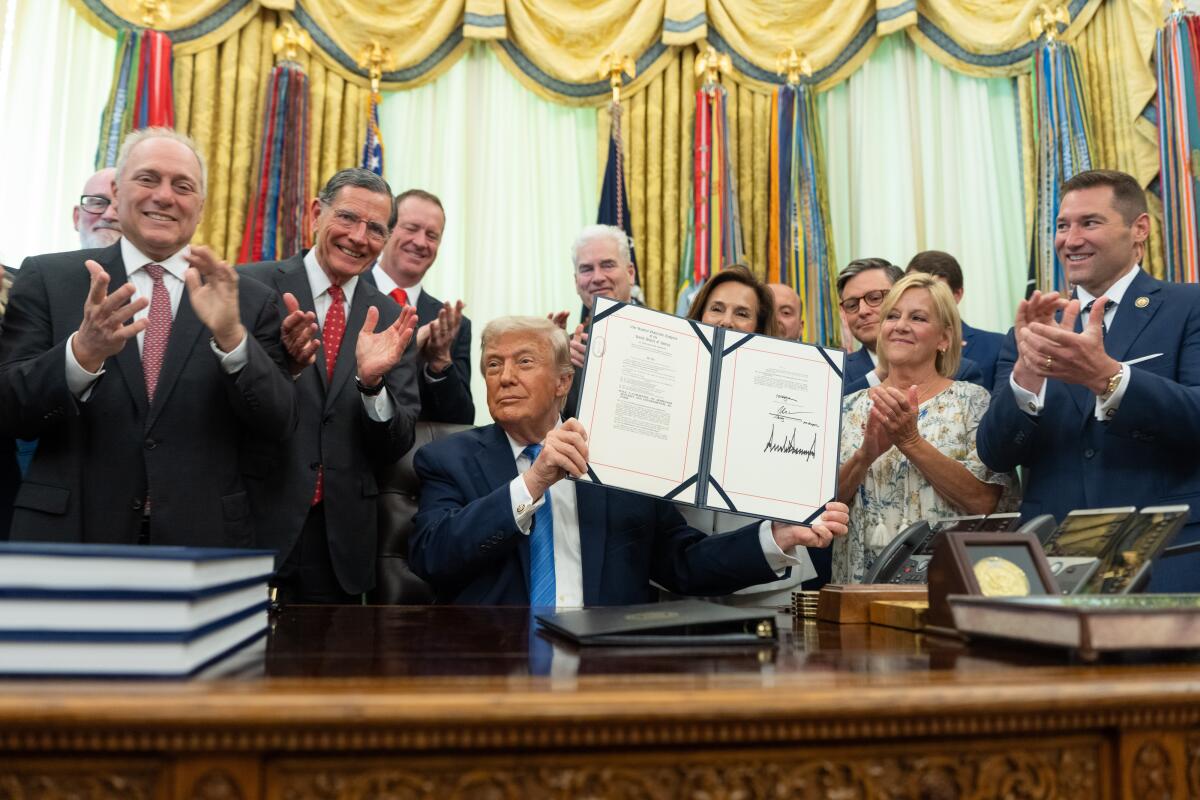
President Trump displays the signed “Secure America Act” during a ceremony in the Oval Office on Wednesday. The act provides $70 billion for immigration enforcement and border-security agencies.
(Aaron Schwartz / CNP, Bloomberg)
The number of arrests by ICE agents has declined. On average, ICE arrested about 1,000 immigrants per day in early March, down from a peak average of just under 1,400 in mid-January, agency data show. And there are fewer detained immigrants — facilities across the country held about 60,000 detainees in April, compared to more than 70,000 in late January.
The downturns prompted some Trump loyalists to say the administration is failing to fulfill his signature promise, which is an assertion the administration rejects.
“ICE is NOT slowing down,” said Homeland Security spokesperson Lauren Bis. “Since Day One, DHS law enforcement has been delivering on President Trump’s promise to the American people to arrest and deport criminal illegal aliens.”
At a border security conference last month, Tom Homan, who leads border policy for the White House, suggested immigration agents would return to more muscular enforcement tactics.
“You ain’t seen s— yet,” he told the audience.
But along with focusing on deportations, the administration is deploying other tactics to deter illegal — and legal —immigration.
ICE agents confront protesters on June 8 as they gather outside the federal immigration center at Delaney Hall in Newark, New Jersey, where ICE is housing detained immigrants.
(Spencer Platt / Getty Images)
Curtailing visas
Last month, the Department of Homeland Security announced that “except in extraordinary circumstances,” immigrants seeking lawful permanent residency must leave the U.S. to complete the process. After a backlash, the administration defended the policy, saying it won’t prevent anyone who qualifies for a green card from getting one.
U.S. Citizenship and Immigration Services, the agency in charge of processing immigration benefits, has upped security screening since Trump took office. The agency says that’s to root out fraud, but critics say all it does is unnecessarily slow down a system that already vets applicants vigorously.
The administration indefinitely banned people from 75 countries from receiving immigrant visas, which allow people to move permanently to the U.S.
In a similar move, the government halted the processing of immigration applications for people from 39 countries and who are already in the U.S. On June 5, a federal judge struck down the policy in a scathing ruling that said the administration “justifies its actions with pretextual concerns of ‘national security’ that mask anti-immigrant sentiments.”
Children of Guatemalan origin, from left, Areimy, Mariela and Enrique, arrive at Miami International Airport on Dec. 4, 2025, as they prepare to leave the United States to reunite with their recently deported parents in Guatemala.
(Chandan Khanna / AFP via Getty Images)
The judge’s ruling may offer relief, but for many immigrants, the effects of the policy are devastating. Armin, a 42-year-old from Iran, said he has racked up more than $15,000 in debt since the pause took effect in December. Armin asked The Times not to fully identify for fear of jeopardizing his immigration case.
The nutritional scientist came to the U.S. in 2019 on a student visa and has a pending green card application under a provision that allows certain highly skilled immigrants to apply for permanent residency without needing an employer to sponsor them.
After receiving his PhD and completing a postdoctoral program, Armin was in between jobs when he received a research grant in November. But with the processing of his work authorization halted, the university that issued the grant said it couldn’t hire him as a research associate. In February, he was turned down for another job.
Armin said he is confused about why the administration won’t differentiate between legal immigrants and those who should be deported.
“I can’t believe it,” he said. “I’m doing research and my research has national interest benefits. You expect support from the government. Unfortunately they don’t differentiate. They don’t care about your resume.”
Bier said the visa policies affect half of all legal immigrants coming from abroad. He published a report in April about how Trump has cut legal immigration far more than illegal immigration, noting that the administration’s policies have led to big drops in visas for international students, high-skilled workers and refugees.
“The legal immigration system is being used as a means to carry out the mass deportation agenda,” he said.
Alessandro Negrete, who lived most of his life in the U.S. undocumented, crosses into Mexico after deciding to leave.
(Robert Gauthier / Los Angeles Times)
Encouraging self-deportation
More than 90,000 immigrants have been granted voluntary departure since the start of the Trump administration, according to federal immigration court data through April that was analyzed by TRAC, a data research organization. Voluntary departure avoids official deportation and can leave open the possibility of an immigrant returning to the U.S. legally.
Homan, who declined to be interviewed for this story, has said self-deportations were part of the administration’s immigration plan all along.
“We knew if we surged unlimited ICE resources in the interior, and we do these operations, that that will force those that are here illegally to leave on their own,” he recently told the Washington Examiner.
Halting work permits
In the past, asylum seekers and others with deportation protections have had the ability to seek permits to work legally in the U.S. But work is now an administration target.
One proposed regulation would prevent asylum seekers from working legally in the U.S. Another proposal, published Friday, would further restrict access to work permits for other immigrants.
Under a rule that took effect last month, asylum seekers pay an annual $102 fee within 30 days of receiving a notice from U.S. Citizenship and Immigration Services. If the deadline is missed, their applications will be rejected — with no opportunity to appeal — and they could be placed in deportation proceedings. Those who apply for asylum with the agency have entered the U.S. legally, such as on a visa, and are not undocumented.
Asylum seekers rest at a Tijuana migrant shelter a day after President Trump began his second term in the White House.
(Robert Gauthier/Los Angeles Times)
Conchita Cruz, co-executive director of the Asylum Seeker Advocacy Project, said many asylum applicants have not received notice that the fee is due.
Cruz said she believes the Trump administration is using these changes as an excuse to dismiss people’s asylum claims. While the president has the power to decide whether to offer or rescind humanitarian programs, such as Temporary Protected Status, the right to seek asylum is enshrined in law.
“We’re worried this is a pretext for people to fall out of the asylum system and fall out of the workforce,” she said.
The processing of work permits has already been slowed, leaving many immigrants who still qualify for employment authorization unable to work.
During a House Homeland Security Committee hearing last week, Rep. Lou Correa (D-Santa Ana) asked Homeland Security Secretary Markwayne Mullin to help him speed up the work permit renewals for two police officers who were recently fired by agencies in his district because their DACA status expired.
Mullin said he would help but that Congress ultimately must pass a permanent solution for DACA recipients.
“These are police officers on Main Street, sir,” Correa responded.
“Not all of them are,” Mullin said. “I’m not just going to wave a magic wand and fix them all.”
“You have that magic wand — that’s your job,” Correa said.
It wasn’t just Democrats complaining about slow processing. Rep. Gabe Evans (R-Colo.) similarly asked Mullin for help because many of his constituents — “farm workers, youth ministers, nurses, grocery store business managers” — who have lived and worked in the U.S. legally for decades are now having trouble renewing their visas.
Secretary of Homeland Security Markwayne Mullin, left, and President Trump, center, walk to the motorcade after exiting Air Force One at Joint Base Andrews, Maryland, on May 20.
(Kent Nishimura / AFP via Getty Images)
Calls for mass deportations
Mullin, who took the reins in March after Trump fired his predecessor, Kristi Noem, rolled back some of Noem’s policies, including telling agents to stop entering homes without judicial warrants and canceling some contracts she had initiated.
But the changes and the downturn in arrests have drawn criticism from some fervent Trump supporters.
“Trump’s legacy is tied up in this,” said Mike Howell, a former DHS attorney who founded a group called the Mass Deportation Coalition. “It’s going to be hard to tell a younger voter to get excited to show up when one of their top issues is mass deportation and, a year and a half in, it doesn’t appear it’s going full-steam ahead.”
Howell said enforcement at work sites is critical to scaling up arrests and deportations. That more such operations haven’t happened, he said, is a political decision to appease wealthy donors and special interest groups who don’t want to see their workers deported.
The architect of Trump’s immigration agenda is Stephen Miller, a top White House aid who has called for a “moratorium on immigration from third-world countries,” demanded 3,000 arrests per day and said that immigrants and their descendants “recreate the conditions, and the terrors, of their broken homelands.”
Royce Bernstein Murray, a former Homeland Security official who worked on immigration policy under the Biden administration, said the winding down of flashy enforcement surges has given the administration more time to “focus on tearing down the legal immigration system.”
“This is Stephen Miller’s sweet spot,” she said. “He was never in enforcement — he’s a policy guy. This is really an opportunity for him to make good on all he has planned for years.”
While ICE has, in recent months, returned to its more conventional targeted enforcement tactics, Homan has sought to make clear that mass deportations are still a goal.
“For the people out there saying ‘President Trump’s getting weak on mass deportation,’ you don’t know what the hell you’re talking about,” Homan said at the border expo.
On Monday, Homan told Fox News that he had just reviewed plans for an ICE operation that would surge agents to New York City.
A new beach rule for a European hotspot has been introduced for anyone aged between 10 and 65, but one traveller has dubbed it the ‘most unusual beach rule of 2026’
An ‘unusual’ beach rule has been introduced at a popular holiday hotspot (Image: Getty Images)
A popular European destination that welcomes thousands of Brits each year is introducing a new beach rule for everyone aged 10 to 65.
A day out at the beach, be it in the UK during the summer months or in Europe, is often accompanied by an umbrella to help provide shade from the balmy sun. However, holidaymakers of a certain age have been banned from using a parasol on a beach in Sardinia, Italy.
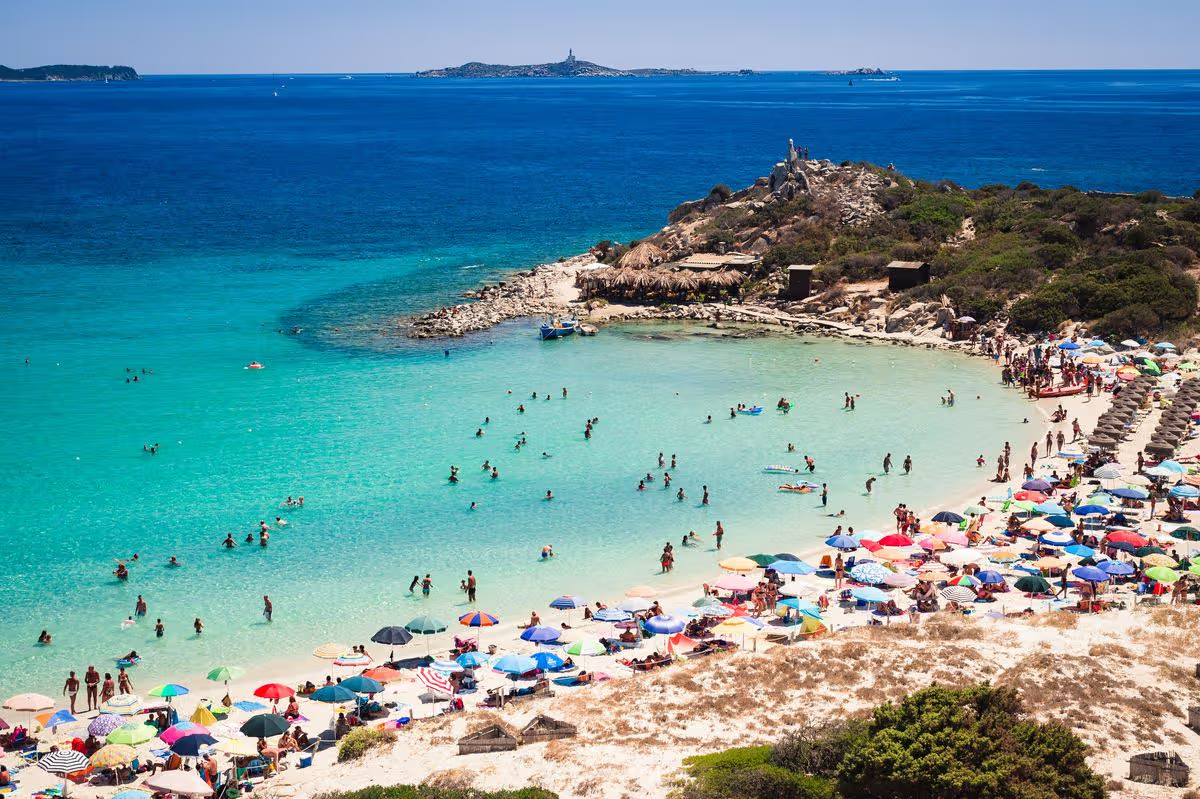
Under the new rule introduced earlier this month, Punta Molentis Beach, near the popular resort town of Villasimius in Sardinia, only allows families with children under 10 years old or people over 65 to put up an umbrella. It comes as the Italian beach limits the number of visitors to 150 at a time and puts in strict restrictions following wildfires in July last year.
In addition, visitors arriving at Punta Molentis Beach on foot will need to pay a fee of €10 (£8.60), while those arriving by boat will pay €5 (£4.31). Meanwhile, only 70 cars will be able to access the beach per day until 31 October, and reservations will be compulsory to visit, the Villasimius council website reported.
The town council also said in a message: “It’s therefore necessary to limit human impact and ensure protection of this heritage for future generations.”
The rules are in place throughout the summer season and aim to protect the beloved beach following last summer’s wildfires. Holidaymakers were forced to flee the wildfires by boat after they erupted in late July 2025, with around 100 hectares of Punta Molentis said to have been destroyed by the blaze, including cars in the beach car park.
However, not everyone is happy with the new rules. One person commented on X, formerly Twitter: “Banning shade in the Mediterranean summer heat sounds incredibly dangerous.”
A second said: “Guess I’m just gonna roast under the sun then, sounds like a fun time for my skin.” While a third added: “This might be the most unusual beach rule of 2026.”
One more wrote: “Banning basic sun protection for specific age groups under the guise of ‘saving space’ is a massive skin cancer risk waiting to happen.”
However, the council noted on its website that: “The ecosystem of Punta Molentis is one of the most valuable in our territory but also one of the most fragile.”
Meanwhile, in the Italian hotspot of Sorrento, people are banned from wearing swimwear away from beaches and pools. Anyone caught out could face fines of up to €500 (around 431), while Portofino, Positano and Capri have also enforced similar rules.
The rule is to avoid tourists walking around town or going to lunch in swimsuits or bikinis. But it doesn’t just apply to swimwear, as those caught walking around topless could also face a fine.
Do you have a travel story to share? Email webtravel@reachplc.com
The European Fiscal Board (EFB) criticized the European Commission for allowing some of the defence spending leeway from last year to be used for transitioning to clean energy. Last year, the Commission allowed EU governments to spend an extra 1.5% of GDP annually for four years on defense against potential attacks from Russia, using a national escape clause due to uncontrollable events.
Italy, facing high fuel prices from the U. S.-Israeli war on Iran, sought more fiscal flexibility from the EU to help manage costs ahead of elections. The Commission agreed to permit 0.3% of that 1.5% for the clean energy transition. EFB Chairman Pieter Hasekamp stated that the energy crisis should drive transformation rather than increased spending, urging that fiscal credibility is critical to minimize borrowing costs.
The EFB emphasized the importance of adhering to previously agreed spending paths to reduce debt, noting that many EU countries still need to cut back post-pandemic stimulus. They expressed concern that extending escape clauses for energy could lead to excessive and untargeted financial support. The board also advised that if oil prices remain high, governments should prioritize public investment over efforts to sustain consumer demand.
BRITS heading to Spain need to be aware of a new rule update that could get them banned from entering the country.
Currently, Brits visiting Spain need to show they have a certain amount of money in their bank at the border.
Sign up for the Travel newsletter
Thank you!
Brits could be refused entry to Spain under updated rulesCredit: Alamy
However, an upgrade to this rule means all travellers from non-EU countries must be able to prove they now have at least €1,098.90 (£948.12).
For longer trips, the figure will rise in line with how many days you are in the country for, working out to around an extra €121.10 (£104.48) per day.
For example, if you intend to stay in Spain for 10 days, you will need to prove you have €1,220 (£1,052.79) in funds.
Brits can prove they have the money in several ways including having the cash, presenting debit or credit cards accompanied by bank statements, showing cheques or providing a letter of credit.
However, it is worth noting that screenshots of online bank statements are not accepted.
The money must be shown in euros or the equivalent amount in your own currency, so for Brits, this would be in pounds.
Brits heading to Spain must prove they have sufficient funds for their tripCredit: Alamy
Despite the requirement not being new, the amount tourists need to prove has been updated to be in line with 10 per cent of Spain’s minimum wage, which recently increased.
The rule was first introduced in 2021, at the end of the Brexit transition period.
Brexit meant that Brits became “third-country nationals” and therefore have to follow the rules for entering the EU when travelling to European countries.
Similar proof-of-funds requirements are in place across all Schengen countries.
The amounts do vary though – for example, in France, travellers must be able to prove they have €65 (£56.08) per day, yet in Latvia, the figure drops to €14 (£12.08) per day.
Even though proof-of-funds can be enforced by border officers in Spain, checks are not usually carried out on every traveller entering the country.
If they don’t, border force officers can refuse them entryCredit: PA
But if a border force officer asks you to prove your funds and you do not have the amount needed, then they can refuse you entry into Spain.
Advice from the UK Foreign Office states: “Make sure that you have access to enough money to cover all of your costs when travelling abroad, including unforeseen costs, e.g. medical care.
“To avoid getting into financial difficulties abroad, you should take prepaid travel cards, traveller’s cheques, local currency, credit and bank cards with you.
“Check what you can use in the country you are visiting and ensure you have enough money.
“Make a note of how to stop any credit cards or traveller’s cheques being used if lost or stolen, and of traveller’s cheque numbers.
“[And] get comprehensive travel insurance, ensure it provides you with adequate financial cover for your personal needs, and check for any exclusions.
“If you don’t have adequate travel insurance, you will need to pay any costs you are charged.”
ED Sheeran has been dealt another blow in his ongoing struggle to build a rehearsal space near his mega estate “Sheeranville”.
The Shape of You singer faces painfully slow construction on his new rehearsal studio due to eco-rules.
Sign up for the Showbiz newsletter
Thank you!
Ed’s new rehearsal space is being held back by protected newts living nearbyCredit: Deadline via Getty ImagesThe rehearsal space is set to be near his 16-acre ‘Sheeranville’ estate (pictured)Credit: SplashNews.com
Builders having to begin construction by hand because of the prescence of endangered newts.
And they will be given special “toolbox talks” on what to do if they come across the tiny 15cm critters.
Planning bosses say the tiny 15cm critters could be disturbed by his plans to knock down a historic but dilapidated barn and turn it into a personal rehearsal space.
Council chiefs said the measures were normal for any countryside development – and not “unreasonable”.
Ed’s builders will have to use hand tools instead of machinery, remove all debris by hand.
The popstar’s problems with amphibians date back as far as 2018 0 when protected great crested newts were found near his Suffolk estate.
Planning permission for the project was granted, but with a string of conditions to protect the species.
Sheeran bought the £1million farm in 20245 – which included a 19th century dilapidated piggery.
Mid-Suffolk Council have forced the pop-star to put a range of measures in place to protect the newtsCredit: sandra standbridgeEach builder will be given a “tool box talk” explaining how to protect the newtsCredit: Laszlo Bokor
The brick and wood debris will also be entirely removed by hand to stop the newts from accessing it.
The ‘Great Crested Newt Method Statement’ filed with Mid-Suffolk District Council states: “The removal of any debris e.g. rubble, wood, will be undertaken by hand as far as possible, and with care, checking beneath all removed items for newts.
“Careful use of machinery will be necessary to lift large debris and to remove the existing concrete building base, with the area beneath checked for the presence of GCN as each section is lifted.”
The method statement also gives a time limit restricting project work to March, April and May when most newts will be in ponds away from construction.
Other eco measures Ed’s having to put in place include creating a “species rich, flowering lawn” with 19 different species of flowers.
Plus he’s got to plant 12 fruit trees, two bat boxes and a triple-house sparrow tower.
A spokesperson for Mid-Suffolk District Council told The Sun: “This is certainly NOT a case of any unreasonable ‘eco-friendly measures’ being demanded by our council – simply normal requirements that would be expected of any countryside developers.”
They explained there had been no conflict between Ed Sheeran and the council at any stage and that he had not complained about the restrictions.