roy

Venice Beach housing project was left for dead. Will Raman and Roy help revive it?

A Venice Beach parking lot slated for development could be an early test of Los Angeles Mayor-elect Nithya Raman’s and City Atty.-elect Marissa Roy’s commitment to affordable housing — and their willingness to buck neighbors and the local City Council member who has opposed the project.

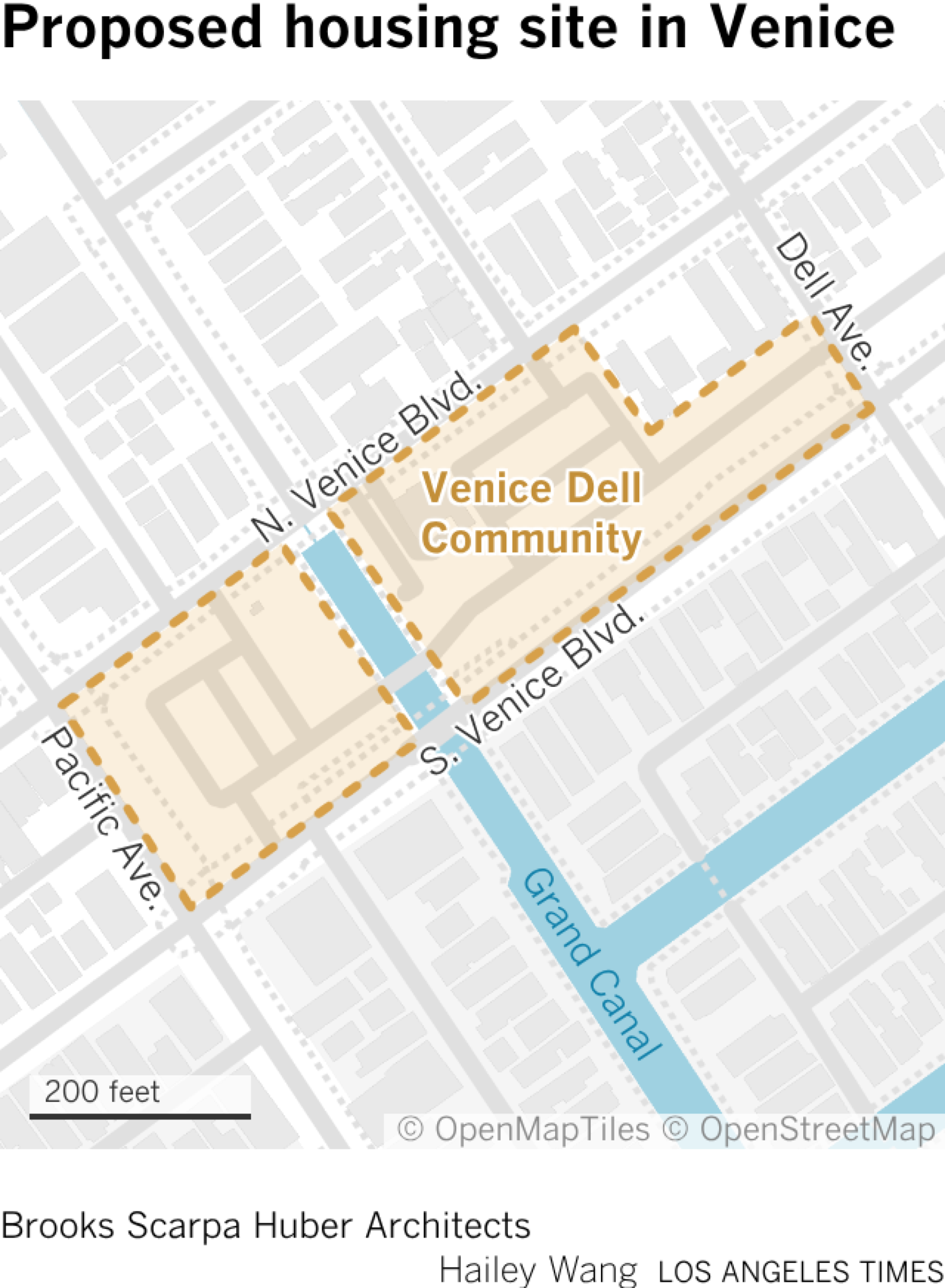
The proposed Venice Dell development on city parking lot 731 at 200 N. Venice Blvd. has divided affordable housing advocates and neighboring residents for the past decade. Plans call for building 120 units, of which 68 would be set aside for homeless people.

Supporters say the project will help address Venice’s chronic homelessness and a shortage of affordable housing on the high-priced Westside. Opponents say it’s out-of-scale for the neighborhood and, at just 800 feet from the beach, at risk of being flooded.

The project has been stalled for several years by litigation, bureaucratic roadblocks and the opposition of Los Angeles City Councilmember Traci Park, whose district includes Venice and who campaigned on a platform to quash Venice Dell.

But supporters think the logjam may break with the Nov. 3 election of Raman and Roy, as both have supported Venice Dell and criticized their predecessors for standing in its way.

“A change in elected officials is what initially held this project up. Now we are seeing an equal but opposite reaction with two elected officials who ran on the importance of building housing and they have prevailed,” said Azeen Khanmalek, executive director of the nonprofit Abundant Housing LA, which endorsed Raman and Roy in their races.

Allison Riley, the co-executive director of Venice Community Housing, one of the developers on the project, shares Khanmalek’s optimism.

“Their election is giving us a lot of hope that the project will be able to move forward,” she said.

The project dates back to 2016, when the City Council approved an agreement with Venice Community Housing and Hollywood Community Housing Corp. to build housing on the city-owned site.

Plans called for two four-story buildings straddling the Venice Grand Canal, replacing a four-unit apartment building and a 196-spot parking lot.

In the following years, the developers held more than a dozen community meetings about the project and the city Planning Department exempted it from an environmental review.

In June 2022, the city entered into a disposition and development agreement with the developers, a binding contract outlining the development of the project.

It was moving forward, but the political climate was shifting.

Opposition emerges

The project has long been opposed by the Venice Neighborhood Council, whose members say Venice Dell is too dense for the community — and that valuable land shouldn’t be surrendered at such low cost. The 2.65-acre parcel has been appraised as high as $34 million. Under the plan with the city, the developer would pay $1 per year for up to 99 years to use the lot.

“We’ve all been painted as NIMBYs and it’s just not true,” said Gary Pearl, vice president of the neighborhood council. “We’ve always looked for an answer for this.”

At the same time, the neighborhood group has also made it clear that it opposes the homeless housing component of this development. Venice already has a number of homeless service providers, the group has pointed out, and the addition of more homeless housing could lead to Venice becoming a “Skid Row West.”

“This crush of homeless services and housing has served as a magnet for more homelessness and crime to proliferate in this community disparately from others in the district,” the group wrote in a 2021 letter to the City Council.

Lisa Redmond, a member of the neighborhood council who supports Venice Dell, said the real reason some Venice residents oppose the project is because they don’t want affordable housing bringing down their property values.

“They don’t want it, period,” she said. “But there are a lot of people like me out there who want it. It’s just very vocal people that hate it.”

L.A. City Councilmember Traci Park.

L.A. City Councilmember Traci Park, who has opposed the Venice Dell project.

(Brian van der Brug / Los Angeles Times)

‘I will squash this on Day One’

By the summer of 2022, council and citywide political races were in high gear.

In her campaign, Park promised to kill the Venice Dell project as she campaigned to replace Mike Bonin, who had shepherded the project through council.

“I will squash this on Day One,” Park said during the campaign. “It’s a waste of money. It’s wrong for the community. It’s a no-go. It’s done.”

Park, who won her seat in 2022, had a powerful ally.

Hydee Feldstein Soto became city attorney the same year and she too had expressed concerns about the Venice Dell project during her campaign, specifically saying that the city should reopen the competitive bidding process for the lot to other developers.

Litigation and roadblocks

A woman with medium-length brown hair in a white suit seated, gesturing with her right hand while speaking.

Los Angeles City Atty. Hydee Feldstein Soto during her 2022 campaign.

(Genaro Molina / Los Angeles Times)

The city was sued multiple times by neighborhood groups over the project, including for exempting the developers from the environmental review process known as CEQA in 2022. That case was defeated under Feldstein Soto, despite her issues with the project.

In spring 2023, with litigation pending on the project, city staff stopped responding to representatives for the developers.

“Please note, if you get called by anyone related to Venice Dell. … DO NOT respond,” wrote Yaneli Ruiz, a staffer in the Los Angeles Housing Department, said in an email to other city workers on April 12, 2023, that was released to the developers in a public records act request.

“We should also forward this message to the Finance and Development team. … Their team may not be aware of the ‘gag order,’” responded Mariano Napa, another LAHD staffer.

The directive not to speak with the developers came from the city attorney’s office, which cited the pending litigation, according to Khanmalek, who worked in the mayor’s office at the time.

“I thought it was odd,” he said. “It’s not typical. There are projects, many projects, city-owned land or not, that people file CEQA lawsuits on and in my experience it had not been the case that city staff, whether in the mayor’s office or elsewhere, would be directed to stop any kind of work on moving the project forward.”

Feldstein Soto’s office doesn’t direct or instruct departments, said a spokesperson for the city attorney’s office in a statement.

The progressive nonprofit LA Forward sued the city in 2024, arguing that the city attorney’s directive was politically motivated. They claimed in the suit that her directive to cease communication with the developers was part of a plan by Park and Feldstein Soto to “covertly thwart” the Venice Dell project.

An architectural rendering of the proposed Venice Dell design.

An architectural rendering of the proposed Venice Dell design.

(Courtesy of Venice Community Housing)

“Councilmember Park and the City Attorney seek to defeat the Project not by democratic means in the City Council, but to use their offices to tie the Project up in red tape outside of public view,” wrote attorneys for LA Forward in the lawsuit.

Feldstein Soto has denied that she used her position to stall the project.

Mayor Karen Bass, meanwhile, has said it was not her place to step in on the project and that the decision rested with the City Council.

A mural of Abbot Kinney as seen from a parking lot for the proposed Venice Dell project.

A mural of developer Abbot Kinney as seen from Venice Beach parking lot 731, site of the proposed Venice Dell housing project at 200 N. Venice Blvd.

(Genaro Molina / Los Angeles Times)

After the city and developer prevailed in the CEQA litigation, there were a few more hurdles before the project could be built, including approval from the state’s Coastal Commission because of its proximity to the beach.

Then a new hurdle arose. The Board of Transportation Commissioners, an advisory and oversight body, scheduled a special meeting over whether to convey the parcel to the developer, after the city Transportation Department recommended against surrendering the parking lot for the Venice Dell project.

The DOT letter cited design and liability concerns, a $22-million price tag to the city to redevelop the parking lot, loss of hundreds of thousands of dollars in annual parking revenue during construction and reduced beach access as reasons for the board to reject the lot’s use.

The developer said it was the first time a city department had raised objections to the project. LA Forward claimed the Transportation Commission didn’t have any authority in the matter.

Even so, the commission voted in December 2024 against allowing the developers of the project to use the lot for the Venice Dell project. The council didn’t vote to overturn the decision and Feldstein Soto declared the project was dead.

Following the board’s vote, the developers of the project sued the city in March 2025, alleging the board’s vote was unlawful, “exceeding the scope of [its] legal authority.”

This year, a judge in the case agreed and ordered the Board of Transportation Commissioners to vacate its decision.

Feldstein Soto, in a statement, said that her position on the project had changed due to “material changes and developments” including the overruling of the board’s decision. She also noted that Gov. Gavin Newsom “reached out to the highest levels of the City to communicate the governor’s personal interest in moving the Venice Dell project forward.”

Changes at City Hall

Feldstein Soto and Park both faced challenges this year by supporters of the Venice Dell project.

Park prevailed in May, but Feldstein Soto was defeated in the primary and Roy is poised to take over the city attorney’s office in December.

Roy declined to be interviewed following her victory, but has previously said Feldstein Soto politicized her role and got in the way of a City Council-approved project.

Raman has also supported the project during her time on council. In one interview during her mayoral campaign, she called the stalling of projects like Venice Dell by the city “the most stark example” of Bass’ failure on housing in Los Angeles.

Raman’s transition spokesperson declined to comment on Venice Dell for this article.

Park, meanwhile, has turned to the future, and the potential development into affordable housing of a different Department of Transportation-owned lot in Venice, close by — lot 701.

Instead of affordable housing, Park wants to turn lot 731 into a “mobility hub” that would include parking, car share, bike share, micro-mobility, shuttle service and transit storage.

She has said she hopes for both lots to be developed and in use in time for the 2028 Olympics.

“The staggering public cost of [Venice Dell] is simply not justified by what it delivers,” Park said in a statement to The Times. “It remains fiscally indefensible for taxpayers and residents, especially in light of an alternative plan that delivers multiple policy goals at once: housing, coastal access, and mobility amenities.”

But Park will have to move her plans forward with a mayor and city attorney who support the old project.

“Having a different mayor and different city attorney with a difference perspective on this project gives it an opportunity to get back on track,” Bonin said.
Source link

Asian Americans won all three of L.A.’s citywide elected offices this year

Last week’s midterm elections made history across the country, and Los Angeles was no exception: Asian Americans will now hold all three citywide elective offices — mayor, city attorney and controller — for the first time.

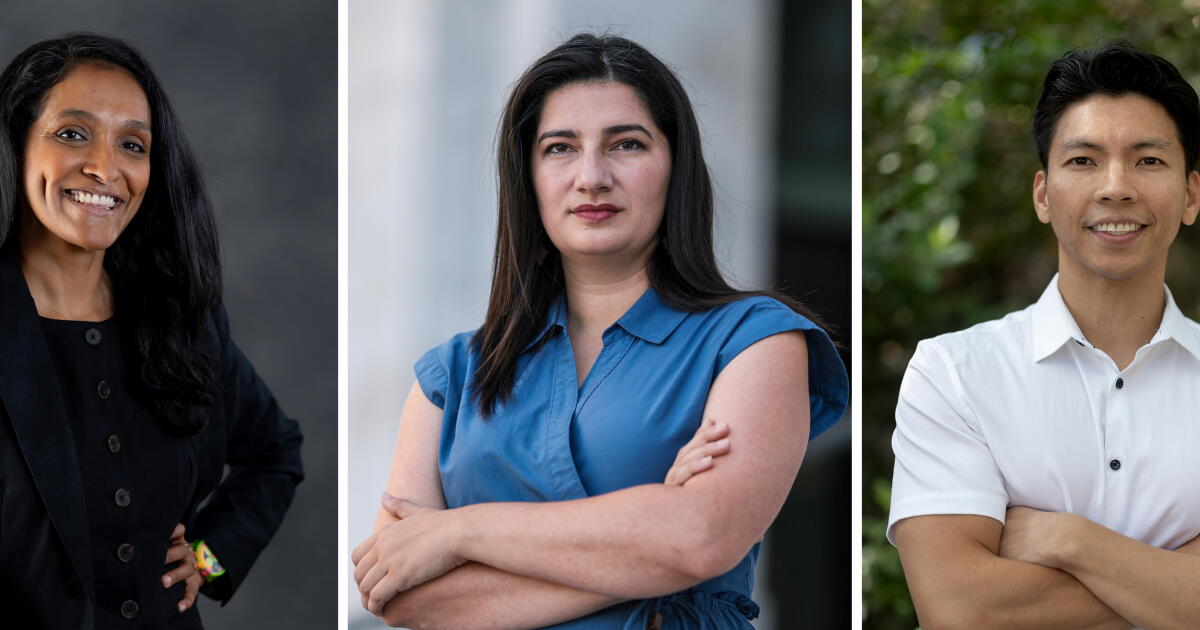
Mayor-elect Nithya Raman came to the U.S. from India as a child. City Atty.-elect Marissa Roy’s mother also emigrated from India. And City Controller Kenneth Mejia, who is Filipino, won reelection to a second four-year term in June.

“This is a historic moment for the nation and certainly for our city and state, and for [Asian American and Pacific Islander] communities,” said Manjusha P. Kulkarni, executive director of the AAPI Equity Alliance, which advocates for resources and funding for the coalition of community organizations it represents. “We feel that the work that we’ve done across many decades has come to fruition in seeing progressive Asian American representation in our city.”

Kulkarni noted that Asian American voters have trended more progressive over the decades, after years of being pigeonholed as largely conservative. Raman and Roy were both endorsed by the Democratic Socialists of America, and Mejia was recommended by the leftist group.

Across the country, voters made history at the ballot box: California voted in its first Latino governor, Texas elected its first Latina governor and Georgia will have its first Black female governor. Michigan elected Abdul El-Sayed, who will become the first Muslim in the U.S. Senate.

The two largest U.S. cities will now be headed by South Asian Americans: New York City’s Zohran Mamdani, born to Indian parents, and Raman, who arrived from India to the U.S. at the age of 6. Raman became the first Asian American woman and the first South Asian elected to the City Council when she won her seat in 2020.

In her first address as mayor-elect last week, Raman acknowledged the significance of voters putting their faith in her at a time when the Trump administration has terrified immigrant communities with mass deportations.

“This city has opened its arms to people to come and build their dreams here, and the idea that Angelenos voted for an immigrant to be their next mayor at this moment in American history is so deeply moving to me,” she said.

Roy frequently invoked her mother’s immigrant story and her Indian heritage on the campaign trail. As a founding board member of the Asian Democrats of Los Angeles County, she had key Asian American backers, including California Atty. Gen. Rob Bonta and San Francisco City Atty. David Chiu.

Roy, whose campaign was infused with Bollywood needle drops on Instagram, is also the co-creator of a “Raman Rager” Bollywood dance mix for a South Asian-themed fundraiser that has since taken on a life of its own.

Roy said in an interview that her win in last week’s election represents a moment for the city’s broader immigrant community. When she won, she received Whatsapp messages from family members in India who were watching closely and was featured in an India Weekly article.

“I think this is really a significant moment, not just for the Asian American community, but for the immigrant community to have an immigrant mayor, to have a city attorney who is the daughter of an immigrant,” Roy said. “This is Los Angeles sending a message about who it is.”

Asians are the fastest growing population in the U.S., outpacing Black, Latino and white populations, according to the Pew Research Center. Asian Americans and Pacific Islanders represent about 12% of the city’s population, according to the U.S. Census Bureau.

And they constitute more than 1 million eligible voters in L.A. County, according to an analysis of census data by Asian Americans Advancing Justice Southern California.

“Our communities have helped build Los Angeles, and it’s time our political leadership reflects the enormous role we play in shaping its future,” Dahni Tsuboi, chief executive of the organization, said in a statement.

On election night last week, Zahra Hajee, president of Asian Democrats of L.A. County, hopped from Roy’s election night party — which featured a henna station and a victorious Roy who flashed glittering bangles — to Raman’s, where Mejia gave an impassioned speech as a Raman win looked likely. After Raman took the lead by early Wednesday morning, Hajee, who is Pakistani American and Muslim, became emotional.

“To be able to see two South Asian women leaders — I didn’t think I’d see this in my lifetime,” Hajee said. “Being able to have those shared experiences with our next city attorney and next mayor is just such a surreal feeling and a connection I thought I’d never have.”

The group, which has about a thousand members, was among the first to endorse Roy’s campaign and supported Raman early on. The organization also has a working relationship with Mejia, who is a member of the Green Party. It also helped introduce Raman to key constituencies; she set up an event with small business owners in L.A.’s Little Bangladesh neighborhood near Koreatown, for example.

Nina Long, policy manager for AAPI Force, a progressive statewide coalition, said the candidates’ outreach reflected the nuances of the community, reaching groups including Chinese, Korean and Filipino voters.

“They did not treat AAPIs as a voter bloc to be taken for granted,” she said. “Each of the candidates was really savvy about the diversity of AAPI communities in Los Angeles.”

The dominance of Asian Americans in this election is also a display of the growing political influence of Asian American and Pacific Islander voters.

“For a very long time, the AAPI community was considered a quote unquote margin of victory in Democratic politics,” Hajee said. “We have shown our community is not just a margin of victory but a true base of voters.”

Mejia acknowledged the moment as a “huge feat” for progressive values being championed by Asian Americans.

“Representation is great, but it’s also showing that we have people running on great values centered on people, not special interests,” he said in an interview. “The fact that we are all AAPI is amazing, but the credit is what we stand for and what we believe in.”

He said his views were shaped by having parents who worked hard but were exposed to more conservative values and were expected to keep their heads down and not ask questions. But as life has become harder, more Asian Americans, especially young people, want better, he said.

“I believe what you’re seeing right now, this movement in politics, is that so many people are paying attention, especially those from immigrant communities,” he said.

There are currently three Asian Americans on the L.A. City Council, including Raman, who represents District 4. The other two are Ysabel Jurado of District 14 and John Lee of District 12.

Jurado became the first Filipina elected to the City Council when she won in 2024. In a statement, she said, seeing three Asian American leaders elected to citywide office felt deeply personal.

“It reflects generations of organizing by communities who fought to be heard and opened doors for those who would follow,” she said, adding that she looked forward to pushing for policies that would make living in L.A. more affordable. “We have an opportunity to show what greater representation can mean in people’s everyday lives.”

Times staff writers Noah Haggerty and Sonja Sharp contributed to this report.

Source link

How Marissa Roy plans to transform the L.A. city attorney’s office

For more than a year, Marissa Roy has vowed to turn the Los Angeles city attorney’s office into a massive “public interest law firm.”

Now, she has a sweeping mandate to put that plan into action.

As of Wednesday morning, Roy had nearly double the vote tally of her opponent, L.A. County Deputy Dist. Atty. John McKinney, all but assuring the 34-year-old progressive will walk into City Hall in one of her jewel-toned blazers next year as Los Angeles’ chief lawyer. While the contest has not officially been called, McKinney effectively conceded the race in an interview with The Times on Wednesday.

For decades, the L.A. city attorney’s office has focused almost exclusively on prosecuting minor crimes and defending the city from increasingly expensive litigation. In an interview in May, outgoing City Atty. Hydee Feldstein Soto scowled when a reporter mentioned Roy’s campaign line about running the office as a “public interest law firm.”

“That’s insane,” Feldstein Soto said, days before her historic primary defeat.

But in Roy, an enthusiastic and tenacious California deputy attorney general, the city will have a proactive top litigator who’s ready to play offense. Roy has promised to take her experience from a years-long legal battle with Meta to aggressively pursue litigation against corporations and landlords for alleged misconduct that harms the average Angeleno.

Long before she announced her candidacy, Roy had begun courting public servants inside the sprawling city attorney’s office to ensure her plan passed muster.

What began as a series of informal coffees at Pitchoun! Bakery downtown quickly evolved into a network of trusted advisors, who helped shape her campaign promises and fine-tune policy proposals so they could be executed on Day One.

“There’s not a single word on my website that they haven’t reviewed first to make sure that we can implement it,” Roy said in an October interview. “It’s why sometimes I won’t take a hard line on something, because I talk to the deputies involved and they say they need discretion.”

Despite attack ads saying otherwise, Roy hasn’t vowed to block prosecution of certain misdemeanor crimes — even though she prefers diversion programs as a way to aid homeless defendants.

She’s been more direct about her plans to protect the city’s immigrant communities from potential future raids and aggressively fight the Trump administration in court when it targets Los Angeles. Given her affiliation with the Democratic Socialists of America, Roy’s stances on litigation involving the Los Angeles Police Department could also depart from her predecessors’.

The union representing rank-and-file LAPD officers spent millions against Roy. Feldstein Soto also steadfastly defended the LAPD’s widely criticized uses of force on protesters and journalists during immigration raids last year.

Roy also benefits from a deep bench of elected allies across the state, including her current boss, California Atty. Gen. Rob Bonta, and fellow progressive city attorneys in San Diego, San Francisco and Oakland. Many local supporters showed up to toast her presumptive win Tuesday night, already riding high on the blue wave that crashed across the U.S. when the first Los Angeles returns dropped around 8:20 p.m.

The event at Audio Graph Brewery in downtown L.A. had all the energy of a wedding reception, with DSA acolytes munching cookies emblazoned with Roy’s face in icing and union organizers bopping up and down to the viral Slayyyter track “Dance…” as results rolled in.

Roy is an evangelist for affirmative litigation, proactive suits of the type that forced President Trump to cede control of the California National Guard late last year after he deployed thousands of soldiers to quell protests and aid immigration enforcement across the state.

“We need someone who knows how to sue the Trump administration, who also has the relationships and can pick up the phone and call the San Francisco and San Diego city attorney,” Roy said. “We’re all part of this very tiny niche of municipalities suing the federal government. We all became experts [in those methods] together.”

Despite at times amplifying inaccurate claims that McKinney was a conservative, Roy and her opponent shared some policy planks. Both were highly critical of ballooning legal costs under Feldstein Soto, as well as her penchant for hiring outside law firms to fight the city’s battles. Both also said they wanted to revive internal programs the outgoing city attorney had scuttled, such as neighborhood prosecutors and specialized units for handing child abuse and domestic violence.

“This election is gonna go her way, and I’m just really truly grateful for the opportunity to be part of this over the last nine months,” McKinney said Wednesday morning. “I met a remarkable group of people. I learned a lot about the city, the City Attorney’s office, about city politics and I’m a better person for it. I congratulate Marissa on her victory, I wish her well.”

McKinney said he hopes Roy can “uplift that office to be the finest municipal law office in the country,” but also suggested she spend her energy on more than legal combat with business leaders or the White House.

“She’s gonna have to broaden her focus to issues related to public safety, homelessness. Obviously, we both agree that city liabilities need aggressive proactive risk management,” he said.

Meanwhile, Roy could scarcely contain her excitement as she laid out her plan to supporters chanting her name.

“I’m much more comfortable when people chant things like ‘Let’s sue it’, because that’s the work that we’re going to do,” she said.

“Let’s sue it!” the crowd cheered.

Source link

Roy surges to early lead over McKinney in L.A. city attorney race

Marissa Roy is on track to become Los Angeles’ next city attorney after jumping out to a significant lead over L.A. County prosecutor John McKinney based on early returns.

Roy, 34, a deputy state attorney general, campaigned on a promise to convert the city attorney’s office into a massive “public interest law firm,” vowing to champion renters and defend Angelenos from an increasingly hostile White House.

Roy, a coalition-builder, had long been the favorite in the race, leading McKinney by double digits in polls leading up to Tuesday. She won the June primary with more than 40% of the vote.

Roy and McKinney’s head-to-head race came after voters and powerful city unions turned on the incumbent, Hydee Feldstein Soto, whose June primary defeat marked the first time a sitting L.A. elected official failed to advance to a general election in nearly a century.

Supporters at Roy’s watch party at the downtown Audio Graph brewery erupted in cheers when the first batch of results dropped, showing Roy doubling up McKinney’s early vote total. The mood was ebullient as the first batch of returns trickled in, buoyed by dramatic wins for Democrats across the country and a better than expected early lead for their candidate.

Roy arrived around 9 p.m. in a plum-colored dress, her arms stacked with bangles that rang as she embraced supporters and took the stage.

“I was planning on hedging and saying, ‘It looks like we’re winning,’ but I think we won!” Roy told the crowd to whoops and cheers.

Roy ran to the left of her opponent and tried to paint him as the preferred choice of Republicans in L.A. County. McKinney is a lifelong Democrat and has been critical of President Trump.

At Hill Street bar, close to the downtown criminal courthouse where McKinney has built his career, supporters swayed to smooth jazz and Top 40 radio hits, nursing cocktails and betraying no reaction to the dismal early returns.

In a brief interview outside the bar, McKinney remained positive and said he always knew he faced an uphill battle. He announced his candidacy long after Roy and Feldstein Soto began their campaigns, yet still surged to a surprise second-place finish in June. He said he was proud he was able to inject discussion of public safety issues and real strategies for solving homelessness into the race.

“I got into this race nine months ago because the people of Los Angeles deserve better,” he said.

Although he said he had “no bitterness” toward Roy and wished her the best of luck, he did express disappointment at the efforts her campaign and some of her supporters took to incorrectly paint him as a conservative.

“I just felt that it was very misleading … it’s not a political position. It’s not a partisan position,” he said.

The candidates were a study in contrasts: Roy is a stylish progressive with savvy social media campaign videos, while McKinney is a stoic law-and-order-type. They also offered voters starkly different plans for leading the city attorney’s office.

A core part of the California Department of Justice legal team that won a historic $17-billion settlement from Meta this summer, Roy ran as a champion of the average Angeleno, promising to hold corporations and landlords accountable for misconduct. A Yale-educated lawyer, she positioned herself as the only candidate who would stand up to Trump administration policies that have harmed Los Angeles.

McKinney, who often noted he has been a lawyer nearly as long as Roy has been alive, leaned on his nearly unblemished record prosecuting some of the region’s most notorious and violent crimes and his compelling personal history. Orphaned at 5, he was raised by an older sister in a household where money was extremely tight and found himself painting houses just to afford college classes. In a 28-year career as an L.A. County prosecutor, McKinney won convictions in a number of high-profile cases, including the murder of rapper Nipsey Hussle.

The veteran prosecutor promised to focus his energy on reducing homelessness and improving public safety through misdemeanors he believed the prior administration under-enforced, including street racing and animal abuse on Skid Row. He also vowed to conduct more aggressive reviews of the way nonprofits that do business with the city spend funds meant to aid unhoused citizens.

Although they aligned in few places, both Roy and McKinney said they would work to bring down the city’s out-of-control legal costs. That figure exploded to nearly $300 million in city payouts last year.

Roy was supported by the L.A. County Democratic Party, the local chapter of the Democratic Socialists of America, Atty. Gen. Rob Bonta and U.S. Sen. Bernie Sanders (I-Vt.). McKinney was backed by a coalition of law enforcement unions, four former city attorneys and L.A. County Dist. Atty. Nathan Hochman.

Source link

2026 L.A. city attorney’s race last-minute guide: McKinney vs. Roy

The race for L.A. city attorney delivered a shock this spring when incumbent Hydee Feldstein Soto was ousted, an upset the likes of which hadn’t happened in nearly a century. The pair of candidates who remain have since laid out their widely differing visions of the job.

Here’s what you need to know.

The candidates

  • John McKinney is an L.A. County deputy district attorney with nearly 30 years of legal experience. He vows to clean up what he calls a blighted downtown and work closely with his boss and backer, Dist. Atty. Nathan Hochman, to reduce crime in the city.
  • Marissa Roy is a deputy attorney general in the California Department of Justice. She plans to use the office to fight for tenant and wage workers. Her vision of the city attorney is to be the “people’s lawyer” for L.A.

In their own words

Here are the Q&As with each of the candidates.

State of the race

Roy is leading in the race to become the next Los Angeles city attorney. She was ahead by 10 percentage points in the most recent poll conducted by UC Berkeley’s Institute of Governmental Studies and co-sponsored by The Times.

Still, some local voters don’t know the candidates by name.

Issues

Criminal justice

  • McKinney is focusing his campaign on tamping down quality-of-life crimes in the city such as organized retail theft, drug dealing and street racing. McKinney would prioritize public safety and vows to go after demonstrators who block freeways or engage in conduct similar to the 2024 pro-Palestine encampments on UCLA’s campus.
  • Roy wants to funnel nonviolent offenders to diversion programs such as mental health treatment or vocational training.

Hefty legal payouts

  • McKinney said he’d lean on his long experience as a trial attorney to quickly decide which incoming lawsuits against the city should be fought and which should be settled in order to reduce the city’s legal costs.
  • Roy wants to bring civil litigation back in-house to rein in the millions spent on outside counsel. She also argues for beefing up the claims process so legitimate suits are settled effectively and frivolous ones are fought.

How each candidate would handle Trump

  • McKinney would work to balance respecting federal authority as required by law against protecting the constitutional rights of city residents and defending local resources if threatened by federal overreach.
  • Roy has made fighting the Trump administration a centerpiece in her campaign.

Homelessness

  • McKinney wants to use the court system as a “last resort” to leverage people into accepting services or shelter.
  • Roy says renter protections will be vital to stemming the city’s homeless crisis.

Source link