Iran war live: Tehran sets terms for peace; Saudi forces foil Riyadh attack | US-Israel war on Iran News
Iran’s top security official says Tehran has sent its conditions for ending war to the US via Qatari mediators.
Published On 20 Sep 2026
Iran’s top security official says Tehran has sent its conditions for ending war to the US via Qatari mediators.
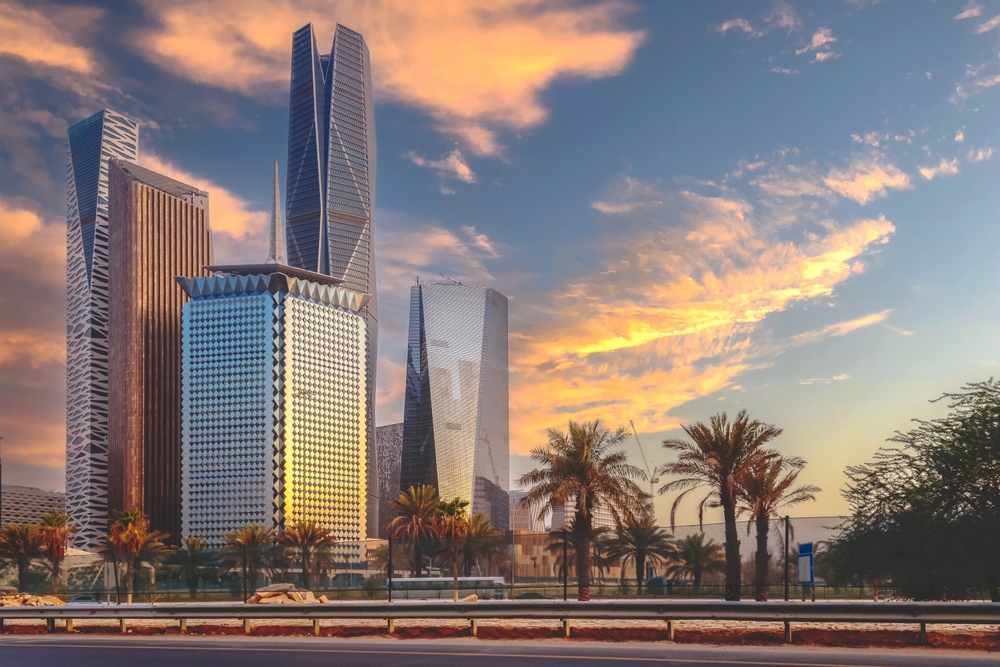
This was the first time an alert was sounded in Riyadh since an escalation between the Houthis in Yemen and the Saudis.
Saudi-led coalition forces fighting Yemen’s Houthis have said that the Iran-backed group fired a ballistic missile at Riyadh at dawn before it was intercepted and destroyed.
“The Houthis also attempted to target civilians and civilian infrastructure in Bisha, Taif, Farasan and Yanbu,” coalition forces spokesman Major-General Turki al-Maliki wrote on X on Saturday, adding that the attacks were thwarted by the Gulf monarchy’s air defences.
list of 4 itemsend of list
Saudi Arabia warned of a “hostile aerial threat” and issued a string of emergency alerts across the kingdom overnight on Friday.
On Saturday, at least one explosion was heard in Riyadh, with residents near the airport saying they saw a large plume of black smoke later in the morning. Saudi authorities reported no casualties or damage.
It was the first air raid alert sounded in Riyadh since an escalation in fighting with the Houthis in Yemen began in July.
The Saudi spokesman said that the Houthis are escalating their attempts to target civilians and civilian infrastructure in the capital. He also affirmed the coalition command’s right to take “appropriate” action to deter the Houthis, in accordance with international humanitarian law.
Earlier on Saturday, Houthi fighters in Yemen said they attacked “sensitive” sites in Riyadh as well as an Aramco oil facility in the western coastal city of Yanbu, according to a statement shared by Houthi military spokesman Yahya Saree.
Saree said the Houthis attacked Saudi Arabia with cruise and ballistic missiles as well as drones.
“You could see that the Houthis are determining the timelines and the levels of the escalation,” Yasmeen al-Eryani, executive director for knowledge production at the Sana’a Center think tank, told Al Jazeera. “So, depending on the current situation, it seems that the Houthis are the ones in control,” she added.
Meanwhile, on the ground in Yemen, the armed forces of the Saudi-backed internationally recognised government said their fighters thwarted a Houthi infiltration attempt in the al-Fuliahan sector in southern Marib on Saturday, killing 12 Houthi fighters and injuring others.
The army also said 13 Yemeni soldiers were killed in two days of clashes with Houthi forces in the southwestern provinces of Taiz and Lahj.
Renewed clashes are taking place in Yemen’s Marib, Taiz, Lahj, al-Jawf and al-Bayda as part of a military escalation that began in early July – the most intense since the relative calm following an April 2022 truce.
Al-Eryani told Al Jazeera that military options against the Houthis are currently limited because much of the fighting is taking place in mountainous terrain that is difficult for opposing forces to access and hold.
For now, she said, containing the group may be a more realistic option than defeating it militarily. “Without controlling the peaks that are parallel to the coast, you will not be able to control the coast,” said al-Eryani.

JEDDAH: Around 150 senior business leaders, investors and policymakers will gather in Riyadh on Sept. 29 to examine the forces expected to shape Saudi Arabia and wider MENAT economies over the next five years.
Forum to examine five-year economic outlook
The inaugural Economic Forum by Servcorp, powered by Emerging Markets Intelligence & Research, or EMIR, will examine the broader forces shaping the Kingdom and the wider Middle East, North Africa, and Turkiye, or MENAT, according to a press release.
As Saudi Arabia continues to advance its Vision 2030 agenda, the forum will use the Kingdom as its base while adopting a broader MENAT perspective.
Its five-year outlook will focus on the longer-term forces shaping business and policy decisions, drawing on Servcorp’s regional experience and EMIR’s economic intelligence to connect global developments with the practical realities of operating across MENAT.
Leaders to discuss regional growth and business priorities
“After more than 25 years supporting businesses in the region, we know that ambition creates value only when it is translated into execution,” CEO, Middle East, Europe, and America at Servcorp, David Godchaux, said.
Godchaux added that leaders must decide where to commit, which capabilities to build and which priorities to defer, yet the context for making those decisions is becoming more complex.
He added that the Economic Forum by Servcorp would provide a setting for candid, peer-level discussions on the decisions that will shape the region’s next phase of growth.
“The Economic Forum by Servcorp will provide a setting for candid, peer-level discussions on the decisions that will shape the region’s next phase of growth,” he said.
WASHINGTON — A bold military push by Iran and its proxies to create a choke hold on global oil supplies has once again caught the Trump administration off guard, threatening a market shock and a steep political backlash in the U.S. midterm elections.
A drone attack on Saudi Arabia’s most crucial pipeline, which siphons crude oil from the Persian Gulf to the Red Sea to bypass the Strait of Hormuz, has led to the line’s closure, potentially taking 4% of the world’s supply off the market.
And a lightning advance by Iran-backed Houthi rebels along Yemen’s Red Sea coast threatens commercial traffic through the Bab el-Mandeb Strait, second only to Hormuz in its importance to regional shipping.
The strikes put the Trump administration in a newly precarious position less than two months until the November midterms. President Trump’s military advisors have warned him that any retaliation could lead to a further depletion of critically low U.S. munition stockpiles, endanger American personnel in the field and risk escalation that could spiral out of Washington’s control.
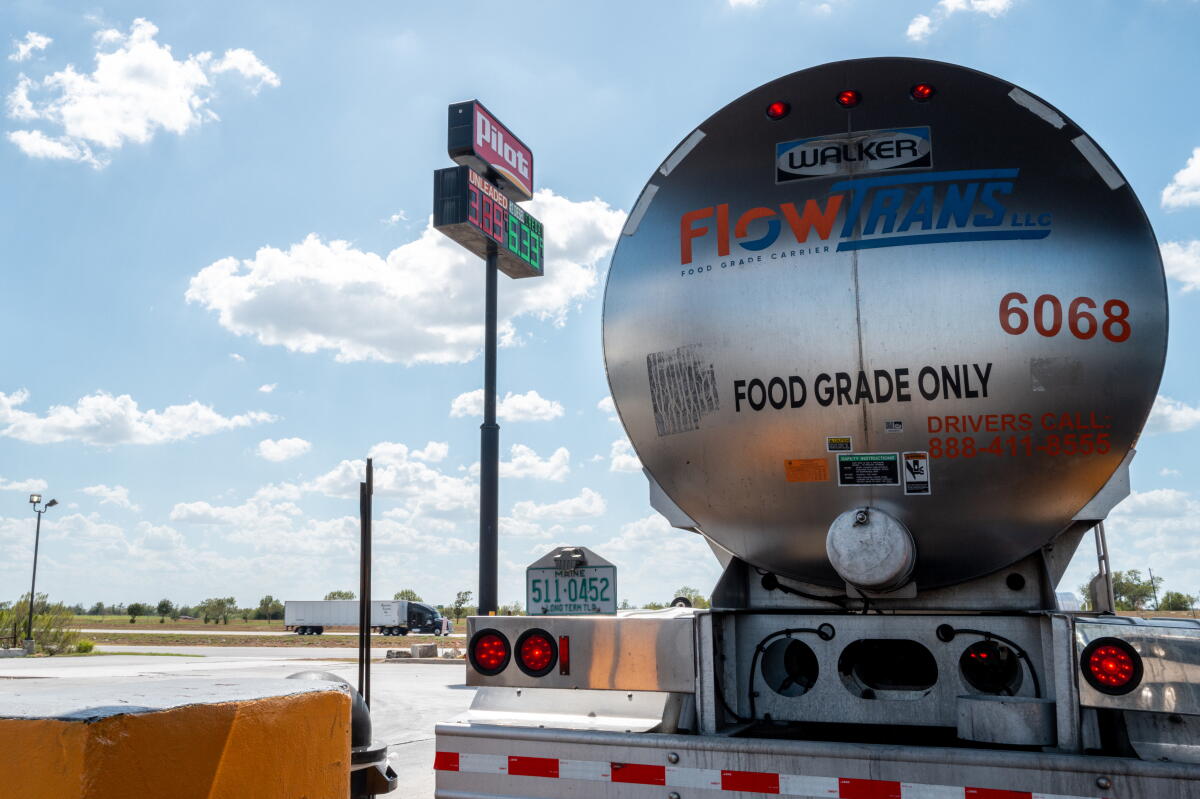
A semi prepares for departure from a Pilot fuel station Monday in Buda, Texas.
(Brandon Bell / Getty Images)
On Tuesday, the global price of oil topped $107 a barrel — the first time in U.S. campaign history that an incumbent president has faced rising pump prices at this stage of an election.
The Iranian strikes come as Europe and the United States are facing increased energy needs entering the fall and winter months, and as Ukrainian attacks on Russia’s energy infrastructure have surged, pushing diesel prices up to record highs.
Signs are emerging that the latest attacks could trigger an acute market panic, with Brent crude buyers paying a steep premium for early delivery — an indication that the industry fears an impending supply crisis.
“I fear there is a considerable risk of much higher gas and diesel prices in the weeks to come,” said Michael O’Hanlon, director of research of the foreign policy program at the Brookings Institution.
“No one is quite sure how to predict the fuel markets,” he added, “but the military dynamics are seriously worrisome.”
Last week, Trump told reporters that the Iranian government is “desperate to try and affect the election” and could be trying to keep oil prices elevated to hurt Republican prospects.
“Right after the election, oil prices are going to be tumbling downward,” Trump said. “I think it’s going to take a little bit longer than the midterm.”
Traders work on the floor of the New York Stock Exchange on Monday morning.
(Michael M. Santiago / Getty Images)
Polls have found that likely voters are prioritizing the economy far beyond any other policy matter going into the fall election season, with a New York Times poll published Tuesday showing voters trusting Democrats to handle the economy more than Republicans.
“There’s no quick fix,” said Simon Henderson, the director of the Washington Institute’s Gulf and Energy Policy program. “The main question is whether it is a big shock to the oil market or just another more minor shock. The answer depends on whether the damage to the East-West pipeline cable is repaired quickly.”
The latest Iranian campaign threatens Saudi Arabia’s economic core, straining a long-standing alliance built on robust U.S. defense of Riyadh’s vital interests.
The attack on the East-West oil pipeline originated in Iraq, where Iran continues to operate proxy militias, according to government officials in Riyadh and Baghdad. Saudi Arabia agreed not to retaliate militarily against targets on Iraqi soil, temporarily staving off a regional conflagration.
While the Iraqi militia group denied involvement, it also praised the Houthi advance in Yemen and the militants’ “ongoing battlefield victories against Saudi forces.”
Israel has been providing Saudi Arabia with intelligence to help thwart further attacks, using American military intermediaries, according to Israeli media reports.
Active combat in the war between Iran and the United States eased after a ceasefire was brokered in June. While that truce collapsed in July, the two sides have opted for asymmetric tactics over the resumption of direct attacks, with the United States maintaining a full naval blockade of Iranian ports.
The Trump administration has since focused instead on targeting Iran’s economic partners with aggressive secondary sanctions, seeking to further pressure Tehran into a meaningful peace agreement. But negotiations have failed for months to get back off the ground.
When he first launched the war in February, Trump projected the mission would last roughly six weeks. He said the goal of the U.S. operation was to incapacitate Iran’s ballistic missile program, its navy and its nuclear program.
Trump was warned ahead of the war by his joint chiefs of staff that Iran could attempt to close the Strait of Hormuz in response. But he dismissed the threat, anticipating Tehran would quickly back down from a direct confrontation with the United States.
More than six months on, Iran’s ballistic missiles continue to pressure U.S. defense systems across the Middle East. Traffic through the Strait of Hormuz remains disrupted and discussions on Iran’s future nuclear work have broken down. In private, Trump administration officials fear the war could drag through the remainder of the president’s term.
A new chapter in Saudi Arabia’s cultural and creative journey begins this morning as the inaugural cohort of students at Riyadh University of the Arts starts their first academic semester. The university launches with immense ambition, bold objectives, and a steadfast foundation: a Saudi identity built on global standards.
Since its inception, the university has enjoyed historic support from the Custodian of the Two Holy Mosques and the Crown Prince — may God protect them — alongside regulatory empowerment that reflects their dedication to the role of culture in the nation’s progress. This culminated in the royal decree authorizing its establishment and approving its charter, representing the highest regulatory authority in the Kingdom.
The overwhelming response to enrollment at the university highlights the genuine passion of Saudis for culture and the arts, a passion rooted in their authentic cultural heritage and ambitious future vision. Since the opening of applications was announced, the university has received thousands of enrollment requests across various cultural disciplines and degree programs offered in its inaugural year. This underscores a true belief in the present and future of the arts within the Kingdom’s major developmental journey, coinciding with a phase in which the entire world is witnessing a remarkable expansion in the creative economy and cultural investment.
The university serves as a major milestone in the human capability development project within the cultural sector. This massive undertaking has seen the Kingdom’s cultural ecosystem make significant strides, with human capability and development initiatives accounting for more than a quarter of all initiatives launched by the ministry and its cultural commissions over the years. These initiatives have served a long list of beneficiaries, with more than 63,000 individuals receiving education and training across various cultural sectors since the establishment of the Ministry of Culture in 2018. The project continues to grow, with its creative impact visibly reflecting on all facets of development within our flourishing society.
I congratulate all the creative men and women who began their academic journey today at Riyadh University of the Arts.
Because education is the foundation for building cultural capabilities, the university has arrived to strengthen the development of the cultural sector, achieve global excellence in culture and arts education, and elevate Saudi culture and its presence both locally and globally. It also aims to bridge the current gap in the cultural labor market, foster an environment that stimulates cultural initiatives in the private sector, and boost overall cultural production in society. This comes at a time when Ministry of Culture forecasts indicate that demand for cultural jobs will exceed 7 percent annually of total employment, with the number of jobs across various cultural sectors projected to reach nearly 346,000 by 2030. Additionally, demand for roles in arts, technology, and design is growing annually by 40 percent in the Middle East, alongside a growth in cultural tourism of more than 109 percent between 2019 and 2022.
The university offers its programs in cooperation with the world’s most prestigious universities through partnerships that facilitate knowledge transfer and the exchange of expertise. This educational framework combines academic rigor with creative innovation and the integration of technology, while balancing theoretical sciences with practical application. It further enables researchers to expand their scope of awareness and knowledge within a fertile cultural environment like Saudi Arabia, where the cultural sector has proven its ability to effectively contribute to the national economy, achieving rapid growth thanks to the support of our wise leadership and the contributions of Saudi creatives across all fields.
The university aims to become a specialized, leading institution in the field of culture in the Middle East and North Africa region, rank among the top 50 cultural universities internationally, and serve as a global hub for academic achievement, scientific research, and cultural and knowledge exchange from Riyadh to the entire world. Among its core missions, the university focuses on strengthening the value chain across all cultural sectors and supplying them with creative and leadership talents, including artists, producers, administrators, and entrepreneurs. This spans the fields of cultural management, film, music, museum management, theater, performing arts, design arts, architecture, fashion, visual arts, photography, heritage and civilization studies, culinary arts, and cultural education.
I congratulate all the creative men and women who began their academic journey today at Riyadh University of the Arts. I am entirely confident that this major milestone will enhance their creative paths, given the university’s commitment to providing top-tier education through partnerships with leading institutions. It offers an exceptional student experience through a diverse range of disciplines, programs, and innovative educational methods, while enabling research and collaboration across cultural sectors. Together, we will enhance the competitiveness of national capabilities in the cultural sector so that Saudi Arabia may flourish with diverse cultural expressions that enrich individual lifestyles, strengthen national identity, and foster cultural dialogue with the world.
I extend my thanks and appreciation to Custodian of the Two Holy Mosques King Salman bin Abdulaziz, and to Prince Mohammed bin Salman bin Abdulaziz, Crown Prince and Prime Minister, for the care, empowerment, and encouragement that Saudi culture receives.
— Prince Badr bin Abdullah bin Farhan is Saudi Minister of Culture and Chairman of the Board of Trustees at Riyadh University of Arts.
— This article was first published in Arabic in Asharq Al-Awsat.

MANILA: Saudi Arabia’s new national carrier Riyadh Air launched its first flight to Manila on Wednesday, marking the latest addition to its growing network of global destinations.
Riyadh Air operated a 290-seat Boeing 787-9 Dreamliner aircraft for the route between the Saudi and Philippine capital, with its arrival at the Ninoy Aquino International Airport around 3:55 p.m. marking the first operation of the service.
“The new … service adds another option for passengers traveling between the Philippines and Saudi Arabia, and another international carrier to NAIA’s growing network. Welcome to Manila, Riyadh Air!” NAIA said in a statement announcing the Riyadh Air service.
There are more than 910,000 Filipinos living and working in Saudi Arabia, as the Kingdom hosts the biggest number of overseas Filipino workers and was their top destination in 2024, according to Philippine government data.
In that year alone, almost 22 percent of Filipinos, or more than 480,000, who sought work abroad chose the Kingdom, driven in part by the Saudi Vision 2030 economic diversification program.
Saudi tourists are also one of the Philippines’ fastest-growing and highest-value markets, according to the Philippine Department of Tourism, with tourism receipts reaching over $37 million in 2024, a 46-percent rise from the previous year.
The Saudi carrier has swiftly expanded its air links with Asia with the launch of multiple flights across the region in recent months, including to Malaysia, Pakistan, India and Thailand.
Riyadh Air’s Manila route followed the airline’s launch of its Bangkok service last week, with Thailand eyeing more high-value tourism from the Middle East.
The Tourism Authority of Thailand is expecting about 600,000 travelers from the Middle East this year, after recording about 210,000 arrivals in the first half of 2026.
It shows similar trends across Asia, where popular holiday destinations are increasingly targeting tourists from the Middle East as part of their tourism growth strategy.